Bhagavad Gita
भगवद्गीता
The Song of the Divine
Krishna's timeless teachings on duty, devotion, knowledge, and liberation — delivered on the battlefield of Kurukshetra.
Start ReadingAbout This Book
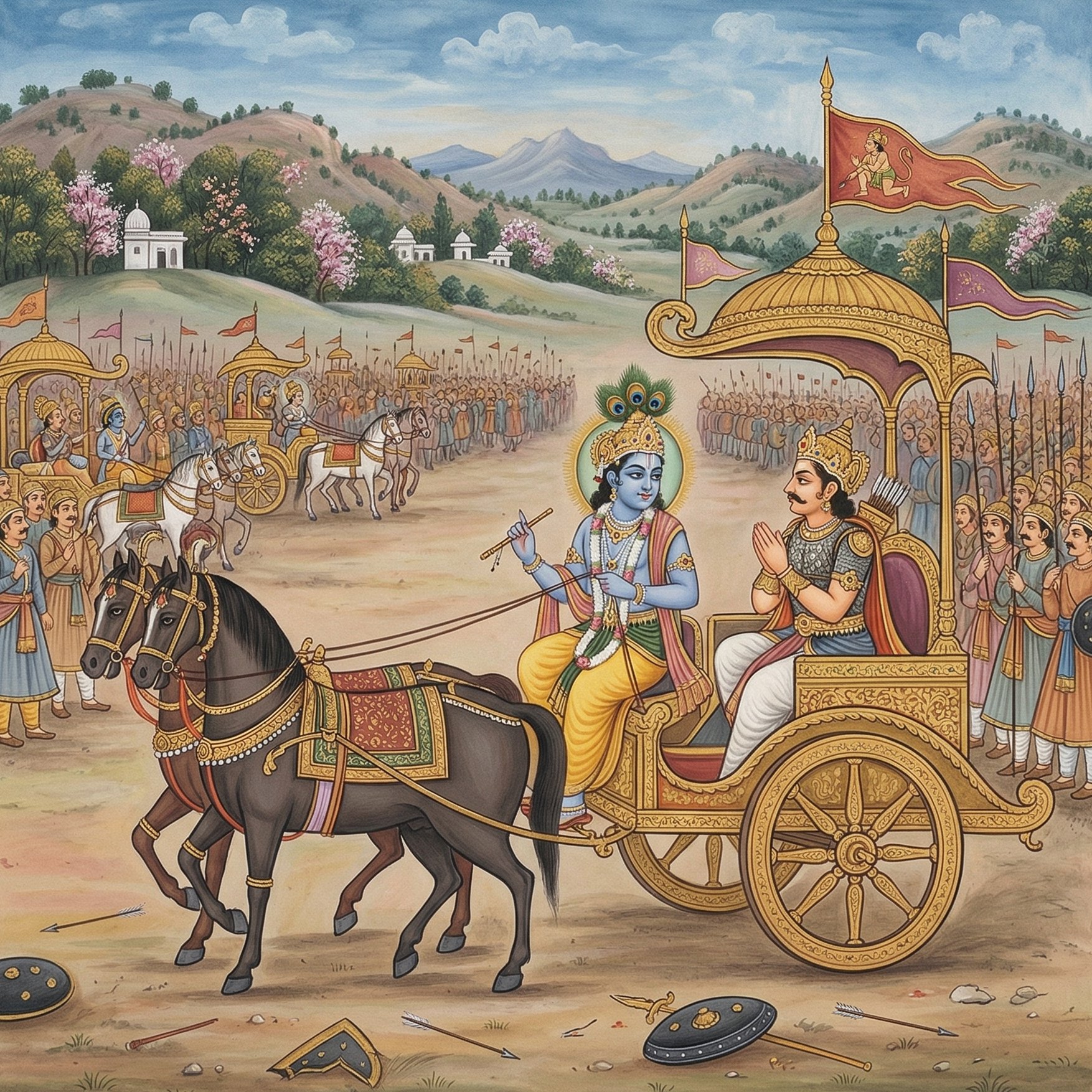
The Bhagavad Gita is a 700-verse dialogue between Lord Krishna and the warrior Arjuna, set on the battlefield of Kurukshetra moments before a great war. Part of the Mahabharata, it distills the essence of Vedic wisdom into practical teachings on dharma (duty), yoga (spiritual discipline), and moksha (liberation). Its universal message transcends time, culture, and creed.
How This Book Is Organised
The Bhagavad Gita is structured into 18 Adhyayas (chapters), each named after a specific Yoga.
Adhyayas
18 chapters, each a distinct Yoga
Shlokas
Verses read one by one
Available Reading Features
This edition of the Bhagavad Gita on Vedapath includes:

Original Sanskrit verses (Devanagari)

Transliteration for guided reading

Word-by-word meanings

Clear, faithful translations

Traditional commentaries and yoga classifications
Adhyayas of the Bhagavad Gita
The Bhagavad Gita is traditionally divided into 18 Adhyayas.
Each Adhyaya explores a distinct path of Yoga and spiritual wisdom.
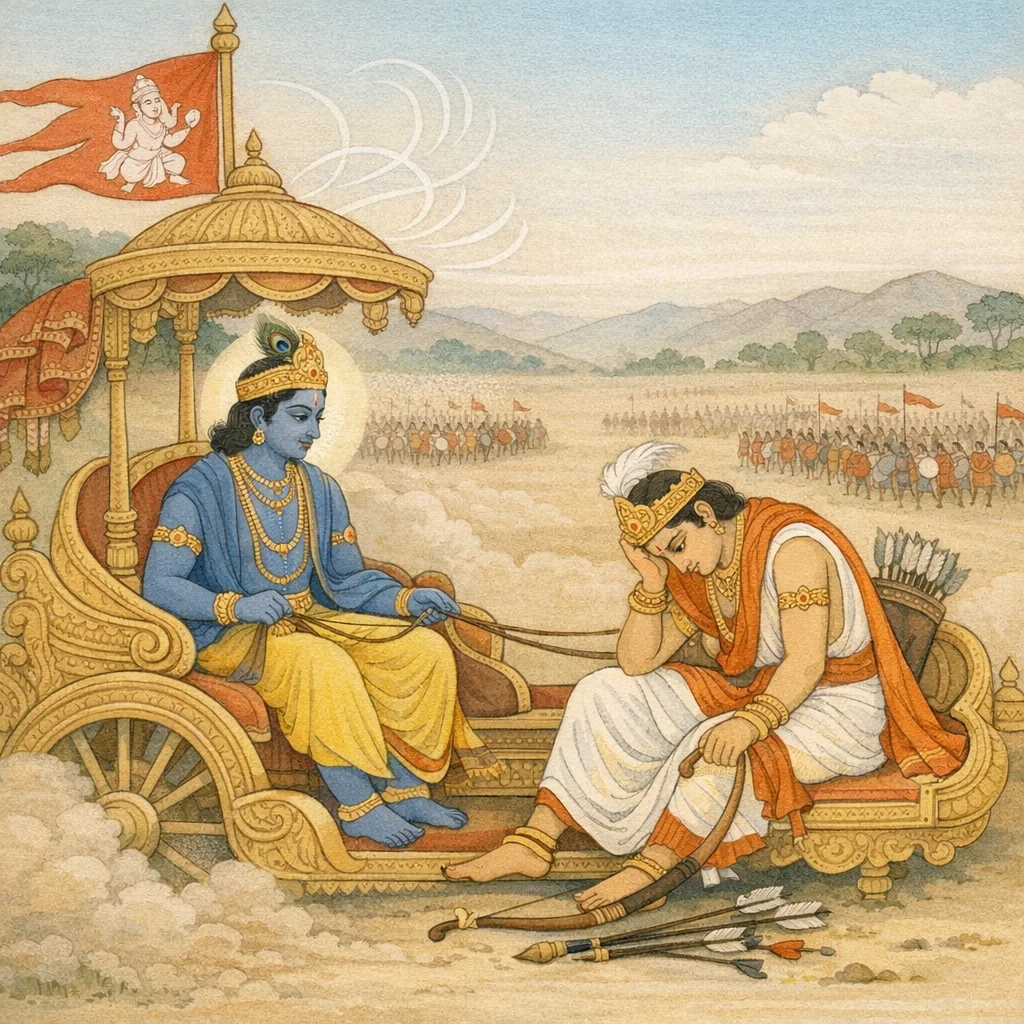
Chapter 1: Arjuna Vishada Yoga
The Yoga of Arjuna's Despondency
Arjuna's crisis of duty on the battlefield of Kurukshetra
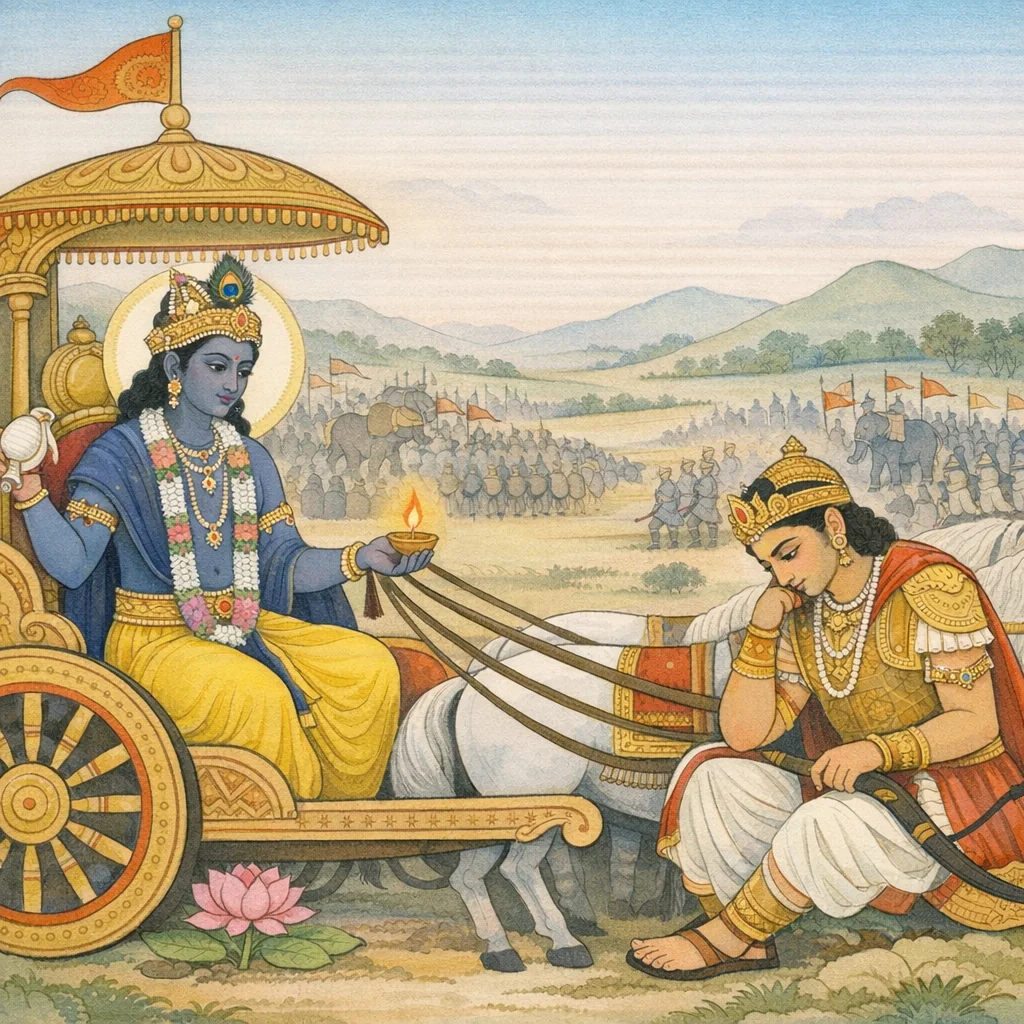
Chapter 2: Sankhya Yoga
The Yoga of Knowledge
Krishna reveals the eternal nature of the soul and the path of wisdom
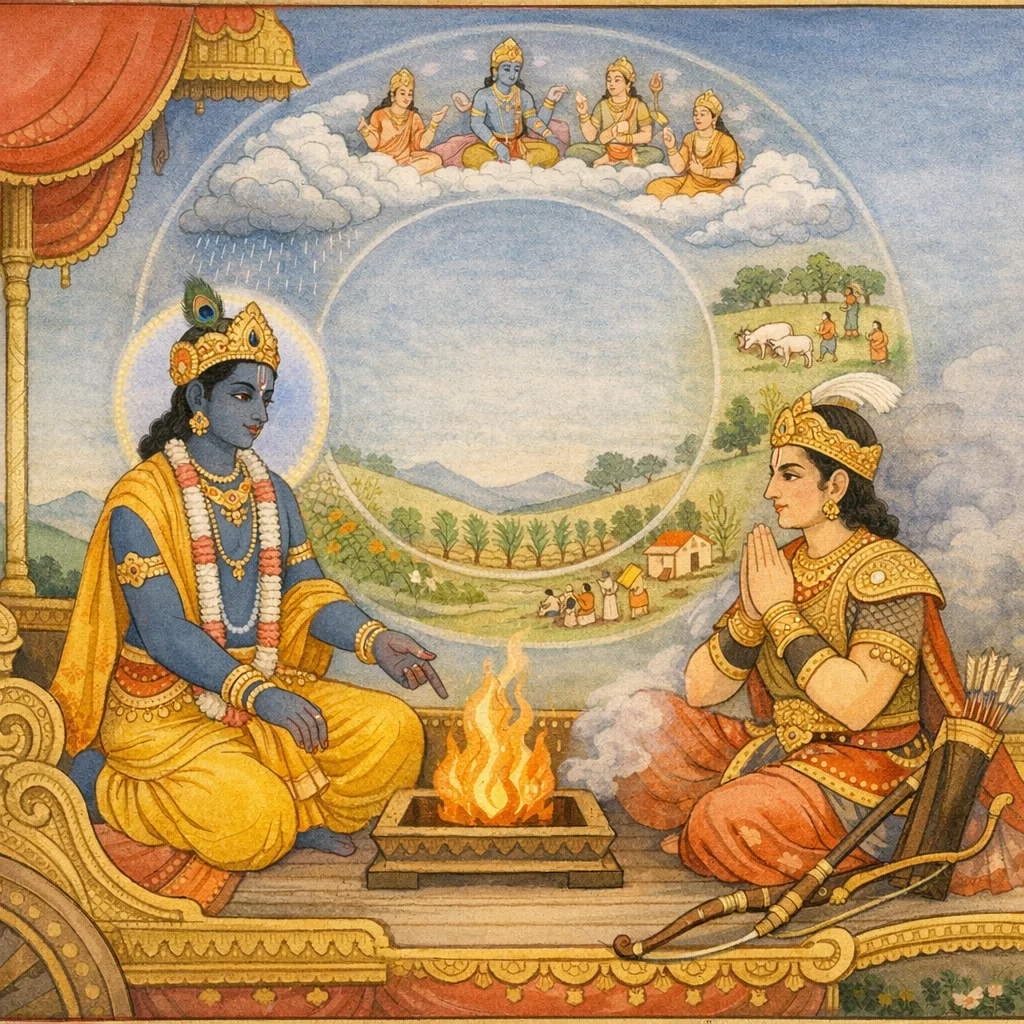
Chapter 3: Karma Yoga
The Yoga of Action
The science of selfless action and duty without attachment
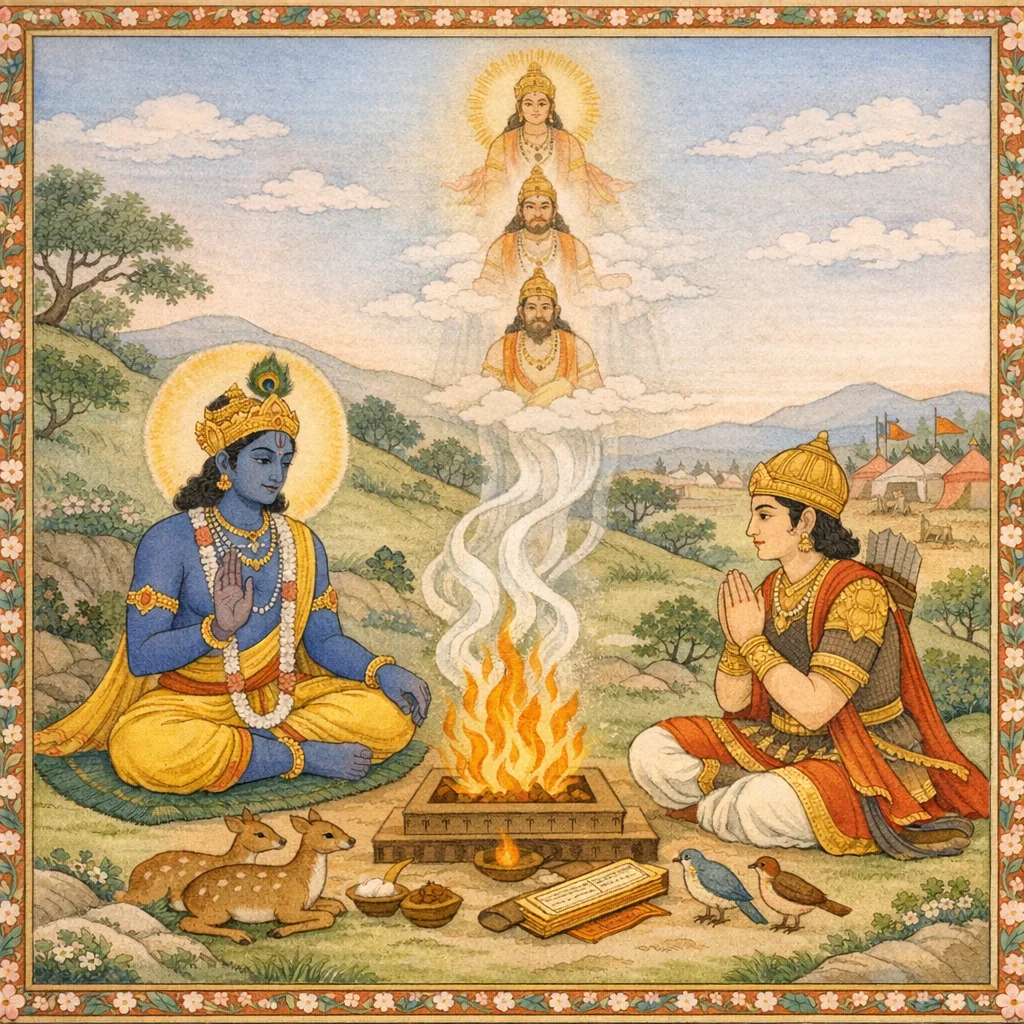
Chapter 4: Jnana Karma Sannyasa Yoga
The Yoga of Knowledge and Renunciation of Action
Integration of knowledge and action for spiritual liberation
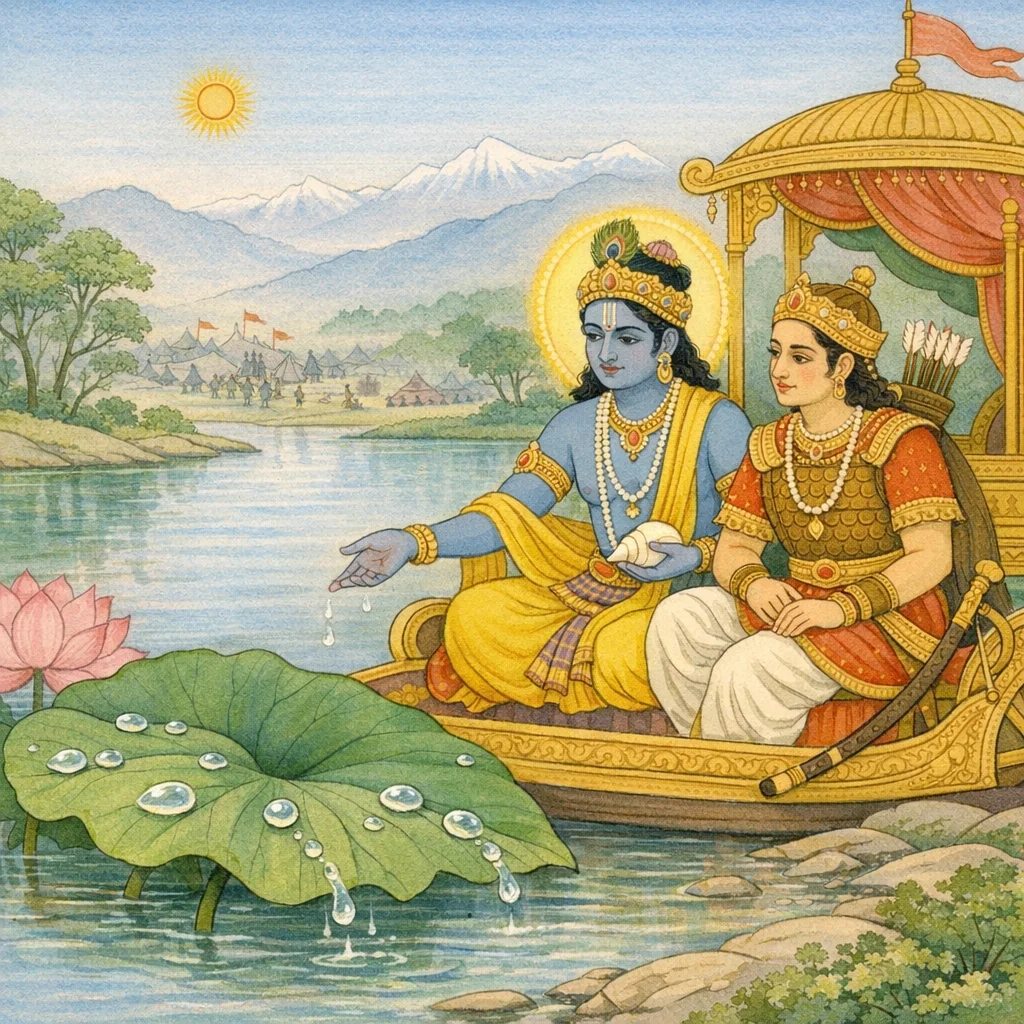
Chapter 5: Karma Sannyasa Yoga
The Yoga of Renunciation
True renunciation through selfless action and meditation
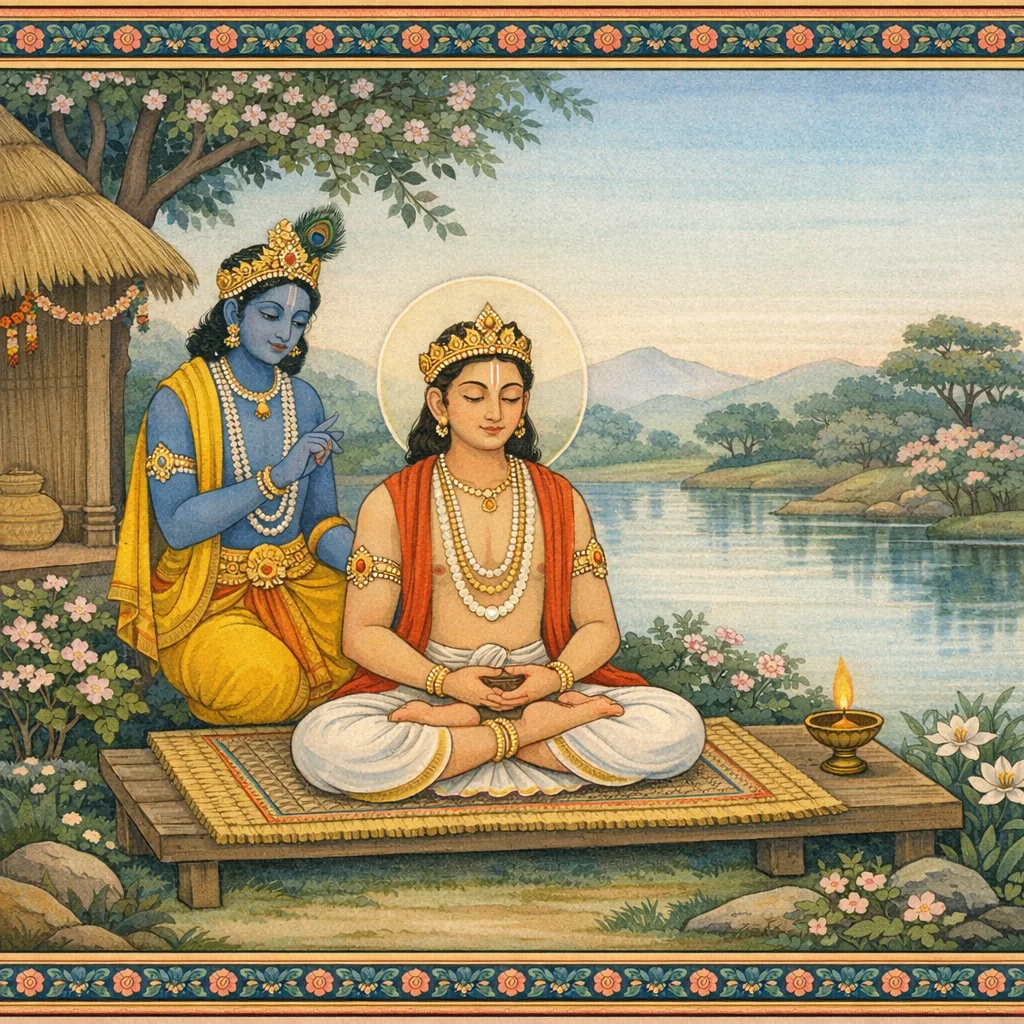
Chapter 6: Dhyana Yoga
The Yoga of Meditation
The practice of meditation and mastery over the mind
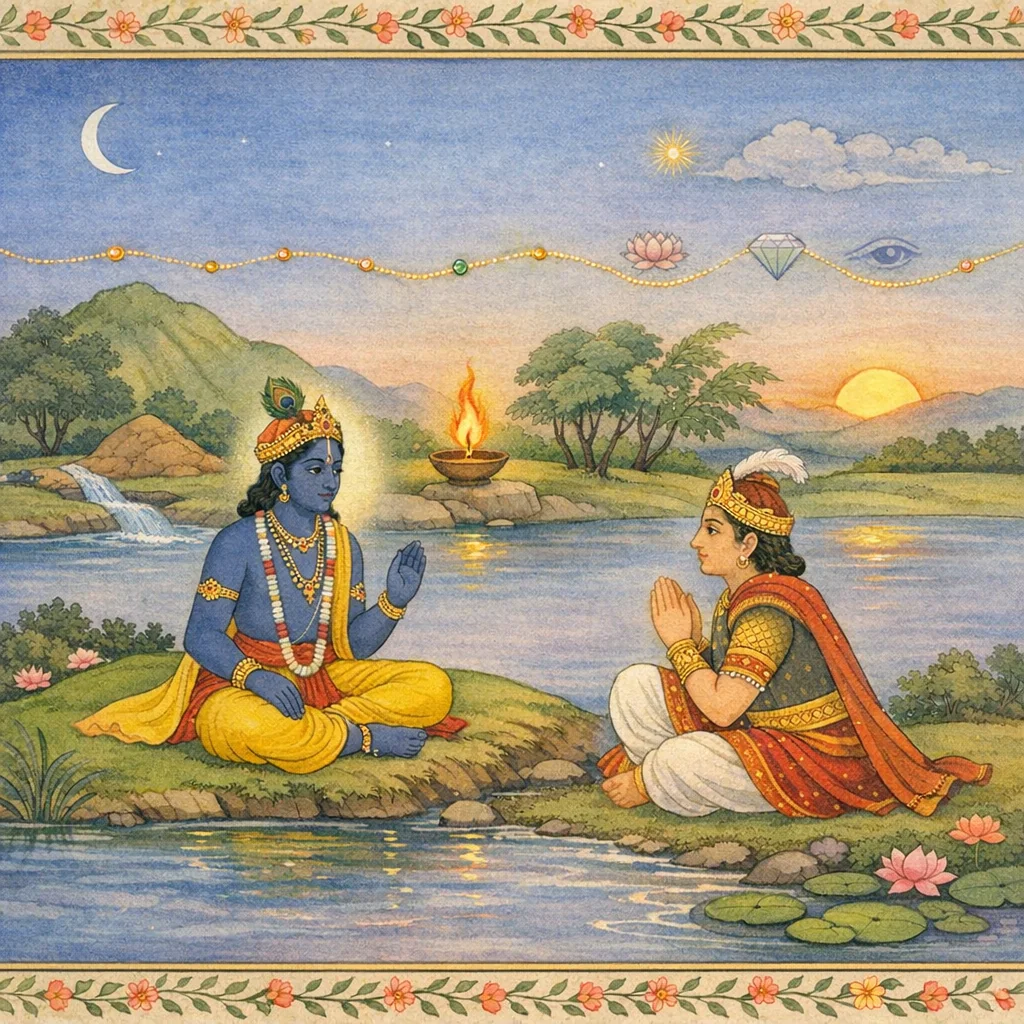
Chapter 7: Jnana Vijnana Yoga
The Yoga of Knowledge and Realization
Complete knowledge of the divine nature and manifest creation
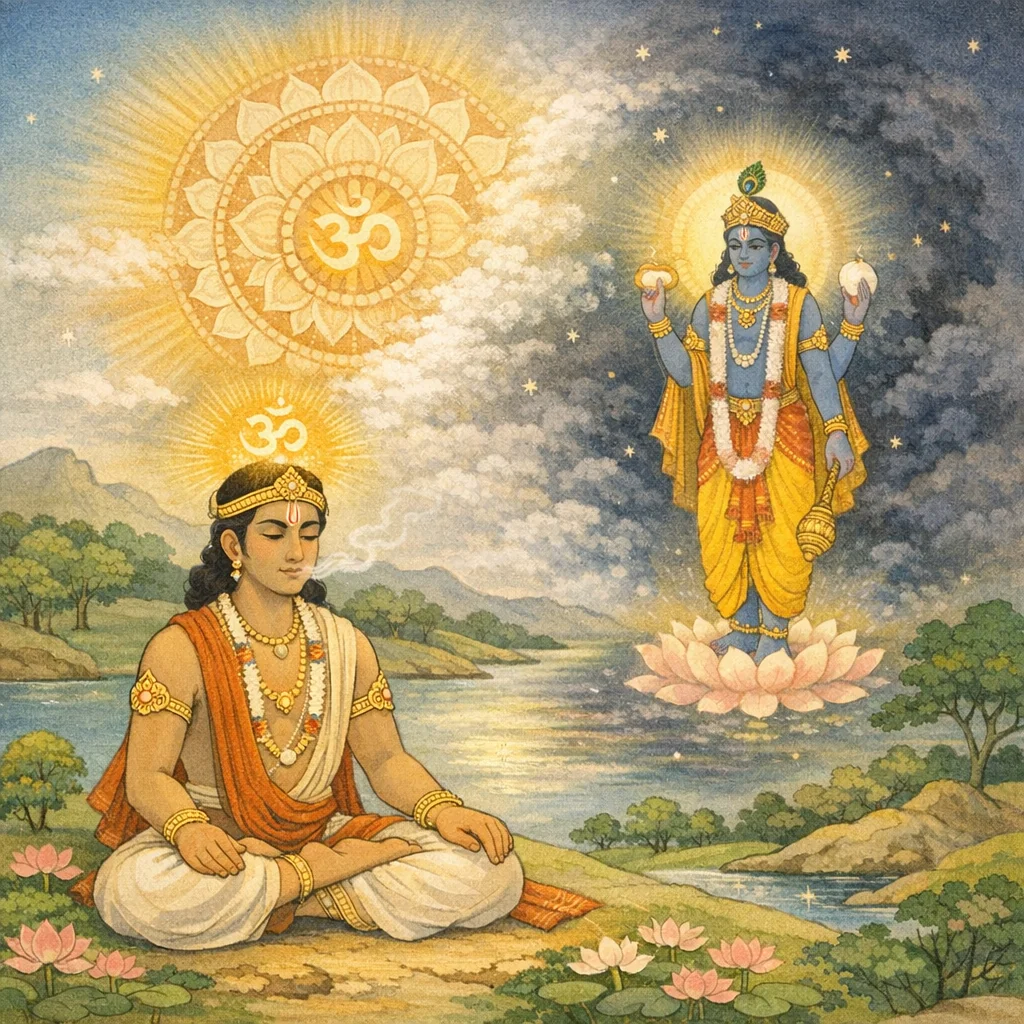
Chapter 8: Akshara Brahma Yoga
The Yoga of the Imperishable Brahman
The imperishable Brahman and the moment of death
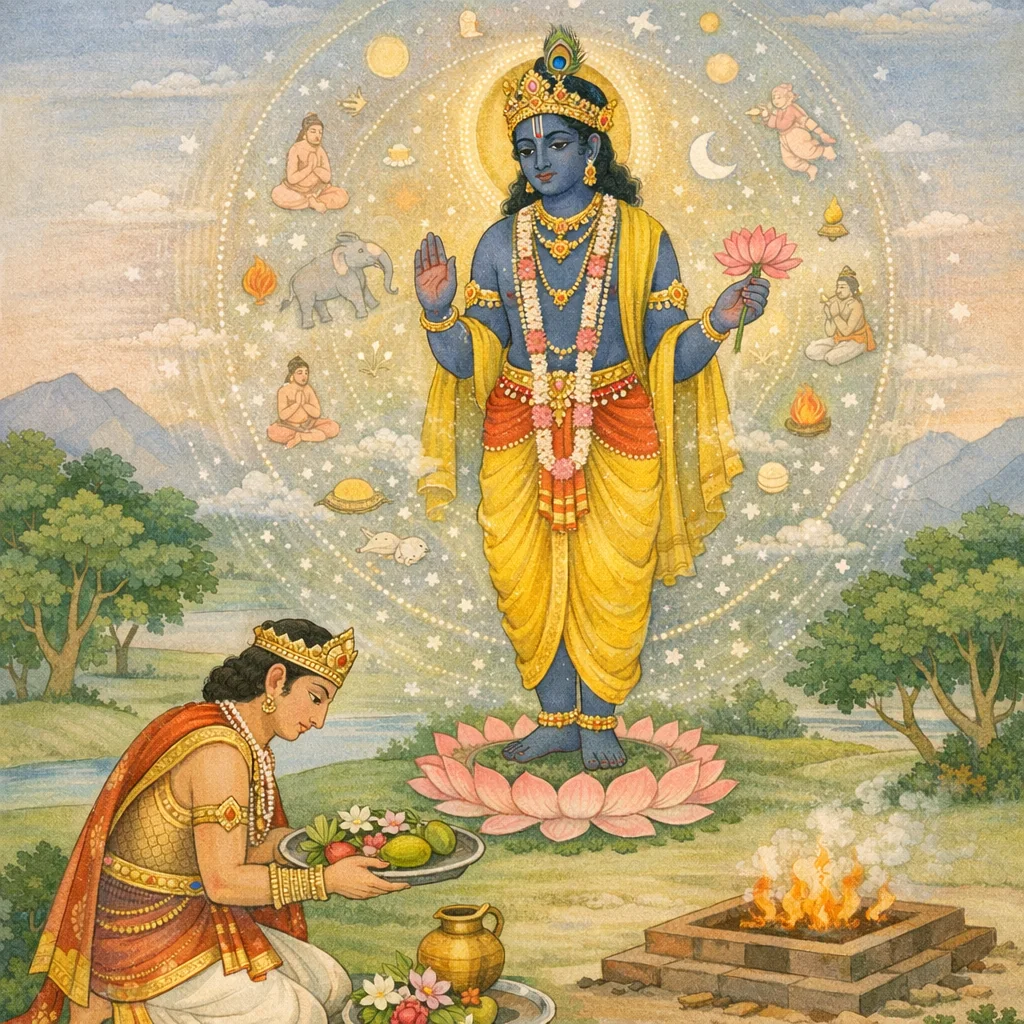
Chapter 9: Raja Vidya Raja Guhya Yoga
The Yoga of Royal Knowledge
The supreme secret and king of all knowledge
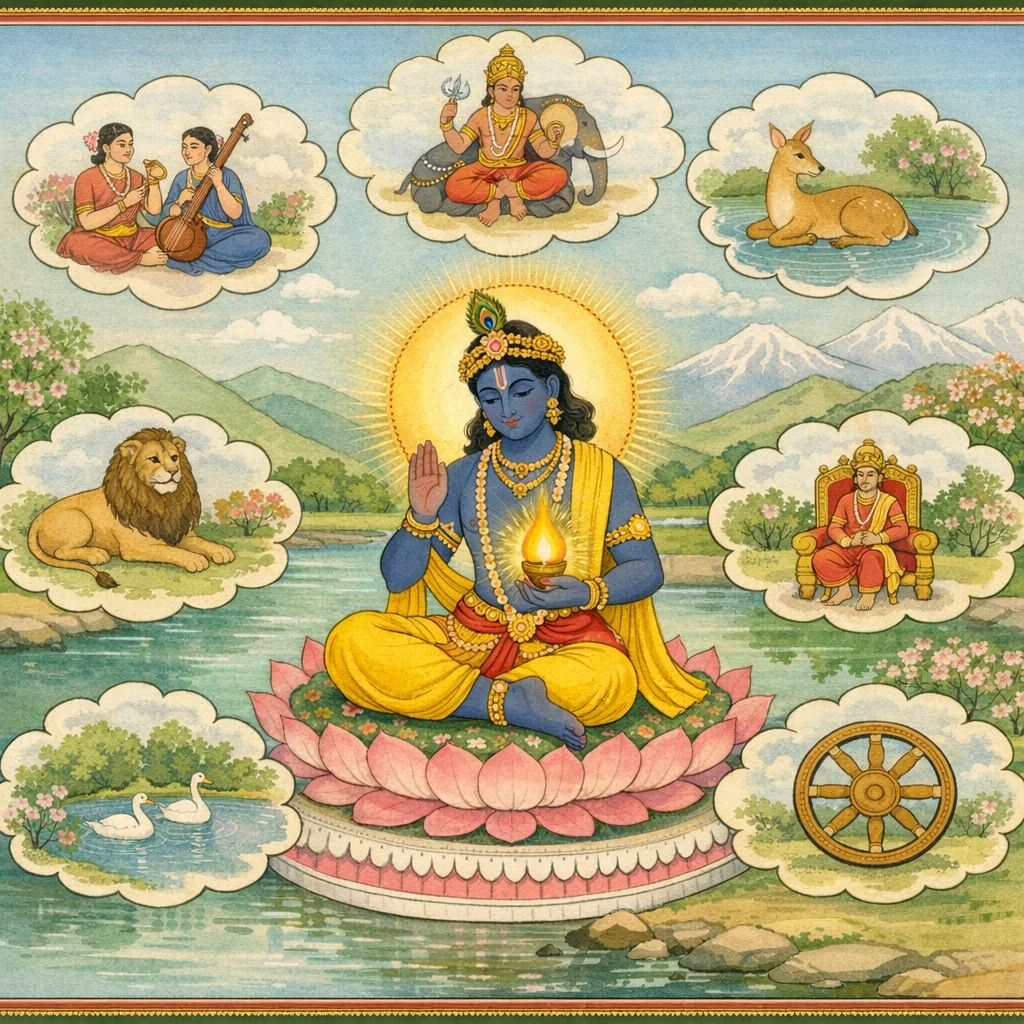
Chapter 10: Vibhuti Yoga
The Yoga of Divine Manifestations
Krishna reveals His divine opulences pervading all creation
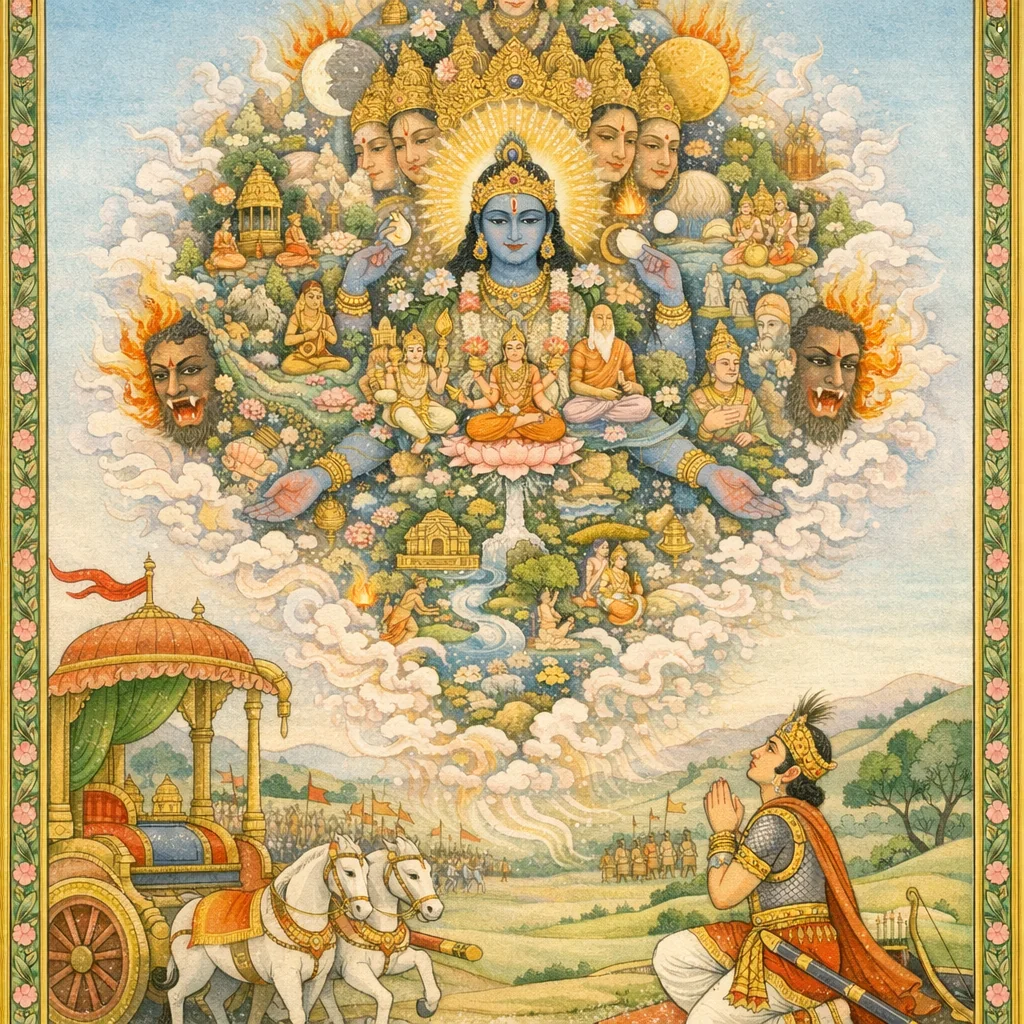
Chapter 11: Vishwarupa Darshana Yoga
The Yoga of the Cosmic Vision
Arjuna witnesses Krishna's universal cosmic form
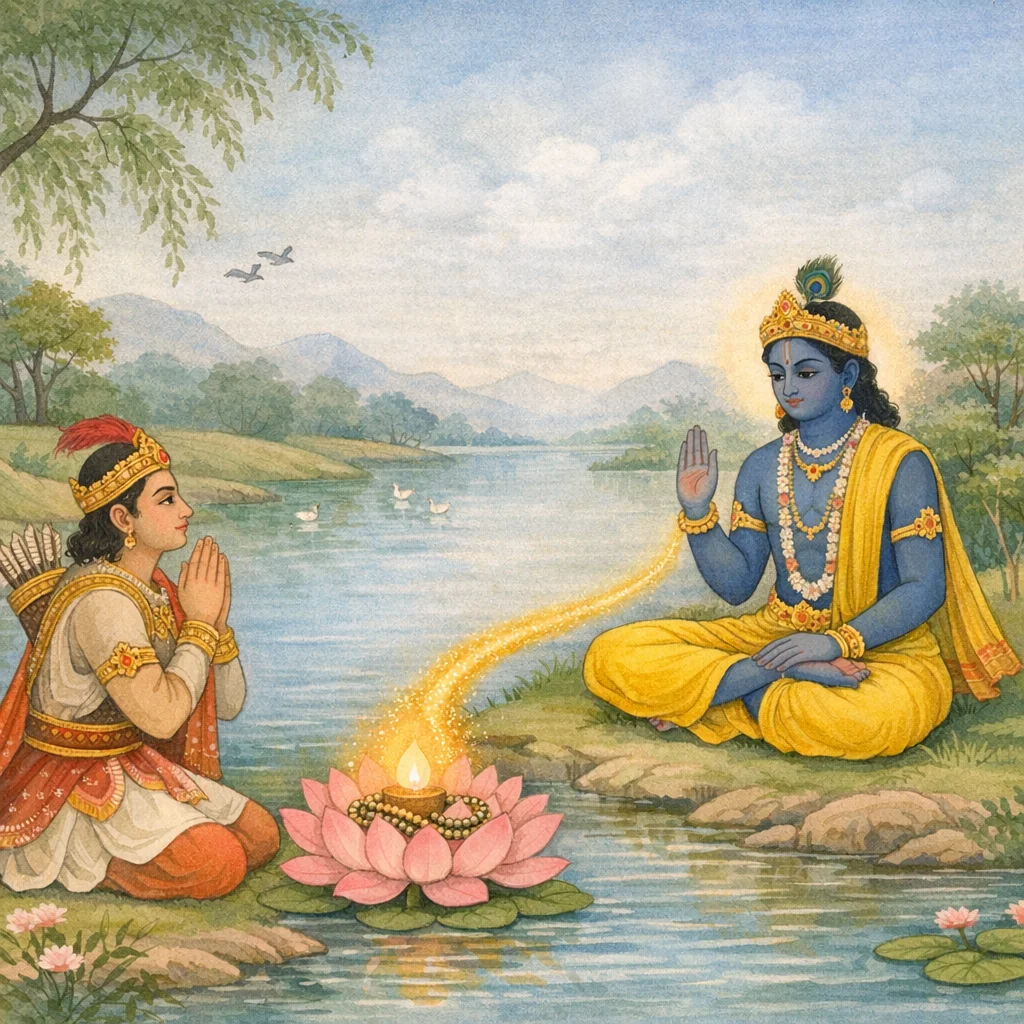
Chapter 12: Bhakti Yoga
The Yoga of Devotion
The supreme path of devotion and love for the Divine
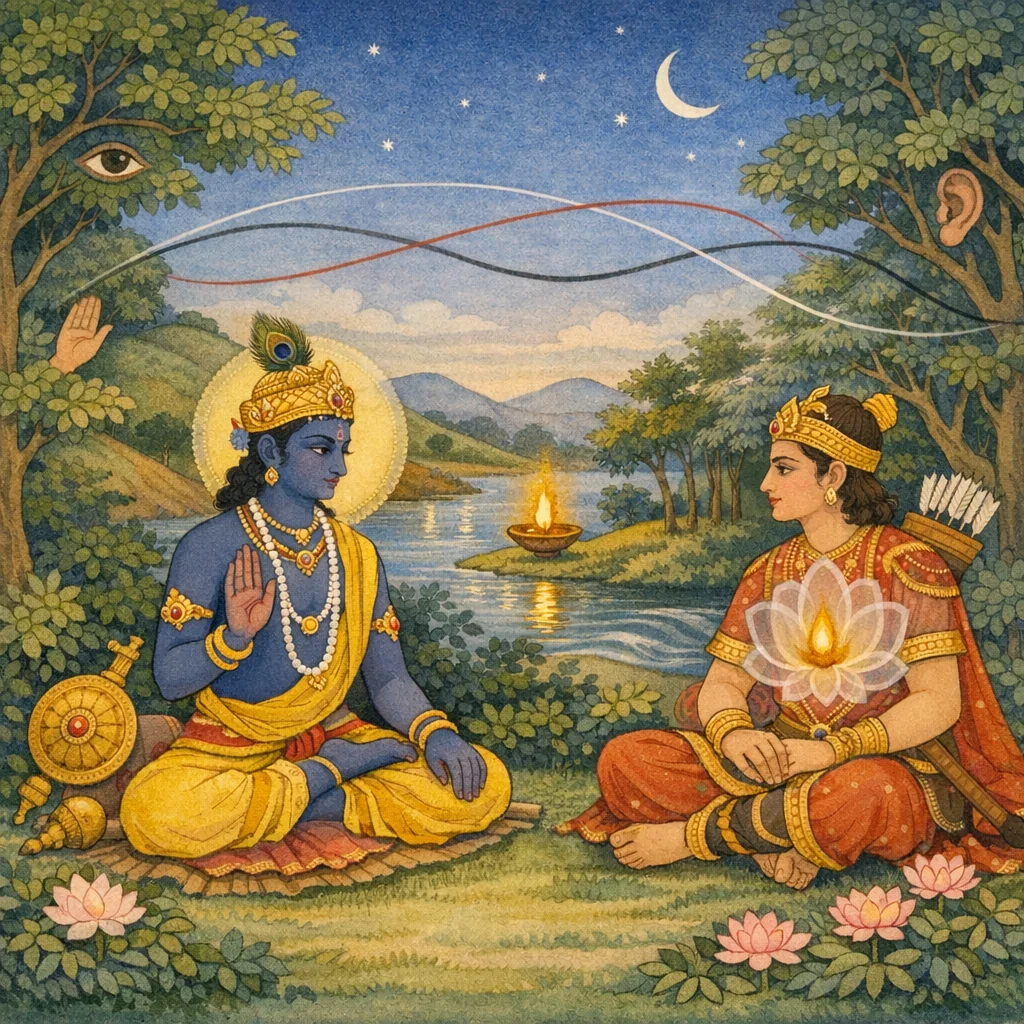
Chapter 13: Kshetra Kshetrajna Vibhaga Yoga
The Yoga of the Field and the Knower
Distinction between the body (field) and the soul (knower)
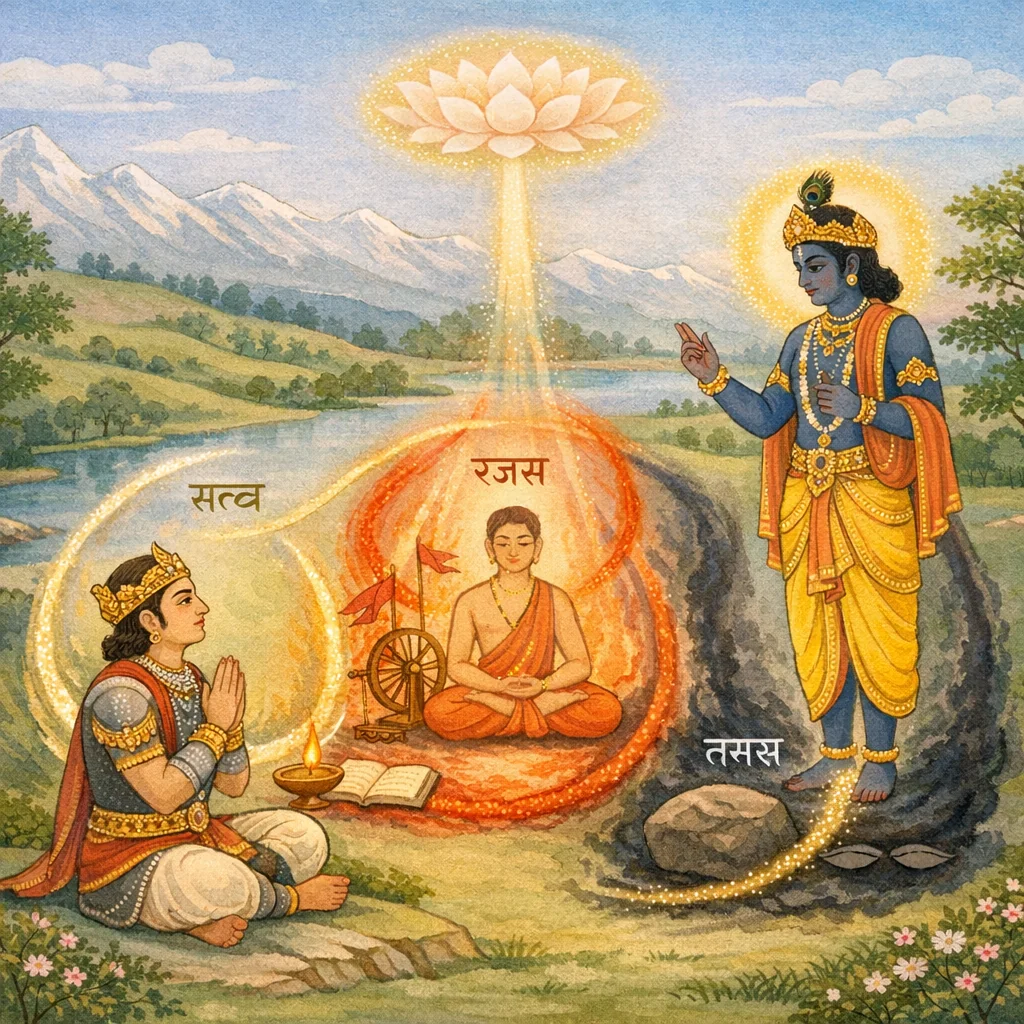
Chapter 14: Gunatraya Vibhaga Yoga
The Yoga of the Three Gunas
The three qualities of material nature and transcendence
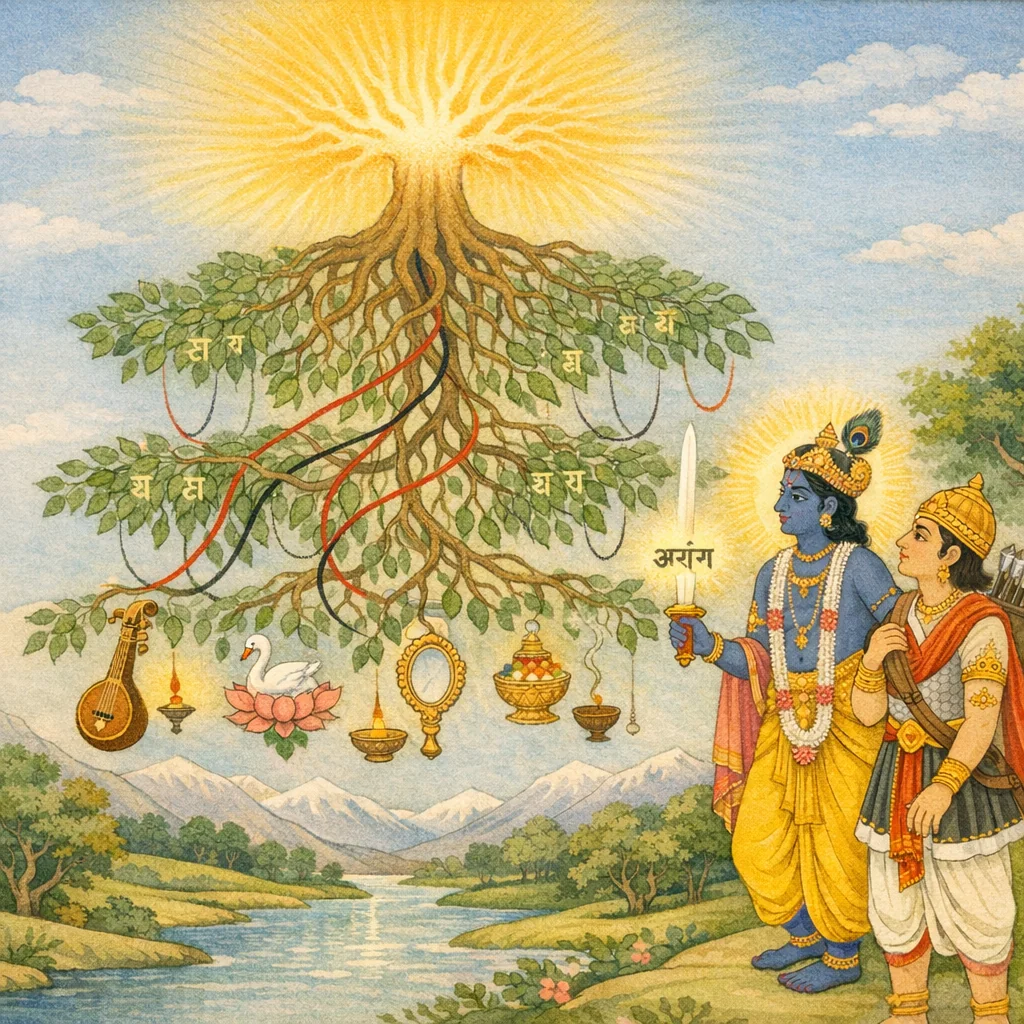
Chapter 15: Purushottama Yoga
The Yoga of the Supreme Person
The supreme being beyond the perishable and imperishable
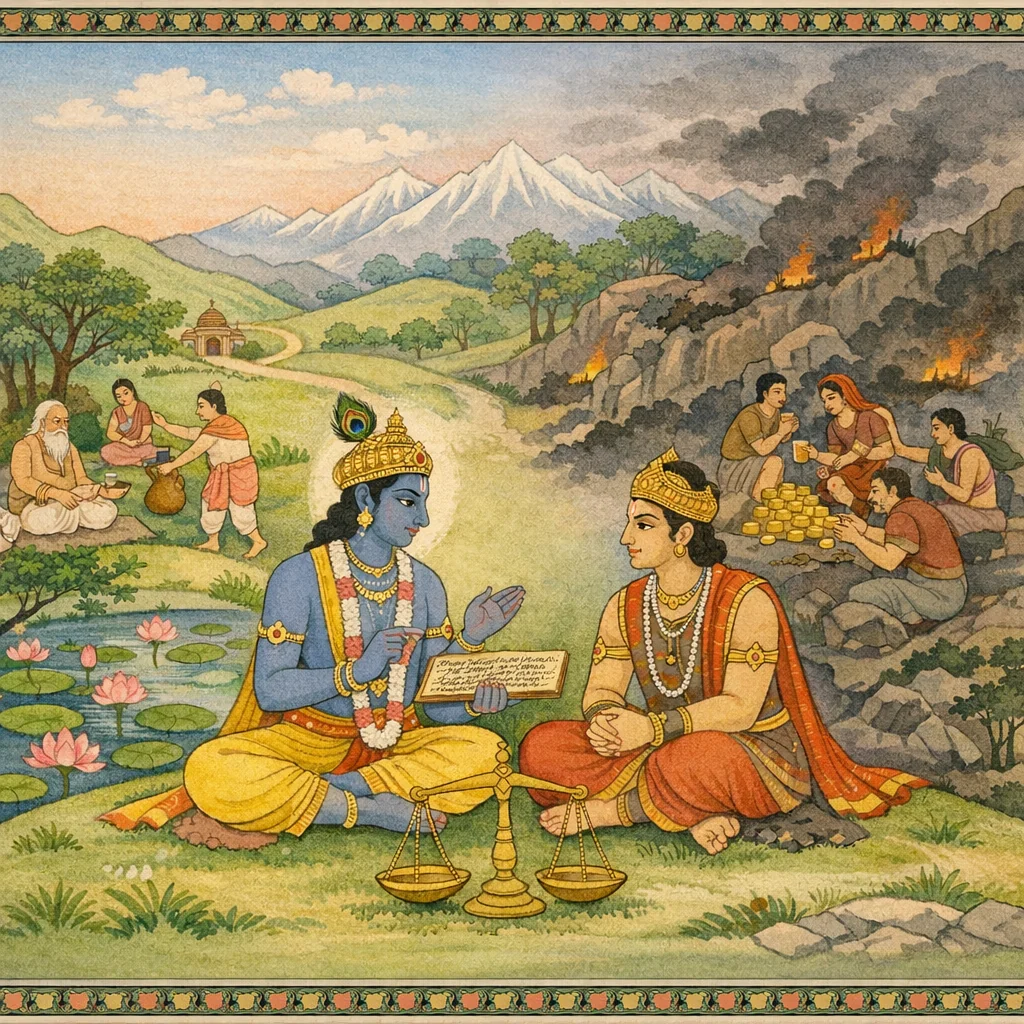
Chapter 16: Daivasura Sampad Vibhaga Yoga
The Yoga of Divine and Demonic Natures
Divine and demonic qualities and their consequences
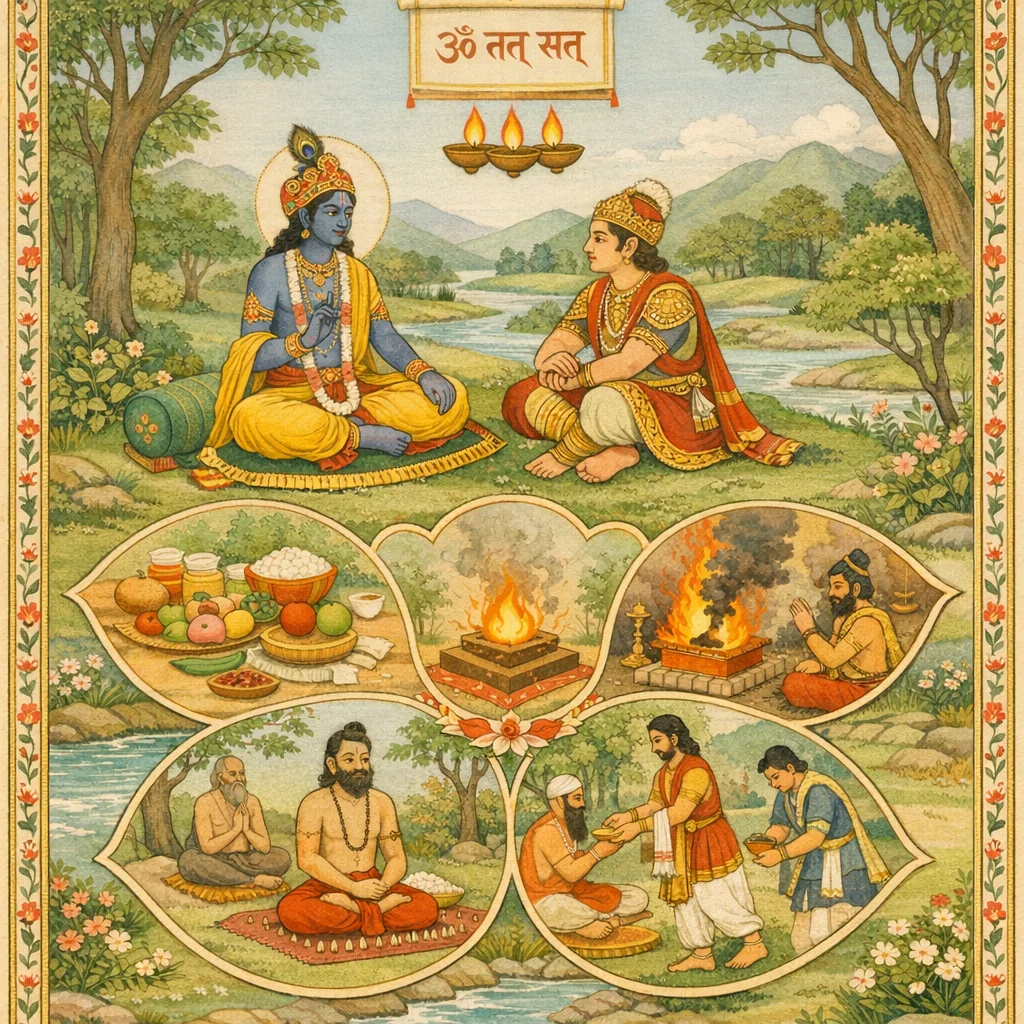
Chapter 17: Shraddhatraya Vibhaga Yoga
The Yoga of Three Types of Faith
Three kinds of faith, food, worship, and charity
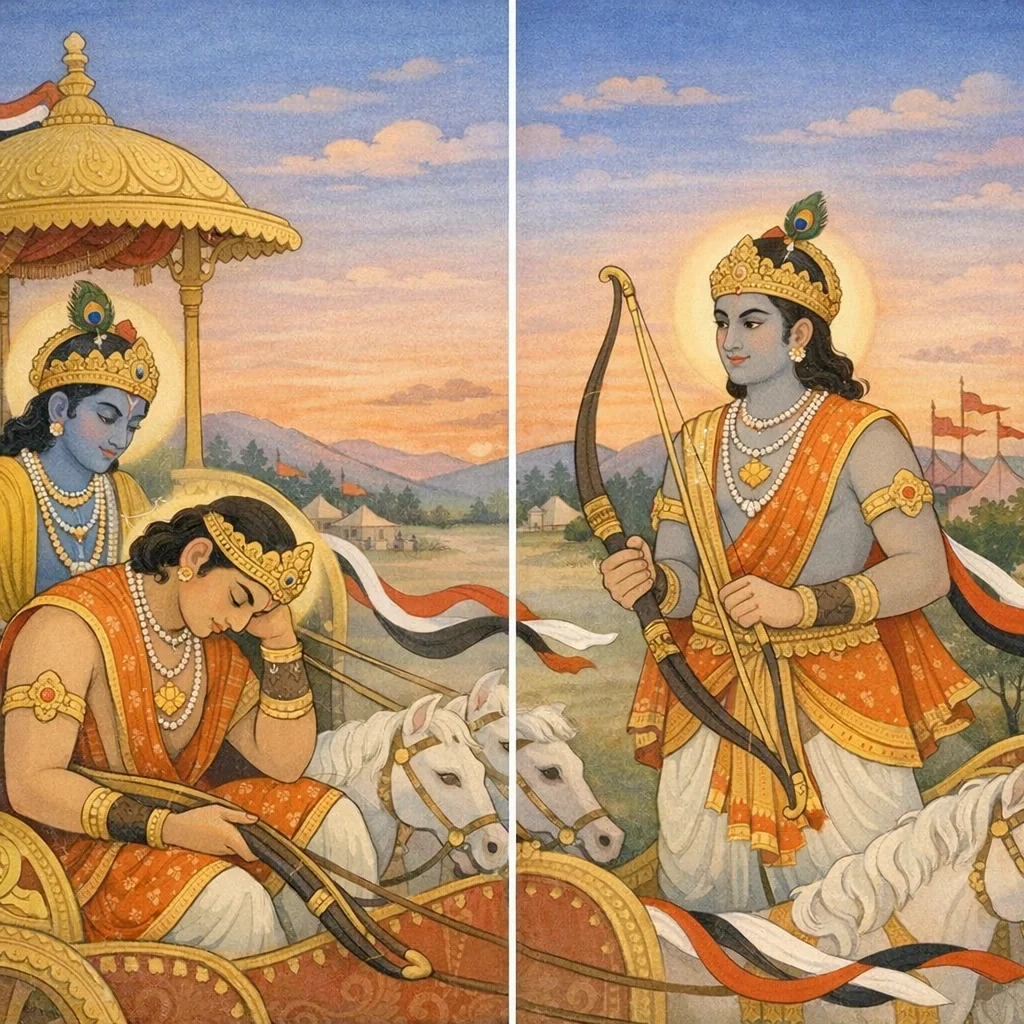
Chapter 18: Moksha Sannyasa Yoga
The Yoga of Liberation through Renunciation
Final teaching on liberation, duty, and surrender to the Divine
Frequently Asked Questions
Chapter 1 maps how acute stress can collapse discernment: Arjuna’s attention shifts from purpose to personal attachment, producing somatic anxiety, cognitive doubt, and withdrawal from agency. The takeaway is diagnostic—recognizing Vishada and Moha as conditions that require disciplined clarity rather than impulsive avoidance.
This chapter primarily prepares the metaphysical inquiry rather than completing it: it shows that identity grounded only in relational roles and outcomes destabilizes decision-making. The deeper teaching about the Self (Atman) is not yet stated explicitly, but the need for a stable inner basis beyond changing social ties is clearly established.
It does not resolve the dilemma directly; it formalizes it. By placing Arjuna between both sides and having him articulate ethical, social, and spiritual concerns, the text establishes the precise problem Yoga must solve—how to act in alignment with dharma when emotions and attachments obscure judgment.
Use Chapter 1 as a leadership and mental-clarity template: (1) pause before major decisions to name the real conflict (values vs. attachment), (2) separate role-duty from fear of social fallout, (3) notice stress signals as data, not directives, and (4) seek principled guidance and a stable framework before acting—especially in high-stakes professional or family contexts.
It diagnoses crisis as attachment-driven confusion (moha) and prescribes steadiness through discernment, forbearance amid opposites, and outcome-independent action—an actionable model for mental clarity under pressure.
The chapter asserts the imperishability of the Self (ātman) and the perishability of the body, reframing fear and grief as errors of identification and establishing a basis for ethical action without inner collapse.
By shifting the dilemma from emotion-centered hesitation to dharma guided by wisdom: act according to rightful responsibility while relinquishing possessiveness over results, thereby avoiding both avoidance and despair.
Use it as a leadership and resilience framework: clarify your role-based duty, focus on controllable effort, detach from outcome fixation, practice sense-discipline, and cultivate equanimity to reduce stress and improve decision quality.
It reframes inner conflict as a problem of attachment and egoic doership: clarity arises when one accepts action as unavoidable, performs duty without craving for outcomes, and regulates the senses so that desire does not hijack discernment.
Agency is explained through guṇas and prakṛti: actions occur through nature’s qualities, while the Self is higher than senses, mind, and intellect. Freedom comes from identifying with the Self rather than with the ego’s claim, “I am the doer.”