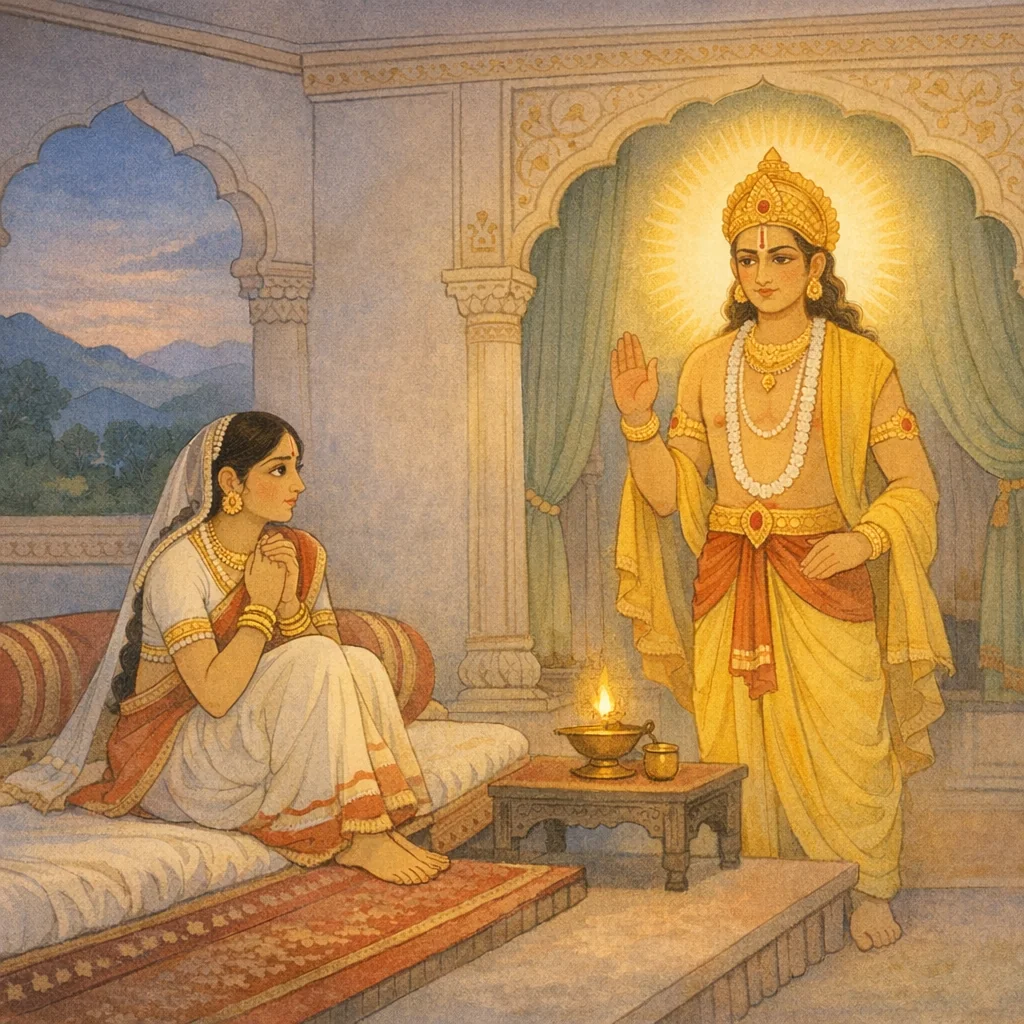
Adhyaya 310
Chapter Arc: कुन्ती के बाल्यकाल का वह क्षण, जब जिज्ञासा और तप-बल से प्राप्त मन्त्र उसे सूर्यदेव का आवाहन करा देता है—और देवता स्वयं उपस्थित होकर उत्तर माँगते हैं। → कुन्ती भय से काँप उठती है: वह सूर्य को लौटा नहीं सकती, पर स्वीकार करने पर लोक-लज्जा, पिता/ब्राह्मण के शाप का संकट, और अपने भविष्य का अन्धकार—सब एक साथ सामने खड़े हो जाते हैं। सूर्यदेव अपने दिव्य स्वभाव का उद्घोष करते हैं कि उनके लिए कोई आवरण नहीं; वे सबको भीतर-बाहर से देखते हैं, और अपने आगमन को असत्य/अपमानित नहीं होने देंगे। → कुन्ती शर्त रखती है: यदि पुत्र हो तो वह कुण्डली-कवची, महाबाहु, महाबल, शूर और अद्वितीय हो—और सूर्यदेव योगबल से उसे तेज से मोहित कर, बिना दूषण के गर्भाधान करते हैं। → सूर्यदेव आश्वासन देते हैं कि कुन्ती की पवित्रता अक्षुण्ण रहेगी; वह पुनः चेतना/सामान्य अवस्था को प्राप्त करती है, और नियति का बीज उसके गर्भ में स्थापित हो जाता है। → गर्भ से उत्पन्न होने वाला वह दिव्य पुत्र आगे चलकर किस प्रकार लोक-धर्म, कुल-मान और युद्ध-भाग्य को उलट देगा—यह प्रश्न अध्याय के अंत में धड़कता रह जाता है।
Shlokas
Verse 1
हि आन () है 7 आम - इसी अध्यायके चौदहवें श्लोकमें सूर्यदेवने उस कारणका स्पष्टीकरण किया है। सप्ताधिकत्रिशततमो< ध्याय: सूर्यद्वारा कुन्तीके उदरमें गर्भस्थापन वैशम्पायन उवाच सातु कन्या बहुविध॑ ब्रुवन्ती मधुरं वच: । अनुनेतुं सहस्रांशुंन शशाक मनस्विनी,वैशम्पायनजी कहते हैं-जनमेजय! इस प्रकार राजकन्या मनस्विनी कुन्ती नाना प्रकारसे मधुर वचन कहकर अनुनय-विनय करनेपर भी भगवान् सूर्यको मनानेमें सफल न हो सकी
Vaiśampāyana said: The maiden Kuntī, though resolute and speaking many kinds of sweet and persuasive words, was still unable to placate Sahasrāṁśu (the Sun-god). The episode underscores the moral tension between youthful impulsiveness and the inexorable force of a divine boon once invoked.
Verse 2
न शशाक यदा बाला प्रत्याख्यातुं तमोनुदम् । भीता शापात् ततो राजन् दध्यौ दीर्घमथान्तरम्,राजन्! जब वह बाला अन्धकारनाशक भगवान् सूर्यदेवको टाल न सकी, तब शापसे भयभीत हो दीर्घकालतक मन-ही-मन कुछ सोचने लगी
Vaiśaṃpāyana said: When the young maiden could not refuse the dispeller of darkness, the Sun-god, then, O king, frightened of a curse, she pondered inwardly for a long time, turning the matter over in her mind. The passage underscores the moral tension between fear of divine retribution and personal agency in the face of an overpowering divine approach.
Verse 3
अनागस: पितु: शापो ब्राह्मणस्य तथैव च । मन्निमित्त: कथं न स्यात् क्रुद्धादस्माद् विभावसो:,उसने सोचा कि “क्या उपाय करूँ? जिससे मेरे कारण मेरे निरपराध पिता तथा निर्दोष ब्राह्मणको क्रोधमें भरे हुए इन सूर्यदेवसे शाप न प्राप्त हो
Vaiśampāyana said: “How could a curse from this enraged Vibhāvasu (the Sun/Fire-like deity) not fall—because of me—upon my blameless father and likewise upon the innocent brāhmaṇa?” Thus he reflected on what remedy might prevent others from suffering punishment for a fault not their own, highlighting the ethical urgency to avert harm caused by one’s own involvement.
Verse 4
बालेनापि सता मोहादू भृशं पापकृतान्यपि । नाभ्यासादयितव्यानि तेजांसि च तपांसि च,“सज्जन बालकको भी चाहिये कि वह अत्यन्त मोहके कारण पापशून्य, तेजस्वी तथा तपस्वी पुरुषोंके अत्यन्त निकट न जाय
Vaiśaṃpāyana said: Even a well-meaning boy, when overcome by delusion, may commit grievous wrongs. Therefore he should not rashly approach or press too close to men of spiritual radiance and severe austerity; the power of such ascetics is not to be handled lightly, and heedless proximity can lead to harm and moral fault.
Verse 5
साहमद्य भृशं भीता गृहीता च करे भृशम् | कथं त्वकार्य कुर्या वै प्रदानं ह्वात्मन: स्वयम्,'परंतु मैं तो आज अत्यन्त भयभीत हो भगवान् सूर्यदेवके हाथमें पड़ गयी हूँ, तो भी स्वयं अपने शरीरको देने-जैसा न करनेयोग्य नीच कर्म कैसे करूँ?”
Vaiśampāyana said: “Today I am utterly terrified and have been firmly seized by the hand; yet how could I commit an unworthy, forbidden act—how could I give away my own person?”
Verse 6
वैशम्पायन उवाच सा वै शापपरित्रस्ता बहु चिन्तयती हृदा । मोहेनाभिपरीतड्री स्मयमाना पुन: पुनः
Vaiśampāyana said: Terrified by the curse, she pondered deeply within her heart. Yet, her judgment was overturned by delusion, and she kept smiling again and again—an outward sign of inner confusion in the face of moral consequence.
Verse 7
त॑ देवमब्रवीद् भीता बन्धूनां राजसत्तम । व्रीडाविह्ललया वाचा शापत्रस्ता विशाम्पते
Terrified for her kinsmen, she addressed that divine being, O best of kings. Her words came out faltering with shame, for she was shaken by the fear of a curse, O lord of the people.
Verse 8
वैशम्पायनजी कहते हैं--नृपश्रेष्ठ! कुन्ती शापसे अत्यन्त डरकर मन-ही-मन तरह- तरहकी बातें सोच रही थी। उसके सारे अंग मोहसे व्याप्त हो रहे थे। वह बार-बार आश्चर्यचवकित हो रही थी। एक ओर तो वह शापसे आतंकित थी, दूसरी ओर उसे भाई- बन्धुओंका भय लगा हुआ था। भूपाल! उस दशामें वह लज्जाके कारण विशृंखल वाणीद्वारा सूर्यदेवसे इस प्रकार बोली ।। कुन्त्युवाच पिता मे प्रियते देव माता चान्ये च बान्धवा: । न तेषु प्रियमाणेषु विधिलोपो भवेदयम्,कुन्तीने कहा--देव! मेरे पिता, माता तथा अन्य बान्धव जीवित हैं। उन सबके जीते- जी स्वयं आत्मदान करनेपर कहीं शास्त्रीय विधिका लोप न हो जाय?
Vaiśampāyana said: O best of kings, Kuntī—terrified by the curse—turned many thoughts over in her mind. Delusion spread through all her limbs; again and again she was struck with astonishment. On one side she was shaken by fear of the curse, and on the other she dreaded the reproach and danger involving her brothers and kinsmen. In that condition, out of shame and with faltering speech, she addressed the Sun-god as follows. Kuntī said: O god, my father, my mother, and my other relatives are still alive. While they yet live, if I were to give myself away, would this not become a lapse of prescribed conduct—a violation of proper rule?
Verse 9
त्वया तु संगमो देव यदि स्याद् विधिवर्जित: । मन्निमित्तं कुलस्यास्य लोके कीर्ति्निशेत् ततः,भगवन! यदि आपके साथ मेरा वेदोक्त विधिके विपरीत समागम हो तो मेरे ही कारण जगत्में इस कुलकी कीर्ति नष्ट हो जायगी
Vaiśaṃpāyana said: “O Lord, if my union with you were to occur in a manner contrary to the Vedic rule, then because of me the good fame of this lineage would be destroyed in the eyes of the world.”
Verse 10
अथवा धर्ममेतं त्वं मन्यसे तपतां वर । ऋते प्रदानाद् बन्धुभ्यस्तव काम॑ करोम्यहम्,अथवा तपनेवालोंमें श्रेष्ठ दिवाकर! यदि बन्धुजनोंके दिये बिना ही मेरे साथ अपने समागमको आप धर्मयुक्त समझते हों तो मैं आपकी इच्छा पूर्ण कर सकती हूँ
Or, O best among ascetics, if you regard this as righteous—namely, union with me even without the formal giving by my kinsmen—then I will fulfill your desire. The speaker frames consent and union within the contested boundaries of dharma, questioning whether legitimacy depends upon familial sanction or upon the parties’ own understanding of righteousness.
Verse 11
आत्मप्रदानं दुधर्ष तव कृत्वा सती त्वहम् । त्वयि धर्मो यशश्रैव कीर्तिरायुश्व देहिनाम्,दुर्धर्ष देव! क्या मैं आपको आत्मदान करके भी सती-साध्वी रह सकती हूँ? आपमें ही देहधारियोंके धर्म, यश, कीर्ति तथा आयु प्रतिष्ठित हैं
‘O invincible one, if I were to offer myself to you—could I still remain a chaste and faithful wife? For in you alone are established the dharma, honor, fame, and even the lifespan of embodied beings.’
Verse 12
सूर्य उवाच नते पिता न ते माता गुरवो वा शुचिस्मिते । प्रभवन्ति वरारोहे भद्रं ते शूणु मे वच:,भगवान् सूर्यने कहा--शुचिस्मिते! वरारोहे! तुम्हारा कल्याण हो। तुम मेरी बात सुनो। तुम्हारे पिता, माता अथवा अन्य गुरुजन तुम्हें (इस कामसे रोकनेमें) समर्थ नहीं हैं
Surya said: “O you of pure smiles, O noble maiden—may good befall you. Listen to my words. Neither your father nor your mother, nor even your elders and teachers, have the power to restrain you in this matter.”
Verse 13
सर्वान् कामयते यस्मात् कमेर्धातोश्व॒ भाविनि । तस्मात् कन्येह सुश्रोणि स्वतन्त्रा वरवर्णिनि,सुन्दर भाववाली कुन्ती! “कम्' धातुसे कन्या शब्दकी सिद्धि होती है। सुन्दरी! वह (स्वयंवरमें आये हुए) सब वरोंमेंसे किसीको भी स्वतन्त्रतापूर्वक अपनी कामनाका विषय बना सकती है; इसीलिये इस जगत्में उसे कन्या कहा गया है
Sūrya said: “Because she may desire (choose) any of them—deriving from the verbal root kam (‘to desire’)—therefore, O maiden of fair hips, O lovely one, she is called ‘kanyā’ in this world. In a svayaṃvara, she is free to make any of the assembled suitors the object of her choice.”
Verse 14
नाधर्मश्चरित: कश्चित् त्वया भवति भाविनि । अधर्म कुत एवाहं वरेयं लोककाम्यया,कुन्ती! मेरे साथ समागम करनेसे तुम्हारे द्वारा कोई अधर्म नहीं बन रहा है। भला! मैं लौकिक कामवासनाके वशीभूत होकर अधर्मका वरण कैसे कर सकता हूँ?
Sūrya said: “No unrighteousness is incurred by you in this act, O noble lady. How could I ever choose unrighteousness, being the Sun, merely out of worldly desire? O Kuntī!”
Verse 15
अनावृता: स्त्रिय: सर्वा नराश्न वरवर्णिनि । स्वभाव एष लोकानां विकारोडन्य इति स्मृत:,वरवर्णिनि! मेरे लिये सभी स्त्रियाँ और पुरुष आवरणरहित हैं; क्योंकि मैं सबका साक्षी हूँ। जो अन्य सब विकार हैं, यह तो प्राकृत मनुष्योंका स्वभाव माना गया है
Sūrya said: “O fair-complexioned lady, for me all women and all men are without any covering, for I am the witness of all. As for the other changes and distortions of conduct, this—being seen as such—is remembered as the natural disposition of ordinary people.”
Verse 16
सा मया सह संगम्य पुनः कन्या भविष्यसि । पुत्रश्न ते महाबाहुर्भविष्यति महायशा:,तुम मेरे साथ समागम करके पुनः कन्या ही बनी रहोगी और तुम्हें महाबाहु एवं महायशस्वी पुत्र प्राप्त होगा
Having united with me, you will become a maiden again. And a son will be born to you—mighty-armed and of great renown. In this assurance, the Sun-god frames the encounter as a divinely sanctioned act that preserves the woman’s social standing while granting her an extraordinary child, highlighting the tension between personal vulnerability and the protective power of a boon.
Verse 17
कुन्त्युवाच यदि पुत्रो मम भवेत् त्वत्त: सर्वतमोनुद । कुण्डली कवची शूरो महाबाहुर्महाबल:,कुन्ती बोली--समस्त अन्धकारको दूर करनेवाले सूर्यदेव! यदि आपसे मुझे पुत्र प्राप्त हो तो वह महाबाहु, महाबली तथा कुण्डल और कवचसे विभूषित शूरवीर हो
Kuntī said: “O Sūrya, dispeller of all darkness—if I were to have a son by you, let him be a heroic warrior, adorned with earrings and armor, mighty-armed and exceedingly strong.”
Verse 18
सूर्य उवाच भविष्यति महाबाहु: कुण्डली दिव्यवर्मभृत् | उभयं चामृतमयं तस्य भद्रे भविष्यति,सूर्यने कहा--भद्रे! तुम्हारा पुत्र महाबाहु, कुण्डल-धारी तथा दिव्य कवच धारण करनेवाला होगा। उसके कुण्डल और कवच दोनों अमृतमय होंगे
Surya said: “O auspicious lady, your son will be mighty-armed, wearing earrings and bearing a divine cuirass. Both his earrings and his armor will be of an immortal, death-defying nature.”
Verse 19
कुन्त्युवाच यद्येतदमृतादस्ति कुण्डले वर्म चोत्तमम् । मम पुत्रस्य यं वै त्वं मत्त उत्पादयिष्यसि,कुन्ती बोली--प्रभो! आप मेरे गर्भसे जिसको जन्म देंगे, उस मेरे पुत्रके कुण्डल और कवच यदि अमृतसे उत्पन्न हुए होंगे; तो भगवन्! आपने जैसा कहा है, उसी रूपमें मेरा आपके साथ समागम हो। आपका वह पुत्र आपके ही समान वीर्य, रूप, धैर्य, ओज तथा धर्मसे युक्त होना चाहिये
Kuntī said: “If those earrings and that excellent armor truly arise from ambrosia, belonging to the son whom you will beget upon me, then, O Lord, let my union with you take place exactly as you have declared. And may that son be endowed like you yourself—with valor, beauty, steadfastness, vigor, and righteousness.”
Verse 20
अस्तु मे सड़मो देव यथोक्तं भगवंस्त्वया । त्वद्वीर्यरूपसत्त्वौजा धर्मयुक्तो भवेत् स च,कुन्ती बोली--प्रभो! आप मेरे गर्भसे जिसको जन्म देंगे, उस मेरे पुत्रके कुण्डल और कवच यदि अमृतसे उत्पन्न हुए होंगे; तो भगवन्! आपने जैसा कहा है, उसी रूपमें मेरा आपके साथ समागम हो। आपका वह पुत्र आपके ही समान वीर्य, रूप, धैर्य, ओज तथा धर्मसे युक्त होना चाहिये
Kuntī said: “So be it, O god. Let my union with you take place exactly as you have declared. And may the son born from my womb be endowed with your own valor and potency, your beauty and noble nature, your steadfastness and vigor—and may he be firmly established in dharma.”
Verse 21
सूर्य उवाच अदित्या कुण्डले राज्ञि दत्ते मे मत्तकाशिनि । तेडस्य दास्यामि वै भीरु वर्म चैवेदमुत्तमम्,सूर्यदेवने कहा--यौवनके मदसे सुशोभित होनेवाली भीरु राजकुमारी! माता अदितिने मुझे जो कुण्डल दिये हैं, उन्हें मैं तुम्हारे इस पुत्रको दे दूँगा। साथ ही यह उत्तम कवच भी उसे अर्पित करूँगा
Sūrya said: “O timid princess, radiant with the pride of youth! The earrings that my mother Aditi gave to me—I shall indeed give them to your son. And along with them I will also bestow upon him this excellent armor.”
Verse 22
कुन्त्युवाच परम॑ भगवतन्नेवं संगमिष्ये त्वया सह । यदि पुत्रो भवेदेवं यथा वदसि गोपते,कुन्ती बोली--भगवन्! गोपते! जैसा आप कहते हैं, वैसा ही पुत्र यदि मुझे प्राप्त हो तो मैं आपके साथ उत्तम रीतिसे समागम करूँगी
Kuntī said: “O Supreme Lord, O master of the senses! If a son is granted to me exactly as you describe, then I will consent to unite with you in the proper manner.”
Verse 23
वैशम्पायन उवाच तथेत्युक्त्वा तु तां कुन्तीमाविवेश विहड्भम: । स्वर्भानुशत्रुर्योगात्मा नाभ्यां पस्पर्श चैव ताम्,वैशम्पायनजी कहते हैं-जनमेजय! तब “बहुत अच्छा” कहकर आकाशचारी राहुशत्रु भगवान् सूर्यने योगरूपसे कुन्तीके शरीरमें प्रवेश किया और उसकी नाभिको छू दिया
Vaiśampāyana said: Having replied, “So be it,” the sky-moving Sun—foe of Svarbhānu (Rāhu), possessed of yogic power—entered Kuntī’s body and touched her navel. The episode underscores the extraordinary, divinely sanctioned means by which Kuntī is enabled to receive a boon, while also hinting at the need for restraint and responsibility when such powers are invoked.
Verse 24
ततः सा विह्वलेवासीत् कन्या सूर्यस्य तेजसा । पपात चाथ सा देवी शयने मूढचेतना,तब वह राजकन्या सूर्यके तेजसे विह्लल और अचेत-सी होकर शय्यापर गिर पड़ी
Then the maiden, overwhelmed by the blazing radiance of the Sun, became utterly distraught; and that noble lady fell upon the couch, her mind clouded and her senses as if lost. The passage underscores how contact with overpowering divine force can render a human being helpless, calling for humility and restraint before such power.
Verse 25
सूर्य उवाच साधयिष्यामि सुश्रोणि पुत्र वै जनयिष्यसि । सर्वशस्त्रभृतां श्रेष्ठ कन्या चैव भविष्यसि,सूर्यने कहा--सुन्दरी! मैं ऐसी चेष्टा करूँगा, जिससे तुम समस्त शशस्त्रधारियोंमें श्रेष्ठ पुत्रको जन्म दोगी और कन्या ही बनी रहोगी
Surya said: “O fair-hipped maiden, I shall bring it to pass: you will indeed give birth to a son, the foremost among all bearers of weapons, and yet you will remain a maiden.” In the ethical frame of the episode, the god offers a boon that preserves the girl’s social and moral standing while still granting extraordinary progeny—an attempt to reconcile desire, responsibility, and reputation.
Verse 26
ततः सा व्रीडिता बाला तदा सूर्यमथाब्रवीत् । एवमस्त्विति राजेन्द्र प्रस्थितं भूरिवर्चसम्,राजेन्द्र! तब संगमके लिये उद्यत हुए महातेजस्वी सूर्यदेवकी ओर देखकर लज्जित हुई उस राजकन्याने उनसे कहा--'प्रभो! ऐसा ही हो”
Then the young maiden, overcome with modesty, spoke to Sūrya: “So be it, O king.” Saying this, she looked toward the radiant Sun-god, who had set forth, ready for their union—her assent given with bashful restraint, marking the fateful consent that will shape the moral and familial consequences to come.
Verse 27
वैशम्पायन उवाच इति स्मोक्ता कुन्तिराजात्मजा सा विवस्वन्तं याचमाना सलज्जा । तस्मिन् पुण्ये शयनीये पपात मोहाविष्टा भज्यमाना लतेव,वैशम्पायनजी कहते हैं--ऐसा कहकर कुन्तिनरेशकी कन्या पृथा भगवान् सूर्यसे पुत्रके लिये प्रार्थना करती हुई अत्यन्त लज्जा और मोहके वशीभूत होकर कटी हुई लताकी भाँति उस पवित्र शय्यापर गिर पड़ी
Vaiśampāyana said: Thus addressed, Pṛthā—the daughter of King Kuntī—begged Vivasvān (the Sun-god) for a son. Overcome by modesty and delusion, she collapsed upon that sacred couch, like a creeper snapped and falling. The passage underscores the tension between youthful innocence and the grave consequences of invoking divine power, where desire and fear mingle with shame and moral uncertainty.
Verse 28
तिग्मांशुस्तां तेजसा मोहयित्वा योगेनाविश्यात्मसंस्थां चकार । न चैवैनां दूषयामास भानु: संज्ञां लेभे भूय एवाथ बाला,तत्पश्चात् सूर्यदेवने उसे अपने तेजसे मोहित कर दिया और योगशक्तिके द्वारा उसके भीतर प्रवेश करके अपना तेजोमय वीर्य स्थापित कर दिया। उन्होंने कुन्तीको दूषित नहीं किया--उसका कनन््याभाव अछूता ही रहा। तदनन्तर वह राजकन्या फिर सचेत हो गयी
Vaiśaṃpāyana said: The Sun, fierce in his rays, first bewildered her with his radiance; then, by yogic power, he entered her and established within her his luminous seed. Yet Bhānu did not violate her—her maidenhood remained untouched. After this, the young princess regained consciousness. The passage frames the conception as effected through divine yoga rather than coercion, explicitly safeguarding Kuntī’s bodily integrity and social-ethical status.
Verse 306
इस प्रकार श्रीमहाभारत वनपववके अन्तर्गत कुण्डलाहरणपर्वमें यूर्यका आवाहनविषयक तीन सौ छठाँ अध्याय पूरा हुआ
Thus ends the three hundred and sixth chapter of the Vana Parva of the Śrī Mahābhārata, within the episode known as the ‘Abduction of the Earrings’, dealing with the invocation of the Sun. The closing formula marks the completion of this section, framing the narrative as a purposeful, ethically charged episode in which divine address and human resolve are brought into focus.
Verse 307
इति श्रीमहा भारते वनपर्वणि कुण्डलाहरणपर्वणि सूर्यकुन्तीसमागमे सप्ताधिकत्रिशततमो<थध्याय:
Thus, in the revered Mahābhārata, within the Vana Parva, in the section concerning the taking away of the earrings, at the episode of the meeting between Sūrya and Kuntī, ends the three-hundred-and-seventeenth chapter. The colophon signals the close of a narrative unit that frames questions of duty, secrecy, and the moral weight of divine-human encounters.