Adhyaya 28
Draupadī’s Lament and the Question of Kṣatriya Forbearance (द्रौपद्याः शोकप्रलापः क्षमानिर्णयश्च)
Upa-parva: Draupadī–Yudhiṣṭhira Saṃvāda (Forest-exile lament and kṣātra-ethics discourse)
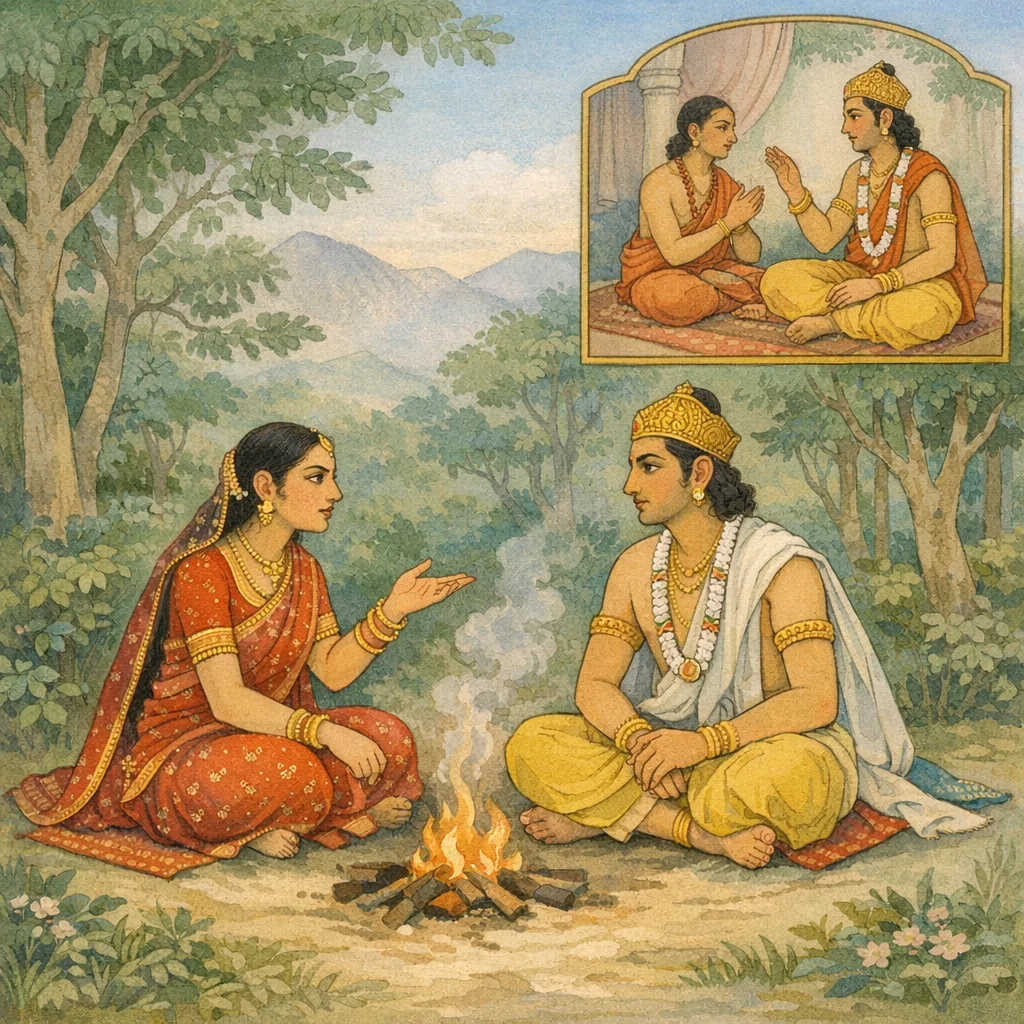
Vaiśaṃpāyana describes the Pandavas seated in the forest at evening with Draupadī, engaged in sorrowful conversation. Draupadī, portrayed as beloved, learned, and devoted, speaks to Yudhiṣṭhira with a sustained critique of the Kaurava leaders’ apparent lack of remorse. She contrasts the Pandavas’ former royal life—ornamented seats, fine garments, abundant and ritually prepared food given to brahmins, ascetics, and householders—with their current austerity in exile. Her rhetoric repeatedly asks why Yudhiṣṭhira’s anger does not increase upon seeing his brothers—Bhīma, Arjuna, Nakula, Sahadeva—and herself reduced to forest living despite being “unfit for suffering.” She emphasizes that a kṣatriya without righteous vigor is socially disregarded, and warns that indiscriminate forgiveness toward adversaries is not appropriate; enemies, she argues, can be overcome through tejas (assertive strength). The chapter thus frames an ethical dilemma: the limits of kṣānti, the timing of justice, and the psychological burden of delayed retaliation under dharma.
Chapter Arc: द्रौपदी के अनुतापपूर्ण वचनों के बाद कथा एक नीति-आख्यान की ओर मुड़ती है: असुरराज बलि अपने पितामह प्रह्लाद से पूछता है—क्षमा श्रेष्ठ है या तेज? → प्रह्लाद क्षमा की मर्यादा और तेज की आवश्यकता—दोनों का सूक्ष्म विधान बताता है: अज्ञानवश हुए अपराध की जाँच कर क्षमा, पर जान-बूझकर किए अपराध पर दण्ड; एक अपराध क्षम्य, पुनरावृत्ति पर वध तक का विधान; देश-काल, अपने बलाबल और लोक-भय का विचार। → नीति का धारदार निष्कर्ष उभरता है—जो जान-बूझकर अपराध करे, उसे ‘क्षमा’ का कवच नहीं; और जो बार-बार अपकार करे, उसके लिए तेज ही धर्मरक्षा है। → आख्यान का सार द्रौपदी के वर्तमान आग्रह से जुड़ता है: कौरव लोभी और सतत अपकारकर्ता हैं; उनके प्रति अब क्षमा का समय नहीं—उचित काल आने पर तेज प्रकट करना ही राजधर्म है। → द्रौपदी की वाणी युधिष्ठिर के धैर्य को चुनौती देती है—क्या वे क्षमा की सीमा पार कर प्रतिकार का संकल्प करेंगे, या अभी भी नीति-बंधनों में बँधे रहेंगे?
Shlokas
Verse 1
इस प्रकार श्रीमह्माभारत वनपर्वके अन्तर्गत अर्जुनाथिगमनपर्वमें द्रौपदीके अनुतापपूर्णगचनविषयक सत्ताईसवाँ अध्याय पूरा हुआ ॥/ २७ ॥ #ऑप5.0 #:०० () हे - क्षरते इति क्षत्रमू--जो दुष्टोंका क्षरण--नाश करता है, वह क्षत्रिय है। अष्टाविशोश् ध्याय: द्रौपदीद्वारा प्रह्लाद-बलि-संवादका वर्णन--तेज और क्षमाके अवसर द्रौपहुुवाच अत्राप्युदाहरन्तीममितिहासं पुरातनम् । प्रह्लादस्य च संवाद बलेवैंरोचनस्य च,द्रौपदी कहती है--महाराज! इस विषयमें प्रह्नमाद तथा विरोचनपुत्र बलिके संवादरूप इस प्राचीन इतिहासका उदाहरण दिया करते हैं
Vaiśampāyana said: Thus ends the twenty-seventh chapter in the Vana Parva of the Śrī Mahābhārata, within the section called the ‘Arjuna’s Departure/Setting Forth’ episode, dealing with Draupadī’s words of remorse. Now begins the twenty-eighth chapter, describing Draupadī’s narration of the dialogue between Prahlāda and Bali—showing how vigor and forbearance each have their proper occasion. Draupadī said: “In this matter too, people cite an ancient precedent: the dialogue of Prahlāda and Bali, the son of Virocana.”
Verse 2
असुरेन्द्रं महाप्राज्ञं धर्माणामागतागमम् | बलि: पप्रच्छ दैत्येन्द्रं प्रह्मादं पितरं पितु:,असुरोंके स्वामी परम बुद्धिमान दैत्यराज प्रह्नाद सभी धर्मोके रहस्यको जाननेवाले थे। एक समय बलिने उन अपने पितामह प्रह्नादजीसे पूछा
Vaiśaṃpāyana said: Bali questioned Prahlāda—the lord of the Dānavas, an Asura-king of great wisdom, well-versed in the received tradition concerning dharma—who was also the father of Bali’s father. The scene frames a respectful inquiry into the principles of righteous conduct, placing ethical learning above mere power or lineage.
Verse 3
बलिरुवाच क्षमा स्विच्छेयसी तात उताहो तेज इत्युत । एतन्मे संशयं तात यथावद् ब्रूहि पृच्छते,बलिने पूछा--तात! क्षमा और तेजमेंसे क्षमा श्रेष्ठ है अथवा तेज? यह मेरा संशय है। मैं इसका समाधान पूछता हूँ। आप इस प्रश्नका यथार्थ निर्णय कीजिये
Bali said: “Dear sir, which is truly the higher virtue—forbearance (kṣamā) or fiery strength and assertive power (tejas)? This doubt troubles me. As I ask, please explain it correctly and decisively.”
Verse 4
श्रेयो यदत्र धर्मज्ञ ब्रूहि मे तदसंशयम् । करिष्यामि हि तत् सर्व यथावदनुशासनम्,धर्मज्ञ! इनमें जो श्रेष्ठ है, वह मुझे अवश्य बताइये, मैं आपके सब आदेशोंका यथावत् पालन करूँगा
“O knower of dharma, tell me without any doubt what is best in this matter. For I shall carry out all of that exactly, in accordance with your instruction.”
Verse 5
तस्मै प्रोवाच तत् सर्वमेवं पृष्ट: पितामह: । सर्वनिश्चयवित् प्राज्ञ: संशयं परिपृच्छते,बलिके इस प्रकार पूछनेपर समस्त सिद्धान्तोंके ज्ञाता विद्वान् पितामह प्रह्नादने संदेह निवारण करनेके लिये पूछनेवाले पौत्रके प्रति इस प्रकार कहा
When he had thus been questioned, the Grandsire—wise and fully conversant with settled conclusions—told him everything. Seeing the questioner’s doubt, he spoke in order to remove that uncertainty and to set the matter on firm understanding.
Verse 6
प्रह्माद उवाच न श्रेय: सततं तेजो न नित्य॑ं श्रेयसी क्षमा | इति तात विजानीहि द्वयमेतदसंशयम्,प्रह्नाद बोले--तात! न तो तेज ही सदा श्रेष्ठ है और न क्षमा ही। इन दोनोंके विषयमें मेरा ऐसा ही निश्चय जानो, इसमें संशय नहीं है
Prahmāda said: “Dear child, sheer brilliance or force is not always the highest good; nor is forbearance always the better course. Know this firmly: in these two—power and patience—there is no single rule that fits every situation.”
Verse 7
यो नित्यं क्षमते तात बहून् दोषान् स विन्दति | भृत्या: परिभवन्त्येममुदासीनास्तथारय:,वत्स! जो सदा क्षमा ही करता है, उसे अनेक दोष प्राप्त होते हैं। उसके भृत्य, शत्रु तथा उदासीन व्यक्ति सभी उसका तिरस्कार करते हैं। कोई भी प्राणी कभी उसके सामने विनयपूर्ण बर्ताव नहीं करते, अतः तात! सदा क्षमा करना दिद्वानोंके लिये भी वर्जित है
Prahlāda said: “Dear child, one who is always forgiving incurs many faults. His servants grow insolent toward him, and so do indifferent people and even enemies; they treat him with contempt. Therefore, constant forbearance, even though praised, is not to be practiced without discernment.”
Verse 8
सर्वभूतानि चाप्यस्य न नमन्ति कदाचन । तस्मान्नित्यं क्षमा तात पण्डितैरपि वर्जिता,वत्स! जो सदा क्षमा ही करता है, उसे अनेक दोष प्राप्त होते हैं। उसके भृत्य, शत्रु तथा उदासीन व्यक्ति सभी उसका तिरस्कार करते हैं। कोई भी प्राणी कभी उसके सामने विनयपूर्ण बर्ताव नहीं करते, अतः तात! सदा क्षमा करना दिद्वानोंके लिये भी वर्जित है
Prahlāda said: “No beings ever bow to such a person. Therefore, dear child, constant forbearance is avoided even by the wise; one who always forgives becomes open to many faults—servants, enemies, and even indifferent people come to despise him, and none behave toward him with due humility.”
Verse 9
अवज्ञाय हि त॑ भृत्या भजन्ते बहुदोषताम् | आदातु चास्य वित्तानि प्रार्थयन्तेडल्पचेतस:,सेवकगण उसकी अवहेलना करके बहुत-से अपराध करते रहते हैं। इतना ही नहीं, वे मूर्ख भूत्यगण उसके धनको भी हड़प लेनेका हौसला रखते हैं
For, once they begin to disregard him, servants fall into many faults. Indeed, those of little understanding even dare to seek to seize his wealth—an ethical warning that contempt for rightful authority breeds misconduct and greed.
Verse 10
यान॑ वस्त्राण्यलंकाराज्छयनान्यासनानि च । भोजनान्यथ पानानि सर्वोपकरणानि च,विभिन्न कार्योंमें नियुक्त किये हुए मूर्ख सेवक अपने इच्छानुसार क्षमाशील स्वामीके रथ, वस्त्र, अलंकार, शय्या, आसन, भोजन, पान तथा समस्त सामग्रियोंका उपयोग करते रहते हैं तथा स्वामीकी आज्ञा होनेपर भी किसीको देनेयोग्य वस्तुएँ नहीं देते हैं
Prahlāda said: “As for the garments, ornaments, beds, seats, foods, drinks, and all other requisites—foolish servants, assigned to various tasks, use their patient master’s chariot and possessions as they please; and even when commanded by the master, they do not hand over the items that ought to be given to others.”
Verse 11
आददीरन्नधिकृता यथाकाममचेतस: । प्रदिष्टानि च देयानि न दद्युर्भवृशासनात्,विभिन्न कार्योंमें नियुक्त किये हुए मूर्ख सेवक अपने इच्छानुसार क्षमाशील स्वामीके रथ, वस्त्र, अलंकार, शय्या, आसन, भोजन, पान तथा समस्त सामग्रियोंका उपयोग करते रहते हैं तथा स्वामीकी आज्ञा होनेपर भी किसीको देनेयोग्य वस्तुएँ नहीं देते हैं
Foolish servants, though appointed to specific duties, take and use their master’s goods as they please, without discernment. And even when items have been expressly designated to be given away, they do not give them—acting in defiance of the master’s command. The verse censures undisciplined service: enjoying another’s resources while neglecting entrusted obligations and disobeying rightful authority.
Verse 12
न चैनं भर्त॒पूजाभि: पूजयन्ति कथंचन । अवज्ञानं हि लोकेडस्मिन् मरणादपि गर्हितम्,स्वामीका जितना आदर होना चाहिये, उतना आदर वे किसी प्रकार भी नहीं करते। इस संसारमें सेवकोंद्वारा अपमान तो मृत्युसे भी अधिक निन्दित है
Nor do they honor him in any way with the reverence due to a master. Indeed, in this world, contempt shown by servants toward their lord is condemned even more than death—an ethical warning that neglect of rightful respect corrodes the very order of duty and loyalty.
Verse 13
क्षमिणं तादृशं तात ब्रुवन्ति कटुकान्यपि । प्रेष्या: पुत्राश्न भृत्याश्ष तथोदासीनवृत्तय:,तात! उपर्युक्त क्षमाशीलको अपने सेवक, पुत्र, भृत्य तथा उदासीनवृत्तिके लोग कटुवचन भी सुनाया करते हैं
Prahlāda said: “Dear one, even to a person of such forbearance, people still speak harsh words. Servants, sons, dependants, and even those who remain outwardly indifferent may all address the patient-hearted with bitterness.”
Verse 14
अथास्य दारानिच्छन्ति परिभूय क्षमावत: । दाराक्षास्य प्रवर्तन्ते यथाकाममचेतस:,इतना ही नहीं, वे क्षमाशील स्वामीकी अवहेलना करके उसकी स्त्रियोंको भी हस्तगत करना चाहते हैं और वैसे पुरुषकी मूर्ख स्त्रियाँ भी स्वेच्छाचारमें प्रवृत्त हो जाती हैं
Moreover, scorning a patient and forbearing husband, men even seek to seize his wives; and the foolish women of such a man, lacking discernment, then drift into self-willed conduct as they please. The passage warns that when a householder’s forbearance is mistaken for weakness, social restraint collapses and dishonour spreads from the aggressor to the vulnerable within the household.
Verse 15
तथा च नित्यमुदिता यदि नाल्पमपीश्वरात् | दण्डमर्हन्ति दुष्यन्ति दुष्टाश्चाप्पपकुर्वते,यदि उन्हें अपने स्वामीसे तनिक भी दण्ड नहीं मिलता तो वे सदा मौज उड़ाती हैं और आचारसे दूषित हो जाती हैं। दुष्टा होनेपर वे अपने स्वामीका अपकार भी कर बैठती हैं
So too, if they receive not even the slightest chastisement from their lord, they remain ever carefree and self-indulgent; their conduct becomes corrupted. Once they turn wicked, they may even commit harm against their own master. The ethical point is that unchecked license breeds moral decline, whereas timely discipline preserves order and right conduct.
Verse 16
एते चान्ये च बहवो नित्यं दोषा: क्षमावताम् | अथ वैरोचने दोषानिमान् विद्धाक्षमावताम्,सदा क्षमा करनेवाले पुरुषोंको ये तथा और भी बहुत-से दोष प्राप्त होते हैं। विरोचनकुमार! अब क्षमा न करनेवालोंके दोषोंको सुनो
These—and many other—faults continually befall those who are habitually forbearing. Now, O Vairocana’s son, understand from me these faults that belong to those who do not practice forbearance.
Verse 17
अस्थाने यदि वा स्थाने सततं रजसा5<5वृत: । क्रुद्धों दण्डान् प्रणयति विविधान् स्वेन तेजसा,क्रोधी मनुष्य रजोगुणसे आवृत होकर योग्य या अयोग्य अवसरका विचार किये बिना ही अपने उत्तेजित स्वभावसे लोगोंको नाना प्रकारके दण्ड देता रहता है
A man who is constantly veiled by rajas (passion) becomes wrathful and, without judging whether the occasion is proper or improper, keeps inflicting various punishments on others through the force of his own heated energy. The verse warns that anger, when fueled by passion, blinds discernment and turns authority into arbitrary cruelty—thereby undermining dharma.
Verse 18
मित्र: सह विरोध॑ च प्राप्तुते तेजसा55वृतः । आप्रोति द्वेष्पतां चैव लोकात् स्वजनतस्तथा,तेज (उत्तेजना)-से व्याप्त मनुष्य मित्रोंसे विरोध पैदा कर लेता है तथा साधारण लोगों और स्वजनोंका द्वेषपात्र बन जाता है
One who is veiled by the heat of arrogance and overbearing energy ends up falling into conflict even with friends. Such a person also becomes an object of dislike—both among ordinary people and among one’s own kin—because unchecked intensity turns relationships into rivalry and alienates one from one’s community.
Verse 19
सो<5वमानादर्थहानिमुपालम्भमनादरम् । संतापद्वेषमोहांश्व शत्रृंक्ष लभते नर:,वह मनुष्य दूसरोंका अपमान करनेके कारण सदा धनकी हानि उठाता है। उपालम्भ सुनता और अनादर पाता है। इतना ही नहीं, वह संताप, द्वेष, मोह तथा नये-नये शत्रु पैदा कर लेता है
Prahlāda said: “From the habit of insulting others, a man incurs loss of wealth; he is met with reproach and receives disrespect. More than that, he gathers for himself anguish, hatred, delusion, and ever-new enemies.”
Verse 20
क्रोधाद् दण्डान्मनुष्येषु विविधान् पुरुषो5नयात् । भ्रश्यते शीघ्रमैश्वर्यात् प्राणेभ्य: स्वजनादपि,मनुष्य क्रोधवश अन्यायपूर्वक दूसरे लोगोंपर नाना प्रकारके दण्डका प्रयोग करके अपने ऐश्वर्य, प्राण और स्वजनोंसे भी हाथ धो बैठता है
From anger, a man—driven into unrighteousness—inflicts various punishments upon others. Quickly he falls away from his prosperity, and even loses his very life and the support of his own kin. The verse warns that anger, when it turns into unjust coercion, destroys both one’s power and one’s closest human bonds.
Verse 21
वा जम हर्तृश्ष तेजसैवोपगच्छति । लोक: सर्पाद् वेश्मगतादिव,जो उपकारी मनुष्यों और चोरोंके साथ भी उत्तेजनायुक्त बर्ताव ही करता है, उससे सब लोग उसी प्रकार उद्दिग्न होते हैं, जैसे घरमें रहनेवाले सर्पसे
Prahlāda said: Even one who is capable of helping others, if he approaches people with mere heat of temper and behaves in an agitating, provocative way—even toward ordinary folk and even toward thieves—makes everyone uneasy. People become disturbed by him just as the residents of a house are alarmed by a snake living within it.
Verse 22
यस्मादुद्धिजते लोक: कथं तस्य भवो भवेत् | अन्तरं तस्य दृष्टवैव लोको विकुरुते ध्रुवम्,जिससे सब लोग उद्विग्न होते हैं, उसे ऐश्वर्यकी प्राप्ति कैसे हो सकती है? उसका थोड़ा-सा भी छिद्र देखकर लोग निश्चय ही उसकी बुराई करने लगते हैं
Prahlāda said: “If the world is made anxious and disturbed because of someone, how could that person ever attain true prosperity or well-being? Indeed, the moment people notice even the slightest flaw in him, they inevitably turn to fault-finding and speak ill of him.”
Verse 23
तस्मान्नात्युत्सूजेत् तेजो न च नित्यं मृदुर्भवेत् काले काले तु सम्प्राप्ते मृदुस्तीक्ष्णोडपि वा भवेत्,इसलिये न तो सदा उत्तेजनाका ही प्रयोग करे और न सर्वदा कोमल ही बना रहे। समय-समयपर आवश्यकताके अनुसार कभी कोमल और कभी तेज स्वभाववाला बन जाय
Therefore one should neither always unleash harshness and fiery force, nor remain perpetually gentle. When the proper time arrives, one should become gentle or, if needed, sharp—adapting one’s conduct to circumstance in order to uphold right order and effective action.
Verse 24
काले मृदुर्यो भवति काले भवति दारुण: । स वै सुखमवाप्रोति लोकेअ<मुष्मिन्निहैव च,जो मौका देखकर कोमल होता है और उपयुक्त अवसर आनेपर भयंकर भी बन जाता है, वही इहलोक और परलोकमें सुख पाता है
Prahlāda said: “One who is gentle when the time calls for gentleness, and who becomes formidable when the occasion demands severity—such a person attains well-being both here in this world and also in the world beyond. Timely restraint and timely firmness, applied with discernment, are the marks of wise conduct.”
Verse 25
क्षमाकालांस्तु वक्ष्यामि शूणु मे विस्तरेण तान् ये ते नित्यमसंत्याज्या यथा प्राहुर्मनीषिण:,अब मैं तुम्हें क्षमाके योग्य अवसर बताता हूँ, उन्हें विस्तारपूर्वक सुनो, जैसा कि मनीषी पुरुष कहते हैं, उन अवसरोंका तुम्हें कभी त्याग नहीं करना चाहिये
Prahlāda said: “I shall now describe to you the occasions fit for forgiveness—listen to them in detail. These are situations that should never be abandoned, just as the wise have declared.”
Verse 26
पूर्वोपकारी यस्ते स्थादपराधे गरीयसि । उपकारेण तत् तस्य क्षन्तव्यमपराधिन:,जिसने पहले कभी तुम्हारा उपकार किया हो, उससे यदि कोई भारी अपराध हो जाय, तो भी पहलेके उपकारका स्मरण करके उस अपराधीके अपराधको तुम्हें क्षमा कर देना चाहिये
Prahlāda said: If someone who has formerly done you a kindness should later commit even a grave offense, you ought to forgive that offender—remembering the earlier benefaction and letting that prior good weigh in favor of pardon.
Verse 27
अबुद्धिमश्रितानां तु क्षन्तव्यमपराधिनाम् | न हि सर्वत्र पाण्डित्यं सुलभं पुरुषेण वै,जिन्होंने अनजानमें अपराध कर डाला हो, उनका वह अपराध क्षमाके ही योग्य है; क्योंकि किसी भी पुरुषके लिये सर्वत्र विद्वत्ता (बुद्धिमानी) ही सुलभ हो, यह सम्भव नहीं है
But those who act from lack of understanding—even if they have committed a fault—ought to be forgiven. For it is not possible for any person to possess learning and wise discernment in every situation and at all times.
Verse 28
अथ चेद् बुद्धिजं कृत्वा ब्रूयुस्ते तदबुद्धिजम् । पापान् स्वल्पे5पि तान् हन्यादपराधे तथानृजून्,परंतु जो जान-बूझकर किये हुए अपराधको भी उसे कर लेनेके बाद अनजानमें किया हुआ बताते हों, उन उद्दण्ड पापियोंको थोड़े-से अपराधके लिये भी अवश्य दण्ड देना चाहिये इति श्रीमहाभारते वनपर्वणि अर्जुनाभिगमनपर्वणि द्रौपदीवाक्येडष्टाविंशो 5ध्याय: ।। २८ ।। इस प्रकार श्रीमह्याभारत वनपर्वके अन्तर्गत अजुनाभिगमनपर्वमें द्रौपदीवाक्यविषयक अद्वाईसवाँ अध्याय पूरा हुआ
And if, after committing an offence knowingly, they speak of it as though it were done without understanding, then such unruly sinners—crooked and unstraightforward—should certainly be punished even for a small transgression. The ethical point is that deliberate wrongdoing disguised as ignorance corrodes justice and must not be excused.
Verse 29
सर्वस्यैको5परा धस्ते क्षन्तव्य: प्राणिनो भवेत् । द्वितीये सति वध्यस्तु स्वल्पेडप्यपकृते भवेत्,सभी प्राणियोंका एक अपराध तो तुम्हें क्षमा ही कर देना चाहिये। यदि उससे फिर दुबारा अपराध बन जाय तो थोड़े-से अपराधके लिये भी उसे दण्ड देना आवश्यक है
Prahlāda said: “For every living being, you should forgive one offence. But if the same person commits an offence again, then even for a small wrongdoing he becomes liable to punishment.”
Verse 30
अजानता भवेत् कश्चिदपराध: कृतो यदि । क्षन्तव्यमेव तस्याहु: सुपरीक्ष्य परीक्षया,अच्छी तरह जाँच-पड़ताल करनेपर यदि यह सिद्ध हो जाय कि अमुक अपराध अनजानमें ही हो गया है, तो उसे क्षमाके ही योग्य बताया गया है
If, upon careful inquiry, it is established that someone committed an offence unknowingly, then the wise declare that person to be fit for forgiveness. The ethical point is that judgment must follow thorough examination, and that lack of intent mitigates blame, making clemency the proper response.
Verse 31
मृदुना दारुणं हन्ति मृदुना हन्त्यदारुणम् नासाध्यं मृदुना किंचित् तस्मात् तीव्रतरं मृदु,मनुष्य कोमलभाव (सामनीति)-के द्वारा उग्र स्वभाव तथा शान्त स्वभावके शत्रुका भी नाश कर देता है; मृदुतासे कुछ भी असाध्य नहीं है। अतः मृदुतापूर्ण नीतिको तीव्रतर (उत्तम) समझे
Verse 32
देशकालौ तु सम्प्रेक्य बलाबलमथात्मन: । नादेशकाले किंचित् स्याद् देशकालौ प्रतीक्षताम् । तथा लोक भयाच्चैव क्षन्तव्यमपराधिन:,देश, काल तथा अपने बलाबलका विचार करके ही मृदुता (सामनीति)-का प्रयोग करना चाहिये। अयोग्य देश अथवा अनुपयुक्त कालमें उसके प्रयोगसे कुछ भी सिद्ध नहीं हो सकता; अतः उपयुक्त देश, कालकी प्रतीक्षा करनी चाहिये। कहीं लोकके भयसे भी अपराधीको क्षमादान देनेकी आवश्यकता होती है
Having carefully considered place and time, and also one’s own strength and weakness, one should employ gentleness and conciliation. If applied in an unsuitable place or at an improper time, it accomplishes nothing; therefore one should wait for the right place and time. Likewise, out of fear of public reaction, it may even be necessary to pardon an offender.
Verse 33
एत एवंविधा: काला: क्षमाया: परिकीर्तिता: । अतोन््यथानुवर्तत्सु तेजस: काल उच्यते,इस प्रकार ये क्षमाके अवसर बताये गये हैं। इनके विपरीत बर्ताव करनेवालोंको राहपर लानेके लिये तेज (उत्तेजनापूर्ण बर्ताव)-का अवसर कहा गया है
“These, of just such kinds, are the proper occasions for forbearance, as has been set forth. But when people act contrary to this and persist in wrong conduct, then the time for ‘tejas’—firm, corrective severity meant to bring them back to the right path—is said to have arrived.”
Verse 34
तदहं तेजस: काल॑ तव मन्ये नराधिप । धार्तराष्टेषु लुब्धेषु सततं चापकारिषु,(द्रौपदी कहती है--) नरेश्वर! धृतराष्ट्रके पुत्र लोभी तथा सदा आपका अपकार करनेवाले हैं; अत: उनके प्रति आपके तेजके प्रयोगका यह अवसर आया है, ऐसा मेरा मत है
O lord of men, I judge that this is the moment for you to employ your royal might. The sons of Dhṛtarāṣṭra are greedy and continually work to harm you; therefore, toward them, the time has come for decisive action. The verse frames righteous strength as a duty when persistent wrongdoing threatens justice and order.
Verse 35
न हि वक्चित् क्षमाकालो विद्यतेड्द्य कुरून् प्रति तेजसश्चागते काले तेज उत्स्रष्टमहसि,कौरवोंके प्रति अब क्षमाका कोई अवसर नहीं है। अब तेज प्रकट करनेका अवसर प्राप्त है; अत: उनपर आपको अपने तेजका ही प्रयोग करना चाहिये
There is no occasion now for forbearance toward the Kurus. The time for the display of power has arrived; therefore you ought to unleash your splendor against them. Ethically, the speaker frames restraint as appropriate only when it serves dharma; when injustice has ripened and correction is due, rightful strength must be applied without hesitation.
Verse 36
मृदुर्भवत्यवज्ञातस्ती क्ष्णादुद्धिजते जन: । काले प्राप्ते द्वयं चैतद् यो वेद स महीपति:,कोमलतापूर्ण बर्ताव करनेवालेकी सब लोग अवहेलना करते हैं और तीक्ष्ण स्वभाववाले पुरुषसे सबको उद्वेग प्राप्त होता है। जो उचित अवसर आनेपर इन दोनोंका प्रयोग करना जानता है, वही सफल भूपाल है
A ruler who is always gentle is liable to be disregarded, while a man of harsh temper makes people anxious and uneasy. The true king is the one who, when the right moment arrives, understands how to employ both—gentleness and severity—in proper measure.
Frequently Asked Questions
The dilemma is whether continued forbearance toward wrongdoing constitutes dharma or a lapse in kṣatriya duty—i.e., when patience preserves moral order versus when it enables further injustice.
The passage teaches that ethical life requires proportionality: compassion and restraint are virtues, but governance and self-respect also demand timely assertion of justice, especially when adversaries show no remorse.
No explicit phalaśruti appears in the provided verses; the chapter’s function is primarily normative-psychological, contributing to the epic’s broader reflection on dharma, suffering, and the prerequisites of legitimate action.