Adhyaya 12
धृतराष्ट्रस्य उपालम्भः तथा पाण्डव-समाश्वासनम् | Dhṛtarāṣṭra Reproved and the Pāṇḍavas Consoled
Upa-parva: Dhṛtarāṣṭra–Kṛṣṇa Saṃvāda (Counsel on accountability and restraint)
Vaiśaṃpāyana narrates that attendants assist Dhṛtarāṣṭra with purification rites; once composed, Kṛṣṇa (Madhusūdana) addresses him with a structured reproach. Kṛṣṇa contrasts Dhṛtarāṣṭra’s learning—Vedas, Śāstras, Purāṇas, and royal duties—with his failure to act wisely when he knew the Pāṇḍavas’ superior strength and valor. He outlines a governance principle: the steady-minded king who recognizes his own faults and properly differentiates place and time attains the highest good, whereas one who ignores beneficial counsel falls into distress. Kṛṣṇa directs Dhṛtarāṣṭra to review his own deviation and his son’s wrongdoing, asking why anger should turn toward Bhīma when the chain of harms originated in Kaurava offenses, including the humiliation of Draupadī and the unjust abandonment of the Pāṇḍavas. Dhṛtarāṣṭra concedes Kṛṣṇa’s truth, cites overpowering affection for his son as the cause of his instability, expresses relief that Bhīma did not come within his grasp, and seeks to touch and reconcile with Bhīma, Arjuna, and the sons of Mādrī. He physically embraces them while weeping, offers consolation, and speaks auspicious words.
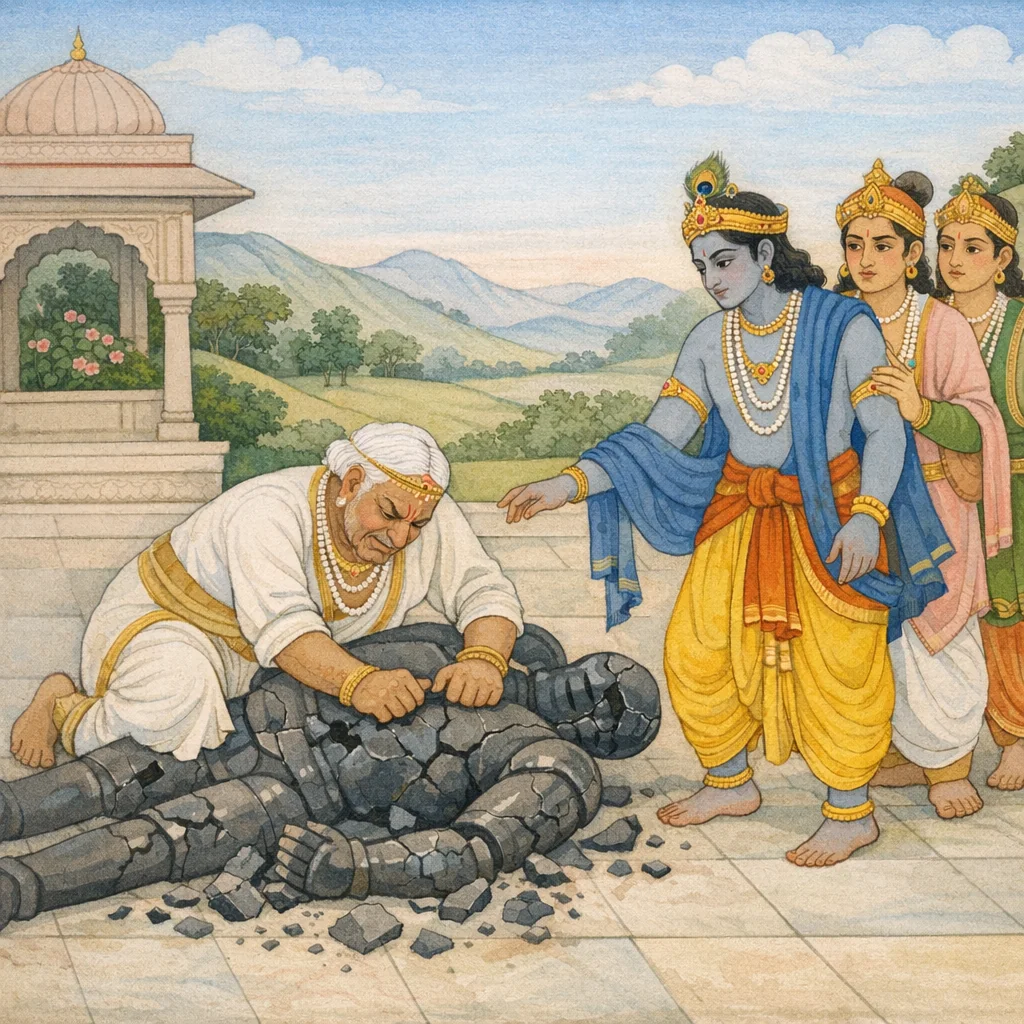
Chapter Arc: समस्त सेनाओं के संहार के बाद शोक-सागर में डूबे धृतराष्ट्र पाण्डवों से मिलने आते हैं—पुत्रशोक से व्याकुल, भीतर-भीतर प्रतिशोध की ज्वाला लिये। → कृष्ण, सात्यकि और युयुत्सु पाण्डवों के साथ चलते हैं; धृतराष्ट्र का हृदय पुत्रवध से विदीर्ण है। वे भीम को ‘पुत्रों का अन्त करने वाला’ मानकर आलिंगन के बहाने उसे कुचल डालने का निश्चय करते हैं। → धृतराष्ट्र क्रोधावेश में भीम को मारने हेतु आगे बढ़ते हैं, पर कृष्ण उनकी मनोदशा भाँपकर भीम को हटाकर लोहे की भीम-प्रतिमा रख देते हैं; धृतराष्ट्र उसे आलिंगन में कसते हैं और प्रतिमा चूर-चूर हो जाती है—हत्या का प्रयत्न विफल होकर प्रकट हो जाता है। → क्रोध उतरते ही धृतराष्ट्र ‘हा हा भीम’ कहकर शोक में डूब जाते हैं। कृष्ण उन्हें समझाते हैं कि पुत्रशोक ने उन्हें धर्म से विचलित किया; भीम-वध उचित नहीं, क्योंकि इससे शेष पुत्र भी न बचेंगे। शान्ति-स्थापन के लिए जो किया गया, उसे स्वीकार कर शोक को संयत करने का उपदेश देते हैं। → धृतराष्ट्र का शोक तो शांत होता है, पर अपराध-बोध और प्रतिशोध की छाया बनी रहती है—आगे शोकाकुल स्त्रियों का विलाप और दाह-संस्कारों की ओर कथा बढ़ती है।
Shlokas
Verse 1
ऑपन--#+र< बक। ] अिफशशाड< द्वादशोड् ध्याय: पाण्डवोंका धृतराष्ट्रसे मिलना, धृतराष्ट्रके द्वारा भीमकी लोहमयी प्रतिमाका भंग होना और शोक करनेपर श्रीकृष्णका उन्हें समझाना वैशम्पायन उवाच हतेषु सर्वसैन्येषु धर्मराजो युधिष्ठिर: । शुश्रुवे पितरं वृद्ध निर्यान्तं गजसाह्वयात्,वैशम्पायनजी कहते हैं--महाराज जनमेजय! समस्त सेनाओंका संहार हो जानेपर धर्मराज युधिष्ठिरने जब सुना कि हमारे बूढ़े ताऊ संग्राममें मरे हुए वीरोंका अन्त्येष्टिकर्म करानेके लिये हस्तिनापुरसे चल दिये हैं, तब वे स्वयं पुत्रशोकसे आतुर हो पुत्रोंके ही शोकमें डूबकर चिन्तामग्न हुए राजा धृतराष्ट्रके पास अपने सब भाइयोंके साथ गये
Vaiśampāyana said: When all the armies had been slain, Dharma-king Yudhiṣṭhira heard that his aged uncle (Dhṛtarāṣṭra) was setting out from Hastināpura—Gajasāhvaya—to perform the last rites for the warriors fallen in battle. Hearing this, Yudhiṣṭhira, burdened by grief and moral anguish after the devastation of war, went with his brothers to meet the sorrow-stricken king.
Verse 2
सो<भ्ययात् पुत्रशोकार्त: पुत्रशोकपरिप्लुतम् शोचमानं महाराज भ्रातृभि: सहितस्तदा,वैशम्पायनजी कहते हैं--महाराज जनमेजय! समस्त सेनाओंका संहार हो जानेपर धर्मराज युधिष्ठिरने जब सुना कि हमारे बूढ़े ताऊ संग्राममें मरे हुए वीरोंका अन्त्येष्टिकर्म करानेके लिये हस्तिनापुरसे चल दिये हैं, तब वे स्वयं पुत्रशोकसे आतुर हो पुत्रोंके ही शोकमें डूबकर चिन्तामग्न हुए राजा धृतराष्ट्रके पास अपने सब भाइयोंके साथ गये
Vaiśampāyana said: O great king (Janamejaya), then Yudhiṣṭhira—stricken with grief for his sons—went with his brothers to Dhṛtarāṣṭra, who was himself lamenting, overwhelmed and submerged in sorrow for his sons. The scene underscores how the war’s devastation leaves even rulers bound by shared human grief, and how duty now turns from victory to rites, responsibility, and reconciliation among the survivors.
Verse 3
अन्वीयमानो वीरेण दाशार्हेण महात्मना । युयुधानेन च तथा तथैव च युयुत्सुना,उस समय दशा्हकुलनन्दन वीर महात्मा श्रीकृष्ण, सात्यकि और युयुत्सु भी उनके पीछे-पीछे गये
Vaiśampāyana said: As he proceeded, he was followed closely by the heroic, great-souled Kṛṣṇa of the Dāśārha line; and likewise by Yuyudhāna (Sātyaki) and by Yuyutsu as well. In the aftermath of slaughter, the presence of these righteous allies underscores a moral duty: to accompany, protect, and bear witness—standing with those who must face grief and the consequences of war.
Verse 4
तमन्वगात् सुदुःखार्ता द्रौपदी शोककर्शिता । सह पाज्चालयोषिद्धियस्तित्रासन् समागता:,अत्यन्त दुःखसे आतुर और शोकसे दुबली हुई द्रौपदीने भी वहाँ आयी हुई पांचाल- महिलाओंके साथ उनका अनुसरण किया
Vaiśampāyana said: Draupadī too—overwhelmed by intense grief and wasted by sorrow—followed after him, accompanied by the women of Pāñcāla who had gathered there. The scene underscores the shared, communal burden of war’s aftermath: the survivors, especially the women, move together in mourning and duty, bearing witness to loss and its moral consequences.
Verse 5
स गज्जमनु वृन्दानि स्त्रीणां भरतसत्तम । कुररीणामिवार्तानां क्रोशन्तीनां ददर्श ह,भरतश्रेष्ठ! गंगातटपर पहुँचकर युधिष्ठिरने कुररीकी तरह आर्तस्वरसे विलाप करती हुई स्त्रियोंके कई दल देखे
Vaiśampāyana said: O best of the Bharatas, he saw groups of women wailing aloud—crying out in anguish like distressed ospreys—lamenting in piercing voices. The scene underscores the human cost of war: the battlefield’s aftermath is measured not only in fallen warriors but in the grief borne by those left behind.
Verse 6
ताभि: परिवृतो राजा क्रोशन्तीभि: सहस्रश: । ऊर्ध्वबाहुभिराताभी रुदतीभि: प्रियाप्रियै:
Vaiśampāyana said: The king was surrounded by thousands of women wailing aloud—women stricken with grief, raising their arms in anguish, and weeping for those dear to them and those not dear. The scene lays bare the moral aftermath of war: victory and defeat alike culminate in shared human suffering, where attachment and aversion both dissolve into the same lament.
Verse 7
वहाँ पाण्डवोंके प्रिय और अप्रिय जनोंके लिये हाथ उठाकर आर्तस्वरसे रोती और करुण क्रन्दन करती हुई सहस्रों महिलाओंने राजा युधिष्ठिरको चारों ओरसे घेर लिया ।। क्व नु धर्मज्ञता राज्ञ: क््व नु साद्यानृशंसता । यच्चावधीत् ३ गुरुपुत्रानू सखीनपि,वे बोलीं--“अहो! वह धर्मज्ञता और दयालुता कहाँ चली गयी कि इन्होंने ताऊ, चाचा, भाई, गुरुपुत्रों और मित्रोंका भी वध कर डाला
Vaiśampāyana said: There, thousands of women—kin of the Pāṇḍavas, both dear and estranged—raised their hands and, crying in voices of anguish and wailing piteously, surrounded King Yudhiṣṭhira on every side. They lamented: “Where now is the king’s famed knowledge of dharma? Where is his reputed gentleness and compassion, when he has brought about the killing of elders and relatives—uncles, brothers, the sons of teachers, and even friends?”
Verse 8
घातयित्वा कथं द्रोणं भीष्मं चापि पितामहम् | मनस्ते5भून्महाबाहो हत्वा चापि जयद्रथम्,“महाबाहो! द्रोणाचार्य, पितामह भीष्म और जयद्रथका भी वध करके आपके मनकी कैसी अवस्था हुई?
Vaiśampāyana said: “O mighty-armed one, after causing Droṇa and also Bhīṣma—the grandsire—to be slain, and after killing Jayadratha as well, what state did your mind come to?”
Verse 9
किं नु राज्येन ते कार्य पितृन् भ्रातृनपश्यतः । अभिमन्यु च दुर्धर्ष द्रौपदेयांश्व भारत,“भरतवंशी नरेश! अपने ताऊ, चाचा और भाइयोंको, दुर्जय वीर अभिमन्युको तथा द्रौपदीके सभी पुत्रोंको न देखनेपर इस राज्यसे आपका क्या प्रयोजन है?”
Vaiśampāyana said: “What use is this kingdom to you, when you no longer behold your elders and kinsmen—your fathers’ brothers and your own brothers—nor the unconquerable Abhimanyu, nor all the sons of Draupadī, O scion of Bharata? A sovereignty gained at the cost of one’s dearest is emptied of its purpose, for rule without one’s family and moral order becomes only a burden of grief.”
Verse 10
अतीत्य ता महाबाहु: क्रोशन्ती: कुररीरिव । ववन्दे पितरं ज्येष्ठं धर्मराजो युधिछिर:,धर्मराज महाबाहु युधिष्ठिरने कुररीकी भाँति क्रन्दन करती हुई उन स्त्रियोंके घेरेको लाँघकर अपने ताऊ धृतराष्ट्रको प्रणाम किया
Vaiśampāyana said: Having passed beyond those women who were wailing like ospreys, the mighty-armed Dharmarāja Yudhiṣṭhira bowed in reverence to his eldest father-figure, Dhṛtarāṣṭra. In the midst of grief after the war, Yudhiṣṭhira’s act underscores restraint and duty: even amid lamentation and moral anguish, he upholds respect toward elders and acknowledges familial and royal obligations.
Verse 11
इस प्रकार श्रीमह्ाभारत स्त्रीपर्वके अन्तर्गत जलप्रदानिकपर्वमें कृपाचार्य अश्वत्थामा और कृतवर्गाका दर्शनविषयक ग्यारहवाँ अध्याय पूरा हुआ,ततो$भिवाद्य पितरं धर्मेणामित्रकर्षणा: । न्यवेदयन्त नामानि पाण्डवास्तेडपि सर्वश: तत्पश्चात् सभी शत्रुसूदन पाण्डवोंने धर्मानुसार ताऊको प्रणाम करके अपने नाम बताये
Then, having respectfully saluted their elder kinsman in accordance with dharma, the Pandavas—subduers of foes—formally announced their names, each of them in full. The moment underscores disciplined conduct and proper etiquette even amid grief and the aftermath of war.
Verse 12
तमात्मजान्तकरणं पिता पुत्रवधार्दित: । अप्रीयमाण: शोकार्त: पाण्डवं परिषस्वजे,पुत्रवधसे पीड़ित हुए पिताने शोकसे व्याकुल हो अपने पुत्रोंका अन्त करनेवाले पाण्डुपुत्र युधिष्ठिरको हृदयसे लगाया; परंतु उस समय उनका मन प्रसन्न नहीं था इति श्रीमहाभारते स्त्रीपर्वणि जलप्रदानिकपर्वणि आयसभीमभड़े द्वादशो5्ध्याय: ।। १२ |। इस प्रकार श्रीमहाभारत स्त्रीपर्वके अन्तर्गत जलप्रदानिकपर्वमें भीमसेनकी लोहमयी प्रतिमाका भंग होनाविषयक बारहवाँ अध्याय पूरा हुआ
Vaiśampāyana said: The father, tormented by the killing of his sons, embraced the Pāṇḍava—Yudhiṣṭhira—who had brought about the end of his children. Yet, though he clasped him, his heart found no joy; he was overwhelmed by grief. The scene underscores the moral tension after war: gestures of reconciliation cannot instantly dissolve the weight of irreversible loss and the burden of responsibility.
Verse 13
धर्मराजं परिष्वज्य सान्त्वयित्वा च भारत | दुष्टात्मा भीममन्वैच्छद् दिधक्षुरिव पावक:,भरतनन्दन! धर्मराजको हृदयसे लगाकर उन्हें सान्त्वना दे धृतराष्ट्र भीमको इस प्रकार खोजने लगे, मानो आग बनकर उन्हें जला डालना चाहते हों। उस समय उनके मनमें दुर्भावना जाग उठी थी
Verse 14
स कोपपावकस्तस्य शोकवायुसमीरित: । भीमसेनमयं दावं दिधक्षुरिव दृश्यते,शोकरूपी वायुसे बढ़ी हुई उनकी क्रोधमयी अग्नि ऐसी दिखायी दे रही थी, मानो वह भीमसेनरूपी वनको जलाकर भस्म कर देना चाहती हो
Vaiśampāyana said: His wrath, like a blazing fire, fanned by the wind of grief, appeared as though it wished to set ablaze and reduce to ashes the very forest embodied by Bhīmasena. The verse underscores how sorrow can intensify anger into a destructive force, threatening to consume even one’s own allies and moral restraint.
Verse 15
तस्य संकल्पमाज्ञाय भीम॑ प्रत्यशुभं हरि: । भीममाक्षिप्य पाणिभ्यां प्रददौ भीममायसम्
Understanding his grim intention, Hari acted at once: seizing Bhīma with his hands, he placed upon him a formidable iron burden—an intervention meant to check a rash, inauspicious resolve and restrain violence from escalating beyond dharma.
Verse 16
भीमसेनके प्रति उनके अशुभ संकल्पको जानकर श्रीकृष्णने भीमसेनको झटका देकर हटा दिया और दोनों हाथोंसे उनकी लोहमयी मूर्ति धृतराष्ट्रके सामने कर दी ।। प्रागेव तु महाबुद्धिर्बुद्ध्वा तस्येड्रितं हरि: । संविधान महाप्राज्ञस्तत्र चक्रे जनार्दन:,महाज्ञानी और परम बुद्धिमान् भगवान् श्रीकृष्णको पहलेसे ही उनका अभिप्राय ज्ञात हो गया था, इसलिये उन्होंने वहाँ यह व्यवस्था कर ली थी
But Hari, of vast intelligence, had already understood Dhṛtarāṣṭra’s stirred-up intention beforehand. Therefore Janārdana, supremely wise, had made the necessary arrangements there in advance—so that a rash act born of grief and anger would not lead to further adharma and fresh violence.
Verse 17
त॑ गृहीत्वैव पाणिभ्यां भीमसेनमयस्मयम् | बभज्ज बलवान् राजा मन्यमानो वृकोदरम्,बलवान राजा धृतराष्ट्रने उस लोहमय भीमसेन-को ही असली भीम समझा और उसे दोनों बाँहोंसे दबाकर तोड़ डाला
Vaiśampāyana said: Taking hold of the iron-made effigy of Bhīmasena with both hands, the mighty king Dhṛtarāṣṭra, believing it to be Vṛkodara himself, crushed and broke it. The episode underscores how grief and delusion can drive even a powerful elder toward violent intent, while prudence and foresight (in substituting an image) avert immediate harm.
Verse 18
नागायुतबलप्राण: स राजा भीममायसम् | भड़्क्त्वा विमथितोरस्क: सुस्राव रुधिरं मुखात्,राजा धृतराष्ट्रमें दस हजार हाथियोंका बल था तो भी भीमकी लोहमयी प्रतिमाको तोड़कर उनकी छाती व्यथित हो गयी और मुहसे खून निकलने लगा
Vaiśampāyana said: Though the king’s strength was said to equal that of ten thousand elephants, when he shattered Bhīma’s iron effigy his chest was violently strained, and blood flowed from his mouth. The episode underscores how prideful displays of force and the urge to prove power can recoil upon the doer, bringing bodily harm and moral disquiet amid the grief of war.
Verse 19
ततः पपात मेदिन्यां तथैव रुधिरोक्षित: । प्रपुष्पिताग्रशिखर: पारिजात इव द्रुम:,वे उसी अवस्थामें खूनसे भींगकर पृथ्वीपर गिर पड़े, मानो ऊपरकी डालीपर खिले हुए लाल फूलोंसे सुशोभित पारिजातका वृक्ष धराशायी हो गया हो
Then, drenched in blood, he fell upon the earth—like a pārijāta tree brought down, whose topmost crown is still adorned with blossoms. The image underscores the tragic waste of life after war: even what is noble and splendid can be felled, leaving only a poignant beauty amid ruin.
Verse 20
प्रत्यगृह्नाच्च तं विद्वान् सूतो गावल्गणिस्तदा । मैवमित्यब्रवीच्चैनं शमयन् सान्त्वयन्निव,उस समय उनके विद्वान् सारथि गवल्गणपुत्र संजयने उन्हें पकड़कर उठाया और समझा-बुझाकर शान्त करते हुए कहा--“आपको ऐसा नहीं करना चाहिये"
Then the wise charioteer Sañjaya, son of Gāvalgaṇa, caught hold of him and restrained him. Calming and consoling him, he said, “Do not act in this way.”
Verse 21
स तु कोपं समुत्सृज्य गतमन्युर्महामना: । हा हा भीमेति चुक्रोश नृप: शोकसमन्वित:,जब रोषका आवेश दूर हो गया, तब वे महामना नरेश क्रोध छोड़कर शोकमें डूब गये और 'हा भीम! हा भीम!” कहते हुए विलाप करने लगे
When the surge of rage had passed, the noble king let go of his anger and, overwhelmed by grief, cried out in lamentation, “Alas, Bhīma! Alas, Bhīma!”—a turn from wrath to sorrow that underscores the moral cost of violence and the helplessness that follows irreversible loss.
Verse 22
त॑ विदित्वा गतक्रोधं भीमसेनवधार्दितम् । वासुदेवो वर: पुंसामिदं वचनमत्रवीत्
Seeing him—his anger spent, yet still shaken by the killing of Bhīmasena—Vāsudeva, the foremost among men, spoke these words. The narrative frames a moment where grief and the aftershock of violence replace rage, preparing the ground for counsel on restraint and right conduct amid the ruin of war.
Verse 23
उन्हें भीमसेनके वधकी आशंकासे पीड़ित और क्रोध-शून्य हुआ जान पुरुषोत्तम श्रीकृष्णने इस प्रकार कहा-- ।। मा शुचो धृतराष्ट्र त्वं नैष भीमस्त्वया हत: । आयसी प्रतिमा होषा त्वया निष्पातिता विभो,“महाराज धृतराष्ट्र् आप शोक न करें। ये भीम आपके हाथसे नहीं मारे गये हैं। प्रभो! यह तो लोहेकी एक प्रतिमा थी, जिसे आपने चूर-चूर कर डाला
Vaiśampāyana said: “Do not grieve, O Dhṛtarāṣṭra. This is not Bhīma slain by your hand. O mighty one, what you have shattered is only an iron image.” In context, Kṛṣṇa calms the blind king’s fear and remorse, revealing that the violent act did not truly harm the living person—yet it still exposes the danger of rage and the need for restraint even amid grief.
Verse 24
त्वां क्रोधवशमापन्नं विदित्वा भरतर्षभ । मयापकृष्ट: कौन्तेयो मृत्योर्दष्टान्तरं गत:,“भरतश्रेष्ठ) आपको क्रोधके वशीभूत हुआ जान मैंने मृत्युकी दाढ़ोंमें फँसे हुए कुन्तीकुमार भीमसेनको पीछे खींच लिया था
Vaiśampāyana said: “O bull among the Bharatas, knowing that you had fallen under the sway of anger, I pulled back the son of Kuntī—Bhīmasena—who had gone into the very jaws of death.”
Verse 25
न हि ते राजशार्दूल बले तुल्यो5स्ति कश्नन । कः सहेत महाबाहो बाह्ोर्विग्रहणं नर:,“राजसिंह! बलमें आपकी समानता करनेवाला कोई नहीं है। महाबाहो! आपकी दोनों भुजाओंकी पकड़ कौन मनुष्य सह सकता है?
Vaiśampāyana said: “O tiger among kings, in strength there is truly no one equal to you. O mighty-armed one, what man could endure the forceful grasp of your two arms?”
Verse 26
यथान्तकमनुप्राप्य जीवन वक्रिन्न मुच्यते । एवं बाद्वन्तरं प्राप्प तव जीवेन्न कश्षन,“जैसे यमराजके पास पहुँचकर कोई भी जीवित नहीं छूट सकता, उसी प्रकार आपकी भुजाओंके बीचमें पड़ जानेपर किसीके प्राण नहीं बच सकते
Vaiśampāyana said: “Just as no living being, once brought into the presence of Antaka (Death), can escape alive, so too—once caught between your arms—no one’s life can be spared.”
Verse 27
तस्मात् पुत्रेण या तेडसौ प्रतिमा कारिता55यसी । भीमस्य सेयं कौरव्य तवैवोपह्ृता मया,“कुरुनन्दन! इसलिये आपके पुत्रने जो भीमसेनकी लोहमयी प्रतिमा बनवा रखी थी, वही मैंने आपको भेंट कर दी
Therefore, O Kauravya, the iron image of Bhīmasena that your son had caused to be made—this very one I have brought and presented to you. The statement underscores how the instruments of hostility and rivalry, fashioned in the heat of enmity, are now being returned in the aftermath of ruin, as a stark reminder of the consequences of adharma and hatred.
Verse 28
पुत्रशोकाभिसंतप्तं धर्मादपकृतं मन: । तव राजेन्द्र तेन त्वं भीमसेनं जिघांससि,'राजेन्द्र! आपका मन पुत्रशोकसे संतप्त हो धर्मसे विचलित हो गया है; इसीलिये आप भीमसेनको मार डालना चाहते हैं
Vaiśampāyana said: “O king, your mind, scorched by grief for your son, has swerved away from dharma. It is for this reason that you now wish to kill Bhīmasena.”
Verse 29
न त्वेतत् ते क्षमं राजन हन्यास्त्वं यद् वृकोदरम् । न हि पुत्रा महाराज जीवेयुस्ते कथंचन,“राजन्! आपके लिये यह कदापि उचित न होगा कि आप भीमका वध करें। महाराज! (भीमसेन न मारते तो भी) आपके पुत्र किसी तरह जीवित नहीं रह सकते थे (क्योंकि उनकी आयु पूरी हो चुकी थी)
Vaiśaṃpāyana said: “O King, it would not be proper for you to slay Vṛkodara (Bhīma). For, O great king, your sons could not have remained alive in any way—(their destined span had come to its end).”
Verse 30
तस्माद् यत् कृतमस्माभिर्मन्यमानै: शमं प्रति । अनुमन्यस्व तत् सर्व मा च शोके मन: कृथा:,“अतः हमलोगोंने सर्वत्र शान्ति स्थापित करनेके उद्देश्यसे जो कुछ किया है, उन सब बातोंका आप भी अनुमोदन करें। मनको व्यर्थ शोकमें न डालें"
Therefore, whatever has been done by us—thinking always with the aim of restoring peace—please approve all of it. Do not let your mind be cast into futile grief.
Frequently Asked Questions
How a ruler who possesses textual knowledge can still fail in lived dharma due to attachment and factional influence, and how responsibility should be acknowledged after collective harm.
Restrain anger and conduct a rigorous self-assessment; apply deśa–kāla discernment and accept beneficial counsel, because ignoring the ‘śreyas’ (the better course) leads to preventable distress.
No explicit phalaśruti appears in this passage; its meta-function is interpretive—framing reconciliation and moral accountability as necessary steps in the epic’s post-war ethical resolution.