Adhyaya 75
अर्जुनस्य रथाश्वमोचनं कृष्णस्याश्वसेवा च (Arjuna’s Horses Freed; Krishna’s Equine Service)
Upa-parva: Jayadratha-vadha-anveṣaṇa (Pursuit Toward Jayadratha) — Episode within Droṇa-parva
Saṃjaya reports that after a water-source is produced and the hostile pressure is checked, Vāsudeva (Kṛṣṇa) swiftly dismounts and releases the horses wounded by arrow-feathers. The scene triggers widespread astonishment: siddhas, cāraṇas, and soldiers acclaim the unprecedented act. Arjuna, now fighting on foot amid incoming chariot waves, remains unshaken and absorbs volleys of arrows, spears, and maces, likened to the ocean receiving rivers. Kṛṣṇa then turns to rapid battlefield maintenance—removing embedded shafts, wiping the horses, watering them properly, and restoring their vigor—before re-yoking them to the chariot. Seeing the renewed ratha, Kuru leaders become dispirited and voice alarm at being outmaneuvered by a single chariot. The restored team accelerates toward the Saindhava objective; enemy kings attempt to encircle Arjuna, while dust, noise, and arrow-wounds obscure visibility and heighten the operational chaos.
Chapter Arc: संजय धृतराष्ट्र से कहता है—पाण्डवों के विजय-घोष को सुनकर सिंधुराज जयद्रथ का हृदय शोक और भय से डूब गया, मानो वह विशाल शोक-सागर में डूब रहा हो। → जयद्रथ राजाओं की सभा में जाकर बहुत विचार करता हुआ अपनी व्यथा कहता है—अभिमन्यु के पिता अर्जुन से वह विशेषतः भयभीत है; पाण्डवों के हर्षनाद से उसके अंग शिथिल पड़ते हैं और वह अपने प्राणों पर संकट देखता है। वह कौरव-नायकों (दुर्योधन, द्रोण, कृप, कर्ण, शल्य, बाह्लीक आदि) से कहता है कि केवल एक फाल्गुन (अर्जुन) के क्रोध के सामने भी वह असहाय है; सब मिलकर भी उसे बचा पाएँगे या नहीं—यह चिंता उसे खाए जा रही है। → जयद्रथ का सार्वजनिक विलाप और स्पष्ट स्वीकार—‘अर्जुन मुझे मारना चाहता है; पाण्डवों के हर्ष से मुझे मृत्यु-सा भय हो रहा है’—सभा में भय को ठोस रूप देता है; इसी क्षण कौरव-पक्ष के लिए ‘जयद्रथ-रक्षा’ युद्ध-लक्ष्य बनकर उभरता है। → कौरव-सेना में प्रत्युत्तर रूप से उत्साह उठता है—वाद्यों का तीव्र नाद, सिंहनाद और रण-घोष; दुर्योधन-द्रोण आदि जयद्रथ को आश्वासन देकर उसे ढाल बनाकर रखने और पाण्डव-वेग को रोकने की तैयारी करते हैं। → अगले चरण का संकेत—अब युद्ध का केंद्र ‘अर्जुन की प्रतिज्ञा’ बनकर जयद्रथ तक पहुँचने/उसे बचाने की घेराबंदी में बदलने वाला है; क्या कौरव-चक्रव्यूह अर्जुन को रोक पाएगा?
Shlokas
Verse 1
(दाक्षिणात्य अधिक पाठके ४ ३ श्लोक मिलाकर कुल ५७३ श्लोक हैं।) नशा (0) आज अत >> चतु:ःसप्ततितमो< ध्याय: जयद्रथका भय तथा दुर्योधन और द्रोणाचार्यका उसे आश्वासन देना संजय उवाच श्रुत्वा तु तं महाशब्दं पाण्डूनां जयगृद्धिनाम् चारै: प्रवेदिते तत्र समुत्थाय जयद्रथ:,संजय कहते हैं--राजन्! सिंधुराज जयद्रथने जब विजयाभिलाषी पाण्डवोंका वह महान् शब्द सुना और गुप्तचरोंने आकर जब अर्जुनकी प्रतिज्ञाका समाचार निवेदन किया, तब वह सहसा उठकर खड़ा हो गया, उसका हृदय शोकसे व्याकुल हो गया। वह दुःखसे व्याप्त हो शोकके विशाल एवं अगाध महासागरमें ड्ूबता हुआ-सा बहुत सोच-विचारकर राजाओंकी सभामें गया और उन नरदेवोंके समीप रोने-बिलखने लगा इस प्रकार श्रीमह्ा भारत द्रोणपर्वके अन्तर्गत प्रतिज्ञापवमें जयद्रथको आश्वासनविषयक चौहत्तरवाँ अध्याय पूरा हुआ ॥/ ७४ ॥ ऑपनआक्राा छा अ-क्ाञ > यद्यपि अब दुर्योधनके पास पूरी ग्यारह अक्षौहिणी सेनाएँ नहीं रह गयी थीं; तथापि ग्यारह भागोंमें विभक्त उन सेनाओंमेंसे जो लोग शेष बचे थे, उन्हींको लेकर यहाँ “ग्यारह अक्षौहिणी” का उल्लेख किया गया है। पञ्चसप्ततितमोब ध्याय: श्रीकृष्णका अर्जुनको कौरवोंके जयद्रथकी रक्षाविषयक उद्योगका समाचार बताना संजय उवाच प्रतिज्ञाते तु पार्थेन सिन्धुराजवधे तदा । वासुदेवो महाबाहुर्धन॑ंजयमभाषत
Sanjaya said: When Partha (Arjuna) had thus taken his vow to slay the king of Sindhu (Jayadratha), then Vasudeva (Krishna), the mighty-armed, addressed Dhananjaya (Arjuna). The scene turns from the public, war-bound oath to the moral and strategic counsel that must follow: a vow made before all becomes a binding ethical burden, and Krishna steps in as charioteer-guide to steady resolve, clarify means, and align the promised act with disciplined action amid the chaos of battle.
Verse 2
शोकसम्मूढहृदयो दुःखेनाभिपरिप्लुत: । मज्जमान इवागाधे विपुले शोकसागरे,संजय कहते हैं--राजन्! सिंधुराज जयद्रथने जब विजयाभिलाषी पाण्डवोंका वह महान् शब्द सुना और गुप्तचरोंने आकर जब अर्जुनकी प्रतिज्ञाका समाचार निवेदन किया, तब वह सहसा उठकर खड़ा हो गया, उसका हृदय शोकसे व्याकुल हो गया। वह दुःखसे व्याप्त हो शोकके विशाल एवं अगाध महासागरमें ड्ूबता हुआ-सा बहुत सोच-विचारकर राजाओंकी सभामें गया और उन नरदेवोंके समीप रोने-बिलखने लगा
Sañjaya said: O King, his heart, bewildered by grief and overwhelmed by sorrow, seemed as though it were sinking in a vast and unfathomable ocean of lamentation. Thus afflicted, he was unable to steady himself amid the crushing consequences of war and vow-bound retribution.
Verse 3
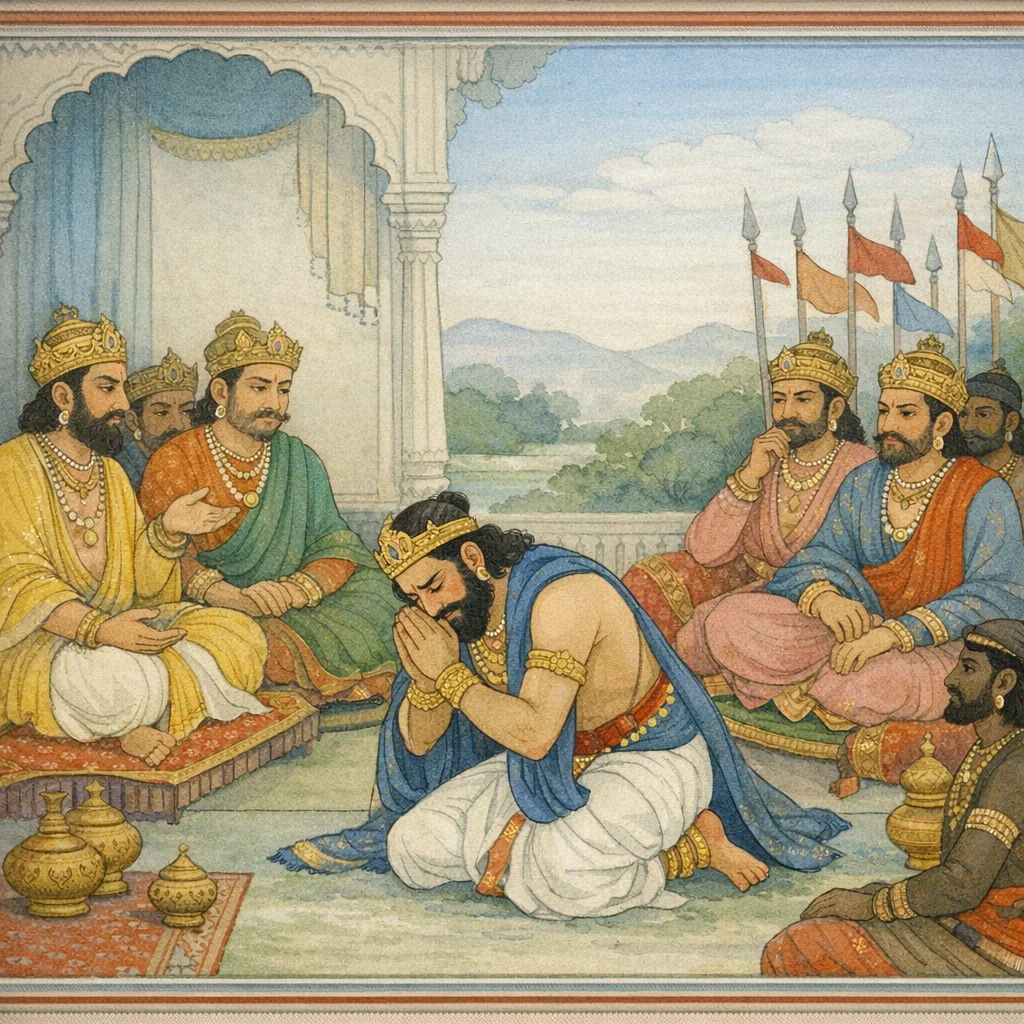
जगाम समितिं राज्ञां सैन्धवो विमृशन् बहु । स तेषां नरदेवानां सकाशे पर्यदेवयत्,संजय कहते हैं--राजन्! सिंधुराज जयद्रथने जब विजयाभिलाषी पाण्डवोंका वह महान् शब्द सुना और गुप्तचरोंने आकर जब अर्जुनकी प्रतिज्ञाका समाचार निवेदन किया, तब वह सहसा उठकर खड़ा हो गया, उसका हृदय शोकसे व्याकुल हो गया। वह दुःखसे व्याप्त हो शोकके विशाल एवं अगाध महासागरमें ड्ूबता हुआ-सा बहुत सोच-विचारकर राजाओंकी सभामें गया और उन नरदेवोंके समीप रोने-बिलखने लगा
Sañjaya said: The Saindhava (Jayadratha), after much anxious reflection, went to the assembly of kings; and in the presence of those lordly rulers he lamented aloud—overwhelmed by grief and seeking counsel and protection amid the mounting peril of war.
Verse 4
अभिमन्यो: पितुर्भीत: सब्रीडो वाक्यमब्रवीत् | योडसौ पाण्डो: किल क्षेत्रे जात: शक्रेण कामिना,जयद्रथ अभिमन्युके पितासे बहुत डर गया था, इसलिये लज्जित होकर बोला --'राजाओ! कामी इन्द्रने पाण्डुकी पत्नीके गर्भसे जिसको जन्म दिया है, वह दुर्बृद्धि अर्जुन केवल मुझको ही यमलोक भेजना चाहता है; यह बात सुननेमें आयी है। अतः आपलोगोंका कल्याण हो। अब मैं अपने प्राण बचानेकी इच्छासे अपनी राजधानीको चला जाऊँगा
Sañjaya said: Overcome with fear of Abhimanyu’s father (Arjuna) and speaking with shame, he said: “That one who, they say, was born in Pāṇḍu’s lineage—begotten by lustful Indra—(is coming against me).” The utterance reveals a mind shaken by impending retribution: fear eclipses honor, and the speaker tries to diminish Arjuna’s stature by recalling his divine paternity in a disparaging way.
Verse 5
स निनीष ति दुर्बुद्धिर्मा किलैकं यमक्षयम् | तत् स्वस्ति वो<स्तु यास्यामि स्वगृहं जीवितेप्सया,जयद्रथ अभिमन्युके पितासे बहुत डर गया था, इसलिये लज्जित होकर बोला --'राजाओ! कामी इन्द्रने पाण्डुकी पत्नीके गर्भसे जिसको जन्म दिया है, वह दुर्बृद्धि अर्जुन केवल मुझको ही यमलोक भेजना चाहता है; यह बात सुननेमें आयी है। अतः आपलोगोंका कल्याण हो। अब मैं अपने प्राण बचानेकी इच्छासे अपनी राजधानीको चला जाऊँगा
Sañjaya said: “That misguided man (Arjuna) intends to send me alone to Yama’s imperishable realm. So may welfare attend you all; I shall now depart to my own home, desiring to preserve my life.”
Verse 6
अथवास्त्रप्रतिबलास्त्रात मां क्षत्रियर्षभा: । पार्थेन प्रार्थितं वीरास्ते संदत्त ममाभयम्,“अथवा क्षत्रियशिरोमणि वीरो! आपलोग अस्त्र-शस्त्रोंके ज्ञानमें अर्जुनके समान ही शक्तिशाली हैं। उधर अर्जुनने मेरे प्राण लेनेकी प्रतिज्ञा की है। इस अवस्थामें आप मेरी रक्षा करें और मुझे अभयदान दें
Sañjaya said: “Or else, O bulls among kṣatriyas—heroes whose mastery of weapons can counter weapons—grant me fearlessness. Arjuna (Pārtha) has been urged on against me; in this peril, protect me and give me assurance of safety.”
Verse 7
द्रोणदुर्योधनकृपा: कर्णमद्रेशबाह्लिका: । दुःशासनादय: शक्तास्त्रातुं मामन्तकार्दितम्,“ट्रोणाचार्य, दुर्योधन, कृपाचार्य, कर्ण, मद्रराज शल्य, बाह्नीक तथा दुःशासन आदि वीर मुझे यमराजके संकटसे भी बचानेमें समर्थ हैं। प्रिय नरेशगण! फिर जब अकेला अर्जुन ही मुझे मारनेकी इच्छा रखता है तो उसके हाथसे आप समस्त भूपतिगण मेरी रक्षा क्यों नहीं कर सकते हैं
Sañjaya said: “Droṇa, Duryodhana, Kṛpa, Karṇa, the lord of Madra (Śalya), Bāhlika, and the warriors beginning with Duḥśāsana are capable of protecting me even when I am assailed by Death itself. Therefore, O dear kings, when Arjuna alone seeks to slay me, why should you—so many rulers together—not be able to defend me from his hand?”
Verse 8
किमड़ पुनरेकेन फाल्गुनेन जिघांसता । न त्रायेयुर्भवन्तो मां समस््ता: पतय: क्षिते:,“ट्रोणाचार्य, दुर्योधन, कृपाचार्य, कर्ण, मद्रराज शल्य, बाह्नीक तथा दुःशासन आदि वीर मुझे यमराजके संकटसे भी बचानेमें समर्थ हैं। प्रिय नरेशगण! फिर जब अकेला अर्जुन ही मुझे मारनेकी इच्छा रखता है तो उसके हाथसे आप समस्त भूपतिगण मेरी रक्षा क्यों नहीं कर सकते हैं
Sañjaya said: “What need is there to speak further? If Phālguna (Arjuna) alone is intent on killing me, why would you—all the rulers of the earth together—be unable to protect me?”
Verse 9
प्रहर्ष पाण्डवेयानां श्रुत्वा मम महद् भयम् | सीदन्ति मम गात्राणि मुमूर्षोरिव पार्थिवा:,“राजाओ! पाण्डवोंका हर्षनाद सुनकर मुझे महान् भय हो रहा है। मरणासन्न मनुष्यकी भाँति मेरे सारे अंग शिथिल होते जा रहे हैं
Sañjaya said: “O kings, on hearing the triumphant roar of the sons of Pāṇḍu, a great fear seizes me. Like a man at the edge of death, all my limbs are failing and growing slack.”
Verse 10
वधो नूनं॑ प्रतिज्ञातो मम गाण्डीवधन्चना । तथा हि हृष्टा: क्रोशन्ति शोककाले सम पाण्डवा:,“निश्चय ही गाण्डीवधारी अर्जुनने मेरे वधकी प्रतिज्ञा कर ली है, तभी शोकके समय भी पाण्डव योद्धा बड़े हर्षके साथ गर्जना करते हैं
Sañjaya said: “Surely my death has been vowed by the wielder of the Gāṇḍīva bow. That is why, even at a time of grief, the Pāṇḍavas cry out and roar with exultation—confident that Arjuna’s pledged resolve will be fulfilled.”
Verse 11
तन्न देवा न गन्धर्वा नासुरोरगराक्षसा: । उत्सहन्ते5न्यथाकर्तु कुत एव नराधिपा:,“उस प्रतिज्ञाको देवता, गन्धर्व, असुर, नाग तथा राक्षस भी पलट नहीं सकते हैं। फिर ये नरेश उसे भंग करनेमें कैसे समर्थ हो सकते हैं?
Sañjaya said: Even the gods, the Gandharvas, the Asuras, the Nāgas, and the Rākṣasas are not capable of turning that vow aside or making it otherwise. How then could mere human kings possibly have the power to break or reverse it? The statement underscores the moral gravity and near-inevitability of a solemn pledge once undertaken, especially in the charged ethics of war and honor.
Verse 12
तस्मान्मामनुजानीत भद्रं वो5स्तु नरर्षभा: । अदर्शनं गमिष्यामि न मां द्रक्ष्यन्ति पाण्डवा:,“अतः नरश्रेष्ठ वीरोी! आपका कल्याण हो। आपलोग मुझे जानेकी आज्ञा दें। मैं अदृश्य हो जाऊँगा। पाण्डव मुझे नहीं देख सकेंगे”
Sañjaya said: “Therefore, O best of men, grant me leave; may welfare be yours. I shall pass beyond sight and become unseen—so that the Pāṇḍavas will not be able to behold me.”
Verse 13
एवं विलपमानं तं भयाद् व्याकुलचेतसम् । आत्मकार्यगरीयस्त्वाद् राजा दुर्योधनो5ब्रवीत्,भयसे व्याकुलचित्त होकर विलाप करते हुए जयद्रथसे राजा दुर्योधनने अपने कार्यकी गुरुताका विचार करके इस प्रकार कहा--
Sañjaya said: Seeing him lamenting thus, his mind shaken by fear, King Duryodhana—judging his own objective to be of greater urgency—spoke to him accordingly. The verse highlights how, amid crisis, Duryodhana prioritizes strategic self-interest over compassion for the frightened ally, turning grief into a prompt for action in the war’s moral pressure-cooker.
Verse 14
न भेतव्यं नरव्याप्र को हि त्वां पुरुषर्षभ । मध्ये क्षत्रियवीराणां तिष्ठन्तं प्रार्थयेद् युधि,'पुरुषसिंह! नरश्रेष्ठ! तुम्हें भय नहीं करना चाहिये। युद्धस्थलमें इन क्षत्रिय वीरोंके बीचमें खड़े रहनेपर कौन तुम्हें मारनेकी इच्छा कर सकता है?
Sañjaya said: “Do not be afraid, O tiger among men, O bull among heroes. For who, seeing you standing firm in the midst of these warrior-kṣatriyas on the battlefield, could even wish to strike you down?”
Verse 15
अहं वैकर्तन: कर्णश्नित्रसेनो विविंशति: । भूरिश्रवा: शल: शल्यो वृषसेनो दुरासद:,“मैं, सूर्यपुत्र कर्ण, चित्रसेन, विविंशति, भूरिश्रवा, शल, शल्य, दुर्धर्ष वीर वृषसेन, पुरुमित्र, जय, भोज, काम्बोजराज सुदक्षिण, सत्यव्रत, महाबाहु विकर्ण, दुर्मुख, दुःशासन, सुबाहु, अस्त्र-शस्त्रधारी कलिंगराज, अवन्तीके दोनों राजकुमार विन्द और अनुविन्द, द्रोण, अश्वत्थामा और शकुनि--ये तथा और भी बहुत-से नरेश जो विभिन्न देशोंके अधिपति हैं, अपनी सेनाके साथ तुम्हारी रक्षाके लिये चलेंगे। अतः तुम्हारी मानसिक चिन्ता दूर हो जानी चाहिये
Sañjaya said: “I—Karna, the son of the Sun (Vaikartana)—together with Citrasena, Viviṃśati, Bhūriśravas, Śala, Śalya, and the hard-to-assail Vṛṣasena…” In the midst of war-counsel, Sañjaya begins a roll-call of formidable Kaurava champions, presenting their presence as a moral-psychological assurance of protection and resolve. The emphasis is not on personal glory but on collective strength marshalled for a chosen cause, underscoring how leaders steady allies by naming trusted protectors even as the ethical weight of the conflict remains grave.
Verse 16
पुरुमित्रो जयो भोज: काम्बोजश्च सुदक्षिण: । सत्यव्रतो महाबाहुर्विकर्णो दुर्मुखश्च॒ ह,“मैं, सूर्यपुत्र कर्ण, चित्रसेन, विविंशति, भूरिश्रवा, शल, शल्य, दुर्धर्ष वीर वृषसेन, पुरुमित्र, जय, भोज, काम्बोजराज सुदक्षिण, सत्यव्रत, महाबाहु विकर्ण, दुर्मुख, दुःशासन, सुबाहु, अस्त्र-शस्त्रधारी कलिंगराज, अवन्तीके दोनों राजकुमार विन्द और अनुविन्द, द्रोण, अश्वत्थामा और शकुनि--ये तथा और भी बहुत-से नरेश जो विभिन्न देशोंके अधिपति हैं, अपनी सेनाके साथ तुम्हारी रक्षाके लिये चलेंगे। अतः तुम्हारी मानसिक चिन्ता दूर हो जानी चाहिये
Sañjaya said: “Purumitra, Jaya, Bhoja, the Kāmboja king Sudakṣiṇa, Satyavrata, the mighty-armed Vikarṇa, and Durmukha as well—these warriors are among those who will advance with their forces for your protection.” In context, the verse functions as reassurance: the speaker lists prominent allies to steady the listener’s mind, emphasizing the ethic of loyalty and the political duty of kings to stand by their leader in war.
Verse 17
दुःशासन: सुबाहुश्च कालिज्ञश्चाप्युदायुध: । विन्दानुविन्दावावन्त्यौ द्रोणो द्रौणिश्व॒ सौबल:,“मैं, सूर्यपुत्र कर्ण, चित्रसेन, विविंशति, भूरिश्रवा, शल, शल्य, दुर्धर्ष वीर वृषसेन, पुरुमित्र, जय, भोज, काम्बोजराज सुदक्षिण, सत्यव्रत, महाबाहु विकर्ण, दुर्मुख, दुःशासन, सुबाहु, अस्त्र-शस्त्रधारी कलिंगराज, अवन्तीके दोनों राजकुमार विन्द और अनुविन्द, द्रोण, अश्वत्थामा और शकुनि--ये तथा और भी बहुत-से नरेश जो विभिन्न देशोंके अधिपति हैं, अपनी सेनाके साथ तुम्हारी रक्षाके लिये चलेंगे। अतः तुम्हारी मानसिक चिन्ता दूर हो जानी चाहिये
Sañjaya said: “Duḥśāsana and Subāhu, the time-wise Kālajña and the weapon-bearing Udāyudha; the two Avanti princes Vinda and Anuvinda; Droṇa, Droṇa’s son Aśvatthāmā, and Saubala (Śakuni)—these leaders (and others) will go forth with their forces to ensure your protection.” The verse functions as reassurance: a catalogue of powerful allies is offered to steady the listener’s mind amid the moral and strategic anxiety of war.
Verse 18
एते चान्ये च बहवो नानाजनपदेश्वरा: । ससैन्यास्त्वाभियास्यन्ति व्येतु ते मानसो ज्वर:,“मैं, सूर्यपुत्र कर्ण, चित्रसेन, विविंशति, भूरिश्रवा, शल, शल्य, दुर्धर्ष वीर वृषसेन, पुरुमित्र, जय, भोज, काम्बोजराज सुदक्षिण, सत्यव्रत, महाबाहु विकर्ण, दुर्मुख, दुःशासन, सुबाहु, अस्त्र-शस्त्रधारी कलिंगराज, अवन्तीके दोनों राजकुमार विन्द और अनुविन्द, द्रोण, अश्वत्थामा और शकुनि--ये तथा और भी बहुत-से नरेश जो विभिन्न देशोंके अधिपति हैं, अपनी सेनाके साथ तुम्हारी रक्षाके लिये चलेंगे। अतः तुम्हारी मानसिक चिन्ता दूर हो जानी चाहिये
Sañjaya said: “These, and many other kings—lords of diverse realms—will come to you with their armies. Let the fever of anxiety in your mind be dispelled.” In the ethical frame of the epic, the line underscores how rulers seek reassurance through alliances and military strength, even as inner fear and moral uncertainty persist beneath outward preparations for war.
Verse 19
त्वं चापि रथिनां श्रेष्ठ: स्वयं शूरोडमितद्युते । स कथं पाण्डवेयेभ्यो भयं पश्यसि सैन्धव,“अमित तेजस्वी सिंधुराज! तुम स्वयं भी तो रथियोंमें श्रेष्ठ शूरवीर हो, फिर पाण्डुके पुत्रोंसे अपने लिये भय क्यों देख रहे हो?
Sanjaya said: “You too are foremost among chariot-warriors—yourself a hero of unquenched splendor. Why then, O Saindhava, do you look for fear for yourself from the sons of Pāṇḍu?”
Verse 20
अक्षौहिण्यो दशैका च मदीयास्तव रक्षणे । यत्ता योत्स्यन्ति मा भैस्त्वं सैन्धव व्येतु ते भयम्,“मेरी “ग्यारह अक्षौहिणी सेनाएँ तुम्हारी रक्षाके लिये उद्यत होकर युद्ध करेंगी; अतः सिंधुराज! तुम भय मत मानो। तुम्हारा भय निकल जाना चाहिये”
Sañjaya said: “My eleven akṣauhiṇīs are prepared to fight for your protection. Therefore, O king of Sindhu (Jayadratha), do not be afraid—let your fear be dispelled.”
Verse 21
संजय उवाच एवमाश्वासितो राजनू् पुत्रेण तव सैन्धव: । दुर्योधनेन सहितो द्रोणं रात्रावुपागमत्,संजय कहते हैं--राजन्! इस प्रकार आपके पुत्र दुर्योधनके आश्वासन देनेपर जयद्रथ उसके साथ रात्रिके समय द्रोणाचार्यके पास गया
Sanjaya said: O King, thus reassured by your son, the Sindhu prince Jayadratha—accompanied by Duryodhana—went to Droṇa in the night. The verse highlights how, amid the moral strain of war, confidence is sought through alliances and promises, even as the night-time approach suggests urgency, anxiety, and strategic dependence on a powerful teacher-warrior.
Verse 22
उपसंग्रहणं कृत्वा द्रोणाय स विशाम्पते । उपोपविश्य प्रणत: पर्यपृच्छदिदं तदा,महाराज! उस समय उसने द्रोणाचार्यके चरण छूकर विधिपूर्वक प्रणाम किया और पास बैठकर प्रणतभावसे इस प्रकार पूछा--
Having duly gathered himself and approached Droṇa, that prince—O lord of the people—touched his feet in proper reverence. Then, sitting close by with bowed humility, he questioned him at that moment, framing his inquiry in a spirit of disciplined respect amid the pressures of war.
Verse 23
निमित्ते दूरपातित्वे लघुत्वे दृढवेधने । मम ब्रवीतु भगवान् विशेष फाल्गुनस्थ च,“दूरतक बाण चलानेमें, लक्ष्य वेधनेमें, हाथकी फुर्तीमें तथा अचूक निशाना मारनेमें मुझमें और अर्जुनमें कितना अन्तर है, यह पूज्य गुरुदेव मुझे बतावें
Sanjaya said: “In matters of long-range shooting, lightness and speed of hand, and firm, unfailing marksmanship, let the revered master tell me clearly what distinction there is between me and Arjuna.”
Verse 24
विद्याविशेषमिच्छामि ज्ञातुमाचार्य तत्त्वतः । अर्जुनस्यात्मनश्वैव याथातथ्यं॑ प्रचक्ष्य मे,“आचार्य! मैं अर्जुकी और अपनी विद्याविषयक विशेषताको ठीक-ठीक जानना चाहता हूँ। आप मुझे यथार्थ बात बताइये'
Sañjaya said: “Teacher, I wish to know, in truth, the distinctive excellence of learning—both Arjuna’s and my own. Tell me plainly and exactly how it really is.”
Verse 25
द्रोण उदाच सममाचार्यकं तात तव चैवार्जुनस्य च । योगाद् दुःखोषितत्वाच्च तस्मात्त्वतोडधिको<र्जुन:,द्रोणाचार्यने कहा--तात! यद्यपि तुम्हारा और अर्जुनका आचार्यत्व मैंने समानरूपसे ही किया है, तथापि सम्पूर्ण दिव्यास्त्रोंकी प्राप्ति एवं अभ्यास और क्लेशसहनकी दृष्टिसे अर्जुन तुमसे बढ़े-चढ़े हैं
Sanjaya said: Drona said, “Dear one, although I have instructed you and Arjuna with equal care as your teacher, yet Arjuna surpasses you—because of his disciplined application and because he has endured hardship in sustained practice. Therefore, in attainment and training, Arjuna is greater than you.”
Verse 26
नतुते युधि संत्रास: कार्य: पार्थात् कथठ्चन | अहं हि रक्षिता तात भयात्त्वां नात्र संशय:,वत्स! तो भी तुम्हें युद्धमें किसी प्रकार भी अर्जुनसे डरना नहीं चाहिये; क्योंकि मैं उनके भयसे तुम्हारी रक्षा करनेवाला हूँ--इसमें संशय नहीं है। मेरी भुजाएँ जिसकी रक्षा करती हों, उसपर देवताओंका भी जोर नहीं चल सकता। मैं ऐसा व्यूह बनाऊँगा, जिसे अर्जुन पार नहीं कर सकेंगे
Sañjaya said: “In battle you should not feel the slightest fear of Pārtha (Arjuna). I myself will be your protector, dear one; there is no doubt of it. With my arms guarding you, even the gods would find no force to prevail against you. I shall arrange such a battle-formation that Arjuna will not be able to break through it.”
Verse 27
न हि मद्वाहुगुप्तस्य प्रभवन्त्यमरा अपि | व्यूहयिष्यामि त॑ व्यूहं यं पार्थो न तरिष्यति,वत्स! तो भी तुम्हें युद्धमें किसी प्रकार भी अर्जुनसे डरना नहीं चाहिये; क्योंकि मैं उनके भयसे तुम्हारी रक्षा करनेवाला हूँ--इसमें संशय नहीं है। मेरी भुजाएँ जिसकी रक्षा करती हों, उसपर देवताओंका भी जोर नहीं चल सकता। मैं ऐसा व्यूह बनाऊँगा, जिसे अर्जुन पार नहीं कर सकेंगे
Sañjaya said: “For one who is guarded by my own arms, not even the immortals can prevail. I shall arrange such a battle-formation that Pārtha (Arjuna) will not be able to break through it.” The statement underscores the speaker’s confidence in martial power and strategic design, while also revealing the ethical tension of war: reliance on personal might and tactical ingenuity is set against the larger, often unpredictable moral order that governs victory and defeat.
Verse 28
तस्माद् युद्ध्यस्व मा भैस्त्वं स्वधर्ममनुपालय । पितृपैतामहं मार्गमनुयाहि महारथ,इसलिये तुम डरो मत। उत्साहपूर्वक युद्ध करो और अपने क्षत्रिय-धर्मका पालन करो। महारथी वीर! अपने बाप-दादोंके मार्गपर चलो
Therefore, fight—do not be afraid. Uphold your own duty as a kṣatriya. O great chariot-warrior, follow the path trodden by your father and forefathers. The exhortation frames battle not as mere aggression but as disciplined adherence to inherited martial responsibility and courage in the face of peril.
Verse 29
अधीत्य विधिवद् वेदानग्नयः सुहुतास्त्वया । इष्टं च बहुभिय॑ज्ञिर्न ते मृत्युर्भयडकर:
Sañjaya said: “Having duly studied the Vedas according to proper rule, and having offered the sacred fires with correct oblations, and having performed worship through many sacrifices, death is not a cause of terror for you. Your life has been aligned with sacred duty; therefore even the inevitable end need not shake your resolve.”
Verse 30
तुमने वेदोंका विधिपूर्वक अध्ययन करके भलीभाँति अग्निहोत्र किया है। बहुत-से यज्ञोंका अनुष्ठान भी कर लिया है। तुम्हें तो मृत्युका भय करना ही नहीं चाहिये ।। दुर्लभं मानुषैर्मन्दैर्महा भाग्यमवाप्य तु । भुजवीर्यारजिताॉल्लोकान् दिव्यान् प्राप्स्यस्यनुत्तमान्,जो मन्दभागी मनुष्योंके लिये दुर्लभ है, रणक्षेत्रमें मृत्युरूप उस परम सौभाग्यको पाकर तुम अपने बाहुबलसे जीते हुए परम उत्तम दिव्य लोकोंमें पहुँच जाओगे
Sañjaya said: Having attained that great good fortune—so rare for dull-witted mortals—you will, by the strength of your own arms, reach the unsurpassed divine worlds that are won through valor. In this context, death on the battlefield is presented not as a loss but as a dharmic culmination for one who has lived by Vedic discipline and sacrificial duty, transforming fear of death into confidence in righteous destiny.
Verse 31
कुरव: पाण्डवाश्वैव वृष्णयोडन्ये च मानवा: । अहं च सह पुत्रेण अश्चुवा इति चिन्त्यताम्,कौरव-पाण्डव, वृष्णिवंशी योद्धा, अन्य मनुष्य तथा पुत्रसहित मैं--ये सभी अस्थिर (नाशवान) हैं--ऐसा चिन्तन करो
Sañjaya said: “Let it be reflected upon that the Kurus and the Pāṇḍavas, the Vṛṣṇis and other men—and I too, together with my son, and even the horses—are all unstable and perishable.” In the midst of war’s frenzy, the verse urges sober contemplation of mortality, cutting through factional pride and reminding that all embodied beings share the same impermanence.
Verse 32
पययिण वयं सर्वे कालेन बलिना हता: । परलोकं गमिष्याम: स्वैः स्वै: कर्मभिरन्विता:,बारी-बारीसे हम सभी लोग बलवान् कालके हाथों मारे जाकर अपने-अपने शुभाशुभ कर्मोके साथ परलोकमें चले जायँगे
Sanjaya said: All of us, in due course, will be struck down by mighty Time. Bearing the burden and consequence of our own deeds—good and evil—we shall depart to the other world. The verse frames the war’s carnage within an ethical horizon: mortality is universal, and one’s afterlife journey is shaped not by status or faction, but by one’s own karma.
Verse 33
तपस्तप्त्वा तु यॉल्लोकान प्राप्तुवन्ति तपस्विन: । क्षत्रधर्मश्रिता वीरा: क्षत्रिया: प्राप्तुवन्ति तान्,तपस्वीलोग तपस्या करके जिन लोकोंको पाते हैं, क्षत्रिय-धर्मका आश्रय लेनेवाले वीर क्षत्रिय उन्हें अनायास ही प्राप्त कर लेते हैं
Sañjaya said: The very worlds that ascetics attain by performing severe austerities are attained, without such toil, by heroic kṣatriyas who take refuge in the kṣatriya code of duty. The verse frames righteous battle-duty as a legitimate spiritual path for warriors, placing disciplined courage and adherence to one’s ordained responsibility on a par with ascetic practice.
Verse 34
एवमाश्वासितो राजा भारद्वाजेन सैन्धव: । अपानुदद् भयं पार्थाद् युद्धाय च मनो दधे,द्रोणाचार्यके इस प्रकार आश्वासन देनेपर राजा जयद्रथने अर्जुनका भय छोड़ दिया और युद्ध करनेका विचार किया
Sañjaya said: Thus reassured by Bhāradvāja (Droṇācārya), King Jayadratha of Sindhu cast off his fear of Pārtha (Arjuna) and set his mind again upon fighting. The verse highlights how counsel and authority can steady a wavering warrior, turning fear into renewed resolve within the harsh moral pressures of war.
Verse 35
ततः प्रहर्ष: सैन्यानां तवाप्यासीद् विशाम्पते । वादित्राणां ध्वनिश्षोग्र: सिंहनादरवै: सह,महाराज! तदनन्तर आपकी सेनामें भी हर्षध्वनि होने लगी, सिंहनादके साथ-साथ रणवाद्योंकी भयंकर ध्वनि गूँज उठी
Sañjaya said: “Then, O lord of the people, a surge of exhilaration arose even in your armies. Along with lion-like battle-cries, the fierce reverberation of war-instruments resounded—an outward sign of swelling martial zeal as the conflict pressed on.”
Verse 73
इस प्रकार श्रीमह्ाभारत द्रोणपर्वके अन्तर्गत प्रतिज्ञापर्वमें अजुनप्रतिज्ञाविषयक तिहत्तरवाँ अध्याय पूरा हुआ
Thus ends the seventy-third chapter of the Pratijñā-parvan within the Droṇa-parvan of the Śrī Mahābhārata, dealing with Arjuna’s vow. The closing colophon frames the episode as a moral turning-point in the war narrative, where a warrior’s solemn pledge becomes a binding ethical force that drives action and consequence on the battlefield.
Verse 74
इति श्रीमहाभारते द्रोणपर्वणि प्रतिज्ञापर्वणि जयद्रथाश्वासे चतु:ःसप्ततितमो< ध्याय:
Thus, in the Śrī Mahābhārata, within the Droṇa Parva—specifically in the section called the Pratijñā Parva, in the episode concerning Jayadratha—ends the seventy-fourth chapter. This closing colophon signals the completion of a narrative unit centered on vows and their moral weight amid the pressures of war, where personal resolve and responsibility shape the unfolding of fate.
Frequently Asked Questions
The dilemma is continuity of mission versus immediate vulnerability: whether to pause under threat to restore the chariot team. The narrative frames restoration and care as necessary to uphold the larger operational vow and protect allied objectives.
Sustained effectiveness depends on disciplined support actions—calm maintenance, resource care, and role-competence—so that valor can translate into strategic outcomes rather than momentary display.
No explicit phalaśruti is present in this passage; its meta-commentary is implicit through Saṃjaya’s emphasis on wonder, morale shift, and the exemplary coordination of driver and warrior within the epic’s dharma framework.