Adhyaya 131
Somadatta’s Kṣātra-Dharma Accusation; Night Combat, Māyā, and the Fall of Ghaṭotkaca (Droṇa-parva, Adhyāya 131)
Upa-parva: Ghaṭotkaca–Aśvatthāmā Saṃgrāma (Night Engagement Episode)
Saṃjaya reports that after Bhūriśravā’s death, Somadatta confronts Sātyaki with a formal ethical indictment: he argues that a warrior devoted to kṣātra-dharma should not strike one who is turned away, supplicating, or has laid down weapons, and he frames Sātyaki’s act as a deviation into ‘dasyu-dharma’ (irregular conduct). Somadatta then issues an oath of retaliation and initiates renewed combat, supported by Kaurava formations. Sātyaki answers with counter-claims and threatens Somadatta, leading to an exchange in which Somadatta is wounded and evacuated. The narrative then pivots to a night engagement dominated by Ghaṭotkaca’s terrifying presence, rākṣasa auxiliaries, and māyā: showers of stones and weapons, fear effects on troops, and shifting forms (mountain, storm-cloud) are described as tactical pressure. Aśvatthāmā withstands these measures, counters illusions with appropriate astras (including vajra- and vāyavya-type responses), and inflicts severe losses on rākṣasa units. After the death of Ghaṭotkaca’s son Añjanaparvan and further escalation, Ghaṭotkaca renews the duel; Aśvatthāmā ultimately releases a decisive, death-like arrow that pierces Ghaṭotkaca’s heart, causing his fall. Dhṛṣṭadyumna withdraws the fallen from immediate danger, while Aśvatthāmā’s success is acclaimed and Kaurava command activity continues with redeployment instructions for allied leaders.
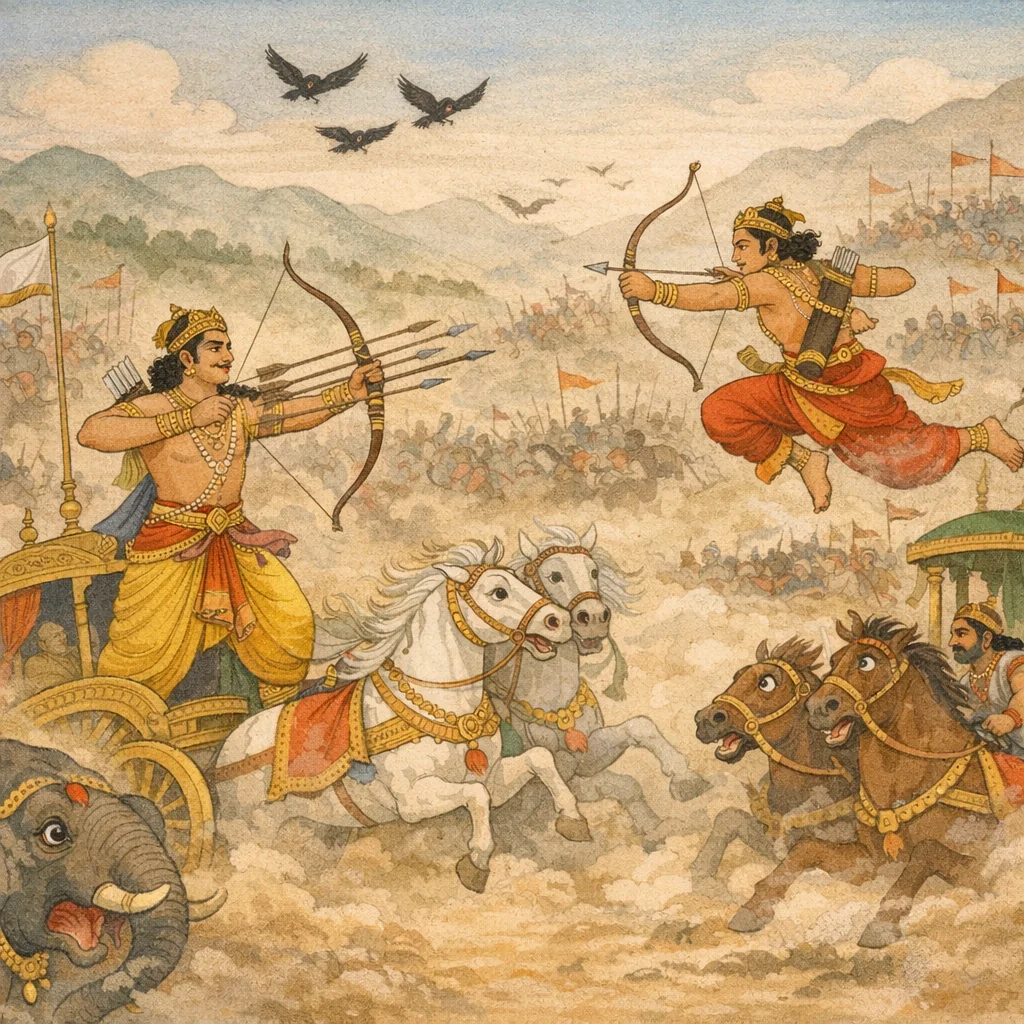
Chapter Arc: धृतराष्ट्र कर्ण और भीमसेन के आमने-सामने आने का वृत्त सुनते हैं—भीम की गर्जना और उसके क्रोध का ऐसा वर्णन कि स्वयं कर्ण के मन में भी एक अनकहा भय उठता है। → संजय बताता है कि क्रुद्ध भीमसेन गदा-धारी काल के समान प्रतीत होता है—तीनों लोकों में कोई ऐसा नहीं जो उसके सामने टिक सके। कर्ण भी स्वीकार करता है कि उसे भीम से जैसा भय है वैसा न अर्जुन से, न कृष्ण से। इसी बीच घोर अपशकुन प्रकट होते हैं—गिद्धों के झुंड, आकाश का ढँक जाना, सेना के वाहनों का आतंकित होकर मल-मूत्र त्यागना—मानो युद्धभूमि स्वयं अनिष्ट की घोषणा कर रही हो। → कर्ण-भीम का घमासान चरम पर पहुँचता है—तीर-वर्षा, रथों का टूटना, सारथियों पर प्रहार; भीम हँसते हुए चौंसठ बाणों से कर्ण पर धावा बोलता है, और कर्ण भी प्रत्युत्तर में भीम को गहरी चोट पहुँचाकर उसके सारथि को पाँच बाणों से बेध देता है। अंततः कर्ण का रथ अश्वहीन हो जाता है और वह भय/विवशता में रथ से कूदकर वृषसेन के रथ पर जा चढ़ता है। → भीमसेन की प्रचण्डता के आगे कर्ण की स्थिति डगमगाती है; कर्ण का रथ-त्याग और दूसरे रथ पर आश्रय लेना इस अध्याय का निर्णायक संकेत बनता है—भीम की विजय-छाया और कौरव पक्ष की क्षीण होती प्रतिष्ठा स्पष्ट हो जाती है। → कर्ण वृषसेन के रथ पर सुरक्षित तो हो जाता है, पर युद्ध का वेग थमता नहीं—अब प्रश्न यह है कि कर्ण पुनः कैसे पलटवार करेगा और यह अपशकुन किस बड़े अनर्थ की भूमिका हैं।
Shlokas
Verse 1
ऑपन--मा_ज बछ। अि<-छऋाल एकोनत्रिशर्दाधिकशततमो<् ध्याय: भीमसेन और कर्णका युद्ध तथा कर्णकी पराजय धघतयाट्र उवाच निनदन्तं तथा तं तु भीमसेनं महाबलम् | मेघस्तनितनिर्घोषं के वीरा: पर्यवारयन्,धृतराष्ट्रने पूछा--संजय! इस प्रकार मेघकी गर्जनाके समान गम्भीर स्वरसे सिंहनाद करते हुए महाबली भीमसेनको किन वीरोंने रोका?
Dhṛtarāṣṭra said: “Sañjaya, which heroes checked that mighty Bhīmasena as he roared in triumph—his voice deep and thunderous like the rumbling of storm-clouds?”
Verse 2
न हि पश्याम्यहं त॑ वै त्रिषु लोकेषु कंचन । क्ुद्धस्य भीमसेनस्य यस्तिछेदग्रतो रणे,मैं तो तीनों लोकोंमें किसीको ऐसा नहीं देखता, जो क्रोधमें भरे हुए भीमसेनके सामने युद्धस्थलमें खड़ा हो सके
Dhṛtarāṣṭra said: “Indeed, I see no one anywhere in the three worlds who could stand firm on the battlefield before Bhīmasena when he is inflamed with wrath.” In context, the line underscores the terrifying moral force of righteous fury in war—when a warrior’s resolve is driven by long-suffered injustice, even kings perceive it as nearly unstoppable.
Verse 3
गदां युयुत्ममानस्य कालस्येवेह संजय । न हि पश्याम्यहं युद्धे यस्तिछ्ेदग्रत: पुमान्,संजय! मुझे ऐसा कोई वीर पुरुष नहीं दिखायी देता, जो कालके समान गदा उठाकर युद्धकी इच्छा रखनेवाले भीमसेनके सामने समरभूमिमें ठहर सके
Dhṛtarāṣṭra said: "O Sañjaya, here I see Bhīmasena—eager to fight, mace in hand—like Death itself. In this battle I do not perceive any man who could stand firm on the field before him." The utterance conveys the king’s fearful recognition that unrestrained martial force, when driven by wrath and resolve, becomes ethically indistinguishable from inevitable destruction, and that the war has crossed into a realm where ordinary human courage seems insufficient.
Verse 4
रथं रथेन यो हन्यात् कुज्जरं कुज्जरेण च । कस्तस्य समरे स्थाता साक्षादपि पुरंदर:,जो रथसे रथको और हाथीसे हाथीको मार सकता है, उस वीर पुरुषके सामने साक्षात् इन्द्र ही क्यों न हो, कौन युद्धके लिये खड़ा होगा?
Dhṛtarāṣṭra said: “Who could stand against that man in battle—one who can strike down a chariot with a chariot, and an elephant with an elephant? Even if Purandara (Indra) himself were present, who would dare to face him in war?”
Verse 5
क्ुद्धस्य भीमसेनस्य मम पुत्रान् जिघांसतः । दुर्योधनहिते युक्ता: समतिष्ठन्त केडग्रत:,क्रोधमें भरकर मेरे पुत्रोंका वध करनेकी इच्छावाले भीमसेनके आगे दुर्योधनके हितमें तत्पर रहनेवाले कौन-कौन योद्धा खड़े हो सके?
Dhṛtarāṣṭra said: “When Bhīmasena, inflamed with wrath and intent on slaying my sons, advanced—who were the warriors that could stand firm before him, devoted to Duryodhana’s cause?”
Verse 6
भीमसेनदवाग्नेस्तु मम पुत्रांस्तृणोपमान् | प्रधक्षतो रणमुखे के5तिष्ठन्नग्रतो नरा:,भीमसेन दावानलके समान हैं और मेरे पुत्र तिनकोंके समान। उन्हें जला डालनेकी इच्छावाले भीमसेनके सामने युद्धके मुहानेपर कौन-कौन-से वीर खड़े हुए?
Dhṛtarāṣṭra said: “Bhīmasena is like a raging forest-fire, while my sons are like mere blades of grass. When Bhīma, intent on burning them down, stands at the very mouth of battle, which warriors dared to stand before him?”
Verse 7
काल्यमानांस्तु पुत्रान् मे दृष्टवा भीमेन संयुगे । कालेनेव प्रजा: सर्वा: के भीम॑ पर्यवारयन्,जैसे काल समस्त प्रजाको अपना ग्रास बना लेता है, उसी प्रकार युद्धस्थलमें भीमसेनके द्वारा मेरे पुत्रोंकोी कालके गालमें जाते देख किन वीरोंने आगे बढ़कर भीमसेनको रोका?
Verse 8
न मे<र्जुनादू भयं तादृक् कृष्णान्नापि च सात्वतात् । हुतभुग्जन्मनो नैव याद्ग्भीमाद् भयं मम,मुझे भीमसेनसे जैसा भय लगता है, वैसा न तो अर्जुनसे और न श्रीकृष्णसे, न सात्यकिसे और न धृष्टद्युम्नसे ही लगता है
Dhṛtarāṣṭra said: “I do not feel such fear from Arjuna, nor from Kṛṣṇa, nor even from Sātyaki; nor indeed from Dhṛṣṭadyumna, the son of the Fire-god. The fear I feel is of Bhīmasena alone.”
Verse 9
भीमवद्ले: प्रदीप्तस्य मम पुत्रान् दिधक्षत: | के शूरा: पर्यवर्तन्त तन््ममाचक्ष्व संजय,संजय! मेरे पुत्रोंको दग्ध करनेकी इच्छासे प्रज्वयलित हुए भीमरूपी अग्निदेवके सामने कौन-कौन शूरवीर डटे रह सके, यह मुझे बताओ
Dhṛtarāṣṭra said: “When Bhīma—like a blazing fire—was inflamed with the intent to burn down my sons, which warriors were able to stand their ground before him? Tell me that, Sañjaya.”
Verse 10
संजय उवाच तथा तु नर्दमानं तं भीमसेनं महाबलम् । तुमुलेनैव शब्देन कर्णोउप्यभ्यद्रवदू बली,संजयने कहा--राजन्! इस प्रकार गरजते हुए महाबली भीमसेनपर बलवान कर्णने भयंकर सिंहनादके साथ आक्रमण किया
Sañjaya said: “O King, as Bhīmasena, mighty in strength, roared in challenge, the powerful Karṇa too rushed at him, raising a dreadful, tumultuous battle-cry.” The verse highlights the escalation of martial resolve: each warrior answers the other’s display of force with an answering surge of courage and aggression, intensifying the ethical tension of duty-bound combat.
Verse 11
व्याक्षिपन् सुमहच्चापमतिमात्रममर्षण: । कर्ण: सुयुद्धमाकाड्शक्षन् दर्शयिष्यन् बल॑ मृथे
Sañjaya said: Karṇa, intolerant of affront and burning with fierce resolve, brandished his exceedingly great bow. Longing for a true contest of arms, he sought to display his strength on the battlefield.
Verse 12
भीमो<पि दृष्ट्वा सावेगं पुरो वैकर्तनं स्थितम्
Sañjaya said: Even Bhīma, seeing Karṇa standing in front, poised with impetuous force, took note of the formidable obstacle that confronted the Pāṇḍavas in the thick of battle.
Verse 13
तान् प्रत्यगृह्नात् कर्णोडपि प्रतीपं प्रापपच्छरान्,कर्णने भी उन बाणोंको ग्रहण किया और उनके विपरीत बहुत-से बाण चलाये
Sañjaya said: Karṇa too received those arrows head-on, and in response he shot many arrows back in the opposite direction—answering force with force in the relentless code of battle.
Verse 14
ततस्तु सर्वयोधानां यततां प्रेक्षतां तदा । प्रावेपन्निव गात्राणि कर्णभीमसमागमे,उस समय कर्ण और भीमसेनके संघर्षमें विजयके लिये प्रयत्नशील होकर देखनेवाले सम्पूर्ण योद्धाओंके शरीर काँपने-से लगे
Sañjaya said: Then, as all the warriors strained for victory and watched intently, their limbs seemed to tremble when Karṇa and Bhīmasena closed in combat—so fearsome was the meeting of those two champions. The moment underscores how, in war, even seasoned fighters are shaken when pride, vengeance, and prowess converge in a duel that can tilt the moral and strategic balance of the field.
Verse 15
रथिनां सादिनां चैव तयो: श्रुत्वा तलस्वनम् | भीमसेनस्य निनदं श्रुत्वा घोरं रणाजिरे,उन दोनोंके ताल ठोकनेकी आवाज सुनकर तथा समरांगणमें भीमसेनकी घोर गर्जना सुनकर रथियों और घुड़सवारोंके भी शरीर थर-थर काँपने लगे
Sañjaya said: Hearing the resounding clap of their palms, and hearing Bhīmasena’s dreadful roar upon the battlefield, even the bodies of the chariot-warriors and the horsemen began to tremble. The verse underscores how sheer moral and physical force—embodied here in Bhīma’s battle-cry—can shake an army’s confidence, revealing the psychological dimension of dharma-yuddha where courage and resolve are tested as much as weapons.
Verse 16
खं च भूमिं च संरुद्धां मेनिरे क्षत्रियर्षभा: । पुनर्घोरेण नादेन पाण्डवस्य महात्मन:,वहाँ आये हुए क्षत्रियशिरोमणि योद्धा महामना पाण्डुनन्दन भीमसेनके बारंबार होनेवाले घोर सिंहनादसे आकाश और पृथ्वीको व्याप्त मानने लगे
Sañjaya said: The foremost of warriors, those bulls among kṣatriyas who had gathered there, felt as though both sky and earth were filled and hemmed in by the repeated, terrifying lion-roar of the great-souled Pāṇḍava. The sound was not merely noise: it was a proclamation of resolve meant to steady allies, shake enemy morale, and announce that righteous fury had entered the field.
Verse 17
समरे सर्वयोधानां ध्नूंष्यभ्यपतन् क्षितौ | शस्त्राणि न्यपतन् दोर्भ्य: केषांचिच्चासवो<5द्रवन्,उस समरांगणमें प्राय: सम्पूर्ण योद्धाओंके धनुष तथा अन्य अस्त्र-शस्त्र हाथोंसे छूटकर पृथ्वीपर गिर पड़े। कितनोंके तो प्राण ही निकल गये
Sañjaya said: In that battle, the bows of nearly all the warriors fell down upon the earth; weapons slipped from their arms, and from some, life itself fled away. The scene reveals the crushing force of war—where prowess, pride, and even the instruments of combat fail, and the moral weight of violence is measured in sudden, irreversible loss.
Verse 18
वित्रस्तानि च सर्वाणि शकृन्मूत्रं प्रसुस्रुवुः । वाहनानि च सर्वाणि बभूवुर्विमनांसि च
Sañjaya said: All of them, seized by terror, involuntarily discharged feces and urine; and all the mounts and vehicles too became dejected and spiritless. The verse underscores how fear in the midst of war can overwhelm bodily control and morale alike, reducing even the instruments of battle to signs of collapse.
Verse 19
प्रादुरासन् निमित्तानि घोराणि सुबहून्युत । गृध्रकड़कबलै श्वासीदन्तरिक्षं समावृतम्
Sañjaya said: Many dreadful portents suddenly appeared. The sky was covered over by flocks of vultures and herons, and by the harsh, panting cries of dogs—ominous signs that the battle was turning toward ruin and death, warning of the moral and human cost of unchecked fury.
Verse 20
तस्मिन् सुतुमुले राजन् कर्णभीमसमागमे । सारी सेनाके समस्त वाहन संत्रस्त होकर मल-मूत्र त्यागने लगे। उनका मन उदास हो गया। बहुत-से भयंकर अपशकुन प्रकट होने लगे। राजन्! कर्ण और भीमके उस भयंकर युद्धमें आकाश गीधों, कौवों और कंकोंसे छा गया || १८-१९ $ ।। ततः कर्णस्तु विंशत्या शराणां भीममार्दयत्
Sanjaya said: Then Karna, with twenty arrows, struck and tormented Bhima—intensifying the dreadful duel that had already shaken the armies and filled the sky with ominous signs. The scene underscores how, in war, prowess and wrath can eclipse restraint, drawing all beings into fear and foreboding.
Verse 21
प्रहस्य भीमसेनो<पि कर्ण प्रत्याद्रवद् रणे
Sañjaya said: Laughing aloud, Bhīmasena too charged back at Karṇa on the battlefield—meeting the foe with fearless resolve, as if to answer challenge with challenge in the harsh ethic of war.
Verse 22
तस्य कर्णो महेष्वास: सायकांशक्ष॒तुरो$क्षिपत्,राजन! फिर महाधनुर्धर कर्णने चार बाण चलाये। परंतु भीमसेनने अपने हाथकी फुर्ती दिखाते हुए झुकी हुई गाँठवाले अनेक बाणोंद्वारा अपने पास आनेके पहले ही कर्णके बाणोंके टुकड़े-टुकड़े कर दिये
Sañjaya said: Then Karṇa, that mighty archer, shot four arrows at him. But Bhīmasena, displaying swift mastery of his hands, shattered Karṇa’s incoming shafts into fragments even before they could reach him—an image of battlefield skill where force is met not merely with force, but with alertness and control amid the relentless demands of war.
Verse 23
असप्प्राप्तांश्व तान् भीम: सायकैर्नतपर्वभि: । चिच्छेद बहुधा राजन् दर्शयन् पाणिलाघवम्,राजन! फिर महाधनुर्धर कर्णने चार बाण चलाये। परंतु भीमसेनने अपने हाथकी फुर्ती दिखाते हुए झुकी हुई गाँठवाले अनेक बाणोंद्वारा अपने पास आनेके पहले ही कर्णके बाणोंके टुकड़े-टुकड़े कर दिये
Sañjaya said: O King, before Karṇa’s arrows could even reach him, Bhīma—displaying swift mastery of hand and weapon—shattered those shafts again and again with his own arrows, whose joints were bent, thereby nullifying the attack in mid-flight. The scene underscores how, in the brutal ethics of battlefield combat, superior skill and alertness become the immediate ‘dharma’ of survival and protection of one’s side.
Verse 24
तं॑ कर्णश्छादयामास शरब्रातैरनेकश: । संछाद्यमान: कर्णेन बहुधा पाण्डुनन्दन:,तब कर्णने अनेकों बार बाणसमूहोंकी वर्षा करके भीमसेनको आच्छादित कर दिया। कर्णके द्वारा बारंबार अच्छादित होते हुए पाण्डुनन्दन महारथी भीमने कर्णके धनुषको मुट्ठी पकड़नेकी जगहसे काट दिया और झुकी हुई गाँठवाले बहुत-से बाणोंद्वारा उसे घायल कर दिया
Sañjaya said: Karṇa repeatedly covered him with dense volleys of arrows. Though again and again overwhelmed by Karṇa’s missile-storm, the Pāṇḍava hero endured the assault, holding his ground amid the fury of battle—an episode that highlights the relentless escalation of martial skill and the grim ethic of kṣatriya warfare, where steadfastness under attack and tactical counterstroke decide honor and survival.
Verse 25
चिच्छेद चापं कर्णस्य मुष्टिदेशे महारथ: । विव्याध चैनं बहुभि: सायकैर्नतपर्वभि:,तब कर्णने अनेकों बार बाणसमूहोंकी वर्षा करके भीमसेनको आच्छादित कर दिया। कर्णके द्वारा बारंबार अच्छादित होते हुए पाण्डुनन्दन महारथी भीमने कर्णके धनुषको मुट्ठी पकड़नेकी जगहसे काट दिया और झुकी हुई गाँठवाले बहुत-से बाणोंद्वारा उसे घायल कर दिया
Sañjaya said: The great chariot-warrior (Bhīma) cut Karṇa’s bow at the very grip, and then pierced him with many arrows whose joints were bent. In the fierce exchange of missile-showers, the verse highlights battlefield skill and resolve: even when repeatedly covered by Karṇa’s volleys, Bhīma answers with a decisive, targeted strike rather than mere retaliation.
Verse 26
अथान्यद् धनुरादाय सज्यं कृत्वा च सूतज: । विव्याध समरे भीम॑ भीमकर्मा महारथ:,तत्पश्चात् भयंकर कर्म करनेवाले महारथी सूतपुत्र कर्णने दूसरा धनुष लेकर उसपर प्रत्यंचा चढ़ायी और समरभूमिमें भीमसेनको घायल कर दिया
Sañjaya said: Then the son of a charioteer (Karna) took up another bow, strung it, and in the press of battle pierced Bhīma. That mighty chariot-warrior, famed for dreadful deeds, struck with relentless resolve—an image of how martial prowess in war can be terrifyingly effective even when directed against a formidable opponent.
Verse 27
तस्य भीमो भशं क्रुद्धस्त्रीन शरान् नतपर्वण: । निचखानोरसि क्रुद्ध: सूतपुत्रस्य वेगत:
Sañjaya said: Then Bhīma, inflamed with fierce anger, drove three arrows—straight and swift—into the chest of the Sūta’s son. In the moral atmosphere of the war, the verse highlights how wrath (krodha) intensifies violence and hardens resolve, turning the battlefield into a place where personal enmity and duty-driven combat collide.
Verse 28
तब भीमसेनको बड़ा क्रोध हुआ। उन्होंने वेगपूर्वक सूतपुत्रकी छातीमें झुकी हुई गाँठवाले तीन बाण धँसा दिये ।। तै: कर्णोडराजत शरैरुरोर्म ध्यगतैस्तदा । महीधर इवोदग्रस्त्रिशुड्रो भरतर्षभ,भरतश्रेष्ठ) ठीक छातीके बीचमें गड़े हुए उन बाणोंद्वारा कर्ण तीन शिखरोंवाले ऊँचे पर्वतके समान सुशोभित हुआ
Sanjaya said: Then Bhimasena was seized by a fierce wrath. With a sudden surge of speed he drove three arrows—whose tips were bent at the knot—into the chest of Karna, the son of a charioteer. With those arrows fixed in the very middle of his breast, Karna shone, O bull among the Bharatas, like a lofty mountain rising with three peaks. The scene underscores how anger fuels escalation in war, yet even amid violence the epic frames the warriors’ endurance and the grim splendor of battlefield valor.
Verse 29
सुस्राव चास्य रुधिरं विद्धस्य परमेषुभि: । धातुप्रस्यन्दिन: शैलादू यथा गैरिकधातव:,उन उत्तम बाणोंसे बिंधे हुए कर्णकी छातीसे बहुत रक्त गिरने लगा, मानो धातुकी धाराएँ बहानेवाले पर्वतसे गैरिक धातु (गेरु) प्रवाहित हो रहा हो
Sañjaya said: From him—pierced by the finest arrows—blood began to stream forth. It was as though red ochre ore were flowing from a mountain that continually exudes mineral veins. The image underscores the brutal inevitability of war: even the mightiest warrior’s body becomes a mere source of spilling life when struck by relentless skill and fate.
Verse 30
किंचिद् विचलित: कर्ण: सुप्रहाराभिपीडित: । आकर्णपूर्णमाकृष्य भीम॑ विव्याध सायकै:,उस गहरे प्रहारसे पीड़ित हो कर्ण कुछ विचलित हो उठा। फिर धनुषको कानतक खींचकर उसने अनेक बाणोंद्वारा भीमसेनको बींध डाला
Sañjaya said: Struck hard and pressed by Bhīma’s powerful blows, Karṇa wavered for a moment. Then, drawing his bow back to the ear in full measure, he pierced Bhīma with a volley of arrows—recovering his composure and answering force with force amid the ruthless demands of battle.
Verse 31
चिक्षेप च पुनर्बाणानू शतशो5थ सहस्रश: । स शरैररदितस्तेन कर्णेन दृढ्धन्विना । धनुर्ज्यामच्छिनत् तूर्ण भीमस्तस्य क्षुरेण ह
Sañjaya said: Again he hurled arrows—by the hundreds and then by the thousands. Struck hard by those shafts from Karṇa, the mighty archer, Bhīma swiftly severed Karṇa’s bowstring with a razor-edged arrow. In the ethics of battle, this is a tactical, non-lethal check on an opponent’s momentum—disabling the weapon rather than seeking immediate slaughter.
Verse 32
तत्पश्चात् उनपर पुनः सैकड़ों और हजारों बाणोंका प्रहार किया। सुदृढ़ धनुर्धर कर्णके बाणोंसे पीड़ित हो भीमसेनने एक क्षुरके द्वारा तुरंत ही उसके धनुषकी प्रत्यंचा काट दी ।। सारथिं चास्य भल्लेन रथनीडादपातयत् | वाहांश्व चतुरस्तस्य व्यसूंश्चक्रे महारथ:,साथ ही उसके सारथिको एक भल्लसे मारकर रथकी बैठकसे नीचे गिरा दिया। इतना ही नहीं, महारथी भीमने उसके चारों घोड़ोंके भी प्राण ले लिये
Sañjaya said: Thereafter he struck him again with hundreds and thousands of arrows. Though tormented by the shafts of Karṇa, the mighty Bhīmasena swiftly severed the bowstring of his firm-bowed foe with a razor-headed arrow. Then, with a broad-headed shaft, he felled Karṇa’s charioteer from the chariot-seat; and that great warrior also deprived his four steeds of life—an escalation that turns the duel into a decisive disabling of the enemy’s mobility and command in the midst of war.
Verse 33
हताश्वात् तु रथात् कर्ण: समाप्लुत्य विशाम्पते । स्यन्दनं वृषसेनस्य तूर्णमापुप्लुवे भयात्,प्रजानाथ! उस समय कर्ण भयके मारे उस अश्वहीन रथसे कूदकर तुरंत ही वृषसेनके रथपर जा बैठा
Sañjaya said: O lord of the people, when his chariot had lost its horses, Karṇa leapt down from it and, driven by fear and urgency, quickly sprang onto the chariot of Vṛṣasena. The moment underscores how, amid the chaos of battle, even renowned warriors may be forced into sudden, pragmatic choices for survival and continuation of duty.
Verse 34
निर्जित्य तु रणे कर्ण भीमसेन: प्रतापवान् । ननाद बलवान नादं पर्जन्यनिनदोपमम्,इस प्रकार बलवान एवं प्रतापी भीमसेनने रणभूमिमें कर्णको पराजित करके मेघ- गर्जनाके समान गम्भीर स्वरसे सिंहनाद किया
Sañjaya said: Having overcome Karṇa in the battle, the mighty and valorous Bhīmasena let out a powerful roar—deep and resounding like the rumble of thunderclouds. In the moral atmosphere of the war, the cry signals not mere pride but the public marking of advantage and the shaking of enemy resolve amid a struggle where prowess and duty are relentlessly tested.
Verse 35
तस्य त॑ निनदं श्रुत्वा प्रह्ष्टो $ भूद् युधिष्ठिर: । कर्ण पराजितं मत्वा भीमसेनेन संयुगे,भीमसेनका वह महान् सिंहनाद सुनकर उनके द्वारा युद्धमें कर्णको पराजित हुआ जान राजा युधिष्ठिर बड़े प्रसन्न हुए
Sañjaya said: Hearing that mighty roar, Yudhiṣṭhira was filled with joy, believing that in the clash of battle Bhīmasena had overcome Karṇa. In the moral atmosphere of the war, the king’s gladness reflects the desperate hope that a feared adversary has been checked and that the cause of his brothers may yet be protected.
Verse 36
समन्ताच्छड्खनिनदं पाण्डुसेनाकरोत् तदा । शत्रुसेनाध्वनिं श्रुत्वा तावका हानदन् भूशम,उस समय पाण्डव-सेना सब ओर शंखनाद करने लगी। शत्रुसेनाकी शंखध्वनि सुनकर आपके सैनिक भी जोर-जोरसे गर्जना करने लगे
Sañjaya said: Then the Pāṇḍava army raised a conch-blast on every side. Hearing the resounding call of the enemy host, your warriors too roared back with great force—answering sound with sound as the battle-spirit surged and the lines braced for combat.
Verse 37
स शड्खबाणनिनदै्हर्षाद् राजा स्ववाहिनीम् । चक्रे युधिष्ठिर: संख्ये हर्षनादैश्व॒ संकुलाम्,राजा युधिष्ठिरने युद्धस्थलमें हर्षके कारण अपनी सेनाको शंख और बाणोंकी ध्वनि तथा हर्षनादसे व्याप्त कर दिया
Sañjaya said: Stirred by exultation, King Yudhiṣṭhira filled his own army on the battlefield with the resounding clamor of conches and arrows, and with jubilant battle-cries—rousing their courage and resolve amid the demands of righteous war.
Verse 38
गाज्डीवं व्याक्षिपत् पार्थ: कृष्णो5प्यन्जमवादयत् । तमन्तर्धाय निनदं भीमस्य नदतो ध्वनि: । अश्रूयत तदा राजन सर्वसैन्येषु दारुण:,इसी समय अर्जुनने गाण्डीव धनुषकी टंकार की और भगवान् श्रीकृष्णने पांचजन्य शंख बजाया। परंतु उसकी ध्वनिको तिरोहित करके गरजते हुए भीमसेनका भयंकर सिंहनाद सम्पूर्ण सेनाओंमें सुनायी देने लगा
Sañjaya said: Arjuna, son of Pṛthā, twanged the Gāṇḍīva, and Kṛṣṇa too promptly sounded the conch Pāñcajanya. Yet, overpowering that sound, the dreadful roar of Bhīma—bellowing like a lion—was then heard, O King, throughout all the armies. The scene underscores how inner resolve and righteous fury can eclipse even the most celebrated martial signals, intensifying the moral and psychological pressure of war.
Verse 39
ततो व्यायच्छतामस्त्रै: पृथक् पृथगजिद्ाागै: । मृदुपूर्व तु राधेयो दृढपूर्व तु पाण्डव:,तदनन्तर वे दोनों वीर एक-दूसरेपर पृथक्-पृथक् सीधे जानेवाले बाणोंका प्रहार करने लगे। राधानन्दन कर्ण मृदुतापूर्वक बाण चलाता था और पाण्डुनन्दन भीमसेन कठोरतापूर्वक
Sañjaya said: Then the two warriors began to strike one another with weapons—each sending straight-flying arrows, one after another. Karṇa, the son of Rādhā, loosed his shafts with measured restraint, while the Pāṇḍava (Bhīmasena) replied with firm, forceful intensity—showing how, in the same battlefield duty, temperaments and intentions can differ even as both remain committed to combat.
Verse 116
रुरोध मार्ग भीमस्य वातस्येव महीरुह: । अत्यन्त अमर्षशील कर्णने रणभूमिमें अपना बल दिखानेके लिये अपने विशाल धनुषको खींचते और युद्धकी अभिलाषा रखते हुए, जैसे वृक्ष वायुका मार्ग रोकता है, उसी प्रकार भीमसेनका मार्ग अवरुद्ध कर दिया
Sañjaya said: Karṇa, fiercely intolerant of any slight and eager to display his prowess on the battlefield, drew his great bow with a thirst for combat and blocked Bhīma’s advance—just as a mighty tree stands in the way of the wind’s course. The image underscores how personal pride and rivalry harden into obstruction amid the moral chaos of war.
Verse 128
इस प्रकार श्रीमह्ाभारत द्रोणपर्वके अन्तर्गत जयद्रथवधपर्वमें भीमसेनका कौरव-सेनामें प्रवेश तथा युधिष्ठिरका हर्षविषयक एक सौ अद्ठाईसवाँ अध्याय पूरा हुआ
Sañjaya said: Thus, in the Śrī Mahābhārata, within the Droṇa Parva—specifically in the Jayadratha-slaying section—the one hundred and twenty-eighth chapter comes to an end, describing Bhīmasena’s entry into the Kaurava army and the occasion for Yudhiṣṭhira’s joy. The closing line signals a turning point in the war narrative: decisive action on the battlefield is paired with the moral and emotional response of the righteous king, whose relief and hope arise from the momentum gained against injustice.
Verse 129
(दृष्टवा कर्ण च पार्थेन बाधितं बहुभि: शरै: । दुर्योधनो महाराज दु:शलं प्रत्यभाषत ।। कर्ण कृच्छूगतं पश्य शीघ्र यानं प्रयच्छ ह । महाराज! कुन्तीपुत्र भीमसेनके द्वारा कर्णको बहुसंख्यक बाणोंसे पीड़ित हुआ देख दुर्योधनने दुःशलसे कहा--'दुःशल! देखो, कर्ण संकटमें पड़ा है। तुम शीघ्र उसके लिये रथ प्रस्तुत करो' । एवमुक्तस्ततो राज्ञा दुःशल: समुपाद्रवत् । दुःशलस्य रथं कर्णश्वारुरोह महारथ: । तौ पार्थ: सहसा गत्वा विव्याध दशभि: शरै: । पुनश्न कर्ण विव्याध दुःशलस्य शिरो5हरत् ।।) राजाके ऐसा कहनेपर दुःशल कर्णके पास दौड़ा गया; फिर महारथी कर्ण दुःशलके रथपर आरूढ़ हो गया। इसी समय भीमसेनने सहसा जाकर दस बाणोंसे उन दोनोंको घायल कर दिया। तत्पश्चात् पुनः कर्णपर आघात किया और दुःशलका सिर काट लिया। इति श्रीमहाभारते द्रोणपर्वणि जयद्रथवधपर्वणि भीमप्रवेशे कर्णपराजये एकोनत्रिंशदधिकशततमो< ध्याय:,इस प्रकार श्रीमहाभारत द्रोणपर्वके अन्तर्गत जयद्रथवधपर्वमें भीमसेनका प्रवेश और कर्णकी पराजयविषयक एक सौ उनतीसवाँ अध्याय पूरा हुआ
Sañjaya said: Seeing Karṇa hard-pressed by the Pāṇḍava’s many arrows, King Duryodhana addressed Duḥśala: “Look—Karṇa has fallen into distress. Quickly provide him a vehicle (a chariot).” Thus commanded by the king, Duḥśala ran up. The great chariot-warrior Karṇa mounted Duḥśala’s chariot. At that very moment Bhīmasena rushed in and struck both of them with ten arrows. Then he again assailed Karṇa and cut off Duḥśala’s head. Ethically, the passage highlights the brutal immediacy of battlefield duty: Duryodhana’s loyalty to his champion prompts urgent rescue, while Bhīma’s relentless counterattack shows the uncompromising logic of war, where even a rescuer becomes a casualty and compassion is subordinated to victory.
Verse 216
सायकानां चतुःषष्ट्या क्षिप्रकारी महायशा: । तब शीघ्रता करनेवाले महायशस्वी भीमसेनने भी हँसकर चौंसठ बाणोंद्वारा रणभूमिमें कर्णपर आक्रमण किया
Sañjaya said: The swift-acting, greatly renowned Bhīmasena then, smiling, assailed Karṇa on the battlefield with sixty-four arrows. The scene underscores the relentless momentum of war—where prowess and resolve are displayed through measured, skillful force rather than mere rage.
Verse 1236
चुकोप बलदद्दीरश्षिक्षेपास्प शिलाशितान् । वीर भीमसेन भी अपने सामने कर्णको खड़ा देख अत्यन्त कुपित हो उठे और तुरंत ही उसके ऊपर सानपर चढ़ाकर तेज किये हुए बाण बलपूर्वक छोड़ने लगे
Sañjaya said: Seeing Karṇa standing before him, the heroic Bhīmasena flared up in fierce wrath. At once he began to hurl, with great force, arrows that had been sharpened on the whetstone—an escalation of the duel’s violence in the relentless ethic of battlefield retaliation.
Verse 2036
विव्याध चास्य त्वरित: सूतं पज्चभिराशुगै: । तदनन्तर कर्णने बीस बाणोंसे भीमसेनको गहरी चोट पहुँचायी। फिर तुरंत ही उनके सारथिको पाँच बाणोंसे बींध डाला
Sañjaya said: Swiftly, he pierced that warrior’s charioteer with five fast-flying arrows. In the relentless flow of battle, the attack shifts from the main fighter to the support that sustains him—disabling the driver to disrupt control of the chariot and thereby weaken the opponent’s capacity to fight.
Frequently Asked Questions
The dilemma concerns whether battlefield duty permits killing an opponent who is disarmed, supplicating, or turned away; Somadatta frames such killing as a violation of kṣātra-dharma, while the unfolding retaliation implies competing interpretations shaped by prior harms and war conditions.
The chapter illustrates that dharma in conflict contexts is contested, publicly argued, and enforced through reputation, oath, and consequence; it also emphasizes disciplined response—countering fear, illusion, and chaos through trained discernment and proportional countermeasures.
No explicit phalaśruti is presented; the meta-commentary is implicit in Saṃjaya’s report structure and the acclaim/condemnation dynamics, situating the episode as a case-study in how war amplifies ethical ambiguity and karmic aftermath.