Adhyaya 106
भीमसेन–कर्णयुद्धवर्णनम् (Description of the Bhīmasena–Karṇa Engagement)
Upa-parva: Karna–Bhīmasena Yuddha (Arjuna-rathopānta-saṃvāda / battlefield report unit)
Dhṛtarāṣṭra opens with a sequence of tightly framed questions: how Karṇa and Bhīma met near Arjuna’s chariot, how Karṇa re-engaged despite prior defeat, and how each overcame earlier hostilities and reputational constraints (including remembrance of past enmity and Kuntī-related considerations). Sañjaya reports that Bhīma, intending to move toward Kṛṣṇa and Arjuna’s position, is intercepted by Karṇa, who showers him with arrows and issues a challenge. Bhīma, unwilling to tolerate the provocation, turns and engages, exchanging dense volleys. The duel is narrated through tactical motifs: arrow-rain imagery, cutting and counter-cutting of missiles, and the visible effect on armor and chariot. Bhīma’s aggression intensifies; he wounds Karṇa, targets the chariot system, severs Karṇa’s bow, and strikes down horses and charioteer. Karṇa, sustaining significant impairment and deprived of key equipment, withdraws toward another chariot, ending the encounter in a temporary tactical displacement rather than a final resolution.
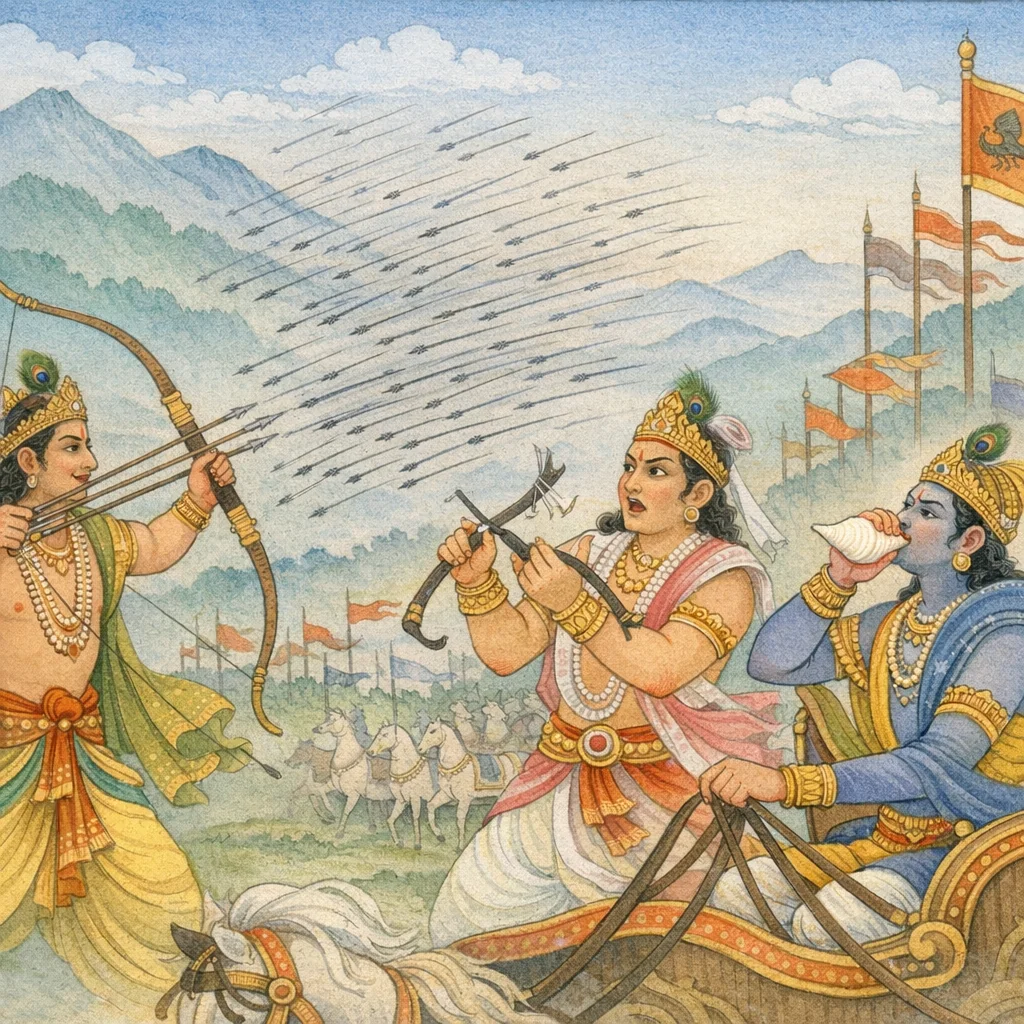
Chapter Arc: संजय धृतराष्ट्र को बताता है कि अर्जुन अकेले ही कौरवों के सुवर्ण-विभूषित महारथियों के घोर व्यूह में घुसकर दिशाओं को ज्वाला-सा प्रकाशित करते हुए शत्रु-समूह से भिड़ गया। → भेरी-झर्झरि-आनक के निनाद से रणभूमि थर्राती है; शल्य, भूरिश्रवा, द्रौणि (अश्वत्थामा), कृप, जयद्रथ आदि एक साथ पार्थ पर बाण-वर्षा करते हैं—रुक्म-पुङ्ख, दुष्प्रेक्ष्य शर आकाश को ढँक देते हैं। → कृष्ण के पांचजन्य की गर्जना समस्त शब्दों को दबाकर रोदसी भर देती है; उसी आवेश में अर्जुन हँसते हुए पाणि-लाघव दिखाता है, शल्य के धनुष को मुष्टि-देश से काट देता है और अनेक महारथियों को एक साथ प्रतिविद्ध कर रण की धुरी पलट देता है। → अर्जुन क्रमशः कर्ण, वृषसेन, शल्य, द्रौणि, कृप, जयद्रथ आदि पर तीव्र प्रत्याघात करता है—किसी का धनुष कटता है, किसी का रथ-बल क्षीण होता है; कौरव-पक्ष की संयुक्त बाण-वृष्टि क्षणिक होकर भी निर्णायक दबाव नहीं बना पाती। → अर्जुन के प्रहारों से कौरव-महारथी क्षुब्ध होकर पुनः संगठित होते हैं—अगला क्षण यह संकेत देता है कि वे और अधिक क्रूर समवेत आक्रमण की तैयारी करेंगे।
Shlokas
Verse 1
(दाक्षिणात्य अधिक पाठका १ श्लोक मिलाकर कुल ५० श्लोक हैं) अपन क्ा बा 2 चतुर्राधिकशततमो< ध्याय: अर्जुनका कौरव महारथियोंके साथ घोर युद्ध संजय उवाच तावका हि समीक्ष्यैवं वृष्ण्यन्धककुरूत्तमौ । प्रागत्वरन् जिघांसन्तस्तथैव विजय: परान्,संजय कहते हैं--राजन्! आपके सैनिक इस प्रकार वृष्णि और अन्धकवंशके श्रेष्ठ पुरुष श्रीकृष्ण तथा कुरुकुलरत्न अर्जुनको आगे देखकर उनका वध करनेकी इच्छासे उतावले हो उठे। इसी प्रकार अर्जुन भी शत्रुओंके वधकी अभिलाषासे शीघ्रता करने लगे
Sanjaya said: O King, seeing in this way the foremost heroes of the Vṛṣṇis and Andhakas—Śrī Kṛṣṇa—and the jewel of the Kuru line—Arjuna—your warriors surged forward in haste, intent on killing them. Arjuna too, with the same resolve, pressed on swiftly, longing to strike down the enemy. The scene frames the battle not as a mere clash of arms, but as a contest of will and duty, where each side’s resolve hardens into lethal purpose.
Verse 2
सुवर्णचित्रैवैयाप्रै: स्वनवद्धिर्महारथै: । दीपयन्तो दिश: सर्वा ज्वलद्धिरिव पावकै:,वे कौरव-सैनिक व्याप्रचर्मसे आच्छादित सुवर्णजटित और गम्भीर घोष करनेवाले प्रज्वलित अग्निके समान तेजस्वी विशाल रथोंद्वारा सम्पूर्ण दिशाओंको प्रकाशित कर रहे थे
Sañjaya said: The Kaurava warriors, mounted on great chariots—adorned with golden designs, swift in movement, and resonant with loud, deep sounds—seemed like blazing fires, illuminating all the directions. The scene heightens the moral tension of the war: outward splendor and martial power surge forward, even as the conflict’s inner burden of adharma and destruction looms behind the spectacle.
Verse 3
रुक्मपुड्खैश्न दुष्प्रेक्ष्यै: कार्मुकैः पृथिवीपते । कूजद्धिरतुलान् नादान् कोपितैस्तुरगैरिव,पृथ्वीपते! वे सोनेके पंखवाले दुर्लक्ष्य बाणों और क्रोधमें भरे हुए घोड़ोंके समान अनुपम टंकारथध्वनि करनेवाले धनुषोंके द्वारा भी समस्त दिशाओंमें दीप्ति बिखेर रहे थे
Verse 4
भूरिश्रवा: शल: कर्णो वृषसेनो जयद्रथ: । कृपश्च मद्रराजश्च द्रौणिश्व रथिनां वर:,भूरिश्रवा, शल, कर्ण, वृषसेन, जयद्रथ, कृपाचार्य, मद्रराज शल्य तथा रथियोंमें श्रेष्ठ अश्वत्थामा--ये आठ महारथी व्याप्रचर्मद्वारा आच्छादित तथा सुवर्णमय चन्द्रचिह्रोंसे विभूषित अअश्वोंद्वागा आकाशको पीते हुए-से दसों दिशाओंको सुशोभित कर रहे थे
Sañjaya said: Bhūriśravas, Śala, Karṇa, Vṛṣasena, Jayadratha, Kṛpa, the king of Madra (Śalya), and Droṇa’s son Aśvatthāmā—foremost among chariot-warriors—stood out as the leading champions. Their presence, marked by martial splendor and readiness for battle, signals the concentration of power on the Kaurava side and foreshadows the grave ethical cost of a war driven by loyalty, vengeance, and ambition.
Verse 5
ते पिबन्त इवाकाशमणश्लैरष्टी महारथा: । व्यराजयन् दश दिशो वैयाप्रैहेंमचन्द्रकै:,भूरिश्रवा, शल, कर्ण, वृषसेन, जयद्रथ, कृपाचार्य, मद्रराज शल्य तथा रथियोंमें श्रेष्ठ अश्वत्थामा--ये आठ महारथी व्याप्रचर्मद्वारा आच्छादित तथा सुवर्णमय चन्द्रचिह्रोंसे विभूषित अअश्वोंद्वागा आकाशको पीते हुए-से दसों दिशाओंको सुशोभित कर रहे थे
Sañjaya said: Those eight great chariot-warriors seemed to drink up the sky with the dust raised by their swift movement. Covered with protective leather armour and adorned with golden moon-emblems, they made all ten directions blaze with splendour—Bhūriśravā, Śala, Karṇa, Vṛṣasena, Jayadratha, Kṛpācārya, the king of Madra Śalya, and foremost among chariot-fighters, Aśvatthāmā. The verse heightens the moral tension of war: outward brilliance and martial prestige surge forward even as the battle’s destructive consequences loom.
Verse 6
ते दंशिता: सुसंरब्धा रथैमेंघौघनि:स्वनै: । समावृण्वन् दश दिश: पार्थस्य निशितै: शरै:,रोषमें भरे हुए उन कवचधारी वीरोंने मेघके समान गम्भीर गर्जना करनेवाले रथों और पैने बाणोंद्वारा अर्जुनकी दसों दिशाओंको आच्छादित कर दिया। कुलूतदेशके विचित्र एवं शीघ्रगामी घोड़े उस समय उन महारथियोंके वाहन बनकर दसों दिशाओंको प्रकाशित करते हुए बड़ी शोभा पा रहे थे
Sañjaya said: Armoured and fiercely enraged, those warriors, with chariots roaring like dense masses of thunderclouds and with razor-sharp arrows, blanketed all ten directions around Pārtha (Arjuna). The scene conveys the war’s moral pressure: wrath and martial splendour surge together, yet the narrative keeps attention on how anger-driven force seeks to overwhelm a single righteous combatant through sheer encirclement and intimidation.
Verse 7
कौलूतका हयाश्रित्रा वहन्तस्तान् महारथान् | व्यशोभन्त तदा शीघ्रा दीपयन्तो दिशो दश,रोषमें भरे हुए उन कवचधारी वीरोंने मेघके समान गम्भीर गर्जना करनेवाले रथों और पैने बाणोंद्वारा अर्जुनकी दसों दिशाओंको आच्छादित कर दिया। कुलूतदेशके विचित्र एवं शीघ्रगामी घोड़े उस समय उन महारथियोंके वाहन बनकर दसों दिशाओंको प्रकाशित करते हुए बड़ी शोभा पा रहे थे
Sañjaya said: The swift, variegated horses from the Kaulūta region, harnessed to the chariots and bearing those great chariot-warriors, shone brilliantly then—seeming to light up all ten directions. In the ethical atmosphere of the battle, the verse underscores how martial splendor and speed amplify the reach of violence, turning the very horizon into a theatre of war.
Verse 8
आजानेयैर्महावेगैर्नानादेशसमुत्थितै: । पर्वतीयैर्नदीजैश्न सैन्धवैश्व हयोत्तमै:,राजन! नाना देशोंमें उत्पन्न महान् वेगशाली आजानेयर, पर्वतीयः (पहाड़ी), नदीजई (दरियाई) तथा सिंधुदेशीय उत्तम घोड़ोंद्वारा आपके पुत्रकी रक्षाके लिये उत्सुक हुए श्रेष्ठ कौरवयोद्धा सब ओरसे शीघ्र ही अर्जुनके रथपर टूट पड़े
Sanjaya said: “O King, using superb horses—Ājāneya steeds of great speed, bred in many different lands, including mountain-bred, river-bred, and Sindhu-bred stock—the foremost Kaurava warriors, eager to protect your son, rushed in from every side and swiftly fell upon Arjuna’s chariot.”
Verse 9
कुरुयोधवरा राजंस्तव पुत्र परीप्सव: । धनंजयरथं शीघ्र सर्वतः समुपाद्रवन्,राजन! नाना देशोंमें उत्पन्न महान् वेगशाली आजानेयर, पर्वतीयः (पहाड़ी), नदीजई (दरियाई) तथा सिंधुदेशीय उत्तम घोड़ोंद्वारा आपके पुत्रकी रक्षाके लिये उत्सुक हुए श्रेष्ठ कौरवयोद्धा सब ओरसे शीघ्र ही अर्जुनके रथपर टूट पड़े
Sañjaya said: O King, the foremost warriors among the Kurus, eager to protect your son, swiftly surged from every side against Dhanañjaya’s chariot. The scene underscores the war’s moral tension: valor and loyalty are being marshalled in the service of safeguarding one’s own, even as the battle’s larger righteousness remains contested.
Verse 10
ते प्रगृहा महाशड्खान् दश्मु: पुरुषसत्तमा: । पूरयन्तो दिवं राजन् पृथिवीं च ससागराम्,नरेश्वर! उन पुरुषप्रवर योद्धाओंने समुद्रसहित पृथ्वी और आकाशको शब्दोंसे व्याप्त करते हुए बड़े-बड़े शंख लेकर बजाये
Sanjaya said: O King, those foremost of men, taking up their great conches, blew them so that their sound filled the sky and the earth together with the ocean—an awe-inspiring proclamation of martial resolve that signals the grave, dharma-laden turning of the battle.
Verse 11
तथैव दध्मतु: शड्खौ वासुदेवधनंजयौ । प्रवरी सर्वदेवानां सर्वशड्खवरी भुवि,इसी प्रकार सम्पूर्ण देवताओंमें श्रेष्ठ श्रीकृष्ण और अर्जुन भूतलके समस्त शंखोंमें उत्तम अपने दिव्य शंख बजाने लगे
Sañjaya said: In the same manner, Vāsudeva (Kṛṣṇa) and Dhanañjaya (Arjuna) blew their conches—those two who are foremost among all the gods, and whose conches are the best among all conches upon the earth. The sound signals resolve and righteous confidence at the outset of battle, presenting their cause as divinely supported and morally steady amid the violence of war.
Verse 12
देवदत्तं च कौन्तेय: पाउ्चजन्यं च केशव: । शब्दस्तु देवदत्तस्य धनंजयसमीरित:
Sañjaya said: Arjuna, son of Kuntī, blew the conch named Devadatta, and Keśava (Kṛṣṇa) blew the conch named Pāñcajanya. The resounding blast of Devadatta, sounded by Dhanañjaya (Arjuna), rang out—an emblem of resolve and righteous purpose as the battle’s moral stakes were being declared through ritualized signals.
Verse 13
पृथिवीं चान्तरिक्षं च दिशश्वैव समावृणोत् । कुन्तीकुमार अर्जुनने देवदत्त नामक शंख बजाया और श्रीकृष्णने पांचजन्य। धनंजयके बजाये हुए देवदत्तका शब्द पृथ्वी, आकाश तथा सम्पूर्ण दिशाओंमें व्याप्त हो गया ।। १२ $ई || तथैव पाञ्चजन्योड5पि वासुदेवसमीरित:
Sañjaya said: The sound spread over the earth, the mid-space, and all the directions. Likewise, the conch Pāñcajanya, blown by Vāsudeva (Kṛṣṇa), resounded—filling the quarters. In the moral atmosphere of the war, these conch-calls function as a public proclamation of resolve and righteous purpose, strengthening allies and unsettling the unjust.
Verse 14
तस्मिंस्तथा वर्तमाने दारुणे नादसंकुले
Sañjaya said: While that dreadful situation was unfolding in that manner—amid a tumult of terrifying battle-cries and clamor—
Verse 15
भीरूणां त्रासजनने शूराणां हर्षवर्धने । प्रवादितासु भेरीषु झर्झरिष्वानकेषु च
Sañjaya said: When the kettledrums were sounded—together with the jharjharī drums and the ānaka war-drums—their thunderous music struck terror into the timid, yet it swelled the joy and resolve of the brave. Thus the very same martial signal revealed the inner temper of each side on the battlefield.
Verse 16
मृदज्भेष्वपि राजेन्द्र वाद्यमानेष्वनेकश: । महारथा: समाख्याता दुर्योधनहितैषिण:
Sañjaya said: “O best of kings, even while the drums were being beaten again and again in many ways, those great chariot-warriors—devoted to Duryodhana’s welfare—were being named and announced.”
Verse 17
अमृष्यमाणास्तं शब्दं क्रुद्धा: परमधन्विन: । नानादेश्या महीपाला: स्वसैन्यपरिरक्षिण:
Sañjaya said: Unable to endure that sound, the kings from many regions—supreme archers, inflamed with anger—stood intent on protecting their own forces.
Verse 18
अमर्षिता महाशड्खान् द्मुर्वीरा महारथा: । कृते प्रतिकरिष्यन्त: केशवस्यार्जुनस्य च
Sañjaya said: Enraged, those mighty warriors—great chariot-fighters—blew their great conches, resolved to make a counterstroke against Keśava and Arjuna. The scene underscores how wounded pride and anger in war quickly harden into deliberate retaliation, tightening the cycle of violence on the battlefield.
Verse 19
राजेन्द्र! इस प्रकार जब वहाँ भयंकर शब्द व्याप्त हो गया, जो कायरोंको डराने और शूरवीरोंके हर्षको बढ़ानेवाला था, जब मेरी, झाँझ, ढोल और मृदंग आदि अनेक प्रकारके बाजे बजने और बजाये जाने लगे, उस समय दुर्योधनका हित चाहनेवाले विख्यात महारथी उस शब्दको न सह सकनेके कारण कुपित हो उठे। वे नाना देशोंमें उत्पन्न वीर, महारथी, महाधनुर्धर महीपाल, जो अपनी सेनाका संरक्षण कर रहे थे, अमर्षमें भरकर बड़े-बड़े शंख बजाने लगे; वे श्रीकृष्ण और अर्जुनके प्रत्येक कार्यका बदला चुकानेको उद्यत थे || १४-- १८ || बभूव तव तत् सैन्यं शड्खशब्दसमीरितम् | उद्विग्नरथनागाश्चवमस्वस्थमिव वा विभो,प्रभो! आपकी वह सेना शंखके शब्दसे व्याप्त होनेके कारण अस्वस्थ-सी दिखायी देती थी। उसके हाथी, घोड़े और रथी सभी उद्विग्न हो उठे थे
Sañjaya said: O mighty one, your army, pervaded and stirred by the blare of conches, appeared as though unwell. Horses, elephants, and chariot-warriors alike were thrown into agitation—its composure shaken by that resounding signal of battle.
Verse 20
तत् प्रविद्धमिवाकाशं शूरै: शडुखविनादितम् | बभूव भूशमुद्विग्नं निर्धातिरिव नादितम्,शूरवीरोंने शंखध्वनिसे आकाशको विद्ध-सा कर डाला। वह वज्रकी गड़गड़ाहटसे व्याप्त-सा होकर अत्यन्त उद्वेशजनक हो गया
Sañjaya said: The sky seemed as though it had been pierced, resounding with the conch-blasts of heroic warriors. The earth, too, became intensely agitated—echoing like the thunderous roar of a lightning-bolt—spreading dread through the battlefield as the armies surged into violent resolve.
Verse 21
स शब्द:सुमहान् राजन् दिश: सर्वा व्यनादयत् । त्रासयामास तत् सैन्यं युगान्त इव सम्भूत:,राजन! प्रलयकालके समान सब ओर फैला हुआ वह महान् शब्द सम्पूर्ण दिशाओंको प्रतिध्वनित करने और आपकी सेनाको डराने लगा
Sañjaya said: “O King, that exceedingly great sound resounded through all the directions. Arisen like the roar of the world’s end, it struck terror into that army.”
Verse 22
ततो दुर्योधनो5ष्टौ च राजानस्ते महारथा: । जयद्रथस्य रक्षार्थ पाण्डवं पर्यवारयन्,तदनन्तर दुर्योधन तथा आठ महारथी नरेशोंने जयद्रथकी रक्षाके लिये अर्जुनको घेर लिया
Sañjaya said: Then Duryodhana, together with eight kingly great chariot-warriors, surrounded the Pāṇḍava (Arjuna) in order to protect Jayadratha. The scene underscores how, in the heat of war, collective force and strategic encirclement are employed to safeguard a key ally, even as it intensifies the moral and emotional stakes of the conflict.
Verse 23
ततो द्रौणिस्त्रिसप्तत्या वासुदेवमताडयत् । अर्जुन च त्रिभिर्भल्लैर्ध्वजमश्वांश्व पडचभि:,उस समय अअभश्वत्थामाने भगवान् श्रीकृष्णको तिहत्तर बाण मारे, तीन भल्लोंसे अर्जुनको चोट पहुँचायी और पाँचसे उनके ध्वज एवं घोड़ोंको घायल कर दिया
Sañjaya said: Then Aśvatthāman, son of Droṇa, struck Vāsudeva (Kṛṣṇa) with seventy-three arrows. With three sharp bhalla-arrows he wounded Arjuna, and with five more he injured Arjuna’s banner and horses—showing how, in the fury of battle, even the charioteer and the very supports of a warrior’s strength become targets, testing resolve and restraint amid adharma-prone violence.
Verse 24
तमर्जुन: पृषत्कानां शतै: षड़भिरताडयत् । अत्यर्थमिव संक्रुद्धः प्रतिविद्धे जनार्दने,श्रीकृष्णके घायल हो जानेपर अर्जुन अत्यन्त कुपित हो उठे। उन्होंने छः सौ बाणोंद्वारा अश्वत्थामाको क्षत-विक्षत कर दिया
Sanjaya said: When Janardana (Krishna) was struck, Arjuna, as though inflamed with extreme wrath, assailed him—Aśvatthāman—beating him with six hundred arrows, tearing and wounding him in retaliation. The verse highlights Arjuna’s fierce protective loyalty to Krishna and the moral intensity that arises when one’s revered charioteer and guide is harmed amid the chaos of war.
Verse 25
कर्ण च दशभिर्विद्ध्वा वृषसेनं त्रिभिस्तथा । शल्यस्य सशरं चापं मुष्टी चिच्छेद वीर्यवान्,फिर पराक्रमी अर्जुनने दस बाणोंसे कर्णको और तीन बाणोंद्वारा वृषसेनको घायल करके राजा शल्यके बाणसहित धनुषको मुट्ठी पकड़नेकी जगहसे काट डाला
Sañjaya said: The mighty Arjuna pierced Karṇa with ten arrows and Vṛṣasena with three; then, with decisive skill, he cut down King Śalya’s bow—still fitted with an arrow—at the grip. The scene underscores the ruthless precision of battlefield dharma: disabling an opponent’s weapon to turn the tide, even amid the moral weight of kin-slaying and the escalating necessity of war.
Verse 26
गृहीत्वा धनुरन्यत् तु शल्यो विव्याध पाण्डवम् । भूरिश्रवास्त्रिभिबाणिहेमपुड्खै: शिलाशितै:,तब शल्यने दूसरा धनुष हाथमें लेकर पाण्डुपुत्र अर्जुनको बींध डाला। भूरिश्रवाने सानपर तेज किये हुए सुवर्णमय पंखवाले तीन बाणोंसे उन्हें घायल कर दिया
Sañjaya said: Taking up another bow, Śalya pierced the Pāṇḍava (Arjuna). Bhūriśravā too wounded him with three arrows—gold-feathered and whetted on stone—intensifying the relentless pressure of battle. The scene underscores the Mahābhārata’s grim ethic of kṣatriya warfare: prowess and persistence are praised, yet the narrative also highlights how even the foremost heroes are made vulnerable amid escalating violence.
Verse 27
कर्णो द्वात्रिंशता चैव वृषसेनश्व सप्तभि: । जयद्रथस्त्रिसप्तत्या कृपश्च दशभि: शरै:
Sañjaya said: Karṇa was struck with thirty-two arrows; Vṛṣasena with seven; Jayadratha with seventy-three; and Kṛpa with ten. Thus, in the fierce press of battle, the foremost warriors were marked by the measured, relentless force of missile-weapons—each wound a sign of the escalating contest of prowess and endurance amid the moral darkness of fratricidal war.
Verse 28
तत: शराणां षष्ट्या तु द्रौणि: पार्थमवाकिरत्
Sañjaya said: Then, with a volley of sixty arrows, Droṇa’s son (Aśvatthāmā) showered Arjuna. The scene underscores the relentless escalation of martial skill and resolve, where prowess is displayed without pause amid the moral weight of fratricidal war.
Verse 29
प्रहसंस्तु नरव्याप्र: श्वेताश्वः कृष्णसारथि:
Sañjaya said: Smiling (or laughing), that tiger among men—Arjuna, the rider of the white horses with Kṛṣṇa as his charioteer—(advanced in the battle). The line underscores Arjuna’s composed confidence and moral steadiness amid the violence of war, grounded in the guidance of Kṛṣṇa.
Verse 30
कर्ण द्वादशभिवविंद्ध्या वृषसेनं त्रिभि: शरै:
Sañjaya said: Avindhya struck Karṇa with twelve arrows, and Vṛṣasena with three. The report underscores the relentless reciprocity of battle—each warrior’s prowess is measured by disciplined aim and endurance, even as the conflict continues to consume fathers and sons alike.
Verse 31
सौमदत्तिं त्रिभिविंद्ध्वा शल्यं च दशभि: शरै:
Sañjaya said: Having pierced Saumadatti with three arrows, he also struck Śalya with ten shafts—an act that intensifies the battle’s relentless momentum, where prowess and resolve are measured through disciplined, targeted force amid the larger contest of duty and allegiance.
Verse 32
शितैरग्निशिखाकारैद्रौणिं विव्याध चाष्टभि: । इसके बाद भूरिश्रवाको तीन और शल्यको दस बाणोंसे बींधकर अग्निकी ज्वालाके समान आकारवाले आठ तीखे बाणोंद्वारा अश्वत्थामाको घायल कर दिया ।। गौतम॑ं पठ्चविंशत्या सैन्धवं च शतेन ह
Sañjaya said: With eight sharp arrows, shaped like tongues of fire, he pierced Droṇa’s son Aśvatthāman—wounding him in the midst of the battle. The scene underscores the relentless escalation of violence in the Kurukṣetra war, where prowess and retaliation drive warriors to ever more lethal exchanges, often eclipsing restraint and compassion.
Verse 33
भूरिश्रवास्तु संक्रुद्ध: प्रतोद॑ चिच्छिदे हरे:,भूरिश्रवाने कुपित होकर श्रीकृष्णका चाबुक काट डाला और अर्जुनको तिहत्तर बाणोंसे गहरी चोट पहुँचायी
Sañjaya said: Enraged, Bhūriśravā cut off Hari’s whip—an act of defiant aggression against Kṛṣṇa’s charioteering role—and then struck Arjuna with a concentrated volley of arrows, intensifying the moral and tactical pressure of the battle.
Verse 34
अर्जुन च त्रिसप्तत्या बाणानामाजघान ह,भूरिश्रवाने कुपित होकर श्रीकृष्णका चाबुक काट डाला और अर्जुनको तिहत्तर बाणोंसे गहरी चोट पहुँचायी
Sañjaya said: Enraged, Bhūriśravā cut down Śrī Kṛṣṇa’s whip and then struck Arjuna hard with seventy-three arrows. The episode underscores how wrath in battle drives warriors to target not only the opponent but also the instruments that guide him, intensifying the violence and testing restraint and right conduct amid war.
Verse 35
तत: शरशतैस्ती4्णैस्तानरीन् श्वेतवाहन: । प्रत्यषेधद् द्रुतं क्रुद्धो महावातो घनानिव,तदनन्तर जैसे प्रचण्ड वायु बादलोंको छिलन्न-भिन्न कर देती है, उसी प्रकार श्वेतवाहन अर्जुनने कुपित हो सैकड़ों तीखे बाणोंद्वारा उन शत्रुओंको तुरंत पीछे हटा दिया
Sañjaya said: Then, angered, Arjuna—he whose chariot is drawn by white horses—swiftly checked those enemies with hundreds of keen arrows, just as a mighty wind tears apart and drives away dense clouds. The image underscores disciplined force in battle: wrath is present, yet it is harnessed into precise action to restrain the foe rather than lapse into chaos.
Verse 103
इस प्रकार श्रीमह्ाभारत द्रोणपर्वके अन्तर्गत जयद्रथवधपर्वमें दुर्योधन-पराजयविषयक एक सौ तीनवाँ अध्याय पूरा हुआ
Sañjaya said: Thus, in the Śrī Mahābhārata, within the Droṇa Parva—specifically in the section concerning the slaying of Jayadratha—the one-hundred-and-third chapter, dealing with the defeat of Duryodhana, is concluded. The closing formula frames the episode as part of the larger moral and strategic arc of the war, where pride and aggression meet their consequences amid the inexorable movement of dharma and fate.
Verse 104
इति श्रीमहाभारते द्रोणपर्वणि जयद्रथवधपर्वणि संकुलयुद्धे चतुरधिकशततमो<ध्याय:
Sanjaya said: Thus, in the sacred Mahābhārata, within the Droṇa Parva—specifically in the section on the slaying of Jayadratha—ends the one-hundred-and-fourth chapter, describing the tangled and confused clash of battle. The colophon frames the episode as a morally weighty turning point: the war’s chaos intensifies as vows, duty, and retribution converge around Jayadratha’s fate.
Verse 133
सर्वशब्दानतिक्रम्य पूरयामास रोदसी । इसी प्रकार भगवान् श्रीकृष्णके बजाये हुए पांचजन्यने भी सम्पूर्ण शब्दोंको दबाकर अपनी ध्वनिसे पृथ्वी और आकाशको भर दिया
Sañjaya said: Surpassing all other sounds, it filled both earth and sky. In the same way, the Pañcajanya conch blown by Bhagavān Śrī Kṛṣṇa overwhelmed every other noise and, by its own resonance, filled the earth and the heavens—an awe-inspiring signal that steadied allies and struck fear into opponents amid the righteous yet terrible press of war.
Verse 276
मद्रराजश्न दशभिर्विव्यधु: फाल्गुनं रणे । फिर कर्णने बत्तीस, वृषसेनने सात, जयद्रथने तिहत्तर, कृपाचार्यने दस तथा मद्रराज शल्यने भी दस बाण मारकर रफक्षेत्रमें अर्जुनको बींध डाला
Sañjaya said: In the thick of battle, King Śalya of Madra pierced Phālguna (Arjuna) with ten arrows. The report underscores the concentrated, coordinated assault by the Kaurava champions upon Arjuna, highlighting the relentless pressure and the harsh ethics of war where prowess and endurance are tested amid lethal exchanges.
Verse 286
वासुदेवं च विंशत्या पुनः पार्थ च पञठ्चभि: । तत्पश्चात् अश्वत्थामाने अर्जुनपर साठ बाण बरसाये, फिर श्रीकृष्णको बीस और अर्जुनको भी पाँच बाण मारे
Sañjaya said: Then he again struck Vāsudeva with twenty arrows, and Pārtha (Arjuna) with five. After that, Aśvatthāman poured down a shower of sixty arrows upon Arjuna—an escalation of force in the relentless ethics-straining violence of the battlefield.
Verse 293
प्रत्यविध्यत् स तान् सर्वान् दर्शयन् पाणिलाघवम् । तब श्रीकृष्ण जिनके सारथि हैं, उन श्वेतवाहन पुरुषसिंह अर्जुनने जोर-जोरसे हँसते और हाथोंकी फुर्ती दिखाते हुए उन सबको बींधकर बदला चुकाया
Sañjaya said: Displaying the swift dexterity of his hands, he struck back at all of them in return—Arjuna, the lion among men, whose charioteer was Śrī Kṛṣṇa, laughing aloud as he repaid their assault. The verse underscores the warrior’s disciplined skill and resolve in battle, framed by the guiding presence of Kṛṣṇa as charioteer.
Verse 303
शल्यस्य सशरं चापं मुष्टिदेशे व्यकृन्तत । कर्णको बारह और वृषसेनको तीन बाणोंसे घायल करके राजा शल्यके बाणसहित धनुषको मुद्दी पकड़नेकी जगहसे पुनः काट डाला
Sañjaya said: He cut down King Śalya’s bow together with the arrow set upon it, severing it at the grip—at the very place where the hand holds it. In the fierce ethics of battlefield skill, this act shows tactical mastery aimed at disarming a formidable opponent rather than merely wounding him.
Verse 326
पुनर्द्रर्णि च सप्तत्या शराणां सो5भ्यताडयत् । तत्पश्चात् कृपाचार्यको पचीस, जयद्रथको सौ तथा अभश्वत्थामाको पुनः उन्होंने सत्तर बाण मारे
Sañjaya said: Again he struck Droṇa’s son with seventy arrows. Thereafter he assailed Kṛpa, the preceptor, with twenty-five; Jayadratha with sixty; and once more he attacked Aśvatthāmā. The narration underscores the relentless, escalating rhythm of battle—where prowess is measured in restraint and precision as much as in force, even while the ethical weight of violence continues to accumulate on all sides.
Frequently Asked Questions
The chapter highlights the tension between strategic priority and honor-response: Bhīma’s intended movement toward a broader objective is interrupted by Karṇa’s challenge, and the duel becomes driven by the obligation to answer provocation without appearing to evade combat.
Martial action is portrayed as a compound of duty, emotion, and public perception; even when objectives are strategic, agents are compelled by honor-codes and psychological triggers, illustrating how dharma operates contextually rather than as a single fixed rule.
No explicit phalaśruti is presented in this unit; its meta-function is historiographic—Sañjaya’s report models how war events are interpreted through causality (vows, insults, prior enmity) within the epic’s larger inquiry into dharma and consequence.