Adhyaya 4
मरुत्तोपाख्यान-प्रस्तावः — Genealogy to Marutta and the Logistics of Royal Sacrifice
Upa-parva: Marutta-Upākhyāna (Exemplum of King Marutta) — within Āśvamedhika-parva
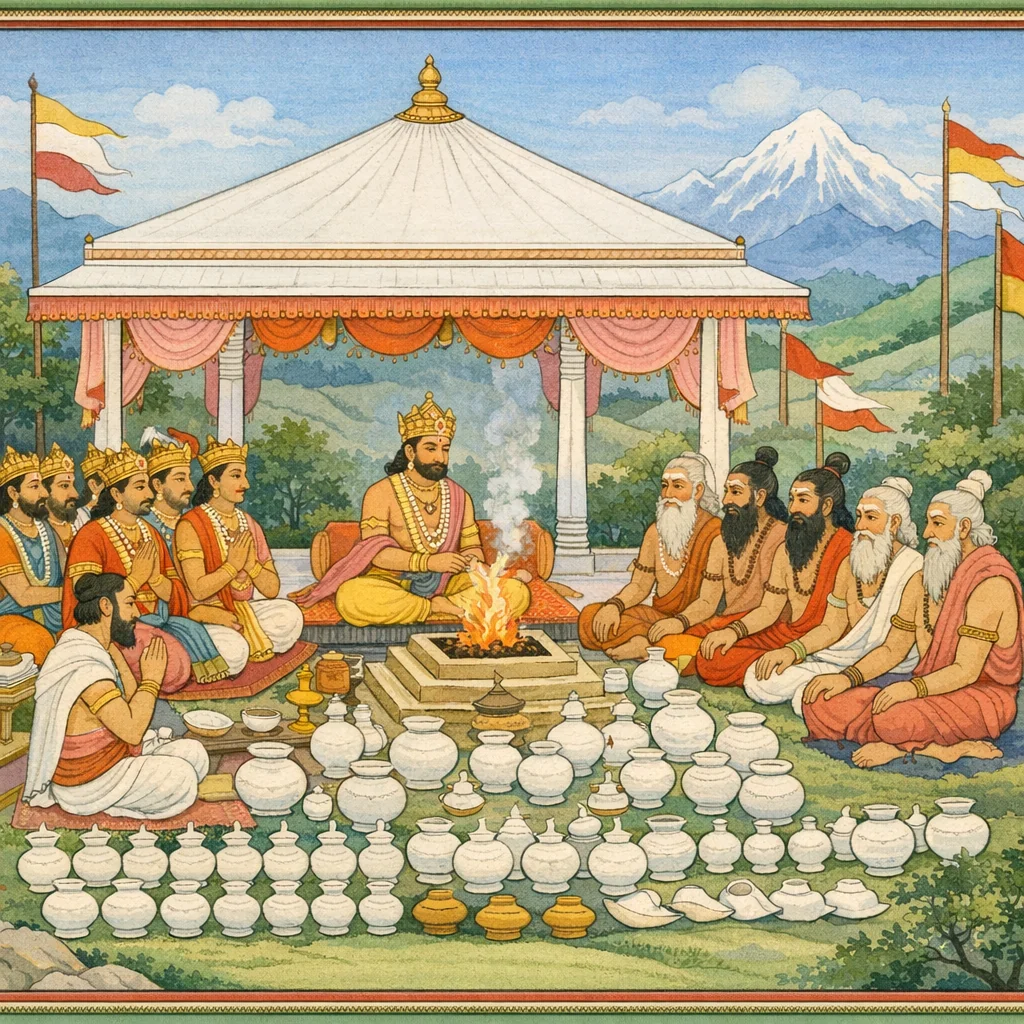
Chapter 4 (Book 14) opens with Yudhiṣṭhira requesting Vyāsa to recount the celebrated narrative of the dharma-knowing royal sage Marutta. Vyāsa responds by tracing a genealogical line beginning in Kṛtayuga with Manu (as daṇḍadhara, the archetypal upholder of order), followed by Prajāti, Kṣupa, and Ikṣvāku. A subsequent dynastic segment introduces a problematic ruler (Khanīnetra) whose governance fails to retain popular allegiance; the people abandon him and install his son Suvarcasa, who governs with discipline, purity, truthfulness, and restraint. However, Suvarcasa’s dharmic orientation strains the treasury and transport resources, inviting pressure from surrounding chiefs; in extremity he ‘produces strength’ and becomes famed as Karaṃdhama, having subdued border rulers. The chapter then presents Karaṃdhama’s son Avikṣit as a paradigmatic king—radiant, patient, intelligent, stable—who pleases his subjects through deed, thought, and speech, and performs a hundred Aśvamedhas with the sage Aṅgirā as officiant. Marutta, surpassing his father in qualities, prepares for sacrifice on a massive scale, commissioning innumerable golden ritual vessels and establishing a yajña enclosure near Meru by the northern flank of Himavat, where he performs the rite with allied rulers.
Chapter Arc: व्यास युधिष्ठिर को सांत्वना की पृष्ठभूमि में एक प्राचीन राजवंश-कथा का द्वार खोलते हैं—यह दिखाने को कि मृत्यु और राज्य-परिवर्तन भी प्रारब्ध के विधान से बंधे हैं। → कृतयुग के मनु-दण्डधर से आरम्भ होकर प्रसन्धि और फिर इक्ष्वाकु की संतति का विस्तार होता है। धर्मपरायणता के बीच सत्ता का अस्थिर चक्र उभरता है—सुवर्चा अपने पिता की दुर्दशा और राज्य-निष्कासन देखकर प्रजा-हित के लिए संयमित आचरण अपनाता है, पर शत्रुओं के दबाव से कोष-वाहन क्षीण होते हैं और नगर सहित राजा पर संकट घिर आता है। → धर्म, वृत्त और बल के संयोग से कारन्धम (कथा-धारा का शक्तिशाली नायक) सम्राट-सा उभरता है—समस्त महीपाल उसके वश में आ जाते हैं; और इसी वैभव-पराकाष्ठा के समानान्तर मरुत्त का मेरु के निकट सुवर्णमय यज्ञवाट में विधिवत् अश्वमेध/महायज्ञ का विराट आयोजन आरम्भ होता है, जहाँ सहस्रों-हजारों शुभ्र पात्र बनवाए जाते हैं। → कथा का निष्कर्ष यह स्थापित करता है कि राजधर्म का आधार केवल दण्ड नहीं, सदाचार और प्रजा-हित की वृत्ति है; और यज्ञ-वैभव भी उसी धर्म-स्थिरता का बाह्य रूप है। युधिष्ठिर के शोक के लिए संकेत स्पष्ट है—जो घटा, वह कर्म-नियत था; धर्ममार्ग पर टिके रहना ही शेष कर्तव्य है। → मरुत्त के यज्ञ की अपार सामग्री, सुवर्ण-वैभव और देवतुल्य सहायकों के बीच आगे यह प्रश्न लटकता है कि इस यज्ञ में कौन-सा असाधारण हस्तक्षेप/प्रतिस्पर्धा या दैवी-मानवीय टकराव प्रकट होगा।
Shlokas
Verse 1
2: सं > यह कथन युधिष्ठिरको सान्त्वना देनेके लिये गौणरूपमें इस दृष्टिसे है कि मरनेवालोंकी मृत्यु उनके प्रारब्ध-कर्मानुसार अवश्यम्भावी थी; अत: यह जो कुछ हुआ है, ईश्वर प्रेरणाके ही अनुसार हुआ है। चतुथों5 ध्याय: मरुत्तके पूर्वजोंका परिचय देते हुए व्यासजीके द्वारा उनके गुण, प्रभाव एवं यज्ञका दिग्दर्शन युधिछ्िर उवाच शुश्रूषे तस्य धर्मज्ञ राजर्षे: परिकीर्तनम् । द्ैपायन मरुत्तस्य कथां प्रब्रूहि मेडनघ,युधिष्ठिरने पूछा--धर्मके ज्ञाता, निष्पाप महर्षि द्वैपायन! मैं राजर्षि मरुत्तकी कथा और उनके गुणोंका कीर्तन सुनना चाहता हूँ। कृपया मुझसे कहिये
Yudhiṣṭhira said: “O knower of dharma, I wish to hear the celebrated account of that royal sage. O Daipāyana, O sinless one, please narrate to me the story of Marutta.”
Verse 2
व्यास उवाच आसीत् कृतयुगे तात मनुर्दण्डधर: प्रभु: । तस्य पुत्रो महाबाहु: प्रसन्धिरिति विश्वुतः,व्यासजीने कहा--तात! सत्ययुगमें राजदण्ड धारण करनेवाले शक्तिशाली वैवस्वत मनु एक प्रसिद्ध राजा थे। उनके पुत्र महाबाहु प्रसन्धिके नामसे विख्यात थे
Vyāsa said: “Dear one, in the Kṛta Yuga there lived the mighty Manu, sovereign and bearer of the royal rod of punishment. His son, the strong-armed prince, was renowned in the world by the name Prasandhi.”
Verse 3
इस प्रकार श्रीमहाभारत आश्वमेधिकपवके अन्तर्गत अश्वमेधपर्वमें संवर्त और मरुत्तका उपाख्यानविषयक तीसरा अध्याय पूरा हुआ,प्रसन्धेरभवत् पुत्र: क्षुप इत्यभिविश्रुत: । क्षुपस्य पुत्र इक्ष्वाकुर्महीपालो5भवत् प्रभु: प्रसन्धिके पुत्र क्षुप और क्षुपके पुत्र शक्तिशाली महाराज इक्ष्वाकु हुए
Vyāsa said: From Prasandhi was born a son renowned by the name Kṣupa. From Kṣupa was born Ikṣvāku, a mighty and sovereign king. Thus the lineage is recalled to establish the continuity of righteous kingship and the transmission of royal duty (rājadharma) through generations.
Verse 4
तस्य पुत्रशतं राजन्नासीतू परमधार्मिकम् । तांस्तु सर्वान् महीपालानिक्ष्वाकुरकरोत् प्रभु:,राजन! इक्ष्वाकुके सौ पुत्र हुए, जो बड़े धार्मिक थे। प्रभावशाली इक्ष्वाकुने उन सभी पुत्रोंकोी इस पृथ्वीका पालक बना दिया इति श्रीमहाभारते आश्वमेधिके पर्वणि अश्वमेधपर्वणि संवर्तमरुत्तीये चतुर्थो5ध्याय:
O King, he had a hundred sons, all supremely devoted to dharma. That mighty lord Ikṣvāku appointed all of them as rulers—guardians of the earth—thus distributing sovereignty in a manner aligned with righteous order and responsibility.
Verse 5
तेषां ज्येष्ठस्तु विंशो 5 भूत् प्रतिमानं धनुष्मताम् । विंशस्य पुत्र: कल्याणो विविंशो नाम भारत,उनमें सबसे ज्येष्ठ पुत्रका नाम था विंश, जो धनुर्धर वीरोंका आदर्श था। भारत! विंशके कल्याणमय पुत्रका नाम विविंश हुआ
Vyāsa said: “Among them, the eldest was named Viṁśa, a model exemplar among bow-bearing warriors. O Bhārata, Viṁśa’s auspicious son was named Viviṁśa.”
Verse 6
विविंशस्य सुता राजन् बभूवुर्दश पञ्च च | सर्वे धनुषि विक्रान्ता ब्रह्मुण्या: सत्यवादिन:,राजन! विविंशके पन्द्रह पुत्र हुए। वे सब-के-सब भधर्नुर्विद्यामें पराक्रमी, ब्राह्मणभक्त, सत्यवादी, दान-धर्मपरायण, शान्त और सर्वदा मधुर भाषण करनेवाले थे। इन सबमें जो ज्येष्ठ था, उसका नाम खनीनेत्र था। वह अपने उन सभी छोटे भाइयोंको बहुत कष्ट देता था
Vyāsa said: “O king, Viviṁśa had fifteen sons. All of them were valiant in archery, devoted to Brahmins and sacred duty, and steadfast speakers of truth.” The verse frames martial skill as ethically bounded—strength is praised alongside reverence for dharma and commitment to truthful conduct.
Verse 7
दानधर्मरता: शान्ता: सततं प्रियवादिन: । तेषां ज्येष्ठ: खनीनेत्र: स तान् सर्वानपीडयत्,राजन! विविंशके पन्द्रह पुत्र हुए। वे सब-के-सब भधर्नुर्विद्यामें पराक्रमी, ब्राह्मणभक्त, सत्यवादी, दान-धर्मपरायण, शान्त और सर्वदा मधुर भाषण करनेवाले थे। इन सबमें जो ज्येष्ठ था, उसका नाम खनीनेत्र था। वह अपने उन सभी छोटे भाइयोंको बहुत कष्ट देता था
Vyāsa said: “They were devoted to charity and righteous conduct, peaceful by nature, and always spoke pleasantly. Yet among them the eldest, named Khanīnetra, continually oppressed all the others, O king.”
Verse 8
खनीनेत्रस्तु विक्रान्तो जित्वा राज्यमकण्टकम् । नाशकद् रक्षितुं राज्यं नान्वरज्यन्त तं प्रजा:,खनीनेत्र पराक्रमी होनेके कारण निष्कण्टक राज्यको जीतकर भी उसकी रक्षा न कर सका; क्योंकि प्रजाका उसमें अनुराग न था
Vyāsa said: Though Khanīnetra was valiant and had conquered a kingdom free of thorns—without rival or obstruction—he could not preserve that rule, for the people did not grow devoted to him. The verse underscores that mere victory and force do not secure kingship; lasting sovereignty depends on the willing allegiance and affection of the subjects, earned through righteous governance.
Verse 9
तमपास्य च तद्राज्ये तस्य पुत्र सुवर्चसम् । अभ्यषिज्चन्त राजेन्द्र मुदिता हाभवंस्तदा,राजेन्द्र! उसे राज्यसे हटाकर प्रजाने उसीके पुत्र सुवर्चाको राजाके पदपर अभिषिक्त कर दिया। उस समय प्रजावर्गको बड़ी प्रसन्नता हुई
Having removed him from that kingship, the people installed his son Suvarcas as king by consecration. O best of kings, the subjects were greatly delighted at that time—suggesting a restoration of orderly rule and public consent as a basis for legitimate sovereignty.
Verse 10
स पितुर्विक्रियां दृष्टवा राज्यान्निरसनं च तत् । नियतो वर्तयामास प्रजाहितचिकीर्षया,सुवर्चा अपने पिताकी वह दुर्दशा, वह राज्यसे निष्कासन देखकर सावधान हो नियमपूर्वक प्रजाके हितकी इच्छासे सबके साथ उत्तम बर्ताव करने लगे
Seeing his father’s altered condition and that very expulsion from the kingdom, he became self-disciplined and, wishing to secure the welfare of the subjects, began to conduct himself with exemplary propriety toward all.
Verse 11
ब्रह्मण्य: सत्यवादी च शुचि: शमदमान्वित: । प्रजास्तं चान्वरज्यन्त धर्मनित्यं मनस्विनम्,वे ब्राह्मणोंके प्रति भक्ति रखते, सत्य बोलते, बाहर-भीतरसे पवित्र रहते और मन तथा इन्द्रियोंको अपने वशमें रखते थे। सदा धर्ममें लगे रहनेवाले उन मनस्वी नरेशपर प्रजाजनोंका विशेष अनुराग था
Vyāsa said: He was devoted to the Brāhmaṇas, a speaker of truth, pure in outward conduct and inward intention, and endowed with self-restraint of mind and senses. Because that high-minded king was ever steadfast in dharma, the people became deeply attached to him and willingly followed his lead.
Verse 12
तस्य धर्मप्रवृत्तस्य व्यशीर्यत् कोशवाहनम् । तं क्षीणकोशं सामन््ता: समन्तात् पर्यपीडयन्,किंतु केवल धर्ममें ही प्रवृत्त रहनेके कारण कुछ ही दिनोंमें राजाका खजाना खाली हो गया और उनके वाहन आदि भी नष्ट हो गये। उनका खजाना खाली हो गया, यह जानकर सामन्त नरेश चारों ओरसे धावा करके उन्हें पीड़ा देने लगे
Vyāsa said: As that king devoted himself wholly to dharma, his treasury and means of conveyance were gradually depleted and fell into ruin. Seeing him with an exhausted treasury, the neighboring feudatory rulers pressed in from all sides and began to harass him.
Verse 13
स पीड्यमानो बहुभि: क्षीणकोशाश्ववाहन: । आर्तिमार्च्छत् परां राजा सह भृत्यै: पुरेण च,उनका कोष और घोड़े आदि वाहन तो नष्ट हो ही गये थे। बहुसंख्यक शत्रुओंने एक साथ धावा करके उन्हें सताना आरम्भ कर दिया। इससे राजा सुवर्चा अपने सेवकों और पुरवासियोंसहित भारी संकटमें पड़ गये
Pressed hard by many foes, with his treasury depleted and his horses and other means of conveyance exhausted, the king fell into extreme distress—together with his attendants and the people of his city. The verse underscores how the collapse of resources and protection in the face of collective aggression brings not only the ruler but the entire community into peril, highlighting the ethical weight of kingship and the shared consequences of political vulnerability.
Verse 14
न चैनमभिहन्तुं ते शकनुवन्ति बलक्षये | सम्यग्वृत्तो हि राजा स धर्मनित्यो युधिष्ठिर,युधिष्ठिर! सेना और खजाना नष्ट हो जानेपर भी वे आक्रमणकारी शत्रु सुवर्चाका वध न कर सके; क्योंकि वे राजा नित्यधर्मपरायण और सदाचारी थे
Vyāsa said: Even when their strength was exhausted, those assailant enemies were unable to slay him. For that king was truly of upright conduct and steadfast in dharma, O Yudhiṣṭhira.
Verse 15
यदा तु परमामार्ति गतो5सौ सपुरो नृपः । ततः प्रदध्मौ स कर प्रादुरासीत् ततो बलम्,जब वे नरेश नगरवासियोंसहित भारी विपत्तिमें पड़ गये, तब उन्होंने अपने हाथको मुँहसे लगाकर उसे शंखकी भाँति बजाया। इससे बहुत बड़ी सेना प्रकट हो गयी
Vyāsa said: When that king, together with his city (and its people), fell into extreme distress, he brought his hand to his mouth and blew upon it as though it were a conch. From that act, a great force—an army—manifested at once, as if summoned in response to the crisis.
Verse 16
ततस्तानजयत् सर्वान् प्रातिसीमान् नराधिपान् | एतस्मात् कारणाद् राजन् विश्रुत: स करन्धम:,राजन्! उसीकी सहायतासे उन्होंने अपने राज्यकी सीमापर निवास करनेवाले सम्पूर्ण शत्रु नरेशोंको परास्त कर दिया। इसी कारणसे अर्थात् करका धमन करने (हाथको बजाने)- से उनका नाम करन्धम हो गया
Then he overcame all the kings who dwelt along the frontiers of his realm. For this reason, O King, he became renowned as Karandhama—so named because he ‘pressed down/checked the kara (tribute/tax),’ i.e., he subdued the exactions and the frontier threats through decisive strength and support.
Verse 17
तस्य कारन्धम: पुत्रस्त्रेतायुगमुखेड भवत् । इन्द्रादनवर: श्रीमान् देवैरपि सुदुर्जय:,करन्धमके त्रेतायुगके आरम्भमें एक कान्तिमान् पुत्र हुआ, जो कारन्धम कहलाया। वह इन्द्रसे किसी भी बातमें कम नहीं था। उसे परास्त करना देवताओंके लिये भी अत्यन्त कठिन था
Vyāsa said: At the very dawn of the Tretā-yuga, he had a son named Kārandhama. Radiant and illustrious, that son was in no way inferior to Indra; even the gods would have found him exceedingly difficult to defeat. The passage underscores the ideal of extraordinary royal prowess and splendor—power that commands respect even from celestial beings—while situating it within the grand chronology of the yugas.
Verse 18
तस्य सर्वे महीपाला वर्तन्ते सम वशे तदा । स हि सम्राडभूत् तेषां वृत्तेन च बलेन च,उस समयके सभी भूपाल कारन्धमके अधीन हो गये थे। वह अपने सदाचार और बलके द्वारा उन सबका सम्राट् हो गया था
At that time, all the kings came under his equal and steady control. By his upright conduct and by his strength, he became the sovereign over them all.
Verse 19
अविक्षिन्ञाम धर्मात्मा शौर्येणेन्द्रसमो5 भवत् । यज्ञशीलो धर्मरतिर्धृतिमान् संयतेन्द्रिय:,उस धर्मात्मा करन्धमकुमारका नाम अविक्षित् था। वह अपने शीर्यके द्वारा इन्द्रकी समानता करता था। वह यज्ञशील, धर्मानुरागी, धैर्यवान् और जितेन्द्रिय था
Vyāsa said: Avikṣi was a righteous-souled prince, equal to Indra in valor. He was devoted to sacrifice, delighted in dharma, steadfast in resolve, and disciplined in his senses.
Verse 20
तेजसा5<5दित्यसदृश: क्षमया पृथिवीसम: । बृहस्पतिसमो बुद्धया हिमवानिव सुस्थिर:,तेजमें सूर्य, क्षमामें पृथ्वी, बुद्धिमें बृहस्पति और सुस्थिरतामें हिमवान् पर्वतके समान माना जाता था
Vyāsa said: “In radiance he was like the Sun; in forbearance he was equal to the Earth. In intelligence he matched Bṛhaspati, and in steadfast firmness he stood like the Himālaya.”
Verse 21
राजा अविक्षित् मन, वाणी, क्रिया, इन्द्रियसंयम और मनोनिग्रहके द्वारा प्रजाजनोंका चित्त संतुष्ट किये रहते थे
Vyāsa said: King Avikṣit continually kept the hearts of his subjects content, governing through disciplined mind, truthful and measured speech, righteous action, restraint of the senses, and firm control of the inner self. The verse presents kingship as ethical self-mastery that ripples outward into public welfare.
Verse 22
य ईजे हयमेधानां शतेन विधिवत प्रभु: । याजयामास यं विद्वान् स्वयमेवाड्िरा: प्रभु:,उन प्रभावशाली नरेशने विधिपूर्वक सौ अश्वमेध यज्ञोंका अनुष्ठान किया था। साक्षात् विद्वान प्रभु, अंगिरा मुनिने ही उनका यज्ञ कराया था
Vyāsa said: That mighty ruler duly performed a hundred Aśvamedha sacrifices. The learned and venerable sage Aṅgirā himself served as the officiating priest and caused those rites to be carried out—signifying the king’s adherence to prescribed dharma and the legitimizing authority of Vedic ritual under a true knower of the tradition.
Verse 23
कर्मणा मनसा वाचा दमेन प्रशमेन च । मनांस्याराधयामास प्रजानां स महीपति:,तस्य पुत्रो5तिचक्राम पितरं गुणवत्तया । मरुत्तो नाम धर्मज्ञक्षक्रवर्ती महायशा: उन्हींके पुत्र हुए महायशस्वी, चक्रवर्ती, धर्मज्ञ राजा मरुत्त। जो अपने गुणोंके कारण पितासे भी बढ़े-चढ़े थे
Verse 24
नागायुतसमप्राण: साक्षाद् विष्णुरिवापर: । स यक्ष्यमाणो धर्मात्मा शातकुम्भमयान्युत
He was possessed of the strength of ten thousand elephants, and seemed like Viṣṇu himself in another form. That righteous-souled one, being about to perform a sacrifice, also had (many) objects made of pure gold prepared for the rite—signs of royal duty expressed through generous, lawful giving.
Verse 25
मेरुं पर्वतमासाद्य हिमवत्पाश्व उत्तरे,हिमालय पर्वतके उत्तर भागमें मेरु पर्वतके निकट एक महान सुवर्णमय पर्वत है। उसीके समीप उन्होंने यज्ञशाला बनवायी और वहीं यज्ञ-कार्य आरम्भ किया। उनकी आज्ञासे अनेक सुनारोंने आकर सुवर्णमय कुण्ड, सोनेके बर्तन, थाली और आसन (चौकी आदि) तैयार किये। उन सब वस्तुओंकी गणना असम्भव है
Vyāsa narrates that, having reached Mount Meru to the north of the Himavat range, they found near Meru a vast mountain gleaming with gold. Close to it they had a sacrificial hall constructed and began the rites there. At their command many goldsmiths arrived and fashioned golden fire-pits, vessels, plates, and seats. The quantity of these ritual objects was beyond counting—signaling the immense scale and royal resolve behind the sacrifice.
Verse 26
काज्चन: सुमहान् पादस्तत्र कर्म चकार सः । ततः कुण्डानि पात्रीश्व पिठराण्यासनानि च,हिमालय पर्वतके उत्तर भागमें मेरु पर्वतके निकट एक महान सुवर्णमय पर्वत है। उसीके समीप उन्होंने यज्ञशाला बनवायी और वहीं यज्ञ-कार्य आरम्भ किया। उनकी आज्ञासे अनेक सुनारोंने आकर सुवर्णमय कुण्ड, सोनेके बर्तन, थाली और आसन (चौकी आदि) तैयार किये। उन सब वस्तुओंकी गणना असम्भव है
Vyāsa said: There, he prepared a very large golden platform and set the ritual work in motion. Then, at his command, many goldsmiths came and fashioned golden fire-pits, vessels, plates, and seats. The narrative underscores the king’s resolve to conduct the sacrifice with meticulous order and abundant resources, presenting royal wealth as an instrument placed in the service of a solemn dharmic rite rather than mere display.
Verse 27
चक्कुः सुवर्णकर्तारो येषां संख्या न विद्यते । तस्यैव च समीपे तु यज्ञवाटो बभूव ह,हिमालय पर्वतके उत्तर भागमें मेरु पर्वतके निकट एक महान सुवर्णमय पर्वत है। उसीके समीप उन्होंने यज्ञशाला बनवायी और वहीं यज्ञ-कार्य आरम्भ किया। उनकी आज्ञासे अनेक सुनारोंने आकर सुवर्णमय कुण्ड, सोनेके बर्तन, थाली और आसन (चौकी आदि) तैयार किये। उन सब वस्तुओंकी गणना असम्भव है
Vyāsa said: “So numerous were the makers of gold that their number could not be counted. Near that very golden mountain, a sacrificial enclosure was established, and there the rite was set in motion.” The passage underscores the extraordinary scale of the Aśvamedha preparations—wealth and craftsmanship being marshalled not for private indulgence, but to support a public, rule-bound Vedic act whose legitimacy depends on proper arrangement, materials, and orderly execution.
Verse 28
ईजे तत्र स धर्मात्मा विधिवत् पृथिवीपति: । मरुत्त: सहितै: सर्वे: प्रजापालैर्नराधिप:,जब सब सामग्री तैयार हो गयी, तब वहाँ धर्मात्मा, पृथ्वीपति राजा मरुत्तने अन्य सब प्रजापालोंके साथ विधिपूर्वक यज्ञ किया
When all the requisites had been made ready, the righteous king Marutta, lord of the earth, performed the sacrifice there in full accordance with the prescribed rites, together with all the other rulers who protected their peoples.
Verse 243
कारयामास शुभ्राणि भाजनानि सहस्रश: । उनमें दस हजार हाथियोंके समान बल था। वे साक्षात् दूसरे विष्णुके समान जान पड़ते थे। धर्मात्मा मरुत्त जब यज्ञ करनेको उद्यत हुए, उस समय उन्होंने सहस्रों सोनेके समुज्ज्वल पात्र बनवाये
Vyāsa said: Marutta, a righteous king, when preparing to undertake a great sacrifice, had thousands of bright, spotless vessels made—splendid ritual implements meant for generous giving and flawless performance of the rite. The passage highlights the ethical ideal that wealth and power find their highest purpose when directed toward dharma through sacrifice, hospitality, and charity.
Frequently Asked Questions
The chapter implies a governance tension where rigorous dharmic conduct can deplete fiscal and logistical capacity (kośa-vāhana), potentially exposing the state to external pressure; the narrative frames the need to align virtue with sustainable administration.
Legitimate rule is presented as a compound of personal discipline (śama-dama), truthful speech, and the ability to protect subjects; public adherence follows rulers who combine ethical conduct with effective capacity.
No explicit phalaśruti is stated in this chapter’s verses; its meta-function is exemplary—using genealogy and royal precedent to contextualize later ritual and ethical discussions within Āśvamedhika-parva.