Adhyaya 15
Kṛṣṇa–Arjuna Saṃvāda in Indraprastha: Consolation, Legitimation, and Leave for Dvārakā (आश्वमेधिकपर्व, अध्याय १५)
Upa-parva: Indraprastha-vihāra and Dvārakā-gamana-saṃkalpa (Kṛṣṇa–Arjuna dialogue unit)
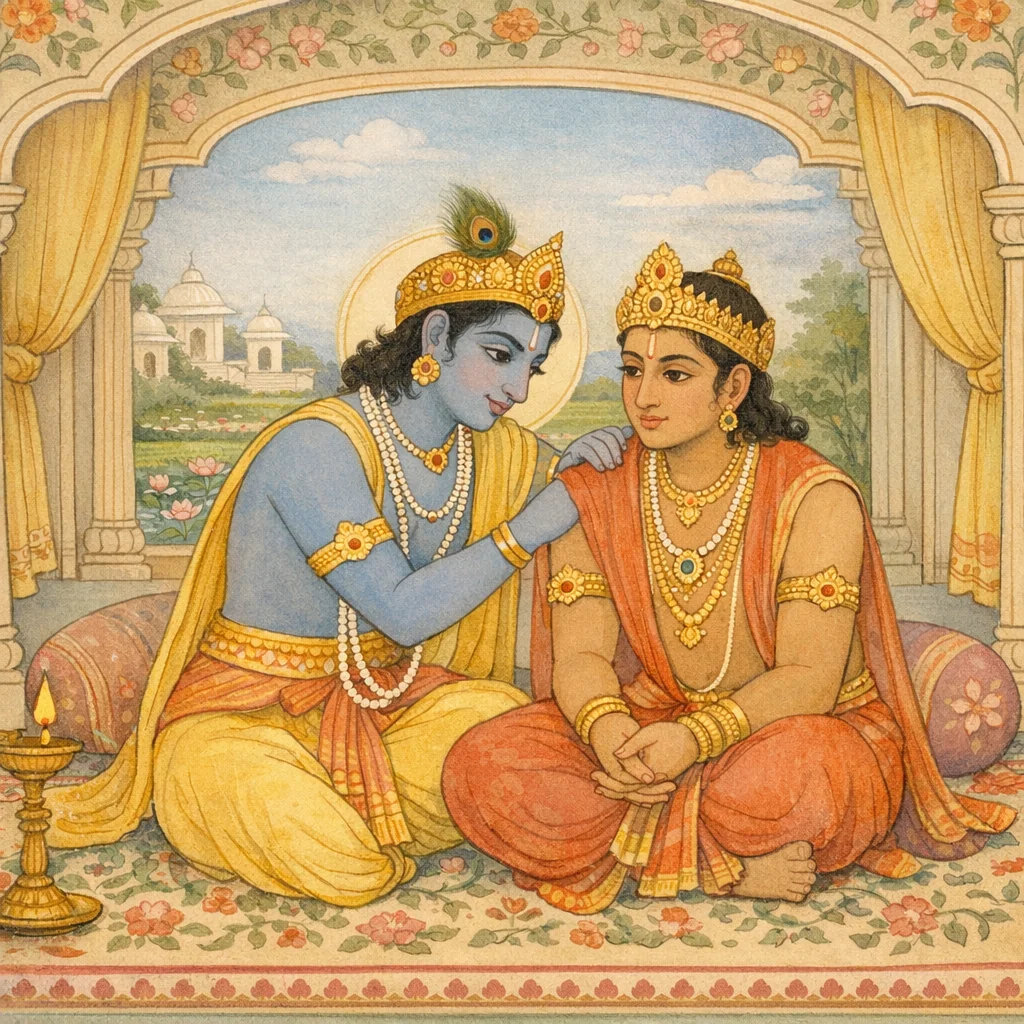
Janamejaya asks what Vāsudeva and Dhanaṃjaya did after the Pāṇḍavas’ victory and the realm’s pacification. Vaiśaṃpāyana describes the pair moving joyfully through forests, mountains, rivers, and then Indraprastha’s splendid sabhā, engaging in extended conversation: recollections of conflict and hardship, and genealogical accounts of ṛṣis and devas. Kṛṣṇa uses structured, sweet, and reasoned discourse to calm Arjuna’s grief over losses, shifting the focus toward the achieved political settlement. He affirms that the entire earth is now won and peacefully enjoyed by Dharmarāja Yudhiṣṭhira—uncontested—through the combined prowess of the brothers, and that the Dhārtarāṣṭras, characterized as ethically wayward, have been decisively removed along with their adherents. Kṛṣṇa then articulates his personal attachment to the Pāṇḍavas and their courtly spaces, yet notes the long time since seeing Balarāma and the Vṛṣṇi leaders; therefore he intends to go to Dvārakā. He insists he would not act against Yudhiṣṭhira even at the cost of life, and asks Arjuna to accompany him to request formal leave from the king. Arjuna, honoring Janārdana, assents with difficulty, indicating the emotional weight of separation despite political closure.
Chapter Arc: पाण्डव-विजय के बाद राज्य शांत है; इन्द्रप्रस्थ में श्रीकृष्ण और अर्जुन का पुनर्मिलन ऐसा लगता है मानो स्वर्ग के दो देवेश्वर पृथ्वी पर विहार कर रहे हों। → वन-प्रवास और सभा-प्रवेश के प्रसंगों के बीच गोविन्द अर्जुन को सान्त्वना देते हुए एक गम्भीर प्रस्ताव रखते हैं—द्वारका चलने का; यह प्रस्ताव मित्रता का निमन्त्रण भी है और भविष्य की अनिवार्यताओं का संकेत भी। → कृष्ण का हेतुयुक्त, शलक्ष्ण वचन—‘त्वदृते मे निवासकारणे प्रयोजनं न विद्यते’—अर्जुन के हृदय को बाँध देता है: वे स्पष्ट करते हैं कि युधिष्ठिर के धर्ममय शासन में पृथ्वी स्थिर है, अतः अब अर्जुन के साथ द्वारका जाना ही उनका प्रयोजन है। → अर्जुन, जनार्दन का सम्मान कर, ‘तथेति’ कहकर सहमति देता है; राज्य-व्यवस्था धर्मराज युधिष्ठिर के हाथों सुरक्षित मानी जाती है और कृष्ण-अर्जुन की यात्रा-रेखा निश्चित होती है। → द्वारका-गमन का निश्चय हो चुका है—पर यह गमन किन आगामी घटनाओं (यादव-प्रसंग/अन्तकालीन संकेत) की भूमिका बनेगा, यह अभी अनकहा रह जाता है।
Shlokas
Verse 1
/ (दाक्षिणात्य अधिक पाठके ३०६३ श्लोक मिलाकर कुल ४७३ श्लोक हैं) नफमशा< (0) अमन न पजञ्चदशो<् ध्याय: भगवान् श्रीकृष्णका अर्जुनसे द्वारका जानेका प्रस्ताव करना जनमेजय उवाच विजिते पाण्डवेयैस्तु प्रशान्ते च द्विजोत्तम | राष्ट्र कि चक्रतुर्वीरी वासुदेवधनंजयौ,जनमेजयने पूछा--द्विजश्रेष्ठ, जब पाण्डवोंने अपने राष्ट्रपप विजय पा ली और राज्यमें सब ओर शान्ति स्थापित हो गयी, उसके बाद श्रीकृष्ण और अर्जुन इन दोनों वीरोंने क्या किया?
Janamejaya said: “O best of twice-born sages, when the sons of Pāṇḍu had secured victory and peace had been established throughout the kingdom, what did those two heroes—Vāsudeva (Kṛṣṇa) and Dhanañjaya (Arjuna)—do thereafter?”
Verse 2
वैशम्पायन उवाच विजिते पाण्डवै राजन् प्रशान्ते च विशाम्पते । राष्ट्र बभूवतुर्हष्टो वासुदेवधनंजयौ,वैशम्पायनजीने कहा--प्रजानाथ! नरेश्वर! जब पाण्डवोंने राष्ट्रपर विजय पा ली और सर्वत्र शान्ति स्थापित हो गयी, तब भगवान् श्रीकृष्ण और अर्जुनको बड़ी प्रसन्नता हुई
Vaiśampāyana said: O king, O lord of the people, when the Pāṇḍavas had secured victory over the realm and peace had been established everywhere, Vāsudeva (Kṛṣṇa) and Dhanañjaya (Arjuna) were filled with joy—glad that rightful order had been restored after conflict.
Verse 3
विजद्दाते मुदा युक्तौ दिवि देवेश्वराविव । तौ वनेषु विचित्रेषु पर्वतेषु ससानुषु,स्वर्गलोकमें विहार करनेवाले दो देवेश्वरोंकी भाँति वे दोनों मित्र आनन्दमग्न हो विचित्र- विचित्र वनोंमें और पर्वतोंके सुरम्य शिखरोंपर विचरने लगे
Vaiśampāyana said: Like two lordly gods roaming in heaven, the two companions—filled with joy—wandered through many wondrous forests and along mountains crowned with lovely peaks. The scene underscores a moment of restored harmony and friendship after turmoil, where delight is expressed through peaceful movement in nature rather than through conquest.
Verse 4
तीर्थेषु चैव पुण्येषु पल्वलेषु नदीषु च । चड्क्रम्यमाणौ संहृष्टावश्विनाविव नन्दने,पवित्र तीर्थों, छोटे तालाबों और नदियोंके तटोंपर विचरण करते हुए वे दोनों नन्दन- वनमें विहार करनेवाले अश्विनीकुमारोंके समान हर्षका अनुभव करते थे
Vaiśampāyana said: As the two of them wandered about—visiting sacred fords, holy places, small ponds, and the banks of rivers—they felt a quiet exhilaration, like the Aśvin twins sporting in Nandana grove. The passage frames pilgrimage and contact with pure waters as a dharmic, heart-lifting practice that restores joy and clarity after hardship.
Verse 5
इन्द्रप्रस्थे महात्मानौ रेमतु: कृष्णपाण्डवौ । प्रविश्य तां सभां रम्यां विजहाते च भारत,भरतनन्दन! फिर इन्द्रप्रस्थमें लौटकर महात्मा श्रीकृष्ण और अर्जुन मयनिर्मित रमणीय सभामें प्रवेश करके आनन्दपूर्वक मनोविनोद करने लगे
Vaiśampāyana said: In Indraprastha, the two great-souled heroes—Kṛṣṇa and the Pāṇḍava (Arjuna)—returned and entered that delightful assembly hall. There, O Bhārata, they spent time in joyful recreation and friendly conversation, showing how, after arduous duties, noble persons also restore the mind through harmonious companionship rather than indulgence or cruelty.
Verse 6
तत्र युद्धकथाश्रित्रा: परिक्लेशांश्व पार्थिव । कथायोगे कथायोगे कथयामासतु: सदा,पृथ्वीनाथ! वे दोनों महात्मा पुरातन ऋषिप्रवर नर और नारायण थे तथा आपसमें बहुत प्रेम रखते थे। बातचीतके प्रसंगमें वे दोनों मित्र सदा देवताओं तथा ऋषियोंके वंशोंकी चर्चा करते थे और युद्धकी विचित्र कथाओं एवं क्लेशोंका वर्णन किया करते थे
There, O king, those two continually spoke—again and again as the occasion for conversation arose—of the many hardships bound up with accounts of war. In their friendly discourse, they would also recount the lineages of the gods and the seers, and describe the strange and varied episodes of battle and its sufferings, setting before the listener both the grandeur of ancient tradition and the moral weight of violence.
Verse 7
ऋषीणां देवतानां च वंशांस्तावाहतु: सदा । प्रीयमाणौ महात्मानौ पुराणावृषिसत्तमौ,पृथ्वीनाथ! वे दोनों महात्मा पुरातन ऋषिप्रवर नर और नारायण थे तथा आपसमें बहुत प्रेम रखते थे। बातचीतके प्रसंगमें वे दोनों मित्र सदा देवताओं तथा ऋषियोंके वंशोंकी चर्चा करते थे और युद्धकी विचित्र कथाओं एवं क्लेशोंका वर्णन किया करते थे
Vaiśampāyana said: Those two ancient, great-souled sages—foremost among seers—were ever affectionate toward one another. In the course of their conversations, they would continually recount the lineages of the gods and the ṛṣis, and they would also describe the strange tales of war and the hardships that arise from it—thus setting memory, tradition, and the moral cost of conflict side by side.
Verse 8
मधुरास्तु कथाश्षित्राश्षित्रार्थपदनिश्चया: । निश्चयज्ञ: स पार्थाय कथयामास केशव:
Vaiśampāyana said: Those accounts were sweet to hear, varied and vivid, and their meanings were firmly established through well-chosen words. Kṛṣṇa (Keśava), skilled in discerning what is certain and true, related them to Pārtha (Arjuna).
Verse 9
भगवान् श्रीकृष्ण सब प्रकारके सिद्धान्तोंको जाननेवाले थे। उन्होंने अर्जुनको विचित्र पद, अर्थ एवं सिद्धान्तोंसे युक्त बड़ी विलक्षण एवं मधुर कथाएँ सुनायीं ।। पुत्रशोकाभिसंतप्तं ज्ञातीनां च सहस्रश: । कथाभि: शमयामास पार्थ शौरिर्जनार्दन:,कुन्तीकुमार अर्जुन पुत्रशोकसे संतप्त थे। सहस्रों भाई-बन्धुओंके मारे जानेका भी उनके मनमें बड़ा दुःख था। वसुदेवनन्दन श्रीकृष्णने अनेक प्रकारकी कथाएँ सुनाकर उस समय पार्थको शान्त किया
Arjuna, Kuntī’s son, was scorched by grief for his slain son and weighed down by sorrow at the death of thousands of his kinsmen. At that time Śauri Janārdana (Śrī Kṛṣṇa), by recounting many instructive and heart-soothing narratives, calmed and consoled Pārtha—guiding him back toward steadiness amid the moral and emotional aftermath of war.
Verse 10
स तमाथ्चवास्य विधिवद् विज्ञानज्ञों महातपा: । अपदहृत्यात्मनो भारं विशश्रामेव सात्वत:,महातपस्वी विज्ञानवेत्ता श्रीकृष्णने विधिपूर्वक अर्जुनको सान्त्वना देकर अपना भार उतार दिया और वे सुखपूर्वक विश्राम-सा करने लगे
Vaiśampāyana said: The great ascetic, Śrī Kṛṣṇa—knower of true discernment—comforted him (Arjuna) in due and proper manner. Having thus set down the burden he had taken upon himself, that Sāttvata (Kṛṣṇa) seemed to rest, as though relieved—signaling that wise counsel and rightful reassurance can steady a shaken warrior and restore moral balance after grievous trials.
Verse 11
ततः कथान्ते गोविन्दो गुडाकेशमुवाच ह । सान्त्वयन् शलक्ष्णया वाचा हेतुयुक्तमिदं वच:,बातचीतके अनन््तमें गोविन्दने गुडाकेश अर्जुनको अपनी मधुर वाणीद्वारा सान्त्वना प्रदान करते हुए उनसे यह युक्तियुक्त बात कही
When the conversation had come to its close, Govinda addressed Gudākesha (Arjuna). Seeking to console him with gentle, well-chosen words, he spoke a statement grounded in sound reasoning—meant to steady Arjuna’s mind and guide him toward right understanding and conduct.
Verse 12
वायुदेव उवाच विजितेयं धरा कृत्स्ना सव्यसाचिन् परंतप । त्वद्वाहुबलमाश्रित्य राज्ञा धर्मसुतेन ह
Vāyudeva said: “O Savyasācin, scorcher of foes, this entire earth has been conquered—indeed—by King Dharmasuta, relying upon the strength of your arms. Your prowess has upheld his righteous sovereignty, showing how power, when allied to dharma, secures rightful rule.”
Verse 13
भगवान् श्रीकृष्ण बोले--शत्रुओंको संताप देनेवाले सव्यसाची अर्जुन! धर्मपुत्र युधिष्ठिरने तुम्हारे बाहुबलका सहारा लेकर इस समूची पृथ्वीपर विजय प्राप्त कर ली ।। असपलन्ां महीं भुद्क्ते धर्मराजो युधिष्ठिर: । भीमसेनानुभावेन यमयोश्व नरोत्तम,नरश्रेष्ठल भीमसेन तथा नकुल-सहदेवके प्रभावसे धर्मराज युधिष्ठिर इस पृथ्वीका निष्कण्टक राज्य भोग रहे हैं
The Blessed Lord Śrī Kṛṣṇa said: “O Arjuna, the left-handed archer who scorches the foes! Relying on the strength of your arms, Dharmaputra Yudhiṣṭhira has conquered this entire earth. Now King Yudhiṣṭhira, steadfast in dharma, enjoys an untroubled, thornless sovereignty over the land—supported by the prowess of Bhīmasena and by the power of Nakula and Sahadeva as well, O best of men.”
Verse 14
इस प्रकार श्रीमह्याभारत आश्वमेधिकपववके अन्तर्गत अश्वमेधपर्वमें चौदहवाँ अध्याय पूरा हुआ,धर्मेण राज्ञा धर्मज्ञ प्राप्त राज्यमकण्टकम् | धर्मेण निहत: संख्ये स च राजा सुयोधन: धर्मज्ञ! राजा युधिष्ठिरने यह निष्कण्टक राज्य धर्मके बलसे ही प्राप्त किया है। धर्मसे ही राजा दुर्योधन युद्धमें मारा गया है
O knower of dharma, by dharma the king has obtained an untroubled, obstacle-free kingdom. And by dharma, in the press of battle, that king Suyodhana (Duryodhana) too was slain. Thus the narrative underscores that righteous conduct both establishes rightful rule and brings the downfall of those who oppose it in adharma.
Verse 15
अधर्मरुचयो लुब्धा: सदा चाप्रियवादिन: । धार्तराष्ट्रा दुरात्मान: सानुबन्धा निपातिता:,धृतराष्ट्रके पुत्र अधर्ममें रुचि रखनेवाले, लोभी, कटुवादी और दुरात्मा थे। इसलिये अपने सगे-सम्बन्धियोंसहित मार गिराये गये इति श्रीमहाभारते आश्वमेधिके पर्वणि अश्वमेधपर्वणि पठचदशो<5ध्याय:
Vāyu said: “The sons of Dhṛtarāṣṭra were inclined toward unrighteousness, driven by greed, and ever spoke harsh and unpleasant words. Being of wicked disposition, they were therefore struck down—together with their allies and dependents.”
Verse 16
प्रशान्तामखिलां पार्थ पृथिवीं पृथिवीपति: । भुड्क्ते धर्मसुतो राजा त्वया गुप्त: कुरूद्गवह,कुरुकुलतिलक कुन्तीकुमार! धर्मपुत्र पृथ्वीपति राजा युधिष्ठिर आज तुमसे सुरक्षित होकर सर्वथा शान्त हुई समूची पृथ्वीका राज्य भोगते हैं
Vāyu said: “O Pārtha, the entire earth has been brought to peace. Protected by you, the king Dharmasuta—lord of the earth and foremost of the Kurus—now enjoys and administers the kingdom in righteousness.”
Verse 17
रमे चाहं त्वया सार्धमरण्येष्वपि पाण्डव । किमु यत्र जनो<यं वै पृथा चामित्रकर्षण,शत्रुसूदन पाण्डुकुमार! तुम्हारे साथ रहनेपर निर्जन वनमें भी मुझे सुख और आनन्द मिल सकता है। फिर जहाँ इतने लोग और मेरी बुआ कुन्ती हों, वहाँकी तो बात ही क्या है?
Vāyu said: “Even in lonely forests, O Pāṇḍava, I can find joy and contentment simply by being with you. How much more, then, in a place like this where so many people are present—and where Pṛthā (Kuntī), my aunt, is also here, O subduer of foes.”
Verse 18
यत्र धर्मसुतो राजा यत्र भीमो महाबल: । यत्र माद्रवतीपुत्रौ रतिस्तत्र परा मम,जहाँ धर्मपुत्र राजा युधिष्ठिर हों, महाबली भीमसेन और माद्रीकुमार नकुल-सहदेव हों, वहाँ मुझे परम आनन्द प्राप्त हो सकता है
Vāyu said: “Where the king, the son of Dharma—Yudhiṣṭhira—abides; where Bhīma of great strength is present; and where the two sons of Mādrī, Nakula and Sahadeva, are found—there my highest delight rests.” In ethical tone, the verse links Vāyu’s joy to the presence of dharma-guided kingship, steadfast strength, and fraternal unity among the Pāṇḍavas.
Verse 19
तथैव स्वर्गकल्पेषु सभोद्देशेषु कौरव । रमणीयेषु पुण्येषु सहितस्य त्वयानघ,निष्पाप कुरुनन्दन! इस सभाभवनके रमणीय एवं पवित्र स्थान स्वर्गके समान सुखद हैं। यहाँ तुम्हारे साथ रहते हुए बहुत दिन बीत गये। इतने दिनोंतक मैं अपने पिता शूरसेनकुमार वसुदेवजीका दर्शन न कर सका। भैया बलदेव तथा अन्यान्य वृष्णिवंशके श्रेष्ठ पुरुषोंके भी दर्शनसे वंचित रहा। अतः अब मैं द्वारकापुरीको जाना चाहता हूँ। पुरुषप्रवर! तुम्हें भी मेरे इस यात्रासम्बन्धी प्रस्तावको सहर्ष स्वीकार करना चाहिये
Vāyu said: “So too, O Kaurava—these assembly-grounds, comparable to heaven, are delightful and holy. While I have been staying here together with you, O blameless one, O sinless joy of the Kurus, many days have passed. For all this time I have not been able to see my father Vasudeva, the heroic prince of the Śūrasenas; nor have I had the sight of my brother Baladeva and the other foremost men of the Vṛṣṇi line. Therefore I now wish to go to the city of Dvārakā. O best of men, you should gladly approve this proposal of mine concerning the journey.”
Verse 20
कालो महांस्त्वतीतो मे शूरसूनुमपश्यत: । बलदेवं च कौरव्य तथान्यान् वृष्णिपुज्वान्,निष्पाप कुरुनन्दन! इस सभाभवनके रमणीय एवं पवित्र स्थान स्वर्गके समान सुखद हैं। यहाँ तुम्हारे साथ रहते हुए बहुत दिन बीत गये। इतने दिनोंतक मैं अपने पिता शूरसेनकुमार वसुदेवजीका दर्शन न कर सका। भैया बलदेव तथा अन्यान्य वृष्णिवंशके श्रेष्ठ पुरुषोंके भी दर्शनसे वंचित रहा। अतः अब मैं द्वारकापुरीको जाना चाहता हूँ। पुरुषप्रवर! तुम्हें भी मेरे इस यात्रासम्बन्धी प्रस्तावको सहर्ष स्वीकार करना चाहिये
Vāyudeva said: “A long time has passed for me, O Kaurava, without seeing the son of Śūrasena—Vasudeva—nor Baladeva, nor the other foremost heroes of the Vṛṣṇi line. O sinless joy of the Kurus, this assembly-hall is delightful and pure, as pleasant as heaven; living here with you, many days have gone by. Yet all this time I have been unable to behold my father Vasudeva, the prince of Śūrasena, and I have been deprived of the sight of my brother Baladeva and the other श्रेष्ठ men of the Vṛṣṇi clan. Therefore I now wish to go to the city of Dvārakā. Best of men, you too should gladly accept this proposal of mine concerning the journey.”
Verse 21
सो हं गन्तुमभीप्सामि पुरी द्वारावतीं प्रति । रोचतां गमनं महां तवापि पुरुषर्षभ,निष्पाप कुरुनन्दन! इस सभाभवनके रमणीय एवं पवित्र स्थान स्वर्गके समान सुखद हैं। यहाँ तुम्हारे साथ रहते हुए बहुत दिन बीत गये। इतने दिनोंतक मैं अपने पिता शूरसेनकुमार वसुदेवजीका दर्शन न कर सका। भैया बलदेव तथा अन्यान्य वृष्णिवंशके श्रेष्ठ पुरुषोंके भी दर्शनसे वंचित रहा। अतः अब मैं द्वारकापुरीको जाना चाहता हूँ। पुरुषप्रवर! तुम्हें भी मेरे इस यात्रासम्बन्धी प्रस्तावको सहर्ष स्वीकार करना चाहिये
Vāyu said: “I now wish to depart for the city of Dvārāvatī. O best of men—O sinless delight of the Kurus—may this journey be agreeable to you as well.” In context, he expresses gratitude for the pure, heaven-like hospitality he has enjoyed, yet affirms a rightful duty to go and see his kin—Vasudeva, Balarāma, and the foremost of the Vṛṣṇis—thus balancing reverence for the host with fidelity to familial obligations.
Verse 22
उक्तो बहुविध॑ राजा तत्र तत्र युधिष्ठिर: । सह भीष्मेण यद् युक्तमस्माभि: शोककारिते,शोकावस्थामें मनुष्यका दुःख दूर करनेके लिये उसे जो कुछ उपदेश देना उचित है, वह भीष्मसहित हमलोगोंने विभिन्न स्थानोंमें राजा युधिष्ठिरको दिया है। उन्हें अनेक प्रकारसे समझाया है
Verse 23
शिष्टो युधिष्ठिरो5स्माभि: शास्ता सन्नपि पाण्डव: | तेन तत् तु वचः सम्यग गृहीतं सुमहात्मना
Vāyu said: “Yudhiṣṭhira, the Pāṇḍava, is truly a disciplined and cultured man; though he is himself a ruler and instructor, he accepted our words in the proper spirit. Therefore that counsel was rightly received by that great-souled one.”
Verse 24
यद्यपि पाण्डुपुत्र युधिष्ठिर हमारे शासक और शिक्षक हैं तो भी हमलोगोंने शिक्षा दी है और जन श्रेष्ठ महात्माने हमारी उन सभी बातोंको भलीभाँति स्वीकार किया है ।। धर्मपुत्रे हि धर्मज्ञे कृतज्ञे सत्यवादिनि । सत्यं धर्मो मतिश्नाग्रया स्थितिश्ष॒ सततं स्थिरा,धर्मपुत्र राजा युधिष्ठिर धर्मज्ञ, कृतज्ञ और सत्यवादी हैं। उनमें सत्य, धर्म, उत्तम बुद्धि तथा ऊँची स्थिति आदि गुण सदा स्थिरभावसे रहते हैं
Vāyu said: “Although Yudhiṣṭhira, the son of Pāṇḍu, is our ruler and our teacher, it is still we who have offered instruction; and that best of men, the great-souled one, has accepted all our words in the right spirit. For in Dharmaputra—wise in dharma, grateful, and devoted to truth—truthfulness, righteousness, the highest discernment, and steadfast dignity remain continually firm.”
Verse 25
तत्र गत्वा महात्मानं यदि ते रोचते<र्जुन । अस्मद्गमनसंयुक्तं वचो ब्रूहि जनाधिपम्,अर्जुन! यदि तुम उचित समझो तो महात्मा राजा युधिष्ठिरके पास चलकर उनके समक्ष मेरे द्वारका जानेका प्रस्ताव उपस्थित करो
“If it pleases you, Arjuna, then go there to the great-souled king and convey to that lord of men my message—joined with my intention to depart (for Dvārakā). Present before him my proposal of going to Dvārakā.”
Verse 26
न हि तस्याप्रियं कुर्या प्राणत्यागे5प्युपस्थिते । कुतो गन्तुं महाबाहो पुरीं द्वारावतीं प्रति
“One should never do what is displeasing to him, even if the moment of giving up one’s life has arrived. O mighty-armed one, then how could you possibly go toward the city of Dvāravatī?”
Verse 27
महाबाहो! मेरे प्राणोंपर संकट आ जाय तब भी मैं धर्मराजका अप्रिय नहीं कर सकता; फिर द्वारका जानेके लिये उनका दिल दुखाऊँ, यह तो हो ही कैसे सकता है? ।। सर्व त्विदमहं पार्थ त्वत्प्रीतिहितकाम्यया । ब्रवीमि सत्यं कौरव्य न मिथ्यैतत् कथंचन,कुरुनन्दन! कुन्तीकुमार! मैं सच्ची बात बता रहा हूँ, मैंने जो कुछ किया या कहा है, वह सब तुम्हारी प्रसन्नताके लिये और तुम्हारे ही हितकी दृष्टिसे किया है। यह किसी तरह मिथ्या नहीं है
Vāyu said: “Mighty-armed one, even if my very life were to fall into danger, I cannot do what would be displeasing to Dharmarāja. How then could I ever wound his heart merely for the sake of going to Dvārakā? O Pārtha, I tell you this in truth, O scion of the Kurus: everything I have said is spoken out of a desire for your joy and your welfare. O Kurunandana, son of Kuntī, I speak the truth—whatever I have done or spoken has been for your satisfaction and with your good in view; it is not false in any way.”
Verse 28
प्रयोजन च निर्वत्तमिह वासे ममार्जुन । धार्तराष्ट्रो हतो राजा सबल: सपदानुग:,अर्जुन! यहाँ मेरे रहनेका जो प्रयोजन था, वह पूरा हो गया है। धृतराष्ट्रका पुत्र राजा दुर्योधन अपनी सेना और सेवकोंके साथ मारा गया
Vāyu said: “O Arjuna, the purpose for which I had taken up residence here has now been fulfilled. The Dhārtarāṣṭra king—Duryodhana, son of Dhṛtarāṣṭra—has been slain, together with his forces and those who followed and served him.”
Verse 29
पृथिवी च वशे तात धर्मपुत्रस्य धीमत: । स्थिता समुद्रवलया सशैलवनकानना
O dear one, the entire earth stands under the control of the wise son of Dharma. Girdled by the ocean, and complete with its mountains, forests, and groves, it abides in his dominion—signifying the rightful, dharma-grounded sovereignty now established.
Verse 30
धर्मेण राजा धर्मज्ञ: पातु सर्वा वसुन्धराम्,भरतश्रेष्ठ! बहुत-से सिद्ध महात्माओंके संगसे सुशोभित तथा वन्दीजनोंके द्वारा सदा ही प्रशंसित होते हुए धर्मज्ञ राजा युधिष्ठिर अब धर्मपूर्वक सारी पृथ्वीका पालन करें
Let the king, who knows dharma, protect the whole earth through dharma. O best of the Bharatas, now may King Yudhiṣṭhira—adorned by the company of many perfected great souls and continually praised by bards—govern the entire world in accordance with righteousness. The verse frames kingship as an ethical trust: rule is legitimate only when grounded in dharma and affirmed by the wise and the virtuous.
Verse 31
उपास्यमानो बहुभि: सिद्धैश्चवापि महात्मभि: । स्तूयमानश्न सततं वन्दिभिर्भरतर्षभ,भरतश्रेष्ठ! बहुत-से सिद्ध महात्माओंके संगसे सुशोभित तथा वन्दीजनोंके द्वारा सदा ही प्रशंसित होते हुए धर्मज्ञ राजा युधिष्ठिर अब धर्मपूर्वक सारी पृथ्वीका पालन करें
Vāyu said: “O bull among the Bharatas, O best of the Bharata line—honoured by many perfected sages and great-souled beings, and continually praised by bards, let the dharma-knowing king Yudhiṣṭhira now govern the whole earth in accordance with righteousness.”
Verse 32
त॑ मया सह गत्वाद्य राजानं कुरु वर्धनम् | आपूृच्छ कुरुशार्दूल गमन द्वारकां प्रति,कुरुश्रेष्ठ॒ अब तुम मेरे साथ चलकर राजाको बधाई दो और मेरे द्वारका जानेके विषयमें उनसे पूछकर आज्ञा दिला दो
Vāyu said: “Come with me today and offer congratulations to the king, the increaser of the Kuru line. Then, O tiger among the Kurus, ask his leave and obtain his permission for my journey toward Dvārakā.”
Verse 33
इदं शरीरं वसु यच्च मे गृहे निवेदितं पार्थ सदा युधिष्ठिरे । प्रियश्न मान्यश्न हि मे युधिष्ठिर: सदा कुरूणामधिपो महामति:,पार्थ! मेरे घरमें जो कुछ धन-सम्पत्ति है, वह और मेरा यह शरीर सदा धर्मराज युधिष्ठिरकी सेवामें समर्पित है। परम बुद्धिमान् कुरुराज युधिष्छिर सर्वदा मेरे प्रिय और माननीय हैं
“O Pārtha, this body of mine, and whatever wealth lies in my house, are forever dedicated to the service of Yudhiṣṭhira. For to me Yudhiṣṭhira—the wise sovereign of the Kurus—is always dear and worthy of honor.”
Verse 34
प्रयोजनं चापि निवासकारणे न विद्यते मे त्वदृते नृपात्मज । स्थिता हि पृथ्वी तव पार्थ शासने गुरो: सुवृत्तस्य युधिष्ठिरस्य च,राजकुमार! अब तुम्हारे साथ मन बहलानेके सिवा यहाँ मेरे रहनेका और कोई प्रयोजन नहीं रह गया है। पार्थ! यह सारी पृथ्वी तुम्हारे और सदाचारी गुरु युधिष्ठिरके शासनमें पूर्णतः: स्थित है
Vāyu said: “O prince, apart from keeping you company, I have no other purpose for remaining here. O Pārtha, the whole earth stands firmly under your governance and under the rule of your virtuous elder, Yudhiṣṭhira.”
Verse 35
इतीदमुक्त: स तदा महात्मना जनार्दनेनामितविक्रमो<र्जुन: । तथेति दुःखादिव वाक्यमैरय- ज्जनार्दन॑ सम्प्रतिपूज्य पार्थिव,पृथ्वीनाथ! उस समय महात्मा भगवान् श्रीकृष्णके ऐसा कहनेपर अमित पराक्रमी अर्जुनने उनकी बातका आदर करते हुए बड़े दुःखके साथ “तथास्तु” कहकर उनके जानेका प्रस्ताव स्वीकार किया
Thus addressed at that time by the great-souled Janārdana (Kṛṣṇa), Arjuna of immeasurable prowess, honoring his words, uttered “So be it,” as though weighed down by sorrow; and after duly paying reverence to Janārdana, the royal son of Pṛthā accepted the proposal of his departure. The moment underscores disciplined obedience and devotion: even when the heart grieves, one upholds propriety, respect, and dharmic consent toward the divine guide.
Verse 296
चिता रल्नैर्बहुविधे: कुरुराजस्य पाण्डव । तात! पाण्डुनन्दन! नाना प्रकारके रत्नोंके संचयसे सम्पन्न, समुद्रसे घिरी हुई, पर्वत, वन और काननोंसहित यह सारी पृथ्वी भी बुद्धिमान् धर्मपुत्र कुरुराज युधिष्ठिरके अधीन हो गयी
Vāyu said: “O Pāṇḍava, dear child—O son of Pāṇḍu! This entire earth, rich with accumulations of many kinds of jewels, encircled by the ocean, and furnished with mountains, forests, and groves, has come under the authority of the wise Dharmaputra, the Kuru-king Yudhiṣṭhira.” The statement underscores the ethical ideal that rightful sovereignty is grounded in wisdom and dharma, not merely in conquest or wealth.
Frequently Asked Questions
How to balance personal bonds and obligations (Kṛṣṇa’s return to his own polity and kin) with loyalty to the newly established sovereign order—resolved through seeking formal leave and prioritizing institutional propriety.
Narrative and reasoned speech can function as ethical therapy: grief is not denied but redirected toward dharmic responsibility, recognition of achieved stability, and disciplined action within rightful authority.
No explicit phalaśruti is stated in this passage; the meta-function is practical—establishing post-war legitimacy and modeling counsel as a stabilizing instrument within the epic’s governance arc.