Adhyaya 37
Śṛṅgī’s Curse on King Parikṣit (Parikṣit–Śṛṅgī–Takṣaka Causal Link)
Upa-parva: Pauloma Parva (Frame-Narrative and Early Causality Episodes)
Sauti reports that the sage’s son Śṛṅgī, upon being told by Kṛśa that King Parikṣit—while hunting, exhausted, hungry, and unable to locate his quarry—approached Śṛṅgī’s father (a vow-bound silent ascetic) and, receiving no reply, placed a dead serpent upon the ascetic’s shoulder, becomes inflamed with anger. Interpreting the act as a grave insult to a vulnerable elder, Śṛṅgī ritually empowers his speech (water-touching as a performative marker) and pronounces that Takṣaka will cause the king’s death on the seventh day. Śṛṅgī then informs his father of the curse. The father rebukes the action as contrary to ascetic dharma, arguing that kings protect the realm in which ascetics live; therefore, a king’s inadvertent offense under fatigue should be forgiven, and a rash curse constitutes youthful wrongdoing. The chapter’s technical theme is the asymmetry between momentary misconduct and irrevocable speech-acts, and the text frames governance and renunciation as interdependent ethical institutions.
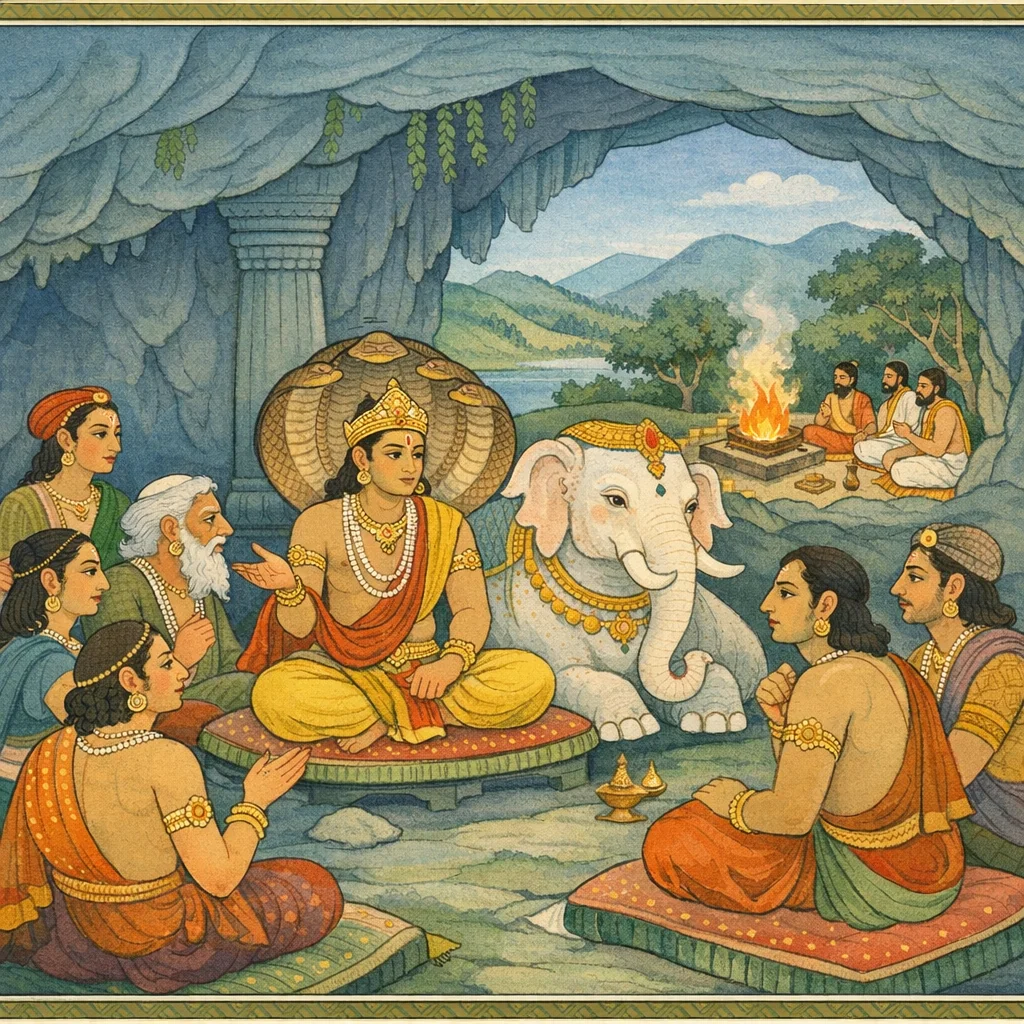
Chapter Arc: Kadru’s curse hangs over the serpent race like a noose: the Nāgas, foreseeing Janamejaya’s sarpa-satra, gather in alarm to find a path of escape before the sacrificial fire begins to drink their names. → Vāsuki convenes a council with Airāvata and other dharma-minded kin, urging clear-eyed deliberation on how to break the curse. Proposals multiply—some cunning, some cruel, some desperate—revealing fractures within the Nāga community between fear-driven expediency and moral restraint. → The debate turns sharp when certain Nāgas advocate extreme sabotage and violence: defiling consecrated food with excreta, seizing or killing Janamejaya, or otherwise uprooting the sacrifice at its source—plans that promise quick relief but risk grave sin and backlash. → Dharma-hearted Nāgas object, warning that such ‘intelligence’ is actually folly—acts like brahmahatyā and sacrilege cannot be the serpent race’s salvation. The chapter closes with the council still searching for a righteous, effective remedy to the foretold doom. → With many schemes rejected as adharma, the question remains: what lawful, destined means will truly deliver the Nāgas from the fire of Janamejaya’s rite?
Shlokas
Verse 1
(दाक्षिणात्य अधिक पाठके १ श्लोक मिलाकर कुल २६ श्लोक हैं) हि ही बक। हि मा मम सप्तत्रिशो5्ध्याय: माताके शापसे बचनेके लिये हक कि आदि नागोंका परस्पर परामश सौतिरुवाच मातु: सकाशात् त॑ शापं श्रुत्वा वै पन्नगोत्तम: । वासुकिश्चिन्तयामास शापो5यं न भवेत् कथम्,उग्रश्रवाजी कहते हैं--शौनक! माता कद्रूसे नागोंके लिये वह शाप प्राप्त हुआ सुनकर नागराज वासुकिको बड़ी चिन्ता हुई। वे सोचने लगे “किस प्रकार यह शाप दूर हो सकता है!
Hearing from his mother’s side about that curse that had fallen upon the serpents, the foremost of nāgas—Vāsuki—was seized with anxiety. He began to reflect: “How can this curse be prevented from taking effect?”
Verse 2
ततः स मन्त्रयामास भ्रातृभि: सह सर्वश: । ऐरावतप्रभृतिभि: सर्वधर्मपरायणै:,तदनन्तर उन्होंने ऐरावत आदि सर्वधर्मपरायण बन्धुओंके साथ उस शापके विषयमें विचार किया
Then he consulted in every way with his brothers—beginning with Airāvata—kinsmen devoted to all dharma, deliberating together about the curse and the right course of action.
Verse 3
वायुकिरुवाच अयं शापो यथोद्दिष्टो विदितं वस्तथानघा: । तस्य शापस्य मोक्षार्थ मन्त्रयित्वा यतामहे,वासुकि बोले--निष्पाप नागगण! माताने हमें जिस प्रकार यह शाप दिया है, वह सब आपलोगोंको विदित ही है। उस शापसे छूटनेके लिये क्या उपाय हो सकता है? इसके विषयमें सलाह करके हम सब लोगोंको उसके लिये प्रयत्न करना चाहिये। सब शापोंका प्रतीकार सम्भव है, परंतु जो माताके शापसे ग्रस्त हैं, उनके छूटनेका कोई उपाय नहीं है
Vāyuki said: “This curse, as it has been pronounced, is already known to you, O blameless ones. Therefore, to obtain release from that curse, let us deliberate together and strive for a remedy.”
Verse 4
सर्वेषामेव शापानां प्रतिघातो हि विद्यते । नतु मात्राभिशप्तानां मोक्ष: क्वचन विद्यते,वासुकि बोले--निष्पाप नागगण! माताने हमें जिस प्रकार यह शाप दिया है, वह सब आपलोगोंको विदित ही है। उस शापसे छूटनेके लिये क्या उपाय हो सकता है? इसके विषयमें सलाह करके हम सब लोगोंको उसके लिये प्रयत्न करना चाहिये। सब शापोंका प्रतीकार सम्भव है, परंतु जो माताके शापसे ग्रस्त हैं, उनके छूटनेका कोई उपाय नहीं है
“For every kind of curse, a countermeasure can indeed be found. But for those who have been cursed by their mother, there is nowhere any release.” In this counsel, the speaker underscores the special moral gravity of a mother’s word: ordinary misfortunes may be remedied through effort or ritual, yet a maternal curse is portrayed as binding, demanding humility and acceptance rather than clever escape.
Verse 5
अव्ययस्याप्रमेयस्य सत्यस्य च तथाग्रत: । शप्ता इत्येव मे श्रुत्वा जायते हृदि वेपथु:,अविनाशी, अप्रमेय तथा सत्यस्वरूप ब्रह्माजीके आगे माताने हमें शाप दिया है--यह सुनकर ही हमारे हृदयमें कम्प छा जाता है
Hearing only this—“We have been cursed”—even in the very presence of that imperishable, immeasurable, truth-embodied Lord, my heart begins to tremble. The mere report of a curse, spoken before the highest Reality, fills us with dread and moral unease.
Verse 6
नूनं सर्वविनाशो5यमस्माकं समुपागत: । न होतां सोडव्ययो देव: शपन्न्तीं प्रत्यषेधयत्,निश्चय ही यह हमारे सर्वगाशका समय आ गया है, क्योंकि अविनाशी देव भगवान् ब्रह्माने भी शाप देते समय माताको मना नहीं किया
Surely the hour of our total destruction has arrived. For even the imperishable divine Lord did not restrain the mother as she uttered her curse—so inexorable is the force of a righteous imprecation once it has been released.
Verse 7
तस्मात् सम्मन्त्रयामोड्द्य भुजजड्रानामनामयम् | यथा भवेद्धि सर्वेषां मा न: कालो5त्यगादयम्,यथा नष्ट पुरा देवा गुढमग्निं गुहागतम् । इसलिये आज हमें अच्छी तरह विचार कर लेना चाहिये कि किस उपायसे हम सभी नाग कुशलपूर्वक रह सकते हैं। अब हमें व्यर्थ समय नहीं गँवाना चाहिये। हमलोगोंमें प्राय: सब नाग बुद्धिमान् और चतुर हैं। यदि हम मिल-जुलकर सलाह करें तो इस संकटसे छूटनेका कोई उपाय ढूँढ़ निकालेंगे; जैसे पूर्वकालमें देवताओंने गुफामें छिपे हुए अग्निको खोज निकाला था
Therefore, let us today deliberate well on the means by which the welfare and safety of the serpent-lords may be secured. Let not this time slip past us in vain. If we consult together, we shall find a way out of this danger—just as, in former days, the gods discovered the fire that had been lost and lay hidden within a cave.
Verse 8
सर्व एव हि नस्तावद् बुद्धिमन्तो विचक्षणा: । अपि मन्त्रयमाणा हि हेतुं पश्याम मोक्षणे
“All of us, for our part, are intelligent and discerning. Yet even after deliberating together, we do not see any sound means by which release can be secured.”
Verse 9
यथा स यज्ञो न भवेद् यथा वापि पराभव: । जनमेजयस्य सर्पाणां विनाशकरणाय वै,सर्पोके विनाशके लिये आरम्भ होनेवाला जनमेजयका यज्ञ जिस प्रकार टल जाय अथवा जिस तरह उसमें विघ्न पड़ जाय, वह उपाय हमें सोचना चाहिये
Śeṣa said: “We must devise a means by which that sacrifice of Janamejaya—undertaken to bring about the destruction of the serpents—may either not take place at all, or else be thwarted and brought to failure.”
Verse 10
सौतिरुवाच तथेत्युक्त्वा तत: सर्वे काद्रवेया: समागता: । समयं चक्रिरे तत्र मन्त्रबुद्धिविशारदा:,उग्रश्रवाजी कहते हैं--शौनक! वहाँ एकत्र हुए सभी कटद्रपुत्र 'बहुत अच्छा” कहकर एक निश्चयपर पहुँच गये, क्योंकि वे नीतिका निश्चय करनेमें निपुण थे
Sauti said: Having replied, “So be it,” all the sons of Kadru gathered together. There, being skilled in counsel and policy, they formed an agreement and fixed their course of action—showing how collective resolve is forged through deliberation and strategic intelligence.
Verse 11
एके तत्राब्रुवन् नागा वयं भूत्वा द्विजर्षभा: । जनमेजयं तु भिक्षामो यज्ञस्ते न भवेदिति,उस समय वहाँ कुछ नागोंने कहा--“हमलोग श्रेष्ठ ब्राह्मण बनकर जनमेजयसे यह भिक्षा माँगें कि तुम्हारा यज्ञ न हो '
Then some of the Nāgas said there, “Let us assume the form of eminent Brahmins and beg King Janamejaya: ‘May your sacrifice not take place.’” In context, this is a strategy of disguise and persuasion aimed at stopping a rite perceived as threatening—raising an ethical tension between self-preservation and truthful conduct.
Verse 12
अपरे त्वब्रुवन् नागास्तत्र पण्डितमानिन: । मन्त्रिणोउस्य वयं सर्वे भविष्याम: सुसम्मता:,अपनेको बड़ा भारी पण्डित माननेवाले दूसरे नागोंने कहा--'हम सब लोग जनमेजयके विश्वासपात्र मन्त्री बन जायँगे
Then other nāgas, proud of their own learning, declared there: “All of us will become his trusted counsellors, fully approved and well-regarded.” The verse highlights a calculated strategy—seeking influence through proximity to power—while also hinting at the ethical risk of self-conceit and political manipulation.
Verse 13
स नः प्रक्ष्यति सर्वेषु कार्येष्वर्थविनिश्चवयम् । तत्र बुद्धि प्रदास्यामो यथा यज्ञो निवर्त्स्यति,'फिर वे सभी कार्योमें अभीष्ट प्रयोजनका निश्चय करनेके लिये हमसे सलाह पूढेंगे। उस समय हम उन्हें ऐसी बुद्धि देंगे, जिससे यज्ञ होगा ही नहीं
Śeṣa said: “He will consult us in every undertaking to determine what is truly to be done and what purpose is to be secured. At that time we shall supply him with such counsel that the sacrifice will be brought to a halt and will not proceed.”
Verse 14
स नो बहुमतान् राजा बुद्धया बुद्धिमतां वर: । यज्ञार्थ प्रक्ष्यति व्यक्त नेति वक्ष्यामहे वयम्,“हम वहाँ बहुत विश्वस्त एवं सम्मानित होकर रहेंगे। अतः बुद्धिमानोंमें श्रेष्ठ राजा जनमेजय यज्ञके विषयमें हमारी सम्मति जाननेके लिये अवश्य पूछेंगे। उस समय हम स्पष्ट कह देंगे--'यज्ञ न करो”
“Then that king—foremost among the wise—will surely ask us, with clear discernment, for our considered counsel regarding the sacrifice. At that time we shall speak plainly: ‘Do not perform the sacrifice.’”
Verse 15
दर्शयन्तो बहून् दोषानू प्रेत्य चेह च दारुणान् । हेतुभि: कारणैश्वैव यथा यज्ञो भवेन्न सः,“हम युक्तियों और कारणोंद्वारा यह दिखायेंगे कि उस यज्ञसे इहलोक और परलोकमें अनेक भयंकर दोष प्राप्त होंगे; इससे वह यज्ञ होगा ही नहीं
Śeṣa said: “By sound reasoning and clear causes we will demonstrate that this sacrifice would bring many dreadful faults—both in this world and after death. Shown thus to be ethically and practically ruinous, it cannot truly stand as a valid yajña.”
Verse 16
अथवा य उपाध्याय: क्रतोस्तस्य भविष्यति । सर्पसत्रविधानज्ञो राजकार्यहिते रत:,“अथवा जो उस यज्ञके आचार्य होंगे, जिन्हें सर्पयज्ञकी विधिका ज्ञान हो और जो राजाके कार्य एवं हितमें लगे रहते हों, उन्हें कोई सर्प जाकर डँस ले। फिर वे मर जायाँगे। यज्ञ करानेवाले आचार्यके मर जानेपर वह यज्ञ अपने-आप बंद हो जायगा
Or else, the officiating teacher of that sacrifice—one who knows the proper procedure of the serpent-sacrifice and is devoted to the king’s work and welfare—may be bitten by a serpent and die. With the death of the presiding priest, the rite would collapse of itself. The passage underscores a grim, strategic ethic: disrupting a harmful enterprise can be achieved not only by confronting the king directly, but by removing the expert whose knowledge sustains the ritual’s power.
Verse 17
त॑ गत्वा दशतां कश्चिद् भुजड़: स मरिष्यति । तस्मिन् मृते यज्ञकारे क्रतु:ः स न भविष्यति,“अथवा जो उस यज्ञके आचार्य होंगे, जिन्हें सर्पयज्ञकी विधिका ज्ञान हो और जो राजाके कार्य एवं हितमें लगे रहते हों, उन्हें कोई सर्प जाकर डँस ले। फिर वे मर जायाँगे। यज्ञ करानेवाले आचार्यके मर जानेपर वह यज्ञ अपने-आप बंद हो जायगा
Śeṣa said: “Let some serpent go and bite him; he will die. When that officiating priest (the performer of the sacrifice) is dead, that sacrificial rite will not proceed—indeed, the sacrifice will come to a halt.” The counsel underscores a grim tactic: to stop a harmful undertaking, strike at the knowledgeable agent who sustains it, rather than at the rite itself.
Verse 18
ये चान्ये सर्पसत्रज्ञा भविष्यन्त्यस्य चर्त्विज: । तांश्व सर्वान् दशिष्याम: कृतमेवं भविष्यति,“आचार्यके सिवा दूसरे जो-जो ब्राह्मण सर्पयज्ञकी विधिको जानते होंगे और जनमेजयके यज्ञमें ऋत्विज् बननेवाले होंगे, उन सबको हम डँस लेंगे। इस प्रकार सारा काम बन जायगा”
Śeṣa said: “And any other Brahmins besides the teacher—those who know the procedure of the snake-sacrifice and who will serve as priests in this rite of his—we shall bite them all. Thus our purpose will be accomplished.”
Verse 19
अपरे त्वब्रुवन् नागा धर्मात्मानो दयालव: । अबुद्धिरेषा भवतां ब्रह्महत्या न शोभनम्,यह सुनकर दूसरे धर्मात्मा और दयालु नागोंने कहा--'ऐसा सोचना तुम्हारी मूर्खता है। ब्रह्म-हत्या कभी शुभकारक नहीं हो सकती
Hearing this, other Nāgas—righteous and compassionate—spoke up: “Such thinking is folly on your part. The killing of a brāhmaṇa is never fitting and can never lead to auspiciousness.”
Verse 20
सम्यक्सद्धर्ममूला वै व्यसने शान्तिरुत्तमा । अधर्मात्तरता नाम कृत्स्नं व्यापादयेज्जगत्,'“आपत्तिकालमें शान्तिके लिये वही उपाय उत्तम माना गया है जो भलीभाँति श्रेष्ठ धर्मके अनुकूल किया गया हो। संकटसे बचनेके लिये उत्तरोत्तर अधर्म करनेकी प्रवृत्ति तो सम्पूर्ण जगत्का नाश कर डालेगी”
In times of calamity, the highest course is a peace-making response firmly rooted in true dharma and carried out rightly. A habit of seeking escape by ever-increasing adharma, however, would end up destroying the whole world.
Verse 21
अपरे त्वब्रुवन् नागा: समिद्धं जातवेदसम् । वर्षैनिवापयिष्यामो मेघा भूत्वा सविद्युत:,इसपर दूसरे नाग बोल उठे--'जिस समय सर्पयज्ञके लिये अग्नि प्रजजलित होगी, उस समय हम बिजलियोंसहित मेघ बनकर पानीकी वर्षद्वारा उसे बुझा देंगे
Other Nāgas spoke up: “When the sacrificial fire—Jātavedas—has been kindled for the serpent-sacrifice, we shall become clouds with lightning and extinguish it by pouring down rain.” In the narrative, this is a strategy of self-preservation against a ritual meant to destroy them, showing how fear can drive even powerful beings to counter sacred acts with forceful means.
Verse 22
खुग्भाण्डं निशि गत्वा च अपरे भुजगोत्तमा: । प्रमत्तानां हरन्त्वाशु विघ्न एवं भविष्यति,“दूसरे श्रेष्ठ नाग रातमें वहाँ जाकर असावधानीसे सोये हुए ऋत्विजोंके खुकू, खुवा और यज्ञपात्र आदि शीघ्र चुरा लावें। इस प्रकार उसमें विघ्न पड़ जायगा
Śeṣa said: “Let other foremost serpents go there by night and quickly steal the ritual implements—such as the khugū, khuvā, and the sacrificial vessels—from the priests while they lie careless and asleep. In this way, an obstruction will be created in the sacrifice.”
Verse 23
यज्ञे वा भुजगास्तस्मिज्छतशो5थ सहस्त्रश: । जनान् दशन्तु वै सर्वे नैवं त्रासो भविष्यति,“अथवा उस यज्ञमें सभी सर्प जाकर सैकड़ों और हजारों मनुष्योंको डँस लें; ऐसा करनेसे हमारे लिये भय नहीं रहेगा
Śeṣa said: “Or else, in that sacrifice, let all the serpents go and bite people by the hundreds and thousands; if that is done, there will no longer remain any fear for us.”
Verse 24
अथवा संस्कृतं भोज्यं दूषयन्तु भुजड़मा: । स्वेन मूत्रपुरीषेण सर्वभोज्यविनाशिना,“अथवा सर्पगण उस यज्ञके संस्कारयुक्त भोज्य पदार्थको अपने मल-मूत्रोंद्वारा, जो सब प्रकारकी भोजन-सामग्रीका विनाश करनेवाले हैं, दूषित कर दें”
Or else, let the serpents defile the consecrated food prepared for that sacrifice with their own urine and feces—pollutants that ruin all provisions. The warning underscores how sacred offerings can be destroyed not by open force alone, but by deliberate contamination that violates ritual purity and ethical restraint.
Verse 25
अपरे त्वब्रुवंस्तत्र ऋत्विजो5स्य भवामहे । यज्ञविघ्नं करिष्यामो दीयतां दक्षिणा इति
Others there declared, “We are his officiating priests. We will cause an obstruction to the sacrifice—so let the sacrificial fee be given.” The verse highlights a moral lapse: those entrusted with sustaining sacred order attempt to leverage ritual power for payment, turning religious duty into coercion.
Verse 26
अपरे त्वब्रुव॑स्तत्र जले प्रक्रीडितं नृूपम्
Others, however, said that the king had been sporting in the water there. The line reflects how differing reports and assumptions can arise around a ruler’s conduct, reminding the listener to weigh testimony carefully before forming a judgment about another’s actions.
Verse 27
अपरे त्वब्रुवंस्तत्र नागा: पण्डितमानिन:,इसपर अपनेको पण्डित माननेवाले दूसरे नाग बोल उठे--“हम जनमेजयको पकड़कर डँस लेंगे।' ऐसा करनेसे तुरंत ही सब काम बन जायगा। उस राजाके मरनेपर हमारे लिये अनर्थोकी जड़ ही कट जायगी
Then other serpents there—self-styled as wise—spoke up: “We will seize Janamejaya and bite him. If we do that, everything will be accomplished at once. When that king dies, the very root of our calamity will be cut off.” The verse highlights a counsel driven by fear and expediency, proposing assassination as a shortcut to safety, and thereby raising the ethical tension between self-preservation and adharma.
Verse 28
दशामस्तं प्रगृह्माशु कृतमेवं भविष्यति । छिन्न मूलमनर्थानां मृते तस्मिन् भविष्यति,इसपर अपनेको पण्डित माननेवाले दूसरे नाग बोल उठे--“हम जनमेजयको पकड़कर डँस लेंगे।' ऐसा करनेसे तुरंत ही सब काम बन जायगा। उस राजाके मरनेपर हमारे लिये अनर्थोकी जड़ ही कट जायगी
Śeṣa said: “Let us quickly seize him and bite him; thus the matter will be accomplished. When that king is dead, the very root of our calamities will be cut off.” The verse reflects a counsel of expedient violence—treating the death of Janamejaya as a strategic solution to the serpents’ fear—thereby foregrounding the ethical tension between self-preservation and adharma.
Verse 29
एषा नो नैछिकी बुद्धि: सर्वेषामीक्षणश्रव: । अथ यन्मन्यसे राजन टद्रुतं तत् संविधीयताम्,“नेत्रोंस सुननेवाले नागराज! हम सब लोगोंकी बुद्धि तो इसी निश्चयपर पहुँची है। अब आप जैसा ठीक समझते हों, वैसा शीघ्र करें!
“This is the settled resolve of us all, O Nāga-king famed for keen sight and hearing. Now, O king, whatever you judge to be right—let that be carried out swiftly.”
Verse 30
इत्युक्त्वा समुदैक्षन्त वासुकिं पन्नगोत्तमम् । वासुकिश्नापि संचिन्त्य तानुवाच भुजड्रमान्,यह कहकर वे सर्प नागराज वासुकिकी ओर देखने लगे। तब वासुकिने भी खूब सोच- विचारकर उन सर्पोंसे कहा--
Having spoken thus, they all turned their gaze toward Vāsuki, the foremost of serpents. Vāsuki too, after reflecting carefully, addressed those serpent-lords—signaling that a grave collective decision was about to be taken with prudence rather than impulse.
Verse 31
नैषा वो नैछिकी बुद्धिर्मता कर्तु भुजड़मा: । सर्वेषामेव मे बुद्धि: पन्नगानां न रोचते,“नागगण! तुम्हारी बुद्धिने जो निश्चय किया है, वह व्यवहारमें लानेयोग्य नहीं है। इसी प्रकार मेरा विचार भी सब सर्पोंको जँच जाय, यह सम्भव नहीं है
Śeṣa said: “O serpents, the resolve your minds have formed is not fit to be put into practice. And likewise, it is not possible that my own judgment will be pleasing to every one of the snakes.”
Verse 32
कि तत्र संविधातव्यं भवतां स्याद्धितं तु यत् । श्रेय:प्रसाधनं मन््ये कश्यपस्य महात्मन:,'ऐसी दशामें क्या करना चाहिये, जो तुम्हारे लिये हितकर हो। मुझे तो महात्मा कश्यपजीको प्रसन्न करनेमें ही अपना कल्याण जान पड़ता है
“What, then, should be done in this situation—what would truly be for your welfare? In my judgment, the surest path to well-being is to win the favor of the great-souled Kaśyapa.”
Verse 33
ज्ञातिवर्गस्य सौहार्दादात्मनश्व भुजज्भमा: । न च जानाति मे बुद्धि: किंचित् कर्तु वचो हि व:,'भुजंगमो! अपने जाति-भाइयोंके और अपने हितको दृष्टिमें रखकर तुम्हारे कथनानुसार कोई भी कार्य करना मेरी समझमें नहीं आया
Śeṣa said: “Out of affection for my own kin-group, and also with regard for my own welfare, my understanding cannot see any course of action to undertake in accordance with what you have said, O best of serpents.”
Verse 34
मया हीद॑ विधातव्यं भवतां यद्धितं भवेत् । अनेनाहं भृशं तप्ये गुणदोषौ मदाश्रयौ,“मुझे वही काम करना है, जिसमें तुम-लोगोंका वास्तविक हित हो। इसीलिये मैं अधिक चिन्तित हूँ; क्योंकि तुम सबमें बड़ा होनेके कारण गुण और दोषका सारा उत्तरदायित्व मुझपर ही है”
“I must do precisely that which will truly be for your welfare. For this reason I am deeply troubled: since I am the elder among you, the responsibility for both merit and fault rests upon me.”
Verse 37
इति श्रीमहाभारते आदिपर्वणि आस्तीकपर्वणि वासुक्यादिमन्त्रणे सप्तत्रिंशो 5 ध्याय:,इस प्रकार श्रीमह्याभारत आदिपर्वके अन्तर्गत आस्तीकपर्वमें वायुकि आदि नागोंकी मन्त्रणा नामक सैतीसवाँ अध्याय पूरा हुआ
Thus, in the Śrī Mahābhārata, within the Ādi Parva—specifically the Āstīka section—the thirty-seventh chapter, titled “The Counsel of Vāsuki and the other Nāgas,” comes to an end. The colophon marks the close of this narrative unit, emphasizing the collective deliberation of the serpent leaders in the face of impending danger and the moral weight of counsel, unity, and prudent action.
Verse 83
यथा नष्ट पुरा देवा गुढमग्निं गुहागतम् । इसलिये आज हमें अच्छी तरह विचार कर लेना चाहिये कि किस उपायसे हम सभी नाग कुशलपूर्वक रह सकते हैं। अब हमें व्यर्थ समय नहीं गँवाना चाहिये। हमलोगोंमें प्राय: सब नाग बुद्धिमान् और चतुर हैं। यदि हम मिल-जुलकर सलाह करें तो इस संकटसे छूटनेका कोई उपाय ढूँढ़ निकालेंगे; जैसे पूर्वकालमें देवताओंने गुफामें छिपे हुए अग्निको खोज निकाला था
Śeṣa said: “Just as, in ancient times, the gods recovered the hidden fire that had gone into a cave, so too we must now deliberate carefully on the means by which all the Nāgas may live safely. We should not waste time. Most among us are intelligent and resourceful; if we consult together, we will discover a way out of this संकट.”
Verse 256
वश्यतां च गतोडसौ न: करिष्यति यथेप्सितम् । इसके बाद अन्य सर्पोने कहा--“हम उस यज्ञमें ऋत्विज हो जायँगे और यह कहकर कि हमें मुँहमाँगी दक्षिणा दो” यज्ञमें विघ्न खड़ा कर देंगे। उस समय राजा हमारे वशमें पड़कर जैसी हमारी इच्छा होगी, वैसा करेंगे”
Śeṣa said: “He has now come under our control; he will act exactly as we desire. Then the other serpents added: ‘We will become officiating priests in that sacrifice, and by demanding whatever fee we please, we will create an obstruction in the rite. At that time the king, subdued by us, will do as we wish.’ The passage highlights a deliberate misuse of sacred ritual—turning yajña and priestly office into instruments of coercion and greed, thereby violating the ethical purpose of sacrifice.
Verse 266
गृहमानीय बध्नीम: क्रतुरेवं भवेज्न सः । फिर अन्य नाग बोले--“जब राजा जनमेजय जल-क्रीड़ा करते हों, उस समय उन्हें वहाँसे खींचकर हम अपने घर ले आवें और बाँधकर रख लें। ऐसा करनेसे वह यज्ञ होगा ही नहीं'--
Śeṣa said: “Let us seize King Janamejaya while he is sporting in the water, drag him away from there to our own dwelling, and bind him fast. If we do this, that sacrifice will not take place at all.”
Frequently Asked Questions
The dilemma is proportionality and restraint: whether an impulsive insult by an exhausted king warrants an irrevocable lethal curse, and whether ascetic authority should be exercised punitively or tempered by forbearance and social responsibility.
The chapter frames anger-driven speech as ethically hazardous and socially destabilizing; it teaches that dharma includes contextual judgment, forgiveness for inadvertent harm, and recognition that political and ascetic orders sustain one another.
No explicit phalaśruti is stated in this passage; the meta-commentary is embedded in the father’s admonition, which functions as an internal ethical evaluation of the narrative and guides interpretation toward restraint and kṣamā.