Adhyaya 120
कृपकृपी-जननम् (The Birth of Kṛpa and Kṛpī; Kṛpa’s Attainment of Astras)
Upa-parva: Ādi Parva — Genealogical and Ācārya-Paramparā Episodes (Kṛpa–Kṛpī Origin Cycle)
Janamejaya requests Vaiśaṃpāyana to explain Kṛpa’s origin and how he acquired weapons. Vaiśaṃpāyana recounts that the sage Śaradvān (son of Gautama) developed exceptional aptitude for dhanurveda rather than Vedic study, and through tapas obtained diverse astras. His ascetic power troubles Indra, who sends the celestial maiden Jālapadī to create a distraction. Seeing her, Śaradvān experiences involuntary bodily change; his bow and arrows fall, yet he maintains composure through knowledge and discipline. His seed is emitted without his full awareness and falls upon a clump of reeds (śara-stambha), dividing into two and producing twins. During a hunt, King Śaṃtanu’s attendant discovers the children along with a bow, arrows, and black antelope skins, infers Brahmanical-martial provenance, and presents them to the king. Śaṃtanu adopts them compassionately, raises them with rites, and names them from his act of kṛpā (compassion). Later Śaradvān locates them by tapas, discloses their gotra and background, and transmits the complete, secret corpus of fourfold dhanurveda and varied astras to Kṛpa, who soon becomes a foremost teacher, attracting Kuru princes and other warriors.
Chapter Arc: वैशम्पायन जनमेजय को बताते हैं कि तपोवन में पाण्डु ने ऋषियों की सेवा, संयम और विनय से ऐसा स्थान बनाया जहाँ मुनि उन्हें अपना-सा मानने लगे। → अमावस्या के दिन कठोर-व्रती महर्षि ब्रह्मा-दर्शन हेतु प्रस्थान करते हैं। पाण्डु उनके जाने का कारण पूछते हैं और उसी प्रसंग में संतान-प्राप्ति, पितृ-ऋण और वंश-रक्षा की अनिवार्यता का विषय उठता है—क्योंकि पाण्डु स्वयं शाप-बंधन से संतति-उत्पत्ति में असमर्थ हैं। → ऋषि पाण्डु को स्पष्ट उपदेश देते हैं कि ‘दृष्ट फल’ (प्रत्यक्ष हित) के लिए बुद्धिमान को प्रयत्न करना चाहिए—वंश-प्रवर्तन हेतु उचित उपाय अपनाना ही धर्म है; साथ ही पुत्र-प्रकारों (दत्त, क्रीत आदि) का विधान बताकर संतान-प्राप्ति के वैध मार्गों का विस्तार करते हैं। → पाण्डु को यह बोध दृढ़ होता है कि केवल शोक या संकोच नहीं, बल्कि धर्मसम्मत प्रयत्न आवश्यक है; वे कुन्ती के माध्यम से पुत्र-प्राप्ति के उपाय की ओर उन्मुख होते हैं और ऋषियों के उपदेश को स्वीकार करते हैं। → पाण्डु के मन में उठे प्रश्न का अगला चरण—कुन्ती को किस प्रकार और किस विधि से पुत्र-प्राप्ति हेतु आदेश/अनुरोध किया जाएगा—आगे के अध्यायों में निर्णायक रूप लेता है।
Shlokas
Verse 1
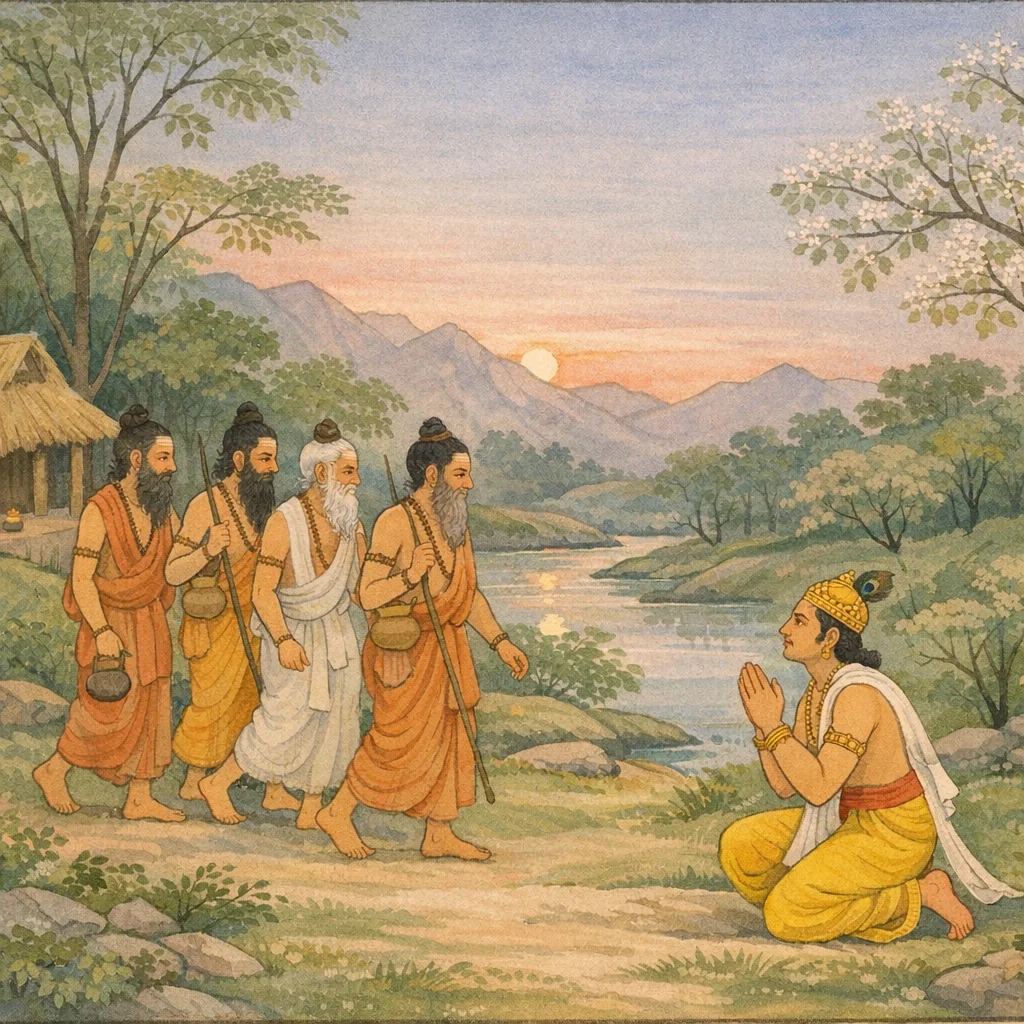
अपन छा | अ-णक्राछ एकोनविशत्यधिकशततमोड< ध्याय: पाण्डुका कुन्तीको पुत्र-प्राप्तिके लिये प्रयत्न करनेका आदेश वैशम्पायन उवाच तत्रापि तपसि श्रेष्ठे वर्तमान: स वीर्यवान् | सिद्धचारणसड्घानां बभूव प्रियदर्शन:,वैशम्पायनजी कहते हैं--जनमेजय! वहाँ भी श्रेष्ठ तपस्यामें लगे हुए पराक्रमी राजा पाण्डु सिद्ध और चारणोंके समुदायको अत्यन्त प्रिय लगने लगे--इन्हें देखते ही वे प्रसन्न हो जाते थे
Vaiśampāyana said: “O Janamejaya, even there, while the mighty King Pāṇḍu was engaged in the highest austerities, he became a welcome sight to the assemblies of Siddhas and Cāraṇas; merely seeing him brought them joy.”
Verse 2
शुश्रूषुरनहंवादी संयतात्मा जितेन्द्रिय: । स्वर्ग गन्तुं पराक्रान्तः स्वेन वीर्येण भारत,भारत! वे ऋषि-मुनियोंकी सेवा करते, अहंकारसे दूर रहते और मनको वशगमें रखते थे। उन्होंने सम्पूर्ण इन्द्रियोंको जीत लिया था। वे अपनी ही शक्तिसे स्वर्गलोकमें जानेके लिये सदा सचेष्ट रहने लगे
Vaiśampāyana said: He was eager to serve, free from self-assertion, self-controlled, and master of his senses. O Bhārata, relying on his own strength and disciplined effort, he strove to attain the heavenly world—showing that humility, service, and restraint are the ethical means by which higher states are sought.
Verse 3
केषांचिदभवद् भ्राता केषांचिदभवत् सखा । ऋषयपस्त्वपरे चैनं पुत्रवत् पर्यपालयन्,कितने ही ऋषियोंका उनपर भाईके समान प्रेम था। कितनोंके वे मित्र हो गये थे और दूसरे बहुत-से महर्षि उन्हें अपने पुत्रके समान मानकर सदा उनकी रक्षा करते थे
Vaiśampāyana said: To some he became as a brother; to some he became a friend. Other sages, however, cherished him like a son and continually protected him—showing how a virtuous person is sustained not only by birth-relations but also by bonds formed through character, trust, and righteous conduct.
Verse 4
स तु कालेन महता प्राप्य निष्कल्मषं तप: । ब्रह्मर्षिसदृश: पाण्डुबभूव भरतर्षभ,भरतश्रेष्ठ जनमेजय! राजा पाण्डु दीर्घकालतक पापरहित तपस्याका अनुष्ठान करके ब्रह्मर्षियोंके समान प्रभावशाली हो गये थे
Vaiśampāyana said: In the course of a long time, King Pāṇḍu, having attained an austerity free from moral taint, became powerful and radiant like the great seer-sages. O best of the Bharatas, O Janamejaya, through sustained, blameless tapas he rose to a brahmarṣi-like stature—suggesting that inner purification and disciplined restraint can elevate a ruler beyond mere worldly authority.
Verse 5
अमावास्यां तु सहिता ऋषय: संशितव्रता: । ब्रह्माणं द्रष्टकामास्ते सम्प्रतस्थुर्महर्षय:,एक दिन अमावास्या तिथिको कठोर व्रतका पालन करनेवाले बहुत-से ऋषि-महर्षि एकत्र हो ब्रह्माजीके दर्शनकी इच्छासे ब्रह्मलोकके लिये प्रस्थित हुए
Vaiśampāyana said: On the new-moon day, many sages—disciplined by rigorous vows—assembled together. Desiring to behold Brahmā, those great seers set out for Brahmaloka. The passage highlights the ethical force of self-restraint and sacred observance as the proper means for approaching the divine and seeking higher counsel.
Verse 6
सम्प्रयातानृषीन् दृष्टवा पाण्डुर्वचनमब्रवीत् | भवन्त: क्व गमिष्यन्ति ब्रूत मे वदतां वरा:,ऋषियोंको प्रस्थान करते देख पाण्डुने उनसे पूछा--“वक्ताओंमें श्रेष्ठ मुनीश्वरो! आपलोग कहाँ जायँगे? यह मुझे बताइये”
Seeing the sages setting out on their journey, Pāṇḍu addressed them with respectful urgency: “O best among speakers, revered seers—where are you going? Please tell me.”
Verse 7
ऋषय ऊचु: समवायो महानद्य ब्रह्मलोके महात्मनाम् | देवानां च ऋषीणां च पितृणां च महात्मनाम् | वयं तत्र गमिष्यामो द्रष्टकामा: स्वयम्भुवम्,ऋषि बोले--राजन्! आज ब्रह्मलोकमें महात्मा देवताओं, ऋषि-मुनियों तथा महामना पितरोंका बहुत बड़ा समूह एकत्र होनेवाला है। अतः हम वहीं स्वयम्भू ब्रह्माजीका दर्शन करनेके लिये जायँगे
The sages said: “O King, today in Brahmaloka a great convocation of exalted beings is to assemble—of the gods, of the seers, and of the noble Pitṛs. We shall go there, desiring to behold Svayambhū (Brahmā) himself.”
Verse 8
वैशम्पायन उवाच पाण्डुरुत्थाय सहसा गन्तुकामो महर्षिभि: । स्वर्गपारं तितीर्ष: स शतशूज्रादुदड्मुख:,वैशम्पायनजी कहते हैं--राजन्! यह सुनकर महाराज पाण्डु भी महर्षियोंके साथ जानेके लिये सहसा उठ खड़े हुए। उनके मनमें स्वर्गके पार जानेकी इच्छा जाग उठी और वे उत्तरकी ओर मुँह करके अपनी दोनों पत्नियोंके साथ शतशंग पर्वतसे चल दिये। यह देख गिरिराज हिमालयके ऊपर-ऊपर उत्तराभिमुख यात्रा करनेवाले तपस्वी मुनियोंने कहा --
Vaiśampāyana said: O King, on hearing this, Mahārāja Pāṇḍu at once rose, eager to depart together with the great seers. A longing awakened in him to cross beyond the realm of heaven; facing north, he set out from Mount Śataśṛṅga. Seeing this, the ascetic sages who were journeying northward along the heights of the Himalaya spoke.
Verse 9
प्रतस्थे सह पत्नीभ्यामन्रुवंस्तं च तापसा: । उपर्युपरि गच्छन्त: शैलराजमुदड्मुखा:,वैशम्पायनजी कहते हैं--राजन्! यह सुनकर महाराज पाण्डु भी महर्षियोंके साथ जानेके लिये सहसा उठ खड़े हुए। उनके मनमें स्वर्गके पार जानेकी इच्छा जाग उठी और वे उत्तरकी ओर मुँह करके अपनी दोनों पत्नियोंके साथ शतशंग पर्वतसे चल दिये। यह देख गिरिराज हिमालयके ऊपर-ऊपर उत्तराभिमुख यात्रा करनेवाले तपस्वी मुनियोंने कहा --
Vaiśampāyana said: Hearing this, King Pāṇḍu at once set out, accompanied by his two wives; and the ascetic sages, too, followed along with him. Moving onward over the heights of the king of mountains, facing north, they proceeded—drawn by the aspiration to go beyond the ordinary human lot and toward the higher worlds. Seeing this northward journey across the Himalayan ranges, the tapasvins spoke (as the narrative continues).
Verse 10
दृष्टवन्तो गिरौ रम्ये दुर्गान् देशान् बहून् वयम् | विमानशतसम्बाधां गीतस्वरनिनादिताम्,“भरतश्रेष्ठ इस रमणीय पर्वतपर हमने बहुत-से ऐसे प्रदेश देखे हैं, जहाँ जाना बहुत कठिन है। वहाँ देवताओं, गन्धर्वों तथा अप्सराओंकी क्रीड़ाभूमि है, जहाँ सैकड़ों विमान खचाखच भरे रहते हैं और मधुर गीतोंके स्वर गूँजते रहते हैं। इसी पर्वतपर कुबेरके अनेक उद्यान हैं, जहाँकी भूमि कहीं समतल है और कहीं नीची-ऊँची
Vaiśampāyana said: “O best of the Bharatas, on this delightful mountain we have seen many rugged regions that are hard to reach. It is a playground of the gods, Gandharvas, and Apsarases—crowded with hundreds of aerial chariots, and resounding with the sweet tones of song.”
Verse 11
“भरतश्रेष्ठ इस रमणीय पर्वतपर हमने बहुत-से ऐसे प्रदेश देखे हैं, जहाँ जाना बहुत कठिन है। वहाँ देवताओं, गन्धर्वों तथा अप्सराओंकी क्रीड़ाभूमि है, जहाँ सैकड़ों विमान खचाखच भरे रहते हैं और मधुर गीतोंके स्वर गूँजते रहते हैं। इसी पर्वतपर कुबेरके अनेक उद्यान हैं, जहाँकी भूमि कहीं समतल है और कहीं नीची-ऊँची
Vaiśampāyana said: “O best of the Bharatas, on this delightful mountain we have seen many regions that are extremely difficult to reach. There lies the playground of the gods, the Gandharvas, and the Apsarases—crowded with hundreds of celestial chariots, while the echoes of sweet songs continually resound. On this very mountain are many gardens of Kubera, where the ground is in places level and in places uneven, rising and falling.”
Verse 12
महानदीनितम्बांश्न गहनान् गिरिगह्दरान् । सन्ति नित्यहिमा देशा निर्वक्षमृगपक्षिण:,“इस मार्गमें हमने कई बड़ी-बड़ी नदियोंके दुर्गण तट और कितनी ही पर्वतीय घाटियाँ देखी हैं। यहाँ बहुत-से ऐसे स्थल हैं, जहाँ सदा बर्फ जमी रहती है तथा जहाँ वृक्ष, पशु और पक्षियोंका नाम भी नहीं है
Vaiśampāyana said: “On this route we have seen the perilous banks of great rivers and many deep mountain ravines. There are regions here where snow lies perpetually—places so desolate that there are no trees, and not even the presence of beasts or birds.”
Verse 13
सन्ति क्वचिन्महादर्यों दुर्गा: काश्चिद् दुरासदा: । नातिक्रामेत पक्षी यान् कुत एवेतरे मृगा:,“कहीं-कहीं बहुत बड़ी गुफाएँ हैं, जिनमें प्रवेश करना अत्यन्त कठिन है। कइयोंके तो निकट भी पहुँचना कठिन है। ऐसे स्थलोंको पक्षी भी नहीं पार कर सकता, फिर मृग आदि अन्य जीवोंकी तो बात ही क्या है?
Vaiśampāyana said: “In some places there are vast caverns and perilous passes, so hard to enter that they are virtually unapproachable. Such regions cannot be crossed even by birds—how much less, then, by other creatures like deer.”
Verse 14
वायुरेको हि यात्यत्र सिद्धाश्व परमर्षय: । गच्छन्त्यौ शैलराजेडस्मिन् राजपुत्रयां कथं त्विमे
Vaiśampāyana said: “Here, only the wind can pass freely, O Siddhāśva, O great seer. In this lord of mountains, how then could these princes possibly proceed?”
Verse 15
पाण्डुरुवाच अप्रजस्य महाभागा न द्वारं परिचक्षते,पाण्डुने कहा--महाभाग महर्षिगण! संतानहीनके लिये स्वर्गका दरवाजा बंद रहता है, ऐसा लोग कहते हैं। मैं भी संतानहीन हूँ, इसलिये दुःखसे संतप्त होकर आपलोगोंसे कुछ निवेदन करता हूँ। तपोधनो! मैं पितरोंके ऋणसे अबतक छूट नहीं सका हूँ, इसलिये चिन्तासे संतप्त हो रहा हूँ
Pāṇḍu said: “O greatly fortunate sages, people declare that for one who has no offspring, the gate (to heaven and higher worlds) is not opened. I too am without children; therefore, afflicted by sorrow, I submit this request to you. O possessors of austerity, I have not yet been freed from the debt owed to the ancestors; hence I am tormented by anxiety.”
Verse 16
स्वर्गे तेनाभितप्तो5हमप्रजस्तु ब्रवीमि व: । पित्र्यादृणादनिर्मुक्तस्तेन तप्ये तपोधना:,पाण्डुने कहा--महाभाग महर्षिगण! संतानहीनके लिये स्वर्गका दरवाजा बंद रहता है, ऐसा लोग कहते हैं। मैं भी संतानहीन हूँ, इसलिये दुःखसे संतप्त होकर आपलोगोंसे कुछ निवेदन करता हूँ। तपोधनो! मैं पितरोंके ऋणसे अबतक छूट नहीं सका हूँ, इसलिये चिन्तासे संतप्त हो रहा हूँ
Vaiśampāyana said: “I am tormented by that very thought in heaven; being without offspring, I speak to you. O ascetics rich in austerity, I still remain unfreed from the ancestral debt—therefore I burn with anxiety.”
Verse 17
देहनाशे ध्रुवोी नाश: पितृणामेष निश्चय: । ऋणैश्नतुर्भि: संयुक्ता जायन्ते मानवा भुवि,निःसंतान-अवस्थामें मेरे इस शरीरका नाश होने-पर मेरे पितरोंका पतन अवश्य हो जायगा। मनुष्य इस पृथ्वीपर चार प्रकारके ऋणोंसे युक्त होकर जन्म लेते हैं
Vaiśampāyana said: “With the destruction of this body, the downfall of my forefathers is certain—this is the settled truth. For human beings are born into this world already bound to four kinds of debts.”
Verse 18
पितृदेवर्षिमनुजैददेयं तेभ्यश्व धर्मत: । एतानि तु यथाकालं यो न बुध्यति मानव:,(उन ऋणोंके नाम ये हैं--) पितृ-ऋण, देव-ऋण, ऋषि-ऋण और मनुष्य-ऋण। उन सबका ऋण धर्मतः हमें चुकाना चाहिये। जो मनुष्य यथासमय इन ऋणोंका ध्यान नहीं रखता, उसके लिये पुण्यलोक सुलभ नहीं होते। यह मर्यादा धर्मज्ञ पुरुषोंने स्थापित की है। यज्ञोंद्वारा मनुष्य देवताओंको तृप्त करता है, स्वाध्याय और तपस्याद्वारा मुनियोंको संतोष दिलाता है
Vaiśaṃpāyana said: ‘One must, in accordance with dharma, render what is due to the Fathers, the gods, the seers, and to human beings. But the person who does not recognize these obligations at the proper time does not easily attain the worlds of merit.’
Verse 19
न तस्य लोका: सन्तीति धर्मविद्धि: प्रतिष्ठितम् । यज्ैस्तु देवान् प्रीणाति स्वाध्यायतपसा मुनीन्,(उन ऋणोंके नाम ये हैं--) पितृ-ऋण, देव-ऋण, ऋषि-ऋण और मनुष्य-ऋण। उन सबका ऋण धर्मतः हमें चुकाना चाहिये। जो मनुष्य यथासमय इन ऋणोंका ध्यान नहीं रखता, उसके लिये पुण्यलोक सुलभ नहीं होते। यह मर्यादा धर्मज्ञ पुरुषोंने स्थापित की है। यज्ञोंद्वारा मनुष्य देवताओंको तृप्त करता है, स्वाध्याय और तपस्याद्वारा मुनियोंको संतोष दिलाता है
The wise, knowing dharma, have established this rule: for one who neglects these obligations, the blessed worlds are not attainable. By sacrifices a person pleases the gods, and by self-study and austerity he gratifies the sages—thus one should duly discharge the debts that bind human life to the cosmic and social order.
Verse 20
पुत्र: श्राद्धैः पितृश्षञापि आनृशंस्येन मानवान् । ऋषिदेवमनुष्याणां परिमुक्तो5स्मि धर्मत:,पुत्रोत्पादन और श्राद्धकर्मोद्वारा पितरोंको तथा दयापूर्ण बर्तावद्वारा वह मनुष्योंको संतुष्ट करता है। मैं धर्मकी दृष्टिसे ऋषि, देव तथा मनुष्य--इन तीनों ऋणोंसे मुक्त हो चुका हूँ। अन्य अर्थात् पितरोंक ऋणका नाश तो इस शरीरके नाश होनेपर भी शायद ही हो सके। तपस्वी मुनियो! मैं अबतक पितृ-ऋणसे मुक्त न हो सका
Vaiśampāyana said: “A son pleases the ancestors through the rites of śrāddha, and he pleases human beings through compassionate, non-cruel conduct. Thus, in terms of dharma, I am freed from the three obligations—toward sages, gods, and humans.”
Verse 21
त्रयाणामितरेषां तु नाश आत्मनि नश्यति । पित्र्यादृणादनिर्मुक्त इदानीमस्मि तापसा:,पुत्रोत्पादन और श्राद्धकर्मोद्वारा पितरोंको तथा दयापूर्ण बर्तावद्वारा वह मनुष्योंको संतुष्ट करता है। मैं धर्मकी दृष्टिसे ऋषि, देव तथा मनुष्य--इन तीनों ऋणोंसे मुक्त हो चुका हूँ। अन्य अर्थात् पितरोंक ऋणका नाश तो इस शरीरके नाश होनेपर भी शायद ही हो सके। तपस्वी मुनियो! मैं अबतक पितृ-ऋणसे मुक्त न हो सका
Vaiśampāyana said: “As for the remaining debt, its extinction does not come about merely by the destruction of one’s own body. O ascetics, even now I am not released from the ancestral debt.”
Verse 22
इह तस्मात् प्रजाहेतो: प्रजायन्ते नरोत्तमा: | यथैवाहं पितु: क्षेत्रे जातस्तेन महर्षिणा
Vaiśampāyana said: “Therefore, for the sake of progeny, eminent men are begotten here through the appointed means. Just as I myself was born in my father’s field through that great sage.”
Verse 23
ऋषय ऊचु: अस्ति वै तव धर्मात्मन् विद्यो देवोपमं शुभम्,ऋषि बोले--धर्मात्मा नरेश! तुम्हें पापरहित देवोपम शुभ संतान होनेका योग है, यह हम दिव्यदृष्टिसे जानते हैं। नरव्याप्र! भाग्यने जिसे दे रखा है, उस फलको प्रयत्नद्वारा प्राप्त कीजिये
The sages said: “O righteous one, we perceive for you a blessed destiny—offspring radiant like the gods. By our divine insight we know this to be free from sin. Therefore, O king, strive to obtain the fruit that fortune has already allotted to you.”
Verse 24
अपत्यमनघं राजन् वयं दिव्येन चक्षुषा । दैवोद्दिष्टं नरव्यात्र कर्मणेहोपपादय,ऋषि बोले--धर्मात्मा नरेश! तुम्हें पापरहित देवोपम शुभ संतान होनेका योग है, यह हम दिव्यदृष्टिसे जानते हैं। नरव्याप्र! भाग्यने जिसे दे रखा है, उस फलको प्रयत्नद्वारा प्राप्त कीजिये
Verse 25
अक्लिष्टं फलमव्यग्रो विन्दते बुद्धिमान् नर: । तस्मिन् दृष्टे फले राजन् प्रयत्नं कर्तुमहसि
A wise man, remaining undistracted, attains a result that is not gained through distress or harmful strain. Seeing such a result, O King, you ought to apply yourself with earnest effort.
Verse 26
वैशम्पायन उवाच नच्छुत्वा तापसवच: पाण्ड्श्विन्तापरो3भवत्,वैशम्पायनजी कहते हैं--जनमेजय! तपस्वी मुनियोंका यह वचन सुनकर राजा पाण्डु बड़े सोच-विचारमें पड़ गये
Vaiśampāyana said: O Janamejaya, having heard the words spoken by the ascetic sages, King Pāṇḍu became absorbed in anxious reflection—turning the matter over in his mind with grave concern about the right course to follow.
Verse 27
आत्मनो मृगशापेन जानन्नुपहतां क्रियाम् । सो<ब्रवीद् विजने कुन्तीं धर्मपत्नीं यशस्विनीम् । अपत्योत्पादने यत्नमापदि त्वं समर्थय,वे जानते थे कि मृगरूपधारी मुनिके शापसे मेरा संतानोत्पादन-विषयक पुरुषार्थ नष्ट हो चुका है। एक दिन वे अपनी यशस्विनी धर्मपत्नी कुन्तीसे एकान्तमें इस प्रकार बोले --देवि! यह हमारे लिये आपत्तिकाल है, इस समय संतानोत्पादनके लिये जो आवश्यक प्रयत्न हो, उसका तुम समर्थन करो
Knowing that, because of the curse incurred through the deer, his own capacity for begetting children had been struck down, he spoke in private to Kuntī, his illustrious lawful wife: “Lady, this is a time of crisis for us. In this emergency, support the necessary effort for the begetting of offspring.”
Verse 28
अपत्यं नाम लोकेषु प्रतिष्ठा धर्मसंहिता । इति कुन्ति विदुर्धीरा: शाश्व॒तं धर्मवादिन:,“सम्पूर्ण लोकोंमें संतान ही धर्ममयी प्रतिष्ठा है--कुन्ती! सदा धर्मका प्रतिपादन करनेवाले धीर पुरुष ऐसा ही मानते हैं। संतानहीन मनुष्य इस लोकमें यज्ञ, दान, तप और नियमोंका भलीभाँति अनुष्ठान कर ले, तो भी उसके किये हुए सब कर्म पवित्र नहीं कहे जाते
Vaiśampāyana said: “In the worlds, offspring is indeed the enduring foundation of one’s standing—an establishment grounded in dharma. Thus, O Kuntī, the steadfast and wise, who ever speak for dharma, have always understood it: without children, even if a person performs sacrifices, gifts, austerities, and observances well in this world, those deeds are not regarded as fully sanctified.”
Verse 29
इष्टं दत्तं तपस्तप्तं नियमश्न स्वनुछ्ित: । सर्वमेवानपत्यस्य न पावनमिहोच्यते,“सम्पूर्ण लोकोंमें संतान ही धर्ममयी प्रतिष्ठा है--कुन्ती! सदा धर्मका प्रतिपादन करनेवाले धीर पुरुष ऐसा ही मानते हैं। संतानहीन मनुष्य इस लोकमें यज्ञ, दान, तप और नियमोंका भलीभाँति अनुष्ठान कर ले, तो भी उसके किये हुए सब कर्म पवित्र नहीं कहे जाते
Vaiśampāyana said: “Even if a man without offspring has duly performed sacrifices, given gifts, practiced austerities, and observed disciplines well, still all of it is not declared purifying for him in this world.” The statement underscores a social-ethical ideal in the epic world: continuity through progeny is treated as a central support of dharma and lasting standing in society, so childlessness is portrayed as a condition that diminishes the recognized fruit of otherwise meritorious acts.
Verse 30
सो>हमेवं विदित्वैतत् प्रपश्यामि शुचिस्मिते | अनपत्य: शुभॉल्लोकान् न प्राप्स्यामीति चिन्तयन्,“पवित्र मुसकानवाली कुन्तिभोजकुमारी! इस प्रकार सोच-समझकर मैं तो यही देख रहा हूँ कि संतानहीन होनेके कारण मुझे शुभ लोकोंकी प्राप्ति नहीं हो सकती। मैं निरन्तर इसी चिन्तामें डूबा रहता हूँ
“Having understood this in this way, O you of pure smile, I clearly see it: being without offspring, I shall not attain the auspicious worlds.” Thinking thus, he remained continually absorbed in this anxiety—linking the ethical ideal of household life with the duty of continuing lineage and the hope of posthumous merit.
Verse 31
मृगाभिशापान्नष्टं मे जननं हाकृतात्मन: । नृशंसकारिणो भीरु यथैवोपहतं पुरा,“मेरा मन अपने वशमें नहीं, मैं क्रूरतापूर्ण कर्म करनेवाला हूँ। भीरु! इसीलिये मृगके शापसे मेरी संतानोत्पादन-शक्ति उसी प्रकार नष्ट हो गयी है, जिस प्रकार मैंने उस मृगका वध करके उसके मैथुनमें बाधा डाली थी
Vaiśampāyana said: “Because of the deer’s curse, my power to beget offspring has been destroyed. I am not master of myself; I have acted with cruelty. O timid one, therefore my generative power has been struck down—just as, in the past, I struck down that deer by killing it and obstructing its mating.”
Verse 32
इमे वै बन्धुदायादा: षटू् पुत्रा धर्मदर्शने । षडेवाबन्धुदायादा: पुत्रास्ताउछूणु मे पृथे,'पृथे! धर्मशास्त्रमें ये आगे बताये जानेवाले छ: पुत्र “बन्धुदायाद' कहे गये हैं, जो कुट॒म्बी होनेसे सम्पत्तिके उत्तराधिकारी होते हैं और छ: प्रकारके पुत्र 'अबन्धुदायाद' हैं, जो कुट॒म्बी न होनेपर भी उत्तराधिकारी बताये गये हैं+। इन सबका वर्णन मुझसे सुनो
Vaiśampāyana said: “In the treatise that reveals dharma, these six kinds of sons are indeed called ‘bandhu-dāyāda’—kinsmen who, as members of the household line, inherit the estate. And there are likewise six kinds of sons called ‘a-bandhu-dāyāda’—not kinsmen in the same sense, yet still declared eligible to inherit. Hear from me, O Pṛthā, the account of them.”
Verse 33
स्वयंजात: प्रणीतश्न तत्सम: पुत्रिकासुत: । पौनर्भवश्ल कानीन: भगिन्यां यश्ष॒ जायते,“पहला पुत्र वह है, जो विवाहिता पत्नीसे अपने द्वारा उत्पन्न किया गया हो; उसे 'स्वयंजात' कहते हैं। दूसरा प्रणीत कहलाता है, जो अपनी ही पत्नीके गर्भसे किसी उत्तम पुरुषके अनुग्रहसे उत्पन्न होता है। तीसरा जो अपनी पुत्रीका पुत्र हो, वह भी उसके ही समान माना गया है। चौथे प्रकारके पुत्रकी पौनर्भवः संज्ञा है, जो दूसरी बार ब्याही हुई सत्रीसे उत्पन्न हुआ हो। पाँचवें प्रकारके पुत्रकी कानीन संज्ञा है (विवाहसे पहले ही जिस कन्याको इस शर्तके साथ दिया जाता है कि इसके गर्भसे उत्पन्न होनेवाला पुत्र मेरा पुत्र समझा जायगा उस कन्याके पुत्रको “कानीन' कहते हैं)5। जो बहनका पुत्र (भानजा) है, वह छठा कहा गया है
Vaiśampāyana said: “The son begotten by a man himself upon his lawfully wedded wife is called ‘Svayaṃjāta’. The one called ‘Praṇīta’ is a son produced in one’s wife through the agency or favor of a worthy man (i.e., by appointment). A daughter’s son (putrikā-suta) is also regarded as equivalent (to one’s own son). The son born of a remarried woman is termed ‘Paunarbhava’. The son known as ‘Kānīna’ is one born to a maiden (under an arrangement that the child will be counted as the giver’s son). And the son born of one’s sister (i.e., a nephew) is also counted among these.”
Verse 34
दत्त: क्रीतः कृत्रिमश्न॒ उपगच्छेत् स्वयं च यः । सहोढो ज्ञातिरेताश्व हीनयोनिधृतश्च यः,“अब छ: प्रकारके अबन्धुदायाद पुत्र कहे जाते हैं-दत्त (जिसे माता-पिताने स्वयं समर्पित कर दिया हो), क्रीत (जिसे धन आदि देकर खरीद लिया गया हो), कृत्रिम--जो स्वयं मैं आपका पुत्र हूँ, यों कहकर समीप आया हो, सहोढ (जो कन्यावस्थामें ही गर्भवती होकर ब्याही गयी हो, उसके गर्भसे उत्पन्न पुत्र सहोढ कहलाता है), ज्ञातिरेता (अपने कुलका पुत्र) तथा अपनेसे हीन जातिकी स्त्रीके गर्भसे उत्पन्न हुआ पुत्र। ये सभी अबन्धुदायाद हैं
Vaiśampāyana said: “These are regarded as sons who are not heirs by bloodline (abandhu-dāyāda): (1) the ‘given’ son—one formally handed over by his parents; (2) the ‘purchased’ son—one obtained by payment; (3) the ‘artificial/adopted by choice’ son—one who comes of his own accord saying, ‘I am your son’; (4) the sahūḍha son—born from the womb of a bride who was already pregnant at the time of marriage; (5) the jñātiretā son—begotten by a kinsman within the family line; and (6) the son borne by a woman of lower social origin. All these are classed as non-agnatic heirs.”
Verse 35
पूर्वपूर्वतमाभावं मत्वा लिप्सेत वै सुतम् । उत्तमादवरा: पुंस: काडुशक्षन्ते पुत्रमापदि,“इनमेंसे पूर्व-पूर्वके अभावमें ही दूसरे-दूसरे पुत्रकी अभिलाषा करे। आपत्तिकालमें नीची जातिके पुरुष श्रेष्ठ पुरुषसे भी पुत्रोत्पत्तिकी इच्छा कर सकते हैं
Considering the absence of the earlier (already-born) sons, one may indeed desire another son. In times of distress, men of lower status may even seek to beget a son through a man of higher status—an allowance framed as an emergency measure rather than an ordinary norm.
Verse 36
अपत्यं धर्मफलदं श्रेष्ठ विन्दन्ति मानवा: । आत्मशुक्रादपि पृथे मनु: स्वायम्भुवोडब्रवीत्,'पृथे! अपने वीर्यके बिना भी मनुष्य किसी श्रेष्ठ पुरुषके सम्बन्धसे श्रेष्ठ पुत्र प्राप्त कर लेते हैं और वह धर्मका फल देनेवाला होता है, यह बात स्वायम्भुव मनुने कही है
Verse 37
तस्मात् प्रहेष्याम्यद्य त्वां हीन: प्रजननात् स्वयम् | सदृशाच्छेयसो वा त्वं विद्धापत्यं यशस्विनि,“अतः यशस्विनी कुन्ती! मैं स्वयं संतानोत्पादनकी शक्तिसे रहित होनेके कारण तुम्हें आज दूसरेके पास भेजूँगा। तुम मेरे सदूश अथवा मेरी अपेक्षा भी श्रेष्ठ पुरुषसे संतान प्राप्त करो”
Therefore, O illustrious lady, since I myself am deprived of the power to beget children, today I shall send you to another. From a man equal to me—or even superior—seek and obtain offspring. The statement frames a dynastic and dharmic anxiety: the continuation of lineage is treated as a duty, and the speaker proposes an extraordinary remedy while still trying to preserve propriety by insisting on a worthy partner.
Verse 119
इति श्रीमहाभारते आदिपर्वणि सम्भवपर्वणि पाण्डुपृथासंवादे ऊनविंशत्यधिकशततमो<ध्याय:
Thus, in the Śrī Mahābhārata, within the Ādi Parva and specifically the Sambhava Parva, in the dialogue between Pāṇḍu and Pṛthā (Kuntī), ends the one-hundred-and-nineteenth chapter. This closing colophon marks the completion of a narrative unit that frames conduct and consequence through the royal household’s choices and responsibilities.
Verse 131
आक्रीडशभूमिं देवानां गन्धर्वाप्सरसां तथा । उद्यानानि कुबेरस्थ समानि विषमाणि च
Vaiśampāyana said: “There were also the gods’ sporting-grounds, and likewise those of the Gandharvas and Apsarases; and there were gardens belonging to Kubera—some level and even, others uneven and varied.”
Verse 143
न सीदेतामदुःखाहें मा गमो भरतर्षभ । “इस मार्गपर केवल वायु चल सकती है तथा सिद्ध महर्षि भी जा सकते हैं। इस पर्वतराजपर चलती हुई ये दोनों राजकुमारियाँ कैसे कष्ट न पायेंगी? भरतवंशशिरोमणे! ये दोनों रानियाँ दुःख सहन करनेके योग्य नहीं हैं; अतः आप न चलिये'
Vaiśampāyana said: “Let these two, unaccustomed to hardship, not be distressed. Do not proceed, O bull among the Bharatas. On this path only the wind can move, and even perfected sages may pass; how could these two princesses walk upon this king of mountains without suffering? O crest-jewel of the Bharata line, these two queens are not fit to endure such pain—therefore you should not go on.”
Verse 226
तथैवास्मिन् मम क्षेत्रे कथं वै सम्भवेत् प्रजा । इस लोकमें श्रेष्ठ पुरुष पितृ-ऋणसे मुक्त होनेके लिये संतानोत्पत्तिका प्रयत्न करते और स्वयं ही पुत्ररूपमें जन्म लेते हैं। जैसे मैं अपने पिताके क्षेत्रमें महर्षि व्यासद्वारा उत्पन्न हुआ हूँ, उसी प्रकार मेरे इस क्षेत्रमें भी कैसे संतानकी उत्पत्ति हो सकती है?
Vaiśampāyana said: “Even so, in this field of mine, how indeed could offspring come to be?” The passage reflects the dharmic concern that noble persons strive for progeny to be freed from the ancestral debt (pitṛ-ṛṇa), and that the father may, as it were, be reborn through the son. Thus the speaker wonders how, in his own ‘field’ (the lawful sphere for begetting children), generation can occur—echoing the precedent of birth through Vyāsa in another’s lineage.
Verse 253
अपत्यं गुणसम्पन्नं लब्धा प्रीतिकरं हासि । बुद्धिमान् मनुष्य व्यग्रता छड़कर बिना क्लेशके ही अभीष्ट फलको प्राप्त कर लेता है। राजन! आपको उस दृष्ट फलके लिये प्रयत्न करना चाहिये। आप निश्चय ही गुणवान् और हर्षोत्पादक संतान प्राप्त करेंगे
Vaiśampāyana said: “Having obtained offspring endowed with virtues—offspring that brings joy—one should be glad. A wise person, abandoning restless agitation, attains the desired result without distress. O King, you should strive for that tangible, visible good. You will certainly obtain virtuous children who will be a source of happiness.”
Frequently Asked Questions
The tension between ascetic discipline and sensory provocation: Śaradvān is tested by an externally induced distraction, illustrating how intention and involuntary bodily response can diverge, and how restraint is evaluated amid such divergence.
The chapter frames tapas and knowledge as forces that can be disrupted yet also re-stabilized through composure, while emphasizing that social order is maintained by integrating exceptional births through compassion, rites, and responsible instruction.
No explicit phalaśruti is stated here; the meta-function is etiological—explaining Kṛpa’s identity, legitimacy, and pedagogical authority within the larger Itihāsa causality that underwrites later Kuru martial formation.