Adhyaya 113
Ādi Parva, Adhyāya 113 — Maryādā-sthāpana (Śvetaketu’s Boundary) and the Niyoga Deliberation of Pāṇḍu and Kuntī
Upa-parva: Sambhava Upa-Parva (Dynastic Origins and Preconditions of the Kuru Succession)
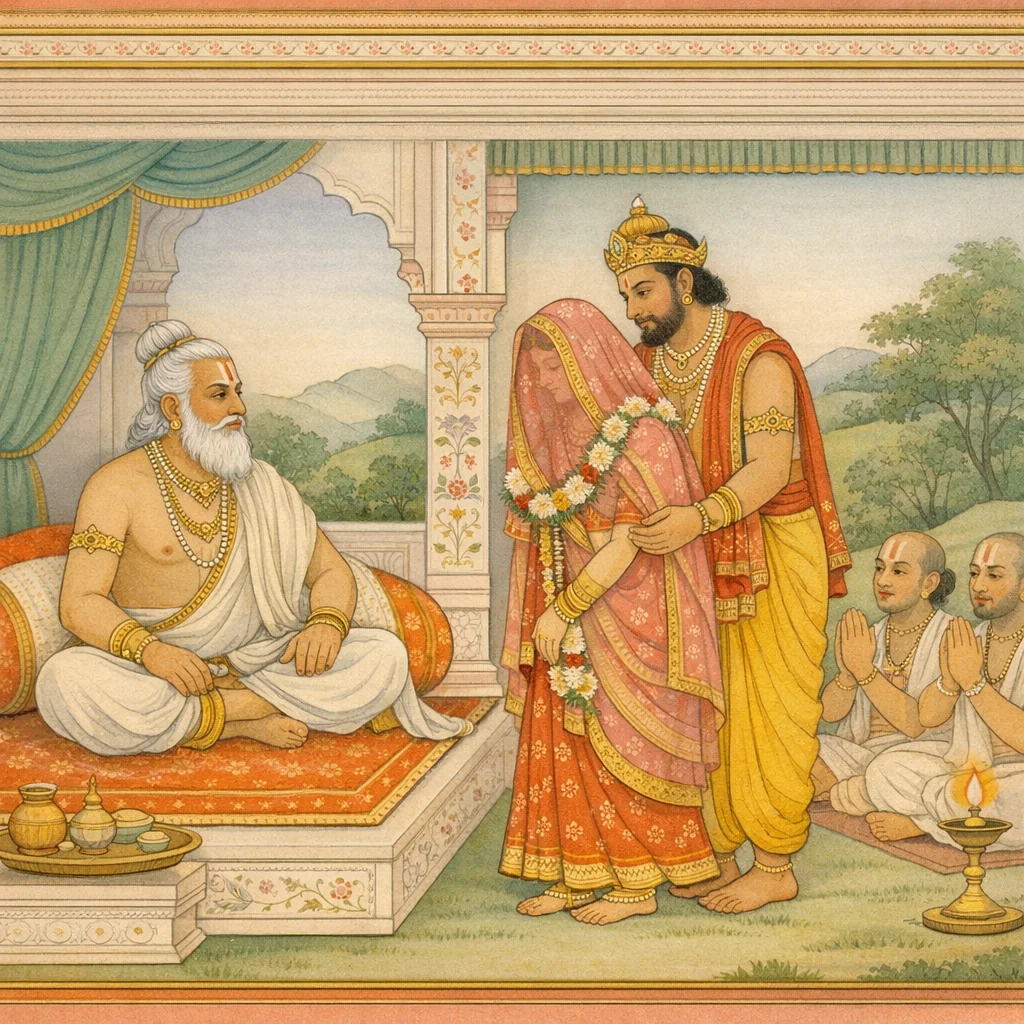
Vaiśaṃpāyana narrates a dialogue in which King Pāṇḍu responds to Kuntī with a dharma-argument grounded in precedent. He recounts an older social condition where women moved freely and such conduct was not classified as adharma, then explains that a human ‘maryādā’ (boundary) was later instituted. The narrative attributes this institutional shift to Śvetaketu, son of Udālaka, whose anger at seeing his mother led away by another man precipitated a rule establishing exclusivity and defining transgression as grave demerit; the rule is framed as applying specifically to humans, not other beings. Pāṇḍu then marshals examples of regulated appointment for offspring (niyoga), including Madayantī’s sanctioned approach to Vasiṣṭha and the epic’s own dynastic precedents, to argue that Kuntī should accept a purpose-bound, authorized act for lineage continuation. Kuntī replies by disclosing her prior service to the ascetic Durvāsas, from whom she received a mantra enabling divine invocation; she requests Pāṇḍu’s permission and guidance on which deity to summon. Pāṇḍu instructs her to invoke Dharma first, stressing public legitimacy and the preference for dharmically irreproachable progeny. Kuntī accepts and prepares to proceed, closing the chapter with ritualized assent and formal leave-taking.
Chapter Arc: भीष्म, वृद्ध मंत्रियों, ब्राह्मणों और चतुरंगिणी सेना सहित मद्रदेश की ओर प्रस्थान करते हैं—पाण्डु के लिए एक योग्य वधू और कुरुवंश के लिए नई संधि का संकल्प लेकर। → मद्रपति शल्य (बाह्लीककुल-सम्भव) भीष्म के आगमन का सत्कार करते हैं, पर वार्ता का केंद्र शीघ्र ही विवाह-प्रस्ताव और कन्या-दान की शर्तों पर आ टिकता है; राजनैतिक प्रतिष्ठा, दहेज/शुल्क और कुल-मान की सूक्ष्म प्रतिस्पर्धा वातावरण को तना देती है। → भीष्म स्पष्ट कहते हैं कि ‘तुम्हारी साध्वी, यशस्विनी बहिन माद्री’ को वे पाण्डु के लिए वरते हैं; शल्य प्रसन्न होकर समस्त धन-राशि स्वीकार करते हैं और माद्री को अलंकृत कर ‘कौरवर्षभ’ भीष्म को सौंप देते हैं—विवाह-संधि निर्णायक रूप से संपन्न होती है। → माद्री का पाण्डु से विवाह स्थापित होता है; इसके बाद अध्याय पाण्डु के पराक्रम की ओर मुड़ता है—वे दिग्विजय में दशार्ण आदि जनपदों को जीतकर कुरुओं का यश बढ़ाते हैं और अंततः गजसाह्वय (हस्तिनापुर) में शंख-भेरी-तूर्यनाद के बीच विजयी प्रवेश करते हैं। → विजय-उत्सव के भीतर भविष्य की छाया—दो रानियों के साथ पाण्डु का राजधर्म और वंश-वृद्धि का प्रश्न अब आगे किस दिशा में जाएगा?
Shlokas
Verse 1
ऑपनआक्रात बछ। अंक द्ादर्शाधिकशततमो< ध्याय: माद्रीके साथ पाण्डुका विवाह तथा राजा पाण्डुकी दिग्विजय वैशम्पायन उवाच ततः शान्तनवो भीष्यमो राज्ञ: पाण्डोर्यशस्विन: । विवाहस्यापरस्यार्थे चकार मतिमान् मतिम्,वैशम्पायनजी कहते हैं-जनमेजय! तदनन्तर शान्तनुनन्दन परम बुद्धिमान् भीष्मजीने यशस्वी राजा पाण्डुके द्वितीय विवाहके लिये विचार किया
Vaiśampāyana said: Then Bhīṣma, the son of Śāntanu, wise and far-sighted, formed a deliberate plan to arrange a second marriage for the illustrious King Pāṇḍu. The narrative underscores responsible kingship and guardianship: elders act not for personal desire but to secure the continuity and stability of the royal line in accordance with dharma.
Verse 2
सोअमात्यै: स्थविरे: सार्ध ब्राह्मणैश्न महर्षिभि: | बलेन चतुरज्जेण ययौ मद्रपते: पुरम,वे बूढ़े मन्त्रियों, ब्राह्मणों, महर्षियों तथा चतुरंगिणी सेनाके साथ मद्रराजकी राजधानीमें गये
Vaiśampāyana said: Accompanied by his senior ministers, along with Brāhmaṇas and great seers, and escorted by a complete fourfold army, he proceeded to the city of the lord of Madra. The verse underscores a dharmic mode of statecraft: counsel of elders and sages, and disciplined protection, guiding a royal journey rather than mere display of power.
Verse 3
तमागतमभिशश्रुत्य भीष्म॑ बाह्लीकपुड्भव: । प्रत्युद्गम्यार्चयित्वा च पुरं प्रावेशयन्नूप:,बाह्लीकशिरोमणि राजा शल्य भीष्मजीका आगमन सुनकर उनकी अगवानीके लिये नगरसे बाहर आये और यथोचित स्वागत-सत्कार करके उन्हें राजधानीके भीतर ले गये
Vaiśampāyana said: Hearing that he had arrived, King Bhīṣma—born in the Bāhlīka line—went out to meet him. After offering due honor and respectful reception, the king escorted him into the city. The episode underscores the kṣatriya ethic of hospitality and reverence toward eminent guests and elders, where public honor becomes a visible form of dharma.
Verse 4
दत्त्वा तस्यासन शुभ्र॑ पाद्यमर्घ्य तथैव च | मधुपर्क च महेश: पप्रच्छागमने<र्थिताम्,वहाँ उनके लिये सुन्दर आसन, पाद्य, अर्घ्य तथा मधुपर्क अर्पण करके मद्रराजने भीष्मजीसे उनके आगमनका प्रयोजन पूछा
Having offered him a splendid seat, along with water for washing the feet, the respectful offering (arghya), and the ceremonial honey-mixture (madhuparka), the king then asked Bhīṣma the purpose for which he had come. The passage highlights the dharmic etiquette of receiving a guest—honouring first, questioning later—showing that right conduct and reverence frame even serious political or familial matters.
Verse 5
त॑ भीष्म: प्रत्युवाचेदं मद्रराजं कुरूद्गह: । आगतं मां विजानीहि कन्यार्थिनमरिन्दम,तब कुरुकुलका भार वहन करनेवाले भीष्मजीने मद्रराजसे इस प्रकार कहा --“शत्रुदमन! तुम मुझे कनन््याके लिये आया हुआ समझो
Then Bhīṣma, the foremost of the Kurus, replied to the king of Madra: “O subduer of foes, know that I have come seeking a maiden (in marriage).” In this formal declaration, Bhīṣma states his purpose plainly and honorably, framing the request within accepted royal and dharmic protocol rather than concealment or coercion.
Verse 6
श्रूयते भवतः साध्वी स्वसा माद्री यशस्विनी । तामहं वरयिष्यामि पाण्डोरथ्थें यशस्विनीम्,'सुना है, तुम्हारी एक यशस्विनी बहिन है, जो बड़े साधु स्वभावकी है; उसका नाम माद्री है। मैं उस यशस्विनी माद्रीका अपने पाण्डुके लिये वरण करता हूँ
Vaiśampāyana said: “It is heard that you have a virtuous and illustrious sister named Mādrī. I choose that renowned Mādrī as a bride for Pāṇḍu.”
Verse 7
युक्तरूपो हि सम्बन्धे त्वं नो राजन् वयं तव । एतत् संचिन्त्य मद्रेश गृहाणास्मान् यथाविधि,“राजन! तुम हमारे यहाँ सम्बन्ध करनेके सर्वथा योग्य हो और हम भी तुम्हारे योग्य हैं। मद्रेश्वर! यों विचारकर तुम हमें विधिपूर्वक अपनाओ”
Vaiśampāyana said: “O King, you are indeed a fitting match for alliance with us, and we too are fitting for you. Therefore, O lord of Madra, reflect on this and accept us in due form, according to proper rite.”
Verse 8
तमेवंवादिनं भीष्म॑ प्रत्यभाषत मद्रप: । न हि मे<न्यो वरस्त्वत्त: श्रेयानिति मतिर्मम,भीष्मजीके यों कहनेपर मद्रराजने उत्तर दिया--'मेरा विश्वास है कि आपलोगोंसे श्रेष्ठ वर मुझे दूँढ़नेसे भी नहीं मिलेगा”
Vaiśampāyana said: To Bhīṣma, who had spoken in that manner, the king of Madra replied, “For me, there is no other bridegroom superior to you; such is my settled conviction.” The reply underscores the king’s ethical valuation of Bhīṣma’s character and worthiness above all alternatives.
Verse 9
पूर्व: प्रवर्तितं किंचित् कुले5स्मिन् नृपसत्तमै: । साधु वा यदि वासाधु तन्नातिक्रान्तुमुत्सहे,'परंतु इस कुलमें पहलेके श्रेष्ठ राजाओंने कुछ शुल्क लेनेका नियम चला दिया है। वह अच्छा हो या बुरा, मैं उसका उल्लंघन नहीं कर सकता
Vaiśampāyana said: “In this lineage, the foremost kings of earlier times established a certain customary levy. Whether that practice is good or not, I do not presume to overstep it.”
Verse 10
व्यक्त तद् भवतश्चापि विदितं नात्र संशय: । न च युक्त तथा वक्तुं भवान् देहीति सत्तम,“यह बात सबपर प्रकट है, निःसंदेह आप भी इसे जानते होंगे। साधुशिरोमणे! इस दशामें आपके लिये यह कहना उचित नहीं है कि मुझे कन्या दे दो”
Vaiśampāyana said: “This matter is already plain to all; without doubt you too know it. O best of the virtuous, in such circumstances it is not proper for you to speak in that manner—‘Give me the maiden.’”
Verse 11
कुलधर्म: स नो वीर प्रमाणं परमं च तत् | तेन त्वां न ब्रवीम्येतदसंदिग्ध॑ वचोडरिहन्,“वीर! वह हमारा कुलधर्म है और हमारे लिये वही परम प्रमाण है। शत्रुदमन! इसीलिये मैं आपसे निश्चितरूपसे यह नहीं कह पाता कि कन्या दे दूँगा”
“O hero, our family’s dharma is our highest authority and final standard. Therefore, O subduer of foes, I cannot give you an unequivocal promise in these words—that I will give you the maiden.”
Verse 12
त॑ भीष्म: प्रत्युवाचेदं मद्रराज॑ं जनाधिप: । धर्म एष परो राजन् स्वयमुक्त: स्वयम्भुवा,यह सुनकर जनेश्वर भीष्मजीने मद्रराजको इस प्रकार उत्तर दिया--'राजन्! यह उत्तम धर्म है। स्वयं स्वयम्भू ब्रह्माजीने इसे धर्म कहा है”
Vaiśampāyana said: Hearing this, Bhīṣma, the lord of men, replied to the king of Madra: “O King, this is the highest dharma. It has been declared as dharma by Svayambhū (Brahmā) himself.”
Verse 13
नात्र कश्नन दोषो<स्ति पूर्वधिरयं कृत: । विदितेय च ते शल्य मर्यादा साधुसम्मता,“यदि तुम्हारे पूर्वजोंने इस विधिको स्वीकार कर लिया है तो इसमें कोई दोष नहीं है। शल्य! साधु पुरुषोंद्वारा सम्मानित तुम्हारी यह कुलमर्यादा हम सबको विदित है”
Vaiśampāyana said: “There is no fault in this matter, for this practice was established by your forefathers. And, O Śalya, this boundary of conduct—your family’s accepted custom, honored by the virtuous—is well known to us all.”
Verse 14
इत्युक्त्वा स महातेजा: शातकुम्भं कृताकृतम् रत्नानि च विचित्राणि शल्यायादात् सहस्रश:,यह कहकर महातेजस्वी भीष्मजीने राजा शल्यको सोना और उसके बने हुए आभूषण तथा सहस्ौ्रों विचित्र प्रकारके रत्न भेंट किये। बहुत-से हाथी, घोड़े, रथ, वस्त्र, अलंकार तथा मणि-मोती और मूँगे भी दिये
Vaiśampāyana said: Having spoken thus, the mighty and radiant Bhīṣma presented King Śalya with refined gold—both worked and unworked—and thousands of wondrous gems. In the spirit of royal generosity and dharma, he further bestowed abundant gifts such as elephants, horses, chariots, garments, ornaments, and precious stones like pearls and coral, honoring Śalya and strengthening bonds of alliance and obligation.
Verse 15
गजानश्चान् रथांश्वैव वासांस्यथाभरणानि च । मणिमुक्ताप्रवालं च गाड़ेयो व्यसृजच्छूभम्,यह कहकर महातेजस्वी भीष्मजीने राजा शल्यको सोना और उसके बने हुए आभूषण तथा सहस्ौ्रों विचित्र प्रकारके रत्न भेंट किये। बहुत-से हाथी, घोड़े, रथ, वस्त्र, अलंकार तथा मणि-मोती और मूँगे भी दिये
Vaiśampāyana said: He then bestowed splendid gifts in abundance—elephants, horses, and chariots; garments and ornaments; and also jewels, pearls, and coral—thus honoring the recipient with lavish generosity in accordance with royal and dharmic custom.
Verse 16
तत् प्रगृह्म धनं सर्व शल्य: सम्प्रीतमानस: । ददौ तां समलंकृत्य स्वसारं कौरवर्षभे,वह सारा धन लेकर शल्यका चित्त प्रसन्न हो गया। उन्होंने अपनी बहिनको वस्त्राभूषणोंसे विभूषित करके राजा पाण्डुके लिये कुरुश्रेष्ठ भीष्मजीको सौंप दिया
Vaiśampāyana said: Having accepted all the wealth, Śalya’s mind became fully pleased. Then, after adorning his sister with garments and ornaments, he entrusted her to Bhīṣma—the bull among the Kurus—for King Pāṇḍu. The episode underscores the social-ethical ideal of honoring marital alliances through gifts and proper ceremonial adornment, and of placing the bride under the guardianship of a respected elder to ensure a dharmic transfer of responsibility.
Verse 17
सतां माद्रीमुपादाय भीष्म: सागरगासुतः । आजगाम पुरीं धीमान् प्रविष्टो गजसाह्वयम्,परम बुद्धिमान् गंगानन्दन भीष्म माद्रीको लेकर हस्तिनापुरमें आये
Vaiśampāyana said: The wise Bhīṣma, son of the river Gaṅgā, having taken Mādrī with him, came to the city—entering Gajasāhvaya (Hastināpura). The verse underscores Bhīṣma’s dutiful guardianship and the orderly fulfillment of royal responsibility in bringing the queen into the Kuru capital.
Verse 18
तत इष्टेडहनि प्राप्ते मुहूर्ते साधुसम्मते । जग्राह विधिवत पार्णिं माद्रया: पाण्डु्नराधिप:,तदनन्तर श्रेष्ठ ब्राह्मणोंके द्वारा अनुमोदित शुभ दिन और सुन्दर मुहूर्त आनेपर राजा पाण्डुने माद्रीका विधिपूर्वक पाणिग्रहण किया
Then, when the auspicious day had arrived and the well-approved, proper moment was at hand, King Pāṇḍu—lord among rulers—took Mādrī’s hand according to the prescribed rites, with the assent of the foremost brāhmaṇas. The narrative underscores dharma as social and ethical order: marriage is framed not as private desire but as a sanctified act performed at the right time, under learned guidance, and in conformity with ritual law.
Verse 19
ततो विवाहे निर्वत्ते स राजा कुरुनन्दन: । स्थापयामास तां भार्या शुभे वेश्मनि भाविनीम्,इस प्रकार विवाह-कार्य सम्पन्न हो जानेपर कुरुनन्दन राजा पाण्डुने अपनी कल्याणमयी भार्याको सुन्दर महलमें ठहराया
When the marriage rites had been duly completed, King Pāṇḍu, the delight of the Kurus, installed his auspicious wife in a splendid palace—thus placing her in a fitting, honorable household setting after the lawful union.
Verse 20
स ताभ्यां व्यचरत् सार्ध भारयशभ्यां राजसत्तम: | कुन्त्या माद्रया च राजेन्द्रो यथाकामं यथासुखम्,राजाओंमें श्रेष्ठ महाराज पाण्डु अपनी दोनों पत्नियों कुन्ती और माद्रीके साथ आनन्दपूर्वक यथेष्ट विहार करने लगे
Vaiśampāyana said: The best of kings, King Pāṇḍu, lived and sported together with his two wives—Kuntī and Mādrī—freely as he wished and in comfort. The verse frames royal life as legitimate enjoyment when it remains orderly and harmonious, presenting domestic concord as a valued condition of kingship.
Verse 21
तत:ः स कौरवो राजा विद्ृत्य त्रिदशा निशा: । जिगीषया महीं पाण्डुर्निरिक्रामत् पुरात् प्रभो,जनमेजय! कुरुवंशी राजा पाण्डु तीस रात्रियोंतक विहार करके समूची पृथ्वीपर विजय प्राप्त करनेकी इच्छा लेकर राजधानीसे बाहर निकले
Vaiśampāyana said: Then that Kuru king Pāṇḍu, having spent thirty nights (in enjoyment and repose), set out from the capital, O lord Janamejaya, driven by the resolve to conquer the earth. The verse frames royal ambition as a deliberate undertaking: a king leaves the safety of the city not for pleasure alone, but to pursue sovereignty and the burdens of rule, where victory must be weighed against the demands of dharma.
Verse 22
स भीष्मप्रमुखान् वृद्धानभिवाद्य प्रणम्य च । धृतराष्ट्रं च कौरव्यं तथान्यान् कुरुसत्तमान् | आमन्त्र्य प्रययौ राजा तैश्वैवाप्यनुमोदित:,उन्होंने भीष्म आदि बड़े-बूढ़ोंके चरणोंमें मस्तक झुकाया। कुशनन्दन धृतराष्ट्र तथा अन्य श्रेष्ठ कुशवंशियोंको प्रणाम करके उन सबकी आज्ञा ली और उनका अनुमोदन मिलनेपर मंगलाचारयुत्ह आशीर्वादोंसे अभिनन्दित हो हाथी, घोड़ों तथा रथसमुदायसे युक्त विशाल सेनाके साथ प्रस्थान किया
Having respectfully greeted and bowed to the elders headed by Bhīṣma, and having paid homage to Dhṛtarāṣṭra of the Kuru line as well as to the other foremost Kurus, the king took leave of them. With their approval and good wishes, he then set out—his departure marked by auspicious rites and blessings—accompanied by a vast army equipped with elephants, horses, and chariots.
Verse 23
मड़लाचारयुक्ताभिराशीर्भिरभिनन्दित: । गजवाजिरथीघेन बलेन महतागमत्,उन्होंने भीष्म आदि बड़े-बूढ़ोंके चरणोंमें मस्तक झुकाया। कुशनन्दन धृतराष्ट्र तथा अन्य श्रेष्ठ कुशवंशियोंको प्रणाम करके उन सबकी आज्ञा ली और उनका अनुमोदन मिलनेपर मंगलाचारयुत्ह आशीर्वादोंसे अभिनन्दित हो हाथी, घोड़ों तथा रथसमुदायसे युक्त विशाल सेनाके साथ प्रस्थान किया
Vaiśampāyana said: Having received auspicious blessings and being duly congratulated with benedictory words, he set out, accompanied by a vast force—an array of elephants, horses, and chariots. The scene underscores the ethic of deference to elders and the social legitimacy conferred by their consent and blessings before undertaking a major public action.
Verse 24
स राजा देवगर्भाभो विजिगीषुर्वसुंधराम् । हृष्टपुष्टबलै: प्रायात् पाण्डु: शत्रूननेकश:,राजा पाण्डु देवकुमारके समान तेजस्वी थे। उन्होंने इस पृथ्वीपर विजय पानेकी इच्छासे हृष्ट-पुष्ट सैनिकोंके साथ अनेक शत्रुओंपर धावा किया
Vaiśampāyana said: That king Pāṇḍu, radiant like a divine-born prince, desiring to conquer the earth, set forth with troops who were joyful and well-nourished, and he repeatedly fell upon many enemies. The verse frames royal ambition as a deliberate campaign of world-conquest, emphasizing vigor, preparedness, and the king’s martial resolve.
Verse 25
पूर्वमागस्कृतो गत्वा दशार्णा: समरे जिता: । पाण्डुना नरसिंहेन कौरवाणां यशोभूता,कौरवकुलके सुयशको बढ़ानेवाले, मनुष्योंमें सिंहके समान पराक्रमी राजा पाण्डुने सबसे पहले पूर्वके अपराधी दशार्णोंपर- धावा करके उन्हें युद्धमें परास्त किया
Vaiśampāyana said: Earlier, the Daśārṇas—who had committed an offense—were approached and then defeated in battle by Pāṇḍu, the lion among men. This victory became a source of fame and renown for the Kuru line.
Verse 26
ततः सेनामुपादाय पाण्डु्नानाविधध्वजाम् | प्रभूतहस्त्यश्वयुतां पदातिरथसंकुलाम्,तत्पश्चात् वे नाना प्रकारकी ध्वजा-पताकाओंसे युक्त और बहुसंख्यक हाथी, घोड़े, रथ एवं पैदलोंसे भरी हुई भारी सेना लेकर मगधदेशमें गये। वहाँ राजगृहमें अनेक राजाओंका अपराधी बलाभिमानी मगधराज दीर्घ उनके हाथसे मारा गया
Vaiśampāyana said: Then, taking with them the Pāṇḍavas’ great army—adorned with many kinds of banners and standards, and crowded with abundant elephants and horses, as well as foot-soldiers and chariots—they proceeded toward the land of Magadha. There, at Rājagṛha, the overbearing Magadhan king Dīrgha, notorious for offending many rulers, was slain by them—an episode that frames royal power as answerable to restraint and justice rather than mere arrogance.
Verse 27
आगमस्कारी महीपानां बहूनां बलदर्पित: । गोप्ता मगधराष्ट्रस्य दीर्घो राजगृहे हत:,तत्पश्चात् वे नाना प्रकारकी ध्वजा-पताकाओंसे युक्त और बहुसंख्यक हाथी, घोड़े, रथ एवं पैदलोंसे भरी हुई भारी सेना लेकर मगधदेशमें गये। वहाँ राजगृहमें अनेक राजाओंका अपराधी बलाभिमानी मगधराज दीर्घ उनके हाथसे मारा गया
Vaiśaṃpāyana said: Proud of his strength and guilty of wrongdoing against many kings, Dīrgha, the protector (ruler) of the Magadha realm, was slain at Rājagṛha. Thereafter, they entered the land of Magadha with a vast army—adorned with many kinds of banners and standards and filled with numerous elephants, horses, chariots, and foot-soldiers—and there, in Rājagṛha, the arrogant Magadha king Dīrgha, an offender against many rulers, was killed by their hands. The episode underscores a political-ethical logic common in the epic: oppressive power sustained by pride and injustice invites collective retribution and the restoration of order.
Verse 28
ततः कोशं समादाय वाहनानि च भूरिश: । पाण्डुना मिथिलां गत्वा विदेहा: समरे जिता:,उसके बाद भारी खजाना और वाहन आदि लेकर पाण्डुने मिथिलापर चढ़ाई की और विदेहवंशी क्षत्रियोंको युद्धमें परास्त किया
Then, taking a great treasury and many conveyances, Pāṇḍu marched to Mithilā; and in battle he subdued the Videha warriors. The passage presents royal conquest as a display of kṣatriya power and statecraft—acquiring wealth and resources through victory—while remaining within the narrative frame of a king extending dominion by force of arms.
Verse 29
तथा काशिषु सुद्मोषु पुण्ड्रेषु च नरर्षभ । स्वबाहुबलवीर्येण कुरूणामकरोद् यश:,नरश्रेष्ठ जनमेजय! इस प्रकार वे पाण्डु काशी, सहा तथा पुण्ड्र देशोंपर विजय पाते हुए अपने बाहुबल और पराक्रमसे कुरुकुलके यशका विस्तार करने लगे
Vaiśampāyana said: “So too, O bull among men, in Kāśī, among the Sudmoṣas, and in Puṇḍra, he won victories; and by the strength and valor of his own arms he caused the fame of the Kurus to grow—O best of men, Janamejaya.”
Verse 30
त॑ शरौघमहाच्वालं शस्त्रार्चिषमरिन्दमम् | पाण्डुपावकमासाद्य व्यदह्युन्त नराधिपा:,उस समय शशत्रुदमन राजा पाण्डु प्रजजलित अग्निके समान सुशोभित थे। बाणोंका समुदाय उनकी बढ़ती हुई ज्वालाके समान जान पड़ता था। खड़्ग आदि शस्त्र लपटोंके समान प्रतीत होते थे। उनके पास आकर बहुतसे राजा भस्म हो गये
Vaiśampāyana said: Pāṇḍu shone like a blazing fire—his massed arrows forming a great, surging flame and his weapons flashing like tongues of fire. When those kings approached that ‘fire’ of Pāṇḍu, they were burned down—overwhelmed and destroyed by his irresistible martial power. The passage underscores how unchecked aggression and pride in battle meet their ethical consequence when confronted by superior strength aligned with rightful kingship.
Verse 31
ते ससेना: ससेनेन विध्वंसितबला तपा: । पाण्डुना वशगा: कृत्वा कुरुकर्मसु योजिता:,सेनासहित राजा पाण्डुने सामने आये हुए सैन्यसहित नरपतियोंकी सारी सेनाएँ नष्ट कर दीं और उन्हें अपने अधीन करके कौरवोंके आज्ञापालनमें नियुक्त कर दिया
Vaiśampāyana said: Then those kings, together with their armies, had their forces shattered by Pāṇḍu’s army. Having brought them under his control, Pāṇḍu appointed them to carry out the tasks of the Kurus—thus turning defeated rivals into obligated allies under Kuru authority.
Verse 32
तेन ते निर्जिता: सर्वे पृथिव्यां सर्वपार्थिवा: । तमेकं मेनिरे शूरं देवेष्विव पुरंदरम्,पाण्डुके द्वारा परास्त हुए समस्त भूपालगण देवताओंमें इन्द्रकी भाँति इस पृथ्वीपर सब मनुष्योंमें एकमात्र उन्हींको शूरवीर मानने लगे
Vaiśampāyana said: By him, all those kings on the earth were subdued. Thereafter they regarded him alone as the true hero among men on this world—just as, among the gods, Indra is held to be the foremost champion.
Verse 33
त॑ कृताञज्जलय: सर्वे प्रणता वसुधाधिपा: । उपाजम्मुर्धनं गृह रत्नानि विविधानि च,भूतलके समस्त राजाओंने उनके सामने हाथ जोड़कर मस्तक टेक दिये और नाना प्रकारके रत्न एवं धन लेकर उनके पास आये
All the kings, rulers of the earth, with palms joined in reverence and heads bowed, approached them, bringing wealth and many kinds of precious gems as offerings—an outward sign of submission, respect, and the accepted etiquette of honoring those regarded as worthy of homage.
Verse 34
मणिमुक्ताप्रवालं च सुवर्ण रजतं बहु । गोरत्नान्यश्वरत्नानि रथरत्नानि कुड्जरान्,राजाओंके दिये हुए ढेर-के-ढेर मणि, मोती, मूँगे, सुवर्ण, चाँदी, गोरत्न, अश्वरत्न, रथरत्न, हाथी, गदहे, ऊँट, भैंसें, बकरे, भेंड़ें, कम्बल, मृगचर्म, रत्न, रंकु मृगके चर्मसे बने हुए बिछौने आदि जो कुछ भी सामान प्राप्त हुए, उन सबको हस्तिनापुराधीश राजा पाण्डुने ग्रहण कर लिया
Vaiśampāyana said: “There were heaps of gifts—gems, pearls, and coral, along with abundant gold and silver; also prized cattle, fine horses, splendid chariots, and elephants.” The passage underscores how royal generosity and the public acknowledgment of sovereignty are expressed through the formal offering and acceptance of wealth and valuable possessions, which King Pāṇḍu, lord of Hastināpura, receives as part of his kingly station.
Verse 35
खरोष्टमहिषी श्वैव यच्च किंचिदजाविकम् । कम्बलाजिनरत्नानि राड़कवास्तरणानि च । तत् सर्व प्रतिजग्राह राजा नागपुराधिप:,राजाओंके दिये हुए ढेर-के-ढेर मणि, मोती, मूँगे, सुवर्ण, चाँदी, गोरत्न, अश्वरत्न, रथरत्न, हाथी, गदहे, ऊँट, भैंसें, बकरे, भेंड़ें, कम्बल, मृगचर्म, रत्न, रंकु मृगके चर्मसे बने हुए बिछौने आदि जो कुछ भी सामान प्राप्त हुए, उन सबको हस्तिनापुराधीश राजा पाण्डुने ग्रहण कर लिया
Vaiśampāyana said: “The king, lord of Hāstinapura, accepted in full all that was presented—donkeys, camels, buffaloes, horses, and whatever goats and sheep there were; also blankets, animal-skins, jewels, and bedding made of rādaka (rāṅku) deer-hide.” The passage underscores the public recognition of royal authority through tribute and the orderly reception of wealth, implying the king’s duty to manage such resources for the realm rather than for mere personal indulgence.
Verse 36
तदादाय ययौ पाण्डु: पुनर्मुदितवाहन: । हर्षयिष्यन् स्वराष्ट्राणि पुरं च गजसाह्दयम्,वह सब लेकर महाराज पाण्डु अपने राष्ट्रके लोगोंका हर्ष बढ़ाते हुए पुनः हस्तिनापुर चले आये। उस समय उनकी सवारीके अश्व आदि भी बहुत प्रसन्न थे
Having taken that with him, King Pāṇḍu set out again—his mounts once more cheerful. Intending to gladden the people of his own realm, he returned to the city of Hastināpura, bringing joy to the kingdom and to the capital alike. The scene underscores the king’s duty to secure prosperity and return with auspicious gains for the welfare of his subjects.
Verse 37
शन्तनो राजसिंहस्य भरतस्य च धीमत: । प्रणष्ट: कीर्तिज: शब्द: पाण्डुना पुनराहृत:,राजाओंमें सिंहके समान पराक्रमी शन्तनु तथा परम बुद्धिमान् भरतकी कीर्ति-कथा जो नष्ट-सी हो गयी थी, उसे महाराज पाण्डुने पुनरुज्जीवित कर दिया
Vaiśampāyana said: The fame-born renown of Śantanu—lion among kings—and of the wise Bharata, which had seemed to fade away, was restored anew by King Pāṇḍu. In this way, Pāṇḍu is portrayed as reviving the moral and royal prestige of his lineage through his conduct and kingship.
Verse 38
ये पुरा कुरुराष्ट्राणि जहुः कुरुधनानि च । ते नागपुरसिंहेन पाण्डुना करदीकृता:,जिन राजाओंने पहले कुरुदेशके धन तथा कुरुराष्ट्रका अपहरण किया था, उनको हस्तिनापुरके सिंह पाण्डुने करद बना दिया
Vaiśampāyana said: Those kings who in former times had seized the territories of the Kuru realm and carried off the wealth of the Kurus—Pāṇḍu, the lion of Nāgapura (Hastināpura), brought them under tribute. Thus, by restoring Kuru sovereignty and making aggressors answerable, he re-established political order through rightful royal power.
Verse 39
इत्यभाषन्त राजानो राजामात्याश्व संगता: । प्रतीतमनसो हृष्टाः पौरजानपदै: सह,बहुत-से राजा तथा राजमन्त्री एकत्र होकर इस तरहकी बातें कर रहे थे। उनके साथ नगर और जनपदके लोग भी इस चर्चामें सम्मिलित थे। उन सबके हृदयमें पाण्डुके प्रति विश्वास तथा हर्षोल्लास छा रहा था
Verse 40
प्रत्युद्ययुश्न त॑ प्राप्तं सर्वे भीष्मपुरोगमा: । ते नदूरमिवाध्वानं गत्वा नागपुरालयात्,राजा पाण्डु जब नगरके निकट आये, तब भीष्म आदि सब कौरव उनकी अगवानीके लिये आगे बढ़ आये। उन्होंने प्रसन्नतापूर्वक देखा, राजा पाण्डु और उनका दल बड़े उत्साहके साथ आ रहे हैं। उस समय ऐसा जान पड़ता था, मानो वे लोग हस्तिनापुरसे थोड़ी ही दूरतक जाकर वहाँसे लौट रहे हों। उनके साथ भाँति-भाँतिके धन एवं नाना प्रकारके वाहनोंपर लादकर लाये हुए छोटे-बड़े रत्न, श्रेष्ठ हाथी, घोड़े, रथ, गौएँ, ऊँट तथा भेंड़ आदि भी थे। भीष्मके साथ कौरवोंने वहाँ जाकर देखा, तो उस धन-वैभवका कहीं अन्त नहीं दिखायी दिया
Vaiśampāyana said: All the Kurus, led by Bhīṣma, went forth to welcome the arriving king. Having gone only a short distance from the city—so little that it seemed as though they had barely set out on the road—they met him and beheld Pāṇḍu approaching with evident vigor and joy. The scene conveys a public ethic of honor and kinship: the elders and the royal household uphold propriety by receiving the returning king with respect and goodwill.
Verse 41
आवृतं ददृशुर्ष्टा लोक॑ बहुविधेर्धने: । नानायानसमानीतै रत्नैरुच्चावचैस्तदा,राजा पाण्डु जब नगरके निकट आये, तब भीष्म आदि सब कौरव उनकी अगवानीके लिये आगे बढ़ आये। उन्होंने प्रसन्नतापूर्वक देखा, राजा पाण्डु और उनका दल बड़े उत्साहके साथ आ रहे हैं। उस समय ऐसा जान पड़ता था, मानो वे लोग हस्तिनापुरसे थोड़ी ही दूरतक जाकर वहाँसे लौट रहे हों। उनके साथ भाँति-भाँतिके धन एवं नाना प्रकारके वाहनोंपर लादकर लाये हुए छोटे-बड़े रत्न, श्रेष्ठ हाथी, घोड़े, रथ, गौएँ, ऊँट तथा भेंड़ आदि भी थे। भीष्मके साथ कौरवोंने वहाँ जाकर देखा, तो उस धन-वैभवका कहीं अन्त नहीं दिखायी दिया
Vaiśampāyana said: Then everyone saw the scene as if covered and filled with wealth of many kinds—varied jewels, great and small, brought in on diverse vehicles. The arrival of King Pāṇḍu and his retinue near the city is portrayed as a public, auspicious return marked by abundance and orderly display, suggesting royal prosperity and the social duty of the Kauravas (led by Bhīṣma) to go forth and receive the king with honor.
Verse 42
हस्त्यश्वरथरत्नैश्व गोभिरुष्टैस्तथाविभि: । नान््तं ददृशुरासाद्य भीष्मेण सह कौरवा:,राजा पाण्डु जब नगरके निकट आये, तब भीष्म आदि सब कौरव उनकी अगवानीके लिये आगे बढ़ आये। उन्होंने प्रसन्नतापूर्वक देखा, राजा पाण्डु और उनका दल बड़े उत्साहके साथ आ रहे हैं। उस समय ऐसा जान पड़ता था, मानो वे लोग हस्तिनापुरसे थोड़ी ही दूरतक जाकर वहाँसे लौट रहे हों। उनके साथ भाँति-भाँतिके धन एवं नाना प्रकारके वाहनोंपर लादकर लाये हुए छोटे-बड़े रत्न, श्रेष्ठ हाथी, घोड़े, रथ, गौएँ, ऊँट तथा भेंड़ आदि भी थे। भीष्मके साथ कौरवोंने वहाँ जाकर देखा, तो उस धन-वैभवका कहीं अन्त नहीं दिखायी दिया
Vaiśampāyana said: When the Kauravas, together with Bhīṣma, went out to meet (King Pāṇḍu) and came up to him, they beheld a vast procession—elephants, horses, chariots, and precious treasures, along with herds of cattle, camels, and sheep. On seeing that wealth and conveyance brought in many kinds, they could perceive no end to it. The scene underscores royal prosperity and the public, orderly display of resources that accompanies a righteous king’s return and reception.
Verse 43
सो5भिवाद्य पितु: पादौ कौसल्यानन्दवर्धन: । यथा मानयामास पौरजानपदानपि,कौसल्याका- आनन्द बढ़ानेवाले पाण्डुने निकट आकर पितृव्य भीष्मके चरणोंमें प्रणाम किया और नगर तथा जनपदके लोगोंका भी यथायोग्य सम्मान किया
Vaiśampāyana said: Having bowed in reverence at his father’s feet, Pāṇḍu—who increased the joy of the Kuru household—then approached and paid homage at the feet of his paternal elder Bhīṣma, and he duly honored the townsmen and the people of the countryside as well. The passage highlights the ethic of humility and proper regard for elders and the wider community as marks of righteous conduct.
Verse 44
प्रमृद्य परराष्ट्राणि कृतार्थ पुनरागतम् । पुत्रमाश्लिष्य भीष्मस्तु हर्षादश्रूण्यवर्तयत्,शत्रुओंके राज्योंको धूलमें मिलाकर कृतकृत्य होकर लौटे हुए अपने पुत्र पाण्डुका आलिंगन करके भीष्मजी हर्षके आँसू बहाने लगे
Vaiśampāyana said: Having crushed the enemy kingdoms and returned home with his mission fulfilled, Pāṇḍu was embraced by Bhīṣma; overcome with joy, Bhīṣma shed tears. The scene underscores a warrior’s duty carried out successfully and the tender, dharma-grounded affection of elders who rejoice not merely in victory, but in the safe return and rightful accomplishment of a kinsman.
Verse 45
स तूर्यशतशड्खानां भेरीणां च महास्वनै: । हर्षयन् सर्वश: पौरान् विवेश गजसाह्वयम्,सैकड़ों शंख, तुरही एवं नगारोंकी तुमुल ध्वनिसे समस्त पुरवासियोंको आनन्दित करते हुए पाण्डुने हस्तिनापुरमें प्रवेश किया
Vaiśampāyana said: With the mighty clamour of hundreds of trumpets and conches, and the great booming of kettle-drums, Pāṇḍu entered Gajasāhvaya (Hastināpura), gladdening the townspeople on every side. The scene underscores a king’s public return as a moment of civic joy and shared confidence in righteous rule.
Verse 111
इस प्रकार श्रीमह्या भारत आदिपर्वके अन्तर्गत सम्भवपर्वमें कुन्तीविवाहविषयक एक सौ ग्यारहवाँ अध्याय पूरा हुआ
Thus ends the one hundred and eleventh chapter of the Sambhava section within the Ādi Parva of the revered Mahābhārata, dealing with the marriage of Kuntī. This closing colophon marks the completion of a narrative unit, signaling a transition in the lineage-history that frames later ethical and dynastic developments.
Verse 112
इति श्रीमहाभारते आदिपर्वणि सम्भवपर्वणि पाण्डुदिग्विजये दादशाधिकशततमो<ध्याय:
Thus, in the Śrī Mahābhārata, within the Ādi Parva and specifically the Sambhava Parva, ends the one-hundred-and-twelfth chapter, concerning Pāṇḍu’s campaign of conquest. This closing colophon marks the completion of a narrative unit that frames royal expansion as a political act requiring restraint and adherence to dharma, not mere aggression.
Frequently Asked Questions
The dilemma is how to preserve dynastic continuity when ordinary conjugal norms cannot function: the chapter weighs marital exclusivity (maryādā) against a purpose-limited, authorized exception (niyoga) framed as dharmically permissible.
Dharma is presented as historically articulated and socially regulated: legitimacy depends on intention, consent, and procedural authorization, and exceptional actions must be justified through precedent and welfare-oriented reasoning.
No explicit phalaśruti is stated; the meta-emphasis is instead on narrative-legal grounding—why an action will be regarded as ‘dharma’ by society and how correct procedure safeguards moral accountability.