Adhyaya 32
हरेः पुत्रविस्तारः तथा ऊषानिरुद्धकथा-प्रारम्भः (Kṛṣṇa’s Progeny and the Beginning of the Uṣā–Aniruddha Episode)
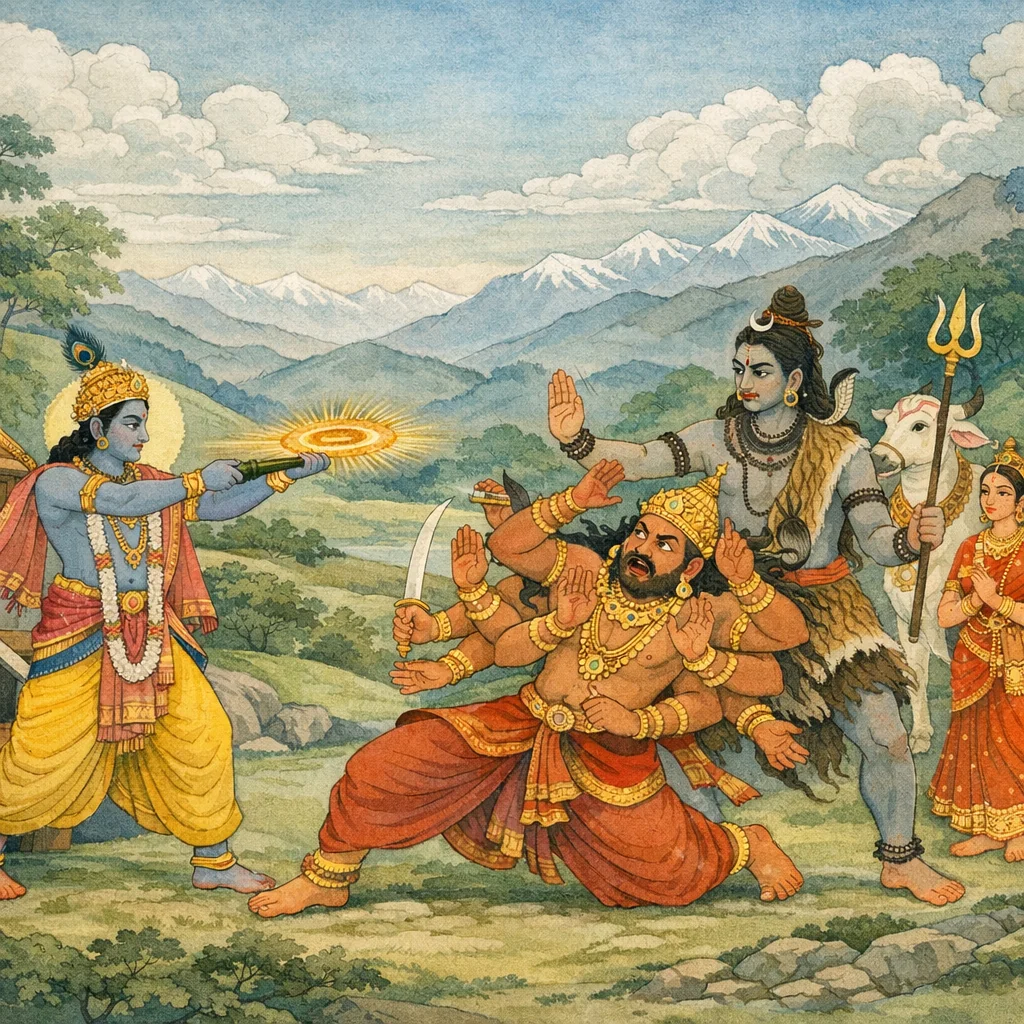
Parāśara continues instructing Maitreya by enumerating Śrī Kṛṣṇa’s sons born of many queens, thereby expanding the Vṛṣṇi dynastic line. He proclaims Pradyumna foremost and traces the descent onward to Aniruddha and Vajra. He then begins the episode of Aniruddha’s marriage to Uṣā, daughter of Bāṇa and granddaughter of Bali, foreshadowing an impending conflict. Maitreya asks how the Hari–Hara battle arose and how Bāṇa’s arms were severed. Parāśara opens the backstory: Uṣā, seeing Śiva with Pārvatī, longs for similar conjugal refuge; Gaurī consoles her and points to a dream-sign on Vaiśākha-śukla-dvādaśī. Uṣā dreams of the destined man and wakes restless; her companion Citralekhā, skilled in yogic arts, draws portraits of gods, beings, and humans. At last Uṣā’s gaze settles on Aniruddha, Pradyumna’s son, and from that attraction begins the chain of causes—yogic abduction and the war that follows.
Shlokas
Verse 1
प्रद्युम्नाद्या हरेः पुत्रा रुक्मिण्याः कथितास् तव भानुं भैमरिकं चैव सत्यभामा व्यजायत
I have already recounted to you the sons of Hari born of Rukmiṇī—beginning with Pradyumna. Now Satyabhāmā gave birth to Bhānu, and also to Bhaimarika.
Verse 2
दीप्तिमन्तः प्रयक्षाद्या रोहिण्यास् तनया हरेः बभूवुर् जाम्बवत्यां च साम्बाद्या बाहुशालिनः
From Rohiṇī were born to Hari sons such as Dīptimān and Prayakṣa; and from Jāmbavatī too were born sons beginning with Sāmba—mighty-armed heroes.
Verse 3
तनया भद्रविन्दाद्या नाग्नजित्यां महाबलाः संग्रामजित्प्रधानास् तु शैब्यायाश् चाभवन् सुताः
From Nāgnajitī were born mighty sons, beginning with Bhadravinda; and from Śaibyā too were born sons, with Saṅgrāmajit foremost among them.
Verse 4
वृकाद्याश् च सुता माद्र्यां गात्रवत्प्रमुखान् सुतान् अवाप लक्ष्मणा पुत्राः कालिन्द्याश् च श्रुतादयः
From Mādrī too were born sons beginning with Vṛka, with Gātravat foremost among them. By Lakṣmaṇā he likewise obtained sons; and from Kāliṇdī were born sons beginning with Śruta and others.
Verse 5
अन्यासां चैव भार्याणां समुत्पन्नानि चक्रिणः अष्टायुतानि पुत्राणां सहस्राणां शतं तथा
And from his other wives as well, the Cakrin begot sons in vast number—eight ayutas, and in addition a further hundred thousand.
Verse 6
प्रद्युम्नः प्रथमस् तेषां सर्वेषां रुक्मिणीसुतः प्रद्युम्नाद् अनिरुद्धो ऽभूद् वज्रस् तस्माद् अजायत
Foremost among them all was Pradyumna, the son of Rukmiṇī. From Pradyumna was born Aniruddha; and from him, Vajra came into being.
Verse 7
अनिरुद्धो रणे रुद्धो बलेः पौत्रीं महाबलः बाणस्य तनयाम् ऊषाम् उपयेमे द्विजोत्तम
O best of the twice-born, mighty Aniruddha—though hemmed in amid the battle—took Uṣā, daughter of Bāṇa and granddaughter of Bali, as his wedded wife.
Verse 8
यत्र युद्धम् अभूद् घोरं हरिशंकरयोर् महत् छिन्नं सहस्रं बाहूनां यत्र बाणस्य चक्रिणा
There a dreadful and mighty battle arose between Hari and Śaṅkara; and the discus-bearing Lord hewed away a thousand of Bāṇa’s arms.
Verse 9
कथं युद्धम् अभूद् ब्रह्मन्न् उषार्थे हरकृष्णयोः कथं क्षयं च बाणस्य बाहूनां कृतवान् हरिः
O Brahman, how did the battle arise between Hara (Śiva) and Kṛṣṇa on account of Uṣā? And how did Hari bring about the destruction of Bāṇa’s arms?
Verse 10
एतत् सर्वं महाभाग ममाख्यातुं त्वम् अर्हसि महत् कौतूहलं जातं कथां श्रोतुम् इमां हरेः
O noble one, you are indeed worthy to relate all this to me. A great eagerness has arisen in me—to hear this sacred account of Hari.
Verse 11
उषा बाणसुता विप्र पार्वतीं सह शम्भुना क्रीडन्तीम् उपलक्ष्योच्चैः स्पृहां चक्रे तदाश्रयाम्
O brāhmaṇa, Uṣā—the daughter of Bāṇa—having noticed Pārvatī sporting together with Śambhu, felt a powerful longing for that same sheltered intimacy and companionship.
Verse 12
ततः सकलचित्तज्ञा गौरी ताम् आह भामिनीम् अलम् अत्यर्थतापेन भर्त्रा त्वम् अपि रंस्यसे
Then Gaurī, who knows every movement of the mind, spoke to that passionate lady: “Enough of this excessive burning anguish. In due time you too shall find joy and fulfillment with your husband.”
Verse 13
इत्युक्ते सा तदा चक्रे कदेति मतिम् आत्मनः को वा भर्ता ममेत्य् एनां पुनर् अप्य् आह पार्वती
When this was said, she at once turned the thought within herself: “When will it be? And who, indeed, will be my husband?” Then Pārvatī spoke to her again.
Verse 14
वैशाखशुक्लद्वादश्यां स्वप्ने यो ऽभिभवं तव करिष्यति स ते भर्ता राजपुत्रि भविष्यति
“On the bright twelfth day of Vaiśākha, the one who, in your dream, will overcome you—he shall indeed become your husband, O princess.”
Verse 15
तस्यां तिथौ पुमान् स्वप्ने यथा देव्या उदीरितम् तथैवाभिभवं चक्रे रागं चक्रे च तत्र सा
On that appointed lunar day, the man—within a dream—did exactly as the goddess had foretold: he overcame her, and in that very moment she became enamoured of him.
Verse 16
ततः प्रबुद्धा पुरुषम् अपश्यन्ती समुत्सुका क्व गतो ऽसीति निर्लज्जा मैत्रेयोक्तवती सखीम्
Then, waking up and not seeing the man, she grew restless; and, unabashed, she said to her companion, “Where has he gone?”
Verse 17
बाणस्य मन्त्री कुम्भाण्डः चित्रलेखा च तत्सुता तस्याः सख्य् अभवत् सा च प्राह को ऽयं त्वयोच्यते
Bāṇa had a minister named Kumbhāṇḍa, and his daughter was Citralekhā. She became Uṣā’s close companion and asked, “Who is this person of whom you speak to me?”
Verse 18
यदा लज्जाकुला नास्यै कथयाम् आस सा सखी तदा विश्वासम् आनीय सर्वम् एवाभ्यवादयत्
But when, overcome with bashfulness, she could not bring herself to speak, her companion first won her confidence and then told the whole matter exactly as it was.
Verse 19
विदितार्थां तु ताम् आह पुनर् ऊषा यथोदितम् देव्या तथैव तत्प्राप्तौ यो ऽभ्युपायः कुरुष्व तम्
Understanding her intent, Ūṣā spoke again to her companion, as the goddess had instructed: “To bring it to pass, carry out the very means—the practical plan—that will secure it.”
Verse 20
ततः पटे सुरान् दैत्यान् गन्धर्वांश् च प्रधानतः मनुष्यांश् चाभिलिख्यास्यै चित्रलेखा व्यदर्शयत्
Then, upon a painted cloth, Chitralekhā sketched—in their chief and characteristic forms—the gods, the Daityas, the Gandharvas, and also men; and having drawn them, she showed them to Ūṣā.
Verse 21
अपास्य सा तु गन्धर्वांस् तथोरगसुरासुरान् मनुष्येषु ददौ दृष्टिं तेष्व् अप्य् अन्धकवृष्णिषु
Setting aside the Gandharvas—and likewise the Nāgas, the Devas, and the Asuras—she turned her gaze upon humankind; and among men, her attention fell especially upon the Andhakas and the Vṛṣṇis.
Verse 22
कृष्णरामौ विलोक्यासीत् सुभ्रूर् लज्जाजडेव सा प्रद्युम्नदर्शने व्रीडादृष्टिं निन्ये ऽन्यतो द्विज
Seeing Kṛṣṇa and Rāma, that fair-browed lady became as if frozen with modesty; and at the sight of Pradyumna, O brāhmaṇa, she turned her bashful gaze away to another side.
Verse 23
दृष्टमात्रे ततः कान्ते प्रद्युम्नतनये द्विज दृष्ट्वात्यर्थविलासिन्या लज्जा क्वापि निराकृता
Then, O beloved—O brāhmaṇa—at the very first glance upon Pradyumna’s son, the maiden, overflowing with playful charm, found her modesty driven away, as though it had vanished entirely.
Frequently Asked Questions
Vaṁśa material anchors sacred history (itihāsa-purāṇa style), links avatāra-līlā to royal lineages, and prepares narrative causality—here, establishing Pradyumna → Aniruddha as the hinge for the Uṣā–Bāṇa conflict.
The dream functions as svapna-nimitta—an omen-like disclosure that initiates the plot while implying divine governance over human psychology, aligning personal desire with a larger providential unfolding.