Munipraśna-varṇana (Description of the Sages’ Inquiry)
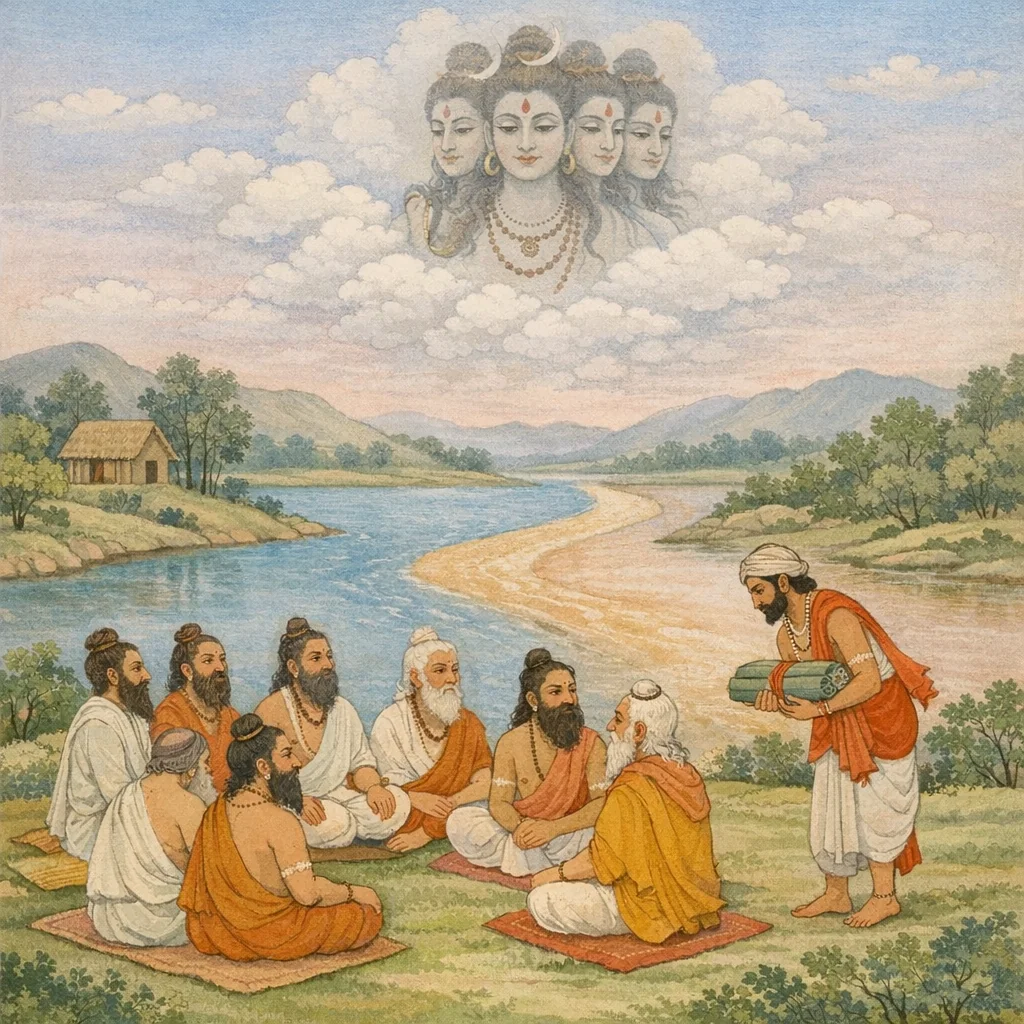
Adhyāya 1 sets the narrative and epistemic frame of the Śiva Purāṇa through a formal scene of sacred transmission. In a maṅgala-style opening, Vyāsa is invoked and Śiva is praised as Pañcānana (five-faced) and as the imperishable inner divinity, joining iconographic and metaphysical meanings. The setting is Prayāga, the tīrtha at the confluence of the Gaṅgā and Kālindī (Yamunā), described as a dharmakṣetra/mahākṣetra where discourse on dharma and liberation is ritually fitting and spiritually potent. Disciplined sages are conducting a great sacrificial session (mahāsatra) when Sūta (Romaharṣaṇa), the foremost Purāṇic narrator in Vyāsa’s lineage, arrives. They welcome him with proper hospitality and, through praise, establish his authority as one who comprehends the whole Purāṇic corpus and holds wondrous narratives. Their request is soteriological and practical: he should not depart without granting śreyas, spiritual good. The chapter thus authenticates the speaker, anchors the teaching in sacred geography, and frames what follows as an answer to a formally posed inquiry rather than casual storytelling.
Shlokas
Verse 1
इति श्रीशैवेमहापुराणे विद्येश्वरसंहितायां मुनिप्रश्नवर्णनो नाम प्रथमोऽध्यायः
Thus ends the First Chapter, called “The Description of the Sages’ Questions,” in the Vidyeśvara Saṃhitā of the sacred Śaiva Mahāpurāṇa, the Śiva Purāṇa.
Verse 2
मुनयः शंसितात्मानस्सत्यव्रतपरायणाः । महौजसो महाभागा महासत्रं वितेनिरे
The sages—of praised and disciplined minds, devoted to vows of truth—mighty in spiritual splendor and greatly blessed, commenced a great sacrificial session (mahāsatra).
Verse 3
तत्र सत्रं समाकर्ण्य व्यासशिष्यो महामुनिः । आजगाम मुनीन्द्र ष्टुं सूतः पौराणिकोत्तमः
Hearing that a sacred satra, a sacrificial session, was being held there, Sūta—the great sage, disciple of Vyāsa and foremost among the Purāṇic narrators—came to behold the best of sages.
Verse 4
तं दृष्ट्वा सूतमायांतं हर्षिता मुनयस्तदा । चेतसा सुप्रसन्नेन पूजां चक्रुर्यथाविधि
Seeing Sūta approaching, the sages were filled with joy. With minds wholly serene and pleased, they honored him and performed worship in the proper, prescribed manner.
Verse 5
ततो विनयसंयुक्ता प्रोचुः सांजलयश्च ते । सुप्रसन्ना महात्मानः स्तुतिं कृत्वायथाविधि
Then, endowed with humility and with hands joined in reverence, they spoke. Those great souls—fully pleased—had offered their praise in the proper manner.
Verse 6
रोमहर्षण सर्वज्ञ भवान्वै भाग्यगौरवात् । पुराणविद्यामखिलां व्यासात्प्रत्यर्थमीयिवान्
O Romaharṣaṇa, O omniscient one—by the splendour of your good fortune you have received from Vyāsa the entire Purāṇic lore, complete with its true meanings.
Verse 7
तस्मादाश्चर्य्यभूतानां कथानां त्वं हि भाजनम् । रत्नानामुरुसाराणां रत्नाकर इवार्णवः
Therefore, you are indeed the worthy vessel of wondrous sacred narratives—like the ocean, the mine of jewels, holding within it gems of vast and excellent essence.
Verse 8
यच्च भूतं च भव्यं च यच्चान्यद्वस्तु वर्तते । न त्वयाऽविदितं किंचित्त्रिषु लोकेषु विद्यते
Whatever has been, whatever will be, and whatever else exists—within the three worlds nothing whatsoever is unknown to You, O Lord Śiva.
Verse 9
त्वं मद्दिष्टवशादस्य दर्शनार्थमिहागतः । कुर्वन्किमपि नः श्रेयो न वृथा गंतुमर्हसि
Since you have come here at my instruction to receive his darśana, accomplish something that brings us true welfare; you should not depart in vain.
Verse 10
तत्त्वं श्रुतं स्म नः सर्वं पूर्वमेव शुभाशुभम् । न तृप्तिमधिगच्छामः श्रवणेच्छा मुहुर्मुहुः
We have indeed heard before the entire truth—concerning both the auspicious and the inauspicious. Yet we do not attain satisfaction; again and again the longing to listen arises within us.
Verse 11
इदानीमेकमेवास्ति श्रोतव्यं सूत सन्मते । तद्र हस्यमपि ब्रूहि यदि तेऽनुग्रहो भवेत्
Now there is only one thing that truly ought to be heard, O Sūta, wise and discerning. If your grace is upon us, then speak that secret teaching as well.
Verse 12
प्राप्ते कलियुगे घोरे नराः पुण्यविवर्जिताः । दुराचाररताः सर्वे सत्यवार्तापराङ्मुखाः
When the dreadful Kali Yuga arrives, people become bereft of merit; all delight in improper conduct and turn away from truthful speech.
Verse 13
परापवादनिरताः परद्र व्याभिलाषिणः । परस्त्रीसक्तमनसः परहिंसापरायणाः
They are ever engaged in slandering others, craving another’s wealth, their minds attached to other men’s wives, and devoted to harming others.
Verse 14
देहात्मदृष्टया मूढा नास्तिकाः पशुबुद्धयः । मातृपितृकृतद्वेषाः स्त्रीदेवाः कामकिंकराः
Deluded by the view that the body alone is the Self, they become unbelievers with an animal-like understanding. They harbor hatred even toward their mother and father; they make a woman their ‘deity’ and become servants of lust.
Verse 15
विप्रा लोभग्रहग्रस्ता वेदविक्रयजीविनः । धनार्जनार्थमभ्यस्तविद्या मदविमोहिताः
The brāhmaṇas were seized by the grip of greed, living by selling the Veda. They pursued learning only to gain wealth, and, deluded by pride and intoxicated self-regard, lost their right discernment.
Verse 16
त्यक्तस्वजातिकर्माणः प्रायशःपरवंचकाः । त्रिकालसंध्यया हीना ब्रह्मबोधविवर्जिताः
They abandoned the duties proper to their own station and conduct, and for the most part became deceivers of others. Devoid of the thrice-daily Sandhyā worship, they remained bereft of awakening to Brahman—true spiritual knowledge.
Verse 17
अदयाः पंडितं मन्यास्स्वाचारव्रतलोपकाः । कृष्युद्यमरताः क्रूरस्वभावा मलिनाशयाः
“They are without compassion, yet imagine themselves learned. They abandon right conduct and sacred vows; absorbed only in farming and worldly exertion, they are harsh by nature and impure in their inner intent.”
Verse 18
क्षत्रियाश्च तथा सर्वे स्वधर्मत्यागशीलिनः । असत्संगाः पापरता व्यभिचारपरायणाः
And the Kṣatriyas too—indeed, all of them—grew inclined to forsake their own ordained duty (svadharma). They kept company with the unvirtuous, delighted in sin, and devoted themselves to misconduct and infidelity.
Verse 19
अशूरा अरणप्रीताः पलायनपरायणाः । कुचौरवृत्तयः शूद्रा ः कामकिंकरचेतसः
They are devoid of heroic spirit, delighting in wilderness and disorder, ever inclined to flee. Living by petty thievery, such people—though born as śūdras—become enslaved in mind to desire.
Verse 20
शस्त्रास्त्रविद्यया हीना धेनुविप्रावनोज्झिताः । शरण्यावनहीनाश्च कामिन्यूतिमृगास्सदा
Deprived of the knowledge of weapons and missiles, bereft of the protection of cows and brāhmaṇas, and lacking any sheltering refuge or forest-sanctuary, they live always like deer—restless and driven by desire—moving in herds after sense-objects.
Verse 21
प्रजापालनसद्धर्मविहीना भोगतत्पराः । प्रजासंहारका दुष्टा जीवहिंसाकरा मुदा
Devoid of the true dharma of protecting their subjects, they became intent only on enjoyment. Wicked in nature, they brought ruin upon the people and, delighting in it, committed violence against living beings.
Verse 22
वैश्याः संस्कारहीनास्ते स्वधर्मत्यागशीलिनः । कुपथाः स्वार्जनरतास्तुलाकर्मकुवृत्तयः
The Vaiśyas (merchants) are bereft of purificatory sacraments and are inclined to forsake their own ordained dharma. They tread corrupt paths, delight in selfish hoarding, and practice dishonest conduct in weighing and trade.
Verse 23
गुरुदेवद्विजातीनां भक्तिहीनाः कुबुद्धयः । अभोजितद्विजाः प्रायः कृपणा बद्धमुष्टयः
Those who lack bhakti toward the Guru, the deity, and the twice-born (dvija) are of misguided understanding. For the most part they do not offer hospitality to the twice-born—miserly, petty in spirit, and tight‑fisted.
Verse 24
कामिनीजारभावेषु सुरता मलिनाशयाः । लोभमोहविचेतस्काः पूर्तादिसुवृषोज्झिताः
They delight in lustful conduct—consorting with other men’s women—and their inner disposition is impure. Their minds are driven by greed and delusion, and they have abandoned noble works of public merit such as charity and other pious deeds.
Verse 25
तद्वच्छूद्रा श्च ये केचिद्ब्राह्मणाचारतत्पराः । उज्ज्वलाकृतयो मूढाः स्वधर्मत्यागशीलिनः
Likewise, there are some Śūdras who are intent on adopting the conduct of Brāhmaṇas—outwardly radiant in appearance, yet deluded, being inclined to abandon their own ordained duty (svadharma).
Verse 26
कर्तारस्तपसां भूयो द्विजतेजोपहारकाः । शिश्वल्पमृत्युकाराश्च मंत्रोच्चारपरायणाः
They become capable of performing abundant austerities (tapas); they enhance the spiritual brilliance (tejas) of the twice-born (dvija); they bring about the lessening of untimely death; and they remain devoted to the constant utterance of mantras.
Verse 27
शालिग्रामशिलादीनां पूजकाहोमतत्पराः । प्रतिकूलविचाराश्च कुटिला द्विजदूषकाः
They are devoted to worshipping Śālagrāma stones and the like, and are intent on homa offerings; yet their thinking is hostile and contrary, their conduct is crooked, and they revile the twice-born (dvija).
Verse 28
धनवंतः कुकर्म्माणो विद्यावन्तो विवादिनः । आख्यायोपासना धर्मवक्तारो धर्मलोपकाः
In this age, the wealthy will be absorbed in evil deeds, and the learned will become quarrelsome disputants. Those devoted to tales and to outward worship will speak of dharma—yet they themselves will bring about dharma’s decline.
Verse 29
सुभूपाकृतयो दंभाः सुदातारो महामदाः । विप्रादीन्सेवकान्मत्वा मन्यमाना निजं प्रभुम्
Those hypocrites assumed the airs of noble kings; though they made ostentatious gifts, they grew intoxicated with immense pride. Treating even brāhmaṇas and others as servants, they imagined themselves to be lords in their own right.
Verse 30
स्वधर्मरहिता मूढाः संकराः क्रूरबुद्धयः । महाभिमानिनो नित्यं चतुर्वर्णविलोपकाः
Devoid of their own svadharma, deluded, of mixed and confused conduct, and cruel-minded, they are ever swollen with great pride and become destroyers of the fourfold order of the varṇas.
Verse 31
सुकुलीनान्निजान्मत्वा चतुर्वर्णैर्विवर्तनाः । सर्ववर्णभ्रष्टकरा मूढास्सत्कर्मकारिणः
Mistaking those of good lineage to be their own (true) people, the four varṇas become distorted from their proper order. Such deluded persons, though appearing to perform ‘good deeds’, become causes for the downfall and corruption of all varṇas.
Verse 32
स्त्रियश्च प्रायशो भ्रष्टा भर्त्रवज्ञानकारिकाः । श्वशुरद्रो हकारिण्यो निर्भया मलिनाशनाः
Women, for the most part, fell away from dharma and looked upon their husbands with contempt. They grew hostile even toward elders such as the father-in-law, became unrestrained and shameless, and wandered without fear—casting off all modesty and purity.
Verse 33
कुहावभावनिरताः कुशीलास्स्मरविह्वलाः । जारसंगरता नित्यं स्वस्वामिविमुखास्तथा
They remain absorbed in deception and pretence, of corrupted conduct and shaken by the fever of lust. Ever delighting in illicit unions, they turn away from their rightful spouses and from their own duties.
Verse 34
तनया मातृपित्रोश्च भक्तिहीना दुराशयाः । अविद्यापाठका नित्यं रोगग्रसितदेहकाः
Children, devoid of devotion toward mother and father and clinging to misguided hopes, remain ever engaged in learning that is mere ignorance; and their bodies are continually afflicted by disease.
Verse 35
एतेषां नष्टबुद्धीनां स्वधर्मत्यागशीलिनाम् । परलोकेपीह लोके कथं सूत गतिर्भवेत्
For those whose discernment is ruined and who are habitually inclined to abandon their own ordained duty—how, O Sūta, can there be any right course or blessed attainment for them, either in this world or in the next?
Verse 36
इति चिंताकुलं चित्तं जायते सततं हि नः । परोपकारसदृशो नास्ति धर्मो परः खलु
Thus our minds become continually troubled with anxiety. Indeed, there is no dharma higher than benefitting others (paropakāra).
Verse 37
लघूपायेन येनैषां भवेत्सद्योघनाशनम् । सर्व्वसिद्धान्तवित्त्वं हि कृपया तद्वदाधुना
Out of compassion, tell us now that easy means by which their dense mass of sins may be destroyed at once, and by which one truly attains knowledge of all the established doctrines (siddhāntas) concerning Shiva.
Verse 38
व्यास उवाच । इत्याकर्ण्य वचस्तेषां मुनीनां भावितात्मनाम् । मनसा शंकरं स्मृत्वा सूतः प्रोवाच तान्मुनीन्
Vyāsa said: Having thus heard the words of those sages—whose selves were refined by contemplation—Sūta, remembering Śaṅkara within his mind, then addressed those sages.
Frequently Asked Questions
Rather than a major mythic episode, the chapter presents a theological-epistemic setup: sages at Prayāga convene a mahāsatra, receive Sūta Romaharṣaṇa (Vyāsa’s disciple in the narrative lineage), and formally request liberating instruction—thereby establishing the Purāṇa as an authorized answer to disciplined inquiry.
Key symbols function architecturally: the confluence (saṅgama) signifies integration of streams—ritual action and liberating knowledge—while the mahāsatra symbolizes sustained, collective tapas and readiness. The five-faced Śiva (Pañcānana) in the opening praise signals totality of divine cognition/presence, preparing the reader for a comprehensive Śaiva worldview.
Śiva is highlighted as Śaṅkara and Ambikeśa, with the iconographic marker Pañcānana (five-faced). Gaurī is not independently developed in this chapter; her presence is implicit through the epithet Ambikeśa (Lord of Ambikā), reinforcing Śiva’s relational theology without shifting the chapter away from its framing purpose.