Sarga 11
रावणान्तःपुर-पानभूमि-विचयः (Hanumān’s Survey of Rāvaṇa’s Inner Palace and Banquet Hall)
सुन्दरकाण्ड
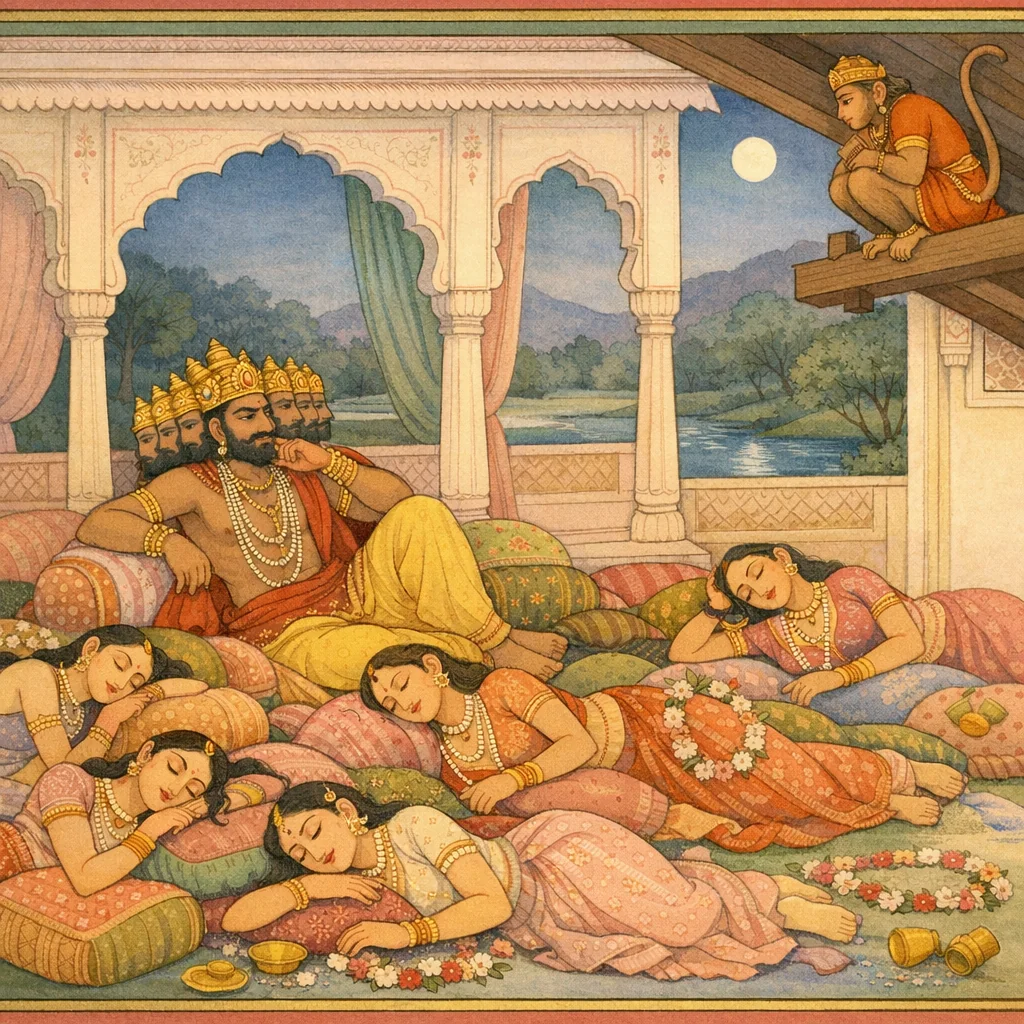
This sarga presents Hanumān’s reconnaissance, framed by reflection on dharma. Rejecting an earlier inference, he reasons anew about Sītā and concludes that a woman separated from Rāma would not indulge in sleep, adornment, feasting, or drink, nor seek any other man—even a divine ruler—for none equals Rāma. Moving through Rāvaṇa’s palace, he surveys the pānabhūmi (banquet and drinking hall): abundant meats prepared in many ways; lēhya–pēya–bhōjya foods and drinks; sweet syrups (rāgaṣāḍava); and vessels of gold, silver, and crystal. Garlands and fruits lie scattered, drinks are spilt, and couches and seats are arranged so that the hall seems to glow without fire. He also sees women asleep after revelry and dalliance, with Rāvaṇa shining among them. After thoroughly searching the inner apartments, he does not find Jānakī. A dharma-scruple arises—whether looking upon sleeping women in another’s inner chambers is a moral lapse—but Hanumān resolves it by intent-based ethics: his mind remained free of sensuality and firmly established in righteousness, and the search for a woman necessarily requires looking among women. Recommitting to his mission, he leaves the banquet hall to continue the search elsewhere.
Shlokas
Verse 1
अवधूय च तां बुद्धिं बभूवावस्थितस्तदा।जगाम चापरां चिन्तां सीतां प्रति महाकपिः।।5.11.1।।
Casting aside that line of judgment, the great monkey then steadied himself and turned his thoughts anew toward Sītā.
Verse 2
न रामेण वियुक्ता सा स्वप्तुमर्हति भामिनी।न भोक्तुं वाप्यलङ्कर्तुं न पानमुपसेवितुम्।।5.11.2।।नान्यं नरमुपस्थातुं सुराणामपि चेश्वरम्।न हि रामसमः कश्चिद्विद्यते त्रिदशेष्वपि।।5.11.3।।अन्येयमिति निश्चित्य पानभूमौ चचार सः।
“That fair lady, parted from Rāma, would not be fit to sleep—nor to eat, nor to adorn herself, nor to take to drink. Nor would she draw near to any other man, even were he the lord of the gods; for none equal to Rāma exists, even among the immortals.” Having concluded, “This is not she,” he moved about the banquet hall.
Verse 3
न रामेण वियुक्ता सा स्वप्तुमर्हति भामिनी।न भोक्तुं वाप्यलङ्कर्तुं न पानमुपसेवितुम्।।5.11.2।।नान्यं नरमुपस्थातुं सुराणामपि चेश्वरम्।न हि रामसमः कश्चिद्विद्यते त्रिदशेष्वपि।।5.11.3।।अन्येयमिति निश्चित्य पानभूमौ चचार सः।
“That fair lady, parted from Rāma, would not be fit to sleep—nor to eat, nor to adorn herself, nor to take to drink. Nor would she draw near to any other man, even were he the lord of the gods; for none equal to Rāma exists, even among the immortals.” Having concluded, “This is not she,” he moved about the banquet hall.
Verse 4
क्रीडितेनापराः क्लान्ता गीतेन च तथाऽपराः।।5.11.4।।नृत्तेन चापराः क्लान्ताः पानविप्रहतास्तथा।
Some women were weary from amorous play; others likewise from singing; others were tired from dancing, and others again were worn down by continual drinking.
Verse 5
मुरजेषु मृदङ्गेषु पीठिकासु च संस्थिताः।।5.11.5।।तथाऽऽस्तरणमुख्येषु संविष्टाश्चापराः स्त्रियः।
Some women were resting upon muraja-drums, mṛdaṅga-drums, and low stools; others lay upon excellent couches and fine bedding.
Verse 6
अङ्गनानां सहस्रेण भूषितेन विभूषणैः।।5.11.6।।रूपसल्लापशीलेन युक्तगीतार्थभाषिणा।देशकालाभियुक्तेन युक्तवाक्याभिधायिना।।5.11.7।।रताभिरतसंसुप्तं ददर्श हरियूथपः।
The leader of the monkeys saw thousands of women, adorned with ornaments—skilled in graceful conversation, versed in the meaning of songs, mindful of what suits time and place, and adept in fitting speech—now asleep after prolonged revelry.
Verse 7
अङ्गनानां सहस्रेण भूषितेन विभूषणैः।।5.11.6।।रूपसल्लापशीलेन युक्तगीतार्थभाषिणा।देशकालाभियुक्तेन युक्तवाक्याभिधायिना।।5.11.7।।रताभिरतसंसुप्तं ददर्श हरियूथपः।
The leader of the monkeys saw thousands of women, adorned with ornaments—skilled in graceful conversation, versed in the meaning of songs, mindful of what suits time and place, and adept in fitting speech—now asleep after prolonged revelry.
Verse 8
तासां मध्ये महाबाहुः शुशुभे राक्षसेश्वरः।।5.11.8।।गोष्ठे महति मुख्यानां गवां मध्ये यथा वृषः।
Among them the long-armed lord of the rakshasas shone, like a powerful bull standing amid the finest cows in a great cattle-shed.
Verse 9
स राक्षसेन्द्रः शुशुभे ताभिः परिवृतस्स्वयम्।।5.11.9।।करेणुभिर्यथाऽरण्ये परिकीर्णो महाद्विपः।
Surrounded by those women, the lord of the rākṣasas shone—like a great elephant in the forest, encircled by female elephants all around.
Verse 10
सर्वकामैरुपेतां च पानभूमिं महात्मनः।।5.11.10।।ददर्श हरिशार्दूलस्तस्य रक्षःपतेर्गृहे।
In the house of that lord of rākṣasas, the tiger among monkeys saw a drinking-hall furnished with every desired indulgence.
Verse 11
मृगाणां महिषाणां च वराहाणां च भागशः।।5.11.11।।तत्र न्यस्तानि मांसानि पानभूमौ ददर्श सः।
There in the drinking-hall he saw meats of deer, buffaloes, and boars, laid out in portions.
Verse 12
रौक्मेषु च विशालेषु भाजनेष्वर्धभक्षितान्।।5.11.12।।ददर्श हरिशार्दूलो मयूरान् कुक्कुटांस्तथा।
The tiger among monkeys saw, in large golden vessels, peacocks and chickens—some of them half-eaten.
Verse 13
वराहवार्ध्राणसकान् दधिसौवर्चलायुतान्।।5.11.13।।शल्यान् मृगमयूरांश्च हनुमानन्ववैक्षत।
Hanumān beheld meats of boar and wild fowl, prepared with curds and fine salt; also bones, and portions of deer and peacock.
Verse 14
क्रकरान्विविधान् सिद्धांश्चकोरानर्धभक्षितान्।।5.11.14।।महिषानेकशल्यांश्च छागांश्च कृतनिष्ठितान्।लेह्यानुच्चावचान्पेयान् भोज्यानि विविधानि च।।5.11.15।।
He saw many kinds of cooked fowl and cakora birds, some half-eaten; buffalo-meat, fish, and goats prepared and set out; and also various lickable delicacies, drinks, and diverse foods for eating.
Verse 15
क्रकरान्विविधान् सिद्धांश्चकोरानर्धभक्षितान्।।5.11.14।।महिषानेकशल्यांश्च छागांश्च कृतनिष्ठितान्।लेह्यानुच्चावचान्पेयान् भोज्यानि विविधानि च।।5.11.15।।
He saw many kinds of cooked fowl and cakora birds, some half-eaten; buffalo-meat, fish, and goats prepared and set out; and also various lickable delicacies, drinks, and diverse foods for eating.
Verse 16
तथाऽऽम्ललवणोत्तंसैर्विविधैरागषाडबैः।हारनूपुरकेयूरैरपविद्धैर्महाधनैः।।5.11.16।। पानभाजनविक्षिप्तैः फलैश्च विविधैरपि।कृतपुष्पोपहारा भूरधिकं पुष्यति श्रियम्।।5.11.17।।
Likewise, there were many kinds of rich syrups and delicacies, seasoned with sour and salty tastes; and costly ornaments—necklaces, anklets, and armlets—lay cast aside.
Verse 17
तथाऽऽम्ललवणोत्तंसैर्विविधैरागषाडबैः।हारनूपुरकेयूरैरपविद्धैर्महाधनैः।।5.11.16।। पानभाजनविक्षिप्तैः फलैश्च विविधैरपि।कृतपुष्पोपहारा भूरधिकं पुष्यति श्रियम्।।5.11.17।।
With drinking-vessels strewn about and many kinds of fruits scattered, and with offerings of flowers arranged, the very ground seemed to display an even greater splendor.
Verse 18
तत्र तत्र च विन्यस्तै: सुश्लिष्टैश्शयनासनैः।पानभूमिर्विना वह्निं प्रदीप्तेवोपलक्ष्यते।।5.11.18।।
Here and there, with well-set couches and seats placed in close order, the banquet hall appeared to glow as if aflame, though no fire was there.
Verse 19
बहुप्रकारैर्विविधैर्वरसंस्कारसंस्कृतैः।मांसैः कुशलसम्पृक्तैः पानभूमिगतैः पृथक्।।5.11.19।।
There in the banquet hall, meats of many kinds were set out separately—prepared in numerous ways, refined with choice seasonings, and cooked by skilled hands.
Verse 20
दिव्याः प्रसन्ना विविधाः सुराः कृतसुरा अपि।शर्कराऽसवमाध्वीकपुष्पासवफलासवाः।।5.11.20।।वासचूर्णैश्च विविधैर्मृष्टास्तैस्तैः पृथक् पृथक्।
There were many kinds of delightful, exquisite wines—some fermented—made from sugar-based liquors, honey, flower-ferments, and fruit-ferments; and each was made more pleasing with different fragrant spice-powders, blended separately for each kind.
Verse 21
सन्तता शुशुभे भूमिर्माल्यैश्च बहुसंस्थितैः।।5.11.21।।हिरण्मयैश्च विविधैर्भाजनैः स्फाटिकैरपि।जाम्बूनदमयैश्चान्यैः करकैरभिसंवृता।।5.11.22।।
The floor, spread all around, shone beautifully with garlands arranged in many ways; and it was covered with various vessels—some golden, some of crystal—and with other jars made of refined gold.
Verse 22
सन्तता शुशुभे भूमिर्माल्यैश्च बहुसंस्थितैः।।5.11.21।।हिरण्मयैश्च विविधैर्भाजनैः स्फाटिकैरपि।जाम्बूनदमयैश्चान्यैः करकैरभिसंवृता।।5.11.22।।
The floor, spread all around, shone beautifully with garlands arranged in many ways; and it was covered with various vessels—some golden, some of crystal—and with other jars made of refined gold.
Verse 23
राजतेषु च कुम्भेषु जाम्बूनदमयेषु च।पानश्रेष्ठं तदा भूरि कपिस्तत्र ददर्श ह।।5.11.23।।
Then the monkey Hanumān saw there in great abundance the finest drink, stored in jars of silver and in vessels of pure gold.
Verse 24
सोऽपश्यच्छातकुम्भानि सीधोर्मणिमयानि च। राजतानि च पूर्णानि भाजनानि महाकपिः।।5.11.24।।
The great monkey saw vessels of wine—some of gold, some inlaid with gems, and others of silver—standing there filled to the brim.
Verse 25
क्वचिदल्पावशेषाणि क्वचित्पीतानि सर्वशः।क्वचिन्नैव प्रपीतानि पानानि स ददर्श ह।।5.11.25।।
In some places he saw drinks with only a little left; in others they had been completely drained; elsewhere he saw beverages not touched at all.
Verse 26
क्वचिद् भक्ष्यांश्च विविधान् क्वचित्पानानि भागशः।क्वचिदन्नावशेषाणि पश्यन्वै विचचार ह।।5.11.26।।
He moved about, looking here at various foods, there at drinks set out in portions, and elsewhere at the remnants of meals.
Verse 27
क्वचित्प्रभिन्नैः करकैः क्वचिदालोलितैर्घटैः।क्वचित्संपृक्तमाल्यानि जलानि च फलानि च।।5.11.27।।
In one place were broken pitchers; in another, pots that had rolled about; elsewhere, garlands lay mixed and strewn together with water and fruits.
Verse 28
शयनान्यत्र नारीणां शुभ्राणि बहुधा पुनः।परस्परं समाश्लिष्य काश्चित्सुप्ता वराङ्गनाः।।5.11.28।।
There he saw many spotless beds of women; and some lovely women lay asleep, clasping one another.
Verse 29
काश्चिच्च वस्त्रमन्यस्यास्स्वपन्त्याः परिधाय च।आहृत्य चाबलाः सुप्ता निद्राबलपराजिताः।।5.11.29।।
Some women, overcome by the force of sleep, pulled at another sleeping woman’s garment and lay asleep, covering themselves with it.
Verse 30
तासामुच्छवासवातेन वस्त्रं माल्यं च गात्रजम्।नात्यर्थं स्पन्दते चित्रं प्राप्य मन्दमिवानिलम्।।5.11.30।।
Stirred by the breeze of their breathing, the garments and garlands upon their bodies trembled gently—beautifully—as though touched by a mild wind.
Verse 31
चन्दनस्य च शीतस्य शीधोर्मधुरसस्य च।विविधस्य च माल्यस्य धूपस्य विविधस्य च।।5.11.31।।बहुधा मारुतस्तत्र गन्धं विविधमुद्वहन्।
There the wind bore many kinds of fragrance—cool sandalwood, the sweet scent of wines, garlands of many sorts, and incense of diverse kinds—spreading their aroma throughout that place.
Verse 32
स्नानानां चन्दनानां च धूपानां चैव मूर्छितः।।5.11.32।।प्रववौ सुरभिर्गन्धो विमाने पुष्पके तदा।
Then, within the Puṣpaka aerial car, a richly blended, fragrant sweetness wafted forth—of bathing unguents, sandalwood, and incense.
Verse 33
श्यामावदातास्तत्रान्याः काश्चित्कृष्णा वराङ्गनाः।।5.11.33।।काश्चित् काञ्चनवर्णाङ्ग्यः प्रमदा राक्षसालये।
There, within the rākṣasa dwelling, were other lovely women—some dark and lustrous of complexion, and some maidens whose bodies shone with a golden hue.
Verse 34
तासां निद्रावशत्वाच्च मदनेन विमूर्छितम्।।5.11.34।।पद्मिनीनां प्रसुप्तानां रूपमासीद्यथैव हि।
Overpowered by sleep and faint from the sport of desire, their beauty as they lay asleep appeared like lotus-creepers whose blossoms have closed.
Verse 35
एवं सर्वमशेषेण रावणान्तः पुरं कपिः।।5.11.35।।ददर्श सुमहातेजाः न ददर्श च जानकीम्।
Thus the mighty, radiant monkey searched the whole inner palace of Rāvaṇa without remainder; yet he did not behold Jānakī.
Verse 36
निरीक्षमाणश्च तदा ताः स्त्रियः स महाकपिः।।5.11.36।।जगाम महतीं चिन्तां धर्मसाध्वसशङ्कितः।
As the great monkey beheld those women, he fell into deep anxiety, fearing that he might have transgressed dharma.
Verse 37
परदारावरोधस्य प्रसुप्तस्य निरीक्षणम्।।5.11.37।।इदं खलु ममात्यर्थं धर्मलोपं करिष्यति।
“To look upon the sleeping women in another’s inner chambers—this indeed would bring about a grave lapse of dharma on my part.”
Verse 38
न हि मे परदाराणां दृष्टिर्विषयवर्तिनी।।5.11.38।।अयं चात्र मया दृष्टः परदारापरिग्रहः।
“My gaze toward another’s wives is not driven by desire; and here what I have done is only this—seeing them, without any intention of appropriation.”
Verse 39
तस्य प्रादुरभूच्चिन्ता पुनरन्या मनस्विनः।।5.11.39।।निश्चितैकान्तचित्तस्य कार्यनिश्चयदर्शिनी।
Then, for that thoughtful one—whose mind was fixed in single-pointed resolve—another reflection arose, one that clarified the right decision for his task.
Verse 40
कामं दृष्टा मया सर्वा विश्वस्ता रावणस्त्रियः।।5.11.40।।न हि मे मनसः किञ्चिद्वैकृत्यमुपजायते।
Truly, I have seen all Ravana’s faithful women; yet in my mind not the slightest perversion or desire has arisen.
Verse 41
मनो हि हेतुः सर्वेषामिन्द्रियाणां प्रवर्तने।।5.11.41।।शुभाशुभास्ववस्थासु तच्च मे सुव्यवस्थितम्।
For the mind is the cause that sets all the senses into motion, in states both good and bad; and in this my mind is firmly established in right conduct.
Verse 42
नान्यत्र हि मया शक्या वैदेही परिमार्गितुम्।।5.11.42।।स्त्रियो हि स्त्रीषु दृश्यन्ते सदा सम्परिमार्गणे।
Truly, I cannot search for Vaidehī anywhere else; for in a thorough search, women are to be sought and recognized among women.
Verse 43
यस्य सत्त्वस्य या योनिस्तस्यां तत्परिमार्ग्यते।न शक्या प्रमदा नष्टा मृगीषु परिमार्गितुम्।।5.11.43।।
Whatever a being’s proper kind and origin may be, it is there that it must be searched for; a lost woman cannot be sought among female deer.
Verse 44
तदिदं मार्गितं तावच्छुद्धेन मनसा मया।।5.11.44।।रावणान्तःपुरं सर्वं दृश्यते न तु जानकी।
Thus far, with a pure mind, I have searched this entire inner palace of Rāvaṇa—yet Jānakī is not to be seen.
Verse 45
देवगन्धर्वकन्याश्च नागकन्याश्च वीर्यवान्।।5.11.45।।अवेक्षमाणो हनुमान्नैवापश्यत जानकीम्।
Valiant Hanumān, looking closely even among maidens like those of the gods and gandharvas, and among nāga-maidens, still did not see Jānakī.
Verse 46
तामपश्यन्कपिस्तत्र पश्यञ्श्चान्या परस्त्रियः।।5.11.46।।अपक्रम्य तदा वीरः प्रध्यातुमुपचक्रमे।
Not seeing her there, though seeing other women who belonged to another, the heroic monkey withdrew aside and began to reflect.
Verse 47
स भूयस्तु परं श्रीमान् मारुतिर्यत्नमास्थितः।।5.11.47।।आपानभूमिमुत्सृज्य तद्विचेतुं प्रचक्रमे।
Then the illustrious son of Marut, renewing his effort, left the drinking-hall and set forth to continue the search.
Frequently Asked Questions
Hanumān worries that observing sleeping women in Rāvaṇa’s inner chambers (paradārāvarodha) may constitute a dharma-lopa (moral transgression). He evaluates whether the act of seeing itself is culpable, and whether reconnaissance can be conducted without violating maryādā.
The sarga teaches that the mind (manas) governs the moral quality of sensory engagement: intention, not mere perception, determines ethical status. Hanumān asserts his non-sensual purpose and reaffirms disciplined, single-pointed resolve as essential to righteous action under difficult conditions.
The key landmark is Rāvaṇa’s palace complex—especially the pānabhūmi/āpānabhūmi (banquet hall) with luxury foods, wines, ornate vessels, couches, perfumes, and incense—along with the Puṣpaka vimāna context where fragrances waft, indicating elite court culture within Laṅkā’s royal interior.