Adhyaya 20
Bhīma–Draupadī Saṃvāda on Restraint, Protection, and the Kīcaka Threat (Virāṭa-parva, Adhyāya 20)
Upa-parva: Kīcaka-vadha (Kīcaka Episode) — within Virāṭa-parva
This chapter presents an emotionally charged yet strategically framed dialogue between Bhīmasena and Draupadī in Virāṭa’s setting. Bhīma condemns his own restrained strength and recalls being checked by Yudhiṣṭhira from violent action in the royal assembly, emphasizing the tension between kṣatriya impulse and vow-bound concealment. To console Draupadī, he cites exemplars of devoted spouses (e.g., Sukanyā with Cyavana, Nāḍāyanī/Indrasenā with an aged husband, Sītā with Rāma, and Lopāmudrā with Agastya), using them as ethical precedents for endurance until the thirteenth year completes. Draupadī responds that her tears are not an accusation against Yudhiṣṭhira but a release under accumulating distress; she then reports Kīcaka’s repeated coercive pursuit, his disregard of her warnings, and the public humiliation she suffered even in Dharmarāja’s sight. She invokes a protective rationale—linking spouse-protection to broader social security—and urges Bhīma to neutralize Kīcaka as the proximate cause of escalating harm, stating that continued exposure would make survival intolerable. Vaiśaṃpāyana closes with Draupadī weeping against Bhīma, and Bhīma, after consoling her, mentally turning toward decisive action against Kīcaka.
Chapter Arc: अज्ञातवास के आवरण में द्रौपदी (सैरन्ध्री) अपने अपमान और दास्य-जीवन की तीव्र पीड़ा लेकर भीमसेन के पास आती है—राजपुत्री होकर भी ‘हीन कर्म’ करने की विवशता का करुण उद्घोष करती है। → द्रौपदी अपने बदले हुए रूप, फीकी पड़ती कान्ति, और विराट-नगर में सहनी पड़ती लज्जा का वर्णन करती है; वह स्मरण कराती है कि कभी जिसकी आज्ञा सागर-पर्यन्त पृथ्वी मानती थी, वही आज सुदेष्णा के अधीन भयभीत है। वह भाग्य-चक्र, जय-पराजय की अनित्यता, और संपत्ति-विपत्ति के चक्रवत् परिवर्तन का तर्क देती हुई भीम के भीतर दहकते क्रोध को उकसाती है—पर साथ ही ‘दैव’ के अतिक्रमण-असमर्थ्य का संकेत देकर धैर्य का आग्रह भी करती है। → द्रौपदी अपने हाथ दिखाकर (जो पहले ऐसे न थे) अपने असह्य दुःख का प्रत्यक्ष प्रमाण देती है; भीम उसके हाथ पकड़कर आँसू बहाता है—करुणा और क्रोध का विस्फोट एक साथ होता है, और प्रतिशोध की प्रतिज्ञा-सी तीव्रता उभरती है, पर अज्ञातवास-धर्म की सीमा उसे बाँधती है। → भीम द्रौपदी के दुःख को स्वीकार कर उसे आश्वासन देता है कि पाण्डवों का ‘उदय’ पुनः होगा; वह धैर्य और समय-पालन की आवश्यकता समझता/स्वीकारता है—अज्ञातवास की मर्यादा के भीतर रहते हुए प्रतिकार का मार्ग खोजने का संकल्प बनता है। → द्रौपदी का अपमान अभी समाप्त नहीं; भीम के भीतर प्रतिशोध की ज्वाला सुलगती रहती है—अगला कदम क्या होगा, और किस पर यह क्रोध टूटेगा, यह अनकहा रहकर अध्याय को आगे की घटना-श्रृंखला की ओर धकेल देता है।
Shlokas
Verse 1
(दाक्षिणात्य अधिक पाठके ५ श्लोक मिलाकर कुल ५२ श्लोक हैं।) हि >> न [हुक हि 7 2 विशो< ध्याय: द्रौपदीद्वारा भीमसेनसे अपना दुःख निवेदन करना द्रौपहुुवाच अहं सैरन्ध्रिवेषेण चरन्ती राजवेश्मनि । शौचदास्मि सुदेष्णाया अक्षधूर्तस्य कारणात्,द्रौपदी कहती है--परंतप! तुम्हारे जूएमें चतुर चालाक भाईके कारण आज मैं राजमहलनमें सैरन्ध्रीका वेश धारण करके टहल बजाती और रानी सुदेष्णाको स्नानकी वस्तुएँ जुटाकर देती हूँ इति श्रीमहाभारते विराटपर्वणि कीचकवधपर्वणि द्रौपदीभीमसंवादे विंशो5ध्याय: ।। २० || इस प्रकार श्रीमह्याभारत विराटपर्वके अन्तर्गत कीचकवधपर्वमें द्रौपदी-भीम-संवादविषयक बीसवाँ अध्याय पूरा हुआ ॥/ २० ॥। हम (0) अऑणआ आह एकविशो< ध्याय: भीमसेन और द्रौपदीका संवाद भीमसेन उवाच धिगस्तु मे बाहुबलं गाण्डीवं फाल्गुनस्य च । यत् ते रक्तौ पुरा भूत्वा पाणी कृतकिणाविमौ
Bhīmasena said: “Shame upon my strength of arm—and shame upon Arjuna’s Gāṇḍīva as well—since these two hands of mine, once reddened in battle and hardened with calluses from deeds of valor, have still not been able to prevent your humiliation.”
Verse 2
विक्रियां पश्य मे तीव्रां राजपुत्रया: परंतप । आत्मकालमुदीक्षन्ती सर्व दुःखं किलान्तवत्,राजपुत्री होकर भी मुझे कैसा भारी हीन कार्य करना पड़ता है, यह अपनी आँखों देख लो; परंतु सब लोग अपने अभ्युदयका अवसर देखते रहते हैं; क्योंकि यदि दुःख आता है तो उसका अन्त भी होता ही है
Vaiśampāyana said: “O scorcher of foes, behold the harsh reversal that has come upon me, though I am a princess. Yet one must keep watch for the right moment for one’s own welfare; for when sorrow arrives, it too surely has an end.”
Verse 3
अनित्या किल मर्त्यनामर्थसिद्धिर्जयाजयौ । इति कृत्वा प्रतीक्षामि भर्तृणामुदयं पुन:,मनुष्योंकी अर्थ-सिद्धि या जय-पराजय अनित्य हैं। वे सदा स्थिर नहीं रहते। यही सोचकर मैं अपने पतियोंके पुनः अभ्युदयकी प्रतीक्षा करती हूँ
“Indeed, among mortals, the attainment of one’s aims—and likewise victory and defeat—are impermanent; they do not remain fixed. Holding this understanding, I wait for the renewed rise and restoration of my husbands.”
Verse 4
चक्रवत्परिवर्तन्ते हरार्थाक्ष व्यसनानि च । इति कृत्वा प्रतीक्षामि भर्तृणामुदयं पुन:,धन और व्यसन (सम्पत्ति और विपत्ति) सदा गाड़ीके पहियेकी तरह घूमा करते हैं; ऐसा विचारकर मैं पतियोंके पुनः अभ्युदयकालकी प्रतीक्षा करती हूँ
Vaiśampāyana said: “Prosperity and adversity keep turning like the wheel of a cart. Holding this understanding, I wait for the husbands’ rise again.”
Verse 5
य एव हेतुर्भवति पुरुषस्य जयावह: । पराजये च हेतुश्न स इति प्रतिपालये । कि मां न प्रतिजानीषे भीमसेन मृतामिव,जो काल मनुष्यके लिये विजयदायक होता है, वही उसकी पराजयका भी कारण बन जाता है। ऐसा विचारकर मैं अपने पक्षकी विजयके अवसरकी राह देखती हूँ। भीमसेन! क्या तुम नहीं जानते कि इन दुःखोंके आघातसे मैं मरी हुई-सी हो गयी हूँ
Vaiśampāyana said: “That very factor which becomes the cause of a man’s victory can also become the cause of his defeat. Reflecting thus, I wait and watch for the moment when victory may arise for our side. Bhīmasena, do you not recognize that, struck again and again by these sorrows, I have become as though dead?”
Verse 6
दत्त्वा याचन्ति पुरुषा हत्वा वध्यन्ति चापरे | पातयित्वा च पात्यन्ते परैरिति च मे श्रुतम्,मैंने सुना है, जो मनुष्य दान करते हैं, वे ही कभी याचनाके लिये विवश हो जाते हैं। दूसरे बहुत-से मनुष्य ऐसे हैं, जो दूसरोंको मारकर स्वयं भी दूसरोंके द्वारा मारे जाते हैं तथा जो दूसरोंको नीचे गिराते हैं, वे स्वयं भी दूसरे प्रतिपक्षियोंद्वारा नीचे गिराये जाते हैं
Vaiśampāyana said: “I have heard that the world moves in reversals: those who give in charity may later be driven to beg; some who kill others are themselves slain in turn; and those who cast others down are likewise brought low by their opponents. Thus deeds return upon the doer.”
Verse 7
न देवस्यातिभारो<स्ति न चैवास्यातिवर्तनम् | इति चाप्यागमं भूयो दैवस्य प्रतिपालये,अतः दैवके लिये कुछ भी दुष्कर नहीं है। दैवके विधानको लाँघ जाना भी असम्भव है। इसलिये मैं दैवकी प्रधानता बतानेवाले शास्त्र-वचनोंका पालन करती--उन्हें आदर देती हूँ
Vaiśampāyana said: “For Destiny—the divine ordinance—there is no burden too great, nor can it be transgressed. Therefore, recalling once more the teaching received through tradition, I abide by and honor the supremacy of what fate has ordained.”
Verse 8
स्थितं पूर्व जल॑ यत्र पुनस्तत्रैव गच्छति । इति पर्यायमिच्छन्ती प्रतीक्षे उदयं पुन:,पानी जहाँ पहले स्थिर होता है, वह फिर भी वहीं ठहरता है। इस क्रमको चाहती हुई मैं पुनः अभ्युदयकालकी प्रतीक्षा करती हूँ
“Wherever the water first comes to rest, it returns and settles there again. Desiring this recurring course, I wait once more for the time of rising—renewed prosperity.”
Verse 9
दैवेन किल यस्यार्थ: सुनीतो5पि विपद्यते । दैवस्य चागमे यत्नस्तेन कार्यो विजानता,उत्तम नीतिद्वारा सुरक्षित पदार्थ भी यदि दैव प्रतिकूल हो तो उसके द्वारा नष्ट हो जाता है; अत: विज्ञ पुरुषको दैवको अनुकूल बनानेका ही प्रयत्न करना चाहिये
Vaiśampāyana said: “Indeed, by the force of destiny, a person’s aim—though guided by excellent policy—can still come to ruin. Therefore, when destiny’s coming is at hand, a discerning person should strive to make that destiny favorable.”
Verse 10
यत् तु मे वचनस्यास्य कथितस्य प्रयोजनम् । पृच्छ मां दु:खितां तत्त्वं पृष्टा चात्र ब्रवीमि ते,मैंने इस समय जो ये बातें कही हैं, इनका कया प्रयोजन है? यह मुझ दुखियासे पूछो। तुम्हारे पूछनेपर यहाँ मैं यथार्थ बात बताती हूँ, सुनो
“But what is the purpose of these words I have spoken? Ask me—the sorrowing one—what the truth is. When you ask, I shall tell you here what is real; listen.”
Verse 11
महिषी पाण्दुपुत्राणां दुहिता द्रुपदस्य च । इमामवस्थां सम्प्राप्ता मदन््या का जिजीविषेत्,मैं पाण्डवोंकी पटरानी और ट्रुपदकी पुत्री होकर भी ऐसी दुर्दशामें पड़ी हूँ। मेरे सिवा दूसरी कौन स्त्री ऐसी अवस्थामें जीना चाहेगी?
Vaiśampāyana said: “I am the consecrated queen of the sons of Pāṇḍu, and also the daughter of Drupada; yet I have fallen into this wretched condition. Apart from me, what other woman would even wish to go on living in such a state?”
Verse 12
कुरून् परिभवेत् सर्वान् पज्चालानपि भारत । पाण्डवेयांश्व॒ सम्प्राप्तो मम क्लेशो हारिंदम,भारत! शत्रुदमन! मुझपर पड़ा हुआ यह क्लेश समस्त कौरवों, पाञज्चालों और पाण्डवोंके लिये अपमानकी बात है
Vaiśampāyana said: “O Bhārata, this affliction that has come upon me is a matter of humiliation for all the Kurus, for the Pāñcālas as well, and for the sons of Pāṇḍu. When a single person’s distress becomes a stain upon entire lineages, it signals a failure of protection and responsibility—an ethical lapse that dishonors kin and allies alike.”
Verse 13
भ्रातृभि: श्वशुरैः पुत्रैबहुभि: परिवारिता । एवं समुदिता नारी का त्वन्या दु:खिता भवेत्,जिसके बहुत-से भाई, श्वशुर और पुत्र हों, जो इन सबसे घिरी हुई हो तथा भलीभाँति अभ्युदयशील हो, ऐसी परिस्थितिमें मेरे सिवा दूसरी कौन स्त्री दुःख भोगनेके लिये विवश हुई होगी?
Vaiśampāyana said: “Surrounded by many brothers, fathers-in-law, and sons—thus well-supported and prospering—what other woman could there be who would still be forced to suffer sorrow, apart from me?”
Verse 14
नूनं हि बालया धातुर्मया वै विप्रियं कृतम् । यस्य प्रसादाद् दुर्नीतं प्राप्तास्मि भरतर्षभ,भरतश्रेष्ठ! जान पड़ता है, बचपनमें मैंने विधाताका निश्चय ही महान् अपराध किया है, जिसके फलस्वरूप मैं आज इस दुर्दशामें पड़ गयी हूँ
“Surely, in my girlhood I must have committed some grave offence against the Disposer (Fate). By His dispensation I have fallen into this evil plight, O bull among the Bharatas.”
Verse 15
वर्णावकाशमपि मे पश्य पाण्डव यादृशम् । तादृशो मे न तत्रासीद् दु:खे परमके तदा
Vaiśaṃpāyana said: “O Pāṇḍava, look even at the scope I had for speaking and acting—such as it is now. In that time of extreme suffering, I had no such freedom or opportunity.”
Verse 16
पाण्डुनन्दन! देखो, मेरे शरीरकी कान्ति कैसी फीकी पड़ गयी है! यहाँ नगरमें मेरी जो अवस्था है, वह उन दिनों अत्यन्त दुःखपूर्ण वनवासके समय भी नहीं थी,त्वमेव भीम जानीषे यन्मे पार्थ सुखं पुरा । साहं दासीत्वमापन्ना न शान्तिमवशा लभे भीमसेन! तुम्हीं जानते हो, पहले मुझे कितना सुख था। यहाँ आकर जबसे मैं दासीभावको प्राप्त हुई हूँ, तभीसे परतन्त्र होनेके कारण मुझे तनिक भी शान्ति नहीं मिलती है। इसे मैं दैवकी ही लीला मानती हूँ। जहाँ प्रचण्ड धनुष धारण करनेवाले महाबाहु अर्जुन भी राखसे ढकी हुई अग्निकी भाँति रनिवासमें छिपकर रहते हैं
“Bhīma, you alone know how much happiness I once had. Now, having come here and fallen into the condition of a maidservant, I find not the slightest peace—forced into dependence and helplessness. I take this as nothing but the play of fate: even mighty-armed Arjuna, wielder of the fierce bow, must remain hidden in the women’s quarters like fire covered over with ash.”
Verse 17
नादैविकमहं मन्ये यत्र पार्थो धनंजय: । भीमधन्वा महाबाहुरास्ते छन्न इवानल:,भीमसेन! तुम्हीं जानते हो, पहले मुझे कितना सुख था। यहाँ आकर जबसे मैं दासीभावको प्राप्त हुई हूँ, तभीसे परतन्त्र होनेके कारण मुझे तनिक भी शान्ति नहीं मिलती है। इसे मैं दैवकी ही लीला मानती हूँ। जहाँ प्रचण्ड धनुष धारण करनेवाले महाबाहु अर्जुन भी राखसे ढकी हुई अग्निकी भाँति रनिवासमें छिपकर रहते हैं
Vaiśampāyana said: “I do not regard this as merely the work of fate, when Pārtha Dhanaṃjaya—mighty-armed, bearing a formidable bow—must remain hidden in the women’s quarters like fire covered by ashes.”
Verse 18
अशक्या वेदितु पार्थ प्राणिनां वै गतिनरि: । विनिपातमिमं मन्ये युष्माकं हविचिन्तितम्,कुन्तीनन्दन! दैवाधीन प्राणियोंकी कब क्या गति होगी, इसे जानना मनुष्योंके लिये सर्वथा असम्भव है। मैं तो समझती हूँ, तुमलोगोंकी जो यह अवनति हुई है, इसकी किसीके मनमें कल्पनातक नहीं थी
Vaiśampāyana said: “O Pārtha, for human beings it is truly impossible to know the course and destiny of living creatures. I believe this downfall that has come upon you was utterly beyond anyone’s imagining, O son of Kuntī—since the movement of life is governed by forces beyond human control.”
Verse 19
यस्या मम मुखप्रेक्षा यूयमिन्द्रसमा: सदा । सा प्रेक्षे मुखमन्यासामवराणां वरा सती,एक दिन वह था कि इन्द्रके समान पराक्रमी तुम सब भाई सदा मेरा मुँह निहारा करते थे। आज वही मैं श्रेष्ठ होकर भी अपनेसे निकृष्ट दूसरी स्त्रियोंका मुँह जोहती रहती हूँ
Vaiśampāyana said: “There was a time when you brothers—ever valiant like Indra—would constantly look to my face for guidance and approval. Now, though I am worthy and of high standing, I find myself watching the faces of other women who are beneath me.”
Verse 20
पश्य पाण्डव मे5वस्थां यथा नाहामि वै तथा । युष्मासु प्रियमाणेषु पश्य कालस्य पर्ययम्,पाण्डुनन्दन! देखो, तुम सबके जीते-जी मैं ऐसी बुरी हालतमें पड़ी हूँ, जो मेरे लिये कदापि उचित नहीं है। समयके इस उलट-फेरको तो देखो; एक दिन समुद्रके पासतककी सारी पृथ्वी जिसके अधीन थी, वही मैं आज सुदेष्णाके वशमें होकर उससे डरती रहती हूँ
“Look, O Pāṇḍava, at the condition into which I have fallen—one that is in no way fitting for me. Though you all are alive and dear to me, behold the reversal wrought by Time: I who once held the whole earth, even to the ocean’s edge, under my sway, now live under Sudeṣṇā’s control and remain in fear of her.”
Verse 21
यस्या: सागरपर्यन्ता पृथिवी वशवर्तिनी | आसीतू साद्य सुदेष्णाया भीताहं वशवर्तिनी,पाण्डुनन्दन! देखो, तुम सबके जीते-जी मैं ऐसी बुरी हालतमें पड़ी हूँ, जो मेरे लिये कदापि उचित नहीं है। समयके इस उलट-फेरको तो देखो; एक दिन समुद्रके पासतककी सारी पृथ्वी जिसके अधीन थी, वही मैं आज सुदेष्णाके वशमें होकर उससे डरती रहती हूँ
Vaiśampāyana said: “O son of Pāṇḍu, behold this reversal of time. While you all are still alive, I have fallen into a wretched condition that is never fitting for me. Once the whole earth up to the encircling ocean lay under my sway; yet today I live under Sudeṣṇā’s control and remain afraid of her.”
Verse 22
यस्या: पुर:सरा आसनू् पृष्ठतश्नानुगामिन: । साहमद्य सुदेष्णाया: पुर: पश्चाच्च गामिनी,जिसके आगे और पीछे बहुत-से सेवक रहा करते थे, वही मैं अब रानी सुदेष्णाके आगे और पीछे चलती हूँ
She who once had many attendants walking before her as heralds and following behind as her retinue—today that very woman am I, now walking before and behind Queen Sudeṣṇā.
Verse 23
इदं तु दुः:खं कौन्तेय ममासहां निबोध तत् । यान जातु स्वयं पिंषे गात्रोद्वर्तनमात्मन: । अन्यत्र कुन्त्या भद्रें ते सा पिनष्म्यद्य चन्दनम्
Vaiśampāyana said: “But understand this unbearable sorrow of mine, O son of Kuntī. Never have I myself ground the paste used for rubbing my own limbs—except for Kuntī. Blessings upon you: today she will grind sandalwood paste.”
Verse 24
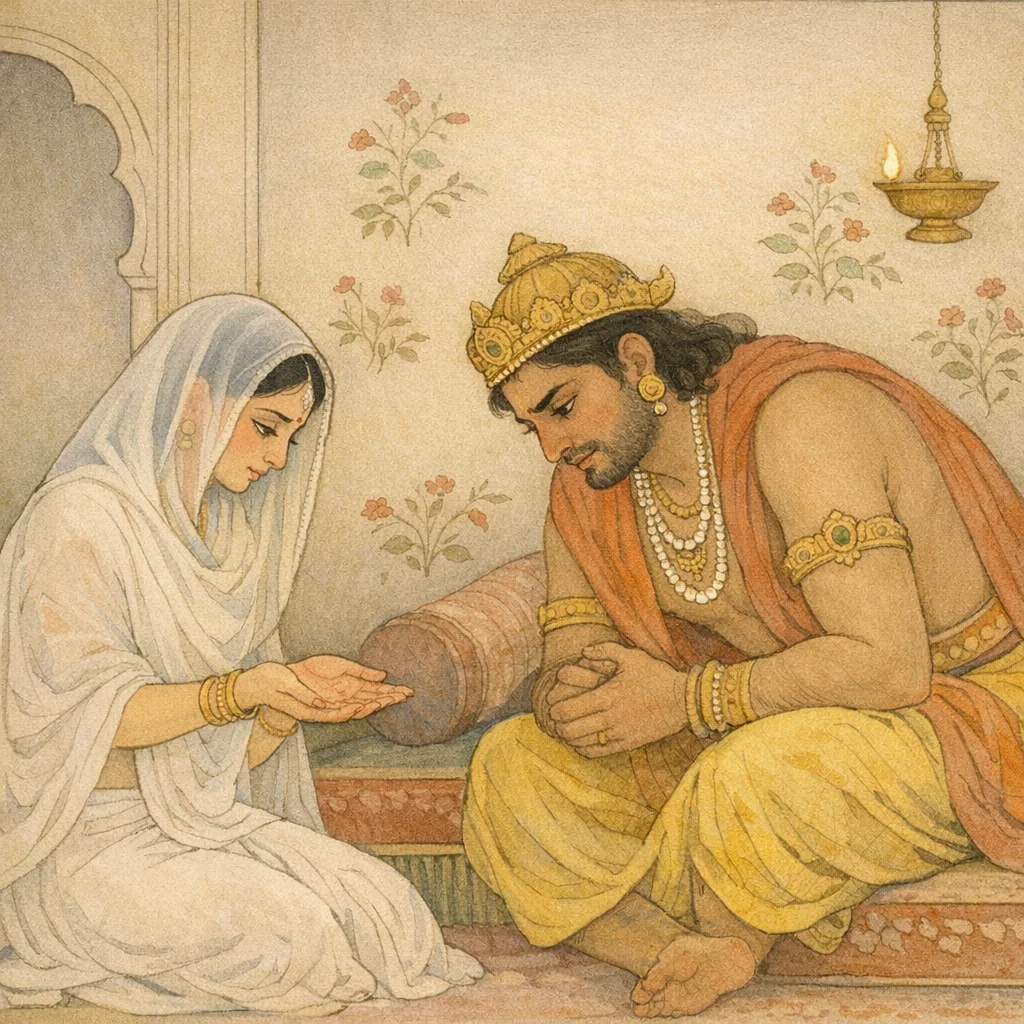
इत्यस्य दर्शयामास किणवन्तौ करावुभौ,ऐसा कहकर द्रौपदीने भीमसेनको अपने दोनों हाथ दिखाये, जिनमें चन्दन रगड़नेसे काले दाग पड़ गये थे
Vaiśampāyana said: Having spoken thus, she showed him her two hands, now rough and stained—marked by the dark smears that came from grinding sandalwood.
Verse 25
बिभेमि कुन्त्या या नाहं युष्माकं वा कदाचन । साद्याग्रतो विराटस्य भीता तिष्ठामि किड्करी,(फिर वह सिसकती हुई बोली--) “नाथ! जो पहले कभी आर्या कुन्तीसे अथवा तुमलोगोंसे भी नहीं डरती थी, वही द्रौपदी आज दासी होकर राजा विराटके आगे भयभीत- सी खड़ी रहती है”
Vaiśampāyana said: “O lord, I—who never once feared noble Kuntī, nor any of you—now stand trembling before King Virāṭa, reduced to the state of a servant.”
Verse 26
कि नु वक्ष्यति सम्राण्मां वर्णक: सुकृतो न वा । नान्यपिष्ट हि मन्स्यस्य चन्दनं किल रोचते,उस समय मैं सोचती हूँ, “न जाने सम्राट् मुझे क्या कहेंगे? यह उबटन अच्छा बना है या नहीं।” मेरे सिवा दूसरेका पीसा हुआ चन्दन मत्स्यराजको अच्छा ही नहीं लगता
Vaiśampāyana said: “I keep wondering, ‘What will the king say to me? Has this cosmetic paste been prepared well, or not?’ For, it is said that to the Matsya king, sandalwood paste ground by anyone other than me does not truly please him.”
Verse 27
वैशम्पायन उवाच सा कीर्तयन्ती दुःखानि भीमसेनस्य भामिनी । रुरोद शनकै: कृष्णा भीमसेनमुदीक्षती,वैशम्पायनजी कहते हैं--राजन्! भामिनी द्रौपदी इस प्रकार भीमसेनसे अपने दुःख बताकर उनके मुखकी ओर देखती हुई धीरे-धीरे रोने लगी
Vaiśampāyana said: As she recounted her sufferings to Bhīmasena, the passionate lady Kṛṣṇā (Draupadī), keeping her gaze upon him, began to weep—softly, little by little.
Verse 28
सा बाष्पकलया वाचा नि: श्वसन्ती पुनः पुन: । हृदयं भीमसेनस्य घट्टयन्तीदमब्रवीत्,वह बार-बार लंबी साँसें लेती हुई आँसुओंसे गद्गद वाणीमें भीमसेनके हृदयको कम्पित करती हुई इस प्रकार बोली--
Vaiśampāyana said: Her voice choked with tears, heaving deep sighs again and again, she spoke these words—so as to shake Bhīmasena’s very heart.
Verse 29
नाल्पं कृतं मया भीम देवानां किल्बिषं पुरा । अभाग्या यत्र जीवामि कर्तव्ये सति पाण्डव
Vaiśampāyana said: “O Bhīma, in former times I committed no small offence against the gods. It is through misfortune that I live on in a place and condition where duty still remains to be done, O Pāṇḍava.”
Verse 30
'पाण्डुनन्दन भीमसेन! मैंने पूर्वकालमें देवताओंका थोड़ा अपराध नहीं किया है, तभी तो मुझ अभागिनीको जहाँ मर जाना चाहिये, उस दशामें भी मैं जी रही हूँ ।। वैशम्पायन उवाच ततस्तस्या: करौ सूक्ष्मौी किणबद्धौ वृकोदर: । मुखमानीय वै पत्न्या रुरोद परवीरहा,वैशम्पायनजी कहते हैं--जनमेजय! तदनन्तर शत्रुहन्ता भीमसेन अपनी पत्नी द्रौोपदीके दुबले-पतले हाथोंको, जिनमें घट्टे पड़ गये थे, अपने मुखपर लगाकर रो पड़े
Vaiśampāyana said: “Bhīmasena, son of Pāṇḍu! In former times I must have committed no small offense against the gods; that is why I, unfortunate as I am, still live even in a condition in which I ought to have died.” Then Vṛkodara (Bhīma), slayer of enemy-heroes, took his wife’s thin hands, hardened with calluses, pressed them to his face, and wept.
Verse 31
तौ गृहीत्वा च कौन्तेयो बाष्पमुत्सृज्य वीर्यवान् | ततः परमदु:खार्त इदं वचनमत्रवीत्,फिर पराक्रमी भीमने उन हाथोंको पकड़कर आँसू बहाते हुए अत्यन्त दुःखसे पीड़ित हो इस प्रकार कहा
Vaiśampāyana said: Then the valiant son of Kuntī, taking hold of those hands, shed tears; and, overwhelmed by the deepest sorrow, he spoke these words.
Verse 236
पश्य कौन्तेय पाणी मे नैवाभूतां हि यौ पुरा । कुन्तीकुमार! इसके सिवा मेरे एक और असहा दुःखको तो देखो। पहले मैं माता कुन्तीको छोड़कर (और किसीके लिये तो क्या) स्वयं अपने लिये भी कभी उबटन नहीं पीसती थी; किंतु वही मैं आज दूसरोंके लिये चन्दन घिसती हूँ। पार्थ! देखो, ये मेरे दोनों हाथ, जिनमें घट्ठे पड़ गये हैं, पहले ये ऐसे नहीं थे
Vaiśampāyana said: “Look, O son of Kuntī, at my hands. They were not like this before. Once I would not grind even cosmetic paste for myself—what then for anyone else; yet today I am forced to grind sandalwood for others. See how these hands have become rough and calloused.”
Frequently Asked Questions
Whether immediate protective force against Kīcaka should override the strategic obligation of concealment: Bhīma’s kṣatriya impulse to punish wrongdoing is constrained by Yudhiṣṭhira’s vow-preserving restraint.
Dharma is contextual and layered: endurance can be ethically meaningful when it preserves a higher commitment, but protection of the vulnerable remains a core duty—requiring calibrated action that prevents further harm.
No explicit phalaśruti appears; the meta-function is narrative and ethical—showing how disciplined restraint and timely protective action together sustain the protagonists’ dharmic trajectory toward restoration.