Adhyaya 223
Draupadī’s Instruction on Marital Conduct and Household Discipline (चित्तग्रहण-उपदेश)
Upa-parva: Strī-dharma and Gṛha-nīti Discourse (Draupadī’s Counsel Episode)
This adhyāya records Draupadī’s structured counsel describing an “apeta-doṣa” (fault-avoiding) path for sustaining the husband’s goodwill and reducing conflict with co-wives. She frames the husband as a decisive locus of prosperity and harm, asserting that favor yields desired outcomes while anger brings severe consequences. The instruction emphasizes that comfort is not obtained through comfort alone; disciplined effort and forbearance are presented as means to secure well-being. Practical directives follow: affectionate service, pleasing food and adornment, prompt and respectful reception at the doorway, and personal initiative even when attendants are tasked. Draupadī advises guarding private speech shared by the husband to prevent alienation through misreporting. She recommends cultivating the husband’s allies and benefactors while distancing from his adversaries, avoiding arrogance and heedlessness, and maintaining restraint and silence when appropriate. The chapter ends with guidance on suitable female companionship—associating with reputable, virtuous women and avoiding disruptive or criminal company—presented as conducive to reputation, religious merit, and social stability.
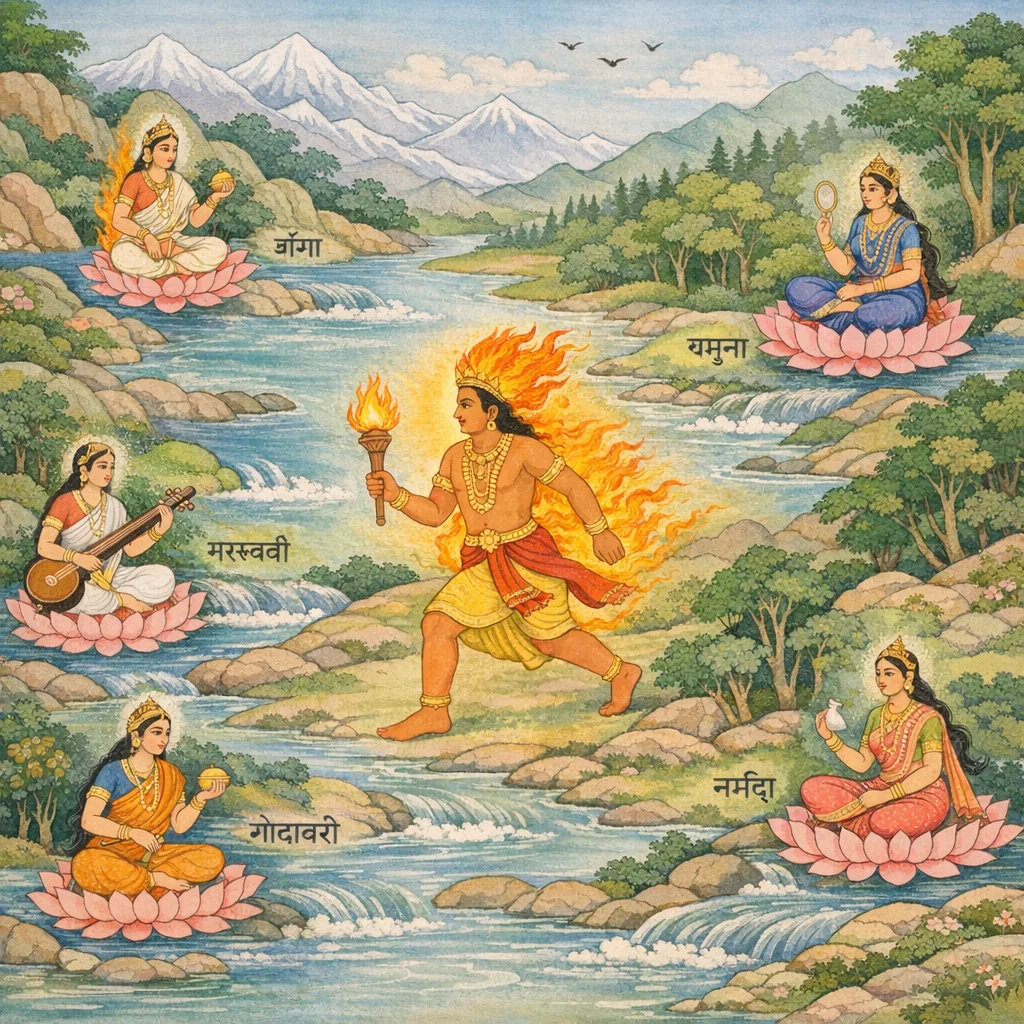
Chapter Arc: राजन्! वंश-परम्परा के ज्ञाता द्विजाति बताते हैं कि जो अग्नि सबको परिचित है, वही अनेक नाम-रूपों में प्रकट होकर असंख्य ‘धिष्ण्य’ और अग्नि-वंशों का मूल बनता है। → कथन विस्तार पाता है—पूर्वोक्त चालीस पुत्रों के अतिरिक्त भी पाँच पुत्रों का उल्लेख, फिर ‘पावक’ को भूतों का पति, भुवन-भर्ता और महातेजस्वी कहकर उसकी सर्वव्यापकता स्थापित की जाती है। अग्नि विविध देशों में विचरता है; समुद्र के भीतर नाना स्थानों में भ्रमण करता हुआ अनेक धिष्ण्यों/देव-आश्रयों की उत्पत्ति का कारण बनता है। → नदियों को धिष्ण्यों की ‘माताएँ’ घोषित कर (सिन्धु, पंचनद, देविका, सरस्वती, गंगा, शतकुम्भा, सरयू, गण्डकी, चर्मण्वती, मही आदि) अग्नि-तत्त्व का भूगोल और वंश एक साथ बाँध दिया जाता है—और फिर निर्णायक वाक्य आता है: सब अग्नियों में एक ही हुताशन है; जैसे ज्योतिष्टोम यज्ञ एक होकर भी अनेक विधियों में प्रकट होता है, वैसे ही ‘एक’ अग्नि बहुधा निःसृत है। → वक्ता क्रमबद्ध रूप से इन ‘अप्रमेय, तिमिरापह, श्रीमन्त’ अग्नियों की उत्पत्ति-परम्परा समेटता है और श्रोता को निष्कर्ष देता है—अद्भुत-अग्नि का माहात्म्य जैसा वेदों में है, वैसा ही सब अग्नियों का समझो; भेद नाम-रूप का है, तत्त्व एक है।
Shlokas
Verse 1
हि ० आय न | हि 7 आम ३. तप अर्थात् पांचजन्यके जो पूर्वोक्त चालीस पुत्र बताये गये हैं, उनके सिवा, पाँच पुत्र और भी उन्होंने उत्पन्न किये थे। उनके नाम क्रमश: इस प्रकार हैं--पुरंदर, ऊष्मा, मनु, शम्भु और आवसथ्य। उनका तीसरेसे छठे श्लोकतक वर्णन है। २. श्रुति भी कहती है--“आदित्यो वा अस्तं यन्नग्निमनुप्रविशति ।” ३. बलद, मन्युमान् तथा विष्णु नामक अग्नि भानुकी भार्या सुप्रजासे उत्पन्न हैं। इसी प्रकार “आग्रयण' “अग्रह” और 'स्तुभ'--ये तीन अग्नि बृहद्भधासाकी संतान हैं। - मिट्टीके प्याले या पुरवेका नाम कपाल है। द्वाविशर्त्याधिकॉद्विशततमो< ध्याय: सह नामक अग्निका जलनमें प्रवेश और अथर्वा अंगिराद्धारा पुन:उनका प्राकट्य मार्कण्डेय उवाच आपस्य मुदिता भार्या सहस्य परमा प्रिया । भूपतिर्भुवभर्ता च जनयत् पावकं परम्,मार्कण्डेयजी कहते हैं--राजन्! जलमें निवासके कारण प्रसिद्ध हुए 'सह” नामक अग्निके एक परम प्रिय पत्नी थी जिसका नाम था मुदिता। उसके गर्भसे भूलोक और भुवर्लोकके स्वामी सहने “अद्भुत'- नामक उत्कृष्ट अग्निको उत्पन्न किया
Mārkaṇḍeya said: O king, the Fire known as Saha—so called for his association with the waters—had a most beloved wife named Muditā. That lord of the earth and sustainer of the worlds begot through her a supreme, wondrous Fire (pāvaka), eminent among flames.
Verse 2
भूतानां चापि सर्वेषां य॑ प्राहु: पावकं पतिम् | आत्मा भुवनभर्तेति सान्वयेषु द्विजातिषु,ब्राह्मणलोगोंमें वंशपरम्पराके क्रमसे सभी यह मानते और कहते हैं कि “अद्भुत” नामक अग्नि सम्पूर्ण भूतोंके अधिपति हैं। वे ही सबके आत्मा और भुवनभर्ता हैं
Mārkaṇḍeya said: “Among all beings, the twice-born who preserve their lineages and traditions declare that the Fire-god (Pāvaka) is the lord of all creatures; they also affirm that he is the inner Self of all and the sustainer of the worlds.”
Verse 3
महतां चैव भूतानां सर्वेषामिह यः पति: । भगवान् स महातेजा नित्यं चरति पावक:,“वे ही इस जगतके सम्पूर्ण महाभूतोंके पति हैं। उनमें सम्पूर्ण ऐश्वर्य सुशोभित हैं। वे महातेजस्वी अग्निदेव सदा सर्वत्र विचरण करते हैं
Mārkaṇḍeya said: “He who is the lord of all the great beings here—indeed of all beings—is the Blessed One. Endowed with mighty splendor, that Fire-god (Pāvaka) ever moves everywhere.”
Verse 4
अन्निर्गुहपतिर्नाम नित्य यज्ञेषु पूज्यते । हुतं वहति यो हव्यमस्य लोकस्य पावक:,“जो अग्नि गृहपति नामसे सदा यज्ञमें पूजित होते हैं तथा हवन किये गये हविष्यको देवताओंके पास पहुँचाते हैं, वे अद्भुत अग्नि ही इस जगत्को पवित्र करनेवाले हैं
Mārkaṇḍeya said: “That Fire who is known as Gṛhapati is ever honored in sacrifices. He is the one who carries the offered oblation to its divine recipients; indeed, that wondrous Fire is the purifier of this world.”
Verse 5
अपां गर्भो महाभागः सच्त्वभुग् यो महाद्धुत: । भूपतिर्भुवभर्ता च महत: पतिरुच्यते,“जो “आप' नामवाले सहके पुत्र हैं, जो महाभाग, सत्त्वभोक्ता, भूलोकके पालक और भुवर्लोकके स्वामी हैं, वे अद्भुत नामक महान् अग्नि बुद्धितत््वके अधिपति बताये जाते हैं!
Mārkaṇḍeya said: “He is called the ‘womb of the waters’—a greatly fortunate being—who partakes of the essences of all that lives. He is the great ‘Adbhuta’ (the Wondrous), the king and protector of the earth, the lord who upholds the worlds, and he is declared to be the master of the ‘Mahat’ (the cosmic principle).”
Verse 6
दहन् मृतानि भूतानि तस्याग्निर्भरतो5भवत् | अग्निष्टोमे च नियत: क्रतुश्रेष्ठो भरस्य तु,“उन्हीं “अद्भुत” या गृहपतिके एक अग्निस्वरूप पुत्र उत्पन्न हुआ, जिसका नाम “भरत' है। ये मरे हुए प्राणियोंके शवका दाह करते हैं। भरतका अग्निष्टोम यज्ञमें नित्य निवास है, इसलिये उन्हें “नियत” भी कहते हैं। नियतका संकल्प उत्तम है
Mārkaṇḍeya said: “That householder’s fire took form as a son named Bharata. He burns the bodies of departed beings, performing the final rite that returns them to the elements. And because Bharata is ever established in the Agniṣṭoma—foremost among sacrifices—he is also called ‘Niyata’, the ‘steadfast one’, whose resolve is excellent.”
Verse 7
स वद्िः प्रथमो नित्य देवैरन्विष्यते प्रभु: । आयान्तं नियतं दृष्टवा प्रविवेशार्णवं भयात्,“प्रथम अग्नि 'सह' बड़े प्रभावशाली हैं। एक समय देवतालोग उनको हढूँढ़ रहे थे। उनके साथ अपने पौत्र नियतको भी आता देख (उससे छू जानेके) भयसे वे समुद्रके भीतर घुस गये
Markandeya said: “That mighty, ever-enduring Fire—foremost among flames—was once being sought by the gods. Seeing his grandson Niyata approaching, and fearing contact with him, he entered the ocean in alarm.”
Verse 8
देवास्तत्रापि गच्छन्ति मार्गमाणा यथादिशम् | दृष्टवा त्वग्निरथर्वाणं ततो वचनमत्रवीत्,तब देवतालोग सब दिशाओंमें उनकी खोज करते हुए वहाँ भी पहुँचने लगे। एक दिन अथर्वा (अंगिरा)-को देखकर अग्निने उनसे कहा--
Mārkaṇḍeya said: “The gods, searching in every direction as they had been instructed, came even to that place. Then Agni, on seeing Atharvan, addressed him with words—thus the next counsel and action are set in motion.”
Verse 9
देवानां वह हव्यं त्वमहं वीर सुदुर्बल: । अथ त्वं गच्छ मध्वक्ष॑ प्रियमेतत् कुरुष्व मे,वीर! तुम देवताओंके पास उनका हविष्य पहुँचाओ। मैं अत्यन्त दुर्बल हो गया हूँ। अब केवल तुम्हीं अग्निपदपर प्रतिष्ठित हो जाओ और मेरा यह प्रिय कार्य सम्पन्न करो”
Mārkaṇḍeya said: “O hero, carry the oblation meant for the gods. I have become exceedingly weak. Therefore go now, O honey-eyed one, and do what is dear to me—complete this cherished task, O brave one.”
Verse 10
प्रेष्य चाग्निरथर्वाणमन्यं देशं ततो5गमत् । मत्स्यास्तस्य समाचख्यु: क्रुद्धस्तानग्निरब्रवीत् भक्ष्या वै विविधैभविर्भविष्यथ शरीरिणाम्
Having dispatched Atharvan, Agni then departed for another region. The fishes reported this to him; and Agni, angered at them, declared: “Truly, you shall become food for embodied beings, offered in many kinds of sacrificial oblations.”
Verse 11
इस प्रकार अथर्वाको भेजकर अग्निदेव दूसरे स्थानमें चले गये। किंतु मत्स्योंने अथर्वासे उनकी स्थिति कहाँ है, यह बता दिया। इससे कुपित होकर अग्निने उन्हें शाप देते हुए कहा --“तुम लोग नाना प्रकारसे जीवोंके भक्ष्य बनोगे” ।। अथर्वाणं तथा चापि हव्यवाहो<ब्रवीद् वच:,तदनन्तर अग्निने अथर्वासे फिर वही बात कही। उस समय देवताओंके कहनेसे अथर्वा मुनिने सह नामक अग्निदेवसे अत्यन्त अनुनय-विनय की; परन्तु उन्होंने न तो हविष्य ढोनेका भार लेनेकी इच्छा की और न वे अपने उस जीर्ण शरीरका ही भार सह सके। अन्ततोगत्वा उन्होंने शरीर त्याग दिया
Markandeya said: Having thus dispatched Atharvāka, Agni—the bearer of oblations—departed for another place. But the fishes revealed to Atharvā where he was. Enraged at this, Agni pronounced a curse upon them: “You shall become food for living creatures in many different ways.” Thereafter the Fire-god spoke the same matter again to Atharvā. Then, at the urging of the gods, the sage Atharvā earnestly pleaded with Agni (also called Saha). Yet Agni neither wished to take up the burden of carrying the sacrificial offering, nor could he even bear the weight of his own worn-out body. In the end, he abandoned his body.
Verse 12
अनुनीयमानो हि भृशं देववाक्याद्धि तेन सः । नैच्छद् वोढुं हवि: सोढुं शरीरं चापि सो5त्यजत्,तदनन्तर अग्निने अथर्वासे फिर वही बात कही। उस समय देवताओंके कहनेसे अथर्वा मुनिने सह नामक अग्निदेवसे अत्यन्त अनुनय-विनय की; परन्तु उन्होंने न तो हविष्य ढोनेका भार लेनेकी इच्छा की और न वे अपने उस जीर्ण शरीरका ही भार सह सके। अन्ततोगत्वा उन्होंने शरीर त्याग दिया
Though earnestly entreated again and again—at the urging of the gods—he still would not consent. He neither wished to take up the burden of carrying the oblation, nor was he able to endure the burden of his own worn-out body. In the end, he abandoned his body.
Verse 13
स तच्छरीरं संत्यज्य प्रविवेश धरां तदा । भूमिं स्पृष्टासजद् धातून् पृथक् पृथगतीव हि,उस समय अपने उस शरीरको त्यागकर वे धरतीमें समा गये। भूमिका स्पर्श करके उन्होंने पृथक्ू-पृथक् बहुत-से धातुओंकी सृष्टि की
Then, abandoning that body, he entered into the earth. Having touched the ground, he brought forth the material constituents in abundant variety, each set apart from the others.
Verse 14
पूयात् स गन्ध॑ तेजश्न अस्थिभ्यो देवदारु च । श्लेष्मण: स्फाटिकं तस्य पित्तान्मारकतं तथा,“सह” नामक अग्निने अपने पीब तथा रक्तसे गन्धक एवं तैजस धातुओंको उत्पन्न किया। उनकी हडियोंसे देवदारुके वृक्ष प्रकट हुए। कफसे स्फटिक तथा पित्तसे मरकतमणिका प्रादुर्भाव हुआ
Mārkaṇḍeya said: From his pus arose sulphur and fiery substances; from his bones sprang the deodar trees. From his phlegm came crystal, and from his bile likewise emerged the emerald.
Verse 15
यकृत् कृष्णायसं तस्य त्रिभिरेव बभु: प्रजा: । नखास्तस्याभ्रपटलं शिराजालानि विद्रुमम्,और उनका यकृत् (जिगर) ही काले रंगका लोहा बनकर प्रकट हुआ। काष्ठ, पाषाण और लोहा--इन तीनोंसे ही प्रजाजनोंकी शोभा होती है। उनके नख मेघसमूहका रूप धारण करते हैं। नाडियाँ मूँगा बनकर प्रकट हुई हैं
Mārkaṇḍeya said: From his liver there manifested black iron; and from three substances alone—wood, stone, and iron—his creatures came to have their distinctive forms and splendor. His nails took on the appearance of masses of clouds, and his networks of veins became coral.
Verse 16
शरीराद् विविधाश्रान्ये धातवोडस्थाभवन् नृप । एवं त्यक्त्वा शरीरं च परमे तपसि स्थित:,राजन्! सह अग्निके शरीरसे अन्य नाना प्रकारके धातु उत्पन्न हुए। इस प्रकार शरीर त्यागकर वे बड़ी भारी तपस्यामें लग गये
Mārkaṇḍeya said: O king, from the body there arose various other constituents, and even the bones came forth. Thus, having cast off the body, he remained established in the highest austerity.
Verse 17
भग्व्धिरादिभिर्भूयस्तपसोत्थापितस्तदा । भृशं जज्वाल तेजस्वी तपसा55प्यायित: शिखी,जब भृगु और अंगिरा आदि ऋषियोंने पुनः: उनको तपस्यासे उपरत कर दिया, तब वे तपस्यासे पुष्ट हुए तेजस्वी अग्निदेव अत्यन्त प्रज्वलित हो उठे
Mārkaṇḍeya said: Then, once again, when the venerable sages—Bhṛgu, Aṅgiras, and others—roused him by their austerities, the radiant Fire-god, nourished and strengthened by that very tapas, blazed up with intense brilliance.
Verse 18
दृष्टवा ऋषिं भयाच्चापि प्रविवेश महार्णवम् | तस्मिन् नष्टे जगद् भीतमथर्वाणमथाश्रितम् | अर्चयामासुरेवैनमथर्वाणं सुरादय:,महर्षि अंगिराको सामने देख वे अग्नि भयके मारे पुनः महासागरके भीतर प्रविष्ट हो गये। इस प्रकार अग्निके अदृश्य हो जानेपर सारा संसार भयभीत हो अथर्वा--अंगिराकी शरणमें आया तथा देवताओंने इन अथर्वाकी पूजा की
Mārkaṇḍeya said: Having seen the sage, and out of fear as well, he entered again into the great ocean. When he thus disappeared, the whole world became frightened and took refuge in Atharvan; and the gods and the rest worshipped that very Atharvan.
Verse 19
अथर्वा त्वसृजललोकानात्मना55लोक्य पावकम् । मिषतां सर्वभूतानामुन्ममाथ महार्णवम्,अथरवनि सब प्राणियोंके देखते-देखते समुद्रकों मथ डाला और अग्निदेवका दर्शन करके स्वयं ही सम्पूर्ण लोकोंकी सृष्टि की
Mārkaṇḍeya said: Atharvan, by the power of his own asceticism, brought forth the worlds. Having beheld Agni, the Fire-god, and while all beings looked on, he churned the great ocean—thus revealing creation in a wondrous act that displays tapas and cosmic order.
Verse 20
एवमग्निर्भगवता नष्ट: पूर्वमथर्वणा । आहूत: सर्वभूतानां हव्यं वहति सर्वदा,इस प्रकार पूर्वकालमें अदृश्य हुए अग्निको भगवान् अंगिराने फिर बुलाया। जिससे प्रकट होकर वे सदा सम्पूर्ण प्राणियोंका हविष्य वहन करते हैं
Thus, in earlier times, Agni had disappeared; then the venerable Atharvan invoked him again. Manifest once more, Agni ever carries the sacrificial oblations (havis) for all beings—restoring the ordained flow of worship and cosmic order.
Verse 21
एवं त्वजनयद् धिष्ण्यान् वेदोक्तान् विबुधान् बहून् । विचरन् विविधान् देशान् भ्रममाणस्तु तत्र वै,उस समुद्रके भीतर नाना स्थानोंमें विचरण एवं भ्रमण करते हुए सह अग्निने इसी प्रकार विविध भाँतिके बहुत-से वेदोक्त अग्निदेवों तथा उनके स्थानोंको उत्पन्न किया
Thus, while roaming and wandering through many different regions there, he brought into being numerous dhiṣṇyas—sacred abodes spoken of in the Vedas—and many divine beings. The passage underscores the Vedic vision of ordered sacred space: through purposeful movement and creation, the divine establishes proper seats and functions for the gods, sustaining cosmic and ritual harmony.
Verse 22
सिन्धुनदं पञजचनदं देविकाथ सरस्वती । गड़ा च शतकुम्भा च सरयूर्गण्डसाह्दया,एता नद्यस्तु धिष्ण्यानां मातरो या: प्रकीर्तिता: । सिन्धुनद, पंचनद, देविका, सरस्वती, गंगा, शतकुम्भा, सरयू, गण्डकी, चर्मण्वती, मही, मेध्या, मेधातिथि, ताम्रवती, वेत्रवती, कौशिकी, तमसा, नर्मदा, गोदावरी, वेणा, उपवेणा, भीमा, वडवा, भारती, सुप्रयोगा, कावेरी, मुर्मुरा, तुंगवेणा, कृष्णवेणा, कपिला तथा शोणभद्र “-ये सब नदियाँ और नद हैं, जो अग्नियोंके उत्पत्ति-स्थान कहे गये हैं
Mārkaṇḍeya said: “Sindhu, Pañcanada, Devikā, and Sarasvatī; Gaṅgā and Śatakumbhā; Sarayū and Gaṇḍakī—these rivers are celebrated as the ‘mothers’ of the dhiṣṇyas (sacred hearths), the sources from which the ritual fires are said to arise.”
Verse 23
चर्मण्वती मही चैव मेध्या मेधातिथिस्तदा । ताम्रवती वेत्रवती नद्यस्तिस्रो5<थ कौशिकी
Mārkaṇḍeya said: “There were also the rivers Carmaṇvatī and Mahī; and then Medhyā and Medhātithi. Likewise Tāmravatī and Vetravatī—three rivers—and then the Kauśikī as well.”
Verse 24
तमसा नर्मदा चैव नदी गोदावरी तथा । वेणोपवेणा भीमा च वडवा चैव भारत
Mārkaṇḍeya said: “So too are the rivers Tamasā, Narmadā, and Godāvarī; likewise Veṇā and Upaveṇā, Bhīmā, and Vaḍavā, O Bhārata.”
Verse 25
भारती सुप्रयोगा च कावेरी मुर्मुरा तथा । तुड़्वेणा कृष्णवेणा कपिला शोण एव च
Mārkaṇḍeya said: “(There are) the rivers Bhāratī and Suprayogā, and also Kāverī and Murmūrā; likewise Tuḍveṇā, Kṛṣṇaveṇā, Kapilā, and also the Śoṇa.” In this section, the sage’s cataloguing of sacred rivers functions as a moral-geographical map: it points the listener toward tīrthas where purification, restraint, and dharmic renewal are sought through pilgrimage and remembrance of holy waters.
Verse 26
अद्भुतस्य प्रिया भार्या तस्य पुत्रो विभूरसि:,अद्भुतकी जो प्रियतमा पत्नी है, उसके गर्भसे उनके “विभूरसि” नामक पुत्र हुआ। अग्नियोंकी जितनी संख्या बतायी गयी है, सोमयागोंकी भी उतनी ही है। वे सब अग्नि ब्रद्माजीके मानसिक संकल्पसे अत्रिके वंशमें उनकी संतानरूपसे उत्पन्न हुए हैं
Mārkaṇḍeya said: Adbhuta had a beloved wife, and from her womb a son was born to him named Vibhūrasi. As many as the fires are said to be, so many are the Soma-sacrifices as well. All those sacred fires arose in the lineage of Atri as progeny, brought forth by Brahmā’s mental resolve. The passage underscores the sanctity of Vedic ritual order: sacrificial institutions are not arbitrary human inventions but are rooted in cosmic intention and transmitted through revered lineages.
Verse 27
यावन्तः पावकाः: प्रोक्ता: सोमास्तावन्त एव तु । अन्रेश्नाप्यन्वये जाता ब्रह्मणो मानसा: प्रजा:,अद्भुतकी जो प्रियतमा पत्नी है, उसके गर्भसे उनके “विभूरसि” नामक पुत्र हुआ। अग्नियोंकी जितनी संख्या बतायी गयी है, सोमयागोंकी भी उतनी ही है। वे सब अग्नि ब्रद्माजीके मानसिक संकल्पसे अत्रिके वंशमें उनकी संतानरूपसे उत्पन्न हुए हैं
Mārkaṇḍeya said: “As many sacred fires (Pāvakas) as have been declared, so many are the Soma-sacrifices as well. Those fires—though not born through ordinary physical generation—arose in the lineage (anvaya) as mind-born progeny of Brahmā.” In context, the statement elevates Vedic ritual order: the fires and Soma rites are not merely human conventions but are traced to a divine, intentional origin, underscoring the ethical idea that dharma is sustained through rightly established sacrificial disciplines.
Verse 28
अत्रि: पुत्रान् स्रष्टकामस्तानेवात्मन्यधारयत्
Mārkaṇḍeya said: Desiring to bring forth sons, the sage Atri first held them within himself—restraining the impulse to create until it could be rightly formed and sustained.
Verse 29
तस्य तद्ब्रह्मणः कार्यन्निर्हरन्ति हुताशना: । अत्रिको जब प्रजाकी सृष्टि करनेकी इच्छा हुई, तब उन्होंने उन अग्नियोंको ही अपने हृदयमें धारण किया। फिर उन ब्रह्मर्षिके शरीरसे विभिन्न अग्नियोंका प्रादुर्भाव हुआ ।। २८ ई || एवमेते महात्मान: कीर्तितास्ते5ग्नयो मया
Mārkaṇḍeya said: “Thus have I recounted to you those sacred fires—great-souled in their power and purpose. The passage underscores that cosmic forces like Agni are not merely physical flames but venerable agencies that uphold creation and order when rightly invoked and understood.”
Verse 30
अद्भुतस्य तु माहात्म्यं यथा वेदेषु कीर्तितम्
Mārkaṇḍeya said: “I shall relate the wondrous one’s greatness, just as it is celebrated in the Vedas.”
Verse 32
इत्येष वंश: सुमहानग्नीनां कीर्तितो मया । योडर्चितो विविधैर्मन्त्रैहव्यं वहति देहिनाम्,इस प्रकार मेरेद्वारा अग्निदेवके महान् वंशका प्रतिपादन किया गया। वे भगवान् अग्नि विविध वेदमन्त्रोंद्वार पूजित होकर देहधारियोंके दिये हुए हविष्यको देवताओंके पास पहुँचाते हैं
Mārkaṇḍeya said: “Thus I have recounted the exceedingly great lineage of the Fire-gods. When worshipped with various sacred mantras, that divine Fire bears the oblations offered by embodied beings and conveys them to the gods.”
Verse 222
इति श्रीमहाभारते वनपर्वणि मार्कण्डेयसमास्यापर्वणि आज्ञिरसोपाख्यानेडग्निसमुद्धवे द्वाविंशत्यधिकद्विशततमो5ध्याय:
Thus, in the Śrī Mahābhārata, within the Vana Parva—under the section summarizing the discourse of Mārkaṇḍeya— in the Ājñirasa episode concerning Agni’s arising, this concludes Chapter 222.
Verse 253
एता नद्यस्तु धिष्ण्यानां मातरो या: प्रकीर्तिता: । सिन्धुनद, पंचनद, देविका, सरस्वती, गंगा, शतकुम्भा, सरयू, गण्डकी, चर्मण्वती, मही, मेध्या, मेधातिथि, ताम्रवती, वेत्रवती, कौशिकी, तमसा, नर्मदा, गोदावरी, वेणा, उपवेणा, भीमा, वडवा, भारती, सुप्रयोगा, कावेरी, मुर्मुरा, तुंगवेणा, कृष्णवेणा, कपिला तथा शोणभद्र “-ये सब नदियाँ और नद हैं, जो अग्नियोंके उत्पत्ति-स्थान कहे गये हैं
Mārkaṇḍeya said: “These rivers are celebrated as the ‘mothers’ of the dhiṣṇyas—the sacred fire-altars, the sources from which the ritual fires are established and sustained: the Sindhu, the Pañcanada, the Devikā, the Sarasvatī, the Gaṅgā, the Śatakumbhā, the Sarayū, the Gaṇḍakī, the Carmaṇvatī, the Mahī, the Medhyā, the Medhātithi, the Tāmravatī, the Vetravatī, the Kauśikī, the Tamasā, the Narmadā, the Godāvarī, the Veṇā, the Upaveṇā, the Bhīmā, the Vaḍavā, the Bhāratī, the Suprayogā, the Kāverī, the Murmūrā, the Tuṅgaveṇā, the Kṛṣṇaveṇā, the Kapilā, and also the Śoṇabhadra. By naming them, the text links geography to dharma: the purity and continuity of Vedic rites depend upon honoring the life-giving waters that make sacrifice possible.”
Verse 293
अप्रमेया यथोत्पन्ना: श्रीमन्तस्तिमिरापहा: । राजन्! इस प्रकार मैंने इन अप्रमेय, अन्धकारनिवारक तथा दीप्तिमान् महामना अग्नियोंकी जिस क्रमसे उत्पत्ति हुई है, उसका तुमसे वर्णन किया
Mārkaṇḍeya said: “O King, thus have I described to you, in due sequence, how those immeasurable fires—radiant, dispelling darkness, and great-souled—came into being.”
Verse 306
तादृशं विद्धि सर्वेषामेको होषु हुताशन: । वेदोंमें "अद्भुत! नामक अग्निके माहात्म्यका जैसा वर्णन है, वैसा ही सब अग्नियोंका समझना चाहिये; क्योंकि इन सबमें एक ही अग्नितत्त्व विद्यमान है
Mārkaṇḍeya said: “Understand all fires to be of the same kind; for in them all there is but one and the same Fire-principle. Therefore, the greatness described of the wondrous fire is to be recognized as the greatness of fire everywhere.”
Verse 316
एक एवैष भगवान् विज्ञेय: प्रथमो5जड्लिरा: ३१ ।। बहुधा निःसृतः कायाज्ज्योतिष्टोम: क्रतुर्यथा । ये प्रथम भगवान् अग्नि, जिन्हें अंगिरा भी कहते हैं, एक ही हैं, ऐसा जानना चाहिये। जैसे ज्योतिष्टोम यज्ञ उद्धिद् आदि अनेक रूपोंमें प्रकट हुआ है, उसी प्रकार एक ही अग्नितत्त्व प्रजापतिके शरीरसे विविध रूपोंमें उत्पन्न हुआ है
Mārkaṇḍeya said: “Know that this Lord—Agni, the first and also called Aṅgirā—is truly one. Yet, just as the single Jyotiṣṭoma sacrifice is set forth in many forms and applications, so too the one principle of Agni has issued forth in diverse manifestations from the body of Prajāpati.”
Frequently Asked Questions
How to preserve marital stability and avert rivalry-driven discord through disciplined conduct—especially reception etiquette, controlled speech, and prudent social alignment within a household marked by multiple relationships and external pressures.
Affection and stability are maintained through intentional service, restraint, and situational awareness: respect in daily rituals, confidentiality, avoidance of heedlessness, and association with ethically reputable companions.
It does not present a formal phalaśruti formula; however, it implies outcomes—reputation, prosperity, social harmony, and merit—by describing the benefits of the husband’s favor and the social consequences of disciplined versus careless conduct.