Adhyaya 90
विदुरस्य कृष्णं प्रति शमोपदेशः (Vidura’s Counsel to Krishna on the Limits of Peace)
Upa-parva: Krishna–Vidura Saṃvāda (Peace-Counsel Context within Udyoga-parva)
Vaiśaṃpāyana reports a nocturnal exchange in which Vidura addresses Kṛṣṇa after Kṛṣṇa has eaten and rested. Vidura argues that Kṛṣṇa’s proposed visit/mission to the Kaurava side is not “well-resolved” in terms of practical reception, because Duryodhana is characterized as transgressing artha and dharma, disregarding śāstra, and being driven by pride, suspicion, ingratitude, and preference for pleasing falsehoods. Vidura predicts that even beneficial advice (śreyo’pi) will not be accepted due to impulsive belligerence. He notes the psychological effect of amassed forces: Duryodhana mistakes military concentration for accomplished success and relies on Karṇa’s perceived capacity to defeat opponents. The chapter further frames the Kaurava coalition as collectively decided against giving the Pāṇḍavas their due, rendering conciliatory speech ineffective—likened to singing to the deaf. Vidura cautions against entering the hostile assembly amid many ill-disposed actors, while simultaneously affirming Kṛṣṇa’s extraordinary power and intelligence; his warning is presented as arising from affection for the Pāṇḍavas and respectful friendship toward Kṛṣṇa.
Chapter Arc: शान्तिदूत बनकर जनार्दन श्रीकृष्ण हस्तिनापुर में दुर्योधन के भवन में प्रवेश करते हैं—ऐसे घर में, जो इन्द्र-भवन के समान वैभवशाली है, पर भीतर नीति का अन्धकार छिपा है। → कक्ष-द्वारों और प्रहरी-व्यवस्था को लाँघते हुए कृष्ण सभा-भवन तक पहुँचते हैं, जहाँ कुरु-राजा और सहस्रों राजाओं की भीड़ है। दुर्योधन पक्ष के लोग औपचारिक सत्कार करते हैं, पर कृष्ण का आगमन उनके अहंकार और भय—दोनों को चुभता है। कृष्ण स्पष्ट कर देते हैं कि उनका आत्मभाव धर्मचारी पाण्डवों से एक है—जो पाण्डवों से द्वेष करता है, वह कृष्ण से भी द्वेष करता है। → दुर्योधन कृष्ण को भोजन-निमन्त्रण देता है; पर केशव उसे अस्वीकार कर देते हैं—दूत का अन्न पहले न्याय से, शान्ति-प्रयास की स्वीकृति से, और धर्म-मार्ग पर चलने की प्रतिज्ञा से जुड़ा है; अन्यथा वह सत्कार भी अपमान बन जाता है। → सभा में कृष्ण का तेज ‘निर्मल सूर्य’ के समान दीखता है; कौरव-राजा और अन्य राजागण उपासना-सत्कार करते हैं, पर कृष्ण का निर्णय अडिग रहता है—वे दुर्योधन के वैभव से नहीं, धर्म के पक्ष से बँधे हैं। → दुर्योधन पूछता है—‘आपके लिए प्रस्तुत अन्न-जल-वस्त्र-शय्या आपने क्यों नहीं ग्रहण किए?’—और आगे होने वाली तीखी नीति-वार्ता का द्वार खुल जाता है।
Shlokas
Verse 1
[दाक्षिणात्य अधिक पाठके १६ “लोक मिलाकर कुल १०६ ३“लोक हैं।] #सस्न का तन (0) अनजाने एकनवतितमो< ध्याय: श्रीकृष्णका दुर्योधनके घर जाना एवं उसके निमन्त्रणको अस्वीकार करके विदुरजीके घरपर भोजन करना वैशम्पायन उवाच पृथामामन्त्रय गोविन्द: कृत्वा चाभिप्रदक्षिणम् । दुर्योधनगृहं शौरिर्भ्यगच्छदरिंदम:,वैशम्पायनजी कहते हैं--जनमेजय! शत्रुओंका दमन करनेवाले शूरनन्दन श्रीकृष्ण कुन्तीकी परिक्रमा करके एवं उनकी आज्ञा ले दुर्योधनके घर गये
Vaiśampāyana said: Having taken leave of Pṛthā (Kuntī) and, in reverence, circumambulated her, Govinda—Śauri, the subduer of foes—set out and went to Duryodhana’s house.
Verse 2
लक्ष्म्या परमया युक्त पुरन्दरगृहोपमम् । विचित्रैरासनैर्युक्त प्रविवेश जनार्दन:,वह घर इन्द्रभवनके समान उत्तम शोभासे सम्पन्न था। उसमें यथास्थान विचित्र आसन सजाकर रखे गये थे। श्रीकृष्णने उस गृहमें प्रवेश किया
Vaiśampāyana said: Endowed with supreme splendor, the residence was like the palace of Purandara (Indra). Furnished with various seats arranged in their proper places, Janārdana (Kṛṣṇa) entered that house.
Verse 3
तस्य कक्ष्या व्यतिक्रम्य तिस्रो द्वा:स्थैरवारित: । ततो<भ्रघनसंकाशं गिरिकूटमिवोच्छितम्
Having crossed his outer enclosures, and being checked at three successive doorways by the gatekeepers, he then beheld something towering high—like a mountain-peak—dark and dense as a mass of storm-clouds.
Verse 4
तत्र राजसहसैश्न कुरुभिश्चाभिसंवृतम्
There, the place was thronged—enclosed on all sides—by thousands of kings and by the Kurus, marking a great political assembly where power, alliance, and the looming question of rightful conduct under dharma were being weighed in public.
Verse 5
दुःशासनं च कर्ण च शकुनिं चापि सौबलम्
Vaiśampāyana said: “(He named) Duḥśāsana, Karṇa, and also Śakuni, the son of Subala.” The line foregrounds key agents of counsel and hostility whose choices intensify the moral collapse leading toward war.
Verse 6
अभ्यागच्छति दाशाहें धार्तराष्ट्री महायशा:
Vaiśampāyana said: The illustrious Dhārtarāṣṭrī (Gāndhārī), renowned for her great fame, came forward at the appointed time. The line signals a dignified entrance, preparing the narrative for counsel and moral pressure within the Kuru household as the crisis of war nears.
Verse 7
समेत्य धार्तराष्ट्रेण सहामात्येन केशव:
Vaiśampāyana said: Keśava (Kṛṣṇa), having come together with Dhṛtarāṣṭra and his ministers, (proceeded to address the matter at hand). The line signals a formal, state-level consultation in which counsel and responsibility are shared—an ethical moment where wise guidance is expected to restrain conflict and uphold dharma.
Verse 8
तत्र जाम्बूनदमयं पर्यड्कं सुपरिष्कृतम्
There, a finely crafted couch made of Jāmbūnada gold had been set out, exquisitely adorned—signaling royal splendor and the careful observances of courtly hospitality within the unfolding political tensions.
Verse 9
विविधास्तरणास्तीर्णमभ्युपाविशदच्युत: । उस राजसभामें सुन्दर रत्नोंसे विभूषित एक सुवर्णमय पर्यक रखा हुआ था, जिसपर भाँति-भाँतिके बिछौने बिछे हुए थे। भगवान् श्रीकृष्ण उसीपर विराजमान हुए ।। ८ ह ।। तस्मिन् गां मधुपर्क चाप्युदकं च जनार्दने
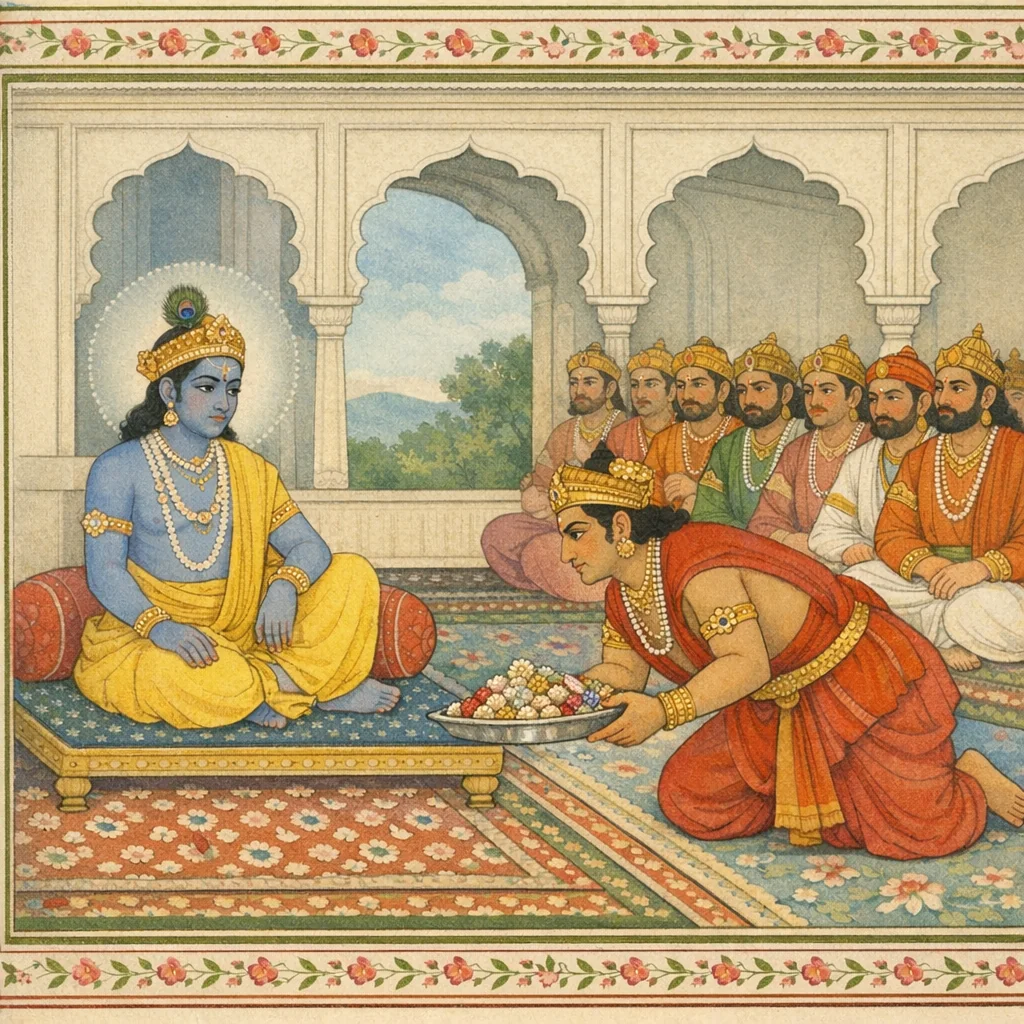
Vaiśampāyana said: Acyuta (Kṛṣṇa) took his seat upon a couch spread with many kinds of coverings. In that royal assembly there stood a golden couch adorned with beautiful jewels, on which various beddings had been laid; and the Blessed Śrī Kṛṣṇa sat there in dignity. Then, for Janārdana, they brought a cow, the ceremonial honey-mixture (madhuparka), and water—honours due to a revered guest—signalling both respect and the ethical obligation of hospitality even amid looming conflict.
Verse 10
तत्र गोविन्दमासीन प्रसन्नादित्यवर्चसम्
There, he saw Govinda seated—radiant with a serene splendor like the clear shining of the sun—suggesting a calm, dharmic steadiness amid the gathering tensions of the coming conflict.
Verse 11
ततो दुर्योधनो राजा वार्ष्णेयं जयतां वरम्
Then King Duryodhana addressed the Vārṣṇeya—Krishna, the foremost among victors—marking a decisive turn in the negotiations as he seeks advantage through counsel and alliance rather than through restraint or conciliation.
Verse 12
ततो दुर्योधन: कृष्णमब्रवीत् कुरुसंसदि
Then, in the assembly of the Kurus, Duryodhana addressed Kṛṣṇa—marking a decisive moment where political ambition and moral counsel meet in the public arena of royal deliberation.
Verse 13
मृदुपूर्व शठोदर्क कर्णमाभाष्य कौरव: । तब कुरुराज दुर्योधनने कर्णसे सलाह लेकर कौरवसभामें श्रीकृष्णसे पूछा। पूछते समय उसकी वाणीमें पहले तो मृदुता थी, परंतु अन्तमें शठता प्रकट होने लगी थी ।। १२ ६ || कस्मादन्नानि पानानि वासांसि शयनानि च
Vaiśampāyana said: The Kaurava (Duryodhana), after first addressing Karṇa with gentle words that gradually revealed a crafty intent, then—taking Karṇa’s counsel and support—questioned Śrī Kṛṣṇa in the Kaurava assembly. His speech began with softness, but as he pressed his point, deceit became evident. He asked: “For what reason are food and drink, garments, and beds (being provided/arranged)?”
Verse 14
उभयोश्वाददा: साहामुभयोश्व हिते रत:,आपने तो दोनों पक्षोंको ही सहायता दी है, आप उभयपक्षके हित-साधनमें तत्पर हैं। माधव! महाराज धूृतराष्ट्रके आप प्रिय सम्बन्धी भी हैं। चक्र और गदा धारण करनेवाले गोविन्द! आपको धर्म और अर्थका सम्पूर्णरूपसे यथार्थ ज्ञान भी है; फिर मेरा आतिथ्य ग्रहण न करनेका क्या कारण है; यह मैं सुनना चाहता हूँ
Vaiśampāyana said: “You have extended help to both sides and are devoted to the welfare of both. Indeed, when these two parties came into conflict, you supported them. O Mādhava, you are also a dear kinsman of King Dhṛtarāṣṭra. O Govinda, bearer of discus and mace, you possess a complete and accurate understanding of dharma and artha. Why, then, do you refuse to accept my hospitality? I wish to hear the reason.”
Verse 15
सम्बन्धी दयितश्नासि धृतराष्ट्रस्य माधव । त्वं हि गोविन्द धर्मार्थो वेत्थ तत्त्वेन सर्वश: । तत्र कारणमिच्छामि श्रोतुं चक्रगदाधर,आपने तो दोनों पक्षोंको ही सहायता दी है, आप उभयपक्षके हित-साधनमें तत्पर हैं। माधव! महाराज धूृतराष्ट्रके आप प्रिय सम्बन्धी भी हैं। चक्र और गदा धारण करनेवाले गोविन्द! आपको धर्म और अर्थका सम्पूर्णरूपसे यथार्थ ज्ञान भी है; फिर मेरा आतिथ्य ग्रहण न करनेका क्या कारण है; यह मैं सुनना चाहता हूँ
Vaiśampāyana said: “Mādhava, you are both a close kinsman and a beloved of King Dhṛtarāṣṭra. Govinda, you know—truly and in every respect—what is right (dharma) and what is expedient (artha). Therefore I wish to hear, O bearer of discus and mace, what reason lies behind your not accepting my hospitality.”
Verse 16
वैशम्पायन उवाच स एवमुक्तो गोविन्द: प्रत्युवाच महामना: । उद्यन्मेघस्वन: काले प्रगृह्म विपुलं भुजम्,वैशम्पायनजी कहते हैं--राजन्! इस प्रकार पूछे जानेपर उस समय महामनस्वी कमलनयन श्रीकृष्णने अपनी विशाल भुजा ऊपर उठाकर राजा दुर्योधनको सजल जलधरके समान गम्भीर वाणीमें उत्तर देना आरम्भ किया। उनका वह वचन परम उत्तम, युक्तिसंगत, दैन्य-रहित प्रत्येक अक्षरकी स्पष्टतासे सुशोभित तथा स्थान-श्रष्टता एवं संकीर्णता आदि दोषोंसे रहित था
Vaiśampāyana said: Thus addressed, Govinda—great-souled—replied. At that moment, raising his mighty arm, he began to answer Duryodhana in a voice deep and resonant like a rain-laden cloud, setting the tone for counsel meant to be firm, clear, and free from weakness.
Verse 17
अलघूकृतमग्रस्तमनिरस्तमसंकुलम् । राजीवनेत्रो राजानं हेतुमद् वाक्यमुत्तमम्,वैशम्पायनजी कहते हैं--राजन्! इस प्रकार पूछे जानेपर उस समय महामनस्वी कमलनयन श्रीकृष्णने अपनी विशाल भुजा ऊपर उठाकर राजा दुर्योधनको सजल जलधरके समान गम्भीर वाणीमें उत्तर देना आरम्भ किया। उनका वह वचन परम उत्तम, युक्तिसंगत, दैन्य-रहित प्रत्येक अक्षरकी स्पष्टतासे सुशोभित तथा स्थान-श्रष्टता एवं संकीर्णता आदि दोषोंसे रहित था
Vaiśampāyana said: Then lotus-eyed Kṛṣṇa began to address the king (Duryodhana), raising his mighty arm and speaking in a voice deep as a rain-laden cloud. His reply was supremely excellent—reasoned and purposeful, free from self-abasement, clear in every syllable, and untouched by faults such as impropriety, confusion, or needless entanglement.
Verse 18
कृतार्था भुज्जते दूता: पूजां गृह्नन्ति चैव ह । कृतार्थ मां सहामात्यं समर्चिष्यसि भारत,“भारत! ऐसा नियम है कि दूत अपना प्रयोजन सिद्ध होनेपर ही भोजन और सम्मान स्वीकार करते हैं। तुम भी मेरा उद्देश्य सिद्ध हो जानेपर ही मेरा और मेरे मन्त्रियोंका सत्कार करना'
Vaiśaṃpāyana said: “It is an established rule that envoys accept food and honors only after their mission has been accomplished. Therefore, O Bhārata, when my purpose has been fulfilled, you should then duly honor me together with my ministers.”
Verse 19
एवमुक्तः प्रत्युवाच धार्तराष्ट्रो जनार्दनम् । न युक्त भवतास्मासु प्रतिपत्तुमसाम्प्रतम्,यह सुनकर दुर्योधनने जनार्दनसे कहा--“आपको हमलोगोंके साथ ऐसा अनुचित बर्ताव नहीं करना चाहिये”
Thus addressed, the son of Dhṛtarāṣṭra replied to Janārdana: “It is not proper for you, at this time, to deal with us in an unfair or inappropriate manner.”
Verse 20
कृतार्थ वाकृतार्थ च त्वां वयं मधुसूदन । यतामहे पूजयितुं दाशाह न च शकक््नुम:,“दशाहनन्दन मधुसूदन! आपका उद्देश्य सफल हो या न हो, हमलोग तो आपके सम्मानका प्रयत्न करते ही हैं; किंतु हमें सफलता नहीं मिल रही है
“O Madhusūdana, whether your mission succeeds or fails, we still strive to honor you; yet we are unable to do so as we wish.”
Verse 21
न च तत् कारणं विद्यो यस्मिन् नो मधुसूदन । पूजां कृतां प्रीयमाणैर्नामंस्था: पुरुषोत्तम,“मधुदैत्यका विनाश करनेवाले पुरुषोत्तम! हमें ऐसा कोई कारण नहीं जान पड़ता, जिसके होनेसे आप हमारी प्रेमपूर्वक अर्पित की हुई पूजा ग्रहण न कर सकें
“O Madhusūdana, we do not know of any reason on account of which you would not accept the worship we offer with affection and sincere delight. O Puruṣottama, please do not withhold your gracious presence from this loving act of reverence.”
Verse 22
वैरं नो नास्ति भवता गोविन्द न च विग्रह: । स भवान् प्रसमीक्ष्यैतन्नेदृशं वक्तुमहीति,“गोविन्द! आपके साथ हमलोगोंका न तो कोई वैर है और न झगड़ा ही है। इन सब बातोंका विचार करके आपको ऐसी बात नहीं कहनी चाहिये”
“Govinda, we bear no enmity toward you, nor do we have any quarrel with you. Having carefully considered all this, you should not speak in such a manner.”
Verse 23
वैशम्पायन उवाच एवमुक्तः: प्रत्युवाच धार्तराष्ट्रं जनार्दन: । अभिवीक्ष्य सहामात्यं दाशार्ह: प्रहसन्निव,वैशम्पायनजी कहते हैं--राजन! यह सुनकर दशार्हकुलभूषण जनार्दनने मन्त्रियोंसहित दुर्योधनकी ओर देखकर हँसते हुए-से उत्तर दिया
Vaiśampāyana said: Thus addressed, Janārdana replied to the Dhārtarāṣṭra (Duryodhana). The Dāśārha (Kṛṣṇa), after looking at him together with his ministers, answered as though with a faint, knowing smile.
Verse 24
नाहं कामाजन्न संरम्भान्न द्वेषान्नार्थकारणात् । न हेतुवादाल्लोभाद् वा धर्म जह्यां कथंचन,“राजन! मैं कामसे, क्रोधसे, द्वेषसे, स्वार्थवश, बहानेबाजी अथवा लोभसे भी किसी प्रकार धर्मका त्याग नहीं कर सकता
Vaiśaṃpāyana said: “O King, I do not abandon dharma in any circumstance—whether driven by desire, by rash anger, by hatred, for the sake of personal advantage, through sophistical pretexts, or out of greed.”
Verse 25
सम्प्रीतिभोज्यान्यन्नानि आपद्धोज्यानि वा पुनः । न च सम्प्रीयसे राजन् न चैवापद्गता वयम्,“किसीके घरका अन्न या तो प्रेमके कारण भोजन किया जाता है या आप त्तिमें पड़नेपर। नरेश्वर! प्रेम तो तुम नहीं रखते और किसी आपफत्तिमें हम नहीं पड़े हैं
Vaiśaṃpāyana said: “Food taken in another’s house is eaten either out of mutual affection, or again when one is driven by distress. But, O king, you bear us no affection—and we are not in any calamity.”
Verse 26
अकम्माद् द्वेष्टि वै राजन् जन्मप्रभृति पाण्डवान् | प्रियानुवर्तिनो भ्रातृन् सर्व: समुदितान् गुणै:ः,“राजन! पाण्डव तुम्हारे भाई ही हैं, वे अपने प्रेमियोंका साथ देनेवाले और समस्त सदगुणोंसे सम्पन्न हैं, तथापि तुम जन्मसे ही उनके साथ अकारण ही द्वेष करते हो
Vaiśaṃpāyana said: “O king, you have hated the Pāṇḍavas without cause since birth. Yet they are your brothers, loyal to those they love, and endowed with every virtue.”
Verse 27
अकस्माच्चैव पार्थानां द्वेषणं नोपपद्यते । धर्मे स्थिता: पाण्डवेया: कस्तान् कि वक्तुमहति,“बिना कारण ही कदुन्तीपुत्रोंके साथ द्वेष रखना तुम्हारे लिये कदापि उचित नहीं है। पाण्डव सदा अपने धर्ममें स्थित रहते हैं, अतः उनके विरुद्ध कौन क्या कह सकता है?
Vaiśampāyana said: “To harbor sudden, unprovoked hatred toward the sons of Pṛthā is not proper. The Pāṇḍavas stand firm in dharma; therefore, who could rightly say anything against them?”
Verse 28
यस्तान् दवेष्टि स मां द्वेष्टि यस्ताननु स मामनु । ऐकात्म्यं मां गतं विद्धि पाण्डवैर्धर्मचारिभि:,'जो पाण्डवोंसे द्वेष करता है, वह मुझसे भी द्वेष करता है और जो उनके अनुकूल है, वह मेरे भी अनुकूल है। तुम मुझे धर्मात्मा पाण्डवोंके साथ एकरूप हुआ ही समझो
Vaiśaṃpāyana said: “Whoever hates them hates me as well; whoever stands with them stands with me. Know that I have become one in spirit with the Pāṇḍavas, those who walk the path of dharma.”
Verse 29
कामक्रोधानुवर्ती हि यो मोहाद् विरुरुत्सति । गुणवन्तं च यो द्वेष्टि तमाहु: पुरुषाधमम्,“जो काम और क्रोधके वशीभूत होकर मोहवश किसी गुणवान् पुरुषके साथ विरोध करना चाहता है, उसे पुरुषोंमें अधम कहा गया है
Vaiśampāyana said: One who, driven by desire and anger and deluded by confusion, seeks to oppose a virtuous person—such a man is declared to be the lowest among men.
Verse 30
य: कल्याणगुणान् ज्ञातीन् मोहाल्लो भाद दिदृक्षते । सो<जितात्माजितक्रोधो न चिरं तिष्ठति श्रियम्,“जो कल्याणमय गुणोंसे युक्त अपने कुटुम्बीजनोंको मोह$ और लोभःकी दृष्टिसे देखना चाहता है, वह अपने मन और क्रोधको न जीतनेवाला पुरुष दीर्घकालतक राजलक्ष्मीका उपभोग नहीं कर सकता
Vaiśampāyana said: He who, out of delusion and greed, looks upon his own kinsmen—endowed with noble qualities—as objects to be exploited, being one who has not conquered his mind and anger, does not retain royal prosperity for long.
Verse 31
अथ यो गुणसम्पन्नान् हृदयस्याप्रियानपि । प्रियेण कुरुते वश्यांश्विरं यशसि तिष्ठति,“जो अपने मनको प्रिय न लगनेवाले गुणवान् व्यक्तियोंको भी अपने प्रिय व्यवहारद्वारा वशमें कर लेता है, वह दीर्घकालतक यशस्वी बना रहता है
Vaiśampāyana said: Even those who are virtuous yet displeasing to one’s own heart—whoever, through kindly and agreeable conduct, brings such people under goodwill and influence, remains established in lasting fame.
Verse 32
(द्विषदन्न न भोक्तव्यं द्विषन्तं नैव भोजयेत् । पाण्डवान् द्विषसे राजन् मम प्राणा हि पाण्डवा: ।। ) “जो द्वेष रखता हो, उसका अन्न नहीं खाना चाहिये। द्वेष रखनेवालेको खिलाना भी नहीं चाहिये। राजन! तुम पाण्डवोंसे द्वेष रखते हो और पाण्डव मेरे प्राण हैं। सर्वमेतन्न भोक्तव्यमन्नं दुष्टगाभिसंहितम् । क्षत्तुरेकस्य भोक्तव्यमिति मे धीयते मति:,“तुम्हारा यह सारा अन्न दुर्भावनासे दूषित है। अतः मेरे भोजन करनेयोग्य नहीं है। मेरे लिये तो यहाँ केवल विदुरका ही अन्न खानेयोग्य है। यह मेरी निश्चित धारणा है”
Vaiśaṃpāyana said: “One should not eat the food of a person who bears hatred, nor should one feed a hater. O King, you hate the Pāṇḍavas—and the Pāṇḍavas are as my very life. Therefore this entire fare of yours, tainted by ill-will, is not fit for me to partake of. In my judgment, only Vidura’s food is worthy for me to eat here.”
Verse 33
एवमुक््त्वा महाबाहुर्दुर्योधनममर्षणम् । निश्चक्राम ततः शुभ्राद् धार्तराष्ट्रनिवेशनात्,अमर्षशील दुर्योधनसे ऐसा कहकर महाबाहु श्रीकृष्ण उसके भव्य भवनसे बाहर निकले
Having spoken thus, the mighty-armed one left the resentful Duryodhana behind and then departed from the splendid residence of Dhṛtarāṣṭra’s house.
Verse 34
निर्याय च महाबाहुर्वासुदेवो महामना: । निवेशाय ययौ वेश्म विदुरस्य महात्मन:,वहाँसे निकलकर महामना महाबाहु भगवान् वासुदेव ठहरनेके लिये महात्मा विदुरके भवनमें गये
Having departed from there, Vāsudeva, great-armed and noble-minded, set out to lodge for the night and went to the residence of the high-souled Vidura.
Verse 35
तमभ्यगच्छद् द्रोणश्व॒ कृपो भीष्मो5थ बाह्लिक:ः । कुरवश्न महाबाहुं विदुरस्य गृहे स्थितम्,उस समय द्रोणाचार्य, कृपाचार्य, भीष्म, बाह्नलीक तथा अन्य कौरवोंने भी महाबाहु श्रीकृष्णका अनुसरण किया। विदुरके घरमें ठहरे हुए यदुवंशी वीर मधुसूदनसे वे सब कौरव बोले--'वृष्णिनन्दन! हमलोग रत्न-धनसे सम्पन्न अपने घरोंको आपकी सेवामें समर्पित करते हैं!
Then Droṇa, Kṛpa, Bhīṣma, and Bāhlīka—along with the other Kurus—approached the mighty-armed one (Kṛṣṇa) who was staying in Vidura’s house. They said to the Vṛṣṇi hero: “O Vārṣṇeya, we place at your service our homes, rich with jewels.”
Verse 36
श्रिया ज्वलन्तं प्रासादमारुरोह महायशा: । द्वारपालोंने रोक-टोक नहीं की। उस राजभवनकी तीन ड्योढ़ियाँ पार करके महायशस्वी श्रीकृष्ण एक ऐसे प्रासादपर आरूढ़ हुए, जो आकाशमें छाये हुए शरद्-ऋतुके बादलोंके समान श्वेत, पर्वतशिखरके समान ऊँचा तथा अपनी अद्भुत प्रभासे प्रकाशमान था,त ऊचुर्माधवं वीरं कुरवो मधुसूदनम् । निवेदयामो वार्ष्णेय सरत्नांस्ते गृहान् वयम् उस समय द्रोणाचार्य, कृपाचार्य, भीष्म, बाह्नलीक तथा अन्य कौरवोंने भी महाबाहु श्रीकृष्णका अनुसरण किया। विदुरके घरमें ठहरे हुए यदुवंशी वीर मधुसूदनसे वे सब कौरव बोले--'वृष्णिनन्दन! हमलोग रत्न-धनसे सम्पन्न अपने घरोंको आपकी सेवामें समर्पित करते हैं!
Vaiśaṃpāyana said: The illustrious Kṛṣṇa ascended a palace blazing with splendor. Then the Kurus addressed the heroic Mādhava, the slayer of Madhu: “O Vārṣṇeya, we place at your service our homes, rich with jewels.”
Verse 37
तानुवाच महातेजा: कौरवान् मधुसूदन: । सर्वे भवन्तो गच्छन्तु सर्वा मेड5पचिति: कृता,तब महातेजस्वी मधुसूदनने कौरवोंसे कहा--“आप सब लोग अपने घरोंको जाया; आपके द्वारा मेरा सारा सम्मान सम्पन्न हो गया”
Then the radiant Madhusūdana (Kṛṣṇa) addressed the Kauravas: “All of you may now depart. The full measure of honor and respectful reception due to me has been duly completed by you.”
Verse 38
यातेषु कुरुषु क्षत्ता दाशार्हमपराजितम् । अभ्यर्चयामास तदा सर्वकामै: प्रयत्नवान्
When the Kurus had departed, the chamberlain (Vidura), diligent in his duty, then honored the unconquered Dāśārha (Kṛṣṇa) with every kind of desired offering.
Verse 39
कौरवोंके चले जानेपर विदुरजीने कभी पराजित न होनेवाले दशार्हनन्दन श्रीकृष्णको समस्त मनोवांछित वस्तुएँ समर्पित करके प्रयत्नपूर्वक उनका पूजन किया ।। ततः क्षत्तान्नपानानि शुचीनि गुणवन्ति च । उपाहरदनेकानि केशवाय महात्मने
Vaiśampāyana said: After the Kauravas had departed, Vidura, the chamberlain, brought many foods and drinks—pure and of excellent quality—and offered them to Keśava, great-souled Śrī Kṛṣṇa, honoring him with careful worship and devoted hospitality.
Verse 40
तदनन्तर उन्होंने अनेक प्रकारके पवित्र एवं गुणकारक अन्न-पान महात्मा केशवको अर्पित किये ।। तैस्तर्पयित्वा प्रथमं ब्राह्मणान् मघुसूदन: । वेदविद्धयो ददौ कृष्ण: परमद्रविणान्यपि,मधुसूदनने उस अन्न-पानसे पहले ब्राह्मणोंको तृप्त किया, फिर उन्होंने उन वेदवेत्ताओंको श्रेष्ठ धन भी दिया
Thereafter, they presented the great-souled Keśava with many kinds of pure and wholesome foods and drinks. Madhusūdana first satisfied the brāhmaṇas with that fare; then Kṛṣṇa bestowed excellent wealth upon those learned in the Vedas.
Verse 41
ततो<नुयायिभि: सार्थ मरुद्धिरिव वासव: । विदुरान्नानि बुभुजे शुचीनि गुणवन्ति च,तदनन्तर देवताओंसहित इन्द्रकी भाँति अनुचरोंसहित भगवान् श्रीकृष्णने विदुरजीके पवित्र एवं गुणकारक अन्न-पान ग्रहण किये
Then, accompanied by his attendants—like Vāsava (Indra) attended by the Maruts—Śrī Kṛṣṇa partook of the food offered by Vidura: fare that was pure and wholesome, and conducive to virtue.
Verse 46
धार्तराष्ट्र महाबाहुं ददर्शासीनमासने । वहाँ उन्होंने सिंहासनपर बैठे हुए धृतराष्ट्रपुत्र महाबाहु दुर्योधनको देखा, जो सहस्रों राजाओं तथा कौरवोंसे घिरा हुआ था
Vaiśaṃpāyana said: He then saw the mighty-armed son of Dhṛtarāṣṭra—Duryodhana—seated upon the throne, surrounded by the Kauravas and by thousands of kings.
Verse 56
दुर्योधनसमीपे तानासनस्थान् ददर्श सः । दुर्योधनके पास ही दुःशासन, कर्ण तथा सुबलपुत्र शकुनि--ये भी आसनोंपर बैठे थे। श्रीकृष्णने उनको भी देखा
Vaiśampāyana said: Near Duryodhana, he saw them seated upon their appointed seats. Duḥśāsana, Karṇa, and Śakuni the son of Subala were also sitting there; Śrī Kṛṣṇa observed them as well.
Verse 66
उदतिष्ठत् सहामात्य: पूजयन् मधुसूदनम् । दशाहनन्दन श्रीकृष्णके आते ही महायशस्वी दुर्योधन मधुसूदनका सम्मान करते हुए मन्त्रियोंसहित उठकर खड़ा हो गया
Vaiśampāyana said: Duryodhana, the illustrious son of Dhṛtarāṣṭra, rose with his ministers and, to show honor, paid reverence to Madhusūdana (Kṛṣṇa). The scene lays bare the strain between outward courtesies and the inward resolve that will soon drive the quarrel toward war.
Verse 76
राजभिस्तत्र वाष्णेय: समागच्छद् यथावय: । मन्त्रियोंसहित दुर्योधनसे मिलकर वृष्णिकुलभूषण केशव अवस्थाके अनुसार वहाँ सभी राजाओंसे यथायोग्य मिले
Vaiśampāyana said: There Keśava—glory of the Vṛṣṇis—met the assembled kings in a manner suited to each one’s rank and circumstance. With his ministers in attendance and in Duryodhana’s company, he offered fitting courtesies to all the rulers, observing proper protocol and the demands of the hour.
Verse 90
इस प्रकार श्रीमह्याभारत उद्योगपर्वके अन्तर्गत भगवद्यानपर्वमें श्रीकृष्ण-कुन्ती- संवादविषयक नब्बेवाँ अध्याय पूरा हुआ
Thus ends the ninetieth chapter of the Bhagavad-yāna section within the Udyoga Parva of the sacred Mahābhārata, concerning the dialogue between Śrī Kṛṣṇa and Kuntī. This closing colophon marks their exchange as complete, set against the moral urgency of impending war and the search for a righteous course.
Verse 91
इति श्रीमहा भारते उद्योगपर्वणि भगवद्यानपर्वणि श्रीकृष्णदुर्योधनसंवादे एकनवतितमो<ध्याय:
Thus ends the ninety-first chapter in the Udyoga Parva of the Śrī Mahābhārata, within the section on the Lord’s diplomatic mission—namely, the dialogue between Śrī Kṛṣṇa and Duryodhana. This colophon closes the unit, underscoring their counsel and reply as a decisive moral and political turning point on the road to war.
Verse 96
निवेदयामास तदा गृहान् राज्यं च कौरव: । उस समय कुरुराजने जनार्दनकी सेवामें गौ, मधुपर्क, जल, गृह तथा राज्य सब कुछ निवेदन कर दिया
Vaiśaṃpāyana said: Then the Kaurava king formally offered—placing at Kṛṣṇa’s disposal—his residence and even his kingdom. It was an act of royal hospitality meant to honor Janārdana and to display submission and goodwill at a moment heavy with political and moral consequence.
Verse 106
उपासांचक्रिरे सर्वे कुरवो राजभि: सह । उस पर्यकपर बैठे हुए भगवान् गोविन्द निर्मल सूर्यके समान तेजस्वी प्रतीत हो रहे थे। उस समय राजाओंसहित समस्त कौरव उनके पास आकर बैठ गये
Vaiśaṃpāyana said: All the Kurus, together with the assembled kings, paid their respects. Seated upon his couch, Bhagavān Govinda shone radiant—like the pure, unclouded sun. Then the entire Kaurava company, accompanied by the kings, approached him and sat down nearby.
Verse 116
न्यमन्त्रयद् भोजनेन नाभ्यनन्दच्च केशव: । तदनन्तर राजा दुर्योधनने विजयी वीरोंमें श्रेष्ठ श्रीकृष्णको भोजनके लिये निमन्त्रित किया; परंतु केशवने उस निमन्त्रणको स्वीकार नहीं किया
Vaiśampāyana said: Duryodhana, the king, invited Śrī Kṛṣṇa—foremost among heroes—to partake of a meal; but Keśava did not welcome or accept that invitation.
Verse 136
त्वदर्थमुपनीतानि नाग्रहीस्त्वं जनार्दन | (दुर्योधन बोला--) जनार्दन! आपके लिये अन्न, जल, वस्त्र और शय्या आदि जो वस्तुएँ प्रस्तुत की गयीं, उन्हें आपने ग्रहण क्यों नहीं किया?
Duryodhana said: “Janārdana, why did you not accept the provisions that were brought forward for your sake—food, water, garments, and a bed?”
Frequently Asked Questions
Whether a principled peace mission should proceed when the opposing leadership is assessed as unwilling to accept equitable restitution—raising the dilemma between attempting śama through counsel and avoiding futile or risky engagement in a hostile assembly.
Effective ethical action requires both right intention and situational discernment: speech and counsel have limits when recipients are governed by passion and prestige, and when collective resolve is fixed against justice.
No explicit phalaśruti is stated; the meta-level function is diagnostic—clarifying how adharma can become institutionally stabilized, thereby explaining why even exemplary counsel may not alter outcomes.