Adhyaya 49
Chapter 49: Sañjaya’s Enumeration of the Pāṇḍava Coalition (पाण्डवसैन्यसमागम-वर्णनम्)
Upa-parva: Sainyodyoga (Alliance and Army Mobilization) Episode
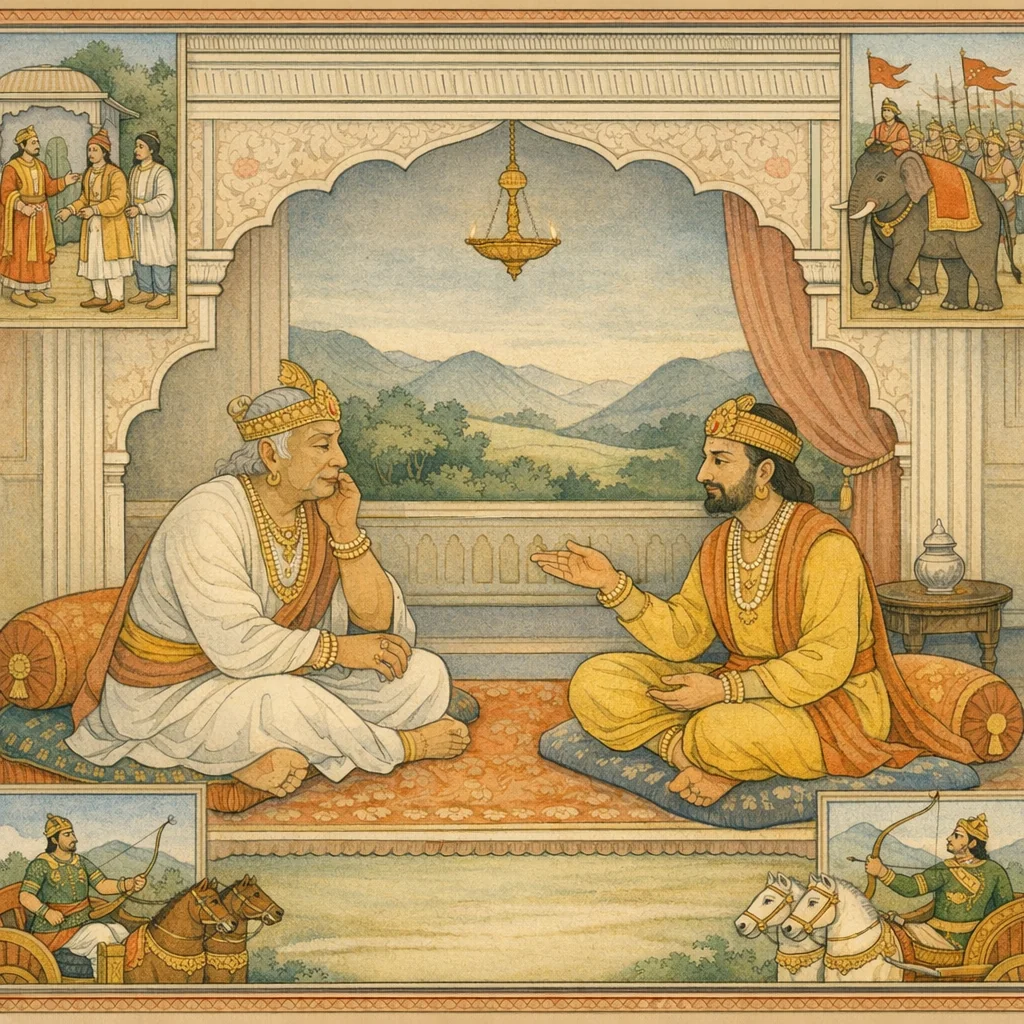
Dhṛtarāṣṭra opens with pointed questions about Yudhiṣṭhira’s intent: what he has declared upon hearing that many armies have assembled, whose counsel he follows, and who restrains or incites him. Sañjaya replies that the Pāñcālas and allied groups look to Yudhiṣṭhira as the coordinating authority, greeting him as a radiant focal point of command. The scene briefly widens to public spectatorship, noting women from multiple social categories approaching to see the armed Pārtha(s). Dhṛtarāṣṭra then asks by whom the Pāṇḍavas are “joined” against the Kurus, with Dṛṣṭadyumna and the Somakas implied as a leading formation. Vaiśaṃpāyana narrates a moment of crisis in the Kuru assembly: Sañjaya, when questioned, sighs, becomes overwhelmed, and faints—interpreted by Dhṛtarāṣṭra as fear after seeing the Kuntī-putras. Regaining composure, Sañjaya reports having seen the Pāṇḍava heroes and proceeds to enumerate the coalition’s principal champions and allies: Yudhiṣṭhira (as dharma-standard), Bhīma (as decisive protector in prior crises), Arjuna (as victor in divine and martial trials), Nakula and Sahadeva (as capable conquerors), Śikhaṇḍin (linked to Bhīṣma’s destined fall), the five Kekaya brothers, Yuyudhāna (Sātyaki), Virāṭa, the Kāśi king, the Draupadeyas, Abhimanyu, Dhṛṣṭaketu of Cedi, Vāsudeva (Kṛṣṇa) as strategic refuge, additional Cedi allies, Drupada with substantial force, and numerous eastern and northern kings—depicting a broad, multi-regional alignment under Dharmarāja’s banner.
Chapter Arc: धृतराष्ट्र संजय से व्याकुल होकर पूछते हैं—धर्मपुत्र युधिष्ठिर युद्ध के लिए क्या चेष्टा कर रहा है, कौन-कौन उसके मुख की आज्ञा की प्रतीक्षा में खड़े हैं, और क्या कोई उसे युद्ध से रोक भी सकता है? → संजय पाण्डव-पक्ष के प्रधान सहायकों और सहयोगी राजाओं/वीरों का क्रमशः वर्णन करता है—जिन्होंने काशी, अंग, मगध, कलिंग आदि को जीतकर पराक्रम सिद्ध किया; अज्ञातवास में आश्रय देने वाले विराट का स्मरण; काशीपति वारणासी-निवासी महारथी; और अनेक प्राच्य-उदीच्य नरेशों का शतशः पाण्डवों के साथ आ जुटना। इस बढ़ती सूची से धृतराष्ट्र के मन में भय और अनिवार्यता का बोध गहराता जाता है। → महातेजस्वी द्रुपद का विशाल बल के साथ ‘पाण्डवार्थाय’ त्यक्तात्मा होकर युद्ध के लिए दृढ़ निश्चय से उपस्थित होना—यह घोषणा पाण्डव-संघ की शक्ति और संकल्प का शिखर बनती है, मानो धर्मराज के पीछे समस्त राजमण्डल एक ध्वज के नीचे आ खड़ा हुआ हो। → संजय के वर्णन से स्पष्ट हो जाता है कि युधिष्ठिर अकेला नहीं—उसके साथ भीमसेन जैसे अतुल बाहुबल वाले, सहदेव जैसे विजयी, विराट-द्रुपद-काशिराज तथा असंख्य नरेश संगठित हैं; अतः युद्ध की तैयारी पूर्ण और व्यापक है। → धृतराष्ट्र के प्रश्नों के पीछे छिपा भय बना रहता है—इतनी प्रबल पाण्डव-संहति के सामने कौरव-पक्ष क्या उपाय करेगा, और क्या कोई ‘धर्मज्ञ’ युधिष्ठिर को युद्ध से विरत कर पाएगा?
Shlokas
Verse 1
ऑपनक्रा छा अर क्ााज पज्चाशत्तमो< ध्याय: संजयद्वारा युधिष्ठटिरके प्रधान सहायकोंका वर्णन धृतराष्ट उवाच किमसौ पाण्डवो राजा धर्मपुत्रो5भ्यभाषत । श्रुत्वेह बहुला: सेना: प्रीत्यर्थ न: समागता:,धृतराष्ट्रने पूछा--संजय! हमारी प्रसन्नता और सहायताके लिये यहाँ हस्तिनापुरमें बहुत-सी सेना एकत्र हो गयी है, यह समाचार सुनकर पाण्डवराज धर्मपुत्र युधिष्ठिरने क्या कहा? इति श्रीमहाभारते उद्योगपर्वणि यानसंधिपर्वणि संजयवाक्ये पठ्चाशत्तमो<ध्याय: ।। ५० || इस प्रकार श्रीमह्या भारत उद्योगपर्वके अन्तर्गत यानसंधिपर्वमें संजयवाक्यविषयक पचासवाँ अध्याय पूरा हुआ ॥/ ५० ॥/ ऑपनआ कराता बछ। जि एकपज्चाशत्तमो< ध्याय: भीमसेनके पराक्रमसे डरे हुए धृतराष्ट्रका विलाप धृतराष्ट उवाच सर्व एते महोत्साहा ये त्वया परिकीर्तिता: । एकतत्त्वेव ते सर्वे समेता भीम एकत:ः
Dhṛtarāṣṭra said: “Sañjaya, when King Yudhiṣṭhira—the son of Dharma among the Pāṇḍavas—heard that many troops have assembled here at Hastināpura for our satisfaction and support, what did he say?”
Verse 2
किमसौ चेष्टते सूत योत्स्यमानो युधिष्ठिर: । के वास्य भ्रातृपुत्राणां पश्यन्त्याज्ञेप्सवो मुखम्,सूत! भविष्यमें होनेवाले युद्धके लिये उद्यत होकर राजा युधिष्ठिर कैसी तैयारी कर रहे हैं? उनके भाइयों और पुत्रोंमेंसे कौन-कौन-से लोग उनसे किसी कार्यके लिये आज्ञा पानेकी इच्छासे उनका मुँह जोहते रहते हैं?
Dhṛtarāṣṭra said: “Sūta, what preparations is Yudhiṣṭhira making as he readies himself for the coming war? And among his brothers and his sons, who are those that keep their eyes fixed on his face, eager to receive his command for some task?”
Verse 3
के स्विदेनं वारयन्ति युद्धाच्छाम्येति वा पुन: । निकृत्या कोपितं मन्दैर्धर्मज्ञ धर्मचारिणम्,युधिष्ठिर धर्मके ज्ञाता हैं और धर्मके आचरणमें सदा तत्पर रहते हैं। मेरे मन्दबुद्धि पुत्रोंने अपने कपट॒पूर्ण बर्तावसे उन्हें कुपित कर दिया है। वहाँ कौन-कौन ऐसे हैं, जो उन्हें बारंबार शान्त रहनेकी सलाह देकर युद्धसे रोकते हैं?
Dhṛtarāṣṭra said: “Who, indeed, are the ones restraining him from war, repeatedly urging him to be calm? My dull-witted sons, by their deceitful conduct, have provoked that knower of dharma and steadfast practitioner of righteousness. Who there keeps advising him again and again to remain peaceful and to desist from battle?”
Verse 4
संजय उवाच राज्ञों मुखमुदीक्षन्ते पज्चाला: पाण्डवै: सह । युधिष्ठिरस्य भद्रें ते स सर्वाननुशास्ति च,संजयने कहा--महाराज! आपका कल्याण हो। पांचाल और पाण्डव सभी राजा युधिष्ठिरके मुखकी ओर देखते रहते हैं और वे उन सबको विभिन्न कार्योंके लिये आज्ञा देते हैं
Sañjaya said: “O King, may welfare be yours. The Pāñcālas, together with the Pāṇḍavas, keep their eyes fixed on Yudhiṣṭhira’s face; and he, in turn, directs and instructs them all—assigning each their proper tasks.”
Verse 5
पृथग्भूता: पाण्डवानां पञज्चालानां रथव्रजा: । आयान्तमभिनन्दन्ति कुन्तीपुत्रं युधिष्ठिरम्,जब दुन्तीपुत्र युधिष्ठिर सामने आते हैं, तब पाण्डवों तथा पांचालोंके रथसमूह पृथक्- पृथक् श्रेणियोंमें खड़े होकर उनका अभिनन्दन करते हैं
Sañjaya said: “The companies of chariots belonging to the Pāṇḍavas and the Pañcālas, having formed themselves into separate ranks, greet and acclaim Kuntī’s son Yudhiṣṭhira as he approaches.”
Verse 6
नभ: सूर्यमिवोद्यन्तं कौन्तेयं दीप्ततेजसम् । पजञ्चाला: प्रतिनन्दन्ति तेजोराशिमिवोदितम्,जैसे आकाश उदयकालमें उद्दीप्त तेजस्वी सूर्यदेवका अभिनन्दन करता है, उसी प्रकार, मानो तेजके पुंजजा उदय होता हो, इस तरह दिखायी देनेवाले कुन्तीनन्दन युधिष्ठिरका समस्त पांचालगण अभिनन्दन करते हैं
Sañjaya said: “As the sky greets the rising sun, radiant with blazing splendour, so the Pañcālas welcomed Kuntī’s son Yudhiṣṭhira, who appeared as though a very mass of light had arisen.”
Verse 7
आगोपालाविपालाश्च नन्दमाना युधिष्ठिरम् । पज्चाला: केकया मत्स्या: प्रतिनन्दन्ति पाण्डवम्,ग्वालिये और गड़रियोंसे लेकर पांचाल, केकय और मत्स्यदेशोंके राजवंशतक सभी लोग पाण्डुपुत्र युधिष्ठिरका सम्मान करते हैं
Sañjaya said: From cowherds and shepherds upward, all people rejoice in Yudhiṣṭhira; the Pāñcālas, the Kekayas, and the Matsyas too openly honor the Pāṇḍava.
Verse 8
ब्राह्माण्यो राजपुत्र्यश्न विशां दुहितरश्न या: । क्रीडन्त्योडभिसमायान्ति पार्थ संनद्धमीक्षितुम्,ब्राह्मणों, क्षत्रियों तथा वैश्योंकी कन्याएँ भी खेलती-खेलती युद्धके लिये सुसज्जित युधिष्ठिरको देखनेके लिये उनके पास आ जाती हैं
Sañjaya said: “Brahmin maidens, princesses, and the daughters of the Vaiśya community too—while sporting—come forward to behold Pārtha, now fully armed and arrayed for war.”
Verse 9
धृतराष्ट उवाच संजयाचक्ष्व येनास्मान् पाण्डवा अभ्ययुञ्जत । धृष्टद्युम्नस्य सैन्येन सोमकानां बलेन च,धृतराष्ट्रने पूछा--संजय! बताओ, पाण्डवलोग धृष्टद्युम्मनकी सेना तथा अन्यान्य सोमकवंशियोंकी विशाल वाहिनीके सिवा और किस-किसकी सहायता पाकर हमलोगोंके साथ युद्ध करनेको उद्यत हुए हैं?
Dhṛtarāṣṭra said: “Sañjaya, tell me by whose support the Pāṇḍavas have advanced to confront us—besides the army of Dhṛṣṭadyumna and the strength of the Somakas. On what other allies do they rely as they prepare for war against us?”
Verse 10
वैशम्पायन उवाच गावल्गणिस्तु तत्पृष्ट: सभायां कुरुसंसदि । निःश्वस्य सुभृशं दीर्घ मुहु: संचिन्तयन्निव
Vaiśampāyana said: When Gāvalgaṇi was thus questioned in the assembly of the Kurus, he heaved a deep, heavy sigh and for a long while seemed to ponder again and again.
Verse 11
तत्रानिमित्ततो दैवात् सूतं कश्मलमाविशत् | तदा55चचक्षे विदुर: सभायां राजसंसदि
There, without any apparent cause—by the force of fate—the charioteer was seized by confusion and distress. At that moment, Vidura observed him in the assembly hall, in the king’s court.
Verse 12
संजयो<यं महाराज मूर्च्छित: पतितो भुवि । वाचं न सृजते कांचिद्धीनप्रज्ञोडल्पचेतन:
Vaiśampāyana said: “O great king, this Sañjaya has fainted and fallen to the ground. He utters no words at all—his understanding dulled and his consciousness reduced—overwhelmed by what he has witnessed and must report.”
Verse 13
वैशम्पायनजी कहते हैं--जनमेजय! कौरवोंकी सभामें राजा धृतराष्ट्रके इस प्रकार पूछनेपर संजय बारंबार लम्बी साँस खींचते हुए दीर्घकालतक गहरी चिन्तामें निमग्न-से हो गये और सहसा बिना किसी विशेष कारणके ही वे मूर्च्छित होकर गिर पड़े। तब विदुरजीने उस राजसभामें धृतराष्ट्रसे कहा--“महाराज! ये संजय मूर्च्छित होकर धरतीपर गिर पड़े हैं। इनकी बुद्धि और चेतना लुप्त-सी हो रही है, अतः अभी कुछ बोल नहीं सकते' || १०-- १२ || धृतराष्ट उवाच अपश्यत् संजयो नून॑ कुन्तीपुत्रान् महारथान् । तैरस्य पुरुषव्याघ्रैर्भुशमुद्रेजितं मन:
Vaiśampāyana said: “O Janamejaya, in the Kaurava hall, when King Dhṛtarāṣṭra questioned him thus, Sañjaya again and again drew long breaths and for a long while seemed sunk in deep anxiety; then, suddenly, without any clear cause, he fainted and fell. Thereupon Vidura said in that royal assembly to Dhṛtarāṣṭra: ‘O great king, Sañjaya has fainted and fallen to the earth. His understanding and consciousness are failing; therefore he cannot speak just now.’” Dhṛtarāṣṭra said: “Surely Saṃjaya has seen the mighty chariot-warriors, the sons of Kuntī. By those tiger-like men, his mind has been violently shaken.”
Verse 14
धृतराष्ट्र बोले--निश्चय ही संजयने महारथी कुन्तीपुत्रोंको देखा है। जान पड़ता है, उन पुरुषसिंह पाण्डवोंने इसके मनको अत्यन्त उद्विग्न कर दिया है ।। वैशम्पायन उवाच संजयश्नेतनां लब्ध्वा प्रत्याश्वस्येदमब्रवीत् । धृतराष्ट्र महाराज सभायां कुरुसंसदि,वैशम्पायनजी कहते हैं--जनमेजय! इतनेमें ही संजयको चेत हो आया और वे आश्वस्त होकर कौरव-सभामें धृतराष्ट्रसे बोले
Dhṛtarāṣṭra said: “Surely Sañjaya has seen the mighty chariot-warriors, the sons of Kuntī. It seems those lion-like Pāṇḍavas have greatly unsettled his mind.” Vaiśampāyana said: Regaining consciousness, Sañjaya composed himself and then spoke these words to King Dhṛtarāṣṭra in the Kuru assembly.
Verse 15
संजय उवाच दृष्टवानस्मि राजेन्द्र कुन्तीपुत्रान महारथान् | मत्स्यराजगृहावासनिरोधेनावकर्शितान्,संजयने कहा--राजेन्द्र! मैंने महारथी कुन्तीपुत्रोंका दर्शन किया है। वे अज्ञातवासके समय मत्स्यनरेश विराटके घरमें छिपकर रहनेके कारण अत्यन्त दुबले हो गये हैं
Sañjaya said: “O king, I have seen the mighty chariot-warriors, the sons of Kuntī. Because they had to remain concealed while dwelling in the house of the Matsya king, Virāṭa, during their period of incognito exile, they have been greatly worn down and emaciated.”
Verse 16
शृणु यैहि महाराज पाण्डवा अभ्ययुञज्जत । धृष्टद्युम्नेन वीरेण युद्धे वस्ते5भ्ययुज्जत
Sañjaya said: “Listen, O great king, to those warriors by whom the Pāṇḍavas were assailed. Led by the heroic Dhṛṣṭadyumna, they advanced against you in battle.”
Verse 17
महाराज! पाण्डवोंने जिन लोगोंकी सहायता पाकर युद्धके लिये तैयारी की है, उनका परिचय देता हूँ, सुनिये। पहली बात यह है कि उन्हें वीरवर धृष्टद्युम्नका पूर्ण सहयोग प्राप्त हुआ है, जिससे सबल होकर उन पाण्डवोंने आपलोगोंपर चढ़ाई करनेकी तैयारी की है ।। यो नैव रोषान्न भयान्न लोभान्नार्थकारणात् । न हेतुवादाद् धर्मात्मा सत्यं जह्मात् कदाचन
Sañjaya said: “O King, listen as I identify those whose support the Pāṇḍavas have secured in making ready for war. First of all, they have obtained the full backing of the foremost hero Dhṛṣṭadyumna; strengthened by him, the Pāṇḍavas have prepared to advance against you. Such a righteous-souled man never abandons truth—neither out of anger, nor fear, nor greed, nor for the sake of gain, nor through sophistical argument—at any time.”
Verse 18
यः प्रमाणं महाराज धर्मे धर्मभूतां वर: । अजातशशत्रुणा तेन पाण्डवा अभ्ययुञज्जत
Sañjaya said: “O great king, he who was the very standard of righteousness, the foremost among the righteous—by that Ajātaśatru the Pāṇḍavas were urged on (to act), taking dharma itself as their measure.”
Verse 19
महाराज! जो धर्मात्मा न रोषसे, न भयसे, न लोभसे, न अर्थके लिये और न बहाना बनाकर ही कभी सत्यका परित्याग कर सकते हैं, जो धर्मात्माओंमें श्रेष्ठ हैं और धर्मके विषयमें प्रमाण माने जाते हैं, उन अजातशत्रुके प्रभावसे पाण्डवोंने युद्धकी तैयारी की है ।। यस्य बाहुबले तुल्य: पृथिव्यां नास्ति कश्नन । यो वै सर्वान् महीपालान् वशे चक्रे धनुर्धर: । य: काशीनड्रमगधान् कलिड्जांश्न युधाजयत्
Sañjaya said: “O King, the Pāṇḍavas have made ready for war under the influence of Ajātaśatru—one who never abandons truth, whether from anger, fear, greed, for the sake of gain, or by resorting to any pretext; one who is foremost among the righteous and is regarded as an authority in matters of dharma. There is none on earth equal to him in the strength of his arms. That bowman brought all kings under his control, and he conquered the Kāśīs, the Aṅgas, the Magadhas, and the Kaliṅgas.”
Verse 20
यस्य वीर्येण सहसा चत्वारो भुवि पाण्डवा:
Sañjaya said: “By whose prowess, in a sudden surge of might, the four Pāṇḍava brothers on earth (were able to act with decisive force).”
Verse 21
निः:सृत्य जतुगेहाद् वै हिडिम्बात् पुरुषादकात् | यश्चलैषामभवद् द्वीप: कुन्तीपुत्रो वृकोदर:
Sañjaya said: “Having escaped from the house of lac, and from Hiḍimba—the man-eating rākṣasa—Kuntī’s son Vṛkodara (Bhīma) became, as it were, an ‘island’ for them: a secure refuge and saving support amid danger.”
Verse 22
याज्ञसेनीमथो यत्र सिन्धुराजो5पकृष्टवान् । तत्रैषामभवद् द्वीप: कुन्तीपुत्रो वृकोदर:
Sañjaya said: At the place where the king of Sindhu had dragged away Yājñasenī (Draupadī), there Bhīma—Kuntī’s son, called Vṛkodara—became for them an “island”: a steadfast refuge and protector amid peril.
Verse 23
यश्न तान् संगतान् सर्वान् पाण्डवान् वारणावते । दह्तो मोचयामास तेन वस्ते5भ्ययुज्जत
Sañjaya said: “Yet the very man who at Vāraṇāvata rescued all the Pāṇḍavas when they had been gathered together and set ablaze—against him they now prepare to march.”
Verse 24
जिनके बल और पराक्रमसे चारों पाण्डव सहसा लाक्षाभवनसे निकलकर इस पृथ्वीपर जीवित बच गये, जिन्होंने मनुष्यभक्षी राक्षस हिडिम्बसे अपने भाइयोंकी रक्षा की, उस संकटके समय जो कुन्तीकुमार भीम इन पाण्डवोंके लिये द्वीपके समान आश्रयदाता हो गये, जब सिन्धुराज जयद्रथने द्रौपदीका अपहरण किया था, उस समय भी जिन कुन्तीकुमार वृकोदरने उन सबको द्वीपकी भाँति आश्रय दिया था तथा जिन्होंने वारणावत नगरमें एकत्र हुए समस्त पाण्डवोंको लाक्षागृहकी आगमें जलनेसे बचा लिया था, उन्हीं भीमसेनके बलसे पाण्डवोंने आपलोगोंके साथ युद्धकी तैयारी की है ।। कृष्णायां चरता प्रीति येन क्रोधवशा हता: । प्रविश्य विषमं घोरं॑ पर्वतं गन्धमादनम्,जिन्होंने द्रौषधदीपर अपना प्रेम जताते हुए अत्यन्त दुर्गग एवं भयंकर गन्धमादन पर्वतकी भूमिमें प्रवेश करके क्रोधवश नामवाले राक्षसोंको मार डाला, जिनकी दोनों भुजाओंमें दस हजार हाथियोंके समान बल है, उन्हीं भीमसेनके बलसे पाण्डवोंने आपलोगोंपर आक्रमणका उद्योग किया है
Sañjaya said: By whose strength and heroism the four Pāṇḍavas suddenly escaped the house of lac and remained alive upon the earth; who protected his brothers by slaying the man-eating rākṣasa Hiḍimba; who, in that time of peril, became for the Pāṇḍavas like an island—an unfailing refuge; who again, when Jayadratha, king of Sindhu, abducted Draupadī, served as their island-like protector; and who at Vāraṇāvata saved all the assembled Pāṇḍavas from being burned in the fire of the lac-house—by the might of that very Bhīmasena the Pāṇḍavas have made ready for war with you. Showing affection toward Kṛṣṇā (Draupadī), he entered the rugged and dreadful Gandhamādana mountain and, driven by wrath, slew the rākṣasas there. His two arms possess strength equal to ten thousand elephants. Relying on that Bhīma’s power, the Pāṇḍavas have undertaken the enterprise of attacking you.
Verse 25
यस्य नागायुतैर्वीर्य भुजयो: सारमर्पितम् | तेन वो भीमसेनेन पाण्डवा अभ्ययुञज्जत,जिन्होंने द्रौषधदीपर अपना प्रेम जताते हुए अत्यन्त दुर्गग एवं भयंकर गन्धमादन पर्वतकी भूमिमें प्रवेश करके क्रोधवश नामवाले राक्षसोंको मार डाला, जिनकी दोनों भुजाओंमें दस हजार हाथियोंके समान बल है, उन्हीं भीमसेनके बलसे पाण्डवोंने आपलोगोंपर आक्रमणका उद्योग किया है
Sañjaya said: “The Pāṇḍavas have set themselves to attack you, relying on Bhīmasena—he whose two arms are endowed with the concentrated strength of ten thousand elephants. Trusting in that overwhelming might, they have undertaken this offensive against you.”
Verse 26
कृष्णद्वितीयो विक्रम्य तुष्ट्यूर्थ जातवेदस: । अजयद्ू य: पुरा वीरो युध्यमानं पुरंदरम्,जिन वीरशिरोमणिने पहले केवल भगवान् श्रीकृष्णके साथ जाकर अग्निदेवकी तृप्तिके लिये पराक्रम करके अपने साथ युद्ध करनेवाले देवराज इन्द्रको भी पराजित कर दिया, जिन्होंने युद्धके द्वारा पर्वतपर शयन करनेवाले तथा हाथोंमें त्रिशूल लिये रहनेवाले साक्षात् देवाधिदेव महादेव उमापतिको भी संतुष्ट किया था तथा जिन धनुर्धर वीरने समस्त लोकपालोंको भी हराकर अपने वशमें कर लिया, उन्हीं अर्जुनके बलपर पाण्डवलोग युद्धमें आपलोगोंसे भिड़नेको तैयार हैं
Sañjaya said: “That hero who, with Kṛṣṇa as his second, once displayed his prowess to satisfy Agni (Jātavedas) and even defeated Indra (Purandara) when Indra fought against him—relying on the strength of that very Arjuna, the Pāṇḍavas stand ready to engage you in war.”
Verse 27
यः स साक्षान्महादेवं गिरिशं शूलपाणिनम् । तोषयामास युद्धेन देवदेवमुमापतिम्,जिन वीरशिरोमणिने पहले केवल भगवान् श्रीकृष्णके साथ जाकर अग्निदेवकी तृप्तिके लिये पराक्रम करके अपने साथ युद्ध करनेवाले देवराज इन्द्रको भी पराजित कर दिया, जिन्होंने युद्धके द्वारा पर्वतपर शयन करनेवाले तथा हाथोंमें त्रिशूल लिये रहनेवाले साक्षात् देवाधिदेव महादेव उमापतिको भी संतुष्ट किया था तथा जिन धनुर्धर वीरने समस्त लोकपालोंको भी हराकर अपने वशमें कर लिया, उन्हीं अर्जुनके बलपर पाण्डवलोग युद्धमें आपलोगोंसे भिड़नेको तैयार हैं
Sañjaya said: He who, by the very ordeal of battle, pleased Mahādeva himself—Giriśa, the mountain Lord, trident-bearer, God of gods, Umāpati—on the strength of that Arjuna the Pāṇḍavas stand ready to engage you in war.
Verse 28
यश्च सर्वान् वशे चक्रे लोकपालान् धनुर्धर: । तेन वो विजयेनाजौ पाण्डवा अभ्ययुञ्जत,जिन वीरशिरोमणिने पहले केवल भगवान् श्रीकृष्णके साथ जाकर अग्निदेवकी तृप्तिके लिये पराक्रम करके अपने साथ युद्ध करनेवाले देवराज इन्द्रको भी पराजित कर दिया, जिन्होंने युद्धके द्वारा पर्वतपर शयन करनेवाले तथा हाथोंमें त्रिशूल लिये रहनेवाले साक्षात् देवाधिदेव महादेव उमापतिको भी संतुष्ट किया था तथा जिन धनुर्धर वीरने समस्त लोकपालोंको भी हराकर अपने वशमें कर लिया, उन्हीं अर्जुनके बलपर पाण्डवलोग युद्धमें आपलोगोंसे भिड़नेको तैयार हैं
Sañjaya said: That bowman who brought all the guardians of the worlds under his sway—relying on his victorious prowess in battle, the Pāṇḍavas are ready to engage you in war.
Verse 29
यः प्रतीचीं दिशं चक्रे वशे म्लेच्छणणायुताम् । स तत्र नकुलो योद्धा चित्रयोधी व्यवस्थित:,कुरुनन्दन! जिन्होंने सहसौरों म्लेच्छोंसे भरी हुई पश्चिम दिशाको जीतकर अपने अधीन कर लिया था, वे विचित्र रीतिसे युद्ध करनेमें कुशल योद्धा नकुल उधरसे युद्धके लिये तैयार खड़े हैं। माद्रीकुमार नकुल महान् धनुर्धर और अत्यन्त दर्शनीय वीर हैं। उनके बलसे पाण्डवोंने आपलोगोंपर आक्रमणकी तैयारी की है
Sañjaya said: “He who brought under his control the western quarter, teeming with countless bands of Mlecchas—Nakula, that warrior skilled in fighting by varied and unconventional methods—now stands there ready for battle, O delight of the Kurus. The son of Mādrī, Nakula, a great archer and a strikingly splendid hero, is stationed for the fight; relying on his strength, the Pāṇḍavas have made their preparations to assail you.”
Verse 30
तेन वो दर्शनीयेन वीरेणातिधनुर्भुता । माद्रीपुत्रेण कौरव्य पाण्डवा अभ्ययुञज्जत,कुरुनन्दन! जिन्होंने सहसौरों म्लेच्छोंसे भरी हुई पश्चिम दिशाको जीतकर अपने अधीन कर लिया था, वे विचित्र रीतिसे युद्ध करनेमें कुशल योद्धा नकुल उधरसे युद्धके लिये तैयार खड़े हैं। माद्रीकुमार नकुल महान् धनुर्धर और अत्यन्त दर्शनीय वीर हैं। उनके बलसे पाण्डवोंने आपलोगोंपर आक्रमणकी तैयारी की है
Sañjaya said: O Kauravya, the Pāṇḍavas have set themselves to assail you, relying on that splendid and exceedingly mighty archer—the son of Mādrī. With his prowess as their support, they have made ready for battle.
Verse 31
य: काशीनड्रमगन् कलिड्रांश्न युधाजयत् । तेन व: सहदेवेन पाण्डवा अभ्ययुञ्जत,जिन्होंने युद्धमें काशी, अंग, मगध तथा कलिंग-देशके राजाओंको पराजित किया है, उन वीरवर सहदेवके बलसे पाण्डव आपलोगोंसे भिड़नेके लिये तैयार हुए हैं
Sañjaya said: “The Pāṇḍavas have readied themselves to engage you in battle, relying on the might of Sahadeva—he who has already subdued in war the kings of Kāśī, Aṅga, Magadha, and Kaliṅga.”
Verse 32
यस्य वीर्येण सदृशाश्षत्वारो भुवि मानवा: । अश्व॒त्थामा धृष्टकेतू रुक््मी प्रद्मयुम्म एव च,राजन! इस भूमण्डलमें अश्वत्थामा, धृष्टकेतु, रुक्मी तथा प्रद्युम्न--ये चार पुरुष ही बल और पराक्रममें जिनकी समानता कर सकते हैं, जो माद्रीको आनन्द प्रदान करनेवाले तथा पाण्डवोंमें सबसे छोटे हैं, उन नरश्रेष्ठ वीर सहदेवके साथ आपलोगोंका महान् विनाशकारी युद्ध होनेवाला है
Sañjaya said: “O King, on this earth there are only four men who can be deemed his equals in strength and heroic prowess—Aśvatthāmā, Dhṛṣṭaketu, Rukmī, and Pradyumna. Therefore, a great and ruinous war is about to arise for you against Sahadeva, the foremost of men—valiant, a joy to Mādrī, and the youngest among the Pāṇḍavas.”
Verse 33
तेन वः सहदेवेन युद्ध राजन् महात्ययम् । यवीयसा नृवीरेण माद्रीनन्दिकरेण च,राजन! इस भूमण्डलमें अश्वत्थामा, धृष्टकेतु, रुक्मी तथा प्रद्युम्न--ये चार पुरुष ही बल और पराक्रममें जिनकी समानता कर सकते हैं, जो माद्रीको आनन्द प्रदान करनेवाले तथा पाण्डवोंमें सबसे छोटे हैं, उन नरश्रेष्ठ वीर सहदेवके साथ आपलोगोंका महान् विनाशकारी युद्ध होनेवाला है
Sañjaya said: “O King, a great and ruinous battle is destined for you with Sahadeva—youngest among the Pāṇḍavas, a foremost hero among men, and a source of joy to Mādrī. With him, your forces are to meet a conflict of grave consequence.”
Verse 34
तपश्चचार या घोरं काशिकन्या पुरा सती | भीष्मस्य वधमिच्छन्ती प्रेत्यापि भरतर्षभ,भरतश्रेष्ठ! पूर्वकालमें काशिराजकी जिस सती-साध्वी कन्या अम्बाने भीष्मजीके वधकी इच्छासे घोर तपस्या की थी, वही मृत्युके पश्चात् पांचालराज द्रुपदकी पुत्री होकर उत्पन्न हुई, परंतु दैववश वह फिर पुरुष हो गयी। वह वीर पांचालकुमार स्त्री और पुरुष दोनों शरीरोंके गुण और अवगुणको जानता है
Sañjaya said: “O bull among the Bharatas, that chaste maiden of Kāśī who long ago undertook fierce austerities, desiring Bhīṣma’s death—even after death—was born again as the daughter of Drupada, king of the Pāñcālas. Yet, by the turn of fate, she later became male. That valiant Pāñcāla prince thus knows, from lived experience, the strengths and limitations of both female and male embodiment—an element of destiny that will bear directly upon the course of the war and the fulfillment of a vowed purpose.”
Verse 35
पाञ्चालस्य सुता जज्ञे दैवाच्च स पुन: पुमान् स्त्रीपुंसो: पुरुषव्याप्र य: स वेद गुणागुणान्,भरतश्रेष्ठ! पूर्वकालमें काशिराजकी जिस सती-साध्वी कन्या अम्बाने भीष्मजीके वधकी इच्छासे घोर तपस्या की थी, वही मृत्युके पश्चात् पांचालराज द्रुपदकी पुत्री होकर उत्पन्न हुई, परंतु दैववश वह फिर पुरुष हो गयी। वह वीर पांचालकुमार स्त्री और पुरुष दोनों शरीरोंके गुण और अवगुणको जानता है
Sañjaya said: “From the line of Pāñcāla a daughter was born; yet by the turn of fate that same person again became a man. Having encompassed both womanhood and manhood, that warrior understands the strengths and limitations of each. The verse recalls the earlier vow of Amba—who undertook fierce austerities seeking Bhīṣma’s death—and explains that, after death, she was reborn as Drupada’s child and later assumed a male form, thereby becoming an instrument through which past resolve and moral consequence move toward their destined outcome.”
Verse 36
यः कलिड्जान् समापेदे पाज्चाल्यो युद्धदुर्मद: । शिखण्डिना व: कुरव: कृतास्त्रेणाभ्ययुज्जत,कौरवो! वह टद्रुपदकुमार युद्धमें उन््मत्त होकर लड़नेवाला है। उसीने कलिंगदेशीय क्षत्रियोंको पराजित किया था। उस अस्त्रवेत्ता वीरका नाम शिखण्डी है, जिसके बलपर पाण्डवोंने आपलोगोंसे युद्धकी तैयारी की है
Sañjaya said: “That Pāñcāla prince, intoxicated with the ardor of battle, who once subdued the warriors of Kaliṅga—he is the arms-trained hero Śikhaṇḍin. Relying on his strength and martial skill, the Pāṇḍavas have made ready to engage you Kurus in war, O Kaurava.”
Verse 37
य॑ं यक्ष: पुरुषं चक्रे भीष्मस्य निधनेच्छया । महेष्वासेन रौदट्रेण पाण्डवा अभ्ययुज्जत
Sañjaya said: “The Yakṣa, desiring Bhīṣma’s death, fashioned a man; and the Pāṇḍavas then advanced against that fierce, great archer.”
Verse 38
जिसे स्थूणाकर्ण यक्षने पुरुष बना दिया था, भीष्मके वधकी इच्छा रखनेवाले उस भयंकर एवं महाधनुर्धर शिखण्डीके बलपर पाण्डव आपसे युद्ध करनेको तैयार हैं ।। महेष्वासा राजपुत्रा भ्रातर: पञ्च केकया: । आमुक्तकवचा: शूरास्तैश्व वस्ते5 भ्ययुज्जत,केकयदेशके पाँच राजकुमार जो परस्पर भाई हैं, सदा कवच बाँधे युद्धके लिये उद्यत रहते हैं। वे महान् धनुर्धर शूरवीर हैं। उनके बलपर पाण्डवोंने आपलोगोंसे युद्धकी तैयारी की है
Sanjaya said: Relying on the might of the dreadful Śikhaṇḍin—once turned into a man by the Yakṣa Sthūṇākarṇa and now intent on Bhīṣma’s death, a great archer—the Pāṇḍavas have made themselves ready to fight you. And the five Kekaya princes, brothers to one another, mighty bowmen and heroes, ever wearing their armor and always poised for battle, stand prepared against you as well.
Verse 39
यो दीर्घबाहु: क्षिप्रास्त्रो धृतिमान् सत्यविक्रम: । तेन वो वृष्णिवीरेण युयुधानेन संगर:,जिनकी बड़ी-बड़ी भुजाएँ हैं, जो बड़ी शीघ्रतासे अस्त्र-संचालन करते हैं तथा जो धीर एवं सत्यपराक्रमी हैं, उन वृष्णिवीर सात्यकिके साथ आपलोगोंका संग्राम होनेवाला है
Sañjaya said: “You will have to face battle with that Vṛṣṇi hero Yuyudhāna (Sātyaki)—the long-armed warrior who wields weapons with swift precision, steadfast in resolve and true in his valor.”
Verse 40
य आसीच्छरणं काले पाण्डवानां महात्मनाम् | रणे तेन विराटेन भविता व: समागम:,जो अज्ञातवासके समय महात्मा पाण्डवोंके आश्रयदाता थे, उन राजा विराटके साथ भी आपलोगोंका युद्ध होगा
Sañjaya said: “He who, at the time of need, became the refuge and protector of the great-souled Pāṇḍavas—against that very King Virāṭa too, you will have an encounter in battle.”
Verse 41
य: स काशिपती राजा वाराणस्यां महारथ: । स तेषामभवद् योद्धा तेन वस्ते5भ्ययुज्जत,काशिदेशके अधिपति महारथी नरेश जो वाराणसीपुरीमें रहते हैं, पाण्डवोंकी ओरसे युद्ध करनेको तैयार हैं। उनको साथ लेकर पाण्डव आपलोगोंपर आक्रमण करनेके लिये तैयार हैं
Sañjaya said: That king, the lord of Kāśī, a great chariot-warrior dwelling in Vārāṇasī, has become a fighter on their side. With him, they are preparing to assail you.
Verse 42
शिशुभिद्दुर्जयै: संख्ये द्रौपदेयैर्महात्मभि: । आशीविषसमस्पर्श: पाण्डवा अभ्ययुञ्जत,द्रौपदीके महामना पुत्र देखनेमें बालक होनेपर भी समरभूमिमें दुर्जय हैं। उन्हें छेड़ना विषधर सर्पोको छू लेनेके समान है। उनके बलपर भी पाण्डव आपलोगोंसे भिड़नेकी तैयारी कर रहे हैं
Draupadī’s sons—great-souled and hard to conquer in battle—though they look like mere boys, are formidable on the field. To provoke them is like touching a venomous serpent. Relying on their strength, the Pāṇḍavas are making ready to clash with you.
Verse 43
यः कृष्णसदृशो वीर्य युधिष्ठिरसमो दमे । तेनाभिमन्युना संख्ये पाण्डवा अभ्ययुज्जत
Sañjaya said: “With Abhimanyu—whose prowess was like Kṛṣṇa’s and whose self-restraint matched Yudhiṣṭhira’s—the Pāṇḍavas advanced to engage in battle.”
Verse 44
जो पराक्रममें भगवान् श्रीकृष्णके समान और इन्द्रियसंयममें युधिष्ठिरके तुल्य हैं, उन अभिमन्युको साथ लेकर पाण्डवोंने आपलोगोंसे युद्धकी तैयारी की है ।। यश्चैवाप्रतिमो वीर्ये धृष्टकेतुर्महायशा: । दुःसहः: समरे क्रुद्ध: शैशुपालिमहारथ:,जिसके पराक्रमकी कहीं तुलना नहीं है, शिशुपालका वह महारथी पुत्र महायशस्वी धृष्टकेतु समरभूमिमें कुपित होनेपर शत्रुओंके लिये दुःसह हो उठता है। उस चेदिराजके साथ पाण्डवलोग आपपर आक्रमण करनेकी तैयारी कर रहे हैं। उसने एक अक्षौहिणी सेनाके साथ आकर पाण्डवोंका पक्ष ग्रहण किया है
Sañjaya said: “The Pāṇḍavas have made ready for war against you, taking with them Abhimanyu—who in prowess is like the blessed Śrī Kṛṣṇa, and in self-restraint is comparable to Yudhiṣṭhira. And Dhṛṣṭaketu too—renowned, unmatched in valor, the great chariot-warrior, son of Śiśupāla—when angered in battle becomes unbearable for his enemies. Along with that lord of Cedi, the Pāṇḍavas are preparing to strike; he has come with a full akṣauhiṇī and taken their side.”
Verse 45
तेन वश्लेदिराजेन पाण्डवा अभ्ययुञ्जत । अक्षौहिण्या परिवृत: पाण्डवान् योउभिसंश्रित:,जिसके पराक्रमकी कहीं तुलना नहीं है, शिशुपालका वह महारथी पुत्र महायशस्वी धृष्टकेतु समरभूमिमें कुपित होनेपर शत्रुओंके लिये दुःसह हो उठता है। उस चेदिराजके साथ पाण्डवलोग आपपर आक्रमण करनेकी तैयारी कर रहे हैं। उसने एक अक्षौहिणी सेनाके साथ आकर पाण्डवोंका पक्ष ग्रहण किया है
Sañjaya said: “With that king of the Cedis, the Pāṇḍavas are preparing to advance against you. Surrounded by a full akṣauhiṇī of troops, he has come over to the side of the Pāṇḍavas and taken refuge with them.”
Verse 46
यः संश्रय: पाण्डवानां देवानामिव वासव: । तेन वो वासुदेवेन पाण्डवा अभ्ययुञज्जत,जैसे इन्द्र देवताओंके आश्रयदाता हैं, उसी प्रकार जो पाण्डवोंको शरण देनेवाले हैं, उन भगवान् वासुदेवके साथ पाण्डवोंने आपपर आक्रमण करनेकी तैयारी की है
Sañjaya said: “Just as Vāsava (Indra) is the refuge and support of the gods, so Vāsudeva is the shelter of the Pāṇḍavas. With that Vāsudeva at their side, the Pāṇḍavas have set themselves to advance against you—making ready to strike.”
Verse 47
तथा चेदिपतेभ्राता शरभो भरतर्षभ | करकर्षेण सहितस्ताभ्यां वस्ते5भ्ययुज्जत,भरतश्रेष्ठ! चेदिराजके भाई शरभ (अपने अनुज) करकर्षके साथ पाण्डवोंकी सहायताके लिये आये हैं। उन दोनोंको साथ लेकर उन्होंने आपसे युद्ध करनेका उद्योग किया है
Sañjaya said: “O bull among the Bharatas, the brother of the lord of Cedi—Śarabha—has come, accompanied by Karakarṣa. Joining with those allies, he has set himself to the enterprise of fighting against you, aligning his strength in support of the Pāṇḍavas.”
Verse 48
जारासंधि: सहदेवो जयत्सेनश्व तावुभौ । युद्धे5प्रतिरथौ वीरौ पाण्डवार्थे व्यवस्थिती,जरासंधपुत्र सहदेव और जयत्सेन दोनों युद्धमें अपना सानी नहीं रखते हैं। वे दोनों मागध वीर पाण्डवोंकी सहायताके लिये आकर डटे हुए हैं
Sañjaya said: “Jārāsandha’s sons, Sahadeva and Jayatsena—both of them—are heroic warriors without equal opponents in battle. They have taken their stand for the Pāṇḍavas’ cause, firmly resolved to support them.”
Verse 49
द्रपदश्न महातेजा बलेन महता वृतः । त्यक्तात्मा पाण्डवार्थाय योत्स्यमानो व्यवस्थित:,महातेजस्वी राजा ट्रपद विशाल सेनाके साथ आये हैं और पाण्डवोंके लिये अपने शरीर और प्राणोंकी परवा न करके युद्ध करनेके लिये उद्यत हैं
Sañjaya said: “Drupada, a king of great splendor, arrived surrounded by a vast force. For the sake of the Pāṇḍavas he had set himself to fight, having renounced concern for his own life—placing loyalty and duty above personal safety as the war drew near.”
Verse 50
एते चान्ये च बहव: प्राच्योदीच्या महीक्षित: । शतशो यानुपश्रित्य धर्मराजो व्यवस्थित:,ये तथा और भी बहुत-से पूर्व तथा उत्तर-दिशाओंमें रहनेवाले नरेश सैकड़ोंकी संख्यामें आकर वहाँ डटे हुए हैं, जिनका आश्रय लेकर महाराज युधिष्ठिर युद्धके लिये तैयार हैं
Sañjaya said: “These, and many other kings from the eastern and northern regions—arriving in their hundreds—have taken their stand there. With them as his support, King Yudhiṣṭhira (the upholder of dharma) has made his preparations for war.”
Verse 196
तेन वो भीमसेनेन पाण्डवा अभ्ययुञ्जत । बाहुबलमें जिनकी समानता करनेवाला इस भूमण्डलमें दूसरा कोई नहीं है, जिन्होंने केवल धनुष धारण करके युद्धमें काशी, अंग, मगध और कलिंग आदि देशोंके समस्त भूपालोंको जीतकर अपने वशमें कर लिया था, उन भीमसेनके बलसे पाण्डवोंने आपलोगोंपर आक्रमण करनेका उद्योग आरम्भ किया है
Sañjaya said: “It is with that Bhīmasena—whose might has no equal on this whole earth—that the Pāṇḍavas have begun their enterprise of attacking you. He is the very warrior who, by the sheer power of his arms and by taking up the bow, subdued the kings of Kāśī, Aṅga, Magadha, Kaliṅga and other realms, bringing them under his control. The statement underscores that the Pāṇḍavas’ resolve is backed not by mere intent but by proven strength, intensifying the moral and political pressure upon the Kauravas in the approach to war.”
Frequently Asked Questions
The ethical pressure-point is whether escalation is a principled response to prior injustice or a failure of restraint: Dhṛtarāṣṭra’s questions frame Yudhiṣṭhira’s decision as a dharma-sankat involving counsel, self-control, and the legitimacy of mobilizing force.
Authority is shown as ethically grounded when leadership is recognized for adherence to truth and dharma (Yudhiṣṭhira as ‘pramāṇa’), while strategic readiness still requires sober assessment of allies, capabilities, and the social consequences of public action.
No explicit phalaśruti appears in this unit; its meta-function is archival and diagnostic—recording coalition composition and indicating, through Sañjaya’s fainting and subsequent report, the psychological and political gravity that precedes the larger conflict.