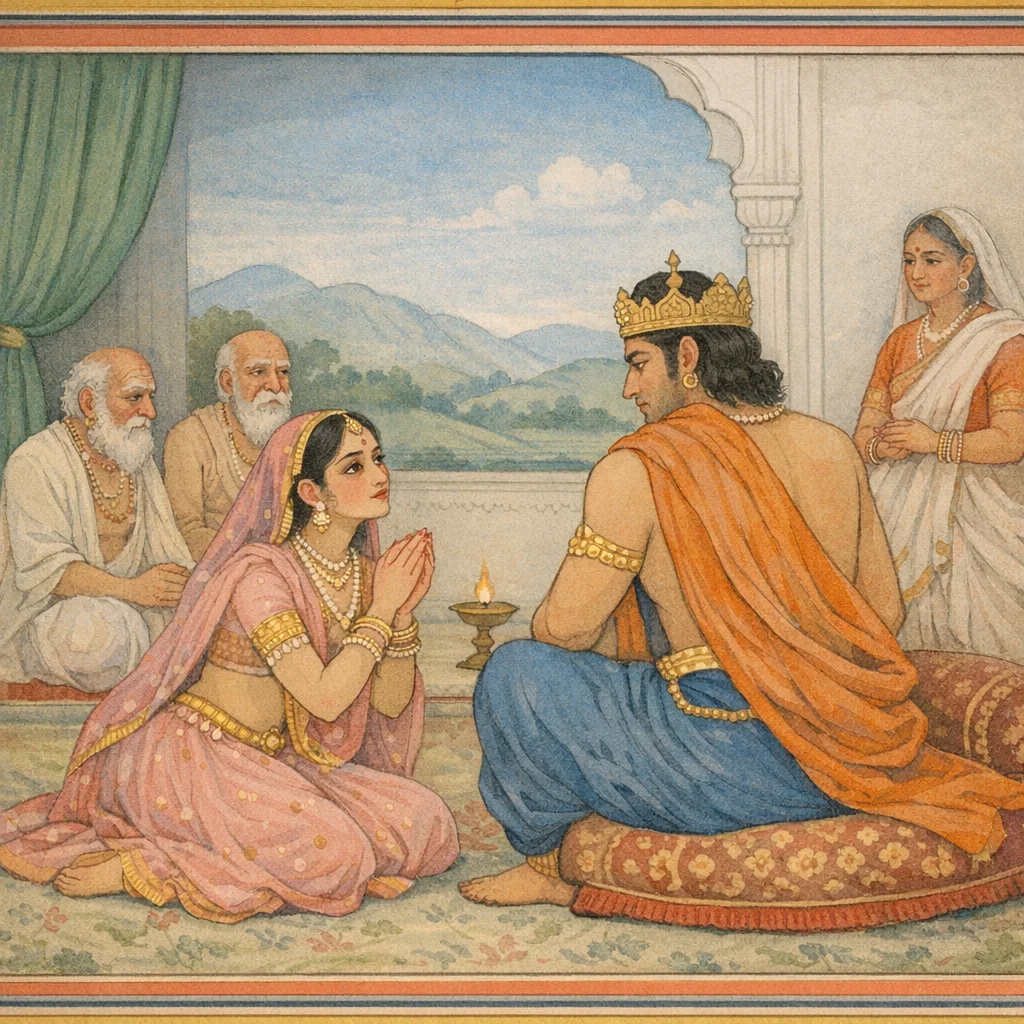
Adhyaya 174
अम्बोपाख्याने तापसानां विचारः तथा होत्रवाहनस्य उपदेशः (Ambā among ascetics; Hotravāhana directs her to Paraśurāma)
Upa-parva: Ambopākhyāna (Episode of Ambā) — Bhīṣma’s recollection within Udyoga-parva
Bhīṣma narrates how forest ascetics, concerned for Ambā’s welfare, debate appropriate action: some advise returning her to her father’s house; others consider confronting the Śālva ruler, though several reject this since she has already been refused. The ascetics argue that a young royal woman’s renunciation is exceptionally difficult and exposes her to risks in remote forests; they propose paternal protection as the most legitimate refuge, citing the normative rule that a woman’s ‘gati’ is her husband in stable circumstances and her father in adversity. Ambā counters that returning to Kāśī would bring certain disdain from kin and insists on pursuing austerity to avert lasting misfortune. At this juncture the royal sage Hotravāhana arrives, is honored by the ascetics, hears Ambā’s full account, and grieves. He urges her not to return to her paternal home, offers protection as her maternal progenitor, and proposes a remedial course: she should go to Rāma Jāmadagnya (Paraśurāma), whose authority and power can remove her sorrow and, if necessary, compel Bhīṣma through combat. Ambā agrees to proceed but asks how Paraśurāma will practically resolve her intense suffering.
Chapter Arc: भीष्म की अनुमति पाकर काशी-राजकन्या अम्बा वृद्ध ब्राह्मणों और धाय के संरक्षण में शाल्व के नगर की ओर प्रस्थान करती है—अपने अपमान और अधूरे वर-वरण को पूर्ण करने की अंतिम आशा लेकर। → अम्बा शाल्व के समक्ष अपना अभिप्राय स्पष्ट करती है—‘मैं तुम्हारे लिए आई हूँ’; पर शाल्व के मन में राजधर्म, लोकलज्जा और ‘पर-पुरुष द्वारा जीती/स्पर्श की गई’ स्त्री को स्वीकार न करने का कठोर संकल्प टकराता है। अम्बा विनय, तर्क और अनुनय से उसे मनाने का प्रयास करती है, पर शाल्व का निर्णय और कठोर होता जाता है। → शाल्व धर्मोपदेश-सा करते हुए अम्बा को लौटा देता है—‘तुम पहले ही अन्य की हो चुकी; समय व्यर्थ न करो, जहाँ उचित हो वहाँ जाओ’; और अम्बा को ‘जीर्ण त्वचा की भाँति’ त्याग देता है। → अम्बा की आशा टूटती है; वह समझती है कि न शाल्व उसे अपनाएगा, न उसका अपमान मिटेगा। उसके भीतर दोषारोपण और आत्मग्लानि की आँधी उठती है—कभी शाल्व, कभी भीष्म, कभी पिता के स्वयंवर-आयोजन, और अंततः अपने निर्णयों को वह इस दुर्दशा का कारण मानने लगती है। → अम्बा के भीतर प्रतिशोध की ज्वाला आकार लेने लगती है—अब वह किसके विरुद्ध, किस मार्ग से न्याय/प्रतिशोध साधेगी, और उसका अगला आश्रय कौन होगा?
Shlokas
Verse 1
इस प्रकार श्रीमहाभारत उद्योगपर्वके अन्तर्गत अमग्बोपाख्यानपर्वमें अग्बावाक्यविषयक एक सौ चौहत्तरवाँ अध्याय पूरा हुआ ॥/ १७४ ॥/ जज बक। अफि्--"ऋाझ पजञज्चसप्तत्याधेकशततमो< ध्याय: अम्बाका शाल्वके यहाँ जाना और उससे परित्यक्त होकर तापसोंके आश्रममें आना, वहाँ शैखावत्य और अम्बाका संवाद भीष्म उवाच ततो<हं समनुज्ञाप्य कालीं गन्धवतीं तदा । मन्सत्रिण श्चर्विजश्चैव तथैव च पुरोहितान्
Bhīṣma said: “Then, having duly taken leave of Kālī (Gandhavatī—Satyavatī) at that time, I also took leave of the ministers, the Brahmins, and likewise the royal priests.”
Verse 2
अनुज्ञाता ययौ सा तु कन्या शाल्वपते: पुरम्,आज्ञा पाकर राजकन्या अम्बा वृद्ध ब्राह्मणोंके संरक्षणमें रहकर शाल्वराजके नगरकी ओर गयी। उसके साथ उसकी धाय भी थी। उस मार्गको लाँचधचकर वह राजाके यहाँ पहुँच गयी और शाल्वराजसे मिलकर इस प्रकार बोली--“महाबाहो! महामते! मैं तुम्हारे पास ही आयी हूँ
Bhīṣma said: “Having received permission, the princess Ambā set out for the city of King Śālva. With venerable Brahmins safeguarding her, and accompanied by her nurse, she carefully made her way along the road and reached the king. Meeting Śālva, she spoke: ‘O mighty-armed, O noble-minded one! I have come to you alone as my chosen refuge.’”
Verse 3
वृद्धैर्दधिजातिभिगुप्ता धात्रया चानुगता तदा । अतीत्य च तमध्वानमासाद्य नृपतिं तथा,आज्ञा पाकर राजकन्या अम्बा वृद्ध ब्राह्मणोंके संरक्षणमें रहकर शाल्वराजके नगरकी ओर गयी। उसके साथ उसकी धाय भी थी। उस मार्गको लाँचधचकर वह राजाके यहाँ पहुँच गयी और शाल्वराजसे मिलकर इस प्रकार बोली--“महाबाहो! महामते! मैं तुम्हारे पास ही आयी हूँ
Bhīṣma said: “Guarded by elderly Brahmins and accompanied by her nurse, Ambā set out. Having traversed that long road, she reached the king as intended. With permission obtained, the princess went under the protection of venerable Brahmins toward the city of King Śālva. Arriving there with her nurse, she met Śālva and said: ‘Mighty-armed, great-minded one, I have come to you alone.’”
Verse 4
सा तमासाद्य राजानं शाल्वं वचनमत्रवीत् | आगताहं महाबाहो त्वामुद्दिश्य महामते,आज्ञा पाकर राजकन्या अम्बा वृद्ध ब्राह्मणोंके संरक्षणमें रहकर शाल्वराजके नगरकी ओर गयी। उसके साथ उसकी धाय भी थी। उस मार्गको लाँचधचकर वह राजाके यहाँ पहुँच गयी और शाल्वराजसे मिलकर इस प्रकार बोली--“महाबाहो! महामते! मैं तुम्हारे पास ही आयी हूँ
Having reached King Śālva, she addressed him: “O mighty-armed one, O wise king, I have come here with you in mind.” In the surrounding narrative, this is Ambā’s deliberate appeal to the man she had chosen, asserting her intention and seeking a dharmic resolution to the wrong done to her through forcible abduction and the disruption of her chosen marriage.
Verse 5
(अभिनन्दस्व मां राजन् सदा प्रियहिते रताम् । प्रतिपादय मां राजन् धर्मार्थ चैव धर्मतः ।। त्वं हि मनसा ध्यातस्त्वया चाप्युपमन्त्रिता ।। ) “राजन! मैं सदा तुम्हारे प्रिय और हितमें तत्पर रहनेवाली हूँ। मुझे अपनाकर आनन्दित करो। नरेश्वर! मुझे धर्मानुसार ग्रहण करके धर्मके लिये ही अपने चरणोंमें स्थान दो। मैंने मन-ही-मन सदा तुम्हारा ही चिन्तन किया है और तुमने भी एकान्तमें मेरे साथ विवाहका प्रस्ताव किया था!। तामब्रवीच्छाल्वपति: स्मयन्निव विशाम्पते । त्वयान्यपूर्वया नाहं भार्यार्थी वरवर्णिनि,प्रजानाथ! अम्बाकी बात सुनकर शाल्वराजने मुसकराते हुए-से कहा--'सुन्दरी! तुम पहले दूसरेकी हो चुकी हो; अतः तुम्हारी-जैसी स्त्रीके साथ विवाह करनेकी मेरी इच्छा नहीं है
“O King, accept me with joy—I have always been devoted to what is dear and beneficial to you. O ruler, take me in accordance with dharma, and for the sake of dharma grant me a place at your feet. In my heart I have continually contemplated you, and you too had privately conveyed to me a proposal of marriage.”
Verse 6
गच्छ भद्रे पुनस्तत्र सकाशं भीष्मकस्य वै । नाहमिच्छामि भीष्मेण गृहीतां त्वां प्रसह वै,'भद्रे! तुम पुनः वहाँ भीष्मके ही पास जाओ। भीष्मने तुम्हें बलपूर्वक पकड़ लिया था, अतः अब तुम्हें मैं अपनी पत्नी बनाना नहीं चाहता
“O noble lady, go back again to the presence of Bhishmaka. I do not wish to accept you as my wife, for you were seized by Bhishma by force.”
Verse 7
त्वं हि भीष्मेण निर्जित्य नीता प्रीतिमती तदा । परामृश्य महायुद्धे निर्जित्य पृथिवीपतीन्,'भीष्मने उस महायुद्धमें समस्त भूपालोंको हराकर तुम्हें जीता और तुम्हें उठाकर वे अपने साथ ले गये। तुम उस समय उनके साथ प्रसन्न थीं
“For you were won by Bhishma in combat and then taken away, and at that time you went with him willingly and with gladness. Having challenged and overcome the kings of the earth in that great battle, he carried you off.”
Verse 8
नाहं त्वय्यन्यपूर्वायां भार्यार्थी वरवर्णिनि | कथमस्मद्विधो राजा परपूर्वा प्रवेशयेत्,“वरवर्णिनि! जो पहले औरकी हो चुकी हो, ऐसी स्त्रीको मैं अपनी पत्नी बनाऊँ, यह मेरी इच्छा नहीं है। जिस नारीपर पहले किसी दूसरे पुरुषका अधिकार हो गया हो, उसे सारी बातोंको ठीक-ठीक जाननेवाला मेरे-जैसा राजा जो दूसरोंको धर्मका उपदेश करता है, कैसे अपने घरमें प्रविष्ट करायेगा। भद्रे! तुम्हारी जहाँ इच्छा हो, चली जाओ। तुम्हारा यह समय यहाँ व्यर्थ न बीते”
“O fair-complexioned lady, I do not desire to take as wife a woman who has previously belonged to another. How could a king like me—one who understands matters rightly and instructs others in dharma—bring into his household a woman over whom another man has already had prior claim? Go wherever you wish, noble lady; do not let your time here be wasted.”
Verse 9
नारीं विदितविज्ञान: परेषां धर्ममादिशन् । यथेष्टं गम्यतां भद्ठे मा त्वां कालो5त्यगादयम्,“वरवर्णिनि! जो पहले औरकी हो चुकी हो, ऐसी स्त्रीको मैं अपनी पत्नी बनाऊँ, यह मेरी इच्छा नहीं है। जिस नारीपर पहले किसी दूसरे पुरुषका अधिकार हो गया हो, उसे सारी बातोंको ठीक-ठीक जाननेवाला मेरे-जैसा राजा जो दूसरोंको धर्मका उपदेश करता है, कैसे अपने घरमें प्रविष्ट करायेगा। भद्रे! तुम्हारी जहाँ इच्छा हो, चली जाओ। तुम्हारा यह समय यहाँ व्यर्थ न बीते”
Bhishma said: “Knowing what is right and wrong, and being one who instructs others in dharma, how could I bring into my household a woman who has already belonged to another? Such a choice is not my wish. O noble lady, go wherever you desire; do not let this time pass fruitlessly for you.”
Verse 10
अम्बा तमब्रवीद् राजन्ननड्रशरपीडिता । नैवं वद महीपाल नैतदेवं कथंचन,राजन! यह सुनकर कामदेवके बाणोंसे पीड़ित हुई अम्बा शाल्वराजसे बोली --'भूपाल! तुम किसी तरह भी ऐसी बात मुहसे न निकालो। शत्रुसूदन! मैं भीष्मके साथ प्रसन्नतापूर्वक नहीं गयी थी। उन्होंने समस्त राजाओंको खदेड़कर बलपूर्वक मेरा अपहरण किया था और मैं रोती हुई ही उनके साथ गयी थी
Amba, tormented by the arrows of the bodiless god of love, said to him: “O King, do not speak in this way. O ruler of the earth, this is not so—by no means. I did not go with Bhishma willingly or with joy; after driving away the assembled kings, he seized me by force, and I went with him only while weeping.”
Verse 11
नास्मि प्रीतिमती नीता भीष्मेणामित्रकर्शन । बलान्नीतास्मि रुदती विद्राव्य पृथिवीपतीन्,राजन! यह सुनकर कामदेवके बाणोंसे पीड़ित हुई अम्बा शाल्वराजसे बोली --'भूपाल! तुम किसी तरह भी ऐसी बात मुहसे न निकालो। शत्रुसूदन! मैं भीष्मके साथ प्रसन्नतापूर्वक नहीं गयी थी। उन्होंने समस्त राजाओंको खदेड़कर बलपूर्वक मेरा अपहरण किया था और मैं रोती हुई ही उनके साथ गयी थी
Amba declares to the king: “O crusher of foes, I did not go with Bhishma willingly. After routing the assembled kings, Bhishma carried me off by force; I went with him only while weeping.”
Verse 12
भजस्व मां शाल्वपते भक्तां बालामनागसम् | भक्तानां हि परित्यागो न धर्मेषु प्रशस्यते,'शाल्वराज! मैं निरपराध अबला हूँ। तुम्हारे प्रति अनुरक्त हूँ। मुझे स्वीकार करो; क्योंकि भक्तोंका परित्याग किसी भी धर्ममें अच्छा नहीं बताया गया है
“O lord of Śālva, accept me. I am a devoted, helpless woman and without fault. To abandon one who has taken refuge in devotion is not praised as righteous conduct in any code of dharma.”
Verse 13
साहमामन्त्र्य गाड़ेयं समरेष्वनिवर्तिनम् । अनुज्ञाता च तेनैव ततो5हं भूशमागता,'युद्धमोें कभी पीठ न दिखानेवाले गंगानन्दन भीष्मसे पूछकर, उनकी आज्ञा लेकर अत्यन्त उत्कण्ठाके साथ मैं यहाँ आयी हूँ
Having approached and addressed Bhishma, the son of the Gaṅgā—one who never turns back in battle—I received his permission; and with that very consent, I have come here with intense eagerness.
Verse 14
न स भीष्मो महाबाहुर्मामिच्छति विशाम्पते । भ्रातृहेतो: समारम्भो भीष्मस्येति श्रुतं मया,“राजन! महाबाहु भीष्म मुझे नहीं चाहते। उनका यह आयोजन अपने भाईके विवाहके लिये था, ऐसा मैंने सुना है
Bhishma said: “O lord of the people, that mighty-armed Bhishma does not seek me. I have heard that Bhishma’s undertaking was for the sake of his brother—an effort connected with arranging his brother’s marriage.”
Verse 15
भगिन्यौ मम ये नीते अम्बिकाम्बालिके नृप । प्रादाद् विचित्रवीर्याय गाड़ेयो हि यवीयसे,“नरेश्वर! भीष्म जिन मेरी दो बहिनों--अम्बिका और अम्बालिकाको हरकर ले गये थे, उन्हें उन्होंने अपने छोटे भाई विचित्रवीर्यको ब्याह दिया है
Bhishma said: “O king, the two sisters of mine—Ambikā and Ambālikā—whom I had brought away, were then given in marriage to my younger brother, Vicitravīrya.”
Verse 16
समनुज्ञासिषं कन्यामम्बां ज्येष्ठां नराधिप । भीष्मजी कहते हैं--नरेश्वर! तब मैंने माता गन्धवती कालीसे आज्ञा ले मन्त्रियों, ऋत्विजों तथा पुरोहितोंसे पूछकर बड़ी राजकुमारी अम्बाको जानेकी आज्ञा दे दी,यथा शाल्वपते नानयं॑ वरं ध्यामि कथंचन । त्वामृते पुरुषव्याप्र तथा मूर्धानमालभे 'पुरुषसिंह शाल्वराज! मैं अपना मस्तक छूकर कहती हूँ; तुम्हारे सिवा दूसरे किसी वरका मैं किसी प्रकार भी चिन्तन नहीं करती हूँ
Bhishma said: “O king, having obtained the permission of the queen-mother and after consulting the ministers, the officiating priests, and the family priest, I allowed the eldest princess, Amba, to depart. And she declared to the lord of Shalva: ‘I do not, in any way, contemplate any husband other than you. O tiger among men, apart from you alone, I touch my head and make this solemn avowal.’”
Verse 17
न चान्यपूर्वा राजेन्द्र त्वामहं समुपस्थिता । सत्यं ब्रवीमि शाल्वैतत् सत्येनात्मानमालभे,'राजेन्द्र शाल्व! मुझपर किसी भी दूसरे पुरुषका पहले कभी अधिकार नहीं रहा है। मैं स्वेच्छापूर्वक पहले-पहल तुम्हारी ही सेवामें उपस्थित हुई हूँ। यह मैं सत्य कहती हूँ और इस सत्यके द्वारा ही इस शरीरकी शपथ खाती हूँ
Bhishma said: “O king, I have never before belonged to any other man. Of my own free will I have come to you first and foremost in service. This I declare as truth, O Śālva; and by that very truth I take an oath upon my own person.”
Verse 18
भजस्व मां विशालाक्ष स्वयं कन्यामुपस्थिताम् । अनन्यपूर्वा राजेन्द्र त्वत्प्रसादाभिकड्क्षणीम्,“विशाल नेत्रोंवाले महाराज! मैंने आजसे पहले किसी दूसरे पुरुषको अपना पति नहीं समझा है। मैं तुम्हारी कृपाकी अभिलाषा रखती हूँ। स्वयं ही अपनी सेवामें उपस्थित हुई मुझ कुमारी कन्याको धर्मपत्नीके रूपमें स्वीकार कीजिये”
Bhīṣma said: “O large-eyed king, accept me—this maiden who has come of her own accord. I have never before belonged to any other man; I seek only your gracious favor. Receive me as your lawful wife.”
Verse 19
तामेवं भाषमाणां तु शाल्वः काशिपते: सुताम् । अत्यजद् भरतश्रेष्ठ जीर्णा त्वचमिवोरग:,भरतश्रेष्ठ) इस प्रकार अनुनय-विनय करती हुई काशिराजकी उस कन्याको शाल्वने उसी प्रकार त्याग दिया, जैसे सर्प पुरानी केंचुलको छोड़ देता है
Bhishma said: As the daughter of the king of Kāśī spoke thus, pleading with humility, Śālva cast her off, O best of the Bharatas, just as a serpent sheds and abandons its worn-out skin.
Verse 20
एवं बहुविधैर्वाक्यैर्याच्यमानस्तया नृपः । नाश्रददथच्छाल्वपति: कन्यायां भरतर्षभ,भरतभूषण! इस तरह नाना प्रकारके वचनोंद्वारा बार-बार याचना करनेपर भी शाल्वराजने उस कन्याकी बातोंपर विश्वास नहीं किया
Bhīṣma said: O bull among the Bharatas, though he was repeatedly entreated by her with many kinds of arguments, the lord of Śālva did not place faith in the maiden’s words.
Verse 21
ततः सा मन्युना5<विष्टा ज्येष्ठा काशिपते: सुता । अब्रवीत् साश्रुनयना बाष्पविप्लुतया गिरा,तब काशिराजकी ्येष्ठ पुत्री अम्बा क्रोध एवं दुःखसे व्याप्त हो नेत्रोंसे आँसू बहाती हुई अश्रुगदगद वाणीमें बोली--
Then Amba, the eldest daughter of the lord of Kāśī, overwhelmed by anger, spoke with tear-filled eyes—her voice choked and drenched with sobs.
Verse 22
त्वया त्यक्ता गमिष्यामि यत्र तत्र विशाम्पते । तत्र मे गतय: सन्तु सन्त: सत्यं यथा ध्रुवम्,“राजन! यदि मेरी कही बात निश्चितरूपसे सत्य हो तो तुमसे परित्यक्त होनेपर मैं जहाँ- जहाँ जाऊँ, वहाँ-वहाँ साधु पुरुष मुझे सहारा देनेवाले हों”
Bhishma said: “O lord of the people, if what I have spoken is indeed firmly true, then when I am cast off by you and go wherever I must, may I find my way there supported by the good—may the righteous stand by me, as surely as truth is unwavering.”
Verse 23
एवं तां भाषमाणां तु कन््यां शाल्वपतिस्तदा । परितत्याज कौरव्य करुणं परिदेवतीम्,कुरुनन्दन! राजकन्या अम्बा करुणस्वरसे विलाप करती हुई इसी प्रकार कितनी ही बातें कहती रही; परंतु शाल्वराजने उसे सर्वथा त्याग दिया
Bhishma said: “Even as that maiden continued to speak, the lord of Shalva at that time utterly rejected her—O Kauravya—though she was lamenting piteously.”
Verse 24
गच्छ गच्छेति तां शाल्व: पुन: पुनरभाषत । बिभेमि भीष्मात् सुश्रोणि त्वं च भीष्मपरिग्रह:,शाल्वने बारंबार उससे कहा--'सुश्रोणि! तुम जाओ, चली जाओ, मैं भीष्मसे डरता हूँ। तुम भीष्मके द्वारा ग्रहण की हुई हो”
Bhishma said: Shalva repeatedly told her, “Go, go, O fair-hipped one. I fear Bhishma; and you too are one whom Bhishma has already claimed.”
Verse 25
एवमुक्ता तु सा तेन शाल्वेनादीर्घदर्शिना । निश्चक्राम पुराद् दीना रूदती कुररी यथा,अदूरदर्शी शाल्वके ऐसा कहनेपर अम्बा कुररीकी भाँति दीनभावसे रुदन करती हुई उस नगरसे निकल गयी
Bhishma said: Thus addressed by Shalva, a man of far-reaching foresight, Amba—dejected—went out from the city, weeping like a kurarī-bird.
Verse 26
भीष्म उवाच निष्क्रामन्ती तु नगराच्चिन्तयामास दुःखिता । पृथिव्यां नास्ति युवतिर्विषमस्थतरा मया,भीष्मजी कहते हैं--राजन्! नगरसे निकलते समय वह दु:खिनी नारी इस प्रकार चिन्ता करने लगी--“इस पृथ्वीपर कोई भी ऐसी युवती नहीं होगी, जो मेरे समान भारी संकटमें पड़ गयी हो
Bhishma said: As she left the city, distressed, she thought, “On this earth there is no young woman in a plight more grievous than mine.”
Verse 27
बन्धुभिवरप्रहीणास्मि शाल्वेन च निराकृता । न च शक्यं पुनर्गन्तुं मया वारणसाह्नयम्,'भाई-बन्धुओंसे तो दूर हो ही गयी हूँ। राजा शाल्वने भी मुझे त्याग दिया है। अब मैं हस्तिनापुरमें भी नहीं जा सकती
“I have been cast off by my own kinsmen, and King Shalva too has rejected me. Nor is it possible for me to return again to Vāraṇasāhvaya (Hastināpura).”
Verse 28
अनुज्ञाता तु भीष्मेण शाल्वमुद्दिश्य कारणम् । कि नु गहम्यथात्मानमथ भीष्म दुरासदम्,“क्योंकि शाल्वके अनुरागको कारण बताकर मैंने भीष्मसे यहाँ आनेकी आज्ञा ली थी। अब मैं अपनी ही निन्दा करूँ या उस दुर्जय वीर भीष्मको कोसूँ?
“For it was by citing as my pretext the matter of Shalva that I obtained Bhishma’s permission to come here. What now should I do—censure myself, or revile Bhishma, that unconquerable and unassailable hero?”
Verse 29
अथवा पितरं मूढं यो मे5कार्षीत् स्वयंवरम् । मयायं स्वकृतो दोषो याहं भीष्मरथात् तदा
Or else I should have restrained my deluded father, who arranged this svayaṃvara for me. This fault is of my own making—that I, Bhīṣma, at that time acted from my chariot in a way that brought about this wrongdoing.
Verse 30
तस्येयं फलनिर्व त्तियदापन्नास्मि मूढवत्,“उसीका यह फल प्राप्त हुआ है कि मैं एक मूर्ख स्त्री-की भाँति भारी आपत्तिमें पड़ गयी हूँ। भीष्मको धिक््कार है, विवेकशून्य हृदयवाले मेरे मन्दबुद्धि पिताको भी धिक्कार है, जिन्होंने पराक्रमका शुल्क नियत करके मुझे बाजारू स्त्रीकी भाँति जनसमूहमें निकलनेकी आज्ञा दी
This is the bitter outcome that has come to me: I have fallen into a grievous calamity like a deluded woman. Shame on Bhīṣma; and shame too on my dull-witted father, bereft of discernment, who fixed a ‘price’ of valor and ordered me to be brought out before the crowd like a woman for sale.
Verse 31
धिग् भीष्म घधिक् च मे मन्दं पितरं मूढचेतसम् । येनाहं वीर्यशुल्केन पण्यस्त्रीव प्रचोदिता,“उसीका यह फल प्राप्त हुआ है कि मैं एक मूर्ख स्त्री-की भाँति भारी आपत्तिमें पड़ गयी हूँ। भीष्मको धिक््कार है, विवेकशून्य हृदयवाले मेरे मन्दबुद्धि पिताको भी धिक्कार है, जिन्होंने पराक्रमका शुल्क नियत करके मुझे बाजारू स्त्रीकी भाँति जनसमूहमें निकलनेकी आज्ञा दी
Bhīṣma said: “Shame on Bhīṣma—shame also on my dull-witted father, whose mind lacked discernment. It is because of him—who fixed ‘valor’ as the price—that I was driven forth like a woman for sale, exposed before the public.”
Verse 32
धिड्मां धिक् शाल्वराजानं धिग् धातारमथापि वा | येषां दुर्नीतभावेन प्राप्तास्म्यापदमुत्तमाम्,“मुझे धिक्कार है, शाल्वराजको धिक्कार है और विधाताको भी धिक््कार है, जिनकी दुर्नीतियोंसे मैं इस भारी विपत्तिमें फँस गयी हूँ
"Shame on me; shame on King Śālva; and shame, too, on the Ordainer (Fate). Through whose evil policy and misgoverned conduct I have been driven into this grievous calamity."
Verse 33
सर्वथा भागधेयानि स्वानि प्राप्रोति मानव: । अनयस्यास्य तु मुखं भीष्म: शान्तनवो मम,“मनुष्य सर्वथा वही पाता है जो उसके भाग्यमें होता है। मुझपर जो यह अन्याय हुआ है, उसका मुख्य कारण शान्तनुनन्दन भीष्म हैं
Bhīṣma said: “A person, in every way, attains only what is allotted to him by his own destiny. Yet, as for this injustice that has befallen me, its chief cause is Bhīṣma, the son of Śāntanu—myself.”
Verse 34
सा भीष्मे प्रतिकर्तव्यमहं पश्यामि साम्प्रतम् । तपसा वा युधा वापि दु:खहेतु: स मे मतः,“अत: इस समय तपस्या अथवा युद्धके द्वारा भीष्मसे ही बदला लेना मुझे उचित दिखायी देता है; क्योंकि मेरे दुःखके प्रधान कारण वे ही हैं
Therefore, I now see that it is right to take retribution upon Bhīṣma—either through austerity or through battle—for in my judgment he is the chief cause of my suffering.
Verse 35
को नु भीष्म॑ युधा जेतुमुत्सहेत महीपति: । एवं सा परिनिश्चित्य जगाम नगराद् बहि:,'परंतु कौन ऐसा राजा है जो युद्धके द्वारा भीष्मको परास्त कर सके।' ऐसा निश्चय करके वह नगरसे बाहर चली गयी
Bhīṣma said: “Who indeed among kings could dare to conquer Bhīṣma in battle?” Having thus come to a firm conclusion, she went out from the city.
Verse 36
आश्रमं पुण्यशीलानां तापसानां महात्मनाम् | ततस्तामवसद् रात्रिं तापसै: परिवारिता,उसने पुण्यशील तपस्वी महात्माओंके आश्रमपर जाकर वहीं वह रात बितायी। उस आश्रममें तपस्वी-लोगोंने सब ओरसे घेरकर उसकी रक्षा की थी
She then reached the hermitage of great-souled ascetics of holy conduct. There she spent the night, surrounded by the tapasvins—protected on all sides by those righteous sages.
Verse 37
आचख्यौ च यथावृत्तं सर्वमात्मनि भारत | विस्तरेण महाबाहो निखिलेन शुचिस्मिता । हरणं च विसर्ग च शाल्वेन च विसर्जनम्,महाबाहु भरतनन्दन! पवित्र मुसकानवाली अम्बाने अपने ऊपर बीता हुआ सारा वत्तान्त विस्तारपूर्वक उन महात्माओंसे बताया। किस प्रकार उसका अपहरण हुआ? कैसे भीष्मसे छुटकारा मिला? और फिर किस प्रकार शाल्वने उसे त्याग दिया, ये सारी बातें उसने कह सुनायीं
Bhīṣma said: “O Bhārata, the pure-smiling lady related to those great ones, in full and in detail, everything that had happened to her—how she was carried off, how she was released, and how Śālva in turn abandoned her.”
Verse 38
ततस्तत्र महानासीद् ब्राह्मण: संशितव्रत:ः । शैखावत्यस्तपोवृद्धः शास्त्रे चारण्यके गुरु: ३८ ।। उस आश्रममें कठोर व्रतका पालन करनेवाले शैखावत्य नामसे प्रसिद्ध एक तपोवृद्ध श्रेष्ठ ब्राह्मण रहते थे, जो शास्त्र और आरण्यक आदिकी शिक्षा देनेवाले सदगुरु थे
Then, in that hermitage, there lived a great brāhmaṇa of disciplined vows. Known by the name Śaikhāvatya, he was an elder enriched by austerity, and a true teacher—learned in the śāstras and in the Āraṇyaka traditions—guiding others in sacred study and right conduct.
Verse 39
आर्ता तामाह स मुनि: शैखावत्यो महातपा: । निःश्वसन्तीं सती बालां दुः:खशोकपरायणाम्,महातपस्वी शैखावत्य मुनिने वहाँ सिसकती हुई उस दुःखशोकपरायणा सती साध्वी आर्त अबलासे कहा--
Bhīṣma said: Seeing the young, virtuous woman of Śaikhāvatī sighing in distress—wholly absorbed in grief and sorrow—the great ascetic sage addressed her with compassion, responding to her afflicted state.
Verse 40
एवं गते तु कि भद्रे शक््यं कर्तु तपस्विभि: । आश्रमस्थैर्महा भागे तपोयुक्तैर्महात्मभि:,'भद्रे! महाभागे! ऐसी दशामें इस आश्रममें निवास करनेवाले तप:परायण तपोधन महात्मा तुम्हारा क्या सहयोग कर सकते हैं?”
Bhīṣma said: “Since matters have come to this pass, O noble lady, what can the ascetics—great-souled men devoted to austerity, dwelling in this hermitage—really do for you? In such a crisis, their power lies in penance and counsel, not in worldly intervention.”
Verse 41
सा त्वेनमब्रवीद् राजन् क्रियतां मदनुग्रह: । प्राव्राज्यमहमिच्छामि तपस्तप्स्यामि दुश्चरम्,राजन! तब अम्बाने उनसे कहा--'भगवन्! मुझपर अनुग्रह कीजिये। मैं संन्यासियोंका-सा धर्म पालन करना चाहती हूँ। यहाँ रहकर दुष्कर तपस्या करूँगी
She then said to him, “O King, grant me your favor. I wish to embrace the life of renunciation; I will undertake severe, difficult austerities.”
Verse 42
मयैव यानि कर्माणि पूर्वदेहे तु मूढया । कृतानि नूनं पापानि तेषामेतत् फल ध्रुवम्,“मुझ मूढ़ नारीने अपने पूर्वजन्मके शरीरसे जो पापकर्म किये थे, अवश्य ही उन्हींका यह दुःखदायक फल प्राप्त हुआ है
Bhīṣma said: “The sinful deeds that I myself, in my folly, committed in a former embodiment—this present suffering is surely their inevitable and certain result.”
Verse 43
नोत्सहे तु पुनर्गन्तुं स््वजनं प्रति तापसा: । प्रत्याख्याता निरानन्दा शाल्वेन च निराकृता,“तपस्वी महात्माओ! अब मैं अपने स्वजनोंके यहाँ फिर नहीं लौट सकती; क्योंकि राजा शाल्वने मुझे कोरा उत्तर देकर त्याग दिया है, उससे मेरा सारा जीवन आनन्दशून्य (दुःखमय) हो गया है
“O great ascetics, I cannot bring myself to return again to my own kin. King Śālva dismissed me with a cold refusal and cast me aside; thus my life has become joyless, filled with sorrow.”
Verse 44
उपदिष्टमिहेच्छामि तापस्यं वीतकल्मषा: । युष्माभिवदेवसंकाशै: कृपा भवतु वो मयि,“निष्पाप तापसगण! मैं चाहती हूँ कि आप देवोपम साधुपुरुष मुझे तपस्याका उपदेश दें, मुझपर आपलोगोंकी कृपा हो”
Bhishma said: “I wish, here and now, to receive instruction in ascetic discipline (tapas). O sinless ascetics, radiant like the gods—show me compassion and teach me the practice of tapas.”
Verse 45
स तामाश्वचासयत् कनन््यां दृष्टान्तागमहेतुभि: । सान्त्वयामास कार्य च प्रतिजज्ञे द्विजै:ः सह,तब शैखावत्य मुनिने लौकिक दृष्टान्तों, शास्त्रीय वचनों तथा युक्तियोंद्वारा उस कन्याको आश्वासन देकर धैर्य बँधाया और ब्राह्मणोंक साथ मिलकर उसके कार्य-साधनके लिये प्रयत्न करनेकी प्रतिज्ञा की
Bhishma said: He reassured that maiden, strengthening her resolve by means of illustrative examples, authoritative teachings, and sound reasoning. He consoled her and, together with the brāhmaṇas, pledged to strive for the accomplishment of her rightful objective.
Verse 175
इति श्रीमहाभारते उद्योगपर्वणि अम्बोपाख्यानपर्वणि शैखावत्याम्बासंवादे पजञ्चसप्तत्यधिकशततमो< ध्याय:,इस प्रकार श्रीमह्ाभारत उद्योगपर्वके अन्तर्गत अम्बोपाख्यानपर्वमें शैखावत्य तथा अग्बाका संवादविषयक एक सौ पचहत्तरवाँ अध्याय पूरा हुआ
Thus, in the Śrī Mahābhārata, within the Udyoga Parva, in the section known as the Ambopākhyāna, the dialogue between Śaikhāvatī and Ambā concludes; this marks the completion of the one-hundred-and-seventy-fifth chapter. The colophon signals closure of a morally charged narrative strand centered on Ambā’s grievance and the consequences of vows, agency, and the pursuit of justice that reverberate into the larger ethical crisis leading to war.
Verse 296
प्रवृत्ते दारुणे युद्धे शाल्वार्थ नापतं पुरा । “अथवा अपने मूढ़ पिताको दोष दूँ, जिन्होंने मेरा स्वयंवर किया। मेरे द्वारा सबसे बड़ा दोष यह हुआ है कि पूर्वकालमें जिस समय वह भयंकर युद्ध चल रहा था, उसी समय मैं शाल्वके लिये भीष्मके रथसे कूद नहीं पड़ी
Bhīṣma said: “In former times, when that terrible war had already begun, I did not leap down from Bhīṣma’s chariot for Śālva’s sake.” The line conveys a retrospective moral self-accusation: the speaker frames inaction at a decisive moment as a personal fault, implying that duty in crisis may demand immediate, even risky, resolve rather than hesitation.
Frequently Asked Questions
Ambā’s dilemma is between socially sanctioned protection (returning to paternal guardianship) and self-directed austerity as a response to reputational injury and rejection, with each option carrying distinct ethical and practical risks.
The chapter teaches that dharma is often conditional: norms like ‘husband or father as refuge’ function as protective institutions, yet individual agency may seek alternative remedies when social reintegration is expected to produce further harm.
No explicit phalaśruti appears in this excerpt; its meta-significance lies in positioning personal grievance within institutional pathways of redress (ascetic counsel, kin-protection, and appeal to Paraśurāma), informing later causal developments.