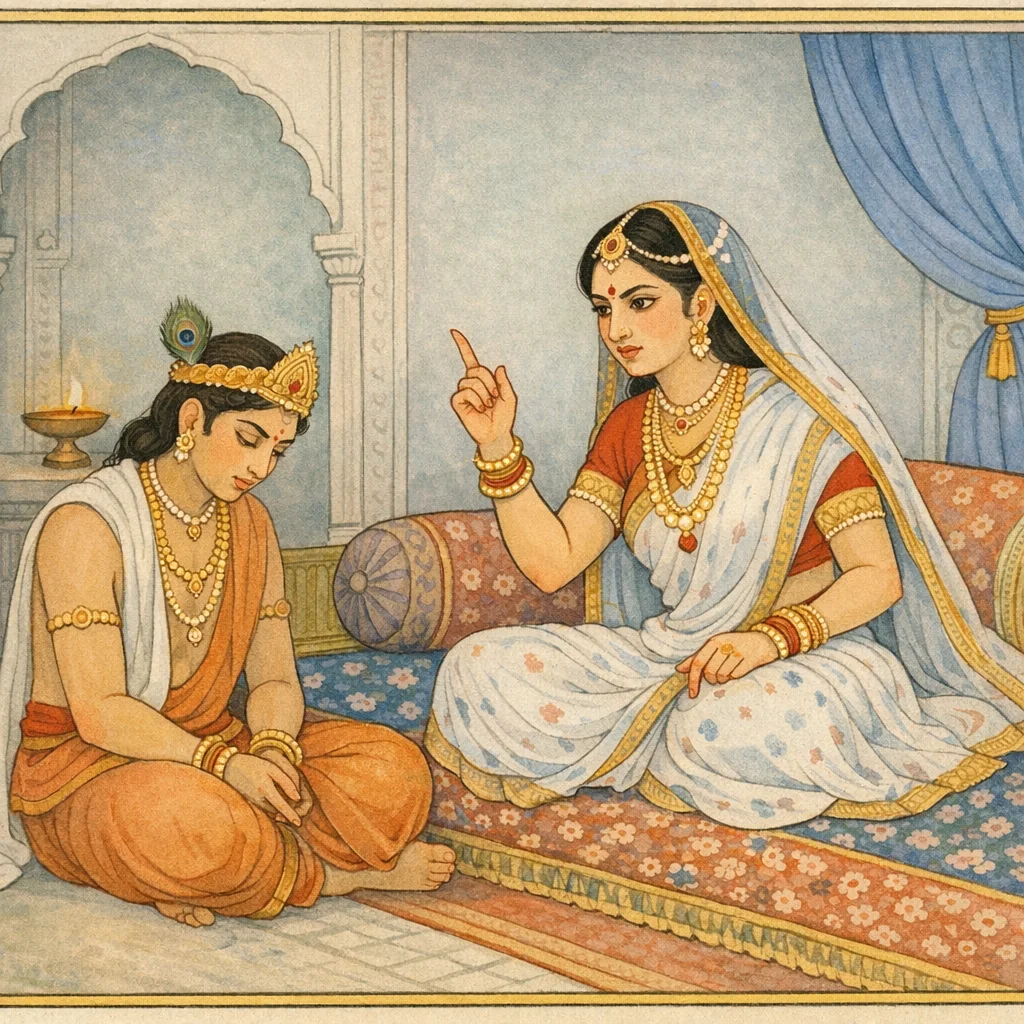
Adhyaya 133
उद्योगपर्व अध्याय १३३ — संजये मातृउपदेशः (Udyoga Parva Adhyaya 133 — A Mother’s Counsel to Saṃjaya)
Upa-parva: Saṃjaya–Mātṛsaṃvāda (Counsel of a Mother to Saṃjaya) — within Udyoga Parva
Adhyāya 133 is structured as a sharp intergenerational dialogue. The son opens with grievance, accusing the mother of hardness and questioning the value of wealth, adornment, and life without him (1–3). The mother answers by grounding speech in dharma and artha: wise undertakings begin from ethical and practical causes, and the present is a decisive time requiring action (4–6). She urges abandonment of socially condemned conduct and ignorance, defining genuine affection as approval of disciplined character rather than indulgence (7–10). The discourse then frames kṣatriya vocation as oriented to protection and contest, with victory or honorable loss both situated within a reward logic of warrior ideology (11–14). She adds a sober psychology of desire and displeasure—minimal attachment reduces inevitable suffering—and warns that lack of the ‘pleasant’ can lead to decline (15–16). The son objects that such counsel lacks compassion, but the mother reorients compassion as rigorous exhortation and predicts success if he commits fully (17–19). The son admits constraints (no treasury, no allies) and requests concrete means (20–21). The mother teaches impermanence of fortunes, cautions against rash action driven by mere anger, yet insists that non-action yields no becoming; effort doubles possible outcomes even if success is uncertain (22–25). She prescribes vigilance, auspicious preparation with learned and powerful supporters, and systematic coalition work: assess the angry, greedy, weakened, insulted, and competitive; divide opposing groups; be generous, punctual, and courteous to be placed at the front (26–32). Finally, she emphasizes deterrence through demonstrated resolve, the strategic value of reputation, and the economic-social feedback loop whereby resources attract allies while failure repels them—even among relatives—closing with the possibility of gaining power through calibrated trust and alliance shifts (33–37).
Chapter Arc: विदुला अपने पुत्र के सामने कठोर सत्य रखती है—इस संकट-घड़ी में यदि तू पौरुष छोड़कर जीवन-लोभ में झुकेगा, तो यह जीना भी पराजय ही है। → वह उसे बताती है कि क्षत्रिय का तेज और विक्रम छिपाना चोरी के समान है; उपदेश भी उस पर औषधि की तरह निष्फल हो जाते हैं जो भीतर से मरने को तैयार हो। वह पुराने संकेतों और नीति-वचनों से उसे झकझोरती है—बाल्यकाल में ब्राह्मण की भविष्यवाणी, अर्थ-सिद्धि के नियम, और दरिद्रता/अपमान की पापमय स्थिति का स्मरण। → विदुला का निर्णायक प्रहार: युद्ध को स्वर्ग-द्वार और राज्य/अमृत-तुल्य फल का एकमात्र पथ मान—शत्रु के आगे मीठी बातें कर पीछे-पीछे चलना इस कुल के लिए असह्य है; तू पराये का अनुचर बनकर जीने योग्य नहीं। → वह पुत्र को विषाद और ‘पापजीविका’ (कायरतापूर्ण जीवन-यापन) छोड़कर आत्मबल जगाने का आदेश देती है—यदि जीवन-आसक्ति घटे तो शत्रु-विजय संभव है; नीति का सार यही कि मान, स्वातंत्र्य और धर्म की रक्षा हेतु साहस ही औषधि है। → क्या पुत्र विदुला की वाणी को शस्त्र बनाकर उठ खड़ा होगा, या जीवन-लोभ उसे फिर शत्रु की छाया में ले जाएगा?
Shlokas
Verse 1
अपना छा |: चतुस्त्रिंशर्दाधिकशततमो< ध्याय: विदुलाका अपने पुत्रको युद्धके लिये उत्साहित करना विदुलोवाच अथैतस्यामवस्थायां पौरुष॑ हातुमिच्छसि । निहीनसेवितं मार्ग गमिष्यस्यचिरादिव,विदुला बोली--संजय! यदि तू इस दशामें पौरुषको छोड़ देनेकी इच्छा करता है तो शीघ्र ही नीच पुरुषोंके मार्गपर जा पहुँचेगा
Vidulā said: “If, in this situation, you wish to abandon manly resolve, then before long you will find yourself on the path frequented by the base—slipping into the way of the low and the cowardly.”
Verse 2
यो हि तेजो यथाशक्ति न दर्शयति विक्रमात् । क्षत्रियो जीविताकाडुक्षी स्तेन इत्येव तं विदु:,जो क्षत्रिय अपने जीवनके लोभसे यथाशक्ति पराक्रम प्रकट करके अपने तेजका परिचय नहीं देता है, उसे सब लोग चोर मानते हैं
For a kṣatriya, if—out of craving to preserve his own life—he does not, to the best of his ability, display his valor and make his martial splendor known through courageous action, people regard him as nothing but a thief. The verse frames cowardice born of self-preservation as a moral theft: a failure to render the duty and honor expected of the warrior estate.
Verse 3
अर्थवन्त्युपपन्नानि वाक्यानि गुणवन्ति च | नैव सम्प्राप्तुवन्ति त्वां मुमूर्षमिव भेषजम्,जैसे मरणासन्न पुरुषको कोई भी दवा लागू नहीं होती, उसी प्रकार ये युक्तियुक्त, गुणकारी और सार्थक वचन भी तेरे हृदयतक पहुँच नहीं पाते हैं (यह कितने दुःखकी बात है)
Words that are meaningful, well-reasoned, and rich in virtue still do not reach your heart—just as medicine fails to take effect in a man who is at the point of death. This is the sorrowful truth being lamented: when one’s inner resolve is fixed in ruin, even sound counsel becomes powerless.
Verse 4
सन्ति वै सिन्धुराजस्य संतुष्टा न तथा जना: | दौर्बल्यादासते मूढा व्यसनौघप्रतीक्षिण:,देख, सिन्धुराजकी प्रजा उससे संतुष्ट नहीं है, तथापि तेरी दुर्बलताके कारण किंकर्तव्यविमूढ़ हो उदासीन बैठी हुई है और सिन्धुराजपर विपत्तियोंके आनेकी बाट जोह रही है
The people of the king of Sindhu are not truly satisfied with him. Yet, because of your weakness, they sit bewildered and inactive, merely waiting for a flood of calamities to descend upon the Sindhu-king—watching for his misfortunes rather than standing with him in loyal resolve.
Verse 5
सहायोपचितिं कृत्वा व्यवसाय्य ततस्तत: । अनुदुष्येयुरपरे पश्यन्तस्तव पौरुषम्,दूसरे राजा भी तेरा पुरुषार्थ देखकर इधर-उधरसे विशेष चेष्टापूर्वक सहायक साधनोंकी वृद्धि करके सिन्धुराजके शत्रु हो सकते हैं
Having deliberately increased their resources of support and alliances, and then repeatedly applying themselves with firm resolve, other kings—seeing your prowess—may turn hostile and become enemies of the king of Sindhu.
Verse 6
तैः कृत्वा सह संघातं गिरिदुर्गालयं चर । काले व्यसनमाकाड्क्षन् नैवायमजरामर:,तू उन सबके साथ मैत्री करके यथासमय अपने शत्रु सिन्धुराजपर विपत्ति आनेकी प्रतीक्षा करता हुआ पर्वतोंकी दुर्गम गुफामें विचरता रह; क्योंकि यह सिन्धुराज कोई अजर, अमर तो है नहीं
Having formed an alliance with them, dwell and move about in a mountain stronghold—its caves and fastnesses—waiting for the right time, watching for calamity to befall your enemy, the king of Sindhu. For this Sindhu ruler is not truly ageless or immortal; his power too will meet its moment of decline.
Verse 7
संजयो नामततश्न त्वं न च पश्यामि तत् त्वयि । अन्वर्थनामा भव मे पुत्र मा व्यर्थनामक:,तेरा नाम तो संजय है, परंतु तुझमें इस नामके अनुसार गुण मैं नहीं देख रही हूँ। बेटा! युद्धमें विजय प्राप्त करके अपना नाम सार्थक कर, व्यर्थ संजय नाम न धारण कर
Your name is ‘Sañjaya’, yet I do not see in you the qualities that make that name true. My son, make your name meaningful—win victory in the war and do not bear the name ‘Sañjaya’ in vain.
Verse 8
सम्यग्दृष्टिमहाप्राज्ञो बाल त्वां ब्राह्मणो<ब्रवीत् । अयं प्राप्प महत् कृच्छू पुनर्वद्धिं गमिष्यति,जब तू बालक था, उस समय एक उत्तम दृष्टिवाले, परम बुद्धिमान ब्राह्मणने तेरे विषयमें कहा था कि “यह महान् संकटमें पड़कर भी पुनः वृद्धिको प्राप्त होगा”
When you were still a child, a Brahmin of true vision and great wisdom spoke about you: “Though he will fall into a grave crisis, he will rise again and attain renewed prosperity.”
Verse 9
तस्य स्मरन्ती वचनमाशंसे विजयं तव । तस्मात् तात ब्रवीमि त्वां वक्ष्यामि च पुनः पुनः:,उस ब्राह्णकी बातको याद करके मैं यह आशा करती हूँ कि तेरी विजय होगी। तात! इसीलिये मैं बार-बार तुझसे कहती हूँ और कहती रहूँगी
Remembering those words, I cherish the hope that victory will be yours. Therefore, dear child, I tell you—and I will keep telling you again and again—so that you may not lose heart.
Verse 10
यस्य हार्थाभिनिर्वत्तौ भवन्त्याप्यायिता: परे | तस्यार्थसिद्धिर्नियता नयेष्वर्थानुसारिण:,जिसके प्रयोजनकी सिद्धि होनेपर उससे सम्बन्ध रखनेवाले दूसरे लोग भी संतुष्ट एवं उन्नतिको प्राप्त होते हैं, नीतिमार्गपर चलकर अर्थसिद्धिके लिये प्रयत्न करनेवाले उस पुरुषको निश्चय ही अपने अभीष्टकी सिद्धि होती है
When a person’s undertaking reaches its intended fruition and, through that success, others connected with him are also nourished and prosper, then for that person—who pursues his aims in accordance with sound policy and righteous conduct—attainment of the desired end is assured.
Verse 11
समृद्धिरसमृद्धिर्वा पूर्वेषां मम संजय । एवं विद्वान् युद्धमना भव मा प्रत्युपाहर,संजय! युद्धसे हमारे पूर्वजोंका अथवा मेरा कोई लाभ हो या हानि, युद्ध करना क्षत्रियोंका धर्म है, ऐसा समझकर उसीमें मन लगा, युद्ध बंद न कर
“Whether it brings gain or loss to our forefathers or to me, O Sañjaya—knowing thus that waging battle is the dharma of kṣatriyas—set your mind firmly on war and do not draw back from it.”
Verse 12
नात: पापीयसीं कांचिदवस्थां शम्बरो<ब्रवीत् । यत्र नैवाद्य न प्रातर्भोजनं प्रतिदृश्यते
The son said: “From this point onward, Śambara spoke of no condition more wretched than that—where one sees neither a meal today nor even the morning meal tomorrow.”
Verse 13
जहाँ आजके लिये और कल सबेरेके लिये भी भोजन दिखायी नहीं देता, उससे बढ़कर महान् पापपूर्ण कोई दूसरी अवस्था नहीं है, ऐसा शम्बरासुरका कथन है ।। पतिपुत्रवधादेतत् परमं दुःखमत्रवीत् | दारिद्रयमिति यत् प्रोक्त पर्यायमरणं हि तत्,जिसका नाम दरिद्रता है, उसे पति और पुत्रके वधसे भी अधिक दुःखदायक बताया गया है। दरिद्रता मृत्युका समानार्थक शब्द है
The son said: “Śambara declared that there is no condition more grievous and blameworthy than this—where one sees no meal for today, nor even the morning meal for tomorrow. And here the greatest sorrow is called ‘poverty’: it is said to be more painful even than the killing of one’s husband and son. Indeed, ‘poverty’ is spoken of as a synonym for death.”
Verse 14
अहं महाकुले जाता हृदाद्ध्रदमिवागता । ईश्वरी सर्वकल्याणी भर्त्रां परमपूजिता,मैं उच्चकुलमें उत्पन्न हो हंसीकी भाँति एक सरोवरसे दूसरे सरोवरमें आयी और इस राज्यकी स्वामिनी, समस्त कल्याणमय साधनोंसे सम्पन्न तथा पतिदेवके परम आदरकी पात्र हुई
“I was born in a great and noble lineage. Like a swan moving from one lake to another, I came here. I became the mistress of this kingdom, endowed with every auspicious blessing, and worthy of the highest honor from my husband.”
Verse 15
महाहमाल्याभरणां सुमृष्टाम्बरवाससम् | पुरा हृष्ट: सुहृद्र्गो मामपश्यत् सुहृदूगताम्,पूर्वकालमें मेरे सुह्दोंने जब मुझे सगे सम्बन्धियोंके बीच बहुमूल्य हार एवं आभूषणोंसे विभूषित तथा परम सुन्दर स्वच्छ वस्त्रोंस आच्छादित देखा, तब उन्हें बड़ा हर्ष हुआ
Formerly, when my well-wishing friends saw me arrive among my own kinsmen—adorned with costly garlands, necklaces, and ornaments, and clothed in exceedingly fine, spotless garments—they were filled with great joy.
Verse 16
यदा मां चैव भार्या च द्रष्टासि भृशदुर्बलाम् | न तदा जीवितेनार्थो भविता तव संजय,संजय! अब जिस समय तू मुझे और अपनी पत्नीको चिन्ताके कारण अत्यन्त दुर्बल देखेगा, उस समय तुझे जीवित रहनेकी इच्छा नहीं होगी
When you see me—and your wife as well—worn down and utterly weakened by anxiety, then, Sañjaya, life itself will hold no value for you.
Verse 17
दासकर्मकरान् भृत्यानाचार्यतत््विक्ृपुरोहितान् । अवृत्त्यास्मान् प्रजहतो दृष्टवा कि जीवितेन ते
Seeing that you abandon us—your servants and laborers, dependents, teachers, officiating priests, and household priests—leaving us without livelihood, what use is life to you?
Verse 18
जब सेवाका काम करनेवाले दास, भरण-पोषण पानेवाले कुट॒म्बी, आचार्य, ऋत्विक् और पुरोहित जीविकाके अभावमें हमें छोड़कर जाने लगेंगे, उस समय उन्हें देखकर तुझे जीवन-धारणका कोई प्रयोजन नहीं दिखायी देगा ।। यदि कृत्यं न पश्यामि तवाद्याहं यथा पुरा | श्लाघनीयं यशस्यं च का शान्तिहवदयस्य मे,यदि पहलेके समान आज भी मैं तेरे यशकी वृद्धि करनेवाले प्रशंसनीय कर्मोंको नहीं देखूँगी तो मेरे हृदयको क्या शान्ति मिलेगी?
When the servants who do our work, the household dependents sustained by our support, and the teacher, officiating priests, and family priest—deprived of livelihood—begin to abandon us and depart, then, seeing them go, you will find no purpose in continuing to live. And if, as before, I do not see today those praiseworthy deeds of yours that increase your good fame, what peace can there be for my heart?
Verse 19
नेति चेद् ब्राह्मण ब्रूयां दीयेंत हृदयं मम । नहाहं न च मे भर्ता नेति ब्राह्मणमुक्तवान्,यदि किसी ब्राह्मणके माँगनेपर मैं उसकी अभीष्ट वस्तुके लिये “नाहीं” कह दूँगी तो उसी समय मेरा हृदय विदीर्ण हो जायगा। आजतक मैंने या मेरे पतिदेवने किसी ब्राह्मणसे नाहीं नहीं की है
“If, when a brahmin asks, I were to say ‘No,’ my heart would break at that very moment. For neither I, nor my husband, has ever said ‘No’ to a brahmin.”
Verse 20
वयमाश्रयणीया: सम नाश्रितार: परस्य च | सान्यमासाद्य जीवन्ती परित्यक्ष्यामि जीवितम्,हम सदा लोगोंके आश्रयदाता रहे हैं, दूसरोंके आश्रित कभी नहीं रहे; परंतु अब यदि दूसरेका आश्रय लेकर जीवन धारण करना पड़े तो मैं ऐसे जीवनका परित्याग ही कर दूँगी
We have always been those who grant refuge—never those who live dependent on another. But if now I must sustain my life by taking shelter of someone else, then I will renounce such a life altogether.
Verse 21
बेटा! अपार समुद्रमें डूबते हुए हमलोगोंको तू पार लगानेवाला हो। नौकाविहीन अगाध जलराशि (महान् संकट)-में तू हमारे लिये नौका हो जा। हमारे लिये कोई स्थान नहीं रह गया है, तू स्थान बन जा और हम मृतप्राय हो रहे हैं, तू हमें जीवन दान कर
My child, we are sinking in a boundless ocean—be the one who carries us to the far shore. In this deep, boatless flood of danger, become our boat. For us no refuge remains; become our refuge. We are as good as dead—grant us life.
Verse 22
सर्वे ते शत्रव: शक््या न चेज्जीवितुमिच्छसि । अथ चेदीदृशीं वृत्ति क्लीबामभ्युपपद्यसे
The son said: “All your enemies can indeed be dealt with—if you no longer wish to live. But if, instead, you adopt such a course of conduct—this cowardly way—then you abandon the resolve expected of one who must face hostility with courage and responsibility.”
Verse 23
अपारे भव न: पारमप्लवे भव न: प्लवः । कुरुष्व स्थानमस्थाने मृतान् संजीवयस्व न:,एकशगत्रुवधेनैव शूरो गच्छति विश्रुतिम् एक शत्रुका वध करनेसे ही शूरवीर पुरुष सम्पूर्ण विश्वमें विख्यात हो जाता है। देवराज इन्द्र केवल वृत्रासुरका वध करके ही “महेन्द्र' नामसे प्रसिद्ध हो गये। उन्हें रहनेके लिये इन्द्रभवन प्राप्त हुआ और वे तीनों लोकोंके अधीश्वर हो गये
“When we are in a shoreless expanse, be our far shore; when there is no boat, be our boat. Make a firm footing where there is no footing, and restore our fallen as though bringing the dead back to life. For by slaying even a single enemy a hero attains wide renown.”
Verse 24
इन्द्रो वृत्रवधेनैव महेन्द्र: समपद्यत । माहेन्द्रं च गृहं लेभे लोकानां चेश्वरो5भवत्,एक शत्रुका वध करनेसे ही शूरवीर पुरुष सम्पूर्ण विश्वमें विख्यात हो जाता है। देवराज इन्द्र केवल वृत्रासुरका वध करके ही “महेन्द्र' नामसे प्रसिद्ध हो गये। उन्हें रहनेके लिये इन्द्रभवन प्राप्त हुआ और वे तीनों लोकोंके अधीश्वर हो गये
By the slaying of Vṛtra alone, Indra attained the status of ‘Mahendra’. He obtained the celestial mansion known as Māhendra as his dwelling, and he became the sovereign lord of the worlds.
Verse 25
नाम विश्राव्य वै संख्ये शत्रूनाहूय दंशितान् । सेनाग्रं चापि विद्राव्य हत्वा वा पुरुषं वरम्,वीर पुरुष युद्धमें अपना नाम सुनाकर, कवचधारी शत्रुओंको ललकारकर, सेनाके अग्रभागको खदेड़कर अथवा शत्रुपक्षके किसी श्रेष्ठ पुरुषका वध करके जभी उत्तम युद्धके द्वारा महान् यश प्राप्त कर लेता है, तभी उसके शत्रु व्यथित होते और उसके सामने मस्तक झुकाते हैं
In the press of battle, a warrior first makes his name resound, then challenges the armoured foes, drives back the vanguard of the enemy host, or else slays some eminent champion of the opposing side. By such excellent combat he wins great renown; only then do his enemies grow shaken and bow their heads before him.
Verse 26
यदैव लभते वीर: सुयुद्धेन महद् यश: । तदैव प्रव्यथन्ते5स्य शत्रवों विनमन्ति च,वीर पुरुष युद्धमें अपना नाम सुनाकर, कवचधारी शत्रुओंको ललकारकर, सेनाके अग्रभागको खदेड़कर अथवा शत्रुपक्षके किसी श्रेष्ठ पुरुषका वध करके जभी उत्तम युद्धके द्वारा महान् यश प्राप्त कर लेता है, तभी उसके शत्रु व्यथित होते और उसके सामने मस्तक झुकाते हैं
When a hero wins great renown through a truly excellent fight, at that very moment his enemies are shaken; they lose their confidence and bow their heads before him.
Verse 27
त्यक्त्वा$5त्मानं रणे दक्ष शूरं कापुरुषा जना: । अवशास्तर्पयन्ति सम सर्वकामसमृद्धिभि:,कायर मनुष्य विवश हो युद्धमें अपने शरीरका त्याग करके युद्धकुशल शूरवीरको सम्पूर्ण मनोरथोंकी पूर्ति करनेवाली अपनी समृद्धियोंके द्वारा तृप्त करते हैं
Having abandoned their own lives in battle, cowardly men end up ‘satisfying’ the battle-skilled hero—by leaving him to enjoy, in full measure, the prosperity that fulfills every desire.
Verse 28
राज्यं चाप्युग्रविभ्रंशं संशयो जीवितस्य वा । न लब्धस्य हि शत्रोर्व शेषं कुर्वन्ति साधव:,जिसका भयानक रूपसे पतन हुआ है, वह राज्य प्राप्त हो जाय या जीवन ही संकटमें पड़ जाय, किसी भी दशामें अपने हाथमें आये हुए शत्रुको श्रेष्ठ पुरुष शेष नहीं रहने देते हैं
Whether the kingdom—already shaken by a dreadful collapse—might yet be secured, or whether even one’s very life should fall into peril, in any case the noble do not allow an enemy who has come into their grasp to remain as a surviving remnant.
Verse 29
स्वर्गद्वारोपमं राज्यमथवाप्यमृतोपमम् | युद्धमेकायनं मत्वा पतोल्मुक इवारिषु,युद्धको स्वर्गद्वारके सदृश उत्तम गति अथवा अमृतके सदृश राज्यकी प्राप्तिका एकमात्र मार्ग मानकर तू जलते हुए काठकी भाँति शत्रुओंपर टूट पड़
O son, regarding battle as the single sure path to attain a kingdom like the very gate of heaven—or even a state like nectar itself—rush upon the enemies like a blazing brand.
Verse 30
जहि शत्रून् रणे राजन् स्वधर्ममनुपालय । मा त्वादृशं सुकृपणं शत्रूणां भयवर्धनम्,राजन! तू युद्धमें शत्रुओंको मार और अपने धर्मका पालन कर। शत्रुओंका भय बढ़ानेवाले तुझ वीर पुत्रको मैं अत्यन्त दीन या कायरके रूपमें न देखूँ
O King, strike down the enemies in battle and uphold your own dharma. Let me not see one like you reduced to wretched cowardice—becoming a cause for the enemy’s courage to grow.
Verse 31
अस्मदीयैश्व शोचद्धिर्नदद्धिश्न परैर्वृतम् अपि त्वां नानुपश्येयं दीनादू दीनमिव स्थितम्,मैं तुओ दीनसे भी दीनके समान दयनीय अवस्थामें पड़ा हुआ तथा शोकमग्न हुए अपने पक्षके और गर्जन-तर्जन करते हुए शत्रुपक्षेके लोगोंसे घिरा हुआ नहीं देखना चाहती
The son said: “I do not wish to see you—fallen into a pitiable state, as though even more wretched than the wretched—surrounded on one side by our own people sunk in grief, and on the other by the enemy ranks roaring and shouting. It would be unbearable to witness you thus, hemmed in by lamentation within and hostile clamour without.”
Verse 32
हृष्य सौवीरकन्याभि: श्लाघस्वार्थर्यथा पुरा । मा च सैन्धवकन्यानामवसन्नो वशं गम:,तू सौवीरदेशकी कन्याओं (अपनी पत्नियों)-के साथ हर्षका अनुभव कर। पहलेकी भाँति अपने धनकी अधिकताके लिये गर्व कर। विपत्तिमें पड़कर सिन्धुदेशीय (शत्रुदेशकी) कन्याओंके वशमें न हो जा
Rejoice with the maidens of Sauvīra—your own wives. As before, take pride in the prosperity you have gained. But do not, when struck by misfortune, fall into subjection to the maidens of Sindhu (women of an enemy land).
Verse 33
युवा रूपेण सम्पन्नो विद्ययाभिजनेन च । यत् त्वादृशो विकुर्वीत यशस्वी लोकविश्रुत:
The son said: “Endowed with youth and handsome form, and also with learning and noble lineage—how could a renowned man, celebrated in the world, commit conduct of the kind that someone like you is now displaying?”
Verse 34
अधुर्यवच्च वोढव्ये मन््ये मरणमेव तत् | तू रूप, यौवन, विद्या और कुलीनतासे सम्पन्न है, यशस्वी तथा लोकमें विख्यात है। तुझ-जैसा वीर पुरुष यदि पराक्रमके अवसरपर डर जाय, भार ढोनेके समय बिना नथे हुए बैलके समान बैठ रहे या भाग जाय तो मैं इसे तेरा मरण ही समझती हूँ ।। ३३ ह ।। यदि त्वामनुपश्यामि परस्य प्रियवादिनम्
To bear such disgraceful talk, I deem, is nothing but death. If I should see you speaking pleasing words to the enemy—seeking his favor instead of standing firm in valor—then that, for me, would be the death of your honor.
Verse 35
नास्मिन् जातु कुले जातो गच्छेद् यो$न्यस्थ पृष्ठत:
The son declared: “Never—no one born in this lineage—would turn away and depart with his back turned elsewhere.” The words proclaim a hereditary ethic of steadfastness: one must not abandon one’s side or retreat in dishonor, especially when dharma and a family’s renown are at stake.
Verse 36
अहं हि क्षत्रहददयं वेद यत् परिशाश्वतम्,स्वयं विधाताने जिसकी सृष्टि की है, प्राचीन और अत्यन्त प्राचीन पुरुषोंने जिसका वर्णन किया है, परवर्ती और अतिपरवर्ती सत्पुरुष जिसका वर्णन करेंगे तथा जो चिरन्तन एवं अविनाशी है, उस सनातन और उत्तम क्षत्रिय-हृदयको मैं जानती हूँ
I truly know that “kṣatriya-heart”—sanātana and everlasting—created by Vidhātā himself; spoken of by the ancients and the more ancient still, and to be spoken of by the righteous of later times and later yet; eternal and imperishable.
Verse 37
पूर्व: पूर्वतरै: प्रोक्ते परै: परतरैरपि । शाश्व॒तं चाव्ययं चैव प्रजापतिविनिर्मितम्,स्वयं विधाताने जिसकी सृष्टि की है, प्राचीन और अत्यन्त प्राचीन पुरुषोंने जिसका वर्णन किया है, परवर्ती और अतिपरवर्ती सत्पुरुष जिसका वर्णन करेंगे तथा जो चिरन्तन एवं अविनाशी है, उस सनातन और उत्तम क्षत्रिय-हृदयको मैं जानती हूँ
Spoken of by the former and by those yet more ancient, and to be spoken of by the later and by those later still—eternal and unchanging, fashioned by Prajāpati, self-born and self-sustaining: that timeless and exalted kṣatriya-spirit, the noble warrior’s heart steadfast in dharma, I know.
Verse 38
यो वै कश्चिदिहाजात: क्षत्रिय: क्षत्रकर्मवित् । भयाद् वृत्तिसमीक्षो वा न नमेदिह कस्यचित्,इस जगतमें जो कोई भी क्षत्रिय उत्पन्न हुआ है और क्षत्रियधर्मको जाननेवाला है, वह भयसे अथवा आजीविकाकी ओर दृष्टि रखकर भी किसीके सामने नतमस्तक नहीं हो सकता
Whoever is born here as a kṣatriya and truly knows the kṣatriya’s work cannot bow before anyone in this world—whether from fear or even with an eye to livelihood. A kṣatriya’s integrity is measured by steadfast honor: survival, gain, or threat must not purchase submission that violates dharma.
Verse 39
उद्यच्छेदेव न नमेदुद्यमो होव पौरुषम् । अप्यपर्वणि भज्येत न नमेतेह कस्यचित्,सदा उद्यम करे, किसीके आगे सिर न झुकावे। उद्यम ही पुरुषार्थ है। असमयमें नष्ट भले ही हो जाय, परंतु किसीके आगे नतमस्तक न हो
The son said: “Even if one is cut down, one should not bow. Effort itself is true manly valor. Even if one is broken before the proper time, here one should not submit to anyone. Let a person always strive and never lower his head before another; striving is the very essence of human endeavor. Even if ruin comes prematurely, one should still not become subservient.”
Verse 40
मातड़ो मत्त इव च परीयात् सुमहामना: । ब्राह्मणेभ्यो नमेन्नित्यं धर्मायैव च संजय,संजय! महामनस्वी क्षत्रिय मदमत्त हाथीके समान सर्वत्र निर्भय विचरण करे और सदा ब्राह्मणोंको तथा धर्मको ही नमस्कार करे
The son said: “O Sañjaya, Sañjaya! Let a truly great-souled kṣatriya move about fearlessly everywhere, like an intoxicated elephant; yet let him ever bow in reverence to the brāhmaṇas and to Dharma alone.”
Verse 41
नियच्छन्नितरान् वर्णान् विनिध्नन् सर्वदुष्कृत: । ससहायो<5सहायो वा यावज्जीवं तथा भवेत्,क्षत्रिय ससहाय हो अथवा असहाय, वह अन्य वर्ण-के लोगोंको काबूमें रखता और समस्त पापियोंको दण्ड देता हुआ जीवनभर वैसा ही उद्यमशील बना रहे
“Let him restrain the other social orders and punish all who commit wrongdoing. Whether supported by allies or standing alone, let the Kṣatriya remain steadfast in this very duty and exertion for as long as he lives.”
Verse 134
इति श्रीमहा भारते उद्योगपर्वणि भगवद्यानपर्वणि विदुलापुत्रानुशासने चतुस्त्रिंशदाधिकशततमो<ध्याय:
Thus ends the one-hundred-and-thirty-fourth chapter of the Udyoga Parva of the Śrī Mahābhārata, within the section concerning the Lord’s embassy, specifically the instruction given by Vidulā to her son.
Verse 226
निर्विण्णात्मा हतमना मुज्चैतां पापजीविकाम् । यदि तुझे जीवनके प्रति अधिक आसक्ति न हो तो तू अपने सभी शत्रुओंको परास्त कर सकता है और यदि इस प्रकार विषादग्रस्त एवं हतोत्साह होकर ऐसी कायरोंकी-सी वृत्ति अपना रहा है तो तुझे इस पापपूर्ण जीविकाको त्याग देना चाहिये
With spirit grown weary and courage struck down, abandon this sinful way of living. If you are not overly attached to life, you can defeat all your enemies; but if, sunk in despair and drained of resolve, you take on the conduct of cowards, then you ought to renounce this tainted livelihood.
Verse 346
पृष्ठतो<नुव्रजन्तं वा का शान्तिहदयस्य मे । यदि मैं यह देखूँ कि तू शत्रुसे मीठी-मीठी बातें करता तथा उसके पीछे-पीछे जाता है तो मेरे हृदयमें क्या शान्ति मिलेगी?
“Or if I see you following behind him—what peace can there be for my heart? If it appears to me that you speak sweet, conciliatory words to the enemy and then go after him, how could my heart ever find calm?”
Verse 356
न त्वं परस्यानुचरस्तात जीवितुमहसि । इस कुलमें कभी कोई ऐसा पुरुष नहीं उत्पन्न हुआ, जो दूसरेके पीछे-पीछे चला हो। तात! तू दूसरेका सेवक होकर जीवित रहनेके योग्य नहीं है
The son said: “Father, you are not fit to live as another man’s follower. In our lineage, no such man has ever been born who trails behind another. Father, you are not worthy to go on living as someone else’s servant.”
Frequently Asked Questions
The dilemma is whether resignation and withdrawal (citing lack of treasury and support) is ethically acceptable, or whether duty requires disciplined initiative despite uncertainty and personal risk.
Outcomes are impermanent and not fully controllable, but ethical agency lies in timely, methodical effort aligned with dharma and artha—non-action guarantees failure, while action preserves possibility and integrity.
No explicit phalaśruti is stated; the chapter’s meta-logic is pragmatic-moral: understanding duty, impermanence, and reputation-guided effort is presented as instrumentally beneficial for stability and as ethically consonant with kṣatra norms.