Adhyaya 7
Yudhiṣṭhira’s Lament for Karṇa and Renunciation-Oriented Self-Assessment (शोक-प्रलापः / त्याग-प्रवृत्तिः)
Upa-parva: Rāja-dharma Prastāva (Yudhiṣṭhira’s Grief and Renunciation Impulse)
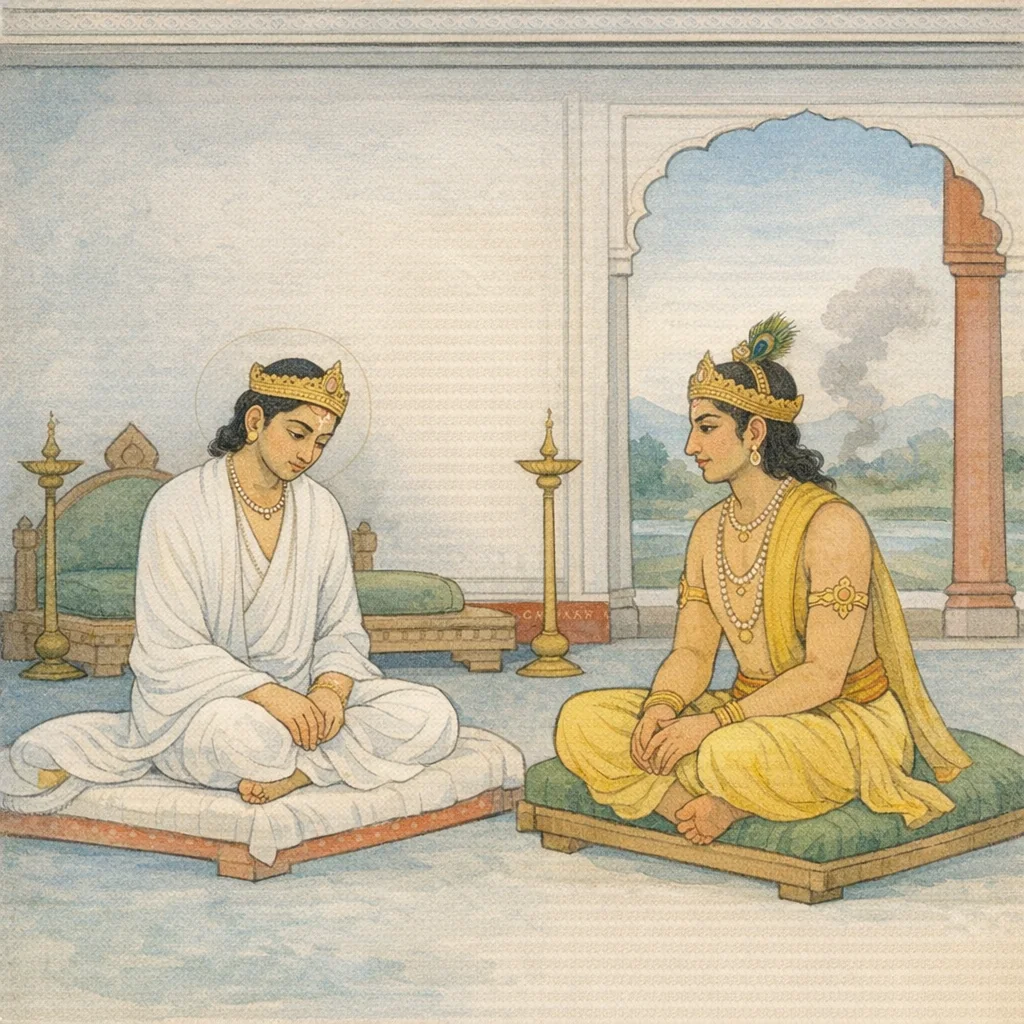
Vaiśaṃpāyana narrates Yudhiṣṭhira’s grief-stricken address after remembering Karṇa. Overwhelmed by sorrow, Yudhiṣṭhira speaks to Arjuna, condemning the kṣātra code and the pride, anger, and acquisitive desire that, in his view, precipitated collective ruin. He contrasts their state with the stable virtues of forest-dwellers—forbearance, self-restraint, purity, non-hostility, non-envy, non-injury, and truthfulness—arguing that even universal sovereignty cannot compensate for slain kin and wasted human potential. He attributes the catastrophe to shared fault and to the adversarial stratagems associated with Dhṛtarāṣṭra’s son, describing how misguided counsel and partiality corroded the polity. The chapter culminates in an explicit renunciatory proposal: Yudhiṣṭhira expresses intent to relinquish possessions and the entire kingdom, urging Arjuna to govern a secured realm, and the narration closes as Arjuna prepares to respond.
Chapter Arc: वैशम्पायन युधिष्ठिर को दिखाते हैं—विजय के बाद भी वे दुःख-शोक से आविष्ट, बार-बार दीर्घ निःश्वास लेते हुए अर्जुन के सामने अपने अंतःकरण का खेद उँडेलते हैं। → युधिष्ठिर युद्ध-विनाश का भार अपने ऊपर लेते हैं: यदि द्वारका जाकर भिक्षा से जीवन चलाते तो यह दुर्गति न आती; काम-क्रोध-हर्ष-रोष में डूबे योद्धा मृत्यु-यान पर चढ़कर वैवस्वत-धाम को गए; और वे कहते हैं कि लोक-विनाश के कारण हम ही स्मृत हैं—दोष का फल धृतराष्ट्र-पुत्रों पर भी जाएगा, पर कलंक हमारे माथे पर है। → युधिष्ठिर राज्य और भोगों का परित्याग घोषित करते हैं—अर्जुन से कहते हैं कि तुम निष्कण्टक पृथ्वी का शासन करो; मुझे राज्य से कोई प्रयोजन नहीं। वे वन-गमन, तीर्थ-गमन, श्रुति-स्मृति-जप, दान और तप द्वारा प्रायश्चित्त की ओर झुकते हैं, क्योंकि ‘हत्वा’ के बाद क्रोध तो गया पर शोक उन्हें रोक रहा है। → अध्याय का निष्कर्ष प्रायश्चित्त-मार्ग की स्थापना है: पाप का क्षय कथन/स्वीकार, अनुताप, शुभ कर्म, दान और तप से होता है—युधिष्ठिर का मन राज्य-धर्म से हटकर शुद्धि-धर्म की ओर मुड़ता है, और अर्जुन को राज-भार सँभालने का संकेत मिलता है। → क्या युधिष्ठिर वास्तव में राज्य त्यागकर वन को जाएंगे, या क्षत्रिय-धर्म के अनुसार प्रजा-पालन हेतु उन्हें रोका जाएगा?
Shlokas
Verse 1
अपने-आप बछ। अर: 2 सप्तमो<्ध्याय: युधिष्ठिरका आन्तरिक खेद प्रकट करते हुए अपने लिये राज्य छोड़कर वनमें चले जानेका प्रस्ताव करना वैशम्पायन उवाच युधिष्ठिरस्तु धर्मात्मा शोकव्याकुलचेतन: । शुशोच दुःखसंतप्त: स्मृत्वा कर्ण महारथम्,वैशम्पायनजी कहते हैं--राजन्! धर्मात्मा राजा युधिष्ठिरका चित्त शोकसे व्याकुल हो उठा था। वे महारथी कर्णको याद करके दुःखसे संतप्त हो शोकमें डूब गये ते वयं पृथिवीहेतोरवध्यान् पृथिवी श्वरान् । सम्परित्यज्य जीवामो हीनार्था हतबान्धवा:
Vaiśampāyana said: Yudhiṣṭhira, steadfast in dharma, became inwardly shaken by grief. Tormented by sorrow, he lamented as he remembered Karṇa, the great chariot-warrior. “For the sake of the earth—of kingship—we have slain those who should not have been slain, the lords of the earth. Now let us abandon everything and live on, bereft of purpose and with our kinsmen destroyed.”
Verse 2
आविष्टो दुःखशोकाशभ्यां नि:श्वसंश्ष पुन: पुनः । दृष्टवार्जुनमुवाचेदं वचनं शोककर्शित:,दुःख और शोकसे आविष्ट हो वे बारंबार लंबी साँस खींचने लगे और अर्जुनको देखकर शोकसे पीड़ित हो इस प्रकार बोले
Vaiśampāyana said: Overwhelmed by grief and sorrow, he kept heaving deep sighs again and again. Then, seeing Arjuna, and worn down by mourning, he spoke these words—setting a somber moral frame in which anguish and responsibility press upon the mind before counsel is given.
Verse 3
युधिछिर उवाच यद्,ैक्ष्यमाचरिष्याम वृष्ण्यन्धकपुरे वयम् । ज्ञातीन् निष्पुरुषान् कृत्वा नेमां प्राप्स्याम दुर्गतिम्
Yudhiṣṭhira said: “What course of action should we undertake in the city of the Vṛṣṇis and Andhakas? If we render our own kinsmen bereft of their men—destroying their protectors—shall we not thereby incur this grievous downfall?”
Verse 4
युधिष्ठिरने कहा--अर्जुन! यदि हमलोग वृष्णिवंशी तथा अन्धकवंशी क्षत्रियोंकी नगरी द्वारकामें जाकर भीख माँगते हुए अपना जीवन-निर्वाह कर लेते तो आज अपने कुटुम्बको निर्वेश करके हम इस दुर्दशाको प्राप्त नहीं होते ।। अमित्रा न: समृद्धार्था वृत्तार्था: कुरव: किल । आत्मानमात्मना हत्वा कि धर्मफलमाप्नुम:,हमारे शत्रुओंका मनोरथ पूर्ण हुआ (क्योंकि वे हमारे कुलका विनाश देखकर प्रसन्न होंगे)। कौरवोंका प्रयोजन तो उनके जीवनके साथ ही समाप्त हो गया। आत्मीय जनोंको मारकर स्वयं ही अपनी हत्या करके हम कौन-सा धर्मका फल प्राप्त करेंगे?
Yudhiṣṭhira said: “Arjuna, if we had gone to Dvārakā—the city of the Vṛṣṇis and the Andhakas—and sustained ourselves by begging, we would not have reached this wretched state after stripping our own family of life. Our enemies’ desire has been fulfilled, for they will rejoice at the ruin of our line; and the Kauravas’ purpose ended only with their lives. Having slain our own kin and, by that very act, destroyed ourselves, what fruit of dharma could we possibly obtain?”
Verse 5
धिगस्तु क्षात्रमाचारं धिगस्तु बलपौरुषम् | धिगस्त्वमर्ष येनेमामापदं गमिता वयम्,क्षत्रियोंक आचार, बल, पुरुषार्थ और अमर्षको धिक््कार है! जिनके कारण हम ऐसी विपत्तिमें पड़ गये
Yudhiṣṭhira said: “Shame upon the Kṣatriya code of conduct; shame upon strength and manly prowess; shame upon that unforbearing wrath—by which we have been driven into this calamity.”
Verse 6
साधु क्षमा दम: शौचं वैराग्यं चाप्यमत्सर: । अहिंसा सत्यवचनं नित्यानि वनचारिणाम्,क्षमा, मन और इन्द्रियोंका संयम, बाहर-भीतरकी शुद्धि, वैराग्य, ईर्ष्याका अभाव, अहिंसा और सत्यभाषण--ये वनवासियोंके नित्य धर्म ही श्रेष्ठ हैं
Yudhiṣṭhira said: “Excellent indeed are these constant duties of those who dwell in the forest: forbearance, self-restraint, purity within and without, dispassion, freedom from envy, non-violence, and truthful speech.”
Verse 7
वयं तु लोभान्मोहाच्च दम्भं मानं च संश्रिता: । इमामवस्थां सम्प्राप्ता राज्यलाभबुभुत्सया,हमलोग तो लोभ और मोहके कारण राज्यलाभके सुखका अनुभव करनेकी इच्छासे दम्भ और अभिमानका आश्रय लेकर इस दुर्दशामें फँस गये हैं इति श्रीमहाभारते शान्तिपर्वणि राजधर्मानुशासनपर्वणि युधिष्ठिरपरिदेवनं नाम सप्तमो<थध्याय:
But we—driven by greed and delusion—took refuge in arrogance and pride. Longing to taste the pleasure of gaining a kingdom, we have fallen into this wretched condition.
Verse 8
त्रैलोक्यस्यापि राज्येन नास्मान् वक्ित् प्रहर्षयेत् । बान्धवान् निहतान् दृष्टवा पृथिव्यां विजयैषिण:,जब हमने पृथ्वीपर विजयकी इच्छा रखनेवाले अपने बन्धु-बान्धवोंको मारा गया देख लिया, तब हमें इस समय तीनों लोकोंका राज्य देकर भी कोई प्रसन्न नहीं कर सकता
Not even the sovereignty of the three worlds could gladden us now. For once we have seen our own kinsmen slain by those who sought victory upon the earth, no gift can bring joy to our hearts.
Verse 9
हाय! हमलोगोंने इस तुच्छ पृथ्वीके लिये अवध्य राजाओंकी भी हत्या की और अब उन्हें छोड़कर बन्धु-बान्धवोंसे हीन हो अर्थ-भ्रष्टकी भाँति जीवन व्यतीत कर रहे हैं
Alas! For the sake of this paltry earth, we have even slain kings who ought not to have been killed. And now, bereft of them, we live without kinsmen or allies, passing our days like one ruined in fortune—empty of the very supports that once sustained life.
Verse 10
आमिषे गृध्यमानानामशुभं वै शुनामिव | आमिषं चैव नो हीष्टमामिषस्य विवर्जनम्,जैसे मांसके लोभी कुत्तोंको अशुभकी प्राप्ति होती है, उसी प्रकार राज्यमें आसक्त हुए हमलोगोंको भी अनिष्ट प्राप्त हुआ है। अतः हमारे लिये मांस-तुल्य राज्यको पाना अभीष्ट नहीं है, उसका परित्याग ही अभीष्ट होना चाहिये
Yudhiṣṭhira said: “For those who greedily crave flesh, misfortune surely follows—like it does for dogs. In the same way, for us who became attached to kingship, calamity has come. Therefore, for us the gaining of a kingdom—like meat—is not desirable; what is desirable is the renunciation of that ‘meat’, the giving up of such craving.”
Verse 11
ये जो हमारे सगे-सम्बन्धी मारे गये हैं, इनका परित्याग तो हमें समस्त पृथ्वी, राशि- राशि सुवर्ण और समूचे गाय-घोड़े पाकर भी नहीं करना चाहिये था
Yudhiṣṭhira said: “Those who were our own kinsmen have been slain. Even if we had gained the whole earth, heaps upon heaps of gold, and all the cattle and horses, we should never have consented to abandoning them. Such gains cannot make good the loss of one’s own relations.”
Verse 12
काममन्युपरीतास्ते क्रोधहर्षसमन्विता: । मृत्युयानं समारुह्मु गता वैवस्वतक्षयम्,वे काम और क्रोधके वशीभूत थे, हर्ष और रोषसे भरे हुए थे, अतः मृत्युरूपी रथपर सवार हो यमलोकमें चले गये
Yudhiṣṭhira said: “Overpowered by desire (kāma) and anger (krodha), and carried away by exultation and rage, they mounted the vehicle of Death and went to the abode of Vaivasvata (Yama).”
Verse 13
न पृथिव्या सकलया न सुवर्णस्य राशिभि: । न गवाश्वेन सर्वेण ते त्याज्या य इमे हता:,बहुकल्याणसंयुक्तानिच्छन्ति पितर: सुतान् तपसा ब्रह्मचर्येण सत्येन च तितिक्षया सभी पिता तपस्या, ब्रह्मचर्य-पालन, सत्यभाषण तथा तितिक्षा आदि साधनोंद्वारा अनेक कल्याणमय गुणोंसे युक्त बहुत-से पुत्र पाना चाहते हैं
Yudhiṣṭhira said: “Not for the whole earth, not for heaps of gold, not even for all cattle and horses should one abandon those who have been slain here. Fathers, seeking sons endowed with many auspicious qualities, desire them through austerity, through disciplined celibacy, through truthfulness, and through patient endurance.”
Verse 14
उपवासैस्तथेज्याभिव्रतकौतुकमड़लै: । लभन्ते मातरो गर्भान् मासान् दश च बिशभ्रति,इह चामुत्र चैवेति कृपणा: फलहेतव: । इसी प्रकार सभी माताएँ उपवास, यज्ञ, व्रत, कौतुक और मंगलमय कृत्योंद्वारा उत्तम पुत्रकी इच्छा रखकर दस महीनोंतक अपने गर्भोका भरण-पोषण करती हैं। उन सबका यही उद्देश्य होता है कि यदि कुशलपूर्वक बच्चे पैदा होंगे, पैदा होनेपर यदि जीवित रहेंगे तथा बलवान होकर यदि अच्छे गुणोंसे सम्पन्न होंगे तो हमें इहलोक और परलोकमें सुख देंगे। इस प्रकार वे दीन माताएँ फलकी आकांक्षा रखती हैं
Yudhiṣṭhira said: “By fasts, sacrifices, vows, auspicious rites, and celebratory observances, mothers seek to obtain conception; and for ten months they bear and sustain the womb. Thinking, ‘Here and hereafter as well,’ those poor women act with an eye to results—hoping that if the child is born safely, lives, grows strong, and becomes endowed with good qualities, he will bring them happiness in this world and the next.”
Verse 15
यदि स्वस्ति प्रजायन्ते जाता जीवन्ति वा यदि | सम्भाविता जातबलास्ते दद्युर्यदि न: सुखम्
Yudhiṣṭhira said: “If they are born in well-being, and if, once born, they indeed live; if they are honored and grow strong—then, perhaps, they might grant us happiness.”
Verse 16
तासामयं समुद्योगो निर्वत्त: केवलोडफल:,परंतु उनका यह उद्योग सर्वथा निष्फल हो गया; क्योंकि हमलोगोंने उन सब माताओंके नवयुवक पुत्रोंको, जो विशुद्ध सुवर्णमय कुण्डलोंसे अलंकृत थे, मार डाला है। वे इस भूलोकके भोगोंके उपभोगका अवसर न पाकर देवताओं और पितरोंका ऋण उतारे बिना ही यमलोकमें चले गये
Yudhiṣṭhira said: “Thus their effort has ended in utter futility. For we have slain the mothers’ sons—young men adorned with pure golden earrings. Having found no chance to enjoy the rightful experiences of this human world, and without discharging their obligations to the gods and to the ancestors, they have gone to Yama’s realm. In this, I see the bitter ethical weight of war: lives cut off before duty and household life could even begin.”
Verse 17
यदासां निहता: पुत्रा युवानो मृष्टकुण्डला: । अभुकक््त्वा पार्थिवान् भोगानृणान्यनपहाय च,परंतु उनका यह उद्योग सर्वथा निष्फल हो गया; क्योंकि हमलोगोंने उन सब माताओंके नवयुवक पुत्रोंको, जो विशुद्ध सुवर्णमय कुण्डलोंसे अलंकृत थे, मार डाला है। वे इस भूलोकके भोगोंके उपभोगका अवसर न पाकर देवताओं और पितरोंका ऋण उतारे बिना ही यमलोकमें चले गये
Yudhiṣṭhira said: “When those mothers’ sons—young men adorned with bright, well-wrought earrings—have been slain, they have departed to Yama’s realm without ever tasting the enjoyments of earthly life and without discharging the debts owed to gods and ancestors. Thus, the mothers’ efforts and hopes have been rendered wholly fruitless by our deed.”
Verse 18
पितृभ्यो देवताभ्यश्व गता वैवस्वतक्षयम्,परंतु उनका यह उद्योग सर्वथा निष्फल हो गया; क्योंकि हमलोगोंने उन सब माताओंके नवयुवक पुत्रोंको, जो विशुद्ध सुवर्णमय कुण्डलोंसे अलंकृत थे, मार डाला है। वे इस भूलोकके भोगोंके उपभोगका अवसर न पाकर देवताओं और पितरोंका ऋण उतारे बिना ही यमलोकमें चले गये
Yudhiṣṭhira said: “They have gone to Vaivasvata’s abode—the realm of Yama—yet all the efforts made for the gods and the ancestors have become wholly fruitless. For we have slain those mothers’ very young sons, adorned with pure golden earrings. Without ever gaining the chance to enjoy the rightful experiences of this world, and without discharging their debts to the gods and to the forefathers, they have departed to Yama’s world.”
Verse 19
यदैषामम्ब पितरौ जातकामावुभावपि । संजातधनरत्नेषु तदैव निहता नृपा:,माँ! इन राजाओंके माता-पिता जब इनके द्वारा उपार्जित धन और रत्न आदिके उपभोगकी आशा करने लगे, तभी ये मारे गये
Yudhiṣṭhira said: “Mother, when the fathers and mothers of these kings—both of them—began to hope to enjoy the wealth and jewels acquired by their sons, at that very time those kings were slain.”
Verse 20
संयुक्ता: काममन्युभ्यां क्रोधहर्षासमञ्जसा: । न ते जयफलं किंचिद् भोक्तारो जातु कहिचित्,जो लोग कामना और खीझसे युक्त हो क्रोध और हर्षके कारण अपना संतुलन खो बैठते हैं, वे कभी कहीं किंचिनमात्र भी विजयका फल नहीं भोग सकते
Yudhiṣṭhira said: “Those who are driven by desire and resentment, and who lose their steadiness through anger and elation, are never—anywhere—able to enjoy even the slightest fruit of victory.”
Verse 21
पज्चालानां कुरूणां च हता एव हि ये हता: । न चेत् सर्वानयं लोक: पश्येत् स्वेनैव कर्मणा,पांचालों और कौरवोंके जो वीर मारे गये, वे तो मर ही गये; नहीं तो आज यह संसार देखता कि वे सब अपने ही पुरुषार्थसे कैसी ऊँची स्थितिमें पहुँच गये हैं
Yudhiṣṭhira said: “Those heroes of the Pāñcālas and the Kurus who were slain are indeed gone—slain beyond recall. Otherwise, this very world would have witnessed how, by their own effort and deeds, they might have risen to a lofty state.”
Verse 22
वयमेवास्यथ लोकस्य विनाशे कारण स्मृता: । धृतराष्ट्रस्य पुत्रेषु तत् सर्व प्रतिपत्स्यति,हमलोग ही इस जगत्के विनाशमें कारण माने गये हैं; परंतु इसका सारा उत्तरदायित्व धृतराष्ट्रके पुत्रोंपर ही पड़ेगा
Yudhiṣṭhira said: “People consider us to have been the cause of this world’s ruin; yet the entire burden of responsibility for it will fall upon the sons of Dhṛtarāṣṭra.”
Verse 23
सदैव निकृतिप्रज्ञो द्वेश मायोपजीवन: । मिथ्याविनीत: सततमस्मास्वनपकारिषु,हमलोगोंने कभी कोई बुराई नहीं की थी तो भी राजा धृतराष्ट्र सदा हमसे द्वेष रखते थे। उनकी बुद्धि निरन्तर हमें ठगनेकी ही बात सोचा करती थी। वे मायाका आश्रय लेनेवाले थे और झूठे ही विनय अथवा नम्रता दिखाया करते थे
Yudhiṣṭhira said: “Dhṛtarāṣṭra was ever of a mind trained in deceit, living by hatred and by stratagem. Though we had done him no harm, he continually displayed only a false humility—his thoughts always bent on cheating us.”
Verse 24
न सकामा वयं ते च न चास्माभिरनन तैर्जितम् न तैर्भुक्तेयमवनिर्न नायों गीतवादितम्,इस युद्धसे न तो हमारी कामना सफल हुई और न वे कौरव ही सफलमनोरथ हुए। न हमारी जीत हुई, न उनकी। उन्होंने न तो इस पृथ्वीका उपभोग किया, न स्त्रियोंका सुख देखा और न गीतवाद्यका ही आनन्द लिया
Yudhiṣṭhira said: “By this war, neither our desires were fulfilled nor were the Kauravas’ hopes brought to fruition. Neither did we truly win, nor did they. They did not come to enjoy this earth, nor the pleasures of women, nor the delight of song and music.”
Verse 25
नामात्यसुहदां वाक््यं न च श्रुतवतां श्रुतम् । न रत्नानि पराध्यानि न भूर्न द्रविणागम:,मन्त्रियों, सुहृदों तथा वेद-शास्त्रोंके ज्ञाता विद्वानोंकी भी बातें वे नहीं सुन सके। बहुमूल्य रत्न, पृथ्वीके राज्य तथा धनकी आयका भी सुख भोगनेका उन्हें अवसर नहीं मिला
Yudhiṣṭhira said: “They could not even listen to the counsel of ministers and well-wishing friends, nor to the learning of those versed in sacred tradition. Nor did they get the chance to enjoy precious treasures, sovereignty over the earth, or the steady inflow of wealth.”
Verse 26
अस्मदद्वेषेण संतप्त: सुखं न स्मेह विन्दति । ऋद्धिमस्मासु तां दृष्टवा विवर्णो हरिण: कृश:
Yudhiṣṭhira said: “Burned by his hatred toward us, he finds no happiness here. Seeing the prosperity that has come to us, he grows pale—like a deer grown thin.”
Verse 27
दुर्योधन हमसे द्वेष रखनेके कारण सदा संतप्त रहकर कभी यहाँ सुख नहीं पाता था। हमलोगोंके पास वैसी समृद्धि देखकर उसकी कान्ति फीकी पड़ गयी थी। वह चिन्तासे सूखकर पीला और दुर्बल हो गया था ।। धृतराष्ट्रश्न नृपति: सौबलेन निवेदित: । त॑ पिता पुत्रगृद्धित्वादनुमेने$नये स्थित:
Yudhiṣṭhira said: “Because Duryodhana nursed hatred toward us, he remained perpetually tormented and could never find happiness here. Seeing the prosperity we possessed, his radiance grew dim. Wasted by anxiety, he became pale and weak. And King Dhṛtarāṣṭra, prompted by Śakuni, out of a father’s greedy attachment to his son, consented to that course of unrighteousness.”
Verse 28
असंशयं क्षयं राजा यथैवाहं तथा गत:,उनकी इसी दुर्नीतिके कारण निःसंदेह राजा धृतराष्ट्रको भी वैसा ही विनाश प्राप्त हुआ है, जैसा कि मुझे
Yudhiṣṭhira said: “Without doubt, the king has met with ruin—just as I have come to this condition. Owing to that very misguided policy, King Dhṛtarāṣṭra too has surely reached the same destruction.”
Verse 29
अनियम्याशुचिं लुब्ध॑ पुत्र कामवशानुगम् । यशस: पतितो दीप्ताद् घातयित्वा सहोदरान्,वे अपने अपवित्र आचार-विचारवाले, लोभी एवं कामासक्त पुत्रको काबूमें न रखनेके कारण उसका तथा उसके सहोदर भाइयोंका वध करवाकर स्वयं भी उज्ज्वल यशसे भ्रष्ट हो गये
Yudhiṣṭhira said: “Because he failed to restrain his son—impure in conduct, greedy, and driven by lust—he had the son and his own brothers slain; and by that deed he himself fell away from his once-brilliant fame.”
Verse 30
इमौ हि वृद्धौ शोकाग्नौ प्रक्षिप्प स सुयोधन: । अस्मत्प्रद्वेषसंयुक्त: पापबुद्धि: सदैव ह,हमलोगोंके प्रति सदा द्वेष रखनेवाला पापबुद्धि दुर्योधन इन दोनों वृद्धोंको शोककी आगमें झोंककर चला गया
Yudhiṣṭhira said: “Indeed, that Suyodhana—ever of sinful intent and filled with hatred toward us—cast these two aged elders into the fire of grief and went away.”
Verse 31
को हि बन्धु: कुलीन: संस्तथा ब्रूयात् सुहृज्जने । यथासाववददू वाक्यं युयुत्सु: कृष्णसंनिधौ,संधिके लिये गये हुए श्रीकृष्णके समीप युद्धकी इच्छावाले दुर्योधनने जैसी बात कही थी, वैसी कौन भाई-बन्धु कुलीन होकर भी अपने सुहृदोंके लिये कह सकता है?
Yudhiṣṭhira said: “What brother or kinsman, even if well-born, could ever speak such words to his own dear friends? For Yuyutsu, in Kṛṣṇa’s very presence, spoke in the same manner—words driven by the desire for war.”
Verse 32
आत्मनो हि वयं दोषाद् विनष्टा: शाश्वती: समा: । प्रदहन्तो दिश: सर्वा भास्वरा इव तेजसा,हमलोगोंने तेजसे प्रकाशित होनेवाली सम्पूर्ण दिशाओंमें मानो आग लगा दी और अपने ही दोषसे सदाके लिये नष्ट हो गये
Yudhiṣṭhira said: “Truly, through our own fault we have been ruined for endless years. Blazing with power like radiant fires, we seemed to set all the directions aflame—yet that very brilliance, misused, became the cause of our lasting destruction.”
Verse 33
सो>स्माकं वैरपुरुषो दुर्मति:ः प्रग्रह॑ गत: । दुर्योधनकृते होतत् कुलं नो विनिपातितम्,हमारे प्रति शत्रुताका मूर्तिमान् स्वरूप वह दुर्बुद्धि दुर्योधन पूर्णतः बन्धनमें बँध गया। दुर्योधनके कारण ही हमारे इस कुलका पतन हो गया
Yudhiṣṭhira said: “That man who embodies enmity toward us—evil-minded as he is—has fallen wholly under the grip of passion and delusion. Because of Duryodhana, our lineage has been brought to ruin.”
Verse 34
अवध्यानां वध कृत्वा लोके प्राप्ता: सम वाच्यताम् कुलस्यास्यान्तकरणं दुर्मतिं पापपूरुषम्
Yudhiṣṭhira said: “Having slain those who ought not to be slain, we have come to be spoken of in the world as their equals. We have destroyed this lineage, and become men of wicked understanding—sinful persons.”
Verse 35
हता: शूरा: कृतं पापं विषय: स्वो विनाशित:
Yudhiṣṭhira said: “The heroes have been slain; sin has been committed; and our own realm has been brought to ruin.”
Verse 36
धनंजय कृतं पापं कल्याणेनोपहन्यते
Yudhiṣṭhira said: “O Dhanañjaya, the sin that has been committed is struck down and nullified by righteous good—by auspicious, beneficial conduct.”
Verse 37
निवृत्त्या तीर्थगमनाच्छुतिस्मृतिजपेन वा
Yudhiṣṭhira asks whether inner renunciation, pilgrimage to the sacred tīrthas (holy fords), or the recitation of śruti and smṛti can serve as effective means of spiritual purification and of settling one’s moral burden—seeking a dharmic path of atonement grounded in discipline rather than mere outward display.
Verse 38
त्यागवांश्व पुनः पापं नालंकर्तुमिति श्रुति: । त्यागवाञ्जन्ममरणे नाप्रोतीति श्रुतिर्यदा
Yudhiṣṭhira said: “Scripture declares that one who has renounced cannot again take up sin as an ‘ornament’—cannot adopt it as a deliberate way of life. And when the same scripture further says that the renouncer does not fall into the cycle of birth and death, how are we to understand these teachings together?”
Verse 39
निवृत्तिपरायण होने, तीर्थयात्रा करने तथा वेद-शास्त्रोंका स्वाध्याय एवं जप करनेसे भी पाप दूर होता है। श्रुतिका कथन है कि त्यागी पुरुष पाप नहीं कर सकता तथा वह जन्म और मरणके बन्धनमें भी नहीं पड़ता ।। प्राप्तवर्त्मा कृतमतिर्त्रह्म सम्पद्यते तदा । स धनंजय निर्दधन्द्वो मुनिर्शानसमन्वित:,धनंजय! उसे मोक्षका मार्ग मिल जाता है और वह ज्ञानी एवं स्थिर-बुद्धि मुनि द्न्द्रहित होकर तत्काल ब्रह्म-साक्षात्कार कर लेता है
Yudhiṣṭhira said: When a person becomes devoted to renunciation, undertakes pilgrimages, and applies himself to the study of the Vedas and śāstras along with disciplined repetition (japa), sin is dispelled. The Śruti further declares that a man of true relinquishment does not commit sin, nor does he fall into the bondage of birth and death. Having found the path and fixed his resolve, he then attains Brahman. O Dhanañjaya, such a sage—free from the pairs of opposites and endowed with inner peace—quickly realizes Brahman; for him the way to liberation becomes manifest.
Verse 40
वनमामन्त्र्य व: सर्वान् गमिष्यामि परंतप । न हि कृत्स्नतमो धर्म: शक््य: प्राप्तुमिति श्रुति:
Yudhiṣṭhira said: “Having taken leave of all of you, I shall depart for the forest, O scorcher of foes. For the sacred tradition declares that the whole of dharma in its entirety cannot be fully attained (by anyone).”
Verse 41
मया निसृष्टं पापं हि परिग्रहम भीप्सता
Yudhiṣṭhira said: “Indeed, the sin has been set in motion by me—by one who was craving acquisition and possession.”
Verse 42
स परिग्रहमुत्सृज्य कृत्स्नं राज्यं सुखानि च
Having renounced all possessions, and even the entire kingdom along with its comforts, he chose the path of relinquishment over worldly security.
Verse 43
प्रशाधि त्वमिमामुर्वी क्षेमां निहतकण्टकाम्
Yudhiṣṭhira said: “Govern this earth—now made secure, its ‘thorns’ (the sources of harm and disorder) removed.”
Verse 44
एतावदुक्त्वा वचन कुरुराजो युधिष्ठिर: । उपारमत् ततः पार्थ: कनीयानभ्यभाषत,इतना कहकर कुरुराज युधिष्छिर चुप हो गये। तब कुन्तीके सबसे छोटे पुत्र अर्जुनने भाषण देना आरम्भ किया
Having said only this much, Yudhiṣṭhira—the king of the Kurus—fell silent. Then Pārtha, Kuntī’s youngest son, Arjuna, began to speak.
Verse 156
इह चामुत्र चैवेति कृपणा: फलहेतव: । इसी प्रकार सभी माताएँ उपवास, यज्ञ, व्रत, कौतुक और मंगलमय कृत्योंद्वारा उत्तम पुत्रकी इच्छा रखकर दस महीनोंतक अपने गर्भोका भरण-पोषण करती हैं। उन सबका यही उद्देश्य होता है कि यदि कुशलपूर्वक बच्चे पैदा होंगे, पैदा होनेपर यदि जीवित रहेंगे तथा बलवान होकर यदि अच्छे गुणोंसे सम्पन्न होंगे तो हमें इहलोक और परलोकमें सुख देंगे। इस प्रकार वे दीन माताएँ फलकी आकांक्षा रखती हैं
Yudhiṣṭhira said: “Thinking, ‘in this world and in the next as well,’ the pitiable act with an eye to results. In the same way, mothers—desiring an excellent son—undertake fasts, sacrifices, vows, auspicious rites, and other observances, and for ten months sustain and nourish the embryo. Their aim is this: if children are born safely, if they survive after birth, and if they grow strong and endowed with good qualities, then they will bring happiness to us in this world and in the world beyond. Thus those distressed mothers long for the fruit of their acts.”
Verse 276
अनपेक्ष्यैव पितरं गाड़ेयं विदुरं तथा । सुबलपुत्र शकुनिने राजा धृतराष्ट्रको दुर्योधनकी यह अवस्था सूचित की। पुत्रके प्रति अधिक आसक्त होनेके कारण पिता धुृतराष्ट्रने अन्यायमें स्थित हो उसकी इच्छाका अनुमोदन किया। इस विषयमें उन्होंने अपने पिता (ताऊ) गंगानन्दन भीष्म तथा भाई विदुरसे राय लेनेकी भी इच्छा नहीं की
Yudhiṣṭhira said: “Without consulting his father, nor the Gāṅgeya Bhīṣma, nor Vidura, King Dhṛtarāṣṭra informed Śakuni, the son of Subala, of Duryodhana’s condition. Overly attached to his son, Dhṛtarāṣṭra—standing on the side of injustice—endorsed Duryodhana’s wishes. In this matter he did not even desire to seek counsel from his elder Bhīṣma, born of the Gaṅgā, or from his brother Vidura.”
Verse 346
राजा राष्ट्रेश्वरं कृत्वा धृतराष्ट्रोड्द्य शोचति । हमलोग अवध्य नरेशोंका वध करके संसारमें निन्दाके पात्र हो गये। राजा धृतराष्ट्र इस कुलका विनाश करनेवाले दुर्बुद्धि एवं पापात्मा दुर्योधनको इस राष्ट्रका स्वामी बनाकर आज शोककी आगमें जल रहे हैं
Yudhiṣṭhira said: “Having made Duryodhana the lord of the realm, King Dhṛtarāṣṭra now grieves. And we too—by killing kings who ought not to have been slain—have become objects of blame in the world. Dhṛtarāṣṭra, after appointing as sovereign of this kingdom that evil-minded, sinful Duryodhana, the very agent of his family’s ruin, is today being consumed by the fire of sorrow.”
Verse 403
परिग्रहवता तनमे प्रत्यक्षमरिसूदन । शत्रुओंको तपानेवाले अर्जुन! मैं तुम सब लोगोंसे बिदा लेकर वनमें चला जाऊँगा। शत्रुसूदन! श्रुति कहती है कि “संग्रह-परिग्रहमें फँसा हुआ मनुष्य पूर्णतम धर्म (परमात्माका दर्शन) नहीं प्राप्त कर सकता।' इसका मुझे प्रत्यक्ष अनुभव हो रहा है
Yudhiṣṭhira said: “O Arisūdana, I see this directly in myself: bound by possessions and the impulse to accumulate, I cannot reach the highest dharma—the vision of the Supreme. O Arjuna, scorcher of enemies, I will take leave of you all and depart for the forest. For the Śruti declares that one ensnared in hoarding and possessiveness does not attain the fullest dharma; and that truth has become my own immediate experience.”
Verse 413
जन्मक्षयनिमित्तं च प्राप्तुं शक्यमिति श्रुति: । मैंने परिग्रह (राज्य और धनके संग्रह) की इच्छा रखकर केवल पाप बटोरा है, जो जन्म और मृत्युका मुख्य कारण है। श्रुतिका कथन है कि “परिग्रहसे पाप ही प्राप्त हो सकता है!
Yudhiṣṭhira said: “Scripture declares that one can indeed reach the cause of birth and destruction. By entertaining the desire for acquisition—by hoarding kingdom and wealth—I have gathered only sin, which is the chief cause of repeated birth and death. The śruti itself states: ‘From grasping and accumulation, one can obtain only sin.’”
Verse 423
गमिष्यामि विनिर्मुक्तो विशोको निर्मम: क्वचित् | अतः मैं परिग्रह छोड़कर सारे राज्य और इसके सुखोंको लात मारकर बन्धनमुक्त हो शोक और ममतासे ऊपर उठकर, कहीं वनमें चला जाऊँगा
Yudhiṣṭhira said: “I shall depart somewhere, freed from all bonds—sorrowless and without possessiveness. Casting aside all acquisition, I will spurn this kingdom and its pleasures, rise above grief and ‘mine-ness,’ and go to the forest.”
Verse 433
न ममार्थो5स्ति राज्येन भोगैर्वा कुरुनन्दन । कुरुनन्दन! तुम इस निष्कण्टक एवं कुशल-क्षेमसे युक्त पृथ्वीका शासन करो। मुझे राज्य और भोगोंसे कोई मतलब नहीं है
Yudhiṣṭhira said: “O joy of the Kurus, I have no desire for kingship, nor for pleasures. You, O Kurunandana, govern this earth—free of thorns (free from oppression and turmoil), and endowed with welfare and security. For me, there is no purpose in kingdom or enjoyment.”
Verse 3536
हत्वा नो विगतो मन्यु: शोको मां रुन्धयत्ययम् । हमने शूरवीरोंको मारा, पाप किया और अपने ही देशका विनाश कर डाला। शत्रुओंको मारकर हमारा क्रोध तो दूर हो गया, परंतु यह शोक मुझे निरन्तर घेरे रहता है
Yudhiṣṭhira said: “Having slain them, our anger has indeed subsided; yet this grief will not release me—it keeps hemming me in. We have killed heroic men, incurred sin, and brought ruin upon our own realm.”
Verse 3636
ख्यापनेनानुतापेन दानेन तपसापि वा । धनंजय! किया हुआ पाप कहनेसे, शुभ कर्म करनेसे, पछतानेसे, दान करनेसे और तपस्यासे भी नष्ट होता है
Yudhiṣṭhira said: “O Dhanañjaya (Arjuna), a sin that has been committed is destroyed by acknowledging it openly, by sincere remorse, by performing auspicious deeds, by giving in charity, and also by the practice of austerity.”
Frequently Asked Questions
The dilemma is whether accepting and exercising kingship after immense kin-loss can be ethically sustained, or whether the only coherent response to culpability and grief is renunciation of power and possessions.
The chapter underscores that sovereignty and wealth are not intrinsically consolatory; restraint, truthfulness, and non-injury are presented as stabilizing virtues, and renunciation is framed as a serious ethical option when desire and anger have produced harm.
No explicit phalaśruti is stated here; the chapter functions as a narrative-ethical preface that motivates later systematic instruction, positioning Yudhiṣṭhira’s remorse as the interpretive lens for subsequent rājadharma teaching.