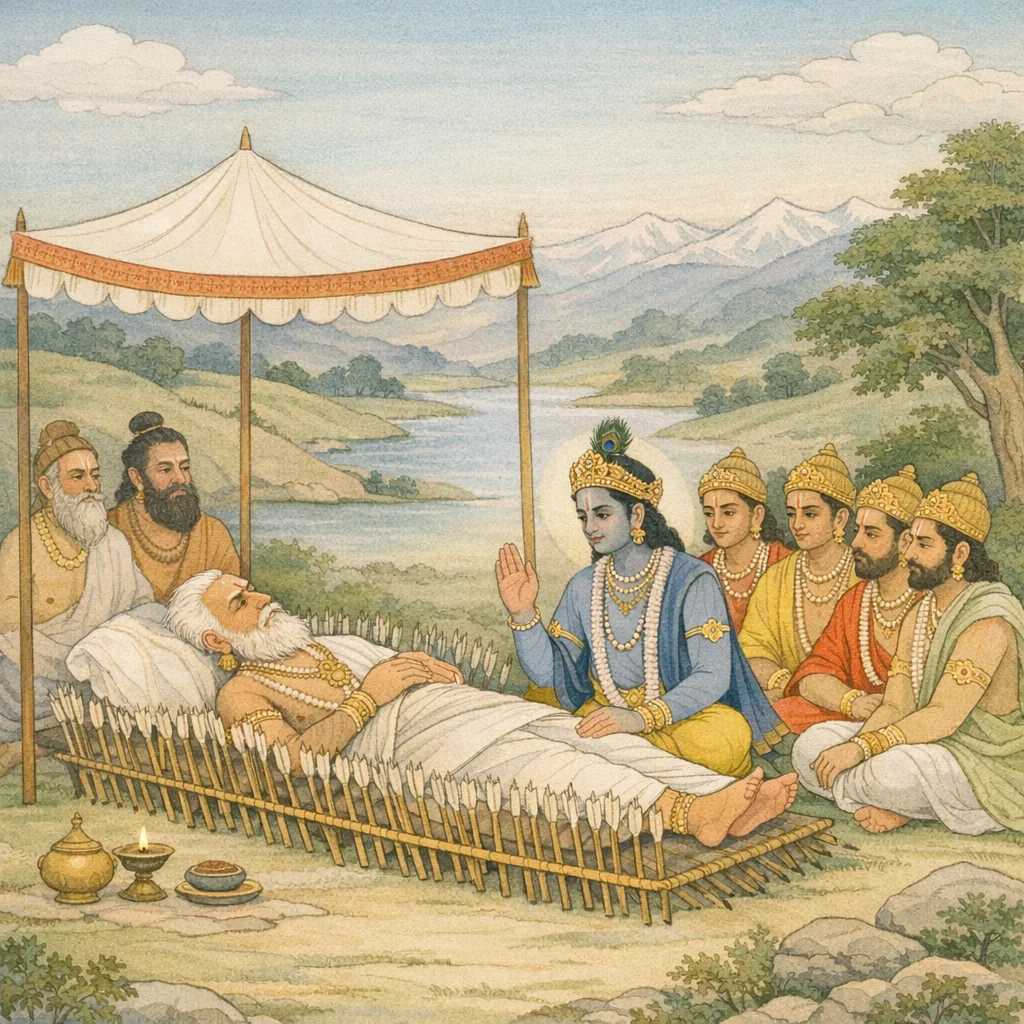
Adhyaya 52
Śānti Parva, Adhyāya 52 — Bhīṣma’s Humility Before Kṛṣṇa and the Granting of Boons
Upa-parva: Rājadharmānuśāsana (Instruction on the Duties of Kings) — Contextual Episode: Kṛṣṇa empowers Bhīṣma to teach
Vaiśaṃpāyana reports that Bhīṣma, hearing Kṛṣṇa’s beneficial, dharma-aligned words, responds with folded hands and a rhetoric of humility. He praises Kṛṣṇa as lokanātha and the source from which worldly intelligence and all actionable norms flow, asserting that even a master of speech would falter in Kṛṣṇa’s presence. Bhīṣma then describes his condition: mind and limbs weakened by arrow-impact, cognition unsettled, speech impeded by pain likened to poison-fire, and breath hurried—hence his inability to speak. He asks Kṛṣṇa to be gracious and to state what is beneficial for Dharmarāja (Yudhiṣṭhira), calling Kṛṣṇa the ‘āgama of all āgamas’ (the validating source behind traditions). Kṛṣṇa replies that Bhīṣma’s words are appropriate and grants a boon: no fainting, burning, pain, hunger, or thirst; complete knowledge and insight will arise; the mind will remain sāttvika, free from rajas and tamas; and Bhīṣma will perceive beings with divine sight and discern the fourfold living assembly clearly. The sages then worship Kṛṣṇa with Vedic hymns; flowers rain; auspicious sounds and winds prevail. After formal leave-taking, Kṛṣṇa and the Pāṇḍavas depart to the city, while the sages disperse with plans to return, marking a transition into the main instructional continuities.
Chapter Arc: श्रीकृष्ण के दिव्य वचनों से अभिभूत भीष्म शय्या पर ही अपनी असमर्थता प्रकट करते हैं—जहाँ स्वयं लोककर्ता उपस्थित हों, वहाँ मैं क्या कहूँ? → भीष्म बार-बार कृष्ण को लोकनाथ, शिव, नारायण, अच्युत कहकर स्तुति करते हैं और बताते हैं कि समस्त वाणी-विषय, धर्म-अर्थ का स्रोत उन्हीं से निःसृत है; ऐसे में उपदेश देने का अहंकार भी अनुचित है। → भीष्म का निर्णायक विनय-वाक्य: 'महाबाहो, क्षमा कीजिये; मैं कुछ नहीं बोल सकता—आपके सान्निध्य में तो वाचस्पति भी बोलते हुए लज्जित हो जाएँ।' यह क्षण कृष्ण-तत्त्व की सर्वोच्चता को अध्याय का शिखर बनाता है। → कृष्ण भीष्म को आश्वस्त करते हैं और वर/अनुग्रह देते हैं कि जब-जब वे धर्मयुक्त या अर्थयुक्त विषय का चिन्तन करेंगे, उनकी बुद्धि अग्रगामी और स्पष्ट होगी; तत्पश्चात यदुवृष्णि और पाण्डव नगर में प्रवेश कर यथोचित आवास ग्रहण करते हैं। → ऋषियों तथा पाण्डवों के 'दूसरे दिन' पुनः आगमन/उपस्थित होने का संकेत—आगामी अध्याय में राजधर्म-चिन्तन का क्रम आगे बढ़ने वाला है।
Shlokas
Verse 1
2: <---ऋशऋ- द्विपञज्चाशत्तमो< ध्याय: भीष्मका अपनी असमर्थता प्रकट करना, भगवान्का उन्हें वर देना तथा ऋषियों एवं पाण्डवोंका दूसरे दिन आनेका संकेत करके वहाँसे विदा होकर अपने-अपने स्थानोंको जाना वैशम्पायन उवाच ततः कृष्णस्य तद् वाक््यं धर्मार्थसहितं हितम् । श्रुत्वा शान्तनवो भीष्म: प्रत्युवाच कृताउ्जलि:,वैशम्पायनजी कहते हैं--राजन्! श्रीकृष्णाका यह धर्म और अर्थसे युक्त हितकर वचन सुनकर शान्तनुनन्दन भीष्मने दोनों हाथ जोड़कर कहा--
Vaiśampāyana said: Then, having heard that beneficial statement of Kṛṣṇa—aligned with both dharma and artha—Bhīṣma, the son of Śāntanu, replied with his hands joined in reverence.
Verse 2
लोकनाथ महाबाहो शिव नारायणाच्युत । तव वाक्यमुपश्रुत्य हर्षेणास्मि परिप्लुत:,“लोकनाथ! महाबाहो! शिव! नारायण! अच्युत! आपका यह वचन सुनकर मैं आनन्दके समुद्रमें निमग्न हो गया हूँ
“O Lord of the world, O mighty-armed one—O Śiva, O Nārāyaṇa, O Acyuta! Having heard your words, I am flooded and immersed in joy.”
Verse 3
कि चाहमभिधास्यामि वाक्य ते तव संनिधौ । यदा वाचोगतं सर्व तव वाचि समाहितम्,“भला” मैं आपके समीप क्या कह सकूँगा? जब कि वाणीका सारा विषय आपकी वेदमयी वाणीमें प्रतिष्ठित है
Vaiśampāyana said: “And what words could I possibly speak to you in your very presence, when everything that can be expressed by speech already stands gathered and established within your own Veda-like utterance?”
Verse 4
यच्च किंचित् क्वचिल्लोके कर्ताव्यं क्रियते च यत् । त्वत्तस्तन्नि:सृतं देव लोके बुद्धिमतो हि ते
Vaiśampāyana said: “Whatever duty, in any place in this world, is to be done—and whatever action is in fact performed—has its source in you, O divine one; for in this world the very intelligence of the wise proceeds from you.”
Verse 5
“देव! लोकमें कहीं भी जो कुछ कर्तव्य किया जाता है, वह सब आप बुद्धिमान् परमेश्वरसे ही प्रकट हुआ है ।। कथयेद् देवलोक॑ यो देवराजसमीपत: । धर्मकामार्थमोक्षाणां सो<र्थ ब्रूयात् तवाग्रत:,“जो मनुष्य देवराज इन्द्रके निकट देवलोकका वृत्तान्त बतानेका साहस कर सके, वही आपके सामने धर्म, अर्थ, काम और मोक्षकी बात कह सकता है
Vaiśampāyana said: “O Lord! Whatever duty is performed anywhere in the world has, in truth, been made manifest by You—the wise Supreme Ruler. Only that person who has the boldness to recount the affairs of heaven while standing near Indra, the king of the gods, is fit to speak before You about the true purport of dharma, artha, kāma, and mokṣa.”
Verse 6
शराभितापाद् व्यथितं मनो मे मधुसूदन । गात्राणि चावसीदन्ति न च बुद्धि: प्रसीदति,“मधुसूदन! इन बाणोंके गड़नेसे जो जलन हो रही है, उसके कारण मेरे मनमें बड़ी व्यथा है। सारा शरीर पीड़ाके मारे शिथिल हो गया है और बुद्धि कुछ काम नहीं दे रही है
“I am tormented by the burning pain of these arrows, O Madhusūdana. My mind is distressed; my limbs are failing, and my understanding finds no calm or clarity.”
Verse 7
न च मे प्रतिभा काचिदस्ति किंचित् प्रभाषितुम् । पीड्यमानस्य गोविन्द विषानलसमै: शरै:,“गोविन्द! ये बाण विष और अग्निके समान मुझे निरन्तर पीड़ा दे रहे हैं; अतः मुझमें कुछ भी कहनेकी शक्ति नहीं रह गयी है
“Nor do I have any clarity or strength left to speak even a little, O Govinda. For I am being continually tormented by arrows that feel like poison and fire.”
Verse 8
बल॑ मे प्रजहातीव प्राणा: संत्वरयन्ति च । मर्माणि परितप्यन्ति भ्रान्तचित्तस्तथा हाहम्
Vaiśaṃpāyana said: “My strength seems to be leaving me; my very breaths are hastening away. My vital points burn with pain, and my mind reels in confusion—alas, what a state I have fallen into!”
Verse 9
“मेरा बल शरीरको छोड़ता-सा जान पड़ता है। ये प्राण निकलनेको उतावले हो रहे हैं। मेरे मर्मस्थानोंमें बड़ी पीड़ा हो रही है; अतः मेरा चित्त भ्रान्त हो गया है ।। दौर्बल्यात् सज्जते वाड़् मे स कथं वक्तुमुत्सहे । साधु मे त्वं प्रसीदस्व दाशार्हकुलवर्धन,“दुर्बलताके कारण मेरी जीभ तालूमें सट जाती है, ऐसी दशामें मैं कैसे बोल सकता हूँ? दशाहईकुलकी वृद्धि करनेवाले प्रभो! आप मुझपर पूर्णरूपसे प्रसन्न हो जाइये
“My strength seems to be leaving my body. These very breaths are eager to depart. Great pain seizes my vital points; therefore my mind has grown bewildered. From weakness my speech breaks and my tongue seems to cling to the palate—how can I speak in such a state? O increaser of the Dāśārha line, be gracious; be fully pleased with me.”
Verse 10
तत् क्षमस्व महाबाहो न ब्रूयां किंचिदच्युत । त्वत्संनिधौ च सीदेद्धि वाचस्पतिरपि ब्रुवन्,“महाबाहो! क्षमा कीजिये। मैं बोल नहीं सकता। आपके निकट प्रवचन करनेमें बृहस्पतिजी भी शिथिल हो सकते हैं; फिर मेरी क्या बिसात है?
“Forgive me, mighty-armed one; O Acyuta, I cannot utter anything. Indeed, even Vācaspati (Bṛhaspati), though speaking, might falter in your very presence—what then can be said of my own capacity?”
Verse 11
न दिश: सम्प्रजानामि नाकाशं न च मेदिनीम् । केवलं तव वीर्येण तिष्ठामि मधुसूदन,“मधुसूदन! मुझे न तो दिशाओंका ज्ञान है और न आकाश एवं पृथ्वीका ही भान हो रहा है। केवल आपके प्रभावसे ही जी रहा हूँ
“O Madhusūdana, I can no longer discern the directions; neither the sky nor the earth is clear to me. I stand and endure only by the force of your might.”
Verse 12
स्वयमेव भवांस्तस्माद् धर्मराजस्य यद्धितम् | तद् ब्रवीत्वाशु सर्वेषामागमानां त्वमागम:,“इसलिये आप स्वयं ही जिसमें धर्मराजका हित हो, वह बात शीघ्र बताइये; क्योंकि आप शास्त्रोंके भी शास्त्र हैं
“Therefore, you yourself should promptly declare what will truly benefit Dharmarāja; for you are, as it were, the very source and authority of all the sacred teachings—the śāstra of all śāstras.”
Verse 13
कथं त्वयि स्थिते कृष्णे शाश्वते लोककर्तरि । प्रत्रूयान्मद्विध: कश्चिद् गुरौ शिष्य इव स्थिते,“श्रीकृष्ण! आप जगत्के कर्ता और सनातन पुरुष हैं। आपके रहते हुए मेरे-जैसा कोई भी मनुष्य कैसे उपदेश कर सकता है? क्या गुरुके रहते हुए शिष्य उपदेश देनेका अधिकारी है?”
“How can it be, while you, O Krishna—the Eternal, the Maker of the worlds—stand here? How could one such as I presume to give instruction? Does a disciple have the right to teach when the guru is present?”
Verse 14
वायुदेव उवाच उपपन्नमिदं वाक््यं कौरवाणां धुरन्धरे । महावीर्यें महासत्त्वे स्थिरे सर्वार्थदर्शिनि,भगवान् श्रीकृष्ण बोले--भीष्मजी! आप कुरुकुलका भार वहन करनेवाले, महापराक्रमी, परम धैर्यवान, स्थिर तथा सर्वार्थदर्शी हैं। आपका यह कथन सर्वथा युक्तिसंगत है
Vāyu-deva said: “Your words are wholly fitting, O bearer of the Kauravas’ burden. O great hero, great-souled, steadfast, and seeing the meaning of all things—Bhagavān Śrī Krishna said: ‘Bhīṣma, you uphold the weight of the Kuru line: mighty in valor, vast in fortitude, firm, and all-discerning. What you have spoken is entirely just.’”
Verse 15
यच्च मामात्थ गाड़ेय बाणघातरुजं प्रति । गृहाणात्र वरं भीष्म मत्प्रसादकृतं प्रभो,गड़ानन्दन भीष्म! प्रभो! बाणोंके आघातसे होनेवाली पीड़ाके विषयमें जो आपने कहा है, उसके लिये आप मेरी प्रसन्नतासे दिये हुए इस “वर” को ग्रहण करें
Vāyu said: “O descendant of Gāḍi, regarding the pain from the blows of arrows of which you spoke—O Bhīṣma, lord—accept here this boon, granted by my favor.”
Verse 16
न ते ग्लानिर्न ते मूर्छा न दाहो न च ते रुजा । प्रभविष्यन्ति गाड़्ेय क्षुत्पिपासे न चाप्युत,गड़ाकुमार! अब आपको न ग्लानि होगी न मूर्छा; न दाह होगा न रोग, भूख और प्यासका कष्ट भी नहीं रहेगा
“O Gāḍya, you will not be overcome by weariness or fainting; neither burning fever nor pain will arise in you. Even hunger and thirst will not afflict you.”
Verse 17
ज्ञानानि च समग्राणि प्रतिभास्यन्ति तेडनघ । नच ते क्वचिदासक्त्तिुद्धेः प्रादुर्भविष्पति,अनघ! आपके अन्तःकरणमें सम्पूर्ण ज्ञान प्रकाशित हो उठेंगे। आपकी बुद्धि किसी भी विषयमें कुण्ठित नहीं होगी
“O sinless one, complete knowledge will shine forth within you. Your understanding will not become entangled anywhere; no clinging attachment will arise in your intellect toward any object.”
Verse 18
सत्त्वस्थं च मनो नित्यं तव भीष्म भविष्यति । रजस्तमोभ्यां रहित॑ घनैर्मुक्त इवोडुराट्,भीष्म! आपका मन मेघके आवरणसे मुक्त हुए चन्द्रमाकी भाँति रजोगुण और तमोगुणसे रहित होकर सदा सत्त्वगुणमें स्थित रहेगा
Vāyu-deva said: “O Bhīṣma, your mind will ever remain established in sattva, free from rajas and tamas, like the moon released from the covering of dense clouds.”
Verse 19
यद् यच्च धर्मसंयुक्तमर्थयुक्तमथापि च । चिन्तयिष्यसि तत्राग्य्रा बुद्धिस्तव भविष्यति,आप जिस-जिस धर्मयुक्त या अर्थयुक्त विषयका चिन्तन करेंगे, उसमें आपकी बुद्धि सफलतापूर्वक आगे बढ़ती जायगी
Vāyu said: “Whatever subject you contemplate—whether aligned with dharma or connected with artha—your intellect will become foremost in that matter, advancing successfully and leading you onward.”
Verse 20
इमं च राजशार्दूल भूतग्रामं चतुर्विधम् । चक्षुर्दिव्यं समाश्रित्य द्रक्ष्यय्यमितविक्रम,अमितपराक्रमी नृपश्रेष्ठी]ी आप दिव्य दृष्टि पाकर स्वेदज, अण्डज, उद्धिज्ज और जरायुज--इन चारों प्रकारके प्राणियोंको देख सकेंगे
Vāyu said: “O tiger among kings, relying on divine sight you will behold this entire multitude of living beings in its fourfold classification. O you of immeasurable prowess, you will be able to see the creatures that are born from sweat, from eggs, from sprouts, and from the womb.”
Verse 21
संसरन्तं प्रजाजालं संयुक्तो ज्ञानचक्षुषा | भीष्म द्रक्ष्यसि तत्त्वेन जले मीन इवामले,भीष्म! ज्ञानदृष्टिसे सम्पन्न होकर आप संसारबन्धनमें पड़नेवाले सम्पूर्ण जीवसमुदायको उसी तरह यथार्थ रूपसे देख सकेंगे, जैसे मत्स्य निर्मल जलमें सब कुछ देखता रहता है
O Bhīṣma, endowed with the eye of knowledge, you will see in truth the entire web of beings wandering in saṃsāra, as a fish sees all things in clear water.
Verse 22
वैशम्पायन उवाच ततस्ते व्याससहिता: सर्व एव महर्षय: । ऋग्यजुःसामसहितैर्वचोभि: कृष्णमार्चयन्,वैशम्पायनजी कहते हैं--राजन्! तदनन्तर व्याससहित सम्पूर्ण महर्षियोंने ऋक्, यजु तथा सामवेदके मन्त्रोंसे भगवान् श्रीकृष्णका पूजन किया
Vaiśampāyana said: Then all those great seers, accompanied by Vyāsa, worshipped Kṛṣṇa with utterances drawn from the Ṛg, Yajus, and Sāma Vedas.
Verse 23
ततः सर्वार्तिवं दिव्यं पुष्पवर्ष नभस्तलात् । पपात यत्र वार्ष्णेय: सगाड़्रेय:ः सपाण्डव:,तत्पश्चात् जहाँ ग्जपुत्र भीष्म और पाण्डुनन्दन युधिष्ठिरके साथ वृष्णिवंशी भगवान् श्रीकृष्ण विराजमान थे, वहाँ आकाशसे सभी ऋतुओंमें खिलनेवाले दिव्य पुष्पोंकी वर्षा होने लगी
Then, from the vault of the sky, a divine shower of flowers—blossoms of every season—fell upon the place where Kṛṣṇa of the Vṛṣṇi line was seated together with Bhīṣma, the son of the Gaṅgā, and the Pāṇḍava Yudhiṣṭhira. That celestial offering proclaimed reverence for the sacred discourse on dharma and for the moral authority of those assembled.
Verse 24
वादित्राणि च सर्वाणि जगुश्नप्सरसां गणा: । न चाहितमनिष्टं च किज्वित्तत्र प्रदृश्यते,सब प्रकारके बाजे बजने लगे, अप्सराओंके समुदाय गीत गाने लगे। वहाँ कुछ भी ऐसा नहीं देखा जाता था जो अहितकर और अनिष्टकारक हो
Vaiśampāyana said: “All the musical instruments resounded, and the companies of Apsarases sang. In that place nothing whatsoever could be seen that was harmful or inauspicious.”
Verse 25
ववौ शिव: सुखो वायु: सर्वगन्धवह: शुचि: । शान्तायां दिशि शान्ताश्च प्रावदन् मृगपक्षिण:,शीतल, सुखद, मन्द, पवित्र एवं सर्वथा सुगन्धयुक्त वायु चल रही थी, सम्पूर्ण दिशाएँ शान्त थीं और उनमें रहनेवाले पशु एवं पक्षी शान्तभावसे मनोहर वचन बोल रहे थे
Vaiśampāyana said: A benign and pleasant breeze was blowing—pure and bearing every fragrance. The quarters were tranquil, and in that calmness the beasts and birds too became gentle, uttering sweet, peaceful sounds—an outward sign that the moment was auspicious and conducive to settled, dharmic counsel rather than agitation.
Verse 26
ततो मुहूर्ताद् भगवान् सहसारांशुर्दिवाकर: । दहन् वनमिवैकान्ते प्रतीच्यां प्रत्यदृश्यत,इसी समय दो ही घड़ीमें भगवान् सहस्रकिरणमाली दिवाकर पश्चिम दिशाके एकान्त प्रदेशमें वहाँके वनप्रान्तको दग्ध करते हुए-से दिखायी दिये
Then, after a short while, the blessed Sun—Divākara, the thousand-rayed one—came into view in the solitary western quarter, appearing as though he were scorching the forest there. The narration underscores the inexorable movement of time and the austere, heat-laden close of day, setting a grave atmosphere for the events being described.
Verse 27
ततो महर्षय: सर्वे समुत्थाय जनार्दनम् । भीष्ममामन्त्रयाज्चक्रू राजानं च युधिष्ठिरम्,तब सभी महर्षियोंने उठकर भगवान् श्रीकृष्ण, भीष्म तथा राजा युधिष्ठिरसे विदा माँगी
Then all the great sages rose from their seats and, after taking leave with due courtesies, bade farewell to Janārdana (Śrī Kṛṣṇa), to Bhīṣma, and to King Yudhiṣṭhira—thus concluding their audience in a manner consistent with dharma and reverence for elders and the divine.
Verse 28
ततः प्रणाममकरोत् केशव: सहपाण्डव: । सात्यकि: संजयश्चैव स च शारद्वत: कृप:,इसके बाद पाण्डवोंसहित श्रीकृष्ण, सात्यकि, संजय तथा शरद्वानके पुत्र कृपाचार्यने उन सबको प्रणाम किया
Then Keśava (Kṛṣṇa), together with the Pāṇḍavas, offered respectful salutations. Sātyaki and Sañjaya also bowed, and so did Kṛpa, the son of Śaradvat.
Verse 29
ततस्ते धर्मनिरता: सम्यक् तैरभिपूजिता: । श्वः समेष्याम इत्युक्त्वा यथेष्टं त्वरिता ययु:,उनके द्वारा भलीभाँति पूजित हुए वे धर्मपरायण महर्षि, 'हमलोग फिर कल सबेरे यहाँ आयाँगे” ऐसा कहकर तुरंत ही अपने-अपने अभीष्ट स्थानको चले गये
Then those sages, steadfast in dharma and duly honored by them, said, “We shall come again here tomorrow morning,” and, without delay, departed each to his chosen abode.
Verse 30
तथैवामन्त्रय गाड़ेयं केशव: पाण्डवास्तथा । प्रदक्षिणमुपावृत्य रथानारुरुहु: शुभान्,इसी प्रकार श्रीकृष्ण और पाण्डव भी गड़ानन्दन भीष्मजीसे जानेकी आज्ञा ले उनकी परिक्रमा करके अपने मड़लमय रथोंपर जा बैठे
Vaiśampāyana said: In the same manner, Keśava (Kṛṣṇa) and the Pāṇḍavas, having taken leave of Gāṅgeya (Bhīṣma), respectfully circumambulated him and then mounted their auspicious chariots.
Verse 31
सुवर्णनिर्मित विचित्र कूबरोंवाले रथों, पर्वताकार मतवाले हाथियों, गरुड़के समान तीव्रगतिसे चलनेवाले घोड़ों तथा हाथमें धुनष-बाण आदि लिये हुए पैदल सैनिकोंसे युक्त वह विशाल सेना रथोंके आगे और पीछे भी बहुत दूरतक फैलकर वैसी ही शोभा पाने लगी, जैसे ऋक्षवान् पर्वतके पास पहुँचकर पूर्व और पश्चिम दिशामें भी प्रवाहित होनेवाली महानदी नर्मदा सुशोभित होती है
Vaiśampāyana said: That vast host—equipped with chariots adorned with golden, ornate yokes, with mountain-like rut-maddened elephants, with horses rushing swift as Garuḍa, and with foot-soldiers bearing bows, arrows, and other weapons—spread far ahead of and behind the chariots, taking on a splendid array. It shone like the great river Narmadā, which, on reaching the vicinity of Mount Ṛkṣavān, flows out to the east and west as well and appears all the more beautiful.
Verse 32
ययौ रथानां पुरतो हि सा चमू- स्तथैव पश्चादतिमात्रसारिणी | पुरश्न पश्चाच्च यथा महानदी तमृक्षवन्तं गिरिमेत्य नर्मदा,सुवर्णनिर्मित विचित्र कूबरोंवाले रथों, पर्वताकार मतवाले हाथियों, गरुड़के समान तीव्रगतिसे चलनेवाले घोड़ों तथा हाथमें धुनष-बाण आदि लिये हुए पैदल सैनिकोंसे युक्त वह विशाल सेना रथोंके आगे और पीछे भी बहुत दूरतक फैलकर वैसी ही शोभा पाने लगी, जैसे ऋक्षवान् पर्वतके पास पहुँचकर पूर्व और पश्चिम दिशामें भी प्रवाहित होनेवाली महानदी नर्मदा सुशोभित होती है
Vaiśampāyana said: That vast host advanced, stretching far ahead of the chariots and likewise far behind them. Spreading in front and in the rear, it appeared splendid—like the great river Narmadā, on reaching Mount Ṛkṣavat, flowing broadly and beautifully along both its fore and aft reaches.
Verse 33
ततो रथै: काउचनचित्रकूबरै- महीधराभै: समदैश्ष दन्तिभि: | हयै: सुपर्णरिव चाशुगामिभि: पदातिभि क्षात्तशरासनादिशभि:,ततः पुरस्ताद् भगवान् निशाकर: समुत्थितस्तामभिहर्षयं श्षमूम् । दिवाकरापीतरसा महौषधी: पुन: स्वकेनैव गुणेन योजयन् इसके बाद पूर्व दिशाके आकाशमें भगवान् चन्द्रदेवका उदय हुआ, जो उस सेनाका हर्ष बढ़ा रहे थे और सूर्यने जिन बड़ी-बड़ी ओषधियोंका रस पी लिया था, उन सबको अपनी सुधावर्षी किरणों-द्वारा पुनः: उनके स्वाभाविक गुणोंसे सम्पन्न कर रहे थे
Then there appeared chariots with golden, richly ornamented yokes; elephants, proud and massive like mountains; swift horses, moving like birds in flight; and foot-soldiers equipped with arrows, bows, and the rest. Thereafter, in the eastern sky, the blessed Moon rose, gladdening that host; and with his nectar-like rays he restored to the great medicinal herbs the very sap that the Sun had drawn out, returning them to their natural potency.
Verse 34
ततः पुरं सुरपुरसम्मितद्युति प्रविश्य ते यदुवृषपाण्डवास्तदा । यथोचितान् भवनवरान् समाविशन् श्रमान्विता मृगपतयो गुहा इव,तदनन्तर वे यदुकुलके श्रेष्ठ वीर तथा पाण्डव सुरपुरके समान शोभा पानेवाले हस्तिनापुरमें प्रवेश करके यथायोग्य श्रेष्ठ महलोंके भीतर चले गये। ठीक उसी तरह, जैसे थके-मादे सिंह विश्रामके लिये पर्वतकी कन्दराओंमें प्रवेश करते हैं
Vaiśampāyana said: Then those foremost heroes of the Yadu line and the Pāṇḍavas entered the city of Hastināpura, whose splendor rivaled that of the gods’ own city. In keeping with propriety, they took up residence in the finest palaces assigned to them—like weary lions entering mountain caves to rest.
Verse 51
इस प्रकार श्रीमह्याभारत शान्तिपर्वके अन्तर्गत राजध्मानुशासनपर्वमें श्रीकृष्णवाक्यविषयक इकक््यावनवाँ अध्याय पूरा हुआ
Thus, in the Śrī Mahābhārata, within the Śānti Parva—specifically in the section on the instruction concerning the duties of kings—ends the fifty-first chapter, whose subject is the discourse of Śrī Kṛṣṇa.
Verse 52
इति श्रीमहाभारते शान्तिपर्वणि राजधर्मानुशासनपर्वणि युधिष्ठिराद्यागमने द्विपञज्चाशत्तमो5ध्याय:
Thus ends the fifty-second chapter in the Śānti Parva of the Śrī Mahābhārata, within the section on the instruction of royal duties, concerning the arrival of Yudhiṣṭhira and the others.
Frequently Asked Questions
The dilemma concerns authority and speech: whether Bhīṣma should instruct while physically and mentally impaired, and how one ethically speaks on dharma in the presence of a figure presented as the ultimate source of knowledge.
Instruction on dharma is portrayed as requiring inner steadiness (sattva) and epistemic humility; clarity of mind is treated as an ethical precondition for guiding governance and public duty.
Rather than a formal phalaśruti, the chapter provides meta-legitimation: the boon functions as an authorization mechanism, explaining why Bhīṣma’s subsequent teachings carry epistemic force despite his wounded condition.