Adhyaya 234
Āśrama-dharma and Brahmacarya: Śuka’s Inquiry on Karma and Tyāga (शुक-प्रश्नः कर्मत्यागविवेकश्च)
Upa-parva: Mokṣa-dharma (Liberation Teachings) — Āśrama-vyavasthā and Brahmacarya Norms
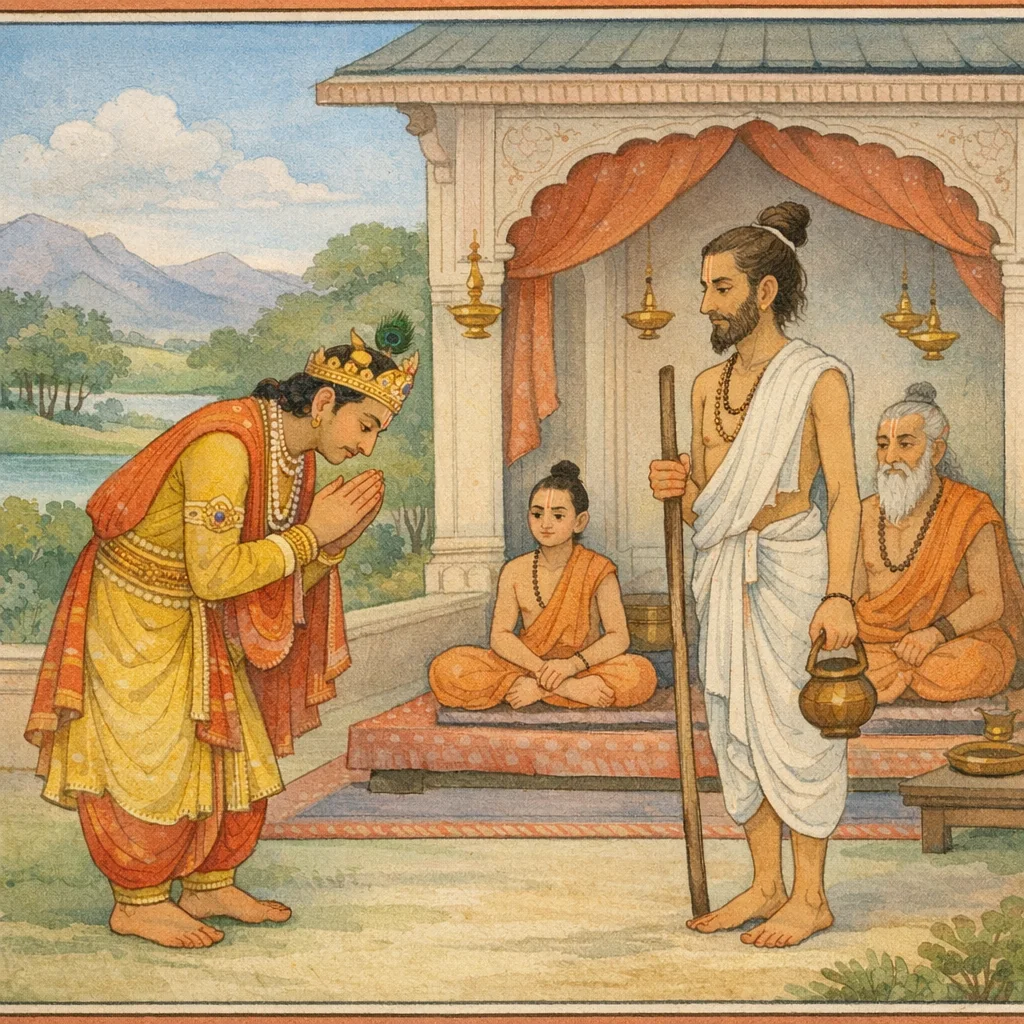
Śuka opens by requesting clarification on cosmological and contemplative themes and then pivots to practical ethics: he asks for an account of the “good conduct” (sadvṛtti) by which the virtuous proceed, and raises a textual-interpretive problem—Vedic speech appears to command both ‘perform action’ and ‘renounce.’ Vyāsa replies (as reported within Bhīṣma’s narration) by grounding the model of conduct in an original ordinance attributed to Brahmā and practiced by earlier sages. The discourse outlines the four āśramas as a structured ladder (niḥśreṇī) leading toward brahman, asserting that each stage, when properly observed without desire and aversion, conduces to the highest end. The chapter then details brahmacarya discipline: residence with the guru, humility, service, restraint of senses, regulated eating and sleeping, respectful bodily etiquette, reporting tasks completed, and concluding study with dakṣiṇā and proper return (samāvartana). It transitions toward the gṛhastha stage by indicating lawful marriage, maintenance of sacred fires, and household vows as the second quarter of life.
Chapter Arc: व्यास शुकदेव के प्रश्न-प्रसंग में ब्राह्मण के कर्तव्य—जातकर्म से समावर्तन तक के संस्कार, गुरु-शुश्रूषा और वेदाध्ययन—का विधान उठाते हैं, मानो धर्म का मूल-स्तम्भ पुनः स्थापित किया जा रहा हो। → व्यास बताते हैं कि केवल अध्ययन नहीं, आचार्य के प्रति ऋण-मुक्ति, यज्ञ-विधि का ज्ञान और शील-नियमन भी ब्राह्मण-धर्म है; फिर दृष्टि समाज की ओर मुड़ती है—ऐसे ‘अर्ह’ ब्राह्मणों को क्या, कितना और कैसे दान दिया जाए, विशेषतः वे जो दारिद्र्य से लज्जित होकर छिपते फिरते हैं। → दान की महिमा चरम पर पहुँचती है जब सत्यसंध, महाव्रती राजा द्वारा ‘स्वैः प्राणैः ब्राह्मणप्राणान् परित्राय’—अपने प्राणों की बाज़ी लगाकर ब्राह्मण-प्राणों की रक्षा—का आदर्श रखा जाता है; इसके साथ अम्बरीष, मदिराश्व आदि राजर्षियों के दान-प्रसंग स्वर्ग-प्राप्ति और कीर्ति-स्थापन के प्रमाण बनते हैं। → अध्याय निष्कर्ष देता है कि दान, यज्ञ, प्रजा-संग्रह (लोक-कल्याण) और तप से जितेन्द्रिय महात्मा स्वर्ग को प्राप्त होते हैं; उनकी कीर्ति पृथ्वी के रहने तक स्थिर रहती है—अतः अर्ह जनों को अनुरूप दान देना धर्म का प्रत्यक्ष फल है।
Shlokas
Verse 1
भीकम (2 अमान चतुस्त्रिंशर्दाधेकद्विशततमो< ध्याय: ब्राह्मणोंका कर्तव्य और उन्हें दान देनेकी महिमाका वर्णन व्यास उवाच भूतग्रामे नियुक्त यत् तदेतत् कीर्तितं मया । ब्राह्मणस्य तु यत् कृत्यं तत् ते वक्ष्यामि तच्छूणु,व्यासजी कहते हैं--बेटा! तुमने भूतसमुदायके विषयमें जो प्रश्न किया था, उसीके उत्तरमें मैंने यह सब बताया है। अब मैं तुम्हें ब्राह्मणका जो कर्तव्य है, वह बता रहा हूँ, सुनो
Vyāsa said: “My son, what you asked about the community of living beings and their appointed order—I have already explained that. Now listen as I tell you the proper duties of a brāhmaṇa.”
Verse 2
जातकर्मप्रभृत्यस्य कर्मणां दक्षिणावताम् | क्रिया स्यादासमावृत्तेराचार्ये वेदपारगे,ब्राह्मणग-बालकके जातकर्मसे लेकर समावर्तनतक समस्त संस्कार वेदोंके पारंगत विद्वान् आचार्यके निकट रहकर सम्पन्न होने चाहिये और उनमें समुचित दक्षिणा देनी चाहिये
Vyāsa said: From the birth‑rite (jātakarma) onward, all prescribed sacraments and duties—those that must be accompanied by proper dakṣiṇā (honorarium)—should be performed while the student remains under the care of a teacher fully learned in the Veda, continuing thus until the graduation rite (samāvartana). The ethical teaching is that learning and life‑rites are to be completed through disciplined apprenticeship, with gratitude and rightful recompense to the teacher, not in isolation or neglect of tradition.
Verse 3
अधीत्य वेदानखिलान् गुरुशुश्रूषणे रत: । गुरूणामनृणो भूत्वा समावर्तेत यज्ञवित्,उपनयनके पश्चात् ब्राह्मण-बालक गुरुशुश्रूषामें तत्पर हो सम्पूर्ण वेदोंका अध्ययन करे। तत्पश्चात् पर्याप्त गुरु-दक्षिणा दे। गुर-ऋणसे उऋण हो वह यज्ञवेत्ता बालक समावर्तन- संस्कारके पश्चात् घर लौटे
Vyāsa said: Having studied all the Vedas in full and remaining devoted to service of the teacher, the student—becoming free of debt to his teachers by offering due dakṣiṇā—should then perform the graduation rite (samāvartana) and return to household life as one who understands sacrifice (yajña) and sacred duty.
Verse 4
आचार्येणाभ्यनुज्ञातश्चतुर्णामेकमा श्रमम् । आविमोक्षाच्छरीरस्य सोडवतिछेद् यथाविधि,तदनन्तर आचार्यकी आज्ञा लेकर चारों आश्रमोंमेंसे किसी एक आश्रममें शास्त्रोक्त विधिके अनुसार जीवनपर्यन्त रहे (अथवा क्रमश: सभी आश्रमोंमें प्रवेश करे)
Vyāsa said: Having obtained the teacher’s permission, one should enter one of the four āśramas and, in accordance with scriptural rule, live in that discipline until the body is finally laid aside—(or, alternatively, proceed in due order through all the āśramas).
Verse 5
प्रजासर्गेण दारैश्न ब्रह्मचर्येण वा पुन: । वने गुरुसकाशे वा यतिधर्मेण वा पुन:,उसकी इच्छा हो तो स्त्री-परिग्रह करके गृहस्थ-धर्मका पालन करते हुए संतान उत्पन्न करे अथवा आजीवन ब्रह्मचर्यव्रतका पालन करे या वनमें रहकर वानप्रस्थ-धर्मका आचरण करे अथवा गुरुके समीप रहे या संन्यास-धर्मके अनुसार जीवन व्यतीत करे
Vyāsa said: One may choose to uphold dharma by entering household life—taking a wife and begetting offspring—or, again, by maintaining lifelong brahmacarya (celibacy). Or one may live in the forest, or remain near one’s teacher, or again live according to the discipline of renunciation (saṃnyāsa). Thus, multiple legitimate life‑paths are acknowledged, each grounded in self‑restraint and right conduct.
Verse 6
गृहस्थस्त्वेष धर्माणां सर्वेषां मूलमुच्यते । यत्र पक्वकषायो हि दान्तः सर्वत्र सिध्यति,यह गृहस्थ-आश्रम सब धर्मोंका मूल कहा जाता है। इसमें रहकर अन्त:करणके रागादि दोष पक जानेपर जितेन्द्रिय पुरुषको सर्वत्र सिद्धि प्राप्त होती है
Vyāsa said: The householder’s stage (gṛhastha) is declared to be the root of all the duties of dharma. For it is here that a self‑controlled person—whose inner impurities such as passion have fully matured and been burnt away—attains success in every sphere of righteous living.
Verse 7
प्रजावान् श्रोत्रियो यज्वा मुक्त एव ऋणैस्त्रिभि: । अथान्यानाश्रमान् पश्चात् पूतो गच्छेत कर्मभि:,गृहस्थ पुरुष संतान उत्पन्न करके पितृ-ऋणसे, वेदोंका स्वाध्याय करके ऋषि-ऋणसे और यज्ञोंका अनुष्ठान करके देव-ऋणसे छुटकारा पाता है। इस प्रकार तीनों ऋणोंसे मुक्त हो विहित कर्मोंका सम्पादन करके पवित्र बने। तत्पश्चात् दूसरे आश्रमोंमें प्रवेश करे
Vyāsa explains that a householder who has produced offspring, is learned in the Veda, and has performed sacrifices becomes freed from the three fundamental debts. Having thus discharged the debts to the ancestors through progeny, to the seers through Vedic study, and to the gods through sacrificial rites, he should purify himself by duly performing the prescribed duties; only thereafter should he proceed to the other stages of life (the later āśramas).
Verse 8
यत् पृथिव्यां पुण्यतमं विद्यात् स्थानं तदावसेत् । यतेत तस्मिन् प्रामाण्यं गन्तुं यशसि चोत्तमे,इस पृथ्वीपर जो स्थान पवित्र एवं उत्तम जान पड़े, वहीं निवास करे। उसी स्थानमें रहकर वह उत्तम यशके विषयमें अपनेको आदर्श पुरुष बनानेका प्रयत्न करे
Vyāsa said: ‘Whatever place on earth one recognizes as the most holy and excellent, there one should dwell. Living in that very place, one should strive to attain true authority and credibility in conduct, and to reach the highest kind of good repute—becoming a model person through one’s exemplary life.’
Verse 9
तपसा वा सुमहता विद्यानां पारणेन वा । इज्यया वा प्रदानैर्वा विप्राणां वर्धते यश:,महान् तप, पूर्ण विद्याध्ययन, यज्ञ अथवा दान करनेसे ब्राह्मणोंका यश बढ़ता है। जबतक इस जगत्में यशको बढ़ानेवाली उसकी कीर्ति बनी रहती है, तबतक वह पुण्यवानोंके अक्षय लोकोंमें निवास करके दिव्य सुख भोगता रहता है
Vyāsa said: A brāhmaṇa’s renown grows through very great austerity, through the thorough completion of learning, through sacrifice, or through acts of giving. So long as the fame that increases his reputation endures in this world, he dwells in the imperishable realms of the righteous and enjoys divine happiness.
Verse 10
यावदस्य भवत्यस्मिन् कीर्तिलोके यशस्करी । तावत् पुण्यकृतां लोकाननन्तान् पुरुषो$श्षुते,महान् तप, पूर्ण विद्याध्ययन, यज्ञ अथवा दान करनेसे ब्राह्मणोंका यश बढ़ता है। जबतक इस जगत्में यशको बढ़ानेवाली उसकी कीर्ति बनी रहती है, तबतक वह पुण्यवानोंके अक्षय लोकोंमें निवास करके दिव्य सुख भोगता रहता है
Vyāsa said: So long as a person’s fame—bestowing honor—endures in this world of renown, for that very duration he attains the endless realms reserved for the meritorious, dwelling there and enjoying divine happiness. The verse underscores that lasting good reputation, born of righteous acts, becomes a continuing cause of heavenly well-being.
Verse 11
अध्यापयेदधीयीत याजयेत यजेत वा । न वृथा प्रतिगृह्लीयान्न च दद्यात् कथंचन,ब्राह्मगको अध्ययन-अध्यापन, यजन-याजन तथा दान और प्रतिग्रह--इन छ: कर्मोंका आश्रय लेना चाहिये; परंतु उसे किसी तरह न तो अनुचित प्रतिग्रह स्वीकार करना चाहिये, न व्यर्थ दान ही देना चाहिये
Vyāsa said: “A brāhmaṇa should sustain himself through the six sanctioned duties—studying and teaching, performing sacrifice and officiating for others, giving and receiving gifts. Yet he must never accept gifts improperly or without cause, and he should never give charity in a wasteful or indiscriminate way.”
Verse 12
याज्यत: शिष्यतो वापि कन््याया वा धनं महत् | यदा55गच्छेद् यजेद् दद्यान्नैको5श्रीयात् कथंचन,यजमानसे, शिष्यसे अथवा कन्या-शुल्कसे जब महान् धन प्राप्त हो, तब उसके द्वारा यज्ञ करे, दान दे, अकेला किसी तरह उस धनका उपभोग न करे
Vyāsa said: “When a person comes into great wealth—whether as a priest’s fee for officiating a sacrifice, as a teacher’s remuneration from a student, or as the bride-price connected with a maiden—then with that wealth he should perform sacrifices and give gifts. He should never, in any manner, consume or enjoy that wealth solely for himself.”
Verse 13
गृहमावसतो हास्य नान्यत् तीर्थ प्रतिग्रहात् । देवर्षिपितृगुर्वर्थ वृद्धातुरबुभुक्षताम्,देवता, ऋषि, पितर, गुरु, वृद्ध, रोगी और भूखे मनुष्योंको भोजन देनेके लिये गृहस्थ ब्राह्मणको प्रतिग्रह स्वीकार करना चाहिये। प्रतिग्रहके सिवा ब्राह्मणके लिये धनसंग्रहका दूसरा कोई पवित्र मार्ग नहीं है
Vyāsa said: For a Brahmin who lives the householder’s life, there is no other sacred means of maintaining wealth than accepting gifts. Such acceptance is to be undertaken for the sake of serving gods, seers, ancestors, and teachers—and for supporting the aged, the sick, and the hungry. Apart from receiving gifts for these duties, there is no other pure path for a Brahmin to accumulate resources.
Verse 14
अन्तर्हिताधितप्तानां यथाशक्ति बुभूषताम् । देवानामतिशक्त्यापि देयमेषां कृतादपि,जो दारिद्रयग्रस्त होनेके कारण लज्जासे छिपे-छिपे फिरते हैं तथा अत्यन्त संतप्त हैं, अथवा जो यथाशक्ति अपनी पारमार्थिक उन्नतिके लिये प्रयत्न करना चाहते हैं, ऐसे भूदेवोंको उपार्जित धनमेंसे यथाशक्ति देना चाहिये। योग्य एवं पूजनीय ब्राह्मणोंके लिये कोई भी वस्तु अदेय नहीं है। वैसे सत्पात्रोंके लिये तो उच्चै:श्रवा घोड़ा भी दिया जा सकता है, यह श्रेष्ठ पुरुषोंका मत है
Vyāsa said: To those Brahmins who, crushed by poverty, move about in shame and concealment and are inwardly tormented, and also to those who strive—according to their capacity—for spiritual uplift, one should give from one’s honestly earned wealth as much as one can. For worthy and venerable Brahmins, nothing is to be considered ‘ungivable’; indeed, even something exceedingly precious may be offered to a truly deserving recipient—this is the judgment of the noble.
Verse 15
अर्हतामनुरूपाणां नादेयं हास्ति किंचन । उच्चै: श्रवसमप्यश्च प्रापणीयं सतां विदु:,जो दारिद्रयग्रस्त होनेके कारण लज्जासे छिपे-छिपे फिरते हैं तथा अत्यन्त संतप्त हैं, अथवा जो यथाशक्ति अपनी पारमार्थिक उन्नतिके लिये प्रयत्न करना चाहते हैं, ऐसे भूदेवोंको उपार्जित धनमेंसे यथाशक्ति देना चाहिये। योग्य एवं पूजनीय ब्राह्मणोंके लिये कोई भी वस्तु अदेय नहीं है। वैसे सत्पात्रोंके लिये तो उच्चै:श्रवा घोड़ा भी दिया जा सकता है, यह श्रेष्ठ पुरुषोंका मत है
Vyāsa said: For those who are worthy and deserving, nothing should be considered ‘not to be given.’ The virtuous hold that even a horse like Uccaiḥśravas may rightly be bestowed upon a fitting recipient. The teaching underscores that generosity, when directed to truly deserving persons, has no narrow limit and should rise to the level of the recipient’s merit.
Verse 16
अनुनीय यथाकामं सत्यसंधो महाव्रतः । स्वै: प्राणैब्राह्मणप्राणान् परित्राय दिवं गत:,महान् व्रतधारी राजा सत्यसंधने इच्छानुसार अनुनय-विनय करके अपने प्राणोंद्वारा एक ब्राह्मणके प्राणोंकी रक्षा की थी, ऐसा करके वे स्वर्गलोकमें गये थे
Vyāsa said: True to his vow and steadfast in truth, that great observer of vows, having conciliated the other party in accordance with their wish, protected the life of a Brāhmaṇa at the cost of his own life-breath. Having thus upheld dharma through self-sacrifice, he attained heaven.
Verse 17
रन्तिदेवश्व सांकृत्यो वसिष्ठाय महात्मने । अप: प्रदाय शीतोष्णा नाकपृछ्ठे महीयते,संकृतिके पुत्र राजा रन्तिदेवने महात्मा वसिष्ठको शीतोष्ण जल प्रदान किया था, जिससे वे स्वर्गलोकमें प्रतिष्ठित हैं
Vyāsa said: King Rantideva, the son of Saṅkṛti, won great honor in the heavenly world because he offered water—cold or warm—to the great-souled sage Vasiṣṭha. This verse proclaims the moral power of simple, timely service to one who is worthy: even an ordinary gift, given with reverence and compassion, becomes a cause of lasting merit.
Verse 18
आत्रेयश्रेन्द्रदमनो हार्हते विविधं धनम् । दत्त्वा लोकान् ययौ धीमाननन्तान् स महीपतिः,अत्रिवंशज बुद्धिमान् राजा इन्द्रदमनने एक योग्य ब्राह्मणको नाना प्रकारके धनका दान करके अक्षय लोक प्राप्त किये थे
Vyāsa said: The wise king Indradamana, a descendant of Atri, bestowed abundant and varied wealth upon a deserving brāhmaṇa. Having given in accordance with merit, that ruler attained endless, imperishable worlds—showing that righteous generosity, directed to one who is worthy, becomes a cause of lasting spiritual reward.
Verse 19
शिबिरौशीनरोडड्रानि सुतं च प्रियमौरसम् | ब्राह्मणार्थमुपाहृत्य नाकपृष्ठमितो गत:,उशीनरके पुत्र राजा शिबिने किसी ब्राह्मणके लिये अपने शरीर और प्रिय औरस पुत्रका दान कर दिया था, जिससे वे यहाँसे स्वर्गलोकमें गये थे
Vyāsa said: King Śibi, the son of Uśīnara, offered up his own body—and even his beloved legitimate son—for the sake of a brāhmaṇa. By that supreme gift made in service of dharma, he departed from this world and attained the heavenly realm.
Verse 20
प्रतर्दन: काशिपति: प्रदाय नयने स्वके । ब्राह्मणायातुलां कीर्तिमिह चामुत्र चाश्लुते,काशिराज प्रतर्दनने किसी ब्राह्मणको अपने दोनों नेत्र प्रदान करके इस लोकमें अनुपम कीर्ति प्राप्त की और परलोकमें वे उत्तम सुख भोगते हैं
Vyāsa said: Pratardana, the king of Kāśī, having given away his own two eyes to a brāhmaṇa, attained incomparable fame in this world; and in the world beyond as well he enjoys excellent happiness. The verse upholds the ethic of self-sacrificial generosity, presenting bodily giving as a supreme form of dāna that yields both social honor and spiritual reward.
Verse 21
दिव्यमष्टशलाकं तु सौवर्ण परमर्द्धिमत् । छत्र॑ देवावृधो दत्त्वा सराष्ट्रो5भ्यपतद् दिवम्,राजा देवावृधने आठ शलाकाओं (ताड़ियों) से युक्त सोनेका बना हुआ बहुमूल्य छत्र दान करके अपने देशकी प्रजाके साथ स्वर्गलोक प्राप्त किया
Vyāsa said: King Devāvṛdha, having gifted a splendid, eight-ribbed parasol made of gold and of the highest value, attained heaven together with his kingdom (that is, with his realm and people). This verse underscores the power of dāna: a royal gift offered in righteousness becomes a cause of exalted posthumous destiny, extending benefit beyond the giver to those under his protection.
Verse 22
सांकृतिश्न तथा5अत्रेय: शिष्येभ्यो ब्रह्म निर्गुणम् उपदिश्य महातेजा गतो लोकाननुत्तमान्,अत्रिवंशमें उत्पन्न महातेजस्वी सांकृति अपने शिष्योंको निर्गुण ब्रह्मका उपदेश देकर उत्तम लोकोंको प्राप्त हुए
Vyāsa said: “So too, Sāṅkṛti, the illustrious sage of Ātreya lineage, having instructed his disciples in the attributeless (nirguṇa) Brahman, attained the unsurpassed worlds.”
Verse 23
अम्बरीषो गवां दत्त्वा ब्राह्मुणे भ्य: प्रतापवान् | अर्बुदानि दशैकं च सराष्ट्रो3भ्यपतद् दिवम्,प्रतापी राजा अम्बरीषने ब्राह्मणोंको ग्यारह अर्बुद (एक अरब दस करोड़) गौएँ दानमें देकर देशवासियोंसहित स्वर्गलोक प्राप्त किया
Vyāsa said: “The mighty King Ambarīṣa, having gifted cows to the brāhmaṇas—ten arbuda and one more (i.e., eleven arbuda in all)—attained heaven together with his realm.”
Verse 24
सावित्री कुण्डले दिव्ये शरीरं जनमेजय: । ब्राह्मणार्थे परित्यज्य जग्मतुर्लोकमुत्तमम्,सावित्रीने दो दिव्य कुण्डल दान किये थे और राजा जनमेजयने ब्राह्मणके लिये अपने शरीरका परित्याग किया था। इससे वे दोनों उत्तम लोकमें गये
Vyāsa said: “Sāvitrī bestowed two divine earrings, and King Janamejaya, renouncing his very body for the sake of a brāhmaṇa, departed. Through these acts of selfless giving and sacrifice, both attained the highest realm.”
Verse 25
सर्वरत्नं वृषादर्भिययुवनाश्व: प्रिया: स्त्रिय: । रम्यमावसथं चैव दत्त्वा स्वलॉकमास्थित:,वृषदर्भके पुत्र युवनाश्व॒ सब प्रकारके रत्न, अभीष्ट स्त्रियाँ तथा सुरम्य गृह दान करके स्वर्गलोकमें निवास करते हैं
Vyāsa said: “Vṛṣādarbhi’s son Yuvanāśva, having bestowed all kinds of precious jewels, beloved women, and a delightful dwelling, attained his own heavenly realm.”
Verse 26
निमी राष्ट्र च वैदेहो जामदग्न्यो वसुन्धराम् । ब्राह्मणेभ्यो ददौ चापि गयश्नोर्वी सपत्तनाम्,विदेहराज निमिने अपना राज्य और जमदग्निनन्दन परशुराम तथा राजा गयने नगरोंसहित सम्पूर्ण पृथ्वी ब्राह्मणको दानमें दे दी थी
Vyāsa said: “King Nimi of Videha renounced his kingdom; Paraśurāma, the son of Jamadagni, gave away the earth itself; and King Gaya too donated the whole land, together with its towns, to the Brāhmaṇas.”
Verse 27
अवर्षति च पर्जन्ये सर्वभूतानि भूतकृत् । वसिष्ठो जीवयामास प्रजापतिरिव प्रजा:,एक बार पानी न बरसनेपर महर्षि वसिष्ठने प्राणियोंकी सृष्टि करनेवाले दूसरे प्रजापतिके समान सम्पूर्ण प्रजाको जीवनदान दिया था
When the rain failed to fall, all beings fashioned by the Creator were cast into distress. Then the sage Vasiṣṭha restored every creature to life, sustaining the whole populace as a Prajāpati—the lord of creation—preserves and revives his subjects.
Verse 28
करन्धमस्य पुत्रस्तु कृतात्मा मरुतस्तथा । कन्यामज्िरसे दत्त्वा दिवमाशु जगाम ह,करन्धमके पुण्यात्मा पुत्र राजा मरुत्तने महर्षि अंगिराको कन्यादान करके तत्काल स्वर्गलोक प्राप्त कर लिया था
Vyāsa said: Karandhama’s son, the self-controlled king Marutta, after performing kanyādāna—giving his daughter in marriage according to dharma—to the sage Aṅgiras, swiftly attained heaven.
Verse 29
ब्रह्मदत्तश्न॒ पाज्चाल्यो राजा बुद्धिमतां वर: | निधि शड्खं द्विजाग्रेभ्यो दत्त्वा लोकानवाप्तवान्,बुद्धिमानोंमें श्रेष्ठ पांचाल राज ब्रह्मदत्तने उत्तम ब्राह्मणोंको शंखनिधि देकर पुण्यलोक प्राप्त किये थे
Vyāsa said: Brahmadatta, the Pāñcāla king—foremost among the wise—attained blessed worlds by gifting the treasure called Śaṅkha to the best of the twice-born, the eminent Brāhmaṇas.
Verse 30
राजा मित्रसहश्चापि वसिष्ठाय महात्मने । मदयन्तीं प्रियां दत्ता तया सह दिव॑ गत:,राजा मित्रसहने महात्मा वसिष्ठको अपनी प्यारी रानी मदयन्ती देकर उसके साथ ही स्वर्गलोकमें पदार्पण किया था
Vyāsa said: King Mitrasaha too, having bestowed his beloved Madayantī upon the great-souled sage Vasiṣṭha, departed for heaven together with her.
Verse 31
सहस्नजिच्च राजर्षि: प्राणानिष्टानू महायशा: । ब्राह्मणार्थ परित्यज्य गतो लोकाननुत्तमान्,महायशस्वी राजर्षि सहस्नरजित् ब्राह्मणके लिये अपने प्यारे प्राणोंका परित्याग करके परम उत्तम लोकोंमें गये
Vyāsa said: The illustrious royal sage Sahasnajit, renouncing even his beloved life-breath for the sake of a Brāhmaṇa, attained the highest worlds.
Verse 32
सर्वकामैश्व सम्पूर्ण दत्त्वा वेश्म हिरण्मयम् । मुद्गलाय गत: स्वर्ग शतझुम्नो महीपति:,महाराज शत्द्युम्न मुद्गल ब्राह्मणको समस्त भोगोंसे सम्पन्न सुवर्णमय भवन देकर स्वर्गलोकमें गये थे
Vyāsa said: Having presented to the brāhmaṇa Mudgala a golden mansion, complete with every desired comfort and provision, King Śatadyumna departed for heaven.
Verse 33
नाम्ना च झ्ुतिमान् नाम शाल्वराज: प्रतापवान् | दत्त्वा राज्यमूचीकाय गतो लोकाननुत्तमान्,प्रतापी शाल्वराज द्युतिमानने ऋचीकको राज्य देकर परम उत्तम लोक प्राप्त किये थे
Vyāsa said: There was a mighty king of Śālva, renowned by the name Dyutimān. Having bestowed his kingdom upon Ṛcīka, he departed and attained the unsurpassed worlds.
Verse 34
लोमपादश्न राजर्षि: शान्तां दत्त्वा सुतां प्रभु: । ऋष्यश्ज्भाय विपुलै: सर्वकामैरयुज्यत,शक्तिशाली राजर्षि लोमपाद अपनी पुत्री शान्ताका ऋष्यशुड़ मुनिको दान करके सब प्रकारके प्रचुर भोगोंसे सम्पन्न हो गये
Vyāsa said: The royal sage Lomapāda, a powerful lord, gave his daughter Śāntā in marriage to the sage Ṛśyaśṛṅga. Having thus honored the seer and fulfilled what was due, Lomapāda became endowed with abundant prosperity and every desirable enjoyment.
Verse 35
मदिराश्चश्व राजर्षिदत््वा कन्यां सुमध्यमाम् | हिरण्यहस्ताय गतो लोकान् देवैरभिष्टतान्,राजर्षि मदिराश्व हिरण्यहस्तको अपनी सुन्दरी कन्या देकर देववन्दित लोकोंमें गये थे
Vyāsa said: The royal sage Madirāśva, having given his slender-waisted, beautiful daughter in marriage to Hiraṇyahasta, departed to those worlds that are praised by the gods.
Verse 36
दत्त्वा शतसहस्र तु गवां राजा प्रसेनजित् | सवत्सानां महातेजा गतो लोकाननुत्तमान्,महातेजस्वी राजा प्रसेनजितने एक लाख सवत्सा गौओंका दान करके उत्तम लोक प्राप्त किये थे
Vyāsa said: King Prasenajit, a ruler of great splendor, donated a hundred thousand cows together with their calves, and by that meritorious gift attained the highest, unsurpassed worlds.
Verse 37
एते चान्ये च बहवो दानेन तपसैव च । महात्मानो गता: स्वर्ग शिष्टात्मानो जितेन्द्रिया:,ये तथा और भी बहुत-से शिष्ट स्वभाववाले जितेन्द्रिय महात्मा दान और तपस्यासे स्वर्गलोकमें चले गये
Vyāsa said: “These, and many others besides—noble-souled and self-restrained, men of disciplined conduct who had conquered their senses—have attained heaven through generosity and through austerity.”
Verse 38
तेषां प्रतिष्ठिता कीर्तियावत् स्थास्यति मेदिनी । दानयज्ञप्रजासगैरेते हि दिवमाप्नुवन्,जबतक यह पृथ्वी रहेगी, तबतक उनकी कीर्ति संसारमें स्थिर रहेगी। उन सबने दान, यज्ञ और प्रजा-सृष्टिके द्वारा स्वर्गलोक प्राप्त किया था
Vyāsa said: “So long as this earth endures, their well-established fame will remain firm in the world. For by means of generosity, sacrificial rites, and the bringing forth of progeny, they indeed attained the heavenly realm.”
Verse 234
इति श्रीमहाभारते शान्तिपर्वणि मोक्षधर्मपर्वणि शुकानुप्रश्ने चतुस्त्रिंशदधिकद्धिशततमो<ध्याय:
Thus ends the two-hundred-and-thirty-fourth chapter of the Mokṣadharma section within the Śānti Parva of the Śrī Mahābhārata, in the context of Śuka’s inquiry. This is a formal colophon marking the close of a teaching sequence concerned with liberation and the ethical-philosophical questions raised by Śuka.
Frequently Asked Questions
Śuka identifies a hermeneutic tension: Vedic injunctions appear to direct both action (kuru karma) and renunciation (tyaja), and he asks how a coherent śāstric norm can exist when commands seem mutually opposed.
The teaching frames dharma as āśrama-ordered: disciplined action and disciplined renunciation are not simultaneous obligations for everyone, but sequentially and contextually valid, with brahmacarya and guru-sevā forming the base for ethical and contemplative maturity.
No standalone phalaśruti formula is presented in the provided portion; instead, the text embeds its ‘result’ claim normatively—proper observance of any āśrama, free from desire and aversion, is said to lead to the highest destination and honor in brahma-loka.