Adhyaya 173
Prajñā as Pratiṣṭhā — Indra–Kāśyapa Saṃvāda (Śānti-parva 12.173)
Upa-parva: Dāna-dharma / Nīti-upadeśa Episode (Indra–Kāśyapa Saṃvāda)
Yudhiṣṭhira asks Bhīṣma what constitutes a person’s true pratiṣṭhā: relatives, action, wealth, or intelligence. Bhīṣma answers that prajñā (discernment/wisdom) is the foundation of beings, the highest gain, and the path to the supreme good; he supports this by citing exemplars who achieved aims through prajñā even amid loss of power. He then introduces a ‘purātana itihāsa’—the Indra–Kāśyapa dialogue. A proud wealthy vaiśya injures the sage Kāśyapa with a chariot; the sage, distressed, contemplates abandoning life. Indra appears in jackal form and argues that human birth—especially learned Brahmin status—is rare and should not be discarded. Through comparisons with handless creatures and vulnerable births, Indra stresses gratitude for embodied agency and critiques the endless escalation of desire (wealth → kingdom → divinity → even Indrahood). He teaches that craving is not quenched by acquisition and recommends limiting sense-contacts (not tasting/seeing/touching what inflames desire), restraining the senses at the root, and accepting the mixed nature of pleasure and pain. Indra further urges Kāśyapa to uphold Vedic discipline: svādhyāya, ritual maintenance, truth, self-control, and giving, and not to abandon dharma due to social rumor. Indra discloses his own prior life as a skeptical, argumentative, Veda-critical logician whose conduct resulted in jackal birth, expressing aspiration to regain human birth through contentment and dharmic practice. Kāśyapa recognizes Indra, honors him, and returns to his āśrama with renewed orientation toward duty.
Chapter Arc: भीष्म युधिष्ठिर को एक भयावह उपाख्यान सुनाते हैं—‘कृतघ्न’ नामक गौतम, जो मित्रता का मुखौटा पहनकर विश्वासघात करता है, और जिसके पाप का दंड स्वयं राक्षस भी ‘अभक्ष्य’ कहकर ठुकरा देते हैं। → बकराज (बक-राज) मित्र पर अटूट विश्वास करके उसी के पास निश्चिन्त सोता है। कृतघ्न गौतम भीतर-ही-भीतर हत्या का निश्चय कर अवसर खोजता है; विश्वास और कपट एक ही शय्या पर आमने-सामने आ खड़े होते हैं। → कृतघ्न जलते हुए ‘अलात’ (दीप्त दण्ड/अग्निशलाका) से सोए हुए, विश्वास करने वाले मित्र की हत्या कर देता है—विश्वास का वध ही इस अध्याय का चरम है। → राजा विरूपाक्ष मंत्री-पुरोहितों सहित शोकाकुल होकर अपराधी के दंड का विधान करता है। राक्षसों को आदेश होता है कि वे इस पापी के मांस का उपयोग करें, पर राक्षस-समुदाय भी उसे खाने से इंकार करता है—‘पापकर्मा’ होने से वह अभक्ष्य ठहरता है। अंततः राक्षसराज उसे डाकुओं के हवाले कर देता है; राक्षस उसे खण्ड-खण्ड कर दस्युओं को सौंप देते हैं। → null
Shlokas
Verse 1
अपन क्रा _ अर: द्विसप्तत्याधेिकशततमो< ध्याय: कृतघ्न गौतमद्दारा मित्र राजधर्माका वध तथा राक्षसोंद्वारा उसकी हत्या और कृतघ्नके मांसको अभक्ष्य बताना भीष्म उवाच अथ तत्र महार्चिष्माननलो वातसारथि: । तस्याविदूरे रक्षार्थ खगेन्द्रेण कृतो5$भवत्,भीष्मजी कहते हैं--राजन्! पक्षिराज राजधर्माने अपने मित्र गौतमकी रक्षाके लिये उससे थोड़ी दूरपर आग प्रज्वलित कर दी थी, जिससे हवाका सहारा पाकर बड़ी-बड़ी लपटें उठ रही थीं
Bhishma said: “O King, there the mighty-flamed Fire, with the Wind as its charioteer, came into being. The lord of birds kindled it not far away, for the protection of Gautama—so that, supported by the wind, great tongues of flame rose up.”
Verse 2
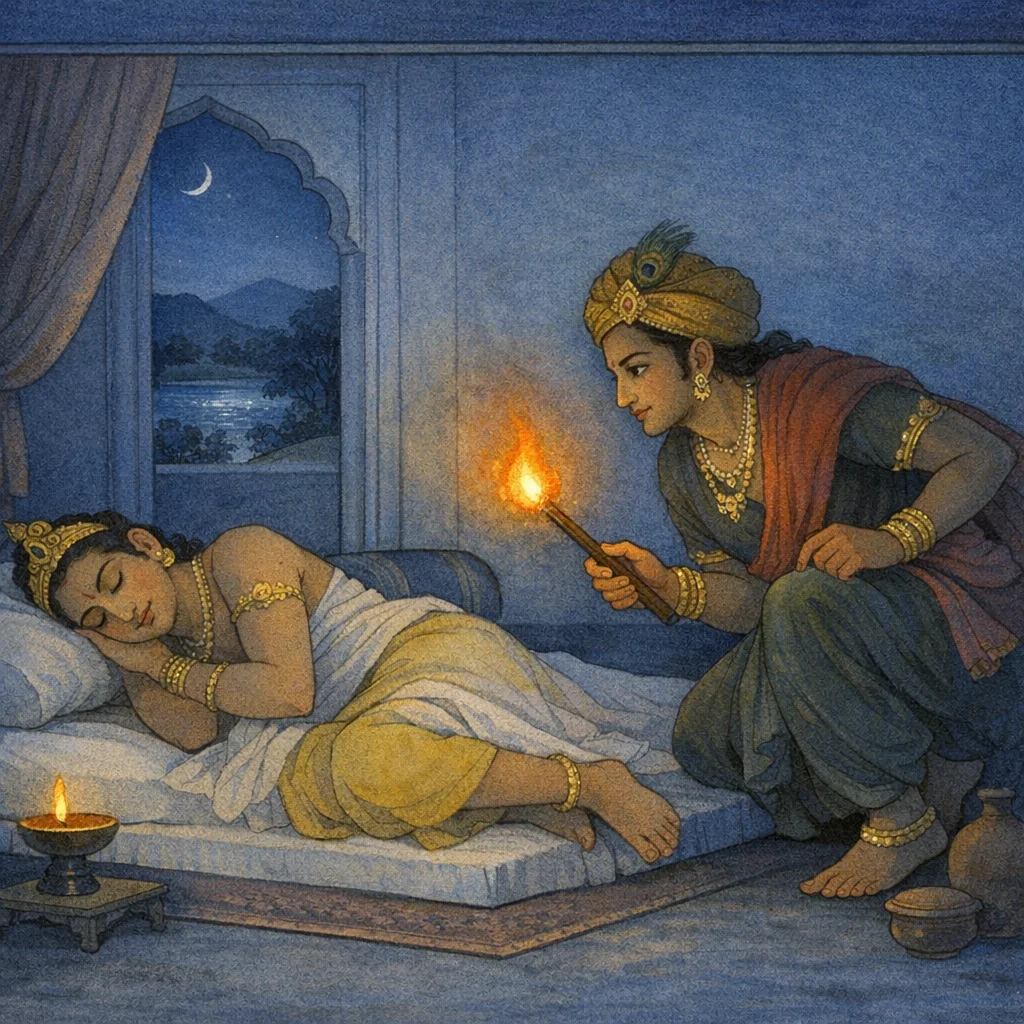
स चापि पाश्चे सुष्वाप विश्वस्तो बकराट् तदा | कृतघ्नस्तु स दुष्टात्मा तं जिघांसुरथाग्रत:,बकराजको भी मित्रपर विश्वास था; इसलिये उस समय उसके पास ही सो गया। इधर वह दुष्टात्मा कृतष्न उसका वध करनेकी इच्छासे उठा और विश्वासपूर्वक सोये हुए राजधर्माको सामनेसे जलती हुई लकड़ी लेकर उसके द्वारा मार डाला। उसे मारकर वह बहुत प्रसन्न हुआ, मित्रके वधसे जो पाप लगता है, उसकी ओर उसकी दृष्टि नहीं गयी
Bhishma said: Trusting him, the king of cranes lay down to sleep right beside him. But that wicked, ungrateful wretch rose with the intent to kill; and, coming from the front, he struck down the unsuspecting king with a burning piece of wood. Having slain him, he felt great delight, his mind not turning at all to the sin incurred by murdering a friend.
Verse 3
ततो<लातेन दीप्तेन विश्वस्तं निजघान तम् | निहत्य च मुदा युक्त: सोडनुबन्धं न दृष्टवान्,बकराजको भी मित्रपर विश्वास था; इसलिये उस समय उसके पास ही सो गया। इधर वह दुष्टात्मा कृतष्न उसका वध करनेकी इच्छासे उठा और विश्वासपूर्वक सोये हुए राजधर्माको सामनेसे जलती हुई लकड़ी लेकर उसके द्वारा मार डाला। उसे मारकर वह बहुत प्रसन्न हुआ, मित्रके वधसे जो पाप लगता है, उसकी ओर उसकी दृष्टि नहीं गयी
Then, taking a blazing firebrand, he struck down that man who lay trusting and unsuspecting. Having killed him, he became filled with joy, and he did not even consider the consequence—the sin that follows from murdering a friend who had placed his faith in him.
Verse 4
सतं विपक्षरोमाणं कृत्वाग्नावपचत् तदा । त॑ गृहीत्वा सुवर्ण च ययौ द्रुततरं द्विज:,उसने मरे हुए पक्षीके पंख और बाल नोचकर उसे आगमें पकाया और उसे साथमें ले सुवर्णका बोझ सिरपर उठाकर वह ब्राह्मण बड़ी तेजीके साथ वहाँसे चल दिया
Bhishma said: Having plucked off the feathers and hair of the dead bird, he then cooked it on the fire. Taking that cooked meat along with the gold, the Brahmin quickly departed from that place—his haste reflecting the pull of material gain and the moral tension between need, greed, and right conduct.
Verse 5
(ततो दाक्षायणीपुत्रं नागतं तं॑ तु भारत । विरूपाक्षश्निन्तयन् वै हृदयेन विदूयता ।।) भारत! उस दिन दक्षकन्याका पुत्र राजधर्मा अपने मित्र विरूपाक्षके यहाँ न जा सका; इससे विरूपाक्ष व्याकुल हृदयसे उसके लिये चिन्ता करने लगा ।। ततोअन्यस्मिन् गते चाद्लि विरूपाक्षो5ब्रवीत् सुतम् । नप्रेक्षे राजधर्माणमद्य पुत्र खगोत्तमम्,तदनन्तर दूसरा दिन भी व्यतीत हो जानेपर विरूपाक्षने अपने पुत्रसे कहा--“बेटा! मैं आज पक्षियोंमें श्रेष्ठ राजधर्माको नहीं देख रहा हूँ
Then, O Bhārata, the son of Dākṣāyaṇī did not come there. Seeing his absence, Virūpākṣa, with a heart distressed and pained, began to think anxiously about him—his concern arising from friendship and the sense of duty owed to one another.
Verse 6
स पूर्वसंध्यां ब्रह्माणं वन्दितुं याति सर्वदा । मां वा दृष्टवा कदाचित् स न गच्छति गृहं खग:,वे पक्षिप्रवर प्रतिदिन प्रातःकाल ब्रह्माजीकी वन्दना करनेके लिये जाया करते थे और वहाँसे लौटनेपर मुझसे मिले बिना कभी अपने घर नहीं जाते थे
Bhishma said: “That bird would always go at the earlier twilight (the morning junction of night and day) to pay reverence to Brahmā. And on returning from there, having seen me, he would never at any time go straight to his home without first meeting me.”
Verse 7
उभे द्विरात्रिसंध्ये वै नाभ्यगात् स ममालयम् | तस्मान्न शुद्धवते भावो मम स ज्ञायतां सुह्ृत्,“आज दो संध्याएँ व्यतीत हो गयीं; किंतु वह मेरे घरपर नहीं पधारे, अतः मेरे मनमें संदेह पैदा हो गया है। तुम मेरे मित्रका पता लगाओ
Bhīṣma said: “Two twilight periods over two nights have passed, yet he has not come to my dwelling. Therefore my mind no longer feels assured of his purity of intent; let that friend be found out and identified.”
Verse 8
स्वाध्यायेन वियुक्तो हि ब्रह्म॒वर्चसवर्जित: । तद्व्र॒तस्तत्र मे शंका हन्यात् तं॑ स द्विजाधम:,“वह अधम ब्राह्मण गौतम स्वाध्यायरहित और ब्रह्मतेजसे शून्य था तथा हिंसक जान पड़ता था। उसीपर मेरा संदेह है। कहीं वह मेरे मित्रको मार न डाले
Bhishma said: “For he was devoid of self-study and bereft of brahmanical radiance. His conduct seemed bent toward such a course; therefore I am doubtful about him—lest that base-born Brahmin should kill my friend.”
Verse 9
दुराचारस्तु दुर्बुद्धिरिड्वितैलक्षितो मया । निष्कृपो दारुणाकारो दुष्टो दस्युरिवाधम:,“उसकी चेष्टाओंसे मैंने लक्षित किया तो वह मुझे दुर्बुद्धि एवं दुराचारी तथा दयाहीन प्रतीत होता था। वह आकारसे ही बड़ा भयानक और दुष्ट दस्युके समान अधम जान पड़ता था
Bhīṣma said: “From his very conduct I recognized him: he was of perverse understanding and corrupt behavior, devoid of compassion. Even his appearance was harsh and terrifying—vile and wicked, like a bandit, the lowest of men.”
Verse 10
गौतम: स गततस्तत्र तेनोद्विग्न॑ मनो मम । पुत्र शीघ्रमितो गत्वा राजधर्मनिवेशनम्
Bhīṣma said: “Gautama has gone there; therefore my mind is troubled. My son, go quickly from here to the abode where royal dharma is established.”
Verse 11
स एवमुक्तस्त्वरितो रक्षोभि: सहितो ययौ
Thus addressed, he hastened away, departing in the company of the rākṣasas.
Verse 12
स रुदन्नगमत् पुत्रो राक्षसेन्द्रस्य धीमत:
Bhīṣma said: Weeping, the wise son of the lord of the rākṣasas went away.
Verse 13
ततो<विदूरे जगृहुर्गौतम॑ राक्षसास्तदा
Then, not far away, the rākṣasas seized Gautama at that time.
Verse 14
तमादायाथ रक्षांसि द्रुतं मेरुत्रजं ययु:
Bhīṣma said: Having seized him, the rākṣasas swiftly departed toward Meru’s slopes.
Verse 15
राज्ञश्न दर्शयामासु: शरीरं राजधर्मण: । कृतघ्नं परुषं तं च गौतम॑ं पापकारिणम्
Bhīṣma said: “They then showed the king the very ‘body’ of royal duty—Gautama—who had proved ungrateful, harsh in speech and conduct, and engaged in sinful acts.”
Verse 16
गौतमको लेकर वे राक्षस शीघ्र ही मेरुव्रजमें गये। वहाँ उन्होंने राजाको राजधर्माका मृत शरीर दिखाया और पापाचारी कृतघ्न गौतमको भी सामने खड़ा कर दिया ।। रुरोद राजा तं दृष्टवा सामात्य: सपुरोहितः । आर्तनादश्न सुमहानभूत् तस्य निवेशने
Bhīṣma said: “Taking Gautamaka with them, the rākṣasas quickly went to Meruvraja. There they showed the king the dead body of Rājadharma, and they also made the sinful, ungrateful Gautamaka stand before him. Seeing that, the king—together with his ministers and his family priest—broke down in tears, and a very great cry of anguish arose throughout his residence.”
Verse 17
सस्त्रीकुमारं च पुरं बभूवास्वस्थमानसम् । अपने मित्रको इस दशामें देखकर मन्त्री और पुरोहितोंके साथ राजा विरूपाक्ष फूट- फ़ूटकर रोने लगे। उनके महलमें महान् आर्तनाद गूँजने लगा। स्त्री और बच्चोंसहित सारे नगरमें शोक छा गया। किसीका भी मन स्वस्थ न रहा ।। अथाब्रवीन्नूषप: पुत्रं पापो5यं वध्यतामिति
Bhīṣma said: “The entire city, together with its women and children, became distressed and mentally unsettled. Then Nūṣapa spoke to his son: ‘This man is wicked—let him be put to death.’”
Verse 18
पापाचार: पापकर्मा पापात्मा पापसाधन:
Bhīṣma said: “One whose conduct is sinful, whose actions are sinful, whose very inner nature is sinful, and who employs sinful means (as his instruments and resources).”
Verse 19
इत्युक्ता राक्षसेन्द्रेण राक्षसा घोरविक्रमा:
Bhīṣma said: “Thus addressed by the lord of the Rākṣasas, the Rākṣasas—men of dreadful prowess—(prepared to act accordingly).”
Verse 20
दस्यूनां दीयतामेष साध्वद्य पुरुषाधम:,न दातुमहसि त्वं नो भक्षणायास्य किल्विषम् | महाराज! उन निशाचरोंने राक्षसराजसे कहा--'प्रभो! इस नराधमका मांस दस्युओंको दे दिया जाय, आप हमें इसका पाप खानेके लिये न दें” इस प्रकार समस्त राक्षसोंने राक्षसराजके चरणोंमें मस्तक रखकर प्रार्थना की
Bhīṣma said: “Let this vile man be given today to the dāsa/dasyu. Do not compel us to eat him and thereby incur the sin of consuming his flesh.” Thus all the night-roaming rākṣasas bowed their heads at the feet of the rākṣasa-king and pleaded.
Verse 21
इत्यूचुस्ते महाराज राक्षसेन्द्रं निशाचरा: । शिरोभशि: प्रणता: सर्वे व्याहरन् राक्षसधिपम्
Bhīṣma said: “O great king, having spoken thus, all those night-roaming rākṣasas bowed their heads in submission and addressed their lord, the king of the rākṣasas.”
Verse 22
एवमस्त्विति तानाह राक्षसेन्द्रो निशाचरान्
Bhīṣma said: “So be it,” and with these words the lord of the rākṣasas addressed those night-roaming beings, assenting to what had been proposed and giving his reply to his followers.
Verse 23
इत्युक्ता राक्षसास्तेन शूलपट्टिशपाणय:
Bhīṣma said: Thus addressed by him, the rākṣasas—bearing spears and battle-axes in their hands—stood ready to act, poised to carry out his command.
Verse 24
दस्यवश्लवापि नैच्छन्त तमत्तुं पापकारिणम् | क्रव्यादा अपि राजेन्द्र कृतघ्नं नोपभुज्जते,राजेन्द्र! उन दस्युओंने भी उस पापाचारीका मांस खानेकी इच्छा नहीं की। मांसाहारी जीव-जन्तु भी कृतघ्नका मांस काममें नहीं लेते हैं
Bhīṣma said: Even the bandits did not wish to eat the flesh of that evil-doer. O king, even flesh-eating creatures do not partake of the body of an ungrateful man—such is the revulsion that ingratitude inspires.
Verse 25
ब्रह्मघ्ने च सुरापे च चौरे भग्नव्रते तथा । निष्कृतिर्विहिता राजन् कृतघ्ने नास्ति निष्कृति:
Bhīṣma said: “For the slayer of a Brāhmaṇa, for the drinker of intoxicants, for a thief, and likewise for one who has broken a sacred vow, expiation has been prescribed, O King. But for the ungrateful person, there is no expiation.”
Verse 26
राजन! ब्रह्महत्यारे, शराबी, चोर तथा व्रतभज़ करने वालोंके लिये शास्त्रमें प्रायश्नित्तका विधान है; परंतु कृतघ्नके उद्धारका कोई उपाय नहीं बताया गया है ।। मित्रद्रोही नृशंसश्न कृतघ्नश्च नराधम: । क्रव्यादै: कृमिभिश्चिव न भुज्यन्ते हि तादृशा:,मित्रद्रोही, नृशंस, नराधम तथा कृतघ्न-ऐसे मनुष्योंका मांस मांसभक्षी जीव-जन्तु तथा कीड़े भी नहीं खाते हैं
Bhīṣma said: “O King, the scriptures prescribe expiations even for grave offenders—one who has slain a brāhmaṇa, a drunkard, a thief, and one who violates sacred vows. But for the ungrateful person no means of redemption is taught. A betrayer of friends, a cruel man, an ungrateful wretch—such a lowest of men is so vile that even flesh-eating beasts and worms will not consume his body.”
Verse 106
ज्ञायतां स विशुद्धात्मा यदि जीवति मा चिरम् | “नीच गौतम यहाँसे लौटकर फिर उन्हींके निवास-स्थानपर गया था; इसलिये मेरे मनमें उद्वेग हो रहा है। बेटा! तुम शीघ्र यहाँसे राजधर्माके घरपर जाओ और पता लगाओ कि वे शुद्धात्मा पक्षिराज जीवित हैं या नहीं। इस कार्यमें विलम्बन करो”
Bhishma said: “Find out at once whether that pure-souled one is still alive—do not delay. Since the lowly Gautama returned from here and went back again to that very dwelling-place, my mind is troubled. My son, go quickly to the house of Rājadharma and ascertain whether that pure-hearted king of birds lives or not; do not be slow in this task.”
Verse 113
न्यग्रोधं तत्र चापश्यत् कड़्कालं राजधर्मण: । पिताकी ऐसी आज्ञा पाकर वह तुरंत ही राक्षसोंके साथ उस वटवृक्षके पास गया। वहाँ उसे राजधर्माका कंकाल अर्थात् उसके पंख, हड्डियों और पैरोंका समूह दिखायी दिया
Bhishma said: “There he saw, beneath the banyan tree, the ‘skeleton’ of Royal Dharma—only a remnant, as it were: its wings, bones, and feet gathered together.”
Verse 123
त्वरमाण: परं शक््त्या गौतमग्रहणाय वै । बुद्धिमान् राक्षसराजका पुत्र राजधर्माकी यह दशा देखकर रो पड़ा और उसने पूरी शक्ति लगाकर गौतमको शीघ्र पकड़नेकी चेष्टा की
Bhishma said: “Hastening with all his might to seize Gautama, the wise son of the king of the Rakshasas—seeing the pitiable condition of Rajadharma—broke into tears and then exerted his full strength to capture Gautama quickly.”
Verse 133
राजधर्मशरीरं च पक्षास्थिचरणोज्झितम् | तदनन्तर कुछ ही दूर जानेपर राक्षसोंने गौतमको पकड़ लिया। साथ ही उन्हें पंख, पैर और हड्ियोंसे रहित राजधर्माकी लाश भी मिल गयी
Bhishma said: “And there was also the body of ‘royal dharma’—a corpse bereft of wings, legs, and bones.” In the narrative frame, this image underscores the ethical collapse of kingship: when rājadharma loses its supporting limbs (strength, mobility, and structural integrity), it becomes a lifeless form—present in name, but incapable of protecting or sustaining society.
Verse 171
इस प्रकार श्रीमह्याभारत शान्तिपर्वके अन्तर्गत आपद्धर्मपर्वमें कृतघ्नका उपाख्यानविषयक एक सौ इकह्वत्तरवाँ अध्याय पूरा हुआ
Thus ends the one hundred and seventy-first chapter of the Āpaddharma section within the Śānti Parva of the revered Mahābhārata, dealing with the illustrative tale concerning the ungrateful (kṛtaghna).
Verse 172
इति श्रीमहाभारते शान्तिपर्वणि आपद्धर्मपर्वणि कृतघ्नोपाख्याने द्विसप्तत्यधिकशततमो<ध्याय:
Thus, in the Śrī Mahābhārata, within the Śānti Parvan—specifically the Āpaddharma section—ends the chapter entitled “The Episode of the Ungrateful (Kṛtaghna),” being the one-hundred-and-seventy-second chapter. This is a colophon marking the close of a teaching narrative on conduct in times of distress and the moral gravity of gratitude versus ingratitude.
Verse 176
अस्य मांसैरिमे सर्वे विहरन्तु यथेष्टत: । तब राजाने अपने पुत्रको आज्ञा दी--'बेटा! इस पापीको मार डालो। ये समस्त राक्षस इसके मांसका यथेष्ट उपयोग करें
Bhīṣma said: “Let all these beings feast and sport as they please upon this man’s flesh.” In the surrounding narrative, the king, judging the offender as grievously sinful, orders his son: “Son, kill this wicked man, so that these rākṣasas may make full use of his flesh as they wish.” The passage highlights a harsh, punitive response framed as retribution and deterrence, raising ethical tension between royal justice and cruelty.
Verse 183
हन्तव्यो5यं मम मतिर्भवद्धिरिति राक्षसा: | 'राक्षसो! यह पापाचारी, पापकर्मा और पापात्मा है। इसके सारे साधन पापमय हैं; अतः तुम्हें इसका वध कर देना चाहिये, यही मेरा मत है”
Bhishma said: “This one ought to be slain—such is my considered judgment, O Rakshasas. He is a sinner in conduct, sinful in deeds, and sinful in nature; all his means and resources are tainted by wrongdoing. Therefore you should put him to death.”
Verse 216
न दातुमहसि त्वं नो भक्षणायास्य किल्विषम् | महाराज! उन निशाचरोंने राक्षसराजसे कहा--'प्रभो! इस नराधमका मांस दस्युओंको दे दिया जाय, आप हमें इसका पाप खानेके लिये न दें” इस प्रकार समस्त राक्षसोंने राक्षसराजके चरणोंमें मस्तक रखकर प्रार्थना की
Bhishma said: “O great king! Those night-roaming beings addressed the king of the Rakshasas: ‘Lord, do not make us partake of the sin involved in eating this man. Let the flesh of this vile human be given to the bandits; do not grant us this wrongdoing as food.’ Thus, all the Rakshasas bowed their heads at the Rakshasa-king’s feet and pleaded.”
Verse 226
दस्यूनां दीयतामेष कृतघ्नोड्द्यैव राक्षसा: । यह सुनकर राक्षसराजने उन निशाचरोंसे कहा--'राक्षसो! ऐसा ही सही, इस कृतघ्नको आज ही डाकुओंके हवाले कर दो”
Bhīṣma said: “Hand this ungrateful fellow over to the bandits at once, O Rākṣasas.” Hearing this, the lord of the Rākṣasas addressed the night-roamers: “Rākṣasas, so be it—deliver this thankless man today itself into the hands of the robbers.”
Verse 233
कृत्वा तं खण्डश: पापं दस्युभ्य: प्रददुस्तदा । राजाकी ऐसी आज्ञा पाकर हाथमें शूल और पट्टिश धारण किये राक्षसोंने पापी गौतमके टुकड़े-टुकड़े करके उसे दस्युओंको सौंप दिया
Bhīṣma said: Having cut that sinner into pieces, they then handed him over to the bandits. Receiving the king’s command, the rākṣasas took up a spear and a battle-axe in their hands, dismembered the sinful Gautama, and delivered him to the dacoits.
Verse 1936
नैच्छन्त तं भक्षयितुं पापकर्माणमित्युत । राक्षसराजके इस प्रकार आदेश देनेपर भी भयानक पराक्रमी राक्षसोंने गौतमको खानेकी इच्छा नहीं की; क्योंकि वह घोर पापाचारी था
Bhishma said: “They did not wish to devour him, saying, ‘He is a man of sinful deeds.’ Thus, even when the lord of the Rakshasas issued the command, those fearsome and mighty Rakshasas had no desire to eat Gautama, for he was a grievous wrongdoer.”
Frequently Asked Questions
Kāśyapa, after being harmed and humiliated, considers relinquishing life due to loss and pain; the dilemma is whether suffering and diminished circumstance justify abandoning one’s embodied opportunity and dharmic obligations.
True stability is prajñā, not external possession; contentment and sensory restraint prevent the self-amplifying cycle of craving, while disciplined practice (truth, self-control, giving, and study) preserves ethical integrity amid fluctuating fortune.
No formal phalaśruti is stated; the chapter’s meta-commentary functions through exemplum: Indra’s disclosure that anti-Vedic skepticism and disruptive conduct resulted in a degraded birth, while renewed commitment to dharma is presented as the route to higher outcomes and inner steadiness.