Adhyaya 7
कर्णस्य सेनापत्यं, माकरव्यूहः, पाण्डवानामर्धचन्द्रव्यूहः (Karna’s Command; Mākara Formation; Pandava Crescent Counter-Array)
Upa-parva: Karṇa-senāpatyābhiṣeka and Vyūha-nirmāṇa (Kaurava–Pāṇḍava Battle Formations)
Dhṛtarāṣṭra asks Saṃjaya to report what Karṇa did after receiving the generalship and ordering the army’s mobilization at sunrise. Saṃjaya describes the nocturnal-to-dawn arming: elephants, chariots, infantry, and cavalry readying amid a rising soundscape of calls and instruments. Karṇa appears in a richly described chariot—white banner, bright weaponry, and prominent insignia—functioning as a visual anchor for Kaurava confidence; the troops, seeing him at the front of the array, no longer dwell on earlier commander losses. Karṇa then drives the Kaurava host forward with conch-signal urgency and arranges a mākara-vyūha, assigning key figures to anatomized positions (snout/eyes/head/limbs/center/tail), including Śakuni, Ulūka, Aśvatthāman, Duryodhana, Kṛtavarmā, Śalya, Suṣeṇa, and others. As the Kaurava formation advances, Yudhiṣṭhira points out that despite the Kaurava army’s attrition, Karṇa remains the singular decisive factor and urges Arjuna to defeat him to remove a long-standing burden. Arjuna, with Kṛṣṇa as charioteer, counters by deploying an ardhacandra formation, placing Bhīma on the left, Dhṛṣṭadyumna on the right, and arranging central and rear supports (Nakula, Sahadeva, Yudhiṣṭhira), with designated protectors. Both sides interpret the opposing formation as a sign of imminent victory, after which conches, drums, and the composite noise of horses, elephants, and chariots swell, and the engagement begins with mutual striking among infantry, elephants, cavalry, and charioteers.
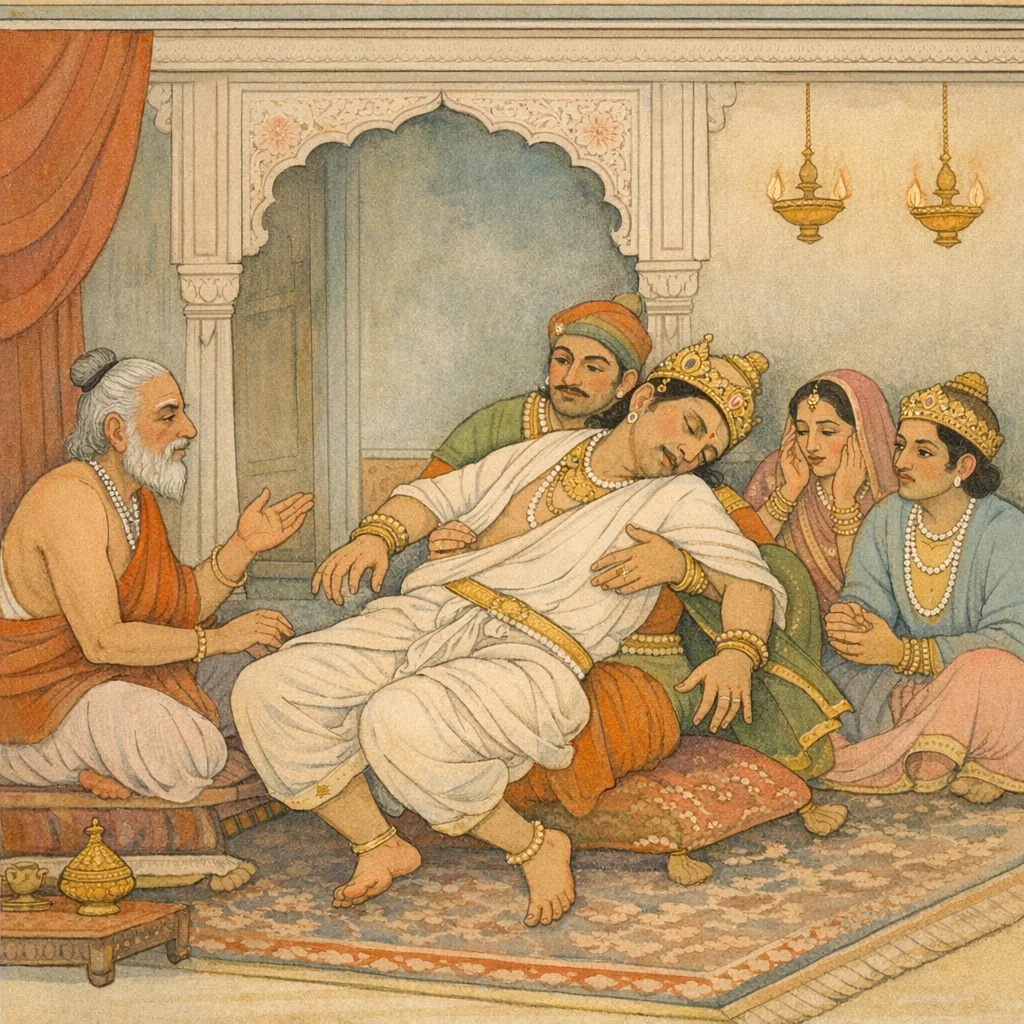
Chapter Arc: धृतराष्ट्र, कर्ण के वध का समाचार सुनकर, संजय से पूछते हैं—हृतोत्साह हुई मेरी सेना में अब कौन-कौन जीवित और शेष है? → वे विलाप करते हैं कि भीष्म और द्रोण जैसे ‘मेरे लिए’ खड़े रहने वाले महाधनुर्धर जब मारे गए, तो जीवन का अर्थ ही क्या; और राधेय कर्ण—जिसकी भुजाओं का बल असंख्य गजराजों के तुल्य कहा गया—उसके मारे जाने को वे सह नहीं पाते। → संजय शोक के बीच भी युद्ध-लेखा की तरह कौरव-पक्ष के शेष महारथियों/वीरों का क्रमशः वर्णन करता है—द्रोणपुत्र अश्वत्थामा, केकयराजपुत्र, तथा श्रुतायु, धृतायुध, चित्रांगद, चित्रसेन आदि अनेक ‘योद्धुकाम’ वीरों का नामोल्लेख; यह सूची धृतराष्ट्र के मन में आशा और भय दोनों को एक साथ उभार देती है। → वर्णन के अंत में धृतराष्ट्र शोक-व्याकुल होकर व्यामोह/मूर्च्छा को प्राप्त होते हैं; सभा में क्षणभर के लिए शब्द रुक जाते हैं—राजा का शरीर तो है, पर चेतना शोक में डूब जाती है। → मूर्च्छित राजा के सामने प्रश्न अधूरा रह जाता है—इतने नामों के रहते भी क्या कौरव-भाग्य पलटेगा, या यह केवल पराजय के बाद का अंतिम गणना-पत्र है?
Shlokas
Verse 1
अफ--रू- >> सप्तमो<्ध्याय: कौरवपक्षके जीवित योद्धाओंका वर्णन और धृतराष्ट्रकी मूर्च्छा धृतराष्ट उवाच मामकस्यास्य सैन्यस्य हृतोत्सेकस्य संजय । अवशेषं न पश्यामि ककुदे मृदिते सति,धृतराष्ट्रने कहा--संजय! प्रधान पुरुष भीष्म, द्रोण और कर्ण आदिके मारे जानेसे मेरी सेनाका घमंड चूर-चूर हो गया है। मैं देखता हूँ, अब यह बच नहीं सकेगी
Dhṛtarāṣṭra said: “Sañjaya, the pride of this army of mine has been shattered. Now that its very crest has been crushed, I see no remnant left—no real surviving strength.”
Verse 2
तौ हि वीरौ महेष्वासौ मदर्थे कुरुसत्तमौ । भीष्मद्रोणौ हतीौ श्रुत्वा नार्थो वै जीवितेड्सति,वे दोनों कुरुश्रेष्ठ महाधनुर्धर वीर भीष्म और द्रोणाचार्य मेरे लिये मारे गये; यह सुन लेनेपर इस अधम जीवनको रखनेका अब कोई प्रयोजन नहीं है
Dhṛtarāṣṭra said: “Those two heroic, great bowmen—Bhīṣma and Droṇa—were the foremost of the Kurus, and they have been slain for my sake. Having heard this, there is truly no purpose left in preserving this wretched life.”
Verse 3
न च मृष्यामि राधेयं हतमाहवशोभनम् | यस्य बाह्दोर्बलं तुल्यं कुज्जराणां शतं शतम्,जिसकी दोनों भुजाओंमें समानरूपसे दस-दस हजार हाथियोंका बल था, युद्धमें शोभा पानेवाले उस राधापुत्र कर्णके मारे जानेका समाचार सुनकर मैं इस शोकको सहन नहीं कर पाता हूँ
Dhṛtarāṣṭra said: “I cannot endure it—this news that Rādheya (Karna), the one who lent splendor to the battlefield, has been slain. His two arms possessed strength equal to hundreds upon hundreds of elephants; hearing of his fall, my grief becomes unbearable.”
Verse 4
हतप्रवरसैन्यं मे यथा शंससि संजय । अहतानपि मे शंस ये>5त्र जीवन्ति केचन,संजय! जैसा कि तुम कह रहे हो कि मेरी सेनाके प्रमुख वीर मारे जा चुके हैं, उसी प्रकार यह भी बताओ कि कौन-कौन वीर नहीं मारे गये हैं। इस सेनामें जो कोई भी श्रेष्ठ वीर जीवित हैं, उनका परिचय दो
Dhṛtarāṣṭra said: “Sañjaya, just as you report that the foremost heroes of my army have been slain, tell me also of those who have not been killed—who among them still live here. Identify for me whatever eminent warriors remain alive in this host.”
Verse 5
एतेषु हि मृतेष्वद्य ये त्वया परिकीर्तिता: । ये5पि जीवन्ति ते सर्वे मृता इति मतिर्मम,आज तुमने जिन लोगोंके नाम लिये हैं, उनकी मृत्यु हो जानेपर तो जो भी अब जीवित हैं वे सभी मरे हुएके ही समान हैं, ऐसा मेरा विश्वास है
Dhṛtarāṣṭra said: “Now that those you have just named are slain, I am convinced that even all who still live are, in effect, already dead. When the foremost have fallen, the remainder’s life seems only a delay before ruin.”
Verse 6
इस प्रकार श्रीमह्याभारत कर्णपर्वमें संजय-वाक्यविषयक छठा अध्याय पूरा हुआ,संजय उवाच यस्मिन् महास्त्राणि समर्पितानि चित्राणि शुभ्राणि चतुर्विधानि । दिव्यानि राजन विहितानि चैव द्रोणेन वीरे द्विजसत्तमेन
Sanjaya said: “O King, in that (section) were set forth the great weapons—variegated and radiant—of four kinds; indeed, divine in nature, and duly arranged and taught by Drona, the heroic best of Brahmins.”
Verse 7
महारथ: कृतिमान् क्षिप्रहस्तो दृढायुधो दृढमुष्टि्दकेषु: । स वीर्यवान् द्रोणपुत्रस्तरस्वी व्यवस्थितो योद्धुकामस्त्वदर्थे,इति श्रीमहाभारते कर्णपर्वणि संजयवाक्यं नाम सप्तमो5ध्याय:
Sañjaya said: “He is a great chariot-warrior—skilled in stratagem and execution, swift of hand, firm in weapon-bearing, strong-fisted, a master of the bow. That mighty, energetic son of Droṇa stands ready, eager to fight for your sake.”
Verse 8
संजय कहते हैं--राजन! द्विजश्रेष्ठ द्रोणाचार्यने जिस वीरको चित्र (अद्भुत), शुभ्र (प्रकाशमान), दिव्य तथा थधरनुर्वेदोक्त चार प्रकारके महान् अस्त्र समर्पित किये थे, जो सफल प्रयत्न करनेवाला महारथी वीर है, जिसके हाथ बड़ी शीघ्रतासे चलते हैं, जिसका धनुष, जिसकी मुदट्ठ्री और जिसके बाण सभी सुदृढ़ हैं, वह वेगशाली तथा पराक्रमी द्रोणपुत्र अश्वत्थामा आपके लिये युद्धकी इच्छा रखकर समरभूमिमें डटा हुआ है ।। आनर्तवासी हृदिकात्मजो5सौ महारथ: सात्वतानां वरिष्ठ: | स्वयं भोज: कृतवर्मा कृतास्त्रो व्यवस्थितो योद्धुकामस्त्वदर्थ,सात्वतकुलका श्रेष्ठ महारथी, आनर्तनिवासी, भोजवंशी अस्त्रवेत्ता, हृदिकपुत्र कृतवर्मा भी आपके लिये युद्ध करनेको दृढ़ निश्चयके साथ डटा हुआ है
Sañjaya said: O King, that heroic warrior to whom the foremost brahmin Droṇācārya entrusted wondrous, radiant, divine weapons—four great kinds as taught in the science of archery—who is a mighty chariot-fighter of unfailing effort, whose hands move with great speed, whose bow, grip, and arrows are all firm and unshakable—Drona’s son Aśvatthāmā, swift and valiant, stands arrayed on the battlefield, desiring to fight for your sake. And Kṛtavarmā too—son of Hṛdika, a resident of Ānarta, a great chariot-warrior, the foremost among the Sāttvatas, himself of the Bhoja line, fully trained in weapons—stands resolute, eager to battle on your behalf.
Verse 9
आरतायनि: समरे दुष्प्रकम्प्यः सेनाग्रणी: प्रथमस्तावकानाम् | यः स्वस्त्रीयान् पाण्डवेयान् विसृज्य सत्यां वाचं स्वां चिकीर्षुस्तरस्वी,जिन्हें युद्धमोें विचलित करना अत्यन्त कठिन है, जो आपके सैनिकोंके प्रथम सेनापति एवं वेगशाली वीर हैं, जो अपनी बात सच्ची कर दिखानेके लिये अपने सगे भानजे पाण्डवोंको छोड़कर तथा अजातशत्रु युधिष्ठिरके सामने युद्धस्थलमें सूतपुत्र कर्णके तेज और उत्साहको नष्ट करनेकी प्रतिज्ञा करके आपके पक्षमें चले आये थे, वे बलवान दुर्धर्ष तथा इन्द्रके समान पराक्रमी ऋतायनपुत्र शल्य आपके लिये युद्ध करनेको तैयार हैं
Sañjaya said: “Ārtāyani (Śalya), hard to shake in battle, the foremost commander among your forces—he, the swift and powerful warrior who, wishing to make his own word come true, abandoned his sister’s sons, the Pāṇḍavas, and came over to your side—stands ready to fight for you.”
Verse 10
तेजोवधं सूतपुत्रस्य संख्ये प्रतिश्रुत्याजातशत्रो: पुरस्तात् | दुराधर्ष: शक्रसमानवीर्य: शल्य: स्थितो योद्धुकामस्त्वदर्थ,जिन्हें युद्धमोें विचलित करना अत्यन्त कठिन है, जो आपके सैनिकोंके प्रथम सेनापति एवं वेगशाली वीर हैं, जो अपनी बात सच्ची कर दिखानेके लिये अपने सगे भानजे पाण्डवोंको छोड़कर तथा अजातशत्रु युधिष्ठिरके सामने युद्धस्थलमें सूतपुत्र कर्णके तेज और उत्साहको नष्ट करनेकी प्रतिज्ञा करके आपके पक्षमें चले आये थे, वे बलवान दुर्धर्ष तथा इन्द्रके समान पराक्रमी ऋतायनपुत्र शल्य आपके लिये युद्ध करनेको तैयार हैं
Sañjaya said: Having pledged, in the midst of battle and in the very presence of Ajātaśatru (Yudhiṣṭhira), to bring down the splendor and fighting spirit of Karṇa, the son of a charioteer, Śalya now stands ready to fight for your sake—hard to shake, and equal in prowess to Śakra (Indra).
Verse 11
आजानेयै: सैन्धवै: पर्वतीयै- न॑दीजकाम्बोजवनायुजैश्न । गान्धारराज: स्वबलेन युक्तो व्यवस्थितो योद्धुकामस्त्वदर्थ,अच्छी नस्लके सिंधी, पहाड़ी, दरियाई, काबुली और वनायुदेशके बहुसंख्यक घोड़ों तथा अपनी सेनाके साथ गान्धारराज शकुनि आपके लिये युद्ध करनेको डटा हुआ है
Sañjaya said: The king of Gandhāra, Śakuni, supported by his own forces, stands arrayed for your sake, bringing many fine horses—Saindhava steeds of good breed, mountain horses, riverland horses, Kamboja horses, and horses from the land of Vanāyu—ready for battle.
Verse 12
शारद्वतो गौतमश्नापि राजन् महाबाहुर्बहुचित्रास्त्रयोधी । धनुश्षित्रं सुमहद् भारसाहं व्यवस्थितो योद्धुकाम: प्रगृह्म,राजन! अनेक प्रकारके विचित्र अस्त्रोंद्वारा युद्ध करनेवाले, गौतमवंशीय शरद्वानके पुत्र महाबाहु कृपाचार्य भी महान् भार सहन करनेमें समर्थ विचित्र धनुष हाथमें लेकर आपके लिये युद्ध करनेको तैयार हैं
Sañjaya said: O King, the mighty-armed Kṛpācārya too—Śāradvata by lineage, of the Gautama line, a warrior skilled in many wondrous weapons—has taken up his great, weight-bearing bow and stands ready, eager to fight for your cause.
Verse 13
महारथ: केकयराजपुत्र: सदश्वयुक्तं च पताकिनं च । रथं समारुहाय कुरुप्रवीर व्यवस्थितो योद्धुकामस्त्वदर्थ,कुरुकुलके श्रेष्ठ वीर! महारथी केकयराजकुमार भी सुन्दर घोड़ोंसे जुते हुए, ध्वजा- पताकाओंसे सुशोभित रथपर आरूढ़ हो आपके लिये युद्ध करनेकी इच्छासे डटा हुआ है
Sañjaya said: O foremost hero of the Kurus, the Kekaya king’s son—a great chariot-warrior—has mounted his chariot, well-yoked with excellent horses and adorned with banners and pennons. For your sake, desiring to fight, he stands firmly in battle array.
Verse 14
तथा सुतस्ते ज्वलनार्कवर्ण रथं समास्थाय कुरुप्रवीर: । व्यवस्थित: पुरुमित्रो नरेन्द्र व्यश्रे सूर्यो भग्राजमानो यथा खे,नरेन्द्र! कुरुकुलका प्रमुख वीर आपका पुत्र पुरुमित्र अग्नि और सूर्यके समान कान्तिमान् रथपर आरूढ़ हो बिना बादलोंके आकाशभमें सूर्यके समान प्रकाशित होता हुआ युद्धके लिये खड़ा है
Sañjaya said: Then your son Purumitra, that foremost hero of the Kurus, mounted his chariot—radiant like fire and the sun—and took his stand for battle. O king, he shone forth like the sun blazing in a cloudless sky.
Verse 15
दुर्योधनो नागकुलस्य मध्ये व्यवस्थित: सिंह इवाबभासे । रथेन जाम्बूनदभूषणेन व्यवस्थित: समरे योत्स्यमान:,हाथियोंकी सेनाके बीच जो अपने सुवर्णभूषित रथके द्वारा उपस्थित हो सिंहके समान सुशोभित होता है, वह राजा दुर्योधन भी समरांगणमें जूझनेके लिये खड़ा है
Sañjaya said: In the midst of the elephant divisions, King Duryodhana stood forth, shining like a lion. Mounted on his chariot adorned with Jāmbūnada gold, he remained poised on the battlefield, resolved to fight.
Verse 16
स राजमध्ये पुरुषप्रवीरो रराज जाम्बूनदचित्रवर्मा । पद्मप्रभो वह्विरिवाल्पधूमो मेघान्तरे सूर्य इव प्रकाश:,पुरुषोंमें प्रधान वीर और कमलके समान कान्तिमान् दुर्योधन सोनेका बना हुआ विचित्र कवच धारण करके राजाओंके समुदायमें अल्प धूमवाली अग्नि एवं बादलोंके बीचमें सूर्यके समान प्रकाशित हो रहा है
Sañjaya said: In the midst of the assembled kings, that foremost of men—Duryodhana—shone resplendent. Wearing a wondrous cuirass of Jāmbūnada-gold and radiant like a lotus, he blazed like a fire with little smoke, and like the sun breaking through clouds—conspicuous, commanding, and intent on warlike display.
Verse 17
तथा सुषेणो5प्यसिचर्मपाणि- स्तवात्मज: सत्यसेनश्न वीर: । व्यवस्थितौ चित्रसेनेन सार्ध हृष्टात्मानौ समरे योद्धुकामौ
Sañjaya said: “Likewise, Suṣeṇa too—bearing sword and shield—and your son, the heroic Satyasena, stood arrayed together with Citrasena. With hearts uplifted and eager for battle, they were ready to fight in the midst of the war.”
Verse 18
हाथमें ढाल-तलवार लिये हुए आपके वीर पुत्र सुषेण और सत्यसेन मनमें हर्ष और उत्साह लिये समरमें जूझनेकी इच्छा रखकर चित्रसेनके साथ खड़े हैं ।। ह्लीनिषेवो भारत राजपुत्र उग्रायुध: क्षणभोजी सुदर्श: । जारासंधि: प्रथमश्नादृढश्न चित्रायुध: श्रुतवर्मा जयश्वल
Sanjaya said: Your valiant sons, Sushena and Satyasena, holding shield and sword in their hands, stand beside Chitrasena—hearts filled with joy and ardor, eager to grapple in battle. Along with them are other royal warriors of Bharata’s line—Hlīniseva, Ugrāyudha, Kṣaṇabhojī, Sudarśa, Jārāsaṃdhi, Prathamaśnā, Dṛḍhaśnā, Citrāyudha, Śrutavarmā, and Jayaśvala—arrayed and ready for combat.
Verse 19
कैतव्यानामधिप: शूरमानी रणे रणे शत्रुहा राजपुत्र:
Sañjaya said: He was the lord of the deceitful, proud of his own valor, and in battle after battle a slayer of foes—the king’s son.
Verse 20
वीर: श्रुतायुश्व धृतायुधश्न चित्राड्रदश्षित्रसेनक्ष॒ वीर:
Sañjaya said: The valiant Śrutāyu, the mighty Dhṛtāyudha, and the heroes Citrāṅgada and Citrasena—these renowned warriors were present among the combatants.
Verse 21
कर्णात्मज: सत्यसंधो महात्मा व्यवस्थित: समरे योद्धुकाम:,नरेन्द्र! कर्णका महामना एवं सत्यप्रतिज्ञ पुत्र समरांगणमें युद्धकी इच्छासे डटा हुआ है। इसके सिवा कर्णके दो पुत्र और हैं, जो उत्तम अस्त्रोंके ज्ञाता और शीघ्रतापूर्वक हाथ चलानेवाले हैं, वे भी आपकी ओरसे युद्धके लिये तैयार खड़े हैं। इन दोनोंने ऐसी विशाल सेनाको अपने साथ ले रखा है, जिसका अल्प धैर्यवाले वीरोंके लिये भेदन करना कठिन है
Sañjaya said: O king, Karna’s son—steadfast in his truth and great-souled—stands firm in the battle, eager to fight. This high-minded son of Karna, true to his vow, is planted on the field with the will to wage war. Besides him, Karna has two other sons as well—skilled in excellent weapons and swift of hand—who also stand ready to fight on your side. Together they have brought with them a vast host, difficult for warriors of little endurance to break through.
Verse 22
अथापरोी कर्णसुतौ वरास्त्रौ व्यवस्थितौ लघुहस्तौ नरेन्द्र । बल॑ महद् दुर्भिदमल्पधैर्य: समाश्रितौ योत्स्यमानौ त्वदर्थे,नरेन्द्र! कर्णका महामना एवं सत्यप्रतिज्ञ पुत्र समरांगणमें युद्धकी इच्छासे डटा हुआ है। इसके सिवा कर्णके दो पुत्र और हैं, जो उत्तम अस्त्रोंके ज्ञाता और शीघ्रतापूर्वक हाथ चलानेवाले हैं, वे भी आपकी ओरसे युद्धके लिये तैयार खड़े हैं। इन दोनोंने ऐसी विशाल सेनाको अपने साथ ले रखा है, जिसका अल्प धैर्यवाले वीरोंके लिये भेदन करना कठिन है
Sañjaya said: “O king, besides him, Karṇa’s two sons—masters of excellent weapons and swift of hand—stand arrayed, ready to fight on your behalf. They have taken shelter in a great force, difficult to break for warriors of little steadiness.”
Verse 23
एतैश्न मुख्यैरपरैश्न राजन् योधप्रवीरैरमितप्रभावै: । व्यवस्थितो नागकुलस्य मध्ये यथा महेन्द्र: कुराराजो जयाय,राजन्! इनसे तथा अन्य अनन्त प्रभावशाली श्रेष्ठ एवं प्रधान योद्धाओंसे घिरा हुआ कुरुराज दुर्योधन हाथियोंके समूहमें देवराज इन्द्रके समान विजयके लिये खड़ा है
Sañjaya said: “O King, surrounded by these foremost heroes and by other warrior-champions of immeasurable might, the Kuru king Duryodhana stands poised for victory—like Mahendra (Indra) stationed amid a herd of elephants.”
Verse 24
धृतराष्ट उवाच आखेयाता जीवमाना ये5परे सैन्या यथायथम् | इतीदमवगच्छामि व्यक्तमर्थाभिपत्तित:,धृतराष्ट्रने कहा--संजय! अपने पक्षके जो जीवित योद्धा हैं एवं उनसे भिन्न जो मारे जा चुके हैं, उनका तुमने यथार्थरूपसे वर्णन कर दिया। इससे जो परिणाम होनेवाला है, उसे अर्थापत्ति प्रमाणके द्वारा मैं स्पष्टरूपसे समझ रहा हूँ (मेरे पक्षकी हार सुनिश्चित है)
Dhṛtarāṣṭra said: “Sañjaya, you have accurately reported, as it truly stands, which warriors of our host are still alive and which others have been slain. From this, by reasoning from the inevitable implications of what you have said, I clearly understand what the outcome will be—defeat for my side is certain.”
Verse 25
वैशम्पायन उवाच एवं ब्रुवन्नेव तदा धृतराष्ट्रोडम्बिकासुत: । हतप्रवीरं विश्वस्तं किंचिच्छेषं स्वकं बलम्
Vaiśampāyana said: As he was speaking thus at that time, Dhṛtarāṣṭra’s son (Duryodhana) looked upon his own army—its foremost heroes slain, its confidence shaken, and only a small remnant left.
Verse 26
मुहामानो<ब्रवीच्चापि मुहूर्त तिष्ठ संजय
Vaiśampāyana said: Confounded and overwhelmed, he spoke again, “Stay for a moment, Sañjaya.”
Verse 27
व्याकुलं मे मनस्तात श्रुत्वा सुमहदप्रियम् । मनो मुहति चाड़ानि न च शकक््नोमि धारितुम्
Vaiśampāyana said: “Dear one, my mind has become agitated on hearing this exceedingly grievous and unwelcome news. My thoughts reel and falter, and I am unable to steady myself or sustain my composure.”
Verse 28
वे अचेत होते-होते बोले--'संजय! दो घड़ी ठहर जाओ। तात! यह महान् अप्रिय संवाद सुनकर मेरा मन व्याकुल हो गया है, चेतना लुप्त-सी हो रही है और मैं अपने अंगोंको धारण करनेमें असमर्थ हो रहा हूँ ।। इत्येवमुक्त्वा वचन धृतराष्ट्रो3म्बिकासुतः । भ्रान्तचित्तस्तत: सो5थ बभूव जगतीपति:,ऐसा कहकर अम्बिकानन्दन राजा धृतराष्ट्र भ्रान्तचित्त (मूर्च्छित) हो गये
Vaiśampāyana said: As his awareness was failing, he spoke: “Sañjaya, wait for two ghaṭikās. My son, on hearing this grievously unwelcome report, my mind has been thrown into turmoil; my consciousness seems to slip away, and I am unable to hold my own limbs.” Having spoken thus, King Dhṛtarāṣṭra, the son of Ambikā, became bewildered in mind and fell into a swoon.
Verse 183
शलश्व सत्यव्रतदुःशलौ च व्यवस्थिता: सहसैन्या नराग्रया: । भारत! लज्जाशील भयंकर आयुधोंवाला शीघ्रभोजी और देखनेमें सुन्दर जरासंधका प्रथम पुत्र राजकुमार अदृढ, चित्रायुध, श्रुतवर्मा, जय, शल, सत्यव्रत और दुःशल--ये सभी श्रेष्ठ पुरुष युद्धके लिये अपनी सेनाओंके साथ खड़े हैं
O Bhārata! Śala, Śva, Satyavrata, and Duḥśala—foremost among men—stand arrayed with their armies, ready for war. And there is Prince Adṛḍha, Jarāsandha’s eldest son, fair to behold, swift in action, bearing dreadful weapons; along with Citrāyudha, Śrutavarmā, Jaya, Śala, Satyavrata, and Duḥśala—all these eminent warriors stand with their forces, poised for battle.
Verse 196
रथी हयी नागपत्तिप्रयायी व्यवस्थितो योद्धुकामस्त्वदर्थे । प्रत्येक युद्धमें शत्रुओंका संहार करनेवाला और अपनेको शूरवीर माननेवाला एक राजकुमार, जो जुआरियोंका सरदार है तथा रथ, घोड़े, हाथी और पैदलोंकी चतुरंगिणीसेना साथ लेकर चलता है, आपके लिये युद्ध करनेको तैयार खड़ा है
There stands a prince—one who in every battle slaughters his foes and deems himself a hero—chief among gamblers, moving with a fourfold host of chariots, horses, elephants, and footmen; he is stationed, ready to fight for your sake.
Verse 203
व्यवस्थिता योद्धुकामा नराग्रया: प्रहारिणो मानिन: सत्यसंधा: । वीर श्रुतायु, धृतायुध, चित्रांगद और वीर चित्रसेन--ये सभी प्रहारकुशल स्वाभिमानी और सत्यप्रतिज्ञ नरश्रेष्ठ आपके लिये युद्ध करनेको तैयार खड़े हैं
Sañjaya said: “Arrayed and eager to fight stand those foremost of men—skilled strikers, proud in spirit, and bound by truth. The heroes Śrutāyu, Dhṛtāyudha, Citrāṅgada, and the valiant Citrasena—all of them expert in delivering blows, self-respecting, and steadfast to their vows—are stationed, ready to wage war for your sake.”
Verse 256
श्रुत्वा व्यामोहमागच्छच्छोकव्याकुलितेन्द्रिय: । वैशम्पायनजी कहते हैं--राजन्! यह कहते हुए ही अम्बिकानन्दन धृतराष्ट्र उस समय यह सुनकर कि अपनी सेनाके प्रमुख वीर मारे गये, अधिकांश सेना नष्ट हो गयी और बहुत थोड़ी शेष रह गयी है, मूर्च्छित हो गये। उनकी इन्द्रियाँ शोकसे व्याकुल हो उठीं
Vaiśampāyana said: Hearing this, Dhṛtarāṣṭra, Ambikā’s son, fell into bewilderment and fainted; his senses were overwhelmed by grief. When he learned that the foremost warriors had been slain, that the army was almost destroyed and only a little remained, he collapsed beneath sorrow.
Frequently Asked Questions
Yudhiṣṭhira frames a consequential prioritization problem: despite overall force calculations, the ethically and strategically decisive act is to target the principal agent (Karṇa) whose presence sustains the conflict, raising questions about responsibility concentrated in leadership.
Collective outcomes are shaped not only by numbers but by disciplined coordination, perception, and leadership visibility; the text implicitly links effective action to ordered intent (saṅkalpa) and structured execution (vyūha).
No explicit phalaśruti is stated in this unit; its meta-function is historiographic—documenting how command transition, formation science, and morale cues set conditions for subsequent events in the war narrative.