Adhyaya 54
भीमसेनस्य वेगाभिपातः—विशोकसारथिसंवादश्च (Bhīma’s surge and dialogue with charioteer Viśoka)
Upa-parva: Bhīmasena–Viśoka Saṃvāda and Battlefield Surge (Chapter-context unit)
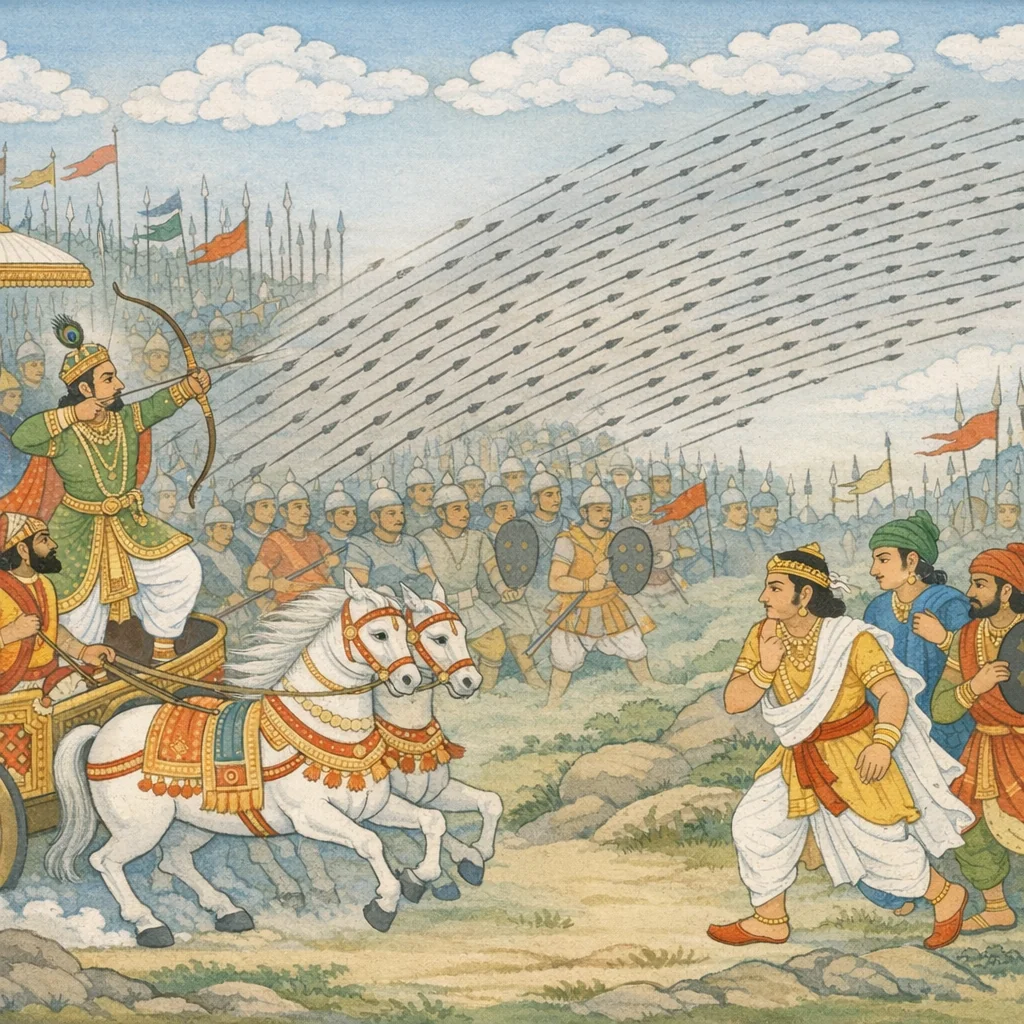
Saṃjaya reports that Bhīmasena, in a tumultuous clash, becomes surrounded by multiple adversaries and orders his charioteer to drive swiftly so he may strike the Dhārtarāṣṭra forces by forceful approach. Enemy units counter-advance with elephants, chariots, cavalry, and infantry, showering missiles; Bhīma cuts incoming arrows with golden-feathered shafts, producing a resonant din likened to thunderous impacts. He moves through the opposing host with overwhelming speed, described through kāla (time/death) imagery, as the Kaurava formation disperses in fear. Bhīma then asks Viśoka to distinguish allies from enemies amid confusion, fearing he may inadvertently strike his own side while releasing volleys. He expresses acute concern for Dharmarāja (Yudhiṣṭhira) and for Arjuna’s status. Viśoka reports remaining ammunition in technical categories (kṣura, bhalla, nārāca, pradarā) and notes substantial remaining armament. Bhīma declares his intent to make the battlefield ‘sunless’ with arrows and frames the day as decisive for his reputation. He prays for Arjuna’s arrival; signs appear as Arjuna’s kapidhvaja is sighted, along with Kṛṣṇa’s presence (Devadatta, Sughoṣa, and the cakra). In gratitude for the confirmation, Bhīma promises gifts to Viśoka, closing the episode with a transactional marker of valued reconnaissance.
Chapter Arc: कर्णपर्व के रण-कोलाहल में द्रोणपुत्र अश्वत्थामा अपने दिव्यास्त्र-मंत्रित बाणों से आकाश भर देता है—मानो युद्धभूमि पर स्वयं प्रलय की छाया उतर आई हो। → महास्त्रविद् अश्वत्थामा स्वर्णपुङ्ख, शिलाशित, घोर शर-वर्षा करता हुआ युधिष्ठिर को समर में घेर लेता है और विविध मार्गों से (शिक्षाश्व-लघुहस्तवत्) तीव्रता से अस्त्र-संचालन दिखाता है। पाण्डव-पक्ष में घबराहट फैलती है; साथ ही सात्यकि के सारथि-वध का प्रसंग युद्ध की क्रूरता को और तीखा कर देता है। → क्रुद्ध अश्वत्थामा ‘अन्तक’ के समान बाणों की वर्षा से युधिष्ठिर को ढक देता है; दबाव इतना बढ़ता है कि धर्मराज अपनी विशाल सेना छोड़कर शीघ्र हटने को विवश हो जाते हैं—यह क्षण पाण्डव-ध्वज के लिए अपमान और संकट दोनों बनकर उभरता है। → युधिष्ठिर के हट जाने पर अश्वत्थामा दूसरी ओर लौट जाता है। बीच में ब्राह्मण-धर्म (तप, दान, अध्ययन) का उपदेशात्मक स्वर उठता है; युक्तियुक्त वचन सुनकर द्रोणपुत्र मुसकराने-सा लगता है और तत्कालीन आवेग के बीच एक क्षणिक संयम/विचार का संकेत मिलता है। → युधिष्ठिर का रण से हटना पाण्डव-व्यवस्था को डगमगा देता है—अगले प्रसंग में प्रश्न खड़ा रहता है कि कौन उन्हें पुनः स्थिर करेगा और अश्वत्थामा की दिशा-परिवर्तन से किस पर नई आपदा टूटेगी।
Shlokas
Verse 1
(दाक्षिणात्य अधिक पाठके ४ श्लोक मिलाकर कुल ४६ श्लोक हैं) अपन बछ। है २ >> पञ्चपज्चाशत्तमो< ध्याय: अश्वत्थामाका घोर युद्ध, सात्यकिके सारथिका वध एवं युधिष्ठटिरका अश्वत्थामाको छोड़कर दूसरी ओर चले जाना संजय उवाच द्रौणिर्युधिष्िरं दृष्टवा शैनेयेनाभिरक्षितम् । द्रौपदेयैस्तथा शूरैरभ्यवर्तत हृष्टवत्,संजय कहते हैं--राजन्! सात्यकि तथा शूरवीर द्रौपदीपुत्रोंद्वारा सुरक्षित युधिष्ठिरको देखकर अअभ्रत्थामा बड़े हर्षके साथ उनका सामना करनेके लिये गया इस प्रकार श्रीमह्याभारत कर्णपर्वमें युधिष्ठिरका पलायनविषयक पचपनवाँ अध्याय पूरा हुआ ॥/ ५५ ॥। (दाक्षिणात्य अधिक पाठके ३ श्लोक मिलाकर कुल ४२ श्लोक हैं) प्यास बक। -ज॑ऑ:डिेड षट्पज्चाशत्तमो<5 ध्याय: नकुल-सहदेवके साथ दुर्योधनका युद्ध, धृष्टद्युम्नसे दुर्योधनकी पराजय, कर्णद्वारा पांचाल-सेनासहित योद्धाओंका संहार, भीमसेनद्वारा कौरव योद्धाओंका सेनासहित विनाश, अर्जुनद्वारा संशप्तकोंका वध तथा अश्वत्थामाका अर्जुनके होना घोर युद्ध करके पराजित ना संजय उवाच भीमसेनं सपाज्चाल्यं चेदिकेकयसंवृतम् । वैकर्तन: स्वयं रुद्ध्वा वारयामास सायकै:
Sañjaya said: O King, Karṇa (Vaikartana), personally barring the way, checked Bhīmasena—who was accompanied by the Pāñcālas and surrounded by the Cedis and the Ekakayas—holding him back with volleys of arrows. The scene underscores how, in the frenzy of war, even the mightiest are restrained not by counsel but by force, as rival champions deliberately intercept one another to shape the battle’s moral and strategic outcome.
Verse 2
किरन्निषुगणान् घोरान् स्वर्णपुड्खाज्शिलाशितान् । दर्शयन् विविधान् मार्गान् शिक्षाश्व॒ लघुहस्तवत्,वह बड़े-बड़े अस्त्रोंका ज्ञाता था; इसलिये शीघ्रतापूर्वक हाथ चलानेवाले योद्धाके समान सानपर चढ़ाकर तेज किये हुए सुवर्णमय पंखोंसे युक्त भयंकर शरसमूहोंकी वर्षा करता और नाना प्रकारके मार्ग एवं शिक्षाका प्रदर्शन करता हुआ दिव्यास्त्रोंसे अभिमन्त्रित बाणोंद्वारा समरांगणमें युधिष्ठिको अवरुद्ध करके आकाशको उन बाणोंसे भरने लगा
Sañjaya said: “Pouring forth dreadful clusters of arrows—golden-feathered and stone-whetted—he displayed many trajectories and the refinements of his training, like a warrior swift of hand. With arrows empowered by divine missiles, he hemmed in Yudhiṣṭhira on the battlefield and began to fill the sky with shafts.”
Verse 3
ततः खं पूरयामास शरैं्दिव्यास्त्रमन्त्रितै: | युधिष्ठिरं च समरे परिवार्य महास्त्रवित्,वह बड़े-बड़े अस्त्रोंका ज्ञाता था; इसलिये शीघ्रतापूर्वक हाथ चलानेवाले योद्धाके समान सानपर चढ़ाकर तेज किये हुए सुवर्णमय पंखोंसे युक्त भयंकर शरसमूहोंकी वर्षा करता और नाना प्रकारके मार्ग एवं शिक्षाका प्रदर्शन करता हुआ दिव्यास्त्रोंसे अभिमन्त्रित बाणोंद्वारा समरांगणमें युधिष्ठिको अवरुद्ध करके आकाशको उन बाणोंसे भरने लगा
Sanjaya said: Then he filled the sky with arrows empowered by the mantras of divine weapons. Encircling Yudhiṣṭhira in the thick of battle, that master of great missiles sought to hem him in, turning the fight into a display of trained skill and overwhelming force—an episode that underscores how, in war, prowess and stratagem can momentarily eclipse restraint, even when the target is a king famed for dharma.
Verse 4
द्रौणायनिशरच्छन्न॑ न प्राज्ञायत किज्चन । बाणभूतमभूत् सर्वमायोधनशिरो महत्,द्रोणपुत्रके बाणोंसे आच्छन्न हो जानेके कारण वहाँ कुछ भी ज्ञात नहीं होता था। युद्धका वह सारा विशाल मैदान बाणमय हो रहा था
Sañjaya said: Covered over by the arrows of Droṇa’s son, nothing at all could be clearly discerned there. The entire vast battlefield—its very head and heart of combat—seemed to turn into a mass of arrows, as if war itself had become a single, blinding storm of weapons.
Verse 5
बाणजालं दिविच्छन्न॑ स्वर्णजालविभूषितम् । शुशुभे भरतश्रेष्ठ वितानमिव घिछितम्,भरतश्रेष्ठ! स्वर्णजाल-विभूषित वह बाणोंका जाल आकाशगमें फैलकर वहाँ तने हुए वितान (चँदोवे)-के समान सुशोभित होता था
Sañjaya said: “O best of the Bharatas, the net of arrows—spreading across the sky and adorned like a lattice of gold—shone brilliantly, resembling a canopy stretched overhead.”
Verse 6
तेनच्छन्नं नभो राजन् बाणजालेन भास्वता । अभ्रच्छायेव संजज्ञे बाणरुद्धे नभस्तले,राजन! उन प्रकाशमान बाणसमूहोंसे सारा आकाशमण्डल ढक गया था। बाणोंसे रुँधे हुए आकाशकमें मेघोंकी छाया-सी बन गयी थी
Sanjaya said: O King, the sky was completely veiled by a radiant net of arrows. With the vault of heaven choked by those shafts, it seemed as though a cloud’s shadow had spread across the firmament—where brilliance itself became a kind of darkness.
Verse 7
तत्राश्चर्यमपश्याम बाणभूते तथाविधे । न सम सम्पतते भूतं किंचिदेवान्तरिक्षगम्
Sañjaya said: There we witnessed a marvel: in that battlefield turned into a very mass of arrows, nothing—no being or creature moving through the sky—could pass through evenly or unharmed.
Verse 8
इस प्रकार आकाशके बाणमय हो जानेपर हमलोगोंने वहाँ यह आश्चवर्यकी बात देखी कि आकाश चारी कोई भी प्राणी उधरसे उड़कर नीचे नहीं आ सकता था ।। सात्यकिर्यतमानस्तु धर्मराजश्न पाण्डव: । तथेतराणि सैन्यानि न सम चक्कु: पराक्रमम्,उस समय प्रयत्नशील सात्यकि, धर्मराज पाए्डुपुत्र युधिष्ठिर तथा अन्यान्य सैनिक कोई पराक्रम न कर सके
Sañjaya said: When the sky had become filled with a dense shower of arrows, a wondrous sight was seen there—no creature could pass through that region from above and descend. At that time, even the striving Sātyaki, the Pāṇḍava Dharmarāja Yudhiṣṭhira, and the other troops were unable to display their valor or mount an effective counterattack.
Verse 9
लाघवं द्रोणपुत्रस्य दृष्टवा तत्र महारथा: । व्यस्मयन्त महाराज न चैन प्रत्युदीक्षितुम्
Sañjaya said: Seeing the swift, skillful prowess of Droṇa’s son there, the great chariot-warriors were struck with astonishment, O King, and they could not bring themselves to face him in counter-attack.
Verse 10
वध्यमाने तत: सैन्ये द्रौपदेया महारथा:,तदनन्तर जब पाण्डव-सेना मारी जाने लगी, तब महारथी द्रौपदीपुत्र और सात्यकि तथा धर्मराज युधिष्ठिर और पांचाल सैनिक संगठित हो घोर मृत्युभयको छोड़कर द्रोणकुमारपर टूट पड़े
Sañjaya said: When the army was being cut down, and the Pāṇḍava host began to be slain, the great chariot-warriors—the sons of Draupadī, along with Sātyaki, King Yudhiṣṭhira, and the Pāñcāla troops—formed up in a body. Casting aside the dreadful fear of death, they surged upon Droṇa’s son.
Verse 11
सात्यकिर्धर्मराजश्न पञ्चालाक्षापि संगता: । त्यक्त्वा मृत्युभयं घोरं द्रौणायनिमुपाद्रवन्,तदनन्तर जब पाण्डव-सेना मारी जाने लगी, तब महारथी द्रौपदीपुत्र और सात्यकि तथा धर्मराज युधिष्ठिर और पांचाल सैनिक संगठित हो घोर मृत्युभयको छोड़कर द्रोणकुमारपर टूट पड़े
Sātyaki and Dharmarāja Yudhiṣṭhira, together with the Pāñcāla warriors, rallied as one; casting off the dreadful fear of death, they then surged upon Droṇa’s son, Aśvatthāman.
Verse 12
सात्यकि: सप्तविंशत्या द्रौणिं विदृध्वा शिलीमुखै: । पुनर्विव्याध नाराचै: सप्तभि: स्वर्णभूषितै:,सात्यकिने सत्ताईस बाणोंसे अश्वत्थामाको घायल करके पुनः सात स्वर्णभूषित नाराचोंद्वारा उसे बींध डाला
Sañjaya said: Sātyaki wounded Droṇa’s son, Aśvatthāman, with twenty-seven sharp arrows, and then again pierced him with seven nārāca shafts adorned with gold.
Verse 13
युधिष्ठिरस्त्रिसप्तत्या प्रतिविन्ध्यश्न सप्तभि: । श्रुतकर्मा त्रिभि्बाणि: श्रुतकीर्तिश्व सप्तभि:,युधिष्ठिरने तिहत्तर, प्रतिविन्ध्यने सात, श्रुतकर्माने तीन, श्रुतकीर्तिने सात, सुतसोमने नौ और शतानीकने उसे सात बाण मारे तथा दूसरे बहुत-से शूरवीरोंने भी अश्वत्थामाको चारों ओरसे घायल कर दिया
Sañjaya said: Yudhiṣṭhira struck Aśvatthāman with seventy-three arrows; Pratīvindhya with seven; Śrutakarman with three; and Śrutakīrti with seven. (Likewise Sutasoma with nine and Śatānīka with seven.) Thus, with many other valiant warriors, they wounded Aśvatthāman from all sides.
Verse 14
सुतसोमस्तु नवभि: शतानीकश्न सप्तभि: । अन्ये च बहव: शूरा विव्यधुस्तं समन््तत:,युधिष्ठिरने तिहत्तर, प्रतिविन्ध्यने सात, श्रुतकर्माने तीन, श्रुतकीर्तिने सात, सुतसोमने नौ और शतानीकने उसे सात बाण मारे तथा दूसरे बहुत-से शूरवीरोंने भी अश्वत्थामाको चारों ओरसे घायल कर दिया
Sañjaya said: Sutasoma struck him with nine arrows, and Śatānīka with seven. Many other valiant warriors too pierced him from all sides.
Verse 15
स तु क़ुद्धस्ततो राजन्नाशीविष इव श्वसन् । सात्यकिं पज्चविंशत्या प्रत्यविध्यच्छिलीमुखै:,राजन्! तब क्रोधमें भरकर विषधर सर्पके समान फुफकारते हुए अअभश्वत्थामाने सात्यकिको पचीस बाणोंसे घायल करके बदला चुकाया
Sañjaya said: Then, O King, enraged, he hissed like a venomous serpent; and in retaliation he pierced Sātyaki with twenty-five sharp arrows.
Verse 16
श्रुतकीर्ति च नवभि: सुतसोमं च पठ्चभि: । अष्टशभि: श्रुतकर्माणं प्रतिविन्ध्यं त्रिभि: शरै:,श्रुतकीर्तेस्तथा चापं चिच्छेद निशितै: शरैः । फिर श्रुतकीर्तिको नौ, सुतसोमको पाँच, श्रुतकर्माको आठ, प्रतिविन्ध्यको तीन, शतानीकको नौ, धर्मपुत्र युधिष्ठिरको पाँच तथा अन्य शूरवीरोंको दो-दो बाणोंसे पीट दिया। इसके सिवा उसने पैने बाणोंद्वारा श्रुतकीर्तिके धनुषको भी काट दिया
Sañjaya said: He struck Śrutakīrti with nine arrows, Sutasoma with five, Śrutakarmā with eight, and Prativindhya with three. Then, with razor-sharp shafts, he also cut down Śrutakīrti’s bow. The scene underscores the grim precision of battlefield skill—where valor is measured in restraint and aim, yet the moral weight of kin-slaying and relentless escalation continues to darken the war’s dharmic horizon.
Verse 17
शतानीकं च नवभ्िर्धर्मपुत्रं च पठचभि: । तथेतरांस्तत: शूरान् द्वाभ्यां द्वाभ्यामताडयत्
Sañjaya said: He struck Śatānīka with nine arrows and Dharmaputra (Yudhiṣṭhira) with five. Then, in the same manner, he went on to smite the other heroes as well—two arrows at a time—pressing the battle with measured, relentless force.
Verse 18
अथान्यद् धनुरादाय श्रुतिकीर्तिमहारथ:
Sañjaya said: Then Śrutakīrti, that great chariot-warrior, took up another bow—signaling an unbroken resolve to continue the fight even when weapons fail, and reflecting the warrior’s code of persistence amid the harsh demands of battle.
Verse 19
ततो द्रौणिमहाराज शरवर्षेण मारिष
Sanjaya said: Then, O great king, the son of Droṇa was assailed with a rain of arrows, O revered one—an image of the battle’s relentless escalation, where prowess is met by equal or greater force and the warrior’s resolve is tested amid overwhelming violence.
Verse 20
ततः पुनरमेयात्मा धर्मराजस्य कार्मुकम्
Sañjaya said: Then again, the immeasurable-souled warrior took up (or seized) the bow of Dharmarāja (Yudhiṣṭhira). In the moral atmosphere of the war, this moment signals a renewed escalation: the contest is not merely of weapons but of resolve, as the emblem of righteous kingship—Dharmarāja’s bow—becomes the immediate focus of martial action.
Verse 21
ततो धर्मसुतो राजन् प्रगृह्मान्यन्महद् धनु:
Then, O King, Dharmasuta (Yudhiṣṭhira), taking up another great bow, readied himself again—showing renewed resolve amid the moral strain of battle and the duty-bound need to continue the fight.
Verse 22
सात्यकिस्तु ततः क्रुद्धो द्रौणे: प्रहरतो रणे
Sañjaya said: Then Sātyaki, angered, confronted Drauṇi (Droṇa’s son) in the battle as he struck down warriors—his wrath rising at the relentless violence on the field.
Verse 23
छिन्नथन्वा ततो द्रौणि: शक््त्या शक्तिमतां वर:
Sañjaya said: Then Droṇa’s son, his bow cut down, the foremost among the mighty, struck with his spear—pressing the battle onward despite the loss of his weapon.
Verse 24
सारथिं पातयामास शैनेयस्य रथाद् द्रुतम् धनुष कट जानेपर शक्तिशालियोंमें श्रेष्ठ अश्वत्थामाने शक्ति चलाकर शिनिपौत्र सात्यकिके सारथिको शीघ्र ही रथसे नीचे गिरा दिया |। २३ इ ।। अथान्यद् धनुरादाय द्रोणपुत्र: प्रतापवान्
Sañjaya said: Aśvatthāmā, foremost among the mighty wielders of weapons, swiftly hurled a spear and struck down the charioteer of Śaineya (Sātyaki) from his chariot. Then the valiant son of Droṇa took up another bow, pressing the attack further.
Verse 25
तस्याश्चाः प्रद्रुता: संख्ये पतिते रथसारथौ
Sañjaya said: When the charioteer fell in the midst of battle, his forces broke and fled from the field—showing how, in war, the collapse of guidance and command can swiftly turn courage into panic.
Verse 26
तत्र तत्रैव धावन्त: समदृश्यन्त भारत । भरतनन्दन! उनके रथका सारथि धराशायी हो चुका था, इसलिये उनके घोड़े युद्धस्थलमें बेलगाम भागने लगे। वे विभिन्न स्थानोंमें भागते हुए ही दिखायी दे रहे थे || २५ हे युधिष्ठिरपुरोगास्तु द्रौणिं शस्त्रभृतां वरम्
Sañjaya said: “O Bhārata, on that very battlefield they were seen rushing here and there.” When the charioteer fell, the horses ran loose without control, and for a moment the warrior’s purpose was swallowed by the chaos of war.
Verse 27
अभ्यवर्षन्त वेगेन विसृजन्त: शितान् शरान् । युधिष्ठिर आदि पाण्डव महारथी शस्त्रधारियोंमें श्रेष्ठ अश्वत्थामापर बड़े वेगसे पैने बाणोंकी वर्षा करने लगे ।। आगच्छमानांस्तान् दृष्टवा क्रुद्धरूपान् परंतप:
Sañjaya said: With great speed they rained down showers of sharp arrows. Then Aśvatthāmā, Droṇa’s son—foremost among weapon-bearers and a mighty chariot-warrior—began to pour a fierce storm of keen shafts upon the Pāṇḍavas headed by Yudhiṣṭhira. Seeing them advancing in wrathful form, the scorcher of foes prepared to meet them with intensified force.
Verse 28
प्रहसन् प्रतिजग्राह द्रोणपुत्रो महारणे । शत्रुओंको संताप देनेवाले द्रोणपुत्र अश्वत्थामाने उस महासमरमें उन पाण्डव महारथियोंको क्रोधपूर्वक आक्रमण करते देख हँसते हुए उनका सामना किया ।। तत:ः शरशतज्वाल: सेनाकक्षं महारथ:
Sañjaya said: In that great battle, Droṇa’s son (Aśvatthāmā)—a tormentor of his foes—seeing the Pāṇḍava great chariot-warriors advancing in wrath, met their onset with a laugh. Then that great warrior, blazing with hundreds of arrows, pressed into the very enclosure of the army, signaling a fierce escalation in the struggle.
Verse 29
तद् बल॑ पाण्डुपुत्रस्य द्रोणपुत्रप्रतापितम्
Sañjaya said: “That force of the son of Pāṇḍu—its strength and spirit—had been overawed and pressed hard by the prowess of Droṇa’s son.”
Verse 30
दृष्टवा चैव महाराज द्रोणपुत्रपराक्रमम्
Sañjaya said: “O great king, having witnessed the prowess of Droṇa’s son (Aśvatthāmā) …”
Verse 31
युधिष्ठिरस्तु त्वरितो द्रोणशिष्यो महारथ:
Sañjaya said: Yudhiṣṭhira, acting with urgency, advanced—he, the great chariot-warrior trained by Droṇa.
Verse 32
अब्रवीद् द्रोणपुत्राय रोषामर्षसमन्वित: । तदनन्तर रोष और अमर्षमें भरे हुए द्रोणशिष्य महारथी युधिष्ठिरने द्रोणपुत्र अश्वत्थामासे कहा ।। (युधिष्टिर उवाच जानामि त्वां युधि श्रेष्ठ वीर्यवन्तं महाबलम् | कृतास्त्रं कृतिनं चैव तथा लघुपराक्रमम् ।। युधिष्ठिर बोले--द्रोणकुमार! मैं जानता हूँ कि तुम युद्धमें पराक्रमी, महाबली, अस्त्रवेत्ता, विद्वान् और शीघ्रतापूर्वक पुरुषार्थ प्रकट करनेवाले श्रेष्ठ वीर हो। बलमेतद् भवान् सर्व पार्षते यदि दर्शयेत् । ततस्त्वां बलवन्तं च कृतविद्यं च विद्यहे ।। परंतु यदि तुम अपना यह सारा बल द्रुपदपुत्रपर दिखा सको तो हम समझेंगे कि तुम बलवान् तथा अस्त्र-विद्याके विद्वान् हो। न हि वै पार्षतं दृष्टवा समरे शत्रुसूदनम् । भवेत् तव बलं किंचिद् ब्रवीमि त्वा न तु द्विजम् ।।) शत्रुसूदन धृष्टद्युम्मको समरभूमिमें देखकर तुम्हारा बल कुछ भी काम न करेगा। (तुम्हारे कर्मको देखते हुए) मैं तुम्हें ब्राह्मण नहीं कहूँगा। नैव नाम तव प्रीतिर्नैंव नाम कृतज्ञता
Yudhiṣṭhira, filled with wrath and wounded pride, said to Droṇa’s son: “I know you, O son of Droṇa, as foremost in battle—valiant, very strong, trained in weapons, accomplished, and swift to display your prowess. Yet if you can show all that strength against the son of Pṛṣata (Dhṛṣṭadyumna), then we shall truly recognize you as powerful and as one who has mastered his martial knowledge. For when you behold Pārṣata on the battlefield—the slayer of foes—your strength will count for nothing. Judging by your deeds, I will not call you a brāhmaṇa.”
Verse 33
ब्राह्मणेन तप: कार्य दानमध्ययनं तथा
Yudhiṣṭhira said: “For a brāhmaṇa, austerity is to be undertaken; likewise, giving (charity) and the study of sacred learning.”
Verse 34
क्षत्रियेण धनुर्नाम्यं स भवान् ब्राह्मणब्रुव: । ब्राह्मगको तप, दान और वेदाध्ययन करना चाहिये। धनुष झुकाना तो क्षत्रियका काम है; अतः तुम नाममात्रके ब्राह्मण हो ।। ३३ $ ।। मिषतस्ते महाबाहो युधि जेष्यामि कौरवान्
Yudhiṣṭhira said: “To bend the bow is the work of a kṣatriya, yet you speak as though you were a brāhmaṇa. A true brāhmaṇa should pursue austerity, give in charity, and devote himself to Vedic study; bending the bow belongs to the warrior’s duty. Therefore you are a brāhmaṇa only in name. Even as you look on, O mighty-armed one, I shall defeat the Kauravas in battle.”
Verse 35
एवमुक्तो महाराज द्रोणपुत्र: स्मयन्निव
O King, thus addressed, Droṇa’s son replied with a faint, almost mocking smile.
Verse 36
अनुक्त्वा च ततः किंचिच्छरवर्षेण पाण्डवम्
Yudhiṣṭhira said: “Then, without uttering anything further, he assailed the Pāṇḍava with a rain of arrows.”
Verse 37
स च्छाद्यमानस्तु तदा द्रोणपुत्रेण मारिष
Yudhiṣṭhira said: “And at that time, O revered one, he was being covered over—overwhelmed and pressed hard—by Droṇa’s son.”
Verse 38
अपयाते ततस्तस्मिन् धर्मपुत्रे युधिष्ठिरे
Then, when Yudhiṣṭhira—the son of Dharma—had departed from that place, the course of events moved on in his absence.
Verse 39
द्रणेपुत्रस्ततो राजन् प्रत्यगात् स महामना: । राजन! तत्पश्चात् धर्मपुत्र युधिष्ठिरके हट जानेपर फिर महामना द्रोणपुत्र अश्वत्थामा दूसरी ओर चला गया ।। ततो युधिष्ठिरो राजंस्त्यक्त्वा द्रौणिं महाहवे । प्रययौ तावकं सैन्यं युक्त: क्रूराय कर्मणे,नरेश्वर! फिर उस महायुद्धमें अश्वत्थामाको छोड़कर युधिष्ठिर पुनः क्रूरतापूर्ण कर्म करनेके लिये आपकी सेनाकी ओर बढ़े
Then, O King, the high-souled son of Droṇa withdrew and moved away. After that, Dharma’s son Yudhiṣṭhira—leaving Aśvatthāmā aside in that great battle—advanced again toward your army, intent upon a harsh and grim deed.
Verse 54
इस प्रकार श्रीमह्ााभारत कर्णपर्वमें संकुलयुद्धविषयक चौवनवाँ अध्याय पूरा हुआ
Thus ends the fifty-fourth chapter of the Karṇa Parva of the Śrī Mahābhārata, dealing with the theme of a confused and densely entangled battle.
Verse 55
इति श्रीमहाभारते कर्णपर्वणि पार्थापयाने पञडचपज्चाशत्तमो<5 ध्याय:
Thus ends the fifty-fifth chapter in the Karṇa Parva of the Śrī Mahābhārata, in the section concerning the advance of the Pārthas (the sons of Pṛthā).
Verse 96
शेकुस्ते सर्वराजानस्तपन्तमिव भास्करम् | महाराज! द्रोणपुत्रकी वह फुर्ती देखकर वहाँ खड़े हुए सभी महारथी नरेश आश्चर्ययकित हो उठे और तपते हुए सूर्यके समान तेजस्वी अश्वत्थामाकी ओर आँख उठाकर देख भी न सके
Sañjaya said: O great king, seeing the fierce surge of energy displayed by Droṇa’s son, all the great chariot-warrior kings standing there were struck with astonishment. Like men unable to raise their eyes toward the blazing sun, they could not even look up at the radiant Aśvatthāmā.
Verse 173
श्रुतकीर्तेस्तथा चापं चिच्छेद निशितै: शरैः । फिर श्रुतकीर्तिको नौ, सुतसोमको पाँच, श्रुतकर्माको आठ, प्रतिविन्ध्यको तीन, शतानीकको नौ, धर्मपुत्र युधिष्ठिरको पाँच तथा अन्य शूरवीरोंको दो-दो बाणोंसे पीट दिया। इसके सिवा उसने पैने बाणोंद्वारा श्रुतकीर्तिके धनुषको भी काट दिया
Sañjaya said: With razor-sharp arrows he also cut down Śrutakīrti’s bow. In the same surge of battle, he struck Śrutakīrti with nine arrows, Sutasoma with five, Śrutakarman with eight, Prativindhya with three, Śatānīka with nine, and Dharmaputra Yudhiṣṭhira with five—along with other heroes, two arrows each. The scene underscores the relentless mechanics of war: prowess is displayed not by speech but by disabling an opponent’s weapon and steadily wearing down even the foremost warriors.
Verse 186
द्रौणायनि त्रिभिर्विद्ध्वा विव्याधान्यैः शितै: शरै: । तब महारथी श्रुतकीर्तिने दूसरा धनुष लेकर द्रोणकुमारको पहले तीन बाणोंसे घायल करके फिर दूसरे-दूसरे पैने बाणोंद्वारा बींध डाला
Sañjaya said: Having pierced Drauṇāyani with three arrows, the great chariot-warrior Śrutakīrti then struck him again with other keen shafts—pressing the assault without pause amid the ruthless ethics of battlefield duty.
Verse 196
छादयामास तत् सैन्यं समन्ताद् भरतर्षभ । मान्यवर भरतभूषण महाराज! तत्पश्चात् द्रोणकुमारने अपने बाणोंकी वर्षसि युधिष्ठिरकी उस सेनाको सब ओरसे ढक दिया
Sañjaya said: O bull among the Bharatas, then the son of Droṇa showered arrows and, from every side, covered that army—an image of the battle’s relentless momentum, where martial prowess seeks to overwhelm the opposing force and test the steadiness of kings and warriors amid the strain of dharma in war.
Verse 203
द्रौणिक्षिच्छेद विहसन् विव्याध च शरैस्त्रिभि: । उसके बाद अमेय आत्मबलसे सम्पन्न द्रोणकुमारने धर्मराजके धनुषको काट डाला और हँसते-हँसते तीन बाणोंद्वारा पुनः उन्हें घायल कर दिया
Sañjaya said: Laughing, the son of Droṇa cut down Drauṇikṣi’s bow and then pierced him again with three arrows. The scene shows the battle’s ruthless momentum, where skill and mockery join to humiliate an opponent and press the advantage without pause.
Verse 216
द्रौ्णिं विव्याध सप्तत्या बाह्दोरुरसि चार्पयत् । राजन! तब धर्मपुत्र युधिष्ठिरने दूसरा विशाल धनुष हाथमें लेकर अश्व॒त्थामाको बींध दिया एवं उसकी दोनों भुजाओं और छातीमें सत्तर बाण मारे
Sañjaya said: O King, then Dharmaputra Yudhiṣṭhira took up another great bow and struck Aśvatthāmā, Droṇa’s son, planting seventy arrows into his two arms and his chest. The scene shows how even dharma-minded Yudhiṣṭhira, driven by the demands of battle and the duty to protect his side, deals forceful yet measured violence within the warrior code.
Verse 226
अर्धचन्द्रेण तीक्ष्णेन धनुश्छित्त्वानदद् भृशम् । इसके बाद कुपित हुए सात्यकिने रणभूमिमें प्रहार करनेवाले अश्वत्थामाके धनुषको तीखे अर्धचन्द्रसे काटकर बड़े जोरसे गर्जना की
Sañjaya said: With a keen, crescent-shaped arrow, he cut Aśvatthāmā’s bow and then roared loudly. In the heat of battle, this act signals both tactical mastery and the fierce resolve of a warrior who answers aggression with decisive force.
Verse 243
शैनेयं शरवर्षेणच्छादयामास भारत । भारत! तत्पश्चात् प्रतापी द्रोणपुत्रने दूसरा धनुष लेकर सात्यकिको शरसमूहोंकी वर्षद्वारा आच्छादित कर दिया
Sañjaya said: O Bhārata, Aśvatthāman, the mighty son of Droṇa, covered Śaineya (Sātyaki) with a rain of arrows. Then, taking up another bow, that valiant warrior again enveloped Sātyaki with dense volleys—an image of relentless martial resolve, where prowess is displayed without pause amid the harsh ethics of battlefield duty.
Verse 286
द्रौणिर्ददाह समरे कक्षमग्निर्यथा वने । जैसे आग वनमें सूखे काठ और घास-फूँसको जला देती है, उसी प्रकार महारथी अश्वृत्थामाने समरांगणमें सैकड़ों बाणरूपी ज्वालाओंसे प्रज्वयलित हो पाण्डवसेनारूपी सूखे काठ एवं घास-फूँसको जलाना आरम्भ किया
Sañjaya said: In the thick of battle, Aśvatthāmā, Droṇa’s son, began to burn the enemy host like a forest-fire consuming dry brushwood. With volleys of arrows blazing like flames, he fell upon the Pāṇḍava army as though it were tinder—an image that shows how, when wrath and martial skill are unleashed without restraint, war turns living beings into fuel for destruction.
Verse 296
चुक्षुभे भरतश्रेष्ठ तिमिनेव नदीमुखम् । भरतश्रेष्ठ! जैसे तिमिनामक मत्स्य नदीके प्रवाहको विक्षुब्ध कर देता है, उसी प्रकार द्रोणपुत्रके द्वारा संतप्त की हुई पाण्डव-सेनामें हलचल मच गयी
Sañjaya said: “O best of the Bharatas, the Pāṇḍava host—scorched and harried by Droṇa’s son—fell into turmoil, just as the mighty fish called Timi churns and agitates the mouth of a river.”
Verse 303
निहतान् मेनिरे सर्वान् पाण्डून द्रोणसुतेन वै । महाराज! द्रोणपुत्रका पराक्रम देखकर सब लोगोंने यही समझा कि द्रोणकुमार अश्रृत्थामाके द्वारा सारे पाण्डव मार डाले जायँगे
Sañjaya said: “O King, seeing the prowess of Droṇa’s son, everyone concluded that all the Pāṇḍavas had been slain by him.”
Verse 323
यतस्त्वं पुरुषव्याप्र मामेवाद्य जिघांससि | पुरुषसिंह! तुम जो आज मुझे ही मार डालना चाहते हो, यह न तो तुम्हारा प्रेम है और न कृतज्ञता
Yudhiṣṭhira said: “Since you, O best of men—O lion among men—seek to slay me alone today, this cannot be called affection, nor can it be called gratitude.”
Verse 343
कुरुष्व समरे कर्म ब्रह्मुबन्धुरसि ध्रुवम् । महाबाहो! आज मैं तुम्हारे देखते-देखते युद्धमें कौरवोंको जीतूँगा। तुम समरमें पराक्रम प्रकट करो। निश्चय ही तुम एक स्वधर्मश्रष्ट ब्राह्मण हो
Yudhiṣṭhira said: “Do your duty in battle; you are certainly a mere ‘kinsman of Brahmins’—a Brahmin only in name. O mighty-armed one, today—before your very eyes—I shall defeat the Kauravas in war. Display your valor on the battlefield. Indeed, you are a Brahmin who has fallen away from his own dharma.”
Verse 363
छादयामास समरे क्रुद्धो5न्तक इव प्रजा: । उसने कोई जवाब न देकर समरांगणमें कुपित हो बाणोंकी वर्षसे पाण्डुपुत्र युधिष्ठिरको उसी प्रकार ढक दिया, जैसे प्रलयकालमें क्रुद्ध यमराज सारी प्रजाको अदृश्य कर देता है
In the thick of battle, he—wrathful like Antaka (Death)—gave no reply, but covered Yudhiṣṭhira, Pāṇḍu’s son, with a shower of arrows, as though at the time of dissolution the enraged Lord of Death were to blot out all creatures from sight.
Verse 373
पार्थोड्पयात: शीघ्रं वै विहाय महतीं चमूम् । आर्य! द्रोनपुत्रके बाणोंसे आच्छादित हो कुन्तीकुमार युधिष्ठिर उस समय अपनी विशाल सेनाको छोड़कर शीघ्र ही वहाँसे पलायन कर गये
Yudhiṣṭhira said: “Arjuna withdrew swiftly, abandoning the great army. O noble one, at that time Kuntī’s son Yudhiṣṭhira—covered by the arrows of Droṇa’s son—left his vast host behind and quickly fled from that place.”
Verse 3536
युक्त तत्त्वं च संचिन्त्य नोत्तरं किंचिदब्रवीत् । महाराज! उनके ऐसा कहनेपर द्रोणपुत्र मुसकराने-सा लगा। इनका कथन युक्तियुक्त तथा यथार्थ है, ऐसा सोचकर उसने कुछ उत्तर नहीं दिया
Having reflected that the point was well-reasoned and true to the facts, he gave no reply at all. O King, when those words were spoken, Droṇa’s son seemed to smile; judging the statement to be sound and accurate, he remained silent.
Frequently Asked Questions
Bhīma highlights the risk of harming allies while fighting in confusion; he therefore requests identification of forces, framing restraint and discrimination as necessary even during high-intensity action.
Effective action requires governance of perception: speed and strength are subordinated to informed targeting, logistical awareness, and disciplined delegation to trusted specialists (the charioteer as navigator and reporter).
No formal phalaśruti appears; the chapter’s meta-level emphasis is conveyed indirectly through kāla imagery and the narrative function of recognition and reporting, situating the episode as a lesson in controlled force within the epic’s moral architecture.