Adhyaya 92
द्रोणपर्व — द्विनवति-तमोऽध्यायः (Sātyaki Pressed by Kauravas; Duryodhana and Kṛtavarmā Engagements)
Upa-parva: Sātyaki–Kṛtavarmā–Duryodhana Saṅgrāma (Strategic Engagement Sequence)
Saṃjaya reports that multiple Kaurava prahāriṇas shower Yuyudhāna (Sātyaki/Śaineya) with volleys; Droṇa and several of Dhṛtarāṣṭra’s sons strike him with specified counts of arrows. Sātyaki answers with precise counter-hits against named opponents, demonstrating controlled retaliation under saturation fire. A focused exchange develops between Sātyaki and Duryodhana: Kṛṣṇa (Mādhava) intervenes tactically by severing Duryodhana’s bow; Sātyaki further degrades the chariot system by felling the banner, horses, and charioteer, forcing Duryodhana to flee and mount Citrasena’s vehicle. The battlefield reacts with alarm at the sight of the king being ‘grasped’ by Sātyaki, prompting Kṛtavarmā’s rapid arrival. A new duel ensues: Kṛtavarmā and Sātyaki trade dense missile fire; Sātyaki escalates with a decisive shaft that pierces armor and drops Kṛtavarmā into the chariot, after which Sātyaki breaks through the formation and advances, while Kṛtavarmā regains composure, takes up another bow, and resumes defensive resistance against the Pāṇḍavas.
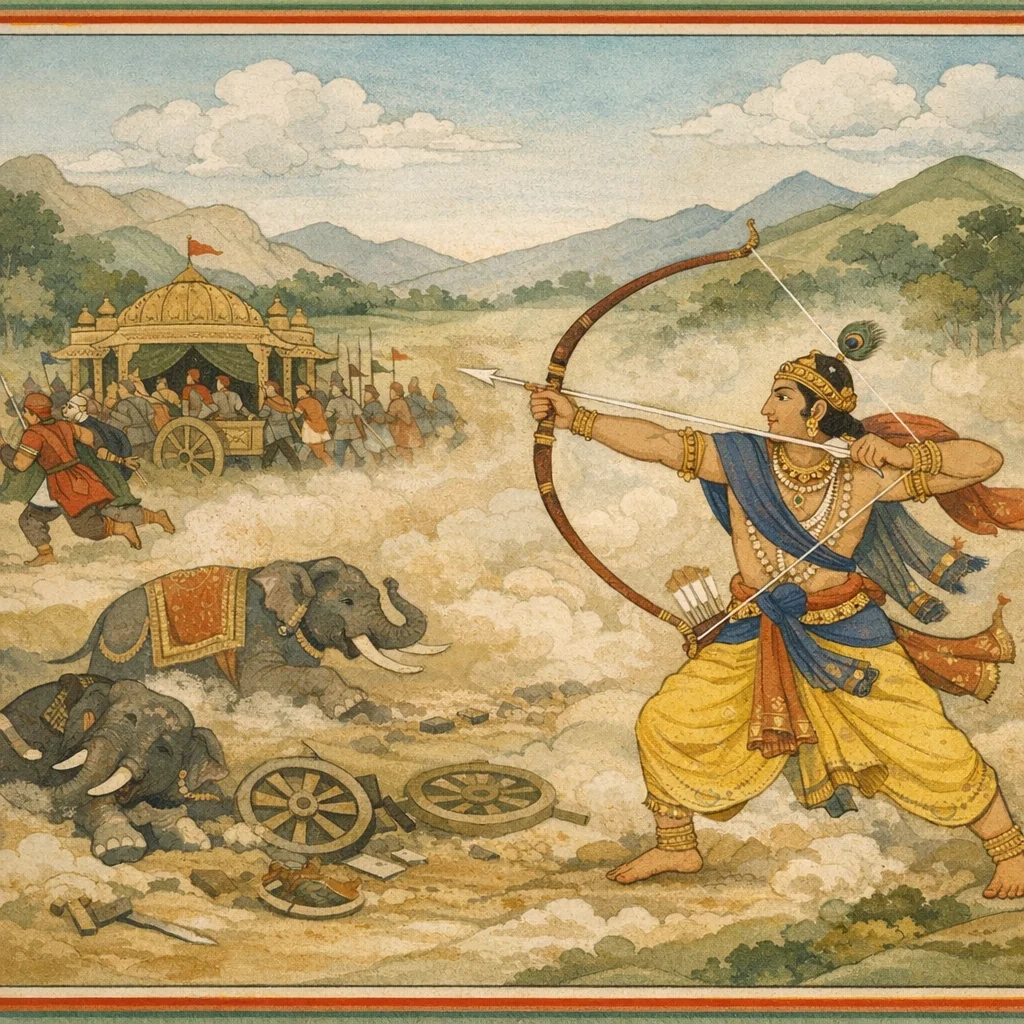
Chapter Arc: धृतराष्ट्र, संजय से व्याकुल होकर पूछते हैं—जब किरीटधारी अर्जुन ने अग्रभाग में सेना को तोड़ डाला और वीर मारे जा रहे थे, तब मेरे पुत्रों की क्या दशा हुई? क्या वे द्रोण के आश्रय में ‘शकटव्यूह’ के दुर्ग-सा घेरे में टिके रहे? → संजय वर्णन करते हैं कि अर्जुन के प्रचण्ड प्रहार से कौरव-बल हतवीर, हतोत्साह और पलायन-प्रवृत्त हो उठा। गाण्डीव से छूटे असंख्य तीक्ष्ण बाण हाथियों के अंग-प्रत्यंग में धँसते हैं; रणभूमि रथों के टूटे उपकरणों, ध्वस्त पहियों और गिरे क्षत्रियों से भयावह हो जाती है। अर्जुन धनुष को मण्डलाकार घुमाते हुए मानो नृत्य करता दिखता है—एक ही प्रवाह में संधान, आकर्षण और विमोचन की गति से शत्रु-पंक्तियाँ छिन्न-भिन्न होती जाती हैं। → अर्जुन की बाण-वृष्टि से हाथी-सेना और रथ-दल में हाहाकार मचता है; ‘आराव’ करते हुए घायल गज और सैनिक पीछे हटते हैं। इसी चरम क्षण में दुःशासन स्वयं शरार्दित और त्रस्त होकर, अपनी सेना सहित, त्राण की खोज में द्रोण को ‘रक्षक’ मानते हुए शकटव्यूह की ओर भागता है। → कौरव अग्रभाग का मनोबल टूट जाता है—रणभूमि पर कौरव-सेना की पराजय और अव्यवस्था स्पष्ट हो जाती है। अर्जुन का दबाव इतना तीव्र है कि शत्रु-समूह संगठित प्रतिरोध छोड़कर व्यूह-आश्रय और पलायन के बीच झूलने लगता है। → दुःशासन द्रोण के निकट शकटव्यूह में शरण लेता है—अब प्रश्न यह है कि क्या द्रोण का व्यूह अर्जुन की गति को रोक पाएगा, या अर्जुन इस दुर्ग-रचना को भी भेदकर आगे बढ़ेगा?
Shlokas
Verse 1
अफड-४#--का+ नवतितमो< ध्याय: अर्जुनके बाणोंसे हताहत होकर सेनासहित दुःशासनका पलायन धृतराष्ट उवाच तस्मिन् प्रभग्ने सैन्याग्रे वध्यमाने किरीटिना । के तु तत्र रणे वीरा:ः प्रत्युदीयुर्धनंजयम्,धृतराष्ट्रने पूछा--संजय! किरीटधारी अर्जुनकी मार खाकर उस अग्रगामी सैन्यदलके पलायन कर जानेपर वहाँ रणक्षेत्रमें किन वीरोंने अर्जुनपर धावा किया था?
Dhṛtarāṣṭra said: “When that vanguard of the army had been shattered and was being cut down by the diadem-wearing Arjuna, which heroes there, on the battlefield, advanced to confront Dhanañjaya?”
Verse 2
आहोस्विच्छकटबव्यूहं प्रविष्टा मोघनिश्चया: । द्रोणमाश्रित्य तिष्ठन्तं प्राकारमकुतो भयम्,अथवा ऐसा तो नहीं हुआ कि अपना मनोरथ सफल न होनेपर वे परकोटेकी भाँति खड़े हुए द्रोणाचार्यका आश्रय लेकर सर्वथा निर्भय शकटव्यूहमें घुस गये हों
Dhṛtarāṣṭra said: “Or did they, their resolve rendered futile, enter the cart-shaped battle-formation without fear—taking refuge in Droṇa, who stood firm like a rampart?”
Verse 3
संजय उवाच तथार्जुनेन सम्भग्ने तस्मिंस्तव बलेडनघ । हतवीरे हतोत्साहे पलायनकृतक्षणे,संजयने कहा--निष्पाप नरेश! जब इन्द्रपुत्र अर्जुनने पूर्वोक्त प्रकारसे आपकी सेनाके वीरोंको मारकर उसे हतोत्साह एवं भागनेके लिये विवश कर दिया, सभी सैनिक पलायन करनेका ही अवसर देखने लगे तथा उनके ऊपर निरन्तर श्रेष्ठ बाणोंकी मार पड़ने लगी, उस समय वहाँ संग्राममें कोई भी अर्जुनकी ओर आँख उठाकर देख न सका
Sañjaya said: “O sinless king, when your army had been thus shattered by Arjuna—its heroes slain, its spirit broken, and its men reduced to watching only for a moment to flee—then, under the unceasing strike of his excellent arrows, no one on that battlefield could even raise his eyes to face Arjuna.”
Verse 4
पाकशासनिनाभीक्षणं वध्यमाने शरोत्तमै: | नतत्र वक्चित् संग्रामे शशाकार्जुनमी क्षितुम्,संजयने कहा--निष्पाप नरेश! जब इन्द्रपुत्र अर्जुनने पूर्वोक्त प्रकारसे आपकी सेनाके वीरोंको मारकर उसे हतोत्साह एवं भागनेके लिये विवश कर दिया, सभी सैनिक पलायन करनेका ही अवसर देखने लगे तथा उनके ऊपर निरन्तर श्रेष्ठ बाणोंकी मार पड़ने लगी, उस समय वहाँ संग्राममें कोई भी अर्जुनकी ओर आँख उठाकर देख न सका
Sañjaya said: As Arjuna, the son of Pākaśāsana (Indra), kept striking them again and again with excellent arrows, no one there in that battle had the courage to look upon Arjuna. The scene conveys the collapse of morale under overwhelming prowess: when fear and confusion seize an army, even the basic warrior duty of standing one’s ground and facing the opponent becomes impossible.
Verse 5
ततस्तव सुतो राजन् दृष्टवा सैन्यं तथागतम् | दुःशासनो भशं क्ुद्धों युद्धायार्जुनमभ्यगात्,राजन! सेनाकी वह दुरवस्था देखकर आपके पुत्र दुःशासनको बड़ा क्रोध हुआ और वह युद्धके लिये अर्जुनके सामने जा पहुँचा
Sañjaya said: “Then, O King, seeing the army in that condition, your son Duḥśāsana, seized by intense anger, advanced toward Arjuna to engage him in battle.”
Verse 6
स काजञ्चनविचित्रेण कवचेन समावृत: । जाम्बूनदशिरस्त्राण: शूरस्तीव्रपराक्रम:,उसने अपने-आपको सुवर्णमय विचित्र कवचके द्वारा ढक लिया था, उसके मस्तकपर जाम्बूनद सुवर्णका बना हुआ शिरस्त्राण (टोप) शोभा पा रहा था। वह दुःसह पराक्रम करनेवाला शूरवीर था
Sañjaya said: He covered himself with a splendid, gold-ornamented cuirass; upon his head shone a helmet fashioned of Jāmbūnada gold. Thus arrayed, he stood forth as a warrior of fierce and irresistible prowess.
Verse 7
नागानीकेन महता ग्रसन्निव महीमिमाम् | दुःशासनो महाराज सव्यसाचिनमावृणोत्,महाराज! दुःशासनने अपनी विशाल गजसेनाद्वारा अर्जुनको इस प्रकार चारों ओरसे घेर लिया, मानो वह सारी पृथ्वीको ग्रस लेनेके लिये उद्यत हो
Sañjaya said: O King, with a vast elephant-corps, Duḥśāsana surrounded Savyasācin (Arjuna), as though he were about to swallow up the very earth.
Verse 8
ह्रादेन गजघण्टानां शड्खानां निनदेन च । ज्याक्षेपनिनदैश्वैव विरावेण च दन्तिनाम्,हाथियोंके घंटोंकी ध्वनि, शंखनाद, धनुषकी टंकार और गजराजोंके चिग्घाड़नेके शब्दसे पृथ्वी, दिशाएँ तथा आकाश--ये सभी गूँज उठे थे। उस समय दुःशासन दो घड़ीके लिये अत्यन्त भयंकर एवं दारुण हो उठा
With the clangor of elephants’ bells, the blare of conches, the twang of bowstrings as they were drawn, and the roaring of the great tuskers, the earth, the quarters, and the very sky resounded. In that moment Duḥśāsana grew exceedingly dreadful and fierce, as though the war’s terror had taken form in him.
Verse 9
भूर्दिशश्वान्तरिक्षं च शब्देनासीत् समावृतम् । स मुहूर्त प्रतिभयो दारुण: समपद्यत,हाथियोंके घंटोंकी ध्वनि, शंखनाद, धनुषकी टंकार और गजराजोंके चिग्घाड़नेके शब्दसे पृथ्वी, दिशाएँ तथा आकाश--ये सभी गूँज उठे थे। उस समय दुःशासन दो घड़ीके लिये अत्यन्त भयंकर एवं दारुण हो उठा
Sañjaya said: The earth, the directions, and the mid-sky were all enveloped by a roaring din. For a brief while the scene turned terrifying—harsh and dreadful—swelling with the sounds of war: bells on elephants, conch-calls, the twang of bowstrings, and the trumpeting of great elephants. In that moment, Duhśāsana too became exceedingly fearsome and cruel for a short time.
Verse 10
तान् दृष्टवा पततस्तृूणमड्कुशैरभिचोदितान् । व्यालम्बहस्तान् संरब्धान् सपक्षानिव पर्वतान्,महावतोंद्वारा अंकुशोंसे हाँके जानेपर लम्बी सूँड़ उठाये और क्रोधमें भरे, पंखधारी पर्वतोंके समान उन हाथियोंको बड़े वेगसे अपने ऊपर आते देख मनुष्योंमें सिंहके समान पराक्रमी अर्जुनने बड़े जोरसे सिंहनाद करके शत्रुओंकी उस गजसेनाका बिना किसी भयके बाणोंद्वारा संहार कर डाला
Sañjaya said: Seeing those elephants rushing swiftly—driven on by goads, their trunks raised high, and inflamed with rage, like mountains endowed with wings—Arjuna, lion-like among men, roared aloud and, without fear, cut down that enemy elephant-corps with his arrows.
Verse 11
सिंहनादेन महता नरसिंहो धनंजय: । गजानीकममित्राणामभीतो व्यधमच्छरै:,महावतोंद्वारा अंकुशोंसे हाँके जानेपर लम्बी सूँड़ उठाये और क्रोधमें भरे, पंखधारी पर्वतोंके समान उन हाथियोंको बड़े वेगसे अपने ऊपर आते देख मनुष्योंमें सिंहके समान पराक्रमी अर्जुनने बड़े जोरसे सिंहनाद करके शत्रुओंकी उस गजसेनाका बिना किसी भयके बाणोंद्वारा संहार कर डाला
Sañjaya said: With a mighty lion-roar, Dhanañjaya (Arjuna)—lion-like among men—fearlessly struck down the enemy’s elephant-corps with his arrows. Seeing those great, bannered elephants, their trunks raised and driven forward by mahouts with goads, rushing upon him in wrath like winged mountains, Arjuna met their onslaught with unwavering courage and destroyed that gaja-senā without hesitation.
Verse 12
महोर्मिणमिवोद्धूतं श्वसनेन महार्णवम् । किरीटी तद् गजानीकं प्राविशन््मकरो यथा,वायुद्वारा ऊपर उठाये हुए ऊँची-ऊँची तरंगोंसे युक्त महासागरके समान उस गजसैन्यमें किरीटधारी अर्जुनने मकरके समान प्रवेश किया
Sañjaya said: Like the great ocean, heaving with towering waves driven up by the force of the wind, that elephant-host surged and swelled. Into that mass of elephants the diadem-crowned Arjuna entered—like a makara plunging into the sea—undaunted, intent on his duty amid the violence of war.
Verse 13
काष्ठातीत इवादित्य: प्रतपन् स युगक्षये । ददृशे दिक्षु सर्वासु पार्थ: परपुरंजय:,जैसे प्रलयकालमें सूर्यदेव सीमाका उल्लंघन करके तपने लगते हैं, उसी प्रकार शत्रुओंकी राजधानीपर विजय पानेवाले अर्जुन सम्पूर्ण दिशाओंमें असीम पराक्रम करते हुए दिखायी देने लगे
Sañjaya said: At the end of an age, the sun seems to blaze as though it has passed beyond all bounds; in the same way Arjuna, son of Pṛthā—conqueror of enemy strongholds—was seen in every direction, displaying an unmeasured, all-pervading prowess.
Verse 14
खुरशब्देन चाश्वानां नेमिघोषेण तेन च । तेन चोत्कृष्टशब्देन ज्यानिनादेन तेन च,घोड़ोंकी टापोंके शब्दसे, रथके पहियोंकी उस घरघराहटसे, उच्चस्वरसे किये जानेवाले गर्जन-तर्जनकी उस आवाजसे, धनुषकी प्रत्यंचाकी उस टंकारसे, भाँति-भाँतिके वाद्योंकी ध्वनिसे, पांचजन्यके हुंकारसे, देवदत्त नामक शंखके गम्भीर घोषसे तथा गाण्डीवकी टंकार- ध्वनिसे मनुष्यों और हाथियोंके वेग मन्द पड़ गये और वे सब-के-सब भयके मारे अचेत हो गये। सव्यसाची अर्जुनने विषधर सर्पके समान भयंकर बाणोंद्वारा उन्हें विदीर्ण कर दिया
Sañjaya said: By the clatter of horses’ hooves, the rumbling of chariot-wheels, the loud battle-cries, and the twang of bowstrings—amid that overwhelming din of war—many were seized by fear and confusion. Then Arjuna, the Savyasācī, tore through them with dreadful arrows, like venomous serpents.
Verse 15
नानावादित्रशब्देन पाज्चजन्यस्वनेन च । देवदत्तस्य घोषेण गाण्डीवनिनदेन च,घोड़ोंकी टापोंके शब्दसे, रथके पहियोंकी उस घरघराहटसे, उच्चस्वरसे किये जानेवाले गर्जन-तर्जनकी उस आवाजसे, धनुषकी प्रत्यंचाकी उस टंकारसे, भाँति-भाँतिके वाद्योंकी ध्वनिसे, पांचजन्यके हुंकारसे, देवदत्त नामक शंखके गम्भीर घोषसे तथा गाण्डीवकी टंकार- ध्वनिसे मनुष्यों और हाथियोंके वेग मन्द पड़ गये और वे सब-के-सब भयके मारे अचेत हो गये। सव्यसाची अर्जुनने विषधर सर्पके समान भयंकर बाणोंद्वारा उन्हें विदीर्ण कर दिया
Sañjaya said: Amid the clamour of many kinds of instruments—together with the roar of Pāñcajanya, the deep peal of Devadatta, and the reverberating twang of the Gāṇḍīva—there arose a terrifying din that broke the enemy’s momentum. Men and elephants, their speed checked, were struck senseless with fear; and Arjuna, the Savyasācī, then tore through them with dreadful, serpent-like arrows.
Verse 16
मन्दवेगा नरा नागा बभूवुस्ते विचेतस: । शरैराशीविषस्पर्श्निर्भिन्ना: सव्यसाचिना,घोड़ोंकी टापोंके शब्दसे, रथके पहियोंकी उस घरघराहटसे, उच्चस्वरसे किये जानेवाले गर्जन-तर्जनकी उस आवाजसे, धनुषकी प्रत्यंचाकी उस टंकारसे, भाँति-भाँतिके वाद्योंकी ध्वनिसे, पांचजन्यके हुंकारसे, देवदत्त नामक शंखके गम्भीर घोषसे तथा गाण्डीवकी टंकार- ध्वनिसे मनुष्यों और हाथियोंके वेग मन्द पड़ गये और वे सब-के-सब भयके मारे अचेत हो गये। सव्यसाची अर्जुनने विषधर सर्पके समान भयंकर बाणोंद्वारा उन्हें विदीर्ण कर दिया
Sañjaya said: Those men and elephants slackened in speed and lost their wits; and the Savyasācī shattered them with arrows deadly as the touch of venomous serpents.
Verse 17
ते गजा विशिखैस्ती&णैर्युधि गाण्डीवचोदितै: । अनेकशतसाहसी: सर्वाज्भिषु समर्पिता:
Sañjaya said: In that battle, those elephants were struck by sharp arrows, driven forth from the Gāṇḍīva. Even the most daring—men of hundreds of exploits—were all delivered over to destruction, overwhelmed by that onslaught.
Verse 18
गाण्डीव धनुषद्वारा चलाये हुए लाखों तीखे बाण युद्ध-स्थलमें खड़े हुए उन हाथियोंके सम्पूर्ण अंगोंमें बिंध गये थे ।। आरावं परम॑ कृत्वा वध्यमाना: किरीटिना । निपेतुरनिशं भूमौ छिन्नपक्षा इवाद्रय:,अर्जुनके बाणोंकी मार खाकर बड़े चोरसे चीत्कार करके वे हाथी पंख कटे हुए पर्वतोंके समान पृथ्वीपर निरन्तर गिर रहे थे
Sañjaya said: Countless sharp arrows, shot from the Gāṇḍīva, pierced every limb of those elephants standing on the battlefield. Struck down by the Diademed one (Arjuna), they gave a terrible roar as they were being slain and kept collapsing upon the earth again and again—like mountains whose wings have been cut.
Verse 19
अपरे दन्तवेष्टेषु कुम्भेषु च कटेषु च । शरै: समर्पिता नागा: क्रौज्चवद् व्यनदन् मुहुः,कुछ दूसरे गजराज नीचेके ओठढोंमें, कुम्भस्थलोंमें और कनपटियोंमें बाणोंसे छिद जानेके कारण कुरर पक्षीके समान बारंबार आर्तनाद कर रहे थे
Sañjaya said: Other lordly elephants, pierced by arrows in their lower lips, temples, and cheeks, cried out again and again in anguish, sounding like the krauñca bird—an image that lays bare the relentless suffering loosed by battle.
Verse 20
गजस्कन्धगतानां च पुरुषाणां किरीटिना । छिद्यन्ते चोत्तमाड़ानि भल्लै: संनतपर्वभि:,किरीटधारी अर्जुन झुकी हुई गाँठवाले भलल नामक बाणोंद्वारा हाथीकी पीठपर बैठे हुए पुरुषोंके मस्तक भी धड़ाधड़ काटते जा रहे थे
Sañjaya said: With his crested helm, Arjuna kept severing the heads of the warriors seated upon the elephants’ backs, cutting them down in rapid succession with bhalla arrows whose joints were bent—an image of relentless martial skill amid the grim ethics of battlefield slaughter.
Verse 21
सकुण्डलानां पततां शिरसां धरणीतले । पद्मानामिव संघातै: पार्थश्चक्रे निवेदनम्,पृथ्वीपर गिरते हुए कुण्डलयुक्त मस्तक कमलपुष्पोंके ढेरके समान जान पड़ते थे, मानो अर्जुनने उन मस्तकोंके रूपमें पृथ्वीको पद्मके समूह भेंट किये हों
Sañjaya said: “On the ground, the heads that fell—still adorned with earrings—looked like heaps of lotus blossoms. It was as though Arjuna, by felling them, had offered the earth a tribute of lotus-clusters.”
Verse 22
यन्त्रबद्धा विकवचा व्रणार्ता रुधिरोक्षिता: । भ्रमत्सु युधि नागेषु मनुष्या विललम्बिरे
Sañjaya said: In that battle, men—caught fast as if by a device, stripped of their armour, wounded and in agony, drenched with blood—hung helplessly upon the elephants as they reeled and wheeled about.
Verse 23
युद्धके मैदानमें चक्कर काटते हुए हाथियोंपर बहुत-से मनुष्य इस प्रकार लटक रहे थे, मानो उन्हें किसी यन्त्रसे वहाँ जड़ दिया गया हो। उनके कवच नष्ट हो गये थे। वे घावसे पीड़ित और खूनसे लथपथ हो रहे थे ।। केचिदेकेन बाणेन सुयुक्तेन सुपत्रिणा । द्वौ त्रयश्न विनिर्भिन्ना निपेतुर्थरणीतले,कुछ हाथी तो अच्छी तरहसे चलाये हुए सुन्दर पंखयुक्त एक ही बाणद्दारा दो-दो तीन- तीनकी संख्यामें एक साथ विदीर्ण होकर पृथ्वीपर गिर पड़ते थे
Sañjaya said: On the battlefield, as the elephants wheeled in circles, many men hung from them as though fixed there by some device. Their armour had been shattered; wounded and tormented, they were drenched in blood. And some, struck by a single well-aimed arrow with fine fletching, were pierced through—two or even three at once—and fell down upon the earth.
Verse 24
अतिदिद्धाश्न नाराचैर्वमन्तो रुधिरं मुखै: । सारोहा न््यपतन् भूमौ द्रुमवन््त इवाचला:,सवारोंसहित कितने ही हाथी नाराचोंसे अत्यन्त घायल होकर मुँहसे रक्त वमन करते हुए वृक्षयुक्त पर्वतोंके समान धराशायी हो रहे थे
Sañjaya said: Struck again and again by nārāca arrows, many elephants with their riders, grievously wounded, vomited blood from their mouths and collapsed upon the earth—like tree-clad mountains brought down.
Verse 25
मौर्वी ध्वजं धनुश्वैव युगमीषां तथैव च । रथिनां कुट्टयामास भल्लै: संनतपर्वभि:,तदनन्तर अर्जुनने झुकी हुई गाँठवाले भल्लोंद्वारा रथियोंकी प्रत्यंचा, ध्वजा, धनुष, जुआ तथा ईषादण्डके टुकड़े-टुकड़े कर डाले
Sañjaya said: Thereafter Arjuna, with broad-headed arrows whose joints were bent, shattered to pieces the chariot-warriors’ bowstrings, their standards, their bows, and even the yoke and pole of their chariots—disabling their means of combat and mobility in the midst of battle.
Verse 26
न संदधन् न चाकर्षन् न विमुज्चन् न चोद्वहन् । मण्डलेनैव धनुषा नृत्यन् पार्थ: सम दृश्यते,उस समय अर्जुन मण्डलाकार धनुषके साथ सब ओर नृत्य करते हुए-से दृष्टिगोचर हो रहे थे। वे कब धनुषपर बाणोंको रखते, कब प्रत्यंचा खींचते, कब बाण छोड़ते और कब उन्हें तरकशसे निकालते हैं, यह कोई नहीं देख पाता था
Sañjaya said: Arjuna appeared as though dancing on every side, his bow moving in a perfect circle. No one could perceive the moments when he set the arrows to the bow, when he drew the string, when he released them, or when he took them out from the quiver—such was the swiftness and mastery with which he fought in that righteous yet terrible war.
Verse 27
अतिदिद्धाश्न नाराचैर्वमन्तो रुधिरं मुखै: । मुहूर्तान्न्यपतन्नन्ये वारणा वसुधातले,दो ही घड़ीमें और भी बहुत-से हाथी नाराचोंकी मारसे अत्यन्त क्षत-विक्षत होकर मुँहसे रक्त वमन करते हुए धरतीपर लोटने लगे
Sañjaya said: “Torn and mangled by the razor-sharp nārāca arrows, many other elephants, vomiting blood from their mouths, collapsed upon the earth within a short while.”
Verse 28
उत्थितान्यगणेयानि कबन्धानि समन्तत:ः । अदृश्यन्त महाराज तस्मिन् परमसंकुले,महाराज! उस अत्यन्त भयानक युद्धमें चारों ओर असंख्य कबन्ध (धड़) उठे दिखायी देते थे
Sañjaya said: “O King, in that utterly chaotic and dreadful battle, countless headless trunks were seen rising up on every side.”
Verse 29
सचापा: साड्गुलित्राणा: सखड्गा: साड्रदा रणे | अदृश्यन्त भूजाश्छिन्ना हेमाभरणभूषिता:,वीरोंकी कटी हुई स्वर्णमय आभूषणोंसे विभूषित भुजाएँ धनुष, दस्ताने, तलवार और भुजबन्दोंसहित कटकर रणभूमिमें पड़ी दिखायी देती थीं
Sañjaya said: On the battlefield were seen severed arms—still adorned with golden ornaments—fallen along with their bows, finger-guards, swords, and armlets. The scene underscored the grim impartiality of war: when dharma collapses into slaughter, valor and wealth alike are reduced to lifeless remnants.
Verse 30
सूपस्करैरधिष्ठानैरीषादण्डकबन्धुरै: । चक्रैविमथितैरक्षैर्भग्नैश्न बहुधा युगे,सुन्दर उपकरणों, बैठकों, ईषादण्ड, बन्धनरज्जुओं और पहियोंसहित रथ चूर-चूर हो रहे थे। उनके धुरे टूट गये थे और जूए टुकड़े-टुकड़े होकर पड़े थे। बहुत-सी ढालों और धनुषोंको लिये-दिये वे टूटे हुए रथ इधर-उधर बिखरे पड़े थे। बहुत-से हार, आभूषण, वस्त्र और बड़े-बड़े ध्वज धरतीपर गिरे हुए थे। अनेक हाथी और घोड़े मारे गये थे तथा बहुत-से क्षत्रिय भी धराशायी कर दिये गये थे। इन सबके कारण वहाँकी भूमि देखनेमें अत्यन्त भयंकर जान पड़ती थी
Sañjaya said: The battlefield was strewn with chariots shattered to pieces—still bearing their fine fittings and platforms, their poles and yoke-bands, their wheels mangled, their axles crushed, and their yokes broken in many places. Such wreckage, mixed with fallen weapons and the signs of violent struggle, made the ground appear terrifying—an image of war’s ruin where prowess is displayed, yet life and order are relentlessly undone.
Verse 31
चर्मचापधरैश्रैव व्यवकीर्णस्ततस्तत: । स्रग्भिराभरणैर्वस्त्रै: पतितैश्न महाध्वजै:,सुन्दर उपकरणों, बैठकों, ईषादण्ड, बन्धनरज्जुओं और पहियोंसहित रथ चूर-चूर हो रहे थे। उनके धुरे टूट गये थे और जूए टुकड़े-टुकड़े होकर पड़े थे। बहुत-सी ढालों और धनुषोंको लिये-दिये वे टूटे हुए रथ इधर-उधर बिखरे पड़े थे। बहुत-से हार, आभूषण, वस्त्र और बड़े-बड़े ध्वज धरतीपर गिरे हुए थे। अनेक हाथी और घोड़े मारे गये थे तथा बहुत-से क्षत्रिय भी धराशायी कर दिये गये थे। इन सबके कारण वहाँकी भूमि देखनेमें अत्यन्त भयंकर जान पड़ती थी
Sañjaya said: The ground was strewn everywhere with warriors bearing shields and bows; it was also littered with fallen garlands, ornaments, garments, and great banners. The scene conveyed the moral cost of battle—splendour and identity reduced to scattered objects—making the battlefield appear dreadful to behold.
Verse 32
निहतैववरिणैरश्रैः क्षत्रियैश्न निपातितै: । अदृश्यत मही तत्र दारुणप्रतिदर्शना,सुन्दर उपकरणों, बैठकों, ईषादण्ड, बन्धनरज्जुओं और पहियोंसहित रथ चूर-चूर हो रहे थे। उनके धुरे टूट गये थे और जूए टुकड़े-टुकड़े होकर पड़े थे। बहुत-सी ढालों और धनुषोंको लिये-दिये वे टूटे हुए रथ इधर-उधर बिखरे पड़े थे। बहुत-से हार, आभूषण, वस्त्र और बड़े-बड़े ध्वज धरतीपर गिरे हुए थे। अनेक हाथी और घोड़े मारे गये थे तथा बहुत-से क्षत्रिय भी धराशायी कर दिये गये थे। इन सबके कारण वहाँकी भूमि देखनेमें अत्यन्त भयंकर जान पड़ती थी
Sañjaya said: There the earth appeared dreadful to behold, as though struck down by torrents of weapons and by the fallen kṣatriya warriors. The battlefield was strewn with shattered chariots—complete with fine fittings, seats, poles, binding-ropes, and wheels—broken to pieces; axles snapped, yokes splintered, and wrecks lay scattered in every direction, still bearing shields and bows. Garlands, ornaments, garments, and great standards had fallen upon the ground. Many elephants and horses were slain, and many kṣatriyas too were laid low. By all this, that land looked exceedingly terrible—an image of war’s ruin and the heavy moral cost of violence.
Verse 33
एवं दुःशासनबलं वध्यमानं किरीटिना । सम्प्राद्रवन्महाराज व्यथितं सहनायकम्,महाराज! इस प्रकार किरीटधारी अर्जुनकी मार खाकर अत्यन्त व्यथित हुई दुःशासनकी सेना अपने नायकसहित भाग चली
Sañjaya said: “O King, thus the force of Duḥśāsana—being cut down by the diademed Arjuna—became utterly shaken and, along with its commanders, broke ranks and fled. In the moral logic of the battle, this moment shows how a leader’s aggression collapses when met by superior prowess and disciplined resistance, and how fear spreads through an army when its protectors are struck down.”
Verse 34
ततो दुःशासनस्त्रस्त: सहानीक: शरार्दित: | द्रोणं त्रातारमाकाड्क्षन् शकटब्यूहमभ्यगात्,तब अर्जुनके बाणोंसे अत्यन्त पीड़ित और भयभीत हो सेनाओंसहित दु:ःशासन अपने रक्षक द्रोणाचार्यके आश्रयमें जानेकी इच्छा रखकर शकटबव्यूहके भीतर घुस गया
Sañjaya said: Then Duḥśāsana—terrified, his forces with him, and tormented by arrows—longing for Droṇa as his protector, entered the Śakaṭa (cart-shaped) battle-formation.
Verse 89
इस प्रकार श्रीमहाभारत द्रोणपर्वके अन्तर्गत जयद्रथवधपर्वमें अर्जुनयुद्धविषयक नवासीवाँ अध्याय पूरा हुआ
Sañjaya said: Thus, in the Śrī Mahābhārata, within the Droṇa Parva—specifically in the section concerning the slaying of Jayadratha—the eighty-ninth chapter, dealing with Arjuna’s battle, is concluded.
Verse 90
इति श्रीमहाभारते द्रोणपर्वणि जयद्रथवधपर्वणि दुःशासनसैन्यपराभवे नवतितमो<ध्याय:
Sañjaya said: Thus, in the sacred Mahābhārata, within the Droṇa Parva, in the section concerning the slaying of Jayadratha, concludes the ninetieth chapter, describing the defeat of Duḥśāsana’s forces.
Frequently Asked Questions
The chapter stages the tension between collective targeting (many warriors concentrating on one) and the ideal of balanced contest; it also raises the question of proportional response when survival requires disabling an opponent’s mobility and signaling (banner, horses, charioteer) rather than only exchanging arrows.
Agency under constraint is emphasized: disciplined counter-action, prioritizing the immediate source of harm, and maintaining composure amid saturation pressure—illustrating how outcomes follow from methodical choices, not only from strength.
No explicit phalaśruti appears in this adhyāya; its significance is contextual—documenting how tactical interventions and targeted disablement can shift battlefield momentum, thereby clarifying the epic’s broader causal logic (karma-phala) within war narrative.