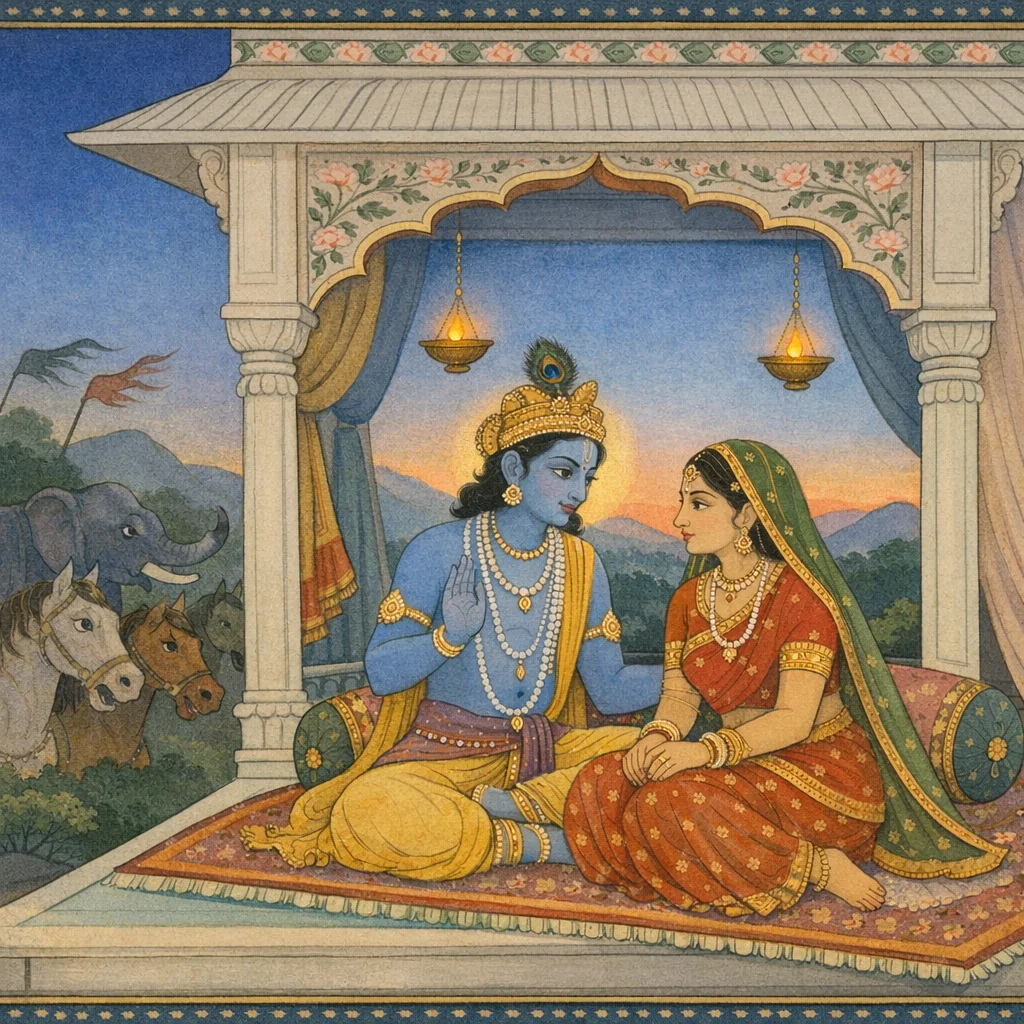
Adhyaya 78
दुर्योधनकवचविमर्शः (Duryodhana’s Armor and the Tactical Reassessment)
Upa-parva: Duryodhana-kavaca-prasaṅga (Armor and Countermeasure Episode)
Saṃjaya reports a close-range exchange where Duryodhana strikes Arjuna, the horses, and Vāsudeva, even severing the goad, signaling a momentary tactical advantage. Arjuna counters with successive volleys, yet the arrows appear to fall away without effect, producing an anomaly that Kṛṣṇa explicitly notes as unprecedented. Kṛṣṇa questions Arjuna’s condition and the possibility of fate’s timing, framing the failure as requiring explanation rather than mere effort. Arjuna attributes the protective arrangement to Droṇa, describing the kavaca as extraordinarily concealing and resistant—beyond ordinary penetration, even in mythic comparison. The narrative then shifts to escalation: Arjuna attempts empowered deployment, but Drauni (Aśvatthāman) uses an all-weapon-nullifying counter to sever the missiles, prompting Arjuna to acknowledge constraints on repeated use. Duryodhana renews pressure; Arjuna, angered, targets non-armor vulnerabilities by disabling horses, charioteer, bow, and chariot components, briefly rendering Duryodhana chariotless. Kaurava reinforcements encircle Arjuna; visibility collapses under astric rain and massed troops until Arjuna’s renewed bow-sound and Kṛṣṇa’s conch (Pāñcajanya) restore momentum, dispersing the press and provoking renewed counter-cries from allied protectors.
Chapter Arc: संजय धृतराष्ट्र से कहता है—अभिमन्यु-वध के बाद की वह रात भारी अपशकुनों से भरी थी; रूखे, दारुण, भय-सूचक वायु चले और कौरव-सेना के मन में अनिष्ट की छाया उतर आई। → देवगण तक नर-नारायण के क्रुद्ध होने की आशंका से व्यथित हो उठते हैं; उधर सूर्योदय पर सूर्य-मंडल में परिधि जैसे उत्पात दिखते हैं। कौरव-शिविर में हाथी-घोड़े मल-मूत्र त्यागते, रोते-चिल्लाते हैं—और अर्जुन की उग्र प्रतिज्ञा सुनकर भय और बढ़ जाता है कि जयद्रथ प्रभात तक नहीं बचेगा। → श्रीकृष्ण सुभद्रा को आश्वस्त करते हैं—अभिमन्यु ने क्षात्रधर्म को आगे रखकर सत्पुरुषों की गति पाई है; और जयद्रथ, बालघातक पापी, अपने अवलेप का फल शीघ्र पाएगा—चाहे मनुष्य, नाग, पिशाच, निशाचर, देव-असुर कोई भी उसे घेर लें, प्रभात में वह नहीं बचेगा। → शोक के बीच कृष्ण का वचन शोक को दिशा देता है: अभिमन्यु के यश और परलोक-गति का स्मरण, तथा प्रतिशोध को धर्म-युद्ध की मर्यादा में बाँधकर अर्जुन की प्रतिज्ञा को निर्णायक लक्ष्य बना देता है। कौरव-सेना भयाक्रांत होकर आने वाले दिन की अनिवार्य विपत्ति का अनुमान करती है। → प्रभात होते ही अर्जुन की प्रतिज्ञा की परीक्षा होगी—क्या कौरव-व्यूह जयद्रथ को बचा पाएगा, या अपशकुनों की भविष्यवाणी सत्य सिद्ध होगी?
Shlokas
Verse 1
अफ---रू- >> सप्तसप्ततितमो<ध्याय: नाना प्रकारके अशुभसूचक उत्पात, कौरव-सेनामें भय और श्रीकृष्णका अपनी बहिन सुभद्राको आश्वासन देना संजय उवाच तां निशां दुःखशोकार्तो नि:श्वसन्ताविवोरगौ । निद्रां नैवोपलेभाते वासुदेवधनंजयौ,संजय कहते हैं--राजन्! दुःख और शोकसे पीड़ित हुए श्रीकृष्ण और अर्जुन सर्पोंके समान लंबी साँस खींच रहे थे। उन दोनोंको उस रातमें नींद नहीं आयी
Sanjaya said: O King, tormented by grief and sorrow, Vāsudeva (Kṛṣṇa) and Dhanañjaya (Arjuna) lay through that night like serpents, breathing long, heavy sighs. Neither of them found sleep—an ominous stillness before the next surge of war.
Verse 2
नरनारायणोौ क्रुद्धौ ज्ञात्वा देवा: सवासवा: । व्यथिताश्रिन्तयामासु: किंस्विदेतद् भविष्यति,नर और नारायणको कुपित जान इन्द्रसहित सम्पूर्ण देवता व्यथित हो चिन्ता करने लगे; यह क्या होनेवाला है?
Sañjaya said: Knowing that Nara and Nārāyaṇa had become enraged, all the gods—together with Indra—were shaken with anxiety and began to ponder: “What, indeed, is about to happen now?”
Verse 3
ववुश्व॒ दारुणा वाता रूक्षा घोराभिशंसिन: । सकबन्धस्तथा<5<दित्ये परिधि: समदृश्यत,रूक्ष, भयसूचक एवं दारुण वायु बहने लगी। (दूसरे दिन सूर्योदय होनेपर) सूर्यमण्डलमें कबन्धयुक्त घेरा देखा गया
Sañjaya said: Harsh and dreadful winds began to blow—dry, rough, and ominous, as though foretelling calamity. And when the sun rose the next day, a ring was seen around the solar orb, marked with the appearance of a headless trunk (kabandha)—a fearful portent amid the unfolding war.
Verse 4
शुष्काशन्यश्न निष्पेतु: सनिर्घाता: सविद्युत: । चचाल चापि पृथिवी सशैलवनकानना,बिना वर्षके ही वज्र गिरने लगे। आकाशमें बिजलीकी चमकके साथ भयंकर गर्जना होने लगी। पर्वत, वन और काननोंसहित पृथ्वी काँपने लगी
Sañjaya said: Even without rain, thunderbolts fell from a dry sky, accompanied by crashing thunder and flashes of lightning. The earth itself trembled, together with its mountains, forests, and groves—an ominous upheaval in nature mirroring the moral disorder and mounting dread of the war.
Verse 5
चुक्षुभुश्न महाराज सागरा मकरालया: । प्रतिस्त्रोत: प्रवृत्ताश्न॒ तथा गन्तुं समुद्रगा:,महाराज! ग्राहोंके निवासस्थान समुद्रोंमें ज्वार आ गया। समुद्रगामिनी नदियाँ उलटी धारामें बहकर अपने उद्गमकी ओर जाने लगीं
Sañjaya said: O great king, the oceans—abodes of the makaras—were thrown into violent agitation; and the rivers that run to the sea began to flow against their current, as though turning back toward their sources. Such portents signal a profound disturbance in the moral and cosmic order brought on by the fury of war.
Verse 6
रथाश्वनरनागानां प्रवृत्तमधरोत्तरम् । क्रव्यादानां प्रमोदार्थ यमराष्ट्रविवृद्धये,मांसभक्षी प्राणियोंके आनन्द और यमराजके राज्यकी वृद्धिके लिये रथ, घोड़े, मनुष्य और हाथियोंके नीचे-ऊपरके ओषछ्ठ फड़कने लगे
Sañjaya said: “In that battle, the tumult rose and fell in waves among chariots, horses, men, and elephants—an upheaval that seemed to gladden the flesh-eating scavengers and to swell the dominion of Yama, the lord of death.”
Verse 7
वाहनानि शकुृम्मूत्रे मुमुचू रुरुदुश्न ह । तान् दृष्टवा दारुणान् सर्वनुत्पाताँललोमहर्षणान्,भरतश्रेष्ठ! हाथी, घोड़े आदि वाहन मल-मूत्र करने और रोने लगे। उन सब भयंकर एवं रोमांचकारी उत्पातोंको देखकर और महाबली सव्यसाची अर्जुनकी उस भयंकर प्रतिज्ञाको सुनकर आपके सभी सैनिक व्यथित हो उठे
Sanjaya said: The mounts and vehicles—elephants, horses, and the like—voided dung and urine and began to cry out. Seeing those dreadful, hair-raising portents, O best of the Bharatas, and hearing the terrible vow of the mighty Savyasācin (Arjuna), your entire host was shaken with anguish.
Verse 8
सर्वे ते व्यथिता: सैन्यास्त्वदीया भरतर्षभ । श्रुत्वा महाबलस्योग्रां प्रतिज्ञां सव्यसाचिन:,भरतश्रेष्ठ! हाथी, घोड़े आदि वाहन मल-मूत्र करने और रोने लगे। उन सब भयंकर एवं रोमांचकारी उत्पातोंको देखकर और महाबली सव्यसाची अर्जुनकी उस भयंकर प्रतिज्ञाको सुनकर आपके सभी सैनिक व्यथित हो उठे
Sañjaya said: O bull among the Bharatas, all your troops were shaken and distressed when they heard the fierce vow of the mighty Savyasācin (Arjuna).
Verse 9
अथ कृष्णं महाबाहुरब्रवीत् पाकशासनि: । आश्वासय सुभद्रां त्वं भगिनीं स्नुषया सह,इधर इन्द्रकुमार महाबाहु अर्जुनने भगवान् श्रीकृष्णसे कहा--“माधव! आप पुत्रवधू उत्तरासहित अपनी बहिन सुभद्राको धीरज बँधाइये। उत्तरा और उसकी सखियोंका शोक दूर कीजिये। प्रभो! शान्तिपूर्ण, सत्य और युक्तियुक्त वचनोंद्वारा इन सबको आश्वासन दीजिये”
Sañjaya said: Then the mighty-armed son of Indra (Arjuna) spoke to Kṛṣṇa: “Console your sister Subhadrā together with her daughter-in-law. With calm, truthful, and well-reasoned words, remove the grief of Uttarā and her companions.”
Verse 10
स््नुषां चास्या वयस्याश्व विशोका: कुरु माधव । साम्ना सत्येन युक्तेन वचसा55श्वासय प्रभो,इधर इन्द्रकुमार महाबाहु अर्जुनने भगवान् श्रीकृष्णसे कहा--“माधव! आप पुत्रवधू उत्तरासहित अपनी बहिन सुभद्राको धीरज बँधाइये। उत्तरा और उसकी सखियोंका शोक दूर कीजिये। प्रभो! शान्तिपूर्ण, सत्य और युक्तियुक्त वचनोंद्वारा इन सबको आश्वासन दीजिये”
Sañjaya said: “O Mādhava, make her daughter-in-law and her young companions free from grief. O Lord, console them with words that are gentle, truthful, and well-reasoned.”
Verse 11
ततोडर्जुनगृहं गत्वा वासुदेव: सुदुर्मना: । भगिनीं पुत्रशोकार्तामाश्वचासयत दुःखिताम्,तब भगवान् श्रीकृष्ण अत्यन्त उदास मनसे अर्जुनके शिविरमें गये और पुत्रशोकसे पीड़ित हुई अपनी दुखिया बहिनको आश्वासन देने लगे
Sañjaya said: Then Vāsudeva, heavy with sorrow, went to Arjuna’s quarters. There he sought to console his sister, who was afflicted by grief for her son and overwhelmed with distress. In the midst of war’s harsh consequences, Kṛṣṇa’s act underscores a dharmic duty: to steady the bereaved, to speak words that restore courage and moral clarity when personal loss threatens to break one’s resolve.
Verse 12
वायुदेव उवाच मा शोकं कुरु वार्ष्णेयि कुमारं प्रति सस्नुषा । सर्वेषां प्राणिनां भीरु निष्ैषा कालनिर्मिता,भगवान् श्रीकृष्ण बोले--वृष्णिनन्दिनी! तुम और पुत्रवधू उत्तरा कुमार अभिमन्युके लिये शोक न करो। भीरु! काल एक दिन सभी प्राणियोंकी ऐसी ही अवस्था कर देता है
Vāyu said: “Do not grieve, O Vārṣṇeyī. You and your daughter-in-law Uttarā should not mourn the young Abhimanyu. O timid one, Kāla—Time and Fate—has ordained that all living beings must one day come to such a condition.”
Verse 13
/// | ( ३२३४॥॥॥ ४८८ £2: कुले जातस्य धीरस्य क्षत्रियस्य विशेषत: । सदृशं मरणं होतत् तव पुत्रस्य मा शुच:,तुम्हारा पुत्र उत्तम कुलमें उत्पन्न धीर-वीर और विशेषत: क्षत्रिय था। यह मृत्यु उसके योग्य ही हुई है; इसलिये शोक न करो
Vāyu said: “Your son was born in a noble lineage, steadfast and courageous—above all, a kṣatriya. This kind of death is fitting for him; therefore, do not grieve.”
Verse 14
दिष्ट्या महारथो धीर: पितुस्तुल्यपराक्रम: । क्षात्रेण विधिना प्राप्तो वीराभिलषितां गतिम्,यह सौभाग्यकी बात है कि पिताके तुल्य पराक्रमी धीर महारथी अभिमन्यु क्षत्रियोचित कर्तव्यका पालन करके उस उत्तम गतिको प्राप्त हुआ है, जिसकी वीर पुरुष अभिलाषा करते हैं
Vāyu said: “Fortunate indeed! The steadfast great chariot-warrior, equal in valor to his father, has—by fulfilling the warrior’s ordained duty—attained that exalted state which heroic men long for.”
Verse 15
जित्वा सुबहुश: शत्रून् प्रेषयित्वा च मृत्यवे । गत: पुण्यकृतां लोकान् सर्वकामदुहो$क्षयान्,वह बहुत-से शत्रुओंको जीतकर और बहुतोंको मृत्युके लोकमें भेजकर पुण्यात्माओंको प्राप्त होनेवाले उन अक्षय लोकोंमें गया है, जो सम्पूर्ण कामनाओंको पूर्ण करनेवाले हैं
Having conquered many enemies and dispatched many to the realm of Death, he has departed to the imperishable worlds attained by the doers of merit—worlds that yield the fulfillment of every worthy desire.
Verse 16
तपसा ब्रह्मचर्येण श्रुतेन प्रज्ञयापि च । सन््तो यां गतिमिच्छन्ति तां प्राप्तस्तव पुत्रक:,तपस्या, ब्रह्मचर्य, शास्त्रज्ञान और सदबुद्धिके द्वारा साधुपुरुष जिस गतिको पाना चाहते हैं, वही गति तुम्हारे पुत्रको भी प्राप्त हुई है
By austerity, brahmacarya’s disciplined purity, sacred learning, and discerning wisdom, your son has attained that very state which the righteous seek.
Verse 17
वीरसूर्वीरपत्नी त्वं वीरजा वीरबान्धवा । मा शुचस्तनयं भद्रे गत: स परमां गतिम्,सुभद्रे! तुम वीरमाता, वीरपत्नी, वीरकन्या और वीर भाइयोंकी बहिन हो। तुम पुत्रके लिये शोक न करो। वह उत्तम गतिको प्राप्त हुआ है
Vāyu said: “You are the mother of a hero, the wife of a hero, born in a heroic line, and the kinswoman of heroes. Do not grieve for your son, noble lady; he has departed to the highest state.”
Verse 18
प्राप्स्यते चाप्पसौ पाप: सैन्धवो बालघातक: । अस्यावलेपस्य फलं ससुहृद्गणबान्धव:,वरारोहे! बालककी हत्या करानेवाला वह पापकर्मा पापी सिंधुराज जयद्रथ रात बीतनेपर प्रातःकाल होते ही अपने सुहृदों और बन्धु-बान्धवोंसहित इस अपराधका फल पायेगा। वह अमरावतीपुरीमें जाकर छिप जाय तो भी अर्जुनके हाथसे उसका छुटकारा नहीं होगा
Vāyu said: “That sinful Saindhava—slayer of a child—will meet his end in the waters. O fair-hipped lady, together with his friends and kinsmen he will reap the fruit of this arrogance. Even if he were to hide in Amarāvatī itself, he will not escape Arjuna’s hand.”
Verse 19
व्युष्टायां तु वरारोहे रजन्यां पापकर्मकृत् । न हि मोक्ष्यति पार्थात् स प्रविष्टो5प्पमरावतीम्,वरारोहे! बालककी हत्या करानेवाला वह पापकर्मा पापी सिंधुराज जयद्रथ रात बीतनेपर प्रातःकाल होते ही अपने सुहृदों और बन्धु-बान्धवोंसहित इस अपराधका फल पायेगा। वह अमरावतीपुरीमें जाकर छिप जाय तो भी अर्जुनके हाथसे उसका छुटकारा नहीं होगा
Vāyu said: “O noble lady, when this night has passed and morning breaks, that evildoer will not escape Pārtha (Arjuna). Even if he were to enter and hide in Amarāvatī itself, he would still find no release from Arjuna’s hand. The slayer of a child, Jayadratha, the king of Sindhu, will soon—together with his friends and kinsmen—reap the fruit of this crime.”
Verse 20
श्वरः शिर: श्रोष्यसे तस्य सैन्धवस्य रणे हृतम् । समन्तपज्चकाद् बाहूं विशोका भव मा रुद:,तुम कल ही सुनोगी कि रणक्षेत्रमें जयद्रथका मस्तक काट लिया गया है और वह समन्तपंचक क्षेत्रसे बाहर जा गिरा है। अत: शोक त्याग दो और रोना बंद करो
“Tomorrow you will hear that the head of that Sindhu prince (Jayadratha) has been cut off in battle and has fallen beyond the Samantapañcaka field. Therefore, cast off grief; do not weep.”
Verse 21
क्षत्रधर्म पुरस्कृत्य गत: शूरः सतां गतिम् । यां गतिं प्राप्तुयामेह ये चान्ये शस्त्रजीविन:,शूरवीर अभिमन्युने क्षत्रिय-धर्मको आगे रखकर सत्पुरुषोंकी गति पायी है, जिसे हमलोग और इस संसारके दूसरे शस्त्रधारी क्षत्रिय भी पाना चाहते हैं
Vāyu said: “Placing the warrior’s dharma in the forefront, that hero has attained the destined course of the righteous. It is that very state which we—and the other weapon-bearing warriors in this world—aspire to reach.”
Verse 22
व्यूढोरस्को महाबाहुरनिवर्ती रथप्रणुत् । गतस्तव वरारोहे पुत्र: स्वर्ग ज्वरं जहि,सुन्दरी! चौड़ी छाती और विशाल भुजाओंसे सुशोभित युद्धसे पीछे न हटनेवाला तथा शत्रुपक्षेके रथियोंपर विजय पानेवाला तुम्हारा पुत्र स्वर्गलोकमें गया है। तुम चिन्ता छोड़ो
Vāyu said: “Your son—broad-chested, mighty-armed, unwavering in battle, and a conqueror of the enemy’s chariot-warriors—has gone to heaven, O fair-hipped lady. Cast off your fever of grief; be at peace.”
Verse 23
अनुयातश्च पितरं मातृपक्षं च वीर्यवान् सहस्रशो रिपून् हत्वा हत: शूरो महारथ:,बलवान, शूरवीर और महारथी अभिमन्यु पितृकुल तथा मातृकुलकी मर्यादाका अनुसरण करते हुए सहस्रों शत्रुओंको मारकर मरा है
Vāyu said: “That mighty hero followed the noble code of his father’s line and his mother’s line. After slaying enemies by the thousand, the valiant warrior—an eminent chariot-fighter—has himself fallen. His death stands as a testimony to steadfast loyalty to family dharma and fearless conduct in battle.”
Verse 24
आश्वासय स्नुषां राज्ञि मा शुच: क्षत्रिये भृशम् । श्र: प्रियं न कक विशोका भव नन्दिनि,रानी बहिन! चिन्ता छोड़ो और बहूको धीरज बँधाओ। अपने कुलको आनन्दित करनेवाली क्षत्रियकन्ये! कल अत्यन्त प्रिय समाचार सुनकर शोकरहित हो जाओ
Vāyu said: “Console your daughter-in-law, O queen; do not grieve excessively, O Kṣatriya lady. Tomorrow, on hearing welcome news from us, become free from sorrow, O dear daughter who brings joy to her lineage.”
Verse 25
यत् पार्थेन प्रतिज्ञातं तत् तथा न तदन्यथा । चिकीर्षितं हि ते भर्तुर्न भवेज्जातु निष्फलम्,अर्जुनने जिस बातके लिये प्रतिज्ञा कर ली है, वह उसी रूपमें पूर्ण होगी। उसे कोई पलट नहीं सकता। तुम्हारे स्वामी जो कुछ करना चाहते हैं, वह कभी निष्फल नहीं होता
Whatever Pārtha (Arjuna) has vowed will be fulfilled exactly so, and not otherwise; it cannot be reversed. For what your lord intends to accomplish never becomes fruitless—his resolve inevitably bears its intended result.
Verse 26
यदि च मनुजपन्नगा: पिशाचा रजनिचरा: पतगाः सुरासुराश्न । रणगतमभियान्ति सिन्धुराजं॑ न स भविता सह तैरपि प्रभाते,यदि मनुष्य, नाग, पिशाच, निशाचर, पक्षी, देवता और असुर भी रणक्षेत्रमें आये हुए सिंधुराज जयद्रथकी सहायताके लिये आ जायँ तो भी वह कल उन सहायकोंके साथ ही जीवनसे हाथ धो बैठेगा
Vāyu said: Even if men, serpents, piśācas, night-roamers, birds, and even the gods and asuras were to come onto the battlefield to aid the king of Sindhu, Jayadratha—still, at dawn he will not survive; he will perish even together with all such helpers. The verse underscores the moral certainty of consequence in war: when one stands on the side of adharma and becomes the instrument of grave wrongdoing, no external power or alliance can avert the destined retribution.
Verse 77
इति श्रीमहा भारते द्रोणपर्वणि प्रतिज्ञापर्वणि सुभद्राश्चासने सप्तसप्ततितमो<ध्याय:
Thus ends the seventy-seventh chapter in the Pratijñā-parvan section of the Droṇa Parva of the revered Mahābhārata, known as “Subhadrā’s Consolation.” This closing colophon signals the completion of a narrative unit in which vows and their moral weight are foregrounded, and the human cost of war is acknowledged through the act of consoling the bereaved.
Verse 515
हैँ |। हि
The transmitted text here is fragmentary and does not preserve a complete, meaningful utterance. As it stands, it cannot be translated into coherent narrative or ethical instruction without consulting a corrected reading from the Gita Press edition or a critical apparatus.
Frequently Asked Questions
The dilemma is operational and ethical: whether to persist with conventional force when it proves ineffective, or to shift to specialized means that intensify escalation—balancing kṣatriya resolve with disciplined restraint and accurate diagnosis.
The chapter models crisis reasoning: recognize anomalies, interrogate causes, and adapt method. Competence is shown not only in strength but in analytical recalibration and coordinated action under uncertainty.
No explicit phalaśruti appears in the provided passage; the meta-level significance is implicit—understanding protective systems (kavaca) and counter-systems (astric nullification) as narrative instruments for examining limits of agency and the necessity of adaptive judgment.