Adhyaya 166
Aśvatthāmā’s Lamentation, Vow of Retaliation, and the Manifestation of the Nārāyaṇāstra (द्रोणपर्व, अध्याय १६६)
Upa-parva: Nārāyaṇāstra-prādurbhāva (Episode of the Manifestation/Deployment of the Nārāyaṇa Weapon)
Dhṛtarāṣṭra asks Saṃjaya what Aśvatthāmā said upon hearing that his aged brāhmaṇa father Droṇa, a master of multiple astras, was killed through stratagem by Dhṛṣṭadyumna. Saṃjaya describes Aśvatthāmā’s grief and rage, his address to Duryodhana, and his moral framing: death in fair combat is endurable, but Droṇa’s disarmament and public humiliation are presented as intolerable injury. Aśvatthāmā pledges to pursue the destruction of the Pāñcālas and specifically to kill Dhṛṣṭadyumna, asserting exceptional martial capacity and claiming access to a weapon unknown even to leading Pāṇḍava figures. He recounts the origin of the Nārāyaṇāstra as a divine boon received through Droṇa’s prior worship and notes cautions regarding its use and the modes by which such a weapon may be pacified or withdrawn. The chapter closes with the Kaurava forces rallying amid loud instruments of war as Aśvatthāmā ritually prepares and brings forth the Nārāyaṇāstra.
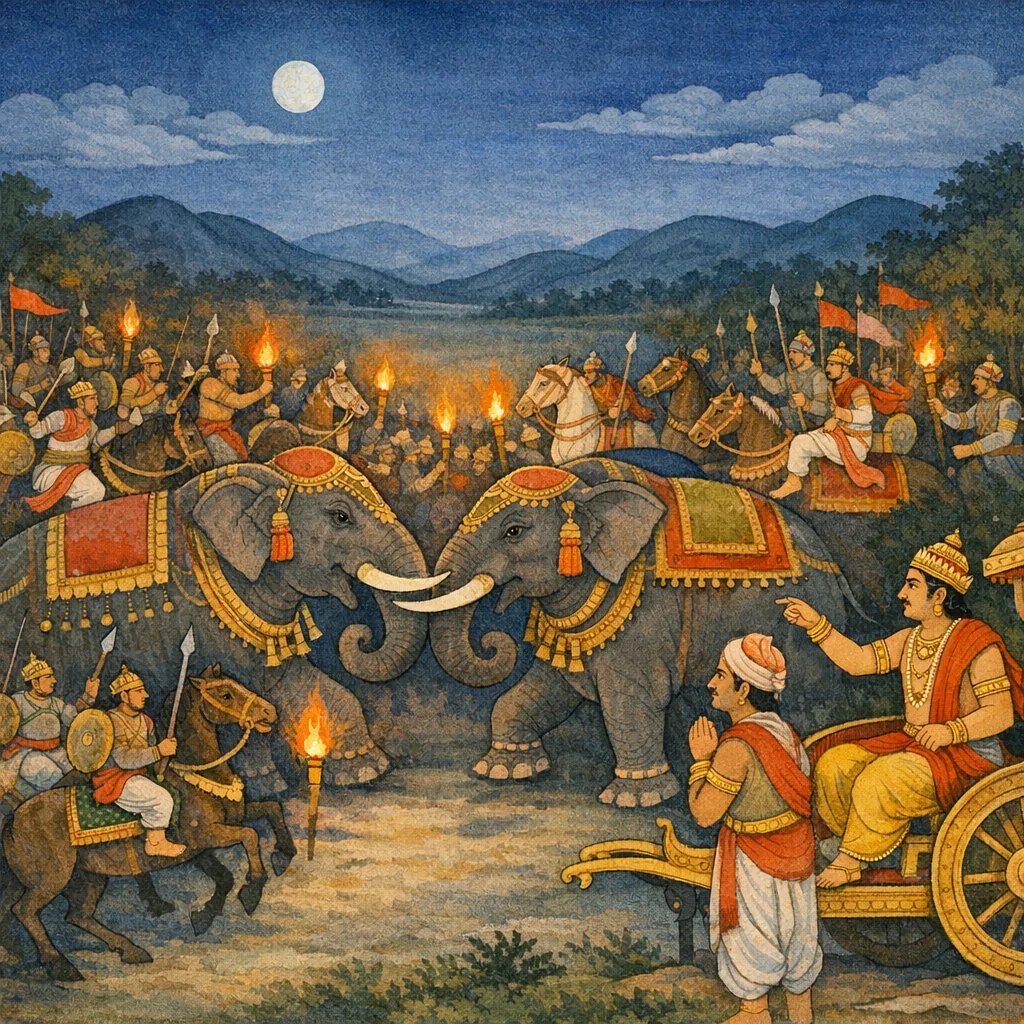
Chapter Arc: संजय धृतराष्ट्र को रात्रि-युद्ध का दृश्य सुनाते हैं—दोनों सेनाएँ शस्त्र-प्रास-खड्ग धारण किये, परस्पर अपराध-बोध और प्रतिशोध से भरी दृष्टि से आमने-सामने खड़ी हैं। → हजारों मशालों का प्रकाश, स्वर्ण-दण्ड, रत्न-जटित अलंकरण और गन्ध-तैल से सिक्त दण्डों के बीच युद्धभूमि दिन-सी उजली हो उठती है; फिर दल-दल में संकुल संग्राम छिड़ता है—हाथी हाथियों से, घोड़े घोड़ों से, वीर वीरों से पृथक्-पृथक् भिड़ते हैं। → धृतराष्ट्र की व्याकुल जिज्ञासा के उत्तर में संजय दुर्योधन की मानसिकता उभारते हैं—वह शत्रुओं को ‘अव्यग्र, हृष्ट, अपराजित’ मानकर अपने सूत से शिकायत करता है और निर्णायक आदेश देता है: ‘द्रोण महारथी की रक्षा करो’; इसी आदेश के साथ रात्रि में घोर युद्ध पूर्ण वेग से प्रवर्तित होता है। → अध्याय का अंत युद्ध के ‘प्रवर्तन’ और ‘संकुलता’ पर टिकता है—रात्रि-युद्ध स्थापित हो जाता है, सेनाएँ परस्पर-जिगीषा से उलझ जाती हैं, और द्रोण की रक्षा को केंद्र बनाकर कौरव-रणनीति स्पष्ट हो जाती है। → रात्रि के इस घोर संग्राम में द्रोण की रक्षा हेतु कौन-सा दल किसे रोक पाएगा—और किस वीर का पतन निकट है—यह अगले प्रसंग पर छोड़ दिया जाता है।
Shlokas
Verse 1
भीसस्नआ तन (2) आमने चतुःषष्ट्याधेकशततमो< ध्याय: दोनों सेनाओंका घमासान बुद्ध और दुध और दुर्योधनका द्रोणाचार्यकी रक्षाके लिये [को आदेश संजय उवाच प्रकाशिते तदा लोके रजसा तमसा<<वृते । समाजग्मुरथो वीरा: परस्परवधैषिण:,संजय कहते हैं--राजन्! उस समय धूल और अन्धकारसे ढकी हुई रणभूमिमें इस प्रकार उजेला होनेपर एक-दूसरेके वधकी इच्छावाले वीर सैनिक आपसमें भिड़ गये
Sanjaya said: “O King, at that time, when the battlefield—shrouded in dust and darkness—became momentarily lit, the heroic warriors, intent on one another’s destruction, surged together and closed in for mutual slaughter.”
Verse 2
ते समेत्य रणे राजन् शस्त्रप्रासासिधारिण: । परस्परमुदैक्षन्त परस्परकृतागस:,महाराज! समरांगणमें परस्पर भिड़कर वे नाना प्रकारके शस्त्र, प्रास और खड़्ग आदि धारण करनेवाले योद्धा, जो परस्पर अपराधी थे, एक-दूसरेकी ओर देखने लगे
Sañjaya said: O King, having come face to face in battle, those warriors—bearing weapons, spears, and swords—closed with one another and then looked upon each other, each regarding the other as an offender. In that charged pause, mutual blame and the burden of wrongdoing hung over the combatants even as the clash was about to unfold.
Verse 3
प्रदीपानां सहसैश्ष॒ दीप्यमानै: समनन््तत: । रत्नाचितै: स्वर्णदण्डैर्गन्धतैलावसिज्चितै:,चारों ओर हजारों मशालें जल रही थीं। उनके डंडे सोनेके बने हुए थे और उनमें रत्न जड़े हुए थे। उन मशालोंपर सुगन्धित तेल डाला जाता था
Sañjaya said: All around, thousands of lamps blazed brightly. Their shafts were of gold, inlaid with gems, and they were continually fed with fragrant oil—an opulent illumination set amid the grim theatre of war, where outward splendor contrasts with the inner darkness of violence and grief.
Verse 4
देवगन्धर्वदीपाद्यै: प्रभाभिरधिकोज्ज्वलै: । विरराज तदा भूमिग्रहैद्यौरिव भारत,भारत! उन्हींमें देवताओं और गन्धरवोंके भी दीप आदि जल रहे थे, जो अपनी विशेष प्रभाके कारण अधिक प्रकाशित हो रहे थे। उनके द्वारा उस समय रणभूमि नक्षत्रोंसे आकाशकी भाँति सुशोभित हो रही थी
Then, among them, the lamps and torches of the gods and the Gandharvas were burning too—more dazzling than all others by their special radiance. By that light the battlefield shone like the star-strewn sky, O Bharata.
Verse 5
उल्काशतै: प्रज्वलितै रणभूमिवव्यराजत । दहामानेव लोकानामभावे च वसुंधरा,सैकड़ों प्रजजलित उल्काओं (मशालों)-से वह रणभूमि ऐसी शोभा पा रही थी, मानो प्रलयकालमें यह सारी पृथ्वी दग्ध हो रही हो
Sañjaya said: The battlefield shone brilliantly, lit by hundreds of blazing firebrands, as though—at the world’s end—the earth itself were burning and all beings were being consumed.
Verse 6
व्यदीप्यन्त दिश: सर्वा: प्रदीपैस्तै: समन््ततः । वर्षाप्रदोषे खद्योतैर्व॒ता वृक्षा इवाबभु:,उन प्रदीपोंसे सब ओर सारी दिशाएँ ऐसी प्रदीप्त हो उठीं, मानो वर्षाके सायंकालमें जुगनुओंसे घिरे हुए वृक्ष जगमगा रहे हों
Sañjaya said: All the directions blazed on every side with those lamps, as though, at the dusk of the rainy season, trees encircled by fireflies were shimmering with light.
Verse 7
असज्जन्त ततो वीरा वीरेष्वेव पृथक् पृथक् नागा नागै: समाजम्मुस्तुरगा हयसादिभि:,उस समय वीरगण विपक्षी वीरोंके साथ पृथक्-पृथक् भिड़ गये। हाथी हाथियोंके और घुड़सवार घुड़सवारोंके साथ जूझने लगे
Sañjaya said: Then the warriors closed in—each hero engaging an opposing hero in separate, single clashes. Elephants grappled with elephants, and the horsemen fought horsemen, as the battle lines sorted themselves by like against like.
Verse 8
रथा रथवरैरेव समाजम्मुर्मुदा युता: । तस्मिन् रात्रिमुखे घोरे तव पुत्रस्य शासनात्
Sañjaya said: The chariots, led by the foremost of chariot-warriors, gathered together and rejoiced, filled with elation. In that dreadful onset of night, they did so at the command of your son.
Verse 9
चतुरजड्भस्य सैन्यस्य सम्पातश्न॒ महानभूत् | इसी प्रकार रथी श्रेष्ठ रथियोंके साथ प्रसन्नतापूर्वक युद्ध करने लगे। उस भयंकर प्रदोषकालमें आपके पुत्रकी आज्ञासे वहाँ चतुरंगिणी सेनामें भारी मारकाट मच गयी ।। ततोडर्जुनो महाराज कौरवाणामनीकिनीम्
Sañjaya said: A tremendous clash arose in that fourfold army. Likewise, the foremost chariot-warriors engaged the other chariot-warriors with fierce resolve. In that dreadful twilight, at your son’s command, a great slaughter broke out there within the four-limbed host. Then, O King, Arjuna advanced against the Kauravas’ battle-array…
Verse 10
धृतराष्ट्र रवाच तस्मिन् प्रविष्टे संरब्धे मम पुत्रस्य वाहिनीम्
Dhṛtarāṣṭra said: “When he had entered and, inflamed with wrath, fell upon the army of my son…”
Verse 11
अमृष्यमाणे दुर्धर्षे कथमासीन्मनो हि व: । धृतराष्ट्रने पूछा--संजय! क्रोध और अमर्षमें भरे हुए दुर्धर्ष वीर अर्जुन जब मेरे पुत्रकी सेनामें प्रविष्ट हुए, उस समय तुमलोगोंके मनकी कैसी अवस्था हुई? ।। किमकुर्वत सैन्यानि प्रविष्टे परपीडने
Sañjaya said: “When the unassailable Arjuna, unable to endure the affront and filled with wrathful indignation, entered the army of your sons to crush the enemy, what was the state of your men’s minds then? And what did the troops do when that tormentor of foes had broken into their ranks?”
Verse 12
के चैनं समरे वीरें प्रत्युद्ययुररिंदमा:
Sañjaya said: “And which heroes, in that battle, rose up to confront him—those subduers of enemies?”
Verse 13
के<रक्षन् दक्षिणं चक्रं के च द्रोणस्य सव्यत:,कौन-कौन-से योद्धा द्रोणाचार्यके रथके दाहिने पहियेकी रक्षा करते थे और कौन-कौन- से बायें पहियेकी? कौन-कौन-से वीर वीरोंका वध करनेवाले द्रोणाचार्यके पृष्ठभागके रक्षक थे और रणमें शत्रुसैनिकोंका संहार करनेवाले कौन-कौन-से योद्धा आचार्यके आगे-आगे चलते थे?
Sañjaya said: “Who guarded Droṇa’s right wheel, and who protected his left? Which heroes—slayers of heroes—secured the rear of Droṇa’s chariot? And which warriors, after cutting down the enemy ranks in battle, advanced in front of the preceptor as his vanguard?”
Verse 14
के पृष्ठतश्नाप्पयभवन् वीरा वीरान् विनिध्नतः । के पुरस्तादगच्छन्त निध्नन्तः शात्रवान् रणे,कौन-कौन-से योद्धा द्रोणाचार्यके रथके दाहिने पहियेकी रक्षा करते थे और कौन-कौन- से बायें पहियेकी? कौन-कौन-से वीर वीरोंका वध करनेवाले द्रोणाचार्यके पृष्ठभागके रक्षक थे और रणमें शत्रुसैनिकोंका संहार करनेवाले कौन-कौन-से योद्धा आचार्यके आगे-आगे चलते थे?
Sañjaya said: Which heroes guarded the rear of Droṇa’s chariot—those mighty men who were striking down mighty opponents? Which warriors went in front of the preceptor, advancing in battle and slaughtering the enemy host? (And likewise, who protected the right wheel and who the left wheel of Droṇa’s chariot?)
Verse 15
यत् प्राविशन्महेष्वास: पज्चालानपराजित: । नृत्यन्निव नरव्याप्रो रथमार्गेषु वीर्यवान्,महाधनुर्धर, पराक्रमी एवं किसीसे पराजित न होनेवाले पुरुषसिंह द्रोणाचार्यने रथके मार्गोंपर नृत्य-सा करते हुए वहाँ पांचालोंकी सेनामें प्रवेश किया था
Sañjaya said: The unconquered, mighty archer—Droṇa, a tiger among men—entered the Pañcāla host, moving along the chariot-lanes as though dancing, displaying fearless prowess amid the ordered paths of war.
Verse 16
यो ददाह शरैद्रोण: पञ्चालानां रथव्रजान् | धूमकेतुरिव क्रुद्ध: कथं मृत्युमुपेयिवान्,जिन आचार्य द्रोणने क्रोधमें भरे हुए अग्निदेवके समान अपने बाणोंकी ज्वालासे पांचाल महारथियोंके समुदायोंकों जलाकर भस्म कर दिया था, वे कैसे मृत्युको प्राप्त हुए?
Sañjaya said: “How did Droṇa—who, in wrath like a blazing comet, burned the gathered chariot-hosts of the Pāñcālas with his arrows—come to meet death?”
Verse 17
अव्यग्रानेव हि परान् कथयस्यपराजितान् । हृष्टानुदीर्णान् संग्रामे न तथा सूत मामकान्,सूत! तुम मेरे शत्रुओंको तो व्यग्रतारहित, अपराजित, हर्ष और उत्साहसे युक्त तथा संग्राममें वेगपूर्वक आगे बढ़नेवाले ही बता रहे हो; परंतु मेरे पुत्रोंकी ऐसी अवस्था नहीं बताते
O Sūta! You speak of my enemies as untroubled and unconquered, filled with joy and ardor, surging forward in battle; yet you do not describe my sons as being in such a state.
Verse 18
हतांश्वैव विदीर्णाश्ष विप्रकीर्णाक्ष शंससि । रथिनो विरथांश्वैव कृतान् युद्धेषु मामकान्,सभी युद्धोंमें मेरे पक्षके रथियोंको तुम हताहत, छिन्न-भिन्न, तितर-बितर तथा रथहीन हुआ ही बता रहे हो
Sañjaya said: “You keep reporting that in the battles my side’s chariot-warriors have had their horses slain, have been torn apart, scattered in confusion, and have been reduced to fighting without their chariots.”
Verse 19
संजय उवाच द्रोणस्य मतमाज्ञाय योद्धुकामस्य तां निशाम् | दुर्योधनो महाराज वश्यान् भ्रातृुनुवाच ह
Sañjaya said: Having understood Droṇa’s intention—his resolve to fight through that night—King Duryodhana addressed his brothers, those who were under his command.
Verse 20
कर्ण च वृषसेनं च मद्रराजं॑ च कौरव । दुर्धर्ष दीर्घबाहुं च ये च तेषां पदानुगा:
Sañjaya said: “O Kaurava, Karṇa, and Vṛṣasena, and the king of Madra, and the hard-to-subdue Durdharṣa of long arms—along with all those who followed in their ranks.”
Verse 21
“तुम सब लोग सावधान रहकर पराक्रमपूर्वक पीछेकी ओरसे द्रोणाचार्यकी रक्षा करो। कृतवर्मा उनके दाहिने पहियेकी और राजा शल्य बायें पहियेकी रक्षा करें!
Sañjaya said: “All of you, stay alert and, with resolute valor, protect Droṇācārya from the rear. Let Kṛtavarmā guard the right wheel-flank, and let King Śalya guard the left wheel-flank.”
Verse 22
त्रिगर्तानां च ये शूरा हतशिष्टा महारथा: । तांश्वैव पुरत: सर्वान् पुत्रस्ते समचोदयत्,राजन! त्रिगर्तोंके जो शूरवीर महारथी मरनेसे शेष रह गये थे, उन सबको आपके पुत्रने द्रोणाचार्यके आगे-आगे चलनेकी आज्ञा देते हुए कहा--
Sañjaya said: “O King, your son urged on all those heroic Trigarta great chariot-warriors who had survived the slaughter, ordering them to go in the very front.”
Verse 23
संजय कहते हैं--कुरुनन्दन महाराज! युद्धकी इच्छावाले द्रोणाचार्यका मत जानकर दुर्योधनने उस रातमें अपने वशवर्ती भाइयोंसे तथा कर्ण, वृषसेन, मद्रराज शल्य, दुर्धर्ष, दीर्घबाहु तथा जो-जो उनके पीछे चलनेवाले थे, उन सबसे इस प्रकार कहा-- ।। द्रोणं यत्ता: पराक्रान्ता: सर्वे रक्षन्तु पृष्ठत: । हार्दिक्यो दक्षिणं चक्र शल्यश्लैवोत्तरं तथा,आचार्यो हि सुसंयत्तो भृशं यत्ताश्न पाण्डवा: | त॑ रक्षत सुसंयत्ता निध्नन्तं शात्रवान् रणे “आचार्य पूर्णतः सावधान हैं, पाण्डव भी विजयके लिये विशेष यत्नशील एवं सावधान हैं। तुमलोग रणभूमिमें शत्रु-सैनिकोंका संहार करते हुए आचार्यकी पूरी सावधानीके साथ रक्षा करो
Sañjaya said: “O Kurunandana king! Having understood the battle-plan and resolve of Droṇācārya, Duryodhana, that night, addressed his obedient brothers and also Karṇa, Vṛṣasena, the king of Madra Śalya, Durdharṣa, Dīrghabāhu, and all who followed them. He said: ‘Let all the valiant, fully prepared, protect Droṇa from the rear. Hārdikya should form the right wing, and Śalya the northern side. The teacher is completely vigilant, and the Pāṇḍavas too are strenuously intent on victory. Therefore, remain well-arrayed and guard him with utmost care as he strikes down the enemy hosts in battle.’”
Verse 24
द्रोणो हि बलवान युद्धे क्षिप्रहस्त: प्रतापवान् । निर्जयेत् त्रिदशान् युद्धे किमु पार्थानू ससोमकान्,क्योंकि द्रोणाचार्य बलवान, प्रतापी और युद्धमें शीघ्रतापूर्वक हाथ चलानेवाले हैं। वे संग्राममें देवताओंको भी परास्त कर सकते हैं; फिर कुन्तीके पुत्रों और सोमकोंकी तो बात ही क्या है?
Sañjaya said: “Droṇa is indeed mighty in battle—swift of hand and radiant in prowess. He could conquer even the gods in war; how much more, then, the sons of Pṛthā together with the Somakas?”
Verse 25
ते यूयं सहिता: सर्वे भृशं यत्ता महारथा: । द्रोणं रक्षत पाञ्चालादू धृष्टद्युम्नान्महारथात्,“इसलिये तुम सब महारथी एक साथ होकर पूर्णतः प्रयत्नशील रहते हुए पांचाल महारथी धृष्टद्युम्नसे द्रोणाचार्यकी रक्षा करो
Sañjaya said: “Therefore, all of you—great chariot-warriors—stand united and exert yourselves with utmost effort. Protect Droṇācārya from the Pāñcāla hero, the mighty Dhṛṣṭadyumna.”
Verse 26
पाण्डवीयेषु सैन्येषु न तं पश्याम कठ्चन । यो योधयेद् रणे द्रोणं धृष्टद्युम्नादृते नृप:,“हम पाण्डवोंकी सेनाओंमें धृष्टद्युम्मके सिवा ऐसे किसी वीर नरेशको नहीं देखते, जो रणक्षेत्रमें द्रोणाचार्यके साथ युद्ध कर सके
Sañjaya said: “O King, among the armies of the Pāṇḍavas we do not see anyone at all—except Dhṛṣṭadyumna—who could engage Droṇa in battle.”
Verse 27
तस्मात् सर्वात्मना मन्ये भारद्वाजस्य रक्षणम् । सुगुप्त: पाण्डवान् हन्यात् सृञ्जयांश्व ससोमकान्
Sañjaya said: “Therefore, with my whole conviction, I hold that Bhāradvāja’s son must be protected. If he is well-guarded, he will strike down the Pāṇḍavas, and the Sṛñjayas along with the Somakas.”
Verse 28
“अतः मैं सब प्रकारसे द्रोणाचार्यकी रक्षा करना ही इस समय आवश्यक कर्तव्य मानता हूँ। वे सुरक्षित रहें तो पाण्डवों, सूंजयों और सोमकोंका भी संहार कर सकते हैं ।। सृञ्जयेष्वथ सर्वेषु निहतेषु चमूमुखे । धृष्टय्युम्नं रणे द्रौणिहनिष्पति न संशय:,'युद्धके मुहानेपर सारे सूंजयोंके मारे जानेपर अश्वत्थामा रणभूमिमें धृष्टद्युम्नको भी मार डालेगा, इसमें संशय नहीं है
Sañjaya said: “Therefore, I judge it to be the necessary duty at this moment to protect Droṇācārya by every means. If he remains secure, he can still bring about the destruction of the Pāṇḍavas, the Sṛñjayas, and the Somakas as well. And when all the Sṛñjayas have been slain at the very front of the army, Aśvatthāmā (the son of Droṇa) will surely kill Dhṛṣṭadyumna in battle—there is no doubt of it.”
Verse 29
तथार्जुनं च राधेयो हनिष्यति महारथ: । भीमसेनमहं चापि युद्धे जेष्यामि दीक्षित:
Sañjaya said: “In the same way, the great chariot-warrior Rādheya (Karna) will slay Arjuna; and I too, having taken a solemn vow, will defeat Bhīmasena in battle.”
Verse 30
सो<यं मम जयो व्यक्तो दीर्घकालं भविष्यति । तस्माद् रक्षत संग्रामे द्रोणमेव महारथम्,“इस प्रकार अवश्य ही मेरी यह विजय चिरस्थायिनी होगी, अत: तुम सब लोग मिलकर संग्राममें महारथी द्रोणकी ही रक्षा करो”
Sañjaya said: “This victory of mine is now clearly assured and will endure for a long time. Therefore, in the battle, all of you must unite and protect Droṇa alone—the great chariot-warrior.”
Verse 31
इत्युक्त्वा भरतश्रेष्ठ पुत्रो दुर्योधनस्तव । व्यादिदेश तथा सैन्यं तस्मिंस्तमसि दारुणे,भरतश्रेष्ठ] ऐसा कहकर आपके पुत्र दुर्योधनने उस भयंकर अन्धकारमें अपनी सेनाको युद्धके लिये आज्ञा दे दी
Sañjaya said: “Having spoken thus, O best of the Bharatas, your son Duryodhana issued orders to his army there, in that dreadful darkness.”
Verse 32
ततः प्रववृते युद्ध रात्री भरतसत्तम । उभयो: सेनयोर्घोरं परस्परजिगीषया,भरतसत्तम! फिर तो रात्रिके समय दोनों सेनाओंमें एक-दूसरेको जीतनेकी इच्छासे घोर युद्ध आरम्भ हो गया
Sañjaya said: “Then, O best of the Bharatas, a dreadful battle began at night between the two armies, each driven by the desire to conquer the other.”
Verse 33
अर्जुन: कौरवं सैन्यमर्जुनं चापि कौरवा: । नानाशस्त्रसमावायैरन्योन्यं समपीडयन्,अर्जुन कौरव-सेनापर और कौरव-सैनिक अर्जुनपर नाना प्रकारके शस्त्र-समूहोंकी वर्षा करते हुए एक-दूसरेको पीड़ा देने लगे
Sañjaya said: Arjuna pressed hard upon the Kaurava host, and the Kauravas in turn bore down upon Arjuna. With volleys and combinations of many kinds of weapons, they assailed one another, seeking to inflict pain and gain advantage in the terrible contest of war.
Verse 34
द्रौणि: पाज्चालराजं च भारद्वाजश्च सूंजयान् । छादयांचक्रतु: संख्ये शरै: संनतपर्वभि:,अश्वत्थामाने पांचालराज द्रुपदको और द्रोणाचार्यने सूंजयोंको युद्धस्थलमें झुकी हुई गाँठवाले बाणोंद्वारा आच्छादित कर दिया
Sañjaya said: In the thick of battle, Aśvatthāman (son of Droṇa) and Droṇa Bhāradvāja together covered the king of the Pāñcālas and the Sṛñjayas with volleys of arrows whose joints were bent—an image of relentless martial pressure, showing how in war prowess and fury can eclipse restraint and compassion.
Verse 35
पाण्डुपाञज्चालसैन्यानां कौरवाणां च भारत | आसीजक्निष्टानको घोरो निघ्नतामितरेतरम्,भारत! एक ओरसे पाण्डव और पांचाल-सैनिकोंका और दूसरी ओरसे कौरव योद्धाओंका, जो एक-दूसरेपर गहरी चोट कर रहे थे, घोर आर्तनाद सुनायी पड़ता था
Sañjaya said: O Bhārata, as the Pāṇḍava and Pāñcāla troops on one side and the Kaurava warriors on the other struck one another down, a dreadful, heart-rending tumult of cries arose—an audible sign of the war’s moral collapse into mutual slaughter.
Verse 36
नैवास्माभिस्तथा पूर्वर्दृष्टपूर्व तथाविधम् । श्रुतं वा यादृशं युद्धमासीद् रौद्रं भयानकम्,हमने तथा पूर्ववर्ती लोगोंने भी वैसा रौद्र एवं भयानक युद्ध न तो पहले कभी देखा था और न सुना ही था, जैसा कि वह युद्ध हो रहा था
Sañjaya said: Never before had we witnessed—nor even heard of—such a battle as this: a war so fierce and terrifying, unfolding before our eyes. The violence exceeded all earlier experience, marking a dreadful turning-point in the struggle.
Verse 93
व्यधमत् त्वरया युक्त: क्षपयन् सर्वपार्थिवान् | महाराज! तदनन्तर अर्जुन बड़ी उतावलीके साथ समस्त राजाओंका संहार करते हुए कौरव-सेनाका विनाश करने लगे
Sañjaya said: Driven by urgency, he pressed the attack, cutting down all the kings. O great king, thereafter Arjuna, in great haste, began destroying the Kaurava host, slaughtering the assembled rulers—an intensification of the war’s moral tragedy where duty and devastation advance together.
Verse 113
दुर्योधनश्व कि कृत्यं प्राप्तकालममन्यत । शत्रुओंको पीड़ा देनेवाले अर्जुनके प्रवेश करनेपर मेरी सेनाओंने क्या किया? तथा दुर्योधनने उस समयके अनुरूप कौन-सा कार्य उचित माना?
Sañjaya said: “And what course of action did Duryodhana judge to be proper when the critical moment had arrived? When Arjuna—one who brings torment to his foes—entered the fray, what did my armies do? And what deed did Duryodhana deem fitting for that time?”
Verse 123
द्रोणं च के व्यरक्षन्त प्रविष्टे श्वेतवाहने । समरांगणमें शत्रुओंका दमन करनेवाले कौन-कौन-से योद्धा वीर अर्जुनका सामना करनेके लिये आगे बढ़े। श्वेतवाहन अर्जुनके कौरव-सेनाके भीतर घुस आनेपर किन लोगोंने द्रोणाचार्यकी रक्षा की
Sañjaya said: “When Arjuna—he whose chariot is drawn by white horses—had penetrated deep into the Kaurava host, which warriors stepped forward to confront him, the subduer of foes? And who, at that moment, stood as the protectors of Droṇācārya?”
Verse 163
इस प्रकार श्रीमह्ााभारत द्रोणपर्वके अन्तर्गत घटोत्कचवधपर्वमें यात्रियुद्धके अवसरपर प्रदीपोंका प्रकाशविषयक एक सौ तिरसठवाँ अध्याय पूरा हुआ
Sanjaya concludes: Thus ends the one-hundred-and-sixty-third chapter of the Drona Parva of the Śrī Mahābhārata, within the section on the slaying of Ghaṭotkaca—describing, on the occasion of the night-journey battle, the matter of the lamps’ illumination. The closing formula underscores the epic’s careful framing of warfare: even in nocturnal combat, order, visibility, and the means of discernment are treated as ethically significant conditions of battle.
Verse 164
इति श्रीमहाभारते द्रोणपर्वणि घटोत्कचवधपर्वणि रात्रियुद्धे संकुलयुद्धे चतुःषष्ट्यधिकशततमो<ध्याय:
Thus, in the Śrī Mahābhārata, within the Droṇa Parva—specifically in the section on the slaying of Ghaṭotkaca—this concludes the one-hundred-and-sixty-fourth chapter, describing the night-battle and the confused, densely entangled fighting. The colophon marks the narrative’s moral atmosphere: warfare has crossed into darkness and disorder, where clarity of dharma is strained and the cost of victory is measured in escalating, desperate means.
Verse 296
शेषांश्ष॒ पाण्डवान् योधा: प्रसभं हीनतेजस: । 'योद्धाओ! इसी प्रकार महारथी कर्ण अर्जुनका वध कर डालेगा तथा रणयज्ञकी दीक्षा लेकर युद्ध करनेवाला मैं भीमसेनको और तेजोहीन हुए दूसरे पाण्डवोंको भी बलपूर्वक जीत लूँगा
Sañjaya said: “The warriors will then overpower the remaining Pāṇḍavas, now diminished in splendor and strength.” In the ethical shadow of the war, the line underscores how the momentum of violence turns on those who are weakened—where prowess, strategy, and relentless force threaten to eclipse restraint and dharma.
Frequently Asked Questions
The dilemma is whether battlefield outcomes remain morally intelligible when a revered teacher is neutralized through stratagem and humiliation—raising the question of how far wartime necessity can override norms of fair combat and respect for the disarmed.
The chapter underscores that grief and honor-injury can rapidly convert duty into vengeance, and it juxtaposes this escalation with the idea that even supreme power (mahāstra) is governed by rules of initiation, limitation, and cessation.
No explicit phalaśruti is stated here; the meta-function is structural and ethical—positioning the Nārāyaṇāstra discourse as a warning about regulated power and as a narrative mechanism intensifying the war’s moral and strategic crisis.