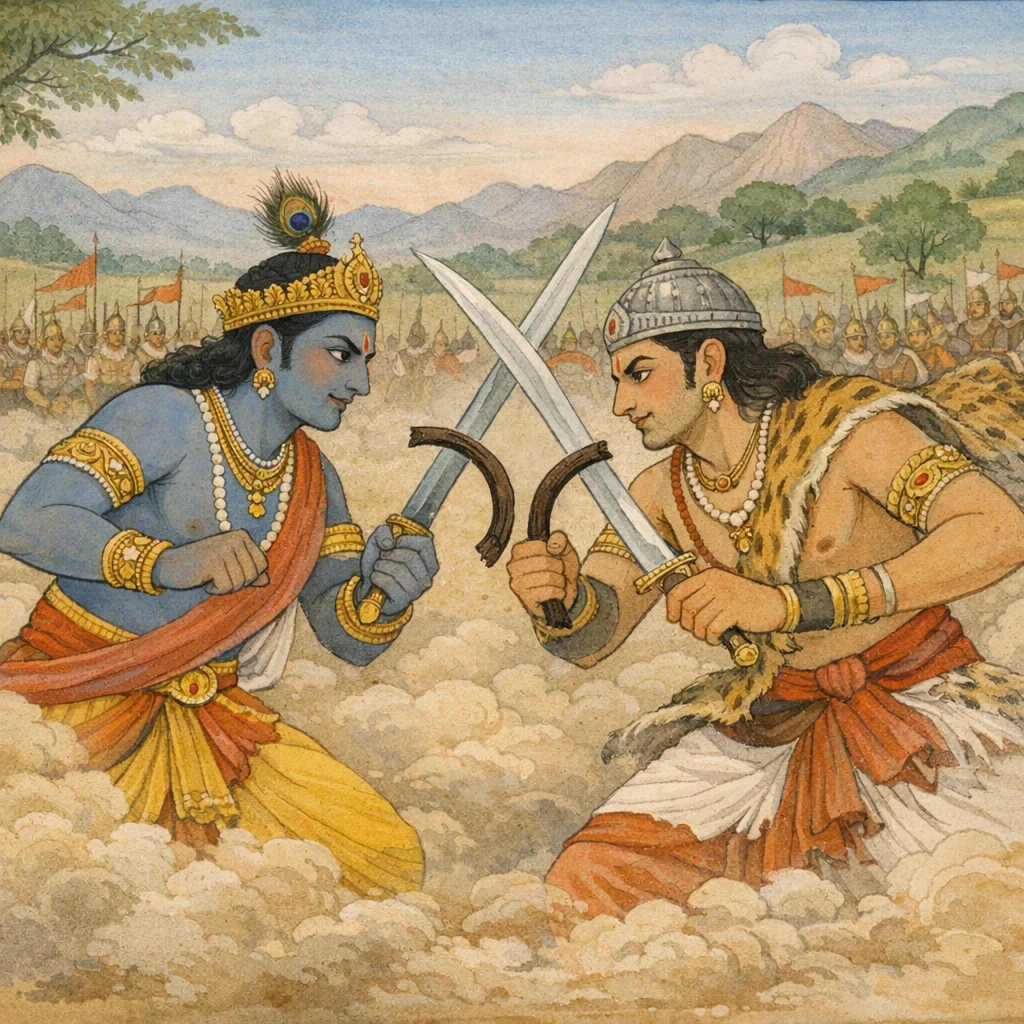
Adhyaya 76
Duryodhana’s Anxiety, Bhīṣma’s Reassurance, and Renewed Mobilization (दुर्योधनचिन्ता–भीष्मप्रत्याश्वासन–सेनानिर्गमनम्)
Upa-parva: Bhīṣma-vadha-parva (War-day narration under Bhīṣma; tactical movements and counsel)
Saṃjaya reports that after a fierce exchange both sides withdraw to their own camps, blood-stained, then rest and re-honor one another before re-arming with intent to resume engagement. Duryodhana, troubled and physically marked by battle, approaches Bhīṣma and voices fear and urgency after encountering Bhīma’s aggressive pressure within a formidable formation. He petitions for victory and the neutralization of the Pāṇḍavas. Bhīṣma responds with composed confidence: he affirms his willingness to strive with full effort for Duryodhana’s aims, yet he also offers a sober assessment that the Pāṇḍava allies are numerous, highly trained, and not easily overcome quickly. He nevertheless vows to oppose them even at the cost of his life and promises to act in a manner pleasing to the king. Encouraged, Duryodhana orders the entire army to advance. The chapter closes with a vivid mobilization tableau—chariots, elephants, cavalry, and infantry moving in formation; dust rising to veil sunlight; banners swirling like lightning among clouds; and the terrifying roar of bowstrings and army-noise likened to primordial cosmic tumult.
Chapter Arc: पाँचवें दिन के रण में शंख-नाद के बीच विराट-भीष्म, अभिमन्यु-भीष्म और अन्य द्वन्द्व उभरते हैं; पर दृष्टि शीघ्र ही अर्जुन और द्रोणपुत्र अश्वत्थामा के आमने-सामने टिक जाती है। → भीष्म शान्तनव अपने रुक्मपुङ्ख बाणों से प्रहार कर पाण्डव पक्ष को दबाते हैं, और उसी उग्र प्रवाह में अश्वत्थामा गाण्डीवधारी अर्जुन के वक्षस्थल को लक्ष्य कर तीखे बाणों से बेधता है। दोनों महारथी निकट से निकटतर आते हैं; रथ, घोड़े, सारथि—सब संकट की परिधि में। → अर्जुन, शत्रुवीरहा, अश्वत्थामा का कार्मुक काट देता है और तीक्ष्ण पत्री-बाणों से उसे घेर लेता है; पर उसी क्षण वह मन में ठहरता है—‘यह आचार्यपुत्र है, द्रोण का प्रिय पुत्र; ब्राह्मण होने से विशेष माननीय’—और विजय के द्वार पर भी संयम का वरण करता है। → दोनों योद्धा परस्पर घावों से विक्षत होकर भी देवसंकाश शोभा पाते हैं; पर रणभूमि लाशों, गिरे रथों, हाथियों-घोड़ों और सैनिकों से पट जाती है—जैसे दावानल वन को जला दे। अध्याय युद्ध के व्यापक संहार और द्वन्द्वों की अनिर्णीत तीव्रता के साथ समाप्त होता है। → अर्जुन का संयम क्या आगे अश्वत्थामा को और उग्र प्रतिशोध की ओर धकेलेगा, और भीष्म का दबाव पाण्डव-सेना पर अगले प्रहर में कितना भारी पड़ेगा?
Shlokas
Verse 1
[दाक्षिणात्य अधिक पाठका १६ “लोक मिलाकर कुल ३६ ३ “लोक हैं।] #-+>ोी श््नु हि कमी त्रिसप्ततितमो< ध्याय: विराट-भीष्म, अभ्रृत्थामा-अर्जुन, दुर्योधन-भीमसेन तथा अभिमन्यु और लक्ष्मणके द्वन्द्-युद्ध संजय उवाच विराटो<थ त्रिभिर्बाणैर्भीष्ममार्च्छन्महारथम् । विव्याध तुरगांश्वास्य त्रिभिर्बाणैर्महारथ:,संजय कहते हैं--राजन्! महारथी राजा विराटने तीन बाण मारकर महारथी भीष्मको पीड़ित किया और तीन ही बाणोंसे उनके घोड़ोंको भी घायल कर दिया
Sañjaya said: Then King Virāṭa, himself a great chariot-warrior, struck the mighty Bhīṣma with three arrows, causing him pain; and with three more arrows he also wounded Bhīṣma’s horses. The scene underscores the relentless reciprocity of battle—where even venerable elders like Bhīṣma are met with force—while reminding the listener that prowess in war does not by itself settle the deeper question of dharma that frames the Kurukṣetra conflict.
Verse 2
त॑ प्रत्यविध्यद् दशभिर्भीष्म: शान्तनव: शरै: | रुक्मपुड्खैर्महेष्वास: कृतहस्तो महाबल:,तब महाधनुर्धर महाबली तथा शीघ्रतापूर्वक हाथ चलानेवाले शान्तनुनन्दन भीष्मने सोनेके पंखवाले दस बाण मारकर विराटको भी घायल कर दिया
Sañjaya said: Then Bhīṣma, the son of Śāntanu—mighty in strength, a great archer, and swift and sure in the use of his hands—struck him in return with ten arrows, their shafts adorned with golden feathers. In the relentless duty of the battlefield (kṣātra-dharma), the exchange of blows continues without hesitation, each warrior answering force with force.
Verse 3
द्रौणिरगाण्डीवधन्चानं भीमधन्वा महारथ: । अविध्यदिषुभि: षड्भिद्दृढहस्त: स्तनान्तरे,भयंकर धनुष धारण करनेवाले महारथी अश्वत्थामाने अपने हाथकी दृढ़ताका परिचय देते हुए गाण्डीवधारी अर्जुनकी छातीमें छः बाणोंसे प्रहार किया
Sañjaya said: The great chariot-warrior Aśvatthāman, son of Droṇa—terrible in his bowmanship—displaying the firmness of his hand, struck Arjuna, bearer of the Gāṇḍīva, in the region of the chest with six arrows. The verse underscores the relentless escalation of battle-skill and endurance, where prowess is shown through controlled force even amid the moral darkness of fratricidal war.
Verse 4
कार्मुक॑ तस्य चिच्छेद फाल्गुन: परवीरहा । अविध्यच्च भृशं तीकषणै: पत्रिभि: शत्रुकर्शन:,तब शत्रुवीरोंका नाश करनेवाले शत्रुसूदन अर्जुनने अश्वत्थामाका धनुष काट दिया और उसे तीन तीखे बाणोंद्वारा अत्यन्त घायल कर दिया
Sañjaya said: Phālguna (Arjuna), slayer of hostile heroes, cut down his bow. Then the afflicter of foes struck him hard with sharp, winged arrows—an image of decisive martial skill used to neutralize a dangerous opponent amid the moral gravity of war.
Verse 5
सोअचन्यत् कार्मुकमादाय वेगवान् क्रो धमूर्च्छित: । अमृष्यमाण: पार्थेन कार्मुकच्छेदमाहवे,राजन! युद्धमें अर्जुनके द्वारा अपने धनुषका काटा जाना अअश्वत्थामाको सहन नहीं हुआ। उस वेगशाली वीरने क्रोधसे मूर्च्छित होकर तुरंत ही दूसरा धनुष ले नब्बे पैने बाणोंद्वारा अर्जुनको और सत्तर श्रेष्ठ सायकोंद्वारा श्रीकृष्णको घायल कर दिया
Sañjaya said: Enraged to the point of losing self-control, that swift warrior seized another bow. Unable to endure, O King, that in the battle his bow had been cut by Partha (Arjuna), he prepared to retaliate—his wrath driving him to renewed violence rather than restraint.
Verse 6
अविध्यत् फाल्गुनं राजन् नवत्या निशितै: शरै: । वासुदेवं च सप्तत्या विव्याध परमेषुभि:,राजन! युद्धमें अर्जुनके द्वारा अपने धनुषका काटा जाना अअश्वत्थामाको सहन नहीं हुआ। उस वेगशाली वीरने क्रोधसे मूर्च्छित होकर तुरंत ही दूसरा धनुष ले नब्बे पैने बाणोंद्वारा अर्जुनको और सत्तर श्रेष्ठ सायकोंद्वारा श्रीकृष्णको घायल कर दिया
Sañjaya said: O King, he struck Phālguna (Arjuna) with ninety sharp arrows, and Vāsudeva (Kṛṣṇa) too he pierced with seventy excellent shafts. The episode underscores how wounded pride and anger on the battlefield can drive a warrior to intensify violence even against the charioteer, widening the moral burden of war.
Verse 7
तब श्रीकृष्णसहित अर्जुनने क्रोधसे लाल आँखें करके बारंबार गरम-गरम लंबी साँस खींचकर सोच-विचार करनेके पश्चात् धनुषको बायें हाथसे दबाया। फिर उन शशत्रुसूदन गाण्डीवधारी पार्थने कुपित हो झुकी हुई गाँठवाले कुछ भयंकर बाण हाथमें लिये, जो जीवनका अन्त कर देनेवाले थे। बलवानोंमें श्रेष्ठ अर्जुनने उन बाणोंद्वारा तुरंत ही समरांगणमें अश्वत्थामाको घायल किया
Sañjaya said: Then Arjuna, with Śrī Kṛṣṇa beside him, his eyes reddened with anger, repeatedly drew long, heated breaths. After reflecting, he pressed his bow with his left hand. Thereupon Pārtha—Gāṇḍīva in hand, the slayer of foes—rose in wrath and took up in his hand some dreadful arrows, bent at the joints, capable of ending life. With those shafts the mighty Arjuna at once wounded Aśvatthāmā on the battlefield—an act that shows how swiftly deliberation in war can turn into lethal resolve when anger is allowed to govern judgment.
Verse 8
ततः क्रोधाभिताम्राक्ष: कृष्णेन सह फाल्गुन: । दीर्घमुष्णं च नि:श्वस्य चिन्तयित्वा पुन: पुन: ७ ।। धनु: प्रपीड्य वामेन करेणामित्रकर्शन: । गाण्डीवधन्वा संक्रुद्ध:/ शितान् संनतपर्वण:,तब श्रीकृष्णसहित अर्जुनने क्रोधसे लाल आँखें करके बारंबार गरम-गरम लंबी साँस खींचकर सोच-विचार करनेके पश्चात् धनुषको बायें हाथसे दबाया। फिर उन शशत्रुसूदन गाण्डीवधारी पार्थने कुपित हो झुकी हुई गाँठवाले कुछ भयंकर बाण हाथमें लिये, जो जीवनका अन्त कर देनेवाले थे। बलवानोंमें श्रेष्ठ अर्जुनने उन बाणोंद्वारा तुरंत ही समरांगणमें अश्वत्थामाको घायल किया
Sañjaya said: Then Arjuna (Phālguna), with Kṛṣṇa beside him, his eyes reddened by anger, repeatedly reflected, drawing long, hot breaths. Pressing his bow with his left hand, that crusher of foes—the wielder of Gāṇḍīva—rose in wrath, taking up sharp arrows with well-jointed shafts, intent on bringing an end to life. The scene underscores how, amid war, disciplined action must contend with surging anger, and how a warrior’s resolve can harden into lethal intent when provoked.
Verse 9
जीवितान्तकरान् घोरान् समादत्त शिलीमुखान् | तैस्तूर्ण समरे<विध्यद् द्रौणिं बलवतां वर:,तब श्रीकृष्णसहित अर्जुनने क्रोधसे लाल आँखें करके बारंबार गरम-गरम लंबी साँस खींचकर सोच-विचार करनेके पश्चात् धनुषको बायें हाथसे दबाया। फिर उन शशत्रुसूदन गाण्डीवधारी पार्थने कुपित हो झुकी हुई गाँठवाले कुछ भयंकर बाण हाथमें लिये, जो जीवनका अन्त कर देनेवाले थे। बलवानोंमें श्रेष्ठ अर्जुनने उन बाणोंद्वारा तुरंत ही समरांगणमें अश्वत्थामाको घायल किया
Sañjaya said: Taking up dreadful, life-ending śilīmukha arrows, Arjuna—the best among the mighty—swiftly struck Droṇa’s son, Aśvatthāmā, on the battlefield.
Verse 10
तस्य ते कवचं भित्त्वा पपु: शोणितमाहवे । न विव्यथे च निर्भिन्नो द्रौणिगाण्डीवधन्चना,वे बाण उसका कवच फाड़कर उस युद्धसस््थलसे उसके शरीरका रक्त पीने लगे, किंतु गाण्डीवधारी अर्जुनके द्वारा विदीर्ण किये जानेपर भी अअभश्वत्थामा व्यथित नहीं हुआ
Sañjaya said: Shattering his armor, those arrows drank his blood on the battlefield. Yet though pierced by Arjuna, the wielder of the Gāṇḍīva, Drauṇi Aśvatthāmā did not waver in pain.
Verse 11
तथैव च शरान् द्रौणि: प्रविमुज्चन्नविह्नल: । तस्थौ स समरे राजंस्त्रातुमिच्छन् महाव्रतम्,राजन! द्रोणकुमार तनिक भी विह्नलल हुए बिना ही पूर्ववत् समरभूमिमें बाणोंकी वर्षा करता रहा और अपने महान् व्रतकी रक्षाकी इच्छासे समरांगणमें डटा रहा
Sañjaya said: Even so, Droṇa’s son (Aśvatthāmā), unshaken, continued to discharge his arrows as before. O King, he stood firm in the thick of battle, intent on safeguarding his great vow.
Verse 12
तस्य तत् सुमहत् कर्म शशंसु: कुरुसत्तमा: । यत् कृष्णाभ्यां समेताभ्यामभ्यापतत संयुगे,अश्वत्थामा युद्धभूमिमें जो श्रीकृष्ण और अर्जुन दोनोंका सामना करता रहा, उसके इस महान् कर्मकी श्रेष्ठ कौरवोंने बड़ी प्रशंसा की
Sañjaya said: The foremost of the Kurus loudly praised that exceedingly great deed of his—how, in the thick of battle, he charged against the two together, Kṛṣṇa and Arjuna.
Verse 13
(तथार्जुनोडपि संदहृष्ट अश्वत्थामानमाहवे । शशंस सर्वभूतानां शृुण्वतामपि भारत ।।) भारत! अर्जुनने भी अत्यन्त हर्षमें भरकर रण-भूमिमें सम्पूर्ण भूतोंके सुनते हुए अश्वृत्थामाकी भूरि-भूरि प्रशंसा की । स हि नित्यमनीकेषु युध्यते5भयमास्थित: । अस्त्रग्रामं ससंहारं द्रोणात् प्राप्य सुदुर्लभम्,वह द्रोणाचार्यसे उपसंहारसहित सुदुर्लभ अस्त्र-समुदायकी शिक्षा पाकर निर्भय हो सदा ही पाण्डव-सैनिकोंके साथ युद्ध करता था
Sañjaya said: “So too Arjuna, filled with exhilaration on the battlefield, praised Aśvatthāmā in the hearing of all beings, O Bhārata. For he, having obtained from Droṇa a rare and formidable arsenal together with its methods of withdrawal and recall, stands fearless and continually fights amid the battle-formations.”
Verse 14
ममैष आचार्यसुतो द्रोणस्यापि प्रिय: सुतः । ब्राह्मणश्न विशेषेण माननीयो ममेति च,शत्रुओंको संताप देनेवाले रथियोंमें श्रेष्ठ वीर अर्जुनने यह सोचकर कि अअभश्व॒त्थामा मेरे आचार्यका पुत्र है, द्रोणका लाड़ला बेटा है तथा ब्राह्मण होनेके कारण भी विशेषरूपसे मेरे लिये माननीय है; आचार्यपुत्रपर कृपा की
Sanjaya said: “He is the son of my teacher, and also the dearly loved son of Drona. Moreover, being a Brahmin, he is especially worthy of honor in my eyes.” Thinking thus, Arjuna—the foremost of chariot-warriors who scorched his enemies—showed compassion toward the teacher’s son (Aśvatthāmā), restraining himself in the midst of war.
Verse 15
समास्थाय मतिं वीरो बीभत्सु: शत्रुतापन: । कृपां चक्रे रथश्रेष्ठो भारद्वाजसुतं प्रति,शत्रुओंको संताप देनेवाले रथियोंमें श्रेष्ठ वीर अर्जुनने यह सोचकर कि अअभश्व॒त्थामा मेरे आचार्यका पुत्र है, द्रोणका लाड़ला बेटा है तथा ब्राह्मण होनेके कारण भी विशेषरूपसे मेरे लिये माननीय है; आचार्यपुत्रपर कृपा की
Sanjaya said: The heroic Bībhatsu (Arjuna), a scorcher of foes and foremost among chariot-warriors, having resolved in his mind, showed compassion toward the son of Bhāradvāja (Aśvatthāmā). In the midst of battle, Arjuna’s decision reflects an ethical restraint: even against an enemy, he recognizes the special claim of reverence due to one connected with his teacher and of brahminical status, and therefore tempers violence with mercy.
Verse 16
द्रौणिं त्यक्त्वा ततो युद्धे कौन्तेय: श्वेतवाहन: । युयुधे तावकान् निष्नंस्त्वरमाण: पराक्रमी,तदनन्तर श्वेत घोड़ोंवाले कुन्तीकुमार पराक्रमी अर्जुनने अश्वत्थामाको वहीं युद्धस्थलमें छोड़कर बड़ी उतावलीके साथ आपके दूसरे सैनिकोंका संहार करते हुए उनके साथ युद्ध आरम्भ किया
Sanjaya said: Leaving Droṇa’s son (Aśvatthāman) there on the battlefield, the Kuntī-born hero Arjuna, whose chariot was drawn by white horses, hastened forward and engaged your troops, striking them down as he fought. The verse underscores the relentless momentum of war: Arjuna, prioritizing the larger tactical necessity, turns from a single foe to confront the wider force, acting with swift, forceful resolve amid the moral gravity of mass slaughter.
Verse 17
दुर्योधनस्तु दशभिर्गार्ध्रपत्रै: शिलाशितै: । भीमसेनं महेष्वासं रुक्मपुड्खै: समार्पयत्,दुर्योधनने शान चढ़ाकर तेज किये हुए गृध्र-पंखयुक्त अथवा सुवर्णमय पंखवाले दस बाण मारकर महाथनुर्धर भीमसेनको बड़ी चोट पहुँचायी
Sanjaya said: Duryodhana, however, struck the great archer Bhīmasena with ten arrows—stone-whetted and fletched with vulture-feathers, their shafts adorned with golden wings—inflicting a severe wound. In the moral atmosphere of the war, the verse highlights the relentless escalation of violence and the warrior’s resolve to overpower a formidable opponent, even as the conflict drives both sides deeper into destructive enmity.
Verse 18
भीमसेन: सुसंक्रुद्ध: परासुकरणं दृढम् | चित्र कार्मुकमादत्त शरांश्व निशितान् दश
Sanjaya said: Bhīmasena, fiercely enraged and resolute in his deadly intent, seized his splendid bow and took up ten razor-sharp arrows—signaling a decisive escalation in the battle where wrath and resolve drive action toward lethal ends.
Verse 19
आकर्णप्रहितैस्ती3्ष्णैवेंगवद्धिरजिद्वागै: । अविध्यत् तूर्णमव्यग्र: कुरुराज॑ महोरसि
Sañjaya said: With sharp arrows shot at full draw—swift as the wind and irresistible in their rush—he quickly pierced the Kuru king in the broad chest, remaining steady and unconfused.
Verse 20
इससे भीमसेन अत्यन्त क्रोधसे जल उठे। उन्होंने एक विचित्र धनुष हाथमें लिया, जो अत्यन्त सुदृढ़ और शत्रुओंके प्राण लेनेमें समर्थ था। उसके ऊपर उन्होंने दस तीखे बाण रखे; फिर धनुषको कानतक खींचकर वे बाण छोड़ दिये। उन सीधे जानेवाले वेगवान् एवं तीक्ष्ण बाणोंद्वारा भीमने बिना किसी व्यग्रताके तुरंत ही कुरुराज दुर्योधनकी छातीमें गहरी चोट पहुँचायी ।। तस्य काञ्चनसूत्रस्थ: शरै: संछादितो मणि: । रराजोरसि खे सूर्यो ग्रहैरिव समावृत:,दुर्योधनकी छातीपर एक मणि शोभा पाती थी, जो सुवर्णमय सूत्रमें पिरोयी हुई थी। वह भीमसेनके बाणोंसे आच्छादित होकर वैसे ही शोभा पाने लगी, जैसे आकाशमें ग्रहोंसे घिरे हुये सूर्य सुशोभित होते हैं
Sañjaya said: On Duryodhana’s chest there was a jewel strung on a golden thread. When Bhīmasena’s arrows covered it, that jewel shone all the more—like the sun in the sky encircled by planets.
Verse 21
पुत्रस्तु तव तेजस्वी भीमसेनेन ताडित: । नामृष्यत यथा नागस्तलशब्दं मदोत्कट:,भीमसेनके बाणोंसे पीड़ित होकर आपका तेजस्वी पुत्र उनके द्वारा किये गये आघातको उसी प्रकार नहीं सह सका, जैसे मतवाला हाथी तालीकी आवाज नहीं सहन करता है
Sañjaya said: Your radiant son, struck hard by Bhīmasena, could not endure that blow—just as an intoxicated, rut-maddened elephant cannot bear the sharp clap of a hand.
Verse 22
अभिमन्युका युद्ध-कौशल तत: शरैर्महाराज रुक्मपुड्खै: शिलाशितै: । भीम विव्याध संक्रुद्धस्त्रासयानो वरूथिनीम्,महाराज! तदनन्तर पत्थरपर रगड़कर तेज किये हुए स्वर्णपंखयुक्त बाणोंद्वारा क्रोधमें भरे हुए दुर्योधनने भीमसेनको बींध डाला और पाण्डवसेनाको भयभीत करने लगा
O king! Thereafter Duryodhana, inflamed with wrath, pierced Bhīmasena with gold-feathered arrows honed sharp upon stone, and he began to strike fear into the Pāṇḍava host.
Verse 23
तौ युध्यमानौ समरे भृशमन्योन्यविक्षतौ । पुत्री ते देवसंकाशौ व्यरोचेतां महाबलौ,उस समरांगणमें परस्पर युद्ध करके अत्यन्त क्षत-विक्षत हुए आपके दोनों महाबली पुत्र दुर्योधन और भीमसेन देवताओंके समान शोभा पाने लगे
Sañjaya said: As those two fought fiercely in the battle, each grievously wounded by the other, the two mighty warriors—Duryodhana and Bhīmasena—shone forth like the gods, radiant in martial splendor amid their injuries.
Verse 24
चित्रसेनं नरव्याप्र॑ं सौभद्र: परवीरहा । अविध्यद् दशभिर्बाणै: पुरुमित्रं च सप्तभि:,शत्रुवीरोंका नाश करनेवाले सुभद्राकुमार अभिमन्युने नरश्रेष्ठ चित्रसेनको दस और पुरुमित्रको सात बाणोंसे बींध डाला
Sañjaya said: Abhimanyu, the son of Subhadrā—slayer of enemy heroes—pierced Citrasena, that tiger among men, with ten arrows, and Purumitra with seven.
Verse 25
सत्यव्रतं च सप्तत्या विद्ध्वा शक्रसमो युधि । नृत्यन्निव रणे वीर आर्ति न: समजीजनत्,युद्धमें इन्द्रके समान पराक्रमी वीर अभिमन्युने सत्यव्रतको सत्तर बाणोंसे घायल करके रणांगणमें नृत्य-सा करते हुए हम सब लोगोंको अत्यन्त पीड़ित कर दिया
Sañjaya said: Having pierced Satyavrata with seventy arrows, the heroic Abhimanyu—Indra-like in battle—moved about the battlefield as if dancing, and by his prowess he caused us all intense anguish.
Verse 26
त॑ प्रत्यविध्यद् दशभिश्षित्रसेन: शिलीमुखै: । सत्यव्रतश्न नवशि: पुरुमित्रश्न सप्तभि:,तब चित्रसेनने दस, सत्यव्रतने नौ और पुरुमित्रने सात बाणोंसे मारकर अभिमन्युको घायल कर दिया
Sañjaya said: Śitraseṇa struck him in return with ten sharp, straight-flying arrows; Satyavrata pierced him with nine; and Purumitra with seven. Thus, in the press of battle, Abhimanyu was wounded by their concentrated assault.
Verse 27
स विद्धो विक्षरन् रक्त शत्रुसंवारणं महत् । चिच्छेद चित्रसेनस्य चित्र कार्मुकमार्जुनि:,उन दोनोंके द्वारा घायल होकर अपने शरीरसे रक्त बहाते हुए अभिमन्युने चित्रसेनके शत्रुनिवारक महान् एवं विचित्र धनुषको काट डाला
Sañjaya said: Though struck by both opponents and bleeding from his wounds, Abhimanyu—Arjuna’s son—cut down Chitrasena’s great, wondrous bow, famed for checking enemies.
Verse 28
भित्त्वा चास्य तनुत्राणं शरेणोरस्यताडयत् | ततस्ते तावका वीरा राजपुत्रा महारथा:,साथ ही चित्रसेनके कवचको विदीर्ण करके उसकी छातीमें भी एक बाण मारा। तदनन्तर आपके वीर एवं महारथी राजकुमार युद्धमें एकत्र हो क्रोधमें भरकर अभिमन्युको तीखे बाणोंसे बेधने लगे; परंतु उत्तम अस्त्रोंके ज्ञाता अभिमन्युने अपने पैने बाणोंद्वारा उन सबको घायल कर दिया
Sañjaya said: Having pierced his coat of mail, he struck him in the chest with an arrow. In the wake of that blow, the Kuru princes—valiant and great chariot-warriors—closed in together in wrath and began to pierce Abhimanyu with sharp shafts; yet Abhimanyu, skilled in the finest weapons, wounded them all in return with his keen arrows.
Verse 29
समेत्य युधि संरब्धा विव्यधुर्निशितै: शरै: । तांश्व सर्वान् शरैस्तीक_््णर्जघान परमास्त्रवित्,साथ ही चित्रसेनके कवचको विदीर्ण करके उसकी छातीमें भी एक बाण मारा। तदनन्तर आपके वीर एवं महारथी राजकुमार युद्धमें एकत्र हो क्रोधमें भरकर अभिमन्युको तीखे बाणोंसे बेधने लगे; परंतु उत्तम अस्त्रोंके ज्ञाता अभिमन्युने अपने पैने बाणोंद्वारा उन सबको घायल कर दिया
Sañjaya said: Closing in upon one another on the battlefield, they—fired up with fury—pierced him with sharp arrows. But he, the master of supreme weapons, struck all of them back with keen shafts, wounding them in return.
Verse 30
तस्य दृष्टवा तु तत् कर्म परिवद्रु: सुतास्तव । दहन्तं समरे सैन्यं वने कक्ष यथोल्बणम्,जैसे वनमें लगी हुई प्रचण्ड आग तृणसमूहको अनायास ही जलाकर भस्म कर डालती है, उसी प्रकार अभिमन्यु उस समरांगणमें कौरवसेनाको दग्ध कर रहा था। उसके इस महान् कर्मको देखकर आपके पुत्रोंने उसे सब ओरसे घेर लिया
Sañjaya said: Seeing that deed of his—how he was burning up the army in battle like a fierce forest-fire consuming the dry undergrowth—your sons, alarmed by his prowess, surrounded him on all sides.
Verse 31
अपेतशिशिरे काले समिद्धमिव पावकम् । अत्यरोचत सौभद्रस्तव सैन्यानि नाशयन्,महाराज! आपकी सेनाका संहार करता हुआ सुभद्राकुमार अभिमन्यु ग्रीष्म-ऋतुमें प्रज्वलित हुई प्रचण्ड अग्निसे भी बढ़कर शोभा पा रहा था
Sañjaya said: “O King, as though the chill of winter had departed, the son of Subhadrā (Abhimanyu), while destroying your troops, shone exceedingly—like a blazing fire fully kindled in the heat of summer.”
Verse 32
तत् तस्य चरितं दृष्टवा पौत्रस्तव विशाम्पते । लक्ष्मणो5भ्यपतत् तूर्ण सात्वतीपुत्रमाहवे,प्रजानाथ! उसका वह पराक्रम देखकर आपका पौत्र लक्ष्मण तुरंत ही युद्धमें सुभद्राकुमारका सामना करनेके लिये आ पहुँचा
Sañjaya said: O lord of the people, seeing that hero’s prowess, your grandson Lakṣmaṇa rushed swiftly into the battle to confront Abhimanyu, the son of Subhadrā.
Verse 33
अभिमन्युस्तु संक्रुद्धो लक्ष्मणं शुभलक्षणम् । विव्याध निशितै: षड्भि: सारथिं च त्रिभि: शरै:,तब क्रोधमें भरे हुए अभिमन्युने उत्तम लक्षणोंसे युक्त लक्ष्मणको छः: और उसके सारथिको तीन तीखे बाणोंसे बींध डाला
Sañjaya said: Enraged, Abhimanyu pierced Lakṣmaṇa—marked by auspicious signs—with six razor-sharp arrows, and struck his charioteer as well with three.
Verse 34
तथैव लक्ष्मणो राजन् सौभद्रं निशितै: शरैः । अविध्यत महाराज तदद्भुतमिवाभवत्,राजन! इसी प्रकार लक्ष्मणने भी सुभद्राकुमारको अपने तीखे बाणोंसे घायल कर दिया। महाराज! वह अद्भुत-सी बात हुई
Sañjaya said: “In the same manner, O King, Lakṣmaṇa struck Saubhadra (Abhimanyu), the son of Subhadrā, with sharp arrows. O great king, it appeared almost wondrous.”
Verse 35
तस्याश्चांश्व॒तुरो हत्वा सारथिं च महाबल: । अभ्यद्रवत सौभद्रो लक्ष्मणं निशितै: शरै:,यह देख महाबली सुभद्राकुमारने लक्ष्मणके चारों घोड़ों और सारथिको मारकर तीखे बाणोंद्वारा उसपर भी आक्रमण किया
Sañjaya said: Having slain his four horses and also his charioteer, the mighty son of Subhadrā charged at Lakṣmaṇa, assailing him with razor-sharp arrows.
Verse 36
हताश्वे तु रथे तिषँल्लक्ष्मण: परवीरहा । शक्ति चिक्षेप संक्रुद्ध: सौभद्रस्य रथं प्रति,शत्रुवीरोंका नाश करनेवाले लक्ष्मणने उस अश्वहीन रथपर खड़े-खड़े ही क्रोधमें भरकर अभिमन्युके रथकी ओर एक शक्ति चलायी
Sañjaya said: Standing firm upon his chariot even after its horses had been slain, Lakṣmaṇa—destroyer of enemy heroes—burning with anger, hurled a śakti-weapon toward the chariot of Saubhadra (Abhimanyu).
Verse 37
तामापतन्तीं सहसा घोररूपां दुरासदाम् । अभिमन्यु: शरैस्ती&णैश्विच्छेद भुजगोपमाम्,उस भयंकर एवं दुर्जय सर्पिणीके समान शक्तिको सहसा अपनी ओर आते देख अभिमन्युने तीखे बाणोंद्वारा उसके टुकड़े-टुकड़े कर डाले
Sañjaya said: Seeing that dreadful, hard-to-withstand weapon rushing at him all at once—serpent-like in its menace—Abhimanyu, with keen arrows, cut it into pieces.
Verse 38
ततः स्वरथमारोप्य लक्ष्मणं गौतमस्तदा । अपोवाह रथेनाजौ सर्वसैन्यस्य पश्यत:
Sañjaya said: Then Gautama, lifting Lakṣmaṇa onto his own chariot, carried him away from the battlefield in his chariot, in full view of the entire army.
Verse 39
तब कृपाचार्य सब सैनिकोंके देखते-देखते लक्ष्मणको अपने रथपर बिठाकर युद्धभूमिमें वहाँसे अन्यत्र हटा ले गये ।। ततः समाकुले तस्मिन् वर्तमाने महा भये । अभ्यद्रवज्जिघांसन्त: परस्परवधैषिण:,तदनन्तर उस महाभयंकर संघर्षमें सब योद्धा विपक्षीको मारनेकी इच्छा रखकर एक- दूसरेका वध करनेके लिये परस्पर टूट पड़े
Sañjaya said: Then, before the eyes of all the soldiers, Kripacharya set Lakshmana upon his chariot and drew him away from the battlefield to another place. After that, as confusion and great terror arose, the warriors—each bent on killing the opposing side and seeking one another’s ruin—rushed upon each other, plunging into mutual slaughter.
Verse 40
तावकाश्न महेष्वासा: पाण्डवाश्न महारथा: | जुद्वन्त: समरे प्राणान् निजघ्नुरितरेतरम्,आपके और पाण्डवपक्षके महाधनुर्धर महारथी वीर समरांगणमें प्राणोंकी आहुति देते हुए एक-दूसरेको मार रहे थे
Sañjaya said: Your mighty bowmen and the Pāṇḍavas’ great chariot-warriors, locked in battle on the field, were striking one another down—offering up their very lives in the fury of war.
Verse 41
मुक्तकेशा विकवचा विरथाश्शकछिन्नकार्मुका: । बाहुभि: समयुध्यन्त सूंजया: कुरुभि: सह,कवच और रथसे रहित हो धनुष कट जानेपर अपने बाल खोले हुए कितने ही सूंजय वीर कौरवोंके साथ केवल भुजाओंद्वारा मल्लयुद्ध कर रहे थे
Sañjaya said: Many of the Sṛñjaya warriors—hair loosened, stripped of armor, deprived of chariots, and with their bows cut down—still fought on with the Kuru soldiers, engaging them hand-to-hand with their own arms.
Verse 42
ततो भीष्मो महाबाहु: पाण्डवानां महात्मनाम् | सेनां जघान संक्रुद्धो दिव्यैरस्त्रैमहाबल:,तब महाबली महाबाहु भीष्म अत्यन्त कुपित हो अपने दिव्यास्त्रोंद्वारा महामना पाण्डवोंकी सेनाका संहार करने लगे
Sañjaya said: Then Bhishma, mighty-armed and immensely powerful, enraged, began to strike down the army of the noble-souled Pandavas with celestial weapons.
Verse 43
हतैरश्वैर्गजैस्तत्र नरैरश्वेश्न॒ पातितै: । रथिभश्रि: सादिभिश्नैव समास्तीर्यत मेदिनी,उस समय वहाँ मारे और गिराये गये हाथी, घोड़े, मनुष्य, रथी और सवारोंद्वारा सारी पृथ्वी आच्छादित हो गयी थी
Sañjaya said: There, the earth was spread over and covered on all sides by the slain—horses and elephants, men and those struck down from their horses—as well as by chariot-warriors and mounted riders.
Verse 72
इस प्रकार श्रीमह्माभारत भीष्मपर्वके अन्तर्गत भीष्मवधपर्वमें पाँचवें दिनके युद्धसें सम्बन्ध रखनेवाला बद्तत्तरवाँ अध्याय पूरा हुआ
Sanjaya concludes by noting that, in the revered Mahābhārata, within the Bhīṣma Parva—specifically the section concerning Bhīṣma’s fall—this seventy-second chapter, connected with the events of the fifth day of the war, is now complete. The closing formula underscores the epic’s careful moral framing of warfare: even amid relentless battle, the narrative is organized to highlight decisive turning points and the ethical weight of actions leading toward the downfall of a great elder-warrior.
Verse 73
इति श्रीमहाभारते भीष्मपर्वणि भीष्मवधपर्वणि द्वन्ड्ययुद्धे त्रिसप्ततितमो5ध्याय: ।। ७३ || इस प्रकार श्रीमह्याभारत भीष्मपर्वके अन्तर्गत भीष्मवधपर्वमें दन्धयुद्धविषयक तिहत्तरवाँ अध्याय पूरा हुआ
Sañjaya said: “Thus, in the sacred Mahābhārata, within the Bhīṣma Parva—specifically in the section concerning Bhīṣma’s fall—this seventy-third chapter, dealing with the theme of duel-combat, is concluded.”
Frequently Asked Questions
The dilemma is whether leadership should speak in absolute assurances or in strategic realism: Duryodhana seeks immediate certainty and decisive outcomes, while Bhīṣma balances loyalty with an evidence-based appraisal of the opponent’s strength.
Bhīṣma models composed duty: commit fully to one’s role, avoid panic-driven decisions, and acknowledge constraints—an ethic of disciplined effort rather than guaranteed results.
No explicit phalaśruti is stated here; the chapter functions as narrative-ethical framing, using counsel and mobilization imagery to situate subsequent engagements within themes of resolve, realism, and consequence.