Adhyaya 117
Bhīṣma–Karṇa Saṃvāda on the Śaraśayyā (भीष्म–कर्ण संवादः शरशय्यायाम्)
Upa-parva: Bhīṣma-śara-śayyā-saṃvāda (Dialogue at Bhīṣma’s Arrow-Bed)
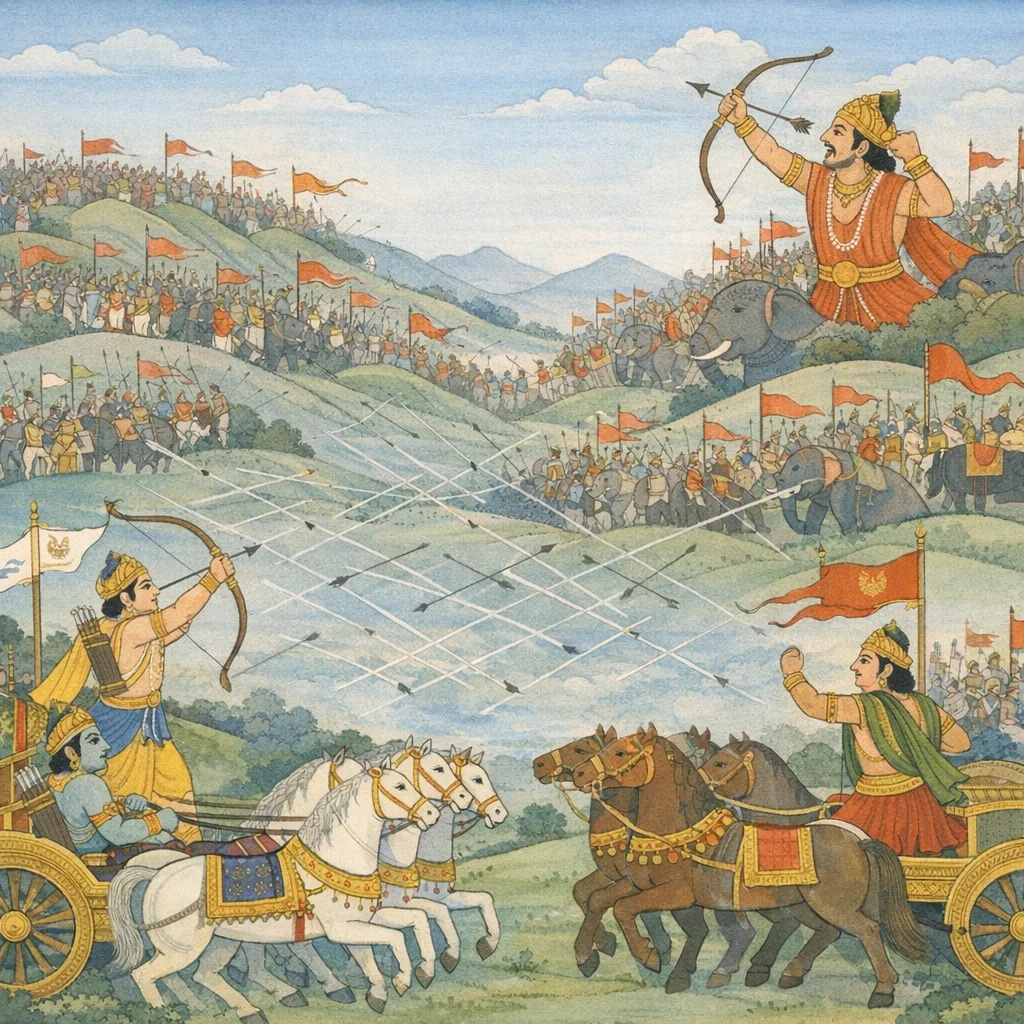
Saṃjaya reports that the assembled kings disperse after Bhīṣma becomes silent on the battlefield. Karṇa, hearing of Bhīṣma’s incapacitation, approaches with visible agitation and grief. He sees Bhīṣma lying on the bed of arrows, falls at his feet, and identifies himself while lamenting being disliked despite being ‘without offense.’ Bhīṣma, after ensuring privacy, embraces him and challenges him to speak openly. He then states that Karṇa is known to be a Kaunteya (Kuntī’s son), information attributed to authoritative sources (Nārada, Vyāsa, and Keśava). Bhīṣma denies personal hatred, explaining prior harsh speech as motivated by concerns about ‘splitting the lineage’ and by Karṇa’s perceived hostility to the Pāṇḍavas. He praises Karṇa’s prowess, generosity, and comparability to Arjuna and Kṛṣṇa in martial competencies, and declares his anger removed, while noting that destiny cannot be overridden by human effort. Bhīṣma urges Karṇa to unite with the Pāṇḍavas if he wishes to please him; Karṇa refuses, citing abandonment, upbringing by a sūta household, indebtedness to Duryodhana, and the inevitability of foretold omens. Karṇa requests permission to fight and asks forgiveness for any wrongs. Bhīṣma grants authorization, advises ego-less performance of kṣatra-duty, and affirms that war-duty is central for a kṣatriya; Saṃjaya closes with Karṇa departing by chariot toward Duryodhana.
Chapter Arc: भीषण संग्राम में पाण्डव-सेना के अग्रभाग पर शत्रु-वीरों का घेरा कसता है; भीम और अर्जुन को लक्ष्य बनाकर अनेक महारथी एक साथ बढ़ते हैं। → सुशर्मा, कृप, जयद्रथ (सैन्धव), प्राग्ज्योतिष-नरेश, चित्रसेन, विकर्ण, कृतवर्मा, दुर्मर्षण तथा अवन्ति के विन्द-अनुविन्द—सब मिलकर पाण्डवों के प्रमुख रथियों को रोकने का प्रयत्न करते हैं; बाण-वर्षा में अर्जुन-भीम घायल किए जाते हैं और शत्रु-सेना का उत्साह बढ़ता है। → भीम-सेन और अर्जुन पर एक साथ तीव्र आक्रमण होता है—जयत्सेन जैसे योद्धा भीम को अनेक तीक्ष्ण बाणों से बेधते हैं; प्रत्युत्तर में पाण्डव-पक्ष भीषण प्रतिघात करता है और रणभूमि में गर्जना-निनाद से दोनों सेनाएँ थर्रा उठती हैं। → अध्याय का अंत निर्णायक वध पर नहीं, बल्कि ‘भीम-अर्जुन-पराक्रम’ के प्रदर्शन पर टिकता है—पाण्डवों की अग्र-रेखा टूटती नहीं; शत्रु-वीर भी युद्धभूमि नहीं छोड़ते और संघर्ष बराबरी की ज्वाला में बना रहता है। → अगले क्षण किसका रथ टूटेगा—भीम-अर्जुन का प्रतिघात भारी पड़ेगा या संयुक्त कौरव-आक्रमण पाण्डव-सेना को पीछे ढकेलेगा—युद्ध इसी अनिर्णीत उत्कर्ष पर लटकता है।
Shlokas
Verse 1
इस प्रकार श्रीमह़्ा भारत भीष्मपर्वके अन्तर्गत भीष्मवधपर्वमें भीमसेनका पराक्रमविषयक एक सौ तेरहवाँ अध्याय पूरा हुआ ॥/ ११३ ॥। [दाक्षिणात्य अधिक पाठका १ श्लोक मिलाकर कुल ५४ “लोक हैं।] ऑपन-माज छा डे: चतुर्दशाधिकशततमो< ध्याय: कौरवपक्षके प्रमुख महारथियोंके साथ युद्धमें भीमसेन और अर्जुनका अद्भुत पुरुषार्थ संजय उवाच अर्जुनस्तु रणे शल्यं यतमानं महारथम् । छादयामास समरे शरै: संनतपर्वभि:,संजय कहते हैं--राजन! उस समय रफक्षेत्रमें विजयके लिये प्रयत्न करनेवाले महारथी शल्यको अर्जुनने झुकी हुई गाँठवाले बाणोंकी वर्षा करके ढक दिया
Sañjaya said: O King, in that battle Arjuna covered the great chariot-warrior Shalya—who was striving for victory—with a dense shower of arrows whose joints were bent, overwhelming him on the field.
Verse 2
सुशर्माणं कृपं चैव त्रिभिस्त्रिभिरविध्यत । प्राग्ज्योतिषं च समरे सैन्धवं च जयद्रथम्,एकैकं त्रिभिरानर्च्छत् कड़ुकबर्हिणवाजितै: । उसके बाद सुशर्मा और कृपाचार्यको भी तीन-तीन बाणोंसे बींध डाला। राजेन्द्र! फिर समरांगणमें प्राग्ज्योतिषनरेश भगदत्त, सिन्धुराज जयद्रथ, चित्रसेन, विकर्ण, कृतवर्मा, दुर्मीषण तथा महारथी विन्द और अनुविन्द--इनमैंसे प्रत्येकको गीधकी पाँखसे युक्त तीन- तीन बाणोंद्वारा विशेष पीड़ा दी
Sañjaya said: He pierced Suśarmā and Kṛpa as well, each with three arrows. And in the press of battle he also struck the king of Prāgjyotiṣa (Bhagadatta) and the Sindhu ruler Jayadratha—each one separately—with three arrows, feathered like the wings of a vulture, inflicting sharp pain.
Verse 3
चित्रसेनं विकर्ण च कृतवर्माणमेव च । दुर्मर्षणं च राजेन्द्र ह्वावन्त्यौ च महारथौ,एकैकं त्रिभिरानर्च्छत् कड़ुकबर्हिणवाजितै: । उसके बाद सुशर्मा और कृपाचार्यको भी तीन-तीन बाणोंसे बींध डाला। राजेन्द्र! फिर समरांगणमें प्राग्ज्योतिषनरेश भगदत्त, सिन्धुराज जयद्रथ, चित्रसेन, विकर्ण, कृतवर्मा, दुर्मीषण तथा महारथी विन्द और अनुविन्द--इनमैंसे प्रत्येकको गीधकी पाँखसे युक्त तीन- तीन बाणोंद्वारा विशेष पीड़ा दी
Sañjaya said: O king, he struck each of these—Citrasena, Vikarṇa, Kṛtavarmā, and Durmārṣaṇa, as well as the two great chariot-warriors, the brothers Vinda and Anuvinda—with three arrows apiece, their shafts adorned with the feathers of the vulture.
Verse 4
शरैरतिरथो युद्धे पीडयन् वाहिनीं तव,एकैकं त्रिभिरानर्च्छत् कड़ुकबर्हिणवाजितै: । उसके बाद सुशर्मा और कृपाचार्यको भी तीन-तीन बाणोंसे बींध डाला। राजेन्द्र! फिर समरांगणमें प्राग्ज्योतिषनरेश भगदत्त, सिन्धुराज जयद्रथ, चित्रसेन, विकर्ण, कृतवर्मा, दुर्मीषण तथा महारथी विन्द और अनुविन्द--इनमैंसे प्रत्येकको गीधकी पाँखसे युक्त तीन- तीन बाणोंद्वारा विशेष पीड़ा दी तत्पश्चात् अतिरथी वीर अर्जुनने युद्धमें आपकी सेनाको बाणसमूहोंद्वारा अत्यन्त पीड़ित कर दिया। भारत! चित्रसेनके रथपर बैठे हुए जयद्रथने रणक्षेत्रमें कुन्तीकुमार अर्जुको घायल करके भीमसेनको भी बहुत-से सायकोंद्वारा वेगपूर्वक बींध डाला
Sañjaya said: In the battle, that great chariot-warrior, tormenting your army, struck each opponent with three arrows—arrows fitted with the feathers of the kaḍuka bird—thereby inflicting sharp pain and disarray upon your forces.
Verse 5
जयद्रथो रणे पार्थ विद्ध्वा भारत सायकै: । भीम॑ विव्याध तरसा चित्रसेनरथे स्थित:,एकैकं त्रिभिरानर्च्छत् कड़ुकबर्हिणवाजितै: । उसके बाद सुशर्मा और कृपाचार्यको भी तीन-तीन बाणोंसे बींध डाला। राजेन्द्र! फिर समरांगणमें प्राग्ज्योतिषनरेश भगदत्त, सिन्धुराज जयद्रथ, चित्रसेन, विकर्ण, कृतवर्मा, दुर्मीषण तथा महारथी विन्द और अनुविन्द--इनमैंसे प्रत्येकको गीधकी पाँखसे युक्त तीन- तीन बाणोंद्वारा विशेष पीड़ा दी तत्पश्चात् अतिरथी वीर अर्जुनने युद्धमें आपकी सेनाको बाणसमूहोंद्वारा अत्यन्त पीड़ित कर दिया। भारत! चित्रसेनके रथपर बैठे हुए जयद्रथने रणक्षेत्रमें कुन्तीकुमार अर्जुको घायल करके भीमसेनको भी बहुत-से सायकोंद्वारा वेगपूर्वक बींध डाला
Sañjaya said: O Bhārata, after Jayadratha had struck Pārtha (Arjuna) in the battle with his arrows, he—stationed upon the chariot of Citrasena—swiftly pierced Bhīma with great force.
Verse 6
शल्यश्न समरे जिष्णुं कृपश्च रथिनां वर: । विव्यधाते महाराज बहुधा मर्मभेदिभि:,एकैकं त्रिभिरानर्च्छत् कड़ुकबर्हिणवाजितै: । उसके बाद सुशर्मा और कृपाचार्यको भी तीन-तीन बाणोंसे बींध डाला। राजेन्द्र! फिर समरांगणमें प्राग्ज्योतिषनरेश भगदत्त, सिन्धुराज जयद्रथ, चित्रसेन, विकर्ण, कृतवर्मा, दुर्मीषण तथा महारथी विन्द और अनुविन्द--इनमैंसे प्रत्येकको गीधकी पाँखसे युक्त तीन- तीन बाणोंद्वारा विशेष पीड़ा दी महाराज! फिर रथियोंमें श्रेष्ठ कृपाचार्य तथा शल्यने भी समरांगणमें मर्मस्थलको विदीर्ण करनेवाले बाणोंद्वारा अर्जुनको बारंबार घायल किया
Sañjaya said: O great king, on the battlefield Śalya and Kṛpa—the foremost among chariot-warriors—repeatedly pierced Arjuna (Jiṣṇu) in many ways with vital-point-splitting arrows.
Verse 7
चित्रसेनादयश्वैव पुत्रास्तव विशाम्पते । पज्चभि: पज्चभिस्तूर्ण संयुगे निशितै: शरै:,एकैकं त्रिभिरानर्च्छत् कड़ुकबर्हिणवाजितै: । उसके बाद सुशर्मा और कृपाचार्यको भी तीन-तीन बाणोंसे बींध डाला। राजेन्द्र! फिर समरांगणमें प्राग्ज्योतिषनरेश भगदत्त, सिन्धुराज जयद्रथ, चित्रसेन, विकर्ण, कृतवर्मा, दुर्मीषण तथा महारथी विन्द और अनुविन्द--इनमैंसे प्रत्येकको गीधकी पाँखसे युक्त तीन- तीन बाणोंद्वारा विशेष पीड़ा दी
Sañjaya said: “O lord of the people, your sons—Citraseṇa and the others—were swiftly struck in the thick of battle with sharp arrows, five and five. Then, each of them was further pierced with three arrows fitted with vulture-feathers, intensifying their pain.”
Verse 8
तौ तत्र रथिनां श्रेष्ठो कौन्तेयौ भरतर्षभौ,एकैकं त्रिभिरानर्च्छत् कड़ुकबर्हिणवाजितै: । उसके बाद सुशर्मा और कृपाचार्यको भी तीन-तीन बाणोंसे बींध डाला। राजेन्द्र! फिर समरांगणमें प्राग्ज्योतिषनरेश भगदत्त, सिन्धुराज जयद्रथ, चित्रसेन, विकर्ण, कृतवर्मा, दुर्मीषण तथा महारथी विन्द और अनुविन्द--इनमैंसे प्रत्येकको गीधकी पाँखसे युक्त तीन- तीन बाणोंद्वारा विशेष पीड़ा दी
Sañjaya said: There, the foremost of chariot-warriors—the two sons of Kuntī, those bulls among the Bharatas—struck each opponent with three arrows, feathered with the plumes of the kaḍuka bird. In the same manner he pierced Suśarmā and Kṛpācārya with three arrows each. Then, on the battlefield, he inflicted sharp pain—again with three such plume-feathered shafts upon each—on Bhagadatta, king of Prāgjyotiṣa; Jayadratha, king of Sindhu; and also on Citraseṇa, Vikarṇa, Kṛtavarmā, Durmiṣaṇa, and the great chariot-warriors Vinda and Anuvinda.
Verse 9
अपीडयेतां समरे त्रिगर्तानां महद् बलम् | उस समय वहाँ रथियोंमें श्रेष्ठ भरतकुलभूषण कुन्तीकुमार भीमसेन और अर्जुनने समरभूमिमें त्रिगर्तॉंकी विशाल सेनाको पीड़ित कर दिया ।। ८ इ || सुशर्मापि रणे पार्थ शरैर्नवभिराशुगै:,एकैकं त्रिभिरानर्च्छत् कड़ुकबर्हिणवाजितै: । उसके बाद सुशर्मा और कृपाचार्यको भी तीन-तीन बाणोंसे बींध डाला। राजेन्द्र! फिर समरांगणमें प्राग्ज्योतिषनरेश भगदत्त, सिन्धुराज जयद्रथ, चित्रसेन, विकर्ण, कृतवर्मा, दुर्मीषण तथा महारथी विन्द और अनुविन्द--इनमैंसे प्रत्येकको गीधकी पाँखसे युक्त तीन- तीन बाणोंद्वारा विशेष पीड़ा दी
Sanjaya said: In that battle, the foremost chariot-warriors—Kunti’s sons Bhimasena and Arjuna—pressed hard and shattered the great might of the Trigartas. Then Susarman too, in the fight, swiftly struck Partha with nine keen arrows; and with arrows feathered like the wings of a heron he further assailed him, three shafts to each mark. The passage underscores the relentless reciprocity of war: prowess is answered by prowess, and the field becomes a test of endurance, discipline, and the warrior’s duty amid escalating violence.
Verse 10
अन्ये च रथिन: शूरा भीमसेनधनंजयौ,एकैकं त्रिभिरानर्च्छत् कड़ुकबर्हिणवाजितै: । उसके बाद सुशर्मा और कृपाचार्यको भी तीन-तीन बाणोंसे बींध डाला। राजेन्द्र! फिर समरांगणमें प्राग्ज्योतिषनरेश भगदत्त, सिन्धुराज जयद्रथ, चित्रसेन, विकर्ण, कृतवर्मा, दुर्मीषण तथा महारथी विन्द और अनुविन्द--इनमैंसे प्रत्येकको गीधकी पाँखसे युक्त तीन- तीन बाणोंद्वारा विशेष पीड़ा दी
Sañjaya said: Other valiant chariot-warriors too assailed Bhīmasena and Dhanañjaya (Arjuna), each striking them with three arrows—shafts fitted with hard, peacock-feathered fletching. Thereafter he pierced Suśarmā and Kṛpācārya as well with three arrows each. O best of kings, then on the battlefield he inflicted special pain with three peacock-feathered arrows apiece upon Bhagadatta, king of Prāgjyotiṣa, Jayadratha the king of Sindhu, Citraseṇa, Vikarṇa, Kṛtavarmā, Durmiṣaṇa, and the great chariot-warriors Vinda and Anuvinda—each in turn. The passage underscores the relentless, measured violence of war: prowess is displayed through disciplined, repeated strikes, while the ethical tension of harming renowned warriors remains implicit in the narration.
Verse 11
तेषां च रथिनां मध्ये कौन्तेयौ भरतर्षभौ,एकैकं त्रिभिरानर्च्छत् कड़ुकबर्हिणवाजितै: । उसके बाद सुशर्मा और कृपाचार्यको भी तीन-तीन बाणोंसे बींध डाला। राजेन्द्र! फिर समरांगणमें प्राग्ज्योतिषनरेश भगदत्त, सिन्धुराज जयद्रथ, चित्रसेन, विकर्ण, कृतवर्मा, दुर्मीषण तथा महारथी विन्द और अनुविन्द--इनमैंसे प्रत्येकको गीधकी पाँखसे युक्त तीन- तीन बाणोंद्वारा विशेष पीड़ा दी
Sañjaya said: In the midst of those chariot-warriors, the two sons of Kuntī—bulls among the Bharatas—honoured each opponent in turn with three arrows, feathered like the wings of a vulture, striking them with deliberate precision. Thereafter they also pierced Suśarmā and Kṛpācārya with three arrows each. Then, on the battlefield, they inflicted special pain—again with three such arrows apiece—upon Bhagadatta, king of Prāgjyotiṣa, Jayadratha the king of Sindhu, Citraseṇa, Vikarṇa, Kṛtavarmā, Durmiṣaṇa, and the great chariot-warriors Vinda and Anuvinda.
Verse 12
क्रीडमानौ रथोदारौ चित्ररूपौ व्यदृश्यताम् | उन समस्त रथियोंके बीचमें खड़े होकर खेल-से करते हुए भरतभूषण उदार महारथी कुन्तीकुमार भीमसेन और अर्जुन विचित्र दिखायी देते थे || ११ ह || आमिषेप्सू गवां मध्ये सिंहाविव मदोत्कटौ,एकैकं त्रिभिरानर्च्छत् कड़ुकबर्हिणवाजितै: । उसके बाद सुशर्मा और कृपाचार्यको भी तीन-तीन बाणोंसे बींध डाला। राजेन्द्र! फिर समरांगणमें प्राग्ज्योतिषनरेश भगदत्त, सिन्धुराज जयद्रथ, चित्रसेन, विकर्ण, कृतवर्मा, दुर्मीषण तथा महारथी विन्द और अनुविन्द--इनमैंसे प्रत्येकको गीधकी पाँखसे युक्त तीन- तीन बाणोंद्वारा विशेष पीड़ा दी जैसे मांसकी इच्छा रखनेवाले दो मदोन्मत्त सिंह गौओंके झुंडमें खड़े हुए हों, उसी प्रकार भीमसेन और अर्जुन उस रणभूमिमें सुशोभित हो रहे थे
Sañjaya said: In the midst of all the chariot-warriors, the two noble lords of chariots—Bhīmasena and Arjuna, the ornaments of the Bhāratas—were seen as if at play, moving with striking, variegated prowess. Like two wildly intoxicated lions standing among a herd of cattle, intent on flesh, each of them singled out opponents and pierced them with three arrows apiece, their shafts fitted with vulture-feathers—thus inflicting sharp distress upon the enemy ranks and displaying the overwhelming momentum of righteous battle-skill.
Verse 13
छित्त्वा धनूंषि शूराणां शरांश्व बहुधा रणे । पातयामासतुर्वीरो शिरांसि शतशो नृणाम्,एकैकं त्रिभिरानर्च्छत् कड़ुकबर्हिणवाजितै: । उसके बाद सुशर्मा और कृपाचार्यको भी तीन-तीन बाणोंसे बींध डाला। राजेन्द्र! फिर समरांगणमें प्राग्ज्योतिषनरेश भगदत्त, सिन्धुराज जयद्रथ, चित्रसेन, विकर्ण, कृतवर्मा, दुर्मीषण तथा महारथी विन्द और अनुविन्द--इनमैंसे प्रत्येकको गीधकी पाँखसे युक्त तीन- तीन बाणोंद्वारा विशेष पीड़ा दी उन दोनों वीरोंने रणक्षेत्रमें सैकड़ों शूरवीर मनुष्योंके धनुष और बाणोंको बारंबार छिन्न- भिन्न करके उनके मस्तकोंको भी काट गिराया
Sañjaya said: In the battle, those two heroes repeatedly cut apart the bows and arrows of the warriors, and caused the heads of men to fall by the hundreds. Then, striking each opponent with three arrows—feathered like a vulture’s wing—they pierced even Śuśarmā and Kṛpācārya with three shafts each. Thereafter, on the field they inflicted special torment, with three such arrows apiece, upon Bhagadatta the king of Prāgjyotiṣa, Jayadratha the king of Sindhu, Citraseṇa, Vikarṇa, Kṛtavarmā, Durmiṣaṇa, and the great chariot-fighters Vinda and Anuvinda—while continuing to shatter weapons and fell combatants in the relentless ethic of kṣatriya warfare.
Verse 14
रथाश्ष बहवो भग्ना हयाश्ष शतशो हता: । गजाश्न सगजारोहा: पेतुरुव्या महाहवे,एकैकं त्रिभिरानर्च्छत् कड़ुकबर्हिणवाजितै: । उसके बाद सुशर्मा और कृपाचार्यको भी तीन-तीन बाणोंसे बींध डाला। राजेन्द्र! फिर समरांगणमें प्राग्ज्योतिषनरेश भगदत्त, सिन्धुराज जयद्रथ, चित्रसेन, विकर्ण, कृतवर्मा, दुर्मीषण तथा महारथी विन्द और अनुविन्द--इनमैंसे प्रत्येकको गीधकी पाँखसे युक्त तीन- तीन बाणोंद्वारा विशेष पीड़ा दी उस महासमरमें बहुत-से रथ टूट गये, सैकड़ों घोड़े मारे गये तथा कितने ही हाथी और हाथीसवार धराशायी हो गये
Sañjaya said: In that great battle many chariots were shattered, hundreds of horses were slain, and elephants together with their riders fell upon the earth. Then, striking each opponent in turn with three arrows—arrows fitted with vulture-feathers—he inflicted sharp pain and checked their advance, as the slaughter and ruin of war spread across the field.
Verse 15
रथिन: सादिनश्चापि तत्र तत्र निषूदिता: । दृश्यन्ते बहवो राजन् वेपमाना: समन्ततः,एकैकं त्रिभिरानर्च्छत् कड़ुकबर्हिणवाजितै: । उसके बाद सुशर्मा और कृपाचार्यको भी तीन-तीन बाणोंसे बींध डाला। राजेन्द्र! फिर समरांगणमें प्राग्ज्योतिषनरेश भगदत्त, सिन्धुराज जयद्रथ, चित्रसेन, विकर्ण, कृतवर्मा, दुर्मीषण तथा महारथी विन्द और अनुविन्द--इनमैंसे प्रत्येकको गीधकी पाँखसे युक्त तीन- तीन बाणोंद्वारा विशेष पीड़ा दी राजन! बहुत-से रथी और घुड़सवार जहाँ-तहाँ चारों ओर मारे जाकर काँपते और छटपटाते हुए दिखायी देते थे
Sañjaya said: “O King, many chariot-warriors and horsemen were cut down here and there; all around they could be seen trembling and writhing. He struck each one with three arrows—shafts fitted with vulture-feathers—inflicting sharp pain and confusion across the battlefield.”
Verse 16
हतैर्गजपदात्योघैवजिभिश्न निषूदितै: । रथैश्व बहुधा भग्नै: समास्तीर्यत मेदिनी,एकैकं त्रिभिरानर्च्छत् कड़ुकबर्हिणवाजितै: । उसके बाद सुशर्मा और कृपाचार्यको भी तीन-तीन बाणोंसे बींध डाला। राजेन्द्र! फिर समरांगणमें प्राग्ज्योतिषनरेश भगदत्त, सिन्धुराज जयद्रथ, चित्रसेन, विकर्ण, कृतवर्मा, दुर्मीषण तथा महारथी विन्द और अनुविन्द--इनमैंसे प्रत्येकको गीधकी पाँखसे युक्त तीन- तीन बाणोंद्वारा विशेष पीड़ा दी वहाँ मरकर गिरे हुए हाथियों, पैदल सिपाहियों, घोड़ों तथा टूटे हुए बहुत-से रथोंद्वारा पृथ्वी आच्छादित हो गयी थी
Sanjaya said: The earth was strewn and covered with the slain—elephants and masses of infantry, horses cut down, and many chariots shattered in various ways. Then, one by one, he struck each with three arrows, feathered like a vulture’s wing, and pierced both Susharma and Kripacharya with three shafts apiece. O best of kings, again on the battlefield he inflicted sharp torment—three arrows each—upon Bhagadatta, king of Pragjyotisha; Jayadratha, lord of Sindhu; Chitrasena; Vikarna; Kritavarma; Durmishana; and the great chariot-warriors Vinda and Anuvinda.
Verse 17
छत्रैश्न बहुधा छिन्नैर्ध्वजैश्न विनिपातितै: । (चामरैहेमदण्डैश्व॒ समास्तीर्यत मेदिनी ।) अड्कुशैरपविद्धैश्व परिस्तोमैश्व भारत,एकैकं त्रिभिरानर्च्छत् कड़ुकबर्हिणवाजितै: । उसके बाद सुशर्मा और कृपाचार्यको भी तीन-तीन बाणोंसे बींध डाला। राजेन्द्र! फिर समरांगणमें प्राग्ज्योतिषनरेश भगदत्त, सिन्धुराज जयद्रथ, चित्रसेन, विकर्ण, कृतवर्मा, दुर्मीषण तथा महारथी विन्द और अनुविन्द--इनमैंसे प्रत्येकको गीधकी पाँखसे युक्त तीन- तीन बाणोंद्वारा विशेष पीड़ा दी
Sañjaya said: The earth was strewn all over with shattered parasols, fallen banners, and yak-tail fans with golden handles; with discarded elephant-goads and scattered trappings as well, O Bhārata. Then he honoured each warrior in turn with three arrows—shafts adorned with the feathers of the kaṅkuba bird—inflicting sharp pain upon them.
Verse 18
(घण्टाभिश्नू कशाभिक्न समास्तीर्यत मेदिनी ।) भारत! अनेक टुकड़ोंमें कटकर गिरे हुए छत्रों, ध्वजाओं, स्वर्णमय दण्डसे विभूषित चामरों, फेंके हुए अंकुशों, चाबुकों, घण्टों और झूलोंसे वहाँकी भूमि ढक गयी थी ।। केयूरैरड्रदैहरि राड्कवैर्म॑दितैस्तथा । (कुण्डलैर्मणिचित्रैश्व॒ समास्तीर्यत मेदिनी ।) उष्णीषैर्ऋष्टिभिश्वैव चामरव्यजनैरपि,एकैकं त्रिभिरानर्च्छत् कड़ुकबर्हिणवाजितै: । उसके बाद सुशर्मा और कृपाचार्यको भी तीन-तीन बाणोंसे बींध डाला। राजेन्द्र! फिर समरांगणमें प्राग्ज्योतिषनरेश भगदत्त, सिन्धुराज जयद्रथ, चित्रसेन, विकर्ण, कृतवर्मा, दुर्मीषण तथा महारथी विन्द और अनुविन्द--इनमैंसे प्रत्येकको गीधकी पाँखसे युक्त तीन- तीन बाणोंद्वारा विशेष पीड़ा दी केयूर, अंगद, हार तथा मणिजटित कुण्डल आदि आशभूषणों, रंकु मृगके कोमल चर्म, वीरोंकी पगड़ियों, ऋष्टि आदि अस्त्रों तथा चामर और व्यजन आदिसे भी वहाँकी धरती आच्छादित हो गयी थी
Sañjaya said: The earth of the battlefield was strewn over—covered as with a carpet—by shattered ornaments: armlets, bracelets, garlands, and soft raṅku-deerskins, along with gem-inlaid earrings. It was also littered with fallen turbans, spears, and the royal insignia of comfort and rank—chowries and fans. The scene underscores the moral gravity of war: the very emblems of kingship and personal dignity become debris when dharma is contested through violence.
Verse 19
तत्र तत्रापविद्धैश्व बाहुभि श्रन्दनोक्षितै: । ऊरुभि क्षु नरेन्द्राणां समास्तीर्यत मेदिनी,एकैकं त्रिभिरानर्च्छत् कड़ुकबर्हिणवाजितै: । उसके बाद सुशर्मा और कृपाचार्यको भी तीन-तीन बाणोंसे बींध डाला। राजेन्द्र! फिर समरांगणमें प्राग्ज्योतिषनरेश भगदत्त, सिन्धुराज जयद्रथ, चित्रसेन, विकर्ण, कृतवर्मा, दुर्मीषण तथा महारथी विन्द और अनुविन्द--इनमैंसे प्रत्येकको गीधकी पाँखसे युक्त तीन- तीन बाणोंद्वारा विशेष पीड़ा दी जहाँ-तहाँ गिरी हुई राजाओंकी चन्दनचर्चित भुजाओं और जाँघोंसे वह रणभूमि पट गयी थी
Sañjaya said: In that battle, the earth was strewn here and there with the severed arms and thighs of kings—arms anointed with sandal-paste—so that the field lay as though carpeted with fallen royal limbs. And he struck each warrior with three arrows, fletched with vulture-feathers, dealing keen pain and revealing the grim, relentless code of kṣatriya war, where prowess is proved amid widespread ruin.
Verse 20
तत्राद्भुतमपश्याम रणे पार्थस्य विक्रमम् । शरै: संवार्य तान् वीरान् यज्जघान महाबल:,एकैकं त्रिभिरानर्च्छत् कड़ुकबर्हिणवाजितै: । उसके बाद सुशर्मा और कृपाचार्यको भी तीन-तीन बाणोंसे बींध डाला। राजेन्द्र! फिर समरांगणमें प्राग्ज्योतिषनरेश भगदत्त, सिन्धुराज जयद्रथ, चित्रसेन, विकर्ण, कृतवर्मा, दुर्मीषण तथा महारथी विन्द और अनुविन्द--इनमैंसे प्रत्येकको गीधकी पाँखसे युक्त तीन- तीन बाणोंद्वारा विशेष पीड़ा दी महाराज! मैंने उस रणक्षेत्रमें अर्जुनका अदभुत पराक्रम यह देखा कि उन महाबली वीरने शत्रुपक्षके उन सब प्रमुख वीरोंको बाणोंद्वारा रोककर अनेकों वीरोंको मार डाला था
Sañjaya said: There, on the battlefield, I witnessed a wondrous display of Pārtha’s valor. That mighty warrior checked those heroes with volleys of arrows and struck them down. He pierced each one with three arrows—swift and keen, fletched with vulture-feathers—thereby halting the foremost champions of the enemy and dealing decisive harm amid the clash of arms.
Verse 21
पुत्रस्तु तव त॑ दृष्टवा भीमार्जुनपराक्रमम् । गाड़ेयस्य रथाभ्याशमुपजग्मे महाबल:,एकैकं त्रिभिरानर्च्छत् कड़ुकबर्हिणवाजितै: । उसके बाद सुशर्मा और कृपाचार्यको भी तीन-तीन बाणोंसे बींध डाला। राजेन्द्र! फिर समरांगणमें प्राग्ज्योतिषनरेश भगदत्त, सिन्धुराज जयद्रथ, चित्रसेन, विकर्ण, कृतवर्मा, दुर्मीषण तथा महारथी विन्द और अनुविन्द--इनमैंसे प्रत्येकको गीधकी पाँखसे युक्त तीन- तीन बाणोंद्वारा विशेष पीड़ा दी आपका पुत्र महाबली दुर्योधन भीमसेन और अर्जुनका वह पराक्रम देखकर स्वयं भी गंगानन्दन भीष्मके रथके समीप जा पहुँचा
Sañjaya said: Seeing that display of might by Bhīma and Arjuna, your son—mighty Duryodhana—advanced to the chariot of Bhīṣma, the son of the Gaṅgā. On the battlefield he struck each warrior with three arrows, fletched like vulture-wings: he pierced Śuśarmā and the preceptor Kṛpa with three each; and likewise he inflicted sharp pain upon Bhagadatta, king of Prāgjyotiṣa, Jayadratha the king of Sindhu, Citraseṇa, Vikarṇa, Kṛtavarman, Durmīṣaṇa, and the great chariot-warriors Vinda and Anuvinda—each one with three arrows.
Verse 22
कृपश्च कृतवर्मा च सैन्धवश्व जयद्रथ: । विन्दानुविन्दावावन्त्यौ नाजहु: संयुगं तदा,एकैकं त्रिभिरानर्च्छत् कड़ुकबर्हिणवाजितै: । उसके बाद सुशर्मा और कृपाचार्यको भी तीन-तीन बाणोंसे बींध डाला। राजेन्द्र! फिर समरांगणमें प्राग्ज्योतिषनरेश भगदत्त, सिन्धुराज जयद्रथ, चित्रसेन, विकर्ण, कृतवर्मा, दुर्मीषण तथा महारथी विन्द और अनुविन्द--इनमैंसे प्रत्येकको गीधकी पाँखसे युक्त तीन- तीन बाणोंद्वारा विशेष पीड़ा दी उस समय कृपाचार्य, कृतवर्मा, सिन्धुराज जयद्रथ तथा अवन्तीके विन्द और अनुविन्दने भी युद्धको नहीं छोड़ा
Sañjaya said: Kṛpa and Kṛtavarmā, and Jayadratha the prince of Sindhu, along with Vinda and Anuvinda of Avanti, did not abandon the battle at that time. Then, striking each of them with three arrows, fletched with vulture-feathers, he tormented them on the field.
Verse 23
ततो भीमो महेष्वास: फाल्गुनश्न महारथ: । कौरवाणां चमूं घोरां भृशं दुद्रुवतू रणे,एकैकं त्रिभिरानर्च्छत् कड़ुकबर्हिणवाजितै: । उसके बाद सुशर्मा और कृपाचार्यको भी तीन-तीन बाणोंसे बींध डाला। राजेन्द्र! फिर समरांगणमें प्राग्ज्योतिषनरेश भगदत्त, सिन्धुराज जयद्रथ, चित्रसेन, विकर्ण, कृतवर्मा, दुर्मीषण तथा महारथी विन्द और अनुविन्द--इनमैंसे प्रत्येकको गीधकी पाँखसे युक्त तीन- तीन बाणोंद्वारा विशेष पीड़ा दी तदनन्तर महाधनुर्धर भीमसेन तथा महारथी अर्जुन रणक्षेत्रमें कौरवोंकी उस भयंकर सेनाको जोर-जोरसे खदेड़ने लगे
Sañjaya said: Then Bhīma, the mighty archer, and Phālguna (Arjuna), the great chariot-warrior, drove the dreadful Kaurava host back with great force in battle. They struck each opponent with three arrows, fletched with vulture-feathers, inflicting keen pain and breaking the enemy’s momentum. Thus, by disciplined prowess and coordinated action, they began to rout that terrible Kaurava army on the field.
Verse 24
ततो बर्हिणवाजानामयुतानन््यर्बुदानि च । धनंजयरयथे तूर्ण पातयन्ति सम भूमिपा:,एकैकं त्रिभिरानर्च्छत् कड़ुकबर्हिणवाजितै: । उसके बाद सुशर्मा और कृपाचार्यको भी तीन-तीन बाणोंसे बींध डाला। राजेन्द्र! फिर समरांगणमें प्राग्ज्योतिषनरेश भगदत्त, सिन्धुराज जयद्रथ, चित्रसेन, विकर्ण, कृतवर्मा, दुर्मीषण तथा महारथी विन्द और अनुविन्द--इनमैंसे प्रत्येकको गीधकी पाँखसे युक्त तीन- तीन बाणोंद्वारा विशेष पीड़ा दी तब बहुत-से भूमिपाल मिलकर तुरंत ही अर्जुनके रथपर मोरपंखयुक्त अनेक अयुत एवं अर्बुद बाणोंकी वर्षा करने लगे
Sañjaya said: Then many kings, acting together, swiftly rained down upon Dhanañjaya’s chariot countless arrows—by the tens of thousands and even by crores—adorned with peacock-feathered shafts. Arjuna, however, met each of those opponents in turn, striking them with three sharp arrows fitted with peacock feathers, inflicting distinct pain and checking their advance. The scene underscores the battlefield ethic of concentrated resistance: even amid massed assault, the warrior’s duty is steadiness, precision, and restraint directed toward disabling the foe rather than mere slaughter.
Verse 25
ततस्ताञउशरजालेन संनिवार्य महारथान् । पार्थ: समन्तात् समरे प्रेषयामास मृत्यवे,एकैकं त्रिभिरानर्च्छत् कड़ुकबर्हिणवाजितै: । उसके बाद सुशर्मा और कृपाचार्यको भी तीन-तीन बाणोंसे बींध डाला। राजेन्द्र! फिर समरांगणमें प्राग्ज्योतिषनरेश भगदत्त, सिन्धुराज जयद्रथ, चित्रसेन, विकर्ण, कृतवर्मा, दुर्मीषण तथा महारथी विन्द और अनुविन्द--इनमैंसे प्रत्येकको गीधकी पाँखसे युक्त तीन- तीन बाणोंद्वारा विशेष पीड़ा दी तब अर्जुनने सब ओरसे बाणोंका जाल-सा बिछाकर उन महारथी भूमिपालोंको रोक दिया और तुरंत ही उन्हें मृत्युके लोकमें पहुँचा दिया
Sañjaya said: Then Pārtha (Arjuna), hemming in those great chariot-warriors with a net of arrows on every side, checked their advance in the battle and sent them toward death. He struck each one with three arrows—shafts winged like the feathers of a vulture—inflicting sharp pain and demonstrating the grim, disciplined efficiency of war when dharma is defended through force.
Verse 26
शल्यस्तु समरे जिष्णुं क्रीडन्निव महारथ: । आजपघानोरसि क्रुद्धो भल्लै: संनतपर्वभि:,एकैकं त्रिभिरानर्च्छत् कड़ुकबर्हिणवाजितै: । उसके बाद सुशर्मा और कृपाचार्यको भी तीन-तीन बाणोंसे बींध डाला। राजेन्द्र! फिर समरांगणमें प्राग्ज्योतिषनरेश भगदत्त, सिन्धुराज जयद्रथ, चित्रसेन, विकर्ण, कृतवर्मा, दुर्मीषण तथा महारथी विन्द और अनुविन्द--इनमैंसे प्रत्येकको गीधकी पाँखसे युक्त तीन- तीन बाणोंद्वारा विशेष पीड़ा दी तब महारथी शल्यने क्रीड़ा करते हुए-से कुपित हो समरभूमिमें झुकी हुई गाँठवाले भल्लोंद्वारा अर्जुनकी छातीमें गहरी चोट पहुँचायी
Sañjaya said: Then Śalya, that great chariot-warrior, as though playing in the battle, became enraged and struck Jiṣṇu (Arjuna) on the chest with barbed bhalla-arrows whose joints were bent. He then pierced each of the opposing warriors—one by one—with three arrows fitted with sharp, bird-feather fletching, inflicting marked pain. The scene underscores how, in the frenzy of war, even ‘sport-like’ prowess turns into wrathful violence, where skill is measured by injury rather than restraint.
Verse 27
तस्य पार्थो धनुश्छित्त्वा हस्तावापं च पञठ्चभि: । अथैनं सायकैस्तीकषणैर्भुशं विव्याध मर्मणि,एकैकं त्रिभिरानर्च्छत् कड़ुकबर्हिणवाजितै: । उसके बाद सुशर्मा और कृपाचार्यको भी तीन-तीन बाणोंसे बींध डाला। राजेन्द्र! फिर समरांगणमें प्राग्ज्योतिषनरेश भगदत्त, सिन्धुराज जयद्रथ, चित्रसेन, विकर्ण, कृतवर्मा, दुर्मीषण तथा महारथी विन्द और अनुविन्द--इनमैंसे प्रत्येकको गीधकी पाँखसे युक्त तीन- तीन बाणोंद्वारा विशेष पीड़ा दी यह देख अर्जुनने पाँच बाणोंसे उनके धनुष और दस्तानेको काटकर तीखे सायकोंद्वारा उनके मर्मस्थलमें गहरी चोट पहुँचायी
Sañjaya said: Then Pārtha (Arjuna), cutting down his bow and also his hand-guard with five arrows, next struck him fiercely in the vital spots with sharp shafts. He then pierced each of the opposing warriors with three arrows, fletched with vulture-feathers. The scene underscores Arjuna’s disciplined mastery in battle—swiftly disabling weapons before inflicting decisive wounds—an ethic of warcraft where skill, focus, and tactical restraint precede lethal force.
Verse 28
अथान्यद् धनुरादाय समरे भारसाधनम् | मद्रेश्वरो रणे जिष्णुं ताडयामास रोषित:,एकैकं त्रिभिरानर्च्छत् कड़ुकबर्हिणवाजितै: । उसके बाद सुशर्मा और कृपाचार्यको भी तीन-तीन बाणोंसे बींध डाला। राजेन्द्र! फिर समरांगणमें प्राग्ज्योतिषनरेश भगदत्त, सिन्धुराज जयद्रथ, चित्रसेन, विकर्ण, कृतवर्मा, दुर्मीषण तथा महारथी विन्द और अनुविन्द--इनमैंसे प्रत्येकको गीधकी पाँखसे युक्त तीन- तीन बाणोंद्वारा विशेष पीड़ा दी महाराज! फिर मद्रराजने भी भारसाधनमें समर्थ दूसरा धनुष लेकर रणभूमिमें अर्जुनपर रोषपूर्वक तीन बाणोंद्वारा प्रहार किया। वसुदेवनन्दन श्रीकृष्णको पाँच बाणोंसे घायल करके उन्होंने भीमसेनकी भुजाओं तथा छातीमें नौ बाण मारे
Sañjaya said: Then the lord of Madra, taking up another bow capable of bearing the strain of battle, angrily struck Arjuna (Jishnu) in the fight. He pierced each opponent with three arrows—shafts fitted with vulture-feathers—displaying the relentless, methodical violence of the battlefield, where wrath and prowess drive warriors to inflict pain and assert dominance rather than seek restraint.
Verse 29
त्रिभि: शरैर्महाराज वासुदेव॑ च पञ्चभि: । भीमसेनं च नवभिर्बाह्वोरुरसि चार्पयत्,एकैकं त्रिभिरानर्च्छत् कड़ुकबर्हिणवाजितै: । उसके बाद सुशर्मा और कृपाचार्यको भी तीन-तीन बाणोंसे बींध डाला। राजेन्द्र! फिर समरांगणमें प्राग्ज्योतिषनरेश भगदत्त, सिन्धुराज जयद्रथ, चित्रसेन, विकर्ण, कृतवर्मा, दुर्मीषण तथा महारथी विन्द और अनुविन्द--इनमैंसे प्रत्येकको गीधकी पाँखसे युक्त तीन- तीन बाणोंद्वारा विशेष पीड़ा दी महाराज! फिर मद्रराजने भी भारसाधनमें समर्थ दूसरा धनुष लेकर रणभूमिमें अर्जुनपर रोषपूर्वक तीन बाणोंद्वारा प्रहार किया। वसुदेवनन्दन श्रीकृष्णको पाँच बाणोंसे घायल करके उन्होंने भीमसेनकी भुजाओं तथा छातीमें नौ बाण मारे
Sañjaya said: O King, he struck with three arrows, and wounded Vāsudeva (Kṛṣṇa) with five. He then planted nine arrows into Bhīmasena—into his arms and chest. Next, on the battlefield he afflicted each of the opposing warriors with three arrows fitted with vulture-feathers, marking the relentless escalation of violence in the war where prowess is displayed through measured, targeted strikes rather than restraint.
Verse 30
ततो द्रोणो महाराज मागधश्च महारथ: । दुर्योधनसमादिष्टौ त॑ं देशमुपजग्मतु:,एकैकं त्रिभिरानर्च्छत् कड़ुकबर्हिणवाजितै: । उसके बाद सुशर्मा और कृपाचार्यको भी तीन-तीन बाणोंसे बींध डाला। राजेन्द्र! फिर समरांगणमें प्राग्ज्योतिषनरेश भगदत्त, सिन्धुराज जयद्रथ, चित्रसेन, विकर्ण, कृतवर्मा, दुर्मीषण तथा महारथी विन्द और अनुविन्द--इनमैंसे प्रत्येकको गीधकी पाँखसे युक्त तीन- तीन बाणोंद्वारा विशेष पीड़ा दी नरेश्वर! तदनन्तर दुर्योधनकी आज्ञा पाकर द्रोण तथा महारथी मगधनरेश उसी स्थानपर आये, जहाँ पाण्डुकुमार अर्जुन और भीमसेन--ये दोनों महारथी दुर्योधनकी विशाल सेनाका संहार कर रहे थे
Sañjaya said: Then, O great king, Droṇa and the mighty chariot-warrior, the king of Magadha, acting on Duryodhana’s command, went to that very place where the Pāṇḍava heroes Arjuna and Bhīmasena were cutting down Duryodhana’s vast army. The verse underscores how royal command drives even eminent elders and renowned warriors into the thick of slaughter, intensifying the moral weight of obedience amid adharma-driven war aims.
Verse 31
यत्र पार्थो महाराज भीमसेनश्न् पाण्डव: । कौरव्यस्य महासेनां जघ्नतु: सुमहारथौ,एकैकं त्रिभिरानर्च्छत् कड़ुकबर्हिणवाजितै: । उसके बाद सुशर्मा और कृपाचार्यको भी तीन-तीन बाणोंसे बींध डाला। राजेन्द्र! फिर समरांगणमें प्राग्ज्योतिषनरेश भगदत्त, सिन्धुराज जयद्रथ, चित्रसेन, विकर्ण, कृतवर्मा, दुर्मीषण तथा महारथी विन्द और अनुविन्द--इनमैंसे प्रत्येकको गीधकी पाँखसे युक्त तीन- तीन बाणोंद्वारा विशेष पीड़ा दी नरेश्वर! तदनन्तर दुर्योधनकी आज्ञा पाकर द्रोण तथा महारथी मगधनरेश उसी स्थानपर आये, जहाँ पाण्डुकुमार अर्जुन और भीमसेन--ये दोनों महारथी दुर्योधनकी विशाल सेनाका संहार कर रहे थे
Sañjaya said: O great king, there where Pārtha (Arjuna) and Bhīmasena, the Pāṇḍava—both mighty chariot-warriors—were slaughtering the vast army of the Kaurava, Arjuna struck each opposing hero with three arrows, their shafts adorned with the reddish-brown feathers of the heron. Thus, in the press of battle, he inflicted sharp pain and checked their advance, even as Duryodhana’s commanders, acting under orders, converged upon the spot to stem the destruction of their host.
Verse 32
जयत्सेनस्तु समरे भीम॑ भीमायुध॑ युधि | विव्याध निशितैर्बाणैरष्टभिर्भरतर्षभ,एकैकं त्रिभिरानर्च्छत् कड़ुकबर्हिणवाजितै: । उसके बाद सुशर्मा और कृपाचार्यको भी तीन-तीन बाणोंसे बींध डाला। राजेन्द्र! फिर समरांगणमें प्राग्ज्योतिषनरेश भगदत्त, सिन्धुराज जयद्रथ, चित्रसेन, विकर्ण, कृतवर्मा, दुर्मीषण तथा महारथी विन्द और अनुविन्द--इनमैंसे प्रत्येकको गीधकी पाँखसे युक्त तीन- तीन बाणोंद्वारा विशेष पीड़ा दी भरतश्रेष्ठ] मगधराज जयत्सेनने- युद्धके मैदानमें भयानक अस्त्र-शस्त्र धारण करनेवाले भीमसेनको आठ पैने बाणोंद्वारा बींध डाला
Sañjaya said: In the thick of battle, King Jayatsena pierced Bhīmasena—terrible in combat and bearing dreadful weapons—with eight razor-sharp arrows, O bull among the Bharatas. Then, striking each opponent in turn with three arrows fitted with vulture-feathers, he also wounded Suśarmā and the preceptor Kṛpācārya with three each. Again on the battlefield, he inflicted marked pain—three arrows apiece—upon Bhagadatta, king of Prāgjyotiṣa; Jayadratha, king of Sindhu; and upon Citrasena, Vikarṇa, Kṛtavarman, Durmiṣaṇa, and the great chariot-warriors Vinda and Anuvinda. The passage underscores the relentless escalation of violence and the warrior-code skill of targeted, measured strikes amid the moral darkness of war.
Verse 33
तं॑ भीमो दशभिर्विद्ध्वा पुनर्विव्याध पञ्चभि: | सारथिं चास्य भल्लेन रथनीडादपातयत्,एकैकं त्रिभिरानर्च्छत् कड़ुकबर्हिणवाजितै: । उसके बाद सुशर्मा और कृपाचार्यको भी तीन-तीन बाणोंसे बींध डाला। राजेन्द्र! फिर समरांगणमें प्राग्ज्योतिषनरेश भगदत्त, सिन्धुराज जयद्रथ, चित्रसेन, विकर्ण, कृतवर्मा, दुर्मीषण तथा महारथी विन्द और अनुविन्द--इनमैंसे प्रत्येकको गीधकी पाँखसे युक्त तीन- तीन बाणोंद्वारा विशेष पीड़ा दी
Sañjaya said: Bhīma pierced him with ten arrows and then struck him again with five more. With a broad-headed shaft he felled that warrior’s charioteer from the chariot-seat. Then, using arrows fletched with vulture-feathers, he struck each opponent with three shafts, inflicting sharp pain—an image of battlefield prowess where skill and force are deployed without hesitation amid the moral gravity of fratricidal war.
Verse 34
तब भीमसेनने जयत्सेनको दस बाणोंसे बींधकर फिर पाँच बाणोंसे घायल कर दिया और एक भल्ल मारकर उसके सारथिको भी रथकी बैठकसे नीचे गिरा दिया ।। उदश्रान्तैस्तुरगै: सो5थ द्रवमाणै: समन्तत: । मागधो<5पसूतो राजा सर्वसैन्यस्य पश्यत:,एकैकं त्रिभिरानर्च्छत् कड़ुकबर्हिणवाजितै: । उसके बाद सुशर्मा और कृपाचार्यको भी तीन-तीन बाणोंसे बींध डाला। राजेन्द्र! फिर समरांगणमें प्राग्ज्योतिषनरेश भगदत्त, सिन्धुराज जयद्रथ, चित्रसेन, विकर्ण, कृतवर्मा, दुर्मीषण तथा महारथी विन्द और अनुविन्द--इनमैंसे प्रत्येकको गीधकी पाँखसे युक्त तीन- तीन बाणोंद्वारा विशेष पीड़ा दी फिर तो उसके घबराये हुए घोड़े चारों ओर भागने लगे और इस प्रकार वह मगधदेशका राजा सारी सेनाके देखते-देखते रणभूमिसे दूर हटा दिया गया
Sañjaya said: Then Bhīmasena pierced Jayatsena with ten arrows, wounded him again with five more, and with a single broad-headed shaft struck down his charioteer from the chariot-seat. With his horses exhausted and bolting in all directions, the king of Magadha—now without a driver—was seen by the whole army as he was forced away from the battlefield. Bhīma then shot each of his opponents with three arrows, feathered like a vulture’s wing, and likewise transfixed Suśarmā and Kṛpācārya with three arrows each. Next, in the thick of battle, he inflicted sharp pain—three arrows apiece—upon Bhagadatta, king of Prāgjyotiṣa; Jayadratha, lord of Sindhu; Citraseṇa; Vikarṇa; Kṛtavarman; Durmiṣaṇa; and the great chariot-warriors Vinda and Anuvinda. Thus, as the enemy’s horses panicked and scattered, the Magadhan king was driven back in full view of the host.
Verse 35
द्रोणश्न विवरं दृष्टवा भीमसेनं शिलीमुखै: । विव्याध बाणैर्निशितै: पञठचषष्टिभिरायसै:,एकैकं त्रिभिरानर्च्छत् कड़ुकबर्हिणवाजितै: । उसके बाद सुशर्मा और कृपाचार्यको भी तीन-तीन बाणोंसे बींध डाला। राजेन्द्र! फिर समरांगणमें प्राग्ज्योतिषनरेश भगदत्त, सिन्धुराज जयद्रथ, चित्रसेन, विकर्ण, कृतवर्मा, दुर्मीषण तथा महारथी विन्द और अनुविन्द--इनमैंसे प्रत्येकको गीधकी पाँखसे युक्त तीन- तीन बाणोंद्वारा विशेष पीड़ा दी इसी समय द्रोणाचार्यने अवसर देखकर लोहेके बने हुए पैंसठ पैने बाणोंद्वारा भीमसेनको बींध डाला
Sañjaya said: Droṇa, perceiving an opening, struck Bhīmasena with sharp, iron-tipped arrows—sixty-five in number. Then he also pierced the other warriors with three arrows apiece, using shafts adorned with the feathers of the kaṅku bird.
Verse 36
त॑ भीम: समरश्लाघी गुरुं पितृसमं रणे | विव्याध पञ्चभिर्भल्लैस्तथा षष्ट्या च भारत,एकैकं त्रिभिरानर्च्छत् कड़ुकबर्हिणवाजितै: । उसके बाद सुशर्मा और कृपाचार्यको भी तीन-तीन बाणोंसे बींध डाला। राजेन्द्र! फिर समरांगणमें प्राग्ज्योतिषनरेश भगदत्त, सिन्धुराज जयद्रथ, चित्रसेन, विकर्ण, कृतवर्मा, दुर्मीषण तथा महारथी विन्द और अनुविन्द--इनमैंसे प्रत्येकको गीधकी पाँखसे युक्त तीन- तीन बाणोंद्वारा विशेष पीड़ा दी भारत! तब युद्धकी श्लाघा रखनेवाले भीमसेनने भी रणक्षेत्रमें पिताके समान पूजनीय गुरु द्रोणाचार्यको पैंसठ भल्लोंद्वारा घायल कर दिया
Sañjaya said: Bhīma, proud of his prowess in battle, struck in the fight his teacher Droṇa—revered like a father—with sharp bhalla arrows, five and then sixty more. He then singled out each of the opposing warriors and pierced them with three arrows apiece, feathered like the pinions of a vulture, causing them acute distress. He likewise wounded Suśarmā and the preceptor Kṛpa with three arrows each. Thus, on the battlefield, Bhīmasena grievously injured Droṇācārya, the guru worthy of filial reverence, even while the demands of war compelled him to fight.
Verse 37
अर्जुनस्तु सुशर्माणं विद्ध्वा बहुभिरायसै: । व्यधमत् तस्य तत्सैन्यं महाभ्राणि यथानिल:,इधर अर्जुनने लोहेके बने हुए बहुत-से बाणोंद्वारा सुशर्माको घायल करके जैसे वायु महान् मेघोंको छिजन्न-भिन्न कर देती है, उसी प्रकार उसकी सेनाकी धज्जियाँ उड़ा दीं
Sañjaya said: Arjuna, having pierced Suśarmā with many iron-shafted arrows, then shattered his forces—just as the wind tears great clouds into fragments.
Verse 38
ततो भीष्मश्न राजा च कौसल्यश्न बृहदूबल: । समवर्तन्त संक्रुद्धा भीमसेनधनंजयौ,तब भीष्म, राजा दुर्योधन और कोसलनरेश बृहद्बल--ये तीनों अत्यन्त कुपित होकर भीमसेन और अर्जुनपर चढ़ आये
Sañjaya said: Then Bhīṣma, the king (Duryodhana), and Bṛhadbala, the ruler of Kosala, all three—enraged—advanced together against Bhīmasena and Dhanañjaya (Arjuna).
Verse 39
तथैव पाण्डवा: शूरा धृष्टद्युम्नश्न पार्षत: । अभ्यद्रवन् रणे भीष्म व्यादितास्यमिवान्तकम्,इसी प्रकार शूरवीर पाण्डव तथा ट्रुपदकुमार धृष्टद्युम्न--ये रणक्षेत्रमें मुँह फैलाये हुए यमराजके समान प्रतीत होनेवाले भीष्मपर टूट पड़े
Sañjaya said: In the same manner, the valiant Pāṇḍavas—together with Dhṛṣṭadyumna, the son of Pārṣata (Drupada)—charged in battle against Bhīṣma, who appeared like Death itself with jaws agape.
Verse 40
शिखण्डी तु समासाद्य भरतानां पितामहम् | अभ्यद्रवत संदह्ृष्टो भयं त्यक्त्वा महारथात्,शिखण्डीने भरतकुलके पितामह भीष्मके निकट पहुँचकर उन महारथी भीष्मसे सम्भावित भयको त्यागकर बड़े हर्षके साथ उनपर धावा किया
Sañjaya said: Having come up close to Bhīṣma, the grandsire of the Bharatas, Śikhaṇḍī—casting aside fear—charged at that great chariot-warrior with exultant resolve.
Verse 41
युधिष्ठिरमुखा: पार्था: पुरस्कृत्य शिखण्डिनम् । अयोधयन् रणे भीष्मं सहिता: सर्वसूंजयै:,युधिष्ठिर आदि कुन्तीपुत्र रणभूमिमें शिखण्डीको आगे करके समस्त सूंजयोंको साथ ले भीष्मके साथ युद्ध करने लगे
Sañjaya said: With Yudhiṣṭhira at their head, the sons of Pṛthā placed Śikhaṇḍin in the forefront and, accompanied by all the Sṛñjayas, engaged Bhīṣma in battle.
Verse 42
तथैव तावका: सर्वे पुरस्कृत्य यतव्रतम् । शिखण्डिप्रमुखान् पार्थान् योधयन्ति सम संयुगे,इसी प्रकार आपके समस्त योद्धा ब्रह्मचर्य-व्रतका पालन करनेवाले भीष्मको युद्धमें आगे रखकर शिखण्डी आदि पाण्डव महारथियोंका सामना करने लगे
Sañjaya said: “In the same way, all your warriors, placing the strict-vowed Bhīṣma at the forefront, engaged in battle against the Pāṇḍava champions led by Śikhaṇḍin, meeting them evenly in the clash.”
Verse 43
ततः प्रववृते युद्धं कौरवाणां भयावहम् । तत्र पाण्डुसुतै: सार्थ भीष्मस्य विजयं प्रति,तदनन्तर वहाँ भीष्मकी विजयके उद्देश्यसे कौरवोंका पाण्डवोंके साथ भयंकर युद्ध होने लगा
Sañjaya said: Then there began a fearsome battle, dreadful for the Kauravas. There, the sons of Pāṇḍu engaged them in combat with the aim of securing victory over Bhīṣma.
Verse 44
तावकानां जये भीष्मो ग्लह आसीद् विशाम्पते । तत्र हि द्यूतमासक्तं विजयायेतराय वा,प्रजानाथ! उस युद्धरूपी जूएमें आपके पुत्रोंकी ओरसे विजयके लिये भीष्मको ही दाँवपर लगाया था। इस प्रकार वहाँ विजय अथवा पराजयके लिये रणद्यूत उपस्थित हो गया
Sanjaya said: “O lord of the people, for the victory of your sons Bhishma was set down as the stake in that wager. There, as in a game of dice, the struggle was bound to one of two ends—triumph or defeat—war itself taking on the nature of gambling, with life and duty risked for the hope of winning.”
Verse 45
धृष्टद्युम्नस्तु राजेन्द्र सर्वसैन्यान्यचोदयत् । अभ्यद्रवत गाड़ेयं मा भैष्ट रथसत्तमा:,राजेन्द्र! उस समय धृष्टद्युम्नने अपनी समस्त सेनाओंको प्रेरणा देते हुए कहा--*श्रेष्ठ रथियो! गंगानन्दन भीष्मपर धावा करो। उनसे तनिक भी भय न मानो”
Sanjaya said: “O king, Dhrishtadyumna roused all the divisions of his army and urged them forward: ‘Charge upon Bhishma, the son of the Ganga! O foremost of chariot-warriors, do not be afraid.’”
Verse 46
सेनापतिवच: श्र॒ुत्वा पाण्डवानां वरूथिनी । भीष्मं समभ्ययात् तूर्ण प्राणांस्त्यक्त्वा महाहवे,सेनापतिका यह वचन सुनकर पाण्डवोंकी विशाल वाहिनी उस महासमरमें प्राणोंका मोह छोड़कर तुरंत ही भीष्मकी ओर बढ़ चली
Sanjaya said: Hearing the commander’s words, the vast host of the Pandavas, casting aside attachment to life in that great battle, swiftly advanced toward Bhishma.
Verse 47
भीष्मो5पि रथियनां श्रेष्ठ: प्रतिजग्राह तां चमूम् । आपततन्ती महाराज वेलामिव महोदधि:,महाराज! रथियोंमें श्रेष्ठ भीष्मने भी अपने ऊपर आती हुई उस विशाल सेनाको युद्धके लिये उसी प्रकार ग्रहण किया, जैसे तटभूमिको महासागर
Sanjaya said: Bhishma too, the foremost among chariot-warriors, received that great host as it surged toward him for battle—just as the mighty ocean meets the shoreline.
Verse 76
आजजल्नुरर्जुनं संख्ये भीमसेनं च मारिष । माननीय प्रजानाथ! चित्रसेन आदि आपके पुत्रोंने भी युद्धस्थलमें तुरंत ही पाँच-पाँच तीखे बाणोंद्वारा अर्जुन और भीमसेनको घायल कर दिया
Sanjaya said: O venerable king, in the thick of battle they struck Arjuna and Bhimasena. Your sons—Chitrasena and the others—on the battlefield swiftly wounded both Arjuna and Bhima with five sharp arrows each, pressing the assault without pause.
Verse 96
ननाद बलवन्नादं त्रासयानो महद् बलम् । इधर सुशर्माने भी रणक्षेत्रमें नौ शीघ्रगामी बाणोंद्वारा अर्जुनको घायल करके पाण्डवोंकी विशाल सेनाको भयभीत करते हुए बड़े जोरसे सिंहनाद किया
Sañjaya said: Raising a mighty roar, he sounded a powerful lion-like cry, striking fear into the great host. Having swiftly wounded Arjuna with nine fast-flying arrows, Suśarmā sought to terrify the vast Pāṇḍava army and proclaim his challenge amid the battle’s tumult.
Verse 106
विव्यधुर्निशितैर्बाणै रुक्मपुड्खैरजिद्दागै: । इसी प्रकार अन्य शूरवीर महारथियोंने भीमसेन और अर्जुनको सुवर्णपंखयुक्त, सीधे जानेवाले पैने बाणोंद्वारा बींध डाला
Sañjaya said: They pierced Bhīmasena and Arjuna with sharp arrows—straight-flying shafts fitted with golden feathers—showing how, in the fury of battle, even great warriors are met with the same relentless force of arms, and valor is tested through endurance and restraint amid violence.
Verse 114
इति श्रीमहाभारते भीष्मपर्वणि भीष्मवधपर्वणि भीमार्जुनपराक्रमे चतुर्दशाधिकशततमो<ध्याय:
Thus ends, in the Śrī Mahābhārata, within the Bhīṣma Parva—specifically in the section concerning the slaying of Bhīṣma—this one-hundred-and-fourteenth chapter (being the 114th), describing the heroic prowess of Bhīma and Arjuna. (Sañjaya’s concluding colophon.)
Frequently Asked Questions
Karṇa faces a conflict between kinship-based obligation (joining the Pāṇḍavas as biological brothers) and loyalty-based obligation (honoring Duryodhana’s patronage and alliance), under the belief that events are already constrained by destiny and prior omens.
Bhīṣma articulates duty as disciplined action: relinquish personal hostility, recognize merit even in opponents, act without ego, and acknowledge that human effort operates within limits that the text describes as daiva (overarching inevitability).
No explicit phalaśruti is stated; the chapter’s meta-function is archival and normative—showing how reconciliation, authorization from elders, and ethical reasoning are staged even when conflict continuation is accepted as unavoidable.