Adhyaya 55
Uttanka’s Guru-Śuśrūṣā and the Commission to Retrieve the Maṇikuṇḍalas (उत्तङ्क-गुरुशुश्रूषा तथा मणिकुण्डल-आदेशः)
Upa-parva: Uttanka-Upākhyāna (Episode of Uttanka and Gautama)
Janamejaya asks how Uttanka—an intense ascetic—became empowered enough to contemplate cursing Viṣṇu. Vaiśaṃpāyana explains that Uttanka’s potency arises from exceptional tapas and exclusive guru-bhakti under the sage Gautama. Among many disciples, Gautama holds special affection for Uttanka due to his restraint, purity, energetic service, and proper conduct. As time passes, Gautama ages without noticing, while Uttanka remains intent on service. During a wood-gathering task, Uttanka collapses under a heavy load; his matted hair falls, and he laments the long passage of years without being formally released. Gautama acknowledges that, absorbed in affection and service, time elapsed unnoticed; he grants permission to depart and frames dakṣiṇā as the teacher’s satisfaction. He further bestows his daughter as wife upon Uttanka, asserting her suitability to accompany his spiritual radiance. Uttanka nevertheless seeks a concrete service for the guru’s household; Ahalyā (Gautama’s wife), pleased, finally requests the retrieval of the divine earrings (maṇikuṇḍalas) known to belong to Saudāsa’s queen. Uttanka accepts and departs to seek them, while Gautama worries about the dangers associated with that king; Ahalyā expresses confidence that Uttanka will be protected by Gautama’s favor. The chapter closes as Uttanka encounters the king in a deserted forest setting, setting up the next narrative development.
Chapter Arc: शाप-ग्रस्त और तपस्वी उत्तंक का चित्त अब अच्युत के सान्निध्य से शांत होता है; वह स्वीकार करता है कि शाप का आवेग निवृत्त हो गया है और फिर भी एक असाधारण वर माँगने का साहस करता है—भगवान् का ऐश्वर्य-रूप प्रत्यक्ष देखने की इच्छा। → उत्तंक की प्रार्थना के साथ कथा उस रहस्य की ओर मुड़ती है जिसे वह अब तक समझ नहीं पाया था—जल/अमृत के रूप में जो ‘दान’ उसे मिला, वह क्यों अस्वीकार्य और भयावह प्रतीत हुआ। दृश्य में भयानक रूप, बाण-कार्मुक, बद्ध-निस्त्रिंश और अधःस्रोतस का संकेत तनाव बढ़ाता है; साथ ही इन्द्र-सम्बन्धी संवाद (वज्रपाणि पुरंदर) यह बताता है कि देव-व्यवस्था में भी ‘देय’ और ‘अदेय’ का द्वंद्व चलता है। → कृष्ण का उसी मार्ग से शंख-चक्र-गदा धारण कर प्रकट होना और उत्तंक का ऐश्वर्य-रूप देखने का आग्रह—यहीं चरम बिंदु है; साथ ही इन्द्र का कथन कि भार्गव (भृगुवंश) के अमृत-प्रसंग में वह ‘प्रत्याख्यात’ हुआ, यह उद्घाटन करता है कि उत्तंक के अनुभव के पीछे दैवी-नीति और रूप-परिवर्तन का रहस्य है। → जनार्दन उत्तंक को मधुर वाणी से सान्त्वना देते हैं और स्पष्ट करते हैं कि ‘जैसा रूप धारण करके वह जल तुम्हें देना उचित था, उसी रूप से दिया गया; किंतु तुम उसे समझ न सके।’ उत्तंक का चित्त प्रसन्न होता है, शाप-प्रेरित विक्षोभ हटता है, और दैवी अनुग्रह का अर्थ—रूप के पार तत्त्व—उसके सामने रखा जाता है। → उत्तंक की ऐश्वर्य-दर्शन की आकांक्षा बनी रहती है—क्या वह रूप-रहस्य को पूर्णतः जान पाएगा, और क्या दैवी लीला का प्रत्यक्ष दर्शन उसे वैराग्य देगा या और प्रश्न?
Shlokas
Verse 1
इस प्रकार श्रीमह्याभारत आश्वमेधिकपववके अन्तर्गत अनुगीतापर्वमें उत्तंकके उपाख्यानमें श्रीकृष्णका वचनविषयक चौवनवाँ अध्याय पूरा हुआ ॥/ ५४ ॥। अपर बक। ] अति्ऑशाएड< पञ्चपज्चाशत्तमो& ध्याय: श्रीकृष्णका उत्तंक मुनिको विश्वरूपका दर्शन कराना और मरुदेशमें जल प्राप्त होनेका वरदान देना उत्तडुक उवाच अभिजानामि जगत: कर्तरिं त्वां जनार्दन । नूनं भवत्प्रसादोडयमिति मे नास्ति संशय:,उत्तंकने कहा--जनार्दन! मैं यह जानता हूँ कि आप सम्पूर्ण जगतके कर्ता हैं। निश्चय ही यह आपकी कृपा है (जो आपने मुझे अध्यात्मतत्त्वका उपदेश दिया), इसमें संशय नहीं है
Uttaṅka said: “O Janārdana, I recognize you as the maker of the whole world. Surely this is your grace; of that I have no doubt.”
Verse 2
चित्तं च सुप्रसन्न॑ मे त्वद्भावगतमच्युत । विनिवृत्तं च मे शापादिति विद्धि परंतप,शत्रुओंको संताप देनेवाले अच्युत! अब मेरा चित्त अत्यन्त प्रसन्न और आपके प्रति भक्तिभावसे परिपूर्ण हो गया है; अत: इसे शाप देनेके विचारसे निवृत्त हुआ समझें
Uttanka said: “O Acyuta, my mind has become utterly serene and filled with devotion toward you. Know, O scorcher of foes, that I have turned away from the intention to curse you.”
Verse 3
यदि त्वनुग्रहं कंचित् त्वत्तोडहामि जनार्दन । द्रष्टमिच्छामि ते रूपमैश्वरं तन्निदर्शय,जनार्दन! यदि मैं आपसे कुछ भी कृपा प्राप्त करनेका अधिकारी होऊँ तो आप मुझे अपना ईश्वरीय रूप दिखा दीजिये। आपके उस रूपको देखनेकी बड़ी इच्छा है
“If I am worthy of receiving any favor from you, O Janārdana, then I wish to behold your sovereign, divine form. Please reveal that form to me, O Janārdana.”
Verse 4
वैशम्पायन उवाच ततः स तस्मै प्रीतात्मा दर्शयामास तदू वपु: । शाश्व॒तं वैष्णवं धीमान् ददृशे यद् धनंजय:,वैशम्पायनजी कहते हैं--राजन्! तब परम बुद्धिमान् भगवान् श्रीकृष्णने प्रसन्नचित्त होकर उन्हें अपने उसी सनातन वैष्णव स्वरूपका दर्शन कराया, जिसे युद्धके प्रारम्भमें अर्जुनने देखा था
Vaiśampāyana said: Then, with a heart pleased, he revealed to him that very form of his—the eternal Vaiṣṇava form, the same divine vision that Dhanañjaya (Arjuna) had beheld at the beginning of the war.
Verse 5
स ददर्श महात्मानं विश्वरूपं महाभुजम् । सहस्रसूर्यप्रतिमं दीप्तिमत् पावकोपमम्,उत्तंक मुनिने उस विश्वरूपका दर्शन किया, जिसका स्वरूप महान् था। जो सहस्रों सूर्योके समान प्रकाशमान तथा बड़ी-बड़ी भुजाओंसे सुशोभित था। उससे प्रज्वलित अग्निके समान लपटें निकल रही थीं
Vaiśampāyana said: Uttanka beheld that great-souled being in a universal form—mighty-armed, radiant like a thousand suns, and blazing like fire.
Verse 6
सर्वमाकाशमावृत्य तिष्ठन्तं सर्वतोमुखम् । तद् दृष्टवा परम रूपं विष्णोर्वैष्णवमद्भुतम् । विस्मयं च ययौ वित्रस्तं दृष्टवा परमेश्वरम्,उसके सब ओर मुख था और वह सम्पूर्ण आकाशको घेरकर खड़ा था। भगवान् विष्णुके उस अद्भुत एवं उत्कृष्ट वैष्णव रूपको देखकर उन परमेश्वरकी ओर दृष्टिपात करके ब्रह्मर्षि उत्तंकको बड़ा विस्मय हुआ
Vaiśaṃpāyana said: Enveloping the entire sky, He stood there with faces turned in every direction. Seeing that wondrous, supreme Vaiṣṇava form of Viṣṇu, and beholding the Lord of all, the brahmarṣi Uttanka was struck with awe—his heart trembling at the vision of the Supreme.
Verse 7
उत्तड़्क उवाच (नमो नमस्ते सर्वात्मन् नारायण परात्पर । परमात्मन् पद्मनाभ पुण्डरीकाक्ष माधव ।। उत्तंक बोले--सर्वात्मन्! परात्पर नारायण! आपको बारंबार नमस्कार है। परमात्मन्! पद्मनाभ! पुण्डरीकाक्ष! माधव! आपको नमस्कार है ।। हिरण्यगर्भरूपाय संसारोत्तारणाय च । पुरुषाय पुराणाय चान्तर्यामाय ते नमः ।। हिरण्यगर्भ ब्रह्मा आपके ही स्वरूप हैं। आप संसार-सागरसे पार उतारनेवाले हैं। आप ही अन्तर्यामी पुराण-पुरुष हैं। आपको नमस्कार है ।। अविद्यातिमिरादित्यं भवव्याधिमहौषधिम् | संसारार्णवपारं त्वां प्रणमामि गतिर्भव ।। आप अविद्यारूपी अन्धकारको मिटानेवाले सूर्य, संसाररूपी रोगके महान् औषध तथा भवसागरसे पार करनेवाले हैं। आपको प्रणाम करता हूँ। आप मेरे आश्रय-दाता हों ।। सर्ववेदैकवेद्याय सर्वदेवमयाय च । वासुदेवाय नित्याय नमो भक्तप्रियाय ते ।। आप सम्पूर्ण वेदोंके एकमात्र वेद्यतत्त्व हैं। सम्पूर्ण देवता आपके ही स्वरूप हैं तथा आप भक्तजनोंको अत्यन्त प्रिय हैं। आप नित्यस्वरूप भगवान् वासुदेवको नमस्कार है ।। दयया दुःखमोहान्मां समुद्धर्तुमिहाहसि । कर्मभिर्बहुभि: पापैर्बद्धं पाहि जनार्दन ।।) जनार्दन! आप स्वयं ही दया करके दुःखजनित मोहसे मेरा उद्धार करें। मैं बहुत-से पाप-कर्माद्वारा बँधा हुआ हूँ। आप मेरी रक्षा करें ।। विश्वकर्मन् नमस्ते<स्तु विश्वात्मन् विश्वसम्भव । पदभ्यां ते पृथिवी व्याप्ता शिरसा चावृतं नभ:,विश्वकर्मन! आपको नमस्कार है। सम्पूर्ण विश्वकी उत्पत्तिके स्थानभूत विश्वात्मन! आपके दोनों पैरोंसे पृथ्वी और सिरसे आकाश व्याप्त है
Uttaṅka said: “O Viśvakarman, obeisance to you—O Soul of the universe, source from which the universe arises. By your feet the earth is pervaded, and by your head the sky is covered.”
Verse 8
द्यावापृथिव्योर्यन्मध्यं जठरेण तवावृतम् । भुजाभ्यामावृताश्चाशास्त्वमिदं सर्वमच्युत,आकाश और पृथ्वीके बीचका जो भाग है, वह आपके उदसरसे व्याप्त हो रहा है। आपकी भुजाओंने सम्पूर्ण दिशाओंको घेर लिया है। अच्युत! यह सारा दृश्य-प्रपंच आप ही हैं
Uttanka said: “That entire expanse between heaven and earth is filled by Your very belly. With Your arms You have encompassed all the directions. O Acyuta, this whole visible manifold is none other than You.”
Verse 9
संहरस्व पुनर्देव रूपमक्षय्यमुत्तमम् । पुनस्त्वां स्वेन रूपेण द्रष्टमिच्छामि शाश्वतम्,देव! अब अपने इस उत्तम एवं अविनाशी स्वरूपको फिर समेट लीजिये। मैं आप सनातन पुरुषको पुनः अपने पूर्वरूपमें ही देखना चाहता हूँ
Uttaṅka said: “O God, withdraw once more that supreme, imperishable form. I wish to behold you again in your own familiar, eternal form, O Deva.”
Verse 10
वैशम्पायन उवाच तमुवाच प्रसन्नात्मा गोविन्दो जनमेजय । वरं वृणीष्वेति तदा तमुत्तड़को<ब्रवीदिदम्,वैशम्पायनजी कहते हैं--जनमेजय! मुनिकी बात सुनकर सदा प्रसन्नचित्त रहनेवाले भगवान् श्रीकृष्णने कहा--“महर्ष!ी आप मुझसे कोई वर माँगिये।' तब उत्तंकने कहा --
Vaiśampāyana said: O Janamejaya, then Govinda—ever serene in spirit—addressed him, saying, “Choose a boon.” Thereupon Uttanka replied as follows.
Verse 11
पर्याप्त एष एवाद्य वरस्त्वत्तो महद्युते । यत् ते रूपमिदं कृष्ण पश्यामि पुरुषोत्तम,“महातेजस्वी पुरुषोत्तम श्रीकृष्ण! आपके इस स्वरूपका जो मैं दर्शन कर रहा हूँ, यही मेरे लिये आज आपकी ओरसे बहुत बड़ा वरदान प्राप्त हो गया'
Vaiśampāyana said: “O mighty one, this alone is boon enough for me today—that I behold your very form, O Kṛṣṇa, O Supreme Person.”
Verse 12
तमब्रवीत् पुनः कृष्णो मा त्वमत्र विचारय । अवश्यमेतत् कर्तव्यममोघं दर्शन॑ मम,यह सुनकर श्रीकृष्णने फिर कहा--'मुने! आप इसमें कोई अन्यथा विचार न करें। आपको अवश्य ही मुझसे वर माँगना चाहिये; क्योंकि मेरा दर्शन अमोघ है”
Vaiśampāyana said: Kṛṣṇa again addressed him, “Do not deliberate or doubt in this matter. This must certainly be done—ask a boon of me, for my appearing before you is never fruitless.”
Verse 13
उत्तडुक उवाच अवश्यं करणीयं च यद्येतन्मन्यसे विभो | तोयमिच्छामि यत्रेष्टं मरुष्वेतद्धि दुर्लभम्,उत्तंक बोले--प्रभो! यदि वर माँगना आप मेरे लिये आवश्यक कर्तव्य मानते हैं तो मैं यही चाहता हूँ कि मुझे यहाँ यथेष्ट जल प्राप्त हो; क्योंकि इस मरुभूमिमें जल बड़ा ही दुर्लभ है
Uttanka said: “O Lord, if you deem it a duty that I must ask a boon, then this is my wish: that I may obtain water here as I desire, for in this desert water is exceedingly scarce.”
Verse 14
तत: संहृत्य तत् तेज: प्रोवाचोत्तड़कमी श्वर:ः । एष्टव्ये सति चिन्त्यो5हमित्युक्त्वा द्वारकां ययौ,तब भगवानने अपने उस तेजोमय स्वरूपको समेटकर उत्तंक मुनिसे कहा--'मुने! जब आपको जलकी इच्छा हो, तब आप मेरा स्मरण कीजियेगा।' ऐसा कहकर वे द्वारका चले गये
Then the Lord withdrew that radiant manifestation and said to Uttanka, “O sage, whenever you desire water, remember me.” Having spoken thus, he departed for Dvārakā.
Verse 15
ततः कदाचिद् भगवानुत्तड़कस्तोयकाडुक्षया । तृषितः परिचक्राम मरौ सस्मार चाच्युतम्,तत्पश्चात् एक दिन उत्तंक मुनिको बड़ी प्यास लगी। वे पानीकी इच्छासे उस मरुभूमिमें चारों ओर घूमने लगे। घूमते-घूमते उन्होंने भगवान् श्रीकृष्णका स्मरण किया
Then, on one occasion, the venerable Uttanka, longing for water and tormented by thirst, wandered about in the desert in search of relief. As he roamed, he remembered Acyuta—Śrī Kṛṣṇa—as his refuge in distress.
Verse 16
ततो दिग्वाससं धीमान् मातड़ं मलपड्किनम् | अपश्यत मरौ तस्मिन् श्वयूथपरिवारितम्,इतनेहीमें उन बुद्धिमान् मुनिको उस मसरुप्रदेशमें कुत्तोंक झुंडसे घिरा हुआ एक नंग- धड़ंग चाण्डाल दिखायी पड़ा, जिसके शरीरमें मैल और कीचड़ जमी हुई थी
Then the wise one saw, in that desert region, a naked outcaste (Mātaṅga), his body smeared with filth and mud, surrounded by a pack of dogs.
Verse 17
भीषण बद्धनिस्त्रिंशं बाणकार्मुकधारिणम् | तस्याध: स्रोतसो5पश्यद् वारि भूरि द्विजोत्तम:,वह देखनेमें बड़ा भयंकर था। उसने कमरमें तलवार बाँध रखी थी और हाथोंमें धनुष- बाण धारण किये थे। द्विजश्रेष्ठ उत्तंकने देखा--उसके नीचे पैरोंके समीप एक छिद्रसे प्रचुर जलकी धारा गिर रही है
He looked exceedingly terrifying—his sword was fastened at his waist, and he bore bow and arrows in his hands. Then Uttaṅka, best of the twice-born, saw that from an opening below, near his feet, a copious stream of water was pouring down.
Verse 18
स्मरन्नेव च तं प्राह मातज्भरः प्रहसन्निव । एह्ुत्तड़क प्रतीच्छस्व मत्तो वारि भूगूद्वह,मुनिको पहचानते ही वह जोर-जोरसे हँसता हुआ-सा बोला--'भूगकुलतिलक उत्तंक! आओ, मुझसे जल ग्रहण करो। तुम्हें प्पाससे पीड़ित देखकर मुझे तुमपर बड़ी दया आ रही है।' चाण्डालके ऐसा कहनेपर भी मुनिने उसके जलका अभिनन्दन नहीं किया--उसे लेनेसे इनकार कर दिया
Remembering him, the water-bearer spoke, as if laughing loudly: “Come, O Uttaṅka, best of the Bhṛgu line—accept water from me.” Seeing Uttaṅka tormented by thirst, he professed compassion; yet, even after the Caṇḍāla’s offer, the sage did not welcome the water and refused to take it.
Verse 19
कृपा हि मे सुमहती त्वां दृष्टवा तृट् समाश्रितम् । इत्युक्तस्तेन स मुनिस्तत् तोयं नाभ्यनन्दत,मुनिको पहचानते ही वह जोर-जोरसे हँसता हुआ-सा बोला--'भूगकुलतिलक उत्तंक! आओ, मुझसे जल ग्रहण करो। तुम्हें प्पाससे पीड़ित देखकर मुझे तुमपर बड़ी दया आ रही है।' चाण्डालके ऐसा कहनेपर भी मुनिने उसके जलका अभिनन्दन नहीं किया--उसे लेनेसे इनकार कर दिया
Uttaṅka said: “Great compassion has arisen in me on seeing you afflicted by thirst.” Though addressed thus, the sage did not accept that water; he did not approve of it and refused to take it.
Verse 20
चिक्षेप च स तं धीमान् वाग्भिरुग्राभिरच्युतम् । पुनः पुनश्च मातड़ः पिबस्वेति तमब्रवीत्,उस समय बुद्धिमान् उत्तंकने अपने कठोर वचनों-द्वारा भगवान् श्रीकृष्णपर भी आक्षेप किया। उधर चाण्डाल बारंबार आग्रह करने लगा--“महर्षे! जल पी लीजिये”
Then the wise Uttaṅka, in the heat of indignation, hurled harsh words even at Acyuta (Śrī Kṛṣṇa), casting blame upon him. Meanwhile the Caṇḍāla repeatedly pressed him, saying again and again, “O great sage, drink the water.”
Verse 21
न चापिबत् स सक्रोध: क्षुभितेनान्तरात्मना । स तथा निश्चयात् तेन प्रत्याख्यातो महात्मना,उत्तंकने उस जलको नहीं पीया। वे अत्यन्त कुपित हो उठे थे। उनके अन्त:करणमें बड़ा क्षोेभ था। उन महात्माने अपने निश्चयपर अटल रहकर चाण्डालको जवाब दे दिया
And he did not drink that water. Inflamed with anger and inwardly shaken, he nevertheless stood firm in his resolve; thus the great-souled one refused and dismissed him with a decisive reply.
Verse 22
श्वभि: सह महाराज तत्रैवान्तरधीयत । उत्तड़कस्तं तथा दृष्टवा ततो ब्रीडितमानस:
O King, together with the dogs he vanished right there on the spot. Seeing him disappear in that manner, Uttadaka’s mind was filled with shame.
Verse 23
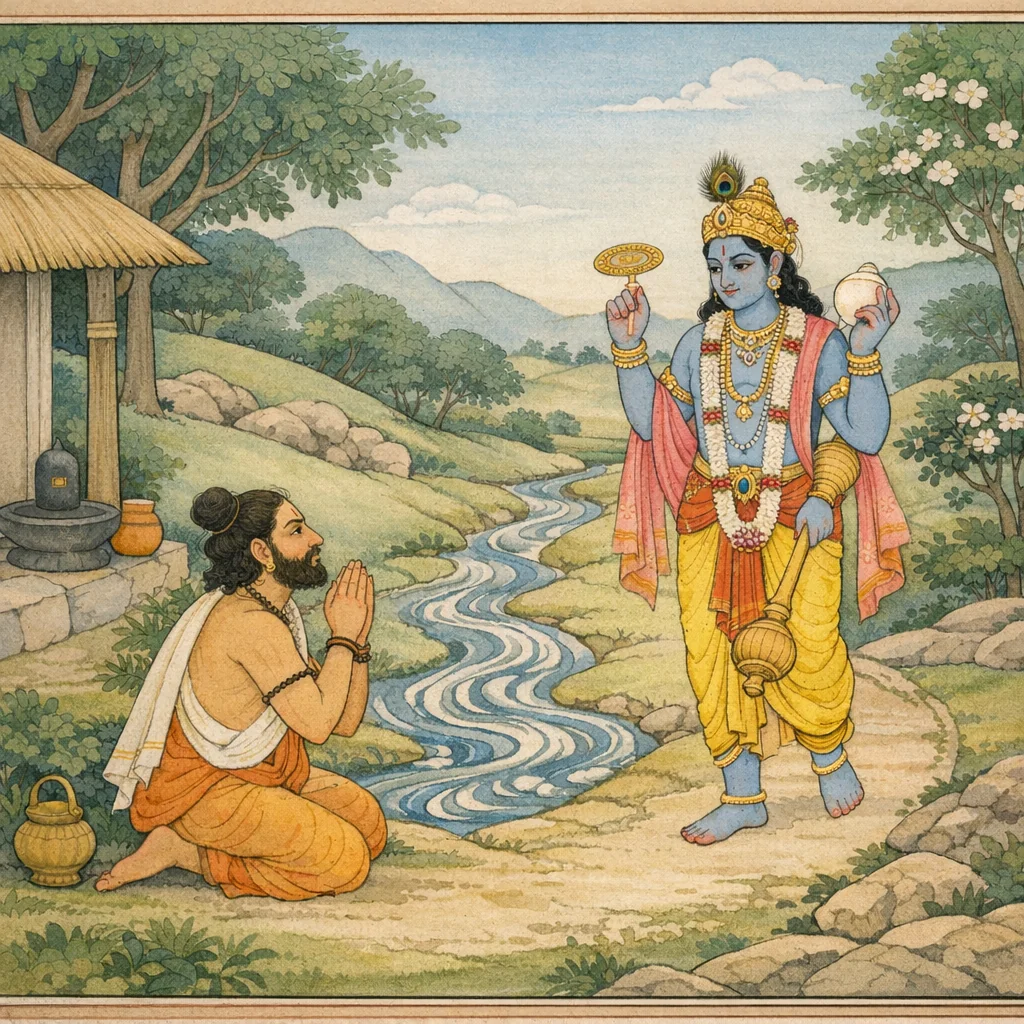
अथ तेनैव मार्गेण शड्खचक्रगदाधर:,सलिल विप्रमुख्येभ्यो मातड्स्रोतसा विभो | तदनन्तर शंख, चक्र और गदा धारण करनेवाले भगवान् श्रीकृष्ण उसी मार्गसे प्रकट होकर आये। उन्हें देखकर महामति उत्तंकने कहा--'पुरुषोत्तम! प्रभो! आपको श्रेष्ठ ब्राह्मणोंके लिये चाण्डालसे स्पर्श किया हुआ वैसा अपवित्र जल देना उचित नहीं है!
Then, along that very same path, the Lord—bearing conch, discus, and mace—appeared, O Mighty One, by the stream called Mātṛ-srotas, where the foremost of Brahmins were present. Seeing him, the great-minded Uttanka spoke: “Supreme Person, Lord! It is not proper for you to offer to excellent Brahmins such impure water—water that has been touched by a Caṇḍāla.”
Verse 24
आजगाम महाबुद्धिरुत्तड़कश्नैनमब्रवीत् । न युक्त तादृशं दातुं त्वया पुरुषसत्तम
Then Uttadaka, a man of great intelligence, came and addressed him: “O best of men, it is not proper for you to give such a gift.”
Verse 25
इत्युक्तवचन त॑ तु महाबुद्धिर्जनार्दन:
When those words had been spoken, Janārdana—of great intelligence—responded, taking in the statement with discerning judgment and moral clarity.
Verse 26
यादृशेनेह रूपेण योग्यं दातुं धृतेन वै
Uttaṅka said: “In whatever form it is fitting here to make the gift, it should indeed be given with steadfast resolve.”
Verse 27
मया त्वदर्थमुक्तो वै वज्पाणि: पुरंदर:,'भुगुनन्दन! मैंने आपके लिये वज्रधारी इन्द्रसे जाकर कहा था कि तुम उत्तंक मुनिको जलके रूपमें अमृत प्रदान करो। मेरी बात सुनकर प्रभावशाली देवेन्द्रने बारम्बार मुझसे कहा कि “मनुष्य अमर नहीं हो सकता। इसलिये आप उन्हें अमृत न देकर और कोई वर दीजिये।” परंतु मैंने शचीपति इन्द्रसे जोर देकर कहा कि उत्तड़कको तो अमृत ही देना है
Uttaḍuka said: “For your sake I went and spoke to Purandara, the thunderbolt‑bearing Indra. O descendant of Bhṛgu, I told the wielder of the vajra: ‘Grant the sage Uttanka the nectar of immortality in the form of water.’ When he heard my request, the mighty Devendra repeatedly replied to me, ‘A human being cannot become deathless; therefore do not give him amṛta—grant him some other boon instead.’ But I pressed Śacīpati Indra firmly, insisting: ‘Uttanka must be given amṛta alone.’”
Verse 28
उत्तड़कायामृतं देहि तोयरूपमिति प्रभु: । स मामुवाच देदवेन्द्रो न मर्त्योमर्त्यतां ब्रजेत्,'भुगुनन्दन! मैंने आपके लिये वज्रधारी इन्द्रसे जाकर कहा था कि तुम उत्तंक मुनिको जलके रूपमें अमृत प्रदान करो। मेरी बात सुनकर प्रभावशाली देवेन्द्रने बारम्बार मुझसे कहा कि “मनुष्य अमर नहीं हो सकता। इसलिये आप उन्हें अमृत न देकर और कोई वर दीजिये।” परंतु मैंने शचीपति इन्द्रसे जोर देकर कहा कि उत्तड़कको तो अमृत ही देना है
Uttaḍuka said: “O Lord, grant Uttaḍuka the nectar of immortality in the form of water.” But Devendra replied to me, repeatedly insisting: “A mortal cannot pass beyond mortality.” Thus Indra urged that some other boon be given instead of amṛta—yet I pressed him firmly that Uttaḍuka must be granted amṛta alone.
Verse 29
अन्यमस्मै वरं देहीत्यसकृद् भुगुनन्दन । अमृतं देयमित्येव मयोक्त: स शचीपति:,'भुगुनन्दन! मैंने आपके लिये वज्रधारी इन्द्रसे जाकर कहा था कि तुम उत्तंक मुनिको जलके रूपमें अमृत प्रदान करो। मेरी बात सुनकर प्रभावशाली देवेन्द्रने बारम्बार मुझसे कहा कि “मनुष्य अमर नहीं हो सकता। इसलिये आप उन्हें अमृत न देकर और कोई वर दीजिये।” परंतु मैंने शचीपति इन्द्रसे जोर देकर कहा कि उत्तड़कको तो अमृत ही देना है
“Again and again he said to me, ‘Grant him some other boon, O Bhṛgu’s descendant.’ But I insisted, ‘It must be immortality—amṛta must be given.’ Thus did I press Śacī’s lord (Indra).”
Verse 30
स मां प्रसाद्य देवेन्द्र: पुनरेवेदमब्रवीत् । यदि देयमवश्यं वै मातड्रो5हं महामते,“तब देवराज इन्द्र मुझे प्रसन्न करके बोले--'सर्वव्यापी महामते! यदि भृगुनन्दन महात्मा उत्तंकको अमृत अवश्य देना है तो मैं चाण्डालका रूप धारण करके उन्हें अमृत प्रदान करूँगा। यदि इस प्रकार आज भृगुवंशी उत्तंक अमृत लेना स्वीकार करेंगे तो मैं उन्हें वर देनेके लिये अभी जा रहा हूँ और यदि वे अस्वीकार कर देंगे तो मैं किसी तरह उन्हें अमृत नहीं दूँगा"
Having appeased me, Indra, the lord of the gods, again spoke these words: “O great-minded one, if it must indeed be given without fail—if I am to give that nectar—then I shall assume the form of a Caṇḍāla and provide you the amṛta.”
Verse 31
भूत्वामृतं प्रदास्थामि भार्गवाय महात्मने । यद्येवं प्रतिगृह्नाति भार्गवो5मृतमद्य वै,“तब देवराज इन्द्र मुझे प्रसन्न करके बोले--'सर्वव्यापी महामते! यदि भृगुनन्दन महात्मा उत्तंकको अमृत अवश्य देना है तो मैं चाण्डालका रूप धारण करके उन्हें अमृत प्रदान करूँगा। यदि इस प्रकार आज भृगुवंशी उत्तंक अमृत लेना स्वीकार करेंगे तो मैं उन्हें वर देनेके लिये अभी जा रहा हूँ और यदि वे अस्वीकार कर देंगे तो मैं किसी तरह उन्हें अमृत नहीं दूँगा"
Uttaṅka said: “Assuming the form of nectar itself, I shall present it to the great-souled Bhārgava. If, in this manner, the Bhārgava accepts the nectar today, then the intended boon and reconciliation will proceed; but if he refuses, the gift of immortality will not be granted.”
Verse 32
प्रदातुमेष गच्छामि भार्गवस्यामृतं विभो । प्रत्याख्यातस्त्वहं तेन दास्यामि न कथंचन,“तब देवराज इन्द्र मुझे प्रसन्न करके बोले--'सर्वव्यापी महामते! यदि भृगुनन्दन महात्मा उत्तंकको अमृत अवश्य देना है तो मैं चाण्डालका रूप धारण करके उन्हें अमृत प्रदान करूँगा। यदि इस प्रकार आज भृगुवंशी उत्तंक अमृत लेना स्वीकार करेंगे तो मैं उन्हें वर देनेके लिये अभी जा रहा हूँ और यदि वे अस्वीकार कर देंगे तो मैं किसी तरह उन्हें अमृत नहीं दूँगा"
Uttaṅka said: “O mighty one, I am going now to offer this nectar to the Bhārgava. But if he rejects it, then I shall not give it to him in any way.”
Verse 33
स तथा समयं कृत्वा तेन रूपेण वासव: । उपस्थितस्त्वया चापि प्रत्याख्यातो5मृतं ददत्,“इस तरहकी शर्त करके साक्षात् इन्द्र चाण्डालके रूपमें यहाँ उपस्थित हुए थे और आपको अमृत दे रहे थे; परंतु आपने उन्हें ठुकरा दिया
“Having made such a condition, Vāsava (Indra) himself came here in that very guise. And though he was offering you the nectar of immortality, you rejected him.”
Verse 34
चाण्डालरूपी भगवान् सुमहांस्ते व्यतिक्रम: । यत् तु शक््यं मया कर्तु भूय एव तवेप्सितम्,“आपने चाण्डालरूपधारी भगवान् इन्द्रको ठुकराया है, यह आपका महान् अपराध है। अच्छा, आपकी इच्छा पूर्ण करनेके लिये मैं पुन: जो कुछ कर सकता हूँ, करूँगा
Uttanka said: “The Blessed Lord Indra had assumed the form of a Caṇḍāla; to reject him is a very grave transgression on your part. Still, to fulfill your wish, I will again do whatever lies within my power.”
Verse 35
तोयेप्सां तव दुर्धर्षा करिष्ये सफलामहम् । येष्वह:सु च ते ब्रह्मन् सलिलेप्सा भविष्यति
Uttaṅka said: “O Brahmin, I shall make your hard-to-fulfil desire for water truly fruitful. On those very days when you long for water, that longing will indeed arise for you in the midst of water itself.”
Verse 36
तदा मरौ भविष्यन्ति जलपूर्णा: पयोधरा: । रसवच्च प्रदास्यन्ति तोयं ते भूगुनन्दन
Then, even in the desert, the rain-clouds will be filled with water; and they will pour out for you water that is sweet and rich—O delight of the Bhṛgus. The saying affirms a moral assurance: when dharma and right conduct are upheld, nature itself is said to answer with timely, nourishing abundance, turning barrenness into sustenance.
Verse 37
उत्तड़कमेघा इत्युक्ता: ख्यातिं यास्यन्ति चापि ते । “ब्रह्म! आपकी तीव्र पिपासाको मैं अवश्य सफल करूँगा। जिन दिनों आपको जल पीनेकी इच्छा होगी, उन्हीं दिनों मरुप्रदेशमें जलसे भरे हुए मेघ प्रकट होंगे। भूगुनन्दन! वे आपको सरस जल प्रदान करेंगे और इस पृथ्वीपर उत्तंक मेघके नामसे विख्यात होंगे” ।। इत्युक्त: प्रीतिमान् विप्र: कृष्णेन स बभूव ह । अद्याप्युत्तड़कमेघाश्व मरौ वर्षन्ति भारत,भारत! भगवान् श्रीकृष्णके ऐसा कहनेपर विप्रवर उत्तंक मुनि बड़े प्रसन्न हुए। इस समय भी मरुभूमिमें उत्तंक मेघ प्रकट होकर जलकी वर्षा करते हैं
Uttaduka said: “Those clouds will indeed become renowned by the name ‘Uttaduka-clouds.’ O brahmin, I will surely fulfill your intense thirst. On whatever days you desire to drink water, on those very days, in the desert region, clouds filled with water will appear. O descendant of Bhṛgu, they will grant you sweet, refreshing water, and on this earth they will be celebrated as the ‘Uttaduka-clouds.’” Thus addressed, the brahmin sage was delighted by Kṛṣṇa’s words. Even today, O Bhārata, those Uttaduka-clouds are said to rain in the desert—an enduring sign that a divine assurance, when spoken in truth, becomes continuing protection for the righteous.
Verse 55
इति श्रीमहाभारते आश्वमेधिके पर्वणि अनुगीतापर्वणि उत्तड़कोपाख्याने पञ्चपज्चाशत्तमो<ध्याय:
Thus ends the fifty-fifth chapter of the Anugītā section within the Aśvamedhika Parva of the Śrī Mahābhārata, in the episode (upākhyāna) concerning Uttaḍaka. This is a formal colophon marking the close of the chapter and situating the narrative within its larger ethical-discursive frame.
Verse 223
मेने प्रलब्धमात्मानं कृष्णेनामित्रघातिना । महाराज! मुनिके इनकार करते ही कुत्तोंसहित वह चाण्डाल वहीं अन्तर्धान हो गया। यह देख उत्तंक मन-ही-मन बहुत लज्जित हुए और सोचने लगे कि “शत्रुघाती श्रीकृष्णने मुझे ठग लिया'
Uttaṅka said: “I felt that I had been deceived by Kṛṣṇa, the slayer of foes. O great king, the moment the sage refused, that caṇḍāla—together with the dogs—vanished on the spot. Seeing this, Uttaṅka was deeply ashamed within himself and reflected: ‘I have been tricked by Śrī Kṛṣṇa, the destroyer of enemies.’”
Verse 246
सलिल विप्रमुख्येभ्यो मातड्स्रोतसा विभो | तदनन्तर शंख, चक्र और गदा धारण करनेवाले भगवान् श्रीकृष्ण उसी मार्गसे प्रकट होकर आये। उन्हें देखकर महामति उत्तंकने कहा--'पुरुषोत्तम! प्रभो! आपको श्रेष्ठ ब्राह्मणोंके लिये चाण्डालसे स्पर्श किया हुआ वैसा अपवित्र जल देना उचित नहीं है!
From the stream associated with Mātaṅga (a source regarded as impure), water was offered to the foremost of brāhmaṇas. Immediately afterward, Lord Śrī Kṛṣṇa—bearing conch, discus, and mace—appeared on that very path and came forward. Seeing Him, the wise Uttanka said: “O Puruṣottama, O Lord! It is not proper to give to eminent brāhmaṇas such impure water that has been touched by a caṇḍāla.”
Verse 256
उत्तड़कं श्लक्षणया वाचा सान्त्वयन्निदमब्रवीत् | उत्तंकके ऐसा कहनेपर महाबुद्धिमान् जनार्दनने उन्हें मधुर वाणीद्वारा सान्त्वना देते हुए कहा--
As Uttaṅka spoke thus, Janārdana—of great intelligence—soothed him with gentle, courteous words and replied, offering consolation meant to steady his mind and restore him to a dharmic, composed outlook.
Verse 263
तादृशं खलु ते दत्तं यच्च त्वं नावबुध्यथा: । “महर्षे! वहाँ जैसा रूप धारण करके वह जल आपके लिये देना उचित था, उसी रूपसे दिया गया; किंतु आप उसे समझ न सके
“Indeed, what was given to you was given in precisely that form which was proper for you. Yet you did not recognize it.”
Frequently Asked Questions
Uttanka faces the tension between accepting the guru’s declared satisfaction as sufficient dakṣiṇā and insisting on a further concrete act of service, risking harm while attempting to perfect his obligation.
Discipline and devotion generate moral authority, but righteous action also requires discernment about duties, permissions, and the real-world consequences of undertaking tasks that cross into dangerous social domains.
No formal phalaśruti appears here; the chapter’s meta-function is etiological—explaining the roots of Uttanka’s tapas-based potency and setting causal conditions for later ethical confrontation.