Adhyaya 15
अध्याय १५ (Āśramavāsika-parva): धृतराष्ट्रस्य वनवासानुज्ञायाचनम् — Dhṛtarāṣṭra’s renewed plea for consent to forest-dwelling
Upa-parva: Āśramavāsika-parva: Dhṛtarāṣṭra’s Request for Permission and Public Mediation Episode
Vaiśaṃpāyana reports that the assembled citizens and countryside people, addressed by the aged Kuru king, become stunned and grief-stricken, repeatedly likened to those who have lost consciousness. Dhṛtarāṣṭra speaks again, presenting himself as old and bereaved, lamenting with Gāndhārī, and reminding the audience that his forest-withdrawal has already been sanctioned by his father’s lineal authority and by Kṛṣṇa-Dvaipāyana Vyāsa, alongside dharma-knowing royal approval. He bows and requests permission once more. The community weeps, covering faces, struggling to endure the sorrow of separation. After regaining composure, they coordinate a unified response and entrust their message to a single brāhmaṇa. An elder, respected Bahvṛca named Sāmbākhya begins speaking: he validates the king’s statements, emphasizes mutual goodwill, praises the Kuru lineage’s historical care for subjects, asserts that neither Dhṛtarāṣṭra nor Duryodhana committed wrong against them in their experience of protection, and directs the king to follow Vyāsa’s instruction as the highest authority. The chapter thus stages public grief, mediated counsel, and the ethical formalities of renunciation from kingship.
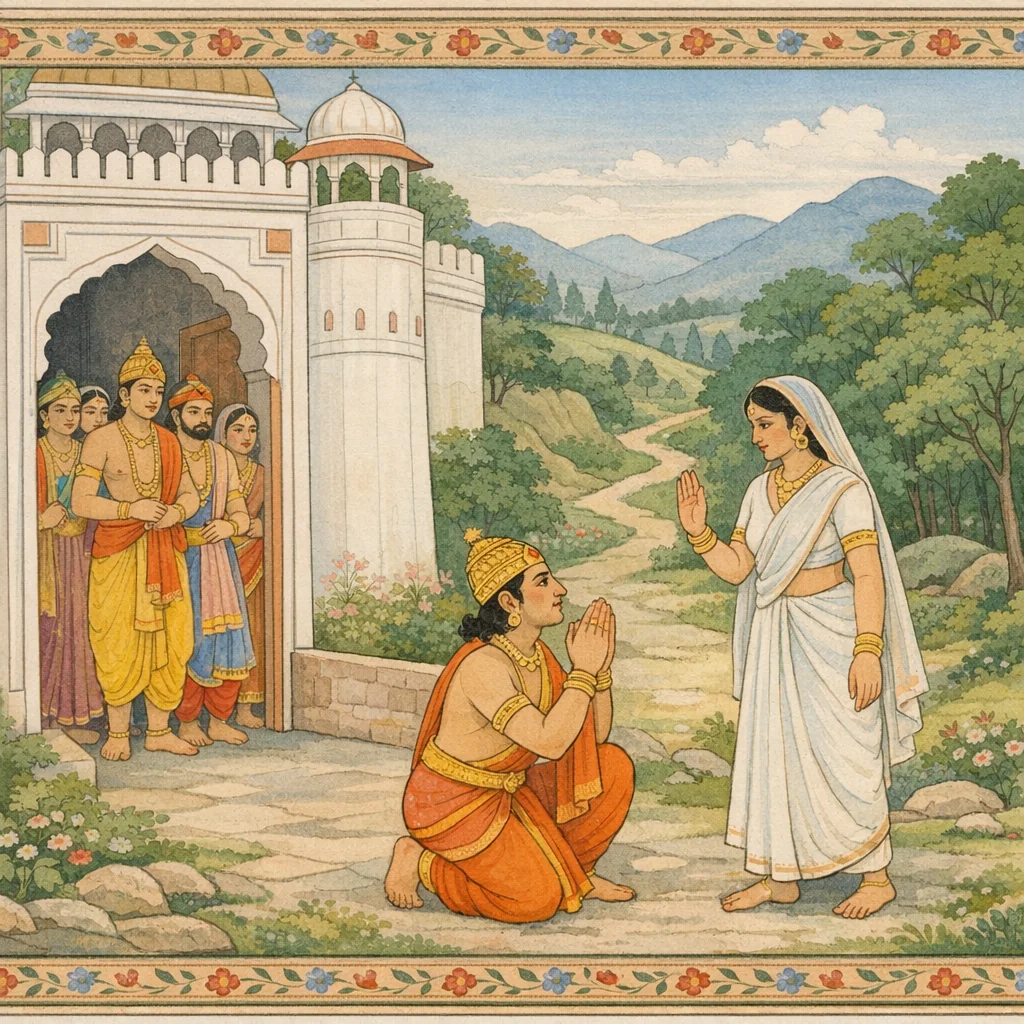
Chapter Arc: हस्तिनापुर की राजमार्ग-भरी गलियों से धृतराष्ट्र का काँपते हाथों से अंजलि बाँधकर निकलना—एक ऐसे राजा का प्रस्थान, जो अब राज्य नहीं, प्रायश्चित्त चुन रहा है। → वर्धमान-द्वार से बाहर जाते हुए धृतराष्ट्र बार-बार जनसमूह को लौटाते हैं; नगर की भीड़ और परिवार की भीड़—दोनों का खिंचाव बढ़ता है। पाण्डव, सेवक, अन्तःपुर की स्त्रियाँ पीछे-पीछे चलती हैं। सहदेव और अन्य पुत्र कुन्ती से विनती करते हैं कि वह बहुओं सहित लौट आएँ, पर कुन्ती का संकल्प कठोर होता जाता है। → कुन्ती का निर्णायक वचन: वह गान्धारी के साथ तपस्विनी बनकर वन में रहेगी—मैल-कीचड़ धारण कर, सास-ससुर के चरणों की सेवा करेगी; पाण्डवों के अनुरोध, राज्य की सुविधा, और पुत्र-वधुओं की संगति—सबको त्यागकर। → कुन्ती पुत्रों को अंतिम उपदेश देती है—द्रौपदी को सदा प्रिय रखना, भाइयों को संतुष्ट रखना, कुल-धर्म और मर्यादा में स्थिर रहना। पाण्डव शोक में डूबकर भी मौन-स्वीकृति की ओर झुकते हैं; धृतराष्ट्र का प्रस्थान अब अपरिवर्तनीय हो जाता है। → वन-जीवन की कठोरता और वृद्धों के तप का परिणाम क्या होगा—और यह त्याग पाण्डवों के राज्य-धर्म को किस नई परीक्षा में डालेगा?
Shlokas
Verse 1
अपर बक। ] अति: घोडशो&< ध्याय: धृतराष्ट्रका पुरवासियोंको लौटाना और पाण्डवोंके अनुरोध करनेपर भी कुन्तीका वनमें जानेसे न रुकना वैशम्पायन उवाच ततः प्रासादहर्म्येषु वसुधायां च पार्थिव । नारीणां च नराणां च नि:स्वन: सुमहानभूत्,वैशम्पायनजी कहते हैं--पृथ्वीनाथ! तदनन्तर महलों और अट्टालिकाओंमें तथा पृथ्वीपर भी रोते हुए नर-नारियोंका महान् कोलाहल छा गया
Vaiśampāyana said: “Then, O king, a very great outcry arose—of women and of men—through the palaces and lofty mansions, and even across the very ground itself.”
Verse 2
स राजा राजमार्गेण नूनारीसंकुलेन च | कथंचिन्निर्यया धीमान् वेपमान: कृताञज्जलि:,सारी सड़क पुरुषों और स्त्रियोंकी भीड़से भरी हुई थी। उसपर चलते हुए बुद्धिमान् राजा धृतराष्ट्र बड़ी कठिनाईसे आगे बढ़ पाते थे। उनके दोनों हाथ जुड़े हुए थे और शरीर काँप रहा था
That king proceeded along the royal road, crowded with men and women. The wise Dhṛtarāṣṭra could scarcely move forward except with great difficulty; his hands were joined in reverence, and his body trembled.
Verse 3
स वर्द्धमानद्वारेण निर्ययौ गजसाह्दयात् । विसर्जयामास च तं जनौघं स मुहुर्मुहु:,राजा धुृतराष्ट्र वर्धभान नामक द्वारसे होते हुए हस्तिनापुरसे बाहर निकले। वहाँ पहुँचकर उन्होंने बारंबार आग्रह करके अपने साथ आये हुए जनसमूहको विदा किया
Vaiśaṃpāyana said: King Dhṛtarāṣṭra went out from Hastināpura—also called Gaja-sāhvaya—by the gate named Vardhamāna. Having reached outside, he repeatedly and earnestly dismissed the great crowd of people who had accompanied him, sending them back again and again.
Verse 4
वन॑ गन्तुं च विदुरो राज्ञा सह कृतक्षण: । संजयश्न महामात्र: सूतो गावल्गणिस्तथा,विदुर और गवल्गणकुमार महामात्र सूत संजयने राजाके साथ ही वनमें जानेका निश्चय कर लिया था
Vaiśampāyana said: Vidura had resolved to depart for the forest together with the king; and likewise Sañjaya—the great minister and charioteer, the son of Gāvalgaṇa—also made the same decision.
Verse 5
कृपं निवर्तयामास युयुत्सुं च महारथम् । धृतराष्ट्री महीपाल: परिदाप्य युधिष्ठिरे,महाराज धुृतराष्ट्रने कृपाचार्य और महारथी युयुत्सुको युधिष्ठिरके हाथों सौंपकर लौटाया
Vaiśampāyana said: King Dhṛtarāṣṭra, after sending back Kṛpa and the great charioteer Yuyutsu, returned—having entrusted them to Yudhiṣṭhira. The episode marks Dhṛtarāṣṭra’s final withdrawal from royal entanglements and his resolve to place trusted elders and allies under the righteous protection of the reigning king, aligning renunciation with dharma and duty.
Verse 6
निवृत्ते पौरवर्गे च राजा सान्त:पुरस्तदा । धृतराष्ट्रा भ्यनुज्ञातो निवर्तितुमियेष ह,पुरवासियोंके लौट जानेपर अन्तःपुरकी रानियोंसहित राजा युधिष्ठिरने धृतराष्ट्रकी आज्ञा लेकर लौट जानेका विचार किया
Vaiśampāyana said: When the townspeople had departed, King Yudhiṣṭhira—together with the queens of the inner palace—having obtained Dhṛtarāṣṭra’s permission, then resolved to return. The moment shows dharmic restraint: even in victory he acts only after seeking the elder’s consent, honoring rank and propriety amid the sorrowful aftermath.
Verse 7
सो<ब्रवीन्मातरं कुन्तीं वनं तमनुजग्मुषीम् । अहं राजानमन्विष्ये भवती विनिवर्तताम्
Vaiśaṃpāyana said: He spoke to his mother Kuntī, who was following him toward that forest: “I will go in search of the king; you should turn back.” The moment shows a son’s duty and protective concern—seeking the rightful elder while urging his mother not to endure further hardship.
Verse 8
वधूपरिवृता राज्ञि नगरं गन्तुमर्हसि । राजा यात्वेष धर्मात्मा तापस्ये कृतनिश्चय:
Vaiśampāyana said: “O queen, accompanied by your daughters-in-law, you should return to the city. As for the king—this righteous-souled man has resolved to depart and take up the life of an ascetic, a tapasvin.”
Verse 9
उस समय उन्होंने वनकी ओर जाती हुई अपनी माता कुन्तीसे कहा--'रानी मा! आप अपनी पुत्र-वधुओंके साथ लौटिये, नगरको जाइये। मैं राजाके पीछे-पीछे जाऊँगा; क्योंकि ये धर्मात्मा नरेश तपस्याके लिये निश्चय करके वनमें जा रहे हैं, अतः इन्हें जाने दीजिये” ।। इत्युक्ता धर्मराजेन बाष्पव्याकुललोचना । जगामैव तदा कुन्ती गान्धारीं परिगृह्म ह,धर्मराज युधिष्ठिरके ऐसा कहनेपर कुन्तीके नेत्रोंमें आँसू भर आया तो भी वे गान्धारीका हाथ पकड़े चलती ही गयीं
Vaiśampāyana said: At that time he addressed his mother Kuntī, who was turning toward the forest: “O Queen Mother, return with your daughters-in-law and go back to the city. I will follow behind the king, for this righteous ruler has resolved to go to the forest for austerities (tapas); therefore, let him proceed.” When Dharma-rāja Yudhiṣṭhira spoke thus, Kuntī’s eyes filled with tears; yet she continued on, holding Gāndhārī’s hand.
Verse 10
कुन्त्युवाच सहदेवे महाराज माप्रसादं कृथा: क्वचित् | एष मामनुरक्तो हि राजंस्त्वां चैव सर्वदा,जाते-जाते ही कुन्तीने कहा--महाराज! तुम सहदेवपर कभी अप्रसन्न न होना। राजन! यह सदा मेरे और तुम्हारे प्रति भक्ति रखता आया है
Kuntī said: “O great king, never at any time be displeased with Sahadeva. O king, he has always been devoted—steadfast in loyalty—to me, and to you as well.”
Verse 11
कर्ण स्मरेथा: सतत संग्रामेष्वपलायिनम् । अवकीरण्णो हि समरे वीरो दुष्प्रज्ञया तदा,संग्राममें कभी पीठ न दिखानेवाले अपने भाई कर्णको भी सदा याद रखना, क्योंकि मेरी ही दुर्बुद्धिके कारण वह वीर युद्धमें मारा गया
“Always remember your brother Karṇa, who never turned away in battle. For that hero was struck down in the fight because of my own poor judgment then.”
Verse 12
आयसं हृदयं नूनं मन्दाया मम पुत्रक । यत् सूर्यजमपश्यन्त्या: शतधा न विदीर्यते,बेटा! मुझ अभागिनीका हृदय निश्चय ही लोहेका बना हुआ है; तभी तो आज सूर्यनन्दन कर्णको न देखकर भी इसके सैकड़ों टुकड़े नहीं हो जाते
Vaiśampāyana said: “Surely my heart is made of iron, my child—so dull and ill-fated am I—for even though I do not see Karṇa, the son of the Sun, it does not split into a hundred pieces.”
Verse 13
एवं गते तु कि शक्यं मया कर्तुमरिंदम | मम दोषो<5यमत्यर्थ ख्यापितो यन्न सूर्यज:,शत्रुदमन! ऐसी दशामें मैं क्या कर सकती हूँ। यह मेरा ही महान् दोष है कि मैंने सूर्यपुत्र कर्णका तुमलोगोंको परिचय नहीं दिया
Vaiśampāyana said: “Since matters have come to this pass, what can I do now, O subduer of foes? This is wholly my grave fault—that I did not make known to you all that Karṇa was the son of the Sun. In such a situation, what remedy remains for me?”
Verse 14
तन्निमित्तं महाबाहो दान दद्यास्त्वमुत्तमम् । सदैव भ्रातृभि: सार्ध सूर्यजस्यारिमर्दन,महाबाहो! शत्रुमर्दन! तुम अपने भाइयोंके साथ सदा ही सूर्यपुत्र कर्णके लिये भी उत्तम दान देते रहना
Vaiśampāyana said: “Therefore, O mighty-armed one, you should always offer excellent gifts. And, O crusher of foes, do so continually together with your brothers—also in honor of Karṇa, the son of the Sun.”
Verse 15
इस प्रकार श्रीमह्ाभारत आश्रमवासिकपर्वके अन्तर्गत आश्रमवासपर्वमें धृतराफ्रका नगरसे निकलनाविषयक पंद्रहवाँ अध्याय पूरा हुआ,द्रौपद्याश्न प्रिये नित्यं स्थातव्यमरिकर्शन । भीमसेनोडर्जुनश्वैव नकुलश्व कुरूद्वह
Vaiśampāyana said: “O subduer of foes, you must ever remain dear to Draupadī. And Bhīmasena, Arjuna, and Nakula too—O best of the Kurus.”
Verse 16
श्वश्रूश्वशुरयो: पादान् शुश्रूषन्ती वने त्वहम्,इति श्रीमहाभारते आश्रमवासिके पर्वणि आश्रमवासपर्वणि कुन्तीवनप्रस्थाने षोडशो<ध्याय:
“I shall dwell in the forest, devotedly attending upon the feet of my mother-in-law and father-in-law.”
Verse 17
वैशम्पायन उवाच एवमुक्त: स धर्मात्मा भ्रातृभि: सहितो वशी । विषादमगमद् धीमान् न च किंचिदुवाच ह,वैशम्पायनजी कहते हैं--जनमेजय! माताके ऐसा कहनेपर अपने मनको वशमें रखनेवाले धर्मात्मा एवं बुद्धिमान् युधिष्ठिर भाइयोंसहित बहुत दुःखी हुए। वे अपने मुँहसे कुछ न बोले
Vaiśampāyana said: “O Janamejaya, when his mother spoke thus, the righteous and wise Yudhiṣṭhira, self-controlled and accompanied by his brothers, was overcome with grief and spoke not a word.”
Verse 18
मुहूर्तमिव तु ध्यात्वा धर्मराजो युधिष्ठिर: । उवाच मातरं दीनश्रिन्ताशोकपरायण:,दो घड़ीतक कुछ सोच-विचारकर चिन्ता और शोकमें डूबे हुए धर्मराज युधिष्ठिरने मातासे दीन होकर कहा--
After reflecting for what seemed but a brief moment, Dharmarāja Yudhiṣṭhira—overwhelmed by anxiety and grief—spoke to his mother in a humbled, sorrowful tone.
Verse 19
किमिदं ते व्यवसित नैवं त्वं वक्तुमरहसि । न त्वामभ्यनुजानामि प्रसाद कर्तुमहसि,“माताजी! आपने यह क्या निश्चय कर लिया? आपको ऐसी बात नहीं कहनी चाहिये। मैं आपको वनमें जानेकी अनुमति नहीं दे सकता। आप मुझपर कृपा कीजिये
Vaiśampāyana said: “What resolve is this that you have taken? You ought not to speak in this way. I cannot grant you permission to go to the forest. Please show me favor—be gracious to me.”
Verse 20
पुरोद्यतान् पुरा हास्मानुत्साहा प्रियदर्शने । विदुलाया वचोभिस्त्व॑ नास्मान् संत्यक्तुमहसि,'प्रियदर्शने! पहले जब हमलोग नगरसे बाहर जानेको उद्यत थे, आपने विदुलाके वचनोंद्वारा हमें क्षत्रियरधर्मके पालनके लिये उत्साह दिलाया था। अतः: आज हमें त्यागकर जाना आपके लिये उचित नहीं है
Vaiśampāyana said: “O fair-looking one, earlier, when we were ready to depart from the city, you stirred our resolve—through Vidulā’s words—to uphold the kṣatriya duty. Therefore, it is not fitting for you to abandon us now.”
Verse 21
निहत्य पृथिवीपालानू् राज्यं प्राप्तमिदं मया | तव प्रज्ञामुपश्रुत्य वासुदेवान्नरर्षभात्,“पुरुषोत्तम भगवान् श्रीकृष्णके मुखसे आपका विचार सुनकर ही मैंने बहुत-से राजाओंका संहार करके इस राज्यको प्राप्त किया है
Vaiśampāyana said: “Having slain many kings, I have obtained this kingdom. It was after hearing your wise counsel—counsel that came from Vāsudeva, the best of men—that I undertook this course.”
Verse 22
क्व सा बुद्धिरियं चाद्य भवत्या यच्छुतं मया । क्षत्रधर्मे स्थितिं चोक्त्वा तस्याश्ष्यवितुमिच्छसि,“कहाँ आपकी वह बुद्धि और कहाँ आपका यह विचार? मैंने आपका जो विचार सुना है, उसके अनुसार हमें क्षत्रिय-धर्ममें स्थित रहनेका उपदेश देकर आप स्वयं उससे गिरना चाहती हैं
“Where is that wisdom of yours now, and why do you think thus today? You urged us to stand firm in kṣatriya dharma—yet now you yourself wish to fall away from it?”
Verse 23
अस्मानुत्सृज्य राज्यं च स्नुषा हीमा यशस्विनि । कथं वत्स्यसि दुर्गेषु वनेष्वद्य प्रसीद मे,“यशस्विनी मा! भला आप हमको, अपनी इन बहुओंको और इस राज्यको छोड़कर अब उन दुर्गम वनोंमें कैसे रह सकेंगी; अत: हमलोगोंपर कृपा करके यहीं रहिये"
“O illustrious lady, abandoning us, this kingdom, and your daughters-in-law—how will you live today in forests that are hard to traverse? Have compassion on us; be pleased and stay here.”
Verse 24
इति बाष्पकला वाच: कुन्ती पुत्रस्य शृण्वती | सा जगामाश्रुपूर्णाक्षी भीमस्तामिदमब्रवीत्,अपने पुत्रके ये अश्रुगदूगद वचन सुनकर दुन्तीके नेत्रोंमें आँसू उमड़ आये तो भी वे रुक न सकीं। आगे बढ़ती ही गयीं। तब भीमसेनने उनसे कहा--
Vaiśampāyana said: Hearing her son’s words, broken and blurred by tears, Kuntī’s eyes filled with weeping. Yet she did not stop; she kept moving forward. Then Bhīmasena addressed her with these words—
Verse 25
यदा राज्यमिदं कुन्ति भोक्तव्यं पुत्रनिर्जितम् । प्राप्तव्या राजधर्माश्व तदेयं ते कुतो मति:,“माताजी! जब पुत्रोंके जीते हुए इस राज्यके भोगनेका अवसर आया और राजधर्मके पालनकी सुविधा प्राप्त हुई, तब आपको ऐसी बुद्धि कैसे हो गयी?
Vaiśampāyana said: “O Kuntī, when the time had come for you to enjoy this kingdom won by your sons, and when the opportunity to uphold the duties of kingship had been secured, how did such a resolve arise in you?”
Verse 26
कि वयं कारिता: पूर्व भवत्या पृथिवीक्षयम् | कस्य हेतो: परित्यज्य वन॑ गन्तुमभीप्ससि,“यदि ऐसा ही करना था तो आपने इस भूमण्डलका विनाश क्यों करवाया? क्या कारण है कि आप हमें छोड़कर वनमें जाना चाहती हैं?
Vaiśaṃpāyana said: “If this was to be the outcome, why did you earlier cause the destruction of the earth’s kings and peoples? For what reason do you now wish to abandon us and go to the forest?”
Verse 27
वनाच्चापि किमानीता भवत्या बालका वयम् | दुःखशोकसमाविष्टौ माद्रीपुत्राविमौ तथा,“जब आपको वनमें ही जाना था, तब आप हमको और दु:ख-शोकमें डूबे हुए उन माद्रीकुमारोंको बाल्यावस्थामें वनसे नगरमें क्यों ले आयीं?
Vaiśampāyana said: “If you were destined to go to the forest after all, why did you bring us—still mere children—from the forest to the city? And why did you likewise bring these two sons of Mādrī, overwhelmed by grief and sorrow?”
Verse 28
प्रसीद मातर्मा गास्त्वं वनमद्य यशस्विनि । श्रियं यौधिष्ठिरी मातर्भुड्क्ष्य तावद् बलार्जिताम्,“मेरी यशस्विनी मा! आप प्रसन्न हों। आप हमें छोड़कर वनमें न जायेँ। बलपूर्वक प्राप्त की हुई राजा युधिष्ठिरकी उस राजलक्ष्मीका उपभोग करें!
Vaiśampāyana said: “Be gracious, Mother; do not go to the forest today, O renowned lady. Mother, for the present enjoy that royal fortune belonging to Yudhiṣṭhira—won by force and effort.”
Verse 29
इति सा निश्चितैवाशु वनवासाय भाविनी । लालप्यतां बहुविध॑ पुत्राणां नाकरोद् वच:,शुद्ध हृदयवाली कुन्ती देवी वनमें रहनेका दृढ़ निश्चय कर चुकी थीं; अतः नाना प्रकारसे विलाप करते हुए अपने पुत्रोंका अनुरोध उन्होंने नहीं माना
Vaiśampāyana said: Thus Kuntī, steadfast and resolute, had quickly fixed her mind on dwelling in the forest. Therefore, though her sons lamented and pleaded with her in many ways, she did not accept their entreaties.
Verse 30
द्रौपदी चान्वयाच्छवश्रृं विषण्णवदना तदा । वनवासाय गच्छन्तीं रुदती भद्रया सह,सासको इस प्रकार वनवासके लिये जाती देख द्रौपदीके मुखपर भी विषाद छा गया। वह सुभद्राके साथ रोती हुई स्वयं भी कुन्तीके पीछे-पीछे जाने लगी
Vaiśaṃpāyana said: Then Draupadī too, her face clouded with grief, followed her mother-in-law. Seeing her setting out for life in the forest, Draupadī—together with Subhadrā—went after Kuntī, weeping.
Verse 31
सा पुत्रान् रुदतः सर्वान् मुहुर्मुहुरवेक्षती । जगामैव महाप्राज्ञा वनाय कृतनिश्चया,कुन्तीकी बुद्धि विशाल थी। वे वनवासका पक्का निश्चय कर चुकी थीं; इसलिये अपने रोते हुए समस्त पुत्रोंकी ओर बार-बार देखती हुई वे आगे बढ़ती ही चली गयीं
Vaiśampāyana said: Kuntī, steadfast in her resolve to enter the forest, kept looking again and again at all her sons as they wept; yet, being truly wise, she continued onward without turning back.
Verse 32
अन्वयु: पाण्डवास्तां तु सभृत्यान्त:पुरास्तथा । ततः प्रमृज्य साश्रूणि पुत्रान् वचनमब्रवीत्,पाण्डव भी अपने सेवकों और अन्तःपुरकी स्त्रियोंके साथ उनके पीछे-पीछे जाने लगे। तब उन्होंने आँसू पोंछकर अपने पुत्रोंसे इस प्रकार कहा
Then the Pāṇḍavas followed after her, accompanied by their attendants and the women of the inner apartments. Thereupon, wiping away their tear-filled eyes, she addressed her sons with these words.
Verse 153
समाधेयास्त्वया राजंस्त्वय्यद्य कुलधूर्गता । शत्रुसूदन! मेरी बहू द्रौपदीका भी सदा प्रिय करते रहना। कुरुश्रेष्ठ. तुम भीमसेन, अर्जुन और नकुलको भी सदा संतुष्ट रखना। आजसे कुरुकुलका भार तुम्हारे ही ऊपर है
Vaiśampāyana said: “O King, all matters are now to be set in order by you; from today the burden of the dynasty rests upon you. O slayer of foes, always treat my daughter-in-law Draupadī with affection. O best of the Kurus, keep Bhīmasena, Arjuna, and Nakula continually content. From this day onward, the responsibility of the Kuru lineage lies upon you alone.”
Verse 163
गान्धारीसहिता वत्स्ये तापसी मलपड्किनी । अब मैं वनमें गान्धारीके साथ शरीरपर मैल एवं कीचड़ धारण किये तपस्विनी बनकर रहूँगी और अपने इन सास-ससुरके चरणोंकी सेवामें लगी रहूँगी
Vaishampayana said: “I shall dwell in the forest together with Gandhari, living as an ascetic woman, my body bearing dust and mud. I will remain devoted to serving the feet of these elders—my father-in-law and mother-in-law.”
Frequently Asked Questions
The dilemma is balancing civic attachment to a familiar ruler with the dharmic legitimacy of renunciation: the community must decide whether emotional dependence should delay a withdrawal already framed as ethically authorized.
Orderly counsel should transform collective grief into dharma-aligned action: the spokesman validates shared bonds yet prioritizes adherence to authoritative guidance (Vyāsa) and to established protocols for life-stage transition.
No explicit phalaśruti appears in the provided passage; the chapter’s meta-function is structural—documenting how communal authorization and authoritative counsel legitimize renunciation within the epic’s ethical closure.