Adhyaya 135
Viṣṇu-sahasranāma—Yudhiṣṭhira’s Inquiry and Bhīṣma’s Recitation (विष्णोर्नामसहस्रम्)
Upa-parva: Viṣṇu-sahasranāma Upākhyāna (Stotra-Prakaraṇa) within Anuśāsana-parva
Vaiśaṃpāyana reports that, after hearing extensive dharma-instructions, Yudhiṣṭhira again questions Bhīṣma for a singular theological and practical solution: (i) the one deity in the world, (ii) the one supreme refuge, (iii) the object of praise and worship by which humans attain auspiciousness, (iv) the highest dharma among all dharmas, and (v) the recitative practice by which beings are released from the bondage of birth and worldly continuity. Bhīṣma answers by elevating Viṣṇu/Nārāyaṇa—described as anādi-nidhana (without beginning or end), jagat-prabhu (lord of the world), and sarva-loka-maheśvara (sovereign over all realms)—and introduces the Viṣṇu-sahasranāma as a continuous discipline of praise, worship, meditation, and salutation. The chapter then presents the sahasranāma catalogue of epithets, followed by explicit phalaśruti: claims of protection from inauspiciousness, social and personal flourishing, relief from fear and affliction, and orientation toward brahman/sanātana. The close reiterates cosmological dependence on Vāsudeva and frames the stotra as Vyāsa’s composition for śreyas and sukha.
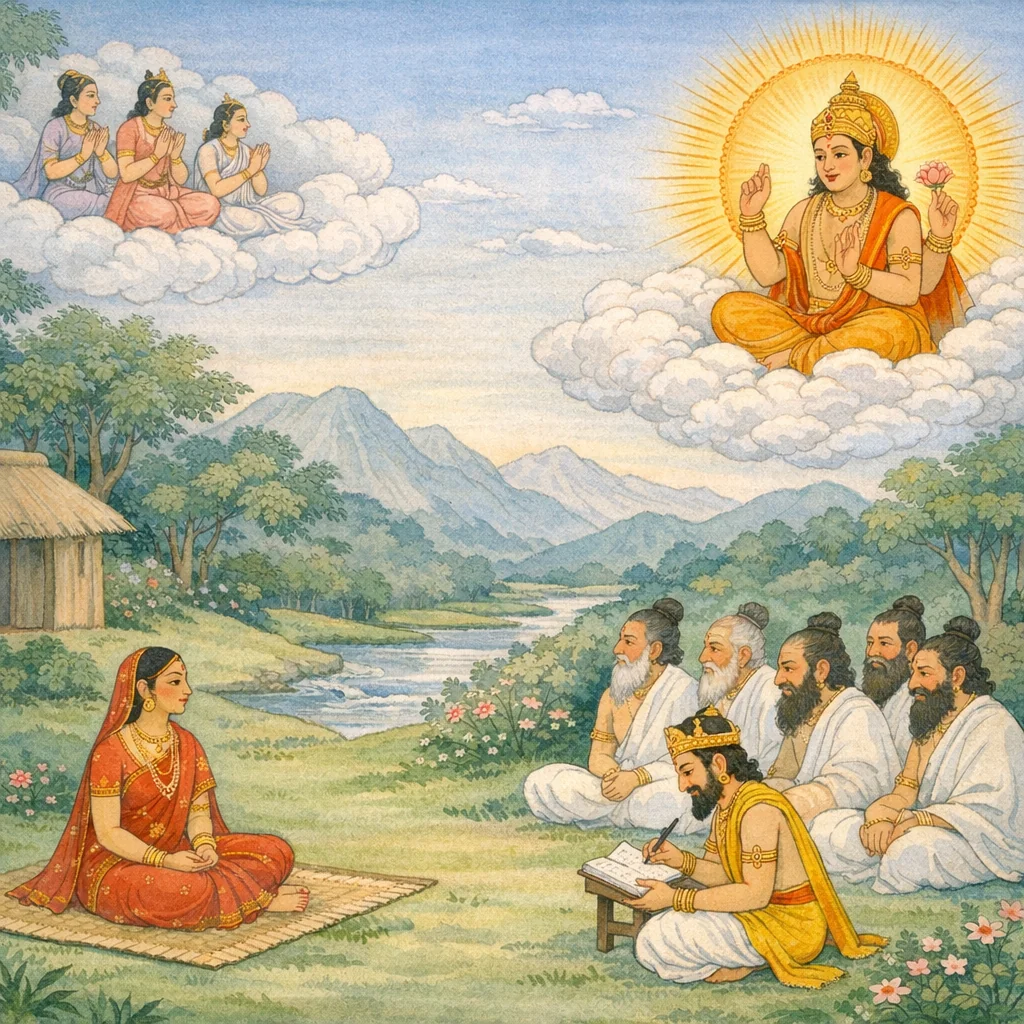
Chapter Arc: भीष्म धर्मराज से कहते हैं कि ऋषिगण, पितर और देवता एकत्र होकर अरुन्धती से ‘धर्म-रहस्य’ सुनना चाहते हैं—गुह्यतम सत्य को प्रकट करने का आग्रह उठता है। → वसिष्ठ-पत्नी अरुन्धती तपोवृद्धि और देव-आह्वान का स्मरण कर शाश्वत धर्मों का वचन देती हैं; फिर चित्रगुप्त द्वारा कर्म-लेखा और दानधर्म के ‘पृथक्-पृथक् फल’ का विधान सामने आता है—कौन-सा दान किस पाप/दुःख को काटता है, यह सूक्ष्म प्रश्न तीखा होता जाता है। → चित्रगुप्त का निर्णायक मत: इस लोक में दिया हुआ दान नष्ट नहीं होता; और विशेषतः ‘कपिला गौ’ का दान ब्रह्महत्या-सदृश पापों तक को शुद्ध करने में समर्थ बताया जाता है—यह सुनकर सूर्यदेव तक रोमांचित हो उठते हैं, मानो दान की महिमा पर देव-समाज की मुहर लग जाती है। → अग्निहोत्र के पालन और उपानह (जूता), छत्र, कपिला गौ आदि के यथोचित दान का विधान, तथा पुष्कर-तीर्थ/ज्येष्ठ-पुष्कर जैसे पुण्य-क्षेत्रों का संकेत देकर अध्याय दानधर्म के व्यावहारिक मार्गदर्शन पर टिकता है।
Shlokas
Verse 1
2 अं ड-ऑ का त्रिशर्दाधिकशततमो<्ध्याय: अरुन्धती, धर्मराज और चित्रगुप्तद्वारा धर्मसम्बन्धी रहस्यका वर्णन भीष्म उवाच ततस्त्वृषिगणा: सर्वे पितरश्न॒ सदेवता: । अरुन्धतीं तपोवृद्धामपृच्छन्त समाहिता:,भीष्मजी कहते हैं--राजन्! तदनन्तर सभी ऋषियों, पितरों और देवताओंने तपस्यामें बढ़ी-चढ़ी हुई अरुन्धती देवीसे, जो शील और शक्तिमें महात्मा वसिष्ठजीके ही समान थीं, एकाग्रचित्त होकर पूछा--“भद्रे! हम आपके मुँहसे धर्मका रहस्य सुनना चाहते है। आपकी दृष्टिमें जो गुह्मतम धर्म हो, उसे बतानेकी कृपा करें”
Bhishma said: Then all the companies of seers, together with the Pitṛs and the gods, approached Arundhatī—who had grown great through austerity—and, with minds fully composed, questioned her, seeking from her mouth the deepest secret of dharma.
Verse 2
समानशीलां वीर्येण वसिष्ठस्थ महात्मन: । त्वत्तों धर्मरहस्यानि श्रोतुमिच्छामहे वयम् । यत्ते गुहमतमं भद्ठे तत् प्रभाषितुमरहसि,भीष्मजी कहते हैं--राजन्! तदनन्तर सभी ऋषियों, पितरों और देवताओंने तपस्यामें बढ़ी-चढ़ी हुई अरुन्धती देवीसे, जो शील और शक्तिमें महात्मा वसिष्ठजीके ही समान थीं, एकाग्रचित्त होकर पूछा--“भद्रे! हम आपके मुँहसे धर्मका रहस्य सुनना चाहते है। आपकी दृष्टिमें जो गुह्मतम धर्म हो, उसे बतानेकी कृपा करें”
Bhishma said: “O noble lady, you are equal in conduct and spiritual power to the great sage Vasiṣṭha. From you we wish to hear the hidden principles of dharma. Whatever you regard as the most secret and profound dharma—please declare it.”
Verse 3
अरुन्धत्युवाच तपोवृद्धिर्मया प्राप्ता भवतां स्मरणेन वै । भवतां च प्रसादेन धर्मान् वक्ष्यामि शाश्वतान्,अरुन्धती बोली--देवगण! आपलोगोंने मुझे स्मरण किया, इससे मेरे तपकी वृद्धि हुई है। अब मैं आप ही लोगोंकी कृपासे गोपनीय रहस्योंसहित सनातन धर्मोंका वर्णन करती हूँ, आपलोग वह सब सुनें। जिसका मन शुद्ध हो, उस श्रद्धालु पुरुषको ही इन धर्मोंका उपदेश करना चाहिये
Arundhatī said: “Through your remembrance, my ascetic power has increased. And by your gracious favor, I shall now expound the eternal principles of dharma, together with their guarded inner meanings. Listen to them. These teachings should be imparted only to a faithful person whose mind is purified.”
Verse 4
सगुह्यान् सरहस्यांश्न॒ तान् शृणुध्वमशेषत: । श्रद्दधाने प्रयोक्तव्या यस्य शुद्धं तथा मन:,अरुन्धती बोली--देवगण! आपलोगोंने मुझे स्मरण किया, इससे मेरे तपकी वृद्धि हुई है। अब मैं आप ही लोगोंकी कृपासे गोपनीय रहस्योंसहित सनातन धर्मोंका वर्णन करती हूँ, आपलोग वह सब सुनें। जिसका मन शुद्ध हो, उस श्रद्धालु पुरुषको ही इन धर्मोंका उपदेश करना चाहिये
Bhishma said: “Listen completely to these teachings, which include what is confidential and what is deeply esoteric. They are to be imparted only to a faithful person whose mind is likewise purified.”
Verse 5
अश्रद्दधानो मानी च ब्रह्महा गुरुतल्पग: । असम्भाष्या हि चत्वारो नैषां धर्म: प्रकाशयेत्,जो श्रद्धासे रहित, अभिमानी, ब्रह्महत्यारे और गुरुस्त्रीगामी हैं, इन चार प्रकारके मनुष्योंस बात भी नहीं करनी चाहिये। इनके सामने धर्मके रहस्यको प्रकाशित न करे
Bhishma said: One who lacks faith, one who is arrogant, a slayer of a brāhmaṇa, and one who violates the teacher’s bed (i.e., commits adultery with the guru’s wife)—these four are not fit even for conversation. Before such persons, one should not disclose the principles and inner purport of dharma.
Verse 6
अहन्यहनि यो दद्यात् कपिलां द्वादशी: समा: । मासि मासि च सत्रेण यो यजेत सदा नर:,जो मनुष्य बारह वर्षोतक प्रतिदिन एक-एक कपिला गौका दान करता है, हर महीनेमें निरन्तर सत्रयाग चलाता और ज्येष्ठपुष्कर तीर्थमें जाकर एक लाख गोदान करता है, उसके धर्मका फल उस मनुष्यके बराबर नहीं हो सकता, जिसके द्वारा की हुई सेवासे अतिथि संतुष्ट हो जाता है
Bhishma said: Even if a man were to give, day after day, a tawny cow in charity for twelve full years, and even if month after month he were to keep up an unbroken sacrificial session, still the merit of such religious acts cannot equal the fruit gained by that person through whose service a guest is truly satisfied.
Verse 7
गवां शतसहसंत्रं च यो दद्याज्ज्येष्ठपुष्करे । न तद्धर्मफलं तुल्यमतिथिर्यस्य तुष्यति,जो मनुष्य बारह वर्षोतक प्रतिदिन एक-एक कपिला गौका दान करता है, हर महीनेमें निरन्तर सत्रयाग चलाता और ज्येष्ठपुष्कर तीर्थमें जाकर एक लाख गोदान करता है, उसके धर्मका फल उस मनुष्यके बराबर नहीं हो सकता, जिसके द्वारा की हुई सेवासे अतिथि संतुष्ट हो जाता है
Bhishma said: Even if a man were to give away a hundred thousand cows at Jyeṣṭha-Puṣkara, the religious merit from that act is not equal to the merit of one whose guest is truly satisfied by the service he offers.
Verse 8
श्रूयतां चापरो धर्मो मनुष्याणां सुखावह: । श्रद्दधानेन कर्तव्य: सरहस्यो महाफल:,अब मनुष्योंके लिये सुखदायक तथा महान् फल देनेवाले दूसरे धर्मका रहस्यसहित वर्णन सुनो। श्रद्धापूर्वक इसका पालन करना चाहिये
Bhishma said: “Listen now to another form of dharma—one that brings happiness to human beings. It should be practiced with faith; it is taught together with its inner secret, and it yields great results.”
Verse 9
कल्यमुत्थाय गोमध्ये गृह दर्भान् सहोदकान् । निषिज्चेत गवां शुद्ध मस्तकेन च तज्जलम्
Bhīṣma said: “Rising early in the morning, one should go among the cows, bring kuśa-grass together with water, and sprinkle the cows. Being purified, one should also sprinkle that water upon one’s own head.”
Verse 10
श्रूयन्ते यानि तीर्थानि त्रिषु लोकेषु कानिचित्,तीनों लोकोंमें सिद्ध, चारण और महर्षियोंसे सेवित जो कोई भी तीर्थ सुने जाते हैं, उन सबमें स्नान करनेसे जो फल मिलता है वही गायोंके सींगके जलसे अपने मस्तकको सींचनेसे प्राप्त होता है
Bhīṣma said: “Whatever sacred fords (tīrthas) are heard of in the three worlds—revered and frequented by Siddhas, Cāraṇas, and great seers—the merit gained by bathing in all of them is obtained equally by sprinkling one’s head with water that has touched a cow’s horns.”
Verse 11
सिद्धचारणजुष्टानि सेवितानि महर्षिभि: । अभिषेक: समस्तेषां गवां शूड्रोदकस्य च,तीनों लोकोंमें सिद्ध, चारण और महर्षियोंसे सेवित जो कोई भी तीर्थ सुने जाते हैं, उन सबमें स्नान करनेसे जो फल मिलता है वही गायोंके सींगके जलसे अपने मस्तकको सींचनेसे प्राप्त होता है
Bhīṣma said: “Whatever sacred fords are renowned in the three worlds—haunted by Siddhas and Cāraṇas and frequented by great seers—the merit gained by bathing in all of them is obtained as well by sprinkling one’s head with the water that has washed a cow’s horns.”
Verse 12
साधु साध्विति चोद्दिष्टं देवतै: पितृभिस्तथा । भूतैश्नेव सुसंहृष्टे: पूजिता साप्यरुन्धती,यह सुनकर देवता, पितर और समस्त प्राणी बहुत प्रसन्न हुए। उन सबने उन्हें साधुवाद दिया और अरुन्धती देवीकी भूरि-भूरि प्रशंसा की
Bhīṣma said: “Hearing this, the gods, the ancestors, and all beings were filled with joy. They acclaimed her with cries of ‘Well done! Well done!’ and Arundhatī too was honored and praised abundantly.”
Verse 13
पितामह उवाच अहो धर्मों महाभागे सरहस्य उदाहृत: । वरं ददामि ते धन्ये तपस्ते वर्धतां सदा,ब्रह्माजीने कहा--महाभागे! तुम धन्य हो, तुमने रहस्यसहित अद्भुत धर्मका वर्णन किया है। मैं तुम्हें वरदान देता हूँ, तुम्हारी तपस्या सदा बढ़ती रहे
Pitāmaha said: “Ah! O noble lady, you have expounded Dharma in a wondrous way, together with its inner secret. O blessed one, I grant you a boon—may your austerity ever continue to grow.”
Verse 14
यम उवाच रमणीया कथा दिव्या युष्मत्तो या मया श्रुता । श्रूयतां चित्रगुप्तस्य भाषितं मम च प्रियम्
Yama said: “The delightful, divine account that I have heard from you is truly worthy of admiration. Now listen to the words spoken by Citragupta—words that are dear and pleasing to me as well.”
Verse 15
यमराजने कहा--देवताओ और महर्षियो! मैंने आपलोगोंके मुखसे दिव्य एवं मनोरम कथा सुनी है, अब आपलोग चित्रगुप्तका तथा मेरा भी प्रिय भाषण सुनिये ।। रहस्यं धर्मसंयुक्तं शक््यं श्रोतुं महर्षिभि: । श्रद्दधानेन मर्त्येन आत्मनो हितमिच्छता,इस धर्मयुक्त रहस्यको महर्षि भी सुन सकते हैं। अपना हित चाहनेवाले श्रद्धालु मनुष्यको भी इसे श्रवण करना चाहिये
Yama said: “O gods and great seers! From your own mouths I have heard a divine and delightful account. Now listen to words that are dear both to Citragupta and to me. This is a secret teaching joined to dharma—fit to be heard by great sages; and it should also be heard by a faithful mortal who seeks his own true welfare.”
Verse 16
न हि पुण्यं तथा पापं कृतं किंचिद् विनश्यति । पर्वकाले च यत् किंचिदादित्यं चाधितिष्ठति
Yama said: “Indeed, no merit or sin that has been done ever perishes. And whatever is done at the proper season—under the presiding influence of the Sun—takes its place in the moral order and yields its due result.”
Verse 17
मनुष्यका किया हुआ कोई भी पुण्य तथा पाप भोगके बिना नष्ट नहीं होता। पर्वकालमें जो कुछ भी दान किया जाता है, वह सब सूर्यदेवके पास पहुँचता है ।। प्रेतलोक॑ गते मत्यें तत् तत् सर्व विभावसु: । प्रतिजानाति पुण्यात्मा तच्च तत्रोपयुज्यते
Yama said: “No merit or sin performed by a human being is destroyed without first being experienced. Whatever is given at sacred seasonal occasions reaches the Sun-god; and when a person has gone to the realm of the departed, the Sun—Vibhāvasu—acknowledges and delivers there, in due form, each such gift. Thus no deed is lost; every act arrives at its proper consequence.”
Verse 18
जब मनुष्य प्रेतलोकको जाता है, उस समय सूर्यदेव वे सारी वस्तुएँ उसे अर्पित कर देते हैं और पुण्यात्मा पुरुष परलोकमें उन वस्तुओंका उपभोग करता है ।। किंचिद् धर्म प्रवक्ष्यामि चित्रगुप्तमतं शुभम् । पानीयं चैव दीपं च दातव्यं सततं तथा,अब मैं चित्रगुप्तके मतके अनुसार कुछ कल्याण-कारी धर्मका वर्णन करता हूँ। मनुष्यको जलदान और दीपदान सदा ही करने चाहिये
Yama said: “When a person goes to the realm of the departed, the Sun-god presents to him all those offerings, and the righteous soul enjoys them in the other world. Now I shall declare a portion of auspicious dharma, in accordance with the view of Chitragupta: one should always give gifts of drinking water, and likewise gifts of a lamp (light).”
Verse 19
उपानहौ च छत्रं च कपिला च यथातथम् । पुष्करे कपिला देया ब्राह्मणे वेदपारगे
Yama said: “One should give sandals and an umbrella, and likewise a tawny (kapilā) cow, as is proper. At Puṣkara, a tawny cow should be gifted to a Brāhmaṇa who has mastered the Vedas.”
Verse 20
अयं चैवापरो धर्मश्नित्रगुप्तेन भाषित:
Yama said: “And this, too, is another rule of dharma, as declared by Śnitragupta.”
Verse 21
फलमस्य पृथक््त्वेन श्रोतुमर्हन्ति सत्तमा: । प्रलयं सर्वभूतैस्तु गन्तव्यं कालपर्ययात्
O best of the virtuous, you are fit to hear the distinct result of this. Yet, by the turning of Time, all beings must inevitably go to dissolution (pralaya).
Verse 22
इसके सिवा यह एक दूसरा धर्म भी चित्रगुप्तने बताया है। उसके पृथक्ू-पृथक् फलका वर्णन सभी साधु पुरुष सुनें। समस्त प्राणी कालक्रमसे प्रलयको प्राप्त होते हैं ।। तत्र दुर्गमनुप्राप्ता: क्षुत्तृष्णारिपीडिता: । दहामाना विपच्यन्ते न तत्रास्ति पलायनम्
There, having reached a hard-to-pass region, beings are tormented by the enemies of hunger and thirst. Burning, they are as it were ‘cooked’ by their suffering; from that place there is no escape.
Verse 23
पापोंके कारण दुर्गम नरकमें पड़े हुए प्राणी भूख-प्याससे पीड़ित हो अतामें जलते हुए पकाये जाते हैं। वहाँ उस यातनासे निकल भागनेका कोई उपाय नहीं है ।। अन्थकाररं तमो घोरें प्रविशन्त्यल्पबुद्धय: । तत्र धर्म प्रवक्ष्यामि येन दुर्गाणि संतरेत्,मन्दबुद्धि मनुष्य ही नरकके घोर दुःखमय अन्धकारमें प्रवेश करते हैं। उस अवसरके लिये मैं धर्मका उपदेश करता हूँ, जिससे मनुष्य दुर्गम नरकसे पार हो सकता है
Those of little understanding enter a dreadful darkness—sheer gloom. Therefore I shall declare the path of dharma by which one may cross beyond such hard-to-pass states.
Verse 24
अल्पव्ययं महार्थ च प्रेत्य चैव सुखोदयम् । पानीयस्य गुणा दिव्या: प्रेतलोके विशेषत:,उस धर्ममें व्यय बहुत थोड़ा है, परंतु लाभ महान् है। उससे मृत्युके पश्चात् भी उत्तम सुखकी प्राप्ति होती है। जलके गुण दिव्य हैं। प्रेतलोकमें ये गुण विशेषरूपसे लक्षित होते हैं
Yama said: “This dharma requires only a small expenditure, yet yields great benefit; and even after death it brings the arising of true happiness. The qualities of water are divine, and in the realm of the departed these qualities become especially evident.”
Verse 25
तत्र पुण्योदका नाम नदी तेषां विधीयते । अक्षयं सलिलं तत्र शीतलं हामृतोपमम्
There, for them, a river called Puṇyodakā is ordained. Its waters are inexhaustible—cool, pure, and like nectar.
Verse 26
वहाँ पुण्योदका नामसे प्रसिद्ध नदी है, जो यमलोकनिवासियोंके लिये विहित है। उसमें अमृतके समान मधुर, शीतल एवं अक्षय जल भरा रहता है ।। स तत्र तोयं पिबति पानीयं य: प्रयच्छति । प्रदीपस्य प्रदानेन श्रूयतां गुणविस्तर:,जो यहाँ जलदान करता है, वही परलोकमें जानेपर उस नदीका जल पीता है। अब दीपदानसे जो अधिकाधिक लाभ होता है, उसको सुनो
Yama said: There is a well-known river there called Puṇyodakā, appointed for the dwellers of Yama’s realm. It is filled with water that is like nectar—sweet, cool, and inexhaustible. Whoever gives drinking water here in this world, that person, upon reaching the next world, drinks the water of that river. Now listen to the fuller account of the merits that arise from the gift of a lamp (dīpa-dāna).
Verse 27
तमो<न्धकारं नियतं दीपदो न प्रपश्यति । प्रभां चास्य प्रयच्छन्ति सोमभास्करपावका:,दीपदान करनेवाला मनुष्य नरकके नियत अन्धकारका दर्शन नहीं करता। उसे चन्द्रमा, सूर्य और अग्नि प्रकाश देते रहते हैं
Yama said: “One who gives a lamp does not behold the fixed darkness of hell. Instead, the Moon, the Sun, and Fire continually bestow their radiance upon him.”
Verse 28
देवताश्चानुमन्यन्ते विमला: सर्वतो दिशः । द्योतते च यथा55दित्य: प्रेतलोकगतो नर:
Yama said: “The gods themselves give their assent, and all the directions become pure and auspicious. A man who has gone to the realm of the departed shines there like the sun.”
Verse 29
देवता भी दीपदान करनेवालेका आदर करते हैं। उसके लिये सम्पूर्ण दिशाएँ निर्मल होती हैं तथा प्रेतलोकमें जानेपर वह मनुष्य सूर्यके समान प्रकाशित होता है ।। तस्माद् दीप: प्रदातव्य: पानीयं च विशेषतः । कपिलां ये प्रयच्छन्ति ब्राह्मणे वेदपारगे
Yama said: Therefore one should certainly give a lamp, and especially offer drinking water. Those who present a tawny (kapilā) cow to a Brāhmaṇa who has mastered the Vedas perform a highly meritorious act—compassionate giving that brings purity, honor among the gods, and radiant well-being beyond death, like the sun.
Verse 30
पुष्करे च विशेषेण श्रूयतां तस्य यत् फलम् | गोशतं सवृषं तेन दत्तं भवति शाश्वतम्
Yama said: “And especially at Puṣkara—listen to the fruit of that act. By performing it there, one gains everlasting merit, as though one had given a hundred cows, each accompanied by a bull.”
Verse 31
इसलिये विशेष यत्न करके दीप और जलका दान करना चाहिये। विशेषतः पुष्कर तीर्थमें जो वेदोंके पारंगत विद्वान् ब्राह्मणको कपिला दान करते हैं, उन्हें उस दानका जो फल मिलता है, उसे सुनो। उसे साँड़ों-लहित सौ गौओंके दानका शाश्वत फल प्राप्त होता है ।। पापं कर्म च यत् किंचिद् ब्रह्महत्यासमं भवेत् । शोधयेत् कपिला होका प्रदत्तं गोशतं यथा
Yama said: Therefore one should make special effort to give lamps and water. Especially at the sacred ford of Puṣkara, those who offer a tawny (kapilā) cow to a learned Brāhmaṇa, perfected in the Vedas—hear the fruit of that gift—gain the everlasting reward of donating a hundred cows with their bulls. And whatever sinful deed there may be, even one equal to the grave sin of brahmin-slaying, is cleansed by the gift of a kapilā cow, just as the merit of gifting a hundred cows is obtained.
Verse 32
न तेषां विषम किंचिन्न दु:खं न च कण्टका:
Yama said: “For them there is nothing uneven or adverse—no suffering at all, and no ‘thorns’, no painful obstacles.”
Verse 33
उपानहौ च यो दद्यात् पात्रभूते द्विजोत्तमे । छत्रदाने सुखां छायां लभते परलोकग:
Yama said: Whoever gives a pair of sandals to a worthy recipient—especially an excellent Brāhmaṇa—attains comfort in the next world; and by the gift of an umbrella one gains pleasant, cooling shade there.
Verse 34
जो श्रेष्ठ एवं सुपात्र ब्राह्मणको उपानह (जूता) दान करता है, उसके लिये कहीं कोई विषम स्थान नहीं है। न उसे दुःख उठाना पड़ता है और न काँटोंका ही सामना करना पड़ता है। छत्र-दान करनेसे परलोकमें जानेपर दाताको सुखदायिनी छाया सुलभ होती है ।। न हि दत्तस्य दानस्य नाशो5स्तीह कदाचन । चित्रगुप्तमतं श्रुत्वा हृष्टरोमा विभावसु:
Yama said: “Whoever gives a pair of sandals to an excellent and worthy Brahmin will never encounter uneven or difficult ground; he need not suffer hardship, nor face the torment of thorns. By gifting an umbrella, when the donor reaches the next world, a soothing and pleasant shade becomes readily available to him. Indeed, a gift once given is never lost hereafter. Hearing the judgment of Chitragupta, Vibhavasu’s hair stood on end in delight.”
Verse 35
उवाच देवता: सर्वा: पितंश्चैव महाद्युति: । श्रुतं हि चित्रगुप्तस्य धर्मगुहूं महात्मन:
The radiant one (Yama) addressed all the gods and the Pitṛs: “Indeed, I have heard the profound, well-guarded teaching of Dharma from the great-souled Citragupta.”
Verse 36
इस लोकमें दिये हुए दानका कभी नाश नहीं होता। चित्रगुप्तका यह मत सुनकर भगवान् सूर्यके शरीरमें रोमांच हो आया। उन महातेजस्वी सूर्यने सम्पूर्ण देवताओं और पितरोंसे कहा--“आपलोगोंने महामना चित्रगुप्तके धर्मविषयक गुप्त रहस्यको सुन लिया ।। श्रद्धानाश्ष ये मर्त्या ब्राह्मणेषु महात्मसु । दानमेतत् प्रयच्छन्ति न तेषां विद्यते भयम्,“जो मनुष्य महामनस्वी ब्राह्मणोंपर श्रद्धा करके यह दान देते हैं, उन्हें भय नहीं होता'
In this world, a gift once given is never lost. Hearing this judgment of Chitragupta, the blessed Sun was thrilled with awe. That radiant Sun then addressed all the gods and the ancestors: “You have heard the hidden secret of dharma spoken by the great-minded Chitragupta. Those mortals who, with faith in great-souled Brahmins, offer this gift—fear does not exist for them.”
Verse 37
धर्मदोषास्त्विमे पञज्च येषां नास्तीह निष्कृति: । असम्भाष्या अनाचारा वर्जनीया नराधमा:,आगे बताये जानेवाले पाँच धर्मविषयक दोष जिनमें विद्यमान हैं, उनका यहाँ कभी उद्धार नहीं होता। ऐसे अनाचारी नराधमोंसे बात नहीं करनी चाहिये। उन्हें दूरसे ही त्याग देना चाहिये
Yama said: “These are the five faults against dharma for which there is no expiation here. Those who are devoid of right conduct are not to be conversed with; such base men should be avoided and renounced from afar.”
Verse 38
ब्रह्महा चैव गोघ्नक्ष परदाररतश्न यः । अश्रद्दधानश्न नर: स्त्रियं यश्चोपजीवति,ब्रह्महत्यारा, गोहत्या करनेवाला, परस्त्रीलम्पट, अश्रद्धालु तथा जो स्त्रीपर निर्भर रहकर जीविका चलाता है--ये ही पूर्वोक्त पाँच प्रकारके दुराचारी हैं
Yama said: “A slayer of a brāhmaṇa, a killer of a cow, one addicted to another man’s wife, a man devoid of faith, and one who lives by depending on a woman—these are the five kinds of depraved persons spoken of.”
Verse 39
प्रेतलोकगता होते नरके पापकर्मिण: । पच्यन्ते वै यथा मीना: पूयशोणितभोजना:,ये पापकर्मी मनुष्य प्रेतलोकमें जाकर नरककी आगमें मछलियोंकी तरह पकाये जाते हैं और पीब तथा रक्त भोजन करते हैं
Yama said: “Those who commit sinful deeds, after departing to the realm of the departed, fall into hell. There they are cooked in the fires like fish, and are made to subsist on pus and blood.”
Verse 40
असम्भाष्या: पितृणां च देवानां चैव पञज्च ते । स्नातकानां च विप्राणां ये चानये च तपोधना:,इन पाँचों पापाचारियोंसे देवताओं, पितरों, स्नातक ब्राह्मणों तथा अन्यान्य तपोधनोंको बातचीत भी नहीं करनी चाहिये
Yama said: “These five are not to be conversed with. The gods and the Manes (pitṛs), as well as initiated Brahmins who have completed their studentship (snātakas), and other ascetics rich in austerity, should not even engage in speech with such sinful-doers.”
Verse 96
प्रतीच्छेत निराहारस्तस्य धर्मफलं शृणु । सबेरे उठकर कुश और जल हाथमें ले गौओंके बीचमें जाय। वहाँ गौओंके सींगपर जल छिड़के और सींगसे गिरे हुए जलको अपने मस्तकपर धारण करे। साथ ही उस दिन निराहार रहे। ऐसे पुरुषको जो धर्मका फल मिलता है, उसे सुनो
Bhishma says: “Listen to the religious merit that accrues from this observance. Rising early in the morning, one should take kuśa grass and water in hand and go among the cows. There, one should sprinkle water upon the cows’ horns, and then place upon one’s own head the water that has fallen from those horns. One should also remain fasting for that day. Hear what fruit of dharma is obtained by a man who performs this.”
Verse 130
इति श्रीमहाभारते अनुशासनपर्वणि दानधर्मपर्वणि अरुन्धतीचित्रगुप्तरहस्ये त्रिंशयवधिकशततमो<ध्याय:
Thus ends, in the Śrī Mahābhārata, within the Anuśāsana Parvan—specifically in the section on the dharma of gifts—this chapter entitled “The Secret concerning Arundhatī and Citragupta,” being the one-hundred-and-thirtieth chapter.
Verse 196
अन्निहोत्रं च यत्नेन सर्वश: प्रतिपालयेत । उपानह (जूता), छत्र तथा कपिला गौका भी यथोचित रीतिसे दान करना चाहिये। पुष्कर तीर्थमें वेदोंके पारंगत विद्वान् ब्राह्गणणको कपिला गाय देनी चाहिये और अग्निहोत्रके नियमका सब तरहसे प्रयत्नपूर्वक पालन करना चाहिये
Yama teaches that one should diligently maintain the Agnihotra in every respect. Along with this disciplined observance, one should give appropriate gifts—such as footwear and an umbrella—and, in particular, a tawny (kapilā) cow. At the sacred ford of Puṣkara, a learned Brahmin well-versed in the Vedas should be honored by the gift of a kapilā cow, while the rules of Agnihotra are to be upheld with careful effort in all ways.
Verse 313
तस्मात्तु कपिला देया कौमुद्रां ज्येष्ठपुष्करे । ब्रह्म हत्याके समान जो कोई पाप होता है, उसे एकमात्र कपिलाका दान शुद्ध कर देता है। वह एक ही गोदान सौ गोदानोंके बराबर है। इसलिये ज्येष्ठपुष्कर तीर्थमें कार्तिककी पूर्णिमाको अवश्य कपिला गौका दान करना चाहिये
Yama said: Therefore, on the full-moon day of Kārtika, one should give in charity a tawny (kapilā) cow at Jyeṣṭha‑Puṣkara. Such a single gift is taught to cleanse even sins as grave as brahmahatyā (the killing of a brāhmaṇa), and this one cow-gift is declared equal in merit to a hundred ordinary gifts of cows. The ethical thrust is that sincere, properly timed and properly placed dāna, performed with faith, has extraordinary purificatory power and supports the order of dharma.
Frequently Asked Questions
He seeks a single, reliable criterion for auspiciousness and liberation—one deity, one refuge, one highest dharma, and one recitative practice capable of loosening saṃsāra-bondage amid plural duties and teachings.
That sustained praise and remembrance of Viṣṇu/Nārāyaṇa through the sahasranāma—joined with devotion, worship, and mental focus—constitutes a superior, integrative dharma that supports both well-being and release.
Yes. It presents outcomes attributed to hearing/reciting the names—avoidance of inauspiciousness, mitigation of fear and affliction, attainment of prosperity and stability, and a culminating orientation toward brahman/sanātana—functioning as meta-commentary on the practice’s perceived efficacy.