Adhyaya 58
भूमिभार-निवारणप्रसङ्गः (Bhūmibhāra-nivāraṇa-prasaṅgaḥ) — The Motif of Relieving Earth’s Burden
Upa-parva: Sambhava Upa-Parva (Origin and Overburden of the Earth Episode)
Janamejaya requests a precise account of why the ‘divine-like’ great warriors appear on earth. Vaiśaṃpāyana responds that the matter is a confidential tradition among the gods and begins with an earlier historical-cosmic disruption: Jāmadagnya Paraśurāma renders the earth ‘devoid of kṣatriyas’ repeatedly and then performs austerities. In the subsequent social vacuum, kṣatriya women seek progeny through disciplined brāhmaṇas, resulting in a renewed kṣatra line that grows under dharma, with social harmony, seasonal regularity, prosperity, longevity, and ritual learning emphasized as markers of an ordered age. As population and power expand, asuric forces—previously diminished in divine conflicts—take birth across human and animal domains, becoming oppressive and destabilizing. The earth, unable to bear the burden, approaches Brahmā in an assembly of devas and sages. Brahmā, already aware, instructs the celestials (and gandharvas/apsarases) to take births in the human world in partial measures to counteract the burden; the gods then approach Nārāyaṇa, who agrees to descend by a portion for the earth’s purification.
Chapter Arc: उग्रश्रवा सूत शौनक को आस्तीक के विषय में एक और ‘अत्यद्भुत’ प्रसंग सुनाते हैं—यज्ञाग्नि की प्रचण्ड ज्वाला के बीच तक्षक का भयाक्रान्त होकर भी न गिर पाना और राजा जनमेजय का क्षण-क्षण बदलता संकल्प। → सर्पसत्र की विधिवत् दीप्त अग्नि में आहुतियाँ पड़ रही हैं; मन्त्रबल से नाग खिंचते चले आते हैं, पर तक्षक—इन्द्र के आश्रय/हस्त से छूटकर भी—आकाश में अटका-सा रह जाता है। यह असामान्य रुकावट राजा के मन में चिन्ता और उत्कंठा बढ़ाती है: क्या यज्ञ पूर्ण होगा या किसी धर्म-सीमा पर आकर ठहर जाएगा? → आस्तीक के वचन और याचना से यज्ञ-प्रवाह थमता है; सर्पों का संहार-चक्र रुकता है और राजा जनमेजय प्रसन्न होकर आस्तीक को वर देता है—यही क्षण सर्पसत्र के उग्र लक्ष्य पर करुणा और धर्म का निर्णायक विजय-क्षण बनता है। → राजा ‘कृतकृत्य’ मनीषी आस्तीक को सम्मानपूर्वक सुसंस्कृत गृह की ओर प्रेषित करता है; विधिदृष्ट कर्म से अवभृथ-स्नान आदि समापन-कर्म सम्पन्न होते हैं। आस्तीक की कीर्ति ‘जरत्कारु-जात’ रक्षक के रूप में स्थिर होती है—जिसने सर्पसत्र में पन्नगों की रक्षा की।
Shlokas
Verse 1
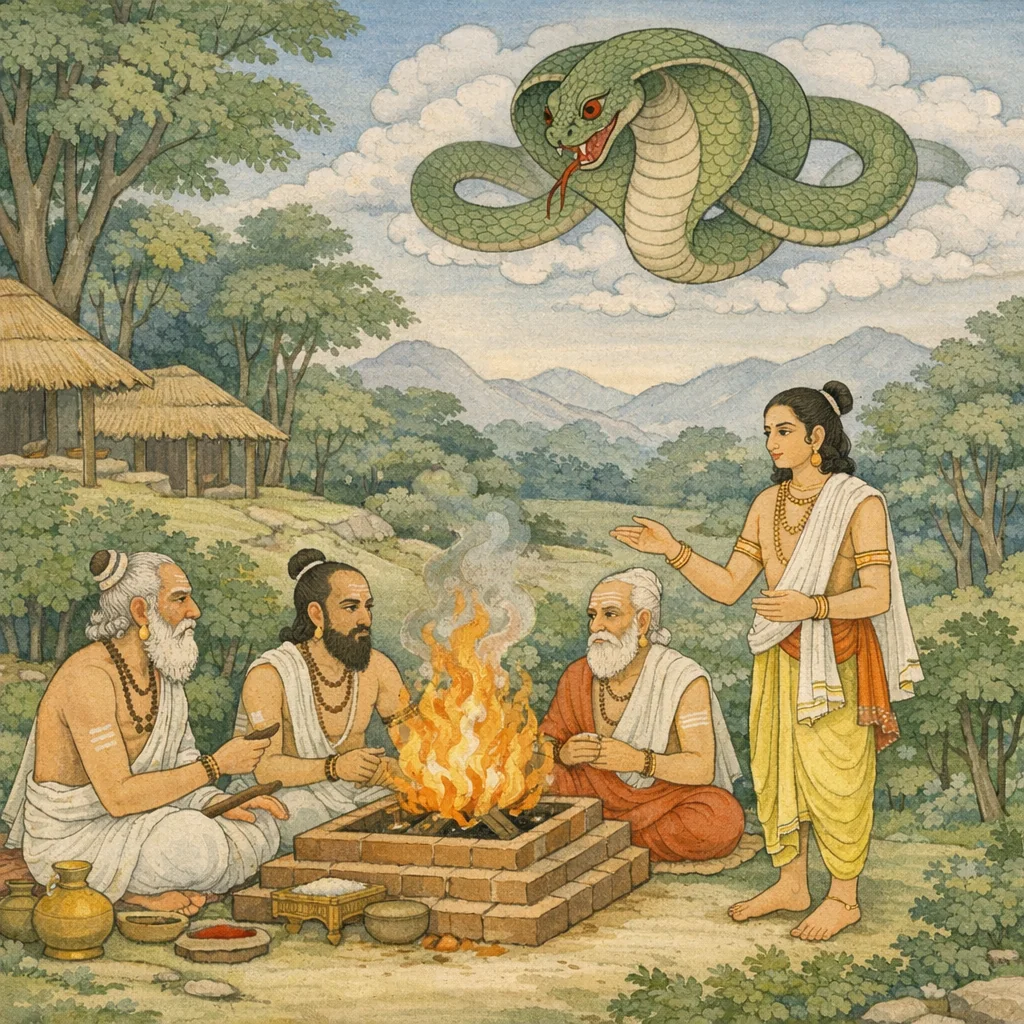
/ ऑपन--माज बछ। अकाल अष्टपञ्चाशत्तमो< ध्याय: यज्ञकी समाप्ति एवं आस्तीकका सर्पोंसे वर प्राप्त करना सौतिरुवाच इदमत्यद्भुतं चान्यदास्तीकस्यानुशुश्रुम । तथा वरैश्हन्द्रामाने राज्ञा पारिक्षितेन हि,उग्रश्रवाजी कहते हैं--शौनक! आस्तीकके सम्बन्धमें यह एक और अदभुत बात मैंने सुन रखी है कि जब राजा जनमेजयने उनसे पूर्वोक्त रूपसे वर माँगनेका अनुरोध किया और उनके वर माँगनेपर इन्द्रके हाथसे छूटकर गिरा हुआ तक्षक नाग आकाशमें ही ठहर गया, तब महाराज जनमेजयको बड़ी चिन्ता हुई
Śaunaka said: “We have also heard another exceedingly wondrous account concerning Āstīka: when King Janamejaya—descendant of Parīkṣit—urged him to ask for a boon, and as Āstīka proceeded to request it, Takṣaka, who had slipped from Indra’s grasp, remained suspended in the sky. Seeing this, King Janamejaya was seized with deep anxiety.”
Verse 2
इन्द्रहस्ताच्च्युतो नाग: ख एव यदतिष्ठत । ततश्चिन्तापरो राजा बभूव जनमेजय:,उग्रश्रवाजी कहते हैं--शौनक! आस्तीकके सम्बन्धमें यह एक और अदभुत बात मैंने सुन रखी है कि जब राजा जनमेजयने उनसे पूर्वोक्त रूपसे वर माँगनेका अनुरोध किया और उनके वर माँगनेपर इन्द्रके हाथसे छूटकर गिरा हुआ तक्षक नाग आकाशमें ही ठहर गया, तब महाराज जनमेजयको बड़ी चिन्ता हुई
Śaunaka said: When the serpent, fallen from Indra’s hand, remained suspended in the very sky, King Janamejaya became filled with anxious concern.
Verse 3
हयमाने भृशं दीप्ते विधिवद् वसुरेतसि । न सम स प्रापतद् वह्लौ तक्षको भयपीडित:ः,क्योंकि अग्नि पूर्णरूपसे प्रज्वयलित थी और उसमें विधिपूर्वक आहुतियाँ दी जा रही थीं तो भी भयसे पीड़ित तक्षक नाग उस अग्निमें नहीं गिरा
Śaunaka said: Although the sacrificial fire blazed fiercely and oblations were being offered into it according to rule—fed by ghee and made radiant—Takṣaka, tormented by fear, did not fall into that fire.
Verse 4
शौनक उवाच कि सूत तेषां विप्राणां मन्त्रग्रामो मनीषिणाम् | न प्रत्यभात् तदाग्नौ यत् स पपात न तक्षक:,शौनकजीने पूछा--सूत! उस यज्ञमें बड़े-बड़े मनीषी ब्राह्मण उपस्थित थे। क्या उन्हें ऐसे मन्त्र नहीं सूझे, जिनसे तक्षक शीघ्र अग्निमें आ गिरे? क्या कारण था जो तक्षक अग्निकुण्डमें न गिरा?
Śaunaka said: “O Sūta, in that sacrifice many great, discerning brāhmaṇas were present. Why did their collected mantras not at once take effect, so that Takṣaka would fall into that fire? For what reason did Takṣaka not drop into the sacrificial blaze?”
Verse 5
सौतिरु्वाच तमिन्द्रहस्ताद वित्रस्तं विसंज्ञं पन्नगोत्तमम् । आस्तीकस्तिष्ठ तिछेति वाचस्तिस्रो5 भ्युदैरयत्,उग्रश्रवाजीने कहा--शौनक! इन्द्रके हाथसे छूटनेपर नागप्रवर तक्षक भयसे थर्रा उठा। उसकी चेतना लुप्त हो गयी। उस समय आस्तीकने उसे लक्ष्य करके तीन बार इस प्रकार कहा--*ठहर जा, ठहर जा, ठहर जा”
Sūta said: When Takṣaka, foremost of serpents, slipped from Indra’s hand, he trembled with fear and fell senseless. Then Āstīka, fixing his mind upon him, uttered three times the words, “Stay! Stay! Stay!”—restraining him at the critical moment.
Verse 6
वितस्थे सो<न्तरिक्षे च हृदयेन विदूयता । यथा तिष्ठति वै कश्चित् खं च गां चान्तरा नर:,तब तक्षक पीड़ित हृदयसे आकाशगमें उसी प्रकार ठहर गया, जैसे कोई मनुष्य आकाश और पृथ्वीके बीचमें लटक रहा हो
Then, his heart burning with anguish, Takṣaka became fixed in mid-air. He hung there as though suspended between sky and earth, like a man left poised in the space between heaven above and the ground below.
Verse 7
ततो राजाब्रवीद् वाक््यं सदस्यैश्नोदितो भृशम् | काममेतद् भवत्वेवं यथा55सत्तीकस्प भाषितम्,तदनन्तर सभासदोंके बार-बार प्रेरित करनेपर राजा जनमेजयने यह बात कही --'अच्छा, आस्तीकने जैसा कहा है, वही हो
Then King Janamejaya, strongly urged again and again by the assembled courtiers, spoke these words: “So be it—let it be exactly as Āstīka has said.”
Verse 8
समाप्यतामिदं कर्म पन्नगा: सन्त्वनामया: । प्रीयतामयमास्तीक: सत्यं सूतवचो<स्तु तत्,“यह यज्ञकर्म समाप्त किया जाय। नागगण कुशलपूर्वक रहें और ये आस्तीक प्रसन्न हों। साथ ही सूतजीकी कही हुई बात भी सत्य हो”
Śaunaka said: “Let this sacrificial rite be brought to its close. May the serpents be free from affliction and remain in well-being. May this Āstīka be pleased; and let the Sūta’s words indeed prove true.”
Verse 9
ततो हलहलाशब्द: प्रीतिद: समजायत । आस्तीकस्य वरे दत्ते तथैवोपरराम च,जनमेजयके द्वारा आस्तीकको यह वरदान प्राप्त होते ही सब ओर प्रसन्नता बढ़ानेवाली हर्षध्वनि छा गयी और पाण्डववंशी महाराज जनमेजयका वह यज्ञ बंद हो गया। ब्राह्मणको वर देकर भरतवंशी राजा जनमेजयको भी प्रसन्नता हुई
Śaunaka said: Then a joyous, heart-gladdening roar of acclamation arose. And as soon as the boon was granted to Āstīka, the rite likewise came to a halt—signaling that the king’s sacrificial action must yield to a righteous request and the protection of life.
Verse 10
स यज्ञ: पाण्डवेयस्य राज्ञ: पारिक्षितस्य ह । प्रीतिमांश्षाभवद् राजा भारतो जनमेजय:,जनमेजयके द्वारा आस्तीकको यह वरदान प्राप्त होते ही सब ओर प्रसन्नता बढ़ानेवाली हर्षध्वनि छा गयी और पाण्डववंशी महाराज जनमेजयका वह यज्ञ बंद हो गया। ब्राह्मणको वर देकर भरतवंशी राजा जनमेजयको भी प्रसन्नता हुई
Śaunaka said: That sacrifice of King Janamejaya—descendant of Parīkṣit and of the Pāṇḍava line—became a source of satisfaction and gladness for him. When Āstīka’s boon was granted, joyful acclaim rose on every side, and Janamejaya’s serpent-sacrifice came to its close; the Bharata king was pleased after honoring the brāhmaṇa with a gift.
Verse 11
उस यज्ञमें जो ऋत्विज् और सदस्य पधारे थे, उन सबको राजा जनमेजयने सैकड़ों और सहस्रोंकी संख्यामें धन-दान किया
At that sacrifice, all the officiating priests (ṛtvij) and the learned members of the assembly who had arrived were honored by King Janamejaya with gifts of wealth—bestowed in the hundreds and thousands.
Verse 12
लोहिताक्षाय सूताय तथा स्थपतये विभु: । येनोक्त तस्य तत्राग्रे सर्पसत्रनिवर्तने,लोहिताक्ष, सूत तथा शिल्पीको, जिसने यज्ञके पहले ही बता दिया था कि इस सर्पसत्रको बंद करनेमें एक ब्राह्मण निमित्त बनेगा, प्रभावशाली राजा जनमेजयने बहुत धन दिया। जिनके पराक्रमकी कहीं तुलना नहीं है, उन नरेश्वर जनमेजयने प्रसन्न होकर यथायोग्य द्रव्य और भोजन-वस्त्र आदिका दान करनेके पश्चात् शास्त्रीय विधिके अनुसार अवभृथ-स्नान किया
Śaunaka said: The mighty king (Janamejaya) bestowed abundant wealth upon Lohitākṣa the sūta and upon the sthapati (master craftsman), because earlier, in that very place, he had foretold that a brāhmaṇa would become the instrument for bringing the snake-sacrifice to an end.
Verse 13
ऋत्विग्भ्य:ः ससदस्ये भ्यो ये तत्रासन् समागता: । तेभ्यश्व प्रददौ वित्त शशशो5थ सहस्रश:,निमित्तं ब्राह्मण इति तस्मै वित्तं ददौ बहु । दत्त्वा द्रव्यं यथान्यायं भोजनाच्छादनान्वितम् लोहिताक्ष, सूत तथा शिल्पीको, जिसने यज्ञके पहले ही बता दिया था कि इस सर्पसत्रको बंद करनेमें एक ब्राह्मण निमित्त बनेगा, प्रभावशाली राजा जनमेजयने बहुत धन दिया। जिनके पराक्रमकी कहीं तुलना नहीं है, उन नरेश्वर जनमेजयने प्रसन्न होकर यथायोग्य द्रव्य और भोजन-वस्त्र आदिका दान करनेके पश्चात् शास्त्रीय विधिके अनुसार अवभृथ-स्नान किया
Śaunaka said: To the officiating priests and the learned members of the assembly gathered there, he distributed wealth—indeed in thousands. And to that brāhmaṇa who had foretold that a brāhmaṇa would become the occasion for bringing this serpent-sacrifice to a close, he gave abundant riches. Having duly bestowed gifts in accordance with rule—together with provisions of food and clothing—King Janamejaya, pleased and unrivalled in prowess, then performed the concluding avabhṛtha bath as prescribed by the śāstras.
Verse 14
प्रीतस्तस्मै नरपतिरप्रमेयपराक्रम: । ततश्चवकारावभृथं विधिदृष्टेन कर्मणा,लोहिताक्ष, सूत तथा शिल्पीको, जिसने यज्ञके पहले ही बता दिया था कि इस सर्पसत्रको बंद करनेमें एक ब्राह्मण निमित्त बनेगा, प्रभावशाली राजा जनमेजयने बहुत धन दिया। जिनके पराक्रमकी कहीं तुलना नहीं है, उन नरेश्वर जनमेजयने प्रसन्न होकर यथायोग्य द्रव्य और भोजन-वस्त्र आदिका दान करनेके पश्चात् शास्त्रीय विधिके अनुसार अवभृथ-स्नान किया
Pleased with him, the king—whose prowess was beyond measure—bestowed gifts as was fitting. Thereafter, having completed the rite in the manner prescribed by the śāstras, he performed the concluding avabhṛtha bath, marking the proper ceremonial closure of the sacrifice and affirming his commitment to dharma, conduct governed by rule and order.
Verse 15
आस्तीकं प्रेषयामास गृहानेव सुसंस्कृतम् । राजा प्रीतमना: प्रीतं कृतकृत्यं मनीषिणम्,आस्तीक शुभ-संस्कारोंसे सम्पन्न और मनीषी विद्वान् थे। अपना कर्तव्य पूर्ण कर लेनेके कारण वे कृतकृत्य एवं प्रसन्न थे। राजा जनमेजयने उन्हें प्रसन्नचित्त होकर घरके लिये विदा दी और कहा--'ब्रह्मन! मेरे भावी अश्वमेध नामक महायज्ञमें आप सदस्य हों और उस समय पुनः पधारनेकी कृपा करें”
Śaunaka said: The king, glad at heart, sent Āstīka back to his home—Āstīka being well-trained and refined, a wise man who had fulfilled his purpose. With gratitude and goodwill the king dismissed him with honor, acknowledging that Āstīka had completed his duty and restored moral order by restraining destructive anger and guiding the sacrifice back toward righteousness.
Verse 16
पुनरागमनं कार्यमिति चैनं वचो<ब्रवीत् । भविष्यसि सदस्यो मे वाजिमेधे महाक्रतौ,आस्तीक शुभ-संस्कारोंसे सम्पन्न और मनीषी विद्वान् थे। अपना कर्तव्य पूर्ण कर लेनेके कारण वे कृतकृत्य एवं प्रसन्न थे। राजा जनमेजयने उन्हें प्रसन्नचित्त होकर घरके लिये विदा दी और कहा--'ब्रह्मन! मेरे भावी अश्वमेध नामक महायज्ञमें आप सदस्य हों और उस समय पुनः पधारनेकी कृपा करें”
Śaunaka said: “He then spoke to him these words: ‘You should return again. You will be a member of my great sacrificial rite—the Aśvamedha. Please come back at that time.’” In context, the request reflects the king’s reverence for learned Brahmins and the ethical ideal that great public rites should be guided by qualified, disciplined counsel rather than mere royal power.
Verse 17
तथेत्युकत्वा प्रदुद्राव तदा55स्तीको मुदा युतः । कृत्वा स्वकार्यमतुलं तोषयित्वा च पार्थिवम्,आस्तीकने प्रसन्नतापूर्वक “बहुत अच्छा” कहकर राजाकी प्रार्थना स्वीकार कर ली और अपने अनुपम कार्यका साधन करके राजाको संतुष्ट करनेके पश्चात् वहाँसे शीघ्रतापूर्वक प्रस्थान किया
“So be it,” said Āstīka, and at once he hurried away, filled with joy. Having accomplished his incomparable purpose and having satisfied the king, he departed swiftly from that place—his request accepted and his mission fulfilled in a manner that upheld righteousness and restraint.
Verse 18
स गत्वा परमप्रीतो मातुलं मातरं च ताम् | अभिगम्योपसंगृहा[ तथावृत्तं न्यवेदयत्,वे अत्यन्त प्रसन्न हो घर जाकर मामा और मातासे मिले और उनके चरणोंमें प्रणाम करके वहाँका सब समाचार सुनाया
He went home, exceedingly delighted. Approaching his maternal uncle and his mother, he respectfully greeted them and then reported to them, in full, everything that had occurred.
Verse 19
सौतिरुवाच एतच्छुत्वा प्रीयमाणा: समेता ये तत्रासन् पन्नगा वीतमोहा: । आस्तीके वै प्रीतिमन्तो बभूवु- रूचुश्वैनं वरमिष्टं वृणीष्व,उग्रश्रवाजी कहते हैं--शौनक! सर्पसत्रसे बचे हुए जो-जो नाग मोहरहित हो उस समय वासुकि नागके यहाँ उपस्थित थे, वे सब आस्तीकके मुखसे उस यज्ञके बंद होनेका समाचार सुनकर बड़े प्रसन्न हुए। आस्तीकपर उनका प्रेम बहुत बढ़ गया और वे उनसे बोले --वत्स! तुम कोई अभीष्ट वर माँग लो'
Ugraśravas (Sauti) said: Hearing this, the serpents who had gathered there—now freed from delusion—were filled with joy. Their affection for Āstīka grew, and they said to him, “Dear child, choose a boon you desire.”
Verse 20
भूयो भूय: सर्वशस्तेब्रुवंस्तं किं ते प्रियं करवामाद्य विद्वन् | प्रीता वयं मोक्षिताश्वैव सर्वे काम कि ते करवामाद्य वत्स,वे सब-के-सब बार-बार यह कहने लगे--“विद्वान! आज हम तुम्हारा कौन-सा प्रिय कार्य करें? वत्स! तुमने हमें मृत्युके मुखसे बचाया है; अत: हम सब लोग तुमसे बहुत प्रसन्न हैं। बोलो, तुम्हारा कौन-सा मनोरथ पूर्ण करें?”
Śaunaka said: “Again and again, in every way, they spoke to him: ‘O wise one, what pleasing service shall we do for you today? We are all delighted, for you have rescued us from the very jaws of death. Tell us, dear child—what wish of yours shall we fulfill today?’”
Verse 21
आस्तीक उवाच सायं प्रातर्ये प्रसन्नात्मरूपा लोके विप्रा मानवा ये परेडपि । धमखियान ये पठेयुर्ममेद॑ तेषां युष्मन्नैव किंचिद् भयं स्यथात्,आस्तीकने कहा--नागगण! लोकमें जो ब्राह्मण अथवा कोई दूसरा मनुष्य प्रसन्नचित्त होकर मेरे इस धर्ममय उपाख्यानका पाठ करे, उसे आपलोगोंसे कोई भय न हो
Āstīka said: “Whether in the evening or in the morning, any Brahmin in this world—or indeed any other person—who, with a serene and joyful mind, recites this dharma-filled account of mine, shall have no fear at all from you, O hosts of serpents.”
Verse 22
तैश्वाप्युक्तो भागिनेय: प्रसन्नै- रेतत् सत्यं काममेवं वरं ते । प्रीत्या युक्ता: कामितं सर्वशस्ते कर्तरि: सम प्रवणा भागिनेय,यह सुनकर सभी सर्प बहुत प्रसन्न हुए और अपने भानजेसे बोले--'प्रिय वत्स! तुम्हारी यह कामना पूर्ण हो। भगिनीपुत्र! हम बड़े प्रेम और नम्रतासे युक्त होकर सर्वथा तुम्हारे इस मनोरथको पूर्ण करते रहेंगे
Thus addressed by the delighted serpents, the sister’s son (Āstīka) replied: “So be it—this is true. Let this be the boon you grant.” Bound by affection and humility, they pledged that in every way they would fulfill his desired request, remaining equally inclined and well-disposed toward him.
Verse 23
असिते चार्तिमन्तं च सुनीथं चापि य: स्मरेत् । दिवा वा यदि वा रात्रौ नास्य सर्पभयं भवेत्,“जो कोई असित, आर्तिमान् और सुनीथ मन्त्रका दिन अथवा रातके समय स्मरण करेगा, उसे सर्पोंसे कोई भय नहीं होगा
Whoever remembers the names Asita, Ārtimant, and Sunītha—by day or by night—will be free from fear of serpents.
Verse 24
यो जरत्कारुणा जातो जरत्कारी महायशा: । आस्तीक: सर्पसत्रे वः पन्नगान् यो5भ्यरक्षत । त॑ स्मरन्तं महाभागा न मां हिंसितुमरहथ,(मन्त्र और उनके भाव इस प्रकार हैं--) जरत्कारुू ऋषिसे जरत्कारु नामक नागकन्यासे जो आस्तीक नामक यशस्वी ऋषि उत्पन्न हुए तथा जिन्होंने सर्पसत्रमें तुम सर्पोंकी रक्षा की थी, उनका मैं स्मरण कर रहा हूँ। महाभाग्यवान् सर्पो! तुमलोग मुझे मत डँसो
I am Āstīka, the greatly renowned—born of the sage Jaratkāru and the serpent-maiden Jaratkārī—who once protected you nāgas at the Snake-Sacrifice. Remembering him, O fortunate serpents, you ought not to harm me.
Verse 25
सर्पापसर्प भद्रें ते गच्छ सर्प महाविष । जनमेजयस्य यज्ञान्ते आस्तीकवचनं समर,“महाविषधर सर्प! तुम भाग जाओ! तुम्हारा कल्याण हो! अब तुम जाओ। जनमेजयके यज्ञकी समाप्तिमें आस्तीकको तुमने जो वचन दिया था, उसका स्मरण करो
Āstīka said: “O serpent, withdraw—may good befall you. Go now, O serpent of deadly venom. Remember the promise you gave to Āstīka at the conclusion of King Janamejaya’s sacrifice.”
Verse 26
आस्तीकस्य वच: श्रुत्वा यः सर्पो न निवर्तते । शतधा भियद्यते मूर्थ्नि शिंशवृक्षफलं यथा,“जो सर्प आस्तीकके वचनकी शपथ सुनकर भी नहीं लौटेगा, उसके फनके शीशमके फलके समान सैकड़ों टुकड़े हो जायँगे”
Āstīka said: “Any serpent who, even after hearing my sworn words, does not turn back will have his hooded head split into a hundred pieces—like the fruit of the śiṃśapā tree.”
Verse 27
सौतिरुवाच स एवमुक्तस्तु तदा द्विजेन्द्र: समागतैस्तैर्भुजगेन्द्रमुख्यै: । सम्प्राप्य प्रीतिं विपुलां महात्मा ततो मनो गमनायाथ दश्ने,उग्रश्रवाजी कहते हैं--विप्रवर शौनक! उस समय वहाँ आये हुए प्रधान-प्रधान नागराजोंके इस प्रकार कहनेपर महात्मा आस्तीकको बड़ी प्रसन्नता प्राप्त हुई। तदनन्तर उन्होंने वहाँसे चले जानेका विचार किया। इस प्रकार सर्पसत्रसे नागोंका उद्धार करके द्विजश्रेष्ठ धर्मात्मा आस्तीकने विवाह करके पुत्र-पौत्रादि उत्पन्न किये और समय आनेपर (प्रारब्ध शेष होनेसे) मोक्ष प्राप्त कर लिया
Sauti said: When the foremost of brahmins (Āstīka) was thus addressed by the chief serpent-kings who had assembled there, that great-souled one attained profound satisfaction. Thereafter he set his mind on departing—having accomplished the rescue of the Nāgas from the serpent-sacrifice, and later, living a righteous life, he entered the final release in due course.
Verse 28
मोक्षयित्वा तु भुजगान् सर्पसत्राद् द्विजोत्तम: । जगाम काले धर्मात्मा दिष्टान्तं पुत्रपौत्रवान्,उग्रश्रवाजी कहते हैं--विप्रवर शौनक! उस समय वहाँ आये हुए प्रधान-प्रधान नागराजोंके इस प्रकार कहनेपर महात्मा आस्तीकको बड़ी प्रसन्नता प्राप्त हुई। तदनन्तर उन्होंने वहाँसे चले जानेका विचार किया। इस प्रकार सर्पसत्रसे नागोंका उद्धार करके द्विजश्रेष्ठ धर्मात्मा आस्तीकने विवाह करके पुत्र-पौत्रादि उत्पन्न किये और समय आनेपर (प्रारब्ध शेष होनेसे) मोक्ष प्राप्त कर लिया
Having rescued the serpents from the snake-sacrifice, that best of twice-born sages—Āstīka, righteous in spirit—went, when his time came, to his ordained end. After fulfilling his duty, he entered the householder life, had sons and grandsons, and in due course attained final release.
Verse 29
इत्याख्यानं मया55स्तीकं यथावत् तव कीर्तितम् । यत् कीर्तयित्वा सर्पेभ्यो न भयं विद्यते क्वचित्,इस प्रकार मैंने आपसे आस्तीकके उपाख्यानका यथावत् वर्णन किया है; जिसका पाठ कर लेनेपर कहीं भी सर्पोंसे भय नहीं होता
Thus I have recounted to you, in due order, the narrative of Āstīka. By reciting it, one is said to be free from fear of serpents anywhere.
Verse 30
यथा कथिततवान ब्रह्मन् प्रमति: पूर्वजस्तव । पुत्राय रुरवे प्रीत: पृच्छते भार्गवोत्तम,ब्रह्मन! भूगुवंशशिरोमणे! आपके पूर्वज प्रमतिने अपने पुत्र रुकुके पूछनेपर जिस प्रकार आस्तीकोपाख्यान कहा था और जिसे मैंने भी सुना था, उसी प्रकार विद्वान् महात्मा आस्तीकके मंगलमय चरित्रका मैंने प्रारम्भसे ही वर्णन किया है
O Brahmin, just as your ancestor Pramati—pleased at his son Ruru’s inquiry—recounted this account, so too do I relate it in the same manner, O best of the Bhṛgus. The point is fidelity to an authentic lineage of teaching: a sacred narrative is to be transmitted accurately, with goodwill, and in response to sincere questioning.
Verse 31
यद् वाक्यं श्रुतवांश्षाहं तथा च कथितं मया । आस्तीकस्य कवेरविंप्र श्रीमच्चरितमादित:,ब्रह्मन! भूगुवंशशिरोमणे! आपके पूर्वज प्रमतिने अपने पुत्र रुकुके पूछनेपर जिस प्रकार आस्तीकोपाख्यान कहा था और जिसे मैंने भी सुना था, उसी प्रकार विद्वान् महात्मा आस्तीकके मंगलमय चरित्रका मैंने प्रारम्भसे ही वर्णन किया है
Āstīka said: “O brāhmaṇa, just as I have heard this account and just as I have related it, so have I narrated from the very beginning the auspicious life-story of the sage-poet Āstīka.”
Verse 32
श्र॒ुत्वा धर्मिष्ठमाख्यानमास्तीकं पुण्यवर्धनम् | यन्मां त्वं पृष्टवान् ब्रह्मज्छुत्वा डुण्डुभभाषितम् । व्येतु ते सुमहद् ब्रह्मनू कौतूहलमरिन्दम,आस्तीकका यह धर्ममय उपाख्यान पुण्यकी वृद्धि करनेवाला है। काम-क्रोधादि शत्रुओंका दमन करनेवाले ब्राह्मण! कथाप्रसंगमें डुण्डुभकी बात सुनकर आपने मुझसे जिसके विषयमें पूछा था, वह सब उपाख्यान मैंने कह सुनाया। इसे सुनकर आपके मनका महान् कौतूहल अब निवृत्त हो जाना चाहिये
“Having heard this most righteous account of Āstīka, which increases merit, you asked me about it, O brāhmaṇa, after hearing the words concerning the drum (Ḍuṇḍubha). I have now narrated that whole episode to you. Therefore, O brāhmaṇa—subduer of inner foes—may your great curiosity be satisfied and come to rest.”
Verse 57
इस प्रकार श्रीमहाभारत आदिपव॑के अन्तर्गत आस्तीकपर्वमें सर्पनामकथनविषयक सत्तावनवाँ अध्याय पूरा हुआ
Thus concludes the fifty-seventh chapter of the Āstīka Parva, within the Ādi Parva of the Śrī Mahābhārata, dealing with the narration of the names of the serpents. This closing colophon signals the completion of a thematic unit in the frame-narrative, emphasizing orderly transmission of tradition through careful cataloguing and remembrance.
Verse 58
इति श्रीमहाभारते आदिपर्वणि आस्तीकपर्वणि सर्पसत्रे अष्टपञ्चाशत्तमो< ध्याय: ।। ५८ || इस प्रकार श्रीमहाभारत आदिपरव्वके अन्तर्गत आस्तीकपर्वमें सर्पसत्राविषयक अद्वावनवाँ अध्याय पूरा हुआ
Thus, in the Śrī Mahābhārata, within the Ādi Parva, in the Āstīka Parva, in the account of the serpent-sacrifice, the fifty-eighth chapter concludes. (This is a colophon marking the end of the chapter’s narration.)
Frequently Asked Questions
The chapter stages a legitimacy dilemma: how to restore political order (kṣatra) after its collapse while maintaining ritual-ethical constraints—balancing social continuity, restraint, and the risks of power reconstitution.
Order is sustained when duty is distributed and regulated: personal restraint, role-based responsibility, and proportionate intervention are presented as means to prevent systemic overload and social harm.
No explicit phalaśruti is stated here; the meta-function is etiological—explaining why extraordinary births and strategic descents occur, thereby positioning the later human conflict within a cosmic-ethical framework of burden correction.