Adhyaya 127
आदि पर्व (अध्याय १२७) — रङ्गे कर्णस्य अवमानः, दुर्योधनस्य प्रतिपक्ष-निवृत्तिः, मैत्री-स्थापनम् / Ādi Parva (Chapter 127) — Karṇa’s Public Humiliation, Duryodhana’s Intervention, and the Formation of Alliance
Upa-parva: Ādi Parva — Ranga-praveśa and Karṇa–Duryodhana Alliance Episode (Public Martial Exhibition Context)
Vaiśaṃpāyana narrates a courtly public scene: Adhiratha (Karṇa’s charioteer-father) enters the arena overcome with emotion and addresses Karṇa as “son,” embracing him and weeping upon his head—an act that simultaneously humanizes Karṇa and exposes a socially vulnerable origin claim. Bhīmasena, interpreting the display as confirming Karṇa’s sūta affiliation, issues derisive speech that frames eligibility for combat and kingship as dependent on lineage, not merely skill, and he uses harsh analogies to stigmatize Karṇa’s newly granted Aṅga status. Karṇa responds with controlled affect—visible agitation yet restraint—turning his gaze upward, signaling internal conflict rather than immediate escalation. Duryodhana, angered by the insult and positioned as a political patron, rebukes Bhīma’s reasoning and argues that origins can be obscure and that exceptional beings arise from unexpected sources; he cites widely known exempla (fire from water, Indra’s weapon from Dadhīci’s bones, Skanda’s epithets, and figures with unusual births such as Droṇa and Kṛpa) to undermine rigid birth-based exclusion. He asserts Karṇa’s worthiness of sovereignty beyond Aṅga and issues an open challenge to any who resent his patronage. The crowd responds with mixed outcry and acclaim as daylight fades; Duryodhana exits the arena supporting Karṇa, while the Pāṇḍavas and elders depart. Public discourse continues—some praising Arjuna, some Karṇa, some Duryodhana—while Kuntī privately recognizes signs suggesting Karṇa’s identity, and Yudhiṣṭhira reflects on Karṇa’s unmatched archery, indicating the episode’s long-term strategic and ethical reverberations.
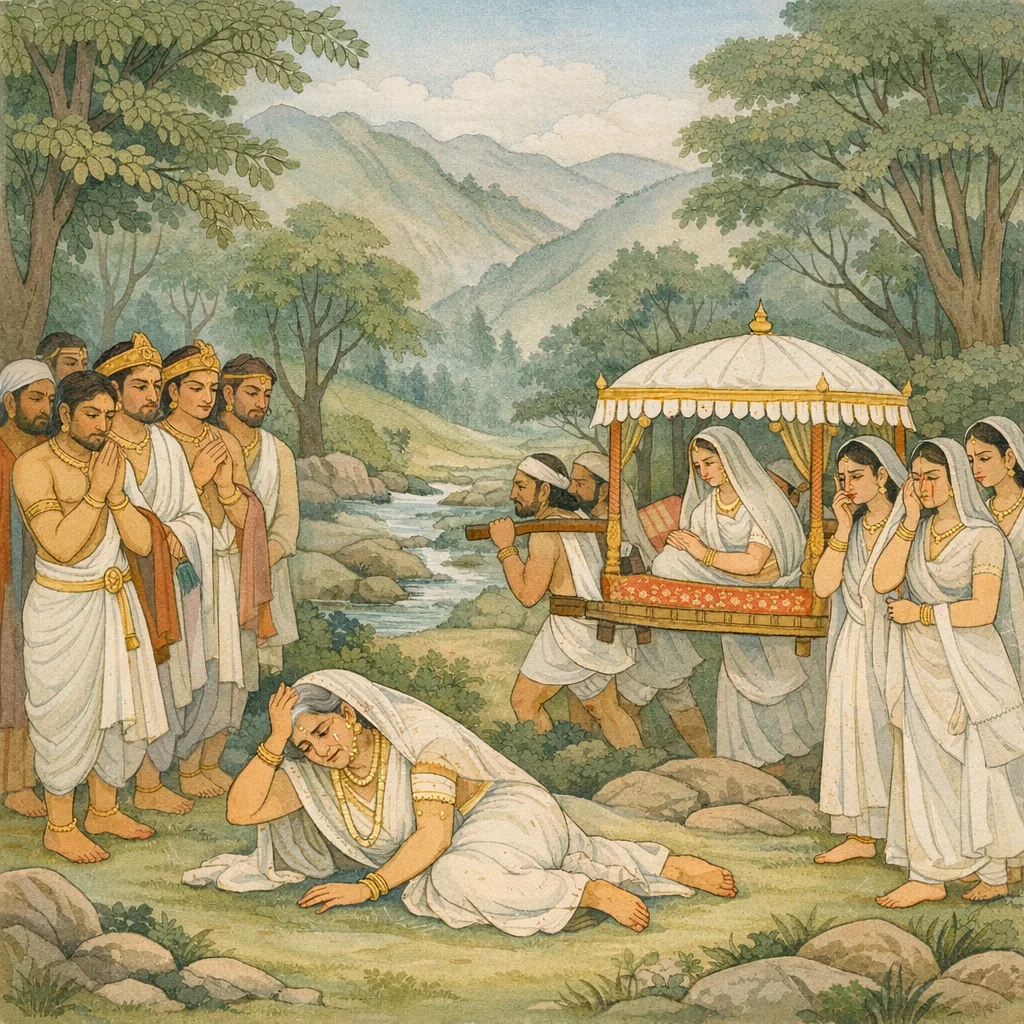
Chapter Arc: हिमालय-वन की निस्तब्धता को चीरता हुआ शोक-यात्रा का दृश्य खुलता है—पाण्डु और माद्री की अस्थियाँ, शिबिका, और रोते हुए कुटुम्ब; राजवंश का दीपक बुझ चुका है, अब केवल धर्मानुसार अन्त्येष्टि शेष है। → भीष्म, विदुर और पाण्डवों के साथ नगर-जन, ब्राह्मण, क्षत्रिय, वैश्य, शूद्र—हजारों की भीड़ शोक में डूबी चलती है; दान-वितरण की तैयारी होती है—पशु, वस्त्र, रत्न, धन—और यह निर्देश भी कि माद्री का सत्कार कुन्ती के समान ही हो, ताकि किसी प्रकार का अपमान या असमानता न रहे। → अस्थियों/अवशेषों के दर्शन से मातृ-हृदय टूट पड़ता है—‘हा पुत्र!’ की पुकार के साथ अम्बालिका/कौसल्या मूर्छित होकर भूमि पर गिरती है; कुन्ती के आर्तनाद से मनुष्यों के साथ पशु-पक्षी तक करुण क्रन्दन में सहभागी हो उठते हैं—शोक का ज्वार चरम पर पहुँचता है। → अन्त्येष्टि-विधि सम्पन्न होती है; ब्राह्मणों को यथोचित दान दिया जाता है; शोक-समाज बारह रात्रियों तक भूमि पर शयन करता है—नगर भी पाण्डवों के साथ उसी अस्वस्थ, आनन्द-शून्य शोक में डूबा रहता है। → बारह रात्रियों के शोक के बाद अब प्रश्न शेष है—पाण्डु के अनाथ पुत्रों का संरक्षण, उत्तराधिकार और हस्तिनापुर की राजनीति किस दिशा में मुड़ेगी?
Shlokas
Verse 1
(दाक्षिणात्य अधिक पाठके ४ ३ श्लोक मिलाकर कुल ३९३ “लोक हैं) नफमशा+ (3) अमन न षड्विशरत्याधेकशततमो< ध्याय: पाण्डु और माद्रीकी अस्थियोंका दाह-संस्कार तथा भाई- बन्धुओंद्वारा उनके लिये जलांजलिदान धृतराष्ट उवाच पाण्डोर्विंदुर सर्वाणि प्रेतकार्याणि कारय । राजवद् राजसिंहस्य माद्रयाश्रैव विशेषत:,धृतराष्ट्र बोले--विदुर! राजाओंमें श्रेष्ठ पाण्डुके तथा विशेषतः माद्रीके भी समस्त प्रेतकार्य राजोचित ढंगसे कराओ
Dhṛtarāṣṭra said: “Vidura, have all the funerary rites performed for Pāṇḍu—lion among kings—in a manner befitting royalty; and do so with special care for Mādrī as well.”
Verse 2
पशून् वासांसि रत्नानि धनानि विविधानि च । पाण्डो: प्रयच्छ माद्रयाश्न॒ येभ्यो यावच्च वाज्छितम्,पाण्डु और माद्रीके लिये नाना प्रकारके पशु, वस्त्र, रतन और धन दान करो। इस अवसरपर जिनको जितना चाहिये, उतना धन दो। कुन्तीदेवी माद्रीका जिस प्रकार सत्कार करना चाहें, वैसी व्यवस्था करो। माद्रीकी अस्थियोंको वस्त्रोंसे अच्छी प्रकार ढँक दो, जिससे उसे वायु तथा सूर्य भी न देख सकें
Dhṛtarāṣṭra said: “Give, in the name of Pāṇḍu and Mādrī, cattle, garments, jewels, and various kinds of wealth. To each recipient, grant as much as is desired.”
Verse 3
यथा च कुन्ती सत्कारं कुर्यान्माद्रयास्तथा कुरु । यथा न वायुर्नादित्य: पश्येतां तां सुसंवृताम्,पाण्डु और माद्रीके लिये नाना प्रकारके पशु, वस्त्र, रतन और धन दान करो। इस अवसरपर जिनको जितना चाहिये, उतना धन दो। कुन्तीदेवी माद्रीका जिस प्रकार सत्कार करना चाहें, वैसी व्यवस्था करो। माद्रीकी अस्थियोंको वस्त्रोंसे अच्छी प्रकार ढँक दो, जिससे उसे वायु तथा सूर्य भी न देख सकें
Dhṛtarāṣṭra said: “Arrange matters so that Mādrī is honored in the very way Kuntī wishes to honor her. Cover her well and completely, so that neither the wind nor the sun may look upon her.”
Verse 4
न शोच्य: पाण्डुरनघ: प्रशस्य: स नराधिप: । यस्य पजञ्च सुता वीरा जाता: सुरसुतोपमा:,निष्पाप राजा पाण्डु शोचनीय नहीं, प्रशंसनीय हैं, जिन्हें देवकुमारोंके समान पाँच वीर पुत्र प्राप्त हुए हैं
Dhṛtarāṣṭra said: “King Pāṇḍu, free from sin, is not one to be lamented; rather, that ruler of men is worthy of praise—he to whom five heroic sons were born, comparable to the sons of the gods.”
Verse 5
वैशम्पायन उवाच विदुरस्तं तथेत्युक्त्वा भीष्मेण सह भारत । पाण्डुं संस्कारयामास देशे परमपूजिते,वैशम्पायनजी कहते हैं--राजन्! विदुरने धृतराष्ट्रसे “तथास्तु/ कहकर भीष्मजीके साथ परम पवित्र स्थानमें पाण्डुका अन्तिम-संस्कार कराया
Vaiśampāyana said: O Bhārata (Janamejaya), Vidura, having replied “So be it” to him, performed the final rites for Pāṇḍu together with Bhīṣma, in a place held to be supremely sacred and worthy of reverence.
Verse 6
ततस्तु नगरात् तूर्णमाज्यगन्धपुरस्कृता: । निर्ह्वता: पावका दीप्ता: पाण्डो राजन् पुरोहितैः,राजन! तदनन्तर शीघ्र ही पाण्डुका दाह-संस्कार करनेके लिये पुरोहितगण घृत और सुगन्ध आदिके साथ प्रज्वलित अग्नि लिये नगरसे बाहर निकले
Then, O king, the priests hurried out of the city, bearing before them ghee and fragrant substances, and carrying kindled, blazing sacred fires, to perform the funeral rites for Pāṇḍu.
Verse 7
अथैनामार्तवै: पुष्पैर्गन्धैश्व विविधैवरै: । शिबिकां तामलंकृत्य वाससा55च्छाद्य सर्वश:,इसके बाद वसन्त-ऋतुमें सुलभ नाना प्रकारके सुन्दर पुष्पों तथा श्रेष्ठ ग्रन्धोंसे एक शिबिका (वैकुण्ठी)-को सजाकर उसे सब ओरसे वस्त्रद्वारा ढँक दिया गया
Then they adorned that palanquin with seasonal spring flowers and with choice, varied fragrances; and, having decorated it, they covered it completely on all sides with cloth.
Verse 8
तां तथा शोभितां माल्यैर्वासोभिश्व महाधनै: । अमात्या ज्ञातयश्रैनं सुहृदश्चषोपतस्थिरे,इस प्रकार बहुमूल्य वस्त्रों और पुष्पमालाओंसे सुशोभित उस शिबिकाके समीप मन्त्री, भाई-बन्धु और सुहृद-सम्बन्धी--सब लोग उपस्थित हुए
Vaiśampāyana said: Thus adorned with garlands and with exceedingly costly garments, that palanquin stood resplendent. Ministers, kinsmen, and well-wishing friends all gathered near it, attending in due order.
Verse 9
नृसिंहं नरयुक्तेन परमालंकृतेन तम् । अवहन् यानमुख्येन सह माद्र्या सुसंयतम्,उसमें माद्रीके साथ पाण्डुकी अस्थियाँ भली-भाँति बाँधकर रखी गयी थीं। मनुष्योंद्वारा ढोई जानेवाली और अच्छी तरह सजायी हुई उस शिबिकाके द्वारा वे सभी बन्धु-बान्धव माद्रीसहित नरश्रेष्ठ पाण्डुकी अस्थियोंको ढोने लगे
Vaiśampāyana said: They carried that lion among men—Pāṇḍu—together with Mādrī, carefully secured, in a foremost conveyance borne by men and richly adorned. Thus the kinsmen bore along the well-bound remains of the noble Pāṇḍu with Mādrī, performing the due rites of respect for the dead.
Verse 10
पाण्डुरेणातपत्रेण चामरव्यजनेन च । सर्ववादित्रनादैश्व॒ समलंचक्रिरे तत:,शिबिकाके ऊपर श्वेत छत्र तना हुआ था। चँवर डुलाये जा रहे थे। सब प्रकारके बाजों- गाजोंसे उसकी शोभा और भी बढ़ गयी थी
Vaiśampāyana said: Then they adorned it with a white parasol and with yak-tail fans being waved; and with the resounding music of all kinds of instruments, its splendor was further enhanced—marking the scene with royal dignity and ceremonial honor.
Verse 11
रत्नानि चाप्युपादाय बहूनि शतशो नरा: । प्रददु: काड्क्षमाणेभ्य: पाण्डोस्तस्यौर्ध्वदेहिके,सैकड़ों मनुष्योंने उन महाराज पाण्डुके दाह-संस्कारके दिन बहुत-से रत्न लेकर याचकोंको दिये
Vaiśampāyana said: On the day of King Pāṇḍu’s funeral rites, hundreds of men brought many jewels and distributed them to those who came hoping to receive gifts.
Verse 12
अथच्छत्राणि शुभ्राणि चामराणि बृहन्ति च । आजहु: कौरवस्यार्थे वासांसि रुचिराणि च,इसके बाद कुरुराज पाण्डुके लिये अनेक श्वेत छत्र, बहुतेरे बड़े-बड़े चँवर तथा कितने ही सुन्दर-सुन्दर वस्त्र लोग वहाँ ले आये
Vaiśampāyana said: Then, for the sake of the Kuru prince, people brought white parasols, large yak-tail fans, and also many splendid garments—royal insignia meant to honor him and mark his dignity.
Verse 13
याजकै: शुक्लवासोभिट्ठयमाना हुताशना: । अगच्छन्नग्रतस्तस्य दीप्यमाना: स्वलंकृता:,पुरोहितलोग सफेद वस्त्र धारण करके अग्निहोत्रकी अग्निमें आहुति डालते जाते थे। वे अग्नियाँ माला आदिसे अलंकृत एवं प्रज्वलित हो पाण्डुकी पालकीके आगे-आगे चल रही थीं। सहसों ब्राह्मण, क्षत्रिय, वैश्य और शूद्र शोकसे संतप्त हो रोते हुए महाराज पाण्डुकी शिबिकाके पीछे जा रहे थे
Vaiśaṃpāyana said: Priests clad in white garments proceeded ahead, tending the sacred fires and offering oblations into them. Those fires—brightly blazing and adorned as for a rite—moved in front of him, while the people followed behind in grief, lamenting as they went.
Verse 14
ब्राह्मणा: क्षत्रिया वैश्या: शूद्राश्वैव सहस्रश: | रुदनत: शोकसंतप्ता अनुजम्मुर्नराधिपम्,पुरोहितलोग सफेद वस्त्र धारण करके अग्निहोत्रकी अग्निमें आहुति डालते जाते थे। वे अग्नियाँ माला आदिसे अलंकृत एवं प्रज्वलित हो पाण्डुकी पालकीके आगे-आगे चल रही थीं। सहसों ब्राह्मण, क्षत्रिय, वैश्य और शूद्र शोकसे संतप्त हो रोते हुए महाराज पाण्डुकी शिबिकाके पीछे जा रहे थे
Vaiśampāyana said: Thousands of Brāhmaṇas, Kṣatriyas, Vaiśyas, and Śūdras—overwhelmed by grief—followed the king, weeping.
Verse 15
अयमस्मानपाहाय दु:खे चाधाय शाश्चते | कृत्वा चास्माननाथांश्व क्व यास्यति नराधिप:,वे कहते जाते थे--'हाय! ये महाराज हमलोगोंको छोड़कर, हमें सदाके लिये भारी दुःखमें डालकर और हम सबको अनाथ करके कहाँ जा रहे हैं!
Vaiśampāyana said: “Alas! Having abandoned us, casting us into everlasting sorrow, and leaving us all without a protector—where is the king going?”
Verse 16
क्रोशन्त: पाण्डवा: सर्वे भीष्मो विदुर एव च | रमणीये वनोद्देशे गज़ातीरे समे शुभे,समस्त पाण्डव, भीष्म तथा विदुरजी क्रन्दन करते हुए जा रहे थे। वनके रमणीय प्रदेशमें गंगाजीके शुभ एवं समतल तटपर उन लोगोंने, अनायास ही महान् पराक्रम करनेवाले सत्यवादी नरश्रेष्ठ पाण्डु और उनकी पत्नी माद्रीकी उस शिबिकाको रखा
Vaiśampāyana said: All the Pāṇḍavas—together with Bhīṣma and Vidura—went on, crying aloud in grief. Reaching a beautiful tract of forest on the auspicious, level bank of the Gaṅgā, they set down there the bier bearing the truthful, heroic, best of men, Pāṇḍu, along with his wife Mādrī, fulfilling the solemn duty owed to the dead.
Verse 17
न्यासयामासुरथ तां शिबिकां सत्यवादिन: । सभार्यस्य नृसिंहस्य पाण्डोरक्लिष्टकर्मण:,समस्त पाण्डव, भीष्म तथा विदुरजी क्रन्दन करते हुए जा रहे थे। वनके रमणीय प्रदेशमें गंगाजीके शुभ एवं समतल तटपर उन लोगोंने, अनायास ही महान् पराक्रम करनेवाले सत्यवादी नरश्रेष्ठ पाण्डु और उनकी पत्नी माद्रीकी उस शिबिकाको रखा
Vaiśampāyana said: Then those truthful men set down that palanquin—bearing the lion-like Pāṇḍu, a doer of unwearied deeds, together with his wife—upon the auspicious, level bank of the Gaṅgā in a lovely stretch of forest. Grief and reverence marked the moment as elders and kin paused to honor the fallen king with dignity and restraint.
Verse 18
ततस्तस्य शरीरं तु सर्वगन्धाधिवासितम् । शुचिकालीयकादिग्ध॑ दिव्यचन्दनरूषितम्,तदनन्तर राजा पाण्डुकी अस्थियोंको सब प्रकारकी सुगन्धोंसे सुवासित करके उनपर पवित्र काले अगरका लेप किया गया। फिर उन्हें दिव्य चन्दनसे चर्चित करके सोनेके कलशोंद्वारा लाये हुए गंगाजलसे भाई-बन्धुओंने उसका अभिषेक किया। तत्पश्चात् उनपर सब ओरसे काले अगरसे मिश्रित तुंगरस नामक ग्रन्ध-द्रव्यका एवं श्वेत चन्दनका लेप किया गया। इसके बाद उन्हें सफेद स्वदेशी वस्त्रोंसे ढक दिया गया
Vaiśaṃpāyana said: Then his body was thoroughly perfumed with every kind of fragrance—smeared with pure dark aloe-wood paste (aguru) and anointed with divine sandal. In keeping with dharma and familial duty, the relatives performed the rites of honoring the dead with fragrant unguents and ritual ablutions, treating the remains with reverence and purity.
Verse 19
पर्यषिज्चञज्जलेनाशु शातकुम्भमयैर्घटै: । चन्दनेन च शुक्लेन सर्वतः समलेपयन्,तदनन्तर राजा पाण्डुकी अस्थियोंको सब प्रकारकी सुगन्धोंसे सुवासित करके उनपर पवित्र काले अगरका लेप किया गया। फिर उन्हें दिव्य चन्दनसे चर्चित करके सोनेके कलशोंद्वारा लाये हुए गंगाजलसे भाई-बन्धुओंने उसका अभिषेक किया। तत्पश्चात् उनपर सब ओरसे काले अगरसे मिश्रित तुंगरस नामक ग्रन्ध-द्रव्यका एवं श्वेत चन्दनका लेप किया गया। इसके बाद उन्हें सफेद स्वदेशी वस्त्रोंसे ढक दिया गया
Vaiśaṃpāyana said: They quickly sprinkled it with water brought in pitchers made of pure gold, and then anointed it on all sides with white sandalwood paste. In the funeral rite, these acts express reverence, purity, and familial duty, aligning grief with dharma through consecration and fragrant unguents.
Verse 20
कालागुरुविमिश्रेण तथा तुड़्रसेन च । अथैनं देशजै: शुक्लैवासोभि: समयोजयन्,तदनन्तर राजा पाण्डुकी अस्थियोंको सब प्रकारकी सुगन्धोंसे सुवासित करके उनपर पवित्र काले अगरका लेप किया गया। फिर उन्हें दिव्य चन्दनसे चर्चित करके सोनेके कलशोंद्वारा लाये हुए गंगाजलसे भाई-बन्धुओंने उसका अभिषेक किया। तत्पश्चात् उनपर सब ओरसे काले अगरसे मिश्रित तुंगरस नामक ग्रन्ध-द्रव्यका एवं श्वेत चन्दनका लेप किया गया। इसके बाद उन्हें सफेद स्वदेशी वस्त्रोंसे ढक दिया गया
Vaiśampāyana said: They then anointed those remains with a fragrant paste compounded with black aloe-wood (aguru) and with the aromatic substance called tuṅgarasa. After that, they wrapped them in clean, white, locally made cloths. The passage underscores the dharmic duty of the living to honor the dead through purity, reverence, and proper funerary rites.
Verse 21
संछन्न: स तु वासोभिर्जीवन्निव नराधिप: । शुशुभे स नरव्याप्रो महाहशयनोचित:,इस प्रकार बहुमूल्य शय्यापर शयन करनेयोग्य नरश्रेष्ठ राजा पाण्डुकी अस्थियाँ वस्त्रोंसे आच्छादित हो जीवित मनुष्यकी भाँति शोभा पाने लगीं
Vaiśampāyana said: Covered with garments, the king’s remains appeared as though alive. That tiger among men—worthy of a splendid royal couch—seemed resplendent, as if still bearing the dignity and honor due to a great ruler.
Verse 22
(हयमेधाग्निना सर्वे याजका: सपुरोहिता: । वेदोक्तेन विधानेन क्रियाश्चक्रु: समन्त्रकम् ।।) याजकैरभ्यनुज्ञाते प्रेतकर्मण्यनुछिते । घृतावसिक्त राजानं सह माद्र्या स्वलंकृतम्,समस्त याजकों और पुरोहितोंने अश्वमेधकी अग्निसे वेदोक्त विधिके अनुसार मन्त्रोच्चारणपूर्वक सारी क्रियाएँ सम्पन्न कीं। याजकोंकी आज्ञा लेकर प्रेतकर्म आरम्भ करते समय माद्रीसहित अलंकारयुक्त राजाका घृतसे अभिषेक किया गया
Vaiśampāyana said: All the officiating priests, together with the family chaplains, performed every rite with the Aśvamedha fire, following the Veda-prescribed procedure and accompanying mantras. Then, with the priests’ authorization, as the proper funeral rites were about to begin, the king—adorned and together with Mādrī—was anointed with clarified butter (ghṛta).
Verse 23
तुड्पद्मकमिश्रेण चन्दनेन सुगन्धिना | अन्यैश्न विविधैर्गन्धर्विधिना समदाहयन्,फिर तुंग और पद्मकमिश्रित सुगन्धित चन्दन तथा अन्य विविध प्रकारके गन्ध-द्रव्योंसे भाई-बन्धुओंने युधिष्लिरद्वारा विधिपूर्वक उन दोनोंका दाह-संस्कार कराया
Vaiśampāyana said: Using fragrant sandalwood blended with tuṅga and padmaka, and also other assorted aromatic substances, the kinsmen performed—according to proper rites—the cremation of those two, with Yudhiṣṭhira presiding in due form.
Verse 24
ततस्तयो: शरीरे द्वे दृष्टया मोहवशं गता । हा हा पुत्रेति कौसल्या पपात सहसा भुवि,उस समय उन दोनोंकी अस्थियोंको देखकर माता कौसल्या (अम्बालिका) 'हा पुत्र! हा पुत्र!! कहती हुई सहसा मूर्च्छित हो पृथ्वीपर गिर पड़ी
Then, on seeing the two bodies, Kausalyā—overpowered by delusion and grief—cried out, “Alas, my son! Alas, my son!” and suddenly collapsed to the ground.
Verse 25
तां प्रेक्ष्य पतितामार्ता पौरजानपदो जन: । रुरोद दुःखसंतप्तो राजभक्त्या कृपान्वित:,उसे इस प्रकार शोकातुर हो भूमिपर पड़ी देख नगर और जनपदके लोग राजभक्ति तथा दयासे द्रवित एवं दुःखसे संतप्त हो फ़ूट-फूटकर रोने लगे
Seeing her fallen on the ground, the townspeople and the folk of the countryside, scorched by sorrow, burst into tears—moved by compassion and stirred by loyal devotion to their king.
Verse 26
कुन्त्याश्वैवार्तनादेन सर्वाणि च विचुक्रुशु: । मानुषै: सह भूतानि तिर्यग्योनिगतान्यपि,कुन्तीके आर्तनादसे मनुष्योंसहित समस्त पशु और पक्षी आदि प्राणी भी करुणक्रन्दन करने लगे
At Kuntī’s very cry of anguish, all around began to wail; along with the people, even living creatures of the animal realm—those born in non-human wombs—also broke into pitiful lamentation.
Verse 27
तथा भीष्म: शान्तनवो विदुरश्न महामतिः । सर्वश: कौरवाश्रैव प्राणदन् भृशदु:ःखिता:,शन्तनुनन्दन भीष्म, परम बुद्धिमान् विदुर तथा सम्पूर्ण कौरव भी अत्यन्त दुःखमें निमग्न हो रोने लगे
Vaiśaṃpāyana said: Then Bhīṣma, the son of Śantanu, and Vidura, the great-minded one—indeed all the Kauravas—overwhelmed by intense sorrow, began to weep and lament, their very breath coming in heavy, grief-stricken sighs.
Verse 28
ततो भीष्मो5थ विदुरो राजा च सह पाण्डवै: । उदकं चक्रिरे तस्य सर्वाश्व कुरुयोषित:,तदनन्तर भीष्म, विदुर, राजा धृतराष्ट्र तथा पाण्डवोंके सहित कुरुकुलकी सभी स्त्रियोंने राजा पाण्डुके लिये जलांजलि दी
Then Bhīṣma, Vidura, and King Dhṛtarāṣṭra, together with the Pāṇḍavas, and all the women of the Kuru household, performed the water-offering for him (King Pāṇḍu).
Verse 29
चुक्ुशु: पाण्डवा: सर्वे भीष्म: शान्तनवस्तथा । विदुरो ज्ञातयश्वैव चक्रुश्चाप्युदकक्रिया:,उस समय सभी पाण्डव पिताके लिये रो रहे थे। शन्तनुनन्दन भीष्म, विदुर तथा अन्य भाई-बन्धुओंकी भी यही दशा थी। सबने जलांजलि देनेकी क्रिया पूरी की
Vaiśampāyana said: All the Pāṇḍavas wept. Bhīṣma, the son of Śāntanu, and Vidura, along with the other kinsmen, were in the same state of grief. They then completed the rites of offering water—acts of filial duty that honor the departed and reaffirm dharma even amid sorrow.
Verse 30
कृतोदकांस्तानादाय पाण्डवाञ्छोककर्शितान् । सर्वा: प्रकृतयो राजन् शोचमाना न्यवारयन्,जलांजलिदान करके शोकसे दुर्बल हुए पाण्डवोंको साथ ले मन्त्री आदि सब लोग स्वयं भी दुःखी हो उन सबको समझा-बुझाकर शोक करनेसे रोकने लगे
Vaiśaṃpāyana said: Taking with them the Pāṇḍavas—who had completed the water-offering rites and were worn down by grief—the king’s ministers and other leading subjects, themselves sorrowful, sought to restrain them, consoling them and checking their lamentation.
Verse 31
यथैव पाण्डवा भूमौ सुषुपु: सह बान्धवै: । तथैव नागरा राजन् शिश्यिरे ब्राह्मणादय:,राजन! बारह रात्रियोंतक जिस प्रकार बन्धु-बान्धवों-सहित पाण्डव भूमिपर सोये, उसी प्रकार ब्राह्मण आदि नागरिक भी धरतीपर ही सोते रहे। उतने दिनोंतक हस्तिनापुर नगर पाण्डवोंके साथ आनन्द और हर्षोल्लाससे शून्य रहा। बूढ़ोंसे लेकर बच्चेतक सभी वहाँ दुःखमें डूबे रहे। सारा नगर ही अस्वस्थचित्त हो गया था
Vaiśampāyana said: “Just as the Pāṇḍavas, together with their kinsmen, slept upon the bare ground, so too, O King, did the townspeople—beginning with the brāhmaṇas—lie down to sleep on the earth. The city’s shared austerity and grief mirrored the Pāṇḍavas’ distress, expressing collective solidarity and the moral weight of their misfortune.”
Verse 32
तद्गतानन्दमस्वस्थमाकुमारमहृष्टवत् । बभूव पाण्डवै: सार्ध नगरं द्वादश क्षपा:,राजन! बारह रात्रियोंतक जिस प्रकार बन्धु-बान्धवों-सहित पाण्डव भूमिपर सोये, उसी प्रकार ब्राह्मण आदि नागरिक भी धरतीपर ही सोते रहे। उतने दिनोंतक हस्तिनापुर नगर पाण्डवोंके साथ आनन्द और हर्षोल्लाससे शून्य रहा। बूढ़ोंसे लेकर बच्चेतक सभी वहाँ दुःखमें डूबे रहे। सारा नगर ही अस्वस्थचित्त हो गया था
Vaiśampāyana said: O king, for twelve nights the city remained joyless and inwardly unsettled along with the Pāṇḍavas. From children up to the aged, the people were plunged in grief; the whole city’s mind seemed unwell, as if its happiness had departed with them.
Verse 126
इति श्रीमहाभारते आदिपर्वणि सम्भवपर्वणि पाण्डुदाहे षड्विंशत्यधिकशततमो<ध्याय:
Thus ends the one-hundred-and-twenty-sixth chapter of the Sambhava section within the Ādi Parva of the sacred Mahābhārata, in the episode concerning the burning (funeral rites) of Pāṇḍu.
Frequently Asked Questions
The chapter stages a dharma-saṅkaṭa between birth-based social eligibility and merit-based recognition: whether public honor, martial rivalry, and kingship can be ethically grounded in prowess alone or must be constrained by lineage norms.
The passage suggests that rigid social categorization can misjudge human capacity and distort justice; political and ethical evaluation should account for observable excellence and the limits of knowledge about origins, while also recognizing that patronage creates binding loyalties.
No explicit phalaśruti appears in the cited verses; the meta-commentary is implicit through narratorial framing and crowd reaction, which emphasize how speech-acts (insult, defense, acclaim) generate durable consequences within the epic’s moral-causal economy.