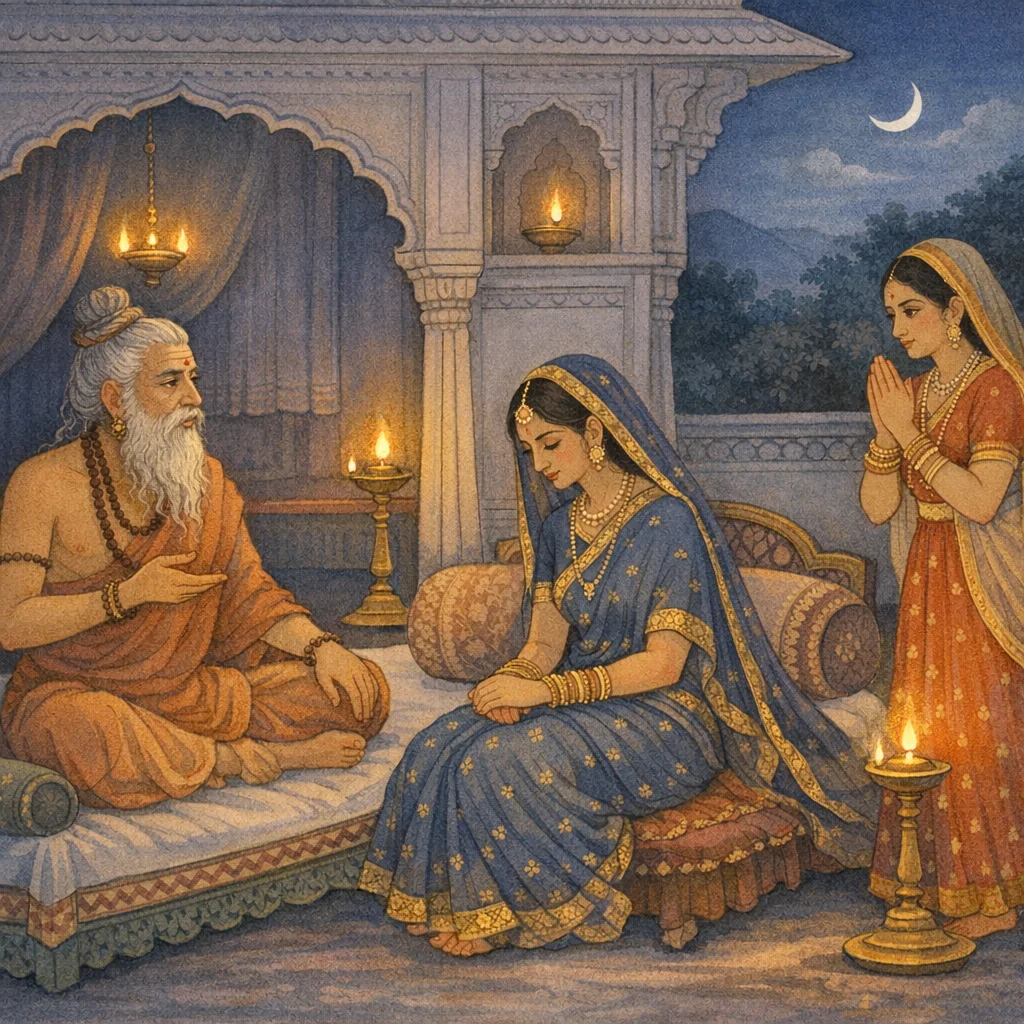
Adhyaya 106
आदि पर्व — अध्याय १०६ (Pāṇḍu’s Gifts, Forest Residence, and Vidura’s Marriage)
Upa-parva: Pāṇḍu-vana-vihāra (Pāṇḍu’s Forest Sojourn Episode)
Vaiśaṃpāyana narrates that, with Dhṛtarāṣṭra’s approval, Pāṇḍu offers wealth acquired through his own prowess to Bhīṣma, Satyavatī, and his mother Kauśalyā, and sends a portion to Vidura while also gratifying other well-wishers. Bhīṣma reciprocally honors Satyavatī and Kauśalyā with auspicious jewels, and Kauśalyā embraces Bhīṣma with affectionate approval. The chapter then marks Dhṛtarāṣṭra’s performance of large-scale royal sacrifices (aśvamedha-type rites described as grand and richly endowed), signaling continued ritual sovereignty. Subsequently, Pāṇḍu, accompanied by Kuntī and Mādrī, leaves palace comforts for sustained forest living, oriented toward roaming and hunting in the Himalayan regions, where forest-dwellers regard him as exceptionally radiant and martial. Under Dhṛtarāṣṭra’s direction, attendants regularly supply Pāṇḍu with provisions and comforts even in the wilderness. Finally, Pāṇḍu hears of a Pāraśavī maiden of King Devaka, selects her, and arranges her marriage to the wise Vidura; Vidura later fathers sons characterized by discipline and virtues akin to his own.
Chapter Arc: सत्यवती वंश-रक्षा के लिए कठोर किंतु अपरिहार्य उपाय—नियोग—का आदेश देती है; राजकुल की स्त्रियाँ भय, लज्जा और अनिश्चित भविष्य के बीच रात की प्रतीक्षा करती हैं। → कौसल्या को संदेश मिलता है कि ‘देवर’ (व्यास) निशीथ में आएँगे; वह शय्या पर लेटकर भीष्म और कुरुवंश के परिणामों का चिंतन करती है। दीपों के प्रकाश में व्यास का आगमन होता है, पर काशी-सुता (अम्बिका/अम्बालिका) भयवश दृष्टि न उठा सकने, रंग बदलने, या मन के संकोच से नियोग-धर्म निभाने में डगमगाती है। → व्यास नियोग-विधि से क्रमशः रानियों के पास जाते हैं; एक रानी भय से आँखें मूँद लेती है, दूसरी भय/विकार से पीली पड़ जाती है—और इन मानसिक अवस्थाओं की छाया गर्भफल पर पड़ती है; अंततः दासी निर्भय होकर ऋषि का सत्कार करती है और नियोग को स्थिरचित्त से स्वीकारती है। → व्यास मातृ-आज्ञा और वंश-धर्म से उऋण होकर सत्यवती को गर्भ-समाचार देकर अंतर्धान हो जाते हैं; विचित्रवीर्य के क्षेत्र में दैपायन से तीन पुत्र उत्पन्न होते हैं—कुरुवंश-वर्धक, देवगर्भ-प्रभा वाले। → तीनों पुत्रों के जन्म से वंश तो बचता है, पर उनके स्वभाव/शारीरिक-मानसिक लक्षण भविष्य के राज्य-कलह और उत्तराधिकार-संघर्ष की छाया डालते हैं।
Shlokas
Verse 1
(दाक्षिणात्य अधिक पाठके २ श्लोक मिलाकर कुल ५६ श्लोक हैं) #फशा न () आफ अत+- > यहाँ गुणवानका अर्थ है--नियोगकी विधिको जाननेवाला संयमी पुरुष। मनु महाराजने स्त्रियोंके आपद्धर्मके प्रसंगमें लिखा है-- विधवायां नियुक्तस्तु घृताक्तो वाग्यतो निशि । एकमुत्पादयेत् पुत्रं न द्वितीयं कथंचन ।। (मनुस्मृति ९।६१) विधवा स्त्रीके साथ सहवासके लिये (पतिपक्षके गुरुजनोंद्वारा) नियुक्त पुरुष अपने सारे शरीरपर घी चुपड़कर (सौन्दर्य बिगाड़कर), वाणीको संयममें रखकर (चुपचाप रहकर) रात्रिमें सहवास करे। इस प्रकार वह एक ही पुत्र उत्पन्न करे, दूसरा कभी न करे। विधवायां नियोगार्थे निर्वुत्ते तु यथाविधि । गुरुवच्च स्नुषावच्च वर्तेयातां परस्परम् |। (मनुस्मृति ९।६३) विधवामें नियोगके लिये विधिके अनुसार (अर्थात् कामवश न होकर कर्तव्य बुद्धिसे) चित्तको संयमित और इन्द्रियोंको अनासक्त रखते हुए नियोगका प्रयोजन सिद्ध हो जानेपर दोनों परस्पर पिता और पुत्रवधूके समान बर्ताव करें (अर्थात् स्त्री उसको पिताके समान समझकर बरते और पुरुष उसे पुत्रवधूके समान मानकर बर्ताव करे)। कलियुगमें मनुष्योंक असंयमी और कामी होनेके कारण नियोग वर्जित है। पञ्चाधिकशततमोब< ध्याय: व्यासजीके द्वारा विचित्रवीर्यके क्षेत्रसे धृतराष्ट्र, पाण्डु और विदुरकी उत्पत्ति वैशम्पायन उवाच ततः सत्यवती काले वधू स्नातामृतौ तदा । संवेशयन्ती शयने शनैर्वचनमब्रवीत्,वैशम्पायनजी कहते हैं-जनमेजय! तदनन्तर सत्यवती ठीक समयपर अपनी ऋतुस्नाता पुत्रवधूको शय्यापर बैठाती हुई धीरेसे बोली--
Vaiśampāyana said: Then, at the proper time, Satyavatī, placing her daughter-in-law—who had bathed after the onset of her fertile season—upon the bed, spoke softly. (The scene prepares for the ethically regulated act of niyoga, undertaken as a duty to secure heirs rather than for desire.)
Verse 2
कौसल्ये देवरस्ते5स्ति सोडउ्द्य त्वानुप्रवेक्ष्यति । अप्रमत्ता प्रतीक्षेनं निशीथे ह्वागमिष्यति,“कौसल्पे! तुम्हारे एक देवर हैं, वे ही आज तुम्हारे पास गर्भाधानके लिये आयेंगे। तुम सावधान होकर उनकी प्रतीक्षा करो। वे ठीक आधी रातके समय यहाँ पधारेंगे”
Vaiśampāyana said: “Kausalyā, you have a brother-in-law. It is he who will come to you today for the purpose of begetting a child. Remain vigilant and wait for him; he will arrive here precisely at midnight.”
Verse 3
श्वश्वास्तद् वचन श्रुत्वा शयाना शयने शुभे । साचिन्तयत् तदा भीष्ममन्यांश्व॒ कुरुपुड्रवान्,सासकी यह बात सुनकर कौसल्या पवित्र शय्यापर शयन करके उस समय मन-ही-मन भीष्म तथा अन्य श्रेष्ठ कुरुवंशियोंका चिन्तन करने लगी
Vaiśampāyana said: Hearing those words, Śvaśvā, lying upon an auspicious couch, began at that time to reflect inwardly upon Bhīṣma and upon other foremost heroes of the Kuru line—turning her mind to the elders and exemplars whose counsel and protection uphold right conduct in the royal house.
Verse 4
ततोअम्बिकायां प्रथमं नियुक्त: सत्यवागृषि: । दीप्यमानेषु दीपेषु शरणं प्रविवेश ह,उस समय नियोगविधिके अनुसार सत्यवादी महर्षि व्यासने अम्बिकाके महलमें (शरीरपर घी चुपड़े हुए, संयतचित्त, कुत्सित रूपमें) प्रवेश किया। उस समय बहुत-से दीपक वहाँ प्रकाशित हो रहे थे
Then, in accordance with the rite of niyoga, the truth-speaking sage Vyāsa was appointed first to Ambikā. As many lamps blazed brightly, he entered her chambers.
Verse 5
तस्य कृष्णस्य कपिलां जटां दीप्ते च लोचने । बशभ्ूणि चैव श्मश्रूणि दृष्टवा देवी न्यमीलयत्,व्यासजीके शरीरका रंग काला था, उनकी जटाएँ पिंगलवर्णकी और आँखें चमक रही थीं तथा दाढ़ी-मूँछ भूरे रंगकी दिखायी देती थी। उन्हें देखकर देवी कौसल्याने (भयके मारे) अपने दोनों नेत्र बंद कर लिये
Vaiśampāyana said: Seeing that dark-complexioned man—his tawny matted locks, his eyes blazing with brilliance, and his beard and moustache brown—Queen Kausalyā, struck with fear and awe at his formidable appearance, closed her eyes.
Verse 6
सम्बभूव तया सार्ध मातु: प्रियचिकीर्षया । भयात् काशिसुता तं॑ तु नाशक्नोदभिवीक्षितुम्,माताका प्रिय करनेकी इच्छासे व्यासजीने उसके साथ समागम किया; परंतु काशिराजकी कन्या भयके मारे उनकी ओर अच्छी तरह देख न सकी
Vaiśampāyana said: Wishing to fulfill his mother’s desire, he united with her. But the princess of Kāśī, overcome by fear, could not bring herself to look upon him steadily.
Verse 7
ततो निष्क्रान्तमागम्य माता पुत्रमुवाच ह | अप्यस्या गुणवान् पुत्र राजपुत्रो भविष्यति,जब व्यासजी उसके महलसे बाहर निकले, तब माता सत्यवतीने आकर उनसे पूछा --<बेटा! क्या अम्बिकाके गर्भसे कोई गुणवान् राजकुमार उत्पन्न होगा?”
Vaiśampāyana said: When Vyāsa had come out after departing, the mother Satyavatī approached her son and asked, “My son—will a virtuous prince be born from Ambikā’s womb?”
Verse 8
निशम्य तद् वचो मातुर्व्यास: सत्यवतीसुतः । नागायुतसमप्राणो विद्वान् राजर्षिसत्तम:,माताका यह वचन सुनकर सत्यवतीनन्दन व्यासजी बोले--'माँ! वह दस हजार हाथियोंके समान बलवान, विद्वान, राजर्षियोंमें श्रेष्ठ परम सौभाग्यशाली, महापराक्रमी तथा अत्यन्त बुद्धिमान् होगा। उस महामनाके भी सौ पुत्र होंगे
Vaiśaṃpāyana said: Hearing his mother’s words, Vyāsa, the son of Satyavatī, spoke: “Mother, the child to be born will have the strength of ten thousand elephants, will be learned, and will stand foremost among royal sages—greatly fortunate, mighty in valor, and possessed of exceptional intelligence. And that great-souled man will also have a hundred sons.”
Verse 9
महाभागो महावीर्यों महाबुद्धिर्भविष्यति । तस्य चापि शत पुत्रा भविष्यन्ति महात्मन:,माताका यह वचन सुनकर सत्यवतीनन्दन व्यासजी बोले--'माँ! वह दस हजार हाथियोंके समान बलवान, विद्वान, राजर्षियोंमें श्रेष्ठ परम सौभाग्यशाली, महापराक्रमी तथा अत्यन्त बुद्धिमान् होगा। उस महामनाके भी सौ पुत्र होंगे
Vaiśampāyana said: “He will be exceedingly fortunate, of great valor, and of lofty intelligence. And that great-souled man will also have a hundred sons.”
Verse 10
कि तु मातुः स वैगुण्यादन्ध एव भविष्यति । तस्य तद् वचन श्रुत्वा माता पुत्रमथाब्रवीत्
Vaiśampāyana said: “But because of a defect on the mother’s part, he will indeed be born blind.” Hearing those words, the mother then spoke to her son.
Verse 11
नान्ध: कुरूणां नृपतिरनुरूपस्तपोधन । ज्ञातिवंशस्य गोप्तारं पितृणां वंशवर्धनम्
Vaiśampāyana said: “O ascetic rich in austerity, it is not fitting for the Kurus to have a blind king—one who should be the protector of the kinsmen’s lineage and the increaser of the ancestral line.”
Verse 12
द्वितीयं कुरुवंशस्य राजानं दातुमहसि । “किंतु माताके दोषसे वह बालक अन्धा ही होगा।” व्यासजीकी यह बात सुनकर माताने कहा--“तपोधन! कुरुवंशका राजा अन्धा हो यह उचित नहीं है। अतः कुरुवंशके लिये दूसरा राजा दो, जो जातिभाइयों तथा समस्त कुलका संरक्षक और पिताका वंश बढ़ानेवाला हो” || १०-११ $ || स तथेति प्रतिज्ञाय निश्चक्राम महायशा:,महायशस्वी व्यासजी “तथास्तु” कहकर वहाँसे निकल गये
Vaiśampāyana said: “Therefore, grant the Kuru line a second king.” The illustrious Vyāsa pledged, “So be it,” and departed from that place.
Verse 13
सापि कालेन कौसल्या सुषुवे<न्ध॑ तमात्मजम् । पुनरेव तु सा देवी परिभाष्य स्नुषां ततः,प्रसवका समय आनेपर कौसल्याने उसी अन्धे पुत्रको जन्म दिया। जनमेजय! तत्पश्चात् देवी सत्यवतीने अपनी दूसरी पुत्रवधूको समझा-बुझाकर गर्भाधानके लिये तैयार किया और इसके लिये पूर्ववत् महर्षि व्यासका आवाहन किया। फिर महर्षिने उसी (नियोगकी संयमपूर्ण) विधिसे देवी अम्बालिकाके साथ समागम किया। भारत! महर्षि व्यासको देखकर वह भी कान्तिहीन तथा पाण्डुवर्णकी-सी हो गयी
Vaiśampāyana said: In due course Kausalyā too gave birth to that blind son. Then the queen again, after instructing and persuading her daughter-in-law, proceeded as before to summon the sage Vyāsa for conception by niyoga, to preserve the royal line. Seeing Vyāsa, that daughter-in-law also lost her radiance and turned pale, Pāṇḍu-like.
Verse 14
ऋषिमावाहयत् सत्या यथा पूर्वमरिंदम । ततस्तेनैव विधिना महर्षिस्तामपद्यत,प्रसवका समय आनेपर कौसल्याने उसी अन्धे पुत्रको जन्म दिया। जनमेजय! तत्पश्चात् देवी सत्यवतीने अपनी दूसरी पुत्रवधूको समझा-बुझाकर गर्भाधानके लिये तैयार किया और इसके लिये पूर्ववत् महर्षि व्यासका आवाहन किया। फिर महर्षिने उसी (नियोगकी संयमपूर्ण) विधिसे देवी अम्बालिकाके साथ समागम किया। भारत! महर्षि व्यासको देखकर वह भी कान्तिहीन तथा पाण्डुवर्णकी-सी हो गयी
Vaiśampāyana said: “Satyavatī summoned the sage again, just as before, O subduer of foes. Then, following that very same prescribed procedure, the great ṛṣi approached her (for niyoga).”
Verse 15
अम्बालिकामथाभ्यागादृषिं दृष्टवा च सापि तम् । विवर्णा पाण्ड्संकाशा समपद्यत भारत,प्रसवका समय आनेपर कौसल्याने उसी अन्धे पुत्रको जन्म दिया। जनमेजय! तत्पश्चात् देवी सत्यवतीने अपनी दूसरी पुत्रवधूको समझा-बुझाकर गर्भाधानके लिये तैयार किया और इसके लिये पूर्ववत् महर्षि व्यासका आवाहन किया। फिर महर्षिने उसी (नियोगकी संयमपूर्ण) विधिसे देवी अम्बालिकाके साथ समागम किया। भारत! महर्षि व्यासको देखकर वह भी कान्तिहीन तथा पाण्डुवर्णकी-सी हो गयी
Vaiśampāyana said: Then Ambālikā approached. On seeing the sage, she too became pale—her complexion drained away, turning ashen and Pāṇḍu-like, O Bhārata.
Verse 16
तां भीतां पाण्डुसंकाशां विषण्णां प्रेक्ष्य भारत । व्यास: सत्यवतीपुत्र इदं वचनमत्रवीत्,जनमेजय! उसे भयभीत, विषादग्रस्त तथा पाण्डु-वर्णकी-सी देख सत्यवतीनन्दन व्यासने यों कहा--
O descendant of Bharata, O Janamejaya, seeing her—frightened, downcast, and pale as if drained of color—Vyāsa, the son of Satyavatī, addressed her with these words.
Verse 17
यस्मात् पाण्डुत्वमापन्ना विरूपं॑ प्रेक्ष्य मामिह । तस्मादेष सुतस्ते वै पाण्डुरेव भविष्यति,“अम्बालिके! तुम मुझे विरूप देखकर पाण्डुवर्णकीसी हो गयी थीं, इसलिये तुम्हारा यह पुत्र पाण्डु रंगका ही होगा
“Because here, on seeing me in a frightful form, you turned pale; therefore this son of yours will indeed be pale in complexion—Pāṇḍu.”
Verse 18
नाम चास्यैतदेवेह भविष्यति शुभानने । इत्युक्त्वा स निरक्रामद् भगवानृषिसत्तम:,'शुभानने! इस बालकका नाम भी संसारमें 'पाण्ड” ही होगा।” ऐसा कहकर मुनिश्रेष्ठ भगवान् व्यास वहाँसे निकल गये
Vaiśampāyana said: “O fair-faced lady, this child’s name in this world shall indeed be ‘Pāṇḍu.’” Having spoken thus, the blessed Vyāsa—foremost among sages—departed from that place.
Verse 19
ततो निष्क्रान्तमालोक्य सत्या पुत्रमथाब्रवीत् । शशंस स पुनर्मात्रि तस्य बालस्य पाण्डुताम्,उस महलसे निकलनेपर सत्यवतीने अपने पुत्रसे उसके विषयमें पूछा। तब व्यासजीने मातासे भी उस बालकके पाण्डुवर्ण होनेकी बात बता दी
Then, seeing him come out, Satyā (Satyavatī) spoke to her son. And he, in turn, informed his mother that the child was of a pale, whitish complexion.
Verse 20
त॑ माता पुनरेवान्यमेकं पुत्रमयाचत । तथेति च महर्षिस्तां मातरं प्रत्यभाषत,उसके बाद सत्यवतीने पुनः एक दूसरे पुत्रके लिये उनसे याचना की। महर्षिने “बहुत अच्छा” कहकर माताकी आज्ञा स्वीकार कर ली
Then the mother again requested another son. The great sage replied to her, “So be it,” thereby accepting the mother’s wish.
Verse 21
ततः कुमारं सा देवी प्राप्तकालमजीजनत् । पाण्डुं लक्षणसम्पन्नं दीप्यमानमिव श्रिया,तदनन्तर देवी अम्बालिकाने समय आनेपर एक पाण्डुवर्णके पुत्रको जन्म दिया। वह अपनी दिव्य कान्तिसे उद्धासित हो रहा था
Then that queen, when the proper time had come, gave birth to a son—Pāṇḍu, endowed with auspicious marks, radiant as though illuminated by Fortune herself.
Verse 22
यस्य पुत्रा महेष्वासा जज्ञिरे पज्च पाण्डवा: | ऋतुकाले ततो ज्येष्ठां वधूं तस्मै न्ययोजयत्,यह वही बालक था, जिसके पुत्र महाधनुर्धारी पाँच पाण्डव हुए। इसके बाद ऋतुकाल आनेपर सत्यवतीने अपनी बड़ी बहू अम्बिकाको पुनः व्यासजीसे मिलनेके लिये नियुक्त किया
Vaiśampāyana said: From that very child were born the five Pāṇḍavas, mighty archers. Thereafter, when the proper season arrived, Satyavatī again appointed her elder daughter-in-law Ambikā to meet Vyāsa, so that the royal line might be continued.
Verse 23
सा तु रूपं च गन्धं च महर्षे: प्रविचिन्त्य तम् । नाकरोदू वचन देव्या भयात् सुरसुतोपमा,परंतु देवकन्याके समान सुन्दरी अम्बिकाने महर्षिके उस कुत्सित रूप और गन्धका चिन्तन करके भयके मारे देवी सत्यवतीकी आज्ञा नहीं मानी
But Ambikā—lovely as a celestial maiden—brooded on the sage’s repulsive appearance and odor; and out of fear she did not carry out Queen Satyavatī’s command.
Verse 24
ततः स्वैर्भूषणैर्दासीं भूषयित्वाप्सरोपमाम् | प्रेषयामास कृष्णाय तत: काशिपते: सुता,काशिराजकी पुत्री अम्बिकाने अप्सराके समान सुन्दरी अपनी एक दासीको अपने ही आभूषणोंसे विभूषित करके काले-कलूटे महर्षि व्यासके पास भेज दिया
Then the daughter of the lord of Kāśī adorned a maidservant with her own ornaments, making her appear like an apsaras, and sent her to Kṛṣṇa (Vyāsa).
Verse 25
सा तमृषिमनुप्राप्तं प्रत्युद्गम्पाभिवाद्य च । संविवेशाभ्यनुज्ञाता सत्कृत्योपचचार ह,महर्षिके आनेपर उस दासीने आगे बढ़कर उनका स्वागत किया और उन्हें प्रणाम करके उनकी आज्ञा मिलनेपर वह शय्यापर बैठी और सत्कारपूर्वक उनकी सेवा-पूजा करने लगी
When the sage arrived, she went forward to receive him and, after bowing in reverence, sat down only when permitted. Then, honoring him duly, she began to attend upon him with service and worship.
Verse 26
कामोपभोगेन रहस्तस्यां तुष्टिमगादृषि: । तया सहोषितो राजन् महर्षि: संशितव्रत:,एकान्तमें मिलकर उसपर महर्षि व्यास बहुत संतुष्ट हुए। राजन्! कठोर व्रतका पालन करनेवाले महर्षि जब उसके साथ शयन करके उठे, तब इस प्रकार बोले--'शुभे! अब तू दासी नहीं रहेगी। तेरे उदरमें एक अत्यन्त श्रेष्ठ बालक आया है। वह लोकमें धर्मात्मा तथा समस्त बुद्धिमानोंमें श्रेष्ठ होगा"
Vaiśampāyana said: The sage, having enjoyed secret union with her, became satisfied. O King, the great seer of firm vows, after dwelling with her and rising from sleep, spoke thus: “Auspicious one, you shall no longer be a slave. In your womb has entered an exceedingly excellent child. In the world he will be righteous-souled and the foremost among all the wise.”
Verse 27
उत्तिष्ठन्नब्रवीदेनाम भुजिष्या भविष्यसि । अयं च ते शुभे गर्भ: श्रेयानुदरमागत: । धर्मात्मा भविता लोके सर्वबुद्धिमतां वर:,एकान्तमें मिलकर उसपर महर्षि व्यास बहुत संतुष्ट हुए। राजन्! कठोर व्रतका पालन करनेवाले महर्षि जब उसके साथ शयन करके उठे, तब इस प्रकार बोले--'शुभे! अब तू दासी नहीं रहेगी। तेरे उदरमें एक अत्यन्त श्रेष्ठ बालक आया है। वह लोकमें धर्मात्मा तथा समस्त बुद्धिमानोंमें श्रेष्ठ होगा"
Vaiśampāyana said: Rising after lying with her, the sage spoke to her: “Auspicious one, you shall no longer be a bondwoman. And in your womb there has come a most excellent child. He will be righteous in the world and the foremost among all the wise.”
Verse 28
स जज्ञे विदुरो नाम कृष्णद्वैपायनात्मज: । धृतराष्ट्रस्य वै भ्राता पाण्डोश्वैव महात्मन:,वही बालक विदुर हुआ, जो श्रीकृष्णद्वैपायन व्यासका पुत्र था। एक पिताका होनेके कारण वह राजा धृतराष्ट्र और महात्मा पाण्डुका भाई था
Vaiśampāyana said: Thus was born one named Vidura, the son of Kṛṣṇa-Dvaipāyana (Vyāsa). Because they shared the same father, he was the brother of King Dhṛtarāṣṭra and also of the great-souled Pāṇḍu.
Verse 29
धर्मो विदुररूपेण शापात् तस्य महात्मन: । माण्डव्यस्यार्थतत्त्वज्ञ: कामक्रोधविवर्जित:,महात्मा माण्डव्यके शापसे साक्षात् धर्मराज ही विदुररूपमें उत्पन्न हुए थे। वे अर्थतत्त्वके ज्ञाता और काम-क्रोधसे रहित थे
Vaiśampāyana said: Because of the curse of that great-souled Māṇḍavya, Dharma himself was born in the form of Vidura. He knew the true principles of nīti and artha, and he was free from desire and anger—so righteousness shone through his conduct and counsel.
Verse 30
कृष्णद्वैपायनो5प्येतत् सत्यवत्यै न््यवेदयत् । प्रलम्भमात्मनश्वैव शूद्राया: पुत्रजन्म च,श्रीकृष्णद्वैपायन व्यासने सत्यवतीको भी सब बातें बता दीं। उन्होंने यह रहस्य प्रकट कर दिया कि अम्बिकाने अपनी दासीको भेजकर मेरे साथ छल किया है, अतः शूद्रा दासीके गर्भसे ही पुत्र उत्पन्न होगा
Vaiśampāyana said: Kṛṣṇa Dvaipāyana (Vyāsa) also informed Satyavatī of this. He disclosed both the deception practiced against him and the consequence that a son would be born from the womb of the Śūdra maidservant.
Verse 31
स धर्मस्यानृणो भूत्वा पुनर्मात्रा समेत्य च । तस्यै गर्भ समावेद्य तत्रैवान्तरधीयत,इस तरह व्यासजी (मातृ-आज्ञापालनरूप) धर्मसे उऋ्कण होकर फिर अपनी माता सत्यवतीसे मिले और उन्हें गर्भका समाचार बताकर वहीं अन्तर्धान हो गये
Vaiśampāyana said: Having thus discharged his obligation to dharma by obeying his mother’s command, Vyāsa met his mother once again. Informing her that conception had occurred, he vanished from that very place.
Verse 32
एते विचित्रवीर्यस्य क्षेत्रे द्ैपयायनादपि । जज्षिरे देवगर्भाभा: कुरुवंशविवर्धना:,विचित्रवीर्यके क्षेत्रमें ्यासजीसे ये तीन पुत्र उत्पन्न हुए, जो देवकुमारोंके समान तेजस्वी और कुरुवंशकी वृद्धि करनेवाले थे
Vaiśampāyana said: From Dvaipāyana (Vyāsa) in the field of Vicitravīrya, these sons were born—radiant like divine offspring—destined to increase and sustain the Kuru lineage.
Verse 104
इस प्रकार श्रीमह्याभारत आदिपर्वके अन्तर्गत सम्भवपर्वर्में सत्यवती- उपदेशविषयक एक सौ चारवाँ अध्याय पूरा हुआ
Thus ends the one hundred and fourth chapter of the Sambhava section within the Ādi Parva of the revered Mahābhārata, a chapter centered on Satyavatī’s counsel. This closing formula marks the completion of a didactic episode, underscoring how elders’ guidance and the right transmission of intent shape lineage, duty, and the unfolding of events.
Verse 105
इति श्रीमहाभारते आदिपर्वणि सम्भवपर्वणि विचित्रवीर्यसुतोत्पत्तौ पञ्चाधिकशततमो<ध्याय:
Thus, in the Śrī Mahābhārata, within the Ādi Parva—specifically the Sambhava Parva—ends the one-hundred-and-fifth chapter, concerning the begetting of sons for Vicitravīrya. This closing colophon signals the completion of a narrative unit that frames dynastic continuity as a pivotal ethical and political concern, preparing the ground for the lineage from which later conflicts and duties will arise.
Frequently Asked Questions
The chapter frames a governance dilemma of duty-balancing: how a ruler should distribute personally acquired wealth to elders, advisors, and allies while simultaneously relocating to a forest mode of life without destabilizing courtly obligations and social order.
Authority is shown as relational and accountable: prosperity and power are ethically validated through honoring elders, supporting counselors, and sustaining institutions, even when one’s lifestyle shifts away from the political center.
No explicit phalaśruti is stated in these verses; the chapter’s function is archival and causal—recording actions (gifts, rites, residence change, and marriage arrangements) that establish social legitimacy and narrative continuity.