Adhyaya 30
Kapila’s Analysis of Materialistic Life, Death, and the Path to Hell (Kāla, Karma, and Yamadūtas)
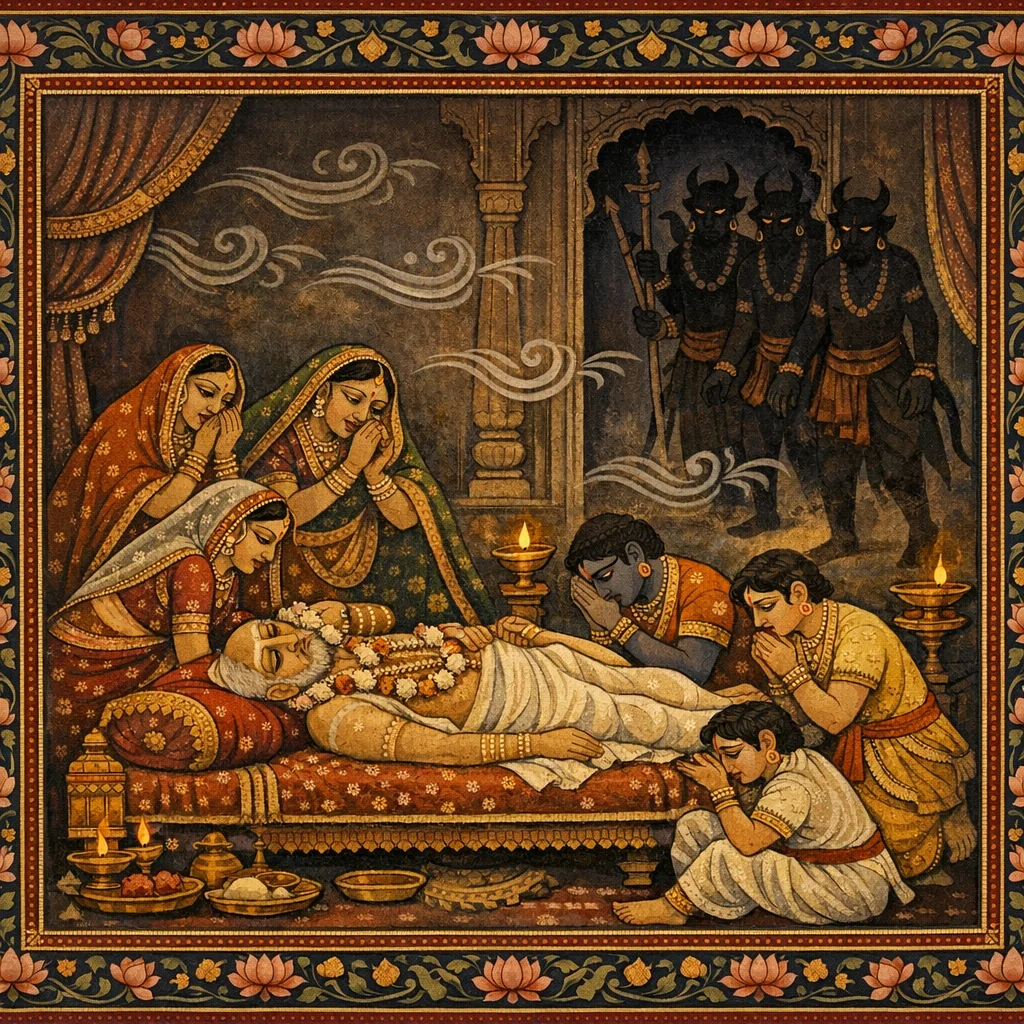
Continuing Kapila’s instruction to Devahūti, this chapter sharpens the ethical and psychological critique of material consciousness. Kapila establishes kāla (time) as the Lord’s irresistible agency that carries off the materially absorbed person—like clouds unaware of the wind—unable to perceive time’s force. He traces the householder’s delusion: attachment to body-based relations (home, land, wealth), contentment even in degrading conditions, and the futile attempt to engineer happiness amid anxiety. The narrative then follows a realistic decline—economic hardship, humiliation within the family, senility, disease, and helpless dependence—ending in death with lamentation. After death come fearful visions of the Yamadūtas, the arrest of the subtle body, a punishing journey to Yamarāja, and graphic hellish torments matching sins of sense gratification, violence, greed, and illicit sex. Kapila notes that hell can also manifest on earth, and concludes with karmic rebalancing: after hell and lower births, the jīva is purified and returns to human life. The chapter thus urges renunciation, moral restraint, and bhakti to Kṛṣṇa as the only secure shelter from kāla and karma.
Shlokas
Verse 1
कपिल उवाच तस्यैतस्य जनो नूनं नायं वेदोरुविक्रमम् । काल्यमानोऽपि बलिनो वायोरिव घनावलि: ॥ १ ॥
Kapila said: As a mass of clouds does not know the mighty influence of the wind, so a person absorbed in material consciousness does not know the great power of kāla, time, by which he is carried away.
Verse 2
यं यमर्थमुपादत्ते दु:खेन सुखहेतवे । तं तं धुनोति भगवान्पुमाञ्छोचति यत्कृते ॥ २ ॥
Whatever the materialist acquires with pain and labor for so‑called happiness, Bhagavān, as kāla—time—shakes it away and destroys it; therefore the conditioned soul laments.
Verse 3
यदध्रुवस्य देहस्य सानुबन्धस्य दुर्मति: । ध्रुवाणि मन्यते मोहाद् गृहक्षेत्रवसूनि च ॥ ३ ॥
The misguided person, out of delusion, thinks his impermanent body—and the home, land, and wealth connected with it—are permanent; in ignorance he does not see their transience.
Verse 4
जन्तुर्वै भव एतस्मिन्यां यां योनिमनुव्रजेत् । तस्यां तस्यां स लभते निर्वृतिं न विरज्यते ॥ ४ ॥
In whatever species the living being takes birth, he finds a particular kind of satisfaction there, and he does not become averse to remaining in that condition.
Verse 5
नरकस्थोऽपि देहं वै न पुमांस्त्यक्तुमिच्छति । नारक्यां निर्वृतौ सत्यां देवमायाविमोहित: ॥ ५ ॥
Even in hell a person does not wish to give up his body; deluded by devī-māyā, the Lord’s illusory energy, he takes delight even in hellish enjoyment.
Verse 6
आत्मजायासुतागारपशुद्रविणबन्धुषु । निरूढमूलहृदय आत्मानं बहु मन्यते ॥ ६ ॥
With the heart deeply rooted in attachment to body, wife, children, home, animals, wealth, and kinsmen, the conditioned soul feels satisfied with such living and deems himself quite perfect.
Verse 7
सन्दह्यमानसर्वाङ्ग एषामुद्वहनाधिना । करोत्यविरतं मूढो दुरितानि दुराशय: ॥ ७ ॥
Though scorched in every limb by anxiety from bearing the burden of maintaining his family, the fool, with hope that will never be fulfilled, ceaselessly commits sinful deeds.
Verse 8
आक्षिप्तात्मेन्द्रिय: स्त्रीणामसतीनां च मायया । रहो रचितयालापै: शिशूनां कलभाषिणाम् ॥ ८ ॥
He surrenders his heart and senses to a deceitful woman who enchants him by māyā; he delights in secret embraces and intimate talk, and is bewitched by the sweet speech of little children.
Verse 9
गृहेषु कूटधर्मेषु दु:खतन्त्रेष्वतन्द्रित: । कुर्वन्दु:खप्रतीकारं सुखवन्मन्यते गृही ॥ ९ ॥
The attached householder stays in domestic life, filled with intrigue and politics, as if ruled by a machinery of suffering. He labors only to counteract his miseries, and if he succeeds he imagines himself happy.
Verse 10
अर्थैरापादितैर्गुर्व्या हिंसयेतस्ततश्च तान् । पुष्णाति येषां पोषेण शेषभुग्यात्यध: स्वयम् ॥ १० ॥
He gathers money by violence here and there; though he uses it to maintain his family, he himself partakes of only a little, and for that wealth earned by unrighteous means he falls into hell on their account.
Verse 11
वार्तायां लुप्यमानायामारब्धायां पुन: पुन: । लोभाभिभूतो नि:सत्त्व: परार्थे कुरुते स्पृहाम् ॥ ११ ॥
When his livelihood meets reverses, he strives again and again to set it right; but when every effort is thwarted and he is ruined, overpowered by greed he begins to hanker after the wealth of others.
Verse 12
कुटुम्बभरणाकल्पो मन्दभाग्यो वृथोद्यम: । श्रिया विहीन: कृपणो ध्यायञ्छ्वसिति मूढधी: ॥ १२ ॥
Thus the unfortunate man, unable to maintain his household, toils in vain; bereft of all luster, that miser broods on his failure and, with deluded mind, sighs in deep grief.
Verse 13
एवं स्वभरणाकल्पं तत्कलत्रादयस्तथा । नाद्रियन्ते यथापूर्वं कीनाशा इव गोजरम् ॥ १३ ॥
Seeing him unable even to maintain himself, his wife and others no longer honor him as before—just as miserly farmers do not treat with the same regard an old, worn-out ox.
Verse 14
तत्राप्यजातनिर्वेदो भ्रियमाण: स्वयम्भृतै: । जरयोपात्तवैरूप्यो मरणाभिमुखो गृहे ॥ १४ ॥
Yet he does not grow disenchanted with household life, though he is now maintained by those he once maintained. Disfigured by old age, he remains at home, facing the approach of death.
Verse 15
आस्तेऽवमत्योपन्यस्तं गृहपाल इवाहरन् । आमयाव्यप्रदीप्ताग्निरल्पाहारोऽल्पचेष्टित: ॥ १५ ॥
Thus he stays at home, despised like a pet dog, eating whatever is carelessly set before him. Afflicted by many ailments such as indigestion, his digestive fire grows dim; he eats only a few morsels, moves little, and becomes an invalid, no longer able to work.
Verse 16
वायुनोत्क्रमतोत्तार: कफसंरुद्धनाडिक: । कासश्वासकृतायास: कण्ठे घुरघुरायते ॥ १६ ॥
In that diseased state, the pressure of the inner air makes his eyes bulge, and mucus chokes his channels. Worn out by coughing and labored breathing, his throat resounds with a rattling “ghura-ghura” as he inhales and exhales.
Verse 17
शयान: परिशोचद्भि: परिवीत: स्वबन्धुभि: । वाच्यमानोऽपि न ब्रूते कालपाशवशं गत: ॥ १७ ॥
Thus he falls into the clutches of death and lies down, surrounded by lamenting friends and relatives. Though they address him and he longs to speak, he cannot, for he has come under the noose of Time.
Verse 18
एवं कुटुम्बभरणे व्यापृतात्माजितेन्द्रिय: । म्रियते रुदतां स्वानामुरुवेदनयास्तधी: ॥ १८ ॥
Thus the man, absorbed in maintaining his family and unable to conquer his senses, sees his own people weeping and dies in great sorrow—wracked with severe pain and with his awareness eclipsed.
Verse 19
यमदूतौ तदा प्राप्तौ भीमौ सरभसेक्षणौ । स दृष्ट्वा त्रस्तहृदय: शकृन्मूत्रं विमुञ्चति ॥ १९ ॥
At death he beholds the messengers of Yama—terrifying, with eyes blazing in wrath. Seeing them, his heart is seized by fear, and he voids stool and urine.
Verse 20
यातनादेह आवृत्य पाशैर्बद्ध्वा गले बलात् । नयतो दीर्घमध्वानं दण्ड्यं राजभटा यथा ॥ २० ॥
Then the Yamadūtas cover his subtle body with a “body of torment,” bind his neck by force with a strong rope, and drive him along a long road—just as the king’s constables seize a criminal to be punished.
Verse 21
तयोर्निर्भिन्नहृदयस्तर्जनैर्जातवेपथु: । पथि श्वभिर्भक्ष्यमाण आर्तोऽघं स्वमनुस्मरन् ॥ २१ ॥
While carried by the constables of Yamarāja, he is overwhelmed and trembles in their hands. While passing on the road he is bitten by dogs, and he can remember the sinful activities of his life. He is thus terribly distressed.
Verse 22
क्षुत्तृट्परीतोऽर्कदवानलानिलै: सन्तप्यमान: पथि तप्तवालुके । कृच्छ्रेण पृष्ठे कशया च ताडितश् चलत्यशक्तोऽपि निराश्रमोदके ॥ २२ ॥
Under the scorching sun, the criminal has to pass through roads of hot sand with forest fires on both sides. He is whipped on the back by the constables because of his inability to walk, and he is afflicted by hunger and thirst, but unfortunately there is no drinking water, no shelter and no place for rest on the road.
Verse 23
तत्र तत्र पतञ्छ्रान्तो मूर्च्छित: पुनरुत्थित: । पथा पापीयसा नीतस्तरसा यमसादनम् ॥ २३ ॥
While passing on that road to the abode of Yamarāja, he falls down in fatigue, and sometimes he becomes unconscious, but he is forced to rise again. In this way he is very quickly brought to the presence of Yamarāja.
Verse 24
योजनानां सहस्राणि नवतिं नव चाध्वन: । त्रिभिर्मुहूर्तैर्द्वाभ्यां वा नीत: प्राप्नोति यातना: ॥ २४ ॥
Thus he has to pass ninety-nine thousand yojanas within two or three moments, and then he is at once engaged in the torturous punishment which he is destined to suffer.
Verse 25
आदीपनं स्वगात्राणां वेष्टयित्वोल्मुकादिभि: । आत्ममांसादनं क्वापि स्वकृत्तं परतोऽपि वा ॥ २५ ॥
He is placed in the midst of burning pieces of wood, and his limbs are set on fire. In some cases he is made to eat his own flesh or have it eaten by others.
Verse 26
जीवतश्चान्त्राभ्युद्धार: श्वगृध्रैर्यमसादने । सर्पवृश्चिकदंशाद्यैर्दशद्भिश्चात्मवैशसम् ॥ २६ ॥
His entrails are pulled out by the hounds and vultures of hell, even though he is still alive to see it, and he is subjected to torment by serpents, scorpions, gnats and other creatures that bite him.
Verse 27
कृन्तनं चावयवशो गजादिभ्यो भिदापनम् । पातनं गिरीशृङ्गेभ्यो रोधनं चाम्बु-गर्तयोः ॥ २७ ॥
Next his limbs are lopped off and torn asunder by elephants. He is hurled down from hilltops, and he is also held captive either in water or in a cave.
Verse 28
यास्तामिस्रान्धतामिस्रा रौरवाद्याश्च यातना: । भुङ्क्ते नरो वा नारी वा मिथ: सङ्गेन निर्मिता: ॥ २८ ॥
Men and women whose lives were built upon indulgence in illicit sex life are put into many kinds of miserable conditions in the hells known as Tāmisra, Andha-tāmisra and Raurava.
Verse 29
अत्रैव नरक: स्वर्ग इति मात: प्रचक्षते । या यातना वै नारक्यस्ता इहाप्युपलक्षिता: ॥ २९ ॥
Lord Kapila continued: My dear mother, it is sometimes said that we experience hell or heaven on this planet, for hellish punishments are sometimes visible on this planet also.
Verse 30
एवं कुटुम्बं बिभ्राण उदरम्भर एव वा । विसृज्येहोभयं प्रेत्य भुङ्क्ते तत्फलमीदृशम् ॥ ३० ॥
After leaving this body, the man who maintained himself and his family members by sinful activities suffers a hellish life, and his relatives suffer also.
Verse 31
एक: प्रपद्यते ध्वान्तं हित्वेदं स्वकलेवरम् । कुशलेतरपाथेयो भूतद्रोहेण यद्भृतम् ॥ ३१ ॥
Abandoning this body, he goes alone into the most dreadful darkness of hell; and the wealth he amassed through envy and hostility toward other living beings becomes the fare by which he departs this world.
Verse 32
दैवेनासादितं तस्य शमलं निरये पुमान् । भुङ्क्ते कुटुम्बपोषस्य हृतवित्त इवातुर: ॥ ३२ ॥
By the arrangement of the Supreme Lord, that man is placed in hellish conditions to reap the pain of his sins; though he maintained his family, he suffers like one stricken after losing all his wealth.
Verse 33
केवलेन ह्यधर्मेण कुटुम्बभरणोत्सुक: । याति जीवोऽन्धतामिस्रं चरमं तमस: पदम् ॥ ३३ ॥
Therefore, one who is intensely eager to maintain family and kinsmen solely by unrighteous means certainly goes to the darkest hell, known as Andha-tāmisra.
Verse 34
अधस्तान्नरलोकस्य यावतीर्यातनादय: । क्रमश: समनुक्रम्य पुनरत्राव्रजेच्छुचि: ॥ ३४ ॥
After passing in due order through all hellish miseries beneath the human realm, and then through the lower animal births that precede human life, he becomes cleansed of sin and is born again on this earth as a human being.
Frequently Asked Questions
Kapila’s intent is diagnostic and corrective: to expose the self-deception of sense gratification and the inevitability of karmic consequence under kāla. The vivid descriptions function as śāstric deterrence (niyama), cultivating vairāgya (detachment) and moral sobriety, so the listener turns toward bhakti and regulated life rather than trusting temporary family-centered security.
In SB 3.30, kāla is not merely chronology; it is the Supreme Lord’s governing energy that dismantles material constructions and forces change, decay, and death. Because the conditioned soul identifies with body and possessions, he experiences kāla as destruction and lamentation, whereas one sheltered in Bhagavān understands time as the Lord’s order and becomes steady in duty and devotion.
Yamadūtas are the messengers of Yamarāja who apprehend those bound by sinful karma. SB 3.30 portrays them binding the departing person and carrying the subtle body for judgment and appropriate suffering. The emphasis is on accountability: actions performed through uncontrolled senses create a trajectory that authorities of dharma enforce.
Yes. Kapila states that hellish (and heavenly) conditions can be experienced on this planet, because intense suffering and fear produced by karma can manifest even before death. The after-death naraka descriptions reinforce the same principle: karma shapes experience, and only spiritual shelter and purified action transcend that cycle.