Adhyaya 18
Pṛthu Mahārāja Milks the Earth (Bhūmi-dugdha) and Organizes Human Settlement
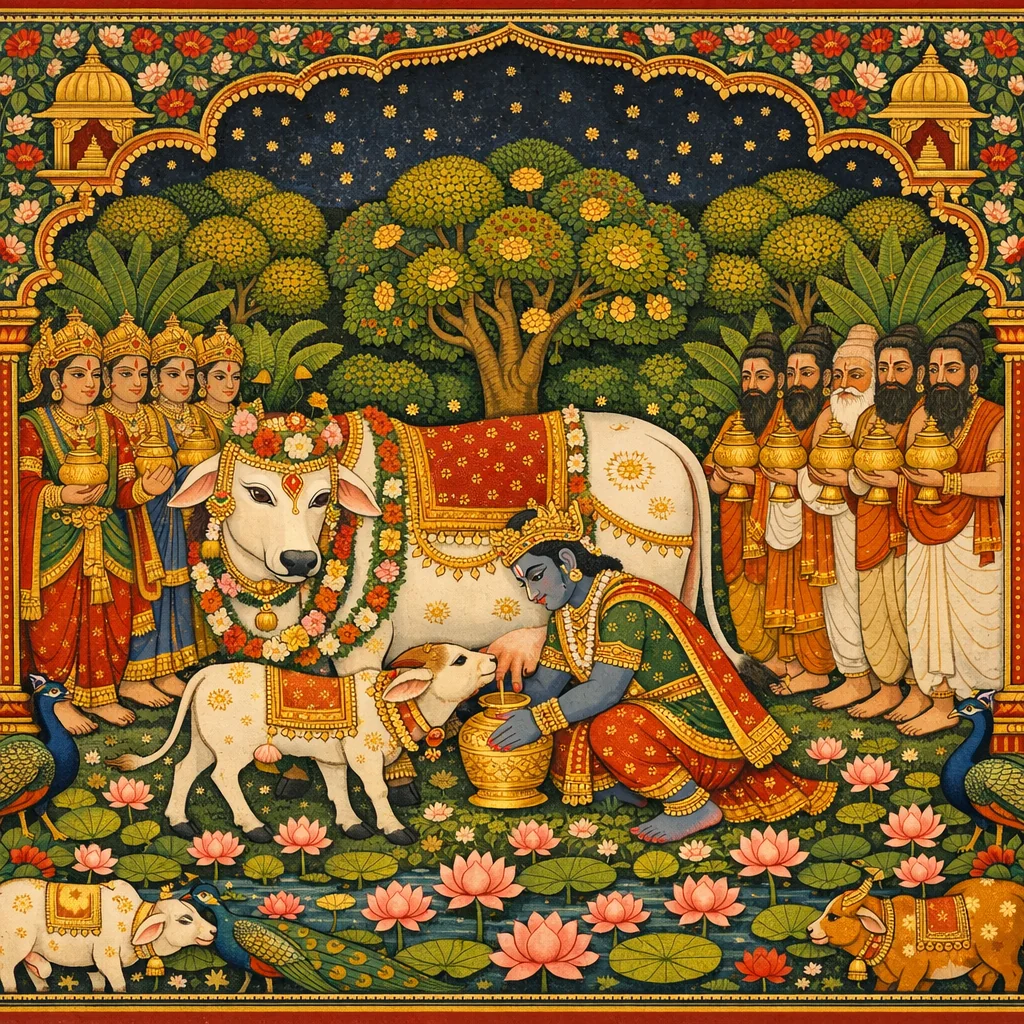
Bhūmi-devī appeals to King Pṛthu to restrain his anger, explaining that scarcity results from the neglect of yajña by irreligious rulers. Pṛthu accepts and milks the earth using Svāyambhuva Manu as a calf to obtain grains. Others follow, extracting their desired essences (knowledge, soma, etc.). Satisfied, Pṛthu levels the globe for agriculture and plans settlements, instituting an orderly civilization based on dharma.
Shlokas
Verse 1
मैत्रेय उवाच इत्थं पृथुमभिष्टूय रुषा प्रस्फुरिताधरम् । पुनराहावनिर्भीता संस्तभ्यात्मानमात्मना ॥ १ ॥
Maitreya said: O Vidura, though the Earth had thus offered her praises, King Pṛthu was still not appeased; his lips trembled with anger. The Earth, though afraid, steadied herself and spoke again to persuade the King as follows.
Verse 2
सन्नियच्छाभिभो मन्युं निबोध श्रावितं च मे । सर्वत: सारमादत्ते यथा मधुकरो बुध: ॥ २ ॥
My Lord, please restrain Your anger completely and patiently hear what I submit. Though I may be poor, a wise person takes the essence from every place, just as a bumblebee gathers honey from each flower.
Verse 3
अस्मिँल्लोकेऽथवामुष्मिन्मुनिभिस्तत्त्वदर्शिभि: । दृष्टा योगा: प्रयुक्ताश्च पुंसां श्रेय:प्रसिद्धये ॥ ३ ॥
For the welfare of human society, in this world and the next, the sages who behold the truth have perceived and prescribed various paths of yoga, to establish the highest good for all people.
Verse 4
तानातिष्ठति य: सम्यगुपायान् पूर्वदर्शितान् । अवर: श्रद्धयोपेत उपेयान् विन्दतेऽञ्जसा ॥ ४ ॥
One who, with faith, properly follows the means shown by the great sages of old, even if humble, easily attains the desired fruits and the lawful enjoyments of life.
Verse 5
ताननादृत्य योऽविद्वानर्थानारभते स्वयम् । तस्य व्यभिचरन्त्यर्था आरब्धाश्च पुन: पुन: ॥ ५ ॥
A foolish man who disregards the faultless directions of the sages and, by mental speculation, devises his own means, meets failure again and again in his endeavors.
Verse 6
पुरा सृष्टा ह्योषधयो ब्रह्मणा या विशाम्पते । भुज्यमाना मया दृष्टा असद्भिरधृतव्रतै: ॥ ६ ॥
My dear King, the seeds, roots, herbs, and grains created long ago by Lord Brahmā are now being used by those devoid of bhakti and spiritual understanding.
Verse 7
अपालितानादृता च भवद्भिर्लोकपालकै: । चोरीभूतेऽथ लोकेऽहं यज्ञार्थेऽग्रसमोषधी: ॥ ७ ॥
My dear King, the rulers have not properly maintained me; people have become thieves by using grains for sense gratification and are not punished. Therefore I have hidden the seeds meant for yajña, sacred sacrifice.
Verse 8
नूनं ता वीरुध: क्षीणा मयि कालेन भूयसा । तत्र योगेन दृष्टेन भवानादातुमर्हति ॥ ८ ॥
Having been stored within me for a very long time, the grain seeds have surely deteriorated. Therefore, you should at once arrange to draw them out by the standard method recommended by śāstra and the ācāryas.
Verse 9
वत्सं कल्पय मे वीर येनाहं वत्सला तव । धोक्ष्ये क्षीरमयान्कामाननुरूपं च दोहनम् ॥ ९ ॥ दोग्धारं च महाबाहो भूतानां भूतभावन । अन्नमीप्सितमूर्जस्वद्भगवान् वाञ्छते यदि ॥ १० ॥
O valiant hero, protector of all beings! If you wish to relieve the creatures by providing ample grain, and if you desire to draw milk from me for their nourishment, then arrange a suitable calf, a vessel to hold the milk, and one who will do the milking. Because I am deeply affectionate to my calf, your wish to milk me will be fulfilled.
Verse 10
वत्सं कल्पय मे वीर येनाहं वत्सला तव । धोक्ष्ये क्षीरमयान्कामाननुरूपं च दोहनम् ॥ ९ ॥ दोग्धारं च महाबाहो भूतानां भूतभावन । अन्नमीप्सितमूर्जस्वद्भगवान् वाञ्छते यदि ॥ १० ॥
O mighty-armed nourisher of beings! If, in accord with the will of the Bhagavān, you seek strength-giving grain for the welfare of all creatures, then appoint a milkman to perform the milking properly; thus everyone will be sustained.
Verse 11
समां च कुरु मां राजन्देववृष्टं यथा पय: । अपर्तावपि भद्रं ते उपावर्तेत मे विभो ॥ ११ ॥
O King, make my surface level, so that the rain bestowed by Lord Indra may remain upon the earth like milk. Even when the rainy season has passed, that moisture will stay; it will be auspicious for you and for all prosperity.
Verse 12
इति प्रियं हितं वाक्यं भुव आदाय भूपति: । वत्सं कृत्वा मनुं पाणावदुहत्सकलौषधी: ॥ १२ ॥
Hearing the earth’s pleasing and beneficial words, the king accepted them. He then made Svāyambhuva Manu into a calf and milked the earth, as a cow, drawing forth all herbs and grains and collecting them in his cupped hands.
Verse 13
तथापरे च सर्वत्र सारमाददते बुधा: । ततोऽन्ये च यथाकामं दुदुहु: पृथुभाविताम् ॥ १३ ॥
In the same way, other wise beings everywhere drew out the earth’s essence. Inspired by King Pṛthu’s example, everyone milked from the planet whatever he desired, according to his own wish.
Verse 14
ऋषयो दुदुहुर्देवीमिन्द्रियेष्वथ सत्तम । वत्सं बृहस्पतिं कृत्वा पयश्छन्दोमयं शुचि ॥ १४ ॥
O best of men! The sages made Bṛhaspati the calf and the senses the vessel, and they milked the pure, chandas-formed Vedic wisdom, to sanctify speech, mind, and hearing.
Verse 15
कृत्वा वत्सं सुरगणा इन्द्रं सोममदूदुहन् । हिरण्मयेन पात्रेण वीर्यमोजो बलं पय: ॥ १५ ॥
The demigods made Indra the calf, and with a golden vessel they milked from the earth soma, a drink like nectar; thus their vigor, ojas, and strength increased.
Verse 16
दैतेया दानवा वत्सं प्रह्लादमसुरर्षभम् । विधायादूदुहन् क्षीरमय:पात्रे सुरासवम् ॥ १६ ॥
The sons of Diti—the Daityas and Dānavas—made Prahlāda, the foremost among the asuras, the calf, and they milked from the earth various intoxicants (surā and āsava) into an iron vessel.
Verse 17
गन्धर्वाप्सरसोऽधुक्षन् पात्रे पद्ममये पय: । वत्सं विश्वावसुं कृत्वा गान्धर्वं मधु सौभगम् ॥ १७ ॥
The Gandharvas and Apsaras made Viśvāvasu the calf and drew the milk into a lotus vessel; that milk became sweet Gandharva music and auspicious beauty.
Verse 18
वत्सेन पितरोऽर्यम्णा कव्यं क्षीरमधुक्षत । आमपात्रे महाभागा: श्रद्धया श्राद्धदेवता: ॥ १८ ॥
The blessed residents of Pitṛloka, presiding deities of the śrāddha rites, made Aryamā the calf and, with faith, milked kavya—food offered to the ancestors—into an unbaked earthen pot.
Verse 19
प्रकल्प्य वत्सं कपिलं सिद्धा: सङ्कल्पनामयीम् । सिद्धिं नभसि विद्यां च ये च विद्याधरादय: ॥ १९ ॥
Thereafter, the Siddhas of Siddhaloka and the residents of Vidyādhara-loka made the great sage Kapila their calf; taking the sky as their vessel, they milked forth yogic mystic perfections born of sankalpa, beginning with aṇimā. The Vidyādharas also attained the art of flying through the heavens.
Verse 20
अन्ये च मायिनो मायामन्तर्धानाद्भुतात्मनाम् । मयं प्रकल्प्य वत्सं ते दुदुहुर्धारणामयीम् ॥ २० ॥
Others, the wonder-working residents of Kimpuruṣa-loka, made the demon Maya their calf and milked forth dhāraṇā-born mystic powers—by which one vanishes at once from another’s sight and reappears in a different form.
Verse 21
यक्षरक्षांसि भूतानि पिशाचा: पिशिताशना: । भूतेशवत्सा दुदुहु: कपाले क्षतजासवम् ॥ २१ ॥
Then the Yakṣas, Rākṣasas, ghosts, and flesh-eating piśācas made Rudra—Bhūtanātha, an expansion of Lord Śiva—their calf, and they milked out blood-brewed drinks, storing them in a vessel of skulls.
Verse 22
तथाहयो दन्दशूका: सर्पा नागाश्च तक्षकम् । विधाय वत्सं दुदुहुर्बिलपात्रे विषं पय: ॥ २२ ॥
Thereafter cobras, hoodless snakes, great serpents, scorpions, and other venomous beings made Takṣaka their calf; they milked poison from the earth as their milk and stored it in the hollows of serpent holes.
Verse 23
पशवो यवसं क्षीरं वत्सं कृत्वा च गोवृषम् । अरण्यपात्रे चाधुक्षन्मृगेन्द्रेण च दंष्ट्रिण: ॥ २३ ॥ क्रव्यादा: प्राणिन: क्रव्यं दुदुहु: स्वे कलेवरे । सुपर्णवत्सा विहगाश्चरं चाचरमेव च ॥ २४ ॥
Four-legged beasts such as cows made Nandī, Lord Śiva’s bull, their calf, and the forest their milking vessel; thus they drew from the earth, as milk, fresh green grasses. Ferocious, fanged animals made the lion their calf and, taking their own bodies as the vessel, drew forth flesh. The birds made Garuḍa their calf and milked from the earth both moving insects and unmoving plants and grasses.
Verse 24
पशवो यवसं क्षीरं वत्सं कृत्वा च गोवृषम् । अरण्यपात्रे चाधुक्षन्मृगेन्द्रेण च दंष्ट्रिण: ॥ २३ ॥ क्रव्यादा: प्राणिन: क्रव्यं दुदुहु: स्वे कलेवरे । सुपर्णवत्सा विहगाश्चरं चाचरमेव च ॥ २४ ॥
The four-footed beasts made Go-vṛṣa, the bull who bears Lord Śiva, their calf, and took the forest as their vessel; thus they milked from Mother Earth fresh green grasses as their milk. The fanged and ferocious creatures made the lion their calf and drew forth flesh as milk. The birds made Garuḍa their calf and milked from the Earth both the moving and the unmoving— insects, plants, and grasses— as their milk.
Verse 25
वटवत्सा वनस्पतय: पृथग्रसमयं पय: । गिरयो हिमवद्वत्सा नानाधातून् स्वसानुषु ॥ २५ ॥
The trees made the banyan their calf and drew forth milk in the form of many distinct and delicious saps and juices. The mountains made the Himālayas their calf and, into vessels of their own peaks, milked out a variety of ores, minerals, and metals.
Verse 26
सर्वे स्वमुख्यवत्सेन स्वे स्वे पात्रे पृथक् पय: । सर्वकामदुघां पृथ्वीं दुदुहु: पृथुभाविताम् ॥ २६ ॥
Thus, with their own chief calves, all beings milked from the Earth distinct kinds of milk into their respective vessels—meaning their own proper foods. In the reign of King Pṛthu, the Earth was fully under his rule and became the fulfiller of all desires; therefore every inhabitant obtained sustenance according to need.
Verse 27
एवं पृथ्वादय: पृथ्वीमन्नादा: स्वन्नमात्मन: । दोहवत्सादिभेदेन क्षीरभेदं कुरूद्वह ॥ २७ ॥
O Vidura, foremost of the Kurus, in this manner King Pṛthu and all others who live by food, by varying the calves, the milking, and the vessels, drew out different kinds of “milk” from the Earth and thus obtained their respective eatables, spoken of as milk.
Verse 28
ततो महीपति: प्रीत: सर्वकामदुघां पृथु: । दुहितृत्वे चकारेमां प्रेम्णा दुहितृवत्सल: ॥ २८ ॥
Thereafter King Pṛthu, lord of the earth, was greatly pleased with the planet Earth, for she amply supplied food to all beings and proved herself the fulfiller of all desires. Being tenderly affectionate, Pṛthu, as a father loves his daughter, embraced the Earth with love as though she were his own child.
Verse 29
चूर्णयन् स्वधनुष्कोट्या गिरिकूटानि राजराट् । भूमण्डलमिदं वैन्य: प्रायश्चक्रे समं विभु: ॥ २९ ॥
Thereafter, the king of kings, Mahārāja Pṛthu, crushed the mountain peaks with the power of his bow’s tip and leveled the rough places upon the earth; by his grace the globe became almost flat.
Verse 30
अथास्मिन् भगवान् वैन्य: प्रजानां वृत्तिद: पिता । निवासान् कल्पयां चक्रे तत्र तत्र यथार्हत: ॥ ३० ॥
Then Bhagavān Vainya Pṛthu, like a father and provider for the citizens, busied himself in granting proper livelihood and suitable work. After leveling the earth, he allotted residential places here and there according to fitness.
Verse 31
ग्रामान् पुर: पत्तनानि दुर्गाणि विविधानि च । घोषान् व्रजान् सशिबिरानाकरान् खेटखर्वटान् ॥ ३१ ॥
Thus the King founded many kinds of villages, towns and port-cities, and built forts; he also established dwellings for cowherds, stables for animals, places for royal camps, mining regions, agricultural towns, and mountain villages.
Verse 32
प्राक्पृथोरिह नैवैषा पुरग्रामादिकल्पना । यथासुखं वसन्ति स्म तत्र तत्राकुतोभया: ॥ ३२ ॥
Before King Pṛthu’s reign there was no planned arrangement of cities, villages, and the like; people lived fearlessly, scattered here and there as it pleased them. But from Pṛthu’s time onward, towns and villages were laid out by design.
Frequently Asked Questions
Pṛthu’s anger arises from famine-like conditions—earth’s produce is withheld. Bhūmi-devī explains the moral cause: when rulers and people become nondevotees and consume grains for sense gratification, neglecting yajña and dharma, they effectively become thieves of nature’s gifts. Since grains were meant to support sacrifice and regulated living, she concealed seeds to prevent further misuse. The episode teaches that prosperity is not merely a natural accident but a dharma-governed trust.
The earth is portrayed as a cow whose yield depends on the correct relationship: a calf (object of affection), a pot (capacity/discipline), and a milker (qualified agent). Symbolically, it means nature yields abundance when approached through proper adhikāra and śāstric method—regulated extraction, gratitude, and yajña—rather than exploitation. Different beings obtain different ‘milks’ because each has distinct desires and karmic dispositions, yet all depend on the same earth.
Pṛthu Mahārāja uses Svāyambhuva Manu as the calf when milking grains and herbs. Manu represents lawful human order (Manvantara-dharma). The teaching is that human prosperity should be anchored in Manu’s dharmic framework—social regulation, sacrifice, and responsibility—so that the earth’s resources become sustaining rather than corrupting.
The sages, with Bṛhaspati as calf, extract Vedic knowledge to purify speech, mind, and hearing. The ‘pot of senses’ indicates that learning is received through disciplined sense engagement—especially śravaṇa (hearing). When senses are made fit vessels (controlled and sanctified), Vedic wisdom becomes nourishing rather than merely informational.
Leveling the earth enables stable agriculture and water retention after rains, supporting reliable food production. Founding planned settlements—villages, forts, pastures, mining and agricultural towns—shows rājadharma in practice: governance includes infrastructure, land use planning, and equitable livelihood systems. The Bhāgavatam presents civilization-building as sacred service when it protects beings and supports yajña and ethical prosperity.