Adhyaya 75
दमयन्ती-शपथः वायोः साक्ष्यं च (Damayantī’s Oath and Vāyu’s Testimony)
Upa-parva: Nala–Damayantī Upākhyāna (Episode within Āraṇyaka Parva)
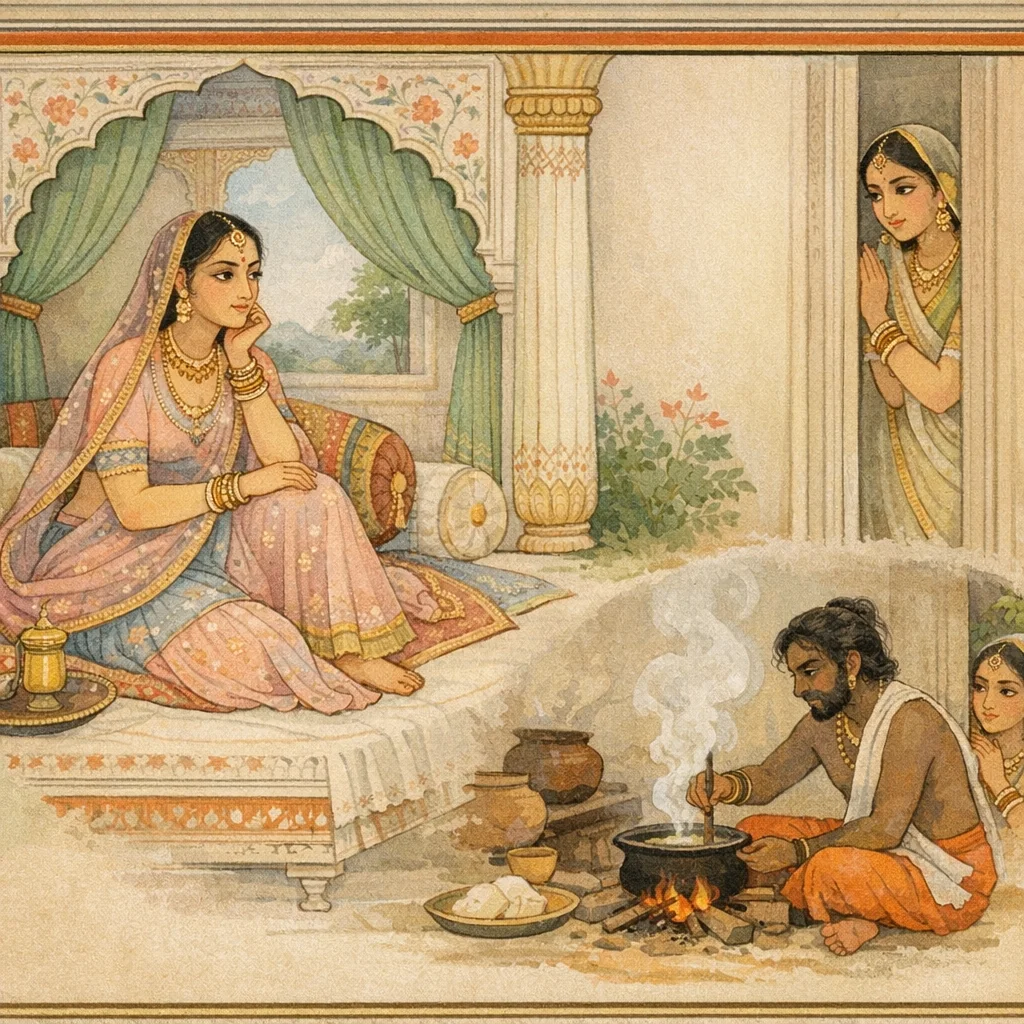
Damayantī addresses Nala to reject any suspicion of wrongdoing, asserting that she chose him over the gods and has remained ethically intact. She outlines the operational means by which communication and retrieval were attempted—brahmins disseminate her message, and the learned Parṇāda approaches Nala at Ṛtuparṇa’s residence in Kośala. Damayantī frames an explicit truth-assertion by invoking cosmic witnesses (the ever-moving wind, the sun, and the moon), requesting that they uphold truth and, if she has acted wrongly, withdraw her life. Vāyu responds from the sky, affirming her innocence and noting sustained protective witnessing over the years; the testimony includes a practical claim that only Nala could traverse the required distance in a single day, validating the strategy’s premise. Divine approval follows (flower-rain, celestial drums, auspicious wind), and Nala relinquishes suspicion. He dons the provided garment, remembers the nāga-king, and regains his own form; recognition and reunion occur as Damayantī embraces him, and Nala embraces her and their children. The chapter closes with familial reporting to Bhīma’s household, the couple recounting their forest sufferings through the night, and a concluding statement of restoration and emotional replenishment after prolonged separation.
Chapter Arc: दमयन्ती, अपने हृदय में उठती शंका और आशा के बीच, केशिनी को फिर से ‘बाहुक’ की परीक्षा करने भेजती है—इस बार बिना बोले, केवल उसके आचरण के सूक्ष्म संकेत पकड़ने के लिए। → केशिनी मौन रहकर बाहुक के प्रत्येक कर्म को देखती है—संकट में भी असाधारण उपाय निकालना, संकुचित स्थान में भी ‘विवर’ बना देना, ऋतुपर्ण के लिए अनेक प्रकार का भोजन शीघ्रता से सिद्ध कर देना, और अग्नि-कार्य/रसोई में अद्भुत दक्षता दिखाना। ये सब लक्षण दमयन्ती की शंका को और तीव्र करते हैं कि यह साधारण सारथि नहीं। → केशिनी बाहुक के निकट जाकर उसके कार्य-व्यवहार की तीक्ष्ण परीक्षा करती है—उसके स्पर्श, गति, और रसोई-कर्म में असामान्य सामर्थ्य (क्षण में व्यवस्था बदल जाना, अग्नि का सहसा प्रज्वलित होना, असंभव-सा कार्य सहज हो जाना) देखकर उसके मन में यह प्रबल आशंका जमती है कि ‘बाहुक’ ही नल है। → केशिनी लौटकर दमयन्ती को देखे हुए लक्षणों का वृत्तान्त देती है। दमयन्ती उसे निर्देश देती है कि जो कुछ भी दिव्य या मानवोचित विशेषता दिखे, सब बताना—पर साथ ही सावधानी भी रखनी है, क्योंकि बार-बार आना-जाना लोक-अपवाद का कारण बन सकता है। → दमयन्ती के भीतर नल की पहचान लगभग जाग चुकी है, पर निर्णायक प्रमाण अभी शेष है—अगला कदम क्या होगा: क्या वह स्वयं सामना करेगी, या कोई अंतिम परीक्षा रचेगी?
Shlokas
Verse 1
इस प्रकार श्रीमहाभारत वनपर्वके अन्तर्गत नलोपाख्यानपर्वमें नल-केशिनीसंवादविषयक चौहत्तरवाँ अध्याय पूरा हुआ ॥/ ७४ ॥ हि आन (0) माप्टआ अप पञ्चसप्ततितमोब ध्याय: दमयन्तीके आदेशसे केशिनीद्धारा हज ककी परीक्षा तथा बाहुकका अपने लड़के-लड़कियोंको उनसे प्रेम करना बृहृदश्च उवाच दमयन्ती तु तच्छुत्वा भूशं शोकपरायणा । शड्-कमाना नल तं वै केशिनीमिदमब्रवीत्,बृहदश्व मुनि कहते हैं--युधिष्ठि!! यह सब सुनकर दमयन्ती अत्यन्त शोकमग्न हो गयी। उसके हृदयमें निश्चितरूपसे बाहुकके नल होनेका संदेह हो गया और वह केशिनीसे इस प्रकार बोली--
Bṛhadaśva said: Hearing all this, Damayantī became overwhelmed with grief. A firm suspicion arose in her heart that this Bāhuka was truly Nala, and she spoke to Keśinī as follows.
Verse 2
गच्छ केशिनि भूयस्त्वं परीक्षां कुरु बाहुके । अब्रुवाणा समीपस्था चरितान्यस्य लक्षय,“केशिनि! फिर जाओ और बाहुककी परीक्षा करो। अबकी बार तुम कुछ बोलना मत। निकट रहकर उसके चरित्रोंपर दृष्टि रखना
Bṛhadaśva said: “Go again, Keśinī, and put Bāhuka to the test. This time, do not speak. Stay close by and carefully observe his conduct.” The counsel emphasizes discreet scrutiny—judging character through actions rather than words—before placing trust or making decisions.
Verse 3
यदा च किंचित् कुर्यात् स कारणं तत्र भामिनि । तत्र संचेष्टमानस्य लक्षयन्ती विचेष्टितम्,'भामिनि! जब वह कोई काम करे तो उस कार्यको करते समय उसकी प्रत्येक चेष्टा और उसके कारणपर लक्ष्य रखना
Bṛhadaśva said: “And whenever he undertakes any action, O passionate lady, observe closely in that very matter both the motive behind it and the manner of his efforts—marking his every movement as he strives.”
Verse 4
न चास्य प्रतिबन्धेन देयोडग्निरपि केशिनि । याचते न जल देयं सर्वथा त्वरमाणया,'“केशिनि! वह आग्रह करे तो भी उसे आग न देना और माँगनेपर भी किसी प्रकार जल्दीमें आकर पानी भी न देना
Bṛhadaśva said: “Keśinī, even if he presses you insistently, do not give him fire; and even if he begs, do not give him water—under no circumstance should you act in haste.” The counsel stresses prudent restraint: compassion must be guided by discernment, especially when a request may enable harm or worsen a perilous situation.
Verse 5
एतत् सर्व समीक्ष्य त्वं चरितं मे निवेदय । निमित्तं यत् त्वया दृष्टं बाहुके दैवमानुषम्
Having carefully considered all this, tell me the full account of what happened. And explain the omen you observed in Bāhuka—whether its cause is divine or human—for such signs are not seen without meaning.
Verse 6
दमयन्त्यैवमुक्ता सा जगामाथ च केशिनी
Bṛhadaśva said: Thus addressed by Damayantī, the woman with flowing hair then went away—carrying out the message and advancing the unfolding of Damayantī’s search with quiet resolve.
Verse 7
सा तत् सर्व यथावृत्तं दमयन्त्यै न्यवेदयत् । निमित्तं यत् तया दृष्टं बाहुके दैवमानुषम्,उसने बाहुकमें जो दिव्य अथवा मानवोचित विशेषताएँ देखीं, उनका यथावत् समाचार पूर्णरूपसे दमयन्तीको बताया
Bṛhadaśva said: She reported to Damayantī, exactly as it had occurred, everything in full—especially the sign she had observed in Bāhuka, whether divine or distinctly human—conveying the matter just as she had seen it.
Verse 8
केशिन्युवाच दृढं शुच्युपचारोडसौ न मया मानुष: क्वचित् | दृष्टपूर्व: श्रुतो वापि दमयन्ति तथाविध:,केशिनीने कहा--दमयन्ती! उसका प्रत्येक व्यवहार अत्यन्त पवित्र है। ऐसा मनुष्य तो मैंने कहीं भी पहले न तो देखा है और न सुना ही है
Keśinī said: “Her conduct is firmly rooted in purity and propriety. Never anywhere have I seen such a person before, nor have I even heard of one like Damayantī.”
Verse 9
हस्वमासाद्य संचारं नासौ विनमते क्वचित् | तं तु दृष्टया यथा5संगमुत्सपति यथासुखम्,किसी छोटे-से-छोटे दरवाजेपर जाकर भी वह झुकता नहीं है। उसे देखकर बड़ी आसानीके साथ दरवाजा ही इस प्रकार ऊँचा हो जाता है कि जिससे मस्तकका उससे स्पर्श नहो
Bṛhadaśva said: Even when he comes to a passage with a very low doorway, he never bends anywhere. Yet, as soon as it sees him, the doorway itself rises—just as needed—so that his head does not touch it. The episode underscores how pride refuses to bow, while the world is strangely compelled to accommodate it, hinting at the moral peril of arrogance and the unnatural distortions it can produce.
Verse 10
संकटे<प्यस्य सुमहान् विवरो जायतेडधिक: । ऋतुपर्णस्य चार्थाय भोजनीयमनेकश:,संकुचित स्थानमें भी उसके लिये बहुत बड़ा अवकाश बन जाता है। राजा भीमने ऋतुपर्णके लिये अनेक प्रकारके भोज्य पदार्थ भेजे थे। उसमें प्रचुर मात्रामें केला आदि फलोंका गूदा भी था,- उसको धोनेके लिये वहाँ खाली घड़े रख दिये थे
Bṛhadaśva said: Even in a cramped place, for him a very large opening—indeed an even greater space—comes into being. And for Ṛtuparṇa’s sake, many kinds of foods were sent. (The passage underscores practical care and hospitality shown to a guest, even amid constraint.)
Verse 11
प्रेषितं तत्र राज्ञा तु मांसं चैव प्रभूतवत् । तस्य प्रक्षालनार्थाय कुम्भास्तत्रोपकल्पिता:,संकुचित स्थानमें भी उसके लिये बहुत बड़ा अवकाश बन जाता है। राजा भीमने ऋतुपर्णके लिये अनेक प्रकारके भोज्य पदार्थ भेजे थे। उसमें प्रचुर मात्रामें केला आदि फलोंका गूदा भी था,- उसको धोनेके लिये वहाँ खाली घड़े रख दिये थे
Bṛhadaśva said: “There, the king had sent an abundant supply of meat as well. And for washing it, jars were kept ready on the spot.” The passage underscores careful provision and orderly preparation in hospitality—ensuring that what is offered is also properly handled and purified according to practical and customary needs.
Verse 12
ते तेनावेक्षिता: कुम्भा: पूर्णा एवाभवंस्तत: । ततः प्रक्षालनं कृत्वा समधिश्रित्य बाहुक:,परंतु बाहुकके देखते ही वे सारे घड़े पानीसे भर गये। उससे खाद्य पदार्थोंकी धोकर बाहुकने चूल्हेपर चढ़ा दिया। फिर एक मुद्ठी तिनका लेकर सूर्यकी किरणोंसे ही उसे उद्दीप्त किया। फिर तो देखते-ही-देखते सहसा उसमें आग प्रज्वलित हो गयी
Bṛhadaśva said: As soon as he looked upon them, those water-jars at once became completely filled. Then, having washed the provisions, Bāhuka set them properly upon the hearth. (By his skill and disciplined effort, the work of cooking was swiftly brought under control, as if aided by an unseen power.)
Verse 13
तृणमुष्टिं समादाय सवितुस्तं समादधत् । अथ प्रज्वलितस्तत्र सहसा हव्यवाहन:,परंतु बाहुकके देखते ही वे सारे घड़े पानीसे भर गये। उससे खाद्य पदार्थोंकी धोकर बाहुकने चूल्हेपर चढ़ा दिया। फिर एक मुद्ठी तिनका लेकर सूर्यकी किरणोंसे ही उसे उद्दीप्त किया। फिर तो देखते-ही-देखते सहसा उसमें आग प्रज्वलित हो गयी
Bṛhadaśva said: Taking a fistful of dry grass, he set it in the sun’s rays. Then, in that very spot, the fire—swift bearer of offerings—flared up at once. The episode underscores resourcefulness joined with purity of intent: even with scant means, disciplined action and focused will can accomplish what is needed for hospitality and duty.
Verse 14
तदद्भुततमं दृष्टवा विस्मिताहमिहागता । अन्यच्च तस्मिन् सुमहदाश्षचर्य लक्षितं मया,यह अद्भुत बात देखकर मैं आश्वर्यचकित होकर यहाँ आयी हूँ। बाहुकमें एक और भी बड़े आश्चर्यकी बात देखी है
Bṛhadaśva said: “Having seen that most astonishing marvel, I came here in amazement. And in that very person I noticed yet another exceedingly great wonder.”
Verse 15
यदग्निमपि संस्पृश्य नैवासौ दहाते शुभे । छन्देन चोदकं तस्य वहत्यावर्जितं द्रतम्,शुभे! वह अग्निका स्पर्श करके भी जलता नहीं है। पात्रमें रखा हुआ थोड़ा-सा जल भी उसकी इच्छाके अनुसार तुरंत ही प्रवाहित हो जाता है
Bṛhadaśva said: “O auspicious one, even when it touches fire it does not burn. And even a small quantity of water kept in a vessel, when he so wills it, at once flows forth—drawn out swiftly according to his desire.”
Verse 16
अतीव चान्यत् सुमहदाश्चर्य दृष्टवत्यहम् । यत् स पुष्पाण्युपादाय हस्ताभ्यां ममृदे शनै:,एक और भी अत्यन्त आश्चर्यजनक बात मुझे उसमें दिखायी दी है। वह फूल लेकर उन्हें हाथोंसे धीरे-धीरे मसलता था। हाथोंसे मसलनेपर भी वे फूल विकृत नहीं होते थे अपितु और भी सुगन्धित और विकसित हो जाते थे। ये अद्भुत लक्षण देखकर मैं शीघ्रतापूर्वक यहाँ आयी हूँ
Bṛhadaśva said: “I witnessed yet another exceedingly great marvel. He took flowers in his hands and gently crushed them; and even when pressed by the hands, the flowers were not deformed—rather, they became still more fragrant and more fully blossomed. Seeing these wondrous signs, I hastened here at once.”
Verse 17
मृद्यमानानि पाणिभ्यां तेन पुष्पाणि नान्यथा । भूय एव सुगन्धीनि हषितानि भवन्ति हि । एतान्यद्धुतलिड्डानि दृष्टवाहं द्रतमागता,एक और भी अत्यन्त आश्चर्यजनक बात मुझे उसमें दिखायी दी है। वह फूल लेकर उन्हें हाथोंसे धीरे-धीरे मसलता था। हाथोंसे मसलनेपर भी वे फूल विकृत नहीं होते थे अपितु और भी सुगन्धित और विकसित हो जाते थे। ये अद्भुत लक्षण देखकर मैं शीघ्रतापूर्वक यहाँ आयी हूँ
Bṛhadaśva said: “When he gently rubs those flowers between his hands, they do not become damaged or altered in any way. Rather, they become even more fragrant and seem to bloom with greater freshness and delight. Having witnessed these wondrous signs, I have come here in haste.”
Verse 18
बृहृदश्चव उवाच दमयन्ती तु तच्छुत्वा पुण्यश्लोकस्य चेष्टितम् । अमन्यत नल प्राप्तं कर्मचेष्टाभिसूचितम्,बृहदश्व मुनि कहते हैं--युधिष्ठिर! दमयन्तीने पुण्यश्लोक महाराज नलकी-सी बाहुककी सारी चेष्टाओंको सुनकर मन-ही-मन यह निश्चय कर लिया कि महाराज नल ही आये हैं। अपने कार्यों और चेष्टाओंद्वारा वे पहचान लिये गये हैं
Bṛhadaśva said: Hearing of the conduct and mannerisms of the illustrious king (Nala), Damayantī inwardly concluded that Nala had indeed arrived. By his deeds and characteristic actions, she recognized him.
Verse 19
सा शड्-कमाना भर्तरं बाहुकं पुनरिज्ञितैः । केशिनीं श्लक्षणया वाचा रुदती पुनरब्रवीत्,चेष्टाओंद्वारा उसके मनमें यह प्रबल आशंका जम गयी कि बाहुक मेरे पति ही हैं। फिर तो वह रोने लगी और मधुर वाणीमें केशिनीसे बोली--“सखि! एक बार फिर जाओ और जब बाहुक असावधान हो तो उसके द्वारा विशेषविधिसे उबालकर तैयार किया गया फलोंका गूदा रसोई घरमेंसे शीघ्र उठा लाओ।” केशिनी दमयन्तीकी प्रियकारिणी सखी थी। वह तुरंत गयी और जब बाहुकका ध्यान दूसरी ओर गया तब उसके उबाले हुए गरम-गरम फलोंके गूदेमेंसे थोड़ा-सा निकालकर तत्काल ले आयी
Bṛhadaśva said: Overcome by the sixfold stirrings of desire and suspicion, she recognized Bāhuka again as her husband. Weeping, she spoke once more to Keśinī in a gentle voice—urging her to go again and, when Bāhuka was off his guard, quickly bring from the kitchen a portion of the specially prepared, well-boiled fruit pulp he had made. The request reveals her careful, ethically cautious testing: she seeks confirmation through a distinctive sign of skill rather than by public accusation, preserving dignity while pursuing truth.
Verse 20
पुनर्गच्छ प्रमत्तस्य बाहुकस्योपसंस्कृतम् महानसादू ट्रुतं मांसमानयस्वेह भाविनि,चेष्टाओंद्वारा उसके मनमें यह प्रबल आशंका जम गयी कि बाहुक मेरे पति ही हैं। फिर तो वह रोने लगी और मधुर वाणीमें केशिनीसे बोली--“सखि! एक बार फिर जाओ और जब बाहुक असावधान हो तो उसके द्वारा विशेषविधिसे उबालकर तैयार किया गया फलोंका गूदा रसोई घरमेंसे शीघ्र उठा लाओ।” केशिनी दमयन्तीकी प्रियकारिणी सखी थी। वह तुरंत गयी और जब बाहुकका ध्यान दूसरी ओर गया तब उसके उबाले हुए गरम-गरम फलोंके गूदेमेंसे थोड़ा-सा निकालकर तत्काल ले आयी
Bṛhadaśva said: “Go again, dear one. When Bāhuka is off his guard, bring here at once what he has specially prepared in the kitchen—food that has been carefully cooked.” In the narrative context, Damayantī’s suspicion that Bāhuka is truly her husband Nala intensifies; she seeks a discreet test through the evidence of his distinctive culinary skill, balancing urgency with caution and propriety.
Verse 21
सा गत्वा बाहुकस्याग्रे तन्मांसमपकृष्य च । अत्युष्णमेव त्वरिता तत्क्षणात् प्रियकारिणी,चेष्टाओंद्वारा उसके मनमें यह प्रबल आशंका जम गयी कि बाहुक मेरे पति ही हैं। फिर तो वह रोने लगी और मधुर वाणीमें केशिनीसे बोली--“सखि! एक बार फिर जाओ और जब बाहुक असावधान हो तो उसके द्वारा विशेषविधिसे उबालकर तैयार किया गया फलोंका गूदा रसोई घरमेंसे शीघ्र उठा लाओ।” केशिनी दमयन्तीकी प्रियकारिणी सखी थी। वह तुरंत गयी और जब बाहुकका ध्यान दूसरी ओर गया तब उसके उबाले हुए गरम-गरम फलोंके गूदेमेंसे थोड़ा-सा निकालकर तत्काल ले आयी
Bṛhadaśva said: She went to Bāhuka, and, drawing off a portion of that pulp, the dear, helpful maid hurried back at once with it—still exceedingly hot. The episode underscores Damayantī’s cautious, ethically restrained inquiry: rather than accuse or seize, she seeks a discreet test through a trusted companion, balancing urgency with propriety.
Verse 22
दमयन्त्यै तत: प्रादात् केशिनी कुरुनन्दन । सो चिता नलसिद्धस्य मांसस्य बहुश: पुरा,कुरुनन्दन! केशिनीने वह फलोंका गूदा दमयन्तीको दे दिया। उसे पहले अनेक बार नलके द्वारा उबाले हुए फलोंके गूदेके स्वादका अनुभव था
Bṛhadaśva said: Then Keśinī gave it to Damayantī, O best of the Kurus. For she had earlier, many times, tasted the cooked preparation made by Nala’s skill—its flavour well known to her from before. (Thus, by the familiar taste, Damayantī could recognize Nala’s handiwork and be led toward the truth.)
Verse 23
प्राश्य मत्वा नल॑ सूंत प्राक्रोशद् भृशदु:खिता । वैक्लव्यं परम॑ गत्वा प्रक्षाल्य च मुखं ततः,उसे खाकर वह पूर्णरूपसे इस निश्चयपर पहुँच गयी कि बाहुक सारथि वास्तवमें राजा नल हैं। फिर तो वह अत्यन्त दुखी होकर विलाप करने लगी। उस समय उसकी व्याकुलता बहुत बढ़ गयी। भारत! फिर उसने मुँह धोकर केशिनीके साथ अपने बच्चोंको बाहुकके पास भेजा। बाहुकरूपी राजा नलने इन्द्रसेना और उसके भाई इन्द्रसेनको पहचान लिया और दौड़कर दोनों बच्चोंको छातीसे लगाकर गोदमें ले लिया। देवकुमारोंके समान उन दोनों सुन्दर बालकोंको पाकर निषधराज नल अत्यन्त दुःखमग्न हो जोर-जोरसे रोने लगे। उन्होंने बार-बार अपने मनोविकार दिखाये और सहसा दोनों बच्चोंको छोड़कर केशिनीसे इस प्रकार कहा--
Bṛhadaśva said: Having eaten, she became fully convinced that the charioteer Bāhuka was in truth King Nala. Overwhelmed by intense sorrow, she cried out in lamentation. When her agitation reached its height, she washed her face and then sent her children, accompanied by Keśinī, to Bāhuka. Nala, in the guise of Bāhuka, recognized Indrasenā and her brother Indrasena; he ran to them, pressed them to his breast, and lifted them onto his lap. On seeing those beautiful children, like sons of the gods, the king of Niṣadha was seized by grief and wept aloud. After repeatedly betraying the turmoil of his heart, he suddenly released the children and spoke to Keśinī.
Verse 24
मिथुन प्रेषयामास केशिन्या सह भारत । इन्द्रसेनां सह भ्रात्रा समभिज्ञाय बाहुक:,उसे खाकर वह पूर्णरूपसे इस निश्चयपर पहुँच गयी कि बाहुक सारथि वास्तवमें राजा नल हैं। फिर तो वह अत्यन्त दुखी होकर विलाप करने लगी। उस समय उसकी व्याकुलता बहुत बढ़ गयी। भारत! फिर उसने मुँह धोकर केशिनीके साथ अपने बच्चोंको बाहुकके पास भेजा। बाहुकरूपी राजा नलने इन्द्रसेना और उसके भाई इन्द्रसेनको पहचान लिया और दौड़कर दोनों बच्चोंको छातीसे लगाकर गोदमें ले लिया। देवकुमारोंके समान उन दोनों सुन्दर बालकोंको पाकर निषधराज नल अत्यन्त दुःखमग्न हो जोर-जोरसे रोने लगे। उन्होंने बार-बार अपने मनोविकार दिखाये और सहसा दोनों बच्चोंको छोड़कर केशिनीसे इस प्रकार कहा--
Bṛhadaśva said: “O Bhārata, she sent the pair of children along with Keśinī. Bāhuka, recognizing Indrasenā together with her brother Indrasena, rushed forward, clasped them to his chest, and took them onto his lap. On obtaining those beautiful children, like the sons of the gods, Niṣadha’s king Nala was overwhelmed with grief and wept aloud. After repeatedly betraying the turmoil of his heart, he suddenly released the children and spoke to Keśinī.”
Verse 25
अभिद्रुत्य ततो राजा परिष्वज्याड्कमानयत् | बाहुकस्तु समासाद्य सुतौ सुरसुतोपमौ,उसे खाकर वह पूर्णरूपसे इस निश्चयपर पहुँच गयी कि बाहुक सारथि वास्तवमें राजा नल हैं। फिर तो वह अत्यन्त दुखी होकर विलाप करने लगी। उस समय उसकी व्याकुलता बहुत बढ़ गयी। भारत! फिर उसने मुँह धोकर केशिनीके साथ अपने बच्चोंको बाहुकके पास भेजा। बाहुकरूपी राजा नलने इन्द्रसेना और उसके भाई इन्द्रसेनको पहचान लिया और दौड़कर दोनों बच्चोंको छातीसे लगाकर गोदमें ले लिया। देवकुमारोंके समान उन दोनों सुन्दर बालकोंको पाकर निषधराज नल अत्यन्त दुःखमग्न हो जोर-जोरसे रोने लगे। उन्होंने बार-बार अपने मनोविकार दिखाये और सहसा दोनों बच्चोंको छोड़कर केशिनीसे इस प्रकार कहा--
Then the king rushed forward, embraced them, and drew them onto his lap. But Bāhuka, coming close, beheld the two children—both like the sons of the gods. In the unfolding recognition, the scene turns from restraint to overwhelming tenderness: the hidden king’s duty to conceal himself collides with a father’s irrepressible love, and grief breaks forth as he holds his children.
Verse 26
भृशं दुःखपरीतात्मा सुस्वरं प्ररुरोद ह । नैषधो दर्शयित्वा तु विकारमसकृत् तदा । उत्सृज्य सहसो पुत्रौ केशिनीमिदमब्रवीत्,उसे खाकर वह पूर्णरूपसे इस निश्चयपर पहुँच गयी कि बाहुक सारथि वास्तवमें राजा नल हैं। फिर तो वह अत्यन्त दुखी होकर विलाप करने लगी। उस समय उसकी व्याकुलता बहुत बढ़ गयी। भारत! फिर उसने मुँह धोकर केशिनीके साथ अपने बच्चोंको बाहुकके पास भेजा। बाहुकरूपी राजा नलने इन्द्रसेना और उसके भाई इन्द्रसेनको पहचान लिया और दौड़कर दोनों बच्चोंको छातीसे लगाकर गोदमें ले लिया। देवकुमारोंके समान उन दोनों सुन्दर बालकोंको पाकर निषधराज नल अत्यन्त दुःखमग्न हो जोर-जोरसे रोने लगे। उन्होंने बार-बार अपने मनोविकार दिखाये और सहसा दोनों बच्चोंको छोड़कर केशिनीसे इस प्रकार कहा--
Overwhelmed by intense sorrow, he wept aloud. Then the king of Niṣadha, repeatedly revealing the agitation of his heart, suddenly released the two boys and spoke these words to Keśinī. The scene underscores how even a great king, bound by love and loss, can be shaken—yet must still choose what to do next with restraint and responsibility.
Verse 27
न इदं च सदृशं भद्ठे मिथुन मम पुत्रयो: । अतो दृष्टवैव सहसा बाष्पमुत्सृष्टवानहम्,“भद्रे! ये दोनों बालक मेरे पुत्र और पुत्रीके समान हैं, इसीलिये इन्हें देखकर सहसा मेरे नेत्रोंसे आँसू बहने लगे
Bṛhadaśva said: “O gentle lady, this pair is not unlike my own children. Therefore, the very moment I saw them, tears burst forth from my eyes.”
Verse 28
बहुश: सम्पतन्तीं त्वां जनः संकेतदोषतः । वयं च देशातिथयो गच्छ भद्रे यथासुखम्,“भद्रे! तुम बार-बार आती-जाती हो, लोग किसी दोषकी आशंका कर लेंगे और हमलोग इस देशके अतिथि हैं; अतः तुम सुखपूर्वक महलमें चली जाओ'
Bṛhadaśva said: “As you keep coming and going repeatedly, people may, through mere suspicion, impute some fault. And we are guests in this land. Therefore, O gentle lady, go back to the palace at your ease.”
Verse 53
यच्चान्यदपि पश्येथास्तच्चाख्येयं त्वया मम । “बाहुकके इन सब चरित्रोंकी समीक्षा करके फिर मुझे सब बात बताना। बाहुकमें यदि तुम्हें कोई दिव्य अथवा मानवोचित विशेषता दिखायी दे तथा और भी जो कोई विशेषता दृष्टिगोचर हो तो उसपर भी दृष्टि रखना और मुझे आकर बताना'
Bṛhadaśva said: “And whatever else you may observe, that too must be reported to me. After carefully examining all these deeds and traits, come and tell me everything. If in Bāhuka you notice any extraordinary quality—whether divine or fitting for a human—and any other distinguishing mark, keep it in view and report it back.”
Verse 63
निशम्याथ हयज्ञस्य लिड्रानि पुनरागमत् | दमयन्तीके ऐसा कहनेपर केशिनी पुनः वहाँ गयी और अभ्वविद्याविशारद बाहुकके लक्षणोंका अवलोकन करके वह फिर लौट आयी
Bṛhadaśva said: Having heard (the message), Keśinī went again to Damayantī. After carefully observing the distinguishing marks of Bāhuka—renowned for his mastery of the science of horses—she returned and reported back. The episode highlights prudent verification and responsible speech: one should confirm identity and competence through clear signs before acting on important information.
Verse 75
इति श्रीमहाभारते वनपर्वणि नलोपाख्यानपर्वणि कन्यापुत्रदर्शने पडञ्चसप्ततितमो<ध्याय:
Thus, in the Śrī Mahābhārata, within the Vana Parva—specifically in the Nalopākhyāna section—ends the seventy-fifth chapter, titled “The Sight/Recognition of the Maiden and the Son.” This colophon marks the close of the narrated episode as told by Bṛhadaśva, formally concluding the chapter and signaling a transition to what follows.
Frequently Asked Questions
The dilemma is how suspicion within an intimate bond is resolved ethically: Damayantī must answer an implied accusation without coercion, using truth-assertion and verifiable testimony to restore trust.
The chapter models disciplined speech and accountability: truth is treated as a public, testable commitment supported by witnesses and consistent conduct, enabling reconciliation without erasing prior suffering.
No explicit phalaśruti is stated here; the chapter’s meta-function is narrative-ethical—demonstrating how validated truth and relinquished suspicion restore social and personal order.