Adhyaya 214
Skanda-janma: Śivā/Svāhā, Agni, and the Manifestation of Guha (Mahābhārata 3.214)
Upa-parva: Mārkaṇḍeya-upākhyāna (Skanda-janma-prasaṅga)
Mārkaṇḍeya recounts how Śivā—described as Aṅgiras’ wife and endowed with conduct and beauty—approaches Agni (Hutāśana/Pāvaka) in a state of desire and requests union. Agni questions her knowledge and references the wives beloved of the Seven Ṛṣis; Śivā responds that Agni’s intent has been inferred and that she has been sent. After union, she takes the emitted seed (śukra) and, concerned about public misattribution and reputational blame, transforms into a bird-form (Suparṇī/Garuḍī) to depart the forest. She reaches a formidable white mountain region guarded by serpents and fearsome beings and deposits the seed into a golden vessel/pool. The narrative then emphasizes repeated depositions (sixfold) by Svāhā, culminating in the generation of a radiant son honored by ṛṣis and becoming Skanda. The child appears with multiple heads and enhanced senses, takes up a great bow and other emblems, and produces a roar that draws beings to seek refuge. He demonstrates power by striking and splitting the Krauñca mountain and by hurling a great spear, after which the earth steadies and the world adopts an observance of Skanda on the bright fifth lunar day (Śukla Pañcamī).
Chapter Arc: मार्कण्डेय युधिष्ठिर से कहते हैं कि ब्राह्मण के गूढ़ प्रश्न का उत्तर महात्मा धर्मव्याध ने दिया—और उसी उत्तर में देह के भीतर प्राण-वायु और अग्नि की स्थिति का रहस्य खुलता है। → धर्मव्याध शरीर-रचना के सूक्ष्म संकेतों के सहारे बताता है कि कैसे मूर्धा में स्थित वह्नि और प्राण परस्पर आश्रित होकर देह का पालन करते हैं; फिर नाभि से पायु-पर्यन्त जठरानल-प्रदेश और उससे निकलने वाले स्रोतसों का वर्णन कर साधक को ‘भीतर’ की यात्रा पर ले जाता है। → उपदेश का शिखर तब आता है जब वह साधना-नीति को एक कठोर अनुशासन में बाँध देता है—क्रोध से तप की रक्षा, मत्सर से धर्म की रक्षा, मान-अपमान से विद्या की रक्षा, और प्रमाद से आत्मा की रक्षा; तथा ‘आकिञ्चन्य, संतोष, निराशित्व, अचापल’ को परम ज्ञान का सार घोषित करता है। → धर्मव्याध वैराग्य की पराकाष्ठा बताता है—जो सुख-दुःख दोनों का परित्याग कर देता है, वह असंग होकर ब्रह्मपद को प्राप्त होता है; फिर वह कहता है कि जो कुछ सुना था, उसे संक्षेप में कह दिया—अब और क्या सुनना है? → ब्राह्मण के लिए प्रश्न खुला रह जाता है—क्या वह केवल सुनकर तृप्त होगा, या इस असंग-वैराग्य को जीवन में उतारने का अगला चरण पूछेगा?
Shlokas
Verse 1
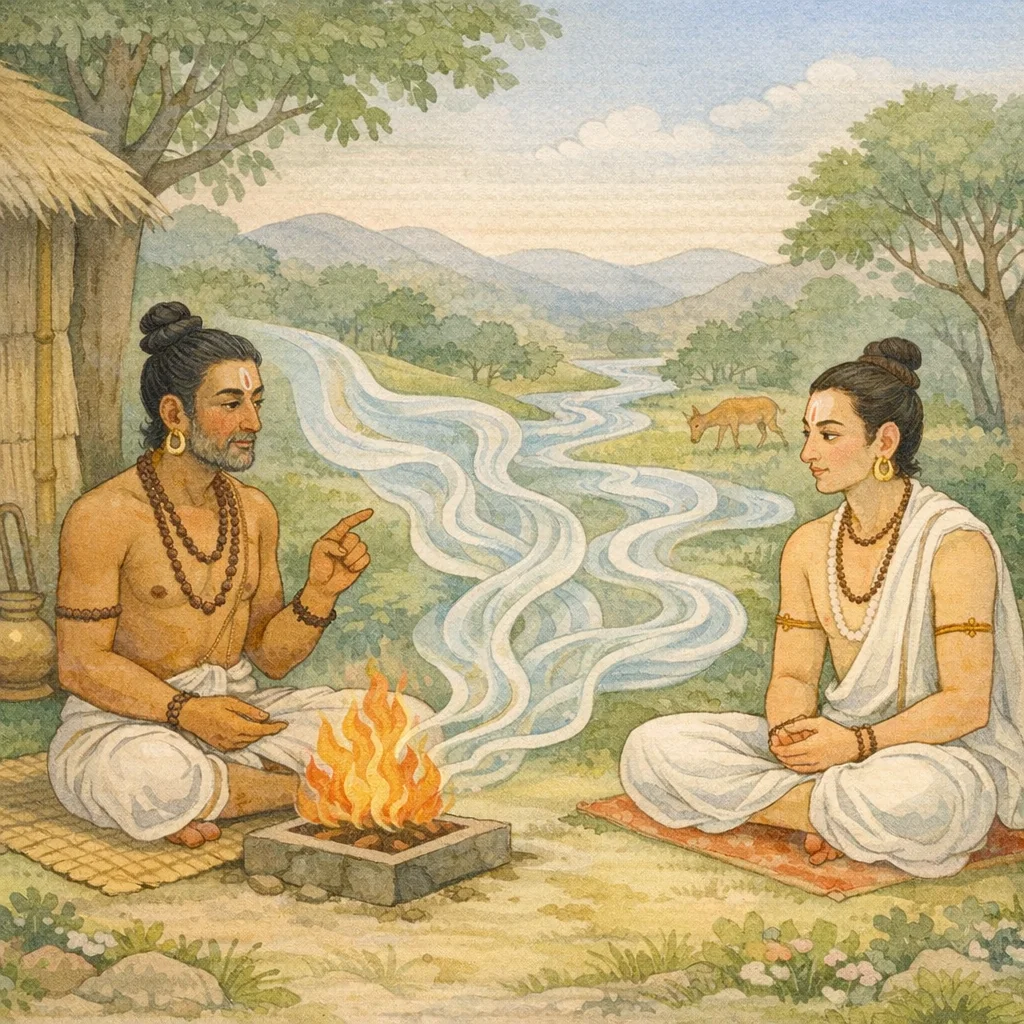
#::73:.8 #:23::.7 () हि 2 7 त्रयोदशाधिकद्विशततमो< ध्याय: प्राणवायुकी स्थितिका वर्णन तथा परमात्म-साक्षात्कारके उपाय ब्राह्मण उवाच पार्थिवं धातुमासाद्य शारीरो5ग्नि: कथं भवेत् । अवकाशविशेषेण कथं वर्तयतेडनिल:,ब्राह्मणने पूछा--व्याध! शरीरमें रहनेवाला अग्निस्वरूप प्राण पार्थिव धातुका अवलम्बन करके कैसे रहता है? और प्राणवायु नाड़ियोंके मार्गविशेषके द्वारा किस प्रकार (रस-रक्तादिका) संचालन करता है?
The Brahmin said: “O hunter, how does the bodily fire—prāṇa in the form of inner heat—subsist by taking support of the earthly constituent within the body? And how does the vital wind (prāṇa-vāyu), moving through the body’s distinct channels and spaces, carry out its functions and circulate the bodily fluids such as chyle and blood?”
Verse 2
मार्कण्डेय उवाच प्रश्नमेतं समुद्दिष्ट ब्राह्मणेन युधिष्ठिर । व्याधस्तु कथयामास ब्राह्मणाय महात्मने,मार्कण्डेयजी कहते हैं--युधिष्ठिर! ब्राह्मणके द्वारा उपस्थित किये गये इस प्रश्नको सुनकर धर्मव्याधने उन महामना ब्राह्मणसे इस प्रकार कहा--
Mārkaṇḍeya said: “O Yudhiṣṭhira, when the brāhmaṇa had put forward this question, the righteous hunter (the Dharma-vyādha) began to explain the matter to that noble-minded brāhmaṇa.”
Verse 3
व्याध उवाच मूर्धानमाश्रितो वह्निः शरीरं परिपालयन् | प्राणो मूर्थनि चाग्नौ च वर्तमानो विचेष्टते,धर्मव्याध बोला--ब्रह्मन! प्राणीके शरीरको सुरक्षित रखता हुआ अग्निस्वरूप उदान वायु मस्तकका आश्रय लेकर शरीरमें रहता है एवं मुख्य प्राण मस्तक और उदानवायु--इन दोनोंमें स्थित हुआ समस्त शरीरमें जीवनका संचार करता है*
The Hunter said: “The fire-principle, taking refuge in the head, safeguards the body. And the vital breath, abiding both in the head and in that fire, moves and functions, thereby sustaining the activity and life of the whole body.”
Verse 4
भूतं भव्यं भविष्यं च सर्व प्राणे प्रतिष्ठितम् । श्रेष्ठ तदेव भूतानां ब्रह्मयोनिमुपास्महे,भूत, वर्तमान और भविष्य--सब कुछ प्राणके ही आश्रित है, वह प्राण ही समस्त भूतोंमें श्रेष्ठ है।। अतः परब्रह्मसे उत्पन्न होनेवाले प्राणकी हम सब उपासना करते हैं;
The past, the present, and the future—all of it rests upon prāṇa, the vital life-breath. That prāṇa is the highest among all beings; therefore we worship prāṇa, which arises from the Supreme Brahman, as the sustaining source of life and order.
Verse 5
स जन्तु: सर्वभूतात्मा पुरुष: स सनातन: । महान् बुद्धिरहड्कारो भूतानां विषयश्न सः,वह प्राण ही जीव है, वही समस्त प्राणियोंका आत्मा है, वही सनातन पुरुष है, महत्तत्त्व, बुद्धि और अहंकार तथा पाँचों भूतोंके कार्यरूप इन्द्रियाँ और उनके विषय सब कुछ वही है (क्योंकि इस शरीरमें सबकी स्थिति उसीके आश्रित है और भविष्यमें मिलनेवाले शरीरमें जाना-आना भी इसीके आश्रित रहकर होता है। इसलिये यह प्राणकी स्तुति की गयी है):
The hunter said: “That living principle is the Self of all beings; it is the eternal Person. It is also the Great Principle (mahat), the intellect, and the sense of ‘I’ (ego). It is the senses that function through the elements and their objects as well—indeed, everything here depends upon it. Therefore this vital principle is praised, for the body’s continuance and the being’s passage to future embodiment rest upon it.”
Verse 6
(अव्यक्तं सत्त्वसंज्ञं च जीव: काल: स चैव हि । प्रकृति: पुरुषश्चैव प्राण एव द्विजोत्तम ।। जागर्ति स्वप्नकाले च स्वप्रे स्वप्रायते च सः । द्विजश्रेष्ठ! प्राण ही अव्यक्त, सत्त्व, जीव, काल, प्रकृति और पुरुष है। वही जाग्रत्- अवस्थामें जागता है। वही स्वप्नकालमें स्वप्न-जगत्का निर्माण करके स्वप्लावस्थाकी सारी चेष्टाएँ करता है ।। जाग्रत्सु बलमाधत्ते चेष्टत्सु चेष्टयत्यपि ।। तस्मिन् निरुद्धे विप्रेन्द्र मृत इत्यभिधीयते । त्यक्त्वा शरीरं भूतात्मा पुनरन्यत् प्रपद्यते ।।) वही जाग्रतकालमें बलका आधान करता है और चेष्टाशील प्राणियोंमें चेष्टा उत्पन्न करता है। विप्रवर! उस प्राणका निरोध हो जानेपर ही प्रत्येक जीव मरा हुआ कहलाता है। भूतात्मा प्राण एक शरीरको छोड़कर फिर दूसरे शरीरमें प्रविष्ट हो जाता है ।। एवं त्विह स सर्वत्र प्राणेन परिपाल्यते । पृष्ठतस्तु समानेन स्वां स्वां गतिमुपाश्रित:,इस प्रकार इस जगतमें सर्वत्र प्राणकी स्थिति है। प्राणके द्वारा ही सबका पालन होता है। पीछे वही प्राण जब समानवायु भावको प्राप्त होता है तब अपनी-अपनी पृथक् गतिका आश्रय लेता है
The Hunter said: “O best of twice-born, Prāṇa itself is what is called the Unmanifest; it is also ‘being’ (sattva), the individual soul, and Time. It is Nature and it is the Person as well. It is Prāṇa that remains awake in the waking state; and in the time of dream it fashions the dream-world and performs all the activities of the dream-state. In those who are awake it establishes strength, and in those who strive it impels their striving. When that Prāṇa is restrained, O foremost of brahmins, one is said to be dead. Having left one body, the elemental Self enters another. Thus, here in this world, everything everywhere is sustained by Prāṇa; and thereafter, in the mode of the ‘equalizing’ breath (samāna), it takes up each being’s own distinct course.”
Verse 7
बस्तिमूलं गुदं चैव पावकं समुपाश्रित: । वहन् मूत्र पूरीषं वाउप्यपान: परिवर्तते,समानवायुके रूपमें जठराग्निका आश्रय ले वह प्राण जब मूत्राशय और गुदामें स्थित होता है, उस समय मल और मूत्रका भार वहन करनेके कारण वह अपानवायुके नामसे विख्यात हो संचरण करता है
The hunter said: When the vital wind takes its station at the root of the bladder and at the anus, supporting the bodily fire, it bears the burden of urine and feces; in that function it circulates and is known as apāna, the downward-moving breath. The teaching underscores disciplined understanding of the body’s functions as part of right conduct and self-mastery.
Verse 8
प्रयत्ने कर्मणि बले स एपष त्रिषु वर्तते । उदानमिति त॑ प्राहुरध्यात्मविदुषो जना:,वही प्राण जब प्रयत्न (काम करनेकी चेष्टा), कर्म (उत्क्षेपषण और गमन आदि) तथा बल (बोझ उठानेकी शक्ति)--इन तीन विषयोंमें प्रवृत्त होता है, तब अध्यात्मवेत्ता मनुष्य उसे उदान कहते हैं
Verse 9
संधौ संधौ संनिविष्ट: सर्वेष्वपि तथानिल: । शरीरेषु मनुष्याणां व्यान इत्युपदिश्यते,वही जब मनुष्य-शरीरके प्रत्येक संधिस्थलमें व्याप्त होकर रहता है, तब उसे व्यान कहते हैं
The hunter said: “That vital wind which, pervading the human body, is stationed at every joint and spreads through all the limbs—this is what the sages teach to be Vyāna.”
Verse 10
धातुष्वग्निस्तु विततः स तु वायुसमीरित: । रसान् धातुूंश्न दोषांश्व वर्तयन् परिधावति,त्वचा आदि सब धातुओंमें जठरानल व्याप्त है। वह प्राण आदि वायुओंसे प्रेरित होकर अन्न आदि रसों, त्वचा आदि धातुओं तथा पित्त आदि दोषोंको परिपक्व करता हुआ समूचे शरीरमें दौड़ा करता है
The hunter-sage explains that the digestive fire pervades all the bodily tissues. Stirred by the vital winds (such as prāṇa), it circulates throughout the body, transforming and ripening the nutritive essences from food, the tissues beginning with the skin, and the humors beginning with bile. In this way, the body is sustained through an ordered inner discipline—each function performing its proper duty in harmony with the whole.
Verse 11
प्राणानां संनिपातात् तु संनिपात: प्रजायते । ऊष्मा चाग्निरिति ज्ञेयो योडन्न॑ं पचति देहिनाम्,प्राण आदि वायुओंके परस्पर मिलनेसे एक संघर्ष उत्पन्न होता है, उससे प्रकट होनेवाले उत्तापको ही जठरानल समझना चाहिये। वही देहधारियोंके खाये हुए अन्नको पचाता है
From the mutual convergence of the vital breaths (prāṇas) there arises an internal ‘collision’ or interaction; the heat that manifests from it should be understood as the bodily fire. That very heat—known as the gastric fire—digests the food eaten by embodied beings. The teaching frames digestion not as mere appetite but as a lawful, impersonal function of life-forces, inviting reverence for the body’s order and restraint in consumption.
Verse 12
समानोदानयोर्मध्ये प्राणापानौ समाहितौ । समर्थितस्त्वधिष्ठानं सम्यक् पचति पावक:,समान और उदान वायुओंके बीचमें प्राण और अपानवायुकी स्थिति है। उनके संघर्षसे उत्पन्न जठरानल अन्नको पचाता है और उसके रससे इस शरीरको भलीभाँति पुष्ट करता है;
The hunter-sage explains the inner order of the body: between the vital currents called Samāna and Udāna, the breaths Prāṇa and Apāna are held in balance. From their regulated interaction arises the digestive fire, which properly cooks the food and, from its essence, nourishes and strengthens the body. The ethical point is that even bodily life depends on harmony and disciplined regulation—so too should one’s conduct be governed by balance and right order (dharma).
Verse 13
अस्यापि पायुपर्यन्तस्तथा स्याद् गुदसंज्ञित: । स्रोतांसि तस्माज्जायन्ते सर्वप्राणेषु देहिनाम्,इस जठरानलका स्थान नाभिसे लेकर पायुतक है। इसीको “गुदा” कहते हैं। उस गुदासे देहधारियोंके समस्त प्राणोंमें स्रोत (नाडीमार्ग) प्रकट होते हैं
The hunter-sage said: “In this body too, the region extending down to the anus is known as the ‘guda’ (rectal/anal region). From that guda arise the channels (srotas), which become manifest throughout all the vital functions of embodied beings.” In context, the speaker uses anatomical description to ground an ethical teaching: understanding the body’s constructed, functional nature supports detachment, humility, and disciplined conduct rather than pride or indulgence.
Verse 14
अग्निवेगवह:ः प्राणो गुदान्ते प्रतिहन्यते । स ऊर्ध्वमागम्य पुन: समुत्क्षिपति पावकम्,गुदासे प्राण अग्निके वेगको लेकर गुदान्तमें टकराता है, फिर वहाँसे ऊपरको उठकर वह जठराग्निको भी ऊपर उठाता है
The hunter explains a physiological point to ground his ethical instruction in lived reality: the vital breath, driven with the force of fire, strikes at the end of the rectum; then, rising upward again, it stirs and lifts the inner fire (digestive heat). The teaching implies that bodily functions follow an ordered law, and therefore disciplined conduct and restraint are also to be aligned with that natural order rather than with impulse.
Verse 15
पकक््वाशयस्त्वधो नाभ्यामूर्थधमामाशय: स्थित: । नाभिमध्ये शरीरस्य प्राणा: सर्वे प्रतेष्ठिता:,नाभिके नीचे पक्वाशय (पके हुए भोजनका स्थान) है और ऊपर आमाशय (कच्चे भोजनका स्थान) है। शरीरमें स्थित समस्त प्राण नाभिमें ही प्रतिष्ठित हैं--वही उनका केन्द्रस्थान है
Verse 16
प्रवृत्ता हृदयात् सर्वे तिर्यगूर्धष्वमधस्तथा । वहन्त्यन्नरसान् नाड्यो दशप्राणप्रचोदिता:,नाड़ियाँ हृदयसे नीचे-ऊपर और इधर-उधर फैली हुई हैं। वे दस प्राणवायुओंसे प्रेरित हो शरीरके सब भागोंमें अन्नके रसोंको पहुँचाती रहती हैं
The nāḍīs, issuing from the heart, spread in every direction—sideways, upward, and downward. Driven by the ten vital airs, they continually carry the nutritive essence of food throughout all the limbs of the body. In this teaching, the hunter underscores an ethic of disciplined living: bodily life is sustained by an ordered inner system, and therefore one should act with restraint and awareness rather than indulgence or harm.
Verse 17
योगिनामेष मार्गस्तु येन गच्छन्ति तत् परम् | जितक्लमा: समा धीरा मूर्थन्यात्मानमादधु: । एवं सर्वेषु विततौ प्राणापानौ हि देहिषु,जिन्होंने समस्त क्लेशोंको जीत लिया है, जो समदर्शी और धीर हैं, जिन्होंने (सुषुम्णा नाड़ीके द्वारा) अपने प्रागमय आत्माको मस्तक (वर्ती सहस्रारचक्र)-में ले जाकर स्थापित किया है, उन योगियोंके लिये यह (मस्तकसे लेकर पायुतकका सुषुम्णामय) मार्ग है, जिससे वे उस परब्रह्म परमात्माको प्राप्त होते हैं। इस प्रकार समस्त जीवात्माओंके शरीरोंमें ये प्राणवायु और अपानवायु व्याप्त हैं
The hunter said: “This is the path of yogins—the way by which they go to the Supreme. Those who have conquered fatigue and affliction, who are even-minded and steadfast, place the self at the crown of the head. Thus, in all embodied beings, the vital currents called prāṇa and apāna are indeed spread throughout.”
Verse 18
(तावग्निसहितौ ब्रह्मन् विद्धि वै प्राणमात्मनि ।) एकादशविकारात्मा कलासम्भारसम्भृतः । मूर्तिमन्तं हि तं विद्धि नित्यं योगजितात्मकम्,ब्रह्म! वे प्राण और अपान जठरानलके साथ रहते हैं। प्राणको आत्मामें स्थित जानिये। आत्मा एकादश इन्द्रियरूप विकारोंसे युक्त, षोडश- कलाओंके समूहसे सम्पन्न, शरीरको धारण करनेवाला तथा नित्य है। उसने योगबलसे मन-बुद्धिको अपने अधीन कर रखा है। इस प्रकार आत्माके सम्बन्धमें आपको जानना चाहिये
The hunter said: “O Brahmin, know that prāṇa together with apāna abides along with the gastric fire. Understand prāṇa as established in the Self. The Self is associated with the elevenfold modifications (the senses and mind), furnished with the full complement of the sixteen ‘kalās’ (constituent powers), and it upholds the embodied form. It is eternal, and by the strength of yoga it has brought mind and intellect under mastery. This is how you should understand the Self.”
Verse 19
तस्मिन् यः संस्थितो हान्निर्नित्यं स्थाल्यामिवाहित: । आत्मानं तं विजानीहि नित्यं योगजितात्मकम्,जैसे बटलोईमें आग रखी गयी हो, उसी प्रकार पूर्वोक्त कला-समूहरूप शरीरमें प्रकाशस्वरूप आत्मा सदा विद्यमान रहता है। आप उसे जानिये। वह नित्य तथा योगशक्तिसे मन-बुद्धिको अपने अधीन रखनेवाला है
Just as fire, once placed in a cooking pot, remains steadily present within it, so too the luminous Self abides constantly within the body—here understood as a composite of the previously described faculties and arts. Know that Self: eternal, and one whose inner being is mastered through yoga, keeping mind and intellect under control.
Verse 20
देवो यः संस्थितस्तस्मिन्नब्बिन्दुरिव पुष्करे | क्षेत्रज् तं विजानीहि नित्यं योगजितात्मकम्,जैसे कमलके पत्तेपर पड़ी हुई जलकी बूँद निर्लिप्त होती है, उसी प्रकार ये आत्मदेव कलात्मक शरीरमें असंगभावसे स्थित हैं। वे ही क्षेत्रज्ञ हैं, आप उन्हें जानिये। वे योगसे अपने मन और बुद्धिपर अधिकार प्राप्त करनेवाले तथा नित्य हैं
Know that indwelling divine Self—abiding within the body yet untouched—like a drop of water resting on a lotus leaf. That Self is the Knower of the Field (kṣetrajña): eternal, and one who has mastered the inner instrument through yoga, holding mind and intellect under control. The teaching urges discernment between the body and the witnessing Self, grounding ethical life in inner detachment rather than mere outward action.
Verse 21
जीवात्मकानि जानीहि रज: सत्त्वं तमस्तथा । जीवमात्मगुणं विद्धि तथा55त्मानं परात्मकम्,ब्रह्म! आप यह जान लें कि सत्त्वगुण (प्रकाश), रजोगुण (प्रवृत्ति) और तमोगुण (मोह)--ये जीवात्मक हैं; अर्थात् जीवात्माके अन्तःकरणके विकार हैं, जीव आत्माका गुण (सेवक) है और आत्मा परमात्मस्वरूप है। भाव यह कि परमात्माको ही यहाँ आत्मा कहा गया है
The hunter said: “Know that rajas, sattva, and tamas belong to the individual soul’s conditioned nature—these are modifications of the inner instrument (mind and intellect). Understand the jīva as a dependent attribute of the Self, while the Self is of the Supreme Self’s nature, O Brahmin.” In ethical terms, the verse redirects attention from outward identity to inner causality: moral clarity comes from discerning the guṇas as changeable conditions, and grounding one’s conduct in the higher Self rather than in impulsive rajas or deluding tamas.
Verse 22
अचेतनं जीवगुणं वदन्ति स चेष्टते चेष्टयते च सर्वम् । ततः पर क्षेत्रविदो वदन्ति प्राकल्पयद् यो भुवनानि सप्त,शरीर-तत्त्वके ज्ञाता महात्मा पुरुष जड शरीर आदिको जीवका भोग्य बताते हैं। वह जीव शरीरके भीतर रहकर स्वयं चेष्टाशील होता है तथा शरीर और इन्द्रिय आदि सबको चेष्टाओंमें लगाता है। जिन्होंने सातों भुवनोंका निर्माण किया है, उन परमात्माको ज्ञानी पुरुष जीवात्मासे उत्कृष्ट बताते हैं
They say that the insentient body is merely a property or instrument for the living self; yet the living self acts, and also sets everything into action. Beyond that, the knowers of the Field declare a higher Reality—the one who originally fashioned the seven worlds. Thus the hunter-teacher distinguishes the embodied soul that enjoys through the body from the Supreme Self, the true source of cosmic order and agency.
Verse 23
एवं सर्वेषु भूतेषु भूतात्मा सम्प्रकाशते । दृश्यते त्वग्रयया बुद्धया सूक्ष्मया ज्ञानवेदिभि:,इस प्रकार सम्पूर्ण भूतोंके आत्मा परमेश्वर समस्त प्राणियोंके भीतर प्रकाशित हो रहे हैं। ज्ञानी महात्मा अपनी श्रेष्ठ एवं सूक्ष्म बुद्धिके द्वारा उन्हें देख पाते हैं
Verse 24
चित्तस्य हि प्रसादेन हन्ति कर्म शुभाशुभम् । प्रसन्नात्मा55त्मनि स्थित्वा सुखमानन्त्यमश्लुते,मनुष्य अपने चित्तकी पवित्रताके द्वारा ही समस्त शुभाशुभ कर्मोको नष्ट (फल देनेमें असमर्थ) कर देता है। जिसका अन्त:करण प्रसन्न (पवित्र) है, वह अपने-आपमें ही स्थित होकर अक्षय सुख (मोक्ष)-का भागी होता है
By the serenity and purity of one’s mind, a person renders both ‘good’ and ‘bad’ actions powerless to bear binding results. With an inwardly clear and joyful heart, abiding in the Self, one attains unending, imperishable happiness—liberation.
Verse 25
लक्षणं तु प्रसादस्य यथा तृप्त: सुखं स्वपेत् । निवाते वा यथा दीपो दीप्येत् कुशलदीपित:,जैसे भोजन आदिसे तृप्त हुआ मनुष्य सुखसे सोता है और जैसे वायुरहित स्थानमें चतुर मनुष्यके द्वारा जलाया हुआ दीप निश्चलभावसे प्रकाशित होता है; ऐसा ही लक्षण चित्तकी पवित्रताका भी है
Verse 26
पूर्वरात्रे परे चैव युज्जान: सततं मन: । लघ्वाहारो विशुद्धात्मा पश्यन्नात्मानमात्मनि,मनुष्यको चाहिये कि वह हलका भोजन करे और अन्तःकरणको शुद्ध रखे। रातके पहले और पिछले पहरमें सदा अपना मन परमात्माके चिन्तनमें लगावे। जो इस प्रकार निरन्तर अपने हृदयमें परमात्माके साक्षात्कारका अभ्यास करता है, वह प्रज्वलित दीपकके समान प्रकाशित होनेवाले अपने मनोमय प्रदीपके द्वारा निराकार परमेश्वरका साक्षात्कार करके तत्काल मुक्त हो जाता है
The hunter said: “In the earlier part of the night and again in the later part, one should continually yoke the mind to contemplation. Eating lightly and keeping the inner self purified, one should behold the Self within the Self.” In ethical terms, the teaching commends disciplined living—moderation in food, purity of heart, and steady meditation at the quiet hours of night—so that inner awareness becomes clear and liberating.
Verse 27
प्रदीप्तेनेव दीपेन मनोदीपेन पश्यति । दृष्टवा55त्मानं निरात्मानं स तदा विप्रमुच्यते,मनुष्यको चाहिये कि वह हलका भोजन करे और अन्तःकरणको शुद्ध रखे। रातके पहले और पिछले पहरमें सदा अपना मन परमात्माके चिन्तनमें लगावे। जो इस प्रकार निरन्तर अपने हृदयमें परमात्माके साक्षात्कारका अभ्यास करता है, वह प्रज्वलित दीपकके समान प्रकाशित होनेवाले अपने मनोमय प्रदीपके द्वारा निराकार परमेश्वरका साक्षात्कार करके तत्काल मुक्त हो जाता है
The hunter said: As one sees by the light of a blazing lamp, so does a seeker see by the lamp of the mind. When, through that inner illumination, he beholds the Self as free from all that is not-Self, he is then immediately released. The teaching urges a disciplined life—light food, purity of heart, and steady contemplation of the Supreme in the early and late watches of the night—so that direct realization arises and liberation follows.
Verse 28
सर्वोपायैस्तु लोभस्य क्रोधस्य च विनिग्रह: । एतत् पवित्र लोकानां तपो वै संक्रमो मत:,सम्पूर्ण उपायोंसे लोभ और क्रोधकी वृत्तियोंको दबाना चाहिए। संसारमें यही पवित्र तप है और यही सबके लिये भवसागरसे पार उतारनेवाला सेतु माना गया है
The hunter-sage teaches that one should restrain greed and anger by every possible means. Such self-control, he says, is the true purifying austerity for people in the world, and it is regarded as a bridge that carries one across the perilous stream of worldly existence.
Verse 29
नित्यं क्रोधात् तपो रक्षेद् धर्म रक्षेच्च मत्सरात् । विद्यां मानापमानाभ्यामात्मानं तु प्रमादत:,सदा तपको क्रोधसे, धर्मको द्वेषसे, विद्याकों मान-अपमानसे और अपने-आपको प्रमादसे बचाना चाहिये
The hunter said: “Always guard your austerity from anger; guard dharma from envy. Guard learning from the twin pressures of honor and dishonor, and guard your very self from heedlessness.” In this counsel, the speaker maps common inner enemies to the virtues they most easily destroy, urging steady self-watchfulness as the basis of righteous living.
Verse 30
आनुृ्शंस्य॑ं परो धर्म: क्षमा च परमं बलम् | आत्मज्ञानं परं ज्ञानं सत्यं व्रतपरं ब्रतम्,क्रूरताका अभाव (दया) सबसे महान धर्म है, क्षमा सबसे बड़ा बल है, सत्य सबसे उत्तम व्रत है और परमात्माके तत्त्वका ज्ञान ही सर्वोत्तम ज्ञान है
The hunter said: “Compassion and freedom from cruelty are the highest form of dharma; forgiveness is the greatest strength. Knowledge of the Self is the supreme knowledge, and truthfulness is the highest vow among vows.”
Verse 31
सत्यस्य वचन श्रेय: सत्यं ज्ञानं हितं भवेत् यद् भूतहितमत्यन्तं तद् वै सत्यं परं मतम्,सत्य बोलना सदा कल्याणकारी है। यथार्थ ज्ञान ही हितकारक होता है। जिससे प्राणियोंका अत्यन्त हित होता हो उसे ही उत्तम सत्य माना गया है
The hunter said: “Speaking truth is a source of the highest good. Truth is that knowledge which becomes beneficial. Whatever brings the greatest welfare to living beings—this alone is regarded as the supreme truth.”
Verse 32
यस्य सर्वे समारम्भा निराशीर्बन्धना: सदा | त्यागे यस्य हुतं सर्व स त्यागी स च बुद्धिमान्,जिसके सम्पूर्ण आयोजन कभी कामनाओंसे बाँधे हुए नहीं होते तथा जिसने त्यागकी आगमें अपना सर्वस्व होम दिया है वही त्यागी और बुद्धिमान् है
The hunter said: He is truly a renouncer—and truly wise—whose every undertaking is never bound by craving and expectation, and who has offered his entire self into the fire of relinquishment. Such a person acts without being chained by desire, and lives by the ethic of letting go.
Verse 33
यतो न गुरुरप्येनं श्रावयेदुपपादयेत् । त॑ं विद्याद् ब्रह्मणो योगं वियोगं योगसंज्ञितम्,इसलिये दृश्य संसारसे वियोग करानेवाले और योग नामसे कहे जानेवाले इस ब्रह्मययोगको स्वयं जानना और सम्पादन करना चाहिये। गुरुको भी उचित है कि वह इसे अपात्र शिष्यके प्रति न सुनावे
Verse 34
न हिंस्यात् सर्वभूतानि मैत्रायणगतकश्चरेत् । नेदं जीवितमासाद्य वैरं कुर्वीत केनचित्,किसी प्राणीकी हिंसा न करे। सबसमें मित्रभाव रखते हुए विचरे। इस दुर्लभ मनुष्य- जीवनको पाकर किसीके साथ वैर न करे
The hunter said: “One should not injure any living being. Moving through the world with a mind grounded in friendliness, having obtained this rare human life, one should not create enmity with anyone.”
Verse 35
आकिज्चन्यं सुसंतोषो निराशित्वमचापलम् | एतदेव पर ज्ञानं सदात्मज्ञानमुत्तमम्,कुछ भी संग्रह न रखना, सभी दशाओंमें अत्यन्त संतुष्ट रहना तथा कामना और लोलुपताको त्याग देना--यही परम ज्ञान है और यही सत्यस्वरूप उत्तम आत्मज्ञान है
The hunter said: “To possess nothing, to remain deeply content in every condition, and to abandon craving and restless greed—this alone is the highest knowledge. This is the supreme self-knowledge that accords with truth.”
Verse 36
परिग्रहं परित्यज्य भवेद् बुद्धया यतव्रत: । अशोक स्थानमाश्रित्य निश्चलं प्रेत्य चेह च,इहलोक और परलोकके समस्त भोगोंका एवं सब प्रकारके संग्रहका त्याग करके शोकरहित निश्चल परमधामको लक्ष्य बनाकर बुद्धिके द्वारा मन और इन्द्रियोंका संयम करे
The hunter said: “Abandoning all acquisitiveness and every kind of hoarding, one should, with disciplined resolve guided by clear understanding, restrain the mind and senses. Taking refuge in the sorrowless, unmoving supreme state as one’s aim, one attains steadiness and well-being both here in this world and after death.”
Verse 37
तपोनित्येन दान्तेन मुनिना संयतात्मना | अजित जेतुकामेन भाव्यं सड्लेष्वसज्धिना,जो जितेन्द्रिय है, जिसने मनपर अधिकार प्राप्त कर लिया है तथा जो अजित पदको जीतनेकी इच्छा करता है, नित्य तपस्यामें संलग्न रहनेवाले उस मुनिको आसक्ति-जनक भोगोंसे अलग--अनासक्त रहना चाहिये
Verse 38
गुणागुणमनासड्रमेककार्यमनन्तरम् । एतत् तद् ब्रह्मणो वृत्तमाहुरेकपदं सुखम्,जो गुणमें रहता हुआ भी गुणोंसे रहित है, जो सर्वथा संगसे रहित है तथा जो एकमात्र अन्तरात्माके द्वारा ही साध्य है, जिसकी उपलब्धिमें अविद्याके सिवा और कोई व्यवधान नहीं है, वही ब्रह्मका अद्वितीय नित्य सिद्ध पद है और वही (निरतिशय) सुख है
The hunter said: “That which abides amid the qualities yet is itself beyond qualities; which is utterly free from attachment; which is realized only through the one inner Self; and for whose attainment no obstacle exists except ignorance—this, they declare, is the very state of Brahman: the single, unsurpassed, ever-established abode, and that alone is true bliss.”
Verse 39
परित्यजति यो दु:खं सुखं चाप्युभयं नर: । ब्रह्म प्राप्नोति सो5त्यन्तमसड्रेन च गच्छति,जो मनुष्य दुःख और सुख दोनोंको त्याग देता है, वही अनन्त ब्रह्मपदको प्राप्त होता है। अनासक्तिके द्वारा भी उसी पदकी प्राप्ति होती है
The hunter says: A person who relinquishes both sorrow and pleasure—refusing to be driven by either—attains the supreme Brahman. That same highest state is reached through non-attachment, by moving through life without clinging.
Verse 40
यथाश्रुतमिदं सर्व समासेन द्विजोत्तम । एतत् ते सर्वमाख्यातं कि भूय: श्रोतुमिच्छसि,द्विजश्रेष्ठ! मैंने यह सब जैसा सुना है, वैसा सब-का-सब थोड़ेमें आपसे कह सुनाया है। अब आप और क्या सुनना चाहते हैं?
O best of Brahmins, I have related to you—briefly and exactly as I heard it—everything in full. Now tell me: what more do you wish to hear?
Verse 213
इति श्रीमहाभारते वनपर्वणि मार्कण्डेयसमास्यापर्वणि ब्राह्मणव्याधसंवादे त्रयोदशाधिकद्धिशततमो< ध्याय:,इस प्रकार श्रीमहाभारत वनपर्वके अन्तर्गत मार्कण्डेययमास्यापर्वमें ब्राह्मणव्याधसंवादविषयक दो सौ तेरहवाँ अध्याय पूरा हुआ
Thus, in the Śrī Mahābhārata, within the Vana Parva—specifically the Markandeya-samāsya sub-section—ends the dialogue between the Brāhmaṇa and the Vyādha. This concludes the two-hundred-and-thirteenth chapter. The colophon marks the completion of the teaching episode, emphasizing dharma as lived through one’s duties and conduct rather than mere status or outward identity.
Frequently Asked Questions
The dilemma centers on desire versus social integrity: the episode frames how unregulated attraction can generate reputational harm and misattribution, prompting concealment, transformation, and ritual relocation to prevent blame from falling on revered households.
The chapter suggests that powerful impulses must be managed through discernment and containment; actions produce social and cosmic consequences, and responsibility includes safeguarding communal trust while channeling disruptive energies into ordered outcomes.
A functional meta-marker appears as an etiological closure: the world’s adoption of Skanda’s Śukla Pañcamī observance serves as a narrative warrant for remembrance and ritual continuity rather than an explicit promise of merit in phalaśruti form.