Adhyaya 192
उत्तङ्कोपाख्यानप्रारम्भः — Uttanka’s Tapas, Viṣṇu-stuti, and the Dhundhumāra Prophecy (Opening)
Upa-parva: Mārkaṇḍeya–Uttanka–Dhundhumāra Ākhyāna (embedded exemplum within Āraṇyaka-parva)
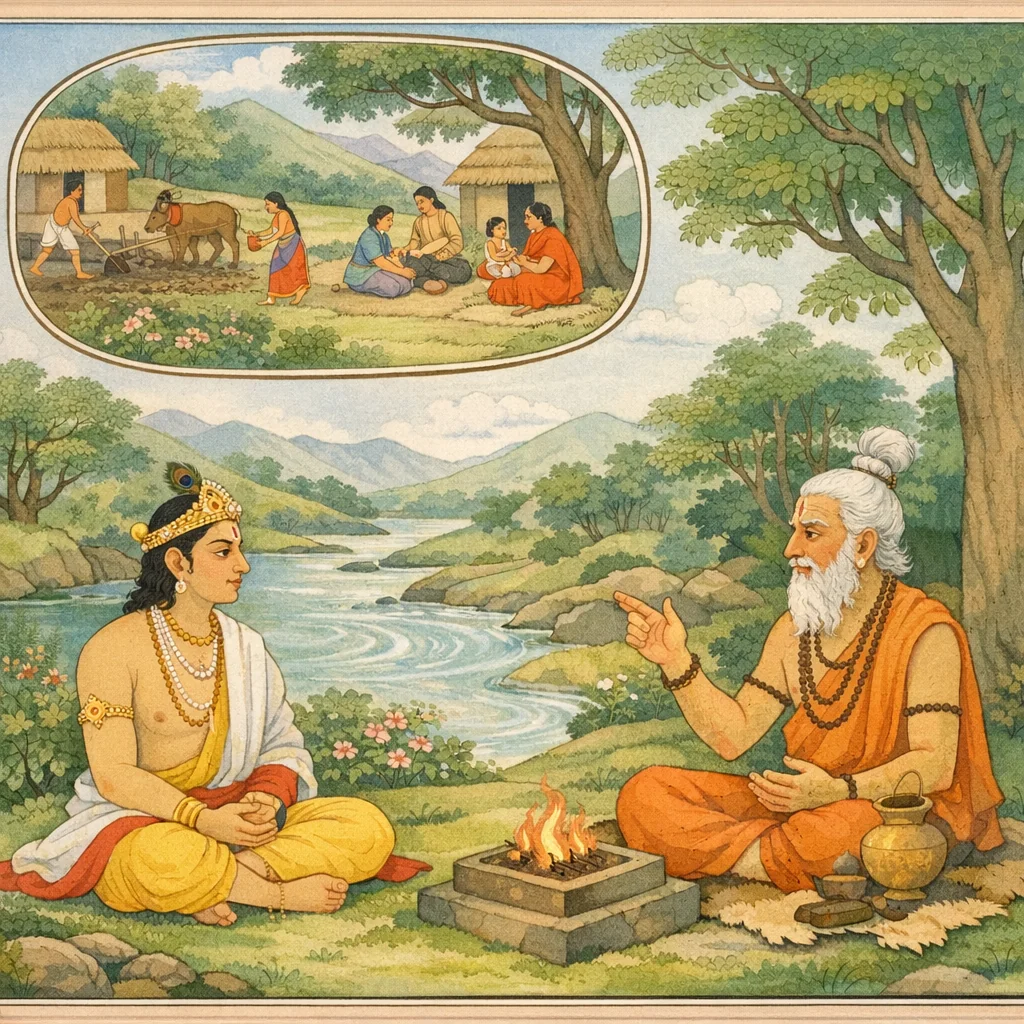
Vaiśaṃpāyana reports Yudhiṣṭhira’s inquiry to the sage Mārkaṇḍeya, praising his comprehensive knowledge of divine, demonic, royal, and ṛṣi lineages. Yudhiṣṭhira requests an accurate account of how the Ikṣvāku king Kuvalāśva came to be known as Dhundhumāra. Mārkaṇḍeya begins the dharmic exemplum: he introduces the renowned ṛṣi Uttanka dwelling in Marudhanva forests, performing severe tapas to propitiate Viṣṇu. Viṣṇu grants direct दर्शन (vision), and Uttanka offers a structured cosmic hymn identifying the deity as creator and as the immanent support of the universe. When invited to choose a boon, Uttanka declares the vision itself sufficient, yet is pressed to ask; he requests enduring orientation to dharma, truth, restraint, and constant devotional practice. Viṣṇu grants these and adds a prophetic commission: an asura named Dhundhu performs fierce austerities to afflict the worlds; in a future royal line, King Bṛhadaśva’s son Kuvalāśva will, empowered by yoga and under Uttanka’s directive, become Dhundhumāra—thus setting the narrative trajectory for the asura’s neutralization. The chapter closes with Viṣṇu’s disappearance after delivering this linkage.
Chapter Arc: वनवास के धूसर वर्तमान में एक दिव्य भविष्य-दर्शन खुलता है—भगवान् कल्कि के द्वारा सत्ययुग की पुनर्स्थापना और स्वयम्भुव (ब्रह्मा) द्वारा निर्धारित शुभ मर्यादाओं का पुनर्जागरण। → युधिष्ठिर के भीतर राजा-धर्म का भय और संशय उभरता है: प्रजा-रक्षा करते हुए मैं स्वधर्म से कैसे न च्यवूँ? प्रमाद से यदि किसी के प्रति अनुचित व्यवहार हो गया हो तो उसका प्रायश्चित्त क्या? काल का दबाव, राजकुल की प्रतिष्ठा, और धर्म-लोप की आशंका—सब एक साथ कसते हैं। → ऋषि का निर्णायक उपदेश: ‘कर्म, मन और वाणी—तीनों से धर्माचरण करो’; प्रमादजन्य दोष को ‘सम्यक् दान’ से जीतो; और यह जानो कि प्राज्ञ पुरुष काल से पीड़ित होकर भी मोह में नहीं पड़ते—यह काल तो देवों तक को दबाता है। साथ ही कल्कि-युग का आदर्श चित्र उभरता है—लोग शील का अनुकरण करेंगे, वर्ण-कर्तव्य अपने-अपने कर्म में स्थिर होंगे, और ‘कृते युगे’ क्षेम होगा। → उपदेश का भार युधिष्ठिर के भीतर स्थिरता बनकर उतरता है। वह स्वीकार करता है कि यह वचन कानों को मधुर और मन को प्रिय लगा; और वह प्रतिज्ञा करता है कि जो कुछ कहा गया है, उसे वह आचरण में उतारेगा। → धर्म का आदर्श तो स्पष्ट हुआ, पर वनवास की कठोर वास्तविकता में—जहाँ अपमान, अभाव और आगामी संघर्ष छाया है—युधिष्ठिर इस उपदेश को कितनी दूर तक निभा पाएँगे?
Shlokas
Verse 1
(दाक्षिणात्य अधिक पाठका ३ *लोक मिलाकर कुल ९७३ श्लोक हैं) #५+ ०० ()) अपन आस एकनवरत्याधिकशततमो< ध्याय: भगवान् कल्कीके द्वारा सत्ययुगकी स्थापना और मार्कण्डेयजीका युधिष्ठटिरके लिये धर्मोपदेश मार्कण्डेय उदाच ततपश्नोरक्षयं कृत्वा द्विजेभ्य: पृथिवीमिमाम् । वाजिमेधे महायज्ञे विधिवत् कल्पयिष्यति,मार्कण्डेयजी कहते हैं--युधिष्ठि!| उस समय चोर-डाकुओं एवं म्लेच्छोंका विनाश करके भगवान् कल्की अश्वमेध नामक महायज्ञका अनुष्ठान करेंगे और उसमें यह सारी पृथ्वी विधिपूर्वक ब्राह्मणको दे डालेंगे
Mārkaṇḍeya said: “Then, having secured the protection of people—after destroying thieves, bandits, and hostile outsiders—Bhagavān Kalki will duly arrange a great Aśvamedha sacrifice. In that rite, he will formally bestow this entire earth upon the Brahmins, establishing order through righteous kingship and sacrificial generosity.”
Verse 2
स्थापयित्वा च मर्यादा: स्वयम्भुविहिता: शुभा: । वन॑ पुण्ययश:कर्मा रमणीयं प्रवेक्ष्यति,उनका यश तथा कर्म सभी परम पावन होंगे। वे ब्रह्माजीकी चलायी हुई मंगलमयी मर्यादाओंकी स्थापना करके (तपस्याके लिये) रमणीय वनमें प्रवेश करेंगे
Mārkaṇḍeya said: “Having established the auspicious boundaries of right conduct ordained by Svayambhū (Brahmā), he—whose fame and deeds are wholly purifying—will enter a delightful forest, withdrawing into the wilderness for disciplined practice and the protection of dharma.”
Verse 3
तच्छीलमनुवर्त्स्यन्ति मनुष्या लोकवासिन: । विप्रैश्नोरक्षये चैव कृते क्षेमं भविष्यति,फिर इस जगत्के निवासी मनुष्य उनके शील-स्वभावका अनुकरण करेंगे। इस प्रकार सत्ययुगमें ब्राह्मणोंद्वारा दस्युदलका विनाश हो जानेपर संसारका मंगल होगा
Mārkaṇḍeya said: “The people who dwell in this world will follow that very conduct and character as their model. Thus, when in the Kṛta (Satya) age the bands of robbers are destroyed and the Brahmins are protected, the world will become secure and auspicious.”
Verse 4
कृष्णाजिनानि शक्तीश्न त्रिशूलान्यायुधानि च । स्थापयन् द्विजशार्दूलो देशेषु विजितेषु च,द्विजश्रेष्ठ कल्की सदा दस्युवधमें तत्पर रहकर समस्त भूतलपर विचरते रहेंगे और अपने द्वारा जीते हुए देशोंमें काले मृगचर्म, शक्ति, त्रिशूल तथा अन्य अस्त्र-शस्त्रोंकी स्थापना करते हुए श्रेष्ठ ब्राह्मणोंद्वागा अपनी स्तुति सुनेंगे और स्वयं भी उन ब्राह्मणशिरोमणियोंको यथोचित सम्मान देंगे
Mārkaṇḍeya said: “That tiger among Brahmins, moving through the lands he has subdued, will set up black-antelope skins, spears, tridents, and other weapons in those conquered regions.” The verse evokes a future age in which the restoration of order is marked by visible emblems of authority and discipline; conquest is presented not as mere domination but as the re-establishment of a normative, dharma-aligned social and ritual landscape.
Verse 5
संस्तूयमानो विप्रेन्द्रैमानयानो द्विजोत्तमान् | कलल्की चरिष्यति महीं सदा दस्युवधे रत:,द्विजश्रेष्ठ कल्की सदा दस्युवधमें तत्पर रहकर समस्त भूतलपर विचरते रहेंगे और अपने द्वारा जीते हुए देशोंमें काले मृगचर्म, शक्ति, त्रिशूल तथा अन्य अस्त्र-शस्त्रोंकी स्थापना करते हुए श्रेष्ठ ब्राह्मणोंद्वागा अपनी स्तुति सुनेंगे और स्वयं भी उन ब्राह्मणशिरोमणियोंको यथोचित सम्मान देंगे
Mārkaṇḍeya said: “Praised by the foremost Brahmins and himself honoring the best among the twice-born, Kalkī will roam the earth, ever intent on the destruction of lawless marauders. In this vision, righteous force is portrayed as being guided by reverence for spiritual authority and by the ethical aim of restoring order through the removal of predatory violence.”
Verse 6
हा मातस्तात पुत्रेति तास्ता वाच: सुदारुणा: । विक्रोशमानान् सुभृशं दस्यून् नेष्यति संक्षयम्,उस समय चोर और लुटेरे दर्दभरी वाणीमें “हाय मैया”, “हाय बप्पा” और “हाय बेटा' इत्यादि कहकर जोर-जोरसे चीत्कार करेंगे और उन सबका भगवान् कल्की विनाश कर डालेंगे। भारत! दस्युओंके नष्ट हो जानेपर अधर्मका भी नाश हो जायगा और धर्मकी वृद्धि होने लगेगी। इस प्रकार सत्ययुग आ जानेपर सब मनुष्य सत्यकर्मपरायण होंगे
Mārkaṇḍeya said: “Crying out in extreme anguish with pitiful words—‘Alas, mother! Alas, father! Alas, my son!’—the bandits and plunderers will wail loudly; and then (the Lord) Kalki will bring those marauders to destruction. O Bhārata, when the dasyus are wiped out, unrighteousness too will be cut down and righteousness will begin to grow. Thus, when the age of truth returns, people will become devoted to truthful and righteous conduct.”
Verse 7
ततो<धर्मविनाशो वै धर्मवृद्धिश्व भारत । भविष्यति कृते प्राप्ते क्रियावांश्व जनस्तथा,उस समय चोर और लुटेरे दर्दभरी वाणीमें “हाय मैया”, “हाय बप्पा” और “हाय बेटा' इत्यादि कहकर जोर-जोरसे चीत्कार करेंगे और उन सबका भगवान् कल्की विनाश कर डालेंगे। भारत! दस्युओंके नष्ट हो जानेपर अधर्मका भी नाश हो जायगा और धर्मकी वृद्धि होने लगेगी। इस प्रकार सत्ययुग आ जानेपर सब मनुष्य सत्यकर्मपरायण होंगे
Then, O Bhārata, the destruction of adharma will indeed occur, and dharma will increase. When the Kṛta (Satya) Yuga arrives, people too will become devoted to right action—living in accordance with truth and duty.
Verse 8
आरामाश्चैव चैत्याश्ष॒ तटाकावसथास्तथा । पुष्करिण्यश्व विविधा देवतायतनानि च,उस युगमें नये-नये बगीचे लगाये जायाँगे। चैत्यवृक्षोंकी स्थापना होगी। पोखरों और धर्मशालाओंका निर्माण होगा। भाँति-भाँतिकी पोखरियाँ तैयार होंगी। कितने ही देवमन्दिर बनेंगे और नाना प्रकारके यज्ञकर्मोका अनुष्ठान होगा। ब्राह्मण साधु-स्वभावके होंगे। मुनिलोग तपस्यामें तत्पर रहेंगे
Mārkaṇḍeya said: “In that age, new pleasure-groves and gardens will be laid out; sacred shrines and holy trees will be established. Tanks and resting-houses will be built, and many kinds of lotus-ponds will be prepared. Temples for the gods will arise as well.” The picture is of a society turning toward public welfare, sacred institutions, and pious order—outer works meant to support inner dharma.
Verse 9
यज्ञक्रियाश्व विविधा भविष्यन्ति कृते युगे । ब्राह्मणा: साधवश्चैव मुनयश्न तपस्विन:,उस युगमें नये-नये बगीचे लगाये जायाँगे। चैत्यवृक्षोंकी स्थापना होगी। पोखरों और धर्मशालाओंका निर्माण होगा। भाँति-भाँतिकी पोखरियाँ तैयार होंगी। कितने ही देवमन्दिर बनेंगे और नाना प्रकारके यज्ञकर्मोका अनुष्ठान होगा। ब्राह्मण साधु-स्वभावके होंगे। मुनिलोग तपस्यामें तत्पर रहेंगे
Mārkaṇḍeya said: “In the Kṛta Yuga, many kinds of sacrificial rites will be performed. Brāhmaṇas will be virtuous and well-conducted, and sages—ascetics devoted to austerity—will be steadfast in tapas.”
Verse 10
आश्रमा हतपाखण्डा: स्थिता: सत्यरता: प्रजा: । जनिष्यन्ते च बीजानि रोप्यमाणानि चैव ह,आश्रम पाखण्डियोंसे रहित होंगे और सारी प्रजा सत्यपरायण होगी। खेतोंमें बोये जानेवाले सब प्रकारके बीज अच्छी तरह उगेंगे
Mārkaṇḍeya said: “The hermitages will be free from heretical and deceitful practices, and the people will remain steadfastly devoted to truth. Seeds sown in the fields will indeed sprout and flourish well.”
Verse 11
सर्वेष्वृतुषु राजेन्द्र सर्व सस्यं भविष्यति । नरा दानेषु निरता व्रतेषु नियमेषु च,राजेन्द्र! सभी ऋतुओंमें सभी प्रकारके अनाज पैदा होंगे। सब लोग दान, व्रत और नियमोंमें लगे रहेंगे
O king, in every season all kinds of grain will flourish. People will be devoted to generosity, and they will steadily engage in vows and disciplined observances—signs of a realm aligned with dharma and inner restraint.
Verse 12
जपयज्ञपरा विप्रा धर्मकामा मुदा युता: । पालयिष्यन्ति राजानो धर्मेणेमां वसुन्धराम्,ब्राह्मण प्रसन्नतापूर्वक जपयज्ञमें तत्पर रहेंगे और धर्ममें ही उनकी रुचि होगी। क्षत्रियनरेश धर्मपूर्वक इस पृथ्वीका पालन करेंगे
Mārkaṇḍeya said: “Brahmins, devoted to the disciplines of japa and sacrifice, rejoicing and intent upon dharma, will flourish. And kings will govern this earth in accordance with dharma, protecting it through righteous rule.”
Verse 13
व्यवहाररता वैश्या भविष्यन्ति कृते युगे । षट्कर्मनिरता वित्रा: क्षत्रिया विक्रमे रता:
Mārkaṇḍeya said: “In the Kṛta Yuga, the Vaiśyas will be devoted to fair dealings and orderly commerce; the Brāhmaṇas will be intent upon the six prescribed duties; and the Kṣatriyas will delight in valor and heroic enterprise.”
Verse 14
शुश्रूषायां रता: शूद्रास्तथा वर्णत्रयस्य च । सत्ययुगके वैश्य सदा न्यायपूर्वक व्यापार करनेवाले होंगे। ब्राह्मण यजन-याजन, अध्ययन-अध्यापन, दान और प्रतिग्रह--इन छः कर्माँमें तत्पर रहेंगे। क्षत्रिय बल-पराक्रममें अनुराग रखेंगे तथा शूद्र ब्राह्मण आदि तीनों वर्णोकी सेवामें लगे रहेंगे || १३ ई ।। एष धर्म: कृतयुगे त्रेतायां द्वापरे तथा,धर्मका यह स्वरूप सत्ययुगमें अक्षुण्ण रहेगा। त्रेता, द्वापर तथा कलियुगमें धर्मकी जैसी स्थिति रहेगी, उसका वर्णन तुमसे किया जा चुका है। पाण्डुनन्दन! तुम्हें सम्पूर्ण लोककी युग-संख्याका ज्ञान भी हो चुका है
Mārkaṇḍeya said: “In the Kṛta (Satya) Yuga, the Śūdras are devoted to service, and likewise the three higher varṇas remain established in their respective duties. This is the form of dharma in the Kṛta Yuga; and in the Tretā and Dvāpara Yugas as well, dharma is spoken of according to its condition. The state of dharma in the Kali Yuga has already been described to you. O son of Pāṇḍu, you have also come to know the full reckoning of the ages of the world.”
Verse 15
पश्चिमे युगकाले च य: स ते सम्प्रकीर्तित: । सर्वलोकस्य विदिता युगसंख्या च पाण्डव,धर्मका यह स्वरूप सत्ययुगमें अक्षुण्ण रहेगा। त्रेता, द्वापर तथा कलियुगमें धर्मकी जैसी स्थिति रहेगी, उसका वर्णन तुमसे किया जा चुका है। पाण्डुनन्दन! तुम्हें सम्पूर्ण लोककी युग-संख्याका ज्ञान भी हो चुका है
Mārkaṇḍeya said: “And the one who appears at the final time of the age has been duly described to you. O Pāṇḍava, you have also come to know the reckoning of the yugas, a measure recognized throughout the world.”
Verse 16
एतत् ते सर्वमाख्यातमतीतानागतं तथा । वायुप्रोक्तमनुस्मृत्य पुराणमृषिसंस्तुतम्,राजन! ऋषियोंद्वारा प्रशंसित तथा वायुदेवद्वारा वर्णित पुराणकी बातोंका स्मरण करके मैंने तुमसे यह भूत-भविष्यका सारा वृत्तान्त बताया है
Mārkaṇḍeya said: “I have thus related to you all of this—both what has passed and what is yet to come. Recalling the ancient Purāṇic account, praised by the seers and proclaimed by Vāyu, I have told you this entire narrative, O King.”
Verse 17
एवं संसारमार्गा मे बहुशश्चिरजीविना । दृष्टाश्वैवानुभूताश्व तांस्ते कथितवानहम्,इस प्रकार चिरजीवी होनेके कारण मैंने संसारके मार्गोका अनेक बार दर्शन और अनुभव किया है, जिनका तुम्हारे समक्ष वर्णन कर दिया है
Markandeya said: “Thus, by virtue of my long life, I have many times beheld and personally experienced the various paths and courses of worldly existence; and I have now recounted those to you.”
Verse 18
इदं चैवापरं भूय: सह भ्रातृभिरच्युत । धर्मसंशयमोक्षार्थ निबोध वचनं मम,धर्ममर्यादासे कभी च्युत न होनेवाले युधिष्ठिर! तुम अपने भाइयोंसहित यह मेरी एक बात और सुनो। धर्मविषयक संदेहका निवारण करनेके लिये मेरे वचनको ध्यान देकर सुनो
Mārkaṇḍeya said: “And now, O unwavering one, together with your brothers, hear yet another word of mine. Attend carefully to what I say, for it is meant to dispel your doubts concerning dharma.”
Verse 19
धर्मे त्वया55त्मा संयोज्यो नित्यं धर्मभूतां वर । धर्मात्मा हि सुखं राजन प्रेत्य चेह च नन्दति,धर्मात्माओंमें श्रेष्ठ महाराज! तुम्हें अपने-आपको सदा धर्ममें ही लगाये रखना चाहिये; क्योंकि धर्मात्मा मनुष्य इस लोक और परलोकमें भी बड़े सुखसे रहता है
Mārkaṇḍeya said: “O best among the righteous, you should always yoke your own self to dharma. For, O king, a person whose very nature is dharma lives happily—both here in this world and, after death, in the world beyond.”
Verse 20
निबोध च शुभां वाणी यां प्रवक्ष्यामि तेडनघ । न ब्राह्मणे परिभव: कर्तव्यस्ते कदाचन
Mārkaṇḍeya said: “Listen carefully to these auspicious words that I shall speak to you, O blameless one. Never, at any time, should you show contempt or insult toward a brāhmaṇa.”
Verse 21
वैशम्पायन उवाच मार्कण्डेयवच: श्रुत्वा कुरूणां प्रवरो नृप:
Vaiśampāyana said: Having heard the words of Mārkaṇḍeya, the foremost of the Kurus—the king—(responded/acted accordingly).
Verse 22
कस्मिन् धर्मे मया स्थेयं प्रजा: संरक्षता मुने
Vaiśampāyana said: “O sage, while I am charged with protecting the people, in what form of dharma should I stand firm?”
Verse 23
मार्कण्डेय उदाच दयावान् सर्वभूतेषु हितो रक्तोडनसूयक:,मार्कण्डेयजीने कहा--राजन्! तुम सब प्राणियोंपर दया करो। सबके हितैषी बने रहो। सबपर प्रेमभाव रखो और किसीमें दोषदृष्टि मत करो। सत्यवादी, कोमलस्वभाव, जितेन्द्रिय और प्रजापालनमें तत्पर रहकर धर्मका आचरण करो। अधर्मको दूरसे ही त्याग दो तथा देवता और पितरोंकी आराधना करते रहो
Mārkaṇḍeya said: “O king, be compassionate toward all beings. Remain devoted to the welfare of all and free from fault-finding. Hold an attitude of love toward everyone and do not look for defects in others. Speak the truth, be gentle in nature, keep your senses under control, and be intent on protecting your subjects—thus practice dharma. Abandon unrighteousness from afar, and continue to worship the gods and honor the ancestors.”
Verse 24
सत्यवादी मृदुर्दान्तः प्रजानां रक्षणे रत: । चर धर्म त्यजाधर्म पितृन् देवांश्व पूजय,मार्कण्डेयजीने कहा--राजन्! तुम सब प्राणियोंपर दया करो। सबके हितैषी बने रहो। सबपर प्रेमभाव रखो और किसीमें दोषदृष्टि मत करो। सत्यवादी, कोमलस्वभाव, जितेन्द्रिय और प्रजापालनमें तत्पर रहकर धर्मका आचरण करो। अधर्मको दूरसे ही त्याग दो तथा देवता और पितरोंकी आराधना करते रहो
Vaiśampāyana said: “Be truthful, gentle in disposition, self-controlled, and devoted to the protection of your subjects. Practice dharma; abandon adharma. Continue to worship the gods and honor the ancestors (pitṛs).”
Verse 25
प्रमादाद् यत् कृतं ते5भूत् सम्यग् दानेन तज्जय । अलं ते मानमाश्रित्य सततं परवान् भव,यदि प्रमादवश तुम्हारेद्वारा किसीके प्रति कोई अनुचित व्यवहार हो गया हो तो उसे अच्छी प्रकार दानसे संतुष्ट करके वशमें करो। मैं सबका स्वामी हूँ, ऐसे अहंकारको कभी पासमें न आने दो। तुम अपनेको सदा पराधीन समझते रहो
Vaiśampāyana said: “Whatever wrong has occurred through your inadvertence—conquer it by making proper gifts and thereby winning the other’s satisfaction. Do not cling to pride; let it not come near you. Always regard yourself as dependent (answerable to others), not as an absolute master.”
Verse 26
विजित्य पृथिवीं सर्वा मोदमान: सुखी भव । एष भूतो भविष्यश्च धर्मस्ते समुदीरित:,सारी पृथ्वीको जीतकर सदा सानन्द और सुखी रहो। तात युधिष्ठिर! मैंने तुम्हें जो यह धर्म बताया है, इसका पालन भूतकालमें भी हुआ है और भविष्यकालमें भी इसका पालन होना चाहिए। भूत और भविष्यकी ऐसी कोई बात नहीं है, जो तुम्हें ज्ञात न हो; अतः: इस समय जो यह क्लेश तुम्हें प्राप्त हुआ है, इसके लिये हृदयमें कोई विचार न करो
Vaiśampāyana said: “Having conquered the whole earth, remain ever joyful and at ease. This dharma has been declared to you—one that has been followed in the past and is to be followed in the future.” In ethical force, the verse urges Yudhiṣṭhira to steady his mind in a timeless standard of righteous conduct, not to be shaken by present suffering, but to align action and inner resolve with dharma that transcends changing circumstances.
Verse 27
न ते<स्त्यविदितं किज्चिदतीतानागतं भुवि | तस्मादिमं परिक्लेशं त्वं तात हृदि मा कृथा:,सारी पृथ्वीको जीतकर सदा सानन्द और सुखी रहो। तात युधिष्ठिर! मैंने तुम्हें जो यह धर्म बताया है, इसका पालन भूतकालमें भी हुआ है और भविष्यकालमें भी इसका पालन होना चाहिए। भूत और भविष्यकी ऐसी कोई बात नहीं है, जो तुम्हें ज्ञात न हो; अतः: इस समय जो यह क्लेश तुम्हें प्राप्त हुआ है, इसके लिये हृदयमें कोई विचार न करो
Vaiśampāyana said: “Nothing on earth—whether of the past or the future—is unknown to you. Therefore, dear one, do not take this present affliction into your heart.”
Verse 28
प्राज्ञास्तात न मुहान्ति कालेनापि प्रपीडिता: । एष कालो महाबाहो अपि सर्वदिवौकसाम्,तात! विद्वान् पुरुष कालसे पीड़ित होनेपर भी कभी मोहमें नहीं पड़ते। महाबाहो! यह काल सम्पूर्ण देवताओंपर भी अपना प्रभाव डालता है
Vaiśampāyana said: “Dear one, the truly wise do not fall into delusion even when crushed by Time. O mighty-armed one, this Time exerts its power even over all the dwellers of heaven.”
Verse 29
मुहान्ति हि प्रजास्तात कालेनापि प्रचोदिता: । मा च तत्र विशड्काभूद् यन्मयोक्ते तवानघ,युधिष्ठिर! कालसे प्रेरित होकर ही यह सारी प्रजा मोहग्रस्त होती है। अनघ! मैंने तुम्हारे सामने जो कुछ भी कहा है, उसमें तुम्हें किसी प्रकारकी शंका नहीं होनी चाहिये
Vaiśampāyana said: “O dear one, people indeed become deluded when Time itself impels them. Therefore, O sinless Yudhiṣṭhira, let there be no doubt in you regarding what I have told you.”
Verse 30
आशड्कय मद्वचो होतद् धर्मलोपो भवेत् तव | जातोऊसि प्रथिते वंशे कुरूणां भरतर्षभ
Vaiśampāyana said: “Fearing that my words might otherwise lead you into a lapse of dharma, I speak thus: you are born in the renowned lineage of the Kurus, O bull among the Bharatas. Therefore you must act in a way worthy of that celebrated family tradition, guarding righteousness rather than letting it decline through misunderstanding.”
Verse 31
युधिछिर उवाच यत् त्वयोक्तं द्विजश्रेष्ठ वाक्यं श्रुतिमनोहरम्,करिष्यामि हि तत् सर्वमुक्त यत् ते मयि प्रभो | युधिष्ठिरने कहा--द्विजश्रेष्ठ] आपने मुझे जो उपदेश दिया है, वह मेरे कानोंको मधुर एवं मनको प्रिय लगा है। विभो! मैं आपकी आज्ञाका यत्नपूर्वक पालन करूँगा। ब्राह्मणश्रेष्ठ। मेरे मनमें लोभ, भय और ईर्ष्या नहीं है। प्रभो! आपने मेरे लिये जो कहा है, इसका अवश्य पालन करूँगा
Yudhiṣṭhira said: “O best of Brahmins, the words you have spoken are delightful to hear and pleasing to the mind. O lord, I shall indeed carry out everything you have enjoined upon me.”
Verse 32
तथा करिष्ये यत्नेन भवतः शासन विभो । न मे लोभोस्ति विप्रेन्द्र न भयं न च मत्सर:
Yudhiṣṭhira said: “So shall I do, with earnest effort, in accordance with your command, O mighty one. In me there is no greed, O best of brāhmaṇas—nor fear, nor envy.”
Verse 33
वैशम्पायन उवाच श्रुत्वा तु वचनं तस्य मार्कण्डेयस्य धीमत:ः,वैशम्पायनजी कहते हैं--राजन्! उन परम बुद्धिमान् मार्कण्डेयजीका वचन सुनकर भगवान् श्रीकृष्णसहित पाँचों पाण्डव बड़े प्रसन्न हुए। साथ ही जो श्रेष्ठ ब्राह्मण वहाँ पधारे थे, उन सबको भी बड़ी प्रसन्नता हुई
Verse 34
संहृष्टा: पाण्डवा राजन् सहिता: शार्ज्र्धन्वना । विप्रर्षभाश्न ते सर्वे ये तत्रासन् समागता:,वैशम्पायनजी कहते हैं--राजन्! उन परम बुद्धिमान् मार्कण्डेयजीका वचन सुनकर भगवान् श्रीकृष्णसहित पाँचों पाण्डव बड़े प्रसन्न हुए। साथ ही जो श्रेष्ठ ब्राह्मण वहाँ पधारे थे, उन सबको भी बड़ी प्रसन्नता हुई
Vaiśampāyana said: “O King, on hearing the words of the supremely wise Mārkaṇḍeya, the five Pāṇḍavas—together with Śrī Kṛṣṇa, the wielder of the Śārṅga bow—were filled with joy. All the foremost brāhmaṇas who had assembled there were likewise greatly delighted.”
Verse 35
तथा कथां शुभां श्रुत्वा मार्कण्डेयस्यथ धीमत: । विस्मिता: समपद्यन्त पुराणस्य निवेदनात्,बुद्धिमान् मार्कण्डेयजीके मुखसे वह मंगलमयी कथा सुनकर पुराणोक्त बातोंका ज्ञान हो जानेसे सब लोग बड़े ही विस्मित और प्रसन्न हुए
Vaiśampāyana said: Having heard that auspicious discourse of the wise Mārkaṇḍeya, all those present became filled with wonder; and through his narration of the ancient Purāṇic account, they gained understanding and were deeply pleased. The passage highlights how sacred tradition, when conveyed by a discerning sage, awakens insight and wholesome joy in the listeners.
Verse 190
इस प्रकार श्रीमहाभारत वनपर्वके अन्तर्गत मार्कण्डेयसमास्यापर्वमें भविष्यवर्णनणविषयक एक सौ नब्बेवाँ अध्याय पूरा हुआ
Thus ends the one hundred and ninety-second chapter of the Vana Parva of the Śrī Mahābhārata, within the Markandeya-Samāsya section, dealing with the description of what is to come. It functions as a formal colophon, marking the completion of the chapter and framing the preceding discourse as a forward-looking moral and narrative account.
Verse 191
इति श्रीमहाभारते वनपर्वणि मार्कण्डेयसमास्यापर्वणि युधिष्ठिरानुशासने एकनवत्यधिकशततमो< ध्याय:,इस प्रकार श्रीमहाभारत वनपववके अन्तर्गत मार्कण्डेयसमास्यापर्वमें युधिष्ठिरके लिये उपदेशविषयक एक सौ इक्यानबेवाँ अध्याय पूरा हुआ
Thus ends, in the Śrī Mahābhārata, within the Vana Parva—under the sub-section known as the Mārkaṇḍeya Samāsyā Parva—the one hundred and ninety-first chapter, consisting of instruction addressed to Yudhiṣṭhira. This closing colophon marks the completion of the chapter’s ethical counsel and its placement within the larger forest-episode framework.
Verse 206
ब्राह्मण: कुपितो हन्यादपि लोकानू् प्रतिज्ञया । निष्पाप नरेश! मेरी इस कल्याणमयी वाणीको समझो, जिसे मैं अभी तुम्हें सुना रहा हूँ। युधिष्ठिर! तुम्हें कभी किसी ब्राह्मणका तिरस्कार नहीं करना चाहिए; क्योंकि यदि ब्राह्मण कुपित हो जाय और किसी बातकी प्रतिज्ञा कर ले, तो वह उस प्रतिज्ञाके अनुसार सम्पूर्ण लोकोंका विनाश कर सकता है
Mārkaṇḍeya said: “A Brahmin, when angered, can by the sheer force of a vow strike down even the worlds. O sinless king, grasp this auspicious counsel that I am about to tell you. Yudhiṣṭhira, you must never show contempt for a Brahmin; for if a Brahmin becomes enraged and binds himself by a promise, he may, in accordance with that vow, be capable of bringing ruin upon all the worlds.”
Verse 216
उवाच वचन धीमान् परमं परमद्युति: । वैशम्पायनजी कहते हैं--जनमेजय! मार्कण्डेयजीकी यह बात सुनकर परम तेजस्वी और बुद्धिमान कुरुकुलरत्न राजा युधिष्ठिरने यह उत्तम वचन कहा--
Vaiśampāyana said: “O Janamejaya! Having heard this statement of the sage Mārkaṇḍeya, the supremely radiant and wise jewel of the Kuru line—King Yudhiṣṭhira—spoke these excellent words.”
Verse 226
कथं च वर्तमानो वै न च्यवेयं स्वधर्मत: । “मुने! प्रजाकी रक्षा करते हुए किस धर्ममें स्थित रहना चाहिये। मेरा व्यवहार और बर्ताव कैसा हो, जिससे मैं स्वधर्मसे कभी च्युत न होऊँ?”
“And how, while conducting myself in the world, may I never fall away from my own dharma? O sage, while protecting the people, in what dharma should I remain established, and what should my conduct and behavior be so that I do not deviate from my rightful duty?”
Verse 303
कर्मणा मनसा वाचा सर्वमेतत् समाचर । मेरे इस वचनमें संदेह करनेपर तुम्हारे धर्मका लोप होगा। भरतकुलभूषण। तुम कौरवोंके प्रख्यात कुलमें उत्पन्न हुए हो; अतः मन, वाणी और क्रियाद्वारा इन सब बातोंका पालन करो
Vaiśampāyana said: “Practice all this through deed, thought, and speech. If you cast doubt upon my words, your dharma will be diminished. O ornament of the Bharata line, you are born in the renowned Kaurava clan; therefore uphold all these instructions with mind, voice, and action.”
Verse 323
करिष्यामि हि तत् सर्वमुक्त यत् ते मयि प्रभो | युधिष्ठिरने कहा--द्विजश्रेष्ठ] आपने मुझे जो उपदेश दिया है, वह मेरे कानोंको मधुर एवं मनको प्रिय लगा है। विभो! मैं आपकी आज्ञाका यत्नपूर्वक पालन करूँगा। ब्राह्मणश्रेष्ठ। मेरे मनमें लोभ, भय और ईर्ष्या नहीं है। प्रभो! आपने मेरे लिये जो कहा है, इसका अवश्य पालन करूँगा
Yudhiṣṭhira said: “O lord, I will indeed carry out in full whatever you have spoken concerning me. Your instruction is sweet to my ears and dear to my heart; with careful effort I shall follow your command.”
Frequently Asked Questions
The ethical choice is Uttanka’s prioritization of inner moral orientation (dharma, truth, restraint, steady devotion) over external rewards when offered a boon after divine vision.
The chapter teaches that transformative agency arises from disciplined practice and ethical clarity; devotion is framed as a stabilizing epistemic and moral force that equips one for consequential, world-oriented duties.
No explicit phalaśruti is stated in this excerpt; the meta-function is achieved through prophetic framing—linking devotional virtue to future loka-saṃgraha (world-protective action) via the Dhundhumāra narrative arc.