Adhyaya 29
अध्याय २९: कर्णस्य शल्यं प्रति शापस्मरणं च युद्धनिश्चयः | Chapter 29: Karṇa recalls curses to Śalya and declares resolve for battle
Upa-parva: Karṇa–Śalya Saṃvāda (Dialogue of Karṇa and Śalya)
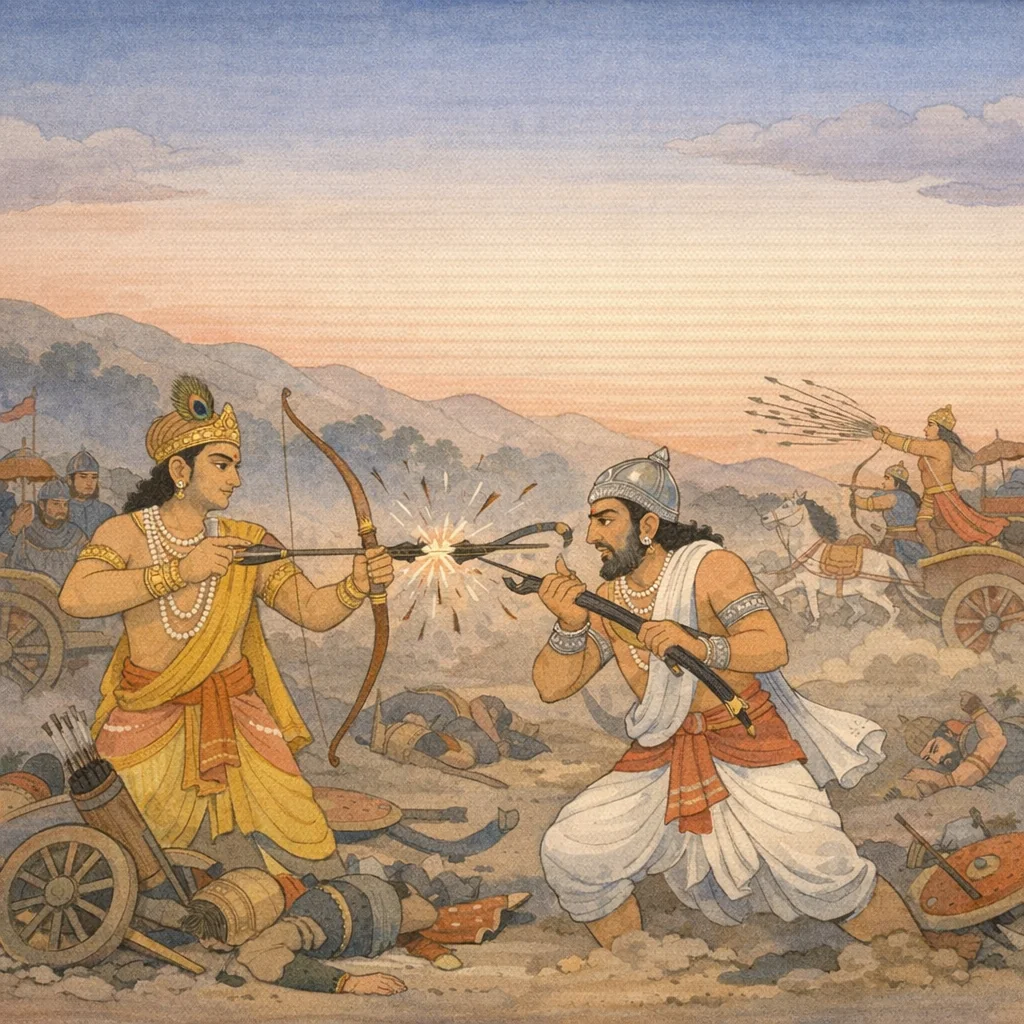
Saṃjaya reports Karṇa’s address to Śalya after hearing an unwelcome remark. Karṇa states that he understands Arjuna’s strength and Kṛṣṇa’s charioteering skill, yet intends to engage them without retreat. He then introduces a key thematic constraint: the burden of curses. Karṇa recalls approaching Rāma (Paraśurāma) in brāhmaṇa disguise to obtain divine weapons, the discovery of his true identity as a sūta, and the resulting curse that the acquired weapon-knowledge will fail him at the decisive time. He further recalls a brāhmaṇa’s pronouncement that his chariot wheel will sink or become trapped during combat, creating a specific operational vulnerability. Karṇa describes attempts at restitution through substantial gifts and appeals, but the brāhmaṇa refuses to retract the utterance, citing the dharmic obligation to preserve truthfulness. The chapter closes with Karṇa’s insistence on fearlessness toward opponents, while admitting fear of the brāhmaṇa’s truth-bound speech—thus framing late-war action as a convergence of valor, fate, and moral causality.
Chapter Arc: शंख-निनाद, गज-रथ-घोड़े और पदातियों के कोलाहल से रणभूमि उबल उठती है; विविध शस्त्र-वर्षा के बीच सेनाएँ आमने-सामने टूट पड़ती हैं। → तीक्ष्ण परशु, खड्ग, असि, पट्टिश और बाणों से रथ, अश्व, गज और योद्धा छिन्न-भिन्न होने लगते हैं। सूर्यपुत्र कर्ण इन्द्र-सदृश पराक्रम दिखाते हुए शिनि-वंश के वीर (सात्यकि) पर प्रचण्ड बाण-वर्षा करते हैं; उधर अर्जुन द्रोणपुत्र अश्वत्थामा और कृपाचार्य जैसे महारथियों के धनुष काटकर उनके रथ-घोड़े तक को शर-प्रहार से क्षत-विक्षत कर देता है। → अपराह्न के कृत्य पूर्ण कर केशव सहित अर्जुन का पुनः रण में प्रविष्ट होना और वहीं अर्जुन द्वारा अश्वत्थामा का धनुष छिन्न करना तथा कृप का भी उग्र धनुष काट देना—यह क्षण पाण्डव-बल की धार को निर्णायक रूप से प्रकट करता है, जबकि कर्ण का सात्यकि पर इन्द्रोपम आक्रमण युद्ध को चरम पर ले जाता है। → सूर्य अस्ताचल की ओर झुकता है; युद्ध का उपसंहार होता है। सेनाएँ लौटाई जाती हैं; पाण्डव-पक्ष में हर्ष का संचार होता है और वे रात्रि में शिविर को प्रस्थान कर विश्राम करते हैं। → रुद्र के क्रीडास्थल-से श्मशान-सदृश रणक्षेत्र में राक्षस, पिशाच और श्वापदों का झुण्ड उमड़ पड़ता है—रात्रि का भयावह, अपवित्र-सा सन्नाटा अगले अनिष्ट का संकेत देता है।
Shlokas
Verse 1
इस प्रकार श्रीमह्याभारत कर्णपर्वमें संकुल-युद्धाविषयक उनतीसवाँ अध्याय पूरा हुआ ॥/ २९ ॥ ऑपनआक्रात बछ। अर: त्रिशो&्थ्याय: सात्यकि और कर्णका युद्ध तथा अर्जुनके द्वारा कौरव- सेनाका संहार और पाण्डवोंकी विजय संजय उवाच ततः कर्ण पुरस्कृत्य त्वदीया युद्धदुर्मदा: । पुनरावृत्य संग्रामं चक्रुर्देवासुरोपमम्,संजय कहते हैं--राजन्! तदनन्तर आपके रणदुर्मद योद्धा कर्णको आगे करके पुनः लौटकर देवताओं और असुरोंके समान संग्राम करने लगे
Sañjaya said: “O King, thereafter your warriors—intoxicated with the pride of battle—placed Karṇa at their head, turned back once more, and engaged again in a conflict resembling that of gods and demons.”
Verse 2
द्विरदनररथाश्वशड्खशब्दै: परिहृषिता विविधैश्व शस्त्रपातै: | द्विदरथपदातिसादिसंघा: परिकुपिताभिमुखा: प्रजध्निरे ते,हाथी, मनुष्य, रथ, घोड़ों और शंखके शब्दोंसे अत्यन्त हर्ष और उत्साहमें भरे हाथीसवार, रथी, पैदल और घुड़सवारोंके समुदाय क्रोधपूर्वक सामना करते हुए नाना प्रकारके अस्त्र-शस्त्रोंका प्रहार करके एक-दूसरेको मारने लगे
Sañjaya said: Stirred to exhilaration by the clamour of elephants, men, chariots, horses, and conches, and driven on by the many kinds of weapon-strokes, the masses of elephant-riders, chariot-warriors, foot-soldiers, and horsemen—enraged and facing one another—fell upon each other and began to strike down their foes. The verse paints the ethical tragedy of war: collective excitement and anger overwhelm restraint, and violence becomes self-propelling through noise, momentum, and retaliation.
Verse 3
शितपरश्चधसासिपट्टिशै- रिषुभिरनेकविधैश्व सूदिता: । द्विरदरथहया महाहवे वरपुरुषै: पुरुषाश्न वाहनै:,उस महायुद्धमें श्रेष्ठ वीर पुरुषोंने वाहनों तथा तीखे फरसों, तलवारों, पट्टिशों और अनेक प्रकारके बाणोंद्वारा सवारोंसहित हाथियों, रथों, घोड़ों एवं पैदल मनुष्योंका संहार कर डाला
Sañjaya said: In that great battle, the foremost warriors wrought a fearful slaughter—cutting down elephants, chariots, horses, and foot-soldiers together with their riders—by means of keen axes, swords, spears (paṭṭiśas), and many kinds of arrows. The verse underscores the grim ethical weight of war: prowess and weapon-skill, when unleashed in a dharma-conflict, still culminate in mass destruction and suffering for all embodied beings involved.
Verse 4
कमलदिनकरेन्दुसंनि भै: सितदशनै: सुमुखाक्षिनासिक: । रुचिरमुकुटकुण्डलैर्मही पुरुषशिरोभिरुपस्तृता बभौ,उस समय नरमुण्डोंसे ढकी हुई रणभूमिकी अद्भुत शोभा हो रही थी। वीरोंके वे कटे हुए मस्तक कमल, सूर्य और चन्द्रमाके समान कान्तिमान् थे। उनके सफेद दाँत चमक रहे थे। उनके मुख, नेत्र और नासिकाएँ भी बड़ी सुन्दर थीं और वे मनोहर मुकुट तथा कुण्डलोंसे मण्डित थे
Sañjaya said: At that time the battlefield, strewn with human heads, assumed a strange and dreadful splendor. Those severed heads of warriors shone like lotuses, the sun, and the moon; their white teeth gleamed, their faces—with eyes and noses—still appeared fair, and they were adorned with charming crowns and earrings. The verse underscores the moral horror of war: even what is naturally beautiful becomes ethically unsettling when it is the ornament of slaughter.
Verse 5
परिघमुसलशक्तितोमरै- नखरभुशुण्डिगदाशतैहता: । द्विरदनरहया: सहस्रशो रुधिरनदीप्रवहास्तदाभवन्,उस समय परिघ, मूसल, शक्ति, तोमर, नखर, भुशुण्डी और गदाओंकी सौ-सौ चोटें खाकर हजारों हाथी, मनुष्य और घोड़े खूनकी नदी बहाने लगे
Sañjaya said: Then, struck down by hundreds of blows from iron clubs, pestles, spears, javelins, claw-like weapons, bhuśuṇḍīs, and maces, thousands upon thousands of elephants, men, and horses fell—until the battlefield seemed to pour forth streams like rivers of blood. The verse underscores the moral weight of war: when dharma collapses into unchecked violence, victory is purchased at the cost of immense, indiscriminate suffering.
Verse 6
प्रहतरथनरा श्वकुञ्जरं प्रतिभयदर्शनमुल्बणव्रणम् । तदहितहतमाबभौ बल॑ पितृपतिराष्ट्रमिव प्रजाक्षये,नष्ट हुए रथ, मनुष्य, घोड़े और हाथियोंसे भरी एवं शत्रुओंकी मारी हुई वह सेना गहरे आघातोंसे युक्त हो प्रलयकालमें यमराजके राज्यकी भाँति बड़ी भयंकर दिखायी देती थी
Verse 7
अथ तव नरदेव सैनिका- स््तव च सुता: सुरसूनुसंनिभा: । अमितबलपुर:सरा रणे कुरुवृषभा: शिनिपौत्रमभ्ययु:
Sañjaya said: Then, O king, your soldiers—and your sons, who shone like the sons of the gods—advanced into battle. Led by warriors of immeasurable strength, those foremost bulls among the Kurus charged toward the grandson of Śini. The verse underscores the momentum of war: pride in lineage and might drives the assault, even as the moral weight of fratricidal conflict hangs over the field.
Verse 8
नरदेव! तदनन्तर आपके सैनिक तथा देवकुमारोंके समान तेजस्वी कुरुकुलभूषण आपके पुत्र असंख्य सेना साथ लेकर रणभूमिमें शिनिपौत्र सात्यकिपर चढ़ आये ।। तदतिरुधिरभीममाबभौ पुरुषवराश्च॒रथद्विपाकुलम् । लवणजलसमुद्धतस्वनं बलमसुरामरसैन्यसप्र भम्,पैदल मनुष्यों, श्रेष्ठ घोड़ों, रथों और हाथियोंसे भरी और खारे पानीके समुद्रके समान भयंकर गर्जना करनेवाली वह सेना अत्यन्त रक्तरंजित होकर देवताओं और असुरोंकी सेनाके समान भयानक प्रतीत होती थी
Sañjaya said: “O king, thereafter your warriors—together with your sons, the radiant ornaments of the Kuru line, blazing like the sons of the gods—advanced on the battlefield against Śiniputra Sātyaki, bringing with them an innumerable host. That force appeared exceedingly dreadful, drenched in blood, crowded with excellent men, horses, chariots, and elephants; it roared like the salt ocean in upheaval, and seemed terrifying—like the armies of gods and demons locked in combat.”
Verse 9
सुरपतिसमविक्रमस्तत- स्त्रिदशवरावरजोपमं युधि । दिनकरकिरणप्रभै: पृषत्कै रवितनयो< भ्यहनच्छिनिप्रवीरम्,उस समय देवराज इन्द्रके समान पराक्रमी सूर्यपुत्र कर्णने युद्धस्थलमें इन्द्रके छोटे भाई उपेन्द्रके समान शक्तिशाली शिनिवंशके प्रमुख वीर सात्यकिको सूर्यकी किरणोंके समान तेजस्वी बाणोंद्वारा घायल कर दिया
Sañjaya said: Then Karṇa, the Sun’s son, whose prowess matched that of Indra, struck in battle the foremost hero of the Śini line—Sātyaki—who was like Upendra (Viṣṇu), the younger brother of the lord of the gods, wounding him with arrows blazing like the rays of the sun. The verse underscores the relentless escalation of martial force, where even renowned champions are subjected to injury amid the uncompromising ethics of battlefield duty.
Verse 10
तमपि सरथवाजिसारथिं शिनिवृषभो विविधै: शरैस्त्वरन् | भुजगविषसमप्रभै रणे पुरुषवरं समवास्तृणोत् तदा,तब शिनिवंशशिरोमणि सात्यकिने बड़ी उतावलीके साथ विषधर सर्पोंके समान विषैले नाना प्रकारके बाणोंद्वारा रथ, घोड़े और सारथिसहित नरश्रेष्ठ कर्णको भी आच्छादित कर दिया
Verse 11
शिनिवृषभशरैर्निपीडितं तव सुहृदो वसुषेणमभ्ययु: । त्वरितमतिरथा रथर्षभं द्विरदरथाश्व॒पदातिभि: सह
Sañjaya said: Your well-wishers, seeing Vasuṣeṇa (Karna) hard-pressed by the arrows of Śinivṛṣabha, swiftly advanced toward that bull among chariot-warriors. Those foremost fighters hurried in, accompanied by elephants, chariots, cavalry, and infantry—moving to uphold their ally amid the crisis of battle.
Verse 12
उस समय आपके हितैषी सुहृद् अतिरथी वीर वहाँ शिनिवंशशिरोमणि सात्यकिके शरोंसे अत्यन्त पीड़ित हुए महारथी कर्णके पास हाथी, घोड़े, रथ और पैदलोंकी चतुरंगिणी सेना साथ लेकर तुरंत आ पहुँचे ।। तदुदधिनिभमाद्रवद् बल॑ त्वरिततरै: समभिद्रुतं परै: । ट्रपदसुतमुखैस्तदा भवत् पुरुषरथाश्वगजक्षयो महान्,तत्पश्चात् धृष्टद्युम्न आदि शीघ्रकारी शत्रुओंने आपकी समुद्र-सदूश विशाल वाहिनीपर आक्रमण किया और आपकी सेना भी शत्रुओंकी ओर दौड़ी। फिर तो वहाँ मनुष्यों, रथों, घोड़ों और हाथियोंका महान् संहार होने लगा
Sañjaya said: Then your army, vast like the ocean, surged forward, while the enemy rushed in even more swiftly. Led by the sons of Drupada, a great destruction arose there—of men, chariots, horses, and elephants. The passage underscores the moral tragedy of war: once the massed forces collide, individual valor and counsel are swallowed by the momentum of violence, and the cost is borne by all ranks of life and strength.
Verse 13
अथ पुरुषवरौ कृताद्विकौ भवमभिपूज्य यथाविधि प्रभुम् । अरिवधकृतनिश्चयी द्रुतं तव बलमर्जुनकेशवौ सृतौ,तदनन्तर अपराह्नकालके कृत्य समाप्त करके विधिपूर्वक भगवान् शंकरकी पूजा करनेके पश्चात् नरश्रेष्ठ अर्जुन और श्रीकृष्ण शत्रुओंके वधका निश्चय करके तुरंत आपकी सेनापर चढ़ आये
Sañjaya said: Then those two foremost of men, having duly worshipped the Lord Bhava (Śiva) according to prescribed rites, and having firmly resolved upon the destruction of their foes, Arjuna and Keśava swiftly advanced against your army. The episode frames their martial action as proceeding from ritual propriety and deliberate intent, linking devotion and disciplined resolve to the ethics of war.
Verse 14
जलदनिनदनिःस्वनं रथं पवनविधूतपताककेतनम् । सितहयमुपयान्तमन्तिकं हृतमनसो ददृशुस्तदारय:,अर्जुनके रथसे मेघकी गर्जनाके समान गम्भीर ध्वनि हो रही थी, पवनकी प्रेरणा पाकर उसकी ऊँची पताका फहरा रही थी और उसमें श्वेत घोड़े जुते हुए थे। उस समय शत्रुओंने उत्साहशून्य हृदयसे उस रथको समीप आते देखा
Sañjaya said: Then the foes, their hearts drained of spirit, saw Arjuna’s chariot drawing near—its sound deep as the rumbling of thunderclouds, its lofty banner and ensign whipped by the wind, and its team of white horses shining as it advanced. The verse underscores how righteous resolve and disciplined prowess can unnerve an aggressor even before weapons strike, as morale collapses in the face of an approaching, well-ordered force.
Verse 15
अथ विस्फार्य गाण्डीवं रथे नृत्यन्निवार्जुन: । शरसम्बाधमकरोत् खं दिश: प्रदिशस्तथा,इसके बाद रथपर नृत्य करते हुए-से अर्जुनने गाण्डीव धनुषको फैलाकर आकाश, दिशा और विदिशाओंको बाणोंसे भर दिया
Sañjaya said: Then Arjuna, as though dancing upon his chariot, drew his Gāṇḍīva to its full stretch and so choked the sky—along with all the directions and intermediate quarters—with a dense shower of arrows. The scene underscores disciplined martial prowess used in the service of a vowed cause, where skill and resolve become instruments of duty amid the chaos of war.
Verse 16
रथान् विमानप्रतिमान् मज्जयन् सायुधध्वजान् । स सारथींस्तदा बाणैरभ्राणीवानिलोडवधीत्,जैसे वायु मेघोंकी घटाको छिन्न-भिन्न कर देती है, उसी प्रकार उस समय अर्जुनने अपने बाणोंद्वारा विमान-जैसे रथोंको आयुध, ध्वज और सारथियोंसहित नष्ट कर दिया
Sañjaya said: At that time Arjuna, like the wind that shatters masses of clouds, destroyed with his arrows those chariots that looked like aerial cars—sinking them and cutting them down together with their weapons, banners, and charioteers. The verse underscores the relentless, impersonal force of battle, where skill and resolve can erase even splendid war-machines and their crews in an instant.
Verse 17
गजान् गजप्रयन्तृश्च वैजयन्त्यायुधध्वजान् | सादिनो<श्चांश्व पत्तींश्ष शरैनिन्यि यमक्षयम्
Sañjaya said: With his arrows he sent to Yama’s abode elephants and their drivers, warriors bearing the vaijayantī standards and weapons, as well as horsemen, horses, and foot-soldiers—cutting them down in the relentless course of battle.
Verse 18
उन्होंने अपने तीखे बाणोंसे पताका, ध्वज और आयुधोंसहित गजों एवं गजारोहियोंको, घोड़ों और घुड़सवारोंको तथा पैदल मनुष्योंको भी यमलोक भेज दिया ।। तमन्तकमिव क्रुद्धमनिवार्य महारथम् | दुर्योधनो5भ्ययादेको निघ्नन् बाणैरजिह्दगै:,इस प्रकार क्रोधमें भरे हुए यमराजके समान अबाध गतिवाले महारथी अर्जुनपर सीधे जानेवाले बाणोंसे प्रहार करता हुआ अकेला दुर्योधन उनका सामना करनेके लिये गया
Sañjaya said: Like Death himself in wrath—an irresistible great chariot-warrior—Duryodhana advanced alone to confront Arjuna, striking him with arrows that flew straight to their mark. In that onrush, his keen shafts sent elephants with their riders, horses with their horsemen, and foot-soldiers—along with standards, banners, and weapons—down the path to Yama’s realm.
Verse 19
तस्यार्जुनो धनु: सूतमश्वान् केतुं च सायकै: । हत्वा सप्तभिरेकेन छत्र॑ चिच्छेद पत्रिणा,अर्जुनने सात बाणोंसे दुर्योधनके धनुष, सारथि, घोड़ों और ध्वजको नष्ट करके एक बाणसे उसका छत्र भी काट डाला
Sañjaya said: Then Arjuna, with his arrows, struck down Duryodhana’s bow, his charioteer, his horses, and his banner; and with a single feathered shaft he also severed his parasol. The act is a battlefield demonstration of mastery and dominance—disabling the enemy’s means of combat and publicly diminishing his royal insignia—yet it remains within the warrior-code logic of the Kurukṣetra war, where skill is used to neutralize threat and break morale.
Verse 20
नवमं च समाधाय व्यसृजत् प्राणघातिनम् | दुर्योधनायेषुवरं त॑ द्रौणि: सप्तधाच्छिनत्,फिर नवें प्राणघातक बाणको धनुषपर रखकर उन्होंने दुर्योधनकी ओर चला दिया; परंतु अश्वत्थामाने उस उत्तम बाणके सात टुकड़े कर डाले
Sañjaya said: Having fitted a ninth, life-destroying arrow, he released that excellent missile toward Duryodhana. But Aśvatthāman, the son of Droṇa, cut that superb arrow into seven pieces—an act that both protects his side and intensifies the ruthless momentum of the battle.
Verse 21
ततो द्रौणेर्धनुश्छित्त्वा हत्वा चाश्वरथान् शरै: | कृपस्यापि तदत्युग्रं धनुश्चिच्छेद पाण्डव:,तब पाण्डुकुमार अर्जुनने अश्वत्थामाका धनुष काटकर उसके रथ और घोड़ोंको नष्ट करके अपने बाणोंद्वारा कृपाचार्यके अत्यन्त भयंकर धनुषको भी खण्डित कर दिया
Sañjaya said: Then the Pāṇḍava (Arjuna), having cut down Droṇa’s son’s bow and having slain his horses and chariot with arrows, also shattered the exceedingly formidable bow of Kṛpa. The scene underscores Arjuna’s disciplined mastery in battle—neutralizing weapons and mobility to restrain the enemy’s capacity for harm rather than indulging in mere slaughter.
Verse 22
हार्दिक्यस्य धनुश्शछित्त्वा ध्वजं चाश्वांस्तदावधीत् । दुःशासनस्येष्वसनं छित्त्वा राधेयम भ्ययात्,इसके बाद उन्होंने कृतवर्माका धनुष काटकर उसके ध्वज और घोड़ोंको भी तत्काल नष्ट कर दिया। फिर दुःशासनके धनुषके टुकड़े-टुकड़े करके राधापुत्र कर्णपर आक्रमण किया
Verse 23
अथ सात्यकिमुत्सृज्य त्वरन् कर्णोडर्जुन त्रिभि: | विद्ध्वा विव्याध विंशत्या कृष्णं पार्थ पुन: पुन:,तदनन्तर कर्णने सात्यकिको छोड़कर अर्जुनको तीन बाणोंसे बींध डाला। फिर बीस बाण मारकर श्रीकृष्णको भी घायल कर दिया। इस प्रकार वह दोनोंको बारंबार चोट पहुँचाने लगा
Sañjaya said: Then Karṇa, leaving Sātyaki aside and acting with haste, pierced Arjuna with three arrows. Thereafter he struck Kṛṣṇa with twenty arrows as well. Thus, in the fury of battle, he repeatedly wounded both charioteer and warrior—an image of how war’s momentum drives even the greatest heroes into relentless violence, where skill and resolve eclipse gentler restraints.
Verse 24
न ग्लानिरासीत् कर्णस्य क्षिपतः सायकान् बहून् । रणे विनिघ्नतः शत्रून् क्ुद्धस्येव शतक्रतो:,उस समय कर्ण क्रोधमें भरे हुए इन्द्रके समान रणभूमिमें बहुत-से बाणोंकी वर्षा करके शत्रुओंका संहार कर रहा था; परंतु उसे इस कार्यमें तनिक भी क्लेश अथवा थकावटका अनुभव नहीं होता था
Sañjaya said: As Karṇa, like Indra in wrath, showered countless arrows and struck down enemies on the battlefield, no fatigue or strain arose in him at all. The verse underscores the terrifying momentum of a warrior’s prowess in war—power that, while effective in destruction, also hints at the peril of anger-driven combat.
Verse 25
अथ सात्यकिरागत्य कर्ण विद्ध्वा शितै: शरै: । नवत्या नवभिश्नोग्रै: शतेन पुनरार्पयत्
Sañjaya said: Then Sātyaki came forward and, piercing Karṇa with sharp arrows, repaid him again—striking with ninety-nine fierce shafts and then with a full hundred more. The verse underscores the relentless reciprocity of violence in battle, where prowess is measured by endurance and counterstroke rather than restraint.
Verse 26
फिर सात्यकिने भी लौटकर कर्णको तीखे बाणोंसे घायल करके पुनः उसे एक सौ निन्यानबे भयंकर बाण मारे ।। ततः प्रवीरा: पार्थानां सर्वे कर्णममपीडयन् । युधामन्यु: शिखण्डी च द्रौपदेया: प्रभद्रका:,इसके बाद दुन्तीपुत्रोंकी सेनाके सभी प्रमुख वीर कर्णको पीड़ा देने लगे। युधामन्यु, शिखण्डी, द्रौपदीके पाँचों पुत्र, प्रभद्रकगण, उत्तमौजा, युयुत्सु, नकुल-सहदेव, धृष्टद्युम्न, चेदि, कारूष, मत्स्य और केकय देशोंकी सेनाएँ, बलवान् चेकितान तथा उत्तम व्रतका पालन करनेवाले धर्मराज युधिष्ठटिर--ये भयंकर पराक्रम प्रकट करनेवाले रथी, घुड़सवार, हाथीसवार और पैदल सैनिकोंद्वारा रणभूमिमें कर्णको चारों ओरसे घेरकर उसके ऊपर नाना प्रकारके अस्त्र-शस्त्रोंकी वर्षा करने लगे। सभी भयंकर वचन बोलते हुए वहाँ कर्णके वधका निश्चय कर चुके थे
Sañjaya said: Sātyaki, turning back once more, struck Karṇa with sharp arrows and then showered him again with one hundred and nineteen dreadful shafts. Thereupon all the foremost warriors on the side of the sons of Pāṇḍu pressed Karṇa hard—Yudhāmanyu, Śikhaṇḍin, the five sons of Draupadī, the Prabhadrakas, Uttamaujā, Yuyutsu, Nakula and Sahadeva, Dhṛṣṭadyumna, the Cedis, the Kārūṣas, and the forces of the Matsyas and Kekayas, along with the mighty Cekitāna and Dharma-rāja Yudhiṣṭhira, steadfast in his vows. Charioteers, horsemen, elephant-riders, and foot-soldiers encircled Karṇa on every side on the battlefield and rained upon him diverse weapons and missiles. Speaking fierce words, they stood resolved upon Karṇa’s death—an image of war’s collective momentum, where many seek to end a single formidable foe, and the ethical tension between necessity in battle and the hardening of hearts becomes palpable.
Verse 27
उत्तमौजा युयुत्सुश्न यमौ पार्षत एव च | चेदिकारूषमत्स्यानां केकयानां च यद् बलम्,इसके बाद दुन्तीपुत्रोंकी सेनाके सभी प्रमुख वीर कर्णको पीड़ा देने लगे। युधामन्यु, शिखण्डी, द्रौपदीके पाँचों पुत्र, प्रभद्रकगण, उत्तमौजा, युयुत्सु, नकुल-सहदेव, धृष्टद्युम्न, चेदि, कारूष, मत्स्य और केकय देशोंकी सेनाएँ, बलवान् चेकितान तथा उत्तम व्रतका पालन करनेवाले धर्मराज युधिष्ठटिर--ये भयंकर पराक्रम प्रकट करनेवाले रथी, घुड़सवार, हाथीसवार और पैदल सैनिकोंद्वारा रणभूमिमें कर्णको चारों ओरसे घेरकर उसके ऊपर नाना प्रकारके अस्त्र-शस्त्रोंकी वर्षा करने लगे। सभी भयंकर वचन बोलते हुए वहाँ कर्णके वधका निश्चय कर चुके थे
Sañjaya said: “Uttamaujā, Yuyutsu, the twin sons (Nakula and Sahadeva), and Pārṣata (Dhṛṣṭadyumna) as well—together with the forces of the Cedis, the Kāruṣas, the Matsyas, and the Kekayas—closed in. In that surge of allied strength, the foremost warriors of the Pāṇḍavas pressed Karṇa from every side, intent on bringing him down, showering him with weapons and harsh battle-cries.”
Verse 28
चेकितानश्न बलवान् धर्मराजश्न सुब्रत: । एते रथाश्रद्धिरदै: पत्तिभिक्षोग्रविक्रमै:,इसके बाद दुन्तीपुत्रोंकी सेनाके सभी प्रमुख वीर कर्णको पीड़ा देने लगे। युधामन्यु, शिखण्डी, द्रौपदीके पाँचों पुत्र, प्रभद्रकगण, उत्तमौजा, युयुत्सु, नकुल-सहदेव, धृष्टद्युम्न, चेदि, कारूष, मत्स्य और केकय देशोंकी सेनाएँ, बलवान् चेकितान तथा उत्तम व्रतका पालन करनेवाले धर्मराज युधिष्ठटिर--ये भयंकर पराक्रम प्रकट करनेवाले रथी, घुड़सवार, हाथीसवार और पैदल सैनिकोंद्वारा रणभूमिमें कर्णको चारों ओरसे घेरकर उसके ऊपर नाना प्रकारके अस्त्र-शस्त्रोंकी वर्षा करने लगे। सभी भयंकर वचन बोलते हुए वहाँ कर्णके वधका निश्चय कर चुके थे
Sañjaya said: “The mighty Cekitāna and Dharmarāja Yudhiṣṭhira, steadfast in his vows—along with these chariot-warriors, horsemen, and foot-soldiers of fierce prowess—pressed in upon Karṇa.” In the ethical frame of the epic, the verse underscores how, when the battle’s momentum turns, even renowned heroes become subject to collective martial pressure; prowess and resolve, rather than mere status, determine the immediate course of events.
Verse 29
परिवार्य रणे कर्ण नानाशस्त्रैरवाकिरन् | भाषन्तो वाम्भिरुग्राभि: सर्वे कर्णवधे धृता:,इसके बाद दुन्तीपुत्रोंकी सेनाके सभी प्रमुख वीर कर्णको पीड़ा देने लगे। युधामन्यु, शिखण्डी, द्रौपदीके पाँचों पुत्र, प्रभद्रकगण, उत्तमौजा, युयुत्सु, नकुल-सहदेव, धृष्टद्युम्न, चेदि, कारूष, मत्स्य और केकय देशोंकी सेनाएँ, बलवान् चेकितान तथा उत्तम व्रतका पालन करनेवाले धर्मराज युधिष्ठटिर--ये भयंकर पराक्रम प्रकट करनेवाले रथी, घुड़सवार, हाथीसवार और पैदल सैनिकोंद्वारा रणभूमिमें कर्णको चारों ओरसे घेरकर उसके ऊपर नाना प्रकारके अस्त्र-शस्त्रोंकी वर्षा करने लगे। सभी भयंकर वचन बोलते हुए वहाँ कर्णके वधका निश्चय कर चुके थे
Sañjaya said: In the thick of battle, surrounding Karṇa on every side, they showered him with weapons of many kinds. Speaking harsh and terrifying words, all of them were resolved upon Karṇa’s death. The scene underscores the war’s grim momentum: collective resolve and wrath eclipse restraint, and the battlefield becomes a place where vows of victory harden into vows of killing.
Verse 30
तां शस्त्रवृष्टिं बहुधा कर्णश्छित्त्वा शितै: शरै: । अपोवाहास्त्रवीर्येण द्रुमं भड़क्त्वेव मारुत:,जैसे प्रचण्ड वायु वृक्षको तोड़कर गिरा देती है, उसी प्रकार कर्ण अपने तीखे बाणोंसे शत्रुओंकी उस शस्त्रवर्षोको बहुधा छिलन्न-भिन्न करके अपने अस्त्रबलसे दूर हटा दिया इति श्रीमहाभारते कर्णपर्वणि प्रथमे युद्धदिवसे त्रिंशो5ध्याय:
Sañjaya said: Karṇa, repeatedly cutting that shower of weapons to pieces with his keen arrows, swept it away by the power of his missiles—just as a violent wind breaks a tree and casts it down. The verse highlights martial mastery used to neutralize an oncoming assault, portraying force and skill as decisive in the ethics of battlefield survival.
Verse 31
रथिन: समहामात्रान् गजानश्वान् ससादिन: । पत्तिव्रातांश्व संक्रुद्धो निध्नन् कर्णो व्यदृश्यत,क्रोधमें भरा हुआ कर्ण रथियों, महावतोंसहित हाथियों, सवारोंसहित घोड़ों तथा पैदलसमूहोंका वध करता देखा जा रहा था
Sañjaya said: Enraged, Karṇa was seen cutting down chariot-warriors, elephants along with their great commanders (mahāmātras), horses together with their riders, and masses of infantry. The scene underscores how wrath, once unleashed in battle, turns prowess into indiscriminate destruction, eclipsing restraint and compassion.
Verse 32
तद् वध्यमानं पाण्डूनां बल॑ कर्णास्त्रतेजसा । विशस्त्रपत्रदेहासु प्राय आसीत् पराड्मुखम्,कर्णके अस्त्रोंके तेजसे मारी जाती हुई पाण्डवोंकी सेना शस्त्र, वाहन, शरीर और प्राणोंसे रहित हो प्रायः रणभूमिसे विमुख होकर भाग चली
Sañjaya said: Struck down by the blazing power of Karṇa’s missiles, the Pāṇḍavas’ army—bereft of weapons, armor, and even bodily strength—was for the most part turned away from the battlefield, fleeing in disarray. The scene underscores how, in war, prowess and weapon-might can shatter morale and order, driving men from their duty when fear overwhelms resolve.
Verse 33
अथ कणंस्त्रिमस्त्रेण प्रतिहत्यार्जुन: स्मयन् । दिशं खं चैव भूमिं च प्रावृणोच्छरवृष्टिभि:,तब अर्जुनने मुसकराते हुए अपने अस्त्रसे कर्णके अस्त्रको नष्ट करके बाणोंकी वर्षद्वारा आकाश, दिशा और पृथ्वीको आच्छादित कर दिया
Sañjaya said: Then Arjuna, smiling, countered Karṇa’s missile with his own weapon; and with a rain of arrows he veiled the directions, the sky, and the earth—displaying mastery in battle while intensifying the fearful momentum of the war.
Verse 34
मुसलानीव सम्पेतु: परिघा इव चेषव: । शतघ्न्य इव चाप्यन्ये वज्ाण्युग्राणि चापरे,उनके कुछ बाण मूसलोंके समान गिरते थे, कुछ परिघोंके समान, कुछ शतघ्नियोंके तुल्य तथा कुछ दूसरे बाण भयंकर वच्रोंके समान शत्रुओंपर पड़ते थे
Sañjaya said: The arrows flew in and struck like heavy clubs; some crashed like iron bars, others like spiked missiles, and still others fell upon the foes like fierce thunderbolts—an image of war’s brutal force where skill and wrath turn weapons into instruments of overwhelming destruction.
Verse 35
तैर्वध्यमानं तत् सैन्यं सपत्त्यश्चरथद्विपम् । निमीलिताक्षमत्यर्थ बश्राम च ननाद च,उन बाणोंसे हताहत होती हुई पैदल, घोड़े, रथ और हाथियोंसे युता कौरव-सेना आँख मूँदकर जोर-जोरसे चिल्लाने और चक्कर काटने लगी
Sañjaya said: Struck down by those arrows, that army—together with its foot-soldiers and its forces of chariots and elephants—shut its eyes in terror; it reeled about in confusion and cried out loudly. The scene conveys how violence on the battlefield rapidly dissolves order and composure, reducing even a disciplined host to panic and disarray.
Verse 36
निष्कैवल्यं तदा युद्ध प्रापुरश्चनरद्धिपा: । हन्यमाना: शरैरार्तास्तदा भीता: प्रदुद्रुवु:,उस समय घोड़े, हाथी और मनुष्योंको ऐसा युद्ध प्राप्त हुआ, जिसमें मृत्यु निश्चित है। उन सब लोगोंपर जब बाणोंकी मार पड़ने लगी, तब वे सब-के-सब आर्त और भयभीत होकर भाग चले
Sanjaya said: At that time the warriors met with a battle that offered no escape—one in which death was all but certain. As they were struck down by volleys of arrows, they became anguished and terrified, and they fled in disorder.
Verse 37
त्वदीयानां तदा युद्धे संसक्तानां जयैषिणाम् | गिरिमस्तं समासाद्य प्रत्यपद्यत भानुमान्,इस प्रकार जब आपके विजयाभिलाषी सैनिक युद्धमें संलग्न हो रहे थे, उसी समय सूर्यदेव अस्ताचल पहुँचकर डूब गये
Sañjaya said: Just then, while your men—eager for victory—were locked in the thick of battle, the Sun reached the mountain of setting and withdrew from sight. The day’s end fell upon the fighting, marking a natural limit that interrupts human ambition and reminds all warriors that even the fiercest contest is bounded by time and cosmic order.
Verse 38
तमसा च महाराज रजसा च विशेषत: । न किंचित् प्रत्यपश्याम शुभं वा यदि वाशुभम्
Sañjaya said: “O great king, enveloped by darkness—and, above all, by the turbulence of passion and dust—we could perceive nothing at all, whether auspicious or inauspicious.”
Verse 39
महाराज! उस समय अन्धकार और विशेषत: धूलसे सब कुछ आच्छादित होनेके कारण हमलोग किसी भी शुभ या अशुभ वस्तुको देख नहीं पाते थे ।। ते त्रसन्तो महेष्वासा रात्रियुद्धस्य भारत । अपयानं ततश्नक्रुः सहिता: सर्वयोधिभि:,भारत! वे महाथनुर्धर योद्धा रात्रियुद्धसे डरते थे। इसलिये समस्त सैनिकोंके साथ उन्होंने वहाँसे शिविरको प्रस्थान कर दिया
Sañjaya said: O King, at that time darkness—made worse by the choking dust—covered everything, so that we could not discern any sign, auspicious or inauspicious. Then those great bowmen, frightened of fighting by night, withdrew; accompanied by all their warriors, they turned back and departed toward the camp. The scene underscores how fear and confusion in war can eclipse judgment, and how the loss of clear perception becomes itself a decisive force on the battlefield.
Verse 40
कौरवेष्वपयातेषु तदा राजन् दिनक्षये । जयं सुमनस: प्राप्य पार्था: स्वशिबिरं ययु:,राजन! दिनके अन्तमें कौरवोंके हट जानेपर पाण्डव भी विजय पाकर प्रसन्नचित्त हो भाँति-भाँतिके बाजोंकी आवाज, सिंहनाद और गर्जनाके द्वारा शत्रुओंका उपहास और श्रीकृष्ण तथा अर्जुनकी स्तुति करते हुए अपने शिविरको लौट गये
Sanjaya said: O King, when day was ending and the Kauravas had withdrawn, the sons of Pṛthā—having gained victory and becoming glad at heart—returned to their own camp. With varied sounds of instruments, lion-roars, and thunderous shouts, they mocked the enemy and offered praise to Kṛṣṇa and Arjuna, exulting in the day’s success.
Verse 41
वादित्रशब्दैर्विविधै: सिंहनादै: सगर्जिति: । परानुपहसन्तश्न स्तुवन्तश्नाच्युतार्जुनी,राजन! दिनके अन्तमें कौरवोंके हट जानेपर पाण्डव भी विजय पाकर प्रसन्नचित्त हो भाँति-भाँतिके बाजोंकी आवाज, सिंहनाद और गर्जनाके द्वारा शत्रुओंका उपहास और श्रीकृष्ण तथा अर्जुनकी स्तुति करते हुए अपने शिविरको लौट गये
Sañjaya said: O King, when the day drew to its close and the Kauravas had withdrawn, the Pāṇḍavas too—having gained the advantage—returned to their camp with hearts uplifted. With the varied sounds of instruments, with lion-roars and thunderous shouts, they mocked the enemy’s retreat and offered praise to Kṛṣṇa (Acyuta) and Arjuna, affirming that victory is sustained not only by force but by steadfast leadership and devoted unity.
Verse 42
कृतेड्वहारे तैवीरै: सैनिका: सर्व एव ते । आशीर्वाच: पाण्डवेषु प्रायुड्जन्त नरेश्वरा:,उन वीरोंके द्वारा युद्धका उपसंहार कर दिये जानेपर समस्त सैनिक और नरेश पाण्डवोंको आशीर्वाद देने लगे
Sañjaya said: When those heroes had brought the fighting to its close, all the soldiers and the kings began to pronounce blessings upon the Pāṇḍavas. In the wake of a hard-won lull in violence, the narrative underscores a moral reflex within the warrior community: recognition of valor and rightful conduct, and a turning of speech from hostility to auspicious benediction.
Verse 43
ततः कृतेडवहारे च प्रह्ृष्टास्तत्र पाण्डवा: । निशायां शिबिरं गत्वा न्यवसन्त नरेश्वरा:,इस प्रकार सैनिकोंके लौटा लिये जानेपर हर्षमें भरे हुए पाण्डव-पक्षीय नरेश रातको शिविरमें जाकर सो रहे
Sañjaya said: Then, when the matter had been settled and the troops had been withdrawn, the Pāṇḍava-aligned kings there were filled with joy. Going to their camp at night, those rulers took rest—signaling a brief pause in the violence and a momentary restoration of order amid the moral strain of war.
Verse 44
ततो रक्ष: पिशाचाश्न श्वापदाश्षैव संघश: । जग्मुरायोधन घोर रुद्रस्याक्रीडसंनिभम्,तदनन्तर रुद्रके क्रीडास्थल (श्मशान)-सदृश उस भयंकर युद्धभूमिमें राक्षस, पिशाच और झुंड-के-झुंड हिंसक जीव-जन्तु जा पहुँचे
Sañjaya said: Thereafter, hosts of rākṣasas and piśācas, along with packs of wild beasts, made their way to that dreadful battlefield—like the very playground of Rudra. The scene underscores how war, when it turns into indiscriminate slaughter, becomes akin to a cremation-ground spectacle, drawing in forces and creatures that thrive on death and terror.
Frequently Asked Questions
The dilemma concerns acquiring sacred martial knowledge through deception (brāhmaṇa disguise) and the resulting ethical consequence: a curse that weapon-knowledge will not function at the critical time, showing the cost of adharma even when pursued for power or security.
The chapter teaches that agency and valor operate within moral causality: past actions and truth-bound speech can structure future outcomes, and strategic confidence must account for ethical and karmic constraints.
No explicit phalaśruti is stated; however, the brāhmaṇa’s refusal to retract his utterance functions as implicit meta-commentary on satya-dharma—truthfulness is portrayed as socially and cosmically binding, shaping the chapter’s interpretive frame.