Adhyaya 10
Adhyāya 10: Śrutakarmā’s Engagements; Prativindhya–Citra Duel; Drauṇi Advances toward Bhīma
Upa-parva: Karṇa-parva — Battlefield Engagements and Commander-Phase Episodes (Adhyāya 10 context unit)
Saṃjaya reports a sequence of tightly linked battlefield engagements. Śrutakarmā strikes King Citraseṇa with concentrated volleys; Abhisāra counters by wounding Śrutakarmā and his charioteer. Śrutakarmā retaliates with a precise nārāca to a vital point; Śrutakīrti adds suppressive fire, and Citraseṇa briefly recovers to cut Śrutakarmā’s bow. Śrutakarmā re-arms, visually described as adorned by arrows, then absorbs a chest wound yet regains initiative by severing the enemy’s bow and saturating him with nārācas; he finally decapitates the opponent with a bhalla, prompting Citraseṇa’s troops to surge and then break under Śrutakarmā’s counter-pressure. The focus then shifts: Prativindhya and Citra exchange bow-breaking and missile throws; a hurled śakti is split mid-flight, a gadā strike destroys Prativindhya’s chariot team, and a returned śakti disables Prativindhya’s right arm. Prativindhya answers with a hema-bhūṣita tomara that pierces Citra’s defenses and heart, causing his fall and triggering a surrounding attack that Prativindhya disperses with dense arrow-net tactics. The chapter closes by announcing a new major engagement as Drauṇi (Aśvatthāman) advances toward Bhīmasena, likened to a mythic-scale clash, signaling escalation and transition.
Chapter Arc: कौरव-बल का समुद्र-सा विस्तार ‘द्रवमाण’ हो उठा है; उसी क्षण पार्थ अपने भ्राताओं से घिरा, व्यूह रचकर सेना को थाम लेता है—मानो डूबते दिन में भी युद्ध की ज्योति बुझने न पाए। → दुर्योधन अपनी बिखरती सेना को देखकर पौरुष से उसे रोकता है और संध्या-काल के निकट आते-आते दोनों पक्षों में पुनर्संयोजन, प्रत्याहार और अगले दिन के लिए निर्णायक नेतृत्व की खोज तेज हो जाती है। पुराने घाव—भीष्म-वध में शिखण्डी का अग्र-स्थापन—फिर उभरते हैं और कर्ण के मन में अर्जुन-विरोध की ज्वाला को हवा देते हैं। → दुर्योधन ‘कालचोदित’ होकर राधेय कर्ण का सेनापति-पद पर अभिषेक करता है; समस्त कौरव-राजा स्कन्द-सेनापति की भाँति उसका सत्कार करते हैं—यह क्षण कौरव पक्ष के लिए अंतिम आशा का ध्वज बन जाता है। → कर्ण के सेनापति बनते ही कौरव-शिविर में अनुशासन, नीति-विचार और उपायों (चार उपायों का स्मरण) की चर्चा संगठित होती है; संध्या के साथ युद्ध-स्थल शांत होता है, पर अगले दिन के लिए प्रतिज्ञाएँ और लक्ष्य कठोर हो जाते हैं। → रात्रि के आवरण में प्रश्न लटकता है—कर्ण की सेनापत्य-शक्ति क्या सचमुच अर्जुन-कृष्ण के रथ को रोक पाएगी, या यह अभिषेक केवल नियति की अंतिम औपचारिकता है?
Shlokas
Verse 1
इस प्रकार श्रीमह्ााभारत कर्णपर्वमें धृतराष्ट्रका प्रश्रविषयक नवाँ अध्याय पूरा हुआ ॥/ ९ ॥ हि. 57. 8-22. बछ। ््ज्टस:, दशमो< ध्याय: कर्णको सेनापति बनानेके लिये अभ्रृत्थामाका प्रस्ताव और सेनापतिके पदपर उसका अभिषेक संजय उवाच हते द्रोणे महेष्वासे तस्मिन्नहनि भारत । कृते च मोघसंकल्पे द्रोणपुत्रे महारथे,संजयने कहा--भरतनन्दन महाराज! उस दिन जब महाथनुर्धर द्रोणाचार्य मारे गये, महारथी द्रोणपुत्रका संकल्प व्यर्थ हो गया और समुद्रके समान विशाल कौरव-सेना भागने लगी, उस समय कुन्तीकुमार अर्जुन अपनी सेनाका व्यूह बनाकर अपने भाइयोंके साथ रणभूमिमें डटे रहे
Sanjaya said: O descendant of Bharata, on that day when Droṇa—the great archer—had been slain, and when the resolve of Droṇa’s son, the mighty chariot-warrior, had come to nothing, the Kaurava host—vast as the ocean—began to break and flee. At that moment, Kuntī’s son Arjuna, having arrayed his forces in battle-formation, stood firm on the field together with his brothers.
Verse 2
द्रवमाणे महाराज कौरवाणां बलार्णवे । व्यूह पार्थ: स्वकं सैन्यमतिष्ठद् भ्रातृभिर्वृतः,संजयने कहा--भरतनन्दन महाराज! उस दिन जब महाथनुर्धर द्रोणाचार्य मारे गये, महारथी द्रोणपुत्रका संकल्प व्यर्थ हो गया और समुद्रके समान विशाल कौरव-सेना भागने लगी, उस समय कुन्तीकुमार अर्जुन अपनी सेनाका व्यूह बनाकर अपने भाइयोंके साथ रणभूमिमें डटे रहे
Sañjaya said: O great king, when the ocean-like host of the Kauravas was breaking and streaming away in flight, Pārtha (Arjuna) stood firm on the battlefield, having arrayed his own troops in a battle-formation, surrounded by his brothers. The verse highlights steadiness and disciplined leadership amid the moral and psychological collapse that follows a decisive turn in war.
Verse 3
तमवस्थितमाज्ञाय पुत्रस्ते भरतर्षभ । विद्रुतं स्वबलं दृष्टवा पौरुषेण न्न्यवारयत्,भरतश्रेष्ठ! उन्हें युद्धके लिये डटा हुआ जान आपके पुत्रने अपनी सेनाको भागती देख उसे पराक्रमपूर्वक रोका
Sañjaya said: Knowing him to be standing firm, O bull among the Bharatas, your son—seeing his own troops in flight—checked them with manly valor, restraining their retreat and rallying them again for battle. The moment underscores a kṣatriya leader’s duty to steady wavering forces and prevent panic from becoming moral collapse on the battlefield.
Verse 4
स्वमनीकमवस्थाप्य बाहुवीर्यमुपाश्रित: । युद्ध्वा च सुचिरं काल॑ पाण्डवै: सह भारत,भारत! इस प्रकार अपनी सेनाको स्थापित करके, जिन्हें अपना लक्ष्य प्राप्त हो गया था और इसीलिये जो बड़े हर्षके साथ परिश्रमपूर्वक युद्ध कर रहे थे, उन विपक्षी पाण्डवोंके साथ दुर्योधनने अपने ही बाहुबलके भरोसे दीर्घकालतक युद्ध करके संध्याकाल आनेपर सैनिकोंको शिविरमें लौटनेकी आज्ञा दे दी
Sañjaya said: Having arrayed his own division of troops and relying on the strength of his own arms, Duryodhana fought for a long time together with the Pāṇḍavas, O Bhārata. (In context, as evening approached after prolonged and strenuous combat, he ordered the soldiers to withdraw to the camp.)
Verse 5
लब्धलक्ष्यै: परै्ष्टि््यायच्छद्धिश्चिरं तदा । संध्याकालं समासाद्य प्रत्याहारमकारयत्,भारत! इस प्रकार अपनी सेनाको स्थापित करके, जिन्हें अपना लक्ष्य प्राप्त हो गया था और इसीलिये जो बड़े हर्षके साथ परिश्रमपूर्वक युद्ध कर रहे थे, उन विपक्षी पाण्डवोंके साथ दुर्योधनने अपने ही बाहुबलके भरोसे दीर्घकालतक युद्ध करके संध्याकाल आनेपर सैनिकोंको शिविरमें लौटनेकी आज्ञा दे दी
Sañjaya said: Then, after a long spell of fighting—while the opposing warriors, having found their mark, strove with heightened zeal—Duryodhana, relying on his own might, continued the battle until evening. When twilight arrived, he ordered the troops to withdraw and return to camp. The verse underscores the war’s relentless momentum and the commander’s responsibility to regulate violence by ending combat at day’s close.
Verse 6
कृत्वावहारं सैन्यानां प्रविश्य शिबिरं स्वकम् | कुरव: सुहितं मन्त्र मन्त्रयाउचक्रिरे मिथ:,सेनाको लौटाकर अपने शिविरमें प्रवेश करनेके पश्चात् समस्त कौरव परस्पर अपने हितके लिये गुप्त मन्त्रणा करने लगे
Sañjaya said: After withdrawing their forces and entering their own camp, the Kauravas began to deliberate secretly among themselves about what would best serve their advantage. The verse highlights the strategic, inward turn that follows open combat—where decisions are shaped not only by power but by counsel, intent, and the ethical weight of choosing means for one’s ends.
Verse 7
पर्यड्केषु पराघ्येंषु स्पर्ध्यास्तरणवत्सु च । वरासनेषूपविष्टा: सुखशय्यास्विवामरा:,उस समय वे सब लोग बहुमूल्य बिछौनोंसे युक्त मूल्यवान् पलंगों तथा श्रेष्ठ सिंहासनोंपर बैठे हुए थे, मानो देवता सुखद शय्याओंपर विराज रहे हों
Sañjaya said: “They were seated on costly bedsteads furnished with precious coverings, and on excellent thrones—appearing like the immortals themselves reclining upon beds of ease.” The line underscores the courtly luxury and self-assured grandeur surrounding the war-counsel, a sharp contrast to the suffering and moral peril that the coming battle entails.
Verse 8
ततो दुर्योधनो राजा साम्ना परमवल्गुना । तानाभाष्य महेष्वासान् प्राप्तकालमभाषत,उस समय राजा दुर्योधनने सान्त्वनापूर्ण परम मधुर वाणीद्वारा उन महाधनुर्धर नरेशोंको सम्बोधित करके यह समयोचित बात कही--:बुद्धिमानोंमें श्रेष्ठ नरेश्वरो! तुम सब लोग शीघ्र बोलो, विलम्ब न करो, इस अवस्थामें हमलोगोंको क्या करना चाहिये और सबसे अधिक आवश्यक कर्तव्य क्या है?”
Then King Duryodhana, using conciliatory and exceedingly sweet words, addressed those great bowmen and spoke what was timely: “O best of wise kings! Speak quickly—do not delay. In this situation, what should we do, and what duty is most urgently required?”
Verse 9
मतं मतिमतां श्रेष्ठा: सर्वे प्रत्रृत मा चिरम् । एवं गते तु कि कार्य कि च कार्यतरं नूपा:,उस समय राजा दुर्योधनने सान्त्वनापूर्ण परम मधुर वाणीद्वारा उन महाधनुर्धर नरेशोंको सम्बोधित करके यह समयोचित बात कही--:बुद्धिमानोंमें श्रेष्ठ नरेश्वरो! तुम सब लोग शीघ्र बोलो, विलम्ब न करो, इस अवस्थामें हमलोगोंको क्या करना चाहिये और सबसे अधिक आवश्यक कर्तव्य क्या है?”
Sanjaya said: “O best among the wise, all of you speak your considered judgment—do not delay. Now that matters have come to this pass, what should be done, and what is the most urgent duty for us, O kings?”
Verse 10
संजय उवाच एवमुक्ते नरेन्द्रेण नरसिंहा युयुत्सव: । चक्कुर्नानाविधाश्रेष्ठा: सिंहासनगतास्तदा,संजय कहते हैं--राजा दुर्योधनके ऐसा कहनेपर वे सिंहासनपर बैठे हुए पुरुषसिंह नरेश युद्धकी इच्छासे नाना प्रकारकी चेष्टाएँ करने लगे इति श्रीमहा भारते कर्णपर्वणि कर्णाभिषेके दशमो<ध्याय:
Sañjaya said: When the king (Duryodhana) had spoken thus, those lion-like rulers—seated upon their thrones and eager for battle—at once began to make various vigorous preparations and gestures, their minds turning decisively toward war.
Verse 11
तेषां निशाम्येज्,ितानि युद्धे प्राणाउ्जुहूषताम् समुद्वीक्ष्य मुखं राज्ञो बालार्कसमवर्चसम्
Sañjaya said: Seeing those warriors, who in the battle were offering up their very lives, and observing the king’s face—radiant like the rising sun—he spoke with the gravity that such a moment demands. The scene frames war as a sacrificial surrender of life, while the king’s shining countenance signals resolve amid the moral weight of slaughter.
Verse 12
रागो योगस्तथा दाक्ष्यं नयश्षेत्यर्थसाधका:
Sañjaya said: Passionate resolve, disciplined application, practical skill, and sound policy—these are the means by which aims are successfully accomplished.
Verse 13
लोकप्रवीरा ये5स्माकं॑ देवकल्पा महारथा:,“हमारे पक्षमें जो देवताओंके समान पराक्रमी, विश्व-विख्यात महारथी वीर, नीतिमान्, साधनसम्पन्न, दक्ष और स्वामीके प्रति अनुरक्त थे, वे सब-के-सब मारे गये, तथापि हमें अपनी विजयके प्रति निराश नहीं होना चाहिये
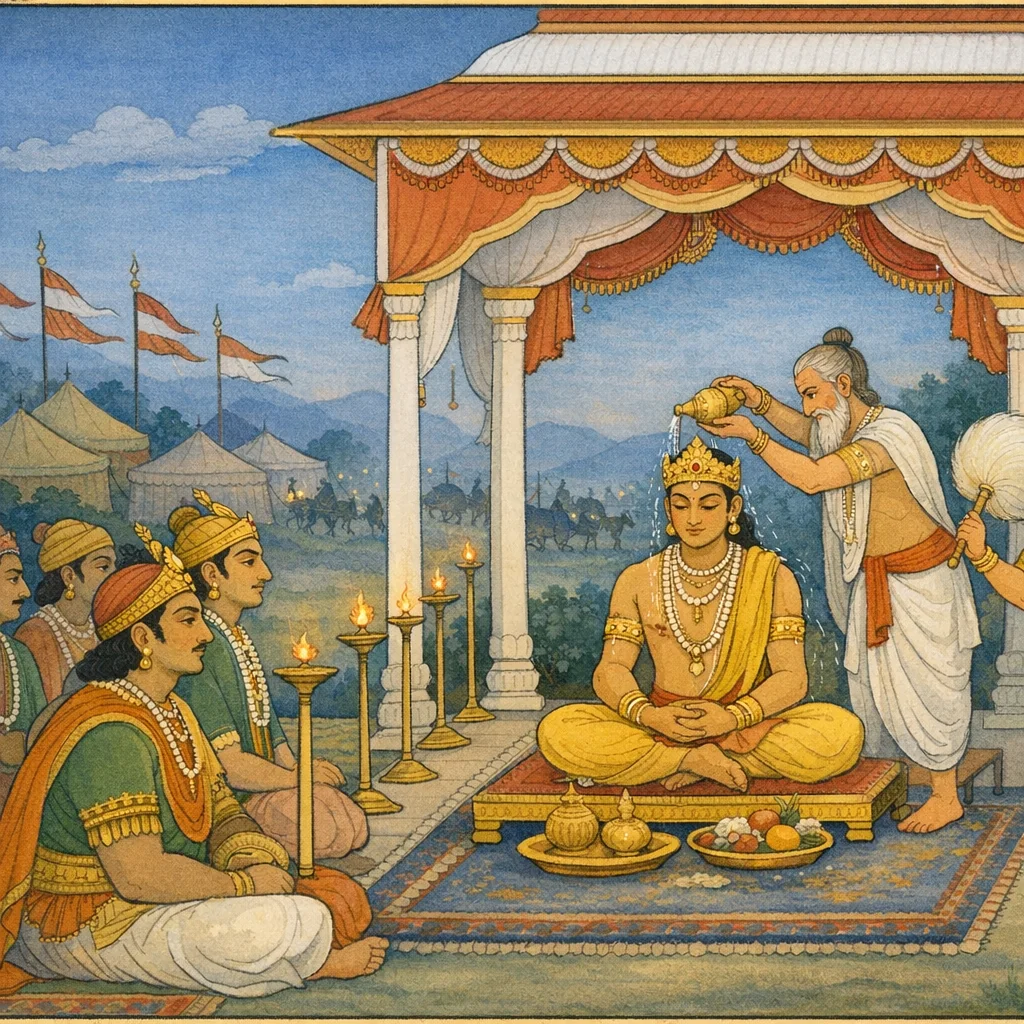
Sañjaya said: “Those foremost heroes of the world on our side—great chariot-warriors, godlike in prowess, renowned everywhere, prudent in conduct, well-equipped in resources, capable in action, and devoted to their lord—have all been slain. Even so, we should not sink into despair regarding our own victory.”
Verse 14
नीतिमन्तस्तथा युक्ता दक्षा रक्ताश्न ते हता: । न त्वेव कार्य नैराश्यमस्माभिवविजयं प्रति,“हमारे पक्षमें जो देवताओंके समान पराक्रमी, विश्व-विख्यात महारथी वीर, नीतिमान्, साधनसम्पन्न, दक्ष और स्वामीके प्रति अनुरक्त थे, वे सब-के-सब मारे गये, तथापि हमें अपनी विजयके प्रति निराश नहीं होना चाहिये
Sañjaya said: Those men of yours—upright in policy, well-equipped and disciplined, capable in action, and devoted in loyalty—have indeed been slain. Yet even so, we must not fall into despair regarding victory. The counsel is ethical as well as strategic: grief over losses should not collapse resolve, and steadfastness must be maintained in pursuit of the chosen aim.
Verse 15
सुनीतैरिह सर्वार्थि्दैवमप्यनुलोम्यते । ते वयं प्रवरं नृणां सर्वैर्गुणगणैर्युतम्,“यदि सारे कार्य उत्तम नीतिके अनुसार किये जायाँ तो उनके द्वारा दैवको भी अनुकूल किया जा सकता है; अतः भारत! हमलोग सर्वगुणसम्पन्न नरश्रेष्ठ कर्णका ही सेनापतिके पदपर अभिषेक करेंगे और इन्हें सेनापति बनाकर हमलोग शत्रुओंकोी मथ डालेंगे
Sañjaya said: “Here, when every undertaking is carried out in accordance with sound policy and right conduct, even destiny can be made favorable. Therefore, we shall install Karṇa—foremost among men and endowed with every cluster of virtues—as commander of the army; and with him as our general, we shall crush the enemy.”
Verse 16
कर्णमेवाभिषेक्ष्याम: सैनापत्येन भारत । कर्ण सेनापतिं कृत्वा प्रमथिष्यामहे रिपून्,“यदि सारे कार्य उत्तम नीतिके अनुसार किये जायाँ तो उनके द्वारा दैवको भी अनुकूल किया जा सकता है; अतः भारत! हमलोग सर्वगुणसम्पन्न नरश्रेष्ठ कर्णका ही सेनापतिके पदपर अभिषेक करेंगे और इन्हें सेनापति बनाकर हमलोग शत्रुओंकोी मथ डालेंगे
Sañjaya said: “O Bhārata, we shall anoint Karṇa alone to the office of commander of the army. Having made Karṇa the general, we shall crush the foes.” The statement frames victory as hinging on decisive leadership and the deliberate appointment of a single, preeminent warrior to direct the war-effort.
Verse 17
एष हातिबल: शूर: कृतास्त्रो युद्धदुर्मद: । वैवस्वत इवासहा: शक्तो जेतुं रणे रिपून्ू,'ये अत्यन्त बलवान शूरवीर, अस्त्रोंके ज्ञाता, रणदुर्मद और सूर्यपुत्र यमराजके समान शत्रुओंके लिये असह्ा हैं। इसलिये ये रणभूमिमें हमारे विपक्षियोंपर विजय पा सकते हैं!
Sañjaya said: “This warrior is of elephant-like strength, a hero fully trained in the use of weapons, and fiercely intoxicated with the ardor of battle. Like Vaivasvata (Yama), he is unbearable to enemies; therefore he is capable of conquering foes on the battlefield.” In context, Sañjaya’s praise underscores the moral tension of war: martial excellence and confidence are celebrated, yet they also intensify the destructive momentum that dharma must continually restrain and judge.
Verse 18
एतदाचार्यतनयाच्छुत्वा राज॑स्तवात्मज: । आशां बहुमतीं चक्रे कर्ण प्रति स वै तदा,राजन! उस समय आचार्यपुत्र अश्वत्थामाके मुखसे यह बात सुनकर आपके पुत्र दुर्योधनने कर्णके प्रति विशेष आशा बाँध ली
Sañjaya said: Hearing these words from the son of the preceptor (Aśvatthāman), your son, O King, at that time conceived a greatly heightened hope in Karṇa—placing his confidence in him as the pillar of their cause amid the moral and strategic uncertainty of war.
Verse 19
हते भीष्मे च द्रोणे च कर्णो जेष्यति पाण्डवान् | तामाशां हृदये कृत्वा समाश्च॒स्य च भारत,भरतनन्दन! भीष्म और द्रोणाचार्यके मारे जानेपर कर्ण पाण्डवोंको जीत लेगा, इस आशाको हृदयमें रखकर दुर्योधनको बड़ी सान्त्वना मिली। महाराज! वह अभश्व॒त्थामाके उस प्रिय वचनको सुनकर बड़ा प्रसन्न हुआ। तत्पश्चात् अपने बाहुबलका आश्रय ले मनको सुस्थिर करके दुर्योधनने राधापुत्र कर्णसे बड़े प्रेम और सत्कारके साथ अपने लिये हितकर यथार्थ और मंगलकारक वचन इस प्रकार कहा--
Sañjaya said: “When Bhīṣma and Droṇa have been slain, Karṇa will conquer the Pāṇḍavas.” Holding fast to this hope within his heart, O Bhārata, Duryodhana took comfort. The verse highlights how, amid the moral and strategic collapse caused by the fall of revered elders, Duryodhana steadies himself not through reflection on dharma but through reliance on a projected future victory—an ethically fraught consolation rooted in ambition and attachment to power.
Verse 20
ततो दुर्योधन: प्रीतः प्रियं श्रुत्वास्य तद् वच: । प्रीतिसत्कारसंयुक्त तथ्यमात्महितं शुभम्,भरतनन्दन! भीष्म और द्रोणाचार्यके मारे जानेपर कर्ण पाण्डवोंको जीत लेगा, इस आशाको हृदयमें रखकर दुर्योधनको बड़ी सान्त्वना मिली। महाराज! वह अभश्व॒त्थामाके उस प्रिय वचनको सुनकर बड़ा प्रसन्न हुआ। तत्पश्चात् अपने बाहुबलका आश्रय ले मनको सुस्थिर करके दुर्योधनने राधापुत्र कर्णसे बड़े प्रेम और सत्कारके साथ अपने लिये हितकर यथार्थ और मंगलकारक वचन इस प्रकार कहा--
Sañjaya said: Then Duryodhana, delighted, having heard those pleasing words from him, spoke in return—addressing Karṇa with affection and honor—words that were truthful, beneficial to himself, and auspicious. The passage frames Duryodhana’s renewed confidence as arising from hope in victory after the fall of Bhīṣma and Droṇa, and it shows how consoling counsel can steady a wavering mind even amid morally fraught ambitions.
Verse 21
स्वं मनः समवस्थाप्य बाहुवीर्यमुपाश्रित: । दुर्योधनो महाराज राधेयमिदमब्रवीत्,भरतनन्दन! भीष्म और द्रोणाचार्यके मारे जानेपर कर्ण पाण्डवोंको जीत लेगा, इस आशाको हृदयमें रखकर दुर्योधनको बड़ी सान्त्वना मिली। महाराज! वह अभश्व॒त्थामाके उस प्रिय वचनको सुनकर बड़ा प्रसन्न हुआ। तत्पश्चात् अपने बाहुबलका आश्रय ले मनको सुस्थिर करके दुर्योधनने राधापुत्र कर्णसे बड़े प्रेम और सत्कारके साथ अपने लिये हितकर यथार्थ और मंगलकारक वचन इस प्रकार कहा--
Sanjaya said: Then King Duryodhana, steadying his own mind and relying on the strength of his arms, addressed Radheya (Karna) with these words, O best of the Bharatas. In the wake of Bhishma and Drona having fallen, Duryodhana gathers himself—seeking reassurance in personal valor and in Karna’s support—so that hope and resolve may replace grief and wavering in the midst of war.
Verse 22
कर्ण जानामि ते वीर्य सौहृदं परमं मयि । तथापि त्वां महाबाहो प्रवक्ष्यामि हितं वच:,“कर्ण! मैं तुम्हारे पराक्रमको जानता हूँ और यह भी अनुभव करता हूँ कि मेरे प्रति तुम्हारा स्नेह बहुत अधिक है। महाबाहो! तथापि मैं तुमसे अपने हितकी बात कहना चाहता हूँ
Sanjaya said: “Karna, I know your valor, and I also recognize the deep affection you bear toward me. Yet, O mighty-armed one, I will still speak to you words that are for your welfare.”
Verse 23
श्र॒त्वा यथेष्टं च कुरु वीर यत् तव रोचते । भवान् प्राज्ञतमो नित्यं मम चैव परा गति:,“वीर! मेरी यह बात सुनकर तुम अपनी इच्छाके अनुसार जो तुम्हें अच्छा लगे, वह करो। तुम बहुत बड़े बुद्धिमान् तो हो ही, सदाके लिये मेरे सबसे बड़े सहारे भी हो
Sanjaya said: “Having heard what I have said, O hero, do as you wish—whatever seems right to you. You are ever the wisest, and for me you are also the highest refuge and support.”
Verse 24
भीष्मद्रोणावतिरथौ हतौ सेनापती मम । सेनापतिर्भवानस्तु ताभ्यां द्रविणवत्तर:,“मेरे दो सेनापति पितामह भीष्म और आचार्य द्रोण, जो अतिरथी वीर थे, युद्धमें मारे गये। अब तुम मेरे सेनानायक बनो; क्योंकि तुम उन दोनोंसे भी अधिक शक्तिशाली हो
Sañjaya said: “My two commanders—Bhīṣma and Droṇa, both mighty warriors of the highest rank—have been slain. Therefore, you must now become the commander of my army, for you are even more formidable than those two.”
Verse 25
वृद्धी च तौ महेष्वासौ सापेक्षौ च धनंजये । मानितौ च मया वीरौ राधेय वचनात् तव,वे दोनों महाधनुर्धर होते हुए भी बूढ़े थे और अर्जुनके प्रति उनके मनमें पक्षपात था। राधानन्दन! मैंने तुम्हारे कहनेसे ही उन दोनों वीरोंको सेनापति बनाकर सम्मानित किया था
Sañjaya said: “Those two great bowmen were already advanced in age, and they also showed partiality toward Dhanañjaya (Arjuna). O Rādheya, it was only at your urging that I appointed and honored those two heroes as commanders.”
Verse 26
पितामहत्वं सम्प्रेक्ष्य पाण्डुपुत्रा महारणे | रक्षितास्तात भीष्मेण दिवसानि दशैव तु,“तात! भीष्मने पितामहके नातेकी ओर दृष्टिपात करके उस महासमरमें दस दिनोंतक पाण्डवोंकी रक्षा की है
Sañjaya said: “Out of regard for Bhīṣma’s status as the grandsire, the sons of Pāṇḍu were, in that great battle, indeed protected by Bhīṣma for ten full days.”
Verse 27
न्यस्तशस्त्रे च भवति हतो भीष्म: पितामह: । शिखण्डिनं पुरस्कृत्य फाल्गुनेन महाहवे,“उन दिनों तुमने हथियार रख दिया था; इसलिये महासमरमें अर्जुनने शिखण्डीको आगे करके पितामह भीष्मको मार डाला था
Sañjaya said: “When he had laid down his weapons, the grandsire Bhīṣma was struck down in that great battle—Arjuna (Phālguna) placing Śikhaṇḍin in front. The episode underscores the tragic moral tension of war: a revered elder is defeated not by sheer force alone, but through a tactical arrangement shaped by vows, identity, and the constraints of dharma on the battlefield.”
Verse 28
हते तस्मिन् महेष्वासे शरतल्पगते तथा । त्वयोक्ते पुरुषव्याप्र द्रोणो हवासीत् पुरःसर:,'पुरुषसिंह! उन महाधनुर्धर भीष्मके घायल होकर बाण-शय्यापर सो जानेके बाद तुम्हारे कहनेसे ही द्रोणाचार्य हमारी सेनाके अगुआ बनाये गये थे
Sañjaya said: “When that great archer (Bhīṣma) had been struck down and had lain upon his bed of arrows, then—at your urging, O tiger among men—Droṇa indeed became the vanguard leader of our army.”
Verse 29
तेनापि रक्षिता: पार्था: शिष्यत्वादिति मे मति: । स चापि निहतो वृद्धो धृष्टद्युम्नेन सत्वरम्,“मेरा विश्वास है कि उन्होंने भी अपना शिष्य समझकर कदुन्तीके पुत्रोंकी रक्षा की है। वे बूढ़े आचार्य भी शीघ्र ही धृष्टद्युम्नके हाथसे मारे गये
Sañjaya said: “In my judgment, he too protected the sons of Pṛthā, because they were his disciples. Yet that aged preceptor was swiftly slain by Dhṛṣṭadyumna.” The verse highlights the moral tension of war: even a revered teacher, bound by affection and duty toward pupils, becomes vulnerable when the battlefield demands retribution and the settling of old vows.
Verse 30
निहताभ्यां प्रधानाभ्यां ताभ्याममितविक्रम । त्वत्समं समरे योध॑ नान्यं पश्यामि चिन्तयन्,“अमितपराक्रमी वीर! उन प्रधान सेनापतियोंके मारे जानेके पश्चात् मैं बहुत सोचनेपर भी समरांगणमें तुम्हारे समान दूसरे किसी योद्धाको नहीं देखता
Sanjaya said: “O warrior of immeasurable prowess! Now that those two foremost leaders have been slain, even after much reflection I do not see, on this battlefield, any other fighter equal to you.”
Verse 31
भवानेव तु न: शक्तो विजयाय न संशय: । पूर्व मध्ये च पश्चाच्च तथैव विहितं हितम्,“हमलोगोंमेंसे तुम्हीं शत्रुओंपर विजय पानेमें समर्थ हो, इसमें तनिक भी संदेह नहीं है। तुमने पहले, बीचमें और पीछे भी हमारा हित ही किया है
Sañjaya said: “You alone among us are capable of securing victory—of this there is no doubt. In the beginning, in the middle, and even at the end, you have consistently acted for our welfare.”
Verse 32
स भवान् धुर्यवत् संख्ये धुरमुद्रोढुमर्हति । अभिषेचय सैनान्ये स्वयमात्मानमात्मना,“तुम धुरन्धर पुरुषकी भाँति युद्धस्थलमें सेना-संचालनका भार वहन करनेके योग्य हो; इसलिये स्वयं ही अपने-आपको सेनापतिके पदपर अभिषिक्त कराओ
Sañjaya said: “You are fit, like a true bearer of burdens, to shoulder the weight of command in the press of battle. Therefore, consecrate yourself—by your own resolve and authority—as the commander of the army.”
Verse 33
देवतानां यथा स्कनन््द: सेनानी: प्रभुरव्यय: । तथा भवानिमां सेनां धार्तराष्ट्री बिभर्तु वै,'जैसे अविनाशी भगवान् स्कन्द देवताओंकी सेनाका संचालन करते हैं, उसी प्रकार तुम भी धृतराष्ट्रपुत्रोंकी सेनाको अपनी अध्यक्षतामें ले लो
Verse 34
जहि शत्रुगणान् सर्वान् महेन्द्रो दानवानिव । अवस्थितं रणे दृष्टवा पाण्डवास्त्वां महारथा:,'जैसे देवराज इन्द्रने दानवोंका संहार किया था, उसी प्रकार तुम भी समस्त शत्रुओंका वध करो। जैसे दानव भगवान् विष्णुको देखते ही भाग जाते हैं, उसी प्रकार पाण्डव तथा पांचाल महारथी तुम्हें रणभूमिमें सेनापतिके रूपमें उपस्थित देखकर भाग खड़े होंगे; अतः पुरुषसिंह! तुम इस विशाल सेनाका संचालन करो
Sañjaya said: “Slay all the hosts of enemies, just as great Indra once slew the Dānavas. Seeing you standing firm on the battlefield, the Pāṇḍavas—those mighty chariot-warriors—will lose heart and give way.”
Verse 35
द्रविष्यन्ति च पञ्चाला विष्णु दृष्टवेव दानवा: | तस्मात् त्वं पुरुषव्याप्र प्रकर्षतां महाचमूम्,'जैसे देवराज इन्द्रने दानवोंका संहार किया था, उसी प्रकार तुम भी समस्त शत्रुओंका वध करो। जैसे दानव भगवान् विष्णुको देखते ही भाग जाते हैं, उसी प्रकार पाण्डव तथा पांचाल महारथी तुम्हें रणभूमिमें सेनापतिके रूपमें उपस्थित देखकर भाग खड़े होंगे; अतः पुरुषसिंह! तुम इस विशाल सेनाका संचालन करो
Sañjaya said: “The Pāñcālas will flee, just as the Dānavas flee upon seeing Viṣṇu. Therefore, O tiger among men, take firm command of this vast army and press the battle forward—so that the enemies may be struck down, as Indra once destroyed the Dānavas.”
Verse 36
भवत्यवस्थिते यत्ते पाण्डवा मन्दचेतस: । द्रविष्यन्ति सहामात्या: पञ्चाला: सूंजयाश्व ह,“तुम्हारे सावधानीके साथ खड़े होते ही मूर्ख पाण्डव, पांचाल और सूंजय अपने मन्त्रियोंसहित भाग जायँगे
Sañjaya said: “When you stand firmly on guard, the Pandavas—faint-hearted in counsel—along with their ministers, will break and flee; and so too will the Pañcālas and the Sūñjayas.”
Verse 37
यथा हाभ्युदित: सूर्य: प्रतपन् स्वेन तेजसा । व्यपोहति तमस्तीव्रं तथा शत्रून् प्रतापय,'जैसे उदित हुआ सूर्य अपने तेजसे तपकर घोर अन्धकारको नष्ट कर देता है, उसी प्रकार तुम भी शत्रुओंको संतप्त एवं नष्ट करो”
Sañjaya said: “Just as the risen sun, blazing with its own radiance, drives away dense darkness, so too do you scorch and dispel your enemies by your might.”
Verse 38
संजय उवाच आशा बलवती राजन पुत्रस्य तव याभवत् | हते भीष्मे च द्रोणे च कर्णो जेष्यति पाण्डवान्,संजय कहते हैं--राजन्! आपके पुत्रके मनमें जो यह प्रबल आशा हो गयी थी कि भीष्म और द्रोणके मारे जानेपर कर्ण पाण्डवोंको जीत लेगा, वही आशा मनमें लेकर उस समय उसने कर्णसे इस प्रकार कहा--'सूतपुत्र! अर्जुन तुम्हारे सामने खड़े होकर कभी युद्ध करना नहीं चाहते हैं!
Sañjaya said: O King, your son came to cherish a powerful hope—that once Bhīṣma and Droṇa had been slain, Karṇa would surely defeat the Pāṇḍavas. Holding fast to that very expectation, he then addressed Karṇa in this manner: “O son of a charioteer, Arjuna does not wish to fight when standing face to face with you.”
Verse 39
तामाशां हृदये कृत्वा कर्णमेवं तदाब्रवीत् । सूतपुत्र न ते पार्थ: स्थित्वाग्रे संयुयुत्मति,संजय कहते हैं--राजन्! आपके पुत्रके मनमें जो यह प्रबल आशा हो गयी थी कि भीष्म और द्रोणके मारे जानेपर कर्ण पाण्डवोंको जीत लेगा, वही आशा मनमें लेकर उस समय उसने कर्णसे इस प्रकार कहा--'सूतपुत्र! अर्जुन तुम्हारे सामने खड़े होकर कभी युद्ध करना नहीं चाहते हैं!
Sañjaya said: Keeping that hope firmly in his heart, he then spoke to Karṇa in this manner: “O son of a charioteer, Pārtha (Arjuna) will not stand before you and choose to fight.” The statement reflects Duryodhana’s attempt to bolster Karṇa’s confidence by portraying Arjuna as unwilling to face him directly, a psychological move amid the moral and strategic pressures of war.
Verse 40
कर्ण उवाच उक्तमेतन्मया पूर्व गान्धारे तव संनिधौ । जेष्यामि पाण्डवान् सर्वान् सपुत्रान् सजनार्दनान्,कर्णने कहा--गान्धारीनन्दन! मैंने तुम्हारे समीप पहले ही यह बात कह दी है कि मैं पाण्डवोंको, उनके पुत्रों और श्रीकृष्णके साथ ही परास्त कर दूँगा
Karna said: “I told you this earlier, O son of Gandhārī, in your very presence: I shall defeat all the Pāṇḍavas—together with their sons, and even with Janārdana (Kṛṣṇa) on their side.” In this vow Karna asserts unwavering martial resolve and personal honor, framing victory as a matter of pledged word amid the moral pressure of a fratricidal war.
Verse 41
सेनापतिर्भविष्यामि तवाहं नात्र संशय: । स्थिरो भव महाराज जितान् विद्धि च पाण्डवान्,महाराज! तुम धैर्य धारण करो। मैं तुम्हारा सेनापति बनूँगा, इसमें कोई संदेह नहीं है। अब पाण्डवोंको पराजित हुआ ही समझो
Karna said: “I shall be your commander-in-chief—of this there is no doubt. Stand firm, O great king; know the Pāṇḍavas to be already conquered.” In this moment Karna offers unwavering assurance to Duryodhana, seeking to steady his resolve and frame victory as a certainty, even as the war’s moral weight and consequences remain implicit beneath the boast of martial confidence.
Verse 42
संजय उवाच एवमुक्तो महाराज ततो दुर्योधनो नृप: । उत्तस्थौ राजभि: सार्धथ देवैरिव शतक्रतु:,संजय कहते हैं--महाराज! कर्णके ऐसा कहनेपर राजा दुर्योधन अन्य सामन्त नरेशोंके साथ उसी प्रकार उठकर खड़ा हो गया, जैसे देवताओंके साथ इन्द्र खड़े होते हैं
Sanjaya said: “O great king, when Karna had spoken thus, King Duryodhana rose to his feet along with the other allied rulers—like Indra, lord of a hundred sacrifices, rising together with the gods.”
Verse 43
सैनापत्येन सत्कर्तु कर्ण स्कन्दमिवामरा: । ततो5भिषिषिचु: कर्ण विधिदृष्टेन कर्मणा
Sañjaya said: Wishing to honor Karṇa by appointing him commander—just as the gods once honored Skanda—thereupon they formally consecrated Karṇa according to the rite prescribed by tradition. The act signals a deliberate transfer of martial authority and responsibility at a critical moment of the war, binding Karṇa to the burdens of leadership and the ethical consequences of command.
Verse 44
का जा बा 4: बिका साथ आजा थ७ कक क ८७ ऑे औऑी.। शातकुम्भमयै: कुम्भैमहियैश्वाभिमन्त्रितै:,अभिषेकके लिये सोने तथा मिट्टीके घड़ोंमें अभिमन्त्रित जल रखे गये थे। हाथीके दाँत तथा गैंडे और बैलके सींगोंके बने हुए पात्रोंमें भी पृथक्ू-पृथक् जल रखा गया था। उन पात्रोंमें मणि और मोती भी थे। अन्यान्य पवित्र गन्धशाली पदार्थ और औषध भी डाले गये थे। कर्ण गूलरकाठकी बनी हुई चौकीपर, जिसके ऊपर रेशमी कपड़ा बिछा हुआ था, सुखपूर्वक बैठा था। उस अवस्थामें शास्त्रीय विधिके अनुसार पूर्वोक्त सुसंचित सामग्रियोंद्वारा ब्राह्मणों, क्षत्रियों, वैश्यों तथा सम्मानित शूद्रोंने उसका अभिषेक किया और अभिषेक हो जानेपर श्रेष्ठ आसनपर बैठे हुए महामना कर्णकी उन सब लोगोंने स्तुति की
Sañjaya said: For the rite of consecration, water that had been sanctified with mantras was kept ready in jars of gold and in earthen pots. Separately, water was also placed in vessels made from ivory, and in horns of rhinoceros and bull; gems and pearls were set within those vessels as well. Other pure, fragrant substances and medicinal herbs were added. Karṇa sat at ease upon a stool made of udumbara wood, spread over with a silken cloth. Then, in accordance with scriptural procedure and using the carefully assembled materials, Brahmins, Kṣatriyas, Vaiśyas, and even honored Śūdras performed his consecration. When the great-souled Karṇa had been anointed and had taken his seat upon a splendid throne, all those people praised him.
Verse 45
तोयपूर्णविषाणैश्नव द्विपखड्गमहर्षभै: । मणिमुक्तायुतै श्चान्यै: पुण्यगन्धैस्तथौषधै:,अभिषेकके लिये सोने तथा मिट्टीके घड़ोंमें अभिमन्त्रित जल रखे गये थे। हाथीके दाँत तथा गैंडे और बैलके सींगोंके बने हुए पात्रोंमें भी पृथक्ू-पृथक् जल रखा गया था। उन पात्रोंमें मणि और मोती भी थे। अन्यान्य पवित्र गन्धशाली पदार्थ और औषध भी डाले गये थे। कर्ण गूलरकाठकी बनी हुई चौकीपर, जिसके ऊपर रेशमी कपड़ा बिछा हुआ था, सुखपूर्वक बैठा था। उस अवस्थामें शास्त्रीय विधिके अनुसार पूर्वोक्त सुसंचित सामग्रियोंद्वारा ब्राह्मणों, क्षत्रियों, वैश्यों तथा सम्मानित शूद्रोंने उसका अभिषेक किया और अभिषेक हो जानेपर श्रेष्ठ आसनपर बैठे हुए महामना कर्णकी उन सब लोगोंने स्तुति की
Sañjaya said: For the consecration, vessels were filled with sanctified water—some made of ivory and of the horns of rhinoceros and mighty bulls. Into these were also placed many gems and pearls, along with other auspicious, fragrant substances and medicinal herbs. Thus, in accordance with prescribed ritual, the assembled people performed Karṇa’s anointing, honoring him with praise after the rite—an act that outwardly affirms kingship and social order even as the war’s moral tensions continue to deepen.
Verse 46
औदुम्बरे सुखासीनमासने क्षौमसंवृते | शास्त्रदृष्टेन विधिना सम्भारैश्न सुसम्भूतै:,अभिषेकके लिये सोने तथा मिट्टीके घड़ोंमें अभिमन्त्रित जल रखे गये थे। हाथीके दाँत तथा गैंडे और बैलके सींगोंके बने हुए पात्रोंमें भी पृथक्ू-पृथक् जल रखा गया था। उन पात्रोंमें मणि और मोती भी थे। अन्यान्य पवित्र गन्धशाली पदार्थ और औषध भी डाले गये थे। कर्ण गूलरकाठकी बनी हुई चौकीपर, जिसके ऊपर रेशमी कपड़ा बिछा हुआ था, सुखपूर्वक बैठा था। उस अवस्थामें शास्त्रीय विधिके अनुसार पूर्वोक्त सुसंचित सामग्रियोंद्वारा ब्राह्मणों, क्षत्रियों, वैश्यों तथा सम्मानित शूद्रोंने उसका अभिषेक किया और अभिषेक हो जानेपर श्रेष्ठ आसनपर बैठे हुए महामना कर्णकी उन सब लोगोंने स्तुति की
Sañjaya said: Karṇa sat at ease upon a seat made of udumbara wood, covered with fine linen. Then, following the procedure sanctioned by the sacred ordinances, and using the well-prepared consecratory materials, the assembled people performed his anointing—placing sanctified water in vessels of gold and clay, and separately in containers fashioned from ivory and from the horns of rhinoceros and bull, mixed with gems, pearls, fragrant pure substances, and medicinal herbs. When the rite was completed, they praised the high-minded Karṇa as he sat upon the excellent seat—an act that frames kingship as a public trust established through ritual order even amid the pressures of war.
Verse 47
ब्राह्मणा: क्षत्रिया वैश्यास्तथा शूद्राश्व॒ सम्मता: । तुष्टवुस्तं महात्मानमभिषिक्त वरासने,अभिषेकके लिये सोने तथा मिट्टीके घड़ोंमें अभिमन्त्रित जल रखे गये थे। हाथीके दाँत तथा गैंडे और बैलके सींगोंके बने हुए पात्रोंमें भी पृथक्ू-पृथक् जल रखा गया था। उन पात्रोंमें मणि और मोती भी थे। अन्यान्य पवित्र गन्धशाली पदार्थ और औषध भी डाले गये थे। कर्ण गूलरकाठकी बनी हुई चौकीपर, जिसके ऊपर रेशमी कपड़ा बिछा हुआ था, सुखपूर्वक बैठा था। उस अवस्थामें शास्त्रीय विधिके अनुसार पूर्वोक्त सुसंचित सामग्रियोंद्वारा ब्राह्मणों, क्षत्रियों, वैश्यों तथा सम्मानित शूद्रोंने उसका अभिषेक किया और अभिषेक हो जानेपर श्रेष्ठ आसनपर बैठे हुए महामना कर्णकी उन सब लोगोंने स्तुति की
Sañjaya said: Brahmins, Kshatriyas, Vaishyas, and the respected Shudras all praised that great-souled Karna, once he had been duly consecrated and seated upon an excellent throne. The scene underscores a public, ritually sanctioned elevation of Karna’s authority—an act meant to confer legitimacy and collective assent even amid the moral strain and urgency of war.
Verse 48
ततोअभिषिक्ते राजेन्द्र निष्कैगोभिर्धनेन च । वाचयामास वितप्राग्रयान् राधेय: परवीरहा
Sañjaya said: Then, O king, after the consecration had been performed—with gold ornaments, cows, and wealth bestowed—Rādheya (Karna), slayer of enemy-heroes, had the foremost bards and heralds proclaim (his glory). The scene underscores how royal legitimacy in war is publicly affirmed through ritual, gifts, and reputation, even as the conflict’s moral weight continues to press upon all sides.
Verse 49
राजेन्द्र! इस प्रकार अभिषेक-कार्य सम्पन्न हो जानेपर शत्रुवीरोंका संहार करनेवाले राधापुत्र कर्णने स्वर्णमुद्राएँ, गौएँ तथा धन देकर श्रेष्ठ ब्राह्मणोंसे स्वस्तिवाचन कराया ।। (स व्यरोचत राधेय: सूतमागधवन्दिभि: । स्तूयमानो यथा भानुरुदये ब्रह्मवादिभि: ।। उस समय सूत, मागध और वन्दीजनोंद्वारा की हुई अपनी स्तुति सुनता हुआ राधापुत्र कर्ण वेदवादी ब्राह्मणोंद्वारा अभिमन्त्रित उदयकालीन सूर्यके समान सुशोभित हो रहा था। ततः पुण्याहघोषेण वादित्रनिनदेन च । जयशब्देन शूराणां तुमुल: सर्वतो5भवत् ।। जयेत्यूचुर्न॒पा: सर्वे राधेयं तत्र संगता: ।।) तत्पश्चात् पुण्याहवाचनके शब्दसे, वाद्योंकी गंभीर ध्वनिसे तथा शूरवीरोंके जय- जयकारसे मिली-जुली हुई भयंकर आवाज वहाँ सब ओर गूँज उठी। उस स्थानपर एकत्र हुए सभी राजाओंने 'राधापुत्र कर्णकी जय” के नारे लगाये। जय पार्थान् सगोविन्दान् सानुगांस्तान् महामृधे । इति त॑ वन्दिनः प्राहुर्द्धिजाश्व पुरुषर्षभम्,वन्दीजनों तथा ब्राह्मणोंने उस समय पुरुषशिरोमणि कर्णको आशीर्वाद देते हुए कहा --राधापुत्र! तुम कुन्तीके पुत्रोंकोी, उनके सेवकों तथा श्रीकृष्णके साथ महासमरमें जीत लो और हमारी विजयके लिये कुन्तीकुमारोंको पांचालोंसहित मार डालो। ठीक उसी तरह, जैसे सूर्य अपनी उग्र किरणोंद्वारा सदा उदय होते ही अन्धकारका विनाश कर देता है
Sañjaya said: Then Radheya (Karna) shone forth, praised by bards—sūtas, māgadhas, and vandins—like the sun at dawn, lauded with sacred utterances by Veda-knowing Brahmins. After that, a tumult rose everywhere, woven from the auspicious cries of “puṇyāha,” the deep resonance of musical instruments, and the victory-shouts of warriors. All the kings assembled there proclaimed, “Victory to Radheya!” The panegyrists and the Brahmins then blessed that bull among men, saying: “Conquer the sons of Pṛthā (the Pāṇḍavas) together with Govinda (Kṛṣṇa) and their followers in this great battle.” The scene frames a morally charged irony: ritual sanctification and public acclamation are invoked to empower a campaign whose aim is the destruction of kin, showing how social-religious forms can be harnessed to intensify the momentum of war.
Verse 50
जहि पार्थान् सपाज्चालान् राधेय विजयाय न: । उद्यन्निव सदा भानुस्तमांस्युग्रैगभस्तिभि:,वन्दीजनों तथा ब्राह्मणोंने उस समय पुरुषशिरोमणि कर्णको आशीर्वाद देते हुए कहा --राधापुत्र! तुम कुन्तीके पुत्रोंकोी, उनके सेवकों तथा श्रीकृष्णके साथ महासमरमें जीत लो और हमारी विजयके लिये कुन्तीकुमारोंको पांचालोंसहित मार डालो। ठीक उसी तरह, जैसे सूर्य अपनी उग्र किरणोंद्वारा सदा उदय होते ही अन्धकारका विनाश कर देता है
Sañjaya said: “O Rādheya (Karna), for our victory strike down the Pārthas (the sons of Pṛthā/Kuntī) together with the Pāñcālas. Just as the sun, ever rising, destroys darkness with its fierce rays, so should you, in the great battle, dispel our foes and secure triumph for us.” The verse reflects the war-counsel of supporters who frame violent action as a righteous necessity for victory, using the sun’s removal of darkness as a moralizing metaphor for annihilating the enemy.
Verse 51
न हाल त्वद्विसृष्टानां शराणां वै सकेशवा: । उलूका: सूर्यरश्मीनां ज्वलतामिव दर्शने,'जैसे उल्लू सूर्यकी प्रजजलित किरणोंकी ओर देखनेमें असमर्थ होते हैं, उसी प्रकार तुम्हारे छोड़े हुए बाणोंकी ओर श्रीकृष्णसहित समस्त पाण्डव नहीं देख सकते
Sañjaya said: “Indeed, the Pāṇḍavas—even with Keśava (Kṛṣṇa) among them—cannot bear to look upon the arrows released by you, just as owls are unable to gaze at the blazing rays of the sun.”
Verse 52
न हि पार्था: सपाज्चाला: स्थातुं शक्तास्तवाग्रत: । आत्तशस्त्रस्य समरे महेन्द्रस्येव दानवा:,'जैसे हाथमें वज्र लिये हुए इन्द्रके सामने दानव नहीं खड़े हो सकते, उसी प्रकार समरांगणमें तुम्हारे सामने पांचाल और पाण्डव नहीं ठहर सकते हैं”
Sañjaya said: “Indeed, the Pāṇḍavas together with the Pāñcālas are not able to stand before you in battle. Just as the Dānavas cannot remain before Mahendra (Indra) when he holds the thunderbolt in his hand, so too cannot they hold their ground before you on the field of war.”
Verse 53
अभिषिक्तस्तु राधेय: प्रभया सो$मितप्रभ: । अत्यरिच्यत रूपेण दिवाकर इवापर:,राजन! इस प्रकार अभिषेक सम्पन्न हो जानेपर अमिततेजस्वी राधापुत्र कर्ण अपनी प्रभा तथा रूपसे दूसरे सूर्यके समान अधिक प्रकाशित होने लगा
Sañjaya said: After the consecration had been completed, Rādheya (Karna), whose splendor was immeasurable, shone forth with his radiance and appearance—surpassing others like a second sun. The narrative underscores how royal anointment magnifies a warrior’s public authority and morale, even as the ethical weight of the coming battle remains unchanged.
Verse 54
सैनापत्ये तु राधेयमभिषिच्य सुतस्तव । अमन्यत तदा>त्मानं कृतार्थ कालचोदितः,कालसे प्रेरित हुआ आपका पुत्र दुर्योधन राधाकुमार कर्णको सेनापतिके पदपर अभिषिक्त करके अपने-आपको कृतकृत्य मानने लगा
Sañjaya said: Having installed Rādheya (Karna) in the office of commander-in-chief, your son (Duryodhana), driven on by Time, then considered himself to have accomplished his purpose. The verse underscores how, under the pressure of fate and circumstance, a leader may mistake a strategic appointment for true fulfillment, even as the moral and karmic consequences of war continue to unfold.
Verse 55
कर्णो5पि राजन् सम्प्राप्प सैनापत्यमरिंदम: । योगमाज्ञापयामास सूर्यस्योदयनं प्रति,राजन! शत्रुदमन कर्णने भी सेनापतिका पद प्राप्त करके सूर्योदयके समय सेनाको युद्धके लिये तैयार होनेकी आज्ञा दे दी
Sañjaya said: O King, Karṇa too—having attained the command of the army, the subduer of foes—issued orders that the forces be made ready for battle at sunrise. The passage underscores the disciplined, time-bound organization of war and the heightened responsibility that comes with supreme command.
Verse 56
तव पुन्रैर्वतः कर्ण: शुशुभे तत्र भारत । देवैरिव यथा स्कन्द: संग्रामे तारकामये,भारत! वहाँ आपके पुत्रोंसे घिरा हुआ कर्ण तारकामय संग्राममें देवताओंसे घिरे हुए स्कन्दके समान सुशोभित हो रहा था
Sañjaya said: There, O Bhārata, Karṇa—surrounded by your sons—shone brilliantly, like Skanda encircled by the gods in the war against Tāraka. The image underscores how martial splendor and collective support can magnify a warrior’s presence, even amid a conflict driven by rivalry and the heavy moral weight of fratricidal war.
Verse 116
आचार्यपुत्रो मेधावी वाक्यज्ञों वाक्यमाददे । युद्धमें प्राणोंकी आहुति देनेकी इच्छा रखनेवाले उन नरेशोंकी चेष्टाएँ देखकर राजा दुर्योधनके प्रातःकालीन सूर्यके समान तेजस्वी मुखकी ओर दृष्टिपात करके वाक्यविशारद, मेधावी आचार्यपुत्र अश्वत्थामाने यह बात कही--
Verse 123
उपाया: पण्डितै:ः प्रोक्तास्ते तु दैवमुपाश्रिता: । “विद्वानोंने अभीष्ट अर्थकी सिद्धि करानेवाले चार उपाय बताये हैं--राग (राजाके प्रति सैनिकोंकी भक्ति), योग (साधन-सम्पत्ति), दक्षता (उत्साह, बल एवं कौशल) तथा नीति; परंतु वे सभी दैवके अधीन हैं
Sañjaya said: “The wise have taught various means to accomplish one’s desired ends; yet all those means ultimately rest upon destiny. Human effort—whether loyalty, resources, skill, or policy—can be planned and pursued, but its fruition remains dependent on the unseen ordering of fate.”
Verse 436
दुर्योधनमुखा राजन् राजानो विजयैषिण: । जैसे देवताओंने स्कन्दको सेनापति बनाकर उनका सत्कार किया था, उसी प्रकार समस्त कौरव कर्णको सेनापति बनाकर उसका सत्कार करनेके लिये उद्यत हुए। राजन! विजयाभिलाषी दुर्योधन आदि राजाओंने शास्त्रोक्त विधिके द्वारा कर्णका अभिषेक किया
Sanjaya said: O King, the rulers led by Duryodhana, eager for victory, prepared to honor Karna by appointing him commander-in-chief—just as the gods once honored Skanda after making him their general. Seeking triumph, Duryodhana and the other kings then performed Karna’s consecration according to the rites prescribed in the scriptures.
Frequently Asked Questions
The chapter presents the operational dharma-sankat of escalation: whether to continue engagement after visible injury and weapon loss, balancing personal valor and duty to one’s side against the increasing lethality required to stabilize collapsing local formations.
Agency is exercised through disciplined response: recovery after setbacks (bow cut, wounds, chariot loss) and calibrated tactical adaptation illustrate how resolve and method, not only strength, shape outcomes amid uncertainty.
No explicit phalaśruti appears in this passage; its meta-function is structural—linking micro-duels to macro-escalation by closing with Drauṇi’s advance, thereby framing the episode as a transition node within the late-war narrative.