Adhyaya 183
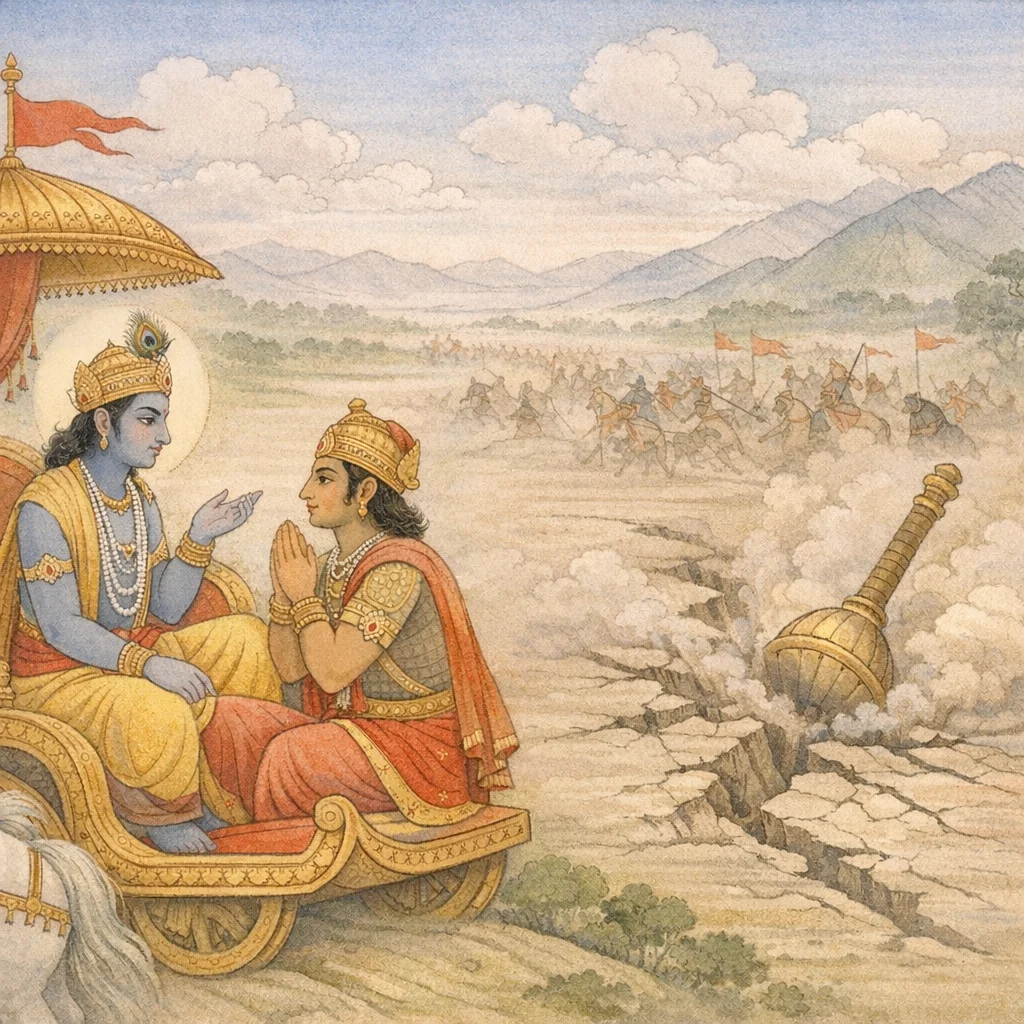
Chapter Arc: रणभूमि के कोलाहल के बीच अर्जुन के मन में एक पुरानी जिज्ञासा उठती है—श्रीकृष्ण ने पहले जरासंध, शिशुपाल और अन्य ‘धर्मद्रोहियों’ का वध क्यों कराया, और उस नीति का युद्ध के आज के संकट से क्या संबंध है। → श्रीकृष्ण (वायुदेव-वचन के रूप में) समझाते हैं कि यदि जरासंध, शिशुपाल, नैषध आदि महाबल पूर्व में न मारे जाते, तो वे आज दुर्योधन के पक्ष में अनिवार्यतः जा मिलते और कौरव-बल को भयावह बना देते। कथा-धारा में जरासंध की उत्पत्ति (दो माताओं से आधा-आधा शरीर, ‘जरा’ द्वारा संधान) और उसकी अजेयता का वर्णन आता है, जिससे यह स्पष्ट होता है कि समय रहते अधर्म-शक्ति का निराकरण क्यों आवश्यक था। → रण-चित्र में गदा का अस्त्र-वेग से प्रतिहत होकर पृथ्वी को विदीर्ण करते हुए गिरना—धरती का कम्पन और पर्वतों-सा थरथराना—युद्ध की चरम हिंसा और महाबलियों की टक्कर को चरम बिंदु पर ले आता है; साथ ही कृष्ण का निर्णायक आश्वासन कि कर्ण-विषयक चिंता का ‘उपाय’ वे स्वयं बताएँगे, रणनीति को निर्णायक मोड़ देता है। → कृष्ण का निष्कर्ष स्थिर होता है: पूर्वकाल के वध केवल व्यक्तिगत शत्रुता नहीं, बल्कि भविष्य के महायुद्ध में अधर्म के संभावित संधि-बल को काटने की दूरदर्शी नीति थे; और वर्तमान में भी अर्जुन को कर्ण के विरुद्ध मार्गदर्शन मिलेगा। → कृष्ण द्वारा संकेतित ‘उपाय’ क्या है—जिससे अर्जुन कर्ण को ‘प्रसहिष्यसि’—यह रहस्य अगले प्रसंग के लिए टिका रहता है।
Shlokas
Verse 1
हि 5 बछ। हि न न एकाशीरत्याधिकशततमो< ध्याय: भगवान् श्रीकृष्णका अर्जुनको जरासंध आदि धर्मद्रोहियोंके वध करनेका कारण बताना अजुन उवाच कथमस्मद्ितार्थ ते कैश्व योगैर्जनार्दन । जरासंधप्रभूतयो घातिता: पृथिवीश्व॒रा:,अर्जुनने पूछा--जनार्दन! आपने हमलोगोंके हितके लिये कैसे किन-किन उपायोंसे जरासंध आदि राजाओंका वध कराया है?
Arjuna said: “O Janārdana, for the sake of our welfare, by what means and through what strategies did you bring about the slaying of kings—foremost among them Jarāsandha—those rulers of the earth?”
Verse 2
श्रीवायुदेव उवाच जरासंधश्षेदिराजो नैषादिश्व महाबल: । यदि स्युर्न हता: पूर्वमिदानीं स्युर्भयंकरा:,भगवान् श्रीकृष्णने कहा--अर्जुन! जरासंध, शिशुपाल और महाबली एकलव्य यदि ये पहले ही मारे न गये होते तो इस समय बड़े भयंकर सिद्ध होते
Śrī Vāyudeva said: “Jarāsandha, the king of Cedi (Śiśupāla), and the mighty Naiṣāda (Ekalavya)—had these men not been slain earlier, they would now have become truly formidable and terrifying adversaries.” The statement underscores a moral logic often emphasized in the epic’s war-ethics: unchecked power allied with hostility to dharma, if not restrained in time, ripens into greater danger for the world and for righteous order.
Verse 3
दुर्योधनस्तानवश्यं वृणुयाद् रथसत्तमान् | तेडस्मासु नित्यविद्विष्टा: संश्रयेयुश्न कौरवान्,दुर्योधन उन श्रेष्ठ रथियोंसे अपनी सहायताके लिये अवश्य प्रार्थना करता और वे हमसे सर्वदा द्वेष रखनेके कारण निश्चय ही कौरवोंका पक्ष लेते
Vāyu said: “Duryodhana would certainly seek those foremost of chariot-warriors as allies; and they, being ever hostile toward us, would surely take refuge with the Kauravas’ side.”
Verse 4
ते हि वीरा महेष्वासा: कृतास्त्रा दृढयोधिन: । धार्तराष्ट्रां चमूं कृत्स्नां रक्षेयुरमरा इव,वे वीर महाधनुर्धर, अस्त्रविद्याके ज्ञाता तथा दृढ़तापूर्वक युद्ध करनेवाले थे; अतः दुर्योधनकी सारी सेनाकी देवताओंके समान रक्षा कर सकते थे
Vāyu said: “For those heroes were mighty archers, fully trained in the use of weapons, and steadfast fighters. Therefore they could have guarded the entire army of the Dhārtarāṣṭras as the immortals themselves would.” The statement underscores how martial excellence and disciplined resolve can create a near-divine shield for one’s side in war—yet it also hints at the moral tension of such power being placed in the service of an unrighteous cause.
Verse 5
सूतपुत्रो जरासंधश्वेदिराजो निषादज: । सुयोधनं समाश्रित्य जयेयु: पृथिवीमिमाम्,सूतपुत्र कर्ण, जरासंध, चेदिराज शिशुपाल और निषादनन्दन एकलव्य--ये चारों मिलकर यदि दुर्योधनका पक्ष लेते तो इस पृथ्वीको अवश्य ही जीत लेते
Vāyu said: “Karna the charioteer’s son, Jarāsandha, the king of Cedi, and the Niṣāda-born (Ekalavya)—if these, taking refuge in Suyodhana (Duryodhana) as their leader, had stood together on his side, they would surely have conquered this entire earth.” The statement underscores how the alignment of extraordinary strength with an unrighteous cause can threaten the world, and how outcomes in war are shaped not only by valor but by alliances and the moral direction of leadership.
Verse 6
योगैरपि हता यैस्ते तन््मे शूणु धनंजय । अजय्या हि विना योगैर्म॒धे ते दैवतैरपि,धनंजय! वे जिन उपायोंसे मारे गये हैं, उन्हें बतलाता हूँ, मुझसे सुनो। बिना उपाय किये तो उन्हें युद्धमें देवता भी नहीं जीत सकते थे
Śrī Vāyudeva said: “Hear from me, O Dhanaṃjaya, by what stratagems they were brought down. For without employing such measures, they were in battle truly unconquerable—even by the gods themselves, O Dhanaṃjaya.”
Verse 7
एकैको हि पृथक् तेषां समस्तां सुरवाहिनीम् । योधयेत् समरे पार्थ लोकपालाभिरक्षिताम्,कुन्तीनन्दन! उनमेंसे अलग-अलग एक-एक वीर ऐसा था, जो लोकपालोंसे सुरक्षित समस्त देवसेनाके साथ समरांगणमें अकेला ही युद्ध कर सकता था
Vāyu said: “O son of Kuntī, each one of those heroes, taken separately, was capable—alone on the battlefield—of fighting the entire host of the gods, even though it was guarded by the Lokapālas.”
Verse 8
जरासंधो हि रुषितो रौहिणेयप्रधर्षित: । अस्मद्वधार्थ चिक्षेप गदां वै सर्वधातिनीम्,एक समयकी बात है, रोहिणीनन्दन बलरामजीने युद्धमें जरासंधको पछाड़ दिया था। इससे कुपित होकर जरासंधने हमलोगोंके वधके लिये अपनी सर्वघातिनी गदाका प्रहार किया
Vāyu said: “Jarāsandha, enraged because he had been humiliated by Rauhiṇeya (Balarāma), hurled—aiming at our destruction—his mace, truly a weapon that brings death to all.”
Verse 9
सीमन्तमिव कुर्वाणा नभस: पावकप्रभा । अदृश्यतापतन्ती सा शक्रमुक्ता यथाशनि:,अग्निके समान प्रज्वलित वह गदा इन्द्रके चलाये हुए वज्गजकी भाँति आकाशमें सीमान्त- रेखा-सी बनाती हुई वहाँ गिरती दिखायी दी
Blazing with the radiance of fire, it was seen hurtling down through the sky, as though drawing a boundary-line across the heavens—like a thunderbolt released by Indra. The image underscores the irresistible, divinely-charged force unleashed amid the moral chaos of war, where weapons appear as instruments of fate rather than mere human strength.
Verse 10
तामापततन्तीं दृष्टवैव गदां रोहिणिनन्दन: । प्रतिघातार्थमस्त्रं वै स्थूणाकर्णमवासृजत्,वहाँ गिरती हुई उस गदाको देखते ही उसके प्रतिघात (निवारण)-के लिये रोहिणीनन्दन बलरामजीने स्थूणाकर्ण नामक अस्त्रका प्रयोग किया
The moment Rohiṇī’s son, Balarāma, saw that mace hurtling down, he released the weapon called Sthūṇākarṇa to counter and neutralize its blow—acting not out of rage, but to avert harm in the midst of battle.
Verse 11
अस्त्रवेगप्रतिहता सा गदा प्रापतद् भुवि । दारयन्ती धरां देवीं कम्पयन्तीव पर्वतान्,उस अस्त्रके वेगसे प्रतिहत होकर वह गदा पृथ्वीदेवीको विदीर्ण करती और पर्वतोंको कँपाती हुई-सी भूतलपर गिर पड़ी
Struck and checked by the force of the weapon, that mace fell upon the earth—splitting the divine ground and seeming to make the mountains tremble. The verse underscores how, in the fury of war, even a single blow can shake the very foundations of the world, reminding the listener of the grave moral weight carried by violent power.
Verse 12
तत्र सा राक्षसी घोरा जरानाम्नी सुविक्रमा | संदधे सा हि संजातं जरासंधमरिंदमम्,जिस स्थानपर गदा गिरी, वहाँ उत्तम बल-पराक्रमसे सम्पन्न जरा नामक एक भयंकर राक्षसी रहती थी। उसीने जन्मके पश्चात् शत्रुदमन जरासंधके शरीरको जोड़ा था
There dwelt a fearsome rākṣasī named Jarā, endowed with excellent strength and prowess. It was she who, after his birth, joined together the body of Jarāsandha—the subduer of foes—at the very spot where the mace had fallen. The passage recalls how extraordinary power can be used either to heal and bind or to harm, and how a warrior’s later destiny may hinge on a single, fateful intervention at birth.
Verse 13
द्वाभ्यां जातो हि मातृभ्यामर्धदेह: पृथक् पृथक् जरया संधितो यस्माज्जरासंधस्ततो5भवत्,उसका आधा-आधा शरीर अलग-अलग दो माताओंके पेटसे पैदा हुआ था। जराने उसे जोड़ा था; इसीलिये उसका नाम जरासंध हुआ
Vāyu said: “He was born from two mothers, his body divided into two separate halves. Since an old woman named Jarā joined those halves together, he came to be known as Jarāsandha.”
Verse 14
सा तु भूमिं गता पार्थ हता ससुतबान्धवा | गदया तेन चास्त्रेण स्थूणाकर्णेन राक्षसी,पार्थ! भूमिके भीतर रहनेवाली वह राक्षसी उस गदासे तथा स्थूणाकर्ण नामक अस्त्रके आघातसे पुत्र और बन्धु-बान्धवोंसहित मारी गयी
O Pārtha, that rākṣasī—who had gone down into the earth—was slain along with her sons and kinsmen, struck by his mace and by the weapon called Sthūṇākarṇa. The episode underscores the inexorable consequences of violent, predatory power meeting a superior counterforce in the midst of war, where protection of one’s side and the neutralization of a threat are treated as a grim necessity rather than a triumph.
Verse 15
विनाभूत: स गदया जरासंधो महामृधे । निहतो भीमसेनेन पश्यतस्ते धनंजय,धनंजय! उस महासमरमें जरासंध बिना गदाके हो गया था; इसीलिये तुम्हारे देखते- देखते भीमसेनने उसे मार डाला
In that great and terrible combat, Jarāsandha was left without his mace; therefore, even as you watched, O Dhanañjaya, Bhīmasena struck him down. The episode underscores how the loss of one’s chief support in battle—whether weapon, advantage, or composure—can swiftly turn the tide, and how decisive action in war follows the moment an opponent becomes vulnerable.
Verse 16
यदि हि स्याद् गदापाणिर्जरासंध: प्रतापवान् । सेन्द्रा देवा न तं हन्तुं रणे शक्ता नरोत्तम,नरश्रेष्ठस यदि प्रतापी जरासंधके हाथमें वह गदा होती तो इन्द्रसहित सम्पूर्ण देवता भी उसे युद्धमें मार नहीं सकते थे
Vāyu said: “If the mighty Jarāsandha had indeed been armed with his mace, then even the gods led by Indra would not have been capable of slaying him in battle, O best of men.”
Verse 17
त्वद्धितार्थ च नैषादिरड्गुछ्ेन वियोजित: । द्रोणेनाचार्यक॑ कृत्वा छद्मना सत्यविक्रम:,तुम्हारे हितके लिये ही द्रोणाचार्यने सत्यपराक्रमी एकलव्यका आचार्यत्व करके छलपूर्वक उसका अँगूठा कटवा दिया था
And it was for your own benefit that the Niṣāda youth (Ekalavya) was separated from his thumb. Droṇa, having accepted him as a teacher in name, deceitfully caused the truth-valiant Ekalavya’s thumb to be cut off—so that your preeminence would remain unharmed.
Verse 18
सतु बद्धाड्गुलित्राणो नैषादिर्दूढविक्रम: । अतिमानी वनचरो बभौ राम इवापर:,सुदृढ़ पराक्रमसे सम्पन्न अत्यन्त अभिमानी एकलव्य जब हाथोंमें दस्ताने पहनकर वनमें विचरता, उस समय दूसरे परशुरामके समान जान पड़ता था
But that Niṣāda-born warrior, Ekalavya—of firm and proven prowess—would roam the forest wearing finger-guards; in his overbearing pride he appeared like another Rāma (Paraśurāma). The verse frames his martial discipline and self-assertion as impressive yet ethically precarious, hinting that unchecked pride can distort the use of strength.
Verse 19
एकलव्यं हि साड्गुष्ठमशक्ता देवदानवा: । सराक्षसोरगा: पार्थ विजेतुं युधि करहिचित्,कुन्तीकुमार! यदि एकलव्यका अँगूठा सुरक्षित होता तो देवता, दानव, राक्षस और नाग --ये सब मिलकर भी युद्धमें उसे कभी परास्त नहीं कर सकते थे
Vāyu said: “O Pārtha, son of Kuntī—if Ekalavya’s thumb had remained intact, then even the gods and the demons, together with the rākṣasas and the serpent-beings, would never have been able to defeat him in battle.” The statement underscores how a single act of deprivation can alter the balance of power in war, raising an ethical tension between preserving social order and honoring individual merit.
Verse 20
किमु मानुषमात्रेण शक््य: स्यात् प्रतिवीक्षितुम् | दृढ्मुष्टि: कृती नित्यमस्यमानो दिवानिशम्,फिर कोई मनुष्यमात्र तो उसकी ओर देख ही कैसे सकता था? उसकी मुट्ठी मजबूत थी। वह अस्त्र-विद्याका विद्वानू था और सदा दिन-रात बाण चलानेका अभ्यास करता था
How could any mere human even manage to look straight at him? His grip was firm, his skill consummate; and day and night he was ever practicing the discharge of arrows—an image of relentless martial discipline that makes ordinary courage and capacity seem inadequate before such trained force.
Verse 21
तुम्हारे हितके लिये मैंने ही युद्धके मुहानेपर उसे मार डाला था। पराक्रमी चेदिराज शिशुपाल तो तुम्हारी आँखोंके सामने ही मारा गया था
For your welfare, I myself struck him down at the very mouth of battle. And the valiant king of Cedi, Śiśupāla, was slain right before your very eyes.
Verse 22
स चाप्यशक्य: संग्रामे जेतुं सर्वसुरासुरै: । वधार्थ तस्य जातो5हमन्येषां च सुरद्विषाम्
Vāyu said: “And he, too, cannot be conquered in battle even by all the gods and the asuras together. For his destruction—and for the destruction of other enemies of the gods—I have been born.”
Verse 23
हिडिम्बवककिर्मीरा भीमसेनेन पातिता:
Vāyu-deva said: “Hiḍimba, Vaka, and Kirmīra were struck down by Bhīmasena.” The statement recalls Bhīma’s earlier slaying of fierce rākṣasas, underscoring his role as a protector who removes violent threats and clears the path for righteous action.
Verse 24
हतस्तथैव मायावी हैडिम्बेनाप्यलायुध:
Vāyu said: “In the same way, the sorcerer Māyāvī too was slain—by Haiḍimba; and Alāyudha as well.” The statement recalls earlier encounters to underscore a moral pattern: those who rely on deceitful power and violent hostility ultimately meet a fitting end through the very forces they provoke, reinforcing the epic’s insistence that adharma, however formidable, is not a stable refuge.
Verse 25
यदि होन॑ नाहनिष्यत् कर्ण: शक््त्या महामृथे
Vāyu said: “If Karṇa, in that great battle, had not slain (him) with the Śakti-weapon….” The statement points to a decisive moral hinge in the war: a single extraordinary weapon-use can overturn the expected course of combat, raising questions of fairness, fate, and responsibility amid the chaos of dharma-yuddha.
Verse 26
मया न निहतः: पूर्वमेष युष्मत्प्रियेप्सपा,तुमलोगोंका प्रिय करनेकी इच्छासे ही मैंने इसे पहले नहीं मारा था। यह ब्राह्मणों और यज्ञोंसे द्वेष रखनेवाला तथा धर्मका लोप करनेवाला पापात्मा राक्षस था; इसीलिये इसे मरवा दिया है
Vāyu-deva said: “I did not kill him earlier, only because I wished to do what was pleasing to you. But this rākṣasa was a sinful being—one who hated brāhmaṇas and sacrificial rites, and who worked to destroy dharma. Therefore he has now been caused to be slain.”
Verse 27
एष हि ब्राह्मणद्वेषी यज्ञद्वेषी च राक्षस: । धर्मस्य लोप्ता पापात्मा तस्मादेष निपातित:,तुमलोगोंका प्रिय करनेकी इच्छासे ही मैंने इसे पहले नहीं मारा था। यह ब्राह्मणों और यज्ञोंसे द्वेष रखनेवाला तथा धर्मका लोप करनेवाला पापात्मा राक्षस था; इसीलिये इसे मरवा दिया है
Verse 28
व्यंसिता चाप्युपायेन शक्रदत्ता मयानघ । ये हि धर्मस्य लोप्तारो वध्यास्ते मम पाण्डव,निष्पाप पाण्डुनन्दन! इसी उपायसे मैंने इन्द्रकी दी हुई शक्ति भी कर्णके हाथसे दूर कर दी है। धर्मका लोप करनेवाले सभी प्राणी मेरे वध्य हैं
Vāyu said: “O sinless Pāṇḍava, by a well-devised means I have also caused Indra’s gifted power to be rendered futile and taken out of Karṇa’s hands. For those who undermine and destroy dharma are, to me, fit to be slain.”
Verse 29
धर्मसंस्थापनार्थ हि प्रतिज्ैषा ममाव्यया । ब्रह्म सत्यं दम: शौचं धर्मों द्वी: श्रीर्धृति: क्षमा
Vāyudeva said: “Indeed, for the establishment of dharma this is my unfailing vow: brahman (sacred truth), truthfulness, self-restraint, purity, dharma itself, steadfastness, prosperity, fortitude, and forgiveness.”
Verse 30
यत्र तत्र रमे नित्यमहं सत्येन ते शपे | धर्मकी स्थापनाके लिये ही मैंने यह अटल प्रतिज्ञा कर रखी है, मैं तुमसे सत्यकी शपथ खाकर कहता हूँ, जहाँ वेद, सत्य, दम, शौच, धर्म, लज्जा, श्री, धृति और क्षमाका निवास है, वहीं मैं सदा सुखपूर्वक रहता हूँ ।। न विषादस्त्वया कार्य: कर्ण वैकर्तनं प्रति
Śrī Vāyudeva said: “Wherever the abode of the Veda, truthfulness, self-restraint, purity, dharma, modesty, prosperity, steadfastness, and forgiveness is found, there I ever dwell in contentment. I swear to you by truth itself. Therefore, O Karṇa, son of the charioteer (Vaikartana), you should not give way to grief.”
Verse 31
सुयोधनं चापि रणे हनिष्यति वृकोदर:
Vāyu-deva declared that even Suyodhana (Duryodhana) would be slain in battle by Vṛkodara (Bhīma). The statement frames the war’s moral arc: arrogance and adharma, though powerful for a time, culminate in inevitable downfall, while the appointed agent of retribution becomes the instrument through which justice is restored.
Verse 32
तस्यापि च वधोपायं वक्ष्यामि तव पाण्डव । पाण्डुनन्दन! युद्धमें दुर्योधनका भी वध भीमसेन करेंगे। उसके वधका उपाय भी मैं तुम्हें बताऊँगा ।। वर्धते तुमुलस्त्वेष शब्द: परचमूं प्रति
Vāyu said: “O Pāṇḍava, I shall also tell you the means by which he may be slain. O son of Pāṇḍu—on the battlefield Bhīmasena will indeed bring about Duryodhana’s death; and I will explain to you the stratagem for accomplishing that killing. Even now, a fierce and tumultuous roar is rising toward the enemy host.”
Verse 33
लब्धलक्ष्या हि कौरव्या विधमन्ति चमूं तव । दहत्येष च व: सैन्यं द्रोण: प्रहरतां वर:,कौरवोंका निशाना अचूक हो रहा है। वे तुम्हारी सेनाका विनाश कर रहे हैं। इधर ये योद्धाओंमें श्रेष्ठ द्रोणाचार्य तुम्हारे सैनिकोंको दग्ध किये देते हैं
The Kaurava warriors, their aim now unfailing, are crushing your battle-array. And here Drona—foremost among those who strike—burns down your forces, consuming your soldiers in the very act of combat. The speech underscores the grim moral pressure of war: when skill and resolve harden into relentless violence, an army’s collapse becomes not merely tactical but existential, forcing leaders to confront the consequences of their choices on the battlefield.
Verse 180
इस प्रकार श्रीमहाभारत द्रोणपर्वके अन्तर्गत घटोत्कचवधपर्वमें यात्रियुद्धके समय घटोत्कचका वध होनेपर श्रीकृष्णका हर्षविषयक एक सौ अस्सीवाँ अध्याय पूरा हुआ
Thus, in the Śrī Mahābhārata, within the Droṇa Parva—specifically in the section on the slaying of Ghaṭotkaca—when, during the course of the marching battle, Ghaṭotkaca is killed, the one-hundred-and-eightieth chapter, describing Śrī Kṛṣṇa’s joy, comes to its close. The notice underscores a grim ethical tension of war: even a righteous side may feel relief or strategic satisfaction at a death when it averts a greater calamity, revealing how dharma in battle often involves choosing the least destructive outcome rather than celebrating violence itself.
Verse 181
इति श्रीमहा भारते द्रोणपर्वणि घटोत्कचवधपर्वणि रात्रियुद्धे कृष्णवाक्ये एकाशीत्यधिकशततमो<ध्याय:
Thus, in the Śrī Mahābhārata, within the Droṇa Parva—specifically in the section on the slaying of Ghaṭotkaca—during the night-battle, in the chapter known as “Kṛṣṇa’s words,” ends the one-hundred-and-eighty-first chapter. The colophon frames the episode as a morally charged turning point of the nocturnal war, where counsel and strategy are foregrounded amid escalating violence.
Verse 226
त्वत्सहायो नरव्यात्र लोकानां हितकाम्यया । वह भी संग्राममें सम्पूर्ण देवताओं और असुरोंद्वारा जीता नहीं जा सकता था। नरव्याप्र! मैं सम्पूर्ण लोकोंके हितके लिये और शिशुपाल एवं अन्य देवद्रोहियोंका वध करनेके लिये ही तुम्हारे साथ इस जगतूमें अवतीर्ण हुआ हूँ
Verse 231
त्वद्धितार्थ तु स मया हतः संग्राममूर्थनि । चेदिराजकश्ष् विक्रान्त: प्रत्यक्ष निहतस्तव
For your welfare, I struck him down at the very forefront of the battle. The valiant king of Cedi has been slain—plainly and directly—before your eyes. The statement frames the killing not as personal hatred but as an act undertaken for the addressee’s protection and advantage amid the moral pressures of war.
Verse 233
रावणेन समप्राणा ब्रह्म॒यज्ञविनाशना: । हिडिम्ब, वक और किर्मीर--ये रावणके समान बलवान् थे और ब्राह्मणों तथा यज्ञोंका विनाश किया करते थे। इन तीनोंको भीमसेनने मार गिराया है
Vāyu-deva said: “Endowed with strength equal to Rāvaṇa’s and bent on destroying sacred rites, Hiḍimba, Vaka, and Kirmīra were as mighty as Rāvaṇa and used to bring ruin upon brāhmaṇas and upon yajñas. Yet even these three were struck down by Bhīmasena.” The statement underscores that brute power, when turned against dharma—by attacking priests and sacrificial order—invites rightful resistance and eventual downfall.
Verse 243
हैडिम्बश्नाप्युपायेन शक््त्या कर्णेन घातित: । मायावी अलायुध घटोत्कचके हाथसे मारा गया है और घटोत्कचको भी मैंने ही युक्ति लगाकर कर्णकी चलायी हुई शक्तिसे मरवा दिया है
Śrī Vāyudeva said: “Haidimba too was slain by Karṇa with his Śakti through a stratagem. And the sorcerous Alāyudha—Ghaṭotkaca—was also brought to death by me, by employing a device so that he would be killed by the Śakti launched by Karṇa.” In this speech, Vāyu frames the deaths not as mere battlefield outcomes but as outcomes shaped by deliberate counsel and counter-counsel—where strategy and the management of overwhelming weapons become decisive, raising the ethical tension between straightforward valor and necessary war-time expedients.
Verse 253
मया वध्यो5भविष्यत् स भैमसेनिर्घटोत्कच: । यदि महासमरमें कर्ण अपनी शक्तिद्वारा भीमसेनपुत्र घटोत्कचको नहीं मारता तो एक दिन मुझे उसका वध करना पड़ता
Vāyu-deva said: “Ghaṭotkaca, the son of Bhīmasena, would have been slain by me. If, in that great battle, Karṇa had not killed Bhīma’s son Ghaṭotkaca by means of his divine spear, then one day the duty of killing him would have fallen upon me.”
Verse 303
उपदेक्ष्याम्युपायं ते येन तं प्रसहिष्यसि । तुम्हें वैकर्तन कर्णके विषयमें चिन्ता करनेकी आवश्यकता नहीं है। मैं तुम्हें ऐसा उपाय बताऊँगा, जिससे तुम उसका सामना कर सकोगे
Vāyu said: “I will teach you a means by which you will be able to withstand him by force. Do not be anxious about Vaikartana Karṇa; I shall tell you a practical method by which you can face him.”
Verse 326
विद्रवन्ति च सैन्यानि त्वदीयानि दिशो दश । शत्रुओंकी सेनामें यह भयंकर गर्जनाका शब्द बढ़ता जा रहा है और तुम्हारे सैनिक दसों दिशाओंमें भाग रहे हैं
Vāyu-deva said: “Your troops are breaking ranks and fleeing in all ten directions. Meanwhile, within the enemy host, the dreadful roar of battle keeps swelling—an ominous sign that fear has seized your side and the adversary’s momentum is rising.”