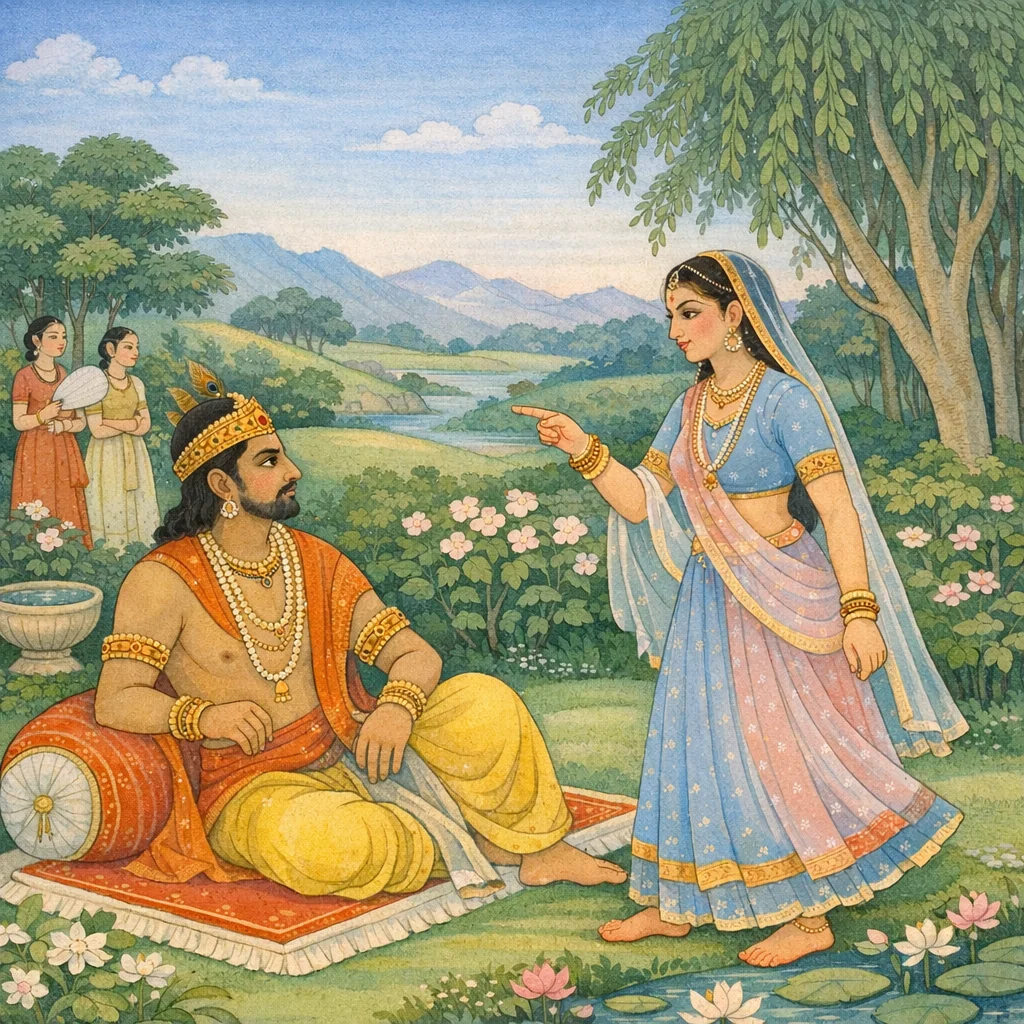
Adhyaya 82
ययाति–शक्रसंवादः (Speech-Ethics and Forbearance in the Celestial Court)
Upa-parva: Yayāti–Śakra Saṃvāda (Nīti on Speech and Forbearance)
Vaiśaṃpāyana describes King Yayāti dwelling in the divine abodes, honored among the gods, moving between devaloka and brahmaloka due to accumulated merit. Yayāti approaches Śakra, who asks a pointed question about the earlier moment when Pūru assumed Yayāti’s old age and Yayāti transferred the kingdom—requesting a truthful account of what Yayāti said then. Yayāti replies by describing an ideal of kingship and human excellence grounded in temperance: superiority lies in being unangered among the angry and patient among the impatient. The chapter develops a sustained ethic of speech: one should not retaliate when abused; anger burns the abuser while the forbearing person accrues merit. Harsh, wounding speech is portrayed as socially ruinous—like barbs that torment others and carry misfortune. The virtuous honor such a restrained person, protect them, and the aspirant should endure the excessive talk of the unvirtuous while adopting the conduct of the good. The discourse culminates in a maxim: no greater instrument of concord exists across the worlds than friendship, generosity, and sweet speech; therefore one should speak conciliating words, avoid cruelty in speech, honor the worthy, give rather than beg, and maintain dignified restraint.
Chapter Arc: इक्यासीवें अध्याय के उपसंहार के तुरंत बाद कथा महेन्द्रपुरी में खुलती है—देवयानी की अनुमति से वृषपर्वा अपनी पुत्री शर्मिष्ठा को अशोक-वनिका के समीप एक गृह बनवाकर ययाति के नगर में बसाता है, मानो शांति का उपहार देकर पुराने अपमान की छाया मिटाना चाहता हो। → शर्मिष्ठा दासी-सहस्रों, वस्त्र, अन्न-पान और सत्कार से घिरी रहती है, पर भीतर एक और ही ऋतु जागती है। सहस्र वर्ष बीतते हैं; युवावस्था प्राप्त कर वह अपने मन में इच्छा और अधिकार—दोनों का हिसाब लगाती है। इसी बीच सत्य-असत्य और राजधर्म पर संवाद उभरता है: साक्ष्य में मिथ्या बोलने का पातक, और राजा का ‘प्रमाण’ होना—जिसका झूठ समूचे लोक-विश्वास को घायल करता है। → धर्म-तर्क के बीच शर्मिष्ठा अपना निर्णायक वचन रखती है—‘राजन्, पति और सखी के पति—दोनों एक ही सभा में उपस्थित हैं; विवाह का अर्थ ही है कि पति सखी के माध्यम से भी वृत (स्वीकृत) होता है।’ यह कथन संबंधों की मर्यादा को चुनौती देता है और ययाति के लिए वचन, प्रतिष्ठा और काम—तीनों को एक ही क्षण में आमने-सामने खड़ा कर देता है। → समागम होता है; शर्मिष्ठा प्रथम गर्भ धारण करती है। समय आने पर वह देवगर्भ-सा तेजस्वी पुत्र जनती है—राजीव-नयन, देवबालक-सा। कथा संकेत देती है कि यह संतान आगे वंश-परंपरा में निर्णायक स्थान लेगी, और देवयानी-शर्मिष्ठा के बीच का अदृश्य द्वंद्व अब रक्त-रेखा में उतर आया है। → शर्मिष्ठा के पुत्र-जन्म के साथ प्रश्न खुला रह जाता है—देवयानी की अनुमति की सीमा क्या थी, और ययाति के वचन-धर्म पर इस गुप्त/विवादित संबंध का क्या परिणाम पड़ेगा?
Shlokas
Verse 1
इस प्रकार श्रीमह्ाभारत आदिपर्वके अन्तर्गत ययात्युपाख्यानविषयक इक्यासीवाँ अध्याय पूरा हुआ ॥/ ८१ ॥ (दाक्षिणात्य अधिक पाठके ३ श्लोक मिलाकर कुल ४१ श्लोक हैं) ऑपन-आक्राा बछ। अर: - किन्हीं श्लोकोंमें दो हजार और किन्हींमें एक हजार सखियोंका वर्णन आता है। यथावसर दोनों ठीक हैं। द्रयशीतितमो< ध्याय: ययातिसे देवयानीको पुत्र-प्राप्ति; ययाति और शर्मिष्ठाका एकान्त मिलन और उनसे एक पुत्रका जन्म वैशम्पायन उवाच ययातिः: स्वपुरं प्राप्य महेन्द्रपुरसंनि भम् । प्रविश्यान्त:पुरं तत्र देवयानीं न््यवेशयत्,वैशम्पायनजी कहते हैं--जनमेजय! ययातिकी राजधानी महेन्द्रपुरी (अमरावती)-के समान थी। उन्होंने वहाँ आकर देवयानीको तो अन्तःपुरमें स्थान दिया और उसीकी अनुमतिसे अशोकवाटिकाके समीप एक महल बनवाकर उसमें वृषपर्वाकी पुत्री शर्मिष्ठाको उसकी एक हजार दासियोंके साथ ठहराया और उन सबके लिये अन्न, वस्त्र तथा पेय आदिकी अलग-अलग व्यवस्था करके शर्मिष्ठाका समुचित सत्कार किया
Vaiśampāyana said: Having reached his own capital—resplendent like Mahendra’s city—King Yayāti entered the inner palace and installed Devayānī there. The episode frames Yayāti’s royal household arrangements: Devayānī is given the honored place in the antahpura, while Śarmiṣṭhā is accommodated separately by Devayānī’s consent. Ethically, the passage highlights the king’s duty to maintain order, provision, and propriety within the household, even amid complex relationships and competing claims of status.
Verse 2
देवयान्याश्चानुमते सुतां तां वृषपर्वण: । अशोकवनिकाशभ्याशे गृहं कृत्वा न्यवेशयत्,वैशम्पायनजी कहते हैं--जनमेजय! ययातिकी राजधानी महेन्द्रपुरी (अमरावती)-के समान थी। उन्होंने वहाँ आकर देवयानीको तो अन्तःपुरमें स्थान दिया और उसीकी अनुमतिसे अशोकवाटिकाके समीप एक महल बनवाकर उसमें वृषपर्वाकी पुत्री शर्मिष्ठाको उसकी एक हजार दासियोंके साथ ठहराया और उन सबके लिये अन्न, वस्त्र तथा पेय आदिकी अलग-अलग व्यवस्था करके शर्मिष्ठाका समुचित सत्कार किया
Vaiśampāyana said: With Devayānī’s consent, he had a residence built near the Aśoka-grove and installed there Śarmiṣṭhā, the daughter of Vṛṣaparvan. The episode underscores a courtly ethic of regulated hospitality and hierarchy: even while honoring Devayānī’s primacy, the king provides Śarmiṣṭhā a protected place to live, framing care and provision as duties to dependents under one’s shelter.
Verse 3
वृतां दासीसहस्रेण शर्मिष्ठां वार्षपर्वणीम् । वासोभिरन्नपानैश्न संविभज्य सुसत्कृताम्,वैशम्पायनजी कहते हैं--जनमेजय! ययातिकी राजधानी महेन्द्रपुरी (अमरावती)-के समान थी। उन्होंने वहाँ आकर देवयानीको तो अन्तःपुरमें स्थान दिया और उसीकी अनुमतिसे अशोकवाटिकाके समीप एक महल बनवाकर उसमें वृषपर्वाकी पुत्री शर्मिष्ठाको उसकी एक हजार दासियोंके साथ ठहराया और उन सबके लिये अन्न, वस्त्र तथा पेय आदिकी अलग-अलग व्यवस्था करके शर्मिष्ठाका समुचित सत्कार किया
Vaiśampāyana said: (Yayāti) arranged for Śarmiṣṭhā, the daughter of Vṛṣaparvan, to reside attended by a thousand maidservants; and, having apportioned for her clothing, food, and drink separately, he honored her with due hospitality. The episode underscores royal responsibility: even amid delicate household tensions, proper provision and respectful treatment are maintained according to dharma and decorum.
Verse 4
(अशोकवनिकाम ध्ये देवयानी समागता । शर्मिष्ठया सा क्रीडित्वा रमणीये मनोरमे ।। तत्रैव तां तु निर्दिश्य राज्ञा सह ययौ गृहम् । एवमेव सह प्रीत्या मुमुदे बहुकालतः ।।) देवयानी ययातिके साथ परम रमणीय एवं मनोरम अशोकवाटिकामें आती और शर्मिष्ठाके साथ वन-विहार करके उसे वहीं छोड़कर स्वयं राजाके साथ महलमें चली जाती थी। इस तरह वह बहुत समयतक प्रसन्नतापूर्वक आनन्द भोगती रही। देवयान्या तु सहित: स नृपो नहुषात्मज: । विजहार बहूनब्दान् देववन्मुदित: सुखी,नहुषकुमार राजा ययातिने देवयानीके साथ बहुत वर्षोंतक देवताओंकी भाँति विहार किया। वे उसके साथ बहुत प्रसन्न और सुखी थे
Vaiśaṃpāyana said: Devayānī would come into the delightful, enchanting Aśoka-grove, and after sporting there with Śarmiṣṭhā, she would leave her behind in that very place and return with the king to the palace. In this manner, she lived for a long time in contented joy. King Yayāti, the son of Nahuṣa, accompanied by Devayānī, enjoyed himself for many years—happy and pleased, as if among the gods. The passage underscores how sustained pleasure and royal ease can appear ‘divine,’ even as the larger narrative will later test the stability and ethical cost of such enjoyment.
Verse 5
ऋतुकाले तु सम्प्राप्ते देवयानी वराड़ना । लेभे गर्भ प्रथमत: कुमारं च व्यजायत,ऋतुकाल आनेपर सुन्दरी देवयानीने गर्भ धारण किया और समयानुसार प्रथम पुत्रको जन्म दिया
Vaiśampāyana said: When the proper season arrived, the lovely Devayānī conceived; and in due course she gave birth first to a son. The narration underscores the orderly, dharma-aligned rhythm of household life—conception and birth occurring at the appropriate time.
Verse 6
गते वर्षसहस्रे तु शर्मिष्ठा वार्षपर्वणी । ददर्श यौवन प्राप्ता ऋतुं सा चान्वचिन्तयत्,इस प्रकार एक हजार वर्ष व्यतीत हो जानेपर युवावस्थाको प्राप्त हुई वृषपर्वाकी पुत्री शर्मिष्ठाने अपनेको रजस्वलावस्थामें देखा और चिन्तामग्न हो गयी
Vaiśampāyana said: When a thousand years had passed, Śarmiṣṭhā, the daughter of Vṛṣaparvan, having reached youth, noticed that her season (menstruation) had come; and she fell into anxious reflection. The moment signals the awakening of adulthood and the social-ethical pressures surrounding marriage, lineage, and duty in royal life.
Verse 7
(शुद्धा स्नाता तु शर्मिष्ठा सर्वालंकारभूषिता । अशोकशाखामालम्ब्य सुफुल्लै: स्तबकैर्व॑ताम् ।। आदर्शे मुखमुद्वीक्ष्य भर्तृदर्शनलालसा । शोकमोहसमाविष्टा वचनं चेदमब्रवीत् ।। अशोक शोकापनुद शोकोपहतचेतसाम् । त्वज्नामानं कुरु क्षिप्रं प्रियसंदर्शनाद्धि माम् ।। एवमुक्तवती सा तु शर्मिष्ठा पुनरब्रवीत् ।।) स्नान करके शुद्ध हो समस्त आभूषणोंसे विभूषित हुई शर्मिष्ठा सुन्दर पुष्पोंके गुच्छोंसे भरी अशोक-शाखाका आश्रय लिये खड़ी थी। दर्पणमें अपना मुँह देखकर उसके मनमें पतिके दर्शनकी लालसा जाग उठी और वह शोक एवं मोहसे युक्त हो इस प्रकार बोली-- हे अशोक वृक्ष! जिनका हृदय शोकमें डूबा हुआ है, उन सबके शोकको तुम दूर करनेवाले हो। इस समय मुझे प्रियतमका दर्शन कराकर अपने ही जैसे नामवाली बना दो' ऐसा कहकर शर्मिष्ठा फिर बोली-- । ऋतुकालश्व सम्प्राप्तो न च मे5स्ति पतिर्वृत: । किं प्राप्तं कि नु कर्तव्यं कि वा कृत्वा कृतं भवेत्,“मुझे ऋतुकाल प्राप्त हो गया; किंतु अभीतक मैंने पतिका वरण नहीं किया है। यह कैसी परिस्थिति आ गयी। अब क्या करना चाहिये अथवा क्या करनेसे सुकृत (पुण्य) होगा
Having bathed and become pure, Śarmiṣṭhā stood adorned with every ornament, leaning upon a branch of the aśoka tree thick with clusters of fully blossomed flowers. Looking at her face in a mirror, longing to behold her husband, and overwhelmed by grief and confusion, she spoke: “O Aśoka, dispeller of sorrow for those whose hearts are struck by sorrow—quickly make me true to your own name by granting me the sight of my beloved.” Having said this, Śarmiṣṭhā again spoke: “The season of fertility has arrived, yet I have not chosen a husband. What situation is this that has come upon me? What should be done now, or what deed would count as truly done—bringing merit and right order?”
Verse 8
देवयानी प्रजातासौ वृथाहं प्राप्तयौवना । यथा तया वृतो भर्ता तथैवाहं वृणोमि तम्,“देवयानी तो पुत्रवती हो गयी; किंतु मुझे जो जवानी मिली है, वह व्यर्थ जा रही है। जिस प्रकार उसने पतिका वरण किया है, उसी तरह मैं भी उन्हीं महाराजका क्यों न पतिके रूपमें वरण कर लूँ
Vaiśaṃpāyana said: “Devayānī has already become a mother; but the youth that has come to me is being wasted. Just as she chose her husband, so I too choose that very king as my husband.”
Verse 9
राज्ञा पुत्रफलं देयमिति मे निश्चिता मतिः । अपीदानीं स धर्मात्मा इयान्मे दर्शनं रह:,“मेरे याचना करनेपर राजा मुझे पुत्ररूप फल दे सकते हैं, इस बातका मुझे पूरा विश्वास है; परंतु कया वे धर्मात्मा नरेश इस समय मुझे एकान्तमें दर्शन देंगे?”
Vaiśampāyana said: “I am firmly convinced that, if I make my request, the king can grant me the fruit of a son. Yet will that righteous monarch, at this very time, give me a private audience?”
Verse 10
अथ निष्क्रम्य राजासौ तस्मिन् काले यदृच्छया । अशोकवनिकाशभ्याशे शर्मिष्षां प्रेक्ष्य विछ्ठित:,शर्मिष्ठा इस प्रकार विचार कर ही रही थी कि राजा ययाति उसी समय दैववश महलसे बाहर निकले और अशोकवाटिकाके निकट शर्मिष्ठाको देखकर ठहर गये
Vaiśampāyana said: Then, just at that time, the king happened to step out. By sheer chance, near the aśoka-grove he caught sight of Śarmiṣṭhā and paused there—an apparently accidental meeting that sets in motion a morally charged encounter, where desire and duty will soon be tested.
Verse 11
तमेकं रहिते दृष्टवा शर्मिष्ठा चारुहासिनी । प्रत्युदगम्याञ्जलिं कृत्वा राजानं वाक्यमब्रवीत्,मनोहर हासवाली शर्मिष्ठाने उन्हें एकान्तमें अकेला देख आगे बढ़कर उनकी अगवानी की तथा हाथ जोड़कर राजासे यह बात कही
Vaiśampāyana said: Seeing the king alone in a secluded place, Śarmiṣṭhā—smiling sweetly—went forward to receive him. With palms joined in respectful greeting, she addressed the king with measured words, setting a tone of deference even as the situation carried personal and moral implications.
Verse 12
शर्मिष्ोवाच सोमस्येन्द्रस्य विष्णोर्वा यमस्य वरुणस्य च । तव वा नाहुष गृहे कः स्त्रियं द्रष्टमहति,शर्मिष्ठाने कहा--नहुषनन्दन! चन्द्रमा, इन्द्र, विष्णु, यम, वरुण अथवा आपके महलमें कौन किसी स्त्रीकी ओर दृष्टि डाल सकता है? (अतएव यहाँ मैं सर्वथा सुरक्षित हूँ) महाराज! मेरे रूप, कुल और शील कैसे हैं, यह तो आप सदासे ही जानते हैं। मैं आज आपको प्रसन्न करके यह प्रार्थना करती हूँ कि मुझे ऋतुदान दीजिये--मेरे ऋतुकालको सफल बनाइये
Śarmiṣṭhā said: “Whether it be the Moon, Indra, Viṣṇu, Yama, or Varuṇa—or in your own palace, O Nahūṣa—who would dare cast his eyes upon another man’s woman? Therefore I am wholly safe here. O king, you have long known what my beauty, lineage, and conduct are. Today I seek to please you and make this request: grant me the gift due in the season of fertility—make my fertile time bear fruit.”
Verse 13
रूपाभिजनशीलिै हि त्वं राजन् वेत्थ मां सदा । सात्वां याचे प्रसाद्याहमृतुं देहि नराधिप,शर्मिष्ठाने कहा--नहुषनन्दन! चन्द्रमा, इन्द्र, विष्णु, यम, वरुण अथवा आपके महलमें कौन किसी स्त्रीकी ओर दृष्टि डाल सकता है? (अतएव यहाँ मैं सर्वथा सुरक्षित हूँ) महाराज! मेरे रूप, कुल और शील कैसे हैं, यह तो आप सदासे ही जानते हैं। मैं आज आपको प्रसन्न करके यह प्रार्थना करती हूँ कि मुझे ऋतुदान दीजिये--मेरे ऋतुकालको सफल बनाइये
Vaiśampāyana said: “O King, you have always known my beauty, noble birth, and conduct. Therefore I now entreat you—having sought to win your favor—O lord of men, grant me my season; make my time of fertility fruitful.”
Verse 14
ययातिरुवाच वेझि त्वां शीलसम्पन्नां दैत्यकन्यामनिन्दिताम् । रूपं च ते न पश्यामि सूच्यग्रमपि निन्दितम्,ययातिने कहा--शर्मिष्ठे! तुम दैत्यायाजकी सुशील और निर्दोष कन्या हो। मैं तुम्हें अच्छी तरह जानता हूँ। तुम्हारे शरीर अथवा रूपमें सूईकी नोक बराबर भी ऐसा स्थान नहीं है, जो निन्दाके योग्य हो
Yayāti said: “I know you well, Śarmiṣṭhā—an irreproachable maiden of the Daityas, endowed with good conduct. In your body and beauty I do not see even a needle’s point that could be blamed.”
Verse 15
अब्रवीदुशना काव्यो देवयानीं यदावहम् | नेयमाह्नयितव्या ते शयने वार्षपर्वणी,परंतु क्या करूँ; जब मैंने देवयानीके साथ विवाह किया था, उस समय कपविपुत्र शुक्राचार्यने मुझसे स्पष्ट कहा था कि *वृषपर्वाकी पुत्री इस शर्मिष्ठाकों अपनी सेजपर न बुलाना'
Vaiśampāyana said: ‘When I married Devayānī, Uśanā Kāvya (Śukrācārya) spoke to me plainly: “You must not invite this Śarmiṣṭhā, the daughter of Vṛṣaparvan, onto your bed.”’ The statement frames a moral boundary set at the time of marriage—an injunction meant to protect marital fidelity and prevent a breach of trust between spouses and families.
Verse 16
शर्मिष्टोवाच न नर्मयुक्ते वचनं हिनस्ति न स्त्रीषु राजन् न विवाहकाले | प्राणात्यये सर्वधनापहारे पज्चानृतान्याहुरपातकानि,शर्मिष्ठाने कहा--राजन्! परिहासयुक्त वचन असत्य हो तो भी वह हानिकारक नहीं होता। अपनी स्त्रियोंके प्रति, विवाहके समय, प्राणसंकटके समय तथा सर्वस्वका अपहरण होते समय यदि कभी विवश होकर असत्य भाषण करना पड़े तो वह दोषकारक नहीं होता। ये पाँच प्रकारके असत्य पापशून्य बताये गये हैं
Śarmiṣṭhā said: “O King, a statement made in jest does not cause harm even if it is untrue. Likewise, untruth spoken in relation to one’s women, at the time of marriage, in a life‑threatening crisis, or when one’s entire wealth is being seized—if uttered under compulsion—does not incur sin. These five kinds of untruth, they say, are free from the stain of grave wrongdoing.”
Verse 17
पृष्टं तु साक्ष्ये प्रवदन्तमन्य था वदन्ति मिथ्या पतितं नरेन्द्र । एकार्थतायां तु समाहितायां मिथ्या वदन्तं त्वनृतं हिनस्ति,महाराज! किसी निर्दोष प्राणीका प्राण बचानेके लिये गवाही देते समय किसीके पूछनेपर अन्यथा (असत्य) भाषण करनेवालेको यदि कोई पतित कहता है तो उसका कथन मिथ्या है। परंतु जहाँ अपने और दूसरे दोनोंके ही प्राण बचानेका प्रसंग उपस्थित हो, वहाँ केवल अपने प्राण बचानेके लिये मिथ्या बोलनेवालेका असत्यभाषण उसका नाश कर देता है
Vaiśampāyana said: “O king, if, when questioned while giving testimony, a person speaks otherwise than the fact in order to save the life of an innocent being, and someone calls him ‘fallen’ (patita), that accusation is itself false. But when the matter is narrowed to a single self-serving aim—when both lives are at stake and one speaks untruth only to save oneself—then that falsehood, that untruth, becomes the cause of his ruin.”
Verse 18
ययातिरुवाच राजा प्रमाणं भूतानां स नश्येत मृषा वदन् | अर्थकृच्छुमपि प्राप्य न मिथ्या कर्तुमुत्सहे,ययाति बोले--देवि! सब प्राणियोंके लिये राजा ही प्रमाण है। वह यदि झूठ बोलने लगे तो उसका नाश हो जाता है। अत: अर्थ-संकटमें पड़नेपर भी मैं झूठा काम नहीं कर सकता
Verse 19
शर्मिष्टोवाच समावेतौ मतौ राजन् पति: सख्याश्न यः पति: । सम॑ विवाहमित्याहु: सख्या मेडसि वृत: पति:,शर्मिष्ठाने कहा--राजन्! अपना पति और सखीका पति दोनों बराबर माने गये हैं। सखीके साथ ही उसकी सेवामें रहनेवाली दूसरी कन्याओंका भी विवाह हो जाता है। मेरी सखीने आपको अपना पति बनाया है, अतः मैंने भी बना लिया
Śarmiṣṭhā said: “O King, it is held that my husband and my friend’s husband are to be regarded as one and the same. They say that the marriage is shared alike, for the husband chosen by one’s companion is also accepted for the attendant maidens who remain with her in service. Since my friend has made you her husband, I too have taken you as my husband.”
Verse 20
(सह दत्तास्मि काव्येन देवयान्या महर्षिणा । पूज्या पोषयितव्येति न मृषा कर्तुमहसि ।। सुवर्णमणिरत्नानि वस्त्राण्याभरणानि च । याचितृणां ददासि त्वं गोभूम्यादीनि यानि च ।। वाहिकं दानमित्युक्त न शरीराश्रितं नृप । दुष्करं पुत्रदानं च आत्मदानं च दुष्करम् ।। शरीरदानातू तत् सर्व दत्त भवति नाहुष । यस्य यस्य यथा कामस्तस्य तस्य ददाम्यहम् ।। इत्युक्त्वा नगरे राजंस्त्रिकालं घोषितं त्वया ।। अनुृतं तत्तु राजेन्द्र वृथा घोषितमेव च । तत् सत्यं कुरु राजेन्द्र यथा वैश्रवणस्तथा ।।) राजन! महर्षि शुक्राचार्यने देवयानीके साथ मुझे भी यह कहकर आपको समर्पित किया है कि तुम इसका भी पालन-पोषण और आदर करना। आप उनके वचनको मिथ्या न करें। महाराज! आप प्रतिदिन याचकोंको जो सुवर्ण, मणि, रत्न, वस्त्र, आभूषण, गौ और भूमि आदि दान करते हैं, वह बाह्य दान कहा गया है। वह शरीरके आश्रित नहीं है। पुत्रदान और शरीरदान अत्यन्त कठिन है। नहुषनन्दन! शरीरदानसे उपर्युक्त सब दान सम्पन्न हो जाता है। राजन्! “जिसकी जैसी इच्छा होगी उस-उस मनुष्यको मैं मुँहमाँगी वस्तु दूँगा” ऐसा कहकर आपने नगरमें जो तीनों समय दानकी घोषणा करायी है, वह मेरी प्रार्थना ठुकरा देनेपर झूठी सिद्ध होगी। वह सारी घोषणा ही व्यर्थ समझी जायगी। राजेन्द्र! आप कुबेरकी भाँति अपनी उस घोषणाको सत्य कीजिये। ययातिरुवाच दातव्यं याचमाने भ्य इति मे व्रतमाहितम् । त्वं च याचसि मां काम॑ ब्रूहि कि करवाणि ते,ययाति बोले--याचकोंको उनकी अभीष्ट वस्तुएँ दी जाय, ऐसा मेरा व्रत है। तुम भी मुझसे अपने मनोरथकी याचना करती हो; अतः बताओ मैं तुम्हारा कौन-सा प्रिय कार्य करूँ?
Vaiśampāyana said: “O King, the great seer Kāvya (Śukrācārya) has handed me over to you along with Devayānī, saying, ‘He too is to be honored and maintained.’ You must not make his word false. The gold, gems, jewels, garments, ornaments, cows, lands, and the like that you give daily to supplicants are called external gifts; they are not gifts that rest upon one’s own body. But the gift of a son—and the gift of oneself—are exceedingly hard. O descendant of Nahusha, by giving one’s own body, all those other gifts are, as it were, fulfilled at once. You proclaimed in the city, three times a day, ‘Whatever desire anyone has, I shall grant it.’ If you reject my request, that proclamation becomes untrue and your public announcement is rendered pointless. Therefore, O lord of kings, make your proclamation true, like Vaiśravaṇa (Kubera) himself.” Yayāti said: “My vow is fixed: to give to those who ask. You too are asking me for a desire—tell me what I should do for you.”
Verse 21
शर्मिष्टोवाच अधर्मात् पाहि मां राजन् धर्म च प्रतिपादय । त्वत्तो5पत्यवती लोके चरेयं धर्ममुत्तमम्,शर्मिष्ठाने कहा--राजन्! मुझे अधर्मसे बचाइये और धर्मका पालन कराइये। मैं चाहती हूँ, आपसे संतानवती होकर इस लोकमें उत्तम धर्मका आचरण करूँ
Śarmiṣṭhā said: “O King, protect me from unrighteousness and set me firmly on the path of dharma. By having children through you, may I live in this world practicing the highest dharma.”
Verse 22
त्रय एवाधना राजन् भार्या दासस्तथा सुतः । यत् ते समधिगच्छन्ति यस्यैते तस्य तद् धनम्,महाराज! तीन व्यक्ति धनके अधिकारी नहीं हैं--पत्नी, दास और पुत्र। ये जो धन प्राप्त करते हैं वह उसीका होता है जिसके अधिकारमें ये हैं। अर्थात् पत्नीके धनपर पतिका, सेवकके धनपर स्वामीका और पुत्रके धनपर पिताका अधिकार होता है
Vaiśampāyana said: “O king, three are said to be without independent property-rights: the wife, the servant, and the son. Whatever wealth they come to possess is, in law and custom, the wealth of the one to whom they belong—of the husband in the case of the wife, of the master in the case of the servant, and of the father in the case of the son.” The statement frames a normative rule of household order and authority, presenting dependence and guardianship as the basis for control over acquisitions.
Verse 23
देवयान्या भुजिष्यास्मि वश्या च तव भार्गवी । सा चाहं च त्वया राजन् भजनीये भजस्व माम्,मैं देवयानीकी सेविका हूँ और वह आपके अधीन है; अतः राजन! वह और मैं दोनों ही आपके सेवन करनेयोग्य हैं। अत: मेरा सेवन कीजिये
Vaiśampāyana said: “I am Devayānī’s attendant, and she, O king, is under your authority. Therefore, O ruler, both she and I are fit to be served by you; so accept me (and attend to us) as one who is to be enjoyed/served.”
Verse 24
वैशम्पायन उवाच एवमुक्तस्तु राजा स तथ्यमित्यभिजज्ञिवान् पूजयामास शर्मिष्ठां धर्म च प्रत्यपादयत्,वैशम्पायनजी कहते हैं--शर्मिष्ठके ऐसा कहनेपर राजाने उसकी बातोंको ठीक समझा। उन्होंने शर्मिष्ठाका सत्कार किया और धर्मानुसार उसे अपनी भार्या बनाया
Vaiśampāyana said: Thus addressed, the king recognized her words as true. He honored Śarmiṣṭhā and, in accordance with dharma, accepted her as his wife—showing that rightful conduct includes acknowledging truth, offering due respect, and regularizing relationships through lawful duty rather than impulse.
Verse 25
स समागम्य शर्मिष्ठां यथाकाममवाप्य च | अन्योन्यं चाभिसम्पूज्य जग्मतुस्तीौ यथागतम्,फिर शर्मिष्ठाके साथ समागम किया और इच्छानुसार कामोपभोग करके एक-दूसरेका आदर-सत्कार करनेके पश्चात् दोनों जैसे आये थे वैसे ही अपने-अपने स्थानपर चले गये
Vaiśampāyana said: He met with Śarmiṣṭhā, and, having enjoyed intimacy according to desire, the two then honored one another with due regard; thereafter they departed, each returning just as they had come. The verse narrates a private act followed by mutual courtesy, hinting at the tension between personal desire (kāma) and the social-ethical consequences that such secret encounters can entail in the larger story.
Verse 26
तस्मिन् समागमे सुभू: शर्मिष्ठा चारुहासिनी । लेभे गर्भ प्रथमतस्तस्मान्नपतिसत्तमात्,सुन्दर भौंह तथा मनोहर मुसकानवाली शर्मिष्ठाने उस समागममें नृपश्रेष्ठ ययातिसे पहले-पहल गर्भ धारण किया
Vaiśampāyana said: In that union, the beautiful Śarmiṣṭhā—of charming smiles—conceived a child for the first time by that foremost of kings. The verse marks the narrative turning-point where a private relationship bears public consequence through progeny, setting in motion questions of marital duty, legitimacy, and the ethical weight of desire within royal life.
Verse 27
प्रजज्ञे च ततः काले राजन् राजीवलोचना । कुमारं देवगर्भाभं राजीवनिभलोचनम्,जनमेजय! तदनन्तर समय आनेपर कमलके समान नेत्रोंवाली शर्मिष्ठाने देवबालक- जैसे सुन्दर एक कमलनयन कुमारको उत्पन्न किया
Vaiśampāyana said: Then, at that time, O King Janamejaya, the lotus-eyed Śarmiṣṭhā gave birth to a son—radiant like one born of the gods, with eyes like lotuses. The narration underscores the auspiciousness attributed to noble birth and beauty, while quietly reminding that such outward signs do not by themselves settle questions of rightful conduct and lineage that will later shape duty and consequence.
Verse 82
इति श्रीमहाभारते आदिपर्वणि सम्भवपर्वणि ययात्युपाख्याने द्यशीतितमो< ध्याय:,इस प्रकार श्रीमहाभारत आदिपर्वके अन्तर्गत सम्भवपर्वनें ययात्युपाख्यानविषयक बयासीवाँ अध्याय पूरा हुआ
Thus, in the Śrī Mahābhārata, within the Ādi Parva and specifically the Sambhava Parva, the episode concerning King Yayāti concludes; this marks the completion of the eighty-second chapter. The closing formula signals a transition: the narrator (Vaiśampāyana) ends this unit of the Yayāti narrative, framing it as part of the larger account of origins and lineage, where moral causality and the consequences of desire are emphasized.
Frequently Asked Questions
The implicit dilemma is how a ruler should respond to provocation and insult: whether to retaliate through anger and harsh speech or to preserve dharma through restraint, patience, and conciliatory language.
Speech is treated as karmically and socially consequential: non-retaliation and sweet speech generate concord and merit, while cruel words function like weapons that harm others and degrade the speaker’s standing.
No explicit phalaśruti formula is stated; instead, the chapter embeds outcome-logic: the forbearing person gains sukṛta (merit) and social protection, while the abusive speaker is characterized as carrying misfortune and social disrepute.