Adhyaya 158
Ādi Parva, Adhyāya 158 — Aṅgāraparṇa-saṃvāda and Gaṅgā-tīrtha Saṃghaṭṭa (Encounter at the Gaṅgā ford)
Upa-parva: Tīrtha-yātrā and Gaṅgā Encounter Episode (Ādi Parva contextual unit)
Vaiśaṃpāyana narrates the Pāṇḍavas’ departure with their mother along northern routes to the Somaśravāyaṇa tīrtha on the Gaṅgā. Arjuna advances with a firebrand (ulmuka) as both illumination and protection. At the river, a Gandharva king—identified as Aṅgāraparṇa—approaches, provoked by noise and asserting a normative restriction: liminal twilight and night are designated for Yakṣas, Gandharvas, and Rākṣasas, while humans are censured for approaching water at improper times. Arjuna responds with a principled rebuttal: Gaṅgā’s cosmic course and salvific functions (including as Alakanandā among the gods and as a difficult passage for the impure) render her non-excludable; obstructing access is framed as contrary to sanātana-dharma. Aṅgāraparṇa attacks with arrows; Arjuna deflects them using shield and torch, rejects fear-based tactics, and deploys the Āgneya astra received through the Bharadvāja–Agniveśya–Droṇa lineage, burning the Gandharva’s chariot. Arjuna captures the disoriented opponent by the hair and draws him toward his brothers. The Gandharva’s wife, Kumbhīnasī, petitions Yudhiṣṭhira for protection; Yudhiṣṭhira orders release, emphasizing the impropriety of killing a defeated, dishonored adversary. The Gandharva accepts defeat, explains his name-change (Citraratha becoming Dagdharatha), and offers recompense: the Cakṣuṣī vidyā (a seeing/vision knowledge) contingent on discipline, and Gandharva-born horses with exceptional qualities. Arjuna declines gifts that could imply coercion, but agrees to an exchange: horses in return for the Āgneya astra and a durable bond of friendship, requesting guidance on what removes fear from Gandharvas.
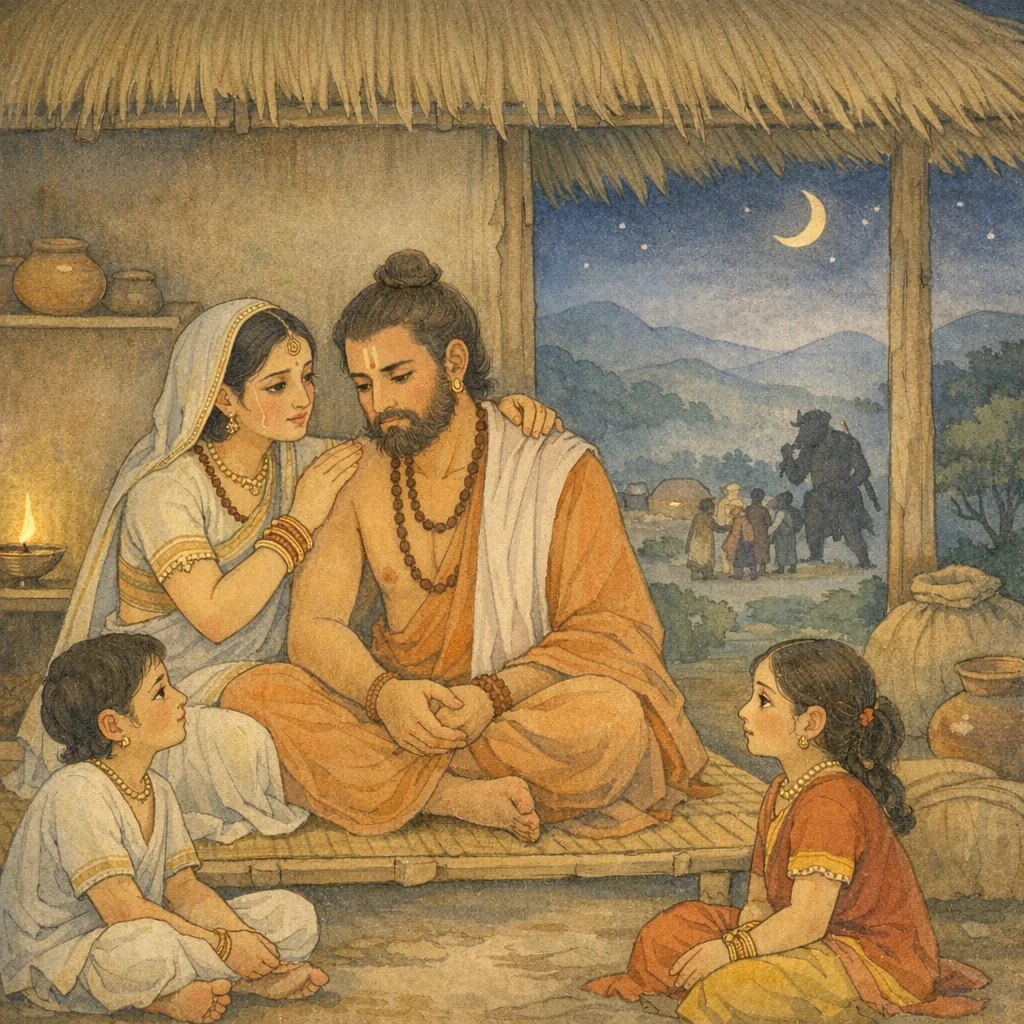
Chapter Arc: एक ब्राह्मण-गृह में मृत्यु की अनिवार्यता का कठोर बोध उतरता है—बकासुर को कर-रूप में मनुष्य-बलि देनी है, और घर का स्वामी शोक से जड़ हो उठा है। → ब्राह्मणी अपने पति को तर्क और धर्म-नीति से संभालती है: संसार में मृत्यु अवश्यंभावी है, पर ‘अवश्य होने वाली’ बात पर संताप से कर्तव्य नहीं छूटता। वह बताती है कि पत्नी-पुत्र-पुत्री सब अपने-अपने हित के लिए प्रिय हैं, इसलिए मोह में पड़कर आत्मत्याग का निश्चय करना गर्हित है; कुल, बच्चों और स्वयं को बचाने का उपाय सोचो। वह यह भी स्मरण कराती है कि धर्मविदों के मत में पुत्रवती स्त्री का पति से पहले परलोक-गमन (आत्महत्या/सती-भाव) परम धर्म नहीं, बल्कि निंद्य मार्ग हो सकता है। → ब्राह्मणी स्पष्ट निर्णय रखती है—पति को आत्मत्याग से रोकते हुए कहती है कि वह स्वयं ‘वहाँ’ (बकासुर के पास) जाने को तैयार है, और पति को कुल तथा दोनों बालकों की रक्षा हेतु जीवित रहना चाहिए। → वैशम्पायन के कथनानुसार, पत्नी के वचनों से स्पर्शित ब्राह्मण उसे आलिंगन करता है; आँसू रोक नहीं पाता—पर आत्मघात का आवेग ढीला पड़ता है और विवेक का द्वार खुलता है। → अब प्रश्न यह रह जाता है—क्या सचमुच ब्राह्मणी जाएगी, या कोई अन्य उपाय (अतिथि-रूप पाण्डव/भीम) इस संकट को पलट देगा?
Shlokas
Verse 1
(दाक्षिणात्य अधिक पाठके ४ ३ श्लोक मिलाकर कुल ४५३ श्लोक हैं) #ीद>-3८5>> हम ्ीसा्िस - यावन्तो यस्य संयोगा द्रव्यैरिष्टर्भवन्त्युत । तावन्तो5स्य निखन्यन्ते हृदये शोकशड्भकव: ।। सप्तपञ्चाशर्दाधिकशततमोब ध्याय: ब्राह्मणीका स्वयं मरनेके लिये उद्यत होकर पतिसे जीवित रहनेके लिये अनुरोध करना ब्राह्मण्युवाच न संतापस्त्वया कार्य: प्राकृतेनेव कहिचित् । न हि संतापकालो<थयं वैद्यस्य तव विद्यते,ब्राह्मणी बोली--प्राणनाथ! आपको साधारण मनुष्योंकी भाँति कभी संताप नहीं करना चाहिये। आप विद्दान् हैं, आपके लिये यह संतापका अवसर नहीं है
The Brahmin woman said: “You should not give way to grief at all, as ordinary people do. You are a learned man; for one like you, this is not a time meant for lamentation.”
Verse 2
अवश्यं निधन सर्वर्गन्तव्यमिह मानवै: । अवश्यम्भाविन्यर्थे वै संतापो नेह विद्यते,एक-न-एक दिन संसारमें सभी मनुष्योंको अवश्य मरना पड़ेगा; अतः जो बात अवश्य होनेवाली है, उसके लिये यहाँ शोक करनेकी आवश्यकता नहीं है
All human beings here must inevitably meet with death. Therefore, for what is certain to occur, there is no need for grief or torment of mind in this world.
Verse 3
भार्या पुत्रो5थ दुहिता सर्वमात्मार्थमिष्यते । व्यथां जहि सुबुद्धया त्वं स्वयं यास्यामि तत्र च,पत्नी, पुत्र और पुत्री--ये सब अपने ही लिये अभीष्ट होते हैं। आप उत्तम बुद्धि- विवेकका आश्रय लेकर शोक-संताप छोड़िये। मैं स्वयं वहाँ (राक्षसके समीप) चली जाऊँगी। पत्नीके लिये लोकमें सबसे बढ़कर यही सनातन कर्तव्य है कि वह अपने प्राणोंको भी निछावर करके पतिकी भलाई करे
The Brahmin’s wife declares that a wife, a son, and a daughter are each naturally dear for one’s own sake; therefore the Brahmin should, with clear discernment, abandon grief and agitation. She resolves to go herself to the place where the rākṣasa is, asserting a traditional ethical ideal: a wife’s highest enduring duty is to secure her husband’s welfare even at the cost of her own life. The verse frames self-sacrifice not as despair but as a deliberate choice grounded in dharma and marital loyalty.
Verse 4
एतद्धि परम॑ नार्या: कार्य लोके सनातनम् | प्राणानपि परित्यज्य यद् भर्तृहितमाचरेत्,पत्नी, पुत्र और पुत्री--ये सब अपने ही लिये अभीष्ट होते हैं। आप उत्तम बुद्धि- विवेकका आश्रय लेकर शोक-संताप छोड़िये। मैं स्वयं वहाँ (राक्षसके समीप) चली जाऊँगी। पत्नीके लिये लोकमें सबसे बढ़कर यही सनातन कर्तव्य है कि वह अपने प्राणोंको भी निछावर करके पतिकी भलाई करे
This, indeed, is held to be a woman’s highest and timeless duty in the world: even setting aside her own life-breath, she should act for the welfare of her husband. The speaker frames wifely devotion as an ethical ideal of self-sacrifice, urging the abandonment of grief and the choice of action that protects the husband, even at personal cost.
Verse 5
तच्च तत्र कृतं कर्म तवापीदं सुखावहम् | भवत्यमुत्र चाक्षय्यं लोके5स्मिंश्व॒ यशस्करम्,पतिके हितके लिये किया हुआ मेरा वह प्राणोत्सर्गरूप कर्म आपके लिये तो सुखकारक होगा ही, मेरे लिये भी परलोकमें अक्षय सुखका साधक और इस लोकमें यशकी प्राप्ति करानेवाला होगा
Verse 6
एष चैव गुरुर्धर्मो यं प्रवक्ष्याम्पहं तव । अर्थश्न तव धर्मश्न भूयानत्र प्रदृश्यते,यह सबसे बड़ा धर्म है, जो मैं आपसे बता रही हूँ। इसमें आपके लिये अधिक-से- अधिक स्वार्थ और धर्मका लाभ दिखायी देता है
“This indeed is the highest, guiding principle of dharma, which I shall now declare to you. In this course of action, for you, both practical benefit (artha) and righteousness (dharma) are seen to arise in greater measure.”
Verse 7
यदर्थमिष्यते भार्या प्राप्त: सो<र्थस्त्वया मयि | कन्या चैका कुमारश्न॒ कृताहमनृणा त्वया,जिस उद्देश्यसे पत्नीकी अभिलाषा की जाती है, आपने वह उद्देश्य मुझसे सिद्ध कर लिया है। एक पुत्री और एक पुत्र आपके द्वारा मेरे गर्भसे उत्पन्न हो चुके हैं। इस प्रकार आपने मुझे भी उऋण कर दिया है
The Brahmin says: “The very purpose for which one desires a wife has been fulfilled by you through me. From my womb a single daughter and a single son have been born by you. Thus you have also freed me from my debt (the obligation of progeny).”
Verse 8
समर्थ: पोषणे चासि सुतयो रक्षणे तथा । न त्वहं सुतयो: शक्ता तथा रक्षणपोषणे,इन दोनों संतानोंका पालन-पोषण और संरक्षण करनेमें आप समर्थ हैं। आपकी तरह मैं इन दोनोंके पालन-पोषण तथा रक्षाकी व्यवस्था नहीं कर सकूँगी
The brāhmaṇa woman said: “You are capable of providing for these two children and protecting them as well. But I am not equally able to arrange their protection and maintenance as you can.” In context, the statement underscores a sober recognition of capacity and responsibility: care for dependents is a dharmic duty, yet it must be undertaken by one who is truly able to sustain and safeguard them.
Verse 9
मम हि त्वद्विहीनाया: सर्वप्राणधने श्वर । कथं स्यातां सुतौ बालौ भरेयं च कथं त्वहम्,मेरे सर्वस्वके स्वामी प्राणेश्वर! आपके न रहनेपर मेरे इन दोनों बच्चोंकी क्या दशा होगी? मैं किस तरह इन बालकोंका भरण-पोषण करूँगी?
For me, bereft of you—O lord who is my very life and treasure—what will become of these two young sons? And how could I, alone, possibly sustain and raise them? (The speaker appeals to her husband’s duty and compassion, grounding her plea in the ethical responsibility of protecting dependents.)
Verse 10
कथं हि विधवानाथा बालपुत्रा विना त्वया | मिथुनं जीवयिष्यामि स्थिता साधुगते पथि,मेरा पुत्र अभी बालक है, आपके बिना मैं अनाथ विधवा सन्मार्गपर स्थित रहकर इन दोनों बच्चोंको कैसे जिलाऊँगी
“How, indeed, shall I—bereft of husband and protector, with only a young son—keep this pair of children alive without you? Even while I stand upon the path of the righteous, how am I to sustain them?”
Verse 11
अहंकृतावलिप्तैश्व प्रार्थ्यमानामिमां सुताम् । अयुक्तैस्तव सम्बन्धे कथं शक्ष्यामि रक्षितुम्,जो आपके यहाँ सम्बन्ध करनेके सर्वथा अयोग्य हैं, ऐसे अहंकारी और घमंडीलोग जब मुझसे इस कन्याको माँगेंगे, तब मैं उनसे इसकी रक्षा कैसे कर सकूँगी
The brāhmaṇa said: “When arrogant and conceited men—who are wholly unfit to be allied with you—come to me seeking this daughter of mine, how shall I be able to protect her from them?”
Verse 12
उत्सृष्टमामिषं भूमौ प्रार्थयन्ति यथा खगा: । प्रार्थयन्ति जना: सर्वे पतिहीनां तथा स्त्रियम्,जैसे पक्षी पृथ्वीपर डाले हुए मांसके टुकड़ेको लेनेके लिये झपटते हैं, उसी प्रकार सब लोग विधवा स्त्रीको वशमें करना चाहते हैं। द्विजश्रेष्ठ) दुराचारी मनुष्य जब बार-बार मुझसे याचना करते हुए मुझे मर्यादासे विचलित करनेकी चेष्टा करेंगे, उस समय मैं श्रेष्ठ पुरुषोंके द्वारा अभिलषित मार्गपर स्थिर नहीं रह सकूँगी
The brāhmaṇa said: “Just as birds swoop down, craving a piece of meat thrown upon the ground, so too do people of every sort set their desires upon a woman who is without a husband. When immoral men repeatedly beg and press me, trying to shake me from the bounds of propriety, I fear I will not be able to remain steady on the path cherished by the noble.”
Verse 13
साहं विचाल्यमाना वै प्रार्थ्यमाना दुरात्मभि: । स्थातुं पथि न शक्ष्यामि सज्जनेष्टे द्विजोत्तम,जैसे पक्षी पृथ्वीपर डाले हुए मांसके टुकड़ेको लेनेके लिये झपटते हैं, उसी प्रकार सब लोग विधवा स्त्रीको वशमें करना चाहते हैं। द्विजश्रेष्ठ) दुराचारी मनुष्य जब बार-बार मुझसे याचना करते हुए मुझे मर्यादासे विचलित करनेकी चेष्टा करेंगे, उस समय मैं श्रेष्ठ पुरुषोंके द्वारा अभिलषित मार्गपर स्थिर नहीं रह सकूँगी
O best of twice-born, when wicked men keep importuning me and trying to shake me from the bounds of propriety, I will not be able to remain steady on the path cherished by the virtuous. Just as birds swoop down to seize a piece of meat cast upon the ground, so do people seek to bring a widowed woman under their control; pressed again and again by such corrupt pleas, my resolve to stand in the noble way may falter.
Verse 14
कथं तव कुलस्यैकामिमां बालामनागसम् । पितृपैतामहे मार्गे नियोक्तुमहमुत्सहे,आपके कुलकी इस एकमात्र निरपराध बालिकाको मैं बाप-दादोंके द्वारा पालित धर्ममार्गपर लगाये रखनेमें कैसे समर्थ होऊँगी
The brāhmaṇa said: “How could I bring myself to place this single, innocent young girl of your lineage upon the ancestral path handed down by fathers and grandfathers? How can I presume to direct her into that inherited course of duty?”
Verse 15
कथं शक्ष्यामि बाले5स्मिन् गुणानाधातुमीप्सितान् । अनाथे सर्वतो लुप्ते यथा त्वं धर्मदर्शिवान्,आप धर्मके ज्ञाता हैं, आप जैसे अपने बालकको सदगुणी बना सकते हैं, उस प्रकार मैं आपके न रहनेपर सब ओरसे आश्रयहीन हुए इस अनाथ बालकमें वांछनीय उत्तम गुणोंका आधान कैसे कर सकूँगी
“How shall I be able to instill the desired virtues in this child? When you are no longer here, and he becomes an orphan—bereft of support on every side—how can I shape him into the noble qualities you, a seer and knower of dharma, would have given him?”
Verse 16
इमामपि च ते बालामनाथां परिभूय माम् । अनरह्: प्रार्थयिष्यन्ति शूद्रा वेदशरुतिं यथा,जैसे अनधिकारी शूद्र वेदकी श्रुतिको प्राप्त करना चाहता हो, उसी प्रकार अयोग्य पुरुष मेरी अवहेलना करके आपकी इस अनाथ बालिकाको भी ग्रहण करना चाहेंगे
“And even this young girl of yours, left without protection—disregarding me—unworthy men will seek to claim her, just as an ineligible Śūdra would presume to seek the hearing of the Veda.”
Verse 17
तां चैदहं न दित्सेयं त्वद्गुणैरुपबृंहिताम् । प्रमथ्यैनां हरेयुस्ते हविर्ध्वाड्क्षा इवाध्वरात्,आपके ही उत्तम गुणोंसे सम्पन्न अपनी इस पुत्रीको यदि मैं उन अयोग्य पुरुषोंके हाथमें न देना चाहूँगी तो वे बलपूर्वक इसे उसी प्रकार हर ले जायँगे, जैसे कौए यज्ञसे हविष्यका भाग लेकर उड़ जायेँ
“And if I should refuse to give this daughter of mine—adorned and strengthened by your excellent qualities—to those unworthy men, they would seize her by force and carry her off, just as crows snatch away the oblation from a sacrifice.”
Verse 18
सम्प्रेक्षमाणा पुत्र ते नानुरूपमिवात्मन: । अनर्हवशमापन्नामिमां चापि सुतां तव,ब्रह्म! आपके इस पुत्रको आपके अनुरूप न देखकर और आपकी इस पुत्रीको भी अयोग्य पुरुषके वशमें पड़ी देखकर तथा लोकमें घमंडी मनुष्योंद्वारा अपमानित हो अपनेको पूर्ववत् सम्मानित अवस्थामें न पाकर मैं प्राण त्याग दूँगी, इसमें संशय नहीं है
“Seeing that your son does not seem to match your own worth, and seeing also this daughter of yours fallen under the control of an unworthy man, and being humiliated in the world by arrogant people—finding myself no longer honored as before—I will give up my life; of this there is no doubt.”
Verse 19
अवज्ञाता च लोकेषु तथा55त्मानमजानती । अवलिप्तैनरिब्रह्यन् मरिष्यामि न संशय:,ब्रह्म! आपके इस पुत्रको आपके अनुरूप न देखकर और आपकी इस पुत्रीको भी अयोग्य पुरुषके वशमें पड़ी देखकर तथा लोकमें घमंडी मनुष्योंद्वारा अपमानित हो अपनेको पूर्ववत् सम्मानित अवस्थामें न पाकर मैं प्राण त्याग दूँगी, इसमें संशय नहीं है
Disregarded among people, and no longer recognizing my own worth, I will die—there is no doubt of it, O brāhmaṇa—when I see your son not living up to you, and your daughter fallen under the control of an unworthy man, and when, insulted by arrogant men in the world, I find myself no longer held in the honor I once had.
Verse 20
तौ च हीनौ मया बालौ त्वया चैव तथा55त्मजौ । विनश्येतां न संदेहो मत्स्याविव जलक्षये,जैसे पानी सूख जानेपर वहाँकी मछलियाँ नष्ट हो जाती हैं, उसी प्रकार मुझसे और आपसे रहित होकर अपने ये दोनों बच्चे निस्संदेह नष्ट हो जायँगे
The brāhmaṇa said: “If these two children are deprived of me, and likewise of you—their own father—then there is no doubt they will perish, just as fish perish when the water dries up. Therefore, do not abandon them; the duty of both parents is to sustain and protect their offspring.”
Verse 21
त्रितयं सर्वथाप्येवं विनशिष्यत्यसंशयम् । त्वया विहीनं तस्मात् त्वं मां परित्यक्तुमहसि,नाथ! इस प्रकार आपके बिना मैं और ये दोनों बच्चे--तीनों ही सर्वथा विनष्ट हो जायाँगे --इसमें तनिक भी संशय नहीं है। इसलिये आप केवल मुझे त्याग दीजिये
“This group of three will, in every way, surely perish—there is no doubt of it—if deprived of you. Therefore, O protector, you ought to abandon me (alone).”
Verse 22
व्युष्टिरेषा परा स्त्रीणां पूर्व भर्तु: परां गतिम् । गन्तुं ब्रह्मन् सपुत्राणामिति धर्मविदो विदु:,ब्रह्मन! पुत्रवती स्त्रियाँ यदि अपने पतिसे पहले ही मृत्युको प्राप्त हो जाये तो यह उनके लिये परम सौभाग्यकी बात है। धर्मज्ञ विद्वान् ऐसा ही मानते हैं
Verse 23
(मितं ददाति हि पिता मित॑ माता मितं सुतः । अमितस्य हि दातारं का पतिं नाभिनन्दति ।।) पिता, माता और पुत्र--ये सब परिमित मात्रामें ही सुख देते हैं, अपरिमित सुखको देनेवाला तो केवल पति है। ऐसे पतिका कौन स्त्री आदर नहीं करेगी? परित्यक्त: सुतश्नायं दुहितेयं तथा मया । बान्धवाश्ष परित्यक्तास्त्वदर्थ जीवितं च मे,आर्यपुत्र! आपके लिये मैंने यह पुत्र और पुत्री भी छोड़ दी, समस्त बन्धु-बान्धवोंको भी छोड़ दिया और अब अपना यह जीवन भी त्याग देनेको उद्यत हूँ
The brāhmaṇa said: “A father gives only measured happiness; a mother gives measured happiness; a son too gives only measured happiness. But who would not rejoice in a husband, the giver of unmeasured happiness? For your sake, noble sir, I have abandoned this son and this daughter; I have abandoned my kinsmen as well—and even my own life I am ready to relinquish for you.”
Verse 24
यज्ञैस्तपोभिरनियमैदनिश्व विविधैस्तथा । विशिष्यते स्त्रिया भर्तुर्नित्यं प्रियहिते स्थिति:,स्त्री यदि सदा अपने स्वामीके प्रिय और हितमें लगी रहे तो यह उसके लिये बड़े-बड़े यज्ञों, तपस्याओं, नियमों और नाना प्रकारके दानोंसे भी बढ़कर है
The Brahmin said: A wife’s constant steadfastness in what is pleasing and beneficial to her husband surpasses even great sacrifices, austerities, strict observances, and the many kinds of gifts. The teaching frames devoted, welfare-oriented conduct within marriage as a high form of dharma, valued above external ritual performance when it is sustained and sincere.
Verse 25
तदिदं यच्चिकीर्षामि धर्म परमसम्मतम् । इष्टं चैव हितं चैव तव चैव कुलस्य च,अतः मैं जो यह कार्य करना चाहती हूँ, यह श्रेष्ठ पुरुषोंसे सम्मत धर्म है और आपके तथा इस कुलके लिये सर्वथा अनुकूल एवं हितकारक है
“Therefore, what I intend to do is a course of dharma approved by the highest authorities. It is both desirable and beneficial—beneficial to you, and beneficial to your entire lineage as well.”
Verse 26
इष्टानि चाप्यपत्यानि द्रव्याणि सुहृद: प्रिया: । आपद्धर्मप्रमोक्षाय भार्या चापि सतां मतम्,अनुकूल संतान, धन, प्रिय, सुहृद् तथा पत्नी--ये सभी आपद्धर्मसे छूटनेके लिये ही वांछनीय हैं; ऐसा साधु पुरुषोंका मत है
The Brahmin said: “Even cherished children, possessions, dear well-wishers, and a beloved wife are desired—so the good declare—primarily as supports for release from the pressures of calamity and the demands of emergency-duty (āpaddharma).”
Verse 27
आपदर्थ धन रक्षेद् दारान् रक्षेद् धनैरपि । आत्मानं सतत रक्षेद् दारैरपि धनैरपि,आपफत्तिके लिये धनकी रक्षा करे, धनके द्वारा स्त्रीकी रक्षा करे और स्त्री तथा धन दोनोंके द्वारा सदा अपनी रक्षा करे
The brāhmaṇa said: “In times of calamity, one should safeguard one’s wealth; with wealth, one should also protect one’s wife and household. Yet above all, one should constantly protect oneself—even if that requires relying on, or even sacrificing, both wife and wealth.”
Verse 28
दृष्टादृष्टफलार्थ हि भार्या पुत्रो धनं गृहम् । सर्वमेतद् विधातव्यं बुधानामेष निश्चय:,पत्नी, पुत्र, धन और घर--ये सब वस्तुएँ दृष्ट और अदृष्ट फल (लौकिक और पारलौकिक लाभ)-के लिये संग्रहणीय हैं। विद्वानोंका यह निश्चय है
The brāhmaṇa said: “For the sake of both seen and unseen results—worldly benefit and otherworldly merit—one should duly provide for and establish a wife, a son, wealth, and a household. This, the wise maintain, is a settled conclusion.”
Verse 29
एकतो वा कुल कृत्स्नमात्मा वा कुलवर्धन: । न सम॑ सर्वमेवेति बुधानामेष निश्चय:,एक ओर सम्पूर्ण कुल हो और दूसरी ओर उस कुलकी वृद्धि करनेवाला शरीर हो तो उन दोनोंकी तुलना करनेपर वह सारा कुल उस शरीरके बराबर नहीं हो सकता; यह विद्वानोंका निश्चय है
The Brāhmaṇa said: “If, on one side, the entire clan stands, and on the other side stands the very person who increases and sustains that clan, then even the whole clan cannot be held equal to that one life. This is the settled conviction of the wise.”
Verse 30
स कुरुष्व मया कार्य तारयात्मानमात्मना । अनुजानीहि मामार्य सुतौ मे परिपालय,आर्य! अतः आप मेरे द्वारा अभीष्ट कार्यकी सिद्धि कीजिये और स्वयं प्रयत्न करके अपनेको इस संकटसे बचाइये। मुझे राक्षसके पास जानेकी आज्ञा दीजिये और मेरे दोनों बच्चोंका पालन कीजिये
The brāhmaṇa said: “Therefore, accomplish the task I ask of you. Save yourself from this peril by your own effort. Noble sir, grant me permission to go to the rākṣasa, and protect my two children.”
Verse 31
अवध्यां स्त्रियमित्याहुर्धर्मज्ञा धर्मनिश्चये धर्मज्ञान् राक्षसानाहुर्न हन्यात् स च मामपि,धर्मज्ञ विद्वानोंने धर्म-निर्णयके प्रसंगमें नारीको अवध्य बताया है। राक्षसोंको भी लोग धर्मज्ञ कहते हैं। इसलिये सम्भव है, वह राक्षस भी मुझे स्त्री समझकर न मारे
Verse 32
निस्संशयं वध: पुंसां स्त्रीणां संशयितो वध: । अतो मामेव धर्मज्ञ प्रस्थापयितुमहसि,पुरुष वहाँ जायूँ, तो वह राक्षस उनका वध कर ही डालेगा इसमें संशय नहीं है; परंतु स्त्रियोंके वधमें संदेह है। (यदि राक्षसने धर्मका विचार किया तो मेरे बच जानेकी आशा है) अतः धर्मज्ञ आर्यपुत्र! आप मुझे ही वहाँ भेजें
“There is no doubt that men will be slain; but the killing of women is uncertain. Therefore, O knower of dharma, you ought to send me there instead.”
Verse 33
भुक्तं प्रियाण्यवाप्तानि धर्मश्न चरितो महान् | त्वत् प्रसूति: प्रिया प्राप्ता न मां तप्स्यत्यजीवितम्,मैंने सब प्रकारके भोग भोग लिये, मनको प्रिय लगनेवाली वस्तुएँ प्राप्त कर लीं, महान् धर्मका अनुष्ठान भी पूरा कर लिया और आपसे प्यारी संतान भी प्राप्त कर ली। अब यदि मेरी मृत्यु भी हो जाय तो उससे मुझे दुःख न होगा
I have enjoyed life’s pleasures and obtained what my heart desired. I have also fulfilled a great course of dharma through righteous conduct, and through you I have been blessed with a beloved child. Therefore, even if death should come to me now, it will not cause me sorrow; my life has reached its meaningful completion.
Verse 34
जाततपुत्रा च वृद्धा च प्रियकामा च ते सदा । समीक्ष्यैतदहं सर्व व्यवसायं करोम्यतः,मुझसे पुत्र उत्पन्न हो गया, मैं बूढ़ी भी हो चली और सदा आपका प्रिय करनेकी इच्छा रखती आयी हूँ। इन सब बातोंपर विचार करके ही अब मैं मरनेका निश्चय कर रही हूँ
The Brahmin woman said: “I have borne a son, and I have also grown old; and all along I have wished to do what is dear to you. Having reflected on all this, I now make my final resolve—therefore I choose to die.”
Verse 35
उत्सृज्यापि हि मामार्य प्राप्स्यस्यन्यामपि स्त्रियम् । ततः प्रतिष्ठितो धर्मो भविष्यति पुनस्तव,आर्य! मुझे त्याग करके आप दूसरी स्त्री भी प्राप्त कर सकते हैं। उससे आपका गृहस्थ-धर्म पुनः प्रतिष्ठित हो जायगा
“Even if you abandon me, noble sir, you can obtain another wife. Then your household duty (gṛhastha-dharma) will be re-established for you once again.”
Verse 36
न चाप्यधर्म: कल्याण बहुपत्नीकृतां नृणाम् । स्त्रीणामधर्म: सुमहान् भर्तु: पूर्वस्य लड्घने,कल्याणस्वरूप हृदयेश्वर! बहुत-सी स्त्रियोंसे विवाह करनेवाले पुरुषोंको भी पाप नहीं लगता। परंतु स्त्रियोंको अपने पूर्वपतिका उल्लंघन करनेपर बड़ा भारी पाप लगता है
The brāhmaṇa said: “O noble one, it is not considered unrighteous for men to take many wives. But for a woman, transgressing her former husband is deemed a very great sin.”
Verse 37
एतत् सर्व समीक्ष्य त्वमात्मत्यागं च गर्हितम् । आत्मानं तारयाद्याशु कुलं चेमौ च दारकौ,इन सब बातोंको विचार करके और अपने देहके त्यागको निन्दित कर्म मानकर आप अब शीघ्र ही अपनेको, अपने कुलको और इन दोनों बच्चोंको भी संकटसे बचा लीजिये
“Having considered all this, and recognizing that self-destruction is a blameworthy course, quickly save yourself—save your lineage as well—and also these two children from danger.”
Verse 38
वैशम्पायन उवाच एवमुक्तस्तया भर्ता तां समालिड्ग्य भारत । मुमोच बाष्पं शनकै: सभार्यों भृूशदु:खित:,वैशम्पायनजी कहते हैं--भारत! ब्राह्मणीके यों कहनेपर उसके पति ब्राह्मणदेवता अत्यन्त दुःखी हो उसे हृदयसे लगाकर उसके साथ ही धीरे-धीरे आँसू बहाने लगे
Vaiśampāyana said: O Bhārata, when his wife spoke thus, her husband—deeply afflicted—embraced her closely; and, together with his wife, he slowly let his tears fall. The scene underscores the moral weight of suffering borne within marriage and the shared endurance of sorrow when duty and circumstance press heavily upon the household.
Verse 156
इस प्रकार श्रीमहाभारत आदिपव॑के अन्तर्गत बकवधपर्वमें ब्राह्मणकी चिन्ताविषयक एक सौ छप्पनवाँ अध्याय पूरा हुआ
Thus ends the one hundred and fifty-sixth chapter of the Ādi Parva of the Śrī Mahābhārata, within the Bakavadha section, describing the Brahmin’s anxious deliberation. This closing colophon signals a pause in the narrative where moral pressure and household duty converge: the Brahmin’s worry reflects the ethical tension between protecting one’s family and responding to a violent threat, preparing the ground for decisive action against adharma.
Verse 157
इति श्रीमहाभारते आदिपर्वणि बकवधपर्वणि ब्राह्मणीवाक्ये सप्तपञ्चाशदधिकशततमो<ध्याय:
Thus, in the Śrī Mahābhārata, within the Ādi Parva—specifically in the section on the slaying of Baka—ends the one-hundred-and-fifty-seventh chapter, known as “The Brāhmaṇī’s Speech.” The colophon marks the close of this unit, emphasizing how a moral appeal and a householder’s distress become the occasion for righteous intervention against predatory violence.
Frequently Asked Questions
The dilemma concerns whether a being may claim exclusive control over sacred space and liminal time, and—after victory—whether eliminating a defeated opponent is permissible or whether restraint and release better align with kṣātra-dharma.
Power is ethically valid when governed by principle: sacred resources are not to be monopolized by intimidation, and victory is completed through restraint, reconciliation, and converting hostility into constructive exchange.
No explicit phalaśruti is stated here; the chapter’s meta-function is to model dharma-in-action—public reasoning, proportionate force, and mercy—while also indexing the transmission of vidyā and the social value of disciplined knowledge.