Sukta 80
Sukta 1.80
Gotama Rāhūgaṇa (Gautama) (traditional for RV 1.80)
Indra
Triṣṭubh (predominant in Indra hymns; this verse is triṣṭubh-like in length and cadence)
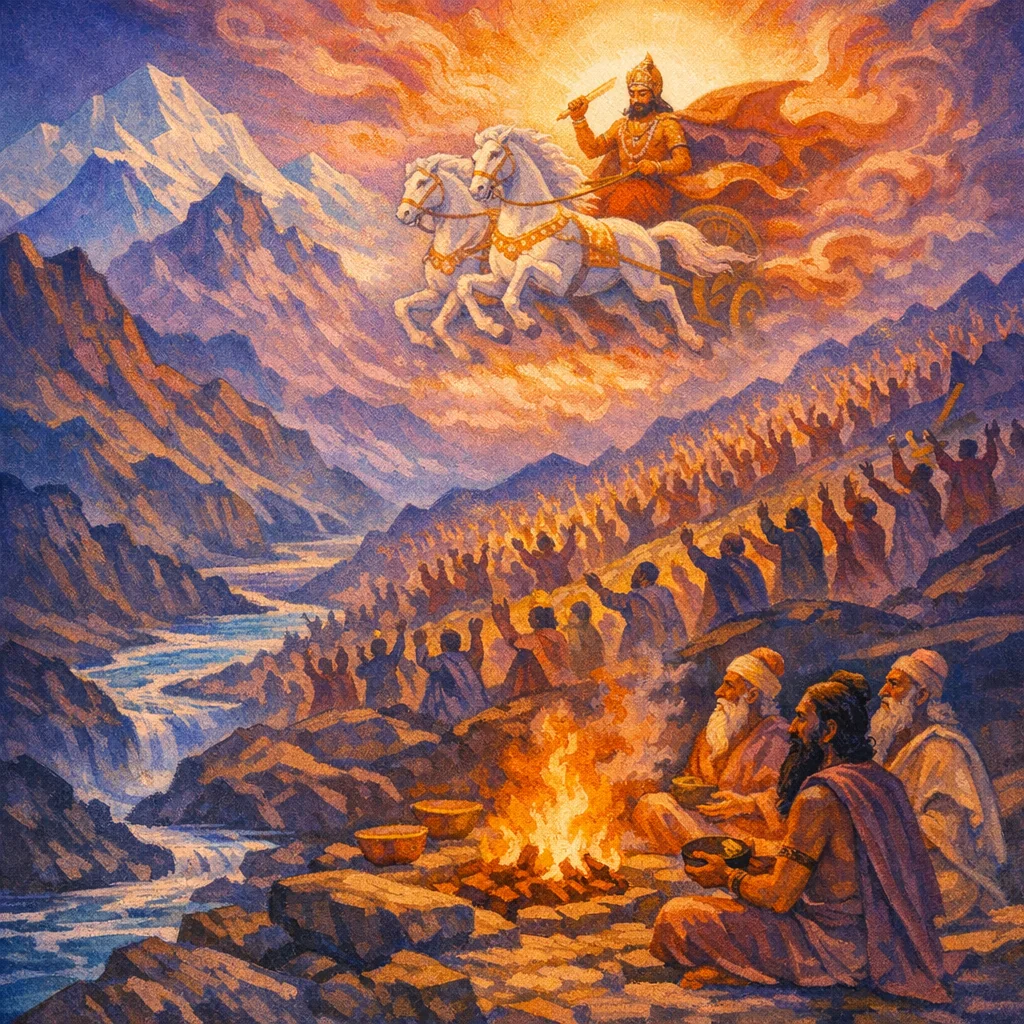
RV 1.80 is a Triṣṭubh Indra-hymn that celebrates how Soma-ecstasy and inspired speech (brahman/uktha) increase Indra’s might and propel his victory over the obstructing serpent (ahi/Vṛtra). The poets portray a collective liturgy—many voices, chants, and stobhas—following Indra’s “self-sovereignty” (svarājya), and they root this inspiration in ancient seers (Atharvan, Manu, Dadhyañc). The hymn’s purpose is both praise and empowerment: to summon Indra to the sacrifice, strengthen him through song, and secure release of power, rain, and prosperity for the worshippers.
Mantras
Mantra 1
इत्था हि सोम इन्मदे ब्रह्मा चकार वर्धनम् । शविष्ठ वज्रिन्नोजसा पृथिव्या निः शशा अहिमर्चन्ननु स्वराज्यम् ॥
Thus indeed, in the ecstasy of Soma, the inspired word forged thy increase; O most mighty Vajrin, by thy force thou didst cast out from the earth the coiling Obstructor, chanting forth into thy self-sovereignty.
Mantra 2
स त्वामदद्वृषा मदः सोमः श्येनाभृतः सुतः । येना वृत्रं निरद्भ्यो जघन्थ वज्रिन्नोजसार्चन्ननु स्वराज्यम् ॥
That Soma, pressed and brought by the eagle, the bull-like rapture, made thee glad; by it thou didst smite Vṛtra forth from the waters, O Vajrin, by thy force, chanting into thy self-sovereignty.
Mantra 3
प्रेह्यभीहि धृष्णुहि न ते वज्रो नि यंसते । इन्द्र नृम्णं हि ते शवो हनो वृत्रं जया अपोऽर्चन्ननु स्वराज्यम् ॥
Go forth, advance, press on with daring; thy thunderbolt is not held back. O Indra, thine is the man-strength and the might: smite Vṛtra, win the waters, chanting onward into self-sovereignty.
Mantra 4
निरिन्द्र भूम्या अधि वृत्रं जघन्थ निर्दिवः । सृजा मरुत्वतीरव जीवधन्या इमा अपोऽर्चन्ननु स्वराज्यम् ॥
O Indra, thou didst smite Vṛtra down and cast him out from the foundation of the earth and from the heights of heaven. Release, downward into our being, these waters that are filled with the Maruts’ force—waters rich in the wealth of life; so may they shine in us following thy sovereign mastery.
Mantra 5
इन्द्रो वृत्रस्य दोधतः सानुं वज्रेण हीळितः । अभिक्रम्याव जिघ्नतेऽपः सर्माय चोदयन्नर्चन्ननु स्वराज्यम् ॥
Indra, urged on by the thunderbolt, smites the ridge of Vṛtra as he heaves and strives; advancing upon him he strikes him down, and he drives the waters forward for their free movement—shining in the wake of his sovereign self-rule.
Mantra 6
अधि सानौ नि जिघ्नते वज्रेण शतपर्वणा । मन्दान इन्द्रो अन्धसः सखिभ्यो गातुमिच्छत्यर्चन्ननु स्वराज्यम् ॥
Upon the ridge he strikes him down with the hundred-jointed thunderbolt. Indra, exulting in the pressed Soma, seeks for his comrades a path of going—shining as he establishes self-sovereignty.
Mantra 7
इन्द्र तुभ्यमिदद्रिवोऽनुत्तं वज्रिन्वीर्यम् । यद्ध त्यं मायिनं मृगं तमु त्वं माययावधीरर्चन्ननु स्वराज्यम् ॥
O Indra, for thee indeed, O wielder of the stone, is that unsurpassed hero-power: that thou didst slay by thy own mastery of skill the deceptive beast of illusion—shining in the train of thy self-sovereignty.
Mantra 8
वि ते वज्रासो अस्थिरन्नवतिं नाव्या अनु । महत्त इन्द्र वीर्यं बाह्वोस्ते बलं हितमर्चन्ननु स्वराज्यम् ॥
Thy thunderbolts were set in motion, following after the ninety and nine; great, O Indra, is thy hero-force—thy strength is lodged in thy arms—shining in the wake of thy self-sovereignty.
Mantra 9
सहस्रं साकमर्चत परि ष्टोभत विंशतिः । शतैनमन्वनोनवुरिन्द्राय ब्रह्मोद्यतमर्चन्ननु स्वराज्यम् ॥
A thousand together sang; twenty circled him with their chant; a hundred followed after and urged him on—raising the inspired word for Indra—shining in the wake of his self-sovereignty.
Mantra 10
इन्द्रो वृत्रस्य तविषीं निरहन्त्सहसा सहः । महत्तदस्य पौंस्यं वृत्रं जघन्वाँ असृजदर्चन्ननु स्वराज्यम् ॥
Indra cast out the might of Vṛtra by might upon might. Great is that manly power of his: having slain Vṛtra he released (the pent-up streams)—shining in the wake of his self-sovereignty.
Mantra 11
इमे चित्तव मन्यवे वेपेते भियसा मही । यदिन्द्र वज्रिन्नोजसा वृत्रं मरुत्वाँ अवधीरर्चन्ननु स्वराज्यम् ॥
Even these (powers) tremble before thy wrath, O mighty one, in great fear, when, O Indra the thunderbearer, strong with might and with the Maruts, thou didst slay Vṛtra—shining in the wake of thy self-sovereignty.
Mantra 12
न वेपसा न तन्यतेन्द्रं वृत्रो वि बीभयत् । अभ्येनं वज्र आयसः सहस्रभृष्टिरायतार्चन्ननु स्वराज्यम् ॥
Neither by trembling nor by thunder did Vṛtra terrify Indra. Against him came the iron thunderbolt with a thousand edges—shining in the wake of self-sovereignty.
Mantra 13
यद्वृत्रं तव चाशनिं वज्रेण समयोधयः । अहिमिन्द्र जिघांसतो दिवि ते बद्बधे शवोऽर्चन्ननु स्वराज्यम् ॥
When with the thunderbolt thou didst engage in battle with Vṛtra and with the lightning-stroke, O Indra, to slay the serpent that sought to slay (the light), then in heaven thy might was made firm and bound fast—shining in the wake of thy self-sovereignty.
Mantra 14
अभिष्टने ते अद्रिवो यत्स्था जगच्च रेजते । त्वष्टा चित्तव मन्यव इन्द्र वेविज्यते भियार्चन्ननु स्वराज्यम् ॥
When thou standest in thy seat of mastery, O Indra the wielder of the pressing-stone, the whole moving world trembles. Even Tvashṭṛ, the fashioner, quivers before thy flaming will; and the singers, following thy self-sovereignty, chant in awe.
Mantra 15
नहि नु यादधीमसीन्द्रं को वीर्या परः । तस्मिन्नृम्णमुत क्रतुं देवा ओजांसि सं दधुरर्चन्ननु स्वराज्यम् ॥
For truly, when we set Indra above all, who is there that surpasses his hero-powers? In him the gods have gathered manly might, the discerning will, and the energies; and the singers, following his self-sovereignty, chant.
Mantra 16
यामथर्वा मनुष्पिता दध्यङ्धियमत्नत । तस्मिन्ब्रह्माणि पूर्वथेन्द्र उक्था समग्मतार्चन्ननु स्वराज्यम् ॥
That inspiration which Atharvan and Manu the Father, and Dadhyañc, laboured out—into that, the ancient formulations and the uttered hymns came together in Indra; and the singers, following his self-sovereignty, chant.
Frequently Asked Questions
It says Indra’s power increases through Soma and inspired speech (brahman/uktha), and that this empowered Indra breaks obstruction (the ahi/Vṛtra) to restore flow, strength, and prosperity.
It highlights communal ritual power: layered groups of chanters, responses, and stobhas are portrayed as actively urging Indra forward, showing that collective praise is itself a force in the rite.
They are ancient seer-figures associated with primordial inspiration and sacred knowledge. Naming them connects the present hymn to an older stream of brahman, saying the same timeless inspiration culminates in Indra and in the act of chanting.