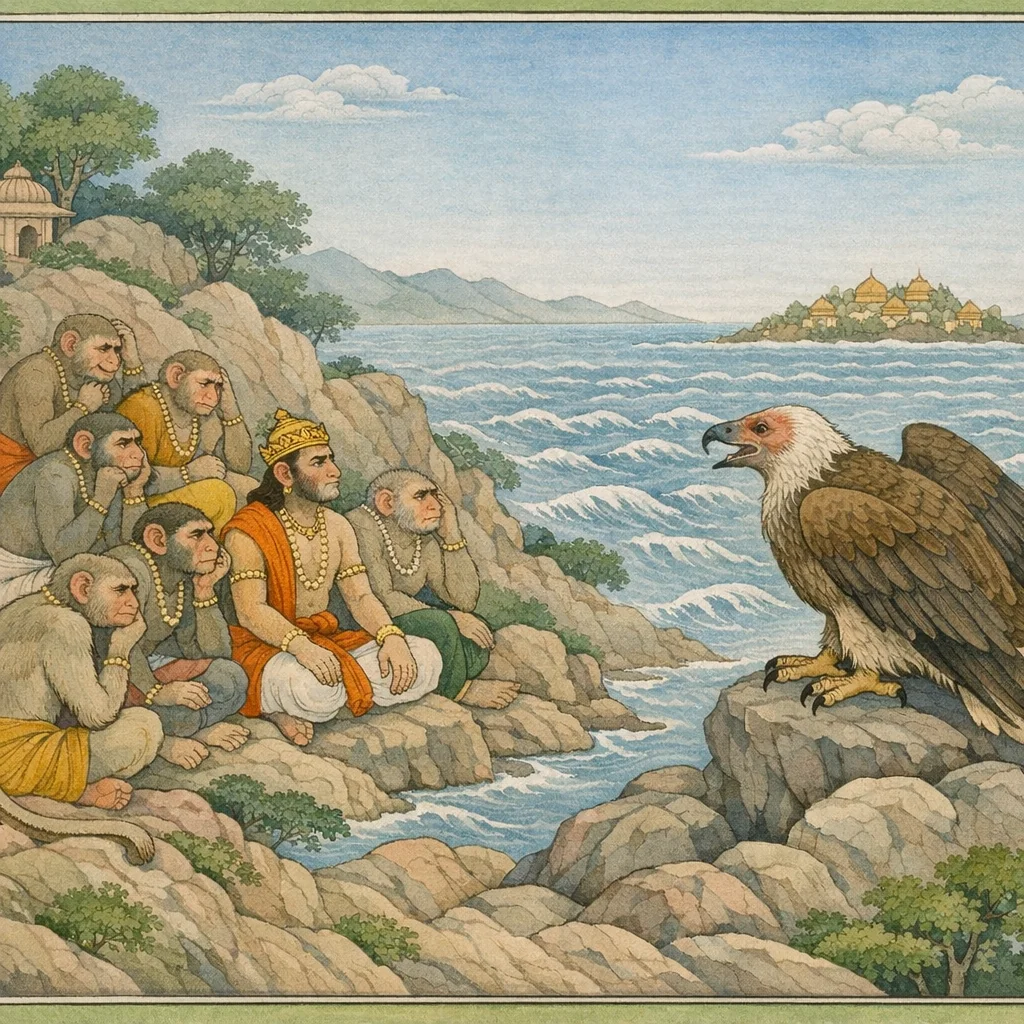
Adhyaya 284
Sūrya’s Counsel to Karṇa on Indra’s Intended Request (Kuṇḍala–Kavaca Discourse)
Upa-parva: Indra–Karṇa Kuṇḍala-Kavaca Prasaṅga (Episode on Indra’s request for Karṇa’s natural armor and earrings)
Janamejaya inquires about a previously unspoken, intense fear connected to Karṇa. Vaiśaṃpāyana explains that after twelve years had elapsed and the thirteenth began, Indra—seeking the Pandavas’ benefit—prepared to approach Karṇa in brahmin disguise to beg for his natural earrings and armor. Sūrya, learning Indra’s intention, visits Karṇa at night during a dream interval, assuming the form of a learned brahmin. With paternal compassion, Sūrya warns that Indra knows Karṇa’s established habit of granting requests and will exploit it; therefore Karṇa should refuse the kuṇḍalas and attempt to redirect the petitioner with other gifts. Sūrya states the protective function of the kavaca and kuṇḍalas, describing Karṇa as effectively invulnerable in battle while possessing them, and warns that giving them away leads toward mortality. Karṇa asks the disguised visitor’s identity; Sūrya reveals himself and urges the prudent course. Karṇa responds by affirming his public vow of giving to brahmins—even to the extent of life itself—and argues that kīrti is a higher safeguard than bodily survival. He concludes that if Indra comes as a disguised brahmin for the Pandavas’ cause, he will give the kuṇḍalas along with the armor, preferring enduring fame and the ethical coherence of his vow over self-protection.
Chapter Arc: राम के मन में संशय और आत्म-प्रश्न उठता है—क्या वह शत्रुओं का वध कर, वैदेही को मुक्त कर, फिर अयोध्या लौटकर राज्य कर पाएगा; इसी व्याकुलता के बीच हनुमान आगे बढ़कर निर्णायक समाचार देने को उद्यत होता है। → हनुमान वानर-दल की दक्षिण दिशा में की गई कठिन खोज-यात्रा का वृत्तांत सुनाते हैं—पर्वत-वन-आकरों से भरी दिशाएँ, समय का बीतना, थकान, महागुहा का भय, मलयाचल से समुद्र का विराट विस्तार देखकर निराशा; फिर सम्पाति-जटायु-स्मृति और उससे जुड़ा संकेत दल को नई दिशा देता है। → सम्पाति का उत्साहवर्धक वचन—वह रावण और लंका का ज्ञान रखता है और निश्चयपूर्वक कहता है कि वैदेही वहीं है; इसी क्षण वानर-सेना का टूटता मन जुड़ता है और समुद्र-लांघने का संकल्प जन्म लेता है। → समुद्र-क्रमण के विषय में वानर परस्पर मंत्रणा करते हैं; आगे चलकर हनुमान लंका में सीता के निकट पहुँचकर अपना परिचय देते हैं—‘प्रत्यय करो, मैं वानर हूँ, राक्षस नहीं’—और सुग्रीव तथा राम की कुशल-पूछ का संदेश देकर विश्वास की नींव रखते हैं। → समुद्र पार करने और लंका में प्रवेश के बाद भी निर्णायक प्रश्न शेष है—क्या सीता हनुमान पर पूर्ण विश्वास करेगी, और क्या यह संदेश-सेतु राम के प्रतिशोध और उद्धार-यात्रा को तुरंत गति देगा?
Shlokas
Verse 36
'क्या मैं युद्धमें शत्रुओंको मारकर जनकनन्दिनी सीताको साथ ले पुनः अयोध्यामें रहकर राज्य करूँगा? ।। अमोक्षयित्वा वैदेहीमहत्वा च रणे रिपून् । ह्ृतदारोडवधूतश्न नाहं जीवितुमुत्सहे,“विदेहनन्दिनी सीताको बिना छुड़ाने तथा समरभूमिमें शत्रुओंका बिना संहार किये पत्नीको खोकर और अवधूत बनकर मैं जीवित नहीं रह सकता”
“How could I, after slaying my enemies in battle and recovering Sītā, Janaka’s beloved daughter, return to Ayodhyā and live there as king? Unless I free Vaidehī and destroy the foes on the battlefield, I cannot bear to go on living—bereft of my wife and reduced to a ruined, wandering state.”
Verse 37
इत्युक्तवचन राम॑ प्रत्युवाचानिलात्मज: । प्रियमाख्यामि ते राम दृष्टा सा जानकी मया,श्रीरामचन्द्रजीके ऐसा कहनेपर वायुपुत्र हनुमानजीने उन्हें इस प्रकार उत्तर दिया --'श्रीराम! मैं आपको प्रिय समाचार सुना रहा हूँ। मैंने जनकनन्दिनी सीताका दर्शन किया है
When Rama had spoken thus, the son of the Wind (Hanuman) replied: “Rama, I will tell you welcome news. I have seen Janaka’s daughter, Sita.”
Verse 38
विचित्य दक्षिणामाशां सपर्वतवनाकराम् | श्रान्ता: काले व्यतीते सम दृष्टवन्तो महागुहाम्,“पर्वत, वन तथा आकरोंसहित सम्पूर्ण दक्षिण दिशामें श्रीसीताजीका अनुसंधान करके जब हमलोग थक गये और यहाँ लौटनेका समय व्यतीत हो गया, तब हमें एक बहुत बड़ी गुफा दिखायी दी
‘After searching the entire southern quarter—together with its mountains, forests, and mines—we grew weary. And when the time for returning had already passed, we came upon a vast cavern.’
Verse 39
७८ हद लन्ध्ध्र्श ८ हु 4.29 ७// ०७ ५7४ ८ ८५० +* ब् प्रविशामो वयं तां तु बहुयोजनमायताम् । सान्धकारां सुविपिनां गहनां कीटसेविताम्,“वह कई योजन लंबी थी। उसमें अन्धकार भरा हुआ था। उसके भीतर घने जंगल थे। उस गहन गुफामें बहुत-से कीड़े रहा करते थे। उसमें प्रवेश करके हमने बहुत दूरतकका रास्ता पार कर लिया। तत्पश्चात् सूर्यके प्रकाशका दर्शन हुआ। उसी गुफाके अंदर एक दिव्य भवन शोभा पा रहा था
Mārkaṇḍeya said: “We entered that cavern, vast in extent and stretching for many yojanas. It was filled with darkness, thick with dense forest, and deep within it swarmed with insects. Having gone far along its passage, we then beheld the light of the sun; and within that very cavern a divine mansion shone forth.”
Verse 40
गत्वा सुमहदध्वानमादित्यस्य प्रभां ततः । दृष्टवन्त: सम तत्रैव भवनं दिव्यमन्तरा,“वह कई योजन लंबी थी। उसमें अन्धकार भरा हुआ था। उसके भीतर घने जंगल थे। उस गहन गुफामें बहुत-से कीड़े रहा करते थे। उसमें प्रवेश करके हमने बहुत दूरतकका रास्ता पार कर लिया। तत्पश्चात् सूर्यके प्रकाशका दर्शन हुआ। उसी गुफाके अंदर एक दिव्य भवन शोभा पा रहा था
Mārkaṇḍeya said: “Having traversed a very long stretch of the path, we then beheld the radiance of the Sun. And there, within that very interior, we saw a wondrous, divine mansion shining forth.”
Verse 41
मयस्य किल दैत्यस्य तदासीद्ू वेश्म राघव । तत्र प्रभावती नाम तपो$तप्यत तापसी,'रघुनन्दन! वह सुन्दर भवन दैत्यराज मयका निवासस्थान बताया जाता है। उसमें प्रभावती नामकी एक तपस्विनी तप कर रही थी
Mārkaṇḍeya said: “O Rāghava, that splendid mansion was said to be the dwelling of the Daitya Maya. There, a female ascetic named Prabhāvatī was engaged in severe austerities.”
Verse 42
तया दत्तानि भोज्यानि पानानि विविधानि च । भुक्त्वा लब्धबला: सन्तस्तयोक्तेन पथा ततः,“उसने हमें अनेक प्रकारके भोज्य पदार्थ तथा भाँति-भाँतिके पीने योग्य रस दिये। उन्हें खाकर हमें नूतन बल प्राप्त हुआ। फिर उसीके बताये हुए मार्गसे जब हम गुफासे बाहर निकले, तब हमें लवणसमुद्रके निकटवर्ती सह, मलय और दर्दुर नामक महानू पर्वत दिखायी दिये
She offered us various kinds of food and drink. Having eaten, we regained our strength; then, following the route she indicated, we proceeded onward.
Verse 43
निर्याय तस्मादुद्देशात् पश्यामो लवणाम्भस: । समीपे सहा[मलयौ दर्दुरं च महागिरिम्,“उसने हमें अनेक प्रकारके भोज्य पदार्थ तथा भाँति-भाँतिके पीने योग्य रस दिये। उन्हें खाकर हमें नूतन बल प्राप्त हुआ। फिर उसीके बताये हुए मार्गसे जब हम गुफासे बाहर निकले, तब हमें लवणसमुद्रके निकटवर्ती सह, मलय और दर्दुर नामक महानू पर्वत दिखायी दिये
Mārkaṇḍeya said: “Having departed from that region, we beheld, near the salt ocean, the great mountains named Saha, Malaya, and Dardura.”
Verse 44
ततो मलयमारुहय पश्यन्तो वरुणालयम् । विषण्णा व्यथिता: खिन्ना निराशा जीविते भूशम्,“फिर हमलोग मलयाचलपर चढ़कर समुद्रकी ओर देखने लगे। उसकी विशालता देखकर हमारा हृदय विषादसे भर गया। हम खिन्न और व्यथित हो गये। हमें जीवनकी कोई आशा न रही
Then, having climbed the Malaya mountain and gazing out toward Varuṇa’s abode—the sea—we were overwhelmed by despondency. Afflicted and exhausted, we lost all hope of life, so vast and daunting did it appear.
Verse 45
अनेकशततविस्तीर्ण योजनानां महोदधिम् | तिमिनक्रझषावासं चिन्तयन्त: सुदु:ःखिता:,“उस महासागरका विस्तार कई सौ योजनोंमें था। उसमें तिमि, मगर और बड़े-बड़े मत्स्य निवास करते थे। उसके इस स्वरूपका स्मरण करके हम सब लोग बहुत दुःखी हो गये
“That great ocean stretched across many hundreds of yojanas. It was a dwelling-place of timi-whales, makaras, and huge fishes. Recalling that terrifying expanse and its creatures, we were all overwhelmed with deep sorrow.”
Verse 46
तत्रानशनसंकल्पं कृत्वा5डसीना वयं तदा । ततः कथान्ते गृध्रस्य जटायोरभवत् कथा,“अन्तमें अनशन करके प्राण त्याग देनेका संकल्प लेकर हम सब लोग वहाँ बैठ गये। फिर आपसमें बातचीत होने लगी और बीचमें जटायुका प्रसंग छिड़ गया
There, having resolved to undertake a fast unto death, we all sat down. Then, as our conversation unfolded, the topic turned to the vulture Jatāyu, and his story arose in the midst of our talk.
Verse 47
ततः पर्वतशुड्भा भं घोररूपं भयावहम् | पक्षिणं दृष्टवन्त: सम वैनतेयमिवापरम्,“इतनेमें ही हमने दूसरे गरुड़की भाँति एक भयंकर पक्षीको देखा जो पर्वतशिखरके समान जान पड़ता था। उसका स्वरूप बड़ा डरावना था
Then we beheld a bird—terrible in form and fearsome to look upon—appearing like a mountain peak, like another Garuḍa. The sight of it filled us with dread.
Verse 48
सो<स्मानतर्कयद् भोक्तुमथा भ्येत्य वचो5ब्रवीत् | भो: क एष मम भ्रातुर्जटायो: कुरुते कथाम्,“वह पक्षी हमें खा जानेकी युक्ति सोचने लगा। फिर हमारे पास आकर बोला--“अजी! कौन मेरे भाई जटायुकी बात कर रहा था। मैं उसका बड़ा भाई पक्षिराज सम्पाति हूँ। हम दोनों एक-दूसरेसे होड़ लगाकर आकाशमें सूर्यमण्डलतक पहुँचनेके लिये उड़े थे
Mārkaṇḍeya said: “He began to devise a plan to eat us; then, coming near, he spoke: ‘Ho! Who is it that is speaking of my brother Jatāyu?’”
Verse 49
सम्पातिर्नाम तस्याहं ज्येष्ठो भ्राता खगाधिप: । अन्योन्यस्पर्धयारूढावावामादित्यसत्पदम्,“वह पक्षी हमें खा जानेकी युक्ति सोचने लगा। फिर हमारे पास आकर बोला--“अजी! कौन मेरे भाई जटायुकी बात कर रहा था। मैं उसका बड़ा भाई पक्षिराज सम्पाति हूँ। हम दोनों एक-दूसरेसे होड़ लगाकर आकाशमें सूर्यमण्डलतक पहुँचनेके लिये उड़े थे
“I am Sampāti by name, the elder brother of that bird-king. Once, driven by rivalry with each other, we two rose up, striving to reach the radiant station of the Sun.”
Verse 50
ततो दग्धाविमौ पक्षौ न दग्धौ तु जटायुष: । तदा मे चिरदृष्ट: स भ्राता गृध्रपति: प्रिय:
“Then these two wings were burnt, but Jatāyus himself was not burnt. At that moment I beheld again—after a long time—my beloved brother, Jatāyus, the lord of vultures.”
Verse 51
निर्दग्धपक्ष: पतितो हाहमस्मिन् महागिरौ । “इससे मेरी ये दोनों पाँखें जल गयीं, परंतु जटायुके पंख नहीं जले। तबसे दीर्घकाल व्यतीत हो गया। उन्हीं दिनों मैंने अपने प्रिय भाई गृप्रराज जटायुको देखा था। पंख जल जानेसे मैं इसी महान् पर्वतपर गिर पड़ा” || ५० ई || तस्यैवं वदतो<स्माभिहीतो भ्राता निवेदित:
Mārkaṇḍeya said: “With my wings burnt, I fell here upon this great mountain, crying out in distress.” As he spoke thus, we were informed about the brother who had been abandoned. The passage underscores the pathos of injury and separation, and hints at the ethical weight of kinship—how the fate of a brother becomes a matter demanding recognition and response.
Verse 52
स सम्पातिस्तदा राजन श्रुत्वा सुमहदप्रियम्
O king, then Sampāti, on hearing that exceedingly grievous and unwelcome news, was struck by deep distress—an instance of how harsh tidings can test one’s steadiness and compassion in the unfolding of fate.
Verse 53
विषण्णचेता: पप्रच्छ पुनरस्मानरिंदम । क: स राम: कथं सीता जटायुश्न॒ कथं हतः
Then, with a mind weighed down by sorrow, the foe-subduer questioned us again: “Who is that Rāma? How is Sītā? And how was Jaṭāyu slain?” The verse frames grief turning into inquiry—seeking clarity about virtue, loss, and the causes that led to a righteous struggle.
Verse 54
इच्छामि सर्वमेवैतच्छोतुं प्लवगसत्तमा: । “राजन! यह अत्यन्त अप्रिय वृत्तान्त सुनकर उस सम्पातिके मनमें बड़ा खेद हुआ। शत्रुदमन! उसने पुनः हमलोगोंसे पूछा--'श्रेष्ठ वानरगण! वे श्रीराम कौन हैं, सीता कैसी है और जटायु किस प्रकार मारे गये? ये सब बातें मैं विस्तारपूर्वक सुनना चाहता हूँ" | ५२-५३ ह || तस्याहं सर्वमेवैतद् भवतो व्यसनागमम्
Mārkaṇḍeya said: “O best of monkeys, I wish to hear all of this in full. I shall relate to you the entire account of how this calamity came upon you.” The passage frames attentive listening and truthful narration as a dharmic response to grief—seeking clarity, causes, and context rather than remaining in confusion.
Verse 55
प्रायोपवेशने चैव हेतुं विस्तरशो<ब्रुवम् । “तब मैंने सम्पातिके समक्ष आपपर संकट आनेका यह सारा वृत्तान्त और अपने आमरण अनशनका कारण विस्तारपूर्वक बताया || ५४ $ || सो>स्मानुत्थापयामास वाक्येनानेन पक्षिराट्,भवित्री तत्र वैदेही न मे<स्त्यत्र विचारणा । “तब पक्षिराज सम्पातिने अपने निम्नांकित वचनद्वारा हमें उत्साहित करके उठाया। “वानरो! मैं रावणको जानता हूँ। उसकी महापुरी लंका भी मैंने देखी है। वह समुद्रके उस पार त्रिकूटगिरिकी कन्दरामें बसी है। विदेहकुमारी सीता अवश्य वहीं होंगी, इस विषयमें मुझे कोई अन्यथा विचार नहीं हो रहा है”
Mārkaṇḍeya said: “I then explained in full the reason for our resolve to sit down in fast unto death. Thereupon the king of birds, Sampāti, roused and encouraged us with these words: ‘O Vānara, I know Rāvaṇa; I have also seen his great city Laṅkā. It lies beyond the ocean, set in a cavern of Mount Trikūṭa. The princess of Videha, Sītā, will surely be there—of this I have no doubt at all.’”
Verse 56
रावणो विदितो महाूं लड़का चास्य महापुरी । दृष्टा पारे समुद्रस्य त्रिकूटगिरिकन्दरे
Mārkaṇḍeya said: “Rāvaṇa is now well known to you as a mighty one, and Laṅkā—his great capital—has been seen, situated on the far shore of the ocean, within the caverns of Mount Trikūṭa.”
Verse 57
इति तस्य वच: श्रुत्वा वयमुत्थाय सत्वत:
Having heard his words, we immediately rose up with resolve, acting with steady courage and self-control.
Verse 58
नाध्यवास्यद् यदा कश्चित् सागरस्य विलड्घनम्,“जब कोई भी समुद्रको लाँधघनेका साहस न कर सका, तब मैं अपने पिता वायुके स्वरूपमें प्रविष्ट होकर वह सौ योजन विस्तृत महासागर लाँध गया। उस समय समुद्रके जलमें एक राक्षसी रहती थी, जिसे अपने मार्गमें विघ्न डालनेपर मैंने मार डाला था
Mārkaṇḍeya said: “When no one dared to attempt the crossing of the ocean, I entered into the form of my father, Vāyu, and leapt across that great sea, a hundred yojanas in breadth. At that time a rākṣasī dwelt in the ocean’s waters; when she obstructed my path, I slew her.”
Verse 59
ततः पितरमाविश्य पुप्लवे5हं महार्णवम् । शतयोजनविस्तीर्ण निहत्य जलराक्षसीम्,“जब कोई भी समुद्रको लाँधघनेका साहस न कर सका, तब मैं अपने पिता वायुके स्वरूपमें प्रविष्ट होकर वह सौ योजन विस्तृत महासागर लाँध गया। उस समय समुद्रके जलमें एक राक्षसी रहती थी, जिसे अपने मार्गमें विघ्न डालनेपर मैंने मार डाला था
Then, entering into my father’s form—becoming one with Vāyu—I leapt across the vast ocean, a hundred yojanas in breadth. In those waters there dwelt a rākṣasī who sought to obstruct my passage; when she became an impediment to the task, I struck her down.
Verse 60
तत्र सीता मया दृष्टा रावणान्तःपुरे सती । उपवासतप:शीला भर्तदर्शनलालसा
There I saw Sītā, the virtuous one, within Rāvaṇa’s inner palace. She was devoted to fasting and austerity, her whole longing fixed on the hope of seeing her husband again.
Verse 61
लंकामें पहुँचकर रावणके अन्तःपुरमें मैंने सती सीताका दर्शन किया, जो अपने पतिदेवताके दर्शनकी लालसासे निरन्तर उपवास और तपस्या किया करती हैं ।। जटिला मलदिग्धाड्ी कृशा दीना तपस्विनी । निमित्तैस्तामहं सीतामुपलभ्य पृथग्विधै:,“उनके केश जटाके रूपमें परिणत हो गये थे। अंग-अंगमें मैल जम गयी थी। वे दीन, दुर्बल और तपस्विनी दिखायी देती थीं। कई भिन्न-भिन्न कारणोंसे उन्हें आर्या सीताके रूपमें पहचानकर मैं एकान्तमें उनके निकट गया और इस प्रकार बोला--'देवि सीते! मैं श्रीरामचन्द्रजीका दूत पवनपुत्र हनुमान् नामक वानर हूँ
Markandeya said: “There I found Sītā—her hair matted into tangled locks, her limbs smeared with grime, emaciated and forlorn, yet steadfast in austerity. By various signs I recognized her as Sītā, and approaching her in private, I spoke to her.”
Verse 62
उपसृत्याब्रुवं चार्यामभिगम्य रहोगताम् । सीते रामस्य दूतो5हं वानरो मारुतात्मज:,“उनके केश जटाके रूपमें परिणत हो गये थे। अंग-अंगमें मैल जम गयी थी। वे दीन, दुर्बल और तपस्विनी दिखायी देती थीं। कई भिन्न-भिन्न कारणोंसे उन्हें आर्या सीताके रूपमें पहचानकर मैं एकान्तमें उनके निकट गया और इस प्रकार बोला--'देवि सीते! मैं श्रीरामचन्द्रजीका दूत पवनपुत्र हनुमान् नामक वानर हूँ
Approaching the noble lady in her seclusion, I said: “O Sītā, I am Rāma’s messenger—a vānar named Hanumān, the son of the Wind.”
Verse 63
त्वद्दर्शनमभिप्रेप्सुरिह प्राप्तो विहायसा । राजपुत्रौ कुशलिनौ भ्रातरौ रामलक्ष्मणौ,“आपके दर्शनके लिये मैं आकाशमार्गसे यहाँ आया हूँ। दोनों भाई राजकुमार श्रीराम और लक्ष्मण कुशलसे हैं
“Longing to behold you, I have come here by the path of the sky. The two royal princes, the brothers Rāma and Lakṣmaṇa, are safe and well.”
Verse 64
सर्वशाखाम्गेन्द्रेण सुग्रीवेणाभिपालितौ । कुशल त्वाब्रवीद् राम: सीते सौमित्रिणा सह,“सम्पूर्ण वानरोंके अधीश्वर सुग्रीव इस समय उनकी रक्षामें तत्पर हैं। देवि! सुमित्रानन्दन लक्ष्मणके साथ भगवान् श्रीरामने आपको अपने सकुशल होनेका समाचार कहलाया है
“Sugrīva, lord of all the vānaras, now stands vigilant in their protection. O Sītā, Śrī Rāma, together with Lakṣmaṇa—Sumitrā’s son—has sent you word that he is safe and well.”
Verse 65
सखिभावाच्च सुग्रीव: कुशल त्वानुपृच्छति । क्षिप्रमेष्यति ते भर्ता सर्वशाखामृगै: सह
“Out of friendship, Sugrīva sends his greetings and asks after your well-being. Your lord will soon arrive, accompanied by all the vānaras of the forest.”
Verse 66
मुहूर्तमिव च ध्यात्वा सीता मां प्रत्युवाच ह,“तदनन्तर सीताने दो घड़ीतक कुछ सोचकर मुझसे इस प्रकार कहा--“महाबाहो! मैं अविन्ध्यके कहनेसे यह विश्वास करती हूँ कि तुम हनुमान् हो। अविन्ध्य राक्षसकुलमें उत्पन्न होते हुए भी वृद्ध एवं आदरणीय हैं
Markandeya said: After reflecting for a moment, Sita replied to me: “O mighty-armed one! From Avindhya’s words I am convinced that you are Hanuman. Avindhya, though born in the race of the Rakshasas, is aged and worthy of respect.”
Verse 67
अवैमि त्वां हनूमन्तमविन्ध्यवचनादहम् । अविन्ध्यो हि महाबाहो राक्षसो वृद्धसम्मत:,“तदनन्तर सीताने दो घड़ीतक कुछ सोचकर मुझसे इस प्रकार कहा--“महाबाहो! मैं अविन्ध्यके कहनेसे यह विश्वास करती हूँ कि तुम हनुमान् हो। अविन्ध्य राक्षसकुलमें उत्पन्न होते हुए भी वृद्ध एवं आदरणीय हैं
Mārkaṇḍeya said: “I recognize you as Hanūmān on the strength of Avindhya’s words. For Avindhya, O mighty-armed one, though a Rākṣasa, is regarded as an elder and is respected as an authority.”
Verse 68
कथितत्तेन सुग्रीवस्त्वद्विधै: सचिवैर्वृत: । गम्यतामिति चोक्त्वा मां सीता प्रादादिमं मणिम्,उन्होंने ही तुम्हारे-जैसे मन्सत्रियोंसे युक्त सुग्रीवका परिचय दिया है। वत्स! अब तुम भगवान् श्रीरामके पास जाओ।” ऐसा कहकर सती साध्वी सीताने अपनी पहचानके लिये यह एक मणि दी, जिसको धारण करके वे अबतक अपने प्राणोंकी रक्षा करती आयी हैं। जानकीने विश्वास दिलानेके लिये यह एक कथा भी सुनायी थी--
Markandeya said: “He told me about Sugriva—surrounded by ministers like you. Then Sita said to me, ‘You should go (to Rama).’ Having spoken thus, the chaste and steadfast Sita gave me this jewel as a token of recognition. By wearing it, she had preserved her very life until now; and to inspire trust, Janaki also related a confirming account.”
Verse 69
धारिता येन वैदेही कालमेतमनिन्दिता । प्रत्ययर्थ कथां चेमां कथयामास जानकी,उन्होंने ही तुम्हारे-जैसे मन्सत्रियोंसे युक्त सुग्रीवका परिचय दिया है। वत्स! अब तुम भगवान् श्रीरामके पास जाओ।” ऐसा कहकर सती साध्वी सीताने अपनी पहचानके लिये यह एक मणि दी, जिसको धारण करके वे अबतक अपने प्राणोंकी रक्षा करती आयी हैं। जानकीने विश्वास दिलानेके लिये यह एक कथा भी सुनायी थी--
Mārkaṇḍeya said: “The blameless Vaidehī has been sustained by that token through all this time. And, in order to establish trust, Jānakī also recounted this very account.”
Verse 70
क्षिप्तामिषीकां काकाय चित्रकूटे महागिरौ । भवता पुरुषव्याघ्र प्रत्यभिज्ञानकारणात्,(एकाक्षिविकल: काक: सुदुष्टात्मा कृतश्न वै ।) 'पुरुषसिंह! उस कथाका मुख्य विषय यह है कि आपने महापर्वत चित्रकूटपर रहते समय किसी कौएके ऊपर एक सींकका बाण चलाया था और उस दुष्टात्मा कौएको एक आँखसे वंचित कर दिया था। यह प्रसंग उन्होंने केवल अपनी पहचान करानेके उद्देश्यसे प्रस्तुत किया था
Mārkaṇḍeya said: “O tiger among men, while you were dwelling on the great mountain Citrakūṭa, you once shot a reed-arrow at a crow. That wicked crow was thereby deprived of one eye. This incident was brought up solely as a means of recognition—to establish identity by recalling a distinctive past deed.”
Verse 71
ग्राहयित्वाहमात्मानं ततो दग्ध्वा च तां पुरीम् सम्प्राप्त इति तं राम: प्रियवादिनमार्चयत्,“तदनन्तर मैंने जान-बूुझकर अपने-आपको राक्षसोंद्वारा पकड़वा दिया और लंकापुरीको जलाकर समुद्रके इस पार आ पहुँचा।! यह सब समाचार सुनकर श्रीरामचन्द्रजीने प्रियवादी हनुमान्का अत्यन्त आदर-सत्कार किया
“After deliberately allowing myself to be seized, and then burning that city, I have returned to this side of the ocean.” Hearing this report, Rāma honored Hanumān—whose speech was both truthful and pleasing—with the highest respect, recognizing the ethical excellence of courageous service carried out for a righteous cause.
Verse 282
इति श्रीमहाभारते वनपर्वणि रामोपाख्यानपर्वणि हनुमत्प्रत्यागमने द्रयशीत्यधिकद्धिशततमो< ध्याय:,इस प्रकार श्रीमह्याभारत वनपर्वके अन्तर्गत रामोपाख्यानपर्वमें हनुमान्जीके लंकासे लौटनेसे सम्बन्ध रखनेवाला दो सौ बयासीवाँ अध्याय पूरा हुआ
Thus, in the Śrī Mahābhārata, within the Vana Parva, in the section known as the Rāmopākhyāna, the two-hundred-and-eighty-second chapter—concerning Hanumān’s return (from Laṅkā)—is concluded. The colophon marks the completion of this narrative unit, emphasizing the successful fulfillment of a messenger’s dharmic duty: faithful service, courage in adversity, and the responsible reporting of what has been seen and accomplished for the sake of righteous action.
Verse 516
व्यसनं भवतश्चैदं संक्षेपाद् वै निवेदितम् । “सम्पाति जब इस तरहकी बातें कर रहा था, उस समय हमलोगोंने बताया कि जटायु मारे गये। साथ ही हमने संक्षेपसे आपके ऊपर आये हुए इस संकटका समाचार भी निवेदन कर दिया
Markandeya said: “This calamity that has befallen you has been reported—indeed, in brief. While Sampāti was speaking in this manner, we informed him that Jaṭāyu had been slain, and we also conveyed, succinctly, the news of the crisis that had come upon you.”
Verse 563
भवित्री तत्र वैदेही न मे<स्त्यत्र विचारणा । “तब पक्षिराज सम्पातिने अपने निम्नांकित वचनद्वारा हमें उत्साहित करके उठाया। “वानरो! मैं रावणको जानता हूँ। उसकी महापुरी लंका भी मैंने देखी है। वह समुद्रके उस पार त्रिकूटगिरिकी कन्दरामें बसी है। विदेहकुमारी सीता अवश्य वहीं होंगी, इस विषयमें मुझे कोई अन्यथा विचार नहीं हो रहा है”
Markandeya said: “Vaidehī (Sītā), the princess of Videha, will surely be there; on this point I have no doubt or alternative thought.” In context, this line conveys firm moral confidence meant to strengthen the seekers’ resolve: certainty grounded in knowledge becomes a source of courage and right action in a difficult quest.
Verse 573
सागरक्रमणे मन्त्र मन्त्रयाम: परंतप । परंतप! उसकी यह बात सुनकर हमलोग तुरंत उठे और समुद्र पार करनेके विषयमें परस्पर सलाह करने लगे
Mārkaṇḍeya said: “O scorcher of foes, we took counsel about the means of crossing the ocean. O Parantapa! Hearing her words, we rose at once and began deliberating among ourselves about how to pass beyond the sea.”
Verse 656
प्रत्ययं कुरु मे देवि वानरो5स्मि न राक्षस: । “उनके मित्र होनेके नाते सुग्रीव भी आपका कुशल-मंगल पूछते हैं। आपके स्वामी भगवान् श्रीराम सम्पूर्ण वानरोंकी सेनाके साथ शीघ्र यहाँ पधारेंगे। देवि! मेरा विश्वास कीजिये। मैं राक्षस नहीं, वानर हूँ”
Mārkaṇḍeya said: “O goddess, place your trust in me. I am a vanara, not a rākṣasa. As your well-wisher and ally, Sugrīva too asks after your safety and welfare. Your lord, Bhagavān Śrī Rāma, will soon arrive here together with the entire army of vanaras. O goddess, believe me—my intent is truthful and protective, not deceptive.”
Frequently Asked Questions
Whether Karṇa should preserve life and strategic security by refusing a request, or uphold his public dāna-vrata by giving even when the petitioner’s intent is adversarial and the cost is existential.
The chapter contrasts consequential prudence with deontic commitment: it illustrates how a vow-based identity can override self-interest, and how reputation (kīrti) is treated as a durable moral outcome within epic ethics.
No explicit phalaśruti is stated here; the meta-commentary functions implicitly through Karṇa’s articulation that kīrti ‘sustains’ a person socially and spiritually, positioning the episode as an ethical case-study within the wider narrative.